How to Incorporate Core Workouts Into Your Training

Let me be straight with you—your core is probably weaker than you think.

I know mine was.

For years, I brushed off core training because I thought it was just “ab stuff” for people chasing six-packs.

Meanwhile, my posture collapsed during long runs, my lower back kept barking at me, and I couldn’t hold decent form when things got hard.

Once I finally started doing real core work—nothing fancy, just basic stuff a few times a week—I noticed the difference fast.

My running felt smoother. My back stopped hurting.

My form didn’t fall apart at the end of races. I just felt… stronger.

More solid.

So before you skip this part or think it doesn’t apply to you, trust me—it does.

A stronger core makes everything in running easier.

Here’s what I learned the hard way.

Let’s break it down.

1. Run Tall or Fall Apart (Literally)

Ever see a race photo of yourself near the end and cringe? Shoulders slumped, spine curled like a shrimp, arms flapping like wet noodles?

Let me be honest with you.

Once I got serious about core workouts, my posture started holding up deep into long runs.

Now I finish my runs upright—not just looking stronger, but feeling stronger.

Good posture isn’t just about aesthetics—it keeps your back and shoulders from taking a beating.

Plus, better posture = better oxygen flow. You breathe easier when you’re not collapsing in on yourself.

2. “Free Speed” Comes from the Middle

Your core is the engine room—it connects your upper body to your legs.

Every arm swing, every twist of the torso, every powerful stride goes through that midsection.

A strong core helps you transfer power efficiently. That means more of your energy actually goes into forward motion instead of leaking out through poor mechanics.

I call it “free speed” because you’re not adding more effort—you’re just using what you’ve already got, smarter.

And this isn’t just me talking. One study found that runners who did 8 weeks of core work improved their running economy—basically, they used less oxygen at the same pace.

Translation: same effort, faster pace. I’ll take that deal any day.

3. Better Balance = Fewer Face-Plants

Running might look straight-line, but it’s one-leg-at-a-time, all the time.

Every stride is a single-leg balance challenge.

And when your core’s weak, you start swaying, twisting, or overstriding—especially when fatigue kicks in.

I’ve had moments on technical trails where I nearly went down because my core was shot and I couldn’t stay stable.

When I’m consistent with core work, I feel solid with every footfall—even on rocky terrain.

If you’re into trail running or long-distance road racing, a stable core keeps you smooth and balanced from start to finish.

4. Fewer Injuries, More Training Days

This one hits close to home. I used to get this stabbing lower back pain mid-run, and I just thought, “Well, I’m getting older.”

Nope.

My core was weak, my hips were sloppy, and my spine was begging for support.

Once I strengthened my core—glutes, hip stabilizers, deep abdominals—the pain faded.

And guess what? A 2024 study in British Journal of Sports Medicine showed that runners who did consistent core and hip work had 39% fewer injuries than those who didn’t. That’s not a small difference—it’s a game-changer.

Even chronic lower back pain? There’s solid evidence that targeted core training can help relieve it.

5. The Final Stretch Is Where Core Counts the Most

That last 5K of a marathon? That’s where runners either hold form or completely fold. Your legs may be toast, but your core? That’s the anchor keeping your stride from turning into a shuffle.

The difference between surviving and thriving at the end of a race? Core endurance.

6. Recover Faster, Train Harder

Here’s something most runners overlook: core strength helps you recover faster.

Better form means less mechanical stress. Less breakdown means less soreness.

On top of that, a lot of core moves (like dynamic planks, bird dogs, bridges) help circulation and coordination.

I’ve found that when I stay consistent with my core work, I bounce back quicker from long runs and tough sessions. No magic here—just better blood flow, tighter mechanics, and less wasted motion.

Less soreness = more miles = more progress.

How to Actually Start Training Your Core

By now you’re probably thinking: “Okay, cool story—but how the hell do I actually start training my core?”

Good news—you don’t need a fancy gym, 60-minute sessions, or some influencer’s overpriced program.

You just need consistency, the right moves, and a plan you’ll actually stick to.

So let’s break it down like I would for one of my runners who wants to get stronger without adding chaos to their week.

1. Keep It Short and Consistent

Forget trying to be a hero with one massive ab workout a month. That’s not how you build a strong runner’s core.

I’d rather see you knock out a 10-minute routine two or three times a week. That’s the real win.

Personally, I started with short circuits—planks, bridges, side planks—right after easy runs.

Some of my athletes even do a 5-minute core routine every morning like brushing their teeth.

It’s not about volume. It’s about showing up, again and again.

You’ll get stronger without even noticing—until one day, your form on long runs doesn’t break down and your back doesn’t scream by mile 10.

2. Best Time to Train Core? After Runs or on Off-Days

People ask me, “Should I do core before or after my run?” Here’s what I tell them: save the main core work for after your run—or on your non-running days.

Why? Because your core helps stabilize your form while you’re running. If you fatigue it with a hardcore ab session beforehand, you’re setting yourself up for bad posture and sloppy mechanics. Imagine holding race pace with jelly abs… not great.

Now, a little core activation pre-run? That’s fair game—stuff like a short plank or glute bridge to wake things up. But the meat of the work? Post-run is where it belongs. That’s how you finish strong and recover right.

3. Form Over Reps—Always

Here’s the deal: 10 slow, locked-in mountain climbers are more valuable than 50 spastic ones.

Core training isn’t a race—it’s practice for body control. If your hips sag, or you’re wrenching your neck, stop and reset. This is about awareness.

The more you train your core with intention, the more you’ll notice your posture and stability during runs. I’ve coached runners who thought they had solid form—until a video showed their hips bouncing all over the place. Core strength fixed it.

So yeah, ditch the ego. Master the move. The speed will follow.

4. You Don’t Need 100 Exercises—Just the Right Ones

The internet throws 1,000 ab exercises at you, but most runners don’t need all that. Keep it simple and focused.

  • Planks
  • Dead bugs
  • Bridges
  • Side planks

Those cover the essentials.

If you get bored, sprinkle in some variety like windshield wipers or mountain climbers. But keep the staples in the mix:

  • Something for your front (plank)
  • Sides (side plank)
  • Hips/glutes (bridges or clamshells)
  • A dynamic option (jump squats or cardio-core drills)

That’s how you hit the full core and stay balanced.

And yeah, follow along with a video or class if that helps you stay consistent—just make sure it’s built for runners, not just beach abs.

5. Pain Is a No-Go—Discomfort Is Okay

Let me be blunt: core work should burn a little, but it should never hurt.

  • Sore abs? Totally normal.
  • Sharp pain in your back or neck? Nope. That’s your body yelling that something’s off.

Can’t do sit-ups without tweaking your lower back? Ditch ‘em and switch to dead bugs or stability ball crunches. Planks killing your wrists? Drop to your forearms.

I modify moves all the time for my athletes until their form gets strong enough. And guess what? That’s not weakness—it’s smart training.

You’re playing the long game here. Don’t trade short-term pride for long-term pain.

6. Your Glutes & Hips Are Core Too—Don’t Skip Them

If you’re only working the front of your core, you’re missing half the equation.

Your glutes, hips, and lower back are the other half of that power system.

Weak glutes = wobbly pelvis = knee pain, IT band flares, and a grumpy back.

Trust me, I’ve seen this play out more times than I can count.

I always sneak in side-lying leg lifts, monster walks, and hip thrusts into my runners’ routines—even if they complain at first.

And almost every time, I get a: “Wow, my knee pain is finally gone.”

Strong glutes make better runners. Period.

7. Bonus: Yes, Heavy Lifts Can Help—But They’re Not Essential

You’ll hear folks online say, “Deadlifts and squats build all the core you need.” And you know what? There’s truth there. Heavy lifts done right absolutely hammer your core.

I love deadlifts for building that deep, posterior strength. But not everyone has a barbell or knows how to lift safely. And I’ve seen runners jack up their backs trying to mimic powerlifters without proper form.

That’s why I mostly stick to bodyweight core drills in my plans. They’re safer, simpler, and you can do them anywhere.

If you’re experienced and have a coach, great—lift heavy once or twice a week. If not, your yoga mat is enough to build serious strength.

My Go-To 10-Minute Routine

Here’s the one I give most runners:

  • Plank – 30 seconds

  • Side Plank – 20 seconds per side

  • Glute Bridges – 15 reps

  • Dead Bug – 10 per side

  • Mountain Climbers – 20 total

  • Bird Dog – 5 per side

  • Bicycle Crunches – 15 per side

  • Finish with a 30-second plank

If you want to be fancy, add 10 jump squats at the end and stretch it out.

This whole thing takes around 10 minutes. As you get stronger, add time or loop it twice. Or rotate in new moves like Russian twists or single-leg bridges.

Just keep showing up, keep it clean, and build that real runner strength—without breaking your body.

Now it’s your turn:

What’s your current core routine? Or are you starting from scratch?

What’s the one core move that always challenges you?
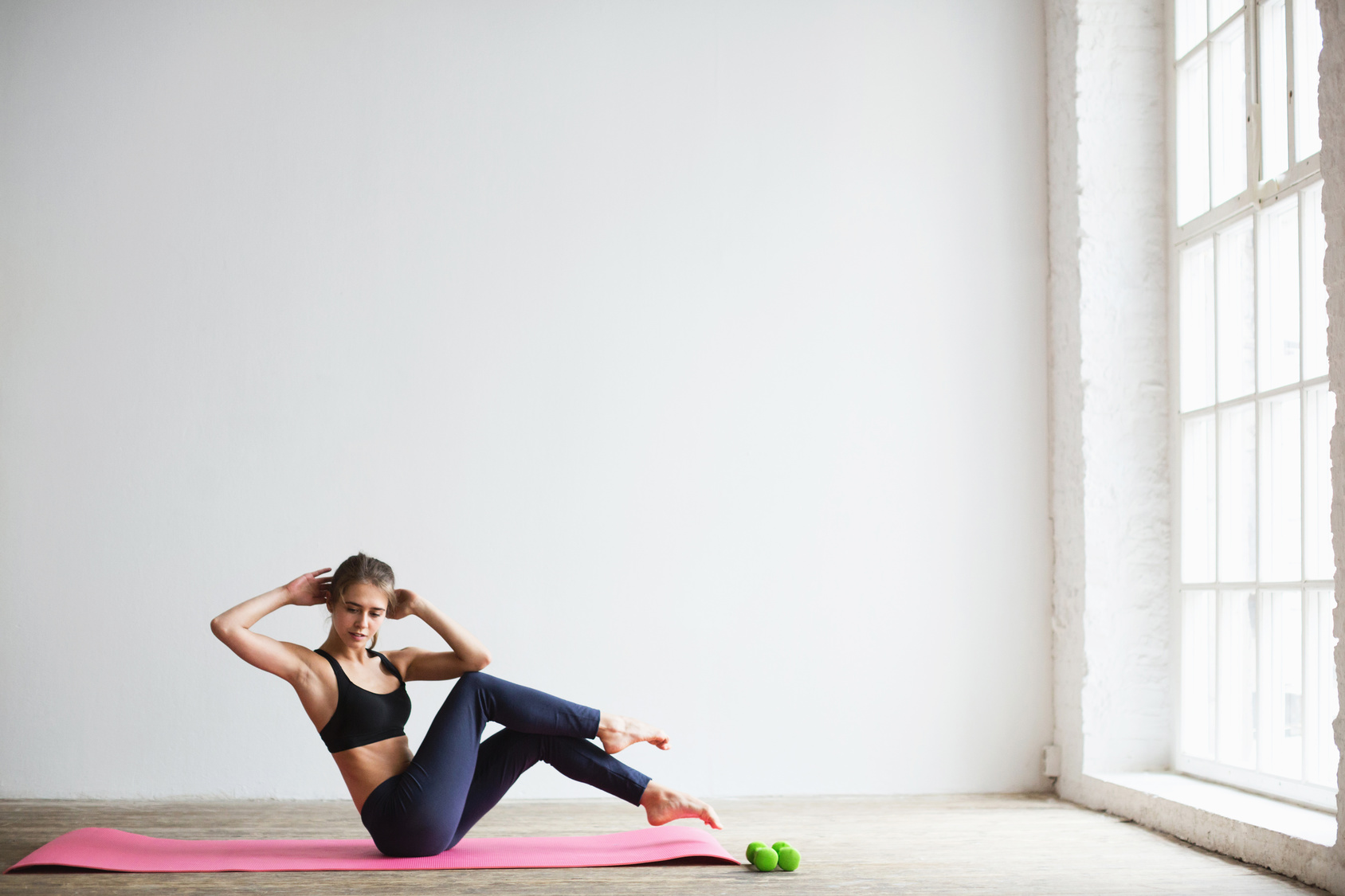
23 Best Core Exercises for Runners to Run Stronger (2025 Guide)

The Benefits Of Core Training For Runners

One of the best ways to improve your running without running more is improving your core power and strength. The core—as the name implies—is the baseline of human performance.

What Is The Core?

The core muscles are the epicenter of the body. They connect the pelvis, spine and trunk to each other and to the rest of your body, including your shoulders blades, hips and legs.

They are at the center of everything—the the basis for all of your movement, whether you are an elite runner or an Olympic power lifter.

It’s More Than Abs

First of all, you need to understand that your “core” isn’t just your abs. it’s more than that. Having a solid core is more than just having strong abdominal muscles. The core extends to the lower back, gluteal muscles, and other areas.

The core involves five main areas.

The rectus abdominus—what we usually refer to the six-pack muscle.
The oblique—or what’s known as the side abs.
The erector spinae—aka the lower back muscles.
The transversus muscles or deep abs, and
The gluteal muscles—the butt muscles.

The Ultimate Guide to Strengthening Your Obliques

Oblique Exercises

I’ll be honest—when I first started running, I barely knew what an oblique was.

Side planks? Russian twists?

Nope.

I thought a few crunches here and there were enough.

Here’s the truth.

If you’ve ever felt your form fall apart late in a race—or ended a long run with lower back pain—you’ve probably experienced what I call the “core crash.”

The good news? You can fix it. And it starts with those forgotten side abs.

In this guide, I’ll show you:

  • What your obliques do (beyond looking good)
  • Why they’re mission-critical for runners
  • How to train them in a way that helps—not hurts—your stride

You’ll get the science, a few mini confessions from my own training, and yes—I’ve done the research and even eavesdropped on Reddit threads to bring you what real runners are saying.

By the end, you’ll have a no-BS blueprint to run taller, last longer, and build a core that works just as hard as your legs.

What Are Obliques, Really?

Put your hands on your sides, just below your ribs—that’s your obliques.

There are two sets of them: external and internal, and together they form the muscular straps that keep your torso from wobbling like a noodle when you run.

External Obliques

These guys are the outermost layer—if you’re lean enough, they’re what pop when you twist. They run from your lower ribs toward your pelvis, diagonally. They’re the ones that fire up every time you turn your body or lean sideways.

Fun twist (literally): when you rotate to the right, it’s your left external oblique doing the heavy lifting.

That criss-cross firing is what helps stabilize your spine when you’re turning or running.

These muscles don’t just move you—they hold you together. They support posture, keep your core tight under pressure, and even shield your internal organs.

Basically, your external obliques are like your built-in suspension system.

Internal Obliques: The Hidden Powerhouse

These sit just under the externals, and they run the opposite way—forming an upside-down V. You can’t see or touch them, but they matter a lot.

When you twist, both sides of your internal obliques kick in to stabilize and guide that motion. They also help resist over-rotation, which is huge for runners. If you’ve ever felt your upper body twisting wildly when you’re tired, weak internal obliques might be the reason.

Together, these layers build a 360° core that isn’t just for show—it’s built for performance.

Obliques in Action: Why They Matter for Runners

Your obliques do more than help you twist during yoga. Here’s how they work for you on the run:

Lateral Flexion

Every time you reach down to the side or sway while turning a corner, you’re using your obliques. When you’re on uneven trails or dodging a pothole mid-stride, strong obliques help you stay upright instead of tipping like a shopping cart with one busted wheel.

Forward Flexion

Yes, the “crunch” motion. While the rectus abdominis (the six-pack) takes the lead, your obliques are right there assisting. Going uphill? They’re keeping you from folding backward.

Rotation Control

This one’s massive for runners. Your upper body naturally rotates opposite your legs—right leg forward, torso goes a little left, and vice versa. Obliques make sure that twist is controlled, not floppy.

They’re like the rudder on a boat—guiding just enough movement to stay smooth and efficient.

Stabilization & Anti-Rotation

Maybe the most underrated job: preventing what shouldn’t happen. Obliques stop excessive side sway and torso collapse. Every time one foot hits the ground, your body’s fighting gravity on one side. Obliques help keep your spine straight and your pelvis level.

Without them, all that energy leaks sideways instead of pushing you forward.

You Can’t Spot-Reduce Fat—But You Can Build a Stronger Core

Let’s bust a myth: no, doing a thousand side bends won’t melt off your “love handles.” That’s mostly fat sitting on top of the muscle. You can’t spot-target fat loss—that’s just not how the body works.

But here’s what will happen if you train your obliques smart:

  • That area will firm up.
  • You’ll feel more stable, more upright, and more confident mid-run.
  • Over time, with fat loss and consistent work, that definition will start to show.

Forget vanity. This is about building a body that performs, mile after mile.

How to Use This Oblique Workout For Runners

You’ve got options. Treat these 7 as a circuit—go one after the other. Or pick 3–4 and tack them on after a run or strength session. I like to throw them in after a leg workout, when I’m already gassed—just like late in a race.

Shoot for 2–3 core sessions a week. Consistency beats one “core destroyer” day a month.

Big tip: Quality over quantity. Eight perfect Russian twists beat twenty sloppy ones every time. And don’t forget to breathe—no holding your breath like you’re grinding out a deadlift.

As you train, keep that navel pulled in slightly. That’s your deeper core—your transverse abdominis—doing work behind the scenes.

Let’s get into it.


1. T-Stabilization (Side Plank T-Pose)

How to do it: Start in a plank. Shift your weight to your right side. Rotate into a side plank, stacking feet and raising your top arm so you form a “T”. Hold for 30–60 seconds, keeping hips lifted and obliques tight. Then switch sides.

Sets/Reps: 2–3 rounds. One hold per side = one set.

Why it works: You’re training your side core to resist gravity—just like when you’re on one foot mid-stride. Bonus: it hits shoulders and glutes too.


2. Side Plank Crunch

How to do it: Start in a side plank on your forearm. Top hand behind your head. Bring your top knee and elbow together in front of you, crunching through the oblique. Return to start.

Sets/Reps: 8–10 crunches per side, 2–3 sets.

Why it works: Your bottom side is holding you up while the top side moves. This builds endurance and dynamic strength at the same time. Exactly what you need when you’re twisting or bounding over roots mid-run.


3. Russian Twist

How to do it: Sit down, lean back to 45°. Hold your hands at your chest or grab a weight. Twist side to side, tapping the floor. Lift your feet for more challenge.

Sets/Reps: 12–16 total taps, 2–3 sets.

Why it works: Teaches your body to rotate with control—and more importantly, to stop that rotation. Great for anyone who runs trails or takes tight turns.


4. Lying Side Oblique Crunch

How to do it: Lie on your side, knees bent. Hand behind your head. Crunch your top shoulder toward your hip. Focus on the squeeze—small range, big burn.

Sets/Reps: 10–15 each side, 2–3 sets.

Why it works: You feel exactly where your obliques are firing. Helps find imbalances too—one side weak? You’ll know real quick.


5. Windshield Wipers

How to do it: Lie on your back. Knees up, arms out. Lower legs side to side, like windshield wipers. Stop just before the floor. Pull back to center using your core.

Sets/Reps: 8–10 total reps (one each direction = 1), 2–3 sets.

Why it works: Builds anti-rotational strength. Think of it like putting the brakes on mid-twist. It’s gold for trail runners and anyone wanting better torso control.


6. Around the World (Weighted Trunk Circles)

How to do it: Stand tall with feet shoulder-width apart. I like to turn my toes slightly out and keep a soft bend in the knees—it gives me that solid, ready-to-move stance.

Grab a light weight—maybe a 10 lb plate or kettlebell. No need to go heavy here. Hold it in front of your chest with both hands. Brace your core like someone’s about to smack you in the gut (playfully… hopefully).

Now press the weight overhead—arms straight but not locked—and start circling it around your head, like you’re drawing a halo. Go clockwise first. That means elbows bend and shoulders move as you guide the weight around: right side of your head, behind, left side, then back to the front.

You’ll feel your obliques fire hard to stop you from tipping or twisting. That’s the good stuff. Do 8 to 12 circles, then switch directions and go counter-clockwise.

Sets/Reps: 8–12 circles each direction = 1 set. Do 2–3 sets.

You can go heavier later, but smooth control beats brute strength. No wild swinging—this is about staying steady while things move around you.

Why it works: This move hits your core from all angles. Perfect for runners—especially if you trail run or deal with uneven terrain. Your core’s job is to keep you upright and moving forward, no matter what’s going on underfoot.

7. Spiderman Push-Up

No spiders, I promise—but it does make you feel like you’re climbing walls. This one’s a full-body grind: chest, arms, shoulders, obliques, and a core that’s on full alert.

How to do it: Start in a solid push-up position. Hands a bit wider than shoulders, legs back, body in a straight line. Can’t do regular push-ups yet? No big deal—drop to your knees. It still works.

Now, as you lower into the push-up, bring your right knee toward your right elbow, like you’re crawling sideways up a wall. Keep it close to your body—your right obliques are gonna crunch like mad. At the bottom of the push-up (just above the floor), pause for a sec, then push back up and return your foot.

Switch sides on the next rep: left knee to left elbow.

If it’s too much, skip the push-up and just hold a high plank while driving the knees. Once you’ve built up a bit more strength, add the push-up back in.

Sets/Reps: Each rep = one push-up and one knee drive. Do 8–10 reps total (4–5 each side), for 2–3 sets. And don’t let your form go to trash—better to do five good ones than ten sloppy reps. If your form fades, switch to plank knee drives and finish strong.

Why it works: This is runner gold. Every time that knee comes up, your obliques light up. Meanwhile, your arms, chest, and shoulders build the strength to hold good form—even when you’re tired mid-run.


Wrapping It Up: Your Oblique Routine in Action

And there you have it—the full breakdown of the seven oblique moves I rely on. Whether you’re a beginner or a seasoned runner, these core tools are your insurance policy for better posture, stronger form, and fewer late-run wobbles.

Here’s how to use them:

  • New to this stuff? Start with 3 or 4 moves from the list. Focus on clean reps and how each one feels.

  • Already got a strong core game? Hit all 7 in a row. Boom. One 20–30 minute workout that’ll leave your sides sore in the best way.


Quick Coaching Tips

  • 2–3 sessions per week is plenty. Your core needs recovery like any other muscle. If you went hard on Monday, give it a break Tuesday.

  • Make it harder when it gets easy. Add reps, slow things down, or add weight when bodyweight feels too light.

  • Form over ego. Twisting too far or rushing leads to tweaks. Controlled moves build strength, protect your back, and train good habits.


Let’s Get Real — Your Turn

Now it’s your move. Pick two of these exercises and give them a shot in the next 24 hours.

No fancy setup, no perfect timing. Just commit to it. Do it after an easy run or while watching Netflix. Doesn’t matter. Just start.

Then, pick two more for later this week. Add them after your cross-training day or recovery jog.

These don’t have to be perfect sessions—just consistent ones.

Let me know how it feels. Are you noticing more control? Less wobble? Better posture? Drop a comment or DM me. Let’s make this a conversation. You train better when you train with purpose.

New to Running? Start Here…

If you’re serious about running, getting fit, and staying injury free, then make sure to download my Runners Blueprint Guide!

Inside this guide, you’ll learn how to start running and lose weight weight the easy and painless way. This is, in fact, your ultimate manifesto to becoming a faster and a stronger runner. And you want that, don’t you?

 Click HERE to check out my Runners Blueprint System today!

Don’t miss out! My awesome running plan is just one click away.

The 7 Best Oblique Exercises To Try – Conclusion

There you have it.

The above oblique exercises workout routine is all you need to build strong and powerful side abs. Just make sure to perform the seven side abs exercises on a regular basis while staying within your fitness level the entire time.

In the meantime thank you for dropping by.

Keep Running Strong

David D.