The Guide to Pre and Post Run Nutrition – Meal Ideas For Runners

post run nutrition

Let’s get something straight right out of the gate:

Your food is part of your training plan. Not optional. Not “extra.” It’s fuel, recovery, and longevity—all in one.

I’ve been coaching runners for years and I’ve lived it myself: show up under-fueled, and you’ll crash. Skip your post-run recovery meal? You’ll feel like roadkill the next day.

Think of your body like a high-performance machine. You wouldn’t put junk gas in a race car, right? Same goes for you. If you’re serious about getting stronger, faster, and staying in this game long-term, then you’ve gotta start treating your nutrition like it matters.

This isn’t just for elite runners. It’s for all of us—whether you’re training for a marathon or logging a few stress-busting miles after work. Dial in your pre- and post-run meals, and your performance will follow.

Let’s break it down…

Why Pre- and Post-Run Nutrition Matters

Fuel = Performance + Recovery

Food isn’t just calories. It’s power, plain and simple.

If you run on empty, your blood sugar drops, your energy tanks, and you might start seeing stars halfway through the workout. Been there. It’s not fun.

There’s even research to back it up: showing up to a run without food in your system can lead to symptoms like dizziness, weakness, confusion, or even blurred vision—classic low blood sugar. That’s a fast track to bonking.

And after the run? That’s when recovery starts. Your muscles are hungry. Your glycogen stores are drained. If you don’t feed your body the right stuff within an hour, you’re shortchanging your gains.

Here’s the science:

  • Experts recommend eating carbs + protein in a 3:1 or 4:1 ratio within about 30–60 minutes post-run. That’s your glycogen window.
  • Miss it, and your muscle repair slows down.
  • One study found that if you wait just a couple hours? You cut your glycogen recovery in half.

Translation: you’ll be sore, tired, and probably dragging tomorrow.

Underfueling Isn’t Just Sloppy. It’s Risky.

Let me share a couple runner stories that hammer this home:

One woman tried a 7-mile run after having nothing but coffee and water. She finished… but later that day? Fainted in a grocery store. Paramedics said she was fine—except for running on zero fuel. Big lesson learned the hard way.

Another guy went all day on maybe 600 calories, then hit the gym. Nearly passed out mid-squat. His takeaway?

“Yeah, you need to eat something. A banana. Anything.”

These are everyday runners. Just like you and me.
Underfueling can sneak up and flatten you.

So yeah—your nutrition plan is as important as your long run. Period.

What to Eat Before a Run

Now let’s get into the meat of it. Or the oatmeal, in this case.

Why Pre-Run Fuel Matters

Your pre-run meal isn’t about stuffing yourself. It’s about topping off the tank so you’ve got fuel ready to go.

Skip it, and your body taps out early.
Hit it right, and you’ve got steady energy, less fatigue, and a better shot at hitting your paces.

Timing is Everything

Here’s the simple cheat sheet:

  • Big meal? Eat it 3–4 hours before your run.
  • Small meal? Give it 1–2 hours.
  • Quick snack? 30–60 minutes out is usually fine.

Everyone’s gut is different. I’ve seen runners eat a full breakfast and run 45 minutes later with no problem, and others who need hours or they’ll cramp up like crazy.

Test it during training—not race day.

How Much Do You Need?

For a regular training run, you’re looking at 100–300 calories of easy-to-digest carbs. That could be:

  • Half a bagel with peanut butter
  • A banana and a handful of pretzels
  • A small smoothie
  • A sports drink or energy chew if your stomach’s touchy

If you’re heading out for a long run or speed session, aim for the higher end. Or eat a full meal earlier, like I do.

Coach’s Tip

During marathon training, I’d wake up 3–4 hours before long runs, eat something real (usually oatmeal with some fruit and nut butter), then go back to bed. Not glamorous, but it worked.

Your gut is trainable—just like your legs. Teach it to handle fuel early and often, so race day isn’t a disaster.

What If You Run Fasted?

Short, easy runs? Sure, you might get away with it. I do recovery jogs fasted sometimes. But if you’re pushing the pace or going longer than 45 minutes, I’d highly recommend eating something.

A registered dietitian I trust put it this way:

“Even a small snack can reduce injury risk, especially for women. Performance improves when you’re not running on fumes.”

You don’t get a medal for suffering through an empty workout.
Fuel up. Feel better. Train smarter.

Best Pre-Run Foods & Snacks

Fuel smart, run strong. Bonk, and you’ll learn the hard way.

Here’s the deal: what you eat before a run can either fuel you like a champ… or leave you dragging your sorry butt by mile 3. I’ve been there. I’ve tried “fasted runs,” mystery protein bars, even spicy leftovers once (don’t ask). None of those ended well.

If you want steady energy, zero gut drama, and to avoid crashing mid-run, stick with carbs, keep it simple, and eat what your body already knows.

Here’s the no-BS breakdown:

Banana + Nut Butter = Classic Combo That Works

Bananas are basically nature’s energy gel. Fast carbs, potassium (helps fend off cramps), and easy on the stomach. Add a tablespoon of peanut or almond butter if you’ve got an hour to digest. That little fat-protein boost keeps the engine humming.

Real talk: I eat this combo 60 minutes before most of my morning runs. It never fails.
One medium banana has ~27g of carbs and over 400mg of potassium. Fuel + function.

Toast or Bagel with Jam/Honey

This one’s been a go-to for runners forever. Grab a slice of whole grain toast or half a bagel, throw on some jam, honey, or a thin layer of peanut butter. Boom — instant pre-run fuel.

Heads-up: skip the butter or heavy cream cheese. You’re running, not hosting brunch. Keep it light.

Oatmeal with Fruit

Oats = slow-burn carbs. That means steady energy, not sugar spikes. Great for longer runs, just give yourself time to digest. Toss in berries or half a banana. A drizzle of honey? Even better.

Pro tip: If your gut is sensitive, skip the extra fiber bombs like flax or chia before your run. Save that stuff for after.

Greek Yogurt with Honey or Berries

Want a little protein before heading out? A few spoonfuls of Greek yogurt with fruit or honey can do the trick. This one’s better about 1–2 hours pre-run, especially if you’re doing something longer.

Caution: If dairy wrecks you, skip it. Don’t roll the GI dice before your tempo session.

Smoothie (Light & Fast)

Not a big eater in the morning? Go liquid. A banana, some berries, a splash of almond milk, maybe a scoop of protein if you’ve got more time — blend it up. Drinkable energy.

Just don’t overload it. You want fuel, not a full-on milkshake sloshing in your gut by mile 1.

Energy Bar, Chews, or Gels (When You’re in a Pinch)

No time? Grab half a granola bar, a few chews, or a gel 10–15 minutes before the run. These are made to digest fast and keep you going.

One runner I coached swore by applesauce pouches or graham crackers if she was short on time. Do what works — but test it on a training run first. Don’t try new fuel on race day unless you enjoy gambling with your intestines.

Other Real Snacks That Work

  • A small apple + a few walnuts
  • Handful of pretzels
  • Half a cup of dry cereal
  • Granola bar
  • Rice cake with jam
  • Small baked sweet potato
  • English muffin with PB and a splash of OJ
  • Toast and jelly with coffee (⚠️ Caffeine helps performance, but also makes some folks sprint… to the toilet)

Bottom line: Your pre-run food should be familiar, light, mostly carbs, and easy to digest. Never try something new before a big race or a long run. This is one place where playing it safe pays off.

Real Runner Story: “I Don’t Eat Before Long Runs” (Big Mistake)

Had a guy I coached — let’s call him Mike. Swore he didn’t need breakfast before his long runs. Said he felt “fine.” That is, until mile 8 of a 12-miler when he bonked hard and ended up nearly blacking out on the sidewalk. I had to drive out and rescue him.

After that? Banana and toast before every run. His pace improved, his energy held steady, and he hasn’t called me for a mid-run pickup since.

Moral of the story? Being too lazy to eat might save five minutes… but could cost your whole run.

What to Eat After a Run

Recovery starts the second you stop your watch.

Just because the run’s over doesn’t mean your job’s done. Post-run fuel is where you either rebuild stronger — or stay sore and sluggish. That window after your workout? That’s prime time to restock, repair, and hydrate. If you skip it, you’re making your next run harder than it has to be.

Let’s break it down like I explain to my athletes after a tough session.

Why Post-Run Fueling Matters (And Isn’t Just Optional)

Running drains your gas tank — especially the long ones and those high-effort sessions. Your muscles burn through stored carbs (glycogen) and get micro-tears in the process — which is how they grow back stronger… if you feed ‘em right.

So, here’s your 3-part mission every time you finish a run:

  • Refuel with carbs to restock glycogen
  • Repair muscles with protein
  • Rehydrate with fluids and electrolytes

Skip any one of those, and you’re not recovering right.

Coach’s Corner: Science says pairing carbs with protein after endurance workouts boosts muscle repair and restocks energy way better than either one solo. That 3:1 or 4:1 carb-to-protein ratio? That’s not just some Instagram myth — it’s backed by research. Something like 30–40 grams of carbs with 10 grams of protein is money for most runners post-run.

When to Eat: Don’t Wait Too Long

You’ve probably heard about the “anabolic window.” Yeah, your muscles won’t wither away if you don’t eat exactly 32 minutes post-run — but there is truth to timing.

Try to get something in within 30 to 60 minutes of finishing. That’s when your muscles are basically yelling, “Feed me!” Delay more than 2 hours? You can cut glycogen replenishment by nearly 50%. That’s half your recovery left on the table.

And if you can’t stomach solid food? No stress. I’ve had runs where even the thought of chewing felt wrong. In that case, go for a smoothie, juice, chocolate milk — anything liquid that gets sugar and protein in your system fast.

Once the stomach calms down, follow it up with a full meal.

Hydration: The Forgotten Pillar

Post-run nutrition isn’t just about what you eat — it’s also about what you drink. You sweat out a lot more than just water. You lose sodium, potassium, magnesium — and if you don’t replace those, recovery gets rough.

Here’s a simple rule:

Drink 16–24 oz of fluid per pound lost during the run.
(Pro tip: weigh yourself before and after long runs to really dial this in.)

If you were dripping with sweat? Add electrolytes. Sports drink, coconut water, salty snack — even chocolate milk covers both bases.

Remember the 3 Rs After Every Run:

  • Repair (Protein)
  • Replenish (Carbs)
  • Rehydrate (Fluids + Electrolytes)

Here’s how I do it: after intervals, I chug water with a pinch of salt, eat a banana, and down a Greek yogurt or quick protein shake. Doesn’t have to be fancy. Just consistent. Makes a huge difference the next day.

Fast Recovery Snacks for That First Hour

Let’s keep it real — you’re probably not sitting down for a full meal right after a tempo session. That’s where a quick snack comes in. Here are a few tried-and-true recovery options runners actually use (and love):

Chocolate Milk

This one’s legendary for a reason. Roughly a 4:1 carb-to-protein ratio, loaded with potassium, calcium, sodium — and it’s cold and easy on the stomach.

  • One 8-oz glass = ~26–32g carbs, 8–10g protein
  • Bonus: It hydrates and refuels at the same time

One of my athletes swears by it — calls it “liquid gold” after track workouts. She doesn’t miss a single recovery window.

If dairy agrees with you, it’s a slam-dunk post-run drink.

Fruit + Protein Combo

Keep it simple. Grab a banana and a string cheese. An apple with a handful of almonds. A clementine and a jerky stick. You get the idea.

  • Fruit = quick sugar, vitamins, hydration
  • Protein source = muscle repair, satiety

I keep an apple and some almonds in the car when I drive to trailheads. No cooler needed, no mess.

Other combos I’ve seen work:

  • Grapes + cheese stick
  • Dried apricots + walnuts
  • Banana + scoop of peanut butter

If it travels well, doesn’t upset your stomach, and hits the carb-protein mark — it’s a winner.

Eat Like You Mean It – Post-Run Fuel That Actually Works

Look, your body just crushed a run. Whether it was a shakeout jog or a gut-busting long run, what you eat next makes or breaks your recovery. You don’t have to whip out a gourmet cookbook — but you do need to get carbs and protein in your system, sooner than later.

Here’s how to keep it simple, smart, and runner-friendly.

Quick Recovery Snacks (ASAP After Your Run)

This is your “get-something-in-you-now” moment. You’ve got a 30–45 minute window where a quick snack can help kickstart repair and refuel your tank. You’re not making a 5-course meal here — just something to tide you over until your next real one.

1. Yogurt or Cottage Cheese + Fruit

Fast. Tasty. Hits the carb-protein combo like a champ.

  • A cup of Greek yogurt gives you 15–20g of protein.
  • Add some berries, a spoon of honey, or jam = carbs + flavor.
  • Cottage cheese with peaches or pineapple? Old-school classic.

No time? Grab a drinkable yogurt smoothie and go. Recovery doesn’t need a kitchen.

2. Smoothie or Protein Shake

When chewing feels like a chore, drink your nutrients.

My go-to?

  • 1 cup milk (or almond milk)
  • 1 scoop protein powder (20g)
  • 1 banana
  • 1 tbsp cocoa

Tastes like dessert, hits around 30g carbs, 25g protein.

Add spinach, berries, peanut butter — make it yours. Or use a premade recovery shake. Those 4:1 carb-to-protein mixes? Sure, they work. But honestly, regular food gets the job done too.

3. Trail Mix or Energy Bar

Need crunch? Go solid.

  • Trail mix = dried fruit + nuts = carbs + protein + healthy fat.
  • Energy bar? Aim for 10+ grams protein, and some carbs.
  • Heck, even a granola bar + beef jerky works in a pinch.

One runner told me she once skipped her post-run snack, felt woozy, and nearly passed out driving to get food. Now she always keeps a bar in her glove box.

Lesson: Don’t run on empty. Ever.

Pro Tip

If you’re not getting a real meal anytime soon, aim for 200–300 calories in that first snack. A quick sports drink + protein bar can save your legs and brain from going into shutdown.

Sweet Tooth or Salt Craving?

Post-run, some folks want a fruit smoothie. Others want pretzels and turkey. You do you.

  • Sweet? Yogurt, fruit, chocolate milk, or protein pancakes.
  • Savory? PB&J, hummus with pretzels, turkey + orange slices.

Rule of thumb: If it’s got carbs and protein, you’re good.

Best Post-Run Meals (Within 1–2 Hours) 🍳🍲🌮

Once you’ve knocked back your quick snack, it’s time for a proper refuel. This is where you rebuild your energy stores (glycogen), fix up those muscle fibers, and keep your engine humming for tomorrow’s workout.

Here are my tried-and-true meals that keep runners recovered and ready:

Lean Protein + Starchy Carb + Veggies

The classic formula that never fails.

  • Grilled chicken + sweet potato + veggies
  • Salmon + brown rice + broccoli

Sweet potatoes are a runner’s secret weapon — loaded with carbs, potassium, and flavor. Try one topped with Greek yogurt and a pinch of salt — trust me, it’s weirdly good.

Or stir-fry beef or tofu with veggies over quinoa or rice. Bonus points for seasoning with soy sauce and ginger (hello, sodium and anti-inflammatory kick).

Eggs + Toast (aka “Anytime Breakfast”)

Perfect for post-morning runs — or if you’re the kind of runner who loves breakfast all day.

  • Scramble 1–2 eggs with some egg whites
  • Pair with whole-grain toast, maybe some avocado or fruit

Want more flair?
➡️ Make a breakfast burrito with eggs, salsa, potatoes, cheese — all wrapped up and ready to devour.

Pasta + Protein + Veggies

Pasta isn’t evil. Pasta is fuel.

  • Go with whole-grain if it doesn’t wreck your gut. Regular is fine too.
  • Add chicken, turkey, or plant-based meat.
  • Toss with marinara, pesto, or olive oil — keep the cream sauces for date night.

Spinach, peppers, mushrooms — whatever veggies you like, toss ’em in.

Grain Bowls That Hit Every Macro

Easy to prep, easy to love.

  • Start with quinoa, rice, or farro.
  • Add black beans, roasted veggies, diced chicken or tofu.
  • Top with a bit of cheese, avocado, or olive oil.

Feeling extra hungry? Build a burrito bowl — rice, beans, salsa, grilled meat, corn, avocado.
Race day? Just go full burrito. You earned it.

Sandwiches & Wraps

Simple, fast, and super portable.

  • Turkey sandwich on whole-grain bread + piece of fruit = ✔️
  • Chicken wrap with spinach and cheese = ✔️
  • Tuna salad on toast, or egg salad if you’re into that vibe

Vegetarian? Go with PB&Banana on whole wheat. That combo hits the 4:1 recovery ratio better than some overpriced sports drinks.

“Breakfast” Recovery Feasts

Morning runner? Here’s your recovery brunch:

  • Oatmeal topped with banana, nuts, protein scoop = fuel city
  • Cereal with milk + berries = high-carb + protein
  • Protein pancakes with almond butter + jelly? Chef’s kiss

Tip: You can sneak protein powder into the batter. I do it all the time. Feels indulgent, fuels like a champ.

Different Strokes: Real Runner Fueling Stories

Let’s be straight — fueling is personal. What works for your buddy might wreck your stomach. I’ve coached runners who swear by nothing but coffee before a run, and others who need a mini buffet to even lace up their shoes. There’s no one-size-fits-all here, and that’s the point.

Chocolate Milk & Cottage Cheese?

Take Reddit runner CaffeineHangover. Guy doesn’t eat a thing before his early runs — says anything in his stomach turns on him by mile 3. Instead, he crushes his post-run routine: real chocolate milk, some cottage cheese, and then a full breakfast after he showers. That’s what keeps his engine running.

It works because it’s what his body likes.

From Fasted to Fueled

Then there’s the 46-year-old half-marathoner I read about. She was doing fasted runs for a while, but once she started piling on the miles, the hunger hit hard — and recovery got sloppy. She got smart, went to a sports dietitian, and was told to start eating before her runs. They worked together to “train her gut” (yep, that’s a thing) to handle fuel mid-run.

Guess what? Her energy shot up. Recovery improved. And she stopped dragging herself through workouts like a zombie. Fuel made the difference.

The Ultra-Fuel Freaks

And then you’ve got ultra-runners — different beasts altogether. I’ve seen folks down PB&J, chips, even strips of bacon during 50-milers. Their stomachs are forged in fire and years of long-run fueling practice. They have to eat big and often — burning thousands of calories over hours demands it.

The Takeaway?

Find your groove. As one wise runner posted:

“Doesn’t matter how far someone else can go without food. Do what makes you feel good.”

Pre-run, post-run, or mid-run — it’s all about keeping your body happy and your tank topped off.

Sample Meal Plans for Real Runners

Let’s break down two sample days — one for morning runners, one for evening grinders. Think of this as a framework, not a rulebook. Tweak it, flip it, replace it. Make it yours.

Morning Runner (6:30 AM Run)

  • Pre-Run (6:00 AM):
    Half a banana + a few sips of orange juice
    ➡️ Quick sugar bump, easy on the gut.
  • During the Run (if >60 min):
    Bring a gel or sports drink. Hit it around the 45-minute mark.
    ➡️ Prevents the dreaded bonk.
  • Post-Run Snack (8:00 AM):
    Chocolate milk or a recovery shake
    ➡️ Carbs + protein + fluids = gold standard recovery.
  • Breakfast (8:30 AM):
    Whole grain toast + avocado + 2 eggs + berries
    ➡️ More carbs, healthy fats, protein. Rebuild mode activated.
  • Lunch (1:00 PM):
    Quinoa bowl + grilled chicken + greens + feta + vinaigrette
    ➡️ Fueling the second half of the day with solid macros.
  • Snack (4:00 PM):
    Greek yogurt + honey + granola
    ➡️ Top off energy. Keeps blood sugar steady.
  • Dinner (7:00 PM):
    Salmon + roasted sweet potatoes + broccoli
    ➡️ Anti-inflammatory protein + clean carbs + greens.
  • Optional Snack (9:00 PM):
    Cereal or banana w/ peanut butter
    ➡️ If you’ve got another run tomorrow, top off glycogen stores now.

Evening Runner (6:00 PM Run)

  • Breakfast (7:00 AM):
    Oatmeal + banana + walnuts
    ➡️ Fills the tank early, gives slow-digesting energy.
  • Mid-Morning Snack (10:00 AM):
    Apple + almonds
    ➡️ Light but satisfying.
  • Lunch (1:00 PM):
    Turkey sandwich + carrot sticks + hummus
    ➡️ Steady energy. Balanced and simple.
  • Pre-Run Snack (4:30 PM):
    Granola bar, or yogurt + grapes, or cereal with almond milk
    ➡️ Quick carbs. Just enough to avoid running on fumes.
  • During the Run (hard workouts only):
    Sports drink or energy chews
    ➡️ If it’s intervals or tempo, a little boost goes a long way.
  • Post-Run Snack (7:00 PM):
    Protein shake, chocolate milk, or bar + banana
    ➡️ Fast refuel before real dinner.
  • Dinner (7:45 PM):
    Stir-fry with chicken or tofu + veggies + brown rice
    ➡️ Rebuild and reload. Don’t skimp.
  • Evening Snack (9:00 PM):
    Cottage cheese + pineapple or cereal
    ➡️ Helps recovery, supports sleep.

Final Thoughts: Train with Fuel, Not Just Willpower

Pre- and post-run nutrition isn’t a “nice-to-have” bonus. It’s part of your training — just like long runs or tempo days.

When you eat well, you run better. Simple.

  • Before the run? Go for easy carbs (banana, toast, oats) to boost blood sugar and give you fuel.
  • After the run? Shoot for carbs + protein (3:1 or 4:1 ratio) within 30–60 minutes. Could be a quick shake or a full meal, depending on timing.
  • And yeah — don’t forget fluids. Especially if you sweat like a faucet. Toss in some salt or electrolytes if needed.

But most importantly: test and tweak. Your perfect fueling strategy won’t come from a textbook or a Reddit post — it’ll come from trial and error.

What Works for You?

  • What’s your go-to pre-run snack?
  • Ever bonked mid-run from under-fueling?
  • Got a post-run ritual meal that makes you feel like a superhero?
  • Drop it in the comments — we runners learn best from each other’s screw-ups and successes. And if you want more fuel tips, check out my guides on hydration, weight-loss for runners, and how to fuel for races without wrecking your gut.

Remember:

“Running doesn’t start with shoes. It starts with fuel.”

You’re not just logging miles — you’re building something. Fuel it right.

Leg Workouts for Runners: Top 8 Exercises for Strength and Speed

runner doing Legs Strength Exercises

Let me guess—you’re a runner who avoids the weight room like it’s a trap. I used to be the same.

I figured pounding out miles was enough. I called myself a “pure runner” and believed leg workouts were just fluff. That fantasy ended at mile 15 of a brutal Bali trail race. My knee buckled, and I had to limp to the sideline, humiliated.

My PT hit me with the truth: “Your legs aren’t strong enough.”

That hit harder than the trail did. But it was a turning point. Since then, I’ve built strength, stayed injury-free, and helped dozens of runners do the same.

This guide isn’t some generic leg day blueprint. It’s what worked for me and the athletes I coach. You’ll get real-world tips, stories from the trenches, and a workout plan that fits into your week without frying your legs. Let’s go.

Why Runners Need Leg Strength (Trust Me, You Do)

Let me dive into why you need strength work as a runner:

🔹 Injury Prevention

Your muscles are shock absorbers. If they’re weak, your joints take the hit. Research even shows strength training can slash your injury risk in half. Personally? I haven’t had a serious injury since I started lifting.

🔹 Running Economy = Free Speed

Stronger legs mean you burn less energy at the same pace. After a few weeks of squats and lunges, my “easy pace” actually felt easy. Like running with upgraded legs.

🔹 More Power on Hills and Finishes

You want that final kick? Or the legs to power up a climb? Strength is the answer. I remember gunning up a hill at mile 10 of a half marathon after months of deadlifts. I didn’t just survive. I attacked.

🔹 Form That Holds Up

Running is basically balancing on one leg over and over. Weak glutes and hamstrings? That’s when your running form breaks down. Single-leg work cleaned up my stride and made me feel stable, even on Bali’s uneven sidewalks.

The 30-Minute Leg Workout for Runners

This workout hits every key lower-body muscle you use when running. Glutes, quads, hamstrings, calves, and core stabilizers. It takes about 30 minutes, tops.

How it works:

  • 8 moves total
  • Alternate between different muscle groups
  • Mix of single-leg and two-leg exercises
  • 3 sets of 8–12 reps (adjust if you’re new)
  • Rest ~60 seconds between sets
  • Warm-up first! Think 5–10 mins of light cycling, jogging, or bodyweight squats

Progress your training by:

  • Adding weight (start small, increase weekly)
  • Bumping up reps or sets
  • Switching to tougher variations (e.g. jump squats, single-leg deadlifts)

Heavy lifting (around 80% of your one-rep max) has been shown to improve running economy, but work your way up slowly and stay sharp with form.

1. Lunges

Muscles Worked: Glutes, quads, calves — plus a solid hit to your hamstrings and core for balance.

Lunges are my bread-and-butter leg move for runners. If running is all about single-leg strength and forward drive, lunges hit that right on the nose. Think of it like a slow-motion running stride, but with fire. When I started adding them regularly, I noticed two big changes: I had way more power in my push-off, and my knees stopped doing that sketchy wobble mid-run.

How to Do Them Right:

Stand up tall, feet about hip-width. Start with just your bodyweight if you’re new. If you’re ready for more, grab a couple of dumbbells or sling a barbell across your back.

Step forward with your right foot — not a baby step, but not a leap either — and plant it strong. Bend your front knee to roughly 90 degrees and let your back knee drop toward the floor (don’t slam it; control is everything). Your front thigh should end up almost parallel to the ground, and your knee should stay in line with your ankle — not flying past your toes.

Now here’s the real work: push through your front heel like you’re pressing the floor away and bring yourself back to standing. Alternate legs if you’re doing walking lunges, or do one side at a time if you want to fry your legs a little more.

Reps: I usually go 10–12 reps per leg, per set. You can walk them across a field or stick to in-place lunges — whatever gets you fired up.

David’s Go-To Variations:

  • Walking lunges = great for range of motion
  • Reverse lunges = easier on the knees
  • Bulgarian split squats = pure leg fire. You prop your back foot on a bench and go deep on the front leg. It’s brutal — but it builds monster strength and reveals if one leg is slacking. I love to hate this one.

2. Calf Raises

Muscles Worked: Your calves — both the gastrocnemius (the big one) and the soleus (the deeper one). These are your power generators for push-off and ankle control.

Here’s the deal: runners talk quads and glutes all day, but your calves? They’re the unsung heroes. Every time you toe-off, your calves fire. Strong calves make your stride more efficient and can keep nasty stuff like Achilles pain and calf cramps away.

I learned the hard way. I used to cramp up deep into long runs. My fix? Regular calf raises. It changed everything.

How to Do Them:

Find a step or a sturdy ledge. Stand with the balls of your feet on it, heels hanging off. Hold something for balance if you need to.

Push through your toes and raise up high — think ballerina tall. Pause at the top, feel that hard contraction in your calves, then slowly lower until your heels dip just below the step. That slight drop gives your calves a juicy stretch. No bouncing. No momentum. Just honest work.

Reps: I usually hit 12–16 reps per set. Some days I’ll do 15 with both feet, then 10 single-leg on each side. That one-leg version really exposes any imbalances.

3. Squats

Muscles Worked: Quads, glutes, hamstrings, and core.

If I had to crown one strength move for total leg power, it’d be squats. Period. They build raw strength and help stabilize your knees, hips, and core. When I started squatting regularly, I stopped feeling sketchy going downhill. Before, I used to tip-toe down descents, worried my knees would buckle. That fear? Gone.

How to Do Them:

Feet shoulder-width. Toes turned out just a touch — whatever feels right for your hips. Drop it like you’re sitting in a chair behind you. Keep your chest proud, back straight, heels grounded. Don’t let your knees cave in or shoot forward past your toes.

Go down until your thighs are at least parallel to the ground. If you’ve got the mobility, deeper is great — more glute activation. Then drive through your heels and stand up strong.

Start with bodyweight. Goblet squats (holding a dumbbell at your chest) are also a solid entry point. More advanced? Load up a barbell for back squats.

Reps: 8–12 reps per set. Go heavier with fewer reps, lighter with more. Just never trade form for ego.

Coach’s Tip:

Form over depth. Always. Some runners obsess over going “ass to grass.” But if your form falls apart at the bottom, it’s not worth it. A solid partial squat with good control is better than a deep one that jacks up your lower back.

Also, your eyes should look straight ahead — not down. That tiny adjustment helps keep your spine aligned.

4 . Sumo Squats

Target Areas: Quads, glutes, and those underused inner thighs (adductors).

Sumo squats deserve their own spotlight. If you’re a runner struggling with knee wobble or hip instability, these can be a game-changer. The wide stance and feet turned out hit the inner thighs way more than your standard squat.

Why does that matter? Because your adductors help control side-to-side leg movement. If they’re weak, your knees might cave inward during a run, especially when fatigue sets in. I’ve seen this plenty in runners with IT band issues or that annoying “runner’s knee.”

Here’s how to do it:

  • Take a wide stance, feet pointed out at about 45 degrees.
  • Go bodyweight at first or hold a dumbbell/kettlebell between your legs. Barbell works too if you’re comfy with it.
  • Sit back and down, keeping knees aligned with toes (they should track outward, not collapse in).
  • Drop until thighs are parallel or you feel a good stretch in your inner thighs.
  • Push through your heels and squeeze your glutes to stand.

Shoot for 10–12 reps. Start light. Form over everything.

A common mistake? Knees collapsing inward. Fight that by driving them outward as you come up.

5. Leg Press

Target Areas: Quads, glutes, hamstrings, calves (a little).

The leg press machine catches a lot of hate from gym purists, but don’t dismiss it. Especially for runners new to strength training or anyone needing to load the legs safely. I leaned on leg press heavily when my squat form was garbage. It let me build strength and confidence without risking my back.

How to do it:

  • Sit down and set feet shoulder-width (or a little wider) on the platform.
  • Keep feet flat, hips and back pressed into the seat.
  • Start with knees bent around 90 degrees.
  • Press out until your legs are nearly straight (don’t lock out).
  • Lower back under control to that 90-ish degree bend.

Aim for 12 solid reps per set. Go heavier than your squats here — you’re supported, so you can push it. I do 3–4 sets of 10–12 when I’m in a heavy strength block.

Coach’s Tip: Foot placement changes what gets worked. High hits more glutes, low blasts quads. Keep knees aligned with toes. Never lock your knees at the top. Also, hands off your legs — use the grips, not your thighs, to stay stable.

6. Single-Leg Deadlifts

Target Areas: Hamstrings, glutes, lower back, core.

If I could only give a runner two exercises, the deadlift would be one of them. Why? Because running is basically a series of single-leg stances. And this move not only strengthens your backside, but also reveals any lopsidedness between legs. Trust me — you’ll know which leg is weaker.

How to do it:

  • Stand on one leg, knee slightly bent.
  • Hold dumbbells or just go bodyweight at first.
  • Hinge forward at the hips as your free leg extends back.
  • Keep your spine flat and hips square (no twisting).
  • Lower until your torso is parallel to the ground (or as far as your hamstring flexibility allows).
  • Drive through your heel to return to standing.

Do 8–10 reps per side. It’s gonna feel wobbly. That’s part of the magic.

Coach’s Tip: Hips love to cheat and open up. A trick? Point your back foot’s toes toward the ground. It helps square your hips. Also, keep your back flat like you’re balancing a cup of coffee on it.

I once had a runner whose left leg trembled like mad on these. He stuck with it. A few weeks in, the shakes were gone and his form looked clean. That carryover to his running? Massive.

And hey, there’s a reason physios love single-leg work. Running is a one-legged sport. Don’t ignore it.

7. Lunges with Rotation

Target Areas: Quads, glutes, calves, obliques, balance muscles.

Add some twist to your lunge and suddenly it hits different. Running isn’t just forward and back. Your torso rotates with each stride. This lunge variation taps into that natural twist and strengthens your ability to stay upright and stable under motion.

How to do it:

  • Grab a medicine ball or dumbbell.
  • Hold it in front of your chest, arms straight.
  • Step into a lunge with your right leg.
  • As you sink into it, rotate your torso toward that same side.
  • Keep arms extended as you rotate from the spine.
  • Come back to center and step back.
  • Repeat on the other side.

10–12 reps per side does the trick. Don’t rush it.

Coach’s Tip: Smooth control is key. Don’t fling the weight. If you’re wobbling like crazy, lighten up or use just your hands. Keep chest up and eyes forward.

Why do I love this one? Because it mimics real-life running mechanics in a smart way. I used to have slight crossover gait and some IT band flares. My physio threw this move into my program and it paid off. My stride smoothed out, and my hips felt more locked in. It’s a small tweak with big returns.

8. Cable Knee Drives

Target Muscles: Hip flexors (mostly the iliopsoas), glutes, and your core for stability.

Let me tell you—this one hits a part of your stride that most runners ignore: the knee drive. That explosive motion that powers you forward, especially when you’re sprinting or charging up hills? Yeah, this is how you build it.

Funny thing is, for as much running as we do, hip flexors often get tight or weak from all the sitting and limited motion in daily life. Tight hips, short stride, sluggish form. Fixing that can make a night-and-day difference.

Cable knee drives aren’t just another gym move—they actually mimic how your leg works when running hard. I love using the cable machine here because it gives constant resistance through the full range of motion, just like your stride does.

How to Do It:

Set up at a cable machine with a low pulley and ankle strap. If you’re at home, a resistance band works too. Hook the strap to your right ankle and stand facing the machine, about two feet away so the cable has tension. Start light—this isn’t about heavy loads.

From there, balance on your left leg and drive your right knee up toward your chest, like you’re doing a high-knee sprint. Go for that 90-degree angle at the hip (think thigh parallel to the floor). Focus on a strong upward drive, not a lazy lift. Control the return—don’t just let it flop down.

Do 10–12 reps on one leg, then switch sides. Go for 3 rounds each leg. You’ll feel it fire up your hip flexors and make your stabilizing leg (the one on the ground) work too.

Coach’s Tip: Stand tall. Don’t lean back or hunch over. Let the movement come from your hips—not from swinging your body like a kettlebell. If you’re yanking with momentum, lower the weight. Trust me, you don’t need much here. Activate your abs on each rep too—that’s what your core does during real running.

No cable machine? No problem. Loop a resistance band around your foot, anchor it behind you, and mimic the same movement. Or grab some ankle weights and try high-knee marches. Just make sure there’s resistance as you lift the knee—that’s the magic.

Weekly Plan: Strength + Running

Here’s a simple way to mix strength into your week:

  • Monday: Easy run or full rest. No lifting.
  • Tuesday: Leg workout #1 (30 min)—can pair with a light run.
  • Wednesday: Medium-distance run or cross-train.
  • Thursday: Speed session (intervals, tempo).
  • Friday: Leg workout #2—again, pair it with an easy run if needed.
  • Saturday: Long run. The timing works—legs had a full day since lifting.
  • Sunday: Off or recovery jog.

You don’t need to follow this exact setup—just keep the principle: don’t blast your legs the day before a big run.

If you’re running every day (shout out to my streak runners), tack these on after short easy days or bunch them with speed days if you’re going with the “hard day, hard day” plan.

Here’s your guide to strength training for runners.


Progression Plan

Stick with this for 8 weeks and level it up like this:

  • Weeks 1–4: Get familiar with the moves. Start light. Bump up from 2 sets to 3 if things feel good.
  • Weeks 5–8: Add weight where it makes sense. Or sneak in a fourth set. Or try a harder version of the move.
  • By Week 8: You’ll feel stronger. You’ll run stronger. You’ll see the difference.

Maybe you’re cruising up hills you used to crawl. Maybe your easy pace is quicker at the same heart rate. Strength work doesn’t lie—it shows up in your runs.


Pre-Race Tapering

Got a race coming up? Ease off about 10–14 days before. The goal is fresh legs, not DOMS two days out. Some runners stop lifting altogether two weeks before, others just cut back to bodyweight or light stuff.

Me? I taper the load and volume, keep a bit of movement, and let the legs breathe.


Maintenance Phase

Race season gets hectic. You don’t have to go beast mode in the gym year-round. During heavy race blocks, keep just one full-body session per week. That’s enough to maintain the strength you built.

Remember: it’s easier to maintain than to build.


Recovery: Don’t Skip It

Strength training adds load. Respect the recovery. Eat right (protein matters), hydrate, sleep like it’s your job. I always foam roll my quads, calves, and hamstrings after leg day.

DOMS? That soreness is your badge of honor—it means you’re doing something new and your body’s adapting. A light recovery run or swim can help too.

I once read a comment from a seasoned runner on Reddit that stuck with me:

“DOMS is real, but it’s proof you’re working.”

True that. It fades, and then you level up.


Strong Legs = Strong Runner

If you’re serious about running better—not just logging miles but running with purpose—then get to work on your legs.

This isn’t about looking good in shorts. It’s about injury-proofing, building power, and running smarter.

The weight room (or your living room floor) is your next training ground.

Lace up. Load up. Let’s build those bulletproof runner legs.

The Couch To Half Marathon Plan For Beginner Runners

couch to half marathon

Thinking about running a half marathon but feeling it is too far out of reach?

Well, it’s not. Believe it or not, 13.1 miles is totally doable, even if you’re starting from the couch.

I’ve been there too, wondering if I’d ever be able to run that far. But with a solid plan and steady effort, you can definitely get there.

In today’ post, I’ll guide you through a couch to half marathon training plan that’s all about consistency, small wins, and building confidence. A

long the way, you’ll find personal stories, helpful tips, and a strategy to stick with it—even on the tough days.

The key here? You don’t need to run fast. In fact, most beginner half marathon training plans (as well as mine) emphasize that the goal is not to sprint your way to 13.1 miles. It’s about building endurance.

Let’s get to it.

Why a Half Marathon is Within Your Reach

I know, 13.1 miles sounds like a lot, right? But if I can do it, you can too, no matter where you’re starting from.

Here’s how I look at it: two 10Ks back-to-back with a little bit of a bonus at the end.

It’s all about endurance, not speed.

Speed doesn’t matter here—just stick with it and show up consistently.

When I got into running, I could barely run a block without stopping to catch my breath. But I just kept it slow and steady. That slow, steady grind paid off big time.

Soon enough, I was running farther without stopping. It just happened. Starting slow? Perfectly fine. Don’t rush it.

Like they always say: “Endurance is key here, not speed.” For a lot of us, it’s not just about the miles. It’s about proving to ourselves that we can tackle something huge.

TL:DR – The couch to half marathon plan works, period.

Setting Your Goal and Mindset

Start by setting a real, achievable goal and locking in the right mindset. Don’t get caught up in times or mile splits—those don’t matter right now. At first, it’s all about showing up. Progress will follow.

When I signed up for my first HM event, my goal was simple: run or walk for 45 to 60 minutes, four to five times a week. And that was it. No pressure about how far or how fast. Just move.

I won’t lie—there were times I wondered if I’d ever get better. I felt sluggish and doubted myself.

But every run brought me closer to my goal. The key? Consistency. It’s about building strength and endurance—your pace, your rules. Most runners will tell you: take it slow. Don’t rush the process.

You’ve heard it before—don’t rush things. It takes time, but every run makes you stronger.

Here are my best tips:

  1. Start with Baby Steps: Your first runs will probably feel slow and short—and that’s totally fine. Even 10–15 minutes of run/walk is a great start. Once you get comfy, just add a bit more time or distance each week.
  2. Track Your Progress: Track your runs. Whether it’s a log or an app, keeping tabs on your progress is a game changer. Some people even love marking their routes on a map. It’s a great way to visualize your progress.
  3. Stay Positive: Running is tough when you’re new to it. I get it. But be kind to yourself. You’re doing something hard—and that’s worth respect. This is your journey. Don’t worry about anyone else. Stop apologizing for your pace. We’re all running our own race.
  4. Celebrate Small Wins: Celebrate every little step. Big wins come from small victories. You ran today? That’s enough. You showed up.
  5. Too much of a challenge? If my couch to half marathon is too hard for you, then consider trying out my couch to 5K plan or couch to 10K plan. no excuses.

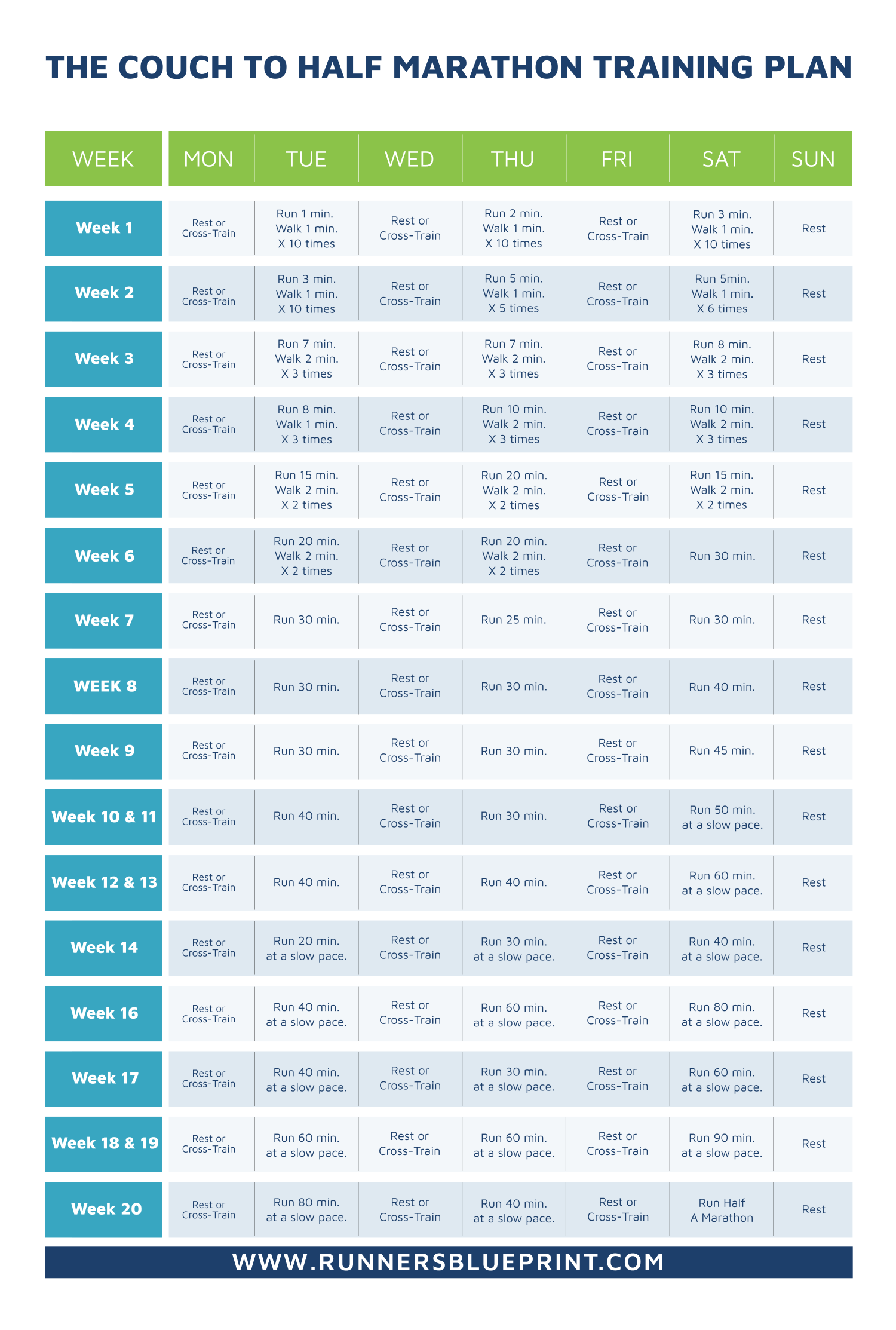
Your 15-Week Couch to Half Marathon Training Plan

Here’s your beginner-friendly 15-week plan to help you cross the finish line of your first half marathon.

We’ll gradually build up your miles and give you plenty of rest and cross-training days to keep you healthy and injury-free.

Don’t worry about being perfect—this plan is just a guide. Feel free to adjust things like rest days, pacing, or even throw in some run/walk intervals if you need to. The key here is steady progress, not rushing ahead too quickly. Stick with it!

The Plan:

Week Monday Tuesday Wednesday Thursday Friday Saturday Sunday
1 Rest 20 min run/walk Cross-train 20 min run/walk Cross-train Rest 3 mi run
2 Rest 25 min run Cross-train 25 min run Cross-train Rest 4 mi run
3 Rest 30 min run Cross-train 30 min run Cross-train Rest 5 mi run
4 Rest 35 min run Cross-train 35 min run Cross-train Rest 6 mi run
5 Rest 35 min run Cross-train 40 min run Cross-train Rest 7 mi run
6 Rest 40 min run Cross-train 45 min run Cross-train Rest 8 mi run
7 Rest 45 min run Cross-train 50 min run Cross-train Rest 9 mi run
8 Rest 45 min run Cross-train 55 min run Cross-train Rest 10 mi run
9 Rest 40 min run Cross-train 45 min run Cross-train Rest 8 mi run (recovery week)
10 Rest 50 min run Cross-train 55 min run Cross-train Rest 11 mi run
11 Rest 50 min run Cross-train 60 min run Cross-train Rest 12 mi run
12 Rest 55 min run Cross-train 60 min run Cross-train Rest 10 mi run (taper week)
13 Rest 45 min run Cross-train 50 min run Cross-train Rest 8 mi run
14 Rest 30 min run Cross-train 30 min run Cross-train Rest 5 mi run
15 Rest 20 min easy run Cross-train 20 min easy run Cross-train Rest Race Day: 13.1 mi

Weeks 1–4: Laying the Foundation

These first few weeks are about getting comfortable and making running a habit. You’re not going to break any records yet—and that’s perfectly fine! The focus is on consistency. If you need to start with run/walk intervals, that’s totally okay. Just get out there and keep moving forward.

Start each run with a 5-minute warm-up. A brisk walk, light jog, or leg swings will get your muscles awake and ready to go. On rest days, keep moving gently. A walk, light stretching, or yoga will help your body recover while keeping you on track. It’s all about staying active without pushing yourself too hard.

Weeks 5–9: Building Endurance

By now, you’ll feel your runs becoming a little easier, and you’ll start building serious endurance. The weekday runs will get longer, and your Sunday long runs will start to ramp up to 8-10 miles. You might have some tough weeks—just stick with it. You’re building strength, and that’s what counts.

On those longer runs, focus on breathing and form. Keep it at a pace where you can still talk, but just barely. This is how you build endurance without overexerting yourself. If you’re feeling low on energy, grab a banana, a gel, or a sports drink halfway through. And don’t forget to refuel after your run! A carb and protein snack, like chocolate milk or a smoothie, will help speed up your recovery.

Weeks 10–12: Peaking

Now, you’re entering the final stretch. You’ll hit your longest runs—up to 12 miles—and then taper to make sure you’re fresh for race day. These weeks are all about getting comfy running for 2+ hours. Trust your training and don’t worry about overdoing it.

If you’re feeling sore, take extra rest or cross-train (swimming or yoga work great). Soreness is normal, but don’t push through pain. It’s easy to get excited on race day and start too fast. One runner said, “We would’ve enjoyed the last 3 miles more if we started slower.” Remember, it’s a marathon, not a sprint.

Weeks 13–15: Taper and Race Day

As you near race day, it’s time to dial it back. These final two weeks are all about letting your body recover and staying fresh. Early in Week 13, you might feel a little sluggish. Don’t worry, that’s normal! It’s your body catching up after all that hard work. By Week 15, your runs should be short (20–30 minutes)—just enough to keep your legs loose and ready to race.

Ease off on the training. Trust me, I know that nervous feeling, but don’t let it mess with you. You’ve done the work—now let it pay off. Stick to what you’ve been doing and skip anything new that could hurt you.

What’s more?

The day before the race, just relax. Have a solid dinner—something with carbs like pasta or rice. Don’t stay up late. And before bed, take a moment to visualize yourself crossing that finish line.

Next, on race day morning, eat a light breakfast—toast with peanut butter or oatmeal about 1–2 hours before the start. Keep your pace steady from the beginning. And just remember—you’ve earned this. Consistency in your training leads to success, so trust in what you’ve done.

Want to take things to the next level? Check out my couch to marathon plan.

Cross-Training and Recovery

Here’s my take: Cross-training has saved me from so many injuries. I used to only run, and it took a toll. But once I added in some biking and strength training, I felt way better and ran faster. Trust me, strength training is huge for those long runs. Being stronger allows my muscles and joints to handle those long runs way better.

For recovery, sleep and nutrition are the two biggest things to focus on. After long runs, your body needs fuel within 30 minutes—your muscles are like sponges for nutrients right after exercise. Go for something like a smoothie or chocolate milk, with a 3:1 or 4:1 carb-to-protein ratio. And stay hydrated. Water’s your best friend—sip on it all day, especially after your runs.

Stretching and foam rolling should be a regular thing too. After your runs, take 1–2 minutes to foam roll those tired muscles—your calves, quads, hamstrings, and glutes. You’ll feel way better after. If you’re super sore, it’s okay to take an extra rest day or switch out a run for cross-training.

Gear, Nutrition, and Runner Essentials

Let’s talk about gear.

First thing’s first: your shoes.

Don’t mess around here. A solid pair of running shoes is your foundation. You don’t need anything fancy, just shoes that fit well and feel right.  Replace your shoes every 300–400 miles to keep your legs feeling fresh.

Moisture-wicking socks are also a must to avoid blisters. And dressing for the weather is huge. In cold weather, layers are your friend. If you’re running in low light, make sure you’re visible—think bright clothes and reflective gear.

Now, for nutrition—balanced meals every day are key. On running days, have a little extra carbs before your run. A banana or toast with peanut butter is perfect. Afterward, get that 4:1 carb-to-protein snack in to kickstart recovery.

And always listen to your body when it comes to hydration and food. If you’re feeling extra tired, take an extra rest day and eat a little more. Running’s part of the equation, but sleep and proper food fill in the rest.

Overcoming Doubts and Staying Motivated

Everyone has those tough days. You’ll find yourself thinking, “Can I really do this?” The key is to push through. Remember why you started, and lean on your community.

Whether it’s friends, a local run group, or virtual buddies, it helps to have someone to share your goals with.

So please start slow and find a partner. It makes it fun and a lot harder to quit.

Not every run is going to feel amazing. Some days you’ll feel unstoppable, and other days you’ll feel like you’re dragging. And that’s totally normal. Don’t give up! Some days are great, some days are okay. Just take it one mile at a time.

Fitting Training into Your Busy Life

Life’s busy, I get it. But trust me, you can still fit in your runs if you plan ahead and get a little creative. Treat your runs like any important meeting or appointment.

My best advice? Treat your run like an appointment.

Put it on your calendar, set a reminder, and stick with it. If you’re not sure where to start, plan your week ahead.

Yes, that might mean waking up early or squeezing in a run on your lunch break, but trust me, it’s worth it.

When time’s tight, focus on quality, not quantity. You don’t need to run every single day. Even 3–4 focused runs a week can totally do the job, especially when you’re just getting started.

Here’s a simple breakdown that works: one long run, one or two moderate runs (with some faster intervals or hills), and an easy run to recover. It doesn’t take a lot of mileage to get fit. Too much running can actually lead to burnout, and no one wants that.

And don’t forget about the days you can’t run. Take a brisk walk, do a quick home workout, or stretch. Every little bit helps, and consistency is key.

Here are a few tips that have worked for me — and others, too:

  • Plan Ahead: Get ready the night before—lay out your running clothes, fill your water bottle, and pack some snacks. ASICS says prepping ahead of time removes those last-minute excuses.
  • Use Small Windows: Got 20 minutes? Use it! You can fit in a quick run before breakfast, during lunch, or after work. It all adds up.
  • Combine Activities: Running errands on foot, or with a stroller if you’ve got little ones? That counts. Even doing squats or lunges during TV commercials helps you get fitter without even thinking about it.
  • Adjust as Needed: Life happens, and that’s okay. Miss a run? Don’t sweat it. It’s not the end of the world. ASICS has a solid reminder: “One or two missed runs won’t wreck your fitness or mess up your goals… just get back to your training the next day.” Give yourself a break and get back on track the next day.

Your training plan should work for you — not the other way around. It’s okay to shuffle workouts or take an extra rest day if you need it. The goal is to do most of those key workouts, not follow a rigid schedule that burns you out.

Handling Soreness and Preventing Injuries

Soreness? Totally normal. It means your muscles are getting stronger. Mayo Clinic says that mild discomfort can actually mean progress — just don’t go overboard. Gradual is the way to go.

Prevent injuries by not cranking up the mileage too fast, and don’t skip your warm-ups. Always start your run with easy jogging or dynamic stretches (think leg swings or lunges) to wake your body up.

Got sore muscles? There are some solid ways to ease the pain:

  • Hot/Cold Therapy: A warm shower or bath can help loosen tight muscles. After a tough run, an ice pack (15 minutes max) can reduce any inflammation. Use these tricks sparingly to keep things fresh between tough workouts.
  • Injury Prevention: Build up those supporting muscles. Squats, lunges, planks, and calf raises — do them 2–3 times a week. Even just 15 minutes at home can save your knees and ankles down the road.
  • When to Slow Down: If you’re dealing with a sharp pain, especially in your knees or shins, take it seriously. Mayo says that if the pain is mild and doesn’t get worse, you can keep going — but always listen to your body. If it doesn’t improve after a couple of days, don’t hesitate to see a professional.

Conclusion: Trust the Process and Keep Running

Congrats — you’re officially on your way to that half marathon! But remember, consistency is what counts. Every run, every cross-training session, every bit of movement helps you get closer to that finish line. Trust the process.

On tough days, look back at how far you’ve come. On easier days, enjoy the flow of your run. Just keep showing up. Like a runner said, “Starting is the worst, but there will come a day where running feels like bliss.” Stick with it, and remember that every week, you’re getting stronger.

I want to hear from you: What part of training has been the toughest so far? Drop your wins, questions, or struggles in the comments! And if these tips helped, pass them along to someone else who’s just getting started.

The finish line is closer than you think — now lace up and get running!

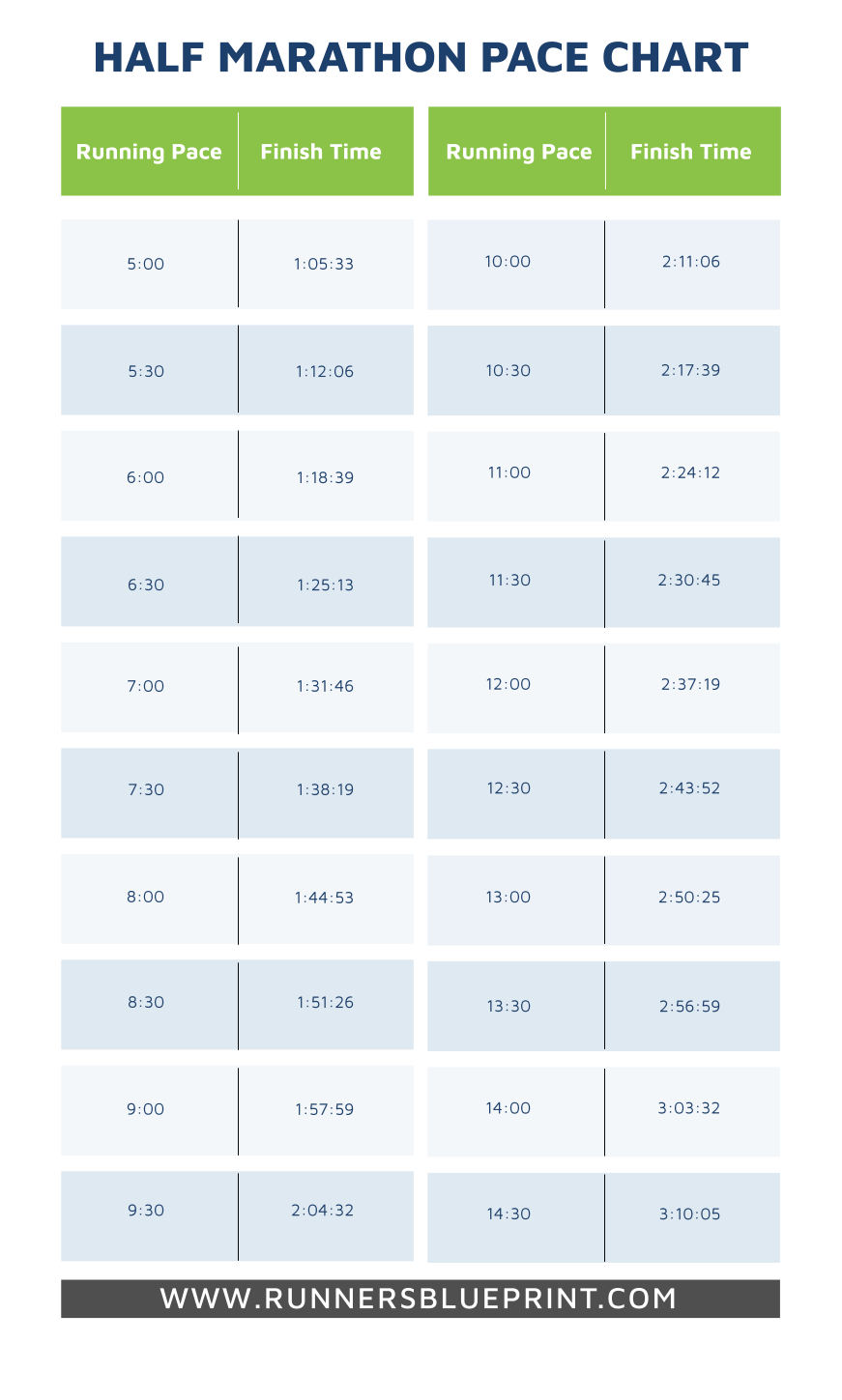
Check the following chart for the exact breakdown of common couch to half marathon running paces:

Half marathon pace chart


couch to half marathon plan


How Much Water Should a Runner Drink

runner drinking water

Looking for practical guidelines on how much water should a runner drink? Then you’ve come to the right place.

Here’s the truth. Proper hydration for runners is key both during the winter season and through the long hot summer.

In fact, if you do any sort of exercise, drinking enough water, before, during, and after your workouts is vital for performance and injury prevention.

This shouldn’t surprise you at all!

Here is the good news.

Staying well-hydrated while running is not rocket science.

This blog post will teach about the importance of water intake in runners as well as how to stay properly hydrated for your runs.

Feel excited?

Let’s lace up and dig in.

The Importance Of Proper Hydration For Runners

Human beings can survive for as long as a month without food.

But, devoid of water, we would perish in three to four days, science says.

Why it’s the case is no mystery.

The human body is about 60 to 70 percent water, and every living cell in the body; it needs to keep functioning.

More specifically, the brain is composed of 95 percent water; lungs are almost 90 percent, blood is 82 percent water.

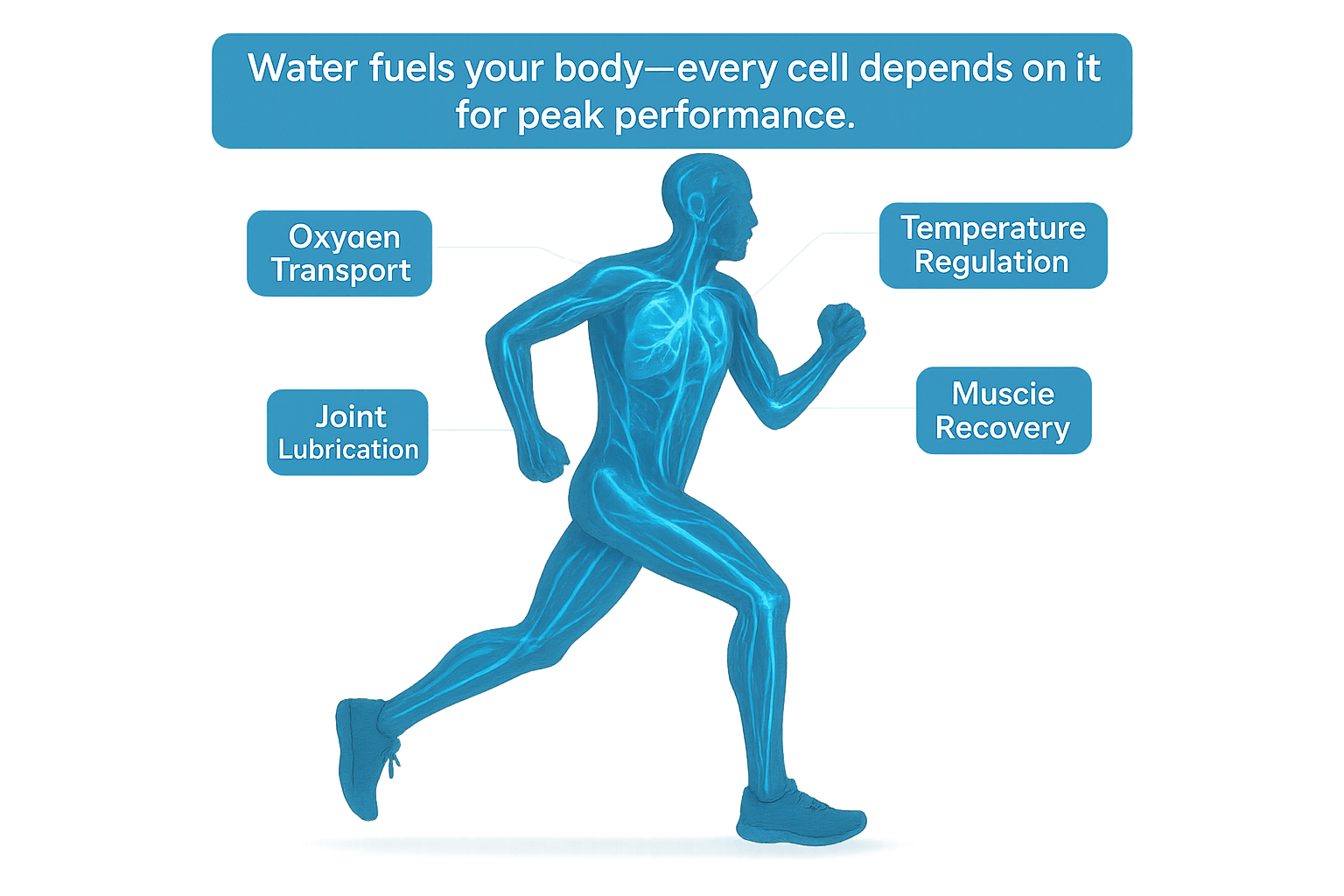
Here are some of the main functions of water:

  • Water flows through the bloodstream, carrying both nutrients and oxygen to cells and flushing waste out of your body.
  • Water cushions our soft tissues and acts as a lubricant for our joints.
  • Water facilitates the proper digestion of food to provide energy. Without it, your digestion system will grind to a halt.
  • Water keeps your skin healthy by eliminating toxins.
  • Water regulates body temperature through sweating and respiration.

For these reasons, it’s not a secret that water is the most critical nutrient for growth, recovery, and health.

Dehydration – Why Do you Need to Avoid it?

Dehydration strikes when you’ve lost too much liquid without replacing it.

When this happens, your organs, cells, and tissues will fail to function as they should, leading to dangerous, even life-threatening, complications.

You might feel easily winded, have muscle cramps, experience loss of coordination or dizziness during your workout as well as other acute symptoms.

The Process – Dehydration and Blood Volume Levels

So, what happens to your body as you become dehydrated?

According to biology, our blood is about 82 percent water.

When you run, you sweat.

As you sweat, your blood volume drops, thus less blood returns to the heart.

Next, the volume of blood your heart pumps with each beat declines, which can hinder oxygen- and nutrient-rich blood from reaching your working muscles.

This leads to a reduction in your aerobic energy production, forcing you to slow down.

Research has found that runners who lose as little as two percent of body weight through sweating experience a drastic drop in blood volume, which, in turn, forces the heart to work harder to circulate blood.

A reduction in blood volume may also cause fatigue, muscle cramps, dizziness, nausea, and heat-induced illnesses, such as heat stroke and heat exhaustion.

Severe cases may result in death.

Additional Resource – What’s the best temperature for running?

Mild VS Severe Dehydration

Dehydration levels can range from mild to serious, even life-threatening cases.

Mild dehydration can typically be treated at home, whereas severe cases of the condition require immediate medical attention in a hospital or emergency care setting.

The most common symptoms of dehydration include:

Mild Dehydration

  • Dry, cool skin
  • Dry, muggy mouth
  • Fatigue or sleepiness
  • Constipation
  • Headache
  • Lightheadedness or dizziness
  • Muscle cramps

Severe Dehydration

  • Extreme thirst
  • Sunken eyes
  • Confusion and irritability
  • Rapid breathing and heart rate
  • Low blood pressure
  • Dark urine, or no urine at all
  • Fever
  • Loss of consciousness (in serious cases).

We are a dehydrated Nation

Most people don’t drink the recommended daily amount of water, which is 60 to 70 ounces of liquid—runners included.

In fact, research shows that up to 75 percent of Americans might not be meeting this daily recommended water intake.

How Much Water Should a Runner Drink

How Much Water Should a Runner Drink

So, how much water should you drink while running?

Here is the thing.

There are no universal rules for how much liquid to drink because everyone is different.

In general, your hydration needs depend on the following factors:

  • Training intensity,
  • Fitness level,
  • The clothes you’re wearing,
  • Your sweat rate, your physiology, and most importantly,
  • The heat and humidity in your environment.

But, all in all, a good general guideline is to aim to drink half of your body weight in ounces each day.

So, for instance, if you weigh 170 pounds, you typically want to try to drink 85 ounces of water per day.

That might seem like too much at first, but if you get yourself into the habit, you’ll be able to reach that target.

Additional resource – Your guide to Charleys Horse in runners

How to Stay Well Hydrated While Running

Here are a few ways that can help reach your daily quota of the life-granting liquid:

Drink The Whole Day

The golden principle is to drink plenty of water throughout the day to stay well hydrated.

Build the habit of drinking water all day long.

Drink first thing in the morning and right before you doze off to sleep.

Also, keep a full water bottle nearby, whether at your desk at work or in your car.

This can serve as a reminder to keep your hydration topped up.

Additional Resource – Running in polluted areas

Start Your Runs Well Hydrated

Have enough water before a run.

In general, this might translate to drinking  500 to 900 ml—the equivalent of two to four glasses of water —in the two to three hours before a run.

Just keep in mind that if you feel thirsty, then you’re already dehydrated.

Note: Do not drink too much water before a workout as doing so can force your kidneys to flush it out, resulting in frequent trips to the bathroom.

Overdrinking can also dilute your body’s sodium balance and boost your risks of hyponatremia.


Hydration During Long Runs

For long distance running, shoot for 150 to 250 ml—roughly one cup—for every 15 to 20 minutes of training.

You should also consider having a sports drink containing carbs and electrolytes for runs over an hour, especially when training in hot weather.

No excuse for lack of water stops

Keep a hydration plan ready, and consider investing in a hydrogen water bottle for added benefits. Hydrogen-rich water is known for its antioxidant properties, which help reduce inflammation and support faster recovery, making it a great choice for runners who need optimal hydration and performance.

You can also use a hydration running vest.

After Your Runs

In general, you can lose up to half a liter for each hour of running.

This can be considerably higher when exercising in warm and/or hot weather.

So, immediately post-run, drink another two to three glasses within 10 to 20 minutes.

To Conclude

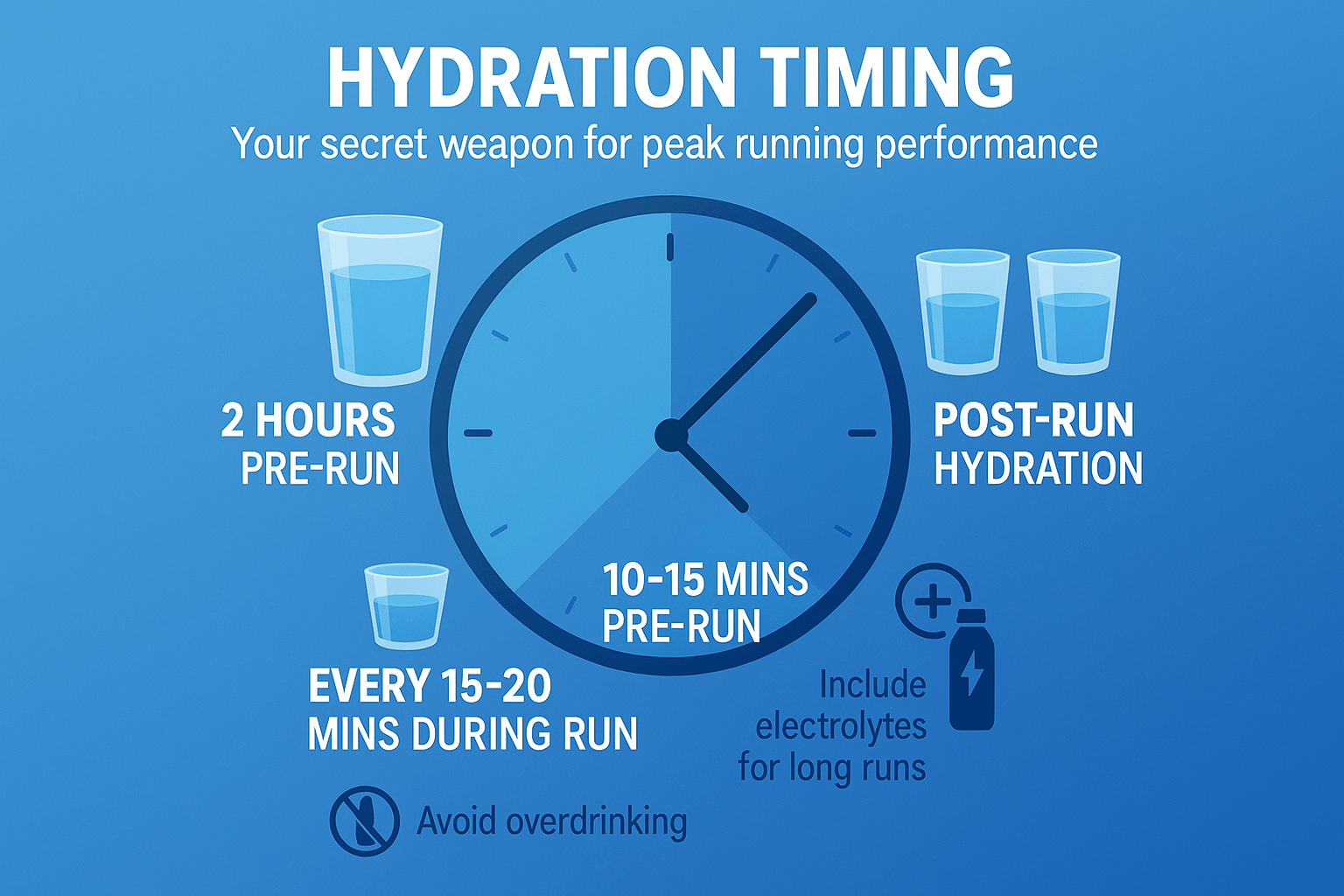
  • Drink two glasses—500ml—two hours before a run.
  • Drink one to two cups—250 to 500 ml—10 to 15 minutes before a workout.
  • Drink third a cup—about 75 to 250 ml—every 15 to 20 minutes during running.
  • Drink two to three glasses—500 to 750 ml—in the 30 minutes following a workout.

Keep in mind, as a runner, you can shed up to half a liter of fluid for each hour of running.

This can get drastically higher when running in hot weather.

Be careful.

Monitoring Hydration Levels

These tips are the basic rules of thumb when it comes to proper hydration, but it’s vital to remember that everyone’s fluid needs are different.

Some runners sweat more than others.

That’s why to make sure that you’re not under- or over-hydrating your body, you need to learn to monitor your hydration levels.

Weigh Yourself

To determine how much water you need,  know your sweat rate.

Weighing yourself both before and after each run can help you measure how much water you lose typically through sweat, which, in turn, helps you determine fluid needs.

This is especially a good strategy if you’re running throughout the hot season.

The Formula

As a rule of thumb, drink 16 ounces of water for every pound you’ve lost during a workout.

So, for example, if you are three pounds lighter after a 90-minute run, aim to drink 48 ounces in the hours following your workout.

Just don’t swig it all at once.

Aim to drink about 500ml in the first hour after your run, then keeping sipping water every 10 to 15 minutes until you have reached your target.

On your next long run, aim to drink 60 ounces of more before or during the workout.

The Pee Test

Another easy way to tell if you’re drinking enough is the urine test.

This may sound like an odd thing to do, but assessing the color of your pee is a proven strategy to monitor hydration levels, according to the University of Connecticut research.

Typically, your urine color should be light yellow—think lemonade.

But once it gets too dark (think apple juice), or particularly smelly, you need to drink up.

That said, clear, transparent urine is a bit excessive.

Still unsure which belong to which?

You can print the urine color guide and take it inside your pocket or running bag.

Wait wait… is there such a thing as drinking too much water.

Of course, there is.

Additional resource – Ice bath for runners

Do not Overdrink

Finally, it is possible to drink too much water while running.

In fact, overhydrating before (and sometimes during) a workout is a common mistake many fluid-conscious runners make.

In the scientific circles, this case is known as Hyponatremia, a condition of low blood sodium, usually associated with Overhydration.

Along with dehydration, this condition is one of the most common medical complications in endurance training and racing.

Mild cases of the condition will cause nausea and bloating, whereas extreme forms of hyponatremia can cause confusion, vomiting, and seizures, even death.

A survey revealed that 9 out of the 17 runners who were hospitalized during an 89KM Marathon in South Africa had been overdrinking—drinking too much water than their bodies’ needs.

To Err On The Side Of Caution…

One measure you can take to cut your risks of this condition is to sip on a sports drink comprising of sodium and electrolytes alongside plain water.

You can also increase your salt intake during hard and intense training days.

Still unsure?

Check with your doctor or nearest lab.

They will take your blood sample to analyze electrolyte serum.

If there’s happen to be abnormal findings, maybe they will show you how to correct so you can keep running comfortably.

How Much Water Should a Runner Drink – Conclusion

I think that’s pretty much it.

Today’s post covers all you need to know about staying well hydrated when running and exercising.

Now it’s up to you to put it into practice.

The rest is just detail.

Please feel free to leave your comments and questions in the section below.

In the meantime, thank you for dropping by.

KT Tape for Shin Splints: How to Tape and Relieve Shin Splint Pain

runner suffering from shin splints

You ever be mid-run, feeling good, then out of nowhere—bam—sharp pain shoots up your shin like someone stabbed you with a pencil? That’s shin splints. And they suck.

I’ve had them. My girlfriend had it worse—she literally broke down crying mid-run during her half marathon training.

It’s the kind of pain that makes even walking feel like punishment. You’re doing everything right—running, training, staying consistent—and then your body throws that curveball.

Funny thing? One of the best fixes we found was a simple roll of KT tape.

I didn’t buy it at first. Tape? Really? But I tried it. She tried it. And it helped. She ran pain-free for the first time in weeks. I was shocked.

So yeah, it’s not magic. But when you use it right, it works.

Here’s how I use KT tape for shin splints, what actually makes it effective, and how to get relief without spending a fortune or taking a month off training.

What Are Shin Splints, Really?

The technical term is medial tibial stress syndrome (yep, sounds intense), but for runners like us, it just means pain that creeps—or stabs—along your shinbone, usually on the inside edge.

It’s basically your lower leg screaming from too much stress. Whether it’s ramping up mileage too fast, pounding pavement without enough rest, or wearing dead shoes, the tissues in that area get inflamed.

Flat feet and overpronation? Big culprits too. If you’re coming back from a break and trying to go beast mode too soon, you’re also in the danger zone.

I’ve seen this over and over with clients—and lived it myself. According to Healthline and PMC, shin splints hit between 13–20% of runners and make up around 60% of all lower leg overuse injuries. That’s not a small club.

How KT Tape Helps Shin Splints (Science + Real Life)

I didn’t believe in tape until I saw it work. Here’s why it’s earned a spot in my gear drawer:

1. It Reduces Pain and Inflammation

KT tape lifts the skin slightly—just enough to improve blood and lymph flow. That extra circulation helps flush out gunk and reduce swelling.

In one PubMed-backed study, runners who taped their shins for just a week had less pain and better leg function than those using shoe inserts.

Think of it like peeling the pressure off your sore shin. That space matters. It speeds up healing and eases soreness, especially after a hard effort.

Real Talk: My girlfriend said it felt like her shin could breathe again. That alone made it worth the 60 seconds it takes to tape up.

2. It Supports—Without Locking You Down

This isn’t a clunky brace. KT tape moves with you. It hugs your leg but still lets you run, squat, walk—whatever.

Better yet, it “talks” to your nervous system through your skin, telling your muscles to chill out and stabilize. That’s huge when your leg’s overreacting and firing in weird patterns to avoid pain.

As a coach, I’ve had athletes tape up, test a few strides, and smile like they just dodged a season-ending injury. It builds confidence—and sometimes that’s half the battle.

3. It Speeds Up Recovery

More blood flow = more healing. Simple.

When I taped up after flare-ups, I noticed less lingering shin pain the next day. My girlfriend shaved a couple of recovery days off her usual downtime just by keeping the tape on post-run.

It’s not magic. But pair it with smart rest, strength work, and a gradual return—and you’ve got a solid recovery plan.

4. It’s Cheap, Easy, and Actually Useful

One roll of tape costs less than your morning smoothie. And you don’t need a degree to use it. Just follow a few steps (I’ll show you), and you’re good to go.

It sticks through sweat, showers, long runs—you name it. I’ve even taped up my Achilles and knee with the same roll.

Honestly, KT tape is like the duct tape of running injuries. Cheap, reliable, and surprisingly effective when you just need to keep moving.

KT Tape Is Not a Magic Fix 

Let’s get something straight: KT tape isn’t a miracle. It’s not going to fix your shin splints by itself. Think of it like a solid backup player — helpful, but it’s not going to win the game for you. That’s on you.

I’ve seen it work. I’ve also seen people slap it on and expect pain to disappear while they keep running like they’re bulletproof. Doesn’t work like that.

In fact, some old-school runners argue KT tape is just a fancy placebo. And honestly? If you don’t fix the real reason your shins are hurting, they’re not totally wrong.

My Take as a Coach

I’ve coached runners who use tape like it’s duct tape for injuries — wrap it on and keep pushing. I’ve done it myself.

But here’s what I’ve learned: if your form is off or your legs aren’t ready for the pounding, no amount of tape will keep the pain away forever.

Take my girlfriend, for example. She ramped up mileage way too fast and skipped calf work. Her shins lit up.

We taped her up, sure — it helped her get through some light runs. But that wasn’t the solution.

We pulled her back a bit, added calf/ankle strength work, and switched her to more cushioned shoes. Boom — progress.

The Shin Taping Method That Works

Follow this tutorial for proper shin pain KT tape relief:

The Real Work: Fix the Root

KT tape should be one piece of your game plan — not the whole playbook. Here’s what else you need to focus on if you want to get rid of shin splints for good:

1. Rest & Don’t Be a Hero

If your shins hurt, back off. Don’t be that runner limping through miles thinking it’s “just soreness.” Shin splints ignored can turn into something nastier — like a stress fracture.

When the pain flares up, take a break or cut your miles way down. Once it settles, build back slow — no more than 10% increase per week. That’s the old rule, and it still works.

2. Strengthen What’s Weak

Most shin pain comes from weak calves and hips. Your legs aren’t absorbing the force, so your shins take the hit.

That’s what happened with my girlfriend. We added toe raises and band work for her ankles and calves — and within a few weeks, the pain backed off big time.

If you’re not already doing calf work, you’re missing the basics. Add glute and hip strength too — strong runners are balanced runners.

3. Fix Your Form & Check Your Shoes

Overstriding? Landing heavy on your heels? You’re punishing your shins. Start listening to your footsteps — aim for quiet landings. Soft, midfoot strikes will save your lower legs.

And your shoes? If they’re old, worn out, or just not right for your foot type (like flat feet or overpronation), they’re part of the problem.

Consider arch support or orthotics if needed. I’ve had athletes tape their arches in addition to their shins to get through rough patches — it can help.

4. Ice & Stretch (Don’t Skip This)

After a run, hit those shins with ice for 10–15 minutes. It calms down inflammation.

Then stretch. Tight calves pull on your shins — foam roll them too. This part isn’t flashy, but it keeps your legs running smooth.

5. Cross-Train & Run Smarter

Sub in cycling or swimming when things flare up. Your lungs stay strong without pounding your shins.

Also, ditch the concrete jungle sometimes — trails and grass are way easier on your legs. Too much pavement is a shin killer.

Here’s more on how to prevent shin splints while running.

Don’t Ignore Serious Pain

Here’s the part most runners don’t want to hear: if your shin pain sticks around even when you’re not running, get checked out. You might be dealing with a stress fracture.

That’s not something you can tape your way through.

Dealing knee pain? Here how KT tape can help.

Frequently Asked Questions (FAQs)

Q1: Does KT tape really help with shin splints?

Yep, it can help — not as a miracle cure, but as a solid tool for keeping you moving when your shins are screaming. It won’t fix the root cause, but it sure can take the edge off.

I’ve used KT tape during those stretches when every step felt like I was getting stabbed in the tibia. It made things bearable so I could stay active while I worked on the real problem (like dialing back mileage, strengthening my calves, and checking my shoes).

And the science backs it up: A study found that after just one week, taping reduced shin pain more than insoles did (PubMed study).

So no, it’s not magic. But it’s a damn good band-aid while you work on the bigger picture.

Your move: Ever tried KT tape on angry shins? If so, did it help? If not, is it time to test it?

Q2: How do you tape your leg for shin splints?

It’s pretty simple once you’ve done it a couple of times. You don’t need to be a PT to figure this out.

Here’s the gist:

  • Flex your foot.
  • Stick one long strip of tape starting near your ankle and run it up along the shin, ending just under the knee — give it a gentle stretch.
  • Then slap on a shorter strip across the pain spot horizontally for extra support.
  • Rub it a bit to heat up the glue — and boom, you’re good to go.

(If you want the full step-by-step, scroll up — I’ve laid it all out clearly.)

This trick has helped me hit the road when rest wasn’t an option. And I’ve shown plenty of coaching clients how to do it, even in hotel rooms before race day.

Question for you: Do you already use tape? Or still winging it with ice packs and crossed fingers?

Q3: Can I run with KT tape on my shin splints?

Yeah, that’s the point — taping lets you keep running without making things worse (as long as you’re smart about it).

KT tape is built to give support without locking you up. When my shin pain flared during a training cycle, taping let me keep logging miles — though I did scale back speedwork and hills.

It didn’t give me a free pass to hammer it. That’s the key: use the tape to help, not to hide.

And if it still hurts? That’s your body throwing a red flag. Switch to biking, swimming, or even just take a couple days off.

No tape will save you if you’re just stacking injury on injury.

Think about this: Are you training smart with tape — or using it to avoid resting?

Q4: How long should I leave KT tape on for shin splints?

Most tape brands will hold for about 3 to 5 days. That includes through showers, sweaty runs, and a bit of wear and tear.

In my case, around day 3 or 4 the edges start peeling — especially if I’ve been running in Bali humidity or showering twice a day (which I usually do).

If it starts flapping or if your skin gets cranky, peel it off and let your skin breathe for a bit before reapplying.

Don’t layer tape on tape. Let your legs rest too.

Tip from the road: I’ve raced and trained with tape that held up like a champ. But I’ve also had a bad roll peel off mid-run and slap my leg like a wet noodle. Test it before race day.

Bringing It All Together: The Real Takeaway

Look, I’ve had shin splints that made me limp off a trail cursing under my breath. I’ve also made comebacks using nothing but tape, calf raises, and a stubborn refusal to quit.

KT tape won’t “heal” you overnight. But it’s a reliable teammate in your recovery lineup — especially when paired with the right shoes, smart training, and rest when needed.

I’ve seen this stuff help beginners stay consistent, help my girlfriend finish a brutal race series without hobbling, and help me survive brutal back-to-back long runs during peak weeks.

It works if you respect it for what it is — a support, not a fix.

So Now What?

Grab a roll. Tape your leg. Try it on your next easy run and see how it feels. That small strip of tape might just be the edge you need to get through a tough patch.

Your mission:

Let me know how it goes. Are you giving KT tape a shot this week? Drop a comment or DM — I’m always curious how it works for other runners.

Stay strong, take care of those legs, and never let a little pain stop you from chasing big goals.


Ready to take action? Your shins won’t tape themselves! Give this taping method a shot and let me know how it goes.

Here’s to many miles of happy, healthy running ahead. Stay strong, stay positive, and take care of those legs!

Happy running and speedy recovery!

Running in the Sun: Risks, Rewards & Real Advice from a Coach Who Learned the Hard Way

running in the sun

Let me paint a picture.

Bali. 10 a.m. Sky like a blowtorch. I lace up for a long run, feeling strong. Fit. Confident. Maybe a little cocky.

10 miles later, I’m weaving across the road like a drunk, seeing spots, skin pale as milk.

A scooter driver pulled over — not to offer a ride, but because I looked like I was seconds from collapsing.

That day didn’t end in a medal. It ended with a heat scare that left me shaky, humbled, and smarter.

Next, I took a Gojek (Bali Uber) home, and collapsed the whole day.

Here’s what I learned: the sun doesn’t care how fit you are.

Your PRs, your VO₂max, your mileage logs — none of that matters if you overheat.

The sun is an unrelenting training partner, and if you don’t respect it, it’ll bury you.

Let me share with you my full guide to running in the sun…

Is Running in the Sun “Good” or “Bad”? Yes.

The sun isn’t your enemy — but it’s no casual buddy, either. Think of it like altitude or hills: powerful if used right, dangerous if you’re careless.

Let’s break it down.

The Rewards: Sunlight Can Be Your Ally

  • Vitamin D Boost: Just 10–30 minutes of sunlight helps your body produce vitamin D — crucial for mood, bones, immunity, and even sleep regulation. (Low D = low energy.)
  • Mental Lift: Sunlight triggers serotonin — the “feel-good” hormone. That’s why a sunny run often feels more energizing than a gray-day slog.
  • Circadian Sync: Morning sun exposure helps suppress melatonin and reset your body clock, improving sleep quality.
  • Possible Endurance Perk: Some studies suggest that UVA rays can stimulate nitric oxide release — dilating blood vessels and slightly improving blood flow and endurance. Think of it as a micro “boost.”
  • Grit Training: Running in the heat builds mental toughness. If you can push through a sun-scorched tempo, you can handle just about anything race day throws at you.

So yeah — sunshine isn’t all bad. Done right, it can actually help you become a stronger, tougher, more resilient runner.

The Risks: The Sun Hits Harder Than You Think

But here’s the reality check: running under that giant UV lamp in the sky comes with serious downsides, especially if you wing it.

1. Dehydration & Heat Illness

Your body heats up faster in direct sun.

Add in humidity, and your internal cooling system struggles to keep up. That’s when heat exhaustion (or worse, heat stroke) starts knocking.

  • Dizzy at mile 8?
  • Nausea after a short run?
  • Stumbling, seeing spots?

You’re not “just tired.” You’re overheating — and the margin between “fine” and “medical tent” is razor-thin on hot days.

2. UV Exposure = Skin Damage

This one sneaks up on you. You don’t “feel” UV damage right away, but it builds over time — and runners are uniquely exposed.

I used to skip sunscreen on runs. “It’s only an hour.” “It’s cloudy.” “I don’t want it to sting my eyes.” Sound familiar?

I stopped making excuses after watching a teammate get a biopsy on his cheek — and it wasn’t a sunburn that caused it.

3. Performance Suffers in Heat

Even before danger sets in, heat drags your pace down. Your heart works harder. Your perceived effort spikes. You might be doing “easy pace” but your body thinks it’s threshold.

And here’s the kicker: it’s not weakness. It’s physiology.

Heat increases core temperature → blood shifts toward skin to cool you → less oxygen-rich blood goes to your muscles → pace drops, fatigue rises.

It’s not mental. It’s science.

Why the Sun Slows You Down  

Ever feel like your easy pace turns into a slog under the hot sun? That’s not mental weakness — it’s biology doing its best to keep you from overheating.

Heat = Internal Traffic Jam

When your core temp rises, your body sends blood to the skin to dump heat (this is why you flush red).

That’s great for cooling — but bad news for your muscles, because now less oxygen-rich blood is going to your legs.

You’re suddenly underpowered at the same pace that felt easy in cooler temps.

  • Heart rate spikes
  • Breathing gets heavier
  • Perceived effort climbs

You’re not suddenly out of shape — you’re just fighting biology.

The Numbers Don’t Lie

  • Every 10°F over 55°F slows marathon times by 1.5–3%
  • Just 2% dehydration = 4–6% drop in performance
  • Each 1°C (1.8°F) rise in internal temp = ~10 bpm increase in heart rate

That’s why your effort level feels way higher even if you’re running slower than usual.

Dehydration = Thicker Blood + Less Power

You sweat to cool off. But sweating means fluid loss. That means less blood volume, which forces your heart to work harder to pump what’s left.

Add in electrolyte loss and you’ve got a recipe for cramps, dizziness, and decline.

And in humid weather? It gets worse. Sweat can’t evaporate, so you overheat even faster. Your body pours out more sweat, and dehydration snowballs.

Vicious Cycle in the Sun

  • Body tries to cool itself → sends blood to skin
  • Muscles get less oxygen → pace feels harder
  • You sweat more → lose fluids and electrolytes
  • Blood thickens → heart pumps harder
  • Heart rate soars → effort spikes
  • You slow down or bonk

Sound familiar? That’s the sun beating you down.

Everything I Wish I Knew Sooner

Running under the sun doesn’t have to fry your skin or wreck your training.

I learned most of this the hard way (sunburns, overheating, brutal post-run headaches).

Save yourself the pain and follow this proven, step-by-step checklist for safe and smart sun running.

1. Use Sunscreen Like a Pro (Not an Afterthought)

If you ignore everything else, don’t skip sunscreen. It’s simple, fast, and could literally save your skin (and your life).

Here’s what I drill into all my runners:

  • Use SPF 30 or higher – Go for broad-spectrum, which blocks both UVA and UVB. I use SPF 50 on bright days.
  • Sports/water-resistant formula – Regular face lotion with SPF 15 won’t cut it for a long, sweaty run.
  • Apply 20–30 minutes BEFORE heading out – Not as you’re stepping out the door. Give it time to bind.
  • Don’t skimp – Use at least 1 oz (a shot glass) for full body.

Commonly missed spots:

  • Ears
  • Back of neck
  • Tops of shoulders
  • Hairline/scalp
  • Tops of feet (if wearing sandals or open shoes)
  • Reapply on long runs – After 90–120 minutes, it’s breaking down.
    • Carry a mini stick
    • Plan your route to loop by your car/house

Check expiration dates, and don’t store sunscreen in a hot car—it degrades faster.

Quick stat: Regular SPF 15+ use can lower your melanoma risk by 50%. If you remember to charge your GPS watch, you can remember sunscreen.

2. Cover Up with UPF Gear (Yes, Even in Heat)

I used to think running shirtless or in a tank was “cooler.” That worked—until the sun toasted my shoulders and I peeled like an onion for a week.

Now I swear by UPF clothing.

UPF = Ultraviolet Protection Factor. It’s like SPF for fabric.

A UPF 50 shirt blocks 98% of UV rays—no reapplying needed.

Here’s what works:

  • Lightweight long-sleeve UPF shirts
    • Moisture-wicking, loose fit, reflective
    • I run in Columbia and Patagonia UPF 50 shirts—cooler than a tank in blazing sun.
  • Sun sleeves
    • Like arm warmers but UV-blocking. Great for races that start cool but heat up.
  • Hats are non-negotiable
    • Pick one with a dark underbill to reduce glare
    • Desert-style caps with neck drapes? Dorky but effective.
  • Neck gaiters or Buffs
    • Protects neck, can be soaked with cold water too
  • Visors (if you hate full hats)
    • At least shade your face—but sunscreen your scalp.

Fabric tips:

  • Look for UPF, “UV protection,” or brand tags like “Omni-Shade”
  • Synthetic > cotton, tight weave = better sun block
  • Light colors reflect heat (my go-to is a loose white long sleeve)

Remember: UPF clothing is your first armor layer. Sunscreen covers what your clothes don’t. Don’t skip either.

3. Shield Your Eyes – Polarized Sunglasses Are Non-Negotiable

Running in the sun without sunglasses? Rookie move. Your eyes take a beating out there—UV exposure isn’t just annoying, it’s damaging long-term.

We’re talking cataracts, macular issues, and that relentless squinting that turns every run into a headache.

Here’s what you need in real running sunglasses:

  • 100% UV Protection: This is the bare minimum. Lenses must block 100% of UVA and UVB rays. If they don’t, you’re making things worse—dark lenses without UV protection dilate your pupils and invite more UV in. Always check for certified UV protection.
  • Polarized Lenses: Cuts glare from pavement, cars, water—any horizontal light that makes you squint and lose focus. On the roads, they’re a game-changer. (Note: can distort watch screens and terrain slightly.)
  • Wrap or Full Coverage Frames: Light leaks kill comfort. Wide lenses or wraparound frames block from sides and top, while also keeping dust, wind, and bugs out.
  • Non-Slip Fit: Lightweight, sweat-proof, rubber nose pads and arms. No bounce, no constant adjusting.

I wear goodr shades—cheap, polarized, stay in place. No bounce, no fuss.

4. Hydration & Electrolytes

Hot day? Sunny run? You better have a hydration plan. This isn’t optional—it’s survival.

In the heat, you’re bleeding fluids and salts. Ignore that and you’ll crash hard: fatigue, cramps, heat exhaustion.

Here’s how I handle hydration when the sun’s blazing:

I sip water steadily for hours before any run in the heat.

  • Not gallons—just steady intake.
  • Afternoon run? Drink all morning.
  • Morning run? Full glass right when I wake up.

No pounding water. Just topping off.

Running dry is like showing up to the track meet in flip-flops. Don’t be that runner.

When to Drink: Don’t Wait for Thirst

If you’re waiting until you’re parched, you’re already late.

  • Small sip every 15–20 minutes on hot runs
  • Nothing crazy, just consistent

Pro Tip: Pair fluids with electrolytes if you’re out for more than an hour or sweating buckets. Look for sodium, potassium, and magnesium—not just sugar water. I use tabs or mix-ins like Nuun or LMNT.

5. Don’t Just Drink – Replenish Electrolytes Too

If you’re sweating buckets on a long or hot run, you’re not just losing water—you’re leaking out crucial electrolytes like sodium, potassium, and magnesium.

Ever finish a summer run with white streaks on your shirt or face? That’s salt, not just sweat.

Ignoring this can leave your muscles cramping and your brain foggy.

In extreme cases, you risk hyponatremia—dangerously low sodium levels, especially if you’re only drinking water.

My rule? For any run over an hour in heat, I add electrolytes to the mix:

  • Drop a tablet (Nuun, GU Hydration, LMNT, etc.) into your bottle
  • Use a low-sugar sports drink
  • On really long or hot efforts? Keep salt capsules handy and pop one if cramping kicks in

Bonus: Electrolyte drinks often taste better than plain water—which helps you drink more. Just watch the sugar content if your stomach gets touchy during intense efforts.

And don’t stop hydrating after your run. That’s when real recovery happens.

Simple trick: Weigh yourself pre- and post-run. For every pound lost, drink 16–20 oz of fluid. Lost 2 lbs? That’s about a quart of water to sip over the next hour or two—ideally with some sodium included.

Post-run hydration = fewer headaches, faster recovery, and no “heat hangover” later.

6. Run Early or Late – Never at High Noon

This one’s simple but powerful: avoid the sun’s peak hours whenever possible. Between 10 a.m. and 4 p.m., the UV index and temps are at their worst.

If you can’t avoid it, be smart—but ideally, just shift your run.

Morning = Best

Most summer days, I’m out the door before 6:00 a.m.

  • Temps are cooler
  • Air is cleaner
  • The world’s quieter
  • You finish before the sun scorches the pavement
  • Plus, you get a small mental win before the day even starts

Evening = Second Best

If mornings aren’t an option, aim for after 6 p.m. when the sun is lower.

  • Still warm, but less direct UV
  • Shaded routes or breezy spots make it tolerable

Midday = High Risk

Sometimes work or travel forces a midday run. If that’s you:

  • Pick shaded paths or trails (tree canopy = nature’s air conditioner)
  • Stay hydrated
  • Consider splitting your session: 5 miles now, 5 later

It’s not ideal for training stimulus, but it keeps you from frying.

7. Mid-Run Adjustments – Stay Ahead of the Heat

When the sun’s up and the temps climb, you’ve got to stay sharp mid-run.

No sweating? Chills? Nausea? Red flags. If they hit, I stop immediately, find shade, and reassess.

Thankfully, since tightening up my prep game, it hasn’t come to that.

That said, I don’t wait for problems. On hot days, I’ll make quick pit stops at water fountains or sprinklers to splash cold water on my face or neck.

  • Dunking my hat under a faucet or in a river = instant cooling for head and neck.
  • Soaking a hat or gaiter with cold water works like DIY air conditioning.

Mindset: You Won’t “Beat” the Sun – But You Can Handle It

The mental game matters just as much as sunscreen and hydration.

Hot runs won’t feel comfortable—stop expecting them to. Instead, train your brain to expect discomfort… and to handle it.

I tell my runners: “Don’t aim for easy—aim to manage the hard stuff better.”

I no longer obsess over pace on hot days. My goal is effort and stamina, not speed.

Over time, I’ve started to take pride in running strong through brutal conditions.

It’s like forging steel in fire—ugly, but effective. Sure, I still curse the sun mid-run sometimes. But I know I’m out there facing what most avoid.

And when race day rolls around on a cool, crisp morning?

You’ll be grateful for every sweaty mile you gutted out in the heat. You’ll be prepared. You’ll be heat-trained.

Coach’s Corner: My Go-To Sunny Run System (Steal This Playbook)

Running in the sun isn’t just a sweat-fest—it’s a battle against dehydration, sunburn, and total energy drain.

After years of trial, error, and the occasional hose-chugging desperation, I’ve landed on a system that works. It’s not fancy, but it keeps me cool, protected, and running strong.

Here’s exactly how I handle sunny runs. Take what works. Leave what doesn’t. Just don’t wing it when it’s 85°F and rising.

1. Gear Up (Cover More, Burn Less)

Forget going shirtless to stay cool. That’s how you get cooked. I wear:

  • White UPF 50 long-sleeve (Columbia or similar): Reflects sun, weighs nothing, and keeps me cooler than bare skin.
  • Sun sleeves if I go with a t-shirt—slide them on once the sun’s high.
  • Hat: Brooks cap for short runs, wide-brim Sunday Afternoons hat for long hauls. I look like I’m hiking the Sahara, but I’d rather look goofy than fried.
  • Polarized goodr sunglasses: No glare, no slipping, no headaches.
  • Optional gaiters: Covers the sock-shoe gap. No sunburnt ankles or weird tan lines. Bonus: keeps trail dust out.

Bottom line: Cover more, sweat smarter. Sun protection is performance gear.

2. Sunscreen Protocol (Apply, Wait, Win)

Sunscreen isn’t optional. It’s gear.

  • I use SPF 50 across the board.
  • Body: Neutrogena Ultra Sheer.
  • Face: EltaMD UV Sport – doesn’t sting when I sweat.
  • Lips: SPF balm. Don’t skip this unless you like cracked, bleeding lips.

Routine:

  • Apply 30 minutes before go-time.
  • Hit all the key spots: ears, neck, behind knees, shoulders, even armpits if they’re exposed.
  • Let it soak in while I prep fluids or do my dynamic warm-up.
  • For long runs: carry a mini sunscreen stick for touch-ups.

Missed spots = regrets. Trust me, I’ve been the crispy guy once. Never again.

3. Hydration Plan (Don’t Be a Hero)

I plan hydration based on duration + heat:

  • <60 mins & mild: I might go dry, but I always drink a full glass before heading out.
  • 60–90 mins: I carry a 500 ml handheld, cold water + salt or electrolyte tab.
  • 2+ hours / high heat: I wear my hydration vest (1.5L bladder), no shame.

Pro move: Freeze half the bottle/bladder overnight, then top it off. I stash a couple electrolyte caps in case cramps creep up.

4. Timing & Route: Outsmart the Sun

  • Morning runs win: I aim to start within 30 minutes of sunrise. Cooler, quieter, less UV intensity.
  • Evening runs: If it’s evening, I wait until 6–7 p.m. when the sun starts to drop.
  • Mid-day (if forced):
    • Shaded loops—parks, tree-lined paths
    • Or drive to a higher trailhead where it’s cooler

If you’re running in direct sun, you’re running uphill in every way. Choose routes that work for you, not against you.

Final Words

Running in the sun is no joke. It can either lift you up or burn you down — sometimes both in the same run.

You get the mood boost, the vitamin D, the mental edge from pushing through heat. But if you’re not careful, you’re flirting with dehydration, sunburn, and heat exhaustion that can sideline your training or worse.

So yeah, soak in the sunshine — just don’t let it cook you alive.

Keep Training strong

David D.

Why Your Running Isn’t Improving – 8 Mistakes That Keep You Stuck

Ever feel like you’re grinding out the miles, doing the work, and still… nothing’s changing?

Your pace won’t budge.

Your long runs aren’t getting easier.

And your body? Feels like it’s just treading water.

Welcome to the plateau. It happens to all of us.

I’ve hit it more times than I can count—early on, after a big race, or right when I thought I was about to level up

. One week you’re cruising, and the next you’re stuck in quicksand, wondering what you’re doing wrong.

Here’s the good news: this doesn’t mean you’ve failed. It just means something’s off in your training—and that’s fixable.

The trick is figuring out what’s actually holding you back.

And trust me, it’s usually not just bad luck or a slow metabolism. It’s habits. Oversights. Maybe even stuff you don’t realize is wrecking your recovery or blocking your gains.

So let’s break it down.

Here are 8 common reasons runners get stuck—and how to fix each one. No fluff. Just real talk and real solutions to get you running stronger again.

Overtraining – When Hustle Turns Into a Crash

Look, I love the grind.

But more miles and more intensity don’t automatically mean more gains.

In fact, pushing hard all the time without giving your body time to bounce back? That’s a fast track to burnout.

I’ve coached runners who trained like machines—until everything started falling apart.

Sluggish pace.

Trouble sleeping.

Constant minor injuries.

You know the drill.

The Signs:

  • Legs feel heavy all the time
  • Resting heart rate creeping higher than usual
  • Sleep sucks (can’t fall asleep or wake up groggy)
  • Mood swings, irritability, no motivation
  • Getting sick more often than usual
  • Paces that used to feel chill now feel brutal

That’s your body yelling, “Back off!”

Overtraining really sucks.

The Fix: Train smarter—not harder.

Recovery is where the magic happens. Your body doesn’t get stronger during a workout—it gets stronger when you rest after it.

Here’s what I tell my runners: for every hard day, give yourself an easy one. And at least one full rest day a week. No running, no “just a shakeout jog.” Total rest. Nap, stretch, chill.

Sample rhythm?

  • Hard days: Monday, Wednesday, Saturday
  • Easy runs or cross-train: Tuesday, Thursday, Friday
  • Full rest: Sunday

One runner I coached was stuck for months. All gas, no brakes. We added two recovery runs and a Sunday off. Within weeks, his long run pace dropped by almost a minute per mile—without doing anything new.

Just letting his body catch up.

Science backs this up. Studies show proper rest improves endurance, reduces injury risk, and helps you train longer, more consistently. And guess what wins long-term? Consistency.

So if you’re feeling wrecked? Back off. Rest. Your next breakthrough might just be a nap away.

Underfueling – Running on Fumes

This one’s sneaky, especially if you’re chasing fat loss or trying to “lean out.” But if you’re not eating enough to fuel the work, you’re not gonna see progress.

You’re just gonna get tired, cranky, and flat-out slower.

Your body’s like an engine. It needs gas. You wouldn’t try to drive cross-country on half a tank, right? So why expect top performance on too little food?

The Red Flags:

  • No energy during runs
  • Poor recovery—still sore 3 days later
  • Moody, foggy, tired all the time
  • Slower pace despite training more
  • Random weight plateaus or even loss of fitness

There’s actual science behind this. When you don’t eat enough, especially with serious training, your body enters a state called low energy availability. That’s when you don’t have enough fuel left over—after your workouts—to run your basic systems.

Hormones get messed up, recovery tanks, metabolism slows, and boom—your gains vanish.

The Fix: Fuel like you mean it.

Running 5 miles burns roughly 500 calories. That’s not a suggestion—it’s a bill your body expects you to pay back.

If you’re training regularly, you’ll likely need 2,400–3,000+ calories a day, depending on size, pace, and mileage.

Your diet should be:

  • Carb-heavy (yes, carbs are your friend—whole grains, fruit, rice, starchy veg)
  • Protein-packed (lean meats, eggs, tofu, legumes—your muscles need this to rebuild)
  • Fat-fueled (avocados, nuts, olive oil—don’t fear the fats)

Hydration counts too. Even mild dehydration can kill your performance. Aim for around 60–90 oz of water daily, more if it’s hot or you’re logging big miles.

And if you’re trying to lose weight? Do it gradually—aim for just a 300–500 calorie deficit max. More than that, and you’re draining your tank dry.

Tough Weather Runs: How to Stop Letting the Forecast Wreck Your Confidence

Here’s a rookie mistake I see way too often: trying to hit your usual pace on a day that feels like Mother Nature’s out for revenge.

Whether it’s blazing hot, swampy with humidity, or so cold your eyelashes freeze—weather changes everything.

And yet, runners beat themselves up like they lost fitness overnight just because they couldn’t maintain their “usual pace.”

I’m guilty of thiss, too.

Pushing when I should’ve backed off, ended up overheated, lightheaded, and pissed at myself. Lesson learned: adjust, don’t suffer.

Heat Doesn’t Just Feel Harder – It Is Harder

Running in the heat isn’t about “toughing it out.” It’s literally harder on your body.

When it’s hot and humid, your heart’s working overtime just to cool you off.

Your sweat doesn’t evaporate properly, your core temp rises, and suddenly every mile feels like a slog through molasses.

And don’t just take my word for it. Here are some numbers to keep in mind:

  • For every 5°F above 60°F, studies show your pace can drop by 20–30 seconds per mile.
  • A deep dive into Boston Marathon results found that a 1°C rise in temperature slowed finish times by nearly 2 minutes.
  • One year at the London Marathon, the temp hit 75°F (24°C)—not exactly Sahara heat—and the average finisher came in 20 minutes slower than usual.

So yeah, it’s not just you. Everyone slows down in the heat.

Cold Can Be Tricky, Too

Cold temps (down to around 40°F/5°C) actually help your performance—at least for a while.

But once you’re running in freezing temps, things change. Your muscles stiffen up, breathing cold air gets rough, and you’re wearing five layers like a running burrito.

One study found a 5% drop in aerobic performance at –20°C (–4°F). But for most runners, the risk isn’t the cold itself—it’s the illusion that you can go faster since your heart rate stays lower. Then boom, you overdo it without realizing it.

So What Do You Do?

  • Run by effort, not by pace. Forget the GPS when it’s 90°F with 90% humidity or snowing sideways.
  • Hydrate like it matters—because it does. Even in cold weather.
  • Tweak your run times. Go early or late when it’s hot. Or hit the treadmill if it’s unsafe outside.
  • Shorten the run or add walk breaks. That’s not weakness—it’s smart training.

In cold weather? Layer up, warm up longer, and watch for slippery spots. The air won’t kill your pace unless you’re in the Arctic, but running like a deer on ice will.

Tough-weather runs don’t just build fitness—they build grit. So yeah, they suck now, but they pay off big later.

I tell my runners: leave the ego at home, run smart, and remember—your body’s still working hard even if the watch says otherwise.

Why Running the Same Route at the Same Pace is Killing Your Gains

Here’s another one I see all the time—same distance, same loop, same pace, every day.

It’s comfortable, it’s familiar… and it’s a fast-track to nowhere.

Look, I get it. Habit is great.

It keeps you consistent. B

ut if every run is that same “kinda hard, kinda easy” effort, guess what? Your body stops adapting. You stall out. Zero progress.

You’ve landed in the gray zone:

  • Not slow enough to recover.
  • Not fast enough to improve.

I hate to be stuck in this training limbo. And I bet you feel the same.

Why You’re Not Getting Faster

Training is a stimulus. Do the same thing over and over, and your body goes, “Cool, I’ve got this,” and stops trying.

You need variety—different speeds, different distances, different challenges—to keep your fitness moving forward.

In fact, if you only train 2–3 times a week, you can still make progress—but your training better evolve or you’re just spinning your wheels.

And science backs it up.

  • An 8-week HIIT study in Medicine & Science in Sports & Exercise found that interval training bumped runners’ VO₂ max by 6–7%, and their heart’s stroke volume jumped nearly 10%. That’s a huge deal for endurance.
  • Same with lactate threshold—mixing tempos and intervals helps you stay strong longer before your legs turn to Jell-O.

Here’s the Fix: Mix. It. Up.

You don’t need some fancy program. Just a balanced week. Something like:

  • 1 long, chill run
  • 1 tempo run (comfortably hard, not a race)
  • 1 interval session (e.g. 4 × 3 minutes fast with 2 min jog)
  • Easy runs to fill the gaps
  • Rest days to keep your body from hating you

Add strides. Throw in a fartlek. Try a hill workout. Doesn’t need to be fancy—just different.

I’ve seen runners stuck at the same pace for months, then BAM—they add two speed workouts a week and suddenly PR their next 5K.

As I always say:

“If you always do what you’ve always done, you’ll always get what you’ve always got.”

Inconsistency: The Silent Fitness Killer

Let’s be honest: we all hit those “meh” weeks. You miss a run here, skip a few sessions there, and before you know it, your training plan’s collecting dust while your fitness starts slipping out the back door.

I’m not calling you lazy—life happens. Work ramps up. Kids get sick. You lose motivation.

But let’s not pretend those missed runs don’t add up.

Inconsistent training is one of the biggest reasons runners hit plateaus—or worse, go backwards.

Running rewards the grind. Not the perfect workouts or the superhuman long runs—just showing up consistently.

Think of it like pushing a heavy wheel. Each workout gets it rolling. But if you stop? That wheel slows down fast. Miss a week here, take another few days off there… now you’re starting over again. Sound familiar?

If there’s a secret to running success, it’s consistency over time. No other goal matters without it.

The Fix? Build Consistency You Can Stick To

Drop the all-or-nothing mindset. Instead, build a realistic training schedule you can actually stick to.

If six days a week is too much? Fine. Lock in four solid days, every week.

That’ll do more for your fitness than bouncing between zero and six like a yo-yo.

Science backs it:

  • To maintain aerobic fitness, you need at least two runs a week.
  • Want to improve? You’ll need three to five.
  • A study from the University of Colorado even stated it plain: “Aerobic training 3 to 5 days per week will improve cardiovascular fitness. Training just 2 days will help you maintain.”

Bottom line? You don’t have to run every day. But you do need to run regularly.

My best tips on staying consistent:

  • Treat your runs like appointments. Non-negotiable.
  • Join a running group or partner up. It’s harder to bail when someone’s waiting.
  • Sign up for a race. A race on the calendar = fire under your feet.
  • Track your progress. Apps, journals, old-school calendars—it doesn’t matter. Just keep score.
  • Busy week ahead? Don’t go dark. Even 2 quick runs will keep the wheels spinning.

Consistency doesn’t mean perfection. You’ll miss a day here and there. That’s fine. What matters is getting back out there.

Keep building brick by brick—and that fitness base gets rock solid.

Oh, and don’t forget to progress slowly.

The American College of Sports Medicine recommends the classic 10% rule—don’t bump up weekly mileage by more than 10%.

You’re not trying to win the week. You’re trying to win the year.

So yeah—run like the tortoise. Steady. Relentless. And eventually? You’ll outrun the version of yourself who couldn’t stay consistent.

Running Through the Decades: Age Is Not Your Excuse

Let’s get this straight—you’re not too old to get faster.

But you might be too stubborn to train differently.

One of the biggest mistakes I see in runners over 40? Either they ignore age altogether and try to train like they’re still 25… or they use age as an excuse to stop pushing. Both approaches are a one-way ticket to frustration—or worse, injury.

Here’s the real deal: your body changes as you age. That doesn’t mean you can’t improve. It just means you’ve got to train smarter.

What Changes with Age?

  • VO₂ max (your cardio engine) drops about 1% per year after 40
  • Max heart rate goes down
  • Muscle mass and strength gradually decline (hello, sarcopenia)
  • Recovery slows—your tendons and muscles need more TLC

A 2016 review called out the big three limiters in aging runners:

  • VO₂ max
  • Heart stroke volume
  • Muscle mass

Still, it’s not all downhill. Regular training slows these declines. Big time.

In fact, race data from 190,000 runners in a 15K showed times stay pretty stable through your 30s. After 40, they drop about 1% per year on average.

So yeah—by 50, you might be 10% slower than at 40. But that’s not bad—it’s just different.

The Upside of Aging (Yes, There Is One)

While raw speed fades, endurance and mental strength often increase. That’s why you’ll see 50- and 60-year-olds crush marathons and ultras. They’ve got patience. They know how to pace. And they’ve trained their bodies to go long.

So stop comparing your mile splits to your 25-year-old self. Instead, ask:

How well am I training for who I am today?

Tips for Mastering Your Master’s Years

  • Recover like it’s your job. Rest, sleep, fueling, and low-impact cross-training.
  • Lift weights. You’re losing muscle faster now—fight back.
  • Shift to quality over quantity. Hit key workouts with purpose. Fewer junk miles.
  • Listen to your body. Little injuries linger longer. Don’t power through—adapt.

Age doesn’t end your PR days. It just changes how you chase them.

So whether you’re 45 and grinding for a sub-4 marathon or 60 and running your first 10K, don’t buy into the “too old” myth. You’ve got miles left—just be smart with how you spend them.

The Fix: Age Doesn’t Mean Slowing Down – It Means Training Smarter

Alright, let’s get this out of the way first: you’re not broken because you’re over 40. You’re just running with a different rulebook now—and trust me, that’s not a bad thing.

I coach a lot of runners in their 40s, 50s, 60s, and beyond who are still crushing it—because they’ve learned to train smart, not just hard.

Here’s what that looks like:

1. Recovery Isn’t Optional – It’s the Priority

Look, your body’s not bouncing back like it did at 25—and that’s okay. But it does mean you’ve gotta respect the rest days.

  • You might only hit one speed session a week instead of two.
  • You might toss in an extra easy day after long runs.

That’s not slacking—that’s longevity.

Listen to your body. That little ache in your calf? That used to go away overnight.

Now it might need two days and a lacrosse ball. Don’t ignore the whispers, or you’ll be sidelined when they turn into screams.

Also, mix in some low-impact stuff. Cycling, pool running, swimming—they keep your engine running without beating the hell out of your joints.

2. Strength is Non-Negotiable

Let’s be real: after 40, you’re losing muscle if you’re not lifting.

That’s just biology. But here’s the good news—you can fight it, and win.

Twice a week, hit the weights. Doesn’t have to be fancy:

One review found that master’s runners who added heavy resistance training saw serious gains.

We’re talking better running economy and performance, despite age-related slowdowns.

And no, you’re not gonna “bulk up.” You’ll just get stronger, more stable, and less injury-prone. That means fewer tweaks, more speed.

Throw in some yoga or Pilates now and then, too. Flexibility, balance, coordination—they all slide as we age. You gotta train that stuff if you wanna keep your stride clean and upright.

3. Shift the Goalposts, Not the Passion

Here’s the mental game: you’re not 25 anymore. Cool. So what?

Maybe your 5K PR days are behind you, but now it’s about age group wins, new distances, or simply running smarter than last year’s version of you.

I’ve seen 60-year-olds with age-graded PRs that blow the socks off younger guys. You might not hit your old times, but you can still hit excellence relative to your age—and that’s something to be proud of.

You’re wiser now. Your race strategy’s tighter. Your form’s cleaner. And you’ve got grit that the 20-somethings haven’t earned yet. Use it.

4. Don’t Lose the Fire (AKA Keep Running Fast)

Your VO₂ max dips with age—sure. But “use it or lose it” is the real deal here.

You don’t have to crush 800s every week, but don’t stop running fast altogether.

Do them with more recovery, but don’t drop them. They keep your top-end sharp.

Without them, you just slide into the “forever slow jogger” zone—and that’s not where growth lives.

The Most Underrated Performance Booster: Sleep

Here’s a hard truth I had to learn the painful way: you can’t out-train bad sleep.

If you’re burning the candle at both ends, waking up at 5 AM for a tempo run on 5 hours of sleep, thinking you’re being hardcore… you’re just grinding yourself into a hole.

Sleep is where the magic happens. That’s when your body actually rebuilds muscle, balances hormones, and locks in the training gains.

What the Science Says

Even short-term sleep debt wrecks your running—reaction time, coordination, strength, endurance—all tank.

Ever tried intervals on no sleep? Yeah, you know the feeling. It sucks.

The Fix: Make Sleep Part of the Plan

You want real gains? Then treat sleep like training.

  • Shoot for 7–9 hours a night.
  • Shut off the screens early.
  • Create a wind-down routine (stretch, read, breathe).
  • Keep your room cool, dark, and quiet.

And if you’re training hard? Consider a mid-day nap or an earlier bedtime.

Progress Is Still Possible – Even When It Feels Like You’re Stuck

Alright, let’s be honest — plateaus suck.

You’re training hard, doing the work, logging the miles… but nothing’s happening. No speed gains. No endurance boost. Just the same old grind.

It’s frustrating as hell — but it’s also completely normal.

Every runner hits a wall at some point. I’ve been there more times than I can count. But here’s the good news: plateaus aren’t a dead end. They’re just feedback.

We’ve talked through the 8 usual suspects — too much training, not enough recovery, poor fueling, life stress, age, weather, you name it. And guess what? Every one of those has a fix.

You’ve just gotta be honest with yourself and tweak the right dial.

The Training Puzzle

My favorite way to look at plateaus? Like a training puzzle.

Something’s off in the mix. Maybe you’re hammering every run and need to ease off. Or maybe you’ve gotten too comfortable and it’s time to bring back those spicy intervals.

Maybe you’re skipping sleep and calling it toughness — when what your body needs is 8 hours and a rest day.

There’s always a lever you can pull — volume, intensity, nutrition, mindset, recovery. Don’t be afraid to experiment. Running’s not one-size-fits-all, and your body’s always changing.

The Reality of Progress

Also, remember — progress isn’t a straight line.

Some weeks you fly. Some weeks you crawl. That doesn’t mean you’re broken. It means you’re human. And sometimes, that slow patch? It’s the calm before your next breakthrough.

Sure, there are limits. Life gets in the way. You’ve got jobs, kids, bills, injuries, birthdays, bad weather, and bad days.

That doesn’t mean you’re done growing as a runner. It just means the growth might look different now.

Maybe you don’t chase a PR this cycle — maybe you focus on building consistency, strength, or joy.

Because here’s the truth: hitting a plateau isn’t failure — it’s feedback.

And if you listen to your body, adjust your approach, and stick with it? That next level will come.

Coach’s Advice

So here’s what I’ll tell you, as your coach or your running buddy:

👉 Keep showing up.
👉 Keep learning.
👉 Don’t quit on yourself.

Run new routes. Mix in trail days. Chase a fun run. Train with friends. Celebrate tiny wins. Keep the fire alive.

Because when the joy stays in the run, the progress always follows.

Real Talk: You’re Not Alone in This

Every runner — from newbies to Boston qualifiers — has felt stuck. What separates those who break through is how they respond.

You’ve got the knowledge now. Use it. Tweak your training. Rest smarter. Fuel better. Run happier.

And if you’ve busted through a plateau recently? Or you’re stuck in one now and working through it — share your story. Seriously. Drop a comment. DM someone. Post it.

That struggle you’re facing might be the exact thing someone else needs to hear.

Let’s build each other up. The road’s long, but we’re all on it together.

You’ve got this. Keep moving forward.


Couch to Marathon: The Ultimate Training Plan & Guide

Going from couch potato to marathon finisher?

That’s no joke—it’s a massive leap.

But trust me, it’s also one of the most satisfying things you’ll ever do.

In today’s post, I’ll walk you through everything I wish I knew when I started:

  • How to train smart, not just hard
  • What all those running terms mean (like VO₂ max and lactate threshold)
  • What phases to expect (base → build → peak → taper)
  • How to dodge injuries and burnout
  • And so much more…

So if you’re staring at that 26.2-mile goal wondering, “Can I actually do this?”—you’re in the right place.

Let’s get to it.

What Is a Marathon, Anyway?

A marathon is 26.2 miles (or 42.2 kilometers).

To put that in perspective: you’d be running around a 400-meter track 105.5 times.

Yeah… brutal.

If you’re running at a 12-minute mile pace, you’re looking at about 5 hours and 15 minutes out there. Some folks move faster, others slower—there’s no magic number for your first marathon.

Your only real goal?

Cross that finish line strong and proud.

How Long Does Couch to Marathon Take?

 About 6 months.

Most true beginners need 24–30 weeks to train safely without wrecking their body.

That’s enough time to build up mileage, endurance, and mental grit without flirting with injury.

Now, I’ve seen exceptions.

Some people train for three months and crush it.

Others have been running for years and still DNF their first race. It all depends.

If you’ve already done a few 5Ks or maybe a 10K, you might squeeze your training into 4–5 months.

But here’s my coaching advice: don’t rush it. A little extra time is better than limping off the course halfway through.

And hey, this all assumes you’re healthy and not battling any major injuries.

If you’re completely new to fitness, start with a few weeks of walking or a couch-to-5K program.

You don’t need to leap straight into marathon mode.

Build a base first. That’s where the wins are made.

What should my weekly mileage be before starting a marathon plan?

Ideally, be running about 15–25 miles per week.

That means you can comfortably knock out a 5–6 mile run, even if you walk some of it.

Hal Higdon’s beginner plan kicks off with a 6-mile long run in Week 1.

If that sounds insane right now, no stress. Just spend a few extra weeks doing a couch to 5K or couch to10K plan to build up.

Already ran a 10K? Then progress to the couch to half marathon plan.

Think of it like this: the more miles you already have in your legs, the smoother the next few months will go—and the less likely you are to get sidelined by injury.

Don’t Skimp on Gear (Especially Shoes)

If you ignore everything else in this article, hear this: don’t cheap out on your shoes. They’re your most important weapon.

Running Shoes

Go to a running store.

Get fitted.

Find something with decent cushioning and support for distance.

Don’t run your marathon—or your long runs—in brand-new shoes.

I made that rookie mistake once. Slipped into a flashy new pair and thought I was golden.

By mile five, I was bleeding through my socks. Had to hobble home with angry blisters and a bruised ego.

Trust me, break your shoes in with at least 100 miles before race day. Better yet, rotate two pairs during training.

Socks

Get synthetic or wool-blend running socks. Seamless, moisture-wicking stuff.

Cotton socks are blister factories. Learned that the hard way on a humid Bali long run—looked like I ran through a meat grinder.

Clothes

Wear moisture-wicking shirts and shorts.

No cotton.

For women, a solid sports bra is non-negotiable.

Here in Bali, I live in feather-light running gear because the heat’s no joke. If you’re training somewhere cold, layer up with smart technical gear you can peel off as you warm u.

Hydration

Once your long runs creep past an hour, you’ll need water.

Whether it’s a handheld bottle, a waist belt, or a hydration vest—just find what works.

Don’t let dehydration sneak up and kill your run.

Other Essentials

  • Running hat + UV-blocking sunglasses
  • Waterproof jacket if you train in rainy weather
  • Anti-chafe balm (thighs, armpits, nipples—don’t wait until it’s too late)
  • GPS watch or app to track your runs

If you’re going to spend money on anything, make it shoes, socks, and anti-chafe balm.

That trio has saved me (and my runners) more times than I can count.

Marathon Training, Step by Step: What It Really Looks Like

So you’ve got the fire.

You’ve picked up your gear.

You’re ready to go.

But if you think marathon training is just “run a little more each week,” let’s hit pause right now.

Marathon prep is a process.

A grind.

A system that builds layer by layer, like stacking bricks. Without structure, it’s like building a house on sand—you’ll crash before you even get to the 10-mile mark.

Here’s how I walk my runners through the journey from couch to 26.2.

The 4 Phases of Marathon Training

I break marathon training into four blocks. Think of it like climbing a hill in stages—each part builds you up for the next.

1. Base Phase – Laying the Foundation

You start from wherever you are. Maybe you can barely run a mile without stopping.

That’s okay.

This phase gets you running regularly, gradually stretching your distance toward a solid 5K base.

You’re not chasing pace here—you’re just showing up, again and again.

2. Build Phase – Stacking the Miles

This is where things get serious.

We start adding more distance.

Long runs creep from 5K toward 10K and beyond.

You’ll also dip your toes into faster efforts—think strides or simple intervals—just enough to remind your legs they’ve got gears.

3. Peak Phase – Testing the Engine

This is the heavy lifting.

Mileage gets high. Long runs stretch to 15, 18, even 20 miles. You’re running tired.

Training on tired legs is gold—it makes race day feel lighter.

This part tests your head as much as your legs. You’ll want to quit. Don’t.

4. Taper Phase – Rest & Sharpen

The final 2–3 weeks.

You cut back on mileage so your body can heal up and absorb the work. It’s not slacking—it’s strategy.

Don’t let the taper freak you out. You’ll feel weird, maybe even sluggish. That’s your body gearing up for race day.

How Many Runs Per Week?

Aim for 3–4 runs a week. You don’t need to run daily—in fact, you shouldn’t. The sweet spot for beginners is usually:

  • Short run
  • Midweek run
  • Long run (usually on weekends)
  • Optional fourth easy run

Rest is part of training. So are cutback weeks. Don’t ignore them.

Long Runs: The Backbone of Your Plan

The long run is the main event. Do one every week.

It might start at just 3 miles with walk breaks—and that’s fine. What matters is showing up and slowly building the distance.

Add about a mile each week. Every few weeks, pull back (cutback week) to avoid overload.

Eventually, your longest run will top out around 18–20 miles.

And no, you’re not running those at race pace.

You go slow. You should be able to chat during these.

If you’re gasping, you’re going too hard. This is about time on your feet and building mental grit.

Easy Runs: Don’t Overthink These

Most of your weekly miles will be easy pace.

And I mean easy.

You should feel like you’re holding back. Forget pace. Easy runs build your engine and help recovery.

Roughly 80% of your runs should be easy. The 80/20 method—coined by coach Matt Fitzgerald—works.

It helps you stay consistent and keeps injuries at bay. I tell my athletes: “Easy is a feeling, not a number.” If it feels smooth, it’s working.

Walk-Run Works (Especially at the Start)

If you’re new to running, walk breaks are not cheating.

They’re smart.

One of the best ways to build endurance without injury is with a run-walk combo.

Start with something like “Run 1 minute, walk 2 minutes, repeat 10 times.” Gradually flip that ratio over the weeks until you’re running more than walking.

And hey—on race day, walk breaks might still be part of your strategy. The Jeff Galloway method is based on it. I’ve seen it help runners finish strong instead of crawling to the end.

Cross-Training & Rest Are Non-Negotiable

You’ll take 1–2 full rest days a week—no workouts, no guilt. Your body needs recovery just as much as it needs miles.

You’ll also cross-train 1–2 times per week. That means stuff like:

  • Cycling
  • Swimming
  • Brisk walking
  • Yoga or mobility work
  • Strength training (especially core and glutes)

Cross-training builds you up without the pounding of running. It also keeps things interesting.

Personally, I love yoga and short strength circuits on off days. Keeps me limber, resets my head, and protects me from injury.

The 10% Rule: Build Smart

The golden rule in marathon prep? Don’t get greedy with mileage.

Increase your weekly distance by no more than 10% each week.

So if you ran 15 miles total last week, your next week should be around 16–17, not 20.

Same goes for long runs—slow, steady gains.

Every 3–4 weeks, take a cutback week. Hold mileage steady or drop it slightly to let your body catch up. That’s where the real growth happens.

Phase 1: Base Building (Weeks 1–6)

Goal: Build a solid running habit and get your body used to moving for 3 miles without falling apart.

This first stretch isn’t about going fast or far. It’s about getting your legs to show up, even when your brain says, “Nah.”

Especially if you’re starting from the couch, expect to lean on the run/walk method for a bit—and that’s more than okay.

Here’s a sample of how I’d ease someone in during the first six weeks:

  • Week 1: Start with 1-minute jog, 2-minute walk. Repeat that 10 times. Boom—30 minutes done. Do that 3x/week. Long run? 1–2 miles, even if it’s mostly walking.
  • Week 2: Run/walk 3–4 times. Try to get that long run closer to 3 miles—running more if you’re up for it. Weekly mileage? Around 5–8 miles total.
  • Week 3: Run a little longer. Something like 2 min run / 1 min walk. Long run hits 4 miles.
  • Week 4 (Cutback): Step back a bit. Let your legs soak up what you’ve done. Maybe stick to a 3-mile long run.
  • Week 5: Aim for a few continuous runs—even if they’re short. Long run pushes to 5 miles.
  • Week 6: Less walking, more running. Try for a 6-mile long run, if it feels right.

If you can cover a 5K (3.1 miles) comfortably by the end of this phase—even if you still walk a little—you’re winning. Weekly mileage might land between 10 and 15 miles.

But don’t obsess over numbers.

This isn’t about stats yet—it’s about routine, momentum, and not quitting when your legs are screaming.

What’s Happening Behind the Scenes (Physiology Check):

This is where your aerobic system gets its first serious workout. You’re teaching your body to use oxygen better—to build a bigger engine.

Even if you’re not doing intervals, every run is nudging your VO₂ max higher (that’s just your body’s max oxygen delivery system, by the way).

According to Runner’s World, even easy runs help expand capillaries, boost mitochondria (your cells’ engines), and start laying down endurance foundations.

You’re also slowly lifting your lactate threshold—the pace at which your legs start burning and your body yells, “Nope.”

That means you’ll feel less wiped at the same pace over time. It’s happening without you even thinking about it.

Phase 2: Build Endurance (Weeks 7–12)

Goal: Go from 5K to 10K and beyond.

Start building mileage into the 15–25 weekly range, with a little sprinkle of speed.

By now, you’ve probably got a groove going. You’re not gasping after the first 10 minutes, and that 3-mile run doesn’t feel like Everest.

Now we’re going to push the envelope—gently.

The key word here is “progression.”

  • Week 7: Long run hits 6 miles (~10K). Toss in 2–3 shorter runs. Maybe try an easy fartlek—speed up for 30 seconds here and there to wake up those fast-twitch muscles.
  • Week 8: Long run goes to 7 miles. Weekly total might be 18–20 miles.
  • Week 9: Long run 8 miles. Add a simple tempo run: 3 miles total, with the middle mile at “comfortably hard” pace (think 10K race effort). These teach your body to handle fatigue without falling apart.
  • Week 10 (Cutback): Step back again. Long run drops to 6 miles. Let your body recover and bounce forward.
  • Week 11: Long run 9 miles. Weekly mileage passes 20.
  • Week 12: Long run hits 10 miles—double digits, baby! Try running 1–2 of those at goal marathon pace just to feel it.

At this stage, you’re probably running 10Ks and even 15Ks in training. That’s huge. It’s common to see your 5K pace drop noticeably too—more fitness, better efficiency, and confidence.

What’s Happening Under the Hood:

We’re getting more strategic here—adding tempo runs and speed play to start pushing that anaerobic threshold. That’s the point where your muscles flood with lactic acid.

According to Marathon Handbook, tempo runs help your body handle and clear lactate, so you can run faster for longer without blowing up.

Runner’s World also notes this is when you improve your running economy—how much oxygen your body uses to hold a certain pace.

More miles = better efficiency. You’ll burn less energy for the same result. That’s a quiet win that shows up later in your long races.

Phase 3: Peak Training – Welcome to the Grind (Weeks 13–20)

Goal: Stack your biggest mileage weeks, cap off with an 18–20 miler, sharpen your race pace legs, and finish feeling tired—but strong.

Not broken. Not overcooked. Just that deep fatigue that tells you: You’re getting ready.

This is the part where it gets real.

If Base Phase was the warm-up and Build was the hard work, then Peak Phase is the final exam before the marathon.

This is where you teach your body—and your brain—to go the distance. You’ve already built decent endurance.

Now you’re training for fatigue. For grit. For holding your pace when everything in your body is yelling slow down.

Here’s how these weeks usually play out for most first-timers:

Weeks 13–14: Climbing Higher

Your long runs go from 10 to 12, then 14 miles. Weekly mileage creeps into the low-30s.

Start mixing in Marathon Pace (MP) segments at the end of your long runs.

Example: On a 10-miler, run the last 2 miles at your goal marathon pace.

Trust me, it’s a humbling experience—but a necessary one. This simulates that “late-race fatigue” feeling. You’re not just building your legs here—you’re teaching your brain how to stay locked in when things get heavy.

Week 15: Cut Back and Catch Your Breath

Dial it down a bit—long run drops to 10 miles.

You’ve earned a down week. Let the body soak in the work you’ve done so far.

Some runners use this week to run a casual half marathon or do a solo time trial.

Not mandatory, but it’s a great way to test your race-day routine: fueling, pacing, shoes, even your playlist. Nothing fancy—just go out, run steady, and see what happens.

Weeks 16–17: Long and Lonely

You’re now logging 16- and 18-mile long runs. This is where a lot of runners hit a wall mentally.

Plan ahead—safe route, maybe a loop course so you can stash water and gels.

Bring a buddy for those last miles if you can. These runs will take over 3 hours – maybe even 4 – so slow it down and focus on fueling.

And please remember to take plenty of walking breaks during this long run.

I usually treat these like mini simulations: carry sports drink, take a gel every 45 minutes, and see what your stomach agrees with. Don’t try anything new on race day—learn now.

Week 18: The Big One

This is it—your 20-miler.

Not everyone hits 20, and that’s okay.

Some stop at 18. But mentally, 20 is a milestone.

Don’t feel like you have to run 26.2 in training—that’s a fast-track to injury.

Running 20 miles tired is more than enough prep for race day, especially since you’ll be tapering with fresh legs by then.

Most runners also hit their peak weekly mileage here—somewhere between 35–40 miles. That’s solid for your first time.

Week 19–20: The Taper Begins

Week 19: Pull back by about 20–25%. Long run drops to around 12–13 miles. Your body starts recovering.

Week 20: Drop it even more—half your peak mileage. Long run is only 8 miles, and it should feel easy.

Your legs start to feel lighter. You might even get a little antsy—that’s the taper magic.

Midweek Workouts? Optional, Not Required

If you’ve got the energy, you can throw in one faster session midweek—like mile repeats at 10K pace or a tempo run (4–6 miles at moderately hard effort).

But for most first-time marathoners, this isn’t essential.

Focus on the long runs. Easy mileage is your bread and butter. Endurance is what gets you to the finish line, not flashy intervals.

Fueling the Machine: Don’t Wait Until Race Day to Figure This Out

Once your long runs are over 90 minutes, fueling isn’t optional.

You need to start experimenting.

Most runners aim for 30–60 grams of carbs per hour during long efforts—via gels, chews, sports drinks, or real food (I’ve seen people eat rice balls and PB&Js mid-run).

Example: I usually take a gel every 45 minutes and chase it with water. I also carry an electrolyte drink with carbs and sodium, especially on humid days here in Bali. Figure out what works now, not when the stakes are high.

Pre-run meal? Keep it simple—some toast and peanut butter, or oatmeal 1–2 hours before.

Post-run? Don’t skip it. Within 30 minutes, get some protein and carbs in—like a protein shake or chocolate milk. Your body will thank you later.

The Science: Why Running on Tired Legs Works

This phase isn’t just about mileage—it’s about fatigue resistance.

There’s this concept called accumulated fatigue.

Basically, you’re running on legs that haven’t fully recovered from earlier in the week. It’s deliberate. It’s how you teach yourself to keep moving when your body’s begging to stop.

You might notice your heart rate’s higher on easy days. Or your pace is slower even though the effort feels the same. That’s part of the process.

According to studies published in the Journal of Strength & Conditioning Research, these long, slow efforts help your muscles become more efficient at using fat for fuel (huge for marathons), and they increase your glycogen storage.

You also see modest gains in lactate threshold and VO₂ max, but at this point, the real benefit is mental.

This is where you train your brain to deal with discomfort, boredom, doubt—all the stuff that shows up in the final 10K of a marathon.

This is where you earn the right to call yourself a marathoner-in-training.


Burnout Isn’t Weakness, It’s a Signal

Quick story: I coached a runner who was 3 weeks out from her marathon. She was grinding every day, but I could tell something was off. She finally said,

“Coach, I’m done. My legs hurt all the time. I don’t even want to run anymore.”

Classic training burnout.

We made a simple switch—swapped a run for a bike ride, added an extra rest day, and doubled down on sleep and fueling.

Within a week, she was smiling again. The bounce came back. She ran her marathon strong.

Moral of the story: Listen before your body screams. Fatigue is part of the game, but full-on dread? That’s a red flag.

If you’re feeling cooked, take a day off or cross-train. You won’t lose fitness. You might just save your race.

Phase 4: Taper Time (Weeks 21–24)

Goal: Shed the fatigue. Keep the fitness. Roll into race day fresh and ready to crush.

First off—congrats.

You survived the hardest part.

You did the long runs.

You earned this taper.

Now comes the weird part: slowing down. And yeah, it feels strange. Most runners hit this phase and panic like, “Wait, am I losing fitness?! I’m barely running!”

Breathe. That’s exactly what your body needs.

Here’s how taper usually plays out:

3 Weeks Out

  • Cut weekly mileage to about 70% of your peak.
  • Long run = ~12–13 miles.
  • No more beast-mode speedwork—just short strides if anything. Save the fire for race day.

2 Weeks Out

  • Drop to ~50% of peak.
  • Long run = ~8–10 miles.
  • You should start feeling fresher, less sore, more bouncy. That’s the point. Don’t chase last-minute gains.

Race Week

  • 2–3 short, easy jogs (2–4 miles).
  • Maybe a couple miles at marathon pace—but nothing that leaves you drained.
  • 2 days out: I like a 2-mile shakeout.
  • Day before: Some runners jog a mile. Others rest completely. Go with what helps you chill.

Take Care of the Small Stuff

Use this time to sharpen everything else:

  • Sleep more.
  • Eat well.
  • Carb up smart (especially in the last 3 days).
  • Avoid dumb injuriesnow isn’t the time to jump into a basketball game or rearrange your garage.
  • Got some aches? Try gentle stretching, foam rolling, or a sports massage. Let your body absorb the work.

Taper Madness Is Real

You might start overthinking, doubting your plan, or feeling antsy.

That’s normal.

Use that energy to mentally rehearse race day:

  • Picture hitting mile 20 and still having gas in the tank.
  • Go over your fueling plan.
  • Lay out your race gear.
  • Print your pace chart.

If you feel a little bored during taper… good. That means it’s working.

Marathon Week: Lock It In

Let’s walk through your final checklist:

Gear Rehearsal

Do a short run in your exact race-day kit.

Socks, shoes, shorts, everything. No surprises.

✅ Nutrition Strategy

Plan your dinner (carbs, not spicy), your breakfast (something you know works), and your race fuel.

I usually go: gel at miles 8, 14, and 20. You do you—but test it first.

Pacing Plan

If it’s your first marathon, just finishing is a win.

If you’ve got a goal, use a pace band or calculator—but also have a Plan B.

Hot day? Bad sleep?

Adjust. It’s smarter to run slightly slower and finish strong than blow up chasing a dream pace.

✅ Logistics

Sort your ride, alarm clock, gear layout, etc.

Race morning is way less stressful when you’ve got everything dialed in.

Race Day: Time to Cash In

You’ve trained for this.

You’ve sacrificed for this.

Now all that’s left is to show up and run your race.

The first 10 miles? You’ll feel invincible.

The halfway point? Still solid.

Then around mile 18 or 20—that wall hits.

Here’s where you dig deep.

Think back to all those long runs on tired legs.

Think about your “why.”

Use whatever you’ve got—crowd energy, your playlist, a friend’s voice in your head.

Take walk breaks if needed. They don’t make you weak. A 1-minute walk can save your race.

Final Mile Magic

When you see that finish line—lean into it.

Smile, cry, scream—whatever you feel, let it out.

Because you just joined the 1% who can say they’ve run a marathon.

Every sore muscle, early alarm, and soaked shirt was worth it.

Welcome to the club, marathoner.

The Real Finish Line

By the time you hit that start line, you won’t be the same person who signed up months ago.

You’ll have already fought through doubt, soreness, missed workouts, maybe even a few breakdowns. And you kept showing up. That’s the real win.

The race?

That’s just your victory lap — yeah, a long one at 26.2 miles — but by then, you’ll have earned it.

I’ve coached a lot of people through this journey, and one thing always holds true: when you cross that line, something clicks.

You realize it wasn’t just about the miles.

It was about proving to yourself that you could do something hard. Something most people won’t even try.

And maybe it’s not just about you. Maybe your grit fires up a friend, your kids, or someone scrolling past your post thinking, Damn. If they can do it, maybe I can too.

I’ll leave you with a quote I saw once on Reddit that stuck with me:

“No matter what your finish time is, you cleared 26.2 miles — and that is worth celebrating.”

Run it. Walk it. Crawl it.

Doesn’t matter. Once you cross that line, you’re a marathoner. Forever.

So go write your marathon story.

One mile at a time.

One foot in front of the other.

I’ll be rooting for you — loud and proud.

What Is a Recovery Run — And Why It Might Be the Most Underrated Tool in Your Training Kit

couple doing recovery run on a sunday

Let me hit you with the truth upfront: easy doesn’t mean lazy.

It means smart.

Recovery runs are the behind-the-scenes MVPs of training — the stuff that doesn’t look flashy on Strava but builds the base that lets you race stronger, recover faster, and stay injury-free.

These runs don’t come with ego boosts or big mile splits.

What they do come with? Gains — quiet, steady, relentless gains.

Let me tell you more…

What’s a Recovery Run?

Simple: It’s a short, slow jog — usually done within a day after a hard session like intervals, a long run, or a race.

It’s not meant to crush your legs.

It’s meant to shake them out, keep blood flowing, and get your body back in the fight.

I call them “anti-hero runs.” They don’t make headlines, but they keep your engine running.

Why Bother? Here’s What Recovery Runs Actually Do

A lot of runners skip these because they feel “too easy.” Don’t be one of them.

Here’s what you’re missing when you skip your recovery miles:

  1. They flush out the junk. Sore legs? Tight calves? A gentle jog boosts circulation, which helps clear out the metabolic leftovers from your last workout. It’s like a rinse cycle for your legs.
  2. They teach you to run tired. Running on fatigued legs trains your body to adapt. That’s next-level stuff. There’s a killer study out of Denmark showing athletes who trained a muscle twice in one day — the second time on tired legs — boosted endurance by 90% more than those who didn’t. Ninety percent. That’s no joke.
  3. They let you rack up more miles without breaking down. Want to improve your aerobic base without overstressing your knees? This is how. You add “bonus” mileage that helps long-term fitness without tipping into burnout territory.
  4. You get to work on form. With no pressure to hit splits, you can focus on posture, stride, arm swing — all the stuff that usually falls apart when you’re redlining. Use this time to sharpen your form, so it holds up when it counts.

How Slow Should a Recovery Run Be?  

If you’re not used to running slow on purpose, this part’s gonna mess with your brain.

But trust me — it works.

This is my golden rules:

Go 60–90 seconds slower than your usual pace

Run a 9:00 on your normal days? Shoot for 10:00–10:30 on recovery runs.

Even slower if needed. There’s no speed minimum here.

Kenyan elites shuffle through recovery runs like they’re walking the dog — because they know the goal is recovery, not impressing GPS watches.

Use heart rate if you’ve got a monitor

Stick to 60–70% of your max heart rate. That’s Zone 1 or low Zone 2 in most systems.

For a lot of runners, that’s somewhere around 110–140 bpm.

If it starts creeping up, ease off. Don’t be afraid to walk hills or take short pauses.

Talk test never fails

Can you carry on a full convo without wheezing? Can you sing a few lines of your favorite song? If not, you’re going too hard.

If you’re out of breath, it’s not recovery. Slow it down.

Here’s the full guide to talk test.

Kill the ego

This is where most runners struggle. Your brain screams, “You’re wasting your time!” when your pace feels glacial. Ignore it.

Think of it like this — in music, the rests are part of the performance. Recovery runs are your rests. They set you up to play harder later. Skip them, and you’re just playing noise with no rhythm.

How Long Should a Recovery Run Be?

Short answer? Not long at all.

A recovery run isn’t about racking up miles — it’s about getting your legs moving just enough to help them bounce back, not burn them out.

Here’s the Ballpark, Depending on Your Level
Runner Level Recovery Run Time Approx. Distance
Beginner 20–30 min 2–3 miles
Intermediate 30–45 min 3–5 miles
Advanced 45–60 min (max) 6–7 miles

For most folks, 3 to 5 miles at an easy, chatty pace hits the sweet spot.

If you’re newer or just ran a monster effort (like a race or brutal long run), even 20 minutes of slow jogging can do the trick.

Now if you’re a seasoned runner with weekly mileage up in the clouds, you might stretch recovery runs to 45 or even 60 minutes — but only if you’re keeping it truly easy.

No huffing, no red-lining.

Just cruise.

Keep It Shorter Than Your Base Runs

Yes, this is the golden rule.

Don’t try to be a hero. This ain’t the day to chase mileage badges on Strava.

A recovery run is like a leg massage disguised as a jog — a light shakeout to keep the gears moving.

There’s a reason a lot of coaches swear by the 20–40 minute range. Go longer than that and you risk digging deeper into fatigue instead of recovering from it — especially if you’re not in high-mileage territory.

Think of it this way: “Done is better than more.”

If you’re on mile 3 of an easy day and your brain whispers “Let’s make it 6,” ask yourself: why?

If the answer isn’t “Because I feel amazing and I’m recovering fine,” then cut it short. Live to run strong another day.

You should finish your recovery run feeling better than you started — or at least not more wiped.

When Should You Schedule a Recovery Run?

Here’s the deal: timing matters just as much as duration.

You don’t want to throw a recovery run in just because — it’s gotta make sense.

Let’s break it down:

After… Should You Run?
Hard interval workout (speed) Yes – next day is prime shakeout time. Some advanced runners even sneak in a super easy second jog later the same day.
Long run Yes – but only if your legs aren’t cooked. Gentle jog the next day can loosen you up. Too sore? Take the day off or cross-train.
Tempo run or race-pace session  Yep – a light jog 12–24 hours later helps shift your body into recovery mode.
Race (half-marathon or longer)  Nope – not right away. Let your body breathe. Start with walking or full rest. Wait 2–4 days before even thinking about an easy run.

Rule of thumb:
If you went hard yesterday, a light run within 24 hours can help flush soreness, keep you limber, and mentally reset.

Example:

  • Track session Tuesday? Try 20–30 minutes easy Wednesday.
  • Long run on Saturday? Go for a chill shakeout on Sunday.

When to Skip the Recovery Run

Listen — recovery runs aren’t mandatory. And they’re not magic. They only work if your body’s actually ready for them.

Here’s when to press pause:

1. You’re Too Sore or Wrecked

If your legs feel like they got hit by a freight train, don’t force a jog. That deep, post-race ache? That’s your body screaming for true rest — not more pounding.

Try walking, stretching, or non-impact recovery like cycling, swimming, or yoga. Blood flow = good. Pain = bad.

After a marathon, I’ll usually go for a slow walk the next day. No watches. No pressure. Just movement.

2. You Run Fewer Than 3–4 Days Per Week

Running less than 4 days a week? You probably don’t need dedicated recovery runs. Your rest days are already baked in.

If you’re doing Monday-Wednesday-Friday runs, just rest or cross-train on the off days. Spend that energy on your quality workouts instead.

Recovery runs matter more when you’re logging daily or near-daily mileage.

3. It Messes With Sleep or Adds Stress

If getting your recovery run means waking up at 4 a.m. and dragging tired legs out the door before work… skip it.

Sleep is recovery too. And so is not feeling mentally fried.

Recovery days should feel like a breather, not another item on your stress list.

My Real-World Recovery Run Rules (After 1,000+ Miles of Trial and Error)

Let’s be real — recovery runs aren’t flashy. They’re not the ones you brag about.

But they’re everything when it comes to staying healthy, running strong, and showing up ready for your next hard session.

After logging over 1,000 miles on so-called “easy days” — and coaching runners through thousands more — here’s what I’ve learned: recovery runs are where smart training happens.

Here’s how to nail them without wrecking your legs or your training plan.

1. Pull Out Your Cushiest, Comfiest Shoes

Recovery days are when your legs need some love. This isn’t the day for your sleek racing flats. Grab your softest, plushest trainers — the kind that feel like running on marshmallows.

Got a pair that’s a little too beat-up for long runs but still comfy? Perfect. This is their time to shine.

Think max-cushion shoes, like Hokas or those soft-as-hell trainers you use on tired-leg days.

Your joints will thank you.

I call these my “zombie shoes” — when my legs feel dead, I slip into those bad boys, and suddenly everything feels a little more manageable.

2. Choose Chill Terrain — Keep It Flat, Soft, and Forgiving

Recovery runs aren’t the time to “embrace the grind.” Skip the monster hills and rocky trails. You want flat, easy, and gentle.

Hit up a groomed trail, crushed gravel path, or that pancake-flat loop in your neighborhood.

Even grass or a golf course path (if you’re lucky) can make a huge difference. The softer the surface, the less pounding your tired legs take.

Personally, I love a slow jog on the infield trail at my local park. Zero ego, zero elevation, just getting the legs moving.

3. Run With Your Brain, Not Your Watch

Don’t chase numbers. Recovery runs are the perfect time to run by feel, not pace. Use them to do a full-body check-in.

How do your calves feel? Are your hips tight? Is your form falling apart?

Forget the stats. Some days I even leave my watch at home — or turn off the pace display. One less thing to stress about. This is your chance to just move, breathe, and reconnect with why you run in the first place.

Think of it like active meditation — movement without pressure. That’s the sweet spot.

4. If You’re Not Sure About the Pace… Slow Down More

Let’s hammer this in: you cannot go too slow on a recovery run. But you can go too fast — and mess up your next workout.

There’s a saying I live by: “Run your easy runs easy, so you can run your hard runs hard.”

Want to know how I coach my runners? I tell them if it feels like you’re “almost walking,” you’re probably doing it right.

If your legs are trash when you start, shuffle. Heck, walk a bit. Warm into it. What matters is that you keep it gentle and let your body bounce back.

5. Talk or Tune Out: Use Conversation or Chill Vibes

The best way to lock into an easy pace? Talk to someone.

If you’ve got a running buddy, link up and keep the pace conversational — literally. If you can talk, you’re not going too fast.

Solo? Pop in a podcast or a slow-tempo playlist. I’ve coached runners who build recovery run playlists with chilled-out beats to help them stay slow.

6. Don’t Pull the “Accidental Workout” Trick

This one’s big. If it’s a recovery run, make it a recovery run.

No sneaky tempo miles, no “just a few hill reps,” no “I felt good so I picked it up.”

Save the hero workouts for hard days. These runs are black and white — either easy or hard. You can’t straddle the line.

If you’ve got a little extra juice, cool — throw in a few short strides after the run. But don’t turn recovery into a gray-zone slog. That’s how you dig a hole without realizing it.

Remember: there’s no medal for the person who trained the hardest — only the one who trained the smartest.

Bonus Rule: Be Damn Proud of Your Slow Runs

Recovery runs aren’t a sign of weakness. They’re a flex. They say, “I’m in this for the long haul.”

Some runners even post their slow recovery paces to prove a point — that smart training isn’t all about speed.

That’s the mindset we need more of.

If someone gives you crap for running “slow,” smile and wave. You’re playing the long game. And the long game wins races.

Recovery Isn’t Just Running — It’s Sleep, Fuel, and Stress Too

Let’s get real — recovery isn’t just about a slow jog around the block.

Yeah, the recovery run has its place. But if that’s all you’re doing to bounce back? You’re short-changing yourself big time.

Recovery is everything that happens between the runs — how you sleep, how you eat, how you chill out, and how you move on your off days.

Ignore that stuff, and your body’s gonna start flipping the check-engine light whether you like it or not.

Here’s what I tell my runners: recovery is a full-time job. It’s the other half of training.

Below are the five big rocks you’ve gotta nail down if you want to keep training strong and stay out of the injury pit.

Recovery Pillars for Runners (a.k.a. How to Not Break Down)

Recovery Pillar Key Tip for Runners
Sleep Aim for 7–9 hours a night, especially during hard training blocks. That’s when the real rebuilding happens. Elite runners treat sleep like part of their training plan — so should you. Got time for a 20-minute nap after a brutal workout? Do it. Your body will thank you.
Hydration Drink all day — not just on the run. Shoot for 2–3 liters daily, more in the heat. After a sweaty session, go with water plus electrolytes (sodium and potassium) to refuel your engine. Hydration helps your heart move nutrients to those sore, busted-up muscles.
Nutrition Eat like someone who wants to recover. Within 30–60 minutes after a hard run, get in some carbs and protein. Carbs refill your fuel tank, protein patches up the muscle damage. And don’t slack on the basics — whole grains, lean protein, good fats, and tons of fruits and veggies. Every bite counts.
Stress Management Here’s the truth — your body doesn’t care if the stress comes from work, life, or training. It all adds up. High stress + hard training = meltdown mode. On recovery days, give your brain a breather too. Read. Breathe. Laugh. Do stuff that chills you out. It matters more than you think.
Active Recovery Not every recovery day has to be a run. Easy bike rides, swimming, foam rolling, yoga, long walks — these all help blood flow without pounding your joints. The goal isn’t to stick to some perfect formula. It’s to show up tomorrow feeling better than today.

Your Body Rebuilds When You Let It

Here’s the big-picture reminder: training beats you up. Recovery builds you back stronger. It’s a cycle.

You run hard. You recover right. You level up.

But if one part’s off — like you’re sleeping 4 hours a night, eating garbage, or never giving your mind a break — everything else suffers.

Think of your training like a 3-legged stool: running, recovery, and lifestyle. If one leg wobbles, the whole thing crashes.

So on your easy days, don’t just run slow — double down on rest. Hydrate.

Eat real food.

Turn off your brain.

Let your body recharge.

Recovery isn’t a luxury. It’s your secret weapon.

Sample Training Weeks: Where Recovery Runs Actually Fit In

Now let’s plug this into a real week.

Below are three sample plans — for beginners, intermediates, and advanced runners — so you can see where the recovery runs actually belong.

Beginner Week (~20–25 miles)

  • Monday – Rest or yoga/stretching
  • Tuesday – Easy run: 3 miles, super chill
  • Wednesday – Cross-train (bike, swim, or walk)
  • Thursday – Workout: intervals or fartlek
  • Friday – Recovery run: 20 minutes easy jog
  • Saturday – Long run: 5 miles, slow and steady
  • Sunday – Rest

Coach’s Tip: If you’re new to running, your recovery run should feel easier than easy.

Think “shuffle pace.” Even 15–20 minutes is enough to loosen up.

If you’re breathing hard, you’re doing it wrong. Walk breaks are allowed. The goal is to feel better after — not wiped.

Intermediate Week (~35–45 miles)

  • Monday – Easy run: 4 miles, relaxed
  • Tuesday – Workout: 6 x 800m @ 5K pace
  • Wednesday – Recovery run: 30 minutes easy (Zone 1)
  • Thursday – Cross-train or rest
  • Friday – Tempo run: 4 miles at half-marathon effort
  • Saturday – Long run: 8 miles easy
  • Sunday – Recovery run: 35 minutes or rest

Coach’s Tip: At this level, recovery runs are key.

They’re what keep your legs turning over between the hard stuff. Wednesday and Sunday here are both used to flush out fatigue.

Don’t be afraid to slow waaaay down. A heart rate monitor or slower friend can help keep you honest.

Advanced Week (~50–60+ miles)

  • Monday – Tempo run: 6 miles at marathon pace
  • Tuesday – Recovery run: 5 miles AM (optional: 3 miles PM shakeout)
  • Wednesday – Workout: 8 x 400m intervals
  • Thursday – Recovery run: 4 miles easy
  • Friday – Medium-long or hill run: 7 miles
  • Saturday – Rest or light cross-train
  • Sunday – Long run: 12 miles easy (plus 3-mile recovery jog optional)

Coach’s Tip: High-mileage runners live and die by their recovery runs. It’s the glue that holds the week together. On these days, go 2+ minutes per mile slower than marathon pace if needed. That’s not “lazy” — that’s smart. Run slow enough that you almost feel silly. Then show up fresh when it counts.

FAQs — Real Answers from the Road

Still wondering about recovery runs? You’re not alone. I get these questions all the time from runners at every level — so let’s cut through the noise and get honest.

Can a recovery run be too slow?

Nope. The slower, the better. I mean it.

You could jog like your shoes are stuck in molasses, and it still counts. If you’re moving, you’re winning. Some runners feel like they’re wasting time if they’re not clocking sub-9s on recovery days. That mindset? It’ll burn you out fast.

Recovery runs aren’t about ego. They’re about staying in the game.

Do I have to do recovery runs?

Short answer: not always.

If you’re only running 2–3 days a week, you’re probably good with rest days. But if you’re stacking 5+ runs a week or pushing mileage, those easy runs become your secret weapon. They let you build volume, adapt to fatigue, and avoid overtraining.

So no, you don’t have to do them — but skipping all your easy miles might put a cap on your progress. Worse, it could put you in the injury zone.

Should I skip a recovery run if I’m really sore?

Absolutely. If your legs feel like they’ve been hit by a truck after race day or a brutal long run, you’re better off resting or hopping on a bike.

Remember: a recovery run is still a run. If you’re hobbling just to jog, that’s your body saying “chill out.” Let it heal. Once the soreness fades, a light jog can actually help flush things out and get you moving again.

But pain = stop. Always.

What if I finish a recovery run feeling even more tired?

Then it wasn’t a recovery run. It was just a slower hard run.

A real recovery run should leave you feeling refreshed — or at least no more beat than when you started. If you’re finishing more drained, you either ran too far, too fast, or you just needed rest instead.

Next time, scale it way back. Try half the distance or drop the pace even more. Still not sure? Try this trick I give my athletes:

Start jogging. If after 10 minutes you still feel awful, pull the plug and call it a rest day. No guilt. No overthinking. Just smart training.

Final Thoughts: The Real Power of Going Slow

Here’s the truth no one brags about on Strava: the easy days are the ones that hold your whole training plan together.

Everyone loves to talk about track splits and long run grinds. But recovery runs? They’re the unsung heroes. They keep your legs loose, your mind steady, and your body primed to come back swinging tomorrow.

I’ve said this a hundred times:
“If you skip recovery runs, your hard days will fall apart. Respect the easy miles, and your progress compounds.”

That’s not motivational fluff — it’s just how the body works.

Think of recovery runs like brushing your teeth. You don’t skip it because you don’t feel like it’s “working.” You just do it, because it keeps everything else healthy.

And when you show up to your speed workouts or long runs feeling light, strong, and ready to rip — that’s when you realize those slow miles were doing their job.

Let’s be real: you’re not gonna post about your 11:00 pace loop around the neighborhood. But guess what? The runners who embrace those slow, unsexy jogs? They’re the ones posting PRs later.

That’s the 80/20 principle in action: 80% easy, 20% hard. Get that balance right, and you’re bulletproof.

How to Start Running to Lose Weight: An 8-Week Beginner Plan

Free beginner running plan schedule

Starting to run for weight loss can feel intimidating.

I totally get it – when I first decided to lace up and hit the pavement, I was overweight and had zero clue what I was doing.

Back then, there weren’t many guides for beginners like me, so I just ran aimlessly.

I remember feeling wiped out after just a few minutes and wondering if I was even doing it right.

But you know what? With every step, I made progress. It wasn’t easy, but it worked.

Now, I’m here to save you from the mistakes I made with a simple, beginner-friendly 8-week running plan designed to help you burn fat, get fit, and avoid injury.

Start Slow—Seriously

Trust me on this – one of the biggest mistakes I made was thinking I could go from couch potato to marathoner in no time.

I wanted to be that runner who could just crush miles, but after a week of running without a plan, I ended up sidelined with shin splints.

Lesson learned: running too hard, too fast only leads to pain and frustration.

And let me tell you, pushing through pain just got me stuck on the bench for weeks.

That’s why I can’t stress this enough: start slow. Don’t go out trying to sprint. Your body needs time to adjust to the pounding that running puts on your joints, muscles, and tendons.

Think of it like hitting the gym – you wouldn’t try to bench 300 pounds on your first day, right?

Building your endurance gradually gives your body time to adjust, so you can avoid injuries and actually enjoy the ride.

How Long Does It Take?

When I first started running, I had no idea how long it would take to get fit or lose weight. It felt like climbing a mountain. But after a few weeks, I started seeing some wins.

My energy went up, I could run longer without feeling like I was about to collapse, and things were just… better.

Weight loss? Yeah, it’s not a fast track, but that’s cool – consistency is the real game-changer.

I learned to celebrate the little victories. I sure didn’t lose the belly overnight, but I noticed I was running further, breathing easier, and feeling better every time I laced up.

Stick with it, and you’ll see the changes – not just in your weight, but in how you feel mentally and physically.

Here are some things to keep in mind when figuring out how long it’ll take for you to get there:

  • Your starting shape – are you already active, or just starting out?
  • Your age – the younger you are, the faster you’ll get in shape.
  • Your current body weight – if you’re carrying more weight, it might take a little longer, but trust me, it’s worth it.
  • Your running program – if you follow my beginner plan, you’ll probably see faster results.

The Run-Walk Method

I won’t lie – I wasn’t a fan the first time I heard about the run-walk method.

I thought it was cheating, like I wasn’t really running if I was taking breaks.

But looking back, that method was a lifesaver. It saved me from burnout and injury, and honestly, it boosted my confidence like crazy. It helped me build endurance without overdoing it. And to this day, I cannot thank enough an old friend who showed me how to do follow this simple method.

I started with small intervals – run for 30 seconds, walk for a minute.

The idea is simple: mix running and walking so you don’t burn out too soon.

You can gradually increase your running time as you get stronger.

At first, it felt a little awkward, but after a few weeks, I was running longer and taking fewer breaks, and that felt amazing. I wasn’t just running – I was actually getting stronger.

Finding the Right Balance Between Walking and Running

To get the most out of the run-walk method, you need to find a balance that works for you. And that depends entirely on where you’re starting from.

Here are three ratios to try:

  • The Newbie: Jog for 20 to 30 seconds, then walk for 1-2 minutes.
  • The Intermediate: Jog for 3-5 minutes, then walk for 2-3 minutes.
  • The Experienced: Jog for 8-10 minutes, then walk for 30 seconds to 1 minute.

What’s More?

Remember to take those walk breaks before you’re really tired. The goal is to keep your body moving without burning out. Trust me, you’ll feel a lot better in the long run.

In case you want to learn more about the run/walk method, please check my post here.

8-Week Running Plan for Beginners

Below is a week-by-week plan.

Each week includes three run/walk workouts, rest days, and an optional cross-training or strength workout.

Adjust days to fit your schedule, but keep at least one full rest day between hard sessions. Pace yourself (keep it conversational!), and remember: the goal each week is consistency and gradual progress.

Let’s break it down:

Week 1

Workouts (3 days): Start with a 5-minute brisk walk to get your legs moving. Then do 8 rounds of (30-second jog, 90-second walk). Wrap it up with a 5-minute cool-down walk. You’ll probably only hit 15–20 minutes, but hey, that’s perfectly fine.

Rest/Cross-training (4 days): Take at least 3 full rest days (think Monday, Wednesday, and Friday). On one other day (maybe Sunday), mix it up with 20–30 minutes of easy cross-training – like a light bike ride, some swimming, or a bodyweight strength routine (think squats, lunges, and planks).

Tips: Keep your jog nice and slow – if you can’t hold a conversation, slow down. The goal here is comfort. Breathe steadily, whether through your nose or mouth. Let your arms move naturally, and don’t overthink your posture.

Motivation: Just getting all 3 workouts done this week? That’s a win! This is your foundation week, so give yourself a high-five for just showing up.

Week 2

Workouts (3 days): Start with the same warm-up. Now, do 6 rounds of (1-minute jog, 2-minute walk). This adds a little more running time. End with a 5-minute cooldown walk.

Rest/Cross-training (4 days): Again, take 2–3 rest days. On one day, add a 20–30-minute low-impact workout (bike, elliptical, or even a brisk walk).

Tips: You might feel your lungs working a bit more this week – that’s good! Stick to an easy pace, and breathe from your belly. Aim to finish each workout without stopping your intervals early.

Actionable Advice: If you have time, try adding a short strength circuit (push-ups, planks, squats) on a rest day. Building muscle boosts metabolism and helps with weight loss.

Week 3

Workouts (3 days): Warm up for 5 min. Then do 5 rounds of (2–3 minutes jog, 1 minute walk). (Example: Jog 2:00, walk 1:00 ×5). Finish with a 5-minute cooldown.

Rest/Cross-training (4 days): Same pattern – 2–3 rest days, 1 optional cross session. You could try a yoga or stretching class once this week to help with recovery.

Tips: Your runs are longer now. Keep a conversational pace. If you feel good by repeat 4, you can slightly extend the last jog (up to 3 min). If needed, you can break the last repeat into smaller chunks (like two 1.5 min jogs with short walks).

Motivation: Notice how by Week 3 you’re jogging several minutes at a time – that’s real progress. Trust the process: these minutes add up!

Week 4

Workouts (3 days): Start with a warm-up, then do 4 rounds of (5-minute jog, 1.5-minute walk). Finish it off with a 5-minute cool-down.

Rest/Cross-training (4 days): Take 2 rest days (including Sunday). On one extra day, do 30 minutes of moderate cross-training – maybe a dance class, cycling, or a long hike.

Tips: At this point, you should be getting the hang of pacing. If that 5-minute jog feels tough, just slow it down a bit. But if it’s easy, try cutting down the walking breaks on the last one. Always finish strong, even if it means walking at the end.

Actionable Advice: Keep track of these workouts in a journal or app (note the distance and how you felt). When you look back and see “5-minute jog,” that’s your proof you’ve got this!

Week 5

Workouts (3 days): Start with a warm-up, then do 3 rounds of (8-minute jog, 1-minute walk). Finish with a 5-minute cool-down. You should be running ~24 minutes total (split into 3 segments).

Rest/Cross-training (4 days): Take 2 rest days. Use one extra day for a longer cross-training session (40 min easy bike/swim or a full-body strength workout).

Tips: These 8-minute jogs are serious – stick with a pace that lets you breathe steadily. Remember, weight loss is most effective when you keep a calorie deficit, not just by running hard. Don’t reward yourself by eating big meals; plan healthy post-run snacks (fruits, yogurt, nuts) to satisfy hunger.

Motivation: You’re in the home stretch! By the end of this week, you’ll have run 24 minutes with only brief rests. Drink plenty of water, and get extra sleep – your body is adapting quickly.

Week 6

Workouts (3 days): Start with a warm-up, then do 3 rounds of (12-minute jog, 1-minute walk). Finish with a 5-minute cool-down. Each session now has 36 minutes of running.

Rest/Cross-training (4 days): Keep 2 rest days. For cross-training, try something different (like a Pilates or light strength class) to challenge muscles in new ways.

Tips: You’re running long intervals now. If your legs feel heavy by the last repeat, don’t risk a fall – just walk it out. Focus on keeping good form (upright posture, relaxed shoulders) rather than speed right now.

Actionable Advice: Pay attention to your nutrition. Stick with whole foods (veggies, lean protein, whole grains). It’s easy to snack or grab late-night treats – so keep track of what you eat to stay on point with your goals.

Week 7

Workouts (3 days): Start with a warm-up, then run 15 minutes, walk 1 minute, and run another 15 minutes (two long jogs split by a short walk). This is like doing a half 5K (~2.5 miles total).

Rest/Cross-training (4 days): After these big sessions, give yourself 2 full rest days. On the other day, enjoy 30–40 minutes of moderate cross-training (like a casual bike ride or swim).

Tips: These 15-minute runs should feel challenging but under control. If needed, break them into smaller chunks (e.g., 3×5-minute jogs with brief walks). But aim to minimize breaks as you finish the week.

Motivation: Big congrats – you’re hitting 3 miles (5K) in your longest runs now! That’s a massive win for a beginner. No matter how it feels, that’s proof your fitness and endurance are leveling up.

Week 8

Workouts (2 days): Pick two days (e.g. Tue and Sat). Warm up 5 minutes, then run 30 minutes continuously at an easy, steady pace. Cool down 5 min. You can jog slowly the entire time, or use one short walk break (1–2 min around the halfway point) if you feel you need it.

Rest/Cross-training (5 days): You only have two runs this week. Use the extra days to rest completely or do light activities like walking, yoga or easy cycling to stay loose.

Tips: This is the finale – 30 minutes non-stop. Celebrate how far you’ve come: when you started, jogging even 3 minutes was a big deal, and now you’ll run for half an hour! Keep the pace relaxed; this is a long, fat-burning run.

Actionable Advice: Once you crush both 30-minute runs, take a second to recognize how far you’ve come. Think about signing up for a free 5K (virtual or local) or setting your next challenge. Just running 30 minutes a few times a week can do wonders for weight loss and your health.

Each week’s progress is a step toward your goal. Stick to the plan, be kind to your body, and remember that consistency beats intensity at this stage. If you need to take more breaks in the beginning, that’s totally fine. It’s all about progress, not perfection. And remember, every step forward is a victory.

Additional Tips

Here are more guidelines to help you get the most out of my beginner running plan.

Time Over Distance

A huge lesson I learned when I first started was that time matters more than distance. I used to focus so much on hitting a specific distance – like 3 miles – that I forgot to pay attention to my body. But what I’ve realized is that if I focus on running for a set time instead of a set distance, I’m less likely to push myself too hard.

In the beginning, try to focus on how long you’re running instead of how far you’re going. For example, aim for a 20–30 minute workout. Once you can consistently hit that time, then start thinking about distance.

Rest and Recovery for Runners

I’ve gotta be honest – when I first started running, I thought I had to go full throttle every single day. I quickly realized, though, that rest is just as important as the running itself. Your muscles need time to repair and rebuild, or you’re just asking for injury, burnout, or overtraining.

Now, I stick to a routine where I take 1-2 full rest days every week. On those days, I’ll do something light, like yoga or just taking a walk – nothing that’s gonna wear me out. The body needs a break to recharge, and trust me, it pays off in the long run. Rest isn’t just a luxury; it’s what keeps the running habit alive.

The Right Shoes

When I started, I was just throwing on whatever sneakers I had lying around. Big mistake. I ended up with blisters and sore knees. That’s when I made the switch to a solid pair of running shoes, and man, what a game-changer. Good shoes protect your joints, keep your form in check, and make every run feel way better.

So, get fitted at a store that actually knows running shoes. Find the pair that works for you, whether you need neutral, stability, or motion control. Don’t skimp on this – your body will thank you later.

Tracking Progress

At first, I didn’t track anything. I just ran. But when I started tracking my runs, I realized how much I was improving – even on days when it felt like nothing was changing. Whether it’s with a fitness watch, an app, or just jotting things down in a notebook, tracking your runs is a solid way to stay motivated and see how far you’ve come.

I remember tracking how long I could run without stopping, and over time, I saw those times getting longer. You don’t need fancy tools, either. A simple log with your run time, how you felt, and your pace is all you need to see huge progress.

Staying Motivated

In the beginning, I needed all the motivation I could get. I drew inspiration from success stories of people who had lost weight through running. Watching shows like The Biggest Loser made me think, “If they can do it, so can I!” I set small, manageable goals, and every time I hit one, I celebrated. And trust me, no matter how small, those victories kept me going.

As you go, find what fires you up – whether it’s new shoes, a running group, or treating yourself to something healthy after each run. Motivation is like a muscle – the more you use it, the stronger it gets.

Nutrition and Weight Loss

One thing I didn’t realize at first was how much nutrition matters. I thought just running would be enough to shed the weight. Turns out, it’s not just about the miles. What you eat plays a huge role. Now, I make sure my meals are balanced: protein, healthy fats, and complex carbs.

It’s not about dieting; it’s about fueling your body right. A healthy diet, alongside running, can boost your weight loss and give you the energy to run longer and feel stronger.

Mental Barriers

Overcoming self-doubt was one of the hardest parts of my journey. I thought I had to be super lean or fast to be a “real” runner. But then I realized that running is for everyone, no matter what you look like. The key is just getting started.

I had to change my thinking – from “I can’t” to “I’m doing this.” It wasn’t about being perfect. It was about sticking with it and pushing through the tough days. Once I made that mental shift, running became not just exercise, but a tool for self-improvement and empowerment.

Frequently Asked Questions

I know you probably have a ton of questions right now, so I’m gonna tackle some of the most common ones.

What if I miss a day in my running plan?

Missing a day is totally normal, especially when you’re starting out. If you miss a run, don’t sweat it! Just pick up where you left off. Consistency is key, but so is listening to your body. If you’re feeling wiped or under the weather, it’s okay to take a rest day.

Can I repeat a week if needed?

For sure! If you’re feeling challenged by a particular week, or just need more time to adjust, go ahead and repeat it. The goal is to build a solid foundation, and taking the time to get comfortable with your running will pay off big-time in the long run.

How do I know if I’m overdoing it?

Listen to your body. If you’re constantly tired, sore, or just unmotivated to run, you might be pushing too hard. Overtraining is real, so be mindful of those signs. Make sure you’re incorporating rest days and cross-training to keep your body balanced.

What should I wear for my runs?

Wear gear that actually helps you run better. A good pair of running shoes that fit well is essential. Comfortable, moisture-wicking clothes are a must too – they’ll keep you dry and prevent chafing. And always check the weather before you head out, so you can dress accordingly.

How can I stay motivated throughout the plan?

Motivation can be tough, especially early on. Setting small goals, tracking your progress, and maybe running with a friend can all help. Joining a local running group or signing up for virtual challenges can also keep you accountable and give you a sense of community.

Join the Community!

I want to hear from you! Whether you’re just starting your running journey or you’ve been at it for a while, sharing your experiences can help others. What challenges have you faced? What tips or tricks have helped you?

Feel free to drop your thoughts and questions in the comments below. Your story could be exactly what someone else needs to keep moving forward.

Final Thoughts

You’ve already done the hardest part: you’ve decided to start. And trust me, it’s going to be worth it. Running isn’t just about weight loss – it’s about building a stronger, more resilient version of yourself. Stick to the plan, stay consistent, and don’t let setbacks hold you back. You’ve got this!

Remember, every step forward counts. Whether it’s 30 seconds or 30 minutes, it’s all progress. Keep running, keep believing in yourself, and enjoy the ride!