7 Benefits of Compression Socks

*This post may contain affiliate links*

Compression socks has conquered the running world.

In fact, the item has become a must-have item—for recreational and elite runners alike.

Have doubts? Then simply look around any running event, and you’ll, definitely, see more than a few runners not only in compression socks but also calf sleeves  or arm sleeves.

But do these compression socks actually work? Or are they nothing but hype?

Here’s the truth.

According to research, and my own experience, running while sporting compression socks may bring more than a few health benefits, such as improving blood flow, speeding up recovery, preventing injury, and so much more.

In this article, I’ll delve into some of the main benefits of compression socks how to offer as well as share a few tips on how to make the most out of them.

Sounds great?

Let’s get started

How Do Compression Socks Work?

Compression socks consist of sport stockings that are specifically designed to gently squeeze the lower legs.

The socks are made with stretchable materials that apply gentle pressure over the lower leg muscles to improve blood circulation, prevent the formation of blood clots and reduce pain—allegedly, of course.

The further the muscle from the heart, the greater the pressure. This means that the compression is higher around the ankle than it is around the knees.

By squeezing the muscles, the socks help your veins push blood back up the legs and towards the heart—where it gets re-oxygenated—then back again. Oxygen (along with nutrients) is what keeps your running machine tagging along—and blood is the vehicle of delivery.

Here’s the full guide compression socks for running.

Are Compression Running Socks Worth it?

Now that you know a little bit about running socks, let’s discuss if they’re actually worth it.

Scientific proof aside (and there’s plenty of it), I believe that compression can help—and they do help a lot.

They might not be the answer to all of your running prayers, but they’re actually a step in the right direction.

Let’s look at how these compression socks actually help.

1. Improved Recovery

This is the main reason runners love compression gear—and the selling point for most compression gear companies.

Here’s the oversimplified explanation.

Running is an intense, high-impact exercise that takes a toll on your muscles, the reason you experience post training soreness (and pain).

Here’s the kicker. Compression socks improve blood flow in your muscles. This, in turn, may help repair them faster, so you’re ready for your next workout. The improved circulation also helps to reduce your lactic acid buildup.

In other words, improved blood flow leads to faster recovery.

2. More Stability

Compression socks apply graduated pressure to the muscles of your lower legs, which provides additional support. This, in turn, reduced vibration and damage during training.

This can help you prevent muscle pain—both during and after training. What’s not to like.

Additional resource – Compression pants for running

3. Reduce DOMS

Delayed onset muscle soreness is a part and parcel of a runner’s life—especially those who love to push themselves.

Here’s the truth. Any type of exercise is bound to damage your muscles—running is no exception. This is the reason foot pain and other annoying issues are common among runners, especially those who are not yet adapted to the high impact—and might require a longer recovery time.

What’s more?

By improving circulation to your muscles, compression socks may help limit water retention and swelling that may contribute to soreness and pain.

Additional resource – Your guide to running compression arm sleeves

4. Less Swelling

For a long time, compression socks have been used to limit swelling in the feet and ankles.

They help manage spider and varicose veins in people who stand all day, like teachers, nurses, waitresses, or anyone engaging in activities that put constant pressure on the feet. Runners who experience this should pay a visit to a varicose veins doctor.

If you do any type of endurance training, you’re likely spending extended amounts of time on your feet; therefore, trying out compression socks might beneficial.

Additional Resource – The benefits of running

5. Prevent Injury

Running and overuse injuries go hand in hand. In fact, surveys report that roughly 80 percent of runners get injured at least once a year. That’s a staggering number.

Anything you can do to mitigate your injury risk is surely welcomed.

One way to help you sidestep overuse injuries, besides training properly, getting the right shoes, using proper technique (and all that), is to use compression gear.

With a mix of improved circulation and greater pain relief and protection, you’ll more than likely decrease your injury risk.

In fact, sporting compression socks may help with lower leg injuries such as shin splints, calf strains, and Achilles tendonitis.

I hate to sound like a broken record, but the improved recovery rate also means sustaining fewer injuries—since some overuse injuries can be blamed on lack of recovery.

6. Provide Protection

If you do lots of trail runs through grassy and woody areas, compression socks might be a great addition to your running gear.

The stuff can help protect your legs from abrasions and scratches while you go for a run on technical, treacherous trails. The socks may also prevent your skin from contact with plants like poison ivy, which can be quite annoying.

7. Warmth

If you’re just like me and love to wear running shorts when logging the miles, then compression socks are a great addition, especially when the weather is hot.

Compression socks also help in colder weather. They can help keep your lower legs warm even in the coldest temperatures and protect muscle strains.

Additional Resource – Here’s the full guide to calf compression sleeves for running

How to Choose the Right Compression Socks

Before you go ahead and buy your first (or next) compression sock for running, make sure to keep in mind the following:

  • Get the right size. Measure your calves for proper sizing.
  • Get the right fit. Too loose stocking defeats the purpose of getting a pair, while too tight will likely cause more harm than good.
  • Choose graduated—lower pressure at the knees and progressively higher pressure down to your toes.
  • Just like running shoes, the socks have to be comfortable—or, you aren’t going to wear them, especially during long runs.
  • Don’t buy white. They get dirty super fast. And you don’t want that.

My Recommendation

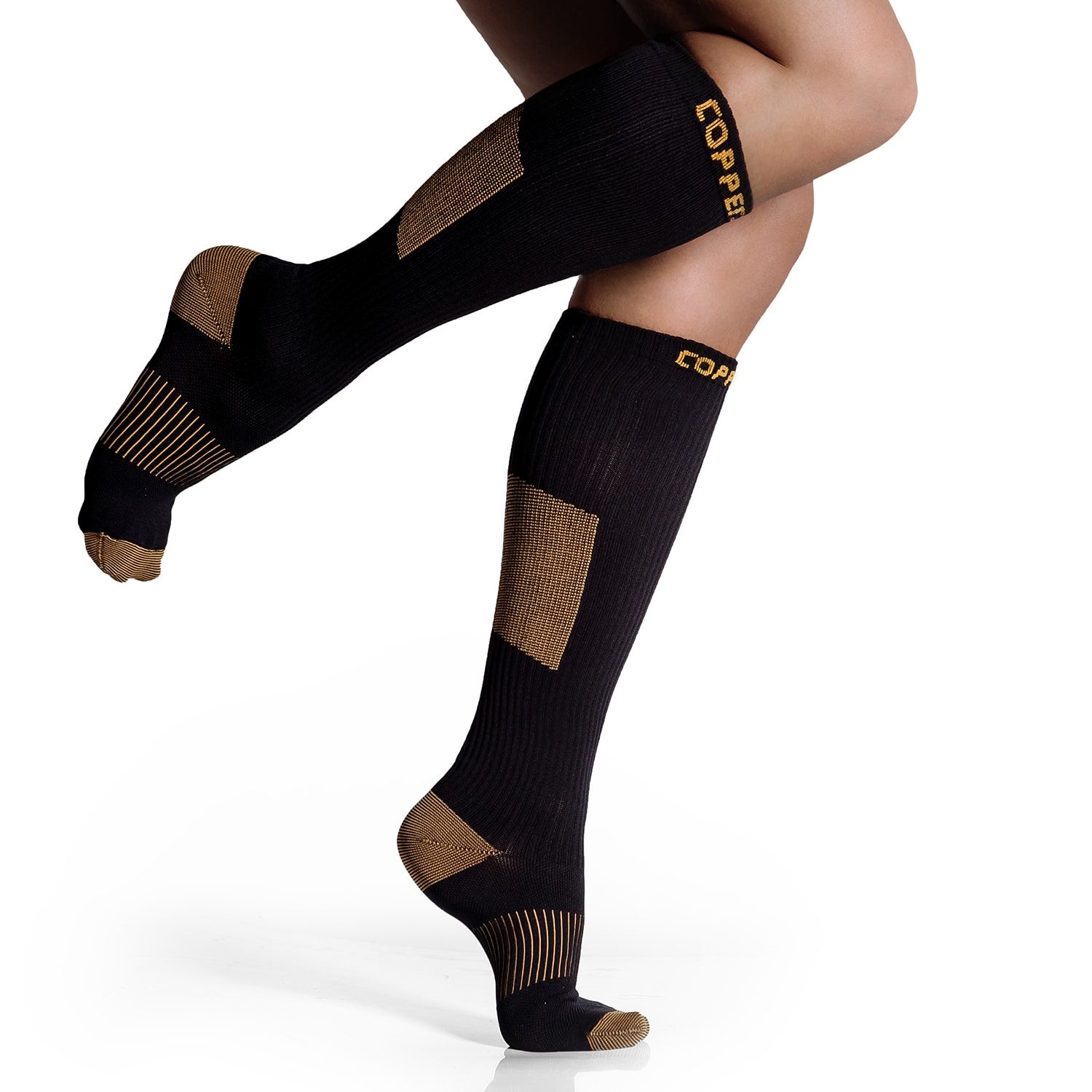
Over the past few weeks, I’ve been trying CopperJoint compression socks, and I’m in love.

The socks were designed for runners in mind and help reduce the natural vibration associated with high-impact exercise—running is no exception.

CopperJoint compression socks are easy to wear. The toe seam is smooth, and the stocking are made with anti-microbial materials. It takes many a use for them to get stinky.

Conclusion

Although compression socks may not turn into the fastest runner on the block, they’re efficient enough to give a small competitive edge—and sometimes, that’s all you need to take your performance to the next level or break a new personal record.

Please feel free to leave your comments and questions in the section below.

In the meantime, thank you for dropping by.

The Interesting History & Evolution of Nike Air Technology

When the first pair of Nike Air sneakers made its appearance more than 40 years ago, it took the sneaker world by storm. Since then, these air-cushioned running shoes have garnered immense popularity — not just for their superior performance but also as a fashion statement.

Let’s take a look at how Nike Air technology has evolved through the ages and what makes it so incredibly popular today.

What Is Nike Air Technology?

In Nike Air technology, pressurized nitrogen is encapsulated in sturdy but flexible bags called Nike Air sole units. These are placed in the midsole under the forefoot, heel or both those areas.

Made primarily in the U.S., Nike Air is one of the finest examples of sustainable innovation.

The Birth of Nike Air

It all started when aerospace engineer Franklin Rudy came up with a seemingly crazy idea. His theory was that tiny bags of air in the soles of athletic shoes could soften the impact.

In 1977, after facing 23 rejections, Frank presented the idea to Nike co-founder Phil Knight. Phil took a prototype for a test run and was amazed by its smooth ride. Since then, there was no looking back.

Note – Check my guide on when running was invented.

Air Through the 70s

In 1978, Nike rolled out the Tailwind, the first running shoe featuring Air cushioning. The marketing team decided to release just 250 pairs before the actual launch. They were sent to six Hawaiian stores ahead of the Honolulu Marathon. To everyone’s surprise, they sold out in just 24 hours — despite the $50 price tag (about $210 today).

But the Air didn’t survive based on hype alone. In 1978, researchers at the University of Tennessee found that athletes running in Air actually used less energy than in conventional running shoes.

Additional Resource – 20 Fun Facts about running

Air Through the 80s

The 80s were a period of transition. Music, art and design were moving away from a conventional, utilitarian approach to a more creative and inspirational one. People were looking for something new and unique from Nike, whose former glory was somewhat plateauing.

That’s when iconic designer, Tinker Hatfield, came up with the Air Max 1 — a revolutionary new design with visible Air units. For the first time in sporting history, design and engineering were seeing eye to eye.

Not only did this set the stage for innovations in athletic shoes for years to come, but it also bridged the gap between fashion and sport. The Air Max was now a lifestyle.

Air Through the 90s

Hip-hop. Brit-pop. Streetwear. World Wide Web. Those were the predominant buzzwords in the 90s — and they all found a steady companion in the Nike Air.

Throughout the 90s, the Air Max continued its metamorphosis — from the Air Max 90 to the Air Max Plus — each more unique and audacious in design than its predecessor. The internet further fueled the transition of the Air lifestyle into a global phenomenon.

Nike Air Today

Nike continues to improve the Air technology even today. Besides focusing on design and performance, it places great emphasis on sustainability.

For example, the new Nike VaporMax — the latest in Air technology — eliminates the mid-sole foam altogether. Its all-encompassing outsole has heel-to-toe cushioning that offers a gravity-defying bounce.

Get yourself a pair of VaporMax sneakers today to experience the feeling of running on air while scoring high on style.

Top 10 black athletes worldwide

The history of the sports is filled with heroes who have shown great sportsmanship worldwide. From baseball to boxing, black people have always dominated the sports in international events. Following is a list of the top 10 black athletes who have shown why they are best in their profession.

1.      Muhammad Ali

Muhammad Ali is known as the greatest boxer of all time. He was the first black fighter who lifted the title of world heavyweight champion in three different competitions. He also was able to defend his title 19 times. Apart from mastering his boxing skills, he always showed good sportsmanship in the ring. Therefore, whenever someone writes names of the top 10 black athletes of all time, he/she will defiantly consider Muhammad Ali the priority.

2.      Michael Jordan

Another most successful black athlete in history is Michael Jordan. He is also regarded as one of the most successful National Basketball Association players. Talking about his achievements, he won 6 titles while representing the Chicago Bulls. His total wealth is more than $1.8 billion, and he also received the prestigious award of the presidential medal of freedom.

3.      Serena Williams

Serena Williams will always be regarded as one of the most iconic tennis players in history. In her achievements, she has won 23 doubles and 73 singles titles. She has also won gold medals for her country, including 3 in womens doubles and one in womens singles. She has also conquered the Australian Open seven times. Apart from all these achievements, Serena Williams has also been twenty-three times Grand Slam champion. Her journey to conquer the court is still on its way as she has not hinted anything towards retirement yet.

4.      Usain Bolt

Usain Bolt is a Jamaican athlete who has won the gold medal for his country multiple times in the Olympics. Being a black athlete, some of his life incidents are about racism problem. However, he never cared about this issue and continued to make his nation proud. With eight gold medals to his name, Jamaican Usain Bolt is the most successful sprinter in the world so far. He is also the first man ever who won both the 100- and 200-meter races. He still holds the records for fastest 100, 150, 200, and 300 meters.

5.      Simone Biles

Simone Biles is an American gymnast who has won 7 Olympic medals for her nation, including one silver and one bronze medal in the Tokyo Olympics 2020. Born in Texas, Simones interest developed in gymnastics when she was only six years old. Ever since then, she is improving her gymnast skills in every single competition. Apart from the Olympics, she has won 25 medals in the world championships.

6.      Venus Williams

Venus Williams is an American tennis player like her sister Serena Williams. Both William sisters have been known as one of the best female tennis stars, and both have beaten their opponents in the womens doubles on many occasions. She has won four gold medals and one silver medal in the Olympics. Her gold medal career started in the Olympic Games in Sydney when she won a gold model individually as well as with her sister in womens double.

7.      Jackie Robinson

Jackie Robinson was the first athlete who broke the racism barrier and played the Baseball League with the Brooklyn Dodgers. The whole world admired his extraordinary baseball skills. Robinson joined the baseball league after he was discharged from the army in 1944. Under the services of Robinson, the Dodgers were able to collect six pennants. At the time of retirement, he had a record batting average of .313 and 1563 hits. In 1962, he was also elected to the baseball Hall of Fame.

8.      LeBron James

LeBron James is known for his exceptional athletic skills. He started his career in elementary school when he was named Ohios Mr. Basketball. In the last ten years of the NBA, no one has scored more points than LeBron James. Further, he has won four championships, and he has also been the MVP of the National Basketball Association four times. LeBron is also among the players with the longest wingspan in NBA.

9.      Kobe Bryant

Kobe Bryant was one of the most impressive athletes in the history of basketball. He spent his 20 years career with the Los Angeles Lakers in the National Basketball Association. He was one of the only few people who were selected in the sports right after high school. In his 20 years career, he won five championships as well as became the MVP of the NBA in 2008. He took his retirement in 2014 after surpassing Michael Jordan in terms of all-time highest NBA scorer.

10. Kareem Abdul-Jabbar

Kareem Abdul Jabbar is another legendary basketball player who led his team Bruins to three national titles. His dominance in the NBP was also worth seeing as he first led the Milwaukee Buck to the championship and then assisted Los Angeles in winning tournaments. He ended his career with six MVP and six NBA trophies. At the time of retirement, he was the all-time highest scorer in the same league.

The sports persons mentioned above are great examples of why hard work is the key to success. Of course, most of them struggle at the start of their work, but they were named iconic players due to their consistency and hard work. Although black athletes have been actively participating in all the sports, their major services can be seen in football and baseball. Similarly, in Sprinting, Usain Bolt will always be remembered for his services to his nation.


The Relationship Between Physical Exercises and Students’ Academic Performance

vo2 max expalined

**This is A sponsored Post*

Are you looking for ways to improve your academic prowess and cognitive performance? With the help of a balanced lifestyle, you can increase your academic achievement. Our lives have changed due to the global pandemic and going back to schools and colleges is a big change nowadays.

From staying at home all day long to going to school in classrooms or attending online classes is a change that will lead to a change in physical activity habits as well. Primarily, your habits will go out of the door, be it better eating, sleeping, exercising, etc.

However, this doesn’t have to be the case. Improved eating and a healthy lifestyle will not only make you feel good but will also help you and benefit you in your higher academic education. There are also services that can be of help, such as UK Assignment Geek, among others.

Maintaining an improved lifestyle means that your marks in tests, quizzes, assignments, etc. will get better and will have an overall positive impact on your lifestyle and living. Following things positively influence your ability to learn as well as retain information.

  • Exercise
  • Sleep
  • Nutrition

Exercise

Looking for a great way to increase your cognitive function? Keep a balance between physical activity and academic abilities. As a university student, you must stay fit and healthy as you have loads of work to do.

Not all of us love PE classes but scientific mental health research backs the claims that exercise is good for cognitive processes, concentration and attention. Lack of activity causes weight gain as well which is linked to medical issues such as heart disease, diabetes, etc.

Make sure that the timetable and curriculum have physical activities and events in them that can be enjoyed by everyone. From supporting and developing brain function to improving memory retention, exercise has various benefits.

We all know how hard it is to eat good while on campus, what with all the late-night food cravings and cheesy pizzas to appease them. Being physically active strengthens the core. It will help you burn up all those extra calories, and you will be able to eat anything you want without having to worry about gaining weight.

What better way to keep yourself fit, right? Running is an important multi-purpose physical activity that helps you stay positive. Fit children and adolescents are the future of tomorrow. Lets take a look at the few reasons why you should start to exercise in college every day!

1.    Releases frustration

As students, we are always burdened with loads of homework, assignments, tasks, projects, etc. We can’t stay calm and relaxed with all thats going on. Fortunately, if you start running daily, all that pent up tension and frustration will have an outlet, and your cognitive performance activity will improve.

2.    Helps you socialize

Running is not only one of the best workouts, but it is also a nice way to make new friends as well. You are bound to find some new friends. You can lean on them to provide you with the encouragement to keep participating in sports.

They will keep reminding us why exercise is important for our brain development and keep us going.

3.    Boosts your physical performance

Why should you run every day? Because this activity will boost your academic results and performance. We spend most of our days in lecture halls with teachers or our dorm rooms. We don’t get to spend enough time outdoors.

“A run for 20 minutes will not only help you relax but will also boost your performance and upscale your mood. The increased power will help you have a clear, academic mind and focus while you are reading as well”, says Elijah Schmutz, a writer at papersowl.com that specializes in public health. Measure the time you spend running. It will help you stay in good shape.

4.    Quality Alone Time

In the world of today, it is hard to find some good old quality time with yourself. With all the academic commotion in the dorms and on campus, a run at night will help you clear your mind and your thoughts aligned.

The activity will help you reconnect with yourself, and you will find that you are full of positivity and the cloud of negativity is long gone.

You will get an opportunity to meditate and get rid of anxiety and depressive thoughts. Moreover, you will be able to enjoy the outdoor breeze and fresh air.

Physically running helps your body produce serotonin, the hormones that induce a feeling of bliss in your system. Along with serotonin in the brain, dopamine and norepinephrine are also released which helps with memory retention and attention issues.

Sounds amazing, right?

woman running

Sleep

With gaming, smartphones, social media, and whatnot, we don’t get enough sleep these days. Lack of sleep negatively affects your performance and the ability to focus on the task and represses recall skills as well.

Moreover, it instigates depression and increases your stress levels, and you display aggressive classroom behavior. We know that a late-night study session before your exam sounds good and you want to stay up late to finish that assignment.

However, we recommend that you sleep to support your cognitive performance activity.

Nutrition

A balanced diet is good for everyone, but especially for students since fast foods and processed foods are readily available in the school canteens and cafeterias. You have to ensure that kids learn the importance of good eating.

We all know it is very easy to sit in front of the computer and eat several bags of chips at once. However, that is unhealthy. If you eat improved food, it increases the blood flow to your brain and keeps the brain sharp.

Eating small, improved meals at regular intervals will keep the mind fresh and blood glucose levels normal. There are so many difficulties and challenges, and to successfully navigate through them, you need to exercise.

Better Lifestyle for Improved Grades – Final Word

We live in a busy world today where it is very easy to neglect our health and make bad lifestyle choices. When you are responsible for learning, you have to balance physical and academic activities.

Choose a physical activity for physical fitness that will keep both your brain and body sharp and fresh! An increase in physical activity is one of the components of improved academic performance. Moreover, it improves your performance and also helps keep a positive relationship with your body.

Time spent training your abilities is time well spent. Here is to a healthier life!

How Developing Running Habits Affects Student Health and College Performance

Running VS. Strength Training

**This is a Sponsored Guest Post by my friend Alina Boskar **

Studies have shown that most students tend to be more active and do exercise more in high school but once they transition to higher education, they develop sedentary habits. This is due to a large number of assignments. And often students simply do not have enough time to combine self-development, sports and study, although not everyone suffers from such problems, some students actively use thesis helper online, thereby simplifying their study period.

Unfortunately, such statistics are widespread, while many freshmen are deluded that it is possible to successfully combine study, sports, household chores and often also work. So it is not uncommon for students to start looking for dissertations and term papers for sale due to an acute lack of time and unexpectedly difficult tasks. However paradoxical it may seem, allowing at least the necessary minimum time for physical exercises, you will notice that you begin to get more done and remember things better, thereby more than offsetting the time spent.

Many studies have been done on the effect of physical exercise on the brain and most of them have concluded that being physically active helps improve brain performance. Specifically, running has several health benefits to a student and if they make it a habit to run daily, their performance in college will also improve.

Student’s mental health improves


Running helps improve brain health and expel tension and stress that can affect the brain’s functionality. All of this works due to the increased release of norepinephrine that assists the brain to respond more positively to stress. 


The brain processes everything an individual sees, hears, perceives, or feels. The rate at which the brain processes and interprets these circumstances is highly dependent on its health status. If the brain is stressed, tired, or with less oxygen circulation, it will not function effectively. 


When a student creates time to run at least thirty minutes daily, their mind stays calmer and relaxed. All these processes combined help increase brain activity and the rate of processing information. The brain stays healthier and due to the right information processing, the student will perform better academically. 


Physical activity is directly related to academic performance because of the enormous health benefits a student gets. Students should therefore make it a habit to exercise daily, have a study routine and eat healthily. Unhealthy eating will affect positive outcomes from a student’s exercise habits and as described in students essays on eating disorders, it may lead to many health complications like obesity and heart diseases. If students want to avoid negative education effects and perform well, they should combine healthy eating with exercise.

Sporty young woman sitting and resting after workout or exercise on the outdoor stairs


The student’s physical body stays healthy


Sedentary habits can adversely affect the nature and health status of the body. When the body is not healthy, a lot of negative feelings will accompany the student. They might excessively gain weight, feel fatigued all the time, become lazy and spend more time in bed. Eventually, their academic performance will be negative because they will spend less time studying, fail to attend lessons, or do assignments. 


Running is a physical exercise that works wonders in the body. The student will burn more fat and keep their weight in check. They will build their muscles, become stronger and physically active. Due to activity, the student will spend more time studying, stay refreshed and enjoy going for lessons. Their performance in college will improve. 

Students stay organized

Getting time to go out and run requires a student who is organized. Mostly, their running time will be early in the morning before breakfast, morning study, or lessons. To achieve this goal, a student will have to plan and create schedules on when to go for exercise, study, attend lessons, and do other activities.

The student will learn to plan their time and create time when they have extra activities to do in college. Because their mental health, physical and cardio health will keep improving, they will stay active and achieve more. The student will stay organized and the fruits they will reap are the best grades in college. And if they still face difficulty in managing their work assignments, they can use health essay examples on Samplius for reference. A large database of free samples is the best thing they can use to champ their studies.

Students boost their performance in learning 

Studies have shown that at least 50% of students do not engage in any exercise. Most of them think they cannot make it to run daily while others try once and abandon the habit because they felt tired, they are not used to or get challenges.

For the student who manages to continue with the habit, they soon realize it’s possible to achieve anyth ing when they make it a habit. Running also helps the brain perform better due to more oxygen supply and the physical body stays healthy.

Their body will stay relaxed, active and they will remain eager to do and achieve more in college. All these positive habits and outcomes help students to learn to study consistently and boost their performance in learning.

Conclusion 

Running has many benefits to a student in terms of social life and grades. Running in a group creates a way for lasting friendships with people who can support each other during study. Running helps promote life skills like being organized, respectful and disciplined. Their body and brain get higher oxygen flow which helps increase focus, memory, and concentration and keeps the brain part responsible for learning activities. Students’ self-esteem and cognitive ability improve and their performance in college improves.

Author’s Bio:

Alina Boskar works for a local newspaper where she writes current news articles, editorial and career and jobs related articles. Besides that, she works as a freelancer and helps students write their assignments, especially essays and thesis. Her free time is spent sketching cartoons, taking Zumba classes and reading history books.

** This is A Sponsored Post**

How to Empty Bowels Before Running – The “Poop Before a Run” Guide

running with hernia

In an ideal world, our mornings would unfold like a perfectly choreographed routine: rise from bed, freshen up, enjoy a nourishing breakfast, and gracefully answer the call of nature before embarking on our running adventures.

But alas, life loves to throw us a curveball when we least expect it.

We’ve all been there—standing at the precipice of a long morning run or an important race, desperately hoping to avoid any unwelcome pit stops along the way.

Fear not, for I have some tricks up my sleeve to help you “speed things up,” if you catch my drift.

Now, here’s the beauty of it all: these steps I’m about to share are not some mystical potions or elaborate rituals.

No, they are simple, natural activities that you already engage in on a daily basis.

In fact, they are so natural that they may even encourage your body to cooperate and grant you the sweet relief you seek.

You might be wondering, “But how do you know all this?” Well, let me tell you—I’ve delved into the depths of research, scoured countless studies, and spoken to experts who have dedicated their time to unraveling the mysteries of our digestive systems.

You see, when it comes to making yourself poop, science has got your back. These tried-and-true methods have been recommended by researchers who have explored the intricacies of our bodily functions. So, my friend, trust in the power of knowledge as we embark on this journey to help you create the perfect pre-run routine.

Let’s get things moving, shall we?

Why Running Makes You Poop?

There’s a saying that goes, “Everybody poops,” and when it comes to us runners, well, let’s just say we have a special relationship with the bathroom.

If you’ve never experienced the sudden urge to halt your run and find the nearest restroom, consider yourself fortunate. Either you possess an iron stomach or your running journey has yet to reach that “interesting” phase.

But fear not, for you are about to enter the world of running’s not-so-secret secret: the unavoidable dance between miles and bathroom breaks.

You see, running has a way of stirring things up inside us—quite literally. It’s like a magical potion that sets our digestive system in motion.

Countless runners can attest to the frequency of these toilet emergencies, and trust me, it’s not just a casual conversation topic for us. In fact, surveys have revealed that a staggering 30 to 90 percent of runners have experienced some form of gastrointestinal distress. It’s practically a running joke in our community, pun unintended.

But let’s dig deeper and uncover the mystery behind running’s ability to induce such urgent bodily functions. The answer is quite simple, really.

When you hit the pavement or hop on that treadmill, your body goes into motion, and so do your intestines and colon. It’s like a synchronized dance where every stride propels things along, making it essential to address any “business” before embarking on your running adventure.

Ignoring the call of nature before a run is a risky game, my friend. It’s like playing roulette with your digestive system, increasing the chances of an unexpected pit stop in the middle of your workout.

But wait, there’s more! When you engage in running or any vigorous exercise, blood flow takes a detour away from your gut and redirects itself toward your hardworking muscles.

The longer and more intense your run becomes, the greater the impact on your gut’s functionality. It’s no wonder that research has uncovered the prevalence of diarrhea and rectal bleeding among endurance athletes, with runners being nearly twice as likely to experience such discomfort.

Now, don’t let these revelations discourage you from lacing up your shoes and hitting the road. Running is a beautiful and transformative journey, but it’s important to be aware of the quirks that come with it.

Bowel Movements – Running While Constipated

One of the most common problems is constipation. This not only limits the number of daily bowel movements but also causes undue straining and time spent on the toilet.

You might be constipated if you have

  • Fewer than three poops a week
  • Pain or difficulty while defecating
  • Lumpy, hard, or dry stools

The frequency of your bowel movements depends on many variables, such as

  • When you eat
  • What you eat
  • Your workout habits
  • Your sleep habits
  • Your gut bacteria health level
  • What environment you’re in
  • And so much more

How To Empty Bowels Before Running

Let’s dive right into some strategies that will help you conquer the pre-run bathroom situation and ensure you’re ready to make the most out of your runs. Say goodbye to any worries of unexpected pit stops and hello to a smooth and uninterrupted running experience. Here’s what you can do:

1.     Wake Up Earlier

Picture this—it’s race day, and you’re feeling the excitement and adrenaline pumping through your veins. But wait, there’s something else making its presence known—the urge to use the bathroom. It’s a scenario that many runners are familiar with. That’s why it’s crucial to give yourself ample time before hitting the pavement.

Wake up at least an hour before your run or race, allowing enough time to go through your entire morning routine. This includes hydrating, having a cup of coffee or tea, enjoying a light snack, stretching, and, of course, a visit to the bathroom. Rushing through these steps is a surefire way to disrupt the harmony of your morning ritual.

Additional resource – CBD oil for runners

Have Your Coffee

While the exact link between coffee and bowel movements remains somewhat of a mystery, research suggests that caffeine can have a stimulating effect on the colon. It’s classified as cathartic, meaning it can trigger contractions in the colon, acting as a natural laxative for many individuals. But here’s the surprising part—caffeine may not be the sole culprit behind this phenomenon.

Even decaf coffee has shown a similar effect, leaving researchers scratching their heads. So, if you’re not a fan of coffee, don’t worry. Any hot liquid, like hot tea with a splash of lemon or a plain cup of tea, might do the trick.

Warm liquids have a way of dilating blood vessels in the digestive tract, promoting increased circulation in the area. And if a pre-run hot drink alone isn’t enough to get things moving, consider performing a few moves near the bathroom—a gentle jog in place, some light stretching, or even some squats to nudge your digestive system into action.

Warm Up Indoor

A proper warm-up is not only crucial for getting your heart pumping and muscles ready, but it may also have an unexpected benefit—increasing the likelihood of a pre-run bathroom visit. So before you head out, engage in a dynamic warm-up routine.

Picture yourself doing walking lunges, jumping jacks, inchworms, and scorpions, or even jogging up and down the stairs for a few minutes. You can even do laps around your house or block until you feel ready to “go.” Just remember to keep the intensity light and listen to your body.

As long as the activity is enough to dilate your blood vessels, you’re on the right track. If you’re about to race and find yourself near the porta-potties, incorporate a series of strides into your warm-up routine. It’s a convenient way to prepare your muscles and give yourself that extra bathroom opportunity before the race begins.

Mind Your Fiber

When it comes to improving your bowel function, fiber is your best friend. It adds bulk to your stool and promotes regularity.

Insoluble fiber, specifically, is the indigestible part of food that passes through your digestive system largely intact. Research suggests that adults should aim to consume around 24 to 38 grams of fiber per day.

You can find insoluble fiber in various sources such as white grains, vegetables, nuts, and fruits. However, it’s important to note that introducing a high amount of fiber all at once may cause discomfort like cramping or gas, especially if your body isn’t accustomed to it.

So gradually incorporate fiber-rich foods into your diet to allow your system to adjust. And if you’re not a big fan of veggies, don’t worry! There are alternative options like juices or vegetable blend supplements that can provide you with the fiber you need.

Additional resource – Probiotics For Runners 

Stress Less

Let’s talk about the impact of stress on your bowel movements and how it can contribute to constipation, especially before a race.

The brain and digestive system have a fascinating connection, and when stress enters the picture, it can throw off your bowel habits. It’s like a twisted dance between your mind and your gut.

Imagine this: You’re standing at the starting line of a race, heart pounding, adrenaline rushing through your veins. Your body is gearing up for action, ready to tackle the challenge ahead.

But amidst all the excitement, there’s a sneaky culprit lurking in the shadows—stress. Yes, stress can sabotage your bathroom routine and leave you feeling backed up.

You see, when stress enters the scene, your body switches into fight or flight mode. It’s a survival mechanism designed to help you face imminent danger.

But here’s the catch: When your body is focused on fighting or fleeing, your digestive system takes a back seat. The signals that normally prompt a smooth bowel movement get disrupted, and you’re left feeling constipated.

But here’s the twist—constipation itself can also be a source of stress. It’s a frustrating cycle where the more difficult it becomes to have a bowel movement, the more stressed you feel. And the more stressed you feel, the harder it becomes to poop. It’s like a never-ending loop that can leave you feeling stuck.

So what’s the solution? It’s time to take a chill pill—figuratively, of course. Relaxation is the key. Pressuring your body to poop won’t work; in fact, it might have the opposite effect. Instead, focus on reducing stress and creating a calm environment for your mind and body to thrive.

One effective way to combat stress, especially those pre-race jitters, is to identify and eliminate any stressors in your life. It could be as simple as taking a few minutes each day for meditation, practicing deep breathwork, or incorporating some soothing yoga into your routine.

Certain yoga poses, like gentle twists or forward folds, can help release tension in your belly and rectum, providing relief and easing the path to a successful trip to the bathroom.

Research has shown that mindfulness practices and relaxation techniques can have a positive impact on your digestive system and overall well-being. So, take a moment to pause, let go of stress, and give your body the space it needs to find its natural rhythm.

Additional resource – Ice bath for runners

Try A Laxative

In some cases, taking an over-the-counter medication before a run or big race isn’t a bad idea.

Some OTC laxatives help stimulate bowel movement by squeezing the intestine.

Standard options include

Or any OTC medicine with compounds such as:

  • Magnesium hydroxide
  • Magnesium citrate
  • Polyethylene glycol
  • Sodium phosphate
  • Lactulose
  • Bisacodyl

But here’s the little disclaimer. Some laxatives may end up causing unwanted side effects—just like any other drug.

These, at the right dose, should be enough to prevent constipation but have too much, and you will end up with a bad case of bloating, then diarrhea.

What’s more?

Opting for a healthy diet that contains lots of healthy natural fiber is the way to go, even if you decide to take a supplement.

Try A Massage

Researchers at UCLA have delved into the fascinating realm of perineal massages, that delicate area nestled between your genitals and your anus. Now, it might seem a little strange at first, but bear with me. This research has uncovered some interesting findings that might just relieve your constipation woes.

Here’s the scoop: Applying gentle pressure to specific points in the perineum can work wonders in soothing constipation. It’s like discovering hidden treasure on your body’s map—an oasis of relief awaits at the touch of your fingertips.

But how exactly do you embark on this unusual journey? First things first, hygiene matters. So, make sure to wash your hands thoroughly. Once you’re ready, use your index and middle finger to gently press upward on the perineal skin, focusing on those pressure points. It’s like your fingers become the heroes of your constipation saga, working their magic to stimulate the right areas.

Now, let’s talk pulses. No, not the racing heartbeats you experience during a marathon. I’m talking about gentle, rhythmic movements. Apply pressure for about five to ten seconds, release, and repeat. It’s like a dance of relief, a symphony of fingertip maneuvers that may just bring you the liberation you seek.

But hold on, I understand that not everyone may feel comfortable with this hands-on approach. That’s where reflexology steps in like a trusty sidekick. Reflexology believes that trigger points are scattered throughout our bodies, interconnected like a web of relief. By applying pressure to specific areas, you can stimulate corresponding organs and systems, including your digestive system.

Squat To Poop

Let’s talk about technique, , because it turns out that the way you sit on the porcelain throne can make a world of difference.

Imagine this: You’re in the wild, exploring nature, and you come across a majestic creature. It’s the squat, a posture that changes the very anatomy of your rectum muscles and lifts the part of your colon that’s responsible for smooth sailing in the bathroom. It’s like nature’s secret code for effortless bowel movements.

The closer you can get to a full squat, the better. Picture yourself gracefully lowering your body down, aligning it with the natural forces that guide your bodily functions. It’s like tapping into your inner caveman or cavewoman, embracing the primal wisdom that our bodies have known for ages.

Now, don’t worry. You don’t have to actually perch on the edge of your toilet seat like a circus performer. That might lead to some unwanted acrobatics. Instead, let me introduce you to a simple yet ingenious solution: the humble stool. No, not the kind you sit on, but the kind you place under your feet.

By elevating your knees with a sturdy stool, you create a simulated squatting position that sets the stage for bowel liberation. The higher the stool, the closer you are to achieving the optimal angle for a smooth release. Aim for a position where your knees are at least higher than your lower belly, creating a harmonious alignment of your internal gears.

But hey, don’t just take my word for it. Researchers at the Ohio State University have conducted studies on this very topic. And guess what? They found that using a toilet stool, just like we described, improved bowel movements in over two-thirds of participants. That’s a staggering success rate! Not only that, but 90 percent of the participants experienced less strain during their bowel movements. Talk about a victory for comfort and efficiency.

Now, here’s where it gets even more exciting. You have the power to experiment with different positions. Lean forward or backward, sway a little to the left or to the right. It’s like finding your sweet spot, the unique combination of angles and movements that works best for you. Embrace the freedom to explore and discover what brings you the utmost relief.

How to Empty Bowels Before Running – The Conclusion

There you have it! If you’re looking for ways to take care of constipation before you go out for a run, then today’s post should be enough to get you started on the right foot. The rest is up to you.

Please feel free to leave your comments and questions in the section below.

In the meantime, thank you for dropping by.

Keep training strong.

David D.

Alcohol And Running – The 8 Effects Of Alcohol On Runners

running blisters

If you’re reading this, you likely enjoy drinking alcohol, especially after a hard run.

And from the looks of it, why not. Alcohol is relaxing, calming, and a lot of fun.

Here the thing though.

Whether you run to stay fit or train for a race, it’s key to understand the impact that alcohol has on your performance, fitness, and overall health.

So, where does one draw the line?

Fret no more.

In today’s article, I’ll delve a little deeper into the effects of alcohol on running performance and recovery.

Sounds great?

Let’s get started.

What is Alcohol?

Whether you choose to have a beer, a glass of wine, or a shot of your favorite spirit—all of which contain alcohol, thus, have an effect on your body.

But first things first, let’s explain what alcohol actually is.

When people talk about alcohol, they usually refer to the substance found in beer, wine, and spirits.

More specifically, alcoholic drinks contain ethanol, which is a type of chemical substance produced by the fermentation of fruits, grains, and other sources of sugar.

The Production Process

To make alcohol, grains, vegetables, or fruits are put through a process called fermentation.

During this, bacteria or yeast react to the sugars in food, which, in turn, releases ethanol and carbon dioxide. This is why the longer the fermentation, the stronger the booze.

Stronger booze undergoes a process known as distillation, in which a portion of the water is pulled out, leaving a more potent concentration of alcohol and flavor with better aftermath.

The drink alcohol punch depends on how long it is left to ferment.

For example, vodka is produced from the sugar in potatoes, and wine is made from the sugar in grapes.

The Impact Of Alcohol

Alcohol is one of the most popular psychoactive substances in the world. It can influence both your physical and mental state.

When you drink alcohol, your liver will do most of the legwork to break down the booze into acidic acid.

Once the alcohol reaches your bloodstream through your stomach, it will find its way to virtually every organ in your body, especially your brain.

In there, alcohol impairs activity between your nerve cells and your brain’s pleasure pathways. This often will make you feel more relaxed, but it impacts consciousness, reduces inhibitions, compromises judgment.

I can go on and on, but if you have ever had more alcohol than you should, then you know what I’m talking about.

What’s more?

Keep in mind that alcohol has a varying effect on different people.

Your blood alcohol content, BAC, depends on your gender, size, and age.

Other variables that impact how booze affects our body include

  • Emotional state
  • Personality type
  • Past experience and history with alcohol
  • Diet habits and stomach content
  • Present mood
  • Environment
  • Stress level
  • And so much more

Is Alcohol A Drug

While it might not be the first thing to cross your mind, alcohol is actually a drug in the shape of a liquid. That’s why there is a term alcohol abuse, just drug abuse.

In essence, booze is a psychoactive, mind-altering substance that impacts the way we feel, think, and behave.

While drinking alcohol may make you feel relaxed, the stuff is actually a depressant drug that slows down—or depresses—several parts of your brain as well as your central nervous system.

This, in turn, hinders the delivery of messages traveling between your brain and body, which, impacts the way you think, feel, and behave—Engaging in running, operating machinery, or anything that requires motor functions is never a good idea under the influence.

How Much Alcohol In Your Drink

Not all alcoholic drinks are made equal—some are actually stronger—as in having a high concentration of alcohol—than others. Keep in mind that the virgin not always the loser when it comes to alcohol.

Different types of alcoholic drinks have various amounts of alcohol content.

As a matter of fact, the volume of the fluid in your can, glass, or bottle doesn’t inherently match the amount of alcohol in a specific drink.

For example, fermented drinks, such as beer and wine, may pack in from 2 percent to 20 percent alcohol. However, liquor, or distilled drinks, contain from 30 to 60 percent or more alcohol.

Here’s the general breakdown of alcohol content in common drinks

  • Beer – 2 to 6% alcohol
  • Cider – 4 to 8% alcohol
  • Unfortified Wine – 10 to 16% alcohol
  • Fortified wine — 15 to 25% alcohol
  • Liqueurs – 15% alcohol
  • Rum – 40% alcohol or more
  • Brandy – 40% alcohol or more
  • Tequila – 40 to 50 % alcohol or more
  • Gin – 40 to 50 % alcohol
  • Whiskey – 40 to 50 % alcohol
  • Vodka – 40 to 50 % alcohol

The Good Side of Alcohol

As you can already tell, alcohol is not all bad—especially when consumed  in moderation.

If you’re a light drinker and you take care of yourself, chances are you can keep on drinking alcohol as long as you do it responsibly—this means keeping your intake moderate.

But what moderate actually means?

According to the Mayo Clinic, moderate intake is anywhere up to two drinks for men and one drink for women.

In the US, the standard one drink packs in roughly 14 grams of pure alcohol, which can be found in

  • 12 ounces of beer (355 milliliters)
  • Five ounces of wine(148 milliliters)
  • 5 ounces of distilled spirits. (44 milliliters)

Plenty of research has reported that keeping your alcohol intake moderate may offer health benefits.

For example, the American Heart Associating (AHA) reported that drinking a 5-ounce glass of wine every day may positively impact good (HDL) cholesterol levels.

  1. Dehydration

One of the most detrimental effects of alcohol on exercise capacity comes down to dehydration.

Technically, alcohol is a diuretic.

This means the more alcohol you have, the more water is being released from your body through urination, which can lead to dehydration.

In fact, you can lose up to 3 percent of body weight in fluids within three to four hours of alcohol intake, which can be really problematic in the hot season.

Your kidneys are in charge of much water is allowed to stay in your body.

When these water levels exceed a specific amount, your kidneys begin eliminating the excess. This process is initiated by the brain through the release of Vasopressin, a hormone that signals the kidneys to stop dumping.

Therefore, your muscles will be receiving less oxygen and nutrients, so they’re going to get tired much faster.

What’s more?

When you’re in a dehydrated state, you’re prone to muscle cramps, strain, fatigue, and other issues.

  1. Alcohol and Brain Function

One of the most dangerous side effects of excessive alcohol on your brain and nervous system function.

Liquor impairs your balance, motor skills, hand-eye coordination, and reaction time, decision making, which, in turn, compromises performance and increases injury risk.

What’s more?

Excessive drinking also increases your risk for accidental injury. A simple trip and fall may injure you so badly that you’ll have to stop training for days, even weeks, at a time.

  1. Alcohol and Running Recovery

The main reason to avoid drinking too much alcohol boils down to its impact on your recovery

For starters, drinking in the evening, especially to excess, can negatively impact sleep. Proper sleep speeds up recovery, thus, essential to optimal athletic performance.

But since booze compromises sleep, your recovery will be slowed down.

More specifically, alcohol may affect your rapid eye movement sleep REM, which is the phase of sleep where most recovery happens.

During this stage, your immune system gets recharged so that could assist in muscle synthesis.

Secondly, long-term alcohol use may rob your body of the human growth hormone HGH, which is a chemical that plays a major role in repairing and building muscles.

In fact, research has reported that excessive boozing may decrease the secretion of the hormone by as much as 70 percent.

That’s really, really bad.

Your liver gets compromised, too.

The liver is a key detox organ that helps you recover from exercise as well as monitor blood flow.

Since excessive alcohol consumption increases blood flow, your liver will be busy regulating that instead of your body’s recovery.

That’s not the whole story when it comes to the impact of alcohol on your workout recovery.

Let’s dive a little bit deeper.

Additional resource – Can Running Help Cure Your Hangover?

  1. Protein Synthesis and Muscle Growth

Having more shots than you should after a tough run can have terrible effects on muscle growth.

Not only does excessive intake affect your REM sleep and growth hormones, but it also hinders protein synthesis, the process by which amino acids are fused together to form complete proteins. This, in turn, decreases muscle growth.

Even occasional drinking may affect muscles in some individuals, research shows.

Don’t take my word for it.

According to research out of the American Journal of Physiology, Long-term alcohol use was linked to a decrease in muscle weight and lean body mass. The reason behind this boils down to the impact that alcohol has on the proteins that are in charge of muscle growth.

walking for weight loss

  1. Alcohol and Nutrition

Alcohol itself contains little to no nutrients and minerals and thus not offering much in terms of nutritional value.

In fact, alcohol can go as far as to act as an ‘anti-nutrient.

Let me explain.

Alcohol also impacts your diet and how your body processes and absorbs nutrients. It impairs the normal metabolism of nutrients, vitamins, minerals, and primary fuel substances in several ways.

Some of which include:

  • Limiting nutrient absorption by damaging the cells lining in the stomach and digestive tract
  • Reducing the production of digestive enzymes from the pancreas
  • Impairing the transfer of some nutrients into the blood
  • Harming the body’s microbiome
  • Limiting the conversion of B Vitamins, which are key in generating energy from carbs, protein, and fat.
  • Impairing liver function, which in turn interferes with normal metabolism and storage of nutrients
  1. Alcohol & Food Cravings

If you’re trying to stay healthy, you’ll want to keep your blood sugar levels stable.

However, drink more than you should, and it will impact your blood sugar level is affected. This will trigger cravings for junk food.

What’s more?

Alcohol also may trigger the release of galanin, which is a brain chemical believed to cause cravings in foods that are rich in fats.

Again, science backs this up.

According to research out of the American Journal of Clinical Nutrition, participants tend to overeat when consuming a high-fat meal and wash it down with alcoholic beverages.

That’s why if you tend to drink too much, you’re likely burning your candle at both ends—not only that you are not consuming enough nutrients, but the nutrients you do consume are not utilized well.

  1. Alcohol and Weight Gain

I hate to sound like a broken record, but alcoholic drinks pack in lots of calories but offer little to no nutritional benefits. In fact, alcohol has seven calories per gram.

And all of these extra calories get stored in your body as fat, usually accumulating around the stomach area. After all, that’s why they call it beer belly.

Again, the easiest way to prevent weight gain related to drinking is to actually cut down on your alcohol intake and undoubtedly not rely on burning extra calories from alcohol through logging in more miles.

You cannot outrun a crappy diet, no matter of fast/long you go.

  1. Alcohol and Injury

Last but not least, alcohol may compromise your body’s ability to recover from soreness or injury.

Alcohol is a blood vessel dilator. It, basically, causes your blood vessels to dilate and to transfer more blood to the injured area.

When you feel sore or injured, you’re supposed to ice the injured area to soothe swelling/pain and constrict the blood vessels.

Alcohol reverses this process by increasing increase blood flow to the affected region, therefore, increasing the amount of time it takes for an injury to heal.

Not only that, but booze also increases the risk of bleeding and swelling around soft tissue injuries, making the recovery period longer.

These include

  • Muscles injury
  • Bruises
  • Sprains
  • Inflammation
  • Cuts

The reason?

It is believed that alcohol increases endocrine stress responses, which limits blood coagulation and prevents complete healing.

Research conducted at the National Institute of Public health confirms these findings as researchers have reported that excessive drinking negatively impacts the post-surgical healing process.

In other words, alcohol and injury are a bad combination.

What’s more?

To make things worse, alcohol may mask pain which may lead you to postpone treatment since it masks pain symptoms.

Pain serves a good function—it tells us that something is wrong. When you don’t feel it, chances are you won’t take care of your injury. This not only prolongs your healing time but may also cause further injury. And you don’t want that.

How Much Should You Drink?

Don’t get me wrong.

I’m not trying to dissuade against drinking alcohol in today’s post.

As a matter of fact, you shouldn’t completely abstain from booze to live a healthy life, but you should also pay attention to the possible downsides of excessive drinking.

As previously stated, moderate intake of the stuff is actually good. In fact, it’s ok to have a few drinks every here and there—as long as you have things under control.

So How Much is Too Much?

This a tricky question to answer.

But, based on the guideline I shared before, if you had more than one drink—in 12 ounces (355 ml) of beer, five ounces (148 ml) of wine, and 1.5 ounces (44ml) of spirits, know that you’re on your way to having more than you should.

And consequently, your running will suffer.

What’s more?

If you’re serious about performing your best before a hard session or race, then avoid drinking altogether at least the 24 hours before.

If you can’t do without the drink, then at the very least limit yourself to one or two and chase it with enough water to offset any negative impact.

What’s more?

Spread out your alcoholic drinks and drink plenty of water between each drink.

All in all, I’d recommend limiting your weekly drinking to around 14 to 16  units per week.

Running And Hangovers

Technically, hangovers are the by-product of alcohol toxicity and the impact of byproducts of fermentation called congeners that are found in most alcoholic drinks.

Here’s the truth:

A hangover will impact your running performance.

Even mild hangover symptoms, such as hypersensitivity to outside stimuli and headache, may impair your body’s ability to perform at its best.

But should you or should you not?

Again, it depends on how serious of a hangover you’re dealing with.

If it’s just a mild hangover without unbearable pain, running will be fine.

But, if you’re suffering from a serious hangover, you might also be dehydrated, which would make running a bad idea.

When you experience a hangover, you likely have felt symptoms such as :

  • Soreness
  • Nausea
  • Headaches
  • Depression
  • Fatigue

I hate to sound like a broken record, but research, yet again, has found that these symptoms may decrease athletic performance and have been known to lower aerobic power by as much as 11 percent.

That’s quite a lot.

So, if you have a stubborn hangover, you’re better off not running as it can increase your injury risk and further dehydrate you.

Instead, on a morning of a hangover, focus on drinking plenty of water and consuming enough nutrients before make up your mind to go out for a run.

Conclusion

Alcohol is widely consumed around the globe by the general population—runners are no exception.

Although as a runner, you should pay special attention to the impact that alcohol has on your recovery and performance, moderate intake poses less risk than heavier drinking. So stay moderate.

Please feel free to leave your comments and questions in the section below.

In the meantime, thank you for dropping by.

Keep running strong

David D.

The Beginner Runner’s Guide To Heart Rate Zones

Running Heart Rate Zones

Ever wondered how to really improve your running?

Let’s talk about heart rate training.

I know it sounds a bit technical, but heart rate training is surprisingly straightforward and super helpful metric for any runner out there..

Think of heart rate training as your body’s way of saying, ‘Here’s how hard you should be going right now.’ Instead of just guessing, you’re using your heart’s signals to keep things on track!

Heart rate training really saved me from the ‘I’m always tired’ cycle. Now, I actually slow down when I’m supposed to, and then I have the energy to crush those hard days without overdoing it.

For the first time, I could actually tell if I was pushing the right amount, and it made a huge difference—I wasn’t feeling burnt out constantly

And that’s a bunch of good things if you ask me.

In today’s article, I’ll explain what heart rate training is, how to calculate your heart rate zones, and how you can use this to make the most out of your training.

Trust me, once you understand heart rate training, it’ll change how you approach your workouts!

What is Heart Rate Training?

I used to think heart rate training was just for serious marathoners with all that fancy gear. But once I realized it’s actually super simple, I figured, why not give it a shot? Now I feel like I’ve joined some insider club

The truth is, heart rate training is for everyone—it’s simply a way to measure your effort by tracking how fast your heart is beating during exercise.

Let me break down this even further.

Your heart rate basically acts like your own personal coach, setting the pace. It takes the guesswork out of things, so every run is balanced just right.

Essentially, the harder you run, the higher your heart rate climbs. Using heart rate zones, you can structure your workouts to focus on specific adaptations, whether you’re building endurance, increasing speed, or recovering.

Instead of guessing how hard you’re working, your heart rate gives you real data, telling you exactly how much effort you’re putting in.

Here’s why heart rate training matters: It helps you train smarter, not harder. Every heart rate zone has a unique job: one might help you build endurance, another might improve speed.

In my training, I’ve found that using heart rate zones helps me avoid overtraining while making sure I’m pushing myself when it counts. On my easy days, I finally slowed down enough to let my body recover (something I never did before). And when it was time for harder sessions, I knew exactly how to push myself without going overboard.

How I Figured Out My Heart Rate Zones

Getting started with heart rate training is pretty simple. Begin by determining your maximum heart rate (MHR), which will serve as the baseline for calculating your training zones.

Several methods exist to find your MHR, with the age-based formula—220 minus your age—being a simple yet effective starting point, though it’s not without its limitations.

I’m 35, so according to the formula, my heart rate is 185 beats per minute. After a few weeks of running with a heart rate monitor, I fine-tuned this number based on how I felt during different efforts.

If you want a more accurate measure, there’s always the option of doing a field test or a lab test, but I found this basic method worked just fine for me as a beginner.

How to Find Your Heart Rate Zones

To begin heart rate training, you first need to know your resting heart rate and your maximum heart rate (MHR).

Resting Heart Rate

Your resting heart rate is best measured first thing in the morning before you’ve had coffee or moved around too much.

To get an accurate number, take your pulse for three consecutive days and average them out.

A typical resting heart rate for most people is between 60-90 bpm, but if you’re in great shape, it could be lower—some athletes have resting heart rates in the 40s!

Maximum Heart Rate (MHR)

Your maximum heart rate is the highest number of beats your heart can handle during intense exercise.

Knowing this number helps you set your training zones.

There are a few methods you can use to estimate it.

These include:

  • The Age-Based Formula: The simplest method is subtracting your age from 220. So, if you’re 30, your estimated MHR would be 190 bpm. This method is quick and easy but can be off by 10 to 15 beats, so it’s not always super accurate.
  • The Lab Test: A lab test is the most accurate way to find your MHR. This involves running or cycling at increasing intensity while being monitored by professionals. It’s pricey, but it gives you the most precise number.
  • The Field Test: Don’t have the time or money for a lab test? Head to the track, warm up for 10-15 minutes, and then run a few 400-meter intervals at an intense pace. The highest number you hit during your last interval will be close to your maximum heart rate.

Once you have your MHR, you can calculate your heart rate zones by multiplying it by different percentages. These zones will guide the intensity of your workouts.

Heart Rate Zones While Running

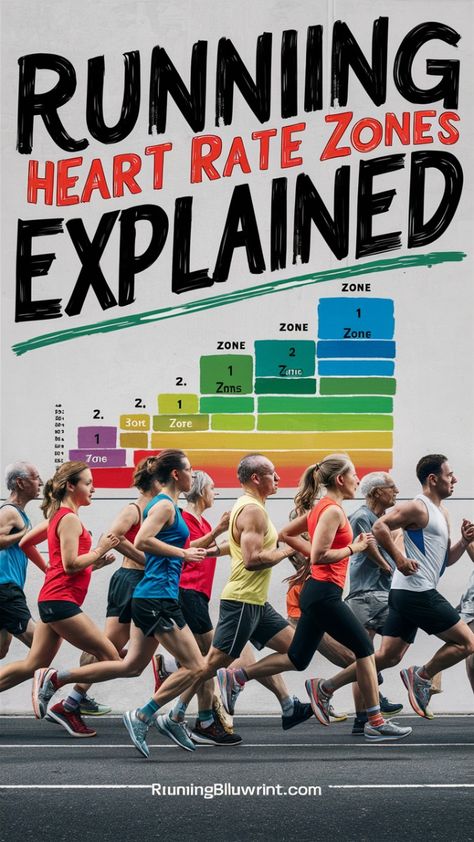
Now that you know your MHR, it’s time to break down the five heart rate training zones. Each zone serves a different purpose, from recovery to building endurance and speed. Here’s a simple guide:

Zone 1: 50-60% of MHR (Very Light)

This is your easy zone, known as the “fat-burning zone.” You can comfortably carry on a conversation at this pace. This zone is perfect for recovery runs and warm-ups, helping improve circulation and remove waste products from your muscles without straining your body.

Truth be told I used to scoff at the idea of super slow runs. But when I started doing my recovery runs in Zone 1, between 50-60% of my max heart rate, I noticed my legs felt fresher for the harder workouts.

Zone 2: 60-70% of MHR (Light)

This is your aerobic zone and where you’ll spend most of your time, especially if you’re building endurance. Running in Zone 2 helps you improve your aerobic capacity and teaches your body to use fat as a primary fuel source.

This is where most of my long runs happen now—60-70% of my max heart rate. When I trained without heart rate zones, I often went too hard on long runs, which wiped me out.

Staying in Zone 2 helped me build endurance without burning out, and I started enjoying my long runs more.

Zone 3: 70-80% of MHR (Moderate)

In this zone, things start to get a little harder. Your breathing quickens, but you can still speak in short sentences. This zone improves cardiovascular fitness and prepares your body for harder efforts.

When doing tempo runs, you should aim to keep your heart rate in Zone 3, between 70-80% of max. I know It’s hard, but you should be still able to talk in short sentences.

Zone 4: 80-90% of MHR (Hard)

Welcome to the “threshold zone.” At this intensity, you’re working hard, and talking becomes difficult. Training in this zone helps push your anaerobic threshold, which means you can run faster for longer without building up lactic acid.

I try to stay in this zone when I’m doing intervals or hill repeats. It’s hard to keep this up for long, but it’s great for building speed and stamina.

At this point, I’m breathing hard, and conversation? Forget about it.

Zone 5: 90-100% of MHR (Very Hard)

This is an all-out effort—your max zone. You can only stay here briefly, and talking is impossible. This is where you’re sprinting or doing high-intensity intervals. Zone 5 helps improve your top-end speed and power, but it’s very tough, so use it sparingly.

I only hit this zone during short sprints. It’s 90-100% of max heart rate, and you can’t stay here long. But it’s an intense rush when I do, and I know I’m pushing my limits.

How to Incorporate Heart Rate Training into Your Running

Once you’ve figured out your zones, you can start structuring your runs around them.

To make the most of heart rate training, aim for a balance of zones each week. Here’s an example structure:

  • Monday: Rest or active recovery (Zone 1)
  • Tuesday: Tempo Run (Zone 3)
  • Wednesday: Easy Run (Zone 2)
  • Thursday: Rest or cross-training
  • Friday: Threshold Intervals (Zone 4)
  • Saturday: Long Endurance Run (Zone 2)
  • Sunday: Sprint Intervals (Zone 5) + cooldown in Zone 1

This structure helps build a well-rounded base of endurance, speed, and recovery, giving each zone a specific role in your routine.

Remember to listen to your body and adjust as needed. If you feel overly fatigued, scale back on high-intensity days or add an extra rest day. Consistency and balance are key to getting the most from each zone.

Tools for Heart Rate Training

You’ll need a heart rate monitor to track your heart rate while running. There are two main types:

  • Chest strap monitors are the most accurate and measure your heart rate via electrical signals from your chest. The data is sent to your watch or phone.
  • Wrist monitors: These are built into smartwatches and use optical sensors to measure your pulse from your wrist. They’re convenient but less accurate, especially during high-intensity efforts.

I prefer chest straps for accuracy, but if you’re just getting started, a wrist monitor is more than fine!

Join the Heart Rate Zone Discussion

Using heart rate zones can truly transform your training, but everyone’s experience with it is unique.

I’d love to hear from you! Have heart rate zones helped you improve your endurance, speed, or recovery?

Do you have any favorite workouts for specific zones, or tips on staying in the right range?

Share your tips, experiences, and any lessons you’ve learned along the way.

Whether you’re a beginner just starting with heart rate training or a seasoned pro, your insights can inspire and help other runners find their own rhythm!

How To Choose The best Weighted Vest for Running

weighted vest for running

Curious about trying a weighted vest for running? Then you’ve come to the right place.

Weight vests have gathered a lot of steam over the past few years as a resistance training tool.

Strapping on one will instantly amp up your training intensity, whether you’re doing sprints or bodyweight exercises for resistance.

Fyi, it’s not only for soldiers. The vests are also available virtually everywhere and can be bought at sporting goods stores and online.

But when it comes to choosing the best weighted vest, there are so many features, benefits, and safety concerns to consider before using one.

Fret no more.

To help you find and the ideal weighted vest for running (and training in general), today’s guide will put you on the right path.

By the end, you’ll learn more about:

  • The benefits of training with weighted vests
  • Types of weighted vest
  • Different uses of weighted vests
  • How to choose a weight vest
  • How to start training
  • And so much more.

Sounds great?

Let’s get started.

What is A Weighted Vest For Running?

If you have no idea what weighted vests are all about, know that’s not overly complicated.

As the name implies, weighted vests consist of a vest-like garment that’s worn over clothing during training for increased cardio and resistance conditioning.

Since it’s harder to exercise while using the vest, your body starts to adapt to the extra resistance, making it easier to move around when you are not wearing the vest.

Weighted vests work the same way as ankle weights, but the extra load is centered on your core instead of your ankles.

The most popular design for a weight vest is similar to armor or life jacket with many small pockets, front and back.  These pockets can be filled with small weights such as steel weights (specifically designed to fit inside), sand, and so on.

The vest sits over the shoulders, back, chest, and core like any vest you’d wear under a suit or a life vest for swimming.

This helps keep the weight secure, preventing any moving around or shifting with minimal bounce while working out, whether you’re running, doing intense bodyweight exercises, or whatever.

The load intensity varies by product. Most weighted vests can accommodate additional weight for extra resistance.

The heavier the load, the more resistance you’ll experience. How much weight you should use is a question I’ll answer later on.

Most experts recommend starting training with a vest that’s about 5 percent of body weight, then work up from there. How you choose to train with one depends on your goals and fitness. Again, more on this later.

But what exactly does a weight vest accomplishes? Does it help you increase strength? Lose weight? Improve Your endurance?

The answer is, of course, yes. But it also largely depends on how you use it.

Let’s unpack this first.

The Benefits of Weighted Vest Workouts

Here are a few things you stand to gain when running with a weighted vest.

Increased Intensity

The main benefit of wearing a weight vest is to force your body to work harder during exercise.

Whether you choose to run, do bodyweight exercise, or whatever, using a weighted vest will amplify your effort, triggering further stress adaptation.

Improved Cardiovascular Function

One of the measurements of cardiovascular function is VO2max.

VO2 Max refers to the maximum amount of oxygen that your body’s cardiovascular system can absorb during training.

The harder you push yourself, the more oxygen is needed to sustain your activity.

By using a weight vest, you force your muscles to work harder, which increases oxygen needs. This, in turn, translates to an improved cardiovascular function in order to sustain the increased load.

Improved Speed

If you’re looking to improve your speed or athletic explosiveness in general, using a weighted vest is a step in the right direction.

Don’t take my word for it. Research has reported that long-distance runners were able to increase their speed by roughly three percent after weighted vest training.

When you put on a weighted vest, you force your body to exert more force during your training. Once you remove the added weight, you’ll notice a big difference in your speed and power.

Additional resource  – Your guide to running belts

Burn More Calories

The increased intensity translates to higher energy expenditure. That’s why wearing a weighted vest burns a lot more calories than performing the same routine without the added weight.

For example, let’s consider someone weighing 160 pounds and running at a challenging pace (9:00 minute per mile) for 30 minutes. According to science, they’ll burn roughly 460 calories during their session.

Another person weighing 180 pounds and running at exactly the same pace and time will burn nearly 500 calories. The differences may seem minor, but over time they do add up.

Why is the 180-pound runner burning more calories?

. And according to simple physics, it takes much more energy to move a heavier object.

When you’re training with a weighted vest, you’re adding more bulk to your body, making it heavier than it should be. For this reason, your body exerts more calories to keep pushing you forward.

Increased Bone Density

Wearing a weighted vest not only improves your cardiovascular and muscular gains but might also increase your bone density.

Any type of resistance helps improve bone density and strength—wearing a weighted vest is all the same. A Weight vest allows more bone remodeling.

Again, don’t take my word for it. Research has revealed that performing regular exercise while wearing a weighted vest may help prevent hip bone loss in postmenopausal women.

Better Options

Weighted vests are safer than any weighted clothing options.

For example, strapping on wrist, ankle, hand, or ankle weights places direct stress on the area applied. This not only increases injury risk but also impacts the way you run.

On the other hand, as I alluded to earlier, a weighted vest load is centered on your body. This allows for a better load distribution throughout your body which helps you maintain a proper posture.

How Heavy Should a Weighted Vest be For Running

The Downsides Of Using A Weighted Vest For Training

Just like any exercise equipment, weighted vests have certain downsides as well, which are key to pay attention to.

All in all, the risk degree depends on how you use the weighted vest.

Bad Form And Injuries

The main risk is that training with your technique. Bad exercise forms, such as weak posture, curved back, or whatever, can strain your muscles and joints and likely cause a tear or injury under the extra weight.

Not only that, strapping too much weight too soon could put stress on your muscles and joints before they can adapt, which results in injury. Bad form combine with weight does your spine no good. Your natural spine curvatures are designed to hold a certain load, but with bad form, the curvatures ain’t there anymore. Back pain is the main symptom.

What’s more?

A weighted vest may also throw you out of balance if you do not have it properly secured.

Get the technique first. Once you have, move to heavier loads. Don’t put the cart before the horse. It doesn’t work that way in the real world. Sorry!

Make Injuries Worse

Using a weighted vest can backfire if you have any current issues in your weight-bearing joints and muscles.

The added load may exacerbate existing conditions, and you don’t want that. This might be a back injury, knee pain, or whatever

Still want to use a weighted vest? Then at the very least, get the green light from your doctor or simply use a lightweight. Stop whenever you feel the pain getting worse.

Not For Everyone

Although weighted vests have a to offer, they’re not everyone. In fact, you can only start using a weighted vet once you already a base and want more from your workouts.

Wearing a weighted vest can stress your cardiovascular and musculature system—the reason why it works in the first place.

Keep in mind that if you have a history of hips, knees, feet, or ankle injuries, every additional pound puts more stress on those joints, which, in turn, increases injury risk. So tread carefully.

How To Choose The Best Weighted Vest for Running

There are various products on the market, and each one of them has specific designs to suit different training goals.

Some brands tend to be unisex, some feature adjustable straps that can be customized according to the user’s preferences, whereas others are available in a one-size-fits-all style

So how do you make sense out of all this? Keep on reading.

Here are a few of the measures for choosing the best weight vest for you.

How Heavy Should a Weighted Vest be For Running

If this is your first time using a weighted vest, start small.

There is a reason why weighted vests come in various weight options, ranging from 1o pound to over 80 pounds. Everyone has different needs and training goals—runners are no exception.

Pick a load that will push you but still allows you to stay within your fitness skill.

When starting out, I’d recommend a vest of 5 to 10 pounds for both HIIT training and running.

Have no idea where to start?

  • Get a weighted vest that’s five percent of your weight. For example, if you weigh 160 pounds, that roughly eight 8 to 12 pounds.
  • Strap it on and hop on a treadmill and start jogging at a mild speed for 15 to 20 minutes, then see.

This will help make sure that your speed and intensity stay consistent. It also provides you the opportunity to work on your breathing while using a vest, which is a skill in itself.

When using a weighted vest, you will want to learn how to breathe with the added load on your chest and core, so it is better to do it in a safe and controlled environment.

As long as you stay within a low to mild training intensity, feel free to use the weighted vest throughout your workout.

Keep in mind that weighted vests are workout equipment, not torture devices.

Get The Right Fit

Improper fit is a common cause of injury.

So before you go sprinting or perform bodyweight exercises in a weighted vest, be sure to get the right fit. The vest should sit snugly to your body, snug but not too tight that it restricts breathing or movement.

It should not, at any moment, bounce around too much while you exercise.

What’s more?

The weight should also feel equally distributed over your torso and trunk.

All in all, I’d recommend that get an adjustable weighted vest. These work very well thanks to the straps allow you to adjust the weighted vest exactly to your body shape.

Just like when you buy running shoes, when shopping for a weighted vest, try on different shapes and styles and see which one fits the best.

Based on Activity

You can follow these recommendations based on activity type.

For Running

When it comes to running a weighted vest, you’ll want a vest of lower weight capacity and with reflective material.

As a rule, start out with a vest at 5 percent of your total body weight.

I’d recommend wearing one during a long walk to figure out if you can handle the cardio load before you start adding it to your runs.

What’s more?

Choose a compact weighted vest that fits snugly when walking, jogging, and running. It should also allow for a wide range of motion.

For Bodyweight Training

If you are looking for a vest designed for building muscle and strength training, your best option is to go for an adjustable weighted vest that you can grow into.

The vest should feature a slender design and plenty of ventilation, so you don’t draw in your own sweat while exercising. It should also feature plenty of pockets and weights for added resistance.

The durability of the vest material is another important factor to consider.

Just keep in mind that these usually tend to be less comfortable to wear for a long time.

You will likely get more bang with a vest that tops out at about 80 pounds.

Secure The Weight

The last thing you want when using a weight vest is to get knocked off and lose your balance. This often occurs if the weighted vest is not preload and the load isn’t evenly spread on various parts of your torso and trunk.

To prevent this, make sure that the weight is properly secure and evenly distributed around your body. Any shifting or jerking of the weight while training could trip you over and result in injury. And you don’t want that.

Consider Your Body Type

As I explained earlier, weighted vests feature various designs and styles. Some are made for thinner trainees, while others are made for people with broader and wider shoulders. Pick the one that suits your body type.

What’s more?

Some weighted vests are made especially for women’s breasts and curves.

Pay attention to design and dimensions. This is key for your comfort and proper range of motion.

If you’re a woman, consider getting an X design weighted vest as this will better support your chest nicely and are ideal for optimal range of motion. Make sure that the vest doesn’t smother your breasts. Any excess fat jiggling around your armpit or over your breast indicates improper fit.

Material

When choosing a weighted vest, make sure it’s made of material that can withstand wear and tear.

As a rule, the vest should be both sweat and tear-resistant.

Worried about sweating? Choose a weighted vest with more ventilation and breathability.

All in all, a thinner weighted vest that covers less of your torso will ensure that you stay relatively dry and comfortable during training.

Listen to your body

At the end of the day, the best thing you can do to prevent injury is to pay attention to your body.

If something feels—or seems—off, stop doing it.  Consult your doctor if you have any chronic muscle or joint pains. Better be safe than sorry.

How To Use it

You got many options when it comes to training with a weighted vest—you can walk, run, sprint, or simply do bodyweight exercises such as pull-ups, push-ups, etc.

Here are three weighted vest workout routines to try.

The Weighted Vest Sprint Workout

Looking to increase your running speed? Then here’s how to use a weighted vest to help you achieve exactly that.

First, begin with a proper 10-minute dynamic warm-up. Some of you might need more time for warm-up, take your time. Then, without using the vest, perform a 2-3 sprint at maximum speed for 20-30 seconds.

Next, put on the vest and perform 4-5 sprints, running as fast as you can, for 20-30 seconds.  Then perform two more sprints but without the added weight (can you feel the difference?).

Finish the workout with a 5-minute slow jog cool down to bring your heart down to normal.

And that’s it.

Start with a weight that’s heavy enough to be challenging, but make sure it doesn’t move around.

As you get stronger, slowly add the smelly amount of weight—just make sure to keep good form the entire time.

The Weighted Vest CrossFit WOD

I believe a huge part of weighted vest success can be credited to the rise of CrossFit training programs over the last few years.

That’s why I have decided to add this CrossFit workout.

Perform the following exercises while using a weighted vest, and do as many as you can in 30 minutes. Record your rep count and try to beat it next time.

  • 200-meter run
  • 20 push-ups
  • 30 squats
  • Max pull-up
  • Ten burpees

Weighted Vest Long Walks

If you have never used a weighted vest before, your best course of action is to strap one on a walk or hike. By doing this, you will get your body used to the added load without compromising your form.

Focus on using proper arm motion and a more powerful stride. Your walking form is vital

How far you go depends on your pace and fitness level. I’d suggest 45 to 60 minutes if you are just starting out. Do more if you can do more but remember to stay safe throughout. Don’t chew more than you can swallow.

What’s more?

Focus on your core. All of your movement should generate from the core, so you should keep it activated while you walk—or perform any other form of exercise. Core activation will ease the work on your spine.

How To Choose The Best Weighted Vest for Running – The Conclusion

There you have it! Adding weight vest training to your workout routine shouldn’t be that complicated. It’s just a matter of choosing the best weight vest, then following sensible training guidelines with progression. The rest is just details.

Please feel free to leave your comments and questions in the section below.

In the meantime, thank you for dropping by.

Keep training strong.

David D.

Top 6 Causes Of Neck Pain While Running

Neck Pain While Running

Running is a sport that mainly uses the legs.

That’s why overuse running injuries are lower extremity injuries, such as runners knee, shin splints, plantar fasciitis, and the rest.

However, train long (and hard) enough, and you’ll notice that your upper body, especially your neck and shoulders, is sore or painful during a run or the day after.

So what gives? Isn’t running a lower body exercise per excellence?

Yes and no. Although your lower body does most of the work while running, your upper body is also an important piece of the puzzle.

As a result, if you’re feeling any sort of soreness or pain in your neck and shoulders while running, know that there are many (running and non-running) causes that you need to address promptly if you’re serious about staying pain-free for the long haul.

So, what’s causing this pain in the neck while running? And most importantly, how to stop and prevent it?

That’s where today’s post comes in handy.

Top 6 Causes Of Neck Pain While Running

In this article, I’ll delve into the top 6 reasons you could be feeling neck and shoulder pain during and after running as well as how to prevent it from returning in the future.

Sounds great?

Let’s get started.

  1. Weak Posture

One of the most common causes of neck pain while running is attributed to poor posture. This is not only true during running but during other activities as well.

This one is especially common in runners who work long hard at the office joins or spend the majority of their time behind a desk.

Being behind a desk often requires sitting with the head forward, chin down, and back arched. This weak posture, known as forward head posture, translates into your running form.

Add in the impact forces of logging the miles, and the weak posture can indirectly contribute to neck and shoulder pain, specifically irritate your cervical spine indirectly by changing the center of gravity.

The Fix

To prevent weak posture, try running with a neutral neck—a position in which all muscles are working optimally to counteract loading. In fact, you should be maintaining this posture no matter what exercise you’re doing.

Your head should be balanced directly over your spine, making sure it’s not cocked or leaning forward to one side or the other.

Your shoulders should be nearly level and pressed down your back instead of being hunched.

That’s not the whole story. There are also plenty of exercises to help strengthen the muscles of your neck, which, in turn, helps keep your neck in proper alignment.

Additionally, make your workstation as ergonomic as possible. Set up your computer screen to eye level and keep your foot supported on the ground.

For more reading on office ergonomics, check the following posts:

  1. Clenching Your Fists

Clenching your fists while running creates tension that travels up your forearm and upper arm and into your trapezius muscled and neck.

The more miles you log in, the more stress and strain you produce in your arms. Also, don’t forget about the bouncing factor.

Log in enough miles, and this tension can cause place drastic stress on your arms, shoulders, and neck, which impacts how you run.

The Fix

If you start feeling tensed up in the shoulders or the neck while running, try and relax your hands and let them hang.

Imagine you have a butterfly in your palms, but at the same time, you don’t want to crush it.  You can also imagine holding a penny between your forefinger and thumb and don’t want to drop it as you run.

Additional resource – Chiropractor for runners

  1. Gazing Down At The Ground

Although the eyes are not talked about much when it comes to running technique, the rest of your body will follow your gaze. Gazing down flexes your neck too.

This causes all sorts of troubles not only in your upper body but in your hips and knees as well.

The Fix

To combat this, tuck your chin in and keep your gaze up toward the horizon while running. By doing this, your body will be directed according to your line of sight.

  1. Excessive Pumping OF The Arms

Keeping a proper arm motion is key to your running form.

When you excessively move your arms, you’ll more than likely experience undue strain on your shoulders and neck.

This, again, sets you up for neck and shoulder pain while running.

It’s also a major waster of energy.

Additional Resource – A Tibial Posterior Tendonitis Guide in Runners

The Fix

To prevent excessive arm pumping while running, try pulling your shoulders down and back and curving your arms at a 90-degree angle. Then, keep pumping your arms forward and backward from the shoulders.

As a rule, keep the movement smooth, loose, but in control. Keep in mind that the movement is taking place at your shoulder, not your elbow.

Just keep in mind that it takes practice over time to hone your arm swing, but once you have it, it can do wonders for your running form.

I’ve already described in length what a proper arm swing should look like on my blog, and I believe it’s an integral part of proper running form.

Additional Resource -Your guide to jaw pain while running

  1. Your Body is Dehydrated

This may surprise you, but dehydration is a common culprit of both neck stiffness and neck pain.

When your body is dehydrated, your muscles, ligaments, and tendons get tighter, which can lead contribute to neck pain.

Additionally, dehydration can also cause a headache. This results in tension, and most of it builds up in the neck and shoulders, causing “you know what.”

What’s more?

Staying well-hydrated can help prevent cervical disc degeneration, which is a common cause of neck pain. Your spine discs consist mostly of water and collagen.

Drinking enough water keeps the discs between your spine’s vertebrae well lubricated—key for maintaining disc height and spinal alignment. Thus, the weight distribution will be even.

The Fix

Drink plenty of water throughout the day. This should help keep your body well hydrated not only around your runs but throughout the day.

At the very least, shoot for eight large glasses of water per day. Drink more on heavier training days or during the summer.

Running in the morning? You’re more likely to wake up lacking fluid, so hydrate before you head out the door. Make sure you check your urine color as a standard hydration check.

Take water with you for runs exceeding one hour. This is especially the case if you’re running in hot and/or humid conditions.

Additional resource – Common cause of lower leg pain after running

  1. A Running/Athletic injury

Another culprit behind neck pain while running is when you have actually hurt your neck—or the muscles and joints surrounding it—while doing something else.

This can be an acute injury such as lifting a heavy object or throwing a ball or overuse injury while sitting or working for long hours in bad posture in front of a computer.

Other (non-running related) causes of neck pain may include:

  • Arthritis of the neck, such as rheumatoid arthritis or osteoarthritis.
  • Meningitis, which is the infection of the lining of the spinal cord and the brain.
  • Spinal stenosis, which refers to the narrowing of the spinal canal.
  • Simple neck strain, often caused by sitting too long at a computer, sleeping in an improper position, etc.
  • Ruptured cervical disc, which happens when the disc between the bones of your neck protrudes from its normal position.
  • And so much more.

Your doctor can help with this.

The Fix

First, see if keeping proper posture while running helps to soothe pain, but more than often, you might have to take a few days off the running track to give your body the chance to heal. Or take your regular prescribed medication in case you have an ongoing condition.

If it’s not the case, then check the following tip.

When to See a Doctor for Neck Pain

In case all of the above has failed to soothe your symptoms, it’s time to seek medical help.

Still not feeling any relief in spite of taking some of the above measures? Then it’s time to consult your doctor or physical therapist.

This is especially the case if your neck pain hasn’t subsided within a couple of weeks.

In fact, seek medical help if you’re suffering from any of the following symptoms:

  • Numbness, needles, pins, or weakness that gets worse in one or both arms.
  • Constant headache with squeezed sensation behind your neck and scalp.
  • Experiencing ringing in your ears, blurred vision, or dizziness that doesn’t subside within 48 hours.
  • Have balance or coordination issues since your neck pain has started.

Additional Resource – Here’s how to use KT Tape for runners knee.

Neck Pain While Running – The Conclusion

There you have it. If you’re suffering from shoulder or neck pain while running, today’s post should have provided more than an answer to what’s ailing you. Please take care of yourself and don’t neglect any kind of problem—neck pain is no exception.

Feel free to leave your comments and questions in the section below.

In the meantime, thank you for dropping by.

Keep running strong.