The Best Faculties for Runners in the US

running jacket

Consistency is vital for running. Therefore, if you are to change your lifestyle and choose a university, it should create the necessary conditions for running. Additionally, you may apply for a paper writing services to take off some of the academic burdens and focus on your running routine.

In the list, we’ve collected the best universities that are perfect for combining regular running and acquiring a degree.

Southern Methodist University

The university creates all the necessary conditions for runners. First of all, it has a long-established habit of campus run. Some people even run the university’s stairs for an extra mile.

The overall structure of campus inspires all kinds of running, from casual jogging to sport’s coaching.

Besides the campus structure, Dallas has some well-made running paths. You have a common Katy Trail that goes through the city’s landscape. Alternatively, you can choose a White Rock path. It is more lengthy, 9.5 miles, and has more views of nature.

There’s no specialized running team in the university. However, there’s a casual running club for enthusiasts who want to have a more structured approach for running training. Members of the club have access to eight charity races and a certified training program.

University of San Francisco

The route between Golden Bridge Gate and Golden Bridge Park is a perfect place for the university. The five-mile campus run has a lot of shoreline views and nice, paved trails.

As for town routes, there are Crissy Field and Ocean beach. Most of the time of the year, the weather is just fine for any kind of sports activity, from Frisby to marathon training.

As for the running clubs, the choice is plenty in San Francisco. You may join:

  • Road Runners
  • Front Runners
  • Golden Gate Club
  • Dolphin South End Runners
  • K-Stars Running Club

Running paths in San Francisco are diverse and full of city views and well-planned running tracks. One of the best places to keep training.

Indiana University

Indiana takes place among the most beautiful-looking places in the country. It is true for campus runs and general running routes. The limestone buildings and green parks look great during any season.

As for the running routes, you can choose from 1.2 miles in Bloomington. One of the most popular opinions is the B-Line Trail and Brown County State Park. Each of them has views to offer and different lengths of the routes.

The running club of Indiana is competitive-focused. Training sessions are not mandatory; you can visit them at a personal pace. Besides, the club gives access to competitive cross-country runs.

Notre Dame University Indiana

The University of Notre Dame creates ideal conditions for students’ recreation and running routes availability. The campus run around Notre Dame is 3.8 miles long and goes around a golf field, St. Mary, and St. Joseph Lakes. You can’t get tired of the constantly changing scenery soon.

As for the park routes, the Riverwalk path around St.Joseph lake is the favorite for pedestrians and bike rides. If you like running through rugged terrain, Potato Creek State Park provides 10 miles of excellent challenge.

The university’s running club was established in 2014. The club maintains regular training sessions and racing competitions. It fits novice and advanced runners alike. Participation in the club is a high opportunity to find like-minded runners and keep your skills sharp.

University of Houston

Houston has many merits, and impressive running conditions are one of them. The campus run of the university consists of 667 acres of pedestrian-friendly walks. However, the Brays Bayou Greenway route is more popular among runners.

This path connects approximately 30 miles of parks and trails for bikes and running. You can plan your running route and make it as complex as you like. In addition, you may check the Buffalo Bayou Park. It is 8 miles long, with plenty of bridges and shortcuts.

Houston University does not have an official running club. However, the choice is plenty within the city itself. If you want to keep a structured approach for your training, you can maintain it in Houston.

Gonzaga University

Gonzaga is located in Spokane, which has won three awards for All-America city. It is a nice place for studying and training. There is no dedicated run for Gonzaga University. However, there are plenty of running routes around the establishment.

Riverfront Park is the most popular running route for Gonzaga’s students. The park is full of well-planned walking routes and nice scenery. If you are looking for something more distinct-looking, you may try Manito Park or Botanical Gardens. You can appreciate the garden’s beauty in any season. But they look especially good during autumn and late spring.

Gonzaga University has an official students’ running club. It hosts weekly running competitions up to five miles. There are more options in the city if you are looking for something else.

North Carolina State

The University of North Carolina provides plentiful options for its runners. It is located in the city of Raleigh, which is full of fantastic locations. Space within the campus has a lot of short tracks for jogging. As for the longer runs, Rocky Branch Trail gives a fine opportunity for sightseeing of the Raleigh landscape.

Raleigh itself has more than 70 miles of park zones with running tracks. You may run through Walnut Creek Trails or Lake Johnson park and always find something fascinating to see. These trails fit both professional and casual running sessions.

As for the running clubs, North Carolina XC & Track Club is one of the most famous in the country. It provides access to training five days a week, which helps squeeze training sessions into a busy schedule. The club supports competitive runs, as well as regular training.

Final Words

If you want to keep your running shape, there are many possibilities, even if you have to move to another city for studying. Competitive and regular runners can enjoy daily campus runs, club benefits, and generally fine-looking landscapes.
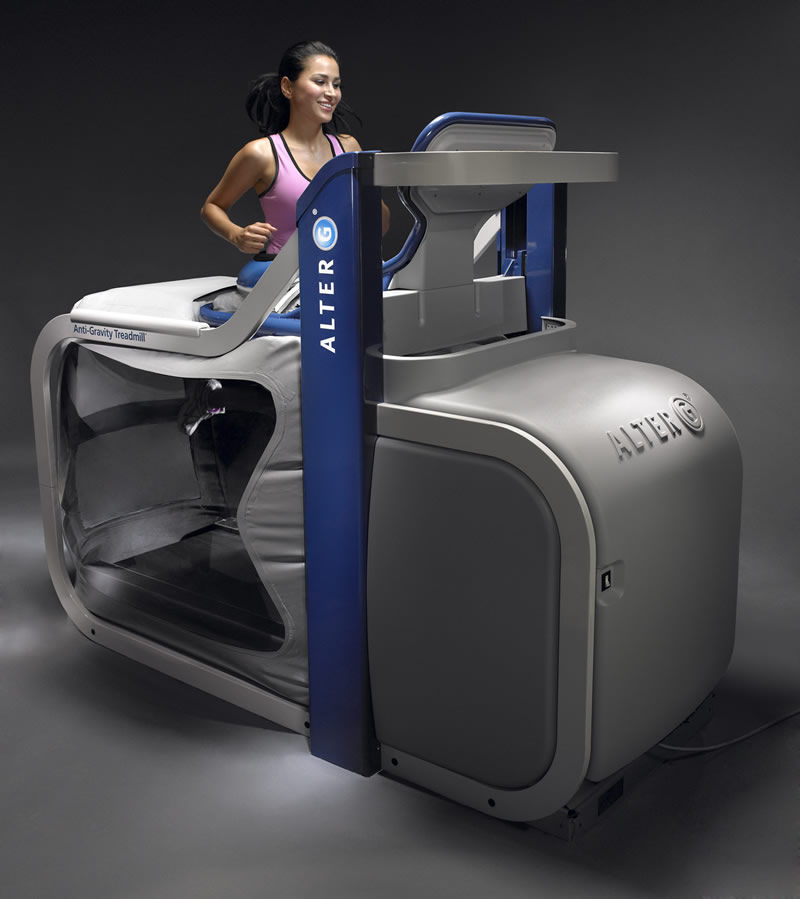
The Beginners Guide To Anti-Gravity Treadmills

Curious about anti-gravity treadmills ?

Curious about anti-gravity treadmills?

Then you have come to the right place.

One of the latest, cutting-edge forms of prehab in the fitness market, the antigravity treadmill may help protect your body from injury and save you a lot of money on treatment bills.

Typically used to rehabilitate an injury, anti-gravity treadmills have been gathering lots of steam as they offer various benefits in a variety of ways.

So what’s the technology all about? Keep on reading.

In today’s post, I’ll explain the function of anti-gravity treadmills, what do they have to offer as well as how to make the most out of one.

Sound great?

Let’s lace up and dig in.

What Is it?

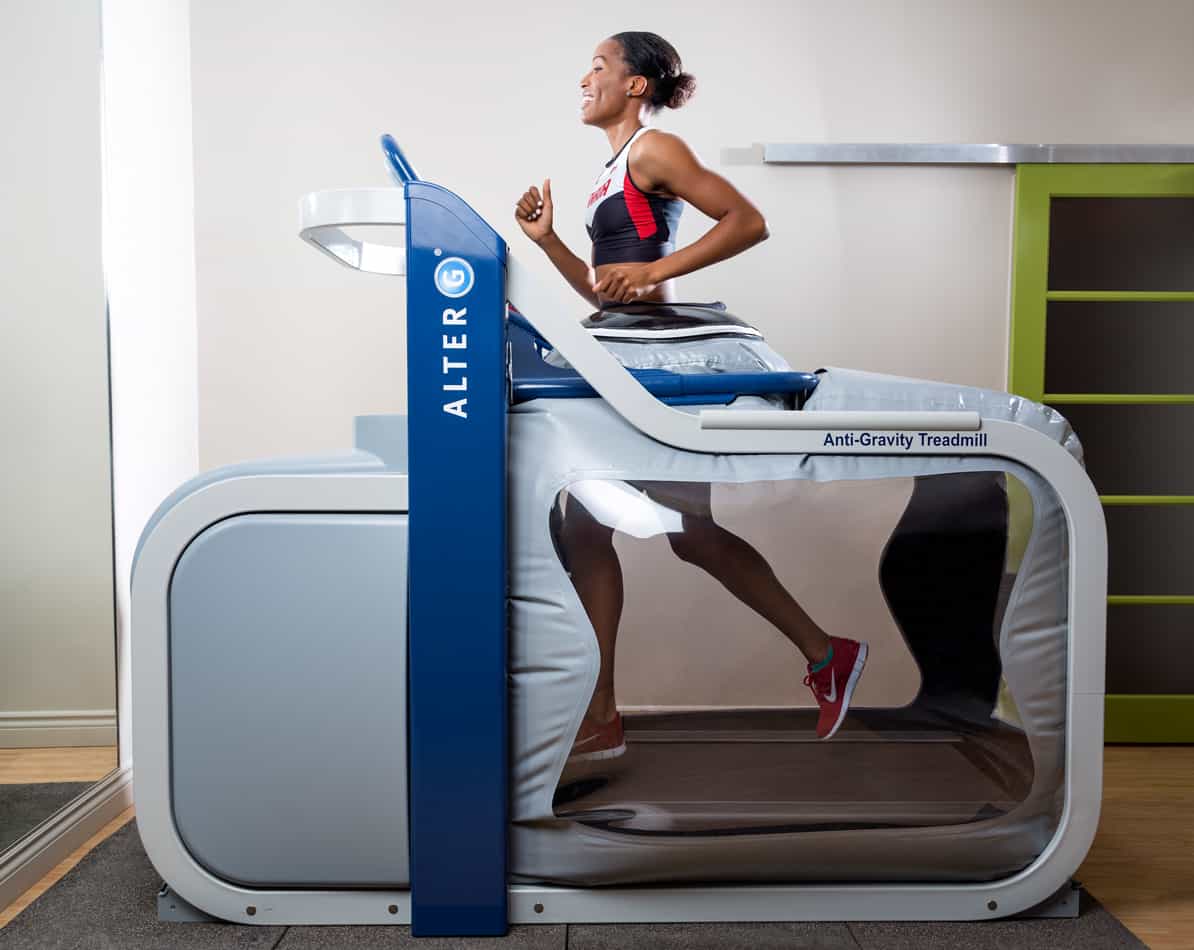
Also known as the space treadmill, the antigravity treadmill can allow the user to walk or run at a lower percentage of their body weight, therefore, lowering the pounding impact on the muscles, joints, tendons, and ligaments.

The Story Behind The Design – A NASA Invention

Wait, what does NASA have to do with the fitness market.

Not much, really. The space agency cared about the health of its awesome astronauts.

Let me explain.

Anti-gravity treadmills were first designed by NASA scientists to simulate “earth-like” training conditions but in space.

The primary goal of the technology was to increase the astronaut apparent weight, which is key for their muscles and bones mass.

anti gravity treadmills

Image credit – From Master Clinic Physiotherapy

The Exact Process

The technology uses air pressure to decrease your body weight and, in turn, take some of the load off your muscles and joints.

More specifically, the technology employs a variance in air pressure between the user’s upper body—atmospheric pressure—and their lower body—the higher pressure—to unload their weight.

The research has reported it can lower impact by roughly 80 percent. That’s. Quite. A. Lot.

Easy To Use – The Step By Step

To use an anti-gravity treadmill, you’ll have to get a pair of special shorts, which you can wear over your clothing. The garment is made from neoprene and feature either a single zipper or a double zip.

Next, you simply step inside the chamber of the machine, which looks like a large bubble, and you’re zipped into an inflatable chamber. When you do so, your body is compressed in the sealed chamber, with a skirt around your waist.

Next, you can choose your own gravitational resistance levels, changing how intense—or easy—the workout will be,

As this takes place, you might feel like you’re being lifted up thanks to the differential air pressure technique.

Thanks to this technique, you can walk or run at 20 percent or 80 percent of your body weight. This can be attuned in small percentages until you find the sweet spot.

Additional Source – Check this treadmill pace chart

So how does this help the rehabilitation?

Nowadays, the technology is used by medical facilities around the globe,  the military, and professional athletes and sports teams.

The technology works well for a wide range of people—neurologic and orthopedic patients, world-class athletes, and those seeking to improve their fitness without the added impact.

How come?

Simple. By reducing the impact stresses on the body, the patients can perform rehabilitation with less pain.

That’s why the technology is often used with patients seeking to gain strength, mobility, full range of movement, and fitness while also reducing the impact on injury or on the body.

Additional Resource – Your guide to treadmill running form

As a runner, the anti-gravity treadmill may help a lot if you have any of the following injuries:

  • Shin splints
  • Medial tibial stress syndrome
  • Plantar fasciitis
  • Runners’ knee
  • Achilles tendinopathy
  • Patellar tendinopathy

The Application

Here are some useful applications of anti-gravity treadmill for runners:

Surgery

The technology helps patients recover faster by allowing to walk with a normal gait as soon as possible. It can help prevent the formation of improper movement patterns stemming from pain and injury.

Injury

Antigravity treadmills can help injured runners keep on training without making their injury worse. When you train at 20 percent of your body weight, you can keep on training with injuries like shin splints or runner’s knees.

Athletic performance

You can perform intervals, hill reps as well as plyometric exercises, lateral training, and agility drills. Again, with a portion of your body weight.

Balance training

The technology works well for patients with neurological conditions, such as multiple sclerosis, Parkinson’s, stroke, cerebral palsy, incomplete spinal cord injury, etc.

Additional Resource- Your guide to curved treadmills

Low impact

It always comes back to this.  If you have a history of overuse injuries or cannot perform high-impact exercises for some reason, the anti-gravity treadmill gives your chance to train a little bit more without the stress on your muscles and joints.

Safe

The technology allows for therapy, re-training, and neuromuscular re-education in a safe setting.

Lose weight

For the extremely obese, excessive weight can put a lot of strain on their muscles and joints, which can make running painful. Again, an anti-gravity treadmill can help an obese person to take up running with little to no risk of problems related to high impact.

The Cost of Anti-Gravity Treadmills

By far, antigravity treadmills are the most expensive treadmills on the market.

The price of an anti-gravity treadmill varies depending on the features of a certain model.

At roughly $35,000 to $70,000, an anti-gravity treadmill isn’t much of a home option. This is one reason these machines are usually hard to find. Even if you find a faculty that has one, there can be a long wait time to get in on one.

Can’t afford to buy one? It’s okay

The “cheapest”  way to get on one is to find a clinic or physiotherapy practice near you that has the machine. Expect to pay around $25 to $30  for a 30-minute session.

Additional resource – Here’s your guide to buying a used treadmill.

Are Anti-Gravity Treadmills For You?

As previously explained, anti-gravity treadmills have a lot to offer. They can be used for elite athletes, military personnel, injured patients, or those recovering from surgery.

Many applications.

Here’s the truth. Even if you don’t fit in any of these categories, you can still benefit from an anti-gravity treadmill.

The machine can help you improve endurance, strength, and mobility without extra stress on your body.

In fact, you might find yourself able to reach your VO2 max and maximum heart rate on an anti-gravity treadmill, according to a study published in Medicine & Science in Sports & Exercise.

Additional Resource  – When to replace a treadmill belt

Featured image credit – from Toronto Physiotherapy

Running with Heel Spurs: Tips for Overcoming Foot Pain

Are you an avid runner, lacing up your sneakers for those exhilarating miles?

Fantastic!

But what happens when heel spurs decide to crash your running party?

Don’t hit the panic button just yet.

In this post, we’re diving into the world of heel spurs – what they are, what causes them, and most importantly, how you can conquer them and get back to running pain-free.

So, grab your running shoes, and let’s hit the trail to heel-spur enlightenment!

What Is A Heel Spur?

Heel spurs, also known as calcaneal spurs, are like little bony hitchhikers that set up camp on the underside of your heel bone.

They’re the result of some serious foot drama, with your plantar fascia – that stretchy sole tissue – getting all riled up and irritated.

Your heel spur adventure starts at the front of your heel and then decides to extend its reach towards your arch or even your toes.

Sneaky, right?

But here’s the kicker – this whole process takes months to unfold, so it’s definitely not an overnight sensation.

Now, the painful truth is that heel spurs can, well, hurt like heck.

But here’s a plot twist – some folks have them without even realizing it! How’s that for a surprise party in your shoes?

What’s the root cause, you ask? It’s all about putting too much stress on your foot muscles and ligaments. This excessive load makes your plantar fascia go haywire, stretching it out and causing damage to the protective membrane around your heel bone.

Oh, and here’s a fun fact: if you’ve a history of plantar fasciitis, then you’re at higher risk of these heel spur party crashers. Sure, some of these little rascals might need surgical eviction, but fear not! There are few things you can do that do not require going under the knive (more on this later).

Plantar Fasciitis and Heel Spurs

Let’s clear up a common misconception: just because your heels are singing the blues doesn’t automatically mean those heel spurs are the culprits. You see, there’s another heel villain in town, and its name is plantar fasciitis.

Plantar fasciitis is an inflammation of the plantar fascia, which is basically a fancy name for the stretchy, fibrous band that plays foot-connector linking your heel bone to the ball of your foot.

Now, here’s where it gets interesting – many folks dealing with plantar fasciitis might also have some heel spurs hanging around in the background.

But let’s set the record straight: heel spurs aren’t the puppet masters behind plantar fasciitis. They might be party crashers, but they’re not responsible for starting the party in the first place.

Additional resource – Guide to big toe pain from running

Causes Of Heel Spurs In Runners

Many things can put extra stress on the heel bone to the point that it forms spurs.

These include:

  • Overstretching of the plantar fascia
  • Damaging the foot muscles and ligaments
  • Continuous tearing of the thin lining of the heel bone

There are also some risk factors to pay attention to, such as:

  • Improper running shoes without proper cushioning and arch support
  • Gait abnormalities that affect the feet in general
  • Excess weight or obesity
  • Spending a long time on the feet
  • Running on hard or uneven surfaces
  • Diabetes
  • Aging
  • Running gait abnormities, especially when it places extra stress on the heel bone, ligaments, and nerves in and around the heel.
  • Having either flat feet or high arches

The Good News

Now, don’t let the specter of heel spurs haunt your dreams – they often fly under the radar, causing no mischief at all. In fact, studies have shown that a whopping 95% of heel spur carriers live in blissful ignorance with no foot pain to report.

But, and there’s always a ‘but,’ when you’re an avid runner, heel spurs might decide it’s time to crash your pain-free party.

Common symptoms include:

  • Pain that sets up camp on the inner or middle part of your heel.
  • The unwelcome wake-up call – pain when you take your first steps out of bed in the morning.
  • The post-sitting pitfall – discomfort that sneaks up after lounging and then disappears after a few minutes of walking.
  • A tiny, unexpected guest – the formation of a small lump in the affected area.
  • Pain that plays hide and seek, getting worse when you’re on the run or engaging in high-impact activities.

How To Deal With Heel Spurs While Running

Dealing with heel spurs when you’re a runner can be a tricky task. But worry not; here’s your game plan for managing heel spurs effectively while hitting the pavement:

Rest

Begin with the golden rule – rest. Reduce your mileage and consider taking a break from training altogether. This is especially important if you suspect that your heel spur symptoms have flared up due to a sudden increase in training intensity.

Ice It

To find relief from the pain, ice the affected area using a frozen water bottle. The sooner you apply ice when you notice symptoms, the better the results.

Here’s how to do it:

Gently roll the affected part of your foot back and forth over the frozen bottle for about 15 to 20 minutes. Repeat this icing routine three to four times a day. Alternatively, you can opt for a simple ice pack or ice wrap to ease the discomfort.

Massage The Spur

Another approach to alleviate the discomfort is through massage. Not only does it feel wonderful, but it can also provide temporary relief from heel pain and enhance blood circulation in the area. In fact, it’s often more effective than merely resting your feet.

Here’s how to do it:

Begin by gently massaging the affected area with your thumb.

Gradually increase the pressure until you’re applying firm but comfortable force.

Be cautious not to overdo it, as excessive pressure may exacerbate the pain.

Stretching

Stretching can be a highly effective method to ease heel pain. It targets not only the calf muscles but also other muscles in the lower legs. You can incorporate these stretches into your daily routine, with a special focus on post-run sessions or before bedtime.

Some of the best stretches for heel pain include:

Calf stretch against the wall

Seated foot flexes

Towel grabs with your toes

Calf stretches on a stair

Golf/tennis ball foot rolls

Try Essential Oils

Another avenue to consider is the use of essential oils. Some essential oils possess potential anti-inflammatory properties, which can help alleviate swelling and pain. Although scientific research on their efficacy is ongoing, it might be worth giving them a shot.

Here are a few essential oils to consider:

  • Lavender oil
  • Fennel oil
  • Thyme oil
  • Rosemary oil
  • Bergamot oil
  • Eucalyptus oil

Essential oils are generally affordable, non-invasive, and carry minimal to no side effects unless you have a history of dermatitis.

Try OTC Drugs

For managing heel spurs, over-the-counter anti-inflammatory medications like naproxen and ibuprofen can be an option. These drugs can help reduce swelling and alleviate pain.

However, it’s crucial to exercise caution. Prolonged use of such medications without medical supervision can lead to side effects. Typically, these drugs should not be used for more than four weeks without your doctor’s approval.

Common over-the-counter medications to consider include:

  • Aspirin
  • Acetaminophen (Tylenol)
  • Ibuprofen (Motrin, Advil)

Before introducing any new medications, especially if you are already dealing with kidney or liver issues, it’s essential to consult your healthcare provider.

Additionally, certain medications like blood thinners should be approached with care and discussed with a medical professional.

Try Supportive Shoes & Orthotics

Opting for running shoes designed with thicker soles and extra cushioning can be beneficial in managing heel spurs. When your foot makes contact with the ground during running, it experiences significant stress, potentially causing small tears or microtrauma in the plantar fascia tissue.

Utilizing well-cushioned shoes or incorporating shoe inserts can help alleviate this stress.

Moreover, exploring the use of pre-made or custom orthotics and shoe inserts may provide added comfort and support, potentially reducing discomfort associated with heel spurs.

Injections

For individuals dealing with chronic pain resulting from heel spurs, a medical professional might recommend corticosteroid shots.

Cortisone, a synthetic derivative of natural cortisone, falls within the corticosteroid family.

Typically, these steroids are administered via a thin needle into the area of most intense pain and inflammation. The primary objective is straightforward: reduce inflammation in specific regions of the body.

This, in turn, aims to alleviate discomfort and expedite the healing process. It’s essential to note that while corticosteroid shots can provide relief, they may not offer a complete solution to the problem.

Surgery

In the event that all non-invasive methods fail to alleviate the discomfort caused by heel spurs, surgical intervention may become the final option. This surgical procedure typically involves the removal of the heel spur and, in some cases, the release of the plantar fascia.

Following the surgery, individuals may need to utilize bandages, casts, splints, crutches, and specialized surgical shoes during the recovery process. It’s essential to be aware of potential complications associated with heel surgery, including recurrent heel pain, nerve damage, infection, permanent numbness in the affected area, and scarring.

A full recovery post-surgery may require a significant amount of time, during which individuals may not be able to place weight on the operated foot. It’s important to maintain mobility while proceeding cautiously.

It’s worth noting that approximately 90 percent of individuals with heel spurs experience improvement through non-surgical, non-invasive treatments, many of which have been discussed in this article.

Heel spurs in Runners  – The Conclusion

Heel spurs are one of many running problems. It’s not a death sentence for runners since there are a lot of treatment options. Assess your risk and fix the problem earlier so you won’t suffer more.

Why Does my Jaw Hurt When I Run – Jaw Pain When Running Explained

ear pain when running

Experiencing jaw pain when running? Then you have come to the right place.

Jaw pain while running isn’t your typical overuse injury, yet having it during a run or at any time, can be quite annoying.

There are many possible causes of jaw pain. In fact, it can be different reasons for different runners.

That’s why you should look into them because they can be quite dangerous (in super rare cases, of course).

In today’s post, I’ll discuss why does your jaw hurt when you run and share some tips and guidelines on what to do to soothe it.

Sounds great

Let’s get started.

Why Does my Jaw Hurt When I Run – Stop Jaw Pain While Running

Jaw pain is usually felt as pain around the ear, tenderness in the jaw, as well as inability to chew comfortably.

If suffering from this pain while running, any of the following causes could be the reason behind your condition.

Forward-Head Posture

If you’re routinely in a slouched position, either while running, working, or watching TV, then you’re, basically, holding your body in a less-than-ideal position.

Here’s the truth.

Your body functions best when all of the muscles, bones, and joints are properly aligned.

When your head is too much forward, your neck muscles may take in more load than usual. This extra stress travels up your neck and causes jaw pain.

That’s not the whole story.

This type of jaw pain can also contribute to headaches and migraines, which can hinder your performance and cause further trouble.

The Solution

If you catch yourself in a forward-head position—either while running, at work, or whenever—correct it on the spot.

I’d recommend that you also make a few lifestyle changes such as adjusting your computer screen as well ad spending less time looking down at your phone.

Here are a few hints to help you build and maintain proper running form.

  • Keep your shoulders loose and relaxed. Avoid hunching.
  • Gaze straight ahead—about 15 to 20 feet. Never look down at your feet unless you’re running on a technical terrain where you need to SEE where you put your feet.
  • Keep your chin tucked in a while keeping your neck and head in the same plane as your body.
  • Engage your core and keep your back neutral and straight.
  • Keep your arms loose, bent at a 90-degree angle, with a strong forward swing. Avoid side-to-side swinging.

Additional resource – Chiropractor for runners

Jaw Clenching

Grinding the teeth—or what’s known as bruxism—is another common habit that causes jaw pain.

Bruxism occurs when you subconsciously clench your teeth together. This can create stress in the jaw, especially in the muscles, ligaments, and tendons that support it.

Over time, bruxism can form painful trigger points in the jaw muscle, especially in the masseter and temporalis muscles.

This is actually the reason that although most runners breathe with an open mouth, having already developed these trigger points can be behind the jaw pain while running.

Additional Resource – A Tibial Posterior Tendonitis Guide in Runners

 Jaw Pain When Running
African american woman running in New York City at the morning

The Solution

Pay more attention to how you’re holding your jaw, especially when stressed. Then, build the habit of consciously relaxing your jaw every time you catch yourself clenching your teeth.

You should also do something about the stress.

Some steps include:

  • Deep breathing
  • Meditation
  • Stretching
  • Taking regular breaks

What’s more?

Consider getting a nightguard if you tend to grind your teeth while asleep.

Temporomandibular Joint (TMJ) Dysfunction

Feeling pain when yawning or chewing? You might be dealing with a TMJ problem.

Temporomandibular joint disorder, or TMJ, is a condition in which the joints of the jaw might be displaced, injured, or otherwise poorly functioning. TMJ is caused by nerve damage along the temporomandibular joint.

This can manifest as pain in the jaw as well as in the muscle surrounding it.  It can also contribute to headaches, migraines, and back pain.

Main symptoms include:

  • Pain or discomfort while chewing food
  • Tenderness in and around the ear
  • Difficulty opening and closing the mount
  • Facial pain.

What’s more?

Thanks to the repetitive high-impact nature of running, logging the miles can make the TMJ more swollen and painful.

Additional Resource – Here’s your guide to Anterior Tibial Tendonitis 

The Solution

Most people who have TMJ suffer from mild or temporary symptoms which may fade away within a few days or weeks.

That’s why you should consider taking the conservative approach first before procedures such as getting fitted for an appliance, shaving down teeth, or having surgery.

For starters, try some thermal therapy as research by the TMJA has reported that the use of hot or cold therapy helps reduce the symptoms.

In essence, cold therapy limits swelling and pain, whereas heat can improve blood and loosen the jaw muscle.

Apply this method for 15 to 20 minutes at a time. Just remember to use a light layer between your skin and the compress.

You can also try an over-the-counter analgesic. These anti-inflammatory drugs may help soothe the pain.

If your TMJ condition is caused by musculoskeletal issues, look for a physical therapist that specializes in jaw disorders.

Additional Resource – Here’s your guide to calf pain while running

Heart Problems

Last but not least, the reason behind your jaw pain might be more sinister than you imagine. In fact, jaw pain could indicate some type of cardiovascular problem.

This is why in case you’ve persistent jaw pain (despite taking some of the above measures), consult your doctor to rule out any underlying condition.

The most common issue is Angina, a condition in which your heart is in trouble as it’s not getting sufficient blood, and it causes chest pain.

Temporal arthritis, a condition in which swelling causes blood vessels to narrow, may also cause jaw pain.

Blocked arteries is another common condition.

What’s more?

In some cases, jaw pain might be a symptom of a heart attack.

The other well-known heart attack sign are, certainly, chest pain and left-sided arm pain.

The Solution

If you suspect you’re having cardiovascular problems—especially if it’s a heart attack—seek medical attention as soon as possible.

Don’t delay one second.

Why Does my Jaw Hurt When I Run  – The Conclusion

There you have it

If you’re looking to uncover the cause of your jaw pain during exercise, then today’s post will get you started on the right foot. The rest is really up to you.

Please feel free to leave your questions and suggestions in the section below.

In the meantime thank you for dropping by.

Should You Be Running After Leg Day?

A lot of runners ask, ‘Is it okay to run after leg day?’ And honestly, there’s no clear-cut answer

Leg day can be rough, but getting some miles in the next day isn’t impossible.

If you’re limping out of the gym, it’s only natural to question whether running is a smart move.

As a runner and coach, I’ve had my share of tough leg days where my legs feel done, but the urge to run is still there

Let’s break it down and figure out when it’s a good idea and how to do it without regretting every step.

Why Every Runner Needs to Do Leg Day

If you want to be a stronger, faster runner, skipping leg day isn’t an option. Sure, the more you run the better you get at it, but leg day? That’s the secret sauce for a powerful stride and injury prevention.

Just to clarify, leg day is all about working the muscles in your lower body. These include:

Here’s why leg day matters:

  • Better Running Efficiency. Research from the Journal of Strength and Conditioning shows that lower body strength training can make you a more efficient runner The study found that runners who incorporated leg-focused strength exercises improved their speed and endurance over time.
  • Reduced Risk of Injury. A comprehensive review in Sports Medicine highlights that strength training helps address muscular imbalances, which are common among runners and can lead to injuries like IT band syndrome and runner’s knee. Building up muscles like your quads, hamstrings, and glutes keeps your joints stable and lowers injury risk.
  • Improved Power and Speed. A study in the International Journal of Sports Physiology and Performance demonstrated that strength training contributes to improved sprint speed and acceleration, as stronger leg muscles generate more power with each stride. This is great for runners looking to pick up the pace or add sprints to their routine..

Should You Run Right After Leg Day?

So, can you actually run after leg day?

The answer isn’t a simple yes or no. Running right after a tough leg workout isn’t ideal because your muscles are tired, and glycogen levels are low.

I often tried to power through a run right after a brutal squat day, and it felt like running with cement blocks strapped to my legs. I usually have to humble my self and keep my pace as slow as possible.

So, why does this happen?

Let me explain more.

Your body relies on stored glycogen as fuel when you work out

The harder you exercise, the more fuel you burn up.

That’s why this energy reserve can get depleted when you perform any type of physical exercise.

What’s more?

Big moves like squats and deadlifts don’t just hit your legs—they work multiple muscles, and that’s exhausting.

The larger the muscle, the bigger the inflammation and micro tears, hence, the more soreness and pain.

That’s not the whole story.

Other things can affect how your miles feel after strength training.

These include your:

  • Training intensity
  • Training volume
  • Training speed
  • Order of exercises and workouts
  • Recovery rate
  • Fitness level

Because of this, any run right after a leg workout probably won’t be your best

If walking is tough because of soreness, it’s smart to skip running that day

If it’s only mild soreness, a gentle run can help loosen things up and speed up recovery.

When You Should Skip the Run After Leg Day

Sometimes it’s better to skip the run after leg day. Here are a few:

  • Extreme soreness: If you’re struggling to walk, running will only worsen things. Pushing sore muscles can lead to injury or burnout.
  • You pushed to failure: If you went hard in the gym and left everything on the floor, your body needs time to recover. Running right after can do more harm than good.

If you’re set on running, make it a light, easy one.

How to Run After Leg Day (Without Regretting It)

If you’re going to run after leg day, here’s how to make it manageable

  1. Start with a Proper Warm-Up Running on sore legs is rough, but a good warm-up can make a huge difference. Do some dynamic stretches—leg swings, lunges, or even brisk walking- to get your muscles loose and increase blood flow.
  2. Keep It Short and Easy After leg day, this is not the time to go for a PR or attempt a long run. Stick to a recovery run—keep the pace easy and the distance short. The goal is to move your legs and boost circulation, not to crush a workout.
  3. Wear Compression Gear I used to think compression socks were just a gimmick, but after trying them out, I’m sold. They help with circulation and reduce muscle fatigue, especially after a tough leg workout. Give them a shot—you might be surprised how much they help.
  4. Fuel Up Properly Running after leg day means your body works overtime to recover. Ensure you’re fueling up with the right mix of carbs and protein. Skipping food can make you hit the wall halfway through your run, and trust me, running on empty doesn’t feel good.

When Should You Skip the Run?

There are days when running just isn’t in the cards. If your legs feel like jelly and even walking is painful, it’s probably a good day to rest.

Pushing through extreme soreness can lead to injuries like strains or sprains. And let’s be real, no run is worth getting sidelined for weeks.

Listen to your body, and take a day off if you need to.

Further Reading on Strength Training and Running

For those interested in exploring the science behind strength training and running performance, here are some reputable resources:

  • Runner’s World: “Strength Training for Runners: What You Need to Know” – Link
  • American College of Sports Medicine: “The Benefits of Resistance Training for Endurance Athletes” – Link
  • Journal of Sports Medicine and Physical Fitness: “Impact of Lower Body Strength on Running Performance” – Link

Conclusion: To Run or Not to Run After Leg Day?

To run or not to run after leg day depends on how your legs feel. If the soreness is manageable, a light recovery run can speed up recovery by boosting circulation. But if you’re too sore to walk properly, it’s best to take a rest day or opt for cross-training.

Remember, the key to long-term success is consistency. Missing a run or two after an intense leg day won’t derail your progress, but pushing too hard might.

The Runner’s Dilemma: Can You Keep Jogging with an Abdominal Hernia?

running with hernia

You’re out for your routine jog, the sun’s warmth on your skin, and the rhythm of your steps setting the pace for a perfect day.

But then, a nagging thought creeps in – you have an abdominal hernia. Can you keep running, or should you hit pause until it’s fully healed?

Well, you’re in the right place because today, I’m going to unravel the mysteries of abdominal hernias and explore the ins and outs of running with this condition.

Whether you’re a seasoned runner or just lacing up your sneakers, this article is your go-to guide for making informed decisions about your running routine.

So, let’s lace up and hit the pavement – together!

What Is Abdominal Hernia?

So, what exactly is this “abdominal hernia” thing, and how might it affect your fitness and overall well-being?

Let me paint you a picture. Your body’s like a well-constructed fortress, with a protective wall called the abdominal wall. But sometimes, a sneaky internal organ, like your bladder or intestine, decides it’s time for an adventure. It pushes through a weakened section of that protective wall, resulting in a noticeable lump or bulge.

That’s your abdominal hernia saying, “Hello, world!”

Now, there are a few different types of these hernias.

First up, we’ve got the inguinal hernias, which often occur in the lower abdominal groin area. Then, there are the femoral hernias, which tend to strike the groin near the femoral canal.

But wait, there’s more! We’ve also got hiatal hernias, making their presence known in the upper abdomen, and umbilical hernias, afflicting the area around your belly button.

How To Treat Abdominal Hernias

When it comes to abdominal hernias, it’s crucial to know your options and understand why taking action matters.

Now, in many cases, persistent hernias will call for a little surgical intervention. Yep, we’re talking about a trip to the operating room. But don’t worry, it’s a well-practiced procedure, and your skilled medical team will have you covered.

Here’s the kicker: ignoring that pesky abdominal hernia is like playing with fire.

There’s a real danger of something called “strangulation,” and trust me, you don’t want any part of it. Strangulation is a situation where your intestines decide to throw a party, but the venue is way too small – so they get trapped. This hinders and in some cases, completely cuts off circulation to your precious tissue. It’s a life-threatening emergency, and you’d want to avoid it at all costs.

Now, how do you spot the red flags of a strangulated hernia? Keep an eye out for these telltale signs:

  • Fever – when your body temperature goes haywire.
  • Vomiting – not the kind from a rollercoaster ride.
  • Trapped gas – feeling like you’re carrying around an unwanted balloon.
  • Chronic pain – not the run-of-the-mill ache; but persistent discomfort.
  • Nausea – that queasy feeling that just won’t quit.
  • Constipation – when things in the bathroom aren’t quite as they should be.
  • Skin darkening – no, you’re not getting a tan; it’s a concerning sign.

Can you Run With an Abdominal Hernia?

Well, the answer isn’t as straightforward as we’d hope. It’s a bit like navigating a maze, and here’s why: whether you can keep running with a hernia depends on a few key factors.

First up, it all hinges on the severity of your hernia and how intense your training is. The milder your hernia, the better your chances of keeping up with your running routine. But if it’s throwing a full-on hernia tantrum, you might need to hit the pause button.

Here’s the silver lining, though: running at a low intensity is often recommended for hernia patients. Why, you ask? Well, running can actually help shed those extra pounds, which might just ease some of your hernia-related symptoms.

But (yes, there’s a but), remember that the intensity of your runs matters. If your hernia is causing you to wrestle with acid reflux symptoms, going hard or long on your runs might not be your best bet. It could potentially crank up the pain factor.

Additional Resource – Can You Run With An Abdominal Strain?

Intense Training And Hernia

Hernias don’t appreciate strenuous workouts.

Any activity that puts a squeeze on your abdominal region can send your hernia into a frenzy. While running might seem like it’s all about those legs, don’t be fooled – your core is in on the action, too!

Don’t just take my word for it; there’s solid research to back this up. A study published in PLOS One decided to peek under the hood and see what happens to our cores during running. They had 28 subjects undergo three months of Pilates training, which is all about strengthening that core.

What they found was quite telling – during running, our core muscles, especially those obliques (the side muscles), kick into high gear. And guess what? The more you rev up your running pace, the more your core muscles get involved.

Now, here comes the catch: running, especially when you’re cranking up the speed, could potentially worsen your hernia symptoms by ramping up those core muscle contractions. It’s like adding fuel to the fire!

But overall, if your hernia isn’t causing you agony or inflammation, running is generally considered low-risk.

Of course, it’s always a good idea to have a chat with your doctor before you lace up. However, if that hernia decides to go rogue and strangulate, which basically means it’s messing with your bowel’s blood supply – well, that’s a medical emergency.

Trust me; you’ll know when it’s happening. Vomiting, bowel issues, and an overall unpleasant time are all telltale signs that I’ve already mentioned. In that case, don’t hesitate – get yourself to a medical pro pronto!

How To Manage A Hernia While Running

Now, let’s talk about the comeback plan for all you hernia warriors who are eager to hit the pavement once again.

The golden rule here is gradual progress, and it all starts with channeling your inner beginner. Embrace the mindset of someone just starting their running journey – even if you’re an experienced runner.

Here’s a step-by-step roadmap to guide you back to the running track:

Before you even think about picking up the pace, start with a leisurely walk. Aim for a comfortable pace, around three to five miles per hour. The key here is to do it without experiencing any pain or discomfort. Listen to your body – it’ll tell you if you’re pushing too hard.

As you begin walking regularly without any issues, it’s time to add a little more distance to your outings. Slowly increase the mileage and endurance – don’t rush this process. The goal is to avoid any post-surgery complications and let your body adapt at its own pace.

Do Some Plyometric

Plyometrics are like the turbo boosters for your body, helping you get ready for the rigors of running. These explosive exercises can elevate your strength, agility, and overall fitness, which are essential for a smooth return to the miles.

Here’s a quick plyometric routine that you can incorporate into your comeback plan. Perform each exercise for 30 seconds, then give yourself a one-minute breather. Repeat the whole circuit three times for maximum benefits:

  • Hop in Place: Start with some simple hops while staying in one spot. It’s an excellent way to warm up your legs and get those muscles firing.
  • Hop Side to Side on Two Feet: Now, let’s amp it up a bit. Jump from side to side, landing softly on both feet. This exercise helps improve your lateral movement and stability.
  • Hop Forward/Backward on Two Feet: Take those hops forward and backward now. It’s all about building strength and coordination.
  • Single Leg Broad Jump: It’s time to work on that explosive power. Jump forward with one leg, landing on the same leg, then switch to the other. This exercise targets your balance and strength.
  • Squat Jumps: Get into a squat position and explode upwards into a jump. This one is fantastic for strengthening your legs and core.
  • Burpees: We saved the best for last – burpees! You’ll love to hate them. They combine a squat, push-up, and jump, offering a full-body workout. They’re like a crash course in plyometrics and endurance.

Walk Run

Now, let’s transition from walking to a beautiful walk/run combo – a strategy that’s perfect for easing back into running after a hernia.

Here’s how you can do it:

Start by continuing your regular walks, but this time, inject some running intervals into the mix. For instance, you can begin by walking for a few minutes to warm up, then transition into a gentle jog for a minute or two. Afterward, return to walking for recovery. Gradually increase the duration of your jogging intervals as your body becomes more comfortable.

Listen to Your Body:

Pay close attention to how your body responds. You should be able to complete these walk/run exercises without experiencing any pain or discomfort in your abdominal area.

Touch your abdomen gently – it shouldn’t feel tender or painful. If it does, it’s a sign to take it slower and consult with your healthcare provider.

The Only Treadmill Pace Chart You Need

Running on a treadmill is incredibly convenient and offers the perfect environment for precise training—you control every element, from speed to incline, without the unpredictability of outdoor elements.

Here’s something important to remember: running on a treadmill can feel easier than hitting the roads, primarily because there’s no wind resistance.

When you’re outdoors, the wind pushes against you, adding an extra layer of challenge that’s missing on the treadmill.

This is why a 20-minute run at 0% incline indoors might seem less taxing than the same run outside.

To make indoor runs more effective and mimic outdoor conditions, tweaking the incline is crucial, especially if you’re prepping for a race.

So, how do you ensure your treadmill training aligns with your outdoor performance?

Use a treadmill pace chart!

This tool is a game-changer for translating outdoor paces into the appropriate miles-per-hour indoor setting.

Let’s dive into how.

How to Make Treadmill Runs More Like Outdoor Runs

As a running coach, I often remind my athletes about adjusting their treadmill settings to simulate outdoor running. When you step on that treadmill, the lack of wind and natural terrain changes can throw off your pacing if you’re used to outdoor runs.

To help fix that, I recommend adding an incline—just a slight bump to 1% will do wonders. This mimics the effort to overcome wind resistance outdoors, making indoor sessions more productive and realistic.

Whether prepping for your first race or just trying to stay consistent with your fitness, making small adjustments to your treadmill settings can greatly impact how prepared you are when race day comes around. And trust me, that’s where a treadmill pace chart comes in handy!

What Is a Good Treadmill Pace?

This is hard to answer as it depends on your fitness level, training experience, and goals. For instance, if you’re a treadmill newbie, a good treadmill pace is as close to your real outdoor running pace. But that depends on your current fitness level and training goals.

Let me explain.

For Walking

A beginner’s optimal walking pace is around 3 to 4 mph (around 5 to 6 km/h). If you’re new to exercise, especially cardio training, walking is likely the perfect way to start. Walking has a low impact, burns calories, and helps you improve your endurance and build exercise habits.

Here is a list of top treadmills for walking – choose the best one!

For Jogging

Once (or if) walking feels too easy, try jogging. A proper jogging pace, in my opinion, is about five mph (around 8 km/h). Ideally, you should be able to train and talk without gasping for air for at least 20 to 30 minutes before you start challenging yourself more.

For Running

Once you can keep the conversational pace for 30 minutes., it’s time to challenge yourself. Running, as it relates to pace, is anything above five mph. You should move a little faster than when you jog but not push yourself too hard to the point where you’re panting for air on every step.

For Sprinting

After building a good cardio base, it’s time to take things to the next level.  That’s when you should start doing sprints on the treadmill. As a form of interval training, the typical sprint pace is anything above 12 miles (19 kmh). A pro runner can sprint at a speed of 15 mph. As a rule, you shouldn’t be able to sprint for more than one minute at a time.

How to Use a Treadmill Pace Chart

A treadmill pace chart converts the speed you see on the treadmill’s display (in miles per hour) into the pace of a mile you’d run outside (in minutes per mile).

This is key to making indoor runs as close to outdoor training. Whether you’re training for a 5K, half marathon, or a marathon, this chart can help you fine-tune your pace and achieve your race goals.

So, if you’re wondering how a 6.0 mph setting translates to outdoor running, the chart reveals that it’s akin to a 10-minute mile. This is super handy when trying to maintain a specific pace indoors that you’ve been rocking outdoors.

Here’s how to use it:

  1. Find Your Speed: Look up your treadmill speed (mph or km/h).
  2. Match to Pace: Find the corresponding pace (minutes per mile or kilometer).
  3. Adjust Incline: Use a 1-2% incline to better mimic outdoor conditions, especially if you’re training for hilly courses.

The Charts You Need

If you’re aiming for a specific race time, like 5K or a marathon, you should be able to locate that goal in the corresponding column on the right.

Once you’ve decided on a target pace, check the following posts to help you improve.

The rest is just details, as the saying goes. Here are a few:

Treadmill MPH setting Pace per mile Equivalent paces by incline
0% 1% 2% 3% 4% 5% 6% 7% 8% 9% 10%
5.0 12:00 12:31 11:44 11:05 10:32 10:03 9:38 9:16 8:56 8:38 8:22 8:07
5.2 11:32 12:02 11:18 10:42 10:11 9:44 9:20 8:59 8:40 8:23 8:08 7:54
5.4 11:07 11:35 10:55 10:20 9:51 9:26 9:03 8:43 8:25 8:09 7:55 7:41
5.6 10:43 11:10 10:32 10:00 9:33 9:09 8:48 8:29 8:12 7:56 7:42 7:29
5.8 10:21 10:47 10:12 9:42 9:16 8:53 8:33 8:15 7:58 7:44 7:30 7:18
6.0 10:00 10:26 9:52 9:24 9:00 8:38 8:19 8:02 7:46 7:32 7:19 7:07
6.1 9:50 10:15 9:43 9:16 8:52 8:31 8:12 7:55 7:40 7:26 7:14 7:02
6.2 9:41 10:05 9:34 9:08 8:44 8:24 8:06 7:49 7:34 7:21 7:08 6:57
6.3 9:31 9:56 9:26 9:00 8:37 8:17 7:59 7:43 7:29 7:15 7:03 6:52
6.4 9:23 9:46 9:17 8:52 8:30 8:10 7:53 7:37 7:23 7:10 6:58 6:47
6.5 9:14 9:37 9:09 8:45 8:23 8:04 7:47 7:32 7:18 7:05 6:53 6:43
6.6 9:05 9:29 9:01 8:37 8:16 7:58 7:41 7:26 7:13 7:00 6:49 6:38
6.7 8:57 9:20 8:53 8:30 8:10 7:52 7:35 7:21 7:07 6:55 6:44 6:34
6.8 8:49 9:12 8:45 8:23 8:03 7:46 7:30 7:15 7:02 6:50 6:40 6:29
6.9 8:42 9:04 8:39 8:17 7:57 7:40 7:24 7:10 6:58 6:46 6:35 6:25
7.0 8:34 8:56 8:32 8:10 7:51 7:34 7:19 7:05 6:53 6:41 6:31 6:21
7.1 8:27 8:49 8:25 8:04 7:45 7:29 7:14 7:00 6:48 6:37 6:27 6:17
7.2 8:20 8:41 8:18 7:58 7:40 7:23 7:09 6:56 6:44 6:33 6:22 6:13
7.3 8:13 8:34 8:12 7:52 7:34 7:18 7:04 6:51 6:39 6:28 6:18 6:09
7.4 8:06 8:27 8:05 7:46 7:28 7:13 6:59 6:46 6:35 6:24 6:14 6:05
7.5 8:00 8:20 7:59 7:40 7:23 7:08 6:54 6:42 6:31 6:20 6:11 6:02
7.6 7:54 8:14 7:53 7:34 7:18 7:03 6:50 6:38 6:26 6:16 6:07 5:58
7.7 7:48 8:07 7:47 7:29 7:13 6:58 6:45 6:33 6:22 6:12 6:03 5:55
7.8 7:42 8:01 7:41 7:24 7:08 6:54 6:41 6:29 6:18 6:09 5:59 5:51
7.9 7:36 7:55 7:36 7:18 7:03 6:49 6:37 6:25 6:15 6:05 5:56 5:48
8.0 7:30 7:49 7:30 7:13 6:58 6:45 6:32 6:21 6:11 6:01 5:52 5:44
8.1 7:24 7:43 7:25 7:08 6:54 6:40 6:28 6:17 6:07 5:58 5:49 5:41
8.2 7:19 7:38 7:20 7:04 6:49 6:36 6:24 6:13 6:03 5:54 5:46 5:38
8.3 7:14 7:32 7:15 6:59 6:45 6:32 6:20 6:10 6:00 5:51 5:42 5:35
8.4 7:09 7:27 7:10 6:54 6:40 6:28 6:16 6:06 5:56 5:47 5:39 5:32
8.5 7:04 7:22 7:05 6:50 6:36 6:24 6:13 6:02 5:53 5:44 5:36 5:29
8.6 6:59 7:16 7:00 6:45 6:32 6:20 6:09 5:59 5:49 5:41 5:33 5:26
8.7 6:54 7:11 6:55 6:41 6:28 6:16 6:05 5:55 5:46 5:38 5:30 5:23
8.8 6:49 7:07 6:51 6:37 6:24 6:12 6:02 5:52 5:43 5:35 5:27 5:20
8.9 6:44 7:02 6:46 6:32 6:20 6:09 5:58 5:49 5:40 5:32 5:24 5:17
9.0 6:40 6:57 6:42 6:28 6:16 6:05 5:55 5:45 5:37 5:29 5:21 5:14
9.1 6:36 6:52 6:38 6:24 6:12 6:01 5:51 5:42 5:34 5:26 5:18 5:11
9.2 6:31 6:48 6:34 6:20 6:09 5:58 5:48 5:39 5:31 5:23 5:16 5:09
9.3 6:27 6:44 6:29 6:17 6:05 5:55 5:45 5:36 5:28 5:20 5:13 5:06
9.4 6:23 6:39 6:25 6:13 6:02 5:51 5:42 5:33 5:25 5:17 5:10 5:04
9.5 6:19 6:35 6:22 6:09 5:58 5:48 5:39 5:30 5:22 5:14 5:08 5:01
9.6 6:15 6:31 6:18 6:06 5:55 5:45 5:35 5:27 5:19 5:12 5:05 4:59
9.7 6:11 6:27 6:14 6:02 5:51 5:42 5:32 5:24 5:16 5:09 5:02 4:56
9.8 6:07 6:23 6:10 5:59 5:48 5:38 5:30 5:21 5:14 5:07 5:00 4:54
9.9 6:04 6:19 6:07 5:55 5:45 5:35 5:27 5:19 5:11 5:04 4:58 4:51
10.0 6:00 6:15 6:03 5:52 5:42 5:32 5:24 5:16 5:08 5:02 4:55 4:49
10.1 5:56 6:12 6:00 5:49 5:39 5:29 5:21 5:13 5:06 4:59 4:53 4:47
10.2 5:53 6:08 5:56 5:45 5:36 5:27 5:18 5:11 5:03 4:57 4:50 4:45
10.3 5:50 6:04 5:53 5:42 5:33 5:24 5:16 5:08 5:01 4:54 4:48 4:42
10.4 5:46 6:01 5:50 5:39 5:30 5:21 5:13 5:05 4:58 4:52 4:46 4:40
10.5 5:43 5:57 5:46 5:36 5:27 5:18 5:10 5:03 4:56 4:50 4:44 4:38
10.6 5:40 5:54 5:43 5:33 5:24 5:15 5:08 5:00 4:54 4:47 4:41 4:36
10.7 5:36 5:51 5:40 5:30 5:21 5:13 5:05 4:58 4:51 4:45 4:39 4:34
10.8 5:33 5:48 5:37 5:27 5:18 5:10 5:03 4:56 4:49 4:43 4:37 4:32
10.9 5:30 5:44 5:34 5:24 5:16 5:08 5:00 4:53 4:47 4:41 4:35 4:30
11.0 5:27 5:41 5:31 5:22 5:13 5:05 4:58 4:51 4:45 4:39 4:33 4:28
11.2 5:21 5:35 5:25 5:16 5:08 5:00 4:53 4:46 4:40 4:34 4:29 4:24
11.4 5:16 5:29 5:20 5:11 5:03 4:55 4:49 4:42 4:36 4:30 4:25 4:20
11.6 5:10 5:24 5:14 5:06 4:58 4:51 4:44 4:38 4:32 4:27 4:21 4:17
11.8 5:05 5:18 5:09 5:01 4:53 4:46 4:40 4:34 4:28 4:23 4:18 4:13
12.0 5:00 5:13 5:04 4:56 4:49 4:42 4:36 4:30 4:24 4:19 4:14 4:10

Treadmill Pace Chart Conversions

Min.
per Mile
Miles
per Hour
4:00 15
4:05 14.7
4:10 14.4
4:15 14.1
4:20 13.8
4:25 13.6
4:30 13.3
4:35 13.1
4:40 12.9
4:45 12.6
4:50 12.4
4:55 12.2
Min.
per Mile
Miles
per Hour
5:00 12
5:05 11.8
5:10 11.6
5:15 11.4
5:20 11.3
5:25 11.1
5:30 10.9
5:35 10.7
5:40 10.6
5:45 10.4
5:50 10.3
5:55 10.1


Min.
per Mile
Miles
per Hour
6:00 10
6:05 9.9
6:10 9.7
6:15 9.6
6:20 9.5
6:25 9.4
6:30 9.2
6:35 9.1
6:40 9
6:45 8.9
6:50 8.8
6:55 8.7
Min.
per Mile
Miles
per Hour
7:00 8.6
7:05 8.5
7:10 8.4
7:15 8.3
7:20 8.2
7:25 8.1
7:30 8
7:35 7.9
7:40 7.8
7:45 7.7
7:50 7.7
7:55 7.6


Min.
per Mile
Miles
per Hour
8:00 7.5
8:05 7.4
8:10 7.3
8:15 7.3
8:20 7.2
8:25 7.1
8:30 7.1
8:35 7
8:40 6.9
8:45 6.9
8:50 6.8
8:55 6.7
Min.
per Mile
Miles
per Hour
9:00 6.7
9:05 6.6
9:10 6.5
9:15 6.5
9:20 6.4
9:25 6.4
9:30 6.3
9:35 6.3
9:40 6.2
9:45 6.2
9:50 6.1
9:55 6.1


Min.
per Mile
Miles
per Hour
10:00 6
10:05 6
10:10 5.9
10:15 5.9
10:20 5.8
10:25 5.8
10:30 5.7
10:35 5.7
10:40 5.6
10:45 5.6
10:50 5.5
10:55 5.5
Min.
per Mile
Miles
per Hour
11:00 5.5
11:05 5.4
11:10 5.4
11:15 5.3
11:20 5.3
11:25 5.3
11:30 5.2
11:35 5.2
11:40 5.1
11:45 5.1
11:50 5.1
11:55 5


Min.
per Mile
Miles
per Hour
12:00 5
12:05 5
12:10 4.9
12:15 4.9
12:20 4.9
12:25 4.8
12:30 4.8
12:35 4.8
12:40 4.7
12:45 4.7
12:50 4.7
12:55 4.6
Min.
per Mile
Miles
per Hour
13:00 4.6
13:05 4.6
13:10 4.6
13:15 4.5
13:20 4.5
13:25 4.5
13:30 4.4
13:35 4.4
13:40 4.4
13:45 4.4
13:50 4.3
13:55 4.3


Min.
per Mile
Miles
per Hour
14:00 4.3
14:05 4.3
14:10 4.2
14:15 4.2
14:20 4.2
14:25 4.2
14:30 4.1
14:35 4.1
14:40 4.1
14:45 4.1
14:50 4
14:55 4
Min.
per Mile
Miles
per Hour
15:00 4
15:05 4
15:10 4
15:15 3.9
15:20 3.9
15:25 3.9
15:30 3.9
15:35 3.9
15:40 3.8
15:45 3.8
15:50 3.8
15:55 3.8


Min.
per Mile
Miles
per Hour
16:00 3.8
16:05 3.7
16:10 3.7
16:15 3.7
16:20 3.7
16:25 3.7
16:30 3.6
16:35 3.6
16:40 3.6
16:45 3.6
16:50 3.6
16:55 3.5
Min.
per Mile
Miles
per Hour
17:00 3.5
17:05 3.5
17:10 3.5
17:15 3.5
17:20 3.5
17:25 3.4
17:30 3.4
17:35 3.4
17:40 3.4
17:45 3.4
17:50 3.4
17:55 3.3


Min.
per Mile
Miles
per Hour
18:00 3.3
18:05 3.3
18:10 3.3
18:15 3.3
18:20 3.3
18:25 3.3
18:30 3.2
18:35 3.2
18:40 3.2
18:45 3.2
18:50 3.2
18:55 3.2
Min.
per Mile
Miles
per Hour
19:00 3.2
19:05 3.1
19:10 3.1
19:15 3.1
19:20 3.1
19:25 3.1
19:30 3.1
19:35 3.1
19:40 3.1
19:45 3
19:50 3
19:55 3

5K Target Time: 12:30-17:15

5k
Time
400m 600m 800m 1KM 1200m 1600m Mile Pace Speed
KMH
Speed
MPH
12:30 01:00.0 01:30.0 02:00.0 02:30.0 03:00.0 04:00.0 04:01.4 24.0 14.9
12:45 01:01.2 01:31.8 02:02.4 02:33.0 03:03.6 04:04.8 04:06.2 23.5 14.6
13:00 01:02.4 01:33.6 02:04.8 02:36.0 03:07.2 04:09.6 04:11.1 23.1 14.3
13:15 01:03.6 01:35.4 02:07.2 02:39.0 03:10.8 04:14.4 04:15.9 22.6 14.1
13:30 01:04.8 01:37.2 02:09.6 02:42.0 03:14.4 04:19.2 04:20.7 22.2 13.8
13:45 01:06.0 01:39.0 02:12.0 02:45.0 03:18.0 04:24.0 04:25.5 21.8 13.6
14:00 01:07.2 01:40.8 02:14.4 02:48.0 03:21.6 04:28.8 04:30.4 21.4 13.3
14:15 01:08.4 01:42.6 02:16.8 02:51.0 03:25.2 04:33.6 04:35.2 21.1 13.1
14:30 01:09.6 01:44.4 02:19.2 02:54.0 03:28.8 04:38.4 04:40.0 20.7 12.9
14:45 01:10.8 01:46.2 02:21.6 02:57.0 03:32.4 04:43.2 04:44.9 20.3 12.6
15:00 01:12.0 01:48.0 02:24.0 03:00.0 03:36.0 04:48.0 04:49.7 20.0 12.4
15:15 01:13.2 01:49.8 02:26.4 03:03.0 03:39.6 04:52.8 04:54.5 19.7 12.2
15:30 01:14.4 01:51.6 02:28.8 03:06.0 03:43.2 04:57.6 04:59.3 19.4 12.0
15:45 01:15.6 01:53.4 02:31.2 03:09.0 03:46.8 05:02.4 05:04.2 19.0 11.8
16:00 01:16.8 01:55.2 02:33.6 03:12.0 03:50.4 05:07.2 05:09.0 18.8 11.7
16:15 01:18.0 01:57.0 02:36.0 03:15.0 03:54.0 05:12.0 05:13.8 18.5 11.5
16:30 01:19.2 01:58.8 02:38.4 03:18.0 03:57.6 05:16.8 05:18.6 18.2 11.3
16:45 01:20.4 02:00.6 02:40.8 03:21.0 04:01.2 05:21.6 05:23.5 17.9 11.1
17:00 01:21.6 02:02.4 02:43.2 03:24.0 04:04.8 05:26.4 05:28.3 17.6 11.0
17:15 01:22.8 02:04.2 02:45.6 03:27.0 04:08.4 05:31.2 05:33.1 17.4 10.8

5k pace chart (12:30-17:15)

5K Target Time: 17:30-22:15

5KM
Time
400m 600m 800m 1KM 1200m 1600m Mile
Pace
Speed
KMH
Speed
MPH
17:30 01:24.0 02:06.0 02:48.0 03:30.0 04:12.0 05:36.0 05:38.0 17.1 10.7
17:45 01:25.2 02:07.8 02:50.4 03:33.0 04:15.6 05:40.8 05:42.8 16.9 10.5
18:00 01:26.4 02:09.6 02:52.8 03:36.0 04:19.2 05:45.6 05:47.6 16.7 10.4
18:15 01:27.6 02:11.4 02:55.2 03:39.0 04:22.8 05:50.4 05:52.4 16.4 10.2
18:30 01:28.8 02:13.2 02:57.6 03:42.0 04:26.4 05:55.2 05:57.3 16.2 10.1
18:45 01:30.0 02:15.0 03:00.0 03:45.0 04:30.0 06:00.0 06:02.1 16.0 9.9
19:00 01:31.2 02:16.8 03:02.4 03:48.0 04:33.6 06:04.8 06:06.9 15.8 9.8
19:15 01:32.4 02:18.6 03:04.8 03:51.0 04:37.2 06:09.6 06:11.8 15.6 9.7
19:30 01:33.6 02:20.4 03:07.2 03:54.0 04:40.8 06:14.4 06:16.6 15.4 9.6
19:45 01:34.8 02:22.2 03:09.6 03:57.0 04:44.4 06:19.2 06:21.4 15.2 9.4
20:00 01:36.0 02:24.0 03:12.0 04:00.0 04:48.0 06:24.0 06:26.2 15.0 9.3
20:15 01:37.2 02:25.8 03:14.4 04:03.0 04:51.6 06:28.8 06:31.1 14.8 9.2
20:30 01:38.4 02:27.6 03:16.8 04:06.0 04:55.2 06:33.6 06:35.9 14.6 9.1
20:45 01:39.6 02:29.4 03:19.2 04:09.0 04:58.8 06:38.4 06:40.7 14.5 9.0
21:00 01:40.8 02:31.2 03:21.6 04:12.0 05:02.4 06:43.2 06:45.6 14.3 8.9
21:15 01:42.0 02:33.0 03:24.0 04:15.0 05:06.0 06:48.0 06:50.4 14.1 8.8
21:30 01:43.2 02:34.8 03:26.4 04:18.0 05:09.6 06:52.8 06:55.2 14.0 8.7
21:45 01:44.4 02:36.6 03:28.8 04:21.0 05:13.2 06:57.6 07:00.0 13.8 8.6
22:00 01:45.6 02:38.4 03:31.2 04:24.0 05:16.8 07:02.4 07:04.9 13.6 8.5
22:15 01:46.8 02:40.2 03:33.6 04:27.0 05:20.4 07:07.2 07:09.7 13.5 8.4

5k Pace Chart (17:30-22:15)

5K Target Time: 22:30-27:15

5km
Time
400m 600m 800m 1KM 1200m 1600m Mile
Pace
Speed
KMH
Speed
MPH
22:30 01:48.0 02:42.0 03:36.0 04:30.0 05:24.0 07:12.0 07:14.5 13.3 8.3
22:45 01:49.2 02:43.8 03:38.4 04:33.0 05:27.6 07:16.8 07:19.3 13.2 8.2
23:00 01:50.4 02:45.6 03:40.8 04:36.0 05:31.2 07:21.6 07:24.2 13.0 8.1
23:15 01:51.6 02:47.4 03:43.2 04:39.0 05:34.8 07:26.4 07:29.0 12.9 8.0
23:30 01:52.8 02:49.2 03:45.6 04:42.0 05:38.4 07:31.2 07:33.8 12.8 7.9
23:45 01:54.0 02:51.0 03:48.0 04:45.0 05:42.0 07:36.0 07:38.7 12.6 7.8
24:00 01:55.2 02:52.8 03:50.4 04:48.0 05:45.6 07:40.8 07:43.5 12.5 7.8
24:15 01:56.4 02:54.6 03:52.8 04:51.0 05:49.2 07:45.6 07:48.3 12.4 7.7
24:30 01:57.6 02:56.4 03:55.2 04:54.0 05:52.8 07:50.4 07:53.1 12.2 7.6
24:45 01:58.8 02:58.2 03:57.6 04:57.0 05:56.4 07:55.2 07:58.0 12.1 7.5
25:00 02:00.0 03:00.0 04:00.0 05:00.0 06:00.0 08:00.0 08:02.8 12.0 7.5
25:15 02:01.2 03:01.8 04:02.4 05:03.0 06:03.6 08:04.8 08:07.6 11.9 7.4
25:30 02:02.4 03:03.6 04:04.8 05:06.0 06:07.2 08:09.6 08:12.5 11.8 7.3
25:45 02:03.6 03:05.4 04:07.2 05:09.0 06:10.8 08:14.4 08:17.3 11.7 7.2
26:00 02:04.8 03:07.2 04:09.6 05:12.0 06:14.4 08:19.2 08:22.1 11.5 7.2
26:15 02:06.0 03:09.0 04:12.0 05:15.0 06:18.0 08:24.0 08:26.9 11.4 7.1
26:30 02:07.2 03:10.8 04:14.4 05:18.0 06:21.6 08:28.8 08:31.8 11.3 7.0
26:45 02:08.4 03:12.6 04:16.8 05:21.0 06:25.2 08:33.6 08:36.6 11.2 7.0
27:00 02:09.6 03:14.4 04:19.2 05:24.0 06:28.8 08:38.4 08:41.4 11.1 6.9
27:15 02:10.8 03:16.2 04:21.6 05:27.0 06:32.4 08:43.2 08:46.3 11.0 6.8

5k Pace Chart (22:30-27:15)

5K Target Time: 27:30-32:15

5KM
Time
400m 600m 800m 1KM 1200m 1600m Mile
Pace
Speed
KMH
Speed
MPH
27:30 02:12.0 03:18.0 04:24.0 05:30.0 06:36.0 08:48.0 08:51.1 10.9 6.8
27:45 02:13.2 03:19.8 04:26.4 05:33.0 06:39.6 08:52.8 08:55.9 10.8 6.7
28:00 02:14.4 03:21.6 04:28.8 05:36.0 06:43.2 08:57.6 09:00.7 10.7 6.7
28:15 02:15.6 03:23.4 04:31.2 05:39.0 06:46.8 09:02.4 09:05.6 10.6 6.6
28:30 02:16.8 03:25.2 04:33.6 05:42.0 06:50.4 09:07.2 09:10.4 10.5 6.5
28:45 02:18.0 03:27.0 04:36.0 05:45.0 06:54.0 09:12.0 09:15.2 10.4 6.5
29:00 02:19.2 03:28.8 04:38.4 05:48.0 06:57.6 09:16.8 09:20.1 10.3 6.4
29:15 02:20.4 03:30.6 04:40.8 05:51.0 07:01.2 09:21.6 09:24.9 10.3 6.4
29:30 02:21.6 03:32.4 04:43.2 05:54.0 07:04.8 09:26.4 09:29.7 10.2 6.3
29:45 02:22.8 03:34.2 04:45.6 05:57.0 07:08.4 09:31.2 09:34.5 10.1 6.3
30:00 02:24.0 03:36.0 04:48.0 06:00.0 07:12.0 09:36.0 09:39.4 10.0 6.2
30:15 02:25.2 03:37.8 04:50.4 06:03.0 07:15.6 09:40.8 09:44.2 9.9 6.2
30:30 02:26.4 03:39.6 04:52.8 06:06.0 07:19.2 09:45.6 09:49.0 9.8 6.1
30:45 02:27.6 03:41.4 04:55.2 06:09.0 07:22.8 09:50.4 09:53.8 9.8 6.1
31:00 02:28.8 03:43.2 04:57.6 06:12.0 07:26.4 09:55.2 09:58.7 9.7 6.0
31:15 02:30.0 03:45.0 05:00.0 06:15.0 07:30.0 10:00.0 10:03.5 9.6 6.0
31:30 02:31.2 03:46.8 05:02.4 06:18.0 07:33.6 10:04.8 10:08.3 9.5 5.9
31:45 02:32.4 03:48.6 05:04.8 06:21.0 07:37.2 10:09.6 10:13.2 9.4 5.9
32:00 02:33.6 03:50.4 05:07.2 06:24.0 07:40.8 10:14.4 10:18.0 9.4 5.8
32:15 02:34.8 03:52.2 05:09.6 06:27.0 07:44.4 10:19.2 10:22.8 9.3 5.8

5k Pace Chart (27:30-32:15)

5K Target Time: 32:30-37:15

5KM
Time
400m 600m 800m 1KM 1200m 1600m Mile
Pace
Speed
KMH
Speed
MPH
32:30 02:36.0 03:54.0 05:12.0 06:30.0 07:48.0 10:24.0 10:27.6 9.2 5.7
32:45 02:37.2 03:55.8 05:14.4 06:33.0 07:51.6 10:28.8 10:32.5 9.2 5.7
33:00 02:38.4 03:57.6 05:16.8 06:36.0 07:55.2 10:33.6 10:37.3 9.1 5.6
33:15 02:39.6 03:59.4 05:19.2 06:39.0 07:58.8 10:38.4 10:42.1 9.0 5.6
33:30 02:40.8 04:01.2 05:21.6 06:42.0 08:02.4 10:43.2 10:47.0 9.0 5.6
33:45 02:42.0 04:03.0 05:24.0 06:45.0 08:06.0 10:48.0 10:51.8 8.9 5.5
34:00 02:43.2 04:04.8 05:26.4 06:48.0 08:09.6 10:52.8 10:56.6 8.8 5.5
34:15 02:44.4 04:06.6 05:28.8 06:51.0 08:13.2 10:57.6 11:01.4 8.8 5.4
34:30 02:45.6 04:08.4 05:31.2 06:54.0 08:16.8 11:02.4 11:06.3 8.7 5.4
34:45 02:46.8 04:10.2 05:33.6 06:57.0 08:20.4 11:07.2 11:11.1 8.6 5.4
35:00 02:48.0 04:12.0 05:36.0 07:00.0 08:24.0 11:12.0 11:15.9 8.6 5.3
35:15 02:49.2 04:13.8 05:38.4 07:03.0 08:27.6 11:16.8 11:20.8 8.5 5.3
35:30 02:50.4 04:15.6 05:40.8 07:06.0 08:31.2 11:21.6 11:25.6 8.5 5.3
35:45 02:51.6 04:17.4 05:43.2 07:09.0 08:34.8 11:26.4 11:30.4 8.4 5.2
36:00 02:52.8 04:19.2 05:45.6 07:12.0 08:38.4 11:31.2 11:35.2 8.3 5.2
36:15 02:54.0 04:21.0 05:48.0 07:15.0 08:42.0 11:36.0 11:40.1 8.3 5.1
36:30 02:55.2 04:22.8 05:50.4 07:18.0 08:45.6 11:40.8 11:44.9 8.2 5.1
36:45 02:56.4 04:24.6 05:52.8 07:21.0 08:49.2 11:45.6 11:49.7 8.2 5.1
37:00 02:57.6 04:26.4 05:55.2 07:24.0 08:52.8 11:50.4 11:54.5 8.1 5.0
37:15 02:58.8 04:28.2 05:57.6 07:27.0 08:56.4 11:55.2 11:59.4 8.1 5.0

Additional resources:

Here’s your guide to buying a second hand treadmill.

Here’s your guide to beginner running pace

Conclusion

There you have it! The above treadmill pace chart is ideal for anyone who wants to make the most out of treadmill training. The rest is just details.

Thank you for stopping by.

Keep training strong.

Running With Morton’s Neuroma

Running With Morton's Neuroma

*This is a guest post by my friend Ben Drew*

The feet are kind of the most important part of the body when it comes to running. That’s why pain in the foot is the last thing any runner wants to be dealing with.

The frustrating thing about foot pain is that it can be caused by a very wide variety of things. Narrowing down on the exact area of pain can help you to find out exactly what’s behind it.

If you’re plagued by pain in the ball of your foot between the 3rd and 4th toes, you may be running with Morton’s neuroma. This inflammatory foot condition is usually an overuse injury, and it requires some lifestyle and gear changes as well as the usual treatment.

Let’s explore the condition and how to deal with it so it doesn’t ruin your running.

What Is Morton’s Neuroma?

Morton’s neuroma is an inflammatory foot condition that leaves you with pain in the ball of your foot. It’s basically an overuse injury, as it often develops due to constant and consistent pressure or force on the forefoot.

It’s worth noting that this condition is not a true neuroma. Neuromas are tumors of the nerves, but Morton’s neuroma is simply a thickening of the tissue in the nerve.

The soft tissue around the nerves in the forefoot begins to thicken after a long period of consistent pressure or hard force. As they thicken, the metatarsal bones begin to rub against them, causing pain and more inflammation.

It can also begin to put pressure on ligaments surrounding the nerve, which is why it manifests as pain, numbness, or a tingling sensation in a very specific part of the forefoot.

Strangely, it tends to occur in only one foot.

How Does Someone Get It?

There are two things that put you at high risk of Morton’s neuroma. Number one is exercising or taking part in high-impact sports – for runners, both boxes are checked here.

Our feet take up to 4 times our body weight in force when we run! Imagine how that’s increased when you jump or play sports like basketball or racquetball.

The second thing that can lead to Morton’s neuroma is constant pressure on the toes from an ill-fitting shoe or a shoe with a tiny toe box. Women are at significantly higher risk of the condition developing if they wear high heels!

These two things place a lot more pressure on your forefoot than there should be. This is basically constant trauma to your bones and nerves, which results in plenty of inflammation.

Those who have existing foot conditions, such as bunions, flat or high arches, and hammertoes, may also be at higher risk of getting Morton’s neuroma.

In short, anything that causes you to change the way you walk can lead to this condition. Because you’ll be distributing pressure differently across the foot to what it’s used to, there’s a high chance of those nerves becoming strained and inflamed.

Additional Resource  – Should I run in miles or minutes?

What Are the Symptoms of Morton’s Neuroma?

The symptoms of Morton’s neuroma usually only show up a little while after the nerves become inflamed. Usually, the first time you’ll notice any sign that something isn’t right is after being on your feet for a long period of time.

The first symptom is usually an uncomfortable and definitely noticeable pain in the forefoot. This may be accompanied by a tingling or numb sensation in the ball of your foot.

You may also experience an uncomfortable feeling like there’s a pebble in your shoe right under the forefoot, which is a result of the inflammation of the nerve between the metatarsal bones.

The worse the inflammation gets, the more intense the symptoms will become. In mild to moderate cases, it begins after spending a lot of time on your feet.

When you run, the pain may start 10 to 20 minutes into your run, cutting it short. Every step can feel like an electrical shock going through your foot.

In severe cases, the pain may last for days or weeks at a time, effectively ruining any sort of training program you may have been following.

Additional resource – Running with osteoarthritis 

Is Morton’s Neuroma Common With Runners?

Morton’s neuroma isn’t specific to runners, but they may be at a higher risk of developing it. Because your feet take a lot of pressure when they’re pounding the pavement, that finicky nerve in the forefoot can take some strain.

Non-runners are also fairly prone to developing it if they play other high-impact sports or wear the wrong shoes.

But runners who also fall into other high-risk categories are the most susceptible to this painful foot condition.

If you run, you’re already at risk. But it’s more common in runners if they:

  • Wear running shoes that don’t fit properly
  • Wear running shoes with a small or tight toe box
  • Do high-impact cross-training
  • Spend time in high heels when they’re not running
  • Have existing foot conditions

Can You Continue Running With Morton’s Neuroma?

Well, you can keep running with Morton’s neuroma. But should you? Probably not.

When you run with Morton’s neuroma, you may feel sharp, electric pains in the area under your toes. Every time you step on the foot, you’ll most likely feel a stabbing sensation, possibly with tingling or burning. Nobody wants to run with that!

The pain in the ball of your foot is relieved by rest. It’s a good idea to stay off your feet while suffering from Morton’s neuroma, until it’s healed. You may have to reduce the volume of your training until it’s eased up and you’re no longer experiencing symptoms.

Keep in mind that rest should be used in conjunction with other treatments.

What Treatments Are There for Morton’s Neuroma?

Treating Morton’s neuroma effectively relies on fixing the things that are causing the condition in the first place.

If you’ve done all you can and you’re still struggling with debilitating pain, your doctor may be able to give you corticosteroid injections to reduce the inflammation, in turn lowering the pain.

Alternative therapies like acupuncture may show some results in improving pain. As a last resort, Morton’s neuroma surgery may be recommended.

But before we get that far, here are the steps you should be taking to reduce inflammation and relieve pain in the ball of your foot. Implementing these can make a huge difference to your pain!

Ice and Anti-Inflammatory Drugs

Ice can work wonders for forefoot pain.

Try to ice the painful area 3 to 4 times every day, for about 20 minutes at a time. Don’t place an ice pack directly on the skin, though. Wrap it in a cloth before placing it on the sore area.

If icing doesn’t alleviate the pain to a point where you can continue with your daily life as normal, you can take non-steroidal anti-inflammatory medications to ease the ache. They’re easy to get over the counter, just make sure to follow the instructions closely.

Change Your Shoes

Making the change to more supportive shoes can be a huge help.

The first thing you should be looking for in a pair of shoes is a spacious toe box. The easier it is for the toes to splay, the less chance there is of the nerve being pressured.

As well as toe space, there should be enough support for your arch. If you roll your feet inwards when you walk, you’ll need a stability shoe, but those with a neutral foot can wear a neutral shoe.

Making sure your foot is properly supported means that your body weight is evenly distributed. There’s less extra and unnecessary pressure on particular parts of the foot, so the nerves can be free of stress.

Choosing a shoe with a low heel-to-toe drop can also have a positive effect. The standard heel drops come in at 10 to 12mm, but investing in a show with a 4 or 5mm drop can drastically reduce pressure on the metatarsal bones.

It’s advisable to get new running shoes, work shoes, and everyday casual shoes for Morton’s neuroma. But that’s not always a practical or affordable thing to do, so we recommend buying one pair of new shoes and using met pads or insoles for the others.

Met Pads or Insole

Insoles can provide support for your feet that you aren’t getting from your shoes. It’s important to note that some shoes may not accommodate insoles. But generally, any shoe that has a removable insert in it can fit a custom insole.

They also add a touch more cushion underfoot, protecting your foot and absorbing shock. But the real benefit is that they realign the foot to reduce pressure on the sore spot.

If you don’t want a full insole, you can try a metatarsal pad first. These fit right behind the metatarsals, in the dip behind the fatty pad on the ball of your foot.

They do a similar thing to the insoles – provide support and reduce pressure on the neuroma by aligning the foot correctly.

Cut Back on Mileage

One of the easiest ways to fall right back into stabbing pain is to keep doing the same activities at the same level of intensity.

To lower the pain and speed up healing time, you should be resting your foot. This may mean taking a week or so off from running. Along with rest, you can stretch and massage the foot regularly throughout the day.

If you really can’t do without your weekly exercise, at the very least cut back on your mileage. You don’t want to be halfway through a run when you’re hit by crippling pain, so halve your mileage until the condition eases up.

When Should You See a Doctor?

There’s no need to see a doctor immediately when you notice the symptoms of Morton’s neuroma. Implementing the above home treatments can make a huge difference to your pain, and can actually allow the space for the condition to heal on its own.

But if you don’t feel any improvement after giving these treatments a try, it may be worth seeing your doctor to explore other options.

Don’t hesitate to visit your medical practitioner if you need to. Surgery is usually the last resort, and your doctor will be able to advise you on the best course of treatment for your particular case.

Maximize Your Event’s Reach: Top Marketing Hacks for Your Next 5K Race

running in the sun

Ready to make your 5K race or athletic event the talk of the town? You’re in the right place! I’m about to dive into a treasure trove of insider tips and tactics to help you market your event like a pro.

Whether it’s your first race or you’re a seasoned organizer, these strategies will give you a fresh perspective on reaching your audience effectively.

Let’s get started and turn your event into the must-attend experience of the season!

Social Media Ads

Can you believe that with just one click, you can potentially reach millions? It’s like having a megaphone that can broadcast your message across the globe.

You know where most people are hanging out online these days? Social media! Platforms like Facebook, Instagram, and Twitter have become our digital living rooms. Ever noticed how you (and, let’s be honest, almost everyone else) can’t resist checking your feed every so often? That’s right, we’re all a bit hooked.

If you’ve got a race or event coming up, this is the perfect playground for you. One of the most effective strategies to get your event noticed? Promoted posts! Think of it as shining a spotlight on your race details amidst the vast digital universe.

And here’s a cool tip for Facebook lovers: the platform allows you to zero in on your ideal participants. You can specify demographics like age, gender, location, or even interests. Fancy reaching out to 20-30-year-old marathon enthusiasts in New York? No problem!

All you need to do is set a budget, decide how long you want your campaign to run, upload your race details, and voila! Facebook will ensure your post finds its way to the screens of your target audience. Yes, there’s a fee involved, but think of it as an investment. After all, a house packed with enthusiastic runners on race day? Priceless.

Additional Resource – What’s A Good 5K Time For A Beginner.

Flyers

While we’re all swooning over digital ads and their potential, let’s not forget the charm of good old-fashioned face-to-face marketing. Yes, in the age of pixels and pop-ups, physical flyers still have some serious game!

Especially for athletic events, like your upcoming 5K run, flyers can be your best friend. Picture this: a vivid, punchy flyer that makes people stop, look, and think, “Hey, I want to be a part of this!”

Now, if you’re thinking, “I’m no Picasso, how do I design a head-turning flyer?”

Here are some steps and tips:

  • Design for Impact: Think vibrant colors, bold fonts, and captivating imagery. Remember, the goal is to stand out and grab attention.
  • Highlight the Essentials: Don’t forget to showcase the unique features of your race. A scenic route? Celebrity participants? Medals for everyone? Let people know!
  • Sweeten the Deal: Who doesn’t love a good discount? Add a promotional code or a special sign-up bonus to give people that extra nudge.
  • Promo Business Cards: Promotional business cards are a powerful tool to amplify your event’s reach and impact. These compact, visually appealing materials are easy to distribute and can effectively communicate essential details about your event, from date and location to highlights and special offers. With creative designs and strategic placement in high-traffic areas, promotional business cards by a reputable manufacturer like 4inlanyards can spark interest, engage potential attendees, and leave a lasting impression.

Stumped about design? No sweat! Platforms like VistaCreate are like a digital canvas, making it super easy to craft stellar flyers, even for those of us who can’t draw a straight line.

Once your masterpiece is ready, it’s time to get it out there! Potential runners are everywhere – at the local gym, running clubs, jogging tracks, or even browsing through the latest running gear at sports stores. Make sure they spot your flyer!

Fitness Clubs

If you’re on the hunt for potential race participants, where better to look than places buzzing with fitness enthusiasts? That’s right, local gyms and running clubs are like treasure troves brimming with people who might just be looking for the next race to conquer.

Consider this:

  • Instant Target Audience: People at these venues already have fitness on their minds. You’re not trying to convince someone to start running; you’re just showing them a fantastic opportunity to use their passion!
  • Personal Touch: Engaging with potential participants in person adds a layer of trust and genuine connection. They get to meet the face behind the race, ask questions, and feel a personal connection to the event.
  • Collaborative Opportunities: Rather than just leaving flyers or making announcements, why not integrate more deeply with the fitness club or running group? For instance, pitch the idea of a “Race Prep Group” where members train together for your event. It fosters community spirit and can be a fun way for members to prepare and participate as a team.
  • Fundraising Challenge: Amp up the excitement by introducing a friendly competition. Encourage the gym or club to form teams and see who can raise the most funds for a chosen cause. Not only does this promote your race, but it also contributes to a greater purpose.

Approach Influencers

In a world where social media often dictates trends, influencers can be your secret weapon to skyrocket awareness for your event! Here’s why: influencers are not just personalities; they’re a channel to access a committed, trusting audience – their followers.

Selecting the Right Influencer:

Identifying the right influencer is like selecting the right running shoes – essential and significantly impactful! Whether they’re a seasoned runner, a revered coach, dynamic fitness influencers, or even a sports reporter with a knack for captivating stories, they need to resonate with your event and audience.

Making It Engaging:

Going beyond mere promotions, imagine if a well-known local runner shared their training journey leading up to your event! Perhaps a revered running coach could share tips on preparing for race day? These authentic narratives could beautifully amplify your event’s appeal.

Invite a Special Guest:

Adding a sprinkle of star power never hurts! A sports celebrity can add that extra dash of excitement and allure. Hosting an Instagram Live session where they share a few words or engage with potential participants can create a massive buzz!

Key Steps to Influencer Collaboration:

Find influencers who align with your event ethos and have a following that matches your target demographic.

Ensure that your collaboration offers value to the influencer as well, be it through exposure, reciprocal promotion, or other creative means.

While Instagram may be the epicenter of influencer marketing, don’t forget about Twitter, LinkedIn, or other platforms where potential runners might spend their time.

Once the campaign is live, engage with the content, express gratitude, and perhaps even offer shoutouts to the influencer to foster a positive relationship for future collaborations.

Improve Your SEO

In today’s digital age, SEO (Search Engine Optimization) is like the stamina of a marathon runner: essential and game-changing. If you’ve been relying solely on other forms of advertising, imagine the boost you’ll get when your race website ranks at the top of Google’s search results!

People looking for races nearby? They’re heading to Google first. And you want to be right there, waving at them from the top results.

Let’s break down the SEO relay race for your event:

Keyword Mastery:

  • Discovery: Use tools like Google Keyword Planner or SEMrush to uncover popular search terms related to races in your area.
  • Organize: Group these keywords based on search intent and volume. This helps in structuring your content strategy.

Content is King:

  • Diverse Content: Don’t just focus on blog posts. Think race preparation tips, benefits of participating, personal stories, and even local landmarks or the race route’s scenic beauty.
  • Frequency Matters: Regularly update your website. Fresh content signals search engines about your site’s relevancy.

On-Page SEO Touchpoints:

  • Performance: Ensure your website loads quickly. Google loves speedy sites!
  • Mobile Optimization: A majority of users search on mobile. Make sure your website is mobile-friendly.
  • Internal Linking: Connect related pages within your site. It boosts the page’s SEO value and provides a better user experience.

Off-Page SEO Strategy:

  • Link-Building: Earn backlinks from credible websites. This vouches for your site’s credibility in the eyes of search engines.
  • Engage in Communities: Participate in online running forums and communities. Share your content and earn genuine traffic.

Patience and Persistence:

SEO isn’t an overnight success. It’s akin to long-distance running. You’ve got to put in consistent effort, refine strategies based on results, and keep pushing for that top spot.

The Conclusion

There you have it. By implementing the above strategies, you’ll definitely garner more attention and hopefully more sign-ups for your events. The rest is just details.

The Runner’s Guide To 5K Pace Charts

Whether you’re looking to break your personal record or trying to place in your age group, using 5K pace charts can assist in your efforts.

How come? Simple. The 5K pace tables can help you to instantly determine how fast you’re running in miles and kilometers and how that translates to race pace.

The rest is just details.

Would you like to learn more? Then keep on reading.

Let’s get started.

What’ is A 5K Pace Chart?

First things first, what’s a 5K pace chart, and why is it’s s important?

Also known as a time chart, a 5K pace chart consists of a table that breaks down the time at each mile split (and/or kilometer split) and provides a projected 5K finish time based on running pace.

Why is it important? Determining, as well as practicing, your goal 5K pace before the big day helps, but using a 5K pace chart will give you an extra edge by actually estimating your finish time as well. (Learn more about how long is a 5K in miles here)

For example, if your goal time is 25:00, your average pace will be about 5:00 per kilometer.

This means that you’ll need to complete your first kilometer in around five minutes, then you have to reach the second kilometer 10 minutes in, third in 15 minutes, fourth in 20 minutes, and you should complete the race in 25 minutes.

Check the splits in the table below for more examples.

Here’s more good news. 5K pace charts are easy to use. All you need is an awareness of your overall running pace.

By knowing your pace, you can easily structure your training accordingly to reach your goal. If you have a specific 5K target time for the event, find that target in the corresponding column on the right.

Additional resource:

The 5K Pace Chart You Need

As far as I can tell, the most reliable way to choose a goal is to use a 5K time chart to project an estimated finish time in line with a mile pace that’s closest to your normal training speed.

The 5K pace chart below divides each mile split for different speeds. You’ll definitely be able to find what works best for you with a range of paces from 4.30 to 15.00 minutes per mile, broken down in 30-second intervals.

You can also use your present 5K pace to choose the pace target for the intervals from the table below. The pace targets are expressed both in mins/mile and mins/km.

What’s a Good 5K pace?

Since we are on the subject of 5K pace, let me share some thoughts on what makes a good 5K speed.

A good 5K pace will depend on different elements such as your age, training experience, fitness level, race day conditions, etc.

All in all, a good 5K pace is a speed that challenges your body without breaking it down.

Let me explain more.

Toeing the 5K line for the first time? Try sticking to a pace that you can comfortably keep up throughout the 3.1 miles.

If you already have a few races under your belt, aim for a finish time slightly faster than your previous one(s).

As you get fitter and run more races, up the ante by aiming to run faster than before. In fact, the 5K race is the perfect opportunity to push yourself and strive for your best.

The rest, as the saying goes, is details.

Additional Resources:

What’s A Good 5K Time For A Beginner.

Here’s your guide to beginner running pace

The Runner’s Guide To 5K Pace Charts – Conclusion

There you have it. The 5K race chart shared here is enough to get you started on the right foot and set your feasible target. The rest is really up to you.

Please feel free to leave your comments and questions in the section below.

In the meantime, thank you for dropping by.

Keep training strong.