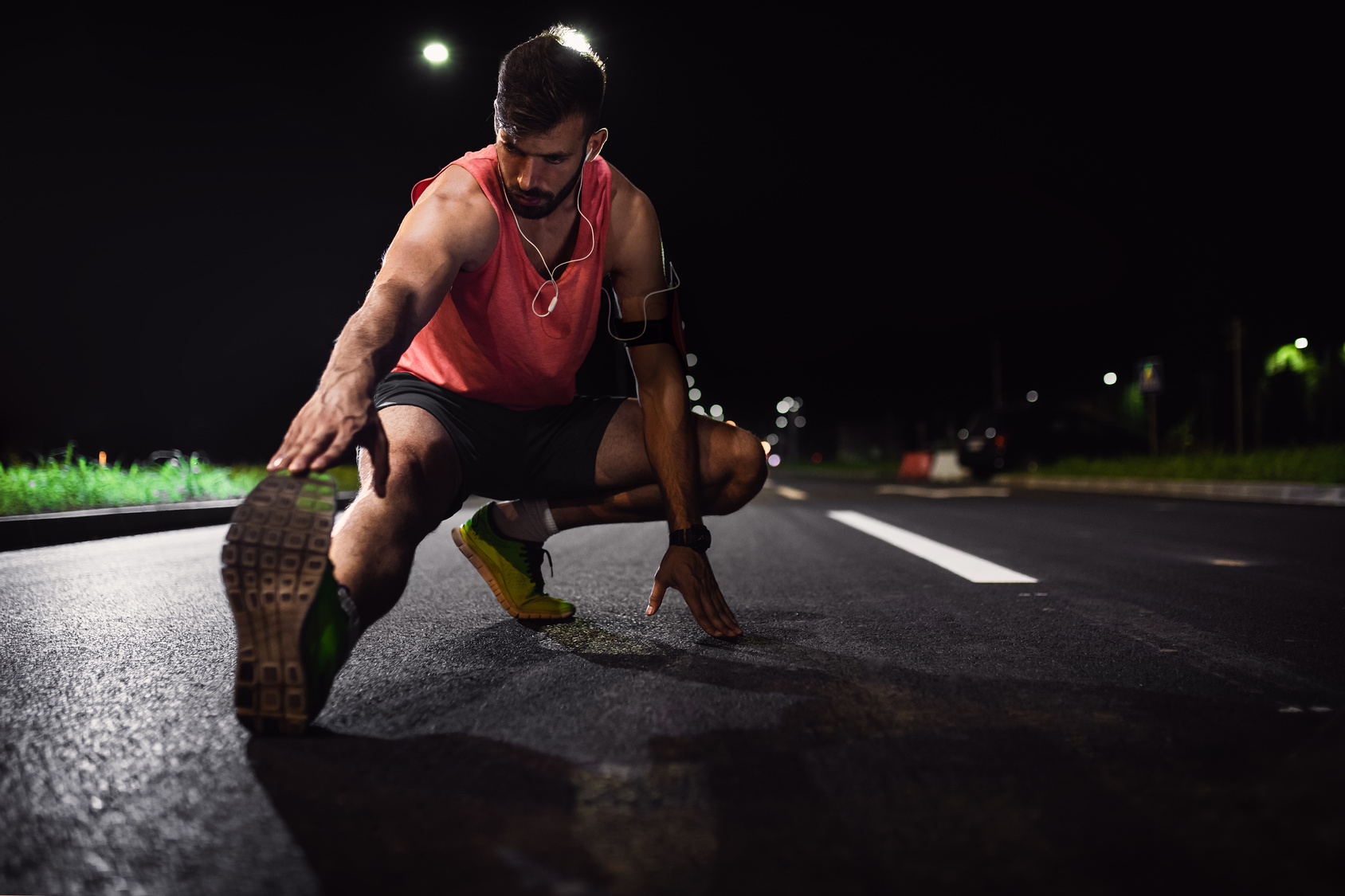
How to Run at Night Safely: Rules, Gear, and Real-World Tips

running at night

Let’s be real—running at night sounds sketchy to a lot of people.

Quiet streets, long shadows, and that voice in your head that says, “Hey, maybe don’t.”

I get it.

But lace up after sunset a few times and you’ll notice something different: the world dials down.

Traffic fades, heat backs off, and suddenly it’s just you, your breath, and a ribbon of calm pavement.

For summer runners, it’s not weird—it’s survival.

Now, I’m not here to sell you moonlight and vibes.

Night running has risks.

Low visibility.

Distracted drivers.

The occasional sketchy corner you don’t see coming.

You can’t outrun a bad decision.

But here’s the good news: with a smart plan, the right gear, and a little street sense, running after dark can be both safe and ridiculously rewarding.

In this guide, we’ll cut the fluff and get practical—routes that make sense, habits that keep you sharp, and the small changes that make a big difference.

By the end, you’ll know exactly how to own the night—or decide it’s not your move yet. Either way, you’ll run smarter. Let’s break it down.

Always Have a Plan—And Tell Someone 

Night running rule #1: Don’t just vanish into the dark. Plan your route. Know how far you’re going, and how long it should take.

Then—this part’s key—tell someone. Seriously. Text your partner, roommate, your mom, whoever. “I’m running three loops around Elm Street. Should be back by 9.” Boom. Takes 10 seconds.

This isn’t being dramatic—it’s just smart backup.

What if you twist an ankle? What if your phone dies and you need help?

If someone knows your route and when to expect you, they can step in if needed.

That tiny heads-up can be the thing that gets you out of a bad spot.

Even seasoned night runners I know still do this. Me? I shoot a quick text before I head out. It’s habit now. It should be for you too.

Situational Awareness: The Golden Rule

If there’s one thing you remember, make it this: always know what’s going on around you.

I don’t care if it’s a sunny afternoon or pitch black out—situational awareness is your #1 defense out there.

At night though? It’s even more important.

You’ve got less light, which means more chances to miss stuff that can trip you up—or worse.

Stay Locked In

Running can be meditative—trust me, I get it. But zoning out during a night run? That’s asking for trouble. You’ve gotta be tuned in like a hawk.

Scan ahead for obstacles, movement, changes in terrain. Peek left, glance right, and yep, every so often throw a quick look over your shoulder. Not because you’re paranoid—but because you’re smart.

Listen for cars, bike bells, footsteps, weird noises. Use every sense you’ve got.

A safety coach once told me: “Stay alert and use all your senses.” Couldn’t have said it better. Think of it like this: every so often, ask yourself—

  • What’s around me?
  • What’s ahead?
  • What’s behind?

Make it a habit, and it’ll feel natural in no time.

Choose Your Route Like a Pro

Where you run matters—a lot more at night than during the day.

I know that quiet forest trail or sleepy back alley might feel peaceful. Don’t do it. Peaceful doesn’t mean safe.

Stick to areas that are well-lit and active. I’m talkin’ neighborhoods with dog walkers, main roads with streetlights, parks with regular foot traffic.

Sure, it might be less scenic, but you want people around. If something goes sideways, you want someone close enough to hear you call out.

Avoid the dead zones—those are streets, trails, or parts of town where no one’s around.

I’ve even had runners do loops around the same bright block five times just to stay visible. Not thrilling, but way safer.

You know your city. If there’s a spot that gives you the creeps, skip it. If you wouldn’t walk there at night, don’t run there either. Period.

Keep Your Head on a Swivel

Look, when you’re running at night, your number one job is to stay sharp.

You don’t need to be paranoid, but you do need to be alert. I always tell my runners: run like you’re driving — eyes up, tuned in, ready to react.

Let’s talk real for a sec. You ever pass someone and just feel off? Maybe they’re loitering, maybe they’re giving weird vibes.

Trust that gut. It’s there for a reason. I’ve detoured into gas stations or crossed the street mid-run more times than I can count — and I’ve never regretted it.

Corners, bushes, alleys, parked cars — those are blind spots. Treat them like hazards. Give ‘em space when you can. And if you hear footsteps behind you that aren’t your own? Don’t ignore it. Turn, look, assess.

Most of the time, it’s just another runner or someone out walking. But if it doesn’t feel right, slow down, let them pass, or stop near a lit-up spot like a storefront. I’ve coached women who’ve made full loops in busy areas just to be sure someone wasn’t following them — and you know what? That’s not overreacting. That’s running smart.

Like I always say: run defensively, not trustingly.

Watch the Ground and the Road

Heads up, because the ground isn’t always your friend either. Night running isn’t just about staying aware of people — it’s about spotting danger before you face-plant into it.

You’d be shocked how many runners go down because of a stupid sidewalk crack they couldn’t see. I’ve had buddies wipe out on wet leaves, curbs, even a sneaky chunk of ice hiding in the dark. At night, your eyes are limited, so your brain needs to scan ahead like a radar.

Curbs, roots, trash, broken glass, potholes — stay alert or get hurt.

And traffic? Don’t even get me started.

Cars are deadly when drivers aren’t looking — and at night, you can’t assume they see you.

Make eye contact at every crossing. Seriously. I wave my hands, nod my head, whatever it takes. And keep your ears open — engines, the whoosh of tires, even a bike or e-scooter creeping up on you. Assume drivers don’t see you until they prove otherwise.

No Headphones at Night

Alright, I know some of you are about to get mad at me, but I’m saying it anyway: no headphones at night.

I love running with music too — gets me fired up. But night runs are a whole different beast.

Out there in the dark, your hearing becomes your superpower. Don’t take it away from yourself.

Let me break it down.

  • You hear danger before you see it.
  • That revving engine?
  • Those creeping footsteps?
  • That bark from a dog off-leash?

All of it is lost if you’re blasting your hype playlist.

And please don’t take my word for it.

A study from the University of Maryland School of Medicine showed that pedestrian injuries and deaths tripled between 2004 and 2011 when headphones were involved.

Worse? Nearly 70% of those were fatal. Why? They didn’t hear the warning in time — the horn, the train, the person yelling. They were zoned out, earbuds in, and paid the price.

This isn’t fear-mongering. This is real-life stuff. I’ve seen runners nearly get flattened because they couldn’t hear a car coming up behind them.

At night, your ears are your backup lights. Don’t disable them.

Keep One Ear Open – Literally

Look, I get it—sometimes you need your music. That playlist pumps you up.

That podcast distracts you from the suck of mile 4. I’ve been there. But if you’re running at night, it’s time for some tough love: safety beats sound. Every time.

If you absolutely can’t ditch the audio, then here’s how to not turn yourself into a human speed bump:

  • Use one earbud only — leave the other ear open to the world.
  • Keep your volume stupid low. You should still be able to hear a squirrel sneeze on the sidewalk.
  • Want an upgrade? Try bone-conduction headphones. They sit in front of your ears, not in them, so your ear canals stay open.
  • Go old-school: play tunes from your phone speaker or clip-on. The sound quality stinks, but at least your ears stay alert.

Real talk: at night, no headphones is still your safest bet. I don’t care how juicy that podcast is—if it means missing the screech of tires, it’s not worth it.

One study even called headphone-wearing runners “sensory deprived” — they literally couldn’t hear horns or people yelling. That’s terrifying. Don’t be that runner.

You vs. silence at night might feel a little weird at first — but that tension? That awareness? It could be the thing that keeps you sharp and gets you home.

It’s Not Just About You

Here’s something most runners don’t think about: headphones aren’t just risky for you—they’re rough on everyone else too.

In some places, it’s even illegal to wear headphones while walking or running on roads. Not joking. Just like biking with AirPods in—it’s banned in a lot of areas for good reason.

Even if it’s not against the law where you live, think about this:

  • What if a driver honks or yells a warning and you don’t hear it?
  • What if your buddy waiting at home gets that gut-punch call because you didn’t notice the car turning?
  • Or a cyclist shouts, “On your left!” and you don’t move — boom, collision.

We’re not in a vacuum out there. Other people matter. Your safety ripples out. So yeah, keep those ears open. For your sake — and theirs.

Be Traffic Smart (Or Be Roadkill)

This one hits close to home. I’ve had too many close calls with cars to sugarcoat it. At night, traffic is your biggest enemy—especially if you’re not doing the basics to keep yourself seen and safe.

Let’s go over what every runner needs burned into their brain:

Run Against Traffic – No Exceptions

This is rule #1. Non-negotiable. You should always run facing oncoming cars.

That way, you see them coming, and they see you.

Running with traffic is like running with a blindfold. Seriously.

One study in Finland found that pedestrian accidents dropped by 77% when people walked or ran facing traffic instead of with it. That’s not a stat, that’s a no-brainer.

Tiny exception: if you hit a crazy blind corner or a hill where neither you nor a driver can see each other until it’s too late, switch sides for a second, then jump back to the safe side ASAP.

But 99% of the time? Left side. Facing cars. Every run.

Follow the Dang Rules

Yes, even at night. Just because the roads look empty doesn’t mean you get to play Frogger.

  • Stop at red lights.
  • Use crosswalks.
  • Make eye contact with drivers.

It takes two seconds to make sure that car at the stop sign sees you. Don’t assume they do. Some of these folks are texting, half-asleep, or just plain clueless.

One experienced runner told me:
“I run like every driver is texting with a burrito in one hand.”

That mindset? Lifesaver.

Be a Human Glow Stick

We’ll dig deeper into gear later, but here’s the deal: you need to be lit up like a Christmas tree when you’re running at night.

That means:

  • Reflective gear: Vest, shirt, shorts — whatever glows.
  • Lights: Headlamp, clip-on blinking LEDs, even something on your shoes.
  • Placement matters: Reflectors on your ankles or wrists catch the eye fast because they move. That’s called biological motion, and research shows drivers recognize it way quicker than static reflectors.

Remember: nearly 3 out of 4 pedestrian deaths happen in low-light conditions. That’s not a scare tactic — that’s real.

Don’t Run Alone If You Don’t Have To

Yeah, yeah—I know. “I like the solitude.” Me too. But if it’s dark out and you’re feeling even a little uneasy, grab a buddy.

There’s real strength in numbers, and it could save your hide.

Most creeps and criminals don’t want a scene. They want easy targets. And two runners? That’s twice the trouble for them. I’ve heard from plenty of women I coach—just having one friend by their side makes all the difference.

Doesn’t even have to be a person. Bring your dog. No one wants to mess with someone getting towed by a barking, 60-pound fur missile.

And it’s not just about weirdos. Two sets of eyes and ears mean you’re way more likely to catch stuff like potholes, bikers with no lights, or that rogue scooter left in the middle of the sidewalk. One of you zones out? The other’s got your back.

Carry Your ID—Seriously

Alright, let’s talk about something nobody wants to think about… but we need to: ID.

It might not seem like a big deal, but carrying identification on a run—especially in the dark—is one of those things that separates smart runners from lucky ones. Because if luck runs out, ID speaks when you can’t.

Imagine this: You take a hard fall, crack your head, and now you’re lying there not knowing your own name. Scary? Hell yeah. But it happens. EMTs deal with this more often than you’d think.

I saw this post from an EMT on Reddit once—they were practically begging runners: “Bring some form of ID or ICE (In Case of Emergency) info when you head out… It’s a small thing that could save your life.”

What to Carry

  • Driver’s license or state ID card — slip it in your belt, pocket, or phone case.
  • A copy of your ID if you’re worried about losing the real one.
  • Road ID bracelet or tag — waterproof, lightweight, engraved with your name, emergency contacts, and key medical info.
  • Dog tags or an ID card under your insole (less ideal, since rescuers might not find it fast).

I’ve been using a Road ID bracelet for years—it never leaves my shoe.

What to Include

  • Name (obvious, but essential).
  • At least one emergency contact—someone who’ll pick up fast.
  • Medical info: asthma, diabetes, heart issues, allergies.

Real story: One runner blacked out mid-run, concussed and disoriented. A stranger saw the ID bracelet and called the spouse, and the medics got a heads-up on the runner’s peanut allergy. Fast action. That tag made it happen.

Keep It Secure

Whatever ID you choose, lock it down.

  • Zip it in a pocket that won’t bounce open.
  • Strap it on your wrist or shoe.
  • Add ICE info to your phone lock screen as backup (but don’t rely only on tech—phones break, tags don’t).

It’s Not Just for Emergencies

Even for the small stuff, ID is handy.

  • Sprain an ankle and limp into a store asking for help? You’ll need ID.
  • Random checkpoint at a night race? Covered.
  • Unexpected police chat? Covered.

It’s your “get home safe” card.

Think of ID like your seatbelt. Most runs, you’ll never need it. But on the one you do… you’ll be damn glad you had it.

Bring Your Phone — Seriously

Some runners like to “disconnect” on their runs — and hey, I get that

. But when it’s dark out and you’re running solo? That’s not the time to go off-grid.

Your phone isn’t just a distraction machine — it’s your lifeline.

1. Emergency Calls

Let’s start with the obvious. Twist an ankle? Feel off? See someone else who’s in trouble? You can hit 911 and get help fast.

And modern phones? They’re smart enough that even if you don’t know where you are, 911 can often find you using GPS. That’s huge, especially on unfamiliar routes.

2. Stay Connected

Even just having your phone makes you more trackable. I always tell my runners: “Leave word” — let someone know you’re out. But that only helps if your phone’s on and reachable.

  • Strava Beacon, Garmin LiveTrack, Road iD → let someone follow you live.
  • Find My iPhone or Google Location Share → simple backups.

If you stop moving unexpectedly, your contact can check in or send help.

One buddy of mine tripped hard and was down for a bit. His wife noticed on the tracker, called, and ended up coming to get him. Could’ve been way worse if he’d gone phoneless.

3. Ride, Map, Weather – All at Your Fingertips

Sometimes things just feel off. Maybe someone’s giving you weird vibes. Maybe the trail’s darker than you remembered. With a phone, you’ve got options:

  • Call a ride.
  • Text a friend.
  • Pull up your maps and find your way back.

And don’t underestimate the weather. Nighttime can get dicey — rain, lightning, wind. You can check radar or arrange a pickup instead of toughing it out and risking injury.

Your phone gives you flexibility. Use it.

4. How to Carry It Without Losing Your Mind

Nobody wants a phone flopping around like a dead fish while they run. Good news: you’ve got options.

  • Armband: Wraps around your bicep. Good ones fit even big phones and let you tap the screen through the cover.
  • Running Belt (FlipBelt, SPIbelt): Snug, sits on your waist, barely moves. My go-to on race day.
  • Built-in Pockets (shorts/tights): Zippered waistband or thigh pockets keep it tight. That back-waistband pocket? Gold.
  • Handheld Grip: Less ideal for long runs, but some runners dig it. Just make sure there’s a strap so you’re not death-clutching the phone.

Bottom line: pick what’s comfortable and secure. After a mile or two, you’ll forget it’s there.

Use Tech Like a Running Buddy That’s Got Your Back

Look, I’m not huge on tech for tech’s sake — I’d rather focus on getting the miles in.

But when it comes to staying safe, especially when you’re out there alone or running in the dark, having the right app in your corner can make all the difference.

Think of it like a virtual running buddy who’s watching your back.

There’s a ton of apps and wearables out there that’ll track your run in real time, alert your crew if something goes sideways, and even let you fire off an SOS without fumbling for your phone.

If you’re running solo or logging miles after sunset, this stuff can bring some serious peace of mind.

Let’s break it down.

Let Someone Track You Live (And No, It’s Not Creepy)

Some of the best run apps have built-in live tracking — and no, I don’t mean for Strava kudos.

I’m talking about giving your loved ones a way to follow your route in case you don’t make it back on time or take a detour into the unknown.

  • Strava Beacon: Paid feature. Sends a live GPS link to up to 3 contacts. Solid for mountain runs or early mornings.
  • Garmin LiveTrack: Syncs with your watch, emails/texts a link every time you start a run. Some models even detect falls.
  • Road iD (eCrumb): Free app. Shares your live route + SOS button. Auto-alerts contacts if you stop moving and don’t respond.
  • Other Apps (Nike Run Club, Runkeeper, etc.): Many now offer live tracking or emergency contact pairing.

Quick tip: Make sure your “safety team” knows how the app works. Should they call you first? Or send help if they get an alert? Clarity matters.

Safety-First Apps (Not Just for Runners, But Super Useful)

There are also apps built strictly for personal safety. Not running-specific, but powerful when something feels off.

  • bSafe: Full arsenal — SOS button, fake calls, live video, even voice-activated triggers.
  • One Scream: Designed for women. If you scream, the app detects it and alerts your contacts with location.
  • Kitestring: Old-school SMS check-in. No smartphone needed. Text it when you start and finish. If you don’t check in, it pings your people.
  • Others worth checking: SafeSteps, HollieGuard, Noonlight (panic button that calls 911 with GPS).

Pro move: Test your app before relying on it. Do a dry run, drain some battery, and see how it behaves.

Wearables Can Be Lifesavers — Literally

If you’re rocking a smartwatch or tracker, check if it has built-in safety features. Some of these tools have already saved lives.

  • Apple Watch SOS: Hold the side button to call emergency services + send GPS.
  • Fall Detection (Apple & Garmin): If you fall hard and don’t respond, it auto-alerts contacts (and sometimes 911).
  • Samsung Phones: Triple-press power button to send an SOS.

Real talk: If your watch has these features, activate them. Better to have it and not need it.

Panic Buttons: Physical or Digital

Some apps have a digital panic button (like Road iD’s SOS slider).

But you can also go physical — Run Angel clips on your gear, blasts an alarm, and alerts contacts when triggered. Handy if you don’t like carrying your phone.

Pick What Fits — Then Make a Plan

There’s no one-size-fits-all here. Maybe you prefer Kitestring’s simplicity. Maybe you want bSafe’s full feature set. Whatever you go with, make sure:

  • You’ve tested it on a run.
  • Your contacts know what to do if they get an alert.
  • It won’t kill your battery or fail where you run.

Bad signal? Skip live tracking — use timer-based check-ins instead.

And yes, privacy matters. Most apps send private links only to your chosen people. Just don’t blast your live location to public feeds — that’s asking for trouble.

These Tools Have Already Saved Lives

This isn’t theory — it’s real.

  • A woman collapsed during a run. Her Apple Watch fall detection got help before anyone nearby noticed.
  • Another runner, being followed, quietly hit bSafe’s SOS. Friends got the alert, heard what was happening, and called police — who arrived in time.

That’s tech doing its job.

Your turn: What safety setup do you use? Got a go-to app or device? Share it — other runners will thank you.

Mix Up Your Routes – Keep ‘Em Guessing

Look, I’m all about routines when it comes to training. But when it comes to safety? Predictability can be your worst enemy — especially if you’re logging miles at night.

Don’t Be Easy to Pin Down

Bad actors love patterns. If someone shady notices that every Tuesday and Thursday at 9PM you’re on the same dark trail… they’ve got a playbook.

One safety expert put it bluntly: “Stalkers look for patterns – break the pattern and you break their game.”

Just changing your start time, direction, or loop can be enough to throw them off.

Safe Doesn’t Mean Boring

Don’t take this as permission to go exploring sketchy alleys. You don’t need to be reckless to be unpredictable.

  • Set up 3–4 safe loops (neighborhood, park, commercial street).
  • Rotate them.
  • Switch direction now and then.
  • Start 15 minutes earlier or later.

Even small shifts keep you safer — and make runs more interesting.

Pull a Decoy Move (If You Ever Get That Feeling…)

Ever get that gut feeling you’re being followed? I have. Rare, but real.

Options:

  • Loop back suddenly.
  • Cut onto another street.
  • Call it and head home.

Still worried? Have a friend shadow your run once. If the same person shows up both times? Not coincidence. Time to call the cops.

Odds are low, but awareness is your ally.

Learn to Read the Field

This is where situational awareness meets runner instinct. You don’t get good at this overnight, but the more present you are, the better you’ll get at spotting when things feel “off.”

Example:

  • Same park, every night. One evening, the lights are out. It’s too quiet. Your brain says, “It’s fine.” Your gut says, “Something’s weird.” Take the long way.
  • Someone’s pacing you for a few blocks. Could be nothing, could be something. Stop and tie your shoe. Turn around. Cut down a side street. Shake ‘em off.

A lot of women runners already do this instinctively. I’ve heard stories of them darting toward porch lights or making sudden turns to ditch a tail. It works.

Survival > Politeness

This one’s especially real for women, who’ve been trained since birth to be “nice” even when they feel unsafe. But guess what?

Predators count on that.

You don’t owe anyone your time, your smile, or your manners when your safety’s at stake.

Cross the street. Yell. Call the police if someone gives you the creeps. One false alarm on record is better than no record at all.

We’ve got instincts for a reason. They’ve kept us alive for thousands of years. Don’t shut them down because you’re worried someone might think you’re “rude.”

Coach’s Call: Quick Instinct Rules

Here’s what I tell all my runners — especially those logging solo miles after dark:

  • Ditch the earbuds if things feel sketchy. You need all your senses.
  • Trust the heebie-jeebies. That weird feeling isn’t random. Act on it.
  • Never apologize for changing your plan mid-run. Safety comes first.
  • Call emergency if needed. That’s not weakness. That’s survival smarts.
  • Report anything weird. Even if nothing “happened.” It might help the next runner.

Night Running: Wrapping It Up Like a True Road Warrior

So, here we are — the final stretch. If you’ve made it this far, you’re clearly thinking hard about lacing up after dark. And good on you.

Because night running? When done right, it’s pure gold.

There’s Something Special About Running After Dark

Let’s be honest — there’s a magic to night running that daylight just can’t touch.

The world slows down. The heat backs off. The chaos fades. It’s just you, your breath, your rhythm… and maybe some stars overhead.

I always tell my runners: “Night runs are for unwinding, not overdoing.” That’s the vibe. It’s therapy with a pulse.

I can’t count how many times I’ve finished a quiet night run, body loose, mind calm, the noise of the day behind me. Then you hit a hot shower, slide into bed, and boom — lights out, literally and figuratively.

Online, I see stories from runners who went out for a midnight jog “just to try it,” and now they’re full-on hooked.

  • One runner in Tokyo said hitting touristy spots at 1 AM felt surreal — peaceful, quiet, no crowds, just them and the city lights.
  • Another knocked out a 12K at 1 in the morning and called it “midnight exploration.”

That’s the kind of stuff that turns skeptics into night owls.

Weighing It All: Is Night Running Right for You?

Is night running “good”? That depends on how you do it.

Upside: less heat, less traffic, less stress, more time, better sleep.
Downside: riskier if you wing it without gear, planning, or telling someone where you are.

Follow the playbook we laid out? Night running can be just as safe as morning runs — sometimes safer.

I know folks who switched entirely to evening runs — even marathoners who train at night to mimic race conditions. Some cities have clubs that only meet after 7 or 8 PM. It’s a whole subculture.

Stay Sharp, Always

Don’t get sloppy.

Like a seatbelt in a car — most times you won’t need it, but you buckle it anyway. Same with night running habits:

  • Check your route.
  • Tell someone your plan.
  • Bring your gear.

Night running is 99% chill — but the 1% is why we prep like pros.

Share the Road, Share the Wisdom

If you’re crushing those night runs and loving it, don’t keep it to yourself.

Invite friends. Share tips. Start a weekly group jog after work.

There’s power in numbers — for safety, motivation, and fun. Plus, the more runners out at night, the more cities take notice. Lighting improves. Drivers get used to seeing reflective blurs cruise by. Everyone wins.

And Sometimes… Don’t Run

Final piece of real talk: it’s okay to skip a night run.

  • Storm rolling in?
  • Streetlights out?
  • Something shady in the area?

Hit pause. No trophy for running through danger. You can run tomorrow. Or hop on the treadmill.

Night running is amazing — but not worth putting yourself in a situation that feels off.

Final Kick: You’ve Got This

You made it through the whole guide — now you’ve got what you need to own the night.

Don’t let fear hold you back. Let preparation give you confidence.

Picture it: you’re gliding through the cool night air, headlamp cutting through the dark, your vest lighting up like a neon sign. You’re calm. You’re strong. You’re doing this.

You finish that run not just alive — but alive.

That’s the feeling.

So go out there and earn it. Stay visible. Stay sharp. Stay strong.

And hey — if you’ve already hit your first night run, let me know. What worked? What spooked you? What made you feel like a badass?

Let’s keep the conversation going. Night runners unite.

Racing in the Rain: How to Gear Up, Show Up & Get It Done

When you wake up on race day and hear rain pounding the window, what’s your gut reaction?

Some runners thrive on it.

I’ve heard folks call stormy runs “freeing” and even “therapeutic.”

Others? They’ll ghost a 10-miler faster than Anakin whining about sand.

And I get it—racing in the rain is uncomfortable, unpredictable, and straight-up messy.

But here’s the truth: bad weather builds tough runners.

Sunny days don’t forge grit.

Running soaked and freezing while still holding your pace?

That’s what separates weekend joggers from racers who can handle anything.

I tell my athletes all the time—you can’t train for perfect conditions, because race day doesn’t care.

The rain isn’t out to get you. It’s out to test you. And if you train and race through it, you’re going to come out stronger, sharper, and a whole lot tougher.

So, let’s dig into how to prep, race smart, and stay healthy when the skies open up.

From myth-busting to gear tips and pacing hacks—it’s all here. Ready to run wet and come out swinging? Let’s go.

Will Running in the Rain Make You Sick?

Short answer: nope. Getting wet doesn’t give you a cold. Viruses do. And they’re not riding in on raindrops.

In fact, most cold and flu viruses spread better in dry, cold air—not during a muggy downpour.

So that “you’ll catch a cold if you run in the rain” line your grandma used to say? Myth.

But here’s the twist—running cold and wet for too long can wear you down. It won’t give you a virus, but it can lower your body’s defenses just enough to make you an easier target if you come into contact with one.

And please don’t just take my word for it.

A 2022 study found that cold exposure, especially in your nasal passages, might temporarily weaken your immune response.

Translation? Being cold and damp doesn’t infect you—but it might open the door a little.

So don’t just grin and bear it. Dress smart, and change into dry clothes as soon as you cross that finish line. Hypothermia’s rare in most races, but if it’s cold and windy? It can sneak up fast.

Rain-Ready Gear Checklist: From Head to Toes

The rain’s coming? Then gear up like a pro. The right setup can turn a soggy sufferfest into a gritty, splash-filled PR.

Base Layer: Say No to Cotton

Rule #1: Cotton is the enemy. Once it’s wet, it stays wet. It clings, sags, and rubs your skin raw.

You want a base layer that works with the rain, not against it. That means moisture-wicking, fast-drying fabric. Think:

  • Polyester blends
  • Polypropylene
  • Merino wool (yep, even in the rain)
  • Nike Dri-FIT, CoolMax, or other tech stuff

Outer Shell: Don’t Sweat It (Literally)

When it’s pouring, don’t reach for that full-on hiking raincoat unless you’re planning to run inside a sauna.

I’ve seen runners come to the start line wrapped in heavy, “100% waterproof” jackets, only to be dripping in their own sweat two miles in.

You’re not a baked potato—you need to breathe.

Instead, go light. A water-resistant, breathable jacket or windbreaker with DWR coating (that’s Durable Water Repellent) is the move.

It’ll shed light rain, block some wind, and let heat escape. That’s the balance you want. Vests work too if you just need to keep your core warm.

Shoes & Socks: Footwork Matters

Your shoes are your traction, your lifeline, your wet-weather tires.

And if they’re worn smooth? You’re asking for a slip-and-slide mid-turn.

Regular road shoes usually do fine if they’ve got decent grip.

But if you’re racing in serious rain or you know the course is slick? Some runners switch to light trail shoes with extra lugs for grip. I’ve done that on rainy race days, and yeah—it’s saved my skin more than once.

If you’ve got a pair of GORE-TEX® trail shoes sitting around, they’ll keep your feet drier in long downpours. But honestly? For shorter races, that extra waterproofing isn’t essential—and it can trap sweat too. Up to you.

Now socks—this is big. No cotton. Period. Wet cotton = soggy torture device.

Go with synthetic or merino wool.

They wick moisture, hold their shape, and help stop blisters before they ruin your race. Some folks even double up thin socks to create a buffer, or use toe socks like Injinjis to keep toes from rubbing. Whatever your setup, test it first.

Head, Hands & Arms: Stay Sharp, Stay Warm

A running hat with a brim? Helps a lot in the rain.

It keeps water out of your eyes so you’re not squinting like a pirate halfway through your run.

On warmer days, a lightweight visor is perfect—keeps the rain off your face while letting heat escape. Cold out? Toss on a tech running cap or layer a thin beanie under it.

Some runners even go with light-tinted sunglasses in rainy weather. Helps with visibility when the sky’s gloomy. Just make sure they don’t fog up—anti-fog spray helps, but it’s not bulletproof in a downpour.

Now your hands? Don’t ignore ’em. Cold, wet fingers are no joke—especially when you’re fumbling to rip open a gel or grab a cup at a station. Lightweight running gloves (preferably water-resistant) can save the day. Get the kind you can wring out or stash in your waistband if you overheat.

And arm warmers? Absolute gold. Pair them with a singlet and vest—they’re easy to roll down or yank off once you get cooking. Way more adaptable than committing to a long sleeve top.

Lastly, buffs (aka neck gaiters): throw one around your neck or pull it over your head to stop cold water from dripping down your back. You can use it as an ear cover, a forehead shield, even a wipe if needed. Buffs do it all.

After-Race Clothes: Don’t Be the Freezing Runner Wrapped in Regret

Here’s the truth: the race isn’t over when you cross the finish line—especially on a rainy day. That soaked singlet you barely noticed at mile 20? It’s about to turn into an ice vest the moment you stop moving.

I’ve seen runners go from triumphant to trembling messes in under five minutes because they didn’t bring dry clothes. Don’t make that mistake. Your future post-race self is begging you—pack dry gear.

What to Bring

Throw a dry set of clothes into a waterproof bag. Keep it simple and smart:

  • Dry shirt (long sleeve or tee)
  • Sweatpants or shorts
  • Fresh socks
  • Dry shoes or sandals
  • Hoodie or fleece
  • Beanie or dry cap for that soaked-head chill

Optional but gold: a towel and a mylar blanket (those heat sheets volunteers hand out). You can wrap up while you wait to change.

If there’s a gear check or drop bag option? Use it. If not, stash your stuff in a car nearby or hand it off to a friend who’ll be near the finish. The goal is to get out of your wet gear ASAP—not 20 minutes later while you’re shivering and wondering if this is how hypothermia starts.

Runner real talk: One marathoner told me her worst memory wasn’t the rain mid-race—it was the 50°F downpour at the finish. She stopped, her body cooled fast, and bam—uncontrollable shivering. Couldn’t even open her heat sheet alone. A kind volunteer helped her into dry sweats, and within minutes, she was back to celebrating.

The lesson? Be ready. Comfort isn’t a luxury—it’s a recovery tool.

Oh—and if you see the volunteers? Thank them. They’ve been standing in that same rain for hours, probably colder than you.

Racing in the Rain? Here’s How to Adjust Like a Pro

Rain changes the game—and not just your outfit. Your strategy, form, and mindset need a tune-up too. Slick roads don’t care about your PR dreams unless you’re smart about how you run.

Running Form in the Rain: Smooth > Speed

Think of running in the rain like driving on a wet road—the goal is traction, not turbo.

Here’s the breakdown:

  • Shorten your stride. Quick, light steps give you better control. Long, bouncy strides? Recipe for slipping.
  • Pick up your cadence. Faster foot turnover keeps you stable. Aim for smooth rhythm over speed.
  • Slight forward lean (from the ankles, not the waist). Think “momentum,” not “hunchback.” Helps prevent a backward fall if your foot slips.
  • Stay relaxed. Light arms, steady rhythm. No need for power moves or sharp corners. Treat wet pavement like it’s out to get you—because sometimes it is.
  • Watch your footing. Avoid painted lines (those suckers are ice rinks), metal grates, or deep puddles. And don’t leap onto curbs like a parkour champ—keep it safe.

Visual tip: Picture a cat walking across a wet porch. Light. Balanced. Controlled. That’s the vibe.

Pacing Strategy: Ditch the Ego, Run Smart

Rain = resistance. It can sap your energy, soak your shoes, and mess with your pace. So don’t force a fast day if the conditions are trash.

  • Start a little slower. Give yourself space to adjust. The first few miles will be crowded and slippery. Let the race come to you.
  • Expect to be 5–10 seconds slower per mile in the early going—that’s normal. If you’re steady and feeling good later, then you can pick it up.
  • Run by effort, not pace. Heart rate or perceived effort (RPE) wins in tough conditions. Focus on staying consistent, not on the numbers flashing on your watch.
  • Finish strong—but stay smart. If you’ve got juice left, you can surge past soaked, demoralized runners in the final miles. But if you kick too hard on a wet street, you’re one bad step from face-planting. Avoid slippery paint lines. Turn over your feet fast and stay upright.

And listen—if the weather’s total garbage? Let go of your time goals. Use the race as a hard training effort. Surviving a storm with mental grit builds toughness you can’t get on a treadmill.

A sunny-day PR feels good—but finishing strong in the rain with soaked shoes and numb hands? That’s something you carry with pride.

After-Race Clothes: Don’t Freeze Your Butt Off

Let me hit you with a hard truth—that soaked race kit that felt “fine” at mile 20 will feel like an ice blanket the second you stop running.

Rainy race day or not, you need to pack dry clothes for after the finish line. Period.

I’ve seen it too many times: folks cross the finish, adrenaline wears off, and boom—they’re shivering uncontrollably in the rain, soaked to the bone, can’t even open a banana.

Bring a Full Change

  • Dry socks and shoes
  • Sweatpants or shorts
  • Fresh shirt
  • Warm layer (hoodie, fleece, whatever)
  • Beanie or dry hat (yep, “wet hair chill” is real)
  • Small towel
  • Waterproof bag to keep it all dry

You’ve got options. If your race has gear check or drop bags, use it. If not, stash a dry kit in your car or hand it off to a friend near the finish line. Either way, change ASAP.

Some marathon vets even toss a mylar blanket or disposable poncho in the mix for right after the finish. It’s not fancy, but it buys you time while you change or hunt down your stuff.

True story: One runner I coached told me the toughest part of her downpour marathon wasn’t the rain during the race—it was after. She finished, stopped moving, and within a minute she was shivering like crazy in 50°F rain. Luckily, she’d stashed sweatpants and a hoodie in her bag. A volunteer helped wrap her in a heat sheet, and 10 minutes later she was sipping hot coffee and laughing again.

Moral of the story? Dry clothes = recovery gold.

Also, do yourself a favor: thank the volunteers out there in the cold, handing out heat sheets or digging through gear bags. They’ve been getting soaked too, and they’re absolute legends.

Racing in the Rain? Adjust Your Game Plan

Rain doesn’t just change your outfit—it changes the whole damn race strategy. If you want to run strong and stay upright, you’ve got to race smart.

Let’s break it down.

Running Form: Keep It Tight, Keep It Light

Rainy roads = slippery roads. And slick roads are not the place to run like a gazelle. Think control, not chaos.

Here’s what to do:

  • Shorten your stride. Quick, light steps = better traction and balance. Long, bouncy strides? That’s how you slip and eat pavement.
  • Increase your cadence a touch. Faster turnover keeps you centered over your feet and helps avoid slipping. Think more steps, less air time.
  • Slight forward lean—from the ankles. Not the waist. You want momentum, not hunchback posture. The goal: if you slip, you fall forward, not backwards.
  • Keep your arms relaxed. A few elite runners even tone down their arm swing to minimize torso twist on slick surfaces. Keep your body moving forward like a unit.

Picture a cat trotting across a wet driveway—light, balanced, alert. That’s the vibe.

Most importantly: don’t panic if you feel a slip. Stay calm. Shorten up. Stay focused. No sudden jukes, no sharp corners, and for the love of your knees—don’t leap puddles unless you’re sure you’ll land clean.

Pacing in the Rain: Play It Smart, Not Heroic

If you were gunning for a PR, I get it. But here’s the truth: rain slows most people down. That’s not an excuse—it’s just science.

Studies show that rain, especially when it’s cold, drags down finish times. Your body’s working harder to stay warm, your shoes get heavier, and the wind adds insult to injury.

So what do you do?

  • Start conservative. The early miles will be chaotic—puddle dodging, tight packs, slippery turns. Give yourself grace if you’re a few seconds off pace. You can always surge later if the weather clears or you settle into a groove.
  • Run by effort, not just pace. If it’s raining buckets or gusting wind, ignore the watch for a bit. Stay locked in on effort—your breathing, your form, your rhythm. You’ll get more out of that than forcing splits that don’t match the conditions.
  • Be smart about the kick. You saved energy? Great. But don’t go full send on wet pavement. Slick paint, finish-line chaos, and adrenaline are a dangerous combo. If you’re going to kick, choose your line carefully, stay light on your feet, and trust your training—not your ego.
  • Let go of the clock if needed. Some days are about finishing strong, not fast. If conditions are rough, shifting to “training effort” mode isn’t a failure—it’s a veteran move.

There’s something badass about finishing a rainy race tougher, not just faster.

Remember: It’s not always about the PR. Sometimes it’s about finishing with pride and your body intact.

Hydration in the Rain: Don’t Let the Wet Fool You

Alright, let’s clear something up right now: just because you’re soaked doesn’t mean you’re hydrated.

I’ve heard it a hundred times—“It was cool and raining, so I didn’t need to drink much.” That’s a rookie mistake, and I’ve made it myself. The rain may cool you down, but it doesn’t refill your tank. You’re still sweating. You’re still breathing hard. And you’re still leaking fluids—even if you don’t feel like it.

Why You Still Need Water (Even When You’re Wet)

Cold, rainy weather tricks your brain. Your thirst signal gets turned way down, and that “wet skin” feeling can fool you into thinking you’re not sweating. But trust me, you are. Maybe not buckets like on a 90° day, but it’s still coming out—through your skin and every breath in that chilly air.

I once bonked hard during a rainy half-marathon because I skipped water at two aid stations. Felt fine… until I wasn’t. Dizzy, heavy-legged, and just dragging through the final miles. All because I assumed cool weather meant I didn’t need to drink.

Stick to your hydration routine. Rain or shine.

Watch for Sneaky Signs of Dehydration

In cool rain, dehydration doesn’t always slap you in the face—it sneaks up like a ninja.

Here’s what to watch for:

  • Dry mouth (even in damp air)
  • Sudden fatigue or feeling “off”
  • Dizziness
  • Sweat just stopping mid-run (bad sign)
  • Post-run pee looking like apple juice instead of lemonade

Yeah, gross—but it’s a solid gut check.

And if you get cold and stop sweating altogether? That’s red alert territory. You’re possibly sliding into hypothermia, dehydration, or both. Not a good combo.

How to Hydrate Smart in the Rain

Here’s what I do—and what I tell every runner I coach:

  • Stick to your usual schedule: Take sips every 20 minutes or so. Don’t skip just because you “don’t feel thirsty.”
  • Electrolytes still matter: Cold weather might kill your salt cravings, but you’re still sweating some out. Pop an electrolyte capsule or use a sports drink if it’s a long race.
  • Cold = more pee: It’s called cold diuresis. Cold temps increase urine output. Translation: you’re losing more fluids than you realize.
  • Pre-hydrate smart: Day before and morning of, drink like you normally do. Maybe throw in a salty snack or light sports drink to top things off. But don’t go overboard—this isn’t a water-loading contest.
  • Post-race = rehydrate too: Just because you’re cold doesn’t mean you didn’t lose fluids. Once you get dry and warm, sip on water, tea, or a good recovery drink. Your body still needs refueling

Quick Dos & Don’ts

  • Do drink at aid stations—even just a sip or two.
  • Don’t force-feed water just out of habit. Listen to your body but remember that thirst can lag behind your needs.
  • Do stay on top of hydration early. Waiting until you’re crashing is too late.
  • Don’t use the weather as an excuse to skip your bottle or belt.

Chafing & Blisters in the Rain: Suit Up or Suffer

Let’s talk about the two things that’ll ruin your rainy run real fast: chafing and blisters.

Rain turns your favorite running gear into a torture device. That soft shirt? Now it’s sandpaper. Those go-to socks? Now they’re a swamp for your feet. So unless you want to finish the race looking like you wrestled a cheese grater, you need a chafe plan.

Lubrication: Your First Line of Defense

This isn’t optional—you must lube up on rainy days. Here’s where I go full-body armor:

  • Inner thighs
  • Groin area
  • Underarms
  • Around your chest/nipples
  • Toes, heels, and foot hot spots

Use Body Glide, Vaseline, Squirrel’s Nut Butter, Aquaphor—I don’t care what your weapon of choice is, just slather it on.

One runner I coached once skipped lube on a rainy 10K because “he never needed it before.” He ended that race with raw thighs and bleeding armpits. Lesson learned.

Special Attention: Your Feet

Your feet are ground zero for rain-related disasters. Wet socks = blisters. Every. Time.

Here’s what works:

  • Coat your toes and heels in Vaseline or anti-blister cream before putting on socks
  • Try powder first, then lube if your feet tend to blister easily (sounds weird, works great)
  • Some runners even smear Vaseline on top of their socks to help water slide off and reduce friction

Weird? Sure. Effective? 100%.

Nipple Defense 101

Let’s talk nips. Wet shirts + bounce = pain.

For guys: slap on some Body Glide or Vaseline — or better yet, cover ‘em. NipEaze, waterproof bandages, surgical tape. Heck, one guy told me he uses duct tape (pro move, brutal removal).

For women: under the sports bra band and strap zones — lube it up. Wet bras chafe like crazy.

Long Race? Plan to Re-Apply

Marathon or ultra? Don’t expect one pre-run lube job to get you through.

  • Carry a mini tube in your belt
  • Use the Vaseline sticks at aid stations (they’re there for a reason)
  • Grab single-use packets (like Butt Butter) — they’re cheap and a lifesaver

One ultrarunner I know re-applies at mile 10, again at mile 18. His logic? “One minute of re-gliding saves hours of pain.” He’s right.

Waterproof Tape, Blister Fixes & Skin-Saving Hacks

Look, if you’re heading into a rainy run or long race, don’t just hope your skin holds up—prep like it won’t. Because once the chafing or blistering starts, you’re in damage-control mode. And it’s way harder to fix mid-race than it is to prevent it from happening in the first place.

Tape Up Like You Mean It

Blisters love moisture and friction. And in the rain, your feet become a friction factory. That’s where waterproof tape becomes your best friend.

Got a trouble spot? Tape it. Runners use stuff like kinesiology tape, Leukotape, even duct tape if they’re in a pinch. The key is using tape that sticks even when wet—think 3M Transpore or Leukotape. Stick it to clean, dry skin, and don’t apply over lube (tape won’t stay put on slippery skin).

Here’s where runners usually tape:

  • Toes – wrap ‘em individually if they blister (some ultrarunners basically mummy-wrap their feet)
  • Heels & Achilles – prime chafe zones
  • Ball or arch – especially if you’re prone to hot spots there
  • Nipples – trust me, tape ‘em or regret it

Tape works by creating a slicker second skin—so the rubbing happens on the tape, not your flesh. It’s that simple.

Want an extra-strong bond? Benzoin tincture. It’s a sticky liquid you rub on before applying tape. It’s overkill for a casual 5K, but in a wet marathon, that stuff turns your tape job into Fort Knox.

Moleskin, Patches & Plan B

Not into tape? Or need a backup plan? Moleskin or blister patches (like Compeed) can also do the trick. Pre-place them on known hot zones before you run. They hold up surprisingly well—just know that if your feet get soaked, even the best adhesive might peel eventually.

Quick tip: Always carry a couple of extras in your gear bag or drop bag, just in case.

Dress Like You Mean It

No amount of tape or lube can save you if your clothes are betraying you.

Tighter is better in the rain. Baggy shorts or cotton shirts? Recipe for chafing hell. Go for snug-fitting, sweat-wicking gear. Compression shorts, capris, fitted singlets. Leave the flappy stuff for laundry day.

Real-runner story: I once had a new marathoner skip foot lube on a rainy half. “Didn’t think it’d be that bad,” he said. By mile 10, his soaked socks had chewed his feet up like raw meat. Lesson learned. He’s now religious about lubing between the toes and heel with Body Glide when rain’s in the forecast.

Bottom Line: Taping, lubing, and dressing smart aren’t optional in wet conditions—they’re survival. Do it right, and you’ll run clean. Skip it, and you’ll be hobbling before the finish.

Phone & Electronics Protection: Don’t Fry Your Gear

Running with your phone is second nature now. But water + electronics? That’s a race-ending combo. One solid rainstorm can ruin your phone, short out your earbuds, or brick your GPS.

Here’s how to keep your tech dry when the sky opens up:

1. Get a Waterproof Case (or Fake It)

Best bet: Use a waterproof case like Lifeproof or OtterBox—especially if you’re racing in wet weather. Some even let you fully use your screen without issue. Test it first.

No case? Zip-lock to the rescue. Yep, a freezer bag. Squeeze out the air, seal it up tight, and boom—makeshift waterproofing. You can still tap through the plastic. Some runners double-bag just to be safe.

Pro tip: Bag the phone before it goes in your armband or waist belt.

2. Where You Stash It Matters

  • Use inner waterproof pockets if your jacket has one
  • Keep it close to your body—like waistband or inner pocket—not some exposed mesh pouch
  • Your body heat helps it stay dry and avoid freezing up

3. Ask Yourself: Do I Even Need My Phone Today?

Some runners ditch it entirely for races.

GPS watch = ✅
Race photographer = ✅
Meeting friends after = ✅ (as long as you have a solid plan)

Leave the phone in your gear check or car and enjoy the freedom. If you do this, just make sure someone knows where to find you post-race.

4. Protect Your Other Gear Too

  • GPS watches are usually fine in rain—but double-check your model’s waterproof rating
  • Headphones? Use a cheap backup pair for wet runs
  • Running with a GoPro? Use waterproof housing or at least slap on a silicone sleeve
  • Hearing aids or medical devices? Look into specialized covers. Don’t wing it—those are too important to gamble with

5. Rain Messes with Touchscreens

If it’s pouring, expect touchscreen chaos—ghost touches, unresponsive swipes, the works.

Trick: Duck under shelter or shield your screen with your hat brim if you need to change a playlist or check your map mid-run. Some runners mess with Vaseline on their screens to repel water, but it can kill responsiveness—so test that hack on your own time.

Mental Game for Racing in the Rain

You trained your body — now you’ve gotta train your mind. Because when the skies open up on race day, your mindset becomes your greatest weapon.

Running is already 90% mental, right? In the rain, that number jumps to about 150%. But here’s the good news — if you flip your mindset from “this sucks” to “bring it on,” that rainy race can go from miserable to legendary.

Here’s how to get your head in the game when the weather turns nasty:

1. Reframe the Rain

Don’t see it as a setback — see it as a test.

Rainy races weed out the pretenders. Most people hate discomfort. But you? You’ve trained for this. You’re built for hard things.

Tell yourself:
“Rain doesn’t ruin a run — my mindset does.”

If you believe the rain’s out to ruin your day, it will. But if you see it as fuel — as the thing that makes this run mean something — suddenly you’re in control.

Heck, I’ve told runners to imagine they’re the star in a gritty sports movie montage, running through the storm while everyone else quits. Sounds cheesy, but it works.

💪 Need a real-world boost?
Remember the 2018 Boston Marathon. Absolute downpour. Freezing. Headwinds straight out of hell. And you know what happened? Des Linden gutted it out and won while elites dropped like flies. She didn’t have a magical race — she just didn’t break. Be like Des.

So yeah, remind yourself of your own rainy day grit. Every drippy training run you survived? That’s mental ammo for race day.

2. Visualize the Chaos

Don’t just picture crossing the finish line in glory — picture the ugly stuff too.

Imagine the puddles. The soaked socks. The foggy glasses. Picture how you’ll handle those things:

  • “If my hands are freezing, I’ll flex them and keep moving.”
  • “If my shoes get squishy, I’ll laugh and think, ‘Well, I’m waterproof now.’”

Why visualize that mess? Because when it actually happens mid-race, you won’t panic. You’ll nod and think, “Ah, there it is — just like I expected.” And keep pushing.

3. Embrace the Suck — Then Find the Joy

Yep, it might suck. You might be cold. Soaked. Numb fingers. Vision blurry. That’s the price of entry.

But once you stop resisting it — once you stop mentally whining and just accept, “this is the game today” — you unlock a new kind of power. You free up energy to actually enjoy it.

You might notice how quiet the streets are. You might smile as you splash through puddles like a kid again. Or you might just feel like a total badass for being out there while others stayed curled up at home.

That’s when rainy races become stories you’ll tell for years. Not because they were easy — but because you showed up and didn’t fold.

4. Lean on Your Training

This ain’t your first rodeo.

Run in the rain before? Good — remind yourself of that.

“I crushed that 12-miler last month in a downpour. Six miles today? I got this.”

Didn’t train in rain? No problem. Think back to other tough runs — heat waves, brutal hills, days when you almost quit but didn’t. Proof you can suffer and still finish strong.

Your legs know what to do — trust them. Now let your mind match that confidence.

5. Mantras + Milestones = Mental Armor

Mantras are your mental armor when the weather starts chipping away at your willpower. Simple phrases like:

  • “Strong and steady through the storm.”
  • “Rain builds resilience.”
  • “This is making me tougher.”

One of my go-to reminders for runners:
“If you only train in comfort, don’t expect to perform in chaos.”

Say that out loud when the wind slaps you in the face. Remind yourself: this is the work that matters. This is why you trained.

Bonus tip: break the race into chunks. Make it to the next mile marker. The next aid station. Every checkpoint is a win. Mini victories = major momentum.

Story time:
One runner told me she was about to give up around mile 18 of a marathon — soaked to the bone, miserable, ready to DNF. But then she remembered her friends and family were tracking her. She started chanting, “I can do this. I am doing this.”

That got her to the finish line — exhausted, drenched, and proud as hell.

Comfort at the Finish Line

Sometimes just knowing you’ve got warm clothes, a towel, and a hot cup of coffee waiting is enough to pull you through the storm.

Picture peeling off those soggy shoes. Imagine stepping into dry socks. That post-race burrito or hot cocoa? That’s your reward. Chase it.

Each mile brings you closer. One wet foot in front of the other.

Safety Tips for Racing in the Rain

Because slipping, skidding, or freezing your butt off mid-race ain’t part of the plan.

Let’s be real—racing in the rain sucks. But sometimes, Mother Nature just doesn’t care about your PR. The good news? You can still crush it without face-planting, skidding on paint lines, or freezing in a puddle post-finish. It’s all about adapting.

Here’s your wet-weather survival playbook, no fluff, just real talk.

Watch Your Footing

Wet roads are tricky. Painted lines? Like stepping on ice. Cobblestones and wooden bridges? Good luck staying upright if you’re bombing downhill on those.

Pro move: Take shorter, quicker steps when you see sketchy terrain. And slow the heck down if it looks slick—trust me, falling costs more time than playing it safe.

No Sudden Moves

Everyone’s dodging puddles. You zigzag once, fine. Do it at mile 3 in a pack of 300 runners? You’re asking for a wipeout—or worse, taking someone else down with you.

Keep it steady, keep your head up, and leave a little space in case the runner in front of you eats it.

Be Seen (and Not Run Over)

Rain = darker skies = drivers who can’t see for crap.

If it’s an open course, wear something bright or reflective. Even better? Clip-on blinking lights. Cheap, easy, and they might save your life.

One year, I ran a local 10K in a storm and only finished the race because a volunteer spotted my blinking shoe light just before I hit a pothole the size of Texas. That little $12 light? Totally worth it.

Also, use those mylar blankets they hand out pre-race. Wrap up while waiting around, or even drape it across your shoulders early in the race if you’re running in open traffic. Just don’t let it become a parachute.

Lightning = Game Over

If there’s lightning, don’t be a hero. Most races will pause or cancel if storms roll in. And if they don’t? You have permission to bail. There’s no medal worth getting zapped for.

Race tip: Follow official updates via Twitter, race apps, or PA systems. If they tell you to take shelter—you take shelter.

Avoid Hypothermia on the Course

Cold rain is sneaky. You feel fine during mile 5, then mile 9 hits and suddenly you’re shivering, stumbling, and your fingers feel like popsicles.

Watch for:

  • Shaking
  • Goosebumps
  • Feeling clumsy or foggy

If that happens, get to a medical tent or warm area fast. Fueling during the race helps too—carbs = heat. Even a cup of sports drink can help stoke your internal fire.

Go Easy on Downhills

Wet downhill + tired legs = recipe for disaster.

Slow it down. Land midfoot if you can and use short, quick steps—not heel strikes that’ll send you sliding.

Remember: you’re racing the clock, not gravity.

Trust the Volunteers

If a volunteer shouts “Slippery corner ahead!”—listen up. They’ve seen the spills, the potholes, the poor soul who didn’t slow down. They’re basically your mid-race spotters.

Post-Race: Dry Off, Warm Up, Don’t Die

Yeah, I’m joking. Kind of. Once you stop moving, the cold hits fast. You just ran a hard race—your body’s cooked. That post-race chill is real.

What to do:

  • Keep walking right after the finish. Get your heart rate down slowly.
  • Wrap yourself in that mylar blanket like a baked potato.
  • Get out of wet clothes ASAP. Change in a porta-potty if you must. I’ve done it—it’s not glamorous, but it beats standing around soaked and shivering.

Hot Spots? Fix ‘Em

If your feet are talking to you mid-race (aka “Ow, my blister!”), don’t tough it out by limping. That throws off your form and opens you up to bigger injuries.

Hit the medical tent. Tape it. Adjust your sock. One minute now could save you a week of hobbling later.

Know When to Pull the Plug

Sometimes, the weather wins.

If you’re shivering uncontrollably, can’t think straight, or the road looks more like a river, it’s okay to call it. DNF doesn’t mean you’re soft—it means you’re smart.

You live to race another day. Wet shoes and ego bruises heal. Broken bones and hypothermia? Not so fast.

Post-Race Protocol: Don’t Let the Chill Take You Out

You crossed the finish. Boom. But you’re not done yet—not if it’s cold and wet.

Here’s your must-do checklist for getting dry and warm fast:

1. Keep Moving

Resist the urge to collapse or sit on the curb. You’re soaking wet, and the second you stop running, your internal furnace cools fast. Walk for 5–10 minutes.

Let your body transition out of race mode without crashing.

2. Get Dry. Now.

Find your gear bag. Towel off. Swap out those soaked socks, shirts, shorts—all of it.

Even if it means doing a quick-change under a finisher’s poncho or porta-potty stall (been there), it’s worth it.

Dry clothes = warm body = safer recovery.

3. Rehydrate and Refuel – No Skipping This Part

You crossed the finish line, soaked to the bone, and maybe a little delirious. Now’s not the time to wander around pretending you’re fine. Refuel and rehydrate like it’s part of the race.

Here’s the thing: Cold weather messes with your thirst signals. Just because you’re not dying for a drink doesn’t mean you’re not dehydrated.

Get something with electrolytes into you—ASAP. Sports drink, warm broth, chocolate milk—whatever you can stomach.

And don’t forget food. Within 30–60 minutes, eat something with carbs and protein to kickstart muscle repair. A protein bar, banana with PB, even a warm sandwich if there’s food at the finish line—just get it in.

Pro move: If the race offers hot coffee, tea, or cocoa—grab it. Warm drink = hydration + heat = double win.

4. Warm Up Slowly (No, Not with a Scalding Shower)

If you’ve got a hot shower waiting, great. Just don’t sprint in and crank it to lava-mode if you’re frozen stiff.

I’ve seen runners get woozy or even faint from the temp shock.

Start with layers, blankets, warm drinks. Then ease into that shower (keep it warm, not boiling).

No access to one right away? No problem. Dry clothes + car heater = heaven. Heated seats? That’s luxury recovery.

5. Do a Damage Check

Once you’re warm and breathing like a human again, check your feet and skin.

Blisters? Chafing? Anything raw?

Clean it. Treat it. Bandage it. And if you lubed and taped like a boss beforehand, you might come out clean.

But don’t skip the inspection—it’s better to catch a hotspot early than deal with a nasty blister later.

6. Stretch Gently – Or You’ll Regret It Tomorrow

I know—it’s tempting to plop on the couch and not move for the next six hours. But cold, rainy miles tighten you up like a knot.

After that shower (or while still warm), hit a few gentle stretches or foam rolling. Target the spots that took the brunt today—calves, quads, IT band.

Just a little goes a long way to keep DOMS (delayed-onset soreness) from wrecking your week.

7. Celebrate the Slog – You Earned It

Let’s not forget the mental game here. You didn’t just run—you conquered rain, cold, maybe even wind. That’s something to be proud of.

Reflect. What went well? What gear saved your butt? What sucked—and how can you fix it next time? That’s how you level up.

💡 Real runner story: One guy I know ran a wet, cold marathon and skipped the dry clothes after. Ended up in the med tent with borderline hypothermia. He learned his lesson. Now? He crosses the line, walks it off, throws on a dry hoodie and hat, and sips hot chicken broth from a thermos. That’s his new finish-line ritual. You live, you learn, you adapt.

Pro tip: Party later. Change first. Even if there’s a beer garden and a DJ, you’ll enjoy it way more when you’re dry, warm, and not shivering like a human maraca.

And if the post-race chills hit hard? Don’t be shy—head to the med tent. They’ve got thermal blankets, heaters, and people who’ve seen it all. No shame in needing help after a tough effort.

Final Take: Rainy Races Don’t Cancel You—They Toughen You

Look, running in the rain isn’t everyone’s dream. But it can be one hell of an adventure—and you’ll remember it forever.

Prepping for the weather, running smart on slick ground, and recovering like a pro afterwards? That’s what makes you one of the gritty ones. One of the runners who doesn’t flinch when conditions get nasty.

It’s not about being dry (spoiler: you won’t be). It’s about being smart, safe, and unstoppable.

So next time the sky opens up, don’t whine—gear up and go. Run through puddles. Laugh at the mess. Be the badass who shows up when others bail.

As I always say: Rainy runs teach you to stay calm when everything around you is uncomfortable. That’s a skill that goes way beyond the finish line.

Lace Up. Show Up. Splash On.

Puddles? Bring it.
Wind? You’ve faced worse.
Cold? You’ve got layers.

What matters is that you didn’t back down.

So run through the storm. Change into dry gear. Grab a hot drink. And walk away stronger than you started—mentally and physically.

You didn’t melt. You conquered.
See you in the rain.

Road Running Safety: 22 Rules Every Runner Should Know

Running the streets can feel like freedom. It’s easy, raw, and gives you that sense of control—just you and the road.

No treadmill. No trail map. Just pavement and pace.

But let’s not sugarcoat it—road running comes with real danger.

Over 8,000 pedestrians were killed in 2022 alone. That’s one death every 64 minutes.

Most of us don’t think about it until it’s too late—until there’s a close call with a distracted driver, or you’re nearly clipped crossing a busy street.

I’ve logged thousands of miles in the city.

If you’ve ever been to Bali then you know how chaotic traffic can be in South East Asia.

I’ve dodged turning cars, stepped over potholes, and dealt with more red-light runners than I can count.

If you’re gonna make road running part of your training—whether it’s early morning or after work—you’ve gotta do it smart.

This guide breaks down 22 rules every runner needs to survive the streets. These aren’t just theories. They’re real-world tips from people who’ve been out there and stayed safe.

Use them. Live them. So you can run stronger, longer—and most importantly, make it home in one piece.

Why Road Running Safety Really Matters

Let’s be real: the road wasn’t made for runners. It was built for 2-ton machines going 40+ mph. You? You’re just out there in shorts and shoes.

That’s the hard truth. When you’re running on the street, you’re the vulnerable one. You’ve got zero protection, and if a car hits you, it’s not gonna be a fair fight.

Here’s what the stats say: 1 in 5 traffic deaths is a pedestrian. And most of those happen outside of crosswalks, or on fast roads where drivers don’t expect people on foot.

Runners often blend into the background—especially in bad lighting.

I’ve had drivers pull out without looking, blow through stop signs, or stare straight through me like I was invisible.

If you’ve ever flinched at a horn or jumped back from a turning car, you know what I’m talking about.

And it gets worse at night. Over 75% of fatal pedestrian crashes happen after dark. Why? Because it’s harder to see, and drivers go faster when the roads feel empty.

But here’s the good news—you can run the roads safely. You just need to build good habits. That means knowing how to move, where to run, what to wear, and how to stay seen.

It’s not about being paranoid. It’s about being prepared.

Let’s get into the rules.

21 Road Running Safety Rules Every Runner Should Follow

Here’s your no-BS runner’s code for the streets. Live by these, and you’ll be safer, stronger, and way more confident out there.

1. Use the Sidewalk—No Excuses

If there’s a sidewalk, use it. Period.

I don’t care how smooth that shoulder looks—sidewalks exist to keep you alive. They put a layer of distance between you and traffic, and in most places, it’s the law.

Sure, there are times you’ll need to hit the road—rural routes, snow-covered sidewalks, races where the roads are closed.

But for everyday runs? Stay on the sidewalk. Even if it’s a little cracked or uneven, it’s still better than dodging SUVs.

If the sidewalk’s out of commission, run way off to the edge—like your life depends on it. Because honestly? Sometimes it does.

2. Face Traffic. Always.

Let me repeat that: ALWAYS run facing traffic.

If there’s no sidewalk and you’re running on the road, get your butt on the left side so you can see what’s coming. This gives you a fighting chance if a car drifts or a distracted driver doesn’t see you in time.

Running with your back to traffic is like playing Russian roulette with a moving vehicle.

You won’t see that danger until it’s on you—and by then, it’s too late.

Now, if you’re on a curve or crest where visibility sucks, okay, fine—you might need to switch sides briefly. But get back to facing traffic as soon as you can. It’s not negotiable.

3. Run Single File on Narrow Roads

I get it—running with a friend makes miles fly by. But when the shoulder gets tight? Line it up. Single file.

That side-by-side jog chat might feel good until a car swings around a corner and suddenly there’s no room for everyone.

You don’t need to look like a military unit—but when the road narrows or cars are flying by, tighten it up. Chat when it’s safe. Otherwise? File in and run smart.

I’ve had too many runners in my group get honked at (or worse) because they were hogging the road.

Let’s be courteous—and smart.

4. Be Seen: Wear Bright, Reflective Gear

Here’s the deal: If drivers can’t see you, they can’t avoid you.

So ditch the all-black ninja outfit, especially at night or early morning. I’ve made that mistake—and nearly got clipped for it.

Go for neon colors: bright yellow, orange, even white.

In low light? Add reflective bands, vests, or strips. Clip-on lights? Even better. Think of it like turning yourself into a walking road flare—make drivers notice you from a mile away.

A friend of mine runs with a neon vest and a headlamp every super early morning. “I look ridiculous,” he says, “but I haven’t been hit yet.” That’s the goal, right?

Better to look goofy and live to run another day.

5. Bring Your Own Light

If you’re running in the dark, don’t rely on luck or streetlights—bring your own damn light.

A solid headlamp or handheld flashlight can be a total game-changer.

And yeah, I get it—headlamps can feel a bit nerdy at first. But you know what’s way worse? Face-planting into a pothole or getting clipped by a distracted driver who didn’t see you.

The deal is simple: your light lets you see the road and lets others see you. That includes cars, bikers, other runners… even loose dogs.

I’ve had my own close calls stepping on uneven sidewalks or dodging trash cans on trash day—things you just don’t spot until it’s too late unless you’ve got a beam lighting your path.

Some headlamps even have a flashing mode—great for grabbing attention. Just aim the light about 10–15 feet ahead so you’re not blinding drivers, but still lighting your way.

These days, the good ones are light, rechargeable, and barely noticeable once you’re moving.

What’s more?

I’d also recommend combining your headlamp with reflective gear and you’ll be lit up like a Christmas tree.

That’s exactly what you want when you’re out before sunrise or after dark.

6. Never Assume Drivers See You

This right here? Golden rule. Act like drivers are blind.

Even if it’s your right of way, never step into the street assuming that car is going to stop. Way too many runners have ended up in the ER because they assumed a driver was paying attention.

Truth is, lots of drivers are zoned out—texting, messing with the GPS, sipping coffee, yelling at their kids in the back seat—you name it. They’re looking for other cars, not a solo runner in a hoodie.

I’m speaking from personal experience.

A few weeks ago, I almost got flattened outside of fast food joint in Sanur near my house.

I was on the sidewalk.

The driver was looking right for traffic and never even glanced left—nearly took me out pulling out of the lot. Luckily, I stopped just in time. The driver didn’t even notice and they just kept on driving.

Scary.

The Road Runners Club of America says it straight:

“Never trust a driver. Drivers are distracted and you are not their first priority.”

Harsh? Sure. But 100% true.

If you want to keep running tomorrow, you yield first—always—unless you’re absolutely sure they’ve seen you and are slowing down. Even then, don’t drop your guard.

7. Cross Smart, Not Wild

Let’s kill the bad habit of playing real-life Frogger.

Darting mid-block or bolting between parked cars? That’s asking for trouble.

Always, and I mean always, cross at crosswalks or intersections when you can.

That’s where drivers expect to see people on foot.

It doesn’t make you invincible—some drivers will still try to turn into the crosswalk while scrolling TikTok—but it does improve your chances of being seen and gives you some backup (like traffic lights or stop signs).

No crosswalk? Fine. Pick a spot that’s well-lit with a clear line of sight in all directions.

Wait for a big, obvious gap in traffic—don’t trust that they’ll slam on the brakes for you.

And never jump out from behind a car or bush. If they can’t see you, they can’t stop for you.

8. Obey the Damn Traffic Laws

Look, just because you’re running doesn’t mean the rules of the road don’t apply to you. You’re not above the law because you’re in spandex.

Red light? Stop. Stop sign? Slow your roll. “Do Not Walk” signal? Wait.

And for the love of running, don’t be the person who darts into the street against traffic with earbuds in, hoping for the best (already written a post on why you should ditch earphones while running)

Sure, it’s annoying to break stride. But trust me—jog in place, stretch, do a couple of knee lifts—whatever keeps you moving.

What matters is that you’re not blindly running into cross traffic and giving the rest of us a bad name.

Respect the lights, respect the road, and believe me, drivers will respect you more too.

9. Watch the Corners

Blind curves are sketchy as hell. You can’t see around them—and neither can that car flying toward you.

When you hit a bend or hill where visibility drops, slow it down.

This is where you might want to cross to the other side of the road so you’re more visible—especially if you’re running against traffic (which you should be doing anyway).

Night running? Flash your light ahead—just a quick pop—so any car knows there’s a human up ahead. It’s not overkill. It’s smart.

Running blindly into a sharp corner is like rolling dice with your kneecaps. Don’t do it.

10. Ditch the Noise (Or at Least Turn It Down)

I love music on the run. Pump-up playlists, podcasts, whatever. But on busy roads? You gotta stay alert.

Headphones can turn you into a moving target—especially if both ears are plugged and the volume’s cranked.

The stats back this up. One study showed cyclists with two earbuds in missed 68% of nearby traffic sounds.

That’s basically running deaf.

And a 2012 analysis of pedestrian accidents found that nearly 3 out of 4 serious injuries involving headphones happened because the person didn’t hear the warning in time.

I’m not saying ditch the tunes forever. But at least try these runner-approved tricks:

  • Keep the volume low
  • Use just one earbud (traffic-side ear stays open)
  • Try bone-conduction headphones—they let you hear the world while still rocking your soundtrack

And maybe once in a while? Try a no-music run. Listen to your footfalls, your breathing, the world around you. It’s grounding. You might even like it.

I hate to tell other people what to do but no playlist is worth cleaning asphalt out of your teeth.

11. Ditch the Bling

If you’re heading out with gold chains, diamond studs, or a flashy smartwatch—just stop.

I get it—you’re used to wearing them. But out on the road? That shiny stuff can attract attention you don’t want, especially early in the morning or after dark. Worst-case, you make yourself a target.

Best-case? It’s annoying. Earrings bounce. Necklaces tangle. Rings can fall off when your fingers get sweaty.

Leave the valuables at home. You’re not out there to look fancy—you’re out there to get stronger.

I tell my female clients all the time: swap those nice earrings or engagement rings for something cheap (or better yet, nothing).

You want drivers to notice your reflective vest, not your diamond studs.

12. Carry Some ID—Always

Running without ID? Not smart.

You never know when something might go sideways—a fall, an allergic reaction, a random accident.

If you’re out cold or can’t talk, ID tells the EMTs who you are, who to call, and if you’ve got any medical stuff they need to know.

Best bet? Keep a license and a card (or wristband) with emergency contact info and allergies/blood type.

Some running belts and shorts have pockets for this. Or grab a Road ID tag—super handy.

I once talked to a runner who’s also an EMT. They said they’ve shown up to too many calls where the person lying there has no ID. No phone. Nothing. Makes everything harder.

Phones can lock. Batteries die. Your ID won’t. Two seconds to grab it—do it.

14. Your Phone = Safety Tool

This isn’t about Instagram stories mid-run. Your phone is your lifeline if something goes wrong.

Get hurt? Lost? Feel unsafe? You can call for help—or use that GPS tracking a lot of apps and watches have now.

Some gear even has “incident detection” features that ping your emergency contact if you fall. Pretty slick.

But here’s the kicker—don’t be glued to your screen. I’ve seen people nearly run into traffic checking their messages.

Use voice controls. Keep it in a belt or armband. Set it up so you can get help fast without needing to dig around or unlock things.

And for the love of shoes, don’t text while running. It’s as bad as texting while driving.

15. Stash a Little Cash or a Card

Stuff happens. You might twist an ankle and need a ride. Or bonk and need to buy water. Or get caught in a storm and need to duck into a cafe.

Carrying just $10 or a credit card gives you options. I always tuck a folded bill in a shoe insert or a little plastic zip bag inside my shorts pocket. You might not use it often—but when you need it, it’s a total lifesaver.

It’s part of your emergency kit, just like your ID.

16. Use Hand Signals Like a Pro

Cyclists do it all the time—and runners should too.

If you’re crossing the road or moving to pass something, stick out an arm. Just like on a bike. Drivers aren’t mind-readers. A quick hand signal shows them what you’re doing and keeps you safe.

Running on the left and crossing over? Point with your right hand. About to pass a walker? Give a quick wave. It helps everyone.

It might feel awkward at first, but trust me—drivers get it. And it beats getting honked at or nearly sideswiped because you swerved last second.

17. Speak Up When Passing

Nobody likes being snuck up on mid-run. If you’re about to pass someone—runner, walker, dog walker, cyclist—give a heads-up.

A simple “On your left!” or “Passing right!” works. Loud enough so they hear it. About 10 feet before you pass is good timing.

Don’t be that silent ninja runner. People get startled. And then accidents happen.

Bonus tip: If someone gives you the pass call, don’t freak out—just hold your line or scoot over if you can.

18. Be Predictable (No Sudden Moves)

Here’s a basic rule: don’t make random moves in traffic. If you suddenly cut across a lane or dodge a puddle without looking, drivers don’t have time to react. That’s how people get hurt.

Hold your line. Look before you move. Ease into turns or lane shifts. Even your posture can signal intent—start leaning into your turn before you actually take it.

Don’t assume drivers will just go around you. They won’t always. And they definitely won’t if you dart out in front of them.

Be steady. Be seen. Give people time to work around you. Predictability is what keeps close calls from becoming full-on accidents.

19. Trust Your Gut – It Knows Stuff Before You Do

Let me say this loud: your gut is smarter than you think. If something feels off on a run—even just a little—it probably is.

I’ve had runs where I caught a vibe. Maybe it was a weird dude sitting in a parked car too long, or an alley that just looked… wrong.

I didn’t wait to “figure it out.” I changed my route.

No shame.

No ego.

Even though I think I can pretty much defend myself in most scenarios.

But it’s never worth the risk.

Here’s the deal: your brain takes in tons of info you’re not even conscious of—body language, lighting, sounds—and when something doesn’t add up, your gut fires off a warning. That “weird feeling”? It’s real.

Plenty of runners—especially women—have stories that start with “I just knew something was off.” And the ones who listened? Most of them avoided bad stuff. You don’t need a full explanation to act. Cross the street. Turn around. Cut the run short. Call someone. Do whatever it takes to feel safe.

Even the Road Runners Club of America says the same thing: if something (or someone) gives you bad vibes, change your route. Don’t explain it. Just move.

You’re not training for a bravery award. You’re training to get stronger, healthier—and get back home.

20. Avoid Night Runs (If You Can) – Darkness Changes the Game

Yeah, I get it. Night runs feel peaceful—cool breeze, quiet streets. But here’s the truth: they’re also way riskier than daytime runs.

Statistically? I ‘ve already mentioned that about 76–78% of pedestrian deaths happen after dark.

That’s not fear-mongering—that’s cold hard numbers.

Why? Simple. Drivers can’t see you as well, and a bunch of them are either tired, distracted, or—let’s be real—buzzed.

You might think you’re visible. You’re not. Even if you lock eyes with a driver, that doesn’t mean they’ve registered you.

I always say: assume they don’t see you—even if they’re looking straight at you.

If your schedule allows, run in daylight. Mornings right after sunrise or evenings before the sun goes down are golden—better visibility, lighter traffic, fewer drunks.

But if nighttime is your only option, don’t wing it:

  • Stick to well-lit, familiar routes
  • Load up on reflective gear
  • Use lights—headlamp, vest, whatever
  • Run with a buddy if you can

Some folks go pre-dawn instead of late-night—less traffic, quieter roads. That works too. Just make sure you’re lit up like a Christmas tree.

You can’t get faster if you don’t make it home. Remember that.

21. Watch Those Intersections – Every. Single. Time.

If there’s one place runners get into real danger, it’s intersections. Don’t let your guard down—even when you’ve got the light.

Cars turning left or right often don’t look for runners. They’re scanning for other cars, not someone trotting through the crosswalk. I’ve had more close calls here than anywhere else.

Here’s a classic trap: You’re crossing, light says WALK, everything seems clear… then BOOM—a car whips a left turn into your path. Did they see you? Doesn’t matter. You need to make sure they do.

  • Make eye contact with drivers
  • Give a wave
  • Wait a beat if you’re unsure

Another nasty setup? Multi-lane roads.
Just because one driver stops doesn’t mean the one in the next lane will. A runner once told me she nearly got clipped by a bus after a car waved her through—and that bus didn’t see her till the last second.

Rule of thumb: treat every intersection like it wants to kill you.

  • Look left, right, left again
  • Don’t trust just the signal
  • Even on a one-way street, check both ways—people make dumb mistakes

Add two seconds of caution now, save yourself months of recovery later.

22. Don’t Race Cars – You’ll Lose. Every Time.

Let me spell it out: you are not faster than a car. Not now, not ever.

Usain Bolt? Top speed around 27 mph. A car at a neighborhood crawl? 30 mph, easy. And most drivers don’t crawl.

So don’t play chicken with a vehicle thinking, “I can beat it across.” You can’t. Or maybe you can—once. But the risk? Not worth it.

I’ve seen runners dart across roads with that “just gotta make it” mentality. That’s how people end up on stretchers. Or worse.

Cars move faster than you think, and they can pick up speed fast. And if the driver doesn’t see you in time—or misjudges your speed—it’s game over.

Someone once posted online:

“The car always has the right of way—feel free to challenge it from whatever afterlife you believe in.”

Dark? Yep. But dead-on.

Road Running Safety FAQs – Real Questions from Real Runners

Q: Should I run against or with traffic?
A: Always run against traffic (left side of the road). You need to see those cars coming. Trust me, having eyes on a distracted driver is better than being surprised by one blowing past your shoulder. Facing traffic gives you that extra second to move if someone’s not paying attention.

Q: What should I wear when running at night?
A: Be obnoxiously visible. Neon, reflective gear, headlamp—go full Christmas tree. I’d rather look like a dork than become a shadow on someone’s windshield.

Stats don’t lie: over 70% of pedestrian injuries happen in low light. You don’t win style points in the dark—just make sure they see you.

Q: Can I wear headphones while running on the road?
A: If you’re running street-side, skip the noise-canceling. Better yet, skip the tunes altogether. But if you must, keep it low and only use one earbud—the side away from traffic. Or use bone-conduction headphones so you still hear the world around you.

One study showed pedestrian injuries tripled in recent years due to headphone use. That’s no joke. I personally save my playlists for the treadmill or quiet trails.

Q: Should I carry pepper spray?
A: Depends where you run. If you’re hitting isolated roads or sketchy neighborhoods—or you’ve had a run-in with a sketchy person or aggressive dog—carry it.

I know plenty of runners (especially women) who won’t head out without a runner-specific spray strapped to their hand. If that makes you feel safer? Do it. Just learn how to use it first so you don’t end up pepper-spraying your own face.

(And yeah, check your local laws—some places have rules about carrying it.)

Q: What’s the safest time to run?
A: Daylight, hands down. Late morning or midday if you can swing it. Drivers are more alert, you’re easier to see, and traffic’s usually lighter.

Avoid rush hours and nighttime when possible—the stats show 6 p.m. to midnight is the danger zone. Early morning after sunrise is a solid sweet spot. Also, weekend midday runs in quiet neighborhoods? Chef’s kiss for safety.

Q: How do I make sure drivers notice me?
A: Be loud with your presence.

Wear the bright stuff, but also move in ways that say “hey, I’m here.” Pump your arms, wave, nod—whatever grabs their eye. If you’re crossing in front of a car, a little hand wave that says “I see you—see me” goes a long way.

Also, don’t hug the bushes. Stay where drivers expect people to be. Use the shoulder, not the ditch. Trust me, you want to be in their line of sight, not a blur from the corner of their eye.

Your Turn

What’s your running route look like? Are you out on city streets, country roads, or quiet neighborhoods? Ever had a close call or a “never again” moment with traffic?

Drop a comment and let me know—let’s talk street running survival.

Q: What if there are no sidewalks and the road’s barely wide enough for a bike, let alone a runner?

Been there. Those country roads might be beautiful, but they can be brutal. If there’s no shoulder, no sidewalk, and barely a lane, here’s the deal: treat that run like a survival mission.

First, see if you can reroute—even if it adds a mile or two. I’ve added loops around neighborhoods just to avoid a sketchy two-lane stretch with blind corners. Worth it every time.

If that’s not possible? Run during the quietest time of day—early mornings, mid-afternoon, whenever traffic is lightest. Load up on high-vis gear and blinking lights—especially a rear-facing red light so drivers from behind know you’re there. Think “Christmas parade,” not “stealth mode.”

And here’s a trick a lot of rural runners use: step off the road. When you hear a car coming, just move off into the grass or dirt and let it pass. I’ve literally stopped and stood in someone’s driveway just to avoid becoming roadkill. That’s not cowardly. That’s smart.

Narrow, shoulder-less roads are high risk. Don’t play tough. Play smart.

Q: What do I do if someone harasses me while I’m running?

Unfortunately, this crap still happens—catcalls, honks, even people chucking stuff out their window like it’s funny.

Rule one: don’t engage. As tempting as it is to flip someone off or yell back, that just adds fuel. Most of these losers are looking for a reaction. Don’t give them one.

If it gets persistent—like someone circling back, following, or creeping slowly—head for people. Public place, gas station, busy street, whatever. Pull out your phone. Call someone or start recording. That alone often makes them bail.

Worst case? Flag down another car, knock on a door, or straight-up call the cops. Trust your gut. If it feels like it’s escalating, don’t try to be polite—get to safety fast.

And if one route gets sketchy often? Change it up. Or bring a buddy. Or run during busier hours. You’re not weak for being cautious—you’re strong for keeping yourself safe.

Let me say this clearly: you didn’t cause the harassment. It’s not on you. It’s on them. But your job is to get home safe. Period.

Q: Got any tips for running in winter or crappy weather?

Oh yeah. Bad weather turns every run into a game of “Can I be seen and not die?”

Rain, fog, snow, ice—visibility tanks. Drivers are dealing with slippery roads, foggy windshields, and sometimes they’re white-knuckling just to stay in their own lane. That means they’re not watching for you.

So double down on lights, reflectors, neon gear—you know the drill. Wear layers that shine. A reflective jacket, LED arm bands, even clip-on lights for your shoes.

Watch for plowed snow blocking your shoulder, puddles that hide potholes, or ice slicks near gutters. I’ve had runs where I had to shuffle in someone’s shoveled driveway just to avoid skating into traffic.

Traction devices (like Yaktrax) can help on snow/ice, but be careful: cars still slide. Just because you’ve got grip doesn’t mean the guy in the Corolla does.

Honestly, if it’s sheet-ice or pouring rain, it might be a treadmill day. I know it sucks, but staying vertical > PR pace.

Recap: Run Like Your Life Depends on It (Because Sometimes It Does)

Running on the road can be freeing. It can feel like you’ve got the world to yourself. But don’t forget—you’re out there unprotected, and your best defense isn’t muscles or speed. It’s your mindset.

Here’s the real takeaway:
Smart runners are the ones still running years from now.

That means:

  • Wearing gear that says, “See me or hit a guilt trip for life”
  • Running facing traffic—always.
  • Choosing your routes and run times like you’re planning a mission.
  • Being hyper-aware, not hyper-distracted.
  • Knowing when to back off—because one cautious decision can prevent six weeks in a walking boot.

And honestly? Confidence grows with safety. When you feel in control out there, you run smoother, stronger, and with more purpose. That kind of energy adds up over time.

Set the Standard. Lead the Pack.

Every time you take road safety seriously, you’re not just protecting yourself—you’re raising the bar. You’re showing new runners, younger kids, even drivers how runners should handle the streets.

That reflective vest? That friendly wave? That careful crossing? It might change how a driver reacts next time. That stuff matters. We build safer roads for runners one respectful, smart choice at a time.

Before You Lace Up—Quick Checklist:

✅ High-vis gear?
✅ Reflective lights or strips?
✅ Charged phone and ID?
✅ Route mapped?
✅ Head clear and alert?

You good? Then hit that run.

And when you pass another runner doing it right—vest on, lights flashing—give ‘em a nod. That’s your crew. That’s how we roll.

Now You:

Got a safety tip that’s saved your skin? Ever had a sketchy close call you learned from? Drop it in the comments. Your story might help another runner make it home tonight.

Run smart. Run strong. Run again tomorrow.
Catch you on the road.

Let’s Talk:

Ever had a close call? What’s your top road safety habit that’s saved your hide? Drop it in the comments—I’d love to hear how you stay sharp out there.

And if this made you rethink your next run… good. That’s the point. We run to get stronger—not to get flattened.

Stay alert. Keep pushing. Run smart.

The Real Deal on Pavement Running Coach’s Guide: What You’re Really Running On

picture of Calf Pain

If you live in a city, odds are you’re logging most of your miles on pavement—concrete sidewalks, asphalt roads, or some messy combo of the two.

And here’s the kicker: while they might look the same, they’re not. Not even close.

After 14 years of coaching runners, here’s what I’ve learned—both from science and from limping home a few too many times.

In this article, I’m gonna break down what’s under your feet, how it messes with your body (or doesn’t), and which shoes help soften the blow.

So if you’ve ever wondered whether concrete or asphalt is wrecking your legs—or just want to run smarter—keep reading.

What’s Under Your Feet: Not All Pavement’s Equal

Alright, quick ground lesson.

Concrete and asphalt are both hard, sure—but they’re built different.

Concrete is that stiff, unforgiving stuff you see on sidewalks and city plazas. It’s made of cement and aggregate, and it barely budges when you land on it.

In fact, engineering tests say it’s about ten times harder than asphalt. That’s wild.

Asphalt, on the other hand—think roads and bike paths—is a mix of tar and crushed rock. It’s got a little give, especially when it’s warm out.

Ever notice how a car tire or even your foot leaves a tiny dent on hot asphalt? That softness makes a difference.

Here’s a fun test: drop a hammer on both. On concrete, it bounces like crazy. On asphalt, it thuds. That’s your knees and hips we’re talking about.

The more energy that bounces back, the more your body has to deal with it.

Think about that for a moment before you decide to keep on reading…

Science Says: Your Body Adjusts (But Only So Much)

Now don’t panic—your body’s not just sitting there taking damage.

It’s smart.

Studies show that runners naturally adjust their stride and joint stiffness based on the surface they’re on. So if the ground is hard, your legs act like springs and absorb more shock.

Pretty cool, right?

One study even showed that the peak impact forces on concrete vs. softer ground were surprisingly similar—because the runner’s form changed to match the surface.

And get this: your shoes matter even more.

The foam in your midsoles is doing a lot of the work—sometimes way more than the surface ever could.

But here’s the deal: even if it’s subtle, those differences pile up over the long haul. Especially if you’re doing 20, 30, 50 miles a week. That little extra shock from hard pavement? It adds up—in your shins, knees, hips, everywhere.

Also, different surfaces tweak your running style:

  • Soft ones (grass, track) absorb more energy, so you have to push off harder.
  • Hard ones return energy better—great for speed, but your joints pay for it.

So yes, stiffer ground can help you go faster… but the price is wear and tear.

Bottom line? Surface stiffness changes how your body runs—and how much punishment it takes.

Concrete: The Toughest of the Tough

Alright, let’s talk concrete—the sidewalk king. It’s everywhere, and it’s rough on your legs. But it’s not all bad.

Let me break down the ups and downs.

It’s Everywhere

You can’t walk a block in most cities without hitting concrete. It’s often the safest option too—no cars swerving next to you like on the road.

Predictable, flat, and right outside your door. Hard? Yeah. But convenient? Absolutely.

Super Predictable

Sidewalks are flat. No roots, no potholes, no snake hiding in the trail. That means you can keep a solid pace, especially if you’re doing tempo or speed work.

It’s easier to zone in and focus on your stride when the ground isn’t throwing surprises at you.

Plus, ever notice most world records in road races happen on pavement?

That’s not a coincidence.

Flat, hard surfaces are great for speed—just make sure your legs are ready for the impact.

Always Ready to Go

Concrete doesn’t care if it’s raining or snowing. Unlike muddy trails or soggy grass, sidewalks are ready year-round.

City crews usually clear ’em too, which means you’ve got a winter option without needing to drive anywhere.

The Brutal Truth About Concrete

Alright, let’s not sugarcoat it—concrete is a tough bastard.

Sure, it’s everywhere—sidewalks, city blocks, you name it. But when it comes to running on it? Not ideal. Actually, it’s the worst.

Here’s the deal: concrete is stupid hard. Like, scientifically hard.

Lab tests show it’s got a super high elastic modulus (yeah, that’s fancy talk for “zero give”). One study even found it absorbs 10 times less impact than asphalt.

Translation? When your foot hits the ground, there’s no cushion. It’s like slamming a hammer into stone—and guess who the hammer is? Yep, your body.

So where does all that shock go? Straight into your ankles, knees, hips, and spine. If the choice is between concrete and asphalt, take asphalt – it is much more forgiving.

Injuries? Yeah, They’ll Find You on Concrete

Here’s the harsh reality: concrete running beats you up over time.

Not always overnight—but eventually, it catches up. Overuse injuries creep in—shin splints, plantar fasciitis, knee pain, stress fractures. You name it.

A coach I know ditched concrete for his high school team entirely. Guess what? Stress fractures dropped off the map.

Running on concrete is like sparring with a heavyweight—it hits back, and it doesn’t get tired. If you’ve already got some minor aches, it’ll make ‘em worse, fast.

Think about this: concrete is 10 times harder than asphalt. And even if each step sends just 2–3% more force up your legs, multiply that by thousands of strides in a run.

Now do that four or five days a week.

That’s a recipe for breakdown.

And Don’t Forget the Slip Factor

On top of all that? Concrete turns slick when wet.

Ever hit a sidewalk painted with those white lines in the rain? It’s like stepping on ice.

Fallen leaves, sealed walkways, rain—concrete gets slippery fast.

Asphalt, being a bit rougher, usually gives you more grip in bad conditions. Not perfect, but safer.

Bottom line: If you have the choice, don’t make concrete your main training ground. Use it when you have to, but don’t build your base on it. Your joints will thank you later.

Asphalt – The “Less Evil” Option

Now let’s talk asphalt.

Still pavement, still hard—but miles ahead of concrete in terms of forgiveness.

Again, let’s break down the ups and downs of this surface:

1. Softer Underfoot

Compared to concrete, asphalt’s got a little more give. Technically, it absorbs more energy—like a built-in shock absorber.

Runners often describe it as “less jarring,” and they’re right. It’s not exactly a cloud, but it won’t beat your legs down as badly.

Even doctors agree: “Asphalt is less hard than concrete.”

2. It’s What You’ll Race On

Most road races—from your local 5K to the Boston freakin’ Marathon—are run on asphalt.

So if you’re racing on it, train on it. You want your legs used to that surface come race day.

Asphalt is smooth, flat, and lets you lock into a steady pace—perfect for tempo runs, long runs, and speed work.

Some evidence even hints that asphalt may help your running economy a bit. Not like a trampoline or anything, but the slight give might bounce back a smidge of energy. I’ll take every edge I can get.

3. Better Flow, Less Fuss

One of the best things about asphalt? You can run for miles without stopping every block.

No curb-hopping, no dodging pedestrians. Just stretch out your stride and zone in.

On a trail or a road shoulder, I can really get into my groove—something sidewalks rarely let me do.

4. Easier on the Achilles

This one’s big if you’ve got cranky tendons: asphalt puts a little less strain on your Achilles than concrete.

Why? Because that slight softness reduces the sudden yank on the tendon when your heel hits the ground. It’s subtle, but for folks with Achilles issues, every bit helps.

My Take?

If it’s between asphalt and concrete, I’m picking asphalt every damn time.

So are most experienced runners I know. The science may still be catching up, but our legs already know the truth: concrete hurts, asphalt is manageable.

And hey, asphalt ain’t perfect—we’ll talk about that too. But if your city runs are mostly pavement? Stick to the blacktop when you can.

What to Watch For on Asphalt 

Let’s get one thing straight – asphalt ain’t soft. It’s just softer than concrete.

That’s like saying a slap is better than a punch – still gonna sting if you don’t respect it.

I’ve logged thou

sands of miles on asphalt roads, and yeah, it’s the better choice when you’re stuck between concrete sidewalks or dodging traffic. But there’s stuff you’ve gotta keep your eyes on.

Camber & Slope – The Sneaky Strain

Ever run a stretch of road and notice one hip starts nagging you outta nowhere? Could be the camber messing with your stride.

Roads are rarely flat – they’re sloped for drainage. Looks subtle, but that tilt means one foot’s always hitting lower than the other. Over time?

Boom – IT band flare-ups, hip pain, weird imbalances.

A chiropractor once broke it down to me like this: if you’re always on that slant, your lower foot ends up overpronating and throwing your whole alignment off.

That stuck with me.

It’s like doing squats with one shoe thicker than the other – eventually, something’s gonna bark.

My fix? If I’m on a quiet road, I switch sides halfway through – out on the right, back on the left. Keeps things even.

On busier roads, I hunt for the flattest section – often near the center line – but only if it’s safe.

Think of it like the track: nobody runs laps all day in the same direction without reversing, right? Same idea here.

Potholes, Cracks, Gravel – Watch Your Step

Asphalt gets chewed up fast – weather, traffic, time.

I’ve nearly wiped out more than once because I zoned out and missed a crack or rock hiding in plain sight. Shoulder running is especially sketchy – that’s where all the debris collects.

Broken glass, gravel, junk… even the odd beer bottle on a weekend morning run.

I train myself to scan the ground a few feet ahead every few strides. Not constantly staring at your feet – just enough to avoid eating asphalt.

Especially after heavy rains in Bali. Trust me, stepping on a wet branch at 6:30 pace is not how you want to start your Monday.

Traffic – The Real Threat

Look, the pavement won’t injure you like a car will. Hard truth.

Most injuries from road running aren’t from the surface – they’re from cars. Period.

I once had a guy in a truck brush past my elbow like I wasn’t even there. Since then, it’s face-traffic or nothing. Non-negotiable.

If you’ve only got high-traffic roads around, you might be safer on the sidewalk – concrete or not.

Still a Hard Surface – Don’t Get Cocky

Let’s not kid ourselves – asphalt still beats up your legs if you overdo it.

Shin splints, stress fractures, sore joints… been there, done that. Just ‘cause it’s a notch softer than concrete doesn’t mean you’re bulletproof.

I learned that the hard way ramping up mileage too fast. My knees were screaming.

The problem wasn’t just the surface – it was my ego pushing too far, too fast.

Asphalt can help reduce the likelihood of injury, sure, but only if you train smart.

That means good shoes, recovery, maybe some cross-training to give your joints a break.

Bottom line? Asphalt’s your friend – most races are on it anyway. But treat it with respect. Watch your form, scan for hazards, and stay alert. That’s how you stay in the game.

Your Turn: Do you run mostly on asphalt or concrete? Got a favorite low-traffic route or a road running hack? Drop it in the comments – let’s share what’s working.

The Science Stuff (But Keep Your Eyes Open)

Let’s bust a myth first: science hasn’t officially declared concrete as the evil villain some make it out to be.

Researchers like Dr. Benno Nigg—a biomechanics legend—have pointed out that studies don’t show a clear link between running surface and injury. Sounds wild, right?

One controlled study even found no real difference in the peak forces your body takes on different surfaces.

Why? Because runners are smart. Subconsciously, we adjust. Shorten the stride, soften the landing—it’s like our bodies know how to protect us.

Still, don’t let that fool you into thinking surface doesn’t matter. It does. Especially over time.

Physics Doesn’t Lie

Now here’s where logic kicks in. Concrete is way denser than asphalt—like, orders of magnitude harder. It doesn’t give an inch.

Asphalt, while still firm, has just a bit more give. Like running on a packed trail versus a tile floor.

Imagine this: every step on concrete is like getting hit with a tiny hammer. Not enough to break you at first, but after 30,000 steps on a long run? Yeah, you’ll feel it.

I always say concrete charges you a tax with every stride, and the “bill” comes in the form of shin splints, aching knees, or barking feet.

The Coaches Agree: Pick Asphalt

I’ve read tons of running books, talked to physios, and swapped stories with marathon vets.

The consensus is crystal clear—when you don’t have access to soft trails or turf, asphalt is your go-to.

One coach even said, “Avoid concrete like the plague.” That might sound dramatic, but anyone who’s done long-term training on sidewalks knows it’s not far off.

Concrete’s the hardest of the hard. Asphalt’s more middle-of-the-road. Literally.

But Hey—Not Everyone Feels It the Same

Full honesty—some folks do just fine on concrete. They’ve got cast-iron legs or they just don’t have options.

And you can train safely on concrete if you’ve got solid shoes, smart programming, and a recovery game on point.

In fact, softer surfaces like grass or sand can sometimes backfire too.

I’ve had runners develop Achilles issues because the surface gave too much, and their lower legs overworked to stabilize.

So yeah—both ends of the spectrum have pros and cons.

But in a face-off between concrete and asphalt? Concrete’s the hard-hitting bully, asphalt’s the rough-around-the-edges buddy who won’t beat you up quite as bad.

Final Word: Go Asphalt When You Can

So here’s the real-deal advice from a guy who’s been through it:

If you’ve got the choice, go with asphalt. It’s just a bit more forgiving, and over months and years, your body will thank you.

It’s also usually closer to what you’ll race on. Faster surface, better bounce, and easier on your legs. Not perfect—but you can work with it.

Concrete? That’s your last resort. Use it when it’s the only safe option—like a sidewalk next to a crazy road—but don’t make it your main training ground.

And no matter what you run on, mix it up. Hit some trails, hop on a treadmill, or sneak in a recovery run on grass once a week. Variety keeps you running strong and injury-free.