Ultimate Gear Guide for 50K Training and Racing

Let’s get one thing straight: your gear can make or break your 50K.

This isn’t your neighborhood 5K. We’re talking about 31 miles of dirt, rocks, roots, and maybe even a thunderstorm or two.

Most 50Ks last 5 to 8 hours—or more—and you’re often out there on your own, far from aid. This isn’t the time to hope your shoes or pack will “probably be fine.” You either come prepared or you suffer. Trust me, I’ve done both.

Some coaches I know say, “Pack like you’re gonna spend a night out there by accident.” That means emergency calories, extra layers, even a mini bivy sack if it’s a remote mountain course.

You won’t need all of it—hopefully—but when the storm rolls in at mile 23, you’ll be damn glad you packed smart.

Gear doesn’t make you faster—but it sure helps you keep going when your body starts falling apart.

Let’s dive into the actual gear you need for an awesome 50K trail run/race experience.

Why Gear Matters So Much in a 50K

Here’s the thing: trail ultras aren’t just long runs. They’re backcountry adventures.

You’re not just running—you’re climbing, sliding, sweating, freezing, overheating, and trying to avoid blisters the size of pancakes.

One bad gear choice can ruin the whole day. I’ve seen it happen. I’ve lived it.

Start a chilly mountain race in a paper-thin singlet and you’ll be an icicle before sunrise. Overdress in the desert? You’ll be a boiled potato by noon.

The right gear isn’t about looking cool—it’s about staying upright, alert, and in the game.

Running on rough ground like sand, roots, or loose rock? Road shoes won’t cut it. You need a trail shoe that grips and protects—your first line of defense. It’s the difference between gliding over roots and kissing the dirt.

Same goes for fuel and fluids. According to data from UNC Health and others, even a 2% drop in body weight from dehydration can tank your performance.

Good gear keeps you in control of those variables, so you don’t spiral mid-course.

Trail Running Shoes – Your #1 Gear Priority

If you ignore everything else, remember this: your shoes matter most. They’re the first thing between you and 50K worth of jagged rocks, slick roots, and surprise stream crossings.

Trail shoes aren’t just road shoes with attitude—they’re built different.

They’ve got deep, sticky lugs that bite into dirt and gravel. Those lugs help you hold your footing on mud, rock, and uneven ground.

Road shoes? They slip the second the trail gets tricky.

Trail shoes also have protective features like toe guards and rock plates that shield your foot from jabs and stubs.

Here’s what to look for:

  • Grip & Traction: You want aggressive lugs and sticky rubber. Anything less, and you’ll slide your way into a fall.
  • Protection & Cushioning: Rock plates, tough toe caps, and a cushy midsole. You want a shoe that softens the trail without turning into a brick.
  • Fit & Drop: Your feet swell during an ultra, so a bit more wiggle room is okay. Keep the heel-to-toe drop close to what you normally wear—don’t go experimenting on race day.
  • Break Them In: I once tested almost-new road flats in a 50K just to “see what would happen.” I’ll spare you the photos, but let’s just say my toenails didn’t survive. Break your trail shoes in over a few muddy, rocky runs, adjust laces or insoles, and make sure they feel right.

What Makes a Good 50K Shoe?

Here’s your checklist:

  • Comfort with Support – Good arch support and heel lockdown = less fatigue after hour four.
  • Serious Grip – Lugged soles that can handle mud, roots, and sand (REI backs this up).
  • Foot Protection – Toe bumpers, rock plates… trust me, your toes will thank you.
  • Light but Durable – You want protection without feeling like you’ve strapped bricks to your feet. Most ultra runners prefer slightly more cushion than speed shoes for comfort over time.

Pro Tip: When you find a shoe that works, stock up. No joke—buy two or three pairs. I’ve seen brands update a model mid-season and wreck a runner’s training flow. My top options? Any premium trail shoe made either by Hoka (SpeedGoat 6) or Salomon (SpeedCross 6).

Shoe Rotation for Training

If you’re stacking miles on the trail, don’t rely on just one pair of shoes. Rotate them.

I always use one pair for my long trail slogs—something close to my race shoes—then switch to lighter ones for speed work or recovery days.

Some runners even train in slightly heavier, more stable shoes on purpose. Why? So when they lace up their race-day kicks, they feel light and snappy.

Personally, I’ll sometimes swap to a pair with a bit more cushion or a different fit just to give my feet something new.

It’s not just comfort—it’s smart training. Your feet get to handle different loads, and you spread the wear and tear across all your shoes.

But here’s the golden rule: never wear new shoes on race day. Ever. Break them in during training.

As TrainRight recommends, once you find the gear that works, “invest in enough shoes and socks to get you through the entire season.” No one wants to panic-buy gear during peak mileage week.

Must-Have Sock Setup for Long Ultras

Next, let’s talk socks. If your feet go down, your race is done. Blisters, soggy socks, friction burns—they’ll destroy your pace and your mindset. So go all-in on your sock game.

Cotton? Throw it out. It holds moisture and will chew your feet up fast.

Stick with moisture-wicking stuff like merino wool or solid synthetic blends. Compression or snug-fit socks also help reduce movement inside the shoe and keep things tight.

Double-Layer or Toe Socks

Some ultra folks swear by double-layer socks—the kind where the inside layer wicks sweat and the outer layer takes the rubbing.

I’ve also seen runners swear by toe socks like Injini liners. These keep your toes from rubbing each other raw, especially over long distances.

One guy I know finished a full 100K with zero blisters—all because he layered up with toe socks and a smooth-fitting outer. It works.

Changing Socks Mid-Race

You may not need to change socks during a 50K, but if your feet are soaked or starting to burn up with hot spots, it can be a total reset.

If there’s a drop bag zone or aid station, stash a dry pair. I always throw a clean set in mine.

Trust me—pulling on dry socks when your feet feel like they’ve been dunked in cement? Magic.

Lube & Taping

I don’t leave the house without anti-chafe cream—BodyGlide, Squirrel’s Nut Butter, whatever’s handy.

Slap it on your toes, heels, waistband, armpits… anywhere that rubs. Experts say a lot of chafing can be avoided with just a little prep and tape.

I keep a tiny tube and a bit of KT or duct tape rolled on a pencil in my vest. If I feel something heating up, I’ll stop and fix it before it gets worse.

Prevention beats damage control every time.

Your socks and skin? Treat them like gold.

I’ve run blister-free through 50Ks and beyond just by checking my feet mid-run. If that little toe starts whispering, I listen. That habit has saved my race more than once.

Hydration Gear for 50K – Vests, Belts & Bottles

You can’t rely on aid stations to get you through a 50K.

Sometimes they’re spaced far apart, especially on trails. So carry your own water—plus electrolytes—and pick the gear that actually fits your style.

Hydration Vest

My go-to is a lightweight hydration vest. These things can carry 1–2 liters and still feel stable.

Look for one with soft flask pockets up front (so you can sip while moving) and a sleeve or compartment for a back bladder.

Bonus points for zippered pockets—you’ll want space for snacks, salt tabs, maybe a jacket and some emergency tape.

I won’t use a vest unless it’s got solid storage and adjustable straps to keep the ride snug.

Hydration Belt

Belts are lighter, but they don’t hold much. Two small bottles, a phone, maybe some gels. That’s it.

I only go belt-only on shorter runs. On a 50K? Not unless I’m keeping everything else in a vest or drop bag. Some ultra folks combine both—a belt for water, a vest for gear.

Handheld Bottles

I’ve tried handhelds too. They’re fine for short stuff or shakeout runs. But after a few miles, my hands get tired.

Plus, you can’t use poles or easily eat with your hands full. I might carry one to an aid station and drop it there—but for long trail races, I go hands-free.

How Much to Carry?

Plan on drinking around 16–24 ounces (0.5–0.7 liters) per hour. One coach told me that most runners fall in that range for moderate weather (Run.OutsideOnline.com).

If it’s hotter or you’re sweating buckets, lean toward 2–3 liters total. You can run a sweat test: weigh yourself before and after a long run and calculate how much water weight you lost—then match that in your pack.

Pack Organization

I pack like a neurotic hiker. Gels and salt tabs go up front near the shoulders for quick grabs. Phone’s buried inside so it doesn’t snag. Jacket or first-aid kit goes in the back.

Keep the heavy stuff low and centered, or your pack will bounce around like crazy. If something’s bulky—like a backup shoe or battery—lock it down tight.

Train Like It’s Race Day

Run a full dress rehearsal before race day. Seriously. Load up your vest or belt and run a long trail loop with everything you plan to carry.

One time, I did this before my first ultra and realized one flask had a slow leak. Swapped it out before race day. Crisis averted.

Nutrition Gear – Fuel That Works for You

Hydration’s one thing, but don’t forget food. You’ll burn a mountain of calories in a 50K, so plan to take in about 300–400 calories per hour.

That might sound like a lot, but you’ll need it.

Gels, Chews & Drink Mixes

These are the usual suspects because they’re easy to digest. Experts at Runners Need suggest combining gels with electrolyte drinks to hit your carb goals without blowing up your stomach.

A good number to aim for: 60–90 grams of carbs per hour.

Me? I’ll throw in a few espresso gels (caffeine boost, baby), plus a bottle of sports drink with hydro-tabs and carbs—roughly 20–25g per gel and 200 calories from my bottle.

Keeps it simple and consistent.

Real Food

Gels are great—until your mouth revolts. After a few hours, you’ll crave something salty or solid. That’s where real food comes in.

Try small salty potatoes, sandwiches, candy, or even race staples like grilled cheese or bananas. Here in Indonesia instant noodles are the way to go.

Headlamps and Lighting: Don’t Be the Runner Lost in the Dark

If your 50K kicks off before sunrise or drags into the evening, you need a headlamp. Not want—need.

I’m talking at least 300 lumens, long battery life, and light enough that it won’t bounce around like a bobblehead.

And listen—don’t just bring one and call it good. Pack spare batteries.

Heck, throw a second headlamp in your drop bag just in case. Ultrastrainright.com nails it: this is essential safety gear.

Look for a beam that fits your terrain. Wide flood beams help on rocky, root-filled trails; narrow beams cut through open spaces.

I make sure the headband is tight—no bounce.

I also carry two extra AAs in a Ziplock. On race morning, I check that sucker three times. If it fails, you’re done or lost. No excuses.

Weather-Ready Clothing: Dress Smart or Suffer

Trail ultras throw all kinds of weather at you. Cold starts. Hot middays. Random downpours. Your clothes need to handle it all—keep you dry, regulate your temp, and not turn into a chafing nightmare.

Here’s how I do it:

Base Layers

Start with sweat-wicking gear—synthetic or merino wool. Cotton is your enemy. It traps sweat, rubs you raw, and never dries. Trainright.com flat out says don’t wear it.

I race in a lightweight wool or tech shirt and compression shorts under trail shorts. Keeps things tight and dry.

Mid Layers (Cold)

If it’s chilly, layer up. Thermal long sleeve or light fleece works great. Always pack one extra layer—you’ll thank yourself later.

I’d recommend carrying more than you think you’ll need. I follow that rule. In colder-weather ultras, I bring a jacket, gloves, and a buff.

Once started a race in a puffy jacket and gloves at dawn—ditched them by mile three when the sun came up. But I was freezing again later, and that jacket saved my night.

Outer Shell (Rain/Wind)

Rain shell or windbreaker? Non-negotiable. A packable jacket in your drop bag can make the difference if the skies turn on you.

Trainright.com backs this. I’ve done desert ultras where the wind was brutal—not a drop of rain, but that shell blocked the sun and kept me sane.

Hot Weather Gear

Flip the script when it’s hot. Go light. Cap, sunglasses, buff around the neck (soaked in water for a cooling trick). I’ll throw ice in my vest pockets on scorcher days or wear a DIY “ice bandana.”

At aid stations, I drench towels or load up with ice. Trainright.com says this cooling strategy can literally keep you in the game.

Don’t forget sunscreen either—SPF 30+, and reapply if you’re out there 6+ hours. Burns can sneak up fast.

Layering isn’t a one-time decision. It’s a game you play all race long.

I’ve started races freezing and ended them sweating bullets. My go-to mindset: dress for the cold start, not the warm finish.

First Aid, Blister Fixes & Chafing Armor

Stuff goes wrong. You can’t stop every problem, but you can be ready when it hits. A basic first-aid kit doesn’t need to be a med tent—just the basics.

Here’s my pack checklist:

  • Blister Kit. Compeed, moleskin, scissors, and a couple pins. Hotspots turn to blisters fast if you don’t act.
  • Tape. A wrap or two of athletic or KT tape around a pencil works great. You can slap it on a rub zone or use it to hold down a bandage.
  • Lube. Chafe cream is non-negotiable. I use BodyGlide or SportShield—nipples, thighs, pits, toes. Anywhere skin rubs.
    Trainright.com says tape or lube is your best defense. I’ve had one little tube of chamois butter save my race—no exaggeration.
  • Sunscreen & Lip Balm. SPF stick and lip balm go in the side pouch. Even a short ultra can roast your face if you’re not paying attention.
  • Meds. Whatever works for you. Painkillers, antihistamines, antidiarrheals. Bring what you know helps. I stash ibuprofen for emergencies—only if I’ve used it in training.
  • Basic Medical. A few Band-Aids, antiseptic wipe, maybe some salt pills. Trainright.com lists this exact setup—moleskin, tape, lube, salt—as mission-critical. In a desert 50K, I cramped up badly until I took a salt tab.

Now the golden rule:

Treat the small stuff before it gets bad.

Don’t wait until your blister’s the size of a golf ball. Dry the area, slap on tape or lube, and move on.

I once ignored a hot heel spot on a long trail run—it blew up into a monster blister. Lesson learned. Now I’m aggressive about hotspots: tape first, whine later.

Trekking Poles – The Secret Weapon

Trekking poles aren’t required for a 50K—but if there are big climbs, they can seriously change the game.

Think of them as giving your legs a backup team. They let you push using four points instead of two. More contact = less leg burnout.

How come?

Simple. Trekking poles shift some of the work to your upper body, which helps keep your legs fresher for the final grind. Plus, they help you stay upright on brutal climbs—posture matters when you’re gassed.

But let’s be real—they’re not all upside. They add bulk. Even the collapsible ones are extra gear to carry.

And eating while holding poles? Awkward as hell. I’ve juggled poles and gels mid-race—doesn’t always go well.

That’s why I only use them on races with serious climbs. If it’s rolling or mostly downhill, I leave them home.

If you’re going to use poles, train with them. Don’t just bring them on race day like a new toy.

Learn to fold them, stash them, and sync them with your stride. Power-hike with them. Descend with them. Make sure your grip’s right—your elbow should be around 90 degrees.

And build that arm strength ahead of time. Don’t expect a miracle—poles don’t make hills easy. They just spread out the work so you can survive the later miles.

Bonus Gear Most Runners Forget—Until They Really Need It

There’s always that one thing you didn’t pack that ends up being the thing you wish you had. These aren’t flashy, but they’ve saved my butt more than once:

  • Gaiters – Trust me, if you’re racing in sand or gritty trails, a set of low or full gaiters can be the difference between a solid run and a foot full of blisters. I’ve had sand pile up like cement in my shoes before I started using these. Now they’re a non-negotiable.
  • Collapsible Cup – Some ultras are cupless now. If that’s the case, pack a foldable mug or cup. It weighs nothing and makes grabbing water at aid stations way easier.
  • Trekking Pole Repair Kit – If you’re using poles, don’t be the runner stranded with a snapped tip. A tiny kit with some spare parts can save your race.
  • Lip Balm & Sunscreen – I always keep an extra lip balm and a tiny sunscreen packet in my vest. Reapplying mid-race keeps the burn and the regret away.
  • Ziplock Bags – These things are gold. Need to stash used gel wrappers? Keep your phone dry? Separate wet socks? Ziplocks do it all.
  • Doggie Bags – Sounds weird, but hear me out: if you’ve got a trashed shoe, dirty tape, or a bloody wipe, toss it in one of these until you hit the next aid station. Simple, clean, smart.
  • Mini-Towel or Wipes – A quick wipe-down at mile 30 feels like heaven. I’ve used wipes to cool down, dry off, and clean up everything from spilled Tailwind to trail dust in my eyes.
  • Backup Sunglasses – Drop bags or your pack should have a spare pair. I once broke mine tripping on a root—running rocky descents half-blind isn’t something I recommend.

Bottom line: think about the little things that bug you when they’re missing. Pack those. If your ultra allows drop bags, stash bigger extras there. But the tiny stuff? Keep it close—vest, belt, pockets. Don’t leave comfort to chance.

GPS Watches, Safety, and Staying Found

We love to hate tech, but it’s saved a lot of runners from getting truly lost—or worse. A few non-negotiables here:

  • GPS Watch – Most of us run with a Garmin or Suunto or something similar. It keeps you honest with pace and lets you load course maps. Some watches even vibrate when you stray off-course—which is a game changer in the woods. Just make sure it’s fully charged before the gun goes off.
  • Phone – Even if the race has live tracking, bring your phone. Keep it in airplane mode, but download GPS maps like Gaia or Caltopo. Some phones now have SOS satellite features. That’s peace of mind in your pocket.
  • Power Bank – If you’re out there for 5, 7, 10 hours… batteries die. Bring a small battery bank for your phone, watch, or headlamp. If something goes wrong at mile 25, and your gear’s dead, that power bank becomes your lifeline.
  • Emergency Tracker – Some races require beacons or trackers. Follow the race rules to the letter—strap it on or pack it where required. Don’t guess. And double-check it’s working before race day.

One time, my GPS watch cut out on a canyon switchback—completely dead. My friend ended up guiding me in by yelling directions from her phone app. Not the finish I wanted, but I made it back.

That’s why I always say: charge your stuff. All of it. Turn off Wi-Fi and Bluetooth to save juice. And pack a backup. This stuff matters when you’re exhausted and deep in the woods.

Mastering Drop Bags – Your Mini Pit Stop

If the race offers drop bags, you’ve got a mid-race cheat code. Use it like a pro:

  • Label It Right – Your name, bib, and the aid station. Use waterproof markers or double-bag it with a trash bag if rain’s in the forecast.
  • Pack Smart – Fresh socks, spare shirt, some emergency snacks, maybe your favorite anti-chafe balm or meds. If the weather’s iffy, throw in a light jacket, gloves, or buff.
  • Food Setup – I like to bundle my next round of gels or drink mix into one small ziplock and label it. Makes transition way quicker than digging through random bars.
  • Keep It Light – This isn’t your garage. Be strategic. I might grab socks and shoes at mile 15, but just an extra jacket and chews at mile 30. Don’t load it with junk you won’t touch.
  • Think Ahead – Know the course. Big climb coming after the bag? Pack poles. Muddy downhill? Maybe dry shoes. Treat the bag like it’s your one shot to fix what’s wrong or prep for what’s next.

A race director once told me, “Drop bags are your crew if you don’t have one.” That stuck with me. They’ve saved my race more than once.

But here’s the golden rule: if you don’t plan to use it, don’t pack it. Some races won’t even allow them—don’t break the rules. They will DQ you.

CTS says it well in their ultrarunning checklist: use waterproof bags, label them clearly, and stock each one with food and drink for the next stretch. That’s what being prepared looks like.

Race Day Gear Checklist – Head to Toe

Before the sun’s up, I like to lay out my full kit. No guessing. Just a quick, final sweep:

  • No Surprises – Don’t wear anything brand new. That includes socks, shoes, even breakfast. Test everything before race day. Always.
  • Fully Charged – Watch, headlamp, phone – charge them all the night before. Don’t leave it for the morning. Hydration flasks and bladder? Clean and filled. Double check.
  • Pack Audit – I keep a list for the mandatory stuff (space blanket, whistle, etc.). Then a separate list for food: “Gels (6), chews (4), bars (2), meds – CHECK.”
  • Clothing Extras – Layers on your body, extras in the vest. If rain’s possible, don’t guess—have your shell ready. Dry socks? Absolute must.
  • Weather Scan – Don’t trust yesterday’s forecast. Look out the window. Adjust your gear if needed. I’ve swapped gear last-minute and thanked myself later.
  • Mental Reset – Deep breath. You trained for this. Lube up one last time (thighs, toes, armpits). Then walk to the start like you belong there—because you do.

Ask yourself: “If everything went sideways, would I still finish?” If the answer’s yes, then you’re ready.

Long Runs = Gear Dress Rehearsals

Think of your longest training runs as dry runs for race day. Don’t wing it. Wear the exact gear you’ll race in. Same socks. Same pack. Eat the same way. You’ll find problems early.

One of my training runs—30K on a scorcher of a day—taught me my vest chafes my ribs when I carry a full front flask. I fixed it by moving the bottle to a side pocket and tightening the straps. That little tweak saved me hours of pain on race day.

Same goes for headlamps—do a full night run and see how long the light lasts. Bring extra batteries and practice using them in the dark.

Nothing should surprise you during the race. That’s the goal.

Taper with gear you know and trust. Fix every bounce, squeak, and chafe during training.

I always say: better to have a breakdown during a test drive than on the highway at night.

CTS says once you find the right combo, “invest in enough shoes and socks to get you through the season.” I’d add: find what works and stick to it. Race day isn’t the time to experiment.

Final Thoughts – Gear Won’t Carry You, But It Can Save You

Here’s the truth: your gear isn’t going to run the race for you. Your legs, your lungs, your willpower—those do the heavy lifting.

But smart gear choices? They’re the support crew that never gets tired.

You can’t gear your way out of undertraining, but the right tools can save you from a race-ending mistake.

Blisters, bad weather, broken straps—those can derail even the fittest runner. Your gear’s job is to keep your engine running smooth.

I think of my gear like trail buddies.

The anti-chafe cream I shared at mile 20? Someone called me an angel for that.

The extra salt tab I gave a stranger who looked ready to quit? That stuff matters.

Good gear helps you—and helps you help others.

So yeah—trust your legs. But trust your pack, too.

Make sure it’s got everything you need, from fuel to first aid to that “just-in-case” backup. That way, when you hit that finish line, it’s not just the miles you’ll be proud of—it’s the way you prepared.

Your turn—what’s one piece of gear you always bring for a 50K? Something others might forget?

Drop it below. Someone out there might just thank you with blister-free feet or a better finish.

Marathon Des Sables: Cost, Rules, Route & Why It’s the Toughest Race on Earth

Let’s get this out of the way: the Marathon des Sables isn’t just a race.

It’s a survival mission disguised as an ultra.

Imagine running six marathons in the Sahara Desert, lugging everything you need to live on your back.

Water? Rationed. Food? Yours to carry. Sleep? In a tent with seven strangers and no shower in sight.

It’s hot. Brutally hot. We’re talking 50°C (122°F) by day, freezing by night, and 250 kilometers (156+ miles) of sand, rock, and soul-crushing climbs.

And yet — every year — around 1,000 lunatics sign up from all over the world, chasing something deeper than a medal.

As a coach, even I find it intimidating. But also? Wildly compelling.

It’s an event that’s been on my bucket list for at least the past 10 years and yet never felt ready for the adventure (and the entry ticket).

Here’s what you need to know if you’re thinking of toeing the line at the Marathon des Sables — what it costs, how it works, and why it earns the title “toughest footrace on Earth.”

What the Heck Is the Marathon des Sables?

In short? It’s a multi-day ultra that chews you up and spits you out somewhere in the Moroccan Sahara.

The full name translates from French as “Marathon of the Sands,” which sounds poetic and romantic and all that nonsense we associate with the French until you realize you’ll be running through hell with a sandblaster in your face.

Here’s what makes it epic:

  • Self-Supported: No crew. No catered aid stations. You carry all your food and gear for the week. Organizers hand out water and first aid, that’s it.
  • Desert Terrain: Sand dunes, rocky jebels (desert mountains), white-hot salt flats. Terrain changes constantly. So does your mental state.
  • 6 Stages Over 7 Days: Five competitive stages, one final charity jog. You run. You suffer. You sleep in open tents. Repeat.
  • The Origin Story: Created by Patrick Bauer, a Frenchman who solo-trekked over 200 miles across the Sahara in the ’80s — no support, no backup. He turned that madness into MDS. First year? 186 runners. Now? Over a thousand show up to test their edge.

Route Breakdown: 250 Kilometers of Pain and Glory

According to my research, no two years are the same — the route changes annually and is kept secret until right before the race.

But the structure? That stays pretty consistent.

6 Stages, 7 Days

Each day is a new stage, and you’ll run 250+ kilometers (156 miles) across the week.

That includes the infamous “long stage” — typically 80–90 km — which might take you 12 to 30+ hours depending on how deep you go into the pain cave.

Here’s a rough idea of what to expect:

Stage Distance (Approx) Notes
Stage 1 30 km Welcome to the furnace
Stage 2 35 km Sand, rocks, and regret
Stage 3 40 km Starts to feel real
Stage 4 80+ km The monster stage — most suffer overnight
Stage 5 40 km If your legs still work, you’re doing great
Stage 6 5–10 km Untimed charity jog — aka shuffle across the line

Terrain Roulette

One stage might be soft dunes for 10 km. Another might throw a jebels (Berber name for rocky hill) climb at you — 1,000 meters of gain in the blistering sun.

You might hit dried riverbeds, salt flats, or exposed ridgelines. You’ll run under blazing skies by day, then huddle in a sleeping bag under desert stars at night.

You’ll hallucinate. You’ll lose toenails. And somehow… you’ll love it.

Fun fact: They don’t give you the course map until the day before it starts. Surprise! Pack for everything.

Life at Camp (Bivouac)

Every stage ends at a Berber-style camp — just a tent, some mats on sand, and eight crusty runners trying to stretch out without screaming.

No beds. No showers. No phones. Just heat, blisters, and freeze-dried dinners you cook on your little gas stove.

The upside? Shared suffering creates tight bonds. Everyone’s hurting — and that makes it kind of beautiful.

Navigation and Checkpoints

The course is marked with flags or beacons every 500 meters, so you don’t need to be a compass ninja.

Every 8–10 km, there’s a checkpoint where you check in, grab water, and maybe get taped up by medics if the blisters have declared war on your feet.

You’ll carry a “road book” each day — kind of like your desert bible. It shows elevation, route highlights, and when to expect the next patch of misery.

Why Runners Keep Coming Back

Here’s the thing: the Marathon des Sables isn’t about the medal. It’s about finding out what you’re made of — mentally, physically, and emotionally. It is the ultra of all ultras.

You’ll cry. You’ll probably curse the race director. But you’ll also cross that final line with the kind of pride you don’t get from a local road race.

You’ll earn every mile.

MDS Rules: The Desert Has Zero Mercy—and Neither Do the Organizers

The running is hard. The rules? Even harder. And that’s the point—you’re fully self-supported for a week in the Sahara.

Carry Your Life on Your Back

You’ve got to bring everything you need—food, clothes, sleeping gear—for the whole race. The organizers only give you water (strictly rationed) and a shared tent at night.

No crew. No pacers. No outside help. Accept aid and you get a time penalty—or worse, disqualified.

That 20–25L pack on your back? That’s your kitchen, your bed, your closet, your first aid kit. Live out of it. Get used to it.

Water = Survival

Water is handed out at fixed points only—morning camp, checkpoints, and stage finishes.

You’ll get around 10–12 liters per day, depending on the stage.

Here’s how it might break down:

  • Start line: 1.5L
  • Checkpoints: 1.5–3L each
  • Finish line: 4.5L to last till next day

If you run out between checkpoints? That’s on you. No top-ups. Need emergency water outside a CP? You’ll get it—but with a time penalty attached.

Rule of thumb: Never leave a checkpoint without full bottles. Ever.

Mandatory Gear: You Can’t Just Wing It

Your pack must weigh between 6.5–15 kg (14–33 lbs) at the start (not counting water). And yes—they check. Forget something important? Hello, penalty.

You’ll need to carry:

  • A real backpack (most go for 20–25L)
  • Sleeping bag (nights are cold)
  • Headlamp + extra batteries
  • Compass + whistle (for nav and emergency signals)
  • Lighter + knife (basic survival stuff)
  • Signal mirror + survival blanket
  • Topical antiseptic (for blister triage)
  • 10 safety pins (bib and gear fixes)
  • High-SPF sunscreen (at least 50ml)
  • Anti-venom pump (yep—scorpions and snakes are out there)
  • 200 euros cash (for emergencies/repatriation)
  • Medical clearance – signed ECG + doctor’s note required at check-in

They also give you a race “kit” with salt tabs, roadbook, etc., but if you’re missing anything from the mandatory list, you’re penalized. Period.

Most runners add extras too—gaiters, stove, electrolyte tablets, blister kits, spare socks. But everything you add = more weight.

Pack smart. Pack light. But don’t skip essentials.

Food Rules: Bring It, Pack It, Eat It — Or You’re Screwed

You need at least 2,000 calories per day in your pack when you start — that’s 14,000+ total for the week. They will check at gear inspection.

A lot of runners actually pack more like 3,000/day if they can handle the weight, because let’s be honest — you’ll burn more than you’re eating out there.

Freeze-dried meals, energy gels, trail mix, jerky — stuff that’s calorie-dense and won’t turn to soup in the heat. And if you repackage anything to save weight (which most do), you better slap a calorie label on it. No label = penalty.

Oh, and no, you can’t rely on catching lizards. Word is, a few desperate folks tried. Don’t be that person.

Checkpoints: Your Lifeline in the Sand

Checkpoints are your pit stops. Get your time card stamped, grab your allocated water, dump your trash, maybe see a medic.

But be careful: if you need serious help (like an IV), they’ll let you keep racing — but you’ll get a time penalty.

This race rewards self-reliance. If you’re constantly leaning on the med tent? You won’t last long.

Pro tip: carry every piece of trash until you hit a bin. Littering = time penalty. Conservation is serious business out here.

Cutoffs: Move or Get Pulled

Each stage has a generous cutoff — 10–12 hours for marathon stages, and over 30 for the long 80+ km beast. You can walk it and still make it.

But that means you have to keep moving. Sit too long at a checkpoint? You’re toast.

No mercy here. Miss a cutoff? You’re done. Race over. Welcome to spectator mode.

Penalties & DQ Traps: It’s All On You

This ain’t a casual fun run. MDS has a rulebook the size of your sleeping mat. Some stuff that’ll earn you time penalties — or worse:

  • Littering
  • Missing required gear (venom pump, compass, etc.)
  • Outside help from spectators
  • Not carrying your daily food minimum
  • Losing your bib or gear (yep — even something as small as your whistle)

In 2018, a top contender got hit with a one-hour penalty for losing her whistle. One hour. Over a whistle.

And if the race doctor says you’re done? That’s it. You’re out — no appeals. It’s for your safety, even if your ego hates it.

MDS Cost Breakdown: The Real Pain Might Be Your Wallet

Alright, now let’s talk about what most blogs gloss over — the cost. Because this race is brutally expensive.

If you’re thinking of running it, don’t just train your legs — train your bank account.

Estimated Costs

Category Estimated Cost (USD)
Race Entry $4,000 – $4,500
Gear & Kit $1,500 – $2,000
Travel to Morocco $800 – $1,500
TOTAL $6,000 – $7,000 (realistic range)

Entry Fee: $4K for a Week of Suffering (And Bragging Rights)

Depending on where you’re from, the entry fee runs about $4,000–$4,500.

European runners often get charter flights bundled in from London or Paris. If you’re coming from North America? You’ll probably pay less for entry but shell out for airfare.

What you get: race access, water rations, basic bivouac tents, med support, sometimes a post-race hotel. Not bad — but not cushy either.

Gear Costs: Ultralight Ain’t Cheap

Here’s where it adds up fast. You’ll need:

  • Ultralight backpack
  • Heat-proof clothes
  • Half-size-bigger shoes (swollen feet = real)
  • Custom sand gaiters
  • Sleeping bag under 1kg
  • Headlamp, compass, stove, med kit

All in? $1,500–$2,000+ — easy.

You can DIY or bargain hunt, but when your survival depends on your gear, don’t cut corners.

This ain’t where you bring your Walmart sleeping bag.

Travel: Morocco Ain’t Next Door

If you’re flying from the U.S., plan on $800–$1,200 minimum. Add airport hotels, ground transport, insurance… it stacks up.

From Europe, you might spend a little less, but it’s still money.

If you already live in Morocco, you’re just a one CTM bus trip away. I took it before and it’s quite reliable.

Plenty of runners tack on some sightseeing or R&R post-race — totally optional, but it adds cost.

What Makes the Marathon des Sables So Brutal? Everything.

Let’s cut through the hype: the Marathon des Sables (MDS) isn’t just a “hard race in the desert.” It’s a multi-day sufferfest wrapped in heat, sand, and pain.

You’re not just running. You’re surviving — physically, mentally, emotionally — day after day, in conditions most people wouldn’t even hike in.

Here’s what you’re really up against:

Running With a Pack That Feels Like a Fridge

Start line, your pack’s about 18–22 lbs. Full of gear, food, mandatory supplies — it’s your mobile survival kit.

Now run a marathon on sand with that thing strapped to your back.

  • Shoulders ache
  • Hips get rubbed raw
  • Back muscles cramp

Even walking in deep sand sends your heart rate through the roof. And sure, your pack gets lighter each day as you eat, but you’re also getting weaker. That tradeoff hits hard by Stage 3.

If you’re not training with a loaded vest pre-race, you’re setting yourself up to suffer more than you need to.

The Terrain is a Sadist

You think you’ve run on sand before? Think again.

  • Erg Chebbi dunes: tower up to 150m. You climb one, there’s five more waiting.
  • Rocky jebels (desert mountains): scrambling on tired legs.
  • Dried mud flats: heat reflectors.
  • Salt crusts: blister bombs.
  • Sandstorms: they show up uninvited and hit you like a slap from Mother Nature herself.

You can’t lock into a steady rhythm — ever. It’s constant adaptation, constant strain.

One runner summed it up: “It’s two steps forward, one sand-slide back — for hours.”

Blister City

If you’ve got soft feet, you’re gonna learn the hard way. Even hardened runners leave pieces of their foot skin in the Sahara.

  • Heat swells your feet
  • Sand sneaks into shoes — even with gaiters
  • Rubbing turns to hot spots, then full-on grape-sized blisters

Every step after Stage 3? Feels like stepping on thumbtacks.

There are medical tents at camp, but they’ll pierce and tape your feet like battlefield surgery. Brutal, but necessary.

Foot care is non-negotiable: Tape. Lube. Change socks. Train your feet like you’re training your lungs.

Heat + Dehydration = The Real Killers

You’ll be running in 45–50°C (113–122°F) midday heat. You will not stay fully hydrated. It’s a losing battle — you’re sweating buckets, but you’ve only got so much water.

Fail to manage salt? Hello, cramps, dizziness, nausea, and in worst cases: hyponatremia.

  • In 2021, over 40% dropped out.
  • One runner died of cardiac arrest.

This race is real. The heat can break even the strongest athletes.

The doctors monitor your weight and hydration. If you drop too much fluid? You’re out. End of story.

Slow down. Use water to cool, not just drink. Know the signs. Pride doesn’t matter if you’re unconscious on the sand.

Cumulative Fatigue — It’s a Grinder

It’s not one race. It’s six brutal days in a row.

  • Run a marathon Day 1
  • Wake up sore
  • Do it again

Then comes Stage 4 — the “long one” — and it’s a soul-breaker.

People are out there until 3 AM, barely walking, blisters popping, hallucinating from heat and exhaustion.

Even the “rest day” isn’t restful — you’re still in the heat, still fixing your feet, still hurting.

By the time the final marathon rolls around, your body’s shot. But your mind? Still has to show up.

Snakes & Scorpions (Because Why Not?)

This is the desert. Things crawl.

  • 20+ venomous snake species
  • Multiple scorpion types

One year, a woman got stung by a scorpion in her sleeping bag. Med-evacuated out.

Is it common? No. Is it possible? Yep. They’re mostly nocturnal, but still…

Shake your gear. Use a headlamp. Don’t reach where you can’t see. Be desert smart.

The Mental Battle is the Real War

Blisters hurt. The heat drains you. But the loneliness, boredom, and self-doubt? That’s the stuff that breaks people.

You’ll question everything: Why am I doing this?

You’ll want to quit — not once, but dozens of times.

You’ll crave home, comfort, and shade.

You’ll start making excuses. Your brain will offer you every reason to stop.

That’s when you have to dig deep. One checkpoint at a time. One foot in front of the other.

Some keep going for charity. Some repeat mantras. Others just refuse to quit — not today.

The camaraderie helps. A tentmate’s word of encouragement at the right time? It can keep your race alive.

DNF Rate: Higher Than You Think — But So Is the Finish Rate

Despite everything above, most people do finish — around 90–95% in a “normal” year.

But when things go sideways (like in 2021), the DNF rate spikes. In that year, nearly half the field dropped out.

Bottom line: If you manage your body, your gear, and your head, you can survive it. It’s not easy — but it’s doable.

How Long Does It Take to Finish the MDS?

Let’s clear something up right away: this ain’t your typical marathon. The Marathon des Sables isn’t about who crosses the line first. It’s about who keeps moving — day after day — across 250 kilometers of brutal desert terrain.

It’s not a race against others. It’s a war of attrition with the Sahara.

Unlike one-off ultras or 50Ks, finish times are cumulative across six stages. So don’t expect a single neat finish time.

What matters is how well you survive the week.

Finish Time Ranges by Category

Category Pace (min/mile) Total Time (approx.)
Elite Men ~7–9 ~18–20 hours
Elite Women ~8–10 ~22–27 hours
Mid-pack ~13–16 ~35–45 hours
Back-of-Pack ~18–20+ ~55–60 hours

The Elites: Racing the Desert

The top guys? Absolute machines.

These runners are tactical: run the flats, hike the steep dunes, and pace themselves like precision instruments.

The Rest of Us: Digging Deep

Most folks? You’re looking at 35–60 hours total, depending on your strategy, fitness, and how the desert treats you.

That’s 5–6 hours per marathon stage, 15–20+ hours for the long stage, and up to 10–12 hours for some days if you’re walking most of it.

The good news? Walking is absolutely allowed. Even the elites hike sections. You can walk the whole thing and still earn that finisher medal — and lots of folks do exactly that.

Cutoff Times: You’ve Got Room — If You Keep Moving

The cutoff times are surprisingly generous. They’re designed so someone averaging 3–4 km/h (~18–24 min/mile) can still finish.

  • 30 km stage: ~10 hours
  • 80 km long stage: 30+ hours (often split across two days)
  • Final cutoff: usually afternoon of Day 7

So if you can handle a steady power-walk pace, keep your feet in one piece, and take care of business at checkpoints? You can finish.

That said — walking 26+ miles a day in 100°F heat with a 20lb pack on your back is no joke. But it’s doable. And 96% of starters finish.

That’s not luck — that’s smart pacing and grit.

What Stage Times Actually Look Like

For a mid-packer:

  • Stage 1–3: ~5–6 hours each
  • Stage 4 (long): ~18–24 hours (with an overnight bivouac)
  • Stage 5 (final marathon): ~6–8 hours
  • Total: ~40–45 hours

For the back-of-pack:

  • 10–12 hour days, sunrise to sunset
  • Long stage might take two full days, crawling into camp just before cutoff

Bottom Line: This Race Is Manageable — If You Manage Yourself

You don’t need to be fast. You just need to be steady, smart, and stubborn as hell.

  • Keep a pace you can maintain
  • Don’t waste time at checkpoints
  • Eat and hydrate like it’s your job
  • Deal with issues early — blisters, chafing, overheating

Walk if you have to. Crawl if you must. Just keep moving forward.

Best advice: “Don’t race the clock. Race yourself.”

Quick Perspective

  • Elite men: 3–4 hours per stage (8+ for the long one)
  • Mid-packers: 6–7 hours daily, 20+ for long stage
  • Back-of-pack: 10–12 hours daily, two-day long stage

Don’t get obsessed with the clock. Get obsessed with progress. Even at 24 min/mile, you can still finish.

How to Train for the Marathon des Sables: Get Desert-Ready the Smart Way

Let’s get one thing straight: MDS isn’t just a race. It’s a grind, a battle, and a mental chess match played out in the middle of a damn oven.

So if you’re training for it, your prep needs to be part marathon, part ultra, part backpacking expedition, and part “can I suffer for a week straight?” challenge.

Here’s how to get yourself ready — body and brain.

“Time on Feet” & Fast Hiking: Don’t Just Run — Hike Like You Mean It

You won’t be running the whole race. Even elite MDS athletes hike the climbs.

So start training your hiking game like it matters:

  • Power-hike hills with your pack
  • Aim for 4–5 mph pace when terrain allows
  • If you’ve got sand dunes or beach, do long treks
  • No sand? Grass, trails, and uneven ground still work

“Great road runners got wrecked by blisters — they weren’t used to how the terrain rolls under your feet.”

Leg Strength & Core Work: Build a Bulletproof Body

Running on sand with a loaded pack? That’s a full-body beating. You’ll need more than lungs and willpower.

Strength train twice a week:

  • Lunges, step-ups (think dune climbing)
  • Single-leg calf raises
  • Planks and back work for pack posture

Bonus:

  • Occasionally train barefoot or in minimalist shoes
  • Try tincture of benzoin or surgical spirit to toughen feet (test first)
  • Add mobility work: stretch, yoga, dynamic drills

Blister-Proofing: Train Your Feet Like You Train Your Legs

This one’s simple: figure out what works now, not in Morocco.

  • Test different sock combos: toe socks, double-layer, wool
  • Test lube vs. no lube — too much grease = sand sticks
  • Learn taping techniques (make sure they actually hold)
  • Break in shoes + gaiters together
  • Do back-to-back training days with full kit

Tip: Try a 2–3 day self-supported fastpack. That’s when blisters and chafing show up — fix them now, not at mile 80.

Nutrition & Recovery: Practice Eating (and Sleeping) Like You’ll Race

This isn’t your normal long run with a gel and smoothie after. MDS is six days of punishment.

Practice now:

  • Test your exact race meals (freeze-dried, bars, etc.)
  • Eat small amounts on the move, in heat
  • Eat right after long runs, even when not hungry
  • Sleep on the floor or a mat to simulate camp conditions

Even a 30-minute nap on a hard mat after training will teach you a lot.

Mental Training: Build Your Headspace

You need a strong brain as much as strong legs.

  • Run when you’re tired
  • Train in bad weather
  • Run without music
  • Do the occasional fasted run to test grit

Visualize those last 20K. Picture yourself in pain — but still moving forward.

Marathon des Sables: Should You Do It?

Alright, let’s get this out of the way: Marathon des Sables isn’t just a race — it’s an experience that smashes your comfort zone, empties your wallet, and might leave you missing toenails.

So is it worth it?

That depends on what kind of runner — and human — you are.

Here’s the no-BS breakdown: pros, cons, and the kind of gut check you need before signing up for 250km of self-inflicted suffering in the Sahara.


Final Word: Is It Worth It?

If you live for challenges, have the means, and don’t flinch at discomfort, this race could change your life.

Not in a woo-woo way — in a stripped-down, holy-crap-I-survived kind of way.

But if you’re not all-in, it’s easy to drown in the cost, heat, and grit. And there’s no shame in deciding it’s not your jam. There are a hundred badass goals out there. MDS isn’t the only finish line worth chasing.

Personally? I’m still on the fence. The cost keeps me up at night, but the pull of the experience is strong.

Like someone once said:

“Endurance isn’t always measured in miles — sometimes it’s measured in sacrifice.”

And MDS demands both.

FAQs About the Marathon des Sables

Real answers for real runners thinking about the ultimate desert sufferfest.

Thinking about taking on the legendary Marathon des Sables? Good. It’s brutal, beautiful, and unforgettable — but you better know what you’re getting into.

Here’s the down-to-earth, no-fluff guide to the most common questions I get about this monster of a race.

How Hot Does It Really Get?

Hot. Sahara hot.

Expect 45–50°C (113–122°F) during the day — and even hotter if you’re slogging through soft sand under full sun. Some years, like 2021, it pushed past 50°C.

At night? It can drop to 10°C (50°F). So yes, you’ll roast and freeze in the same 24 hours.

Pack for extremes. You’ll need to be tough and smart about gear.

Can a Beginner or Average Runner Do It?

Yes — but don’t wing it.

You don’t need to be elite, but you do need to train with purpose. Plenty of folks have completed MDS as their first marathon or ultra, but they didn’t just roll off the couch. Most had months of consistent endurance training under their belt.

Pro tip: Try a 50K or back-to-back long runs first. If you’re serious, this is doable. But make no mistake — it’s a big damn leap.

How Many People Drop Out?

It depends.

  • In normal years, about 5–10% DNF.
  • In tough years (like 2021), the dropout rate can hit 30–40%, mainly due to heat and illness.

The race has generous cutoffs, so if you’re still upright and moving, you can usually finish. But underestimate the heat or mess up your fueling? You’re toast.

Snakes and Scorpions… Really?

Yes, but relax.

Scorpions and vipers do live out there, but they’re shy, avoid daytime heat, and keep their distance from noise.

That said:

  • Scorpions are sometimes spotted in camp — watch where you step at night
  • You’ll carry a venom extractor kit (required gear)
  • Most sightings are handled quickly by staff — zero drama most years

Just shake out your shoes and don’t panic. You’re not in a horror movie.

Can I Walk the Whole Thing and Still Finish?

Absolutely. Many do.

In fact, most finishers walk large portions, especially in the heat of the day. The cutoffs are made for steady movers, not speedsters.

Efficient hiking, good checkpoint discipline, and managing your feet/body = key to finishing without ever “running.”

What Do You Eat During the Race?

Whatever you carry.

There’s no aid station buffet out there. You pack your own food for the full week:

  • Freeze-dried meals (add hot water)
  • Energy bars, trail mix, jerky, gels, candy
  • Some bring protein shakes or powdered electrolyte drinks

You start with about 7–9 kg of food.

Hot water is available at camp each night (bivouac), and salt tablets are provided daily to help with hydration.

Pro tip: Test your race food during training. Nothing ruins a race like GI distress 60km from camp.

What If I Need to Drop Out?

There’s a process:

  1. Let a race official or checkpoint staff know
  2. If it’s urgent, use your emergency flare
  3. They’ll extract you via 4×4 or heli if needed

You’ll be looked after — but once you drop, you’re out for good. No rejoining later.

And no refund either. That bib costs real money. Most people keep moving unless they’re completely broken.

Is This the Toughest Race in the World?

Depends who you ask.

MDS is definitely one of the toughest multiday ultras out there — thanks to:

  • Heat
  • Self-sufficiency
  • Stage racing
  • Rough terrain

But it’s not alone. Badwater, The Barkley Marathons, Tor des Géants — all bring their own flavor of hell.

Still, finishing MDS is like wearing a badge of honor. It might not be the longest, but it hurts in a special kind of way.

Is It Worth the Money and Effort?

That’s personal.

Some runners say 100% yes — life-changing. Others finish, say “never again,” and cry when they see their credit card bill.

But here’s the thing: you’re buying a once-in-a-lifetime experience, the kind only a few thousand humans on Earth will ever earn.

Ask yourself: “Will I regret not doing it in 10 years?”

If that lights a fire in you, it’s probably worth every damn cent and every blister.

What Do I Get When I Finish?

  • A finisher’s medal (earned with blood, sweat, and maybe some tears)
  • A finisher shirt
  • Maybe a trophy if you place in your age group
  • Bragging rights for life
  • Usually, a celebration meal and hotel night post-race

But let’s be real: That medal means more than any prize you’ve ever gotten.

When you finish MDS, you don’t just earn hardware. You earn a story you’ll tell forever.

Final Thoughts: Is the Marathon des Sables For You?

Let’s cut through the hype. The Marathon des Sables isn’t just another race — it’s a gut-check in the Sahara.

Six stages. 250 km. Scorching heat. Sand in every crevice of your body. A pack on your back that feels heavier with every step.

But the biggest question isn’t can you finish it — it’s do you want it badly enough to start?

Do You Crave a Challenge That Actually Scares You?

If you’ve crushed road marathons, flirted with 50Ks or 100Ks, and felt like you’ve still got more in the tank, MDS might be your next mountain.

This isn’t a race you breeze through. It’s an ordeal — days on end of relentless desert, sleep-deprived nights, and blistered feet.

It’s about going to a place inside yourself that you’ve never visited before. And then going further.

“If you want to find your limits, try running with sand in your shoes and the sun in your face for a week straight.”

You’ll find your edge — and then push past it.

Are You Into Type 2 Fun?

The kind that sucks in the moment but makes for the best stories later?

MDS is basically the Olympics of Type 2 fun. There’ll be suffering — no doubt. But also sunrises over endless dunes, nights under silent stars, and the kind of stillness you don’t get in daily life.

It’s brutal. But weirdly beautiful.

If that kind of pain-through-purpose appeals to you, you’re wired for this.

I’ve been to the edge of the Sahara in Morocco — not running, just wandering. Even then, it felt spiritual. The thought of crossing it on foot? Terrifying. Poetic. Irresistible.

Can You Commit — Fully?

Let’s not dance around it — this thing ain’t cheap. You’re basically planning a mini-expedition:

  • Gear
  • Travel
  • Training
  • Logistics
  • Insurance
  • Medical checks

It takes months of focused prep, not to mention the mental real estate it’ll occupy in your life.

If you’re not ready to build your life around it for a while, it might not be your year. But if you are? The experience pays off in something more valuable than money: grit, self-respect, and one hell of a story.

My Take 

For me, the MDS is still on the list.

I’ve had to shelve it a couple of times: money, timing, life. But I’m not done dreaming about it.

That image is seared into my brain:

  • The helicopter buzzing the start line
  • The race director playing violin at sunrise
  • The long miles into silence and heat

Why do I want it?

Because some races aren’t about PRs or medals. They’re about discovering who you are when there’s no crowd, no comfort, and no shortcuts.

“You don’t win the desert. You survive it. And that’s enough.”

That line sticks with me. Just finishing MDS is an accomplishment that demands your respect.

How Many Miles Is a 100K? Complete Guide & Training Tips

So, you’re thinking about running a 100K race.

That’s over 62 miles.

Sounds like a crazy long distance, right?

I mean, imagine running two marathons back-to-back—that’s a 100K. It’s a big challenge, but don’t let that freak you out.

If you’ve done a 50K or a marathon already, this is just the next step. You want to see how far you can push your limits, and honestly, that’s why we do this, right?

Trust me, with the right mindset and some solid training, a 100K can totally be within your reach.

Since I’m planning to run my first 100K this year (BTS 100 in Java), I decided to write a long post about how I’m planning to train for this distance (already ran a few 50Ks and 75Ks) so you can have a rough idea on how to structure your training plan once you also decide to go a 100.

Sounds like a good idea?

Let’s get to it.

So, What Exactly is 100K?

Alright, let’s break it down.

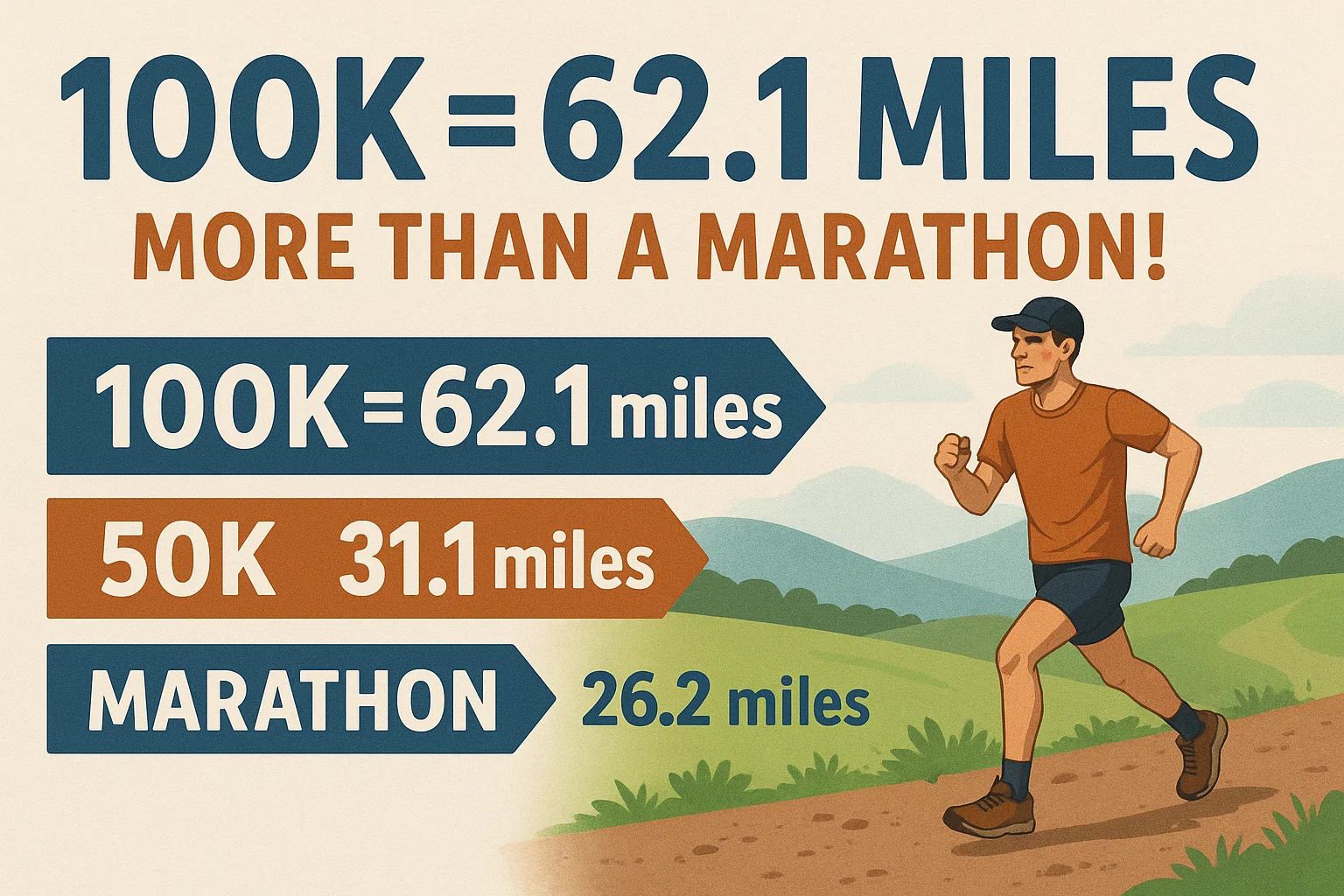
A 100K is 62.1 miles.

Yeah, that’s insane when you put it in perspective.

It’s a whole new ballgame. It’s 49 miles more than a half marathon, 36 miles more than a marathon, and 30 miles more than a 50K. Do the math—that’s like running 20 full 5Ks in a row.

Yeah, twenty.

It doesn’t really hit you until you’re out there, one foot in front of the other, and the miles start stacking up.

At first, it feels like a lot. But once you get into the groove of training, you realize breaking it down into chunks makes it way more manageable.

But don’t get me wrong. Most 100K races aren’t your typical road events. Most ultra events take plan on trails and treacherous terrains so comparing them to road events when it comes to distance alone is not fair.

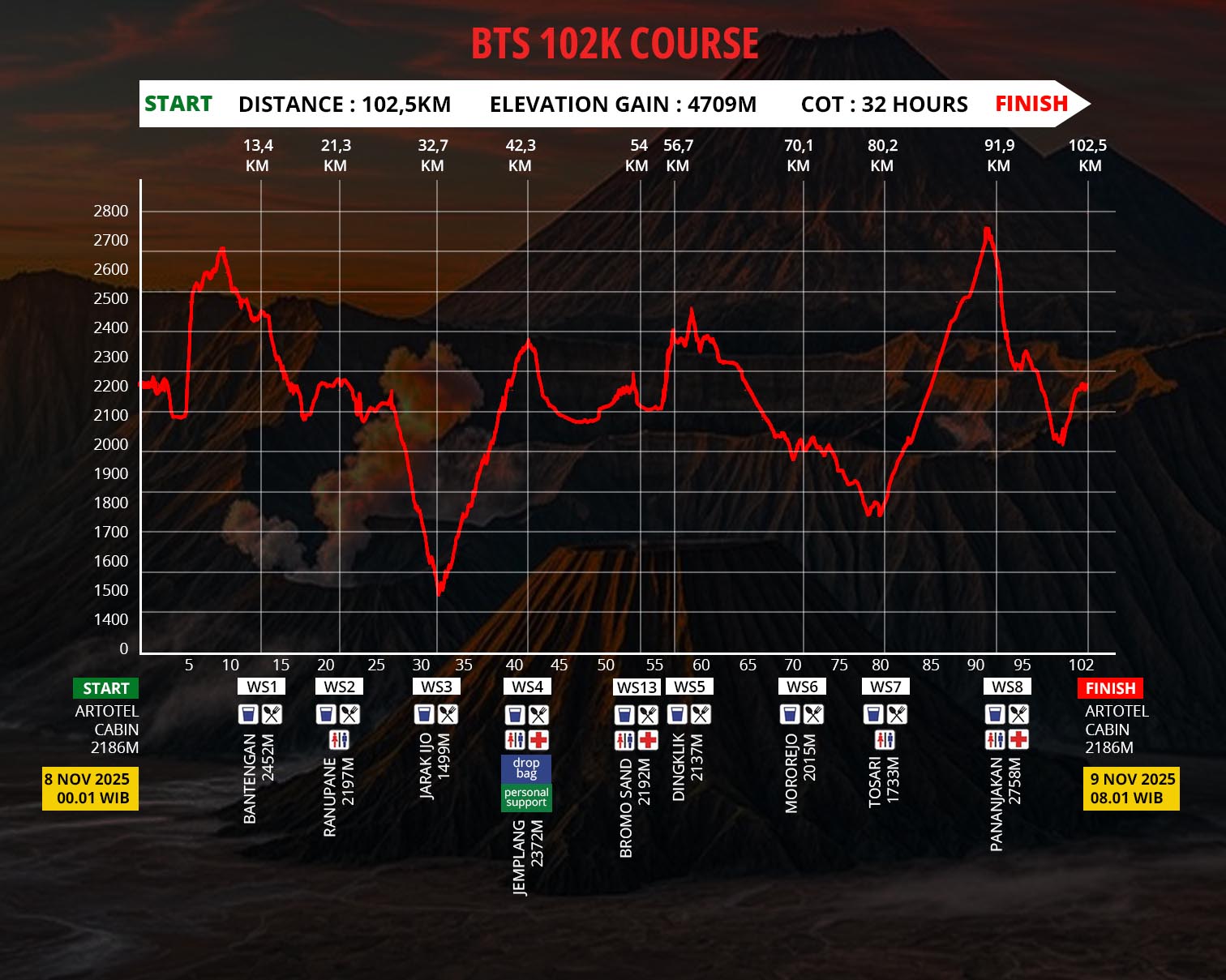
But don’t worry, I’ll be sharing with how I’m planning to prepare my body for the crazy vertical gains and technical terrain. For reference, BTS ultra 100K is around 4700m of elevation gain with a 32 hours cut-off time. Not the most challenging course, but I know it’s gonna be challenging enough for me as a first-timer.

how many miles is a 100K

How Long Does It Take to Run a 100K?

Expect to spend anywhere from 10 to 15 hours on your feet.

And yes, that means running through meals, running through the dark, and covering an entire day of effort.

I’ve never run a 100K before, but I’ve done several 50K and 75K races, so I know it’s no walk in the park.

I’m preparing for my first 100K this December, and just thinking about it is both exciting and a little nerve-wracking.

I can already picture myself asking, “Why did I sign up for this again?” But I know that crossing that finish line after such an epic journey will be unforgettable.

Curious about times? The average 100K time sits at 09:09:35. A super fast time? Anything under six hours. But for most of us, it’s about that steady, “grind it out” pace.

Are You Ready for a 100K?

Let’s be honest—jumping straight into a 100K with zero ultra-distance experience is a bad idea.

Doesn’t matter how strong you think you are. You need time to build up to this kind of distance.

For me, after knocking out several 50K races, I knew that a 100K was the logical next step. But I also knew it would take a whole different kind of training.

Get yourself some ultra-distance races under your belt—50K, 75K. Those will give you the foundation you need.

And when you cross those finish lines, don’t just feel good about finishing. Push yourself to finish strong. Those races will set you up mentally and physically for the 100K.

Get Your Mind Ready Too

Let’s talk mental game.

If you think a 100K is only about your physical strength, you’re missing the point. It’s mostly mental. You could be in great shape, but your mind is going to be your toughest opponent.

I’m mentally prepping for this 100K by reminding myself it’s going to test me like never before.

I expect moments where I’ll question why I’m running for hours. And that’s okay. I’m focusing on the process—taking it one week at a time. I’m not thinking about the whole 100K yet, just the run I’m doing today.

When I ran my first 50K, I hit mental lows where I wanted to quit. But every time, I reminded myself that the finish line was still within reach if I just kept going. It’s about believing you’re capable of more than you think.

Spend Time on Your Feet

You might think long runs are all about speed, but nope, it’s about time on your feet.

When I do my long runs and hikes, I ain’t thinking about speed—I’m only focused on how long I could keep going.

You need to get used to being on your feet for hours, whether you’re running or hiking.

That’s why I’m planning on doing back-to-back long runs and full-day hikes, sometimes lasting 8-12 hours.

That simulates the kind of mental and physical endurance I’ll need for the BTS 100. Getting my body used to being on your feet for long stretches is crucial. These long days have been a big part of my prep for this race.

Fueling Is Key

You can’t get away with half-baked fueling when you’re running a 100K. Unlike a 5K where a few gels might get you through, long-distance running demands a solid nutrition plan.

Without it, you’ll hit the wall way before the halfway point.

Believe me, I’ve learned the hard way. Some nutrition choices had me feeling like a champ, while others left me wishing someone would drive me off the course.

The trick? You’ve got to experiment. Try different foods, hydration plans, and see what works best for your body on those long training days.

Picking Your First 100K

Choosing your first 100K? It’s a big decision.

Don’t dive straight into an insane race right out of the gate. Go for something that’s relatively flat and in a climate that you can handle.

I learned the hard way that a course with steep hills or crazy weather can take you out early. Trust me, you want to pick a race that won’t break you mentally in those first miles.

For your debut 100K, find a race with solid support. Look for aid stations and volunteers who’ve got your back. Sites like UltraSignup are perfect for finding races that match your experience level. Finish your first, and you’ll be ready to tackle the next challenge.

I chose the BTS 100K because (1) I’ve already joined a few races in the same region (think Bromo Desert and Bromo Marathon) so I know what to expect when it comes to trail difficulty, elevation, and weather.

Plus (2), some of my friends have already joined this event as their first 100Ker and have praised it highly for how well it’s organized and relative easiness of the terrain course compared to other ultra events.

Just take a look at the course map and you can tell.

For long-distance runners, completing a 100km race is an unforgettable journey. After such a challenge, Custom Medals are undoubtedly the perfect reward.

You can customize your medal with the event logo, mileage, personal bests, or even your most memorable moments on the trail. For example, choose a 100km numbered design, add your name and finish date, and let this medal become a symbol of your hard work and perseverance.

Integrating Vertical Training

In preparation for the elevation changes, I’ve been adding hill workouts into my training plan. Steep climbs and descents are mentally and physically challenging, but the more you train on them, the better you’ll handle them during the race.

I’ve been incorporating hill repeats into my weekly runs, which means sprinting up a hill and then jogging or walking back down to recover. These workouts help build the leg strength you’ll need, especially for descents, which can be surprisingly taxing on the quads. Also, don’t forget about power hiking for those steep climbs—it’s a skill that’ll save you a lot of energy when the terrain gets tough.

If you’re training for a race with significant elevation changes, you’ll want to get used to the terrain in advance.

Train on the kind of surfaces you’ll be racing on.

For me, I’ve been running on rocky trails and sandy paths to simulate the different types of technical terrain I’ll face. The more variety you add to your training, the more prepared you’ll be for race day.

100K Training Plan: Building Endurance and Resilience Step by Step

Training for a 100K isn’t just about running long distances; it’s about smart, steady progress and recovery.

Here’s a breakdown of a 24-week training plan for beginners (like me!) aiming for their first 100K race.

It’ll guide you step by step through base building, endurance, peak training, and tapering.

Beginner 100K Training Plan (24 weeks)

Phase 1: Base Building (Weeks 1-8)
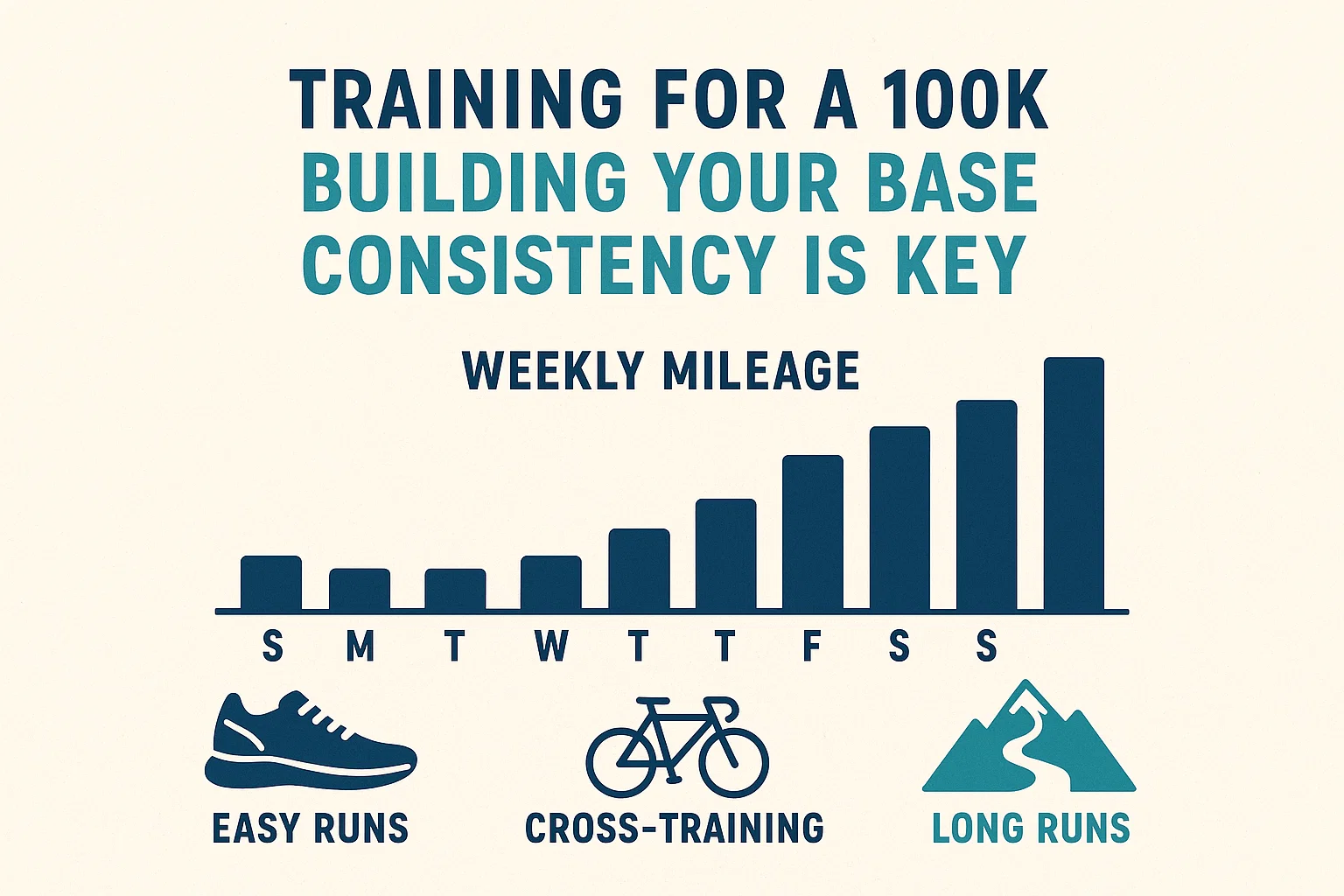
  • Mileage: Start with around 25 miles per week, increasing by 10% every two weeks.
  • Key Workouts:
    • Long Run: Start with 10 miles, building up to 16 miles by Week 8.
    • Easy Runs: Two or three runs per week at a relaxed pace. These runs should feel comfortable—no speed involved.
    • Cross-Training: One session per week (e.g., cycling or swimming). These are essential for building overall strength without the impact of running.
    • Rest Days: Two days per week to allow recovery and prevent injury.

For me, this phase is all about getting the body used to higher volumes of running. I’ll be making sure I’m training pain-free and gradually increasing the load. The idea is to ease into it and avoid pushing too hard too soon.

Phase 2: Building Endurance (Weeks 9-16)
  • Mileage: Gradually increase to 30-40 miles per week, with one cutback week every three weeks to avoid overtraining.
  • Key Workouts:
    • Long Run: Build up to 20-22 miles for your longest runs.
    • Back-to-Back Long Runs: Start incorporating these on weekends. For example, I might run 14 miles on Saturday, followed by 10 on Sunday.
    • Tempo Runs: One weekly run at a comfortably hard pace, for about 15-20 minutes. This will help improve speed and stamina.
    • Cross-Training and Core Work: Two sessions a week to strengthen supporting muscles, which will help avoid injury.

This phase is where I’ll be building resilience for the long haul. My long runs will gradually get longer, and I’ll really start to focus on pacing, nutrition, and hydration.

Phase 3: Peak Training (Weeks 17-22)
  • Mileage: Peak at 45-50 miles per week.
  • Key Workouts:
    • Long Run: Aim for one long run of around 28-30 miles, along with shorter long runs of 15-20 miles.
    • Back-to-Back Long Runs: These will continue, ideally on challenging terrain to simulate race conditions.
    • Intervals: One weekly session of intervals or hill repeats.
    • Cross-Training: Maintain strength and flexibility with yoga, core exercises, or light cycling.

By this stage, I’ll be running my longest distances—this is where the body and mind really start to feel the challenge. It’s also the phase where I’ll focus on mental toughness, making sure I can push through fatigue and get accustomed to the race-day discomfort.

Phase 4: Tapering (Weeks 23-24)
  • Reduce mileage to allow your body to recover and prepare.
  • Key Workouts: Keep up with shorter, easy runs and one last long effort at about half your peak distance.

By this point, I’ll be cutting back on the mileage to let my body rest and recover while still maintaining a level of fitness. Tapering can be tricky—physically, you feel like you want to keep running, but mentally, you’ll appreciate the extra recovery.

Common 100K Training Questions

I know that you’ve probably got a bunch of questions floating around in your mind right now, so let’s address some of the most common concerns.

What should I eat before a 100K run?

Before a 100K, I’ll be eating a balanced meal that combines complex carbs, lean protein, and healthy fats to fuel my body.

Examples include oatmeal with almond butter and fruit, a quinoa bowl with grilled chicken, or a hearty smoothie. Make sure you eat 3-4 hours before race day to give your body time to digest.

How many miles should I run each week when training for a 100K?

Weekly mileage varies depending on experience. For beginners, like me, you should aim to start around 20-30 miles per week, and gradually build up to a peak of around 45-50 miles. Intermediate runners might start at 35 miles per week, eventually reaching 60-70 miles during peak weeks. But always balance these miles with recovery days to avoid overtraining.

What gear is essential for a 100K ultra marathon?

The right gear is crucial for comfort and performance. I’ll be using a hydration vest or pack, trail shoes (planning to buy a Hoka Speed goat 5) with great traction, moisture-wicking clothing, and blister prevention essentials like anti-chafing balm and high-quality socks. I’ll also make sure to have fueling options like gels, electrolyte tablets, and energy bars at the ready.

So in total you’d need a comfortable hydration vest or pack, trail shoes with good traction, moisture-wicking clothing, and layers if you’re running in varying weather conditions.

How much recovery do I need after a 100K run?

After completing a 100K, I’ll need at least two to three weeks of dedicated recovery. I’ll start with gentle movement like walking or light stretching, then gradually ease back into running. Staying hydrated, getting proper nutrition, and prioritizing sleep will help speed up my recovery.

What Makes a 100K Different?

Training for a 100K isn’t like training for shorter races. It’s all about building staying power. Here’s what you should focus on:

  • Mileage Progression: Instead of peaking at a marathon’s 26 miles, you’ll build to 30-35 miles in a single run, with back-to-back long runs becoming part of your routine.
  • Fueling Strategy: Your body will need constant fuel to keep you going, so developing a fueling plan is critical.
  • Mental Prep: Ultra races demand mental endurance just as much as physical stamina. Visualizing success and maintaining a positive mindset can make all the difference.