How to Make a Successful Travel Planning If You Are A Runner

The competitive season usually begins in spring, so every running enthusiast should start choosing their races, especially if they plan to run a marathon in another country.

If money is tight right now, don’t rush to get upset and dismiss the trip idea. Nowadays, covering travel expenses with vacation loans is easier than ever, and the tips we have gathered will help balance the event budget.

Why Choose International Running Races?

Expanding your horizons depends on the places you’d like to visit. You can run along city squares or take place on tropical beaches. Choosing the right place motivates you when you feel tired, and the atmosphere makes running more exciting. Runners often feel that their purpose is achieved when they cross a finish line in another country.

Planning a trip, adapting to different foods, and meeting participants from around the world are all a part of a great experience. You can set new purposes, such as completing international marathons on different continents or enjoying an adventure. One more reason is meeting diverse running communities. You may hear different perspectives on pacing, stretching routines, or recovery tactics.

Useful Budgeting Tips to Manage Costs Clearly

Travel can be expensive. Flights, hotels, meals, and races have their prices. You must plan early, define clear purposes, and watch for hidden expenses. You can also build an emergency fund for unexpected circumstances, like gear replacements or flight delays.

Keep a separate account for race-related funds to prevent confusion between daily expenses and your travel budget. You can also search for cheaper ways in the off-season or sharing accommodation with other runners. Consider all travel expenses for your international race before you finalize your plans. Include ground transportation, rental cars, or trains. Research local food prices, especially if you need a diet. Plaid budget for extra gear, such as shoes or local race-day souvenirs.

The cost of traveling abroad is growing. Runners can set aside an income part each month or rely on part-time jobs to get extra money. Be honest about your budget from the start because overspending can distract you from enjoying the race in the future. If you plan thoughtfully, you can stay focused on your training abroad.

Prepare for Traveling

Planning your journey includes many actions. Think about these necessities before you go on a trip:

Pick the Perfect Destination Race

Before you register for a particular event, research the course profile. If you prefer flat routes, check official race websites for elevation charts. If you enjoy a challenge, consider ultra-distance races. Make sure the race length suits your desires because the variety is huge.

Look at the official cutoff times, especially if you need a certain pace. Also, check previous years’ climate data. Hot and humid conditions require extra hydration, and colder climates demand layered clothing. Be aware of local holidays that might result in weekends and crowds. Consider the event’s expo as well. Races can host large expos with vendors, workshops, and talks by elite runners.

Arrange Travel Insurance and Documents

Running can be a dangerous sport, as anyone can get injured. In this case, you will need insurance. Also, research the visa requirements; some nations issue visas upon arrival, and others require applications weeks in advance. Ensure your passport is valid for at least six months beyond travel dates. You may need an international permit for drivers if you want to rent a car.

Contact your bank about travel plans so they don’t freeze your account due to unusual activity abroad. Keep digital and hard copies of all important documents, such as passports, race confirmations, and insurance policies. You might also need proof of vaccination or certain medical screenings. Check the official race website for requirements or email the support team.

Plan Accommodation and Flights

Where you stay can influence how you recover and prepare. Look for hotels close to the race to simplify transportation on the big day, or stay farther away for a quieter setting. Consider arrival times that allow enough space to adjust to time zones. Jet lag can be tough on your training schedule.

Arrive at least two or three days before the race to get a feel for the local weather and settle in. Check if your airline has special baggage allowances for sports gear. Read reviews from runners who have stayed at the same place in previous years for lodging. They share tips on early check-in or whether the hotel offers a pre-race breakfast.

Plan Your Essentials Packing

A well-prepared runner is less likely to face panic the night before the event. Start with the most important things you need: gear, fueling products, documents, medicals, casual clothes, chargers, etc.

You might include comfort items, such as a lacrosse ball for muscle knots and a compact foam roller for daily stretching. Pain relief ointments, band-aids, and anti-chafing creams can save you from store trips in an unfamiliar place. Keep your passport, race confirmation, and other documents in a carry-on bag. That way, they’re safe if your checked luggage is delayed.

Handle Race Day Logistics

Aim to arrive at the start area early to have enough time for a final warmup, bathroom stops, or bag drop if the event offers that service. Look around for any posted signs about wave starts or updated rules. Bring hydration or snacks if you have specific energy needs.

Study the course map in advance. Identify where aid stations, restrooms, and medical tents are placed. Consider the local climate; wear sunscreen or a visor if the sun rises earlier. Reflective running gear or a headlamp are necessary if you’re running at night. Try to enjoy the scenery. Focus on your breathing and keep a positive mindset. Running abroad is about turning each mile into a personal milestone.

Final Thoughts

One can agree with the statement, “anyone can run a marathon,” adding an important remark – “with proper preparation.” Planning your international race with attention to budgeting, logistics, and training ensures a smooth experience, allowing you to focus on the journey rather than the stress. Whether chasing a personal best or simply embracing the thrill of running abroad, thoughtful preparation will turn your race into an unforgettable adventure.

How to Set and Achieve Your Running Goals: From 5K to Marathon

Whether you’re just starting out in running or looking to take your training to the next level, setting and achieving running goals is a big part of any runner’s journey. Whether your goal is to run a 5K, beat your race time or cross the finish line of a marathon, having a plan and sticking to it is key to success. But how do you go from a beginner to crossing the finish line of a marathon? How do you stay motivated through the ups and downs of training?

In this article we’ll show you how to set realistic running goals and create a step by step plan to achieve them, no matter what your current fitness level. But before we get started sign up for a $15 welcome bonus to help kickstart your journey to success—whether it’s buying new running gear or just motivating you to take the first step!

Step 1: Start with a Clear Goal

Before you begin training you need to define your specific running goal. Are you looking for your first 5K, your personal best in a 10K or the ultimate challenge of running a marathon? Having a clear, measurable goal will guide you through the process and keep you motivated.

If you’re a beginner you may want to start with a 5K. This distance is manageable for most people and is a great way to build your fitness without feeling overwhelmed. If you’ve already run a few races, then running a marathon might be the next logical step. No matter your goal, be realistic about what you can achieve in your timeframe.

Step 2: Break Your Goal Into Smaller Milestones

Running a big goal, like a marathon, can feel scary. To stay motivated break your goal into smaller milestones. For example if you’re looking to run a marathon your milestones might be:

  • Completing a 5K without walking
  • Running a 10K
  • Completing a half marathon
  • Running a full marathon

By breaking your goal into smaller chunks you’ll have a clear path to follow and each milestone will give you a sense of accomplishment to keep you going. Plus these smaller goals allow you to assess your progress and adjust your training if needed.Setting a timeline for your goal is important but just as important is making sure your timeline is realistic. For a beginner runner training for a marathon can take anywhere from 16 to 20 weeks depending on your fitness level. For a 5K a 10 week plan might be sufficient, for more experienced runners a 12 week plan can work for a marathon.

When setting your timeframe be mindful of other factors such as your schedule, injuries and the amount of time you can realistically commit to training. The more realistic your expectations the more likely you’ll stick to the plan and achieve your goal.

Step 4: Create a Training Plan

Once you have a clear goal and timeline it’s time to create a training plan. A solid training plan is key to reaching your running goals whether you’re training for a 5K or a marathon. You need to build your running volume gradually to avoid injury and make sure you’re improving consistently.

If you’re training for a 5K your plan might focus on building up your running distance while improving your pace. For a marathon your plan will need to increase your weekly mileage and include long runs to prepare your body for the race day distance.

Here’s a simple breakdown of a beginner’s marathon training plan:

  • Week 1-4: Focus on building a solid running base, gradually increase the distance of your runs.
  • Week 5-8: Start incorporating interval training or hill workouts to increase your speed and endurance.
  • Week 9-12: Focus on long runs and maintaining a steady pace while adding some tempo runs to build stamina.
  • Week 13-16: Taper your training in the last few weeks to allow your body to recover and prepare for race day.

For a 5K your training plan will be:

  • Week 1-3: Shorter runs of 2-3 miles, gradually increase the time you spend running.
  • Week 4-6: Introduce interval training, alternating between jogging and faster paced running to improve speed.
  • Week 7-9: Focus on running at a consistent pace, add a longer run (4-5 miles) to increase endurance.
  • Week 10: Rest week, focus on light runs and recovery.

Training plans vary by experience level so make sure to adjust your plan based on your starting point and race goals.### Step 5: Stick to Your Training

Consistency is key when it comes to your running goals. It’s easy to get sidetracked by work, social obligations or even bad weather but sticking to your training schedule is crucial for progress.

Even on days when you’re tired or unmotivated try to get in a short run. Short runs will keep you on track without feeling like you’re overdoing it. Consistency over time even in small doses will help you achieve your goal whether it’s your first 5K or a marathon.

Step 6: Listen to Your Body and Rest

Rest is just as important as training when it comes to running. Overtraining can lead to injury and burnout so make sure you’re including rest days in your plan. Listen to your body and adjust your training if you’re feeling fatigued or sore.

If you’re training for a marathon you’ll need to take rest seriously to allow your muscles to recover, 5K runners may need fewer rest days but should still take time to let their bodies rest between runs.

This is your guide to marathon heart rate.

Step 7: Stay Motivated

Staying motivated can be tough especially as the race approaches. To stay motivated:

  • Celebrate milestones: Whether it’s running your first 3 mile run or completing a half marathon, celebrate your progress.
  • Join a running community: Connect with other runners online or in person to stay motivated and inspired.
  • Track your progress: Use a running app or fitness tracker to monitor your distance and time to stay focused and feel accomplished.

Remember motivation will come and go but consistency and small achievable goals will keep you moving forward.

Step 8: Race Day Prep

As the race approaches make sure you’re fully prepared. Plan your race day outfit, double check your gear (running shoes, socks, water bottle etc) and focus on eating the right foods in the days leading up to the race. Don’t try anything new on race day and instead rely on what has worked for you during training.

Make sure you get plenty of rest in the days before the race and pace yourself during the event. Start slow, conserve energy and try to finish strong.

Conclusion: 

Achieve Your Running GoalsAchieving your running goals from 5K to marathon takes dedication, planning and perseverance. By setting clear goals, breaking them down into smaller milestones, creating a training plan and sticking to it you’ll be crossing that finish line in no time. With the right mindset and approach you can go from beginner runner to completing your dream race.

Remember sign up for a $15 welcome bonus to motivate yourself even more as you get started on your running journey. Whether it’s investing in gear or just fuel for your motivation this bonus is your first step to success.

The No-Budget Budget: A Lazy Canadian’s Guide to Saving Money

Saving money feels impossible when there are bills to pay, groceries to buy, and unexpected costs popping up. Traditional budgeting can be complicated and may require spreadsheets, calculations, and endless tracking. But what if there was an easier way? If you’re someone who hates strict budgets but still wants to grow your savings, a no-budget budget might be the perfect solution.

What Is a No-Budget Budget?

A no-budget budget is a simple approach to managing money without tracking every dollar. Instead of setting strict spending limits for every category, you focus on three basic steps: automate savings, cover fixed expenses, and spend the rest guilt-free. This method works well for people who don’t want to stress about budgeting but still need financial control.

The idea is to build habits that naturally lead to saving money. With the right setup, you can grow your savings without making constant financial decisions. For example, opening a savings account at InnovationCU allows you to set up automatic transfers and makes the process effortless. The goal is to remove the need for willpower by creating a system that works on autopilot.

Step 1: Automate Your Savings

One of the biggest reasons people struggle with saving is that they wait until the end of the month to see what’s left. With a no-budget budget, you do the opposite — save first. The easiest way to do this is by setting up an automatic transfer to your savings as soon as you get paid.

Most banks allow you to schedule these transfers, so you don’t have to think about them. Even if it’s just $50 per paycheck, it adds up over time. This method ensures that saving happens before you get a chance to spend the money elsewhere.

How Much Should You Save?

If you’re unsure how much to save, start with 10% of your income. If that feels too high, begin with 5% and increase it as you adjust. The key is consistency — small amounts saved regularly can make a big difference.

Income RangeSuggested Monthly Savings
Less than $2,000$50–$100
$2,000–$4,000$100–$300
$4,000–$6,000$300–$600
Over $6,000$600+

Step 2: Cover Fixed Expenses Automatically

The next step is ensuring your essential bills are paid without effort. These include rent or mortgage, utilities, phone bills, subscriptions, and insurance. The best way to handle these expenses is through automatic payments.

Automating your fixed expenses helps you avoid late fees and ensures your essential costs are covered. This makes it easier to manage the rest of your money without stress. Most banks and service providers allow automatic bill payments, which makes this a simple step to implement.

Step 3: Spend Freely Without Guilt

After setting up automated savings and covering fixed expenses, the remaining money is yours to spend however you like. This is what makes the no-budget budget so appealing — you don’t have to track every dollar or feel guilty about buying coffee or eating. Some months, you might spend more on entertainment, while other months, you might spend less. The key is knowing that your financial essentials are already covered.

Extra Tips to Make the No-Budget Budget Even Better

Reduce Unnecessary Expenses Without Thinking

  • Use cash or debit instead of credit to avoid overspending.
  • Cancel unused subscriptions like streaming services or gym memberships.
  • Cook at home more often to reduce takeout costs.
  • Buy generic brands instead of name brands when grocery shopping, and when shopping online, you can also check SaveMyCent to find extra coupons and discounts that help cut costs even further..

Take Advantage of Free Money

Many Canadians miss out on free money simply because they don’t know it exists. Some ways to get extra cash include:

  • Cashback rewards: Use a no-fee cashback credit card for purchases.
  • Employer matching: If your workplace offers RRSP matching, take full advantage.
  • Government benefits: Check if you qualify for programs like the Canada Child Benefit or GST credit.

Build an Emergency Fund

An emergency fund is one of the most important financial safety nets. Ideally, aim for three to six months’ worth of expenses in a separate account. If that feels overwhelming, start with a small goal — $500 or $1,000 can provide a cushion for unexpected costs.

Is the No-Budget Budget Right for You?

This method works best for people who want a simple way to manage their money without strict tracking. If you struggle with traditional budgeting, this approach can help you save without feeling restricted. However, if you have high debt or unpredictable expenses, you may need a more detailed budget to stay on track.

Final Thoughts

Saving money doesn’t have to be complicated. The no-budget budget makes it easy by focusing on automating savings, covering fixed costs, and spending the rest without stress. Setting up the right habits will allow you to improve your finances without the effort of traditional budgeting. This method proves that small changes can lead to big financial results.

9 Agility Ladder Drills for Runners to Boost Speed & Cadence

When I first heard about agility ladder drills, I thought they were some kind of secret weapon for speed.

Back then I was still a newbie runner, and convinced that a few quick foot tricks would turn me into Usain Bolt in flip-flops.

Reality smacked me hard.

On my first ladder workout, I tripped over the rungs like a baby goat on roller skates. My coach was trying not to laugh.

I was red-faced, tangled up, and questioning all my life choices.

But honestly? That awkward first session was a turning point.

After a few weeks of sticking with it, things changed. My feet started moving with purpose. I wasn’t just surviving trails anymore—I was gliding through rocky terrain, hopping over roots, and weaving past stray dogs.

That’s when I realized agility work wasn’t just about speed. It was about control. Coordination. Building the kind of movement that makes you feel fast even when you’re not racing.

These days, as a coach, agility ladder drills are a regular part of what I give my runners. Not because they’re flashy, but because they work. They sharpen your footwork, lift your cadence, and prep you for trail chaos.

No, they won’t magically shave minutes off your 5K time—but they will build the groundwork for smoother form and faster reactions.

So if you’re serious about running smarter and moving better, stick with me.

I’ll walk you through the whole thing—what ladder drills actually are, why they matter (with a few honest truths), and my 9 favorite drills.

I’ve also added a 4-week plan you can do at home, plus real-world answers to the most common questions I get.

Let’s break it down.

What Are Agility Ladder Drills?

Agility means being able to change direction fast, without flailing or losing control.

It’s not just about being quick—it’s about reacting. Moving clean. Staying in control when things go sideways.

Sounds fancy, but here’s what it means for runners: being able to adjust your stride at the last second—like when you suddenly spot a hole in the pavement or have to swerve around pedestrians hogging the sidewalk.

Agility ladder drills help you get better at that. You move your feet through a ladder laid flat on the ground, following specific step patterns—kind of like foot choreography for runners.

These drills train your feet to be quicker and more precise, which means more control on the run.

I tell my athletes: “Ladder drills teach your feet to dance.” They dial in your brain-to-foot connection—what nerds call the neuromuscular system—so that when the road gets sketchy or the trail gets wild, your feet already know what to do.

I’ve had moments out running—like flying downhill in the rain or threading through a crowded street—where I could literally feel the ladder work kicking in.

My legs moved faster than my brain could think. That’s the magic of training this way.

Now, don’t get it twisted: agility ladder drills aren’t true agility. In sports like soccer or tennis, athletes respond to unpredictable cues—like a defender or a ball. Ladder drills are planned.

You’re following patterns, not reacting to surprises.

But that’s okay. These drills still build the raw tools—balance, foot speed, coordination—that help you react better in the real world.

So think of agility drills like sharpening your blade. They’re not the whole battle, but they make you a better fighter.

What Is an Agility Ladder (a.k.a. Speed Ladder)?

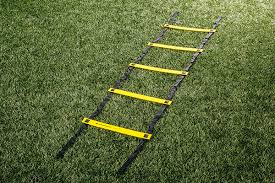
An agility ladder is basically a flat ladder you roll out on the ground. (See Image)

No, not the kind you use to clean gutters. It’s usually made of nylon sides and thin plastic “rungs” spaced about 18 inches apart. Each box is a landing zone for your feet during drills.

You can buy one online or at a sporting goods store for around $20. Mine’s been with me for years and rolls up like a yoga mat. Easy to pack. Easy to toss into a backpack.

But if you’re scrappy (or broke), make your own.

I once built a DIY ladder in my garage with duct tape and a pile of paint stir sticks. Took about an hour, and it worked just fine. There’s something satisfying about training with gear you built yourself.

Here’s what you’ll need if you go the DIY route:

  • About 25–30 feet of duct tape
  • 10 flat sticks or cardboard strips (around 18 inches long)
  • Measuring tape (space rungs ~18 inches apart)
  • Scissors

Lay out two long strips of duct tape, slap the “rungs” between them, and boom—you’ve got a functional agility ladder. Not pretty, but it gets the job done. Chalk or even jump ropes on the ground can work in a pinch, too.

Agility Ladder Specs:

  • Most are 10 yards long, 16 rungs.
  • Modular ones come in smaller sections (great if space is tight).
  • Flat rungs are safer—because trust me, you will hit them sometimes.
  • Use it on a grippy surface like grass, rubber floor, or turf.
  • Avoid concrete unless you like sore joints and the taste of gravel.

I usually throw mine down in a parking lot or quiet patch of grass. Indoors, tape it to a hallway floor or gym mat. Just make sure there’s nothing breakable nearby—especially if you’re still working on your coordination!

Why Should Runners Care?

This isn’t just about looking cool or copying football players. Agility drills make you better on trails, in races, and in life.

They help you stay upright when the ground gets sketchy, or when you need to change direction without throwing your stride out of whack.

Here’s what I’ve seen in my own training and with my runners:

  • Cadence goes up: You learn to move your feet faster, without trying harder.
  • Form gets smoother: The foot-brain link strengthens, reducing the clunky shuffle that slows you down.
  • Confidence spikes: You trust your body more, especially when terrain gets tricky.

And here’s the kicker: agility work is fun. It breaks up the grind of regular mileage. It makes you feel like an athlete, not just someone out logging steps on Strava.

But yeah—don’t expect miracles. Ladder drills alone won’t get you to a sub-20 5K. You still need tempo runs, intervals, and strength training. But they will make those runs feel smoother and more dialed-in.

Let me break down the reasons runners need agility ladder training.

🔹 They Fire Up Your Brain–Body Connection

You ever feel like your feet and brain aren’t always on the same page—especially when you’re tired? Ladder drills fix that. They train your brain and legs to talk fast and react even faster.

I remember the shift myself. After a few weeks of drills, I was hitting rocky trails with more control, barely thinking about foot placement. It was like my nervous system finally got the memo.

🔹 They Help You Pick Up Cadence (Yes, That Means Speed)

Stuck in that heavy, slow stride that sounds like bricks hitting pavement? Been there. Ladder drills force you to move fast and light. Think quick, short, snappy steps.

I’ve coached runners who couldn’t break 160 steps per minute. After adding agility work, they started hitting 175+ like it was nothing. It’s not magic. It’s muscle memory.

🔹 They Make You a More Efficient Runner

No wasted motion. That’s what we’re after. Ladder work teaches you to move clean—less flailing, more control. You’ll start landing under your center of gravity instead of reaching and overstriding.

For me, I felt it most on long runs. My legs didn’t fall apart late in the game. They held strong. That’s running economy in real life—not just something you read in a study.

(But for the record, this stuff is backed by science—like a study in the Journal of Strength & Conditioning Research showing agility drills improve lower-body coordination and speed.)

🔹 They Wake Up Your Balance and Stability Muscles

Every little hop and shift in a ladder drill lights up those tiny stabilizer muscles—especially in your feet, ankles, and hips. These are the muscles that stop you from rolling your ankle on a root or crashing on a descent.

Trust me, I used to crash. A lot. Rocky trails were my nemesis until I built up this kind of foot control. Now I stay upright more often than not.

🔹 They’re Trail Running Gold

If you love trail running like I do, these drills are your cheat code. You’ll move laterally better, lift your feet higher, and react faster to whatever nature throws at you.

I swear by lateral ladder drills before a big trail race. Makes dodging roots and rocks feel automatic.

Coach’s Final Word

Look, ladder drills won’t replace your hill repeats or tempo runs. But they will sharpen the blade. You’ll feel quicker, more controlled, and more confident out there.

I treat them like a secret weapon. 10–15 minutes, twice a week, and the benefits sneak up on you.

So if you’ve been skipping footwork drills because they look “fancy” or “not for runners,” stop that. They’re for you. Let’s level up your stride.

9 Agility Ladder Drills for Runners

These are the drills I keep coming back to—with myself and with the runners I coach. I’ve broken them down with clear steps and thrown in some personal notes to show how each one plays out in real life.

(Quick note: Do each drill for 30 seconds to a minute. Rest. Then repeat for 2–3 rounds. Twice a week is enough to see gains.)

1. Ladder Linear Run (The Classic Speed Drill)

This is your bread and butter. Great warm-up. Great turnover booster.

This drill didn’t click for me at first. I was too stiff, trying to “nail” each step perfectly. One day I just sprinted through—no overthinking—and boom: I flew. No ladder hits. Just flow. Felt like I unlocked a new gear in my legs.

Once you feel it, you’ll know. The rhythm is addicting.

How to do it:

  • Start at the bottom of the ladder, facing straight ahead.
  • Run through it, one foot per box—left-right-left-right.
  • Light steps. Stay bouncy. Don’t let your heels drag.
  • Land on the balls of your feet. Keep it fast and light—imagine running over hot coals. Arms should drive in rhythm.

2. High-Knees Run (The “A-Skip” Variation)

If your stride feels sluggish or you struggle with posture, this one is for you.

I used to picture running through tires, like in those old football training montages. One day I was doing this drill in a park and a bunch of kids started mimicking me—knees way too high, laughing the whole time.

At first I felt silly. Then I realized: screw it, I’m training smart. They were just having fun. This drill helped fix my lazy shuffle. Gave me more spring and improved my form. If you’re always dragging your feet, start here.

How to do it:

  • Both feet land in each box.
  • Right foot in → left foot follows.
  • Then next box. Each time, lift your knee high—aim for waist height.
  • Keep elbows bent at 90 degrees. Drive your arms with the opposite knee. It’s a rhythm thing.

3. Lateral Quick Step Shuffle

Running isn’t just about pounding forward. If you’ve ever had to dodge a wayward scooter in Bali or hop a puddle mid-run, you already know that side-to-side agility is crucial.

The lateral shuffle drill trains exactly that—giving your feet the kind of quickness that keeps you upright, stable, and ready to move.

How to Do It:

  • Start by facing sideways at the edge of the ladder, with it stretching out to your right.
  • Step your right foot into the first box, then quickly bring your left foot in too—both feet land inside.
  • Now step out with your right foot (outside the ladder), then left foot into the next box, followed by right foot in again.
  • Repeat this “in-in, out” rhythm as you shuffle laterally down the ladder.

4. Carioca (Grapevine) Step

Here’s where things get spicy. The carioca drill—some call it the grapevine—is all about hip mobility, timing, and smooth coordination. Think of it as dancing through the ladder while secretly training your running mechanics.

How to Do It:

  • Stand on the left side of the ladder with your right shoulder facing it.
  • Step your right foot into the first box, then cross your left foot behind the right into the next box.
  • Right foot into the third box, left foot crosses behind again into the fourth box, and so on.

5. In-and-Out (Jumping Jack Feet)

Ready to get your heart rate up? This one’s like a horizontal jumping jack—simple, but man, it wakes up your legs and coordination fast.

I used to think my coordination was solid… until I realized my left foot was always late to the party. This drill exposed that. It also lit up my adductors (inner thighs), which I didn’t even know were weak.

Now I think of this drill as mini ski hops—it’s helped my trail running, especially when pushing off from uneven terrain.

How to Do It:

  • Stand at the start of the ladder with both feet together.
  • Jump both feet into the first box, landing hip-width apart.
  • Then jump forward out of the ladder, landing with your feet straddling the next rung—wider than hip width.
  • Next, hop both feet together into the second box. Then out again, and so on.
  • Bounce on the balls of your feet. Keep your knees soft and chest up. Arms help: down when feet are together, out when feet go wide—just like a jumping jack. Use your eyes to scan ahead, not down.

6. Ickey Shuffle (Three-Step Lateral Pattern)

This is the drill that makes you feel like an athlete. Named after NFL legend Ickey Woods, it’s all about rhythm and reaction—perfect for runners who want sharper footwork and faster cadence.

How to Do It:

  • Start on the left side of the ladder. The pattern is “In-In-Out.”
  • Step your right foot into the first box.
  • Bring your left foot in.
  • Step your right foot out to the right of the ladder.
    Then:
  • Step your left foot into the next box.
  • Bring your right foot in.
  • Step your left foot out to the left side.
  • Repeat all the way down.

7. Forward & Backward Jumps

This one’s a killer — I call it the boomerang hop. It teaches your feet to react fast and your brain to stay locked in. The rhythm is simple: two boxes forward, one back. It sounds playful — but it’ll torch your calves and challenge your focus like crazy.

How to Do It:

  • Stand at the base of the ladder. This is a two-foot jump drill.
  • Start by hopping over the first box and landing in the second.
  • Then jump backward one box to the first.
  • Next, jump forward two — you’ll land in box 3.
  • Then back to box 2. Forward to box 4. Back to 3. Keep going.

The pattern:
Box 2 → back to 1 → into 3 → back to 2 → into 4 → back to 3… and on.

My routine? I walk back to the start after each round (honestly, that walk is the best breather). If you want extra challenge, flip the drill: go forward one, back two. But trust me — forward-2, back-1 is already a mental workout.

Form Tips:

  • Keep your landings soft.
  • Swing your arms with the movement — forward when jumping ahead, back for the reverse.
  • Don’t rush the jump back. Regain your balance, then push off.

8. Lateral Shuffle (Two Feet In Each)

This is one of the simplest ladder drills — but don’t sleep on it. Done right, it sharpens your lateral speed and balance. I like using it as a warm-up or reset when other drills get too tricky.

How to Do It:

  • Stand facing down the ladder, with it at your side.
  • Step your left foot into box 1, then your right.
  • Step out with your left, then move your right into box 2, followed by your left.
  • Repeat: two feet in each box, one at a time, moving sideways.

In short:

  • Step in with lead foot,
  • bring the trailing foot in,
  • step the lead foot out,
  • repeat into the next box.

Once you hit the end, face the other way and come back — your opposite foot will lead this time.

9. Single-Leg Hops (Hopscotch Balance)

Okay, now we’re getting serious. This drill is tough. It’s all about control, balance, and single-leg strength — which runners desperately need. Remember: every stride is a one-leg jump. So this is just running, turned up a notch.

When I first tried this, my left leg was a mess. Wobbly, weak, uncoordinated. It exposed a clear imbalance I had been ignoring. So I added it to my drills every week.

After about a month? Huge difference.

This drill hits all the little stabilizer muscles — foot, ankle, glutes. It’s a hidden gem for injury prevention.

How to Do It:

  • Start on one leg — right foot, left foot raised.
  • Hop into the first box.
  • Keep hopping through the entire ladder, staying on that one leg.
  • Switch legs and return hopping on the other foot.

You don’t need to move sideways — just hop forward and zigzag slightly into each box. Control matters more than speed here.

4-Week Agility Ladder Plan (Runner-Tested & At-Home Ready)

When I first added agility ladder drills to my training, I was all clumsy feet and tangled steps.

I mean it. I looked like I was playing Twister on fast-forward.

But over time, that awkward mess turned into smooth, quick steps. And now, it’s one of my favorite ways to wake up my legs and brain.

So if you’re wondering how to fit ladder drills into your running routine, here’s a no-fluff 4-week plan I use with my runners here in Bali.

All you need is about 10–15 minutes, a little space, and some willingness to look silly before you get good. Trust me, it’s worth it.

The Basics

  • Schedule: Start with 2 ladder sessions per week. Move up to 3 in week 3 if you’re feeling good.
  • When to do them: On your easy run or cross-training days. Or tack them on after an easy run as part of your drills.
  • Warm-up: Always jog 5–10 minutes and do dynamic stretches before ladder work.

WEEK 1: Learn the Moves

  • Focus: Nail the basics, stay light on your feet.
  • Sessions: 2 (e.g., Tuesday & Friday)
  • Drills: Ladder Linear Run, High-Knees, Lateral Shuffle, In-and-Out
  • Tip: Walk or jog through drills first. It’s about rhythm, not speed. By the end of the week, you should feel more coordinated.

WEEK 2: Add a Little Spice

  • New Drills: Carioca & Ickey Shuffle
  • Session A: Linear Run (2 rounds, a little quicker), High-Knees (2 rounds), Carioca (2 rounds each way), Lateral Shuffle (2 rounds)
  • Session B: In-and-Out (3 rounds), Ickey Shuffle (3 rounds), Forward/Backward Jumps (2), Single-Leg Hops (start easy)
  • Tip: It’s normal to feel awkward with the new drills. Break them down step-by-step. Rest as needed.

WEEK 3: Turn Up the Volume

  • Sessions: 2–3 (add a third light one if you’re up for it)
  • Session A: High-Knees (3 rounds), Linear Run (3 rounds, last one fast), Lateral Shuffle (3), Carioca (2)
  • Session B: Ickey Shuffle (4), Forward/Backward Jumps (3), In-and-Out (3), Single-Leg Hops (2 each leg)
  • Optional Session C: Focused technique work on your weakest drill
  • Tip: Try going circuit-style: run straight into the next drill, then rest. And yes, hitting a rung happens. Laugh, reset, go again.

WEEK 4: Own It

  • Session A: Create a circuit: Linear Run → High-Knees → Ickey Shuffle → Lateral Shuffle. Repeat 2–3 times.
  • Session B: Power session: In-and-Out (2 rounds fast), Forward/Backward Jumps (2), Single-Leg Hops (2 each leg), finish with your favorite drill
  • Tip: Imagine you’re on a technical trail or dodging crowds. Let your body move freely. Feel the work you’ve put in come together.

After Week 4

By now, these drills should feel familiar. You can:

  • Add more rounds
  • Toss on a light weight vest
  • Use them in your warm-up before interval runs

Just don’t drop them altogether. Keep ladder work in your rotation 1–2 times a week. Your future self will thank you.

Final Thoughts: My Take

I started as the guy who tripped over every rung. Now? The ladder is my secret weapon. It wakes up my coordination and helps me feel fast even on tired legs.

I use this stuff with the runners I coach — beginners and marathoners alike. One runner I worked with used to call herself “awkward and slow.” A few weeks in, she was gliding through the ladder with confidence. That’s what this work does. It builds belief.

Ladder drills are more than physical. They’re a mindset. They teach agility, yes, but also patience and play. Blast some music, smile when you mess up, and high-five yourself when you get it right.

So what’s your move? Have you tried ladder drills before? Got a favorite pattern? Ickey Shuffle still tripping you up? Drop a comment and let’s talk.

And remember: Every fumble is one step closer to feeling fast and free.

Get after it. Your agile, strong self is waiting.

Balancing CrossFit and Running: A Runner-Coach’s Guide

crossfit and running

Ever tried running the day after a gnarly CrossFit WOD and felt like your legs were filled with cement?

I’ve been there.

I once showed up for a long run after hammering box jumps and thrusters the night before—my legs were toast by mile two.

Mixing CrossFit and running can feel like juggling dumbbells while sprinting.

It’s awesome when it clicks, but if you don’t manage it right, you’re on the fast track to injury.

Trust me, I learned the hard way after pulling a hamstring trying to do it all.

These days, after years of coaching runners, I’ve figured out how to make it work.

I treat CrossFit as support, not competition, for my running.

If I’m chasing a marathon finish, CrossFit becomes light strength work.

If I’m trying to hit a PR in the box, my runs are short, easy, and recovery-focused.

Let me walk you through how to build your own mix—with lessons I’ve learned (sometimes painfully), and real-life tips to keep you strong, fast, and injury-free.

What is CrossFit?

Think of CrossFit like a mixed workout buffet.

One day it’s deadlifts and pull-ups.

Next day, you’re doing sprints, kettlebell swings, or burpees.

It’s intense, and yeah, sometimes chaotic—but it’s all functional. That means it builds real-world strength: pushing, pulling, lifting, moving fast.

The official definition is “constantly varied functional movements performed at high intensity.”

Translation: it keeps your body guessing and builds strength from head to toe.

As a coach, I call CrossFit the adult playground. You’ll find me side by side with someone twice my size doing box jumps, wall balls, or sandbag carries.

And here’s the cool part—CrossFit often includes running too. You’ll see 400-meter repeats or sprint finishers pop up all the time. It’s already part of the mix.

Why Combine CrossFit and Running?

If you love running but feel like you’re missing something—like strength, speed, or durability—CrossFit can fill that gap.

  • Strength Gains: All those squats, deadlifts, and presses build a solid base. Stronger glutes and hamstrings mean more power in your stride. Studies have shown runners who lift or do plyos improve their running economy. I’ve seen this firsthand—runners with stronger cores and legs just move better.
  • Cardio Kick: CrossFit workouts are short and brutal. AMRAPs (as many rounds as possible), EMOMs (every minute on the minute), timed intervals—all of it gets your heart pumping.
  • Injury Protection: Most runners have muscle imbalances. Tight hips. Weak glutes. CrossFit movements like kettlebell swings or ring dips target muscles running often ignores. I struggled with IT band pain for months until I added CrossFit-style glute work. No fancy rehab needed—just the right kind of training.
  • Core for Days: Planks, overhead presses, Turkish get-ups—your core will get torched. And a strong core helps you keep form in the final miles of a race, especially when your legs are screaming.
  • It’s Fun: Let’s be real. Running every day can get boring. Toss in a WOD with friends, sweat it out, laugh through the pain—it gives your brain a break while still getting the work in.

Bottom line?

CrossFit won’t magically make you faster. But it can help you become more durable, balanced, and powerful.

Building Your Weekly Plan (Beginner to Advanced)

The trick is knowing your priority. Are you a runner who cross-trains? Or a CrossFitter who jogs to stay lean?

If you’re chasing running goals:

  • Make long runs, speed work, and recovery days your anchor.
  • Fit CrossFit in 2–3 times per week on your easier run days.

If CrossFit is your main jam:

  • Keep runs short—30-minute recovery jogs, light hills, or sprints.
  • Focus most energy on your big lifts or metcons.

Here’s how a week might look:

Beginner (run-focused)

  • Monday: Easy run + light CrossFit
  • Tuesday: Intervals
  • Wednesday: Rest or yoga
  • Thursday: Tempo run
  • Friday: CrossFit (short)
  • Saturday: Long run
  • Sunday: Rest

Advanced (CrossFit-focused)

  • Monday: CrossFit
  • Tuesday: 30-min run
  • Wednesday: CrossFit
  • Thursday: Short intervals
  • Friday: CrossFit
  • Saturday: Long walk or recovery jog
  • Sunday: Rest

One Reddit coach said it best: “I do CrossFit M/W/F. Run T/Th/S. Recovery is everything.” That setup works because it spreads the load, keeps things fresh, and gives your body space to adapt.

Beginner Plan

(If you’re just starting CrossFit or getting back into running after a long break)

  • Monday: 20–30 minute easy run + beginner CrossFit (focus on basics: planks, air squats, bird-dogs). Keep it smooth.
  • Tuesday: Total rest or just some gentle yoga.
  • Wednesday: Light CrossFit skills day (bodyweight stuff: squats, lunges, push-ups). Keep the weights light and nail the form.
  • Thursday: Short run day. Warm up 5–10 mins, then do 3×200m strides. Walk between.
  • Friday: Active recovery – foam roll, do some mobility drills. Nothing hard.
  • Saturday: Fun combo: CrossFit cardio WOD + a short 200m jog to finish. Think jump rope, step-ups, bodyweight stuff.
  • Sunday: Full rest or go for a chill walk.

Why it works:

You’re getting in 2 runs and 2-3 light CrossFit sessions. The point isn’t intensity—it’s consistency and building a foundation without injury. I always tell beginners: don’t chase PRs, chase good habits.

Intermediate Plan

(If you’ve dabbled in both worlds but need more structure)

  • Monday: Easy 30-minute run + core/mobility (think planks, leg raises, bird-dogs).
  • Tuesday: CrossFit strength WOD (moderate weight: deadlifts, presses, pull-ups, wall balls).
  • Wednesday: Tempo run (5–10 mins easy, then 15–20 mins strong effort) + light upper-body CrossFit (push-ups, ring rows, kettlebells).
  • Thursday: Active recovery (swim, foam roll, yoga).
  • Friday: CrossFit power session (burpees, swings, box jumps) + 2–4 sprints (200m).
  • Saturday: Long run day: 45–60 mins easy pace.
  • Sunday: Total rest. You earned it.

Why it works:

Three runs, three CrossFit days. One long run, one tempo, and optional sprints. You’re never overdoing it back-to-back, and each day has a purpose. Trust me, this mix builds grit without burning you out.

Advanced Plan

(If you’re already strong and fast, and want to juggle both worlds)

  • Monday: Speed run (5×400m repeats w/ 90s rest) + lower-body CrossFit (deadlifts, split squats). P.S. This is my favorite workout.
  • Tuesday: Recovery day: swim, stretch, walk, whatever feels good.
  • Wednesday: Upper-body CrossFit (pull-ups, core work) + easy 20–30 min jog.
  • Thursday: Tempo run (5–10 min easy, then 30 min moderate).
  • Friday: Full-body CrossFit WOD (AMRAP/EMOM: thrusters, pull-ups, wall balls, rowing).
  • Saturday: Long run (60–75+ mins) + recovery work.
  • Sunday: Rest. Seriously.

Why it works:

You’re training hard, but smart. CrossFit days are placed to avoid trashing your legs before long runs. I’ve trained like this leading into ultra prep – just tweak the intensity based on how your body feels. If something’s off? Pull back.

Injury Prevention Tips

The harder you train, the higher your risk of injury. Ward it off by doing the following:

  1. Don’t go all in too fast. I tried doing every WOD and long runs early on, and my Achilles and shoulder had other plans. Start slow.
  2. Form over ego. CrossFit loves complex lifts. Bad form = injury. I jacked up my back on a rushed kettlebell swing once. Lesson learned. Master the basics before piling on the plates.
  3. Watch volume. Feeling wrecked every day? Struggling to sleep? Back off. I swap out box jumps for step-ups when my legs feel cooked. That little shift makes a big difference.
  4. Warm up and cool down. I never jump into burpees cold. Always do light movement first (jog, dynamic stretches). Finish with a few cooldown stretches. Think of it as insurance.
  5. Ignore the CrossFit haters. People love to say it’s a fast track to injury. But honestly? It helped fix imbalances in my hips and knees that running alone never addressed.
  • Sleep is the secret weapon. I run like a zombie on 5 hours. Aim for 7–9. One guy on Reddit trains 30k weekly and CrossFits 3x/week, no problem – but he’s religious about sleep, food, water, and recovery.
  • Active recovery > doing nothing. I’ll swim for 15 mins or take an easy walk instead of just sitting around. Movement = circulation = healing.
  • Mobility work daily. Every night I foam roll and stretch. It keeps my hips loose and my calves from turning into rocks.
  • Refuel like it matters. After training? Eat. Something with protein + carbs. Chicken and rice. Yogurt and banana. And chug that water. Dehydration kills progress.
  • Deload weeks are golden. Every 3–4 weeks, dial things back. Cut running mileage by 40–50%, and go lighter in the box. These chill weeks have saved me from burnout.


How To Make Your Travel Adventure Relaxing Yet Fun This Season?

Traveling is all about creating unforgettable experiences, but finding the perfect balance between relaxation and excitement can be challenging. Whether you’re exploring a bustling city, lounging on a serene beach, or embarking on an adventurous road trip, the key is to plan wisely and stay flexible. From choosing the right destinations to incorporating moments of rest without missing out on fun activities, there are many ways to make your journey both enjoyable and stress-free. This season, embrace a travel style that lets you unwind while still making the most of every adventure. Here’s how you can achieve the perfect mix of relaxation and fun on your next trip!

7 Ways To Make Your Travel Adventure Relaxing Yet Fun This Season

Plan a mix of adventure and relaxation

Plan a mix of adventure and relaxation to make your travel adventure relaxing yet fun this season. A well-balanced itinerary allows you to enjoy thrilling experiences without feeling exhausted.

Start your days with exciting activities like sightseeing, hiking, or exploring local markets, and set aside time to unwind with a spa visit, a quiet sunset view, or a leisurely walk. This approach ensures you make the most of your trip while feeling refreshed. By blending excitement with moments of rest, you create a travel experience that is both fulfilling and enjoyable.

Pexels

Stay in comfortable accommodations

Stay in comfortable accommodations to make your travel adventure relaxing yet fun this season. Where you stay plays a big role in your trip’s enjoyment, so choosing a hotel, resort, or rental that offers both convenience and a cozy atmosphere is essential.

Look for places with amenities that match your needs, whether a peaceful retreat with scenic views or a centrally located spot with easy access to attractions. A good night’s rest and a welcoming environment help you recharge after a day of exploring, ensuring you wake up refreshed and ready for new adventures.

Balance exciting and laid-back activities

Balance exciting and laid-back activities to make your travel adventure relaxing yet fun this season. While adrenaline-filled experiences like zip-lining, city tours, or water sports add thrill to your trip, it’s just as important to slow down and enjoy peaceful moments. Spend an afternoon at a quiet café, take a scenic boat ride, or unwind at a local park to recharge.

Alternating between high-energy and relaxed activities ensures you don’t feel overwhelmed while still making the most of your journey. This thoughtful balance keeps your travel experience both enjoyable and refreshing.

Pack light and stay organized

Pack light and stay organized to make your travel adventure relaxing yet fun this season. Carrying only the essentials saves you from the hassle of lugging around heavy bags and makes moving between destinations easier.

Choose versatile clothing, pack travel-sized toiletries, and use packing cubes to keep everything in order. A well-organized bag means you can quickly find what you need without stress, allowing you to focus on enjoying your trip. Simplifying your packing creates a smoother and more enjoyable travel experience.

Keep a flexible schedule

Keep a flexible schedule to make your travel adventure relaxing yet fun this season. While having a planned itinerary helps maximize your trip, leaving room for spontaneity allows you to embrace unexpected experiences without feeling rushed.

Avoid overloading your days with too many activities, and give yourself time to explore at your own pace. Whether discovering a hidden café, extending a beachside stay, or simply taking a break when needed, a flexible approach reduces stress and makes your journey more enjoyable. By balancing structure with freedom, you create a trip that feels both exciting and effortless.

Enjoy local food and culture slowly

Slowly enjoy local food and culture to make your travel adventure relaxing yet fun this season. Instead of rushing through meals or sightseeing, take the time to truly experience the flavors and traditions of each destination. Savor authentic dishes at local restaurants, visit markets, and engage with artisans to learn about their craft.

Whether you’re tasting regional delicacies or exploring a cultural festival, immersing yourself fully enhances your trip. Pairing a leisurely evening with a cup of herbal tea or browsing specialty shops for unique finds, like THC oil tinctures from https://cbdfx.com/collections/thc-oil-tinctures/, can add a touch of relaxation to your adventure. By embracing the local pace, you make lasting memories while keeping your journey enjoyable.

Unplug when needed

Unplug when needed to make your travel adventure relaxing yet fun this season. Constant notifications and digital distractions can take away from the joy of exploring new places, so setting aside moments to disconnect allows you to be fully present. Put your phone away during meals, enjoy scenic views without a screen, and take in your surroundings without needing to capture every moment.

Whether it’s a quiet morning walk, a deep conversation with locals, or simply soaking in the atmosphere, stepping away from technology helps you appreciate the experience. Finding a balance between staying connected and being in the moment makes your journey more fulfilling and stress-free.

Why To Make Your Travel Adventure Relaxing Yet Fun This Season?

Making your travel adventure relaxing yet fun this season ensures you enjoy the best of both worlds—excitement and rejuvenation. A trip that is all adventure can leave you feeling exhausted, while one that is only about relaxation might lack memorable experiences.

Striking the right balance allows you to explore new places, try exciting activities, and still have time to unwind. It helps you create lasting memories without feeling overwhelmed or rushed. By planning a mix of thrilling and peaceful moments, you make the most of your journey while returning home refreshed and satisfied.

Pexels

Final Words

A well-planned trip should leave you with unforgettable memories, not stress and exhaustion. By balancing adventure with relaxation, choosing comfortable accommodations, staying organized, and embracing local experiences at a leisurely pace, you can create a travel adventure that is both exciting and refreshing. Flexibility and moments of unplugging allow you to truly soak in the beauty of your journey without feeling rushed. This season, focus on making your travels enjoyable, stress-free, and fulfilling so you return home with stories to cherish and a renewed sense of joy.

Saunas and Running: Can Heat Training Improve Your Endurance?

Heat exposure has long been a key component in athletic conditioning, with sauna use emerging as a powerful tool for endurance athletes. For runners, integrating saunas into their training regimens can lead to significant physiological adaptations, such as increased plasma volume, improved thermoregulation, and the activation of heat shock proteins (HSPs) that aid in muscle recovery.

The Science Behind Heat Adaptation and Endurance

One of the primary benefits of heat exposure for endurance athletes is an increase in plasma volume. Sauna use can cause a temporary expansion of blood plasma, allowing for better circulation and oxygen delivery to working muscles. This adaptation improves stroke volume and reduces cardiovascular strain during exercise.

Studies have shown that after several weeks of heat exposure, plasma volume can increase by 4-15%, contributing to improved endurance and faster recovery times.

Regular sauna exposure helps the body become more efficient at cooling itself. Over time, the sweat glands adapt to activate sooner and produce more diluted sweat, allowing runners to maintain a lower core temperature during exercise. This improvement in thermoregulation is crucial for athletes who compete in hot and humid environments, as it delays the onset of fatigue caused by overheating.

Heat shock proteins (HSPs) play a critical role in protecting and repairing muscle tissue. These proteins become activated in response to heat stress, helping to prevent cellular damage and accelerate muscle recovery after intense training. Studies indicate that sauna exposure for 20-30 minutes at temperatures of 176-212°F (80-100°C) can significantly increase HSP expression, reducing inflammation and soreness in endurance athletes.

Heat Training vs. Altitude Training for Runners

Both heat training and altitude training have been shown to improve VO2 max, a key indicator of cardiovascular endurance. While altitude training increases red blood cell production due to lower oxygen availability, heat training enhances blood plasma volume, leading to similar aerobic performance benefits. Some studies suggest that combining both methods can yield the greatest improvements in endurance performance.

Altitude training forces the heart and lungs to work harder due to lower oxygen levels, while heat training strengthens the cardiovascular system by increasing blood flow and improving thermoregulation. Both methods enhance cardiovascular efficiency, allowing runners to maintain a faster pace for longer periods.

Altitude training requires access to high-altitude environments or hypoxic chambers, making it less practical for many runners. In contrast, heat training can be easily incorporated into a routine using saunas or running in warm conditions, making it a more accessible option for endurance athletes looking to gain performance benefits.

How Often Should Runners Use Saunas?

Studies suggest that runners can benefit from sauna sessions 3-5 times per week after workouts, with each session lasting 15-30 minutes at temperatures between 176-212°F (80-100°C). This frequency allows for heat adaptation without excessive strain on the body.

For endurance training, sauna sessions should be performed immediately after a run to extend the effects of heat exposure. Research indicates that post-exercise sauna use can increase endurance by up to 32%, with adaptations occurring within 10-14 days of consistent use.

Beginners should start with shorter sauna sessions (10-15 minutes) and gradually increase exposure time. Overexposure can lead to dehydration, dizziness, and electrolyte imbalances, which can negatively impact performance.

If you’re considering investing in your own setup, reputable providers like Sun Valley Saunas offer options that can bring the benefits of heat training right into your home.

Sauna Use for Marathon and Ultramarathon Runners

For runners competing in hot climates, such as the Boston Marathon, Western States 100, or Badwater Ultramarathon, sauna training can be a crucial tool for adaptation. Heat acclimation through sauna use allows the body to perform efficiently in extreme temperatures, reducing the risk of heat exhaustion and dehydration.

Marathon and ultramarathon runners place immense strain on their muscles. Sauna exposure post-run aids in reducing muscle damage, improving circulation, and accelerating glycogen replenishment, ensuring faster recovery between sessions.

Long-distance races require mental resilience. Sauna use conditions the body to withstand heat-related stress, training runners to stay focused and composed under challenging race conditions.

Potential Risks and Overuse of Saunas

Excessive sauna use can lead to dehydration, particularly if proper hydration strategies aren’t followed. Runners should drink electrolyte-rich fluids before and after sauna sessions to maintain optimal hydration levels.

Frequent exposure to high temperatures can influence hormone levels, potentially leading to increased cortisol production. While short-term sauna use enhances recovery, excessive exposure may result in chronic stress and fatigue.

To prevent negative effects, runners should monitor their body’s response to heat training and adjust sauna session frequency based on their individual tolerance levels. Listening to the body and prioritizing rest is essential for preventing burnout.

Scientific and Expert Insights on Sauna Training

Multiple studies have demonstrated the positive impact of sauna training on endurance. A 2015 study published in the Journal of Science and Medicine in Sport found that runners who used post-exercise sauna sessions saw a 32% increase in their time to exhaustion compared to those who didn’t incorporate heat exposure.

Elite athletes like Cristiano Ronaldo, LeBron James, and Tom Brady have long incorporated saunas into their training and recovery routines to maintain peak performance. Ronaldo often shares images of himself using saunas to aid muscle relaxation, while LeBron swears by heat therapy to help with post-game recovery.

Tom Brady, known for his longevity in the NFL, regularly uses infrared saunas to reduce inflammation and keep his body in top condition. Tennis superstar Novak Djokovic also integrates sauna sessions as part of his contrast therapy, helping him stay resilient through long, grueling matches.

These athletes understand that heat therapy can improve endurance, enhance circulation, and accelerate muscle recovery, keeping them at the top of their game.

If you’re interested in wagering on any of these athletes’ sporting events, click here to explore sportsbook apps.

While professional athletes have access to advanced recovery techniques, everyday runners can still benefit from sauna use. Whether training for a 5K, half-marathon, or ultra-distance race, integrating sauna sessions can enhance endurance and aid in post-run recovery.

Is Sauna Training Worth It for Runners?

Sauna training offers a host of benefits for endurance athletes, including improved cardiovascular efficiency, enhanced thermoregulation, and faster recovery times. Compared to altitude training, heat exposure provides an accessible and practical way to increase endurance performance.

However, proper hydration and moderation are key to avoiding risks such as dehydration and hormonal imbalances.

For marathon and ultramarathon runners, heat acclimation through sauna use can be a game-changing factor when preparing for hot-weather races. With scientific research and endorsements from elite athletes supporting its effectiveness, sauna training proves to be a valuable tool in a runner’s endurance arsenal.

Racing in the Rain: How to Gear Up, Show Up & Get It Done

When you wake up on race day and hear rain pounding the window, what’s your gut reaction?

Some runners thrive on it.

I’ve heard folks call stormy runs “freeing” and even “therapeutic.”

Others? They’ll ghost a 10-miler faster than Anakin whining about sand.

And I get it—racing in the rain is uncomfortable, unpredictable, and straight-up messy.

But here’s the truth: bad weather builds tough runners.

Sunny days don’t forge grit.

Running soaked and freezing while still holding your pace?

That’s what separates weekend joggers from racers who can handle anything.

I tell my athletes all the time—you can’t train for perfect conditions, because race day doesn’t care.

The rain isn’t out to get you. It’s out to test you. And if you train and race through it, you’re going to come out stronger, sharper, and a whole lot tougher.

So, let’s dig into how to prep, race smart, and stay healthy when the skies open up.

From myth-busting to gear tips and pacing hacks—it’s all here. Ready to run wet and come out swinging? Let’s go.

Will Running in the Rain Make You Sick?

Short answer: nope. Getting wet doesn’t give you a cold. Viruses do. And they’re not riding in on raindrops.

In fact, most cold and flu viruses spread better in dry, cold air—not during a muggy downpour.

So that “you’ll catch a cold if you run in the rain” line your grandma used to say? Myth.

But here’s the twist—running cold and wet for too long can wear you down. It won’t give you a virus, but it can lower your body’s defenses just enough to make you an easier target if you come into contact with one.

And please don’t just take my word for it.

A 2022 study found that cold exposure, especially in your nasal passages, might temporarily weaken your immune response.

Translation? Being cold and damp doesn’t infect you—but it might open the door a little.

So don’t just grin and bear it. Dress smart, and change into dry clothes as soon as you cross that finish line. Hypothermia’s rare in most races, but if it’s cold and windy? It can sneak up fast.

Rain-Ready Gear Checklist: From Head to Toes

The rain’s coming? Then gear up like a pro. The right setup can turn a soggy sufferfest into a gritty, splash-filled PR.

Base Layer: Say No to Cotton

Rule #1: Cotton is the enemy. Once it’s wet, it stays wet. It clings, sags, and rubs your skin raw.

You want a base layer that works with the rain, not against it. That means moisture-wicking, fast-drying fabric. Think:

  • Polyester blends
  • Polypropylene
  • Merino wool (yep, even in the rain)
  • Nike Dri-FIT, CoolMax, or other tech stuff

Outer Shell: Don’t Sweat It (Literally)

When it’s pouring, don’t reach for that full-on hiking raincoat unless you’re planning to run inside a sauna.

I’ve seen runners come to the start line wrapped in heavy, “100% waterproof” jackets, only to be dripping in their own sweat two miles in.

You’re not a baked potato—you need to breathe.

Instead, go light. A water-resistant, breathable jacket or windbreaker with DWR coating (that’s Durable Water Repellent) is the move.

It’ll shed light rain, block some wind, and let heat escape. That’s the balance you want. Vests work too if you just need to keep your core warm.

Shoes & Socks: Footwork Matters

Your shoes are your traction, your lifeline, your wet-weather tires.

And if they’re worn smooth? You’re asking for a slip-and-slide mid-turn.

Regular road shoes usually do fine if they’ve got decent grip.

But if you’re racing in serious rain or you know the course is slick? Some runners switch to light trail shoes with extra lugs for grip. I’ve done that on rainy race days, and yeah—it’s saved my skin more than once.

If you’ve got a pair of GORE-TEX® trail shoes sitting around, they’ll keep your feet drier in long downpours. But honestly? For shorter races, that extra waterproofing isn’t essential—and it can trap sweat too. Up to you.

Now socks—this is big. No cotton. Period. Wet cotton = soggy torture device.

Go with synthetic or merino wool.

They wick moisture, hold their shape, and help stop blisters before they ruin your race. Some folks even double up thin socks to create a buffer, or use toe socks like Injinjis to keep toes from rubbing. Whatever your setup, test it first.

Head, Hands & Arms: Stay Sharp, Stay Warm

A running hat with a brim? Helps a lot in the rain.

It keeps water out of your eyes so you’re not squinting like a pirate halfway through your run.

On warmer days, a lightweight visor is perfect—keeps the rain off your face while letting heat escape. Cold out? Toss on a tech running cap or layer a thin beanie under it.

Some runners even go with light-tinted sunglasses in rainy weather. Helps with visibility when the sky’s gloomy. Just make sure they don’t fog up—anti-fog spray helps, but it’s not bulletproof in a downpour.

Now your hands? Don’t ignore ’em. Cold, wet fingers are no joke—especially when you’re fumbling to rip open a gel or grab a cup at a station. Lightweight running gloves (preferably water-resistant) can save the day. Get the kind you can wring out or stash in your waistband if you overheat.

And arm warmers? Absolute gold. Pair them with a singlet and vest—they’re easy to roll down or yank off once you get cooking. Way more adaptable than committing to a long sleeve top.

Lastly, buffs (aka neck gaiters): throw one around your neck or pull it over your head to stop cold water from dripping down your back. You can use it as an ear cover, a forehead shield, even a wipe if needed. Buffs do it all.

After-Race Clothes: Don’t Be the Freezing Runner Wrapped in Regret

Here’s the truth: the race isn’t over when you cross the finish line—especially on a rainy day. That soaked singlet you barely noticed at mile 20? It’s about to turn into an ice vest the moment you stop moving.

I’ve seen runners go from triumphant to trembling messes in under five minutes because they didn’t bring dry clothes. Don’t make that mistake. Your future post-race self is begging you—pack dry gear.

What to Bring

Throw a dry set of clothes into a waterproof bag. Keep it simple and smart:

  • Dry shirt (long sleeve or tee)
  • Sweatpants or shorts
  • Fresh socks
  • Dry shoes or sandals
  • Hoodie or fleece
  • Beanie or dry cap for that soaked-head chill

Optional but gold: a towel and a mylar blanket (those heat sheets volunteers hand out). You can wrap up while you wait to change.

If there’s a gear check or drop bag option? Use it. If not, stash your stuff in a car nearby or hand it off to a friend who’ll be near the finish. The goal is to get out of your wet gear ASAP—not 20 minutes later while you’re shivering and wondering if this is how hypothermia starts.

Runner real talk: One marathoner told me her worst memory wasn’t the rain mid-race—it was the 50°F downpour at the finish. She stopped, her body cooled fast, and bam—uncontrollable shivering. Couldn’t even open her heat sheet alone. A kind volunteer helped her into dry sweats, and within minutes, she was back to celebrating.

The lesson? Be ready. Comfort isn’t a luxury—it’s a recovery tool.

Oh—and if you see the volunteers? Thank them. They’ve been standing in that same rain for hours, probably colder than you.

Racing in the Rain? Here’s How to Adjust Like a Pro

Rain changes the game—and not just your outfit. Your strategy, form, and mindset need a tune-up too. Slick roads don’t care about your PR dreams unless you’re smart about how you run.

Running Form in the Rain: Smooth > Speed

Think of running in the rain like driving on a wet road—the goal is traction, not turbo.

Here’s the breakdown:

  • Shorten your stride. Quick, light steps give you better control. Long, bouncy strides? Recipe for slipping.
  • Pick up your cadence. Faster foot turnover keeps you stable. Aim for smooth rhythm over speed.
  • Slight forward lean (from the ankles, not the waist). Think “momentum,” not “hunchback.” Helps prevent a backward fall if your foot slips.
  • Stay relaxed. Light arms, steady rhythm. No need for power moves or sharp corners. Treat wet pavement like it’s out to get you—because sometimes it is.
  • Watch your footing. Avoid painted lines (those suckers are ice rinks), metal grates, or deep puddles. And don’t leap onto curbs like a parkour champ—keep it safe.

Visual tip: Picture a cat walking across a wet porch. Light. Balanced. Controlled. That’s the vibe.

Pacing Strategy: Ditch the Ego, Run Smart

Rain = resistance. It can sap your energy, soak your shoes, and mess with your pace. So don’t force a fast day if the conditions are trash.

  • Start a little slower. Give yourself space to adjust. The first few miles will be crowded and slippery. Let the race come to you.
  • Expect to be 5–10 seconds slower per mile in the early going—that’s normal. If you’re steady and feeling good later, then you can pick it up.
  • Run by effort, not pace. Heart rate or perceived effort (RPE) wins in tough conditions. Focus on staying consistent, not on the numbers flashing on your watch.
  • Finish strong—but stay smart. If you’ve got juice left, you can surge past soaked, demoralized runners in the final miles. But if you kick too hard on a wet street, you’re one bad step from face-planting. Avoid slippery paint lines. Turn over your feet fast and stay upright.

And listen—if the weather’s total garbage? Let go of your time goals. Use the race as a hard training effort. Surviving a storm with mental grit builds toughness you can’t get on a treadmill.

A sunny-day PR feels good—but finishing strong in the rain with soaked shoes and numb hands? That’s something you carry with pride.

After-Race Clothes: Don’t Freeze Your Butt Off

Let me hit you with a hard truth—that soaked race kit that felt “fine” at mile 20 will feel like an ice blanket the second you stop running.

Rainy race day or not, you need to pack dry clothes for after the finish line. Period.

I’ve seen it too many times: folks cross the finish, adrenaline wears off, and boom—they’re shivering uncontrollably in the rain, soaked to the bone, can’t even open a banana.

Bring a Full Change

  • Dry socks and shoes
  • Sweatpants or shorts
  • Fresh shirt
  • Warm layer (hoodie, fleece, whatever)
  • Beanie or dry hat (yep, “wet hair chill” is real)
  • Small towel
  • Waterproof bag to keep it all dry

You’ve got options. If your race has gear check or drop bags, use it. If not, stash a dry kit in your car or hand it off to a friend near the finish line. Either way, change ASAP.

Some marathon vets even toss a mylar blanket or disposable poncho in the mix for right after the finish. It’s not fancy, but it buys you time while you change or hunt down your stuff.

True story: One runner I coached told me the toughest part of her downpour marathon wasn’t the rain during the race—it was after. She finished, stopped moving, and within a minute she was shivering like crazy in 50°F rain. Luckily, she’d stashed sweatpants and a hoodie in her bag. A volunteer helped wrap her in a heat sheet, and 10 minutes later she was sipping hot coffee and laughing again.

Moral of the story? Dry clothes = recovery gold.

Also, do yourself a favor: thank the volunteers out there in the cold, handing out heat sheets or digging through gear bags. They’ve been getting soaked too, and they’re absolute legends.

Racing in the Rain? Adjust Your Game Plan

Rain doesn’t just change your outfit—it changes the whole damn race strategy. If you want to run strong and stay upright, you’ve got to race smart.

Let’s break it down.

Running Form: Keep It Tight, Keep It Light

Rainy roads = slippery roads. And slick roads are not the place to run like a gazelle. Think control, not chaos.

Here’s what to do:

  • Shorten your stride. Quick, light steps = better traction and balance. Long, bouncy strides? That’s how you slip and eat pavement.
  • Increase your cadence a touch. Faster turnover keeps you centered over your feet and helps avoid slipping. Think more steps, less air time.
  • Slight forward lean—from the ankles. Not the waist. You want momentum, not hunchback posture. The goal: if you slip, you fall forward, not backwards.
  • Keep your arms relaxed. A few elite runners even tone down their arm swing to minimize torso twist on slick surfaces. Keep your body moving forward like a unit.

Picture a cat trotting across a wet driveway—light, balanced, alert. That’s the vibe.

Most importantly: don’t panic if you feel a slip. Stay calm. Shorten up. Stay focused. No sudden jukes, no sharp corners, and for the love of your knees—don’t leap puddles unless you’re sure you’ll land clean.

Pacing in the Rain: Play It Smart, Not Heroic

If you were gunning for a PR, I get it. But here’s the truth: rain slows most people down. That’s not an excuse—it’s just science.

Studies show that rain, especially when it’s cold, drags down finish times. Your body’s working harder to stay warm, your shoes get heavier, and the wind adds insult to injury.

So what do you do?

  • Start conservative. The early miles will be chaotic—puddle dodging, tight packs, slippery turns. Give yourself grace if you’re a few seconds off pace. You can always surge later if the weather clears or you settle into a groove.
  • Run by effort, not just pace. If it’s raining buckets or gusting wind, ignore the watch for a bit. Stay locked in on effort—your breathing, your form, your rhythm. You’ll get more out of that than forcing splits that don’t match the conditions.
  • Be smart about the kick. You saved energy? Great. But don’t go full send on wet pavement. Slick paint, finish-line chaos, and adrenaline are a dangerous combo. If you’re going to kick, choose your line carefully, stay light on your feet, and trust your training—not your ego.
  • Let go of the clock if needed. Some days are about finishing strong, not fast. If conditions are rough, shifting to “training effort” mode isn’t a failure—it’s a veteran move.

There’s something badass about finishing a rainy race tougher, not just faster.

Remember: It’s not always about the PR. Sometimes it’s about finishing with pride and your body intact.

Hydration in the Rain: Don’t Let the Wet Fool You

Alright, let’s clear something up right now: just because you’re soaked doesn’t mean you’re hydrated.

I’ve heard it a hundred times—“It was cool and raining, so I didn’t need to drink much.” That’s a rookie mistake, and I’ve made it myself. The rain may cool you down, but it doesn’t refill your tank. You’re still sweating. You’re still breathing hard. And you’re still leaking fluids—even if you don’t feel like it.

Why You Still Need Water (Even When You’re Wet)

Cold, rainy weather tricks your brain. Your thirst signal gets turned way down, and that “wet skin” feeling can fool you into thinking you’re not sweating. But trust me, you are. Maybe not buckets like on a 90° day, but it’s still coming out—through your skin and every breath in that chilly air.

I once bonked hard during a rainy half-marathon because I skipped water at two aid stations. Felt fine… until I wasn’t. Dizzy, heavy-legged, and just dragging through the final miles. All because I assumed cool weather meant I didn’t need to drink.

Stick to your hydration routine. Rain or shine.

Watch for Sneaky Signs of Dehydration

In cool rain, dehydration doesn’t always slap you in the face—it sneaks up like a ninja.

Here’s what to watch for:

  • Dry mouth (even in damp air)
  • Sudden fatigue or feeling “off”
  • Dizziness
  • Sweat just stopping mid-run (bad sign)
  • Post-run pee looking like apple juice instead of lemonade

Yeah, gross—but it’s a solid gut check.

And if you get cold and stop sweating altogether? That’s red alert territory. You’re possibly sliding into hypothermia, dehydration, or both. Not a good combo.

How to Hydrate Smart in the Rain

Here’s what I do—and what I tell every runner I coach:

  • Stick to your usual schedule: Take sips every 20 minutes or so. Don’t skip just because you “don’t feel thirsty.”
  • Electrolytes still matter: Cold weather might kill your salt cravings, but you’re still sweating some out. Pop an electrolyte capsule or use a sports drink if it’s a long race.
  • Cold = more pee: It’s called cold diuresis. Cold temps increase urine output. Translation: you’re losing more fluids than you realize.
  • Pre-hydrate smart: Day before and morning of, drink like you normally do. Maybe throw in a salty snack or light sports drink to top things off. But don’t go overboard—this isn’t a water-loading contest.
  • Post-race = rehydrate too: Just because you’re cold doesn’t mean you didn’t lose fluids. Once you get dry and warm, sip on water, tea, or a good recovery drink. Your body still needs refueling

Quick Dos & Don’ts

  • Do drink at aid stations—even just a sip or two.
  • Don’t force-feed water just out of habit. Listen to your body but remember that thirst can lag behind your needs.
  • Do stay on top of hydration early. Waiting until you’re crashing is too late.
  • Don’t use the weather as an excuse to skip your bottle or belt.

Chafing & Blisters in the Rain: Suit Up or Suffer

Let’s talk about the two things that’ll ruin your rainy run real fast: chafing and blisters.

Rain turns your favorite running gear into a torture device. That soft shirt? Now it’s sandpaper. Those go-to socks? Now they’re a swamp for your feet. So unless you want to finish the race looking like you wrestled a cheese grater, you need a chafe plan.

Lubrication: Your First Line of Defense

This isn’t optional—you must lube up on rainy days. Here’s where I go full-body armor:

  • Inner thighs
  • Groin area
  • Underarms
  • Around your chest/nipples
  • Toes, heels, and foot hot spots

Use Body Glide, Vaseline, Squirrel’s Nut Butter, Aquaphor—I don’t care what your weapon of choice is, just slather it on.

One runner I coached once skipped lube on a rainy 10K because “he never needed it before.” He ended that race with raw thighs and bleeding armpits. Lesson learned.

Special Attention: Your Feet

Your feet are ground zero for rain-related disasters. Wet socks = blisters. Every. Time.

Here’s what works:

  • Coat your toes and heels in Vaseline or anti-blister cream before putting on socks
  • Try powder first, then lube if your feet tend to blister easily (sounds weird, works great)
  • Some runners even smear Vaseline on top of their socks to help water slide off and reduce friction

Weird? Sure. Effective? 100%.

Nipple Defense 101

Let’s talk nips. Wet shirts + bounce = pain.

For guys: slap on some Body Glide or Vaseline — or better yet, cover ‘em. NipEaze, waterproof bandages, surgical tape. Heck, one guy told me he uses duct tape (pro move, brutal removal).

For women: under the sports bra band and strap zones — lube it up. Wet bras chafe like crazy.

Long Race? Plan to Re-Apply

Marathon or ultra? Don’t expect one pre-run lube job to get you through.

  • Carry a mini tube in your belt
  • Use the Vaseline sticks at aid stations (they’re there for a reason)
  • Grab single-use packets (like Butt Butter) — they’re cheap and a lifesaver

One ultrarunner I know re-applies at mile 10, again at mile 18. His logic? “One minute of re-gliding saves hours of pain.” He’s right.

Waterproof Tape, Blister Fixes & Skin-Saving Hacks

Look, if you’re heading into a rainy run or long race, don’t just hope your skin holds up—prep like it won’t. Because once the chafing or blistering starts, you’re in damage-control mode. And it’s way harder to fix mid-race than it is to prevent it from happening in the first place.

Tape Up Like You Mean It

Blisters love moisture and friction. And in the rain, your feet become a friction factory. That’s where waterproof tape becomes your best friend.

Got a trouble spot? Tape it. Runners use stuff like kinesiology tape, Leukotape, even duct tape if they’re in a pinch. The key is using tape that sticks even when wet—think 3M Transpore or Leukotape. Stick it to clean, dry skin, and don’t apply over lube (tape won’t stay put on slippery skin).

Here’s where runners usually tape:

  • Toes – wrap ‘em individually if they blister (some ultrarunners basically mummy-wrap their feet)
  • Heels & Achilles – prime chafe zones
  • Ball or arch – especially if you’re prone to hot spots there
  • Nipples – trust me, tape ‘em or regret it

Tape works by creating a slicker second skin—so the rubbing happens on the tape, not your flesh. It’s that simple.

Want an extra-strong bond? Benzoin tincture. It’s a sticky liquid you rub on before applying tape. It’s overkill for a casual 5K, but in a wet marathon, that stuff turns your tape job into Fort Knox.

Moleskin, Patches & Plan B

Not into tape? Or need a backup plan? Moleskin or blister patches (like Compeed) can also do the trick. Pre-place them on known hot zones before you run. They hold up surprisingly well—just know that if your feet get soaked, even the best adhesive might peel eventually.

Quick tip: Always carry a couple of extras in your gear bag or drop bag, just in case.

Dress Like You Mean It

No amount of tape or lube can save you if your clothes are betraying you.

Tighter is better in the rain. Baggy shorts or cotton shirts? Recipe for chafing hell. Go for snug-fitting, sweat-wicking gear. Compression shorts, capris, fitted singlets. Leave the flappy stuff for laundry day.

Real-runner story: I once had a new marathoner skip foot lube on a rainy half. “Didn’t think it’d be that bad,” he said. By mile 10, his soaked socks had chewed his feet up like raw meat. Lesson learned. He’s now religious about lubing between the toes and heel with Body Glide when rain’s in the forecast.

Bottom Line: Taping, lubing, and dressing smart aren’t optional in wet conditions—they’re survival. Do it right, and you’ll run clean. Skip it, and you’ll be hobbling before the finish.

Phone & Electronics Protection: Don’t Fry Your Gear

Running with your phone is second nature now. But water + electronics? That’s a race-ending combo. One solid rainstorm can ruin your phone, short out your earbuds, or brick your GPS.

Here’s how to keep your tech dry when the sky opens up:

1. Get a Waterproof Case (or Fake It)

Best bet: Use a waterproof case like Lifeproof or OtterBox—especially if you’re racing in wet weather. Some even let you fully use your screen without issue. Test it first.

No case? Zip-lock to the rescue. Yep, a freezer bag. Squeeze out the air, seal it up tight, and boom—makeshift waterproofing. You can still tap through the plastic. Some runners double-bag just to be safe.

Pro tip: Bag the phone before it goes in your armband or waist belt.

2. Where You Stash It Matters

  • Use inner waterproof pockets if your jacket has one
  • Keep it close to your body—like waistband or inner pocket—not some exposed mesh pouch
  • Your body heat helps it stay dry and avoid freezing up

3. Ask Yourself: Do I Even Need My Phone Today?

Some runners ditch it entirely for races.

GPS watch = ✅
Race photographer = ✅
Meeting friends after = ✅ (as long as you have a solid plan)

Leave the phone in your gear check or car and enjoy the freedom. If you do this, just make sure someone knows where to find you post-race.

4. Protect Your Other Gear Too

  • GPS watches are usually fine in rain—but double-check your model’s waterproof rating
  • Headphones? Use a cheap backup pair for wet runs
  • Running with a GoPro? Use waterproof housing or at least slap on a silicone sleeve
  • Hearing aids or medical devices? Look into specialized covers. Don’t wing it—those are too important to gamble with

5. Rain Messes with Touchscreens

If it’s pouring, expect touchscreen chaos—ghost touches, unresponsive swipes, the works.

Trick: Duck under shelter or shield your screen with your hat brim if you need to change a playlist or check your map mid-run. Some runners mess with Vaseline on their screens to repel water, but it can kill responsiveness—so test that hack on your own time.

Mental Game for Racing in the Rain

You trained your body — now you’ve gotta train your mind. Because when the skies open up on race day, your mindset becomes your greatest weapon.

Running is already 90% mental, right? In the rain, that number jumps to about 150%. But here’s the good news — if you flip your mindset from “this sucks” to “bring it on,” that rainy race can go from miserable to legendary.

Here’s how to get your head in the game when the weather turns nasty:

1. Reframe the Rain

Don’t see it as a setback — see it as a test.

Rainy races weed out the pretenders. Most people hate discomfort. But you? You’ve trained for this. You’re built for hard things.

Tell yourself:
“Rain doesn’t ruin a run — my mindset does.”

If you believe the rain’s out to ruin your day, it will. But if you see it as fuel — as the thing that makes this run mean something — suddenly you’re in control.

Heck, I’ve told runners to imagine they’re the star in a gritty sports movie montage, running through the storm while everyone else quits. Sounds cheesy, but it works.

💪 Need a real-world boost?
Remember the 2018 Boston Marathon. Absolute downpour. Freezing. Headwinds straight out of hell. And you know what happened? Des Linden gutted it out and won while elites dropped like flies. She didn’t have a magical race — she just didn’t break. Be like Des.

So yeah, remind yourself of your own rainy day grit. Every drippy training run you survived? That’s mental ammo for race day.

2. Visualize the Chaos

Don’t just picture crossing the finish line in glory — picture the ugly stuff too.

Imagine the puddles. The soaked socks. The foggy glasses. Picture how you’ll handle those things:

  • “If my hands are freezing, I’ll flex them and keep moving.”
  • “If my shoes get squishy, I’ll laugh and think, ‘Well, I’m waterproof now.’”

Why visualize that mess? Because when it actually happens mid-race, you won’t panic. You’ll nod and think, “Ah, there it is — just like I expected.” And keep pushing.

3. Embrace the Suck — Then Find the Joy

Yep, it might suck. You might be cold. Soaked. Numb fingers. Vision blurry. That’s the price of entry.

But once you stop resisting it — once you stop mentally whining and just accept, “this is the game today” — you unlock a new kind of power. You free up energy to actually enjoy it.

You might notice how quiet the streets are. You might smile as you splash through puddles like a kid again. Or you might just feel like a total badass for being out there while others stayed curled up at home.

That’s when rainy races become stories you’ll tell for years. Not because they were easy — but because you showed up and didn’t fold.

4. Lean on Your Training

This ain’t your first rodeo.

Run in the rain before? Good — remind yourself of that.

“I crushed that 12-miler last month in a downpour. Six miles today? I got this.”

Didn’t train in rain? No problem. Think back to other tough runs — heat waves, brutal hills, days when you almost quit but didn’t. Proof you can suffer and still finish strong.

Your legs know what to do — trust them. Now let your mind match that confidence.

5. Mantras + Milestones = Mental Armor

Mantras are your mental armor when the weather starts chipping away at your willpower. Simple phrases like:

  • “Strong and steady through the storm.”
  • “Rain builds resilience.”
  • “This is making me tougher.”

One of my go-to reminders for runners:
“If you only train in comfort, don’t expect to perform in chaos.”

Say that out loud when the wind slaps you in the face. Remind yourself: this is the work that matters. This is why you trained.

Bonus tip: break the race into chunks. Make it to the next mile marker. The next aid station. Every checkpoint is a win. Mini victories = major momentum.

Story time:
One runner told me she was about to give up around mile 18 of a marathon — soaked to the bone, miserable, ready to DNF. But then she remembered her friends and family were tracking her. She started chanting, “I can do this. I am doing this.”

That got her to the finish line — exhausted, drenched, and proud as hell.

Comfort at the Finish Line

Sometimes just knowing you’ve got warm clothes, a towel, and a hot cup of coffee waiting is enough to pull you through the storm.

Picture peeling off those soggy shoes. Imagine stepping into dry socks. That post-race burrito or hot cocoa? That’s your reward. Chase it.

Each mile brings you closer. One wet foot in front of the other.

Safety Tips for Racing in the Rain

Because slipping, skidding, or freezing your butt off mid-race ain’t part of the plan.

Let’s be real—racing in the rain sucks. But sometimes, Mother Nature just doesn’t care about your PR. The good news? You can still crush it without face-planting, skidding on paint lines, or freezing in a puddle post-finish. It’s all about adapting.

Here’s your wet-weather survival playbook, no fluff, just real talk.

Watch Your Footing

Wet roads are tricky. Painted lines? Like stepping on ice. Cobblestones and wooden bridges? Good luck staying upright if you’re bombing downhill on those.

Pro move: Take shorter, quicker steps when you see sketchy terrain. And slow the heck down if it looks slick—trust me, falling costs more time than playing it safe.

No Sudden Moves

Everyone’s dodging puddles. You zigzag once, fine. Do it at mile 3 in a pack of 300 runners? You’re asking for a wipeout—or worse, taking someone else down with you.

Keep it steady, keep your head up, and leave a little space in case the runner in front of you eats it.

Be Seen (and Not Run Over)

Rain = darker skies = drivers who can’t see for crap.

If it’s an open course, wear something bright or reflective. Even better? Clip-on blinking lights. Cheap, easy, and they might save your life.

One year, I ran a local 10K in a storm and only finished the race because a volunteer spotted my blinking shoe light just before I hit a pothole the size of Texas. That little $12 light? Totally worth it.

Also, use those mylar blankets they hand out pre-race. Wrap up while waiting around, or even drape it across your shoulders early in the race if you’re running in open traffic. Just don’t let it become a parachute.

Lightning = Game Over

If there’s lightning, don’t be a hero. Most races will pause or cancel if storms roll in. And if they don’t? You have permission to bail. There’s no medal worth getting zapped for.

Race tip: Follow official updates via Twitter, race apps, or PA systems. If they tell you to take shelter—you take shelter.

Avoid Hypothermia on the Course

Cold rain is sneaky. You feel fine during mile 5, then mile 9 hits and suddenly you’re shivering, stumbling, and your fingers feel like popsicles.

Watch for:

  • Shaking
  • Goosebumps
  • Feeling clumsy or foggy

If that happens, get to a medical tent or warm area fast. Fueling during the race helps too—carbs = heat. Even a cup of sports drink can help stoke your internal fire.

Go Easy on Downhills

Wet downhill + tired legs = recipe for disaster.

Slow it down. Land midfoot if you can and use short, quick steps—not heel strikes that’ll send you sliding.

Remember: you’re racing the clock, not gravity.

Trust the Volunteers

If a volunteer shouts “Slippery corner ahead!”—listen up. They’ve seen the spills, the potholes, the poor soul who didn’t slow down. They’re basically your mid-race spotters.

Post-Race: Dry Off, Warm Up, Don’t Die

Yeah, I’m joking. Kind of. Once you stop moving, the cold hits fast. You just ran a hard race—your body’s cooked. That post-race chill is real.

What to do:

  • Keep walking right after the finish. Get your heart rate down slowly.
  • Wrap yourself in that mylar blanket like a baked potato.
  • Get out of wet clothes ASAP. Change in a porta-potty if you must. I’ve done it—it’s not glamorous, but it beats standing around soaked and shivering.

Hot Spots? Fix ‘Em

If your feet are talking to you mid-race (aka “Ow, my blister!”), don’t tough it out by limping. That throws off your form and opens you up to bigger injuries.

Hit the medical tent. Tape it. Adjust your sock. One minute now could save you a week of hobbling later.

Know When to Pull the Plug

Sometimes, the weather wins.

If you’re shivering uncontrollably, can’t think straight, or the road looks more like a river, it’s okay to call it. DNF doesn’t mean you’re soft—it means you’re smart.

You live to race another day. Wet shoes and ego bruises heal. Broken bones and hypothermia? Not so fast.

Post-Race Protocol: Don’t Let the Chill Take You Out

You crossed the finish. Boom. But you’re not done yet—not if it’s cold and wet.

Here’s your must-do checklist for getting dry and warm fast:

1. Keep Moving

Resist the urge to collapse or sit on the curb. You’re soaking wet, and the second you stop running, your internal furnace cools fast. Walk for 5–10 minutes.

Let your body transition out of race mode without crashing.

2. Get Dry. Now.

Find your gear bag. Towel off. Swap out those soaked socks, shirts, shorts—all of it.

Even if it means doing a quick-change under a finisher’s poncho or porta-potty stall (been there), it’s worth it.

Dry clothes = warm body = safer recovery.

3. Rehydrate and Refuel – No Skipping This Part

You crossed the finish line, soaked to the bone, and maybe a little delirious. Now’s not the time to wander around pretending you’re fine. Refuel and rehydrate like it’s part of the race.

Here’s the thing: Cold weather messes with your thirst signals. Just because you’re not dying for a drink doesn’t mean you’re not dehydrated.

Get something with electrolytes into you—ASAP. Sports drink, warm broth, chocolate milk—whatever you can stomach.

And don’t forget food. Within 30–60 minutes, eat something with carbs and protein to kickstart muscle repair. A protein bar, banana with PB, even a warm sandwich if there’s food at the finish line—just get it in.

Pro move: If the race offers hot coffee, tea, or cocoa—grab it. Warm drink = hydration + heat = double win.

4. Warm Up Slowly (No, Not with a Scalding Shower)

If you’ve got a hot shower waiting, great. Just don’t sprint in and crank it to lava-mode if you’re frozen stiff.

I’ve seen runners get woozy or even faint from the temp shock.

Start with layers, blankets, warm drinks. Then ease into that shower (keep it warm, not boiling).

No access to one right away? No problem. Dry clothes + car heater = heaven. Heated seats? That’s luxury recovery.

5. Do a Damage Check

Once you’re warm and breathing like a human again, check your feet and skin.

Blisters? Chafing? Anything raw?

Clean it. Treat it. Bandage it. And if you lubed and taped like a boss beforehand, you might come out clean.

But don’t skip the inspection—it’s better to catch a hotspot early than deal with a nasty blister later.

6. Stretch Gently – Or You’ll Regret It Tomorrow

I know—it’s tempting to plop on the couch and not move for the next six hours. But cold, rainy miles tighten you up like a knot.

After that shower (or while still warm), hit a few gentle stretches or foam rolling. Target the spots that took the brunt today—calves, quads, IT band.

Just a little goes a long way to keep DOMS (delayed-onset soreness) from wrecking your week.

7. Celebrate the Slog – You Earned It

Let’s not forget the mental game here. You didn’t just run—you conquered rain, cold, maybe even wind. That’s something to be proud of.

Reflect. What went well? What gear saved your butt? What sucked—and how can you fix it next time? That’s how you level up.

💡 Real runner story: One guy I know ran a wet, cold marathon and skipped the dry clothes after. Ended up in the med tent with borderline hypothermia. He learned his lesson. Now? He crosses the line, walks it off, throws on a dry hoodie and hat, and sips hot chicken broth from a thermos. That’s his new finish-line ritual. You live, you learn, you adapt.

Pro tip: Party later. Change first. Even if there’s a beer garden and a DJ, you’ll enjoy it way more when you’re dry, warm, and not shivering like a human maraca.

And if the post-race chills hit hard? Don’t be shy—head to the med tent. They’ve got thermal blankets, heaters, and people who’ve seen it all. No shame in needing help after a tough effort.

Final Take: Rainy Races Don’t Cancel You—They Toughen You

Look, running in the rain isn’t everyone’s dream. But it can be one hell of an adventure—and you’ll remember it forever.

Prepping for the weather, running smart on slick ground, and recovering like a pro afterwards? That’s what makes you one of the gritty ones. One of the runners who doesn’t flinch when conditions get nasty.

It’s not about being dry (spoiler: you won’t be). It’s about being smart, safe, and unstoppable.

So next time the sky opens up, don’t whine—gear up and go. Run through puddles. Laugh at the mess. Be the badass who shows up when others bail.

As I always say: Rainy runs teach you to stay calm when everything around you is uncomfortable. That’s a skill that goes way beyond the finish line.

Lace Up. Show Up. Splash On.

Puddles? Bring it.
Wind? You’ve faced worse.
Cold? You’ve got layers.

What matters is that you didn’t back down.

So run through the storm. Change into dry gear. Grab a hot drink. And walk away stronger than you started—mentally and physically.

You didn’t melt. You conquered.
See you in the rain.

How to Walk 10,000 Steps a Day

When I got my first fitness tracker, I remember thinking, “10,000 steps? No problem. I got this.”

Yeah… I was wrong.

Day one, I hit the pavement like a man on a mission—and ended up dragging myself home with just under 6,000 steps and sore feet.

I legit felt like I’d been on my legs all day, but that little tracker didn’t care. It just stared back at me like, “Try again tomorrow, rookie.”

That moment made me stop and ask: How far is 10,000 steps, really? And why does everyone act like it’s the holy grail of movement?

Turns out, 10,000 steps equals around 5 miles or roughly 8 kilometers.

For most people, that’s about an hour and 40 minutes of walking in a day. No wonder my legs were barking. I realized quickly—this wasn’t going to be as easy as I thought.

But here’s what happened next: I adjusted. I figured out little ways to sneak in more steps without it feeling like a chore. I built a rhythm. And now I want to pass that on to you.

So if you’ve ever felt like 10k steps is out of reach, hang tight—I’ll break down where the number came from, how far it really is, and why it’s okay if you don’t hit it every single day. You’ve got options.

Let’s walk through it together.

Where Did 10,000 Steps Even Come From?

Ever wonder why 10,000 steps? Why not 8,000? Or 12,345?

Here’s the kicker: It all started as a marketing ploy back in Japan.

In the 1960s, a company launched one of the first pedometers and called it the “Manpo-kei,” which translates to “10,000 steps meter.”

There was no science behind it—just a round, catchy number that stuck. It caught fire, and people started treating 10k like it was some kind of health gospel.

Wild, right?

And yet, decades later, the idea has stuck. Research has since shown that walking more does help.

A study from Harvard found that even 4,000–7,500 steps a day can improve longevity and reduce the risk of death.

So while 10k isn’t some magical line, it’s still a solid benchmark to aim for if you want to stay active and build good habits.

So, How Far Is 10,000 Steps?

When I first tried it, I had no idea how far 10,000 steps really was. I just knew my quads were sore and my calves were whining.

Here’s the math:

10,000 steps ≈ 4 to 5 miles (6.5–8 km) depending on your stride length. That’s a fancy way of saying how long your legs are and how much ground you cover with each step.

Here’s how it plays out:

  • My buddy Joe is 6’2”, and his 10k steps easily stretch to 5 miles.
  • My girlfriend? She’s just a little bit over 5 feet tall. Her 10k steps clock in closer to 4 miles. She once joked it felt like a marathon because her legs have to work double-time.

So if your 10k steps only add up to 3.8 miles, don’t sweat it. You’re still moving, and that’s what matters.

Want to geek out on your own step length?

Here’s a quick test I give my coaching clients:

  1. Walk 10 steps normally.
  2. Measure how far you went.
  3. Divide that distance by 10.

If 10 steps cover 22 feet, your stride is 2.2 feet. That makes 10,000 steps about 22,000 feet—or a little over 4.2 miles. Pretty cool, right?

But again—don’t obsess over the numbers. Whether it’s 4 miles or 5, the goal is movement. Keep stacking steps, and the benefits will follow.

Perspective Shifts That Helped Me  

Here are three things to keep keep in mind:

1. Quality > Quantity

10,000 steps is solid — no question. But 8,000 steps and a strength session? Just as valuable.

What if it’s 6,000 and you played tag with your kid or did 90 minutes of yoga? That counts too. Your health isn’t tied to a number — it’s tied to movement.

When I do a long trail run, I might clock fewer steps than expected. But I’m working hard, breaking a sweat, and pushing limits. That’s what counts.

2. Start From Where You Are

I once coached a woman who was shocked to see her daily average was just under 4,000. She worked at a desk all day — totally normal. Instead of panicking, we made a plan.

She started aiming for 6,000. Then 7,000. Within two months, she was hitting 9,000 regularly without feeling overwhelmed.

You don’t need to jump from 3,000 to 10K overnight. That’s not progress — that’s burnout. Aim to build up in chunks. That’s how real change sticks.

3. What the Research Really Says

A big study on older women found that even 4,400 steps per day led to much lower mortality risk compared to 2,700. The sweet spot for benefit seemed to cap around 7,500 steps — not 10K.

Younger folks? Sure, 8K to 10K steps daily is awesome.

But the idea that everything under 10K is a waste? That’s just noise.

4. Even the CDC Doesn’t Mention Step Counts

The CDC recommends 150 minutes of moderate exercise per week, like a brisk 30-minute walk five times a week.

That’s about 20,000 steps total, or around 4,000 a day — way under the 10K “gold standard.”

Would I suggest aiming higher?

Of course — if you can. But hitting the movement minutes is already a huge win.

5. Green Time = Screen Time Detox

Spending time in nature — again, we’re talking about two hours per week — has serious mental health benefits.

This isn’t just woo-woo advice. It’s backed by research.

For me, combining my step goals with park time is like hitting both mind and body with a reset button.

How Long Does It Really Take to Walk 10,000 Steps?

The minute someone hears “10,000 steps,” the next question I usually get is: “Wait, do I even have time for that?”

Good news—yes, you do.

Walking 10K steps doesn’t mean sacrificing half your day.

You can knock it out in about 1.5 to 2 hours total, and the best part? You don’t have to do it all in one go.

Let me break it down for you like I’d tell a client:

  • At a chill pace (roughly 3 mph), you’ll hit around 1,000 steps in 10 minutes. So 10,000 steps = ~100 minutes of walking. That’s just 1 hour and 40 minutes. Totally doable if you break it up—say a morning walk and a couple of short strolls during the day.
  • If you walk faster (closer to 4 mph), it’s more like 1,000 steps every 7–8 minutes. That gets you to 10K in about 80 minutes flat. That’s the pace I aim for on a good day when I’m chasing sunlight or a quick workout.
  • If you’re strolling or pausing a lot, it’ll take longer—around 2 hours at a slower pace (2.5 mph-ish). And hey, that’s okay too. A slow walk still counts. You’re out there, and that’s what matters.

Now here’s where most people mess up—they try to cram all the steps into one giant block.

Honestly?

I wouldn’t do that, especially not when you’re starting. It’s not about the “perfect session”—it’s about movement throughout the day.

Let me show you how I hit 10K steps without it feeling like a second job:

  • Morning. Right after breakfast, I take a 10-minute walk around the block. That’s an easy 1,000 steps. It wakes me up and sets the tone for the rest of the day. You’ll feel that small win, and trust me—it adds momentum.
  • Midday. Take short breaks. I’ve coached people with desk jobs who barely got 5K steps a day. One woman started taking 10-minute walks every hour—just around the office floor—and suddenly, 10K wasn’t a pipe dream anymore. I’ve done similar things: walking to the farther coffee shop instead of the closest one, or taking a loop around the building during lunch.
  • Evening. Still short? No problem. I walk after dinner with my girlfriend or hop on a call and pace around. I’ve finished many step goals just by walking back and forth in my living room while ranting about training plans to a buddy.

If you’ve got a podcast, put it on. You’ll forget you’re even walking.

Here’s the real secret: every little step matters.

  • Park farther away.
  • Take the stairs.
  • Walk to the corner shop instead of grabbing the keys.

I know a guy who hits 10K only if he carves out an hour on the treadmill at night.

That’s his method—and that’s fine. You just have to find what works for you.

You could split it like this:

  • 3,000 steps in the morning
  • 4,000 steps from work, errands, or lunch
  • 3,000 steps in the evening

That’s it. Ten thousand. Done.

Honestly, I think spreading out your steps is better. It keeps your brain sharp and your metabolism humming all day—not just for one big session.

How I Made 10,000 Steps a Daily Habit 

Getting pumped about your step goal is great—but let’s be honest, motivation fades fast.

I remember the first week I committed to hitting 10,000 steps a day. I thought it’d be easy. It wasn’t.

By 11 PM, I’d be dragging myself around the living room just to cross the finish line. I looked ridiculous. Like a lost Roomba in running shorts.

But the game changed once I stopped relying on hype and started building real habits.

Eventually, 10K steps didn’t feel like a chore—it felt like part of who I was. Let me break down what actually helped me stick with it, day in and day out:

Make Weekends Count

Back in the day, weekends meant doing nothing. Like, couch-mode all day.

Now? I plan at least one movement-focused thing every weekend—usually a trail hike, a long walk with my girlfriend, or something weirdly satisfying like scrubbing my scooter by hand. (Surprising how many steps that racks up.)

A Saturday morning hike gets me to 8,000 steps by lunch. From there, anything else is bonus. And it doesn’t even feel like a workout—it feels like a reset.

Coach Tip: Pick one day this weekend and plan something active outdoors. Bonus points if you leave your phone at home and just enjoy being present.

Park Like You Mean It

You’ve heard this before—“park farther away.”

But let me tell you, I turned this into a game.

Grocery store? I park where the staff parks.

Mall run? I park at the opposite end and walk through the entire place like I’m on a mini scavenger hunt.

Same goes for public transit—if you ride the bus or train, get off a stop early. Or pace while waiting. One of my coaching clients clocks 1,000 steps a day just pacing between bus stops. It adds up.

Small shift = big steps.

Take the Stairs  

I used to groan at the sight of stairs. Now I treat them like free training.

Got two flights? I jog ’em.

Ten? I’ll pace myself, but I’m climbing. I even noticed more muscle definition just by skipping the elevator for a month. That’s free cross-training.

If you live or work in a high-rise, try a hybrid approach. Elevator to floor 15, then walk up to 20. Don’t kill yourself—just chip away.

Walk Through Your Day

This is the secret sauce: embed walking into your normal life.

Don’t just “go for a walk.” Live your life on foot.

  • Walk and Talk: I pace around the house during long calls. Sometimes I don’t even notice I’ve racked up 5K steps.
  • Run Errands On Foot: If I’m near the grocery store, I walk it. Same for the post office or bank.
  • Coffee Walks: Grab a cup and roam. It’s my favorite way to brainstorm ideas for my blog.
  • Move While You Wait: Waiting for rice to boil or your Netflix episode to load? Pace. I do it while brushing my teeth—2 minutes = 200 steps.

Mind trick: Make walking automatic. Don’t think, just move.

Move With Your Pack  

My dog is the best personal trainer I’ve ever had.

No excuses with those eyes staring at me.

Evening family walks became a tradition at our place. We laugh, talk, and sometimes chase each other around like kids.

Try a Standing Desk (Or Improvise One)

I got a standing desk a while back, and it changed everything. Suddenly I was fidgeting, pacing, stretching while working. Later, I added a walking pad. Game. Changer.

I’ve crushed 3,000 steps during Zoom calls without even trying. Even when I’m standing still, I’m more likely to move.

Hack it: No treadmill desk? Stand during calls. Do calf raises while printing. March in place during loading screens.

Dance Like No One’s Counting

Dancing counts. I’ll blast a playlist and jump around my living room like a maniac. Three songs in, I’m drenched in sweat and grinning like a fool.

Micro-win: 10 minutes of dancing = 1,000+ steps.

Bonus: it works muscles walking doesn’t. And it’s impossible to be in a bad mood mid-dance.

Track It 

I’m not big on gadgets, but my step tracker keeps me honest. If I see 9,400 steps at 9 PM, I’m pacing the hallway.

Reality check: The number doesn’t lie. You’re either moving… or not. And those fireworks on your screen when you hit 10K? Still satisfying.

Challenge a friend. Bet dinner on it. Turn steps into a game.

Break It Into Chunks

Don’t wait until 9 PM to play catch-up. I’ve been there. It sucks.

Try something like:

  • 2K by 10 AM
  • 5K by 2 PM
  • 8K by 6 PM

Then the rest just happens.

Or do five “step snacks” of 2,000 each. Whatever works.

Pair walking with habits: Coffee = loop around the block.

Post-lunch = 5-minute stroll.

Scroll break? Walk while you doom-scroll.

Make It Fun or Forget It

If walking feels like a chore, you won’t keep doing it. So trick yourself.

  • Entertainment: Save your favorite podcast or audiobook for walks only.
  • Scenery Swaps: Bored? Change the route. Drive to a park. Explore a new path.
  • Walk With Someone: Talking makes the time fly. Walk dates > sit-down coffee dates.
  • Solo Zen Walks: No music. Just birds, breeze, breath.
  • Mini Goals & Rewards: Hit your streak? Treat yourself. Shoes, dinner, a lazy day. Whatever keeps you going.

Why It Works: It’s not about steps—it’s about how they make you feel. Stronger. Sharper. Calmer.

Final Thoughts 

Let’s keep this simple: you don’t need to hit 10,000 steps today. Just stand up and take a 5-minute walk. That’s it.

If you’re like me, five minutes becomes ten.

Then twenty. And before you know it, you’re there.

I’ve missed days.

We all do.

But I keep coming back because I’ve never regretted a walk. Ever. But I’ve definitely regretted the ones I skipped.

Your mission today: Walk for 5 minutes right now. Yes, now. Around the house. To the gate. Whatever. Just start.

And hey—let me know how it goes. Share your favorite trick, your current step streak, or even your struggles. We’re in this together.

One step at a time.

Clean Keto Food List for Beginners

So you’ve decided to try keto?

Good call.

I’m a running coach based in Bali, and I’ve gone all-in on the keto lifestyle myself. It changed the game for my body, my energy, and even how I coach.

But I won’t lie—it’s not always easy, especially at first.

This guide will walk you through a real-world clean keto food list and a 7-day meal plan built to help you stay fired up and consistent.

Because here’s the deal: if your meals get boring or feel like punishment, you’ll quit. I’ve seen it happen. Heck, I almost did it myself.

Let me back up.

I’m David Dack, and like many runners, I packed on some weight one off-season. Decided to give keto a go, and within a few weeks, I dropped the extra pounds and felt sharper than I had in years.

Living in Bali, where rice and tropical fruit are everywhere, I had to get creative with local ingredients. Think coconuts, avocados, grilled fish. It worked.

But figuring out what to eat day in and day out? That was the tough part.

When I first started, meal boredom hit fast. The cravings, the same-old-same-old, the temptation to bail… I know the struggle.

Research even shows that 15% of people ditch diets because the food gets boring.

I get it. I’ve been there. And I’ve helped clients push through it too.

Here’s what we’ll cover today:

  • Keto basics: What is it, and how does “clean keto” differ from lazy keto?
  • The Clean Keto Food List: What to eat, what to skip, and how to keep things interesting.
  • 7-Day Meal Plan: Easy, tasty meals that won’t make you miss bread.
  • Tips to stay motivated: How to beat boredom and actually enjoy the process.

By the end, you’ll have a real plan you can stick to. Let’s go.

Keto Diet 101: What It Is and Why I Stick With Clean Keto

The ketogenic diet is simple in theory: low carb, high fat.

That combo shifts your metabolism into ketosis, where your body uses fat for energy instead of sugar.

The result?

You burn fat more efficiently, feel fewer energy crashes, and (for many of us) even think clearer.

To stay in ketosis, you usually need to keep carbs under 20–30 grams a day.

That’s tight.

One apple can blow your whole day. When I started tracking carbs, I realized even “healthy” foods like bananas or too many almonds were pushing me over.

Everyone’s carb limit is a little different.

Some people can stay in ketosis at 30–40 grams, but I have to stay under 20 grams or I’m out (source: runnersblueprint.com).

But hitting ketosis isn’t just about macros.

The quality of your food matters. That’s where clean keto comes in.

  • Clean keto means eating whole foods: real meat, fresh veggies, good fats. Think grass-fed beef, wild fish, eggs, olive oil, and greens.
  • Dirty keto? That’s low-carb junk. Bacon and cheese all day, with zero fiber and a mountain of sodium. Sure, you’ll hit ketosis—but long-term, that stuff messes with your energy, digestion, and overall health.

Research backs this up. A clean keto diet gives you more vitamins and minerals and supports better fat loss and wellness outcomes than a junk-heavy version.

I’ve lived it.

The more I cut processed “keto snacks,” the better I felt.

Cravings dropped.

My runs got stronger.

And my mid-afternoon slumps? Gone.

Others have seen this too. In one Reddit thread, a guy ditched dirty keto bars for real food and not only lost more weight but also felt better, had fewer stomach issues, and even said his seasonal allergies eased up. That lines up with what I’ve seen coaching runners and testing it out myself.

Don’t get me wrong—dirty keto might get you into ketosis.

But if you want to feel good, train hard, and stay in this for the long haul, clean keto is the better play.

And no, clean keto doesn’t mean bland food. We’re not talking boiled chicken and lettuce.

Think: bunless burgers with avocado and sugar-free ketchup, rich casseroles made with coconut cream, and spicy keto egg dishes.

Here’s how to keep it simple:

Quick & Dirty Clean Keto Rules (The Way I Coach It):

  • Keep carbs super low (~20g net carbs/day). Load up on leafy greens and go easy on berries.
  • Fat is your fuel (around 70% of your calories). Go big on olive oil, coconut oil, grass-fed butter, ghee, avocado, nuts.
  • Protein is moderate (~20%). Get it from clean meats, fish, eggs, cheese.
  • Whole foods only. If it has a barcode and 12 ingredients, skip it.
  • Stay hydrated. Keto flushes out water and minerals. Drink lots, and get your sodium, potassium, and magnesium in. (Broth or electrolyte tablets are gold. I swear by them, especially in Bali heat.)
  • Spice it up. Use herbs, garlic, chili, turmeric, rosemary—whatever it takes to keep things tasty. There’s no excuse for bland food.


Clean Keto Macros Made Simple (And What They Look Like on Your Plate)

Let’s break down the math without turning this into a nutrition lecture.

Keto is all about macros—your macronutrient ratios.

But here’s the truth: obsessing over every gram is a fast track to burnout.

You don’t need a spreadsheet. You just need to know your ballpark.

Here’s the typical clean keto ratio:

  • Fat: ~70% of your daily calories
  • Protein: ~20–25%
  • Carbs: ~5–10% (usually <20–30g net per day)

Think of it like this:

What 2,000 Calories Looks Like on Clean Keto:

  • Fat: ~155g
  • Protein: ~100g
  • Carbs: ~25g net

If you’re active, a runner, or just hate being hungry, you’ll probably want to lean toward the higher end of protein.

But still, fat is your fuel. That’s the biggest shift.

When I first started, I made the rookie mistake of under-eating fat. I was eating clean, tracking carbs… but I felt sluggish.

Why?

Because I wasn’t giving my body the fuel it needed to run on fat. Once I started adding more oil to my veggies, tossing avocado into everything, and not fearing the yolks—I finally felt that steady energy people rave about.

And no, this doesn’t mean you need to track every bite.

But for the first few weeks, I recommend using an app like Cronometer or Carb Manager just to get a feel for your real intake.

Most beginners overdo protein and sneak in too many hidden carbs. The app helps you spot where you’re off.


Clean Keto Food List for Beginners (No-Nonsense Edition)

Let’s get one thing straight—clean keto isn’t about fancy supplements or overpriced shakes.

It’s about eating real food.

Simple, whole, satisfying meals that help you cut carbs, torch fat, and actually feel good doing it.

When possible, go for the high-quality stuff—organic, grass-fed, wild-caught—but don’t let that become an excuse. If all you can afford is basic eggs and butter from the corner shop, that still works.

Clean keto is about better choices, not perfect ones.

First: What to Avoid on Keto (So You Don’t Sabotage Yourself)

Before we dive into what to pile on your plate, let’s tackle the traps that’ll knock you out of ketosis or just make you feel like crap. These are the foods I warn every beginner about—and yep, I’ve made some of these mistakes too.

High-Carb, High-Junk Offenders:

  • Sugar bombs: Candy, cookies, soda, ice cream, you name it. These are carb grenades. Even “natural” sweeteners like honey or agave? Still sugar. Still a problem. Your body doesn’t care if it came from bees or a corn syrup factory—it all spikes insulin.
  • Grains & starches: Bread, pasta, rice, cereal, oatmeal… gone. Even so-called “healthy” grains like quinoa and oats are too high-carb for keto. Same for starchy veggies—potatoes, corn, peas, sweet potatoes. Hate to break it to you, but peanuts too (they’re actually legumes).
  • Sugary fruit: Bananas, mangos, pineapple, apples—these are sugar bombs in disguise. Stick to small portions of berries if you want fruit. Juice and dried fruit? Basically candy.
  • Packaged junk: Crackers, chips, “low-carb” protein bars… Even if it says “keto” on the label, that doesn’t mean it’s clean. I’ve seen keto snacks stall progress because they sneak in hidden carbs or nasty additives. One guy on Reddit called out how some brands “fudge the fiber” to trick the net carb math. Don’t fall for it.
  • Crap fats: Margarine, shortening, and junky vegetable oils like soybean or canola? These are inflammatory and wreck your gut. Avoid them. And those greasy bacon-wrapped sausages filled with fillers and nitrates? Save ‘em for a cheat meal—don’t build your diet around them.
  • Booze bombs: Most beer, sweet cocktails, and sugary mixers are off the list. A glass of dry red wine or a shot of vodka with soda water is okay now and then—but alcohol can slow fat burning and destroy your willpower. If you’re serious about results, skip the drinks—especially in the first few weeks.

Okay, Now The Good Stuff – What You Can Eat

Here’s the heart of clean keto: fat is fuel. But not just any fat. We’re not guzzling mystery oil from deep fryers. We’re going for real, satisfying, body-loving fats. These are the ones I keep stocked at home—and recommend to every runner trying keto.

Healthy Fats and Oils (Your Main Fuel Source)

Fat isn’t the enemy. It’s your teammate—if you choose the right ones.

  • Extra Virgin Olive Oil: This one’s non-negotiable. Great for salads, low-heat cooking, and even drizzling over eggs or grilled meat. I use it every day, no exaggeration.
  • Avocado Oil: Clean taste, high smoke point—awesome for cooking. I also mix it into marinades and homemade mayo.
  • Coconut Oil: This is a keto staple. Packed with MCTs that your body quickly turns into ketones. I toss a spoonful in my coffee some mornings—turns it into a frothy, energizing fat-bomb latte that holds me over till lunch.
  • MCT Oil: Basically a concentrated shot of the good stuff from coconut. It gives quick energy and supports ketosis. But a word of advice—start small. Go overboard and you’ll regret it. Trust me.
  • Grass-fed Butter & Ghee: Butter is back, baby. Especially when it comes from grass-fed cows—it’s richer in omega-3s and vitamin K2. Ghee is butter’s cooler cousin—more stable for cooking, with a nutty flavor. I use it for eggs almost every morning.
  • Cocoa Butter: Yep, the same fat used in making chocolate. It’s got almost no carbs and smells like dessert. I melt it into keto coffee sometimes—tastes like a mocha dream.
  • Animal Fats (Lard, Tallow, Duck Fat): These get a bad rap, but they’re legit—if they come from clean sources. I was weirded out by lard at first, but roasting veggies in pastured pork fat? Total game changer.
  • Palm Oils (Sustainably Sourced): Red palm oil has a unique flavor and is rich in vitamins. Use it here and there, but it’s not a go-to for me.
  • Nut & Seed Oils (for Flavor, Not Frying): Sesame oil, macadamia, walnut oil—these are great for cold dishes. I splash toasted sesame oil into keto fried rice made with cauliflower, and it makes it taste like takeout.

But Why These Fats?

They’re mostly full of saturated and monounsaturated fats—clean-burning, steady-energy fats. None of that rancid, industrial junk.

For example:

  • A study in the Journal of Nutritional Biochemistry showed that extra virgin olive oil can help lower blood pressure and support weight loss.
  • MCTs from coconut oil have been linked to better metabolism and brain support.

But honestly? You don’t need a lab coat to know that real fat makes food taste better and keeps you satisfied longer.

Just remember—fat’s still dense in calories.

You don’t need to chug it. Eat till you’re full, not stuffed.

Clean Keto Proteins (Not Just a Carnivore Buffet)

Protein on keto is like your foundation.

You need enough to repair muscle, stay full, and fuel workouts—but too much and your body can convert some of it into glucose, which can kick you out of ketosis. It’s a balancing act.

Here’s what I go for and recommend to clients:

Best Clean Keto Protein Sources:

  • Eggs (pasture-raised if possible): Nature’s multivitamin. I eat 2–4 most mornings.
  • Grass-Fed Beef: Burgers, steaks, slow-cooked brisket—rich in nutrients and healthy fats.
  • Wild-Caught Salmon: Loaded with omega-3s. Grilled, pan-fried, or even canned works.
  • Chicken Thighs (Skin-On): More fat = more flavor = more keto win.
  • Pork Shoulder, Ribs, and Bacon (uncured, nitrate-free): Tasty, fatty, but don’t build every meal around bacon. It’s a sidekick, not the main character.
  • Lamb: Great for variety. Rich, fatty, and full of flavor.
  • Turkey (Dark Meat Preferred): Leaner, but still solid—especially for soups or meatballs.
  • Sardines & Mackerel: Cheap, clean, and surprisingly filling. I keep cans in my trail bag.
  • Organ Meats (Liver, Heart): Hardcore, but nutrient-packed. Worth trying at least once.
  • Whey Protein Isolate (Unsweetened): Good for a post-run shake. Watch the ingredients—no sketchy fillers or sugar alcohols.

💡 Pro tip:

Don’t fear fat in your protein cuts. Chicken breast is fine now and then, but it’s lean and can leave you hungry. You want that marbling, that skin, that richness. That’s keto fuel right there.

The Green Stuff: Low-Carb Veggies That Actually Work on Keto

Let’s be real—some folks treat keto like a meat-and-cheese-only diet.

That’s how you end up constipated, inflamed, and quitting by week two.

Fiber matters.

Micronutrients matter.

And that’s where low-carb veggies come in.

I tell every runner I coach on keto: Don’t skip your greens. You need them for digestion, hydration, recovery, and satiety.

Here’s the rule of thumb:

If it grows above ground and it’s green, it’s probably fair game.

If it’s starchy, sweet, or grows underground—proceed with caution.

My Go-To Low-Carb Veggies:

  • Spinach & Kale – Loaded with magnesium and iron. Great sautéed in butter or tossed in olive oil.
  • Arugula – Peppery and fresh. I throw it on everything—eggs, grilled meat, burgers.
  • Cauliflower – The MVP. Rice it, mash it, roast it. Keto pizza crust? Cauli saves the day.
  • Zucchini – Spiral it into noodles or slice it for stir-fry.
  • Cabbage – Super filling and dirt cheap. I love it with ghee and garlic.
  • Broccoli – Roasted in avocado oil = addicting. Pairs well with fatty cuts of beef.
  • Mushrooms – Sauté with thyme and butter. Boosts umami, low in carbs.
  • Asparagus – Fancy enough for a date night, easy enough for weeknights.
  • Cucumbers & Celery – Perfect for crunch. Great with guac or almond butter.
  • Bell Peppers (in moderation) – A little sweeter, but still manageable if you track.

Why these matter:

These veggies give you fiber to stay regular, antioxidants to fight inflammation, and potassium to avoid keto headaches and cramps.

💡 Personal tip:

When I first started keto, I got lazy with veggies. Big mistake.

Once I brought them back in—cooked in oil or paired with fatty meats—I felt fuller, recovered faster, and honestly, just felt human again.

Clean Keto Snacks (That Won’t Derail Your Progress)

Here’s the deal with snacking: it’s not mandatory on keto, but life happens.

Travel days, post-run munchies, long gaps between meals—it’s better to be prepared than end up raiding the pastry shelf at Circle K.

But the snack game’s tricky.

Most “keto snacks” on shelves are either packed with junk fillers or sweetened with mystery zero-carb chemicals that mess with your gut and stall progress.

So here’s what I actually keep on hand—and recommend to clients trying to stay clean, fueled, and sane.

Real Snacks That Pass the Clean Keto Test:

  • Boiled Eggs – The OG. Travel-friendly, filling, no BS.
  • Beef Jerky – Look for low-sugar, clean-ingredient versions. Some brands sneak in carbs—read the label.
  • Olives – Salty, fatty, and portable. Great for killing cravings.
  • Macadamia Nuts – The best keto nut: high fat, low carb. Just don’t pound the whole bag.
  • Coconut Chips (Unsweetened) – Crunchy and satisfying. I mix with almonds for a DIY trail mix.
  • Seaweed Snacks – Salty, crispy, and zero prep. Good iodine source too.
  • Tuna or Sardines (in olive oil) – Keep a can at work or in your gym bag. Add mustard or hot sauce—trust me.
  • Mini Guac Cups or Avocado Halves – Eat ‘em with celery or a spoon. Full stop.
  • Keto Fat Bombs (Homemade) – Mix coconut oil, cocoa powder, nut butter, and sea salt. Freeze. Perfect pick-me-up.

What I avoid:

Protein bars labeled “keto” but full of sugar alcohols and soy isolate. They spike my hunger instead of killing it. If it tastes like candy, treat it like candy.

💡 Runner hack:

On long training days, I’ll grab jerky, macadamias, and seaweed as my recovery snack—fat + salt + protein.

Way better than a sugary recovery drink.