Low-Carb Meal Plan for Runners: A 7-Day Keto-Friendly Fueling Guide

Let me say this upfront so we don’t waste time: low-carb doesn’t mean low-energy.

And if you’ve tried keto before and felt like a zombie on your runs, yeah… you probably did it wrong.

I’ve been around long enough to see both extremes.

Runners who think carbs are the only fuel source on earth.

And runners who go ultra-strict keto, ignore electrolytes, under-eat protein, then wonder why their legs feel like wet cardboard.

This plan lives in the middle.

It’s not Instagram keto.

It’s not “eat bacon and pray.”

It’s what I’ve actually used during training blocks — and what I’ve helped other runners dial in when they wanted fewer sugar crashes, better appetite control, and more stable energy on long runs.

You won’t see calorie math or macro spreadsheets here.

Just real food, repeatable meals, and enough flexibility to train hard without bonking. Some days a little higher carb. Some days fat-heavy.

Always protein-first. Always runner-approved.

Use this as a framework, not a religion. Shift meals. Eat more on big days. Salt your food like you mean it. And pay attention to how your body responds — because that’s the whole point.

Alright. Let’s eat like runners… just without the constant sugar panic.

Week-Long Low-Carb Meal Plan for Runners

This isn’t some keto-perfect list — this is what I’ve used, tweaked, and coached others through.

The meals are fat-heavy, protein-solid, and keep carbs low — but not so low you bonk mid-run.

Shift meals around as needed and portion according to your energy burn. Consider this a flexible roadmap, not a rulebook.

Monday

Training Load: Could be a medium-effort day.

Breakfast:

  • Scrambled eggs (2) in coconut oil with bacon and sautéed cherry tomatoes
    Greasy in a good way. Solid fuel to kick off the week.

Lunch:

  • Bunless cheeseburger bowl — ground beef over greens with pickles, onions, cheddar, and a squeeze of mustard
    This is basically fast food turned runner fuel.

Dinner:

  • Pan-seared salmon in butter, asparagus with olive oil, plus cauliflower mash
    Long run today? This one’s your recovery ticket — protein + omega-3s, dialed in.

Tuesday

Training Load: Optional speedwork or gym.

Breakfast:

  • Spinach, feta, and avocado omelet (3 eggs)
    Takes 10 minutes, keeps you full for hours.

Lunch:

  • Greek-style keto salad — cucumbers, olives, tomatoes, feta, and grilled chicken with olive oil & vinegar
    Fresh, salty, satisfying.

Dinner:

  • Taco salad bowl — ground turkey, cheddar, salsa, guac, sour cream, all over lettuce
    Pro tip: melt cheese into little shells if you’ve got time — worth it.

Wednesday

Training Load: Fat-adapted run or zone 2 day.

Breakfast:

  • Bulletproof coffee (MCT oil + butter) and 2 keto egg muffins
    Quick, easy, and travel-ready.

Lunch:

  • Broccoli-cauliflower salad with bacon and a mayo dressing, plus macadamia nuts
    Make ahead and you’ll thank yourself later.

Dinner:

  • Zucchini noodles with homemade meatballs and low-sugar marinara
    Skip the jar sauce junk — go simple and top with Parmesan.

Thursday

Training Load: Medium or gym-focused session.

Breakfast:

  • Almond flour pancakes (yep, keto pancakes exist) with sugar-free syrup + bacon
    Make batter the night before and win your morning.

Lunch:

  • Cobb salad — lettuce, grilled chicken, bacon, eggs, avocado, blue cheese, and ranch
    The OG keto power salad.

Dinner:

  • Grilled steak with garlic-herb butter, roasted Brussels sprouts, and a slice of keto garlic bread
    This one’s rich — great post-workout recovery meal.

Friday

Training Load: Rest or light jog.

Breakfast:

  • Full-fat Greek yogurt (unsweetened), collagen protein, raspberries, chia seeds, walnuts
    Still keto, still tasty. About 10g net carbs — berries are fine post-run.

Lunch:

  • BLTA lettuce wraps — mayo, bacon, tomato, avocado wrapped in big lettuce leaves
    Toothpick it together and crush it with a mug of broth for salt.

Dinner:

  • Keto pizza night — cauliflower or mushroom base, sugar-free sauce, mozzarella, pepperoni, veggie toppings
    Reward meal that doesn’t wreck your plan.

Saturday

Training Load: Long run day.

Pre-run (optional):

  • Half avocado or a fat bomb + electrolytes
  • Or run fasted if you’re fat-adapted

Post-run Breakfast:

  • Shake — almond milk, whey protein, MCT oil, peanut butter
  • Add a keto cinnamon muffin if you’re starving

Lunch:

  • Egg salad stuffed in avocado halves
    Light, cold, easy. Great if you’re horizontal on the couch.

Dinner:

  • Buffalo chicken lettuce wraps with celery sticks and cheesy cauliflower rice on the side
    One of my post-long run go-tos. Big flavor, minimal carbs.

Sunday

Training Load: Optional short run or full rest.

Breakfast:

  • Brunch platter — almond flour waffles with strawberries + whipped cream, scrambled eggs, smoked salmon
    Treat yourself. It’s Sunday.

Lunch:

  • Leftovers — turn Saturday’s scraps into a bowl (steak over greens, random veggies, eggs, whatever’s left)
    Don’t overthink it. Just fuel up.

Dinner:

  • Slow-cooker pork carnitas — shredded pork in lettuce wraps or bowls with cheese, guac, sour cream
  • Add keto “cornbread” if you’ve got the itch
    End the week satisfied and ready to do it again.

How Many Carbs Should a Runner Eat on Keto?

If you’re aiming to stay in ketosis, the sweet spot is usually under 25–50g net carbs per day. This plan keeps most meals in the 5–10g range, with some days slightly higher post-run (and that’s okay).

Even with veggies and the occasional berry, your daily total will likely hover around 30g net carbs, which keeps you in fat-burning mode.

📣 Tip: Your needs might shift if you’re training harder or longer — so always listen to your body. Keto for runners isn’t about being rigid. It’s about fueling smart without falling off the rails.

Closing Thoughts 

Let’s zoom out for a second.

Nutrition? It’s personal. Deeply personal. What lights someone else up might leave you flat on your face.

This guide? It’s not about converting you into some bacon-worshipping keto cult member. It’s just me laying out an alternative road — one where fat becomes your ally and carbs aren’t calling all the shots for once.

For me, shifting to a high-fat, low-carb approach changed the game.

It taught me I didn’t need to shovel carbs every two hours just to stay upright. I figured out I could crank out 10, 15 — even 20 miles — fueled mostly by bacon and avocados. Wild, right? A few years ago, I would’ve laughed at that.

But here’s the real kicker: it wasn’t just about fat adaptation or weight loss (though those were big wins). What really mattered was the freedom it gave me. I stopped being a slave to food. I learned that I could say “nah” to sugar and not just survive — but thrive. That was massive for my mindset. Made me feel like I had control again.

Now, don’t get me wrong. I’m not here waving a “Keto or Bust” flag. I’ve seen runners try to brute-force this way of eating when it clearly wasn’t working for their bodies.

They were miserable — tired, cranky, struggling. And as soon as they brought carbs back in? Boom. Energy returned, smiles too.

I’ve also seen the other side. Runners who blossomed on keto. New PRs. Clear heads. Joint pain gone. It’s a spectrum. And you? You’ve got to figure out where you land.

Maybe you’re not all-in on keto, and that’s okay.

Maybe you just want to cut some of the junk carbs and stop the mid-run energy crashes. That alone could be a game changer.

Or maybe you’re eyeing a strict keto sprint to drop weight or reset your eating habits. Great. Or you might go full-fat-fueled forever. That’s cool too.

The point is — you’ve now got options.

You’ve got real food ideas on deck: creamy keto meatballs, low-carb taco bowls, even bread and chip substitutes that actually hit the spot. You’ve got tricks to make it all work — hydration, sodium, patience (oh, and more salt — seriously, don’t skip that part).

You’re not walking into this blind anymore. You’re ready to test it out, without fear.

Ketosis for Runners: Is It Right for You? (A Nuanced View)

I’ll be straight with you: keto isn’t “the best diet.” It’s just a tool.

And like every tool in running, it works great in the right hands… and turns into a mess when people use it for the wrong job.

Most runners try keto for the same reason they try a new shoe or a new watch setting — they want a quick upgrade.

Less fat.

More energy.

No bonk.

Better focus.

And sometimes, yeah, you get exactly that.

Other times you get two weeks of dead legs, bad mood, and thinking you “failed” when really you just quit mid-transition.

So before you jump in, you need one thing: a clear reason.

Are you doing this to lean out? Fix blood sugar swings? Stop the snack cravings? Build a fat-burning engine for long runs? Cool. Keto might fit.

But if you’re trying to smash intervals and sprint work all year, you need to understand the trade-off too — because top-end speed usually wants carbs in the tank.

This article is my practical take on keto as a runner: how to approach it like a training block, how long to commit, how to make it livable, and how to stop treating food like a religion.

1. Learn More & Stay Curious

If this stuff clicks with you, dig deeper. I’ve written full breakdowns on running while keto and marathon training on low-carb—you’ll find real examples, meal plans, and training tweaks.

The more you understand the “why,” the easier it is to stick with it when things get tough.

2. Find Your People

Keto can feel isolating—especially when everyone around you is downing pasta before races.

That’s where community matters.

Whether it’s Reddit threads like r/keto_running or r/ketogains, or just a few friends on the same path, find folks to swap stories with. I lurked those forums for months and it helped a ton.

Seeing other runners push through the same hurdles? That was motivation gold.

3. Track Your Wins

You don’t need a spreadsheet obsession, but keep tabs on how you’re feeling.

Jot down energy levels. Track your weight if that matters to you. Log runs.

I noticed that after a couple of months of keto-adaptation, my 10K time dropped—even though I’d been doing less speedwork.

I chalk that up to fat loss and metabolic efficiency. Also: no more 3 p.m. energy crashes? That’s a win too.

4. Have a Game Plan

Social dinner with pasta? Big race on the calendar? Think it through.

You don’t have to avoid every situation—you just need a plan. I’d often eat a protein-rich meal beforehand or bring something keto-friendly.

For race day, I’ve seen folks thrive using MCT oil or small carb boosts mid-race. The strategy will depend on your body, but planning ahead beats winging it.

5. Celebrate the Small Stuff

Made it through your first week? Great—reward yourself (I vote for new socks, not cheesecake).

Finished a long run without carbs? That’s huge. Tell someone who gets it. Hit a new low on your scale or improved your blood sugar? Ring the bell. Positive momentum builds discipline—and it keeps the lifestyle fun.

My Challenge to You:

Are you ready to tap into fat-burning mode and see what your body’s truly capable of?

Then go for it. Give keto a proper shot. Save this guide and come back to it when the cravings hit or you start wondering if “keto breath” is a real thing (spoiler: it is).

Most importantly—don’t go it alone.

If you ever need help, want to share your progress, or just feel stuck, I’m here. Comment below or shoot me a message. I’ve coached runners through every stage of this transition—and I’d love to support you too.

Remember: ketosis isn’t the goal. Performance is. Health is. Feeling strong and energized and in control—that’s what we’re after.

So lace up, scramble some eggs, maybe even butter your coffee if that’s your thing—and let’s go.
One step at a time. One keto run at a time.

Frequently Asked Questions (FAQ) – Keto for Runners Edition

I know you have a lot of keto running related questions.

So let’s cut through the fluff and let me give you the answers you seek.

Can a Low-Carb, High-Fat Diet Hurt My Running?

Short answer: In the beginning? Yeah, probably.

When I first tried keto, my runs felt sluggish. That’s totally normal.

If you’re used to running on carbs, switching fuels throws your body into temporary confusion.

Studies back this up—one even showed a 5% drop in VO₂ max pace during the early keto phase.

But here’s the trade-off: after a few weeks, once you’re fat-adapted, that bonk you used to dread? It practically disappears.

Some keto runners say they feel more stable—no mid-run crashes, no urgent gel panic. I’ve felt that too.

You lose a bit of top-end speed, but gain steady, grind-it-out endurance.

Just be honest with your goals. If you’re training for a 5K PR, you might want to keep carbs in the mix.

But if you’re going long and steady? Keto can absolutely work.

How Long Until I’m Fat-Adapted?

This isn’t an overnight fix.

For me, it took around 5 weeks to feel solid again. And I didn’t really hit my stride until week 8.

Most runners take anywhere from 4 to 8 weeks, though some might need up to 12.

The first 10 days? Brutal. That’s when you’re dragging, cranky, and questioning all your life choices.

And here’s the deal—every time you break keto, it resets the clock. Don’t bounce in and out. Stay consistent and push through.

What’s the “Keto Flu”—and How Do I Survive It as a Runner?

Keto flu isn’t an actual virus—it’s dehydration and electrolyte loss wrapped in fatigue, headaches, and crankiness.

When you ditch carbs, your body dumps water. Glycogen holds water, and when that goes, so does your hydration—and key electrolytes like sodium, magnesium, and potassium.

Add running (and sweating), and you’ve got a recipe for disaster if you’re not on top of your salt game.

Here’s what helped me:

  • Drink more water. Way more.
  • Add salt to everything.
  • Use an electrolyte mix (look for sodium, potassium, magnesium).
  • Broth is magic.
  • Eat avocados, nuts, leafy greens—they pack minerals.
  • Pre-run salt pinch—yes, really. Sometimes I take a little salt before heading out, especially in Bali’s heat.

This phase usually passes within a few days to a week, especially once you dial in the electrolytes.

Can I Use Keto Just for Weight Loss, Then Go Back?

Yep. That’s actually how I use it.

I’ll go strict keto for 4–6 weeks to reset, then slowly reintroduce carbs (not pizza and beer—think sweet potatoes and fruit).

A smooth transition is key. If you jump from strict keto to high-carb junk, you’ll gain weight fast—some water, some fat.

A smart approach? “Keto to lose, low-carb to maintain.” I’d recommend upping carbs to ~100g/day, stick to quality sources, and keep moving.

That’s what I do when I want more flexibility without backsliding.

And if you’re racing? Try “train low, race high.” Low-carb during base building, carbs around race day.

What’s Good Fuel for Long Runs on Keto?

Once you’re fat-adapted, you don’t need much for runs under 2 hours. But when you go longer, here’s what’s worked for me:

  • Electrolyte water – I sip it all day in Bali.
  • MCT oil/coconut oil – I’ve downed a spoonful mid-run. Weird, but it works.
  • Nut butter packets – Like almond or peanut butter. Great fuel with fat and protein.
  • Homemade keto bombs – Almond butter + coconut oil + cocoa + sea salt = mini power bites.
  • A little carb mid-race – Zach Bitter takes 40g/hour during ultras and stays in fat-burn mode. I’ve used a half-gel or a small bit of UCAN in races. Didn’t knock me out of ketosis.

Always test during training. Your stomach needs to be ready—especially for fat-based fuel.

Is Keto Safe and Sustainable for Runners?

For most healthy runners? Yes, it’s safe.

But it’s not for everyone. Some folks see a rise in LDL cholesterol. Others feel great at first, then flat after a few months.

Watch for:

  • Constant fatigue
  • Sleep issues
  • Low motivation
  • Hormonal shifts (especially women)

If that’s you, maybe cycle in more carbs or take a break.

Long-term keto runners exist—and some thrive. But I prefer a flexible low-carb approach. About 20–30% of my calories from carbs in peak training works best. I get the benefits without the burnout.

Can You Run a Marathon on Keto?

Absolutely, as long as you only planning to complete the race – and not set a PR.

Even lean runners have thousands of calories of fat stored—plenty to fuel 26.2 miles. But it only works if you’re fully adapted.

Don’t try it a month into keto. Practice fueling in training.

Some keto runners take in 20–30g carbs/hour on race day and still burn mostly fat. Just don’t make race day your first experiment.

Will Keto Make Me Faster?

Honestly? No. Not right away.

In fact, studies show runners on keto burn more fat during exercise, but they often perform worse in shorter races—like up to 25K.

That’s because fat-burning isn’t as efficient as carb-burning at high speeds.

Where keto shines is in ultras, back-to-back long runs, and avoiding the wall. It’s about fueling smarter, not necessarily faster.

What Should I Eat During Long Runs or Races?

Here’s my playbook:

  • Option 1: Nothing but electrolytes.
    Perfect if your run is under 2 hours and you’re fully fat-adapted.
  • Option 2: Fat-based fuel.
    MCT oil, nut butters, cheese (if your stomach can handle it).
  • Option 3: Small carb dose.
    10–20g per hour. Won’t knock you out of fat-burn mode if your body’s trained to use both.

Test it all in training. Your gut matters as much as your legs on race day.

Why Are Electrolytes So Important on Keto?

Because insulin drops on keto, and insulin usually helps retain sodium.

Less insulin = more salt loss.

Then add sweating from runs? You’re in an electrolyte hole fast.

My personal fix:

  • Salt every meal.
  • Electrolyte tablets or powder (I love LMNT).
  • Salt tabs on long runs.
  • Avocados, nuts, leafy greens = bonus minerals.

I aim for about:

  • 3–5g sodium
  • 1–3g potassium
  • 300–500mg magnesium

Don’t guess. Dial this in or your runs will suffer.

Should I Go Keto While Training for a Marathon PR?

Not if race day is close.

If you’re trying to break 1:30 in the half and your race is in 2 months, keto could wreck your speed while you adapt (which is something that actually happened to me). That VO₂ max dip? It’s real.

But if your next race is 6–12 months away, go for it. Use your base-building phase to experiment.

Train low, race high. I know runners who’ve crushed PRs on a hybrid approach.

But don’t gamble if your A-race is soon. Stick to what works until the off-season.

Can I Build Muscle on Keto While Running?

Yes, but it’s harder—and you have to be smart.

On keto, you’re not getting the same insulin-driven muscle growth that carbs provide. So:

  • Eat enough protein (I go for 0.7–1g per pound of body weight).
  • Don’t eat too few calories.
  • Strength train 2x/week.
  • Get protein post-run or post-lift.

I’ve maintained muscle while running 70+ km/week on keto—but I don’t slack on weights or protein.

Common Mistakes Runners Make on Keto

Here’s what I’ve seen—and sometimes done myself:

  • Going hard too soon – Don’t schedule intervals in week 1.
  • Not eating enough fat/calories – You need fuel. Don’t fear the fat.
  • Skipping electrolytes – Major energy killer.
  • Keto one day, pizza the next – You’ll never adapt that way.
  • Ignoring warning signs – Dizziness or heart flutters? Stop and reassess.
  • Testing keto on race day – Huge mistake. Always test your plan during long runs.

Is Keto Healthy for Runners Long-Term?

That depends on how you do it.

Pros:

  • Lower blood sugar
  • Stable energy
  • Potential weight loss
  • Reduced inflammation

Cons:

  • Nutrient gaps (if you avoid veggies)
  • Higher LDL in some
  • Thyroid/mood issues for some people long-term

What works for me is cycling. I go strict keto for 4–6 weeks, then reintroduce carbs.

Some do well on 50–100g carbs/day long-term—still low-carb, just more flexible.

Monitor your labs, energy, and mood. If they’re off, adjust.

What If I Panic Before Race Day and Want Carbs?

You can reintroduce carbs—but ease in.

Don’t binge carbs the night before if you’ve been keto for months. Your body might not know what to do with them. You’ll risk a sugar crash or gut issues.

Instead, start 3–4 days out. Try 150–200g of carbs daily—low-GI, easy stuff like sweet potatoes or fruit.

But don’t beat yourself up for taking a gel mid-race if you need it. The goal is to finish strong—not to prove some keto purity badge.

Your Turn:

Tried keto as a runner? How did it go?

What’s your biggest question or struggle with low-carb training?

Drop a comment. Let’s share stories.

The 7-Day Clean Keto Meal Plan

Let’s be honest—starting keto can feel overwhelming.

But it doesn’t have to be complicated or fancy. I built this 7-day plan to show that eating low-carb can be simple, satisfying, and actually enjoyable.

You won’t find any overpriced “superfood powders” here.

Just real food that fuels real life—whether you’re chasing PRs or just trying to shed some body fat.

These 21 meals (7 breakfasts, 7 lunches, 7 dinners) are meals I actually eat.

I’ve rotated these dishes through cutting phases, heavy training blocks, and lazy weeks where I barely felt like cooking.

You’ll find everything from meat-loaded keto pizza to high-fat coffee that kicks like a pre-workout.

If you’re brand new to keto, this plan will help you get started without losing your mind (or your budget).

If you’ve done keto before, you’ll probably see some familiar staples—just done my way.

How to Use This Plan:

  • Follow it day-by-day, or mix and match.
  • Skip breakfast if you’re into intermittent fasting? No problem—just bump lunch and dinner up.
  • Don’t overthink it. You’re not trying to win a cooking show. Make swaps. Repeat favorites. If a dish gives you leftovers, eat it again the next day.
  • Adjust portions based on your hunger and goals. A 90-kg runner like me needs more fuel than a 50-kg desk warrior. Eat to train, not just to shrink.
  • Do a quick prep run before the week starts: stock up on ingredients, boil some eggs, maybe pre-cook some bacon. Trust me—having food ready saves your sanity. Here’s the keto food list you need.

Alright, let’s dive into Day 1. I’m already hungry just thinking about this lineup.

Keto Meal Plan – Day 1

Breakfast: “Fat Coffee” (Butter Coffee)

If you’re not a breakfast person, this one’s for you. Fat coffee is a keto staple that’s easy to make and surprisingly filling.

When I drink this in the morning, I can go hours without thinking about food—great for training days when I don’t want a heavy gut.

Just blend freshly brewed coffee with a tablespoon of grass-fed butter, a tablespoon of MCT oil or coconut oil, and a splash of heavy cream.

Add cinnamon or vanilla if you want a little flavor twist. I skip sweeteners, but if you’re still adjusting, a couple drops of stevia won’t ruin your progress.

On days when I coach early or sneak in a fasted run, this coffee keeps me focused and steady.

It’s creamy, rich, and way better than whatever syrup bomb they’re slinging at Starbucks.

Optional: Pair it with a boiled egg or a few almonds if you really need to chew something.

Ingredients:

  • Fresh coffee
  • 1 tbsp grass-fed butter
  • 1 tbsp MCT or coconut oil
  • Splash of heavy cream
  • Optional: cinnamon, vanilla, stevia

Lunch: Keto Spinach Salad with Chicken & Avocado

Let’s talk about real greens. Spinach is loaded with vitamins, iron, and barely any carbs.

This salad is nothing like those sad diet bowls you see on Instagram. It’s got flavor, fat, protein, and crunch.

Start with a mountain of baby spinach. Add grilled chicken thigh (or breast if you’re leaning light), a boiled egg, and half an avocado. Crumble in some feta or sprinkle shredded cheddar.

Want more? Toss in a strip of crispy bacon, cherry tomatoes, or cucumbers—just don’t go overboard.

Top it with a quick olive oil and red wine vinegar dressing. Sometimes I stir in a pinch of curry powder because curry + spinach = magic. If you’ve got leftover chicken, this comes together in under 10 minutes.

Tip: If you’re taking this on the go, pack the dressing separately. Nobody likes a soggy salad.

Ingredients:

  • Baby spinach
  • Chicken thigh or breast
  • Hard-boiled egg
  • Avocado
  • Feta or cheddar cheese
  • Olive oil
  • Red wine vinegar
  • Salt, pepper, curry powder
  • Optional: bacon bits, tomatoes, cucumbers, nuts

Dinner: Keto Pizza (Almond Flour Crust)

This one shocked me when I first tried it. I thought: “There’s no way this will scratch the pizza itch.” But it did—and then some.

The crust is made from almond flour, eggs, shredded mozzarella, and baking powder.

You can also melt in some cream cheese if you’re doing the “fathead dough” version. It bakes into a thin, chewy base that holds up just like the real thing.

Top it with no-sugar-added tomato sauce, more mozzarella, and whatever low-carb toppings you’re craving—pepperoni, sausage, olives, mushrooms, peppers. Bake until the cheese bubbles and you’re good to go.

Keto doesn’t mean giving up the foods you love—it just means getting creative.

Ingredients:

  • Almond flour
  • Eggs
  • Shredded mozzarella (plus extra for topping)
  • Cream cheese (optional, for fathead dough)
  • Baking powder
  • Tomato sauce (no added sugar)
  • Toppings: pepperoni, sausage, olives, veggies
  • Oregano, salt, pepper

Keto Meal Plan – Day 2

Breakfast – Sausage Breakfast “McKeto” Sandwich

Used to be hooked on drive-thru breakfast sandwiches? Same. I had a full-blown addiction to sausage-egg-cheese combos, and going keto felt like a breakup… until I figured out this trick.

Here’s the move: ditch the bun and make your eggs the bread.

Grab two sausage patties (make your own with ground pork, sage, salt, pepper if needed), and cook them into thick rounds. Then fry up two eggs—either flat like a mini omelet or use a circular egg ring if you want it to look fancy.

Slap a slice of cheddar between the patties and eggs. Done.

I wrap mine in paper if I’m running late or add mustard or sugar-free ketchup for a flavor hit. Sometimes I sneak in a spinach leaf too. This thing’s greasy, salty, filling, and protein-packed. Basically, it scratches the itch without crashing your carbs.

Not into eggs-as-bun? You can sub portobello mushroom caps or a keto bun if you’ve got one. But honestly, the egg version slaps. Pair with coffee, and you’re set.

Ingredients:

  • Eggs
  • Sausage patties
  • Cheddar cheese
  • (Optional: mustard, sugar-free ketchup, spinach)

Lunch – Tuna Salad Lettuce Wraps

Quick, light, and satisfying – this is a lunch you can toss together in five minutes.

Drain a can of tuna (go for the stuff in water or olive oil), mix it up with mayo, chopped celery, a little onion, salt, pepper, lemon juice, and boom – tuna salad. I like throwing in a dab of Dijon and some dill for extra flavor.

Instead of slapping it on bread, we’re going low-carb taco style: scoop it into romaine leaves or butter lettuce.

Want to level it up? Add avocado slices, shredded cheese, or chopped pickles. Crunchy, creamy, salty – all the good stuff.

If you’re extra hungry, toss in a few pork rinds or almonds on the side.

Ingredients:

  • Canned tuna
  • Mayo
  • Celery
  • Onion
  • Mustard
  • Lemon
  • Lettuce leaves
  • Avocado
  • Salt & pepper

Question for you: What’s your go-to protein when time’s tight? Tuna, eggs, or something else?

Dinner – Keto Chicken Garam Masala

Time to go global. If you like spice, you’ll be all over this one.

I love a good curry, and this Indian-style chicken garam masala hits every note – rich, creamy, and full of flavor without blowing your carb count.

Start with ghee or coconut oil in a pan. Sauté chopped onions, garlic, and ginger.

Toss in diced chicken thighs or breast, and brown them up. Add garam masala, turmeric, a spoon of tomato paste (or a diced tomato if that’s what you’ve got), then stir in heavy cream or coconut milk. Let it simmer until thick and saucy.

Serve it over cauliflower rice – or straight from the bowl like a stew. Tastes better than takeout and smells amazing.

When I first made this in Bali, I had no rice, no naan, nothing traditional – just a bag of frozen cauliflower rice. Didn’t matter.

The sauce makes the whole thing sing. This one will surprise you.

Ingredients:

  • Chicken thighs
  • Onion
  • Garlic
  • Ginger
  • Ghee
  • Garam masala
  • Turmeric
  • Tomato paste
  • Heavy cream or coconut milk
  • Cilantro
  • Salt

Tip: Save leftovers – this dish gets even better the next day when the spices soak in.

Keto Meal Plan – Day 3

Breakfast – 3-Egg Omelet with Cheese, Spinach & Sausage

This is my “let’s fuel up and crush the morning” kind of breakfast.

Crack 3 eggs, whisk with a splash of heavy cream, salt, and pepper. Pour into a hot buttered pan. When it’s almost set, pile one side with cheese (cheddar or mozz), spinach, and crumbled sausage (leftover or fresh-cooked).

Fold, cook till melty, and slide onto a plate. This one’s got everything – protein, fat, flavor, and greens (even if you “don’t like greens”).

I used to avoid salads like the plague. So I snuck spinach into omelets just to say I ate something green. This dish helped change that.

Hot sauce or salsa on top? Totally your call.

Ingredients:

  • Eggs
  • Heavy cream
  • Butter
  • Cheese
  • Spinach
  • Sausage
  • Salt & pepper

Bonus tip: Master this one omelet, and you’ve got a dozen meal options. Swap in bacon, mushrooms, peppers – anything goes.

Lunch – Keto Chicken BLT Salad

Start with a big bed of greens – romaine or mixed lettuce. Add grilled chicken (leftover or pan-seared works), 2 slices of crispy bacon (crumbled), cherry tomatoes (just a few to keep carbs in check), and diced avocado.

For dressing, mix mayo with lemon juice and water to thin it out, or use a low-carb ranch. It’s creamy, salty, and refreshing – the kind of salad that doesn’t feel like a punishment.

Back in the day, I thought salads were rabbit food. Then I added bacon. Everything changed.

Ingredients:

  • Lettuce
  • Chicken
  • Bacon
  • Tomato
  • Avocado
  • Mayo (plus lemon juice or herbs for dressing)

Dinner – Bacon Cheeseburger Meatballs

These little meat rockets are one of my go-tos when I want something high-fat, satisfying, and just fun to eat.

Think of them as bacon cheeseburgers without the bun — rolled up into juicy meatballs and ready for dunking in mustard or sugar-free ketchup. Total keto win.

Here’s how I make mine: mix ground beef (or half beef, half pork if you like it richer) with shredded cheddar, cooked crumbled bacon, one egg, a spoonful of almond flour (or crushed pork rinds if that’s your thing), and season it up with salt, pepper, garlic powder, and a splash of Worcestershire if you’re feeling fancy.

Roll them into balls and either oven-bake or pan-fry until browned and cooked through.

The magic? That cheesy center with crispy bacon bits. If you’re not excited by meatballs packed with melted cheese and bacon… we need to have a talk.

Pro tip: Serve with roasted broccoli or a pile of buttery zucchini noodles. I’ve even had leftovers cold for breakfast — no shame in grabbing a few from the fridge and running out the door.

Ingredients:

  • Ground beef
  • Cooked bacon
  • Shredded cheddar
  • Egg
  • Almond flour or crushed pork rinds
  • Garlic powder
  • Salt
  • Pepper
  • Worcestershire (optional)

Keto Meal Plan – Day 4

Breakfast – Keto Egg Muffins (aka Egg Cups)

If you’ve got a packed morning like me — coaching, writing, squeezing in a run — these are your secret weapon.

They’re like mini frittatas baked in muffin tins, and once you’ve made a batch, your mornings are set for days.

Whisk up a dozen eggs. Add in chopped veggies (spinach, bell peppers, broccoli — whatever’s in the fridge), some cooked bacon or sausage, shredded cheese, and a pinch of salt and pepper.

Pour the mix into greased muffin cups about ¾ full. Bake at 175°C (350°F) for 20–25 minutes.

Boom — portable, protein-loaded egg cups.

Ingredients:

  • Eggs
  • Cheese
  • Spinach or other veggies
  • Sausage or bacon
  • Salt
  • Pepper

Lunch – Cheeseburger Lettuce Wraps

By Day 4, the burger cravings usually kick in. So instead of fighting it, lean in — we’re just ditching the bun.

Pan-fry a beef patty (season with salt, pepper, maybe a touch of onion powder). Melt cheddar over the top. Grab a couple of big lettuce leaves (romaine or iceberg works best).

Now layer it up: patty, tomato slice (if you can spare the carbs), onion, pickles, mayo, mustard, sugar-free ketchup. Wrap it up and devour.

If I really, really crave a real bun once in a while, I plan for it. Maybe once a month. I get the best-quality bun I can find, enjoy it guilt-free, then go right back to keto. It’s about playing the long game.

Ingredients:

  • Ground beef patty
  • Cheddar
  • Lettuce
  • Tomato
  • Onion
  • Pickles
  • Mustard
  • Sugar-free ketchup
  • Mayo
  • Salt & pepper

Dinner – Baked Salmon with Asparagus

Let’s dial it back a bit after all that burger-and-bacon energy. Dinner’s going to be clean, quick, and packed with omega-3s.

Lay out your salmon fillets on a baking tray. Drizzle olive oil or melt some butter on top. Season with salt, pepper, and lemon zest — maybe add garlic or dill if you want extra flavor. Toss asparagus spears in oil and seasoning, then bake everything together at 200°C (400°F) for about 12–15 minutes.

The result? Salmon that flakes with a fork and asparagus with just the right bite. I hit mine with a squeeze of lemon before serving. Sometimes I add a pat of herb butter — game changer.

Salmon is anti-inflammatory, which means it helps with recovery and keeps joints happy. Plus, this meal is light but satisfying — perfect if your long run is tomorrow and you don’t want anything heavy in your gut.

If you need more fat, stir up a quick hollandaise or drop a spoon of pesto on top. But even plain, this meal is fire.

Ingredients:

  • Salmon fillets
  • Asparagus
  • Olive oil or butter
  • Lemon zest
  • Salt
  • Pepper
  • Garlic or dill (optional)

Keto Meal Plan – Day 5

Breakfast – Bacon and Eggs (Keto Classic)

Bacon and eggs just work.

They’re fast, filling, and practically carb-free.

I’ll usually fry up 2–3 slices of bacon until they’re nice and crispy, then cook a couple of eggs right in that glorious bacon fat. Scrambled, sunny side up—whatever you’re into.

Want to sneak in greens? Toss a handful of spinach into the pan. It wilts fast and doesn’t mess with the flavor. I usually throw half an avocado on the side, hit it with a little salt and pepper, and call it a win.

I get asked, “Don’t you get bored of bacon and eggs?” Sure, if it’s every single day, maybe. But as part of a rotation, it’s a solid go-to. It fuels you, fills you, and fits the keto bill perfectly.

Ingredients:

  • Bacon
  • Eggs
  • Spinach (optional)
  • Avocado (optional)
  • Salt & pepper

Lunch – Smoked Salmon & Avocado Plate

Zero cooking. Fancy taste. This is my kind of keto lunch.

Grab some slices of smoked salmon (a.k.a. lox), plate them with half an avocado (or go full avo if you’re hungrier), and drizzle on some olive oil and fresh lemon juice.

Capers add a briny kick if you’re into that, and a few slices of cucumber or arugula bring in some crunch and freshness.

I love this combo—it’s rich, clean, and loaded with fats that actually do your body good: omega-3s from the salmon, monounsaturated fats from the avo.

In Bali, we’ve got solid avocados, so I make this often—especially when I want something fast and satisfying.

Want a twist? Spread a little cream cheese on the salmon and roll it up, or wrap it in seaweed sheets for a sushi-style bite. You don’t need to overthink it. This whole meal takes 5 minutes, and it hits every time.

Ingredients:

  • Smoked salmon
  • Avocado
  • Olive oil
  • Lemon juice
  • Capers
  • Cucumber (optional)
  • Arugula (optional)
  • Pepper

Dinner – Ground Beef Tacos (Lettuce-Wrapped or Cheese Shells)

Start by browning your ground beef.

Drain the extra grease, then season it with a mix of chili powder, cumin, paprika, garlic powder, onion powder, oregano, salt, and pepper.

You can add a spoon of tomato paste and a splash of water to make it a little saucy—just a tablespoon won’t wreck your carbs.

For shells, you’ve got two solid choices:

  • Lettuce wraps: Iceberg or romaine leaves hold everything in without falling apart.
  • Cheese shells: Pile shredded cheddar on parchment, bake till melted and golden, then drape over a spoon to shape. Crunchy. Cheesy. Awesome. Just fragile—don’t load them too much.

Now stuff your “shells” with the beef, some shredded lettuce, diced tomato (just a touch), grated cheddar, sour cream, and guac. I always add fresh cilantro and a hit of lime juice—those two take the flavor up a notch.

Ingredients:

  • Ground beef
  • Taco seasoning (chili powder, cumin, paprika, garlic & onion powder, oregano, salt, pepper)
  • Lettuce leaves or shredded cheddar (for cheese shells)
  • Toppings: diced tomato, lettuce, cheddar, sour cream, guacamole, lime, cilantro

Keto Meal Plan – Day 6

Breakfast – Sausage and Egg Breakfast Bowl

Think of this like a breakfast sandwich—but stripped down and thrown in a bowl. Fry up some sausage patties or crumbles, scramble a few eggs in the same pan, then pile everything in a bowl.

Add shredded cheese on top. Maybe a spoon of salsa or hot sauce if you’re into a little heat. Sometimes I’ll add sautéed spinach or peppers if they’re in the fridge. You can even toss in some riced cauliflower if you want it to feel more like a hash.

It’s hearty, hot, and easy to eat with a spoon—which somehow makes it taste even better after a workout.

Ingredients:

  • Eggs
  • Sausage (patties or ground)
  • Shredded cheese
  • Salsa or hot sauce (optional)
  • Butter
  • Garlic powder
  • Spinach or peppers (optional)

Lunch – Cobb Salad with a Twist

By Day 6, it’s time to raid the fridge and build a beast of a salad.

Start with a bed of chopped romaine or mixed greens. Then load it up:

  • Leftover chicken or turkey
  • Crumbled bacon (you know you’ve got some left)
  • Sliced hard-boiled egg
  • Half an avocado
  • A few pieces of diced tomato
  • Crumbled blue cheese or feta

It’s basically a “keto power bowl” disguised as a salad. Tons of protein, healthy fats, and flavor. Drizzle with red wine vinaigrette (mix olive oil, red wine vinegar, Dijon mustard, salt & pepper), or just use ranch if that’s your jam.

This one’s a fridge cleaner. Leftover meat? Toss it in. A sad piece of cheese? Crumble it up. That lone boiled egg? It belongs here.

If you want to mix things up, add some olives or swap in a creamy garlic dressing.

Ingredients:

  • Lettuce
  • Chicken or turkey
  • Bacon
  • Hard-boiled egg
  • Avocado
  • Tomato
  • Blue cheese or feta
  • Olive oil
  • Vinegar
  • Mustard
  • Salt
  • Pepper

Keto Meal Plan – Day 7: Finish Strong

You made it to Day 7. That’s no small feat. Most folks give up way before now, but here you are. Let’s wrap this week up the right way—with real food, simple prep, and zero guesswork.

Breakfast – Keto Blueberry Pancakes

Yes, you can eat pancakes on keto. And no, they don’t have to taste like cardboard. I’ve been tweaking this one for years, and it’s my go-to when I want something that feels like a weekend brunch without wrecking my macros.

Here’s how I do it: toss 2 oz of cream cheese, 2 eggs, ½ cup almond flour, 1 tbsp coconut flour (optional), ½ tsp baking powder, a pinch of salt, and a handful of blueberries (about 10) into a blender. Add a splash of vanilla or cinnamon if you’re feeling fancy.

Pour the batter onto a hot griddle with butter and cook just like regular pancakes. Drop a couple of blueberries on each one before flipping. These come out fluffy and golden—like the real deal.

I top mine with butter and a light drizzle of sugar-free syrup (Lakanto makes a decent one). But go easy—some people hit a stall with sugar alcohols.

And yeah, blueberries have a bit of sugar, but if you spread a quarter cup across a full batch, you’re totally fine. They’re one of the few fruits that play nice with keto.

Ingredients:

  • Almond flour
  • Coconut flour
  • Eggs
  • Cream cheese
  • Baking powder
  • Blueberries
  • Butter
  • Salt
  • Vanilla/cinnamon (optional)

Lunch – Bacon Spinach Frittata

If you’re like me, by Day 7 your fridge probably looks like a half-finished puzzle—bits of bacon, a handful of spinach, maybe some eggs. Perfect. Let’s turn that into something you’d actually want to eat.

Crack 6 to 8 eggs in a bowl, add ¼ cup heavy cream, salt, pepper, and any herbs you’ve got (I’m a fan of rosemary or thyme). Stir in 3–4 slices of cooked bacon (chopped), a handful of spinach, and a good amount of shredded cheese.

Pour it into a greased oven-safe skillet or baking dish and pop it in the oven at 350°F (175°C) for about 20 minutes. What comes out is this puffy, golden frittata that’s basically a crustless quiche—greasy spoon energy, clean eating vibe.

Top it with a spoon of ghee or guac for some healthy fat. Eat it with a side salad or cucumber slices and boom—solid lunch, minimal fuss. I often save a slice for tomorrow’s breakfast.

Ingredients:

  • Eggs
  • Heavy cream
  • Cooked bacon
  • Spinach
  • Shredded cheese
  • Ghee or butter
  • Salt
  • Pepper
  • Herbs

Dinner – Slow Cooker Mexican Shredded Beef Tacos/Bowls

This is the kind of meal that cooks while you do other things—my kind of Sunday night dinner. If you’ve got a chuck roast or short ribs, you’re golden. This works best when you start it in the morning or early afternoon.

Toss your beef into a slow cooker with spices (cumin, chili powder, oregano, coriander, maybe a dash of chipotle for smokiness), a few garlic cloves, some diced onion, ½ cup of tomato sauce (or chopped tomato), and about a cup of broth or water. A splash of lime juice or apple cider vinegar helps brighten it up. Let that thing ride low and slow for 6–8 hours until the beef falls apart.

Once it’s done, shred the meat with two forks right in the juices. You’ll know it’s ready when your whole kitchen smells like a taqueria.

Now serve it how you like:

  • In lettuce wrap tacos or low-carb tortillas with avocado, sour cream, cheese
  • Over cauliflower rice or shredded lettuce for a burrito bowl
  • Stuffed into bell peppers and topped with cheese if you want to impress

It’s low in carbs, high in flavor, and you’ll have leftovers. Tomorrow’s problem, solved.

Ingredients:

  • Beef roast or short ribs
  • Onion
  • Garlic
  • Cumin
  • Coriander
  • Chili powder
  • Chipotle or paprika
  • Oregano
  • Tomato sauce
  • Beef broth
  • Salt
  • Pepper
  • Lettuce or cauliflower rice for serving
  • Avocado
  • Sour cream
  • Cheese

✅ You Did It. One Week of Real Keto.

Seven days. That’s how it starts.

You made it through cravings, mental fog, maybe even the keto flu. But you’re here—and that’s a big deal.

This final day shows how far you’ve come. You’re not eating boring food. You’re not counting every carb with a calculator in hand. You’re eating smart, staying full, and learning how to make this work for your real life.

Now ask yourself:

  • What’s one thing that felt easy this week?
  • What was the hardest part?
  • What do you want to keep going into next week?

Drop your answers in the comments or DM me on Threads. I want to hear how it’s going. Keep the momentum going—week 2 is where things really shift.

Let’s keep building.

How to Train for a Marathon on Keto (Without Losing Your Mind or Legs)

You’ve probably heard it before: “No carbs? Say goodbye to endurance.”

Yeah, I’ve been there too—side-eyed by pasta lovers who think you’ll collapse halfway through a 10K.

But here’s the deal: you can train for a marathon on keto. It just takes a different kind of mindset (and maybe more salt than you’ve ever eaten in your life).

Think about it: your body carries enough fat to fuel days of running. Seriously.

One guide points out that fat stores pack about 20 times more energy than glycogen does.

So if you’re fully fat-adapted, that’s like having an ultra tank of fuel.

You might never hit “the wall” in the classic carb-burnout sense.

But let me say this loud and clear—the magic word is adapted. This doesn’t happen overnight.

And get this: even if you’re not keto, your body already tips into ketosis after long runs.

So in a weird way, your training is already nudging you toward ketosis.

Still sounds nuts? I get it.

I went keto myself right after a half marathon here in Bali—scorching heat, off-season, no races on the calendar.

It was the perfect time for slow base miles and messy energy shifts.

If you try this two weeks before a race, you’ll feel like you’re dragging sandbags with your legs.

Becoming fat-adapted takes time. Experts say it can take anywhere from 4 to 12 weeks.

Let me break down what all of this means so you can have a few practical strategies at your disposal for keto marathon training

Sounds like a good idea?

Let’s go.

Mindset Shift: You’re Training Differently Now

Let’s be real—the ketogenic diet is isn’t just a diet tweak.

Keto messes with everything: hunger cues, energy dips, recovery.

Even your easy pace might feel hard.

It’s all part of the deal.

I noticed I was way hungrier at first. Fat digests slower, so it took time for my brain to feel “full.”

Sleep got weird too. And mentally? It felt like I was trying to solve a math test mid-run.

If you’re going this route, you’ve got to let go of the “calories in, calories out” mindset.

That model doesn’t fit here. Instead, focus on how you feel over time.

Those early miles might suck—but if you stay the course, they’ll start to feel better again. Trust me.

Here are a few keto mindset shifts I leaned on—and still coach others through:

  • Be patient – Don’t expect beast mode by week two. It took me about 4 to 6 weeks before my heart rate and pace finally started syncing again.
  • Control what you can – Focus on showing up, getting rest, and sticking to the plan. Ignore your pace for now. Heart rate or effort is your real scoreboard. It’s normal to be 10–20% slower during adaptation.
  • Support the slump – Early keto feels like you’re dragging a sandbag mentally. That’s okay. Nap more, meditate, take extra rest days. Cleveland Clinic says your body needs time to adjust. Believe them.
  • Celebrate the small wins – Ran 5 miles even though your legs felt like stone? That’s a win. Fewer walk breaks? Big deal. These mini-victories add up.

Keto running is humbling.

If you’re the type who chases fast splits, trust me—they’ll come back. Just not right away.

Once you get adapted, it’s like unlocking a new gear you didn’t know existed.

Timing Your Keto Transition for Maximum Success

Timing is everything.

If you flip the keto switch right before a race, you’re setting yourself up for misery.

Your body won’t be ready, your brain will rebel, and every run will feel like a death march.

Instead, pick a quiet stretch in your training.

Here are some good windows:

  • Off-season or base-building – That post-race lull is gold. That’s when I went keto—easy miles, zero pressure.
  • Post-goal recovery – You’ve hit your goal, so now’s the perfect time to tinker without tanking performance.
  • Injury break or burnout window – Already on a forced rest? Use that time to dial in your new fuel system.

Starting keto mid-cycle—especially during a speed phase or taper—is like swapping engines mid-flight. Don’t do it.

Fat adaptation can take 8+ weeks. I treated my keto shift like a base-building phase.

Lots of slow miles. No chasing pace. I even walked more than usual. That kept my ego in check and my energy steady.

Hydrate, Salt, and Supplement Smart

This part’s not optional.

If you skimp on salt, you’ll bonk hard—and it won’t be because of lack of carbs.

On keto, your body flushes water and sodium like crazy.

Low carbs = low insulin = kidneys dumping fluid.

Result? Headaches. Cramping. Feeling like you’ve been hit by a bus.

So yeah—eat more salt than you think you need. I’m talking bouillon cubes, salt tablets, salty bone broth.

I aimed for 1–2 grams of sodium above normal every day just to stay afloat.

Hydration tip:

Water isn’t enough. You need electrolytes, too.

Plain water can dilute your sodium and make things worse.

Add an electrolyte mix or even just a pinch of salt to your bottle.

Magnesium & Potassium:

Don’t skip these.

Avocados, spinach, nuts, and salmon are all keto-friendly potassium sources.

At night, I’d take 200–400mg magnesium—helps with sleep and stops those twitchy legs.

Most keto flu symptoms (cramps, insomnia, fatigue) are just electrolyte crashes.

Pre-run hack:

Add a spoon of MCT oil to your coffee.

MCTs are fast-absorbing fats that convert quickly into ketones.

It gave me a steady kick, especially on early morning runs. Just don’t test anything new on race day.

Pro tip: If your run feels like garbage in week one or two, it might not be fitness—it’s probably salt.

Stay ahead of hydration and don’t wait until you feel thirsty or crampy.

Keep sipping and salting all day long.

Phase 1: The Keto Transition Weeks

Let’s not sugarcoat it—those first two weeks of going keto suck.

You’re running on empty, quite literally. Your carbs are gone, but your fat-burning engine isn’t firing yet.

It feels like your body’s trying to run a marathon on airplane mode.

You’ll probably deal with brain fog, dead legs, and the kind of fatigue that makes you question why you ever started this.

But that’s all part of the switch.

You’re not broken—you’re just rewiring.

Here’s how I got through it (and how I’ve coached runners through it too):

  • Back Off the Gas. This is not the time for track sessions or all-out intervals. Your system’s in reboot mode. Push too hard now and you’ll hit the wall—fast.
  • Stay in Cruise Mode. Zone 1–2 runs only. Easy, conversational pace. And yes, walking is fine. My first 8-miler during this phase was a mess—I had to walk every mile.
    I swallowed my pride because I knew slowing down was part of the process.
  • Add More Rest. If you feel wrecked, skip the run. Do some light biking, swimming, or even a yoga flow. Let your body catch up to your new fuel source.
  • Dodge the “Keto Flu”. That awful foggy, nauseous feeling? It’s not just carb withdrawal.
    Most of the time, it’s dehydration or low electrolytes. Load up on salt, sip on broth, and hydrate like it’s your job.
  • Plan Around the Chaos. Make your training schedule keto-friendly. For me, I stuck to short, easy runs and added in some chill cross-training—biking, hiking, that kind of stuff. I cut all speedwork and capped long runs to 4–6 miles. That way, if I needed to bail mid-run, it didn’t derail my entire week.

Sample 2-Week Transition Plan:

Week 1:

3–4 short easy runs (20–30 mins), one “long” run (~4–5 miles), and 2 full rest or cross-training days.
Absolutely no intensity.

Week 2:

Build the long run to 6–8 miles, 3 runs around 30–45 mins, and 2 recovery days.
Still no speedwork.

During this stretch, your usual pace will feel like molasses.

Don’t fight it.

Focus on effort or heart rate zones, not the numbers on your watch.

The speed will come back—but only if you don’t rush the process.

Pacing Expectations: You’re Not Slower Forever

Here’s the deal: once you’re out of the fog, you’ll still feel slower than pre-keto. That’s normal.

Your body is learning a new way to fuel—switching from quick-burning carbs to long-lasting fat.

Most low-carb runners report being 10–20% slower at first on tempo and even easy runs.

But don’t panic.

Instead of chasing pace, track your heart rate or how you feel.

If you used to hit 9:00/mile at a 150 bpm heart rate and now it’s 10:30/mile at the same HR, that’s not failure—it’s adjustment.

When I was deep in this transition, I watched my easy pace drop from 11:00 to 9:30/mile at the same heart rate over about six to eight weeks.

That was the proof. The work was paying off.

Here’s how to train smart during this phase:

  • Use your heart rate, not your ego: Pace doesn’t matter right now. Comfort and aerobic load do. Over time, you’ll notice your heart rate getting lower for the same pace—proof you’re becoming more fat-efficient.
  • Ease intensity back in: Don’t go from zero to VO2 max. Start small. Shorter reps, longer recovery, maybe a banana or gel before the session (targeted keto). That little carb bump can help you hit the workout, then slip right back into fat-burn mode.
  • Skip the PR chase: You’re building a new base. Speed will return—but only once your fat-adapted engine is fully built.

One review of endurance research found keto didn’t give runners a fast performance boost—but given time, keto runners caught up to their high-carb counterparts.

Advanced Tweaks: TKD & CKD for the Win

You don’t have to stay 100% hardcore keto every second of the day.

A lot of runners—including pros—tweak things a bit for key workouts or long races.

Let me share with you a few tactics:

Targeted Keto (TKD)

This is what I call the “banana-before-the-beatdown” method.

You stay low-carb most of the time, but take 20–30g of fast carbs 30–60 minutes before a hard effort—like track work or a long hill grind.

Think small: half a banana, a honey stick, maybe a gel. You’ll burn through it fast, and it won’t kick you out of ketosis long-term.

Cyclical Keto (CKD)

This one’s more for long training cycles or race week.

Go low-carb 5–6 days, then have a carb refeed for 1–2 days to refill your glycogen tanks—like a Friday night carb-up before a Sunday long run.

Big-name ultrarunners do this too.

Zach Bitter uses targeted carbs during races.

Jeff Browning rotates carbs into heavy training weeks.

The key? You’re fueling with intention—not using keto as an excuse to binge on Snickers.

One runner even told me his mid-run “gel” was MCT oil and almond butter. That’s hardcore, but it worked for him.

Figure out what your body responds to, but always come back to this:

Fat is your primary fuel. Carbs are just backup.

What to Eat: Real-World Keto Fueling for Runners

Keto running means ditching the sugar gels and figuring out real-food solutions that won’t spike you out of ketosis mid-run.

Before Runs

Eggs. Bacon. Avocados. Nut butter.

Or my go-to: black coffee with MCT oil (a.k.a. bulletproof coffee).

That combo gives you steady energy without the crash.

During Runs

No candy or syrupy gels here.

Use solid fats—nut butter pouches, cheese cubes, boiled eggs (bonus if wrapped in bacon), or even salty avocado halves.

One runner I know swears by homemade almond butter + MCT + sea salt gel pouches—and crushed a 30K on them.

After Runs

Focus on protein, veggies, and healthy fats.

Think: salmon and spinach, chicken and broccoli, or a giant salad drowned in olive oil.

If you need something sweet, toss in some low-carb berries or make a chia pudding with protein powder and coconut milk.

As one keto-marathoner said: “Eat a lot of vegetables and healthy fats: avocados, nut butters, chia seeds…”

You’re not just fueling—you’re recovering smart.

What to skip?

Pop-Tarts, candy bars, sports drinks.

They’ll not only knock you out of ketosis—they’ll wreck your gut mid-run.

Check my favorite keto meal ideas.

Sample Keto Marathon Training Week

Once you’ve been keto for 8+ weeks and the fog’s lifted, your plan might look like this:

Monday:

Full rest or light cross-training (yoga, walking). Keep carbs super low.
If you’re dragging, maybe add a few extra greens or a slice of fruit.

Tuesday:

Easy Zone 1 run (45–60 mins). Just black coffee or tea beforehand. No mid-run fuel needed.
Afterward: eggs + greens + salt.

Wednesday:

Workout day. For speed, take a small carb (like a banana) 30 mins before.
If not, do a fartlek. Keep the total run around 45 mins.
Recover with broth and protein.

Thursday:

Easy run plus strength. Zone 2 only (30–45 mins).
Recover with nuts or cheese.

Friday:

Rest or shakeout jog (20–30 mins, super chill).

If you’re doing CKD, make Friday night your carb meal—maybe rice or sweet potato with dinner.

Saturday:

Long run day (90 mins to 3+ hours).

Fuel with MCT oil, nut butter, salty snacks.

Stay on top of electrolytes.

Refuel with a protein-loaded salad.

Sunday:

Easy run or cross-train (30–60 mins).

If using CKD, today is your carb boost—fruit, sweet potatoes, rice.

If not, just go high-fat with maybe a dessert of berries and cream.

Your weekly mileage, effort, and volume will look similar to your old plan.

The difference?

You’re fueling it with fat—and that changes everything.

Red Flags, Burnout & When to Pull Back

Let’s get one thing straight—keto’s not some miracle shortcut.

It works for a lot of runners, but if things feel off, don’t ignore the signs.

Here’s what to watch for:

  • You’re always tired – Like, really tired. If it’s been 12+ weeks and even your easy runs wipe you out, something’s wrong. Most likely? You’re not eating enough—either calories or carbs.
  • Mood swings or garbage sleep – If you’re snapping at people or lying awake at night with a racing brain, under-fueling might be the culprit.
    And for women, missed periods are a big red flag.
  • Training has flatlined—or gotten worse – If your pace or stamina has been stuck in a rut for months, that’s your body waving a white flag.
    It might be time to try a TKD (targeted keto), CKD (cyclical keto), or just eat more.
  • Your bloodwork’s off – Keto can mess with cholesterol and thyroid for some folks. Get labs checked. Don’t guess—talk to your doctor.
  • Mentally fried? – Look, keto takes willpower. If you’re not just sick of the diet but feel like throwing your entire food routine in the trash, it’s time to reset.

Here’s the deal: keto isn’t one-size-fits-all, and it’s okay to tweak the plan.

Personally, I’ve gone through cycles.

When recovery tanked and I felt wrecked after long runs, I added a few carbs before key workouts.

Some runners do a mini carb load (100–150g) in the 48 hours before a race, and it helps them feel sharp without breaking fat adaptation.

I’ve coached folks who go strict during base training, then loosen up closer to race day.

It’s all about staying healthy, not being dogmatic.

And listen—there’s zero shame in bending the rules.

I had a buddy who ate pizza every Friday night.

Sunday long runs? Total punishment. His body was screaming for balance.

Sometimes “pizza night” is smarter than dragging your butt through a bonk run.

Female Runners: Hormones Matter

Now if you’re a woman training on keto, things can get even trickier.

Very low-carb eating can mess with hormones—leptin, thyroid, cortisol—especially if you’re not fueling enough.

So don’t ignore these signs:

  • Track your cycle & energy – If you notice a big energy dip mid-cycle or right before your period, try adding more carbs that week—maybe some fruit or sweet potatoes. It can make a huge difference.
  • Eat enough—period – Women tend to be more sensitive to low calories.
    Keto isn’t code for “undereat forever.” If your goal is to run stronger, not disappear, you’ve got to eat.
  • Talk to someone who gets it – If your cycle disappears (amenorrhea), or you just feel off, see a nutritionist who understands female athletes.
    You may need to go more cyclic.
  • Nutrients count too – Don’t just load up on bacon and butter.
    You need leafy greens, nuts, seeds, and quality protein to cover your micronutrients—especially iron.

Some women thrive on strict keto. Others? They need a little wiggle room to keep hormones steady.

There’s no gold medal for sticking to 20 grams of carbs no matter what.

Be smart. If fatigue or hormonal chaos creeps in, loosen the grip a little.

I promise, your long runs will thank you.


FAQ – Real Talk on Running Keto

Can I run a fast marathon on keto?

Maybe. Don’t expect a magic PR.
A study of 132 endurance runners showed keto didn’t make anyone faster compared to carb-fueled runners.
What keto can give you is more stable energy and easier fat loss.
But let’s be honest—you’re not shaving an hour off your marathon just because you swapped toast for eggs.
Want to boost race performance? Consider a small carb bump before the race.

Will I bonk on keto?

Once you’re fully fat-adapted? Probably not in the same way.
Fat stores are massive, so you’re less likely to crash from glycogen depletion.
That said, the first few weeks of keto feel brutal. You’ll swear you’re bonking every run.

Push through that phase, fuel with fats and electrolytes, and things level out.

Do I need to carb-load before race day?

Not always. Some keto runners skip it entirely and still race great.
Others eat 100–150g of carbs 1–2 days before, just to top off glycogen stores.
I suggest testing it before a big training run first—see how your body responds.
Don’t wing it on race day.

What’s a good keto-friendly energy gel?
DIY wins here.

I’ve seen runners use nut butter packets, hard cheese, boiled eggs, even coconut oil mixed with salt in a squeeze pouch.

There are keto gels out there—usually made with MCT or glycerol—but honestly, real food is cheaper and works great.

The “best” gel is the one that doesn’t wreck your stomach.

Final Thoughts: It’s a Long Game, Not a Shortcut

Training for a marathon on keto isn’t for the faint-hearted.

Your first few weeks will suck. You’ll second-guess the whole thing.

But if you stay consistent and fuel smart, things start to click.

Even the research says it: sticking it out through the rough patches builds serious mental and physical resilience.

I’ve had runs where I felt unstoppable—cruising along without a single carb in my system.

Waking up the next day without soreness? That’s a huge win.

Just give it time. Be patient. Tinker with your plan.

The goal isn’t keto perfection—it’s to run stronger and recover better.

Now it’s your turn:

Have you tried keto for marathon training?

What tricks helped you push through the rough weeks?

Drop a comment. Let’s share wins, failures, snacks—whatever helped you get through it.

Run your race, your way. And don’t be afraid to adapt along the way.

The 7 Main Signs & Symptoms Of Ketosis

keto diet

Trying out the keto diet for the first ? I know exactly how you feel.

My first keto attempt sucked.

I had the dreaded “keto flu,” this weird metal taste in my mouth, and zero social game at group runs. Imagine finishing a long run in the heat and turning down banana pancakes and a beer for… bacon and water.

Awkward.

But once I broke through that fog? It was like flipping a switch.

My energy evened out. My long runs felt smoother. I stopped bonking at mile 10. It didn’t happen overnight, but the shift was real — and I started to feel like my engine was running on rocket fuel made from coconuts.

If you’re a runner thinking about going keto, you’ve probably asked yourself:

  • What does ketosis actually feel like?
  • How do I know if I’m in it?
  • What’s normal, and what’s just plain weird?

That’s exactly what this guide is about. I’ll walk you through the signs and symptoms of ketosis — the good, the bad, and the “why do I suddenly smell like nail polish?” stuff. I’ll keep it honest, share what I’ve lived through, and throw in tips to help you get through the rough patches.

Let’s get to it.

What Is Ketosis?

Alright, before we break down the symptoms, let’s clear up the basics.

Ketosis (say it like “key-tow-sis”) is just your body flipping the fuel switch.

Normally, your brain and muscles run on carbs — think rice, bread, pasta, sugar. But when you cut carbs way down, your body gets hungry for fuel and starts breaking down fat instead.

That fat turns into ketones — and those ketones become your new fuel source.

In short? Ketosis = running on fat, not sugar.

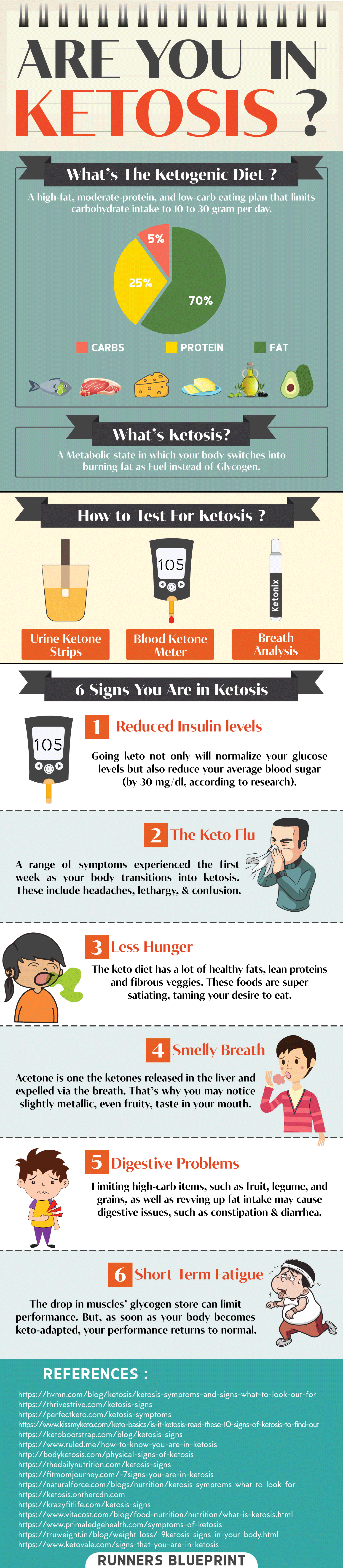
Technically, you’re in nutritional ketosis when your blood ketone levels hit about 0.5 mmol/L or higher.

But let’s be real — most runners don’t have a ketone meter in their sock drawer. And the good news? Your body gives you plenty of clues (we’ll cover them all).

Important: This isn’t the same as diabetic ketoacidosis — that’s a serious medical condition. Nutritional ketosis is safe for healthy people and happens naturally when we fast or eat super low-carb.

In fact, it’s been around since humans were chasing antelope barefoot and going days between meals.

Keto Diet: The Short Version

So, how do you get into ketosis?

Simple: eat a ton of fat, moderate protein, and almost no carbs. That usually breaks down to something like:

  • 70–80% fat
  • 15–25% protein
  • 5–10% carbs

In real-life food terms? That means saying goodbye to bread, rice, fruit juice, pasta, and pretty much anything that lives in the snack aisle. You’ll be eating things like avocado, steak, eggs, nuts, olive oil, and spinach.

For most runners, this means keeping carbs under 30 grams a day — which is roughly one banana or a slice or two of bread. Yeah, it sounds brutal at first. And trust me, your body will complain for a few days.

Here’s a list of what to eat on the keto diet.

How long does it take to get into ketosis?

In my case, I started seeing signs around day 3. Stronger symptoms kicked in after about a week. Research backs this: most people enter ketosis within 2–7 days of seriously cutting carbs.

But adapting — like, really teaching your body to perform on fat — takes longer. Most experts say it takes 4 to 6 weeks to become truly fat-adapted. Some athletes need up to 8–12 weeks to see real endurance benefits.

I’d compare it to building aerobic base. Getting into ketosis is like jogging a 5K — quick. Fat-adaptation is like marathon training — it takes time, consistency, and patience.

Why the Heck Would a Runner Go Keto?

Great question.

For me, there were three big reasons:

  • Steady Energy. I was tired of hitting the wall in long runs. I’d run out of glycogen and feel like my engine died. With keto, I knew I’d be tapping into fat — and fat stores are pretty much endless, even for lean runners.
  • Mental Clarity. I’d read about how ketosis helps some folks feel sharper, calmer, more focused. As someone juggling coaching, training, and writing, that sounded like a win.
  • Weight Loss Curiosity. Yep, I was curious. Lots of runners drop weight on keto, mostly from losing water and eating fewer calories overall. One Reddit guy said he lost 7 pounds in a month and shaved nearly a minute per mile off his pace. That’s not nothing. (Just remember: a lot of early weight loss is water, not fat.)

But I won’t sugarcoat it — the transition was rough. I had no kick. My intervals felt like I was running in sand. And socially? It was weird turning down beer and bananas after a long Sunday run.

Still, I kept at it. Tracked my runs. Watched the symptoms. Adjusted. And eventually, my body started firing on all cylinders.

How to Tell If You’re in Ketosis (Without a Blood Test)

So, you’re wondering if you’ve actually hit ketosis — without needing a lab coat or pricking your finger? I got you.

Here are the clearest signs I’ve noticed (both in myself and in the folks I’ve coached) when your body finally flips that metabolic switch.

Quick Signs You’re in Ketosis:

  • Keto Flu: Like catching the flu without the germs. Headache, crankiness, and low energy in the early days.
  • Keto Breath: Fruity, sometimes like nail polish remover. Not cute, but a solid sign.
  • Short-Term Fatigue: You’ll probably feel weak in the gym or on your run the first week or two.
  • Digestive Drama: Constipation or sudden trips to the bathroom as your gut adjusts to the fat load.
  • Appetite Drop: You might start forgetting to snack. Ketosis can naturally quiet your hunger.
  • Stable Energy & Focus: Once you’re past the misery, your brain lights up. No sugar crashes.
  • Testing Confirms It: Ketone strips or breath testers can give you the hard proof.

Each one of these is like your body tapping you on the shoulder saying, “Hey, we’re switching gears here.”

Let’s unpack the big one first…

1. The “Keto Flu” (aka Your Carb Withdrawal Hangover)

This one’s a beast. Most people — myself included — get slammed with the keto flu sometime in the first week (usually between days 2 and 7). I like to think of it as your body’s version of a sugar tantrum. You’ve been feeding it carbs your whole life, and now suddenly you’ve yanked away its favorite treat. It freaks out.

How it feels (from my own foggy nightmare):

Day three hit me like a truck. My head throbbed. I was dizzy, confused, snapping at everything, and dragging myself up the stairs like I was 90. One moment, I was trying to journal — the next, I forgot why I even opened the notebook.

Legit brain fog.

My throat felt scratchy like I was about to get sick. I even had night sweats. I wasn’t alone — a friend told me that his first keto run felt like “the hardest 10K of my life” with full-body cramps and a splitting headache. 

Headaches. Weakness. Grumpiness. Nausea. Sleep troubles. It’s all part of the package.

Why it happens:

Your body’s dropping insulin fast, which tells your kidneys to flush out water and electrolytes. Suddenly you’re low on sodium, potassium, magnesium — the trio that keeps you from feeling like a dried-up raisin.

At the same time, your brain hasn’t figured out ketones yet, so it’s running low on fuel. Hence the fog and fatigue. It’s basically a system reboot.

Here’s how to survive it:

Rehydrate Like It’s Your Job

Drink water like it’s race day, and salt your food a little extra. I kept a shaker of Himalayan salt nearby and even added a pinch to water. Broth was my go-to. Aim for:

  • Sodium: 3,000–4,000 mg/day
  • Potassium: Around 1,000 mg/day
  • Magnesium: Roughly 300 mg/day

Replenishing these helped kill my headaches and leg cramps.

2. Don’t Starve Yourself (Yet)

Now is not the time to slash calories. If you’re hungry, eat. Fat is your friend here — almond butter, cheese, eggs. Your body needs to see the new fuel to use it.

3. Ease Up on the Training

As a coach, I rarely tell people to scale back — but during keto week one, you’ll thank yourself. I swapped my runs for brisk walks and kept heart rate low. Going hard too soon will just make the flu worse. Even Healthline recommends easing off the intensity until you feel more human again.

4. Taper Off Carbs (If Needed)

If cold-turkey feels brutal, you’re not weak — you’re human. Some folks do better slowly trimming their carb intake over a couple weeks. Fewer symptoms, same end goal.

2. Bad Breath (Yep, “Keto Breath” is Real)

Let’s just call it what it is—keto breath stinks. Literally.

It’s one of those weird little side effects that shows up early when your body flips the fat-burning switch. Your breath starts smelling… off. Some folks say it’s fruity. Others say nail polish remover. My girlfriend? She said I smelled like rotting mangoes. Romantic, right?

That smell comes from acetone—one of the ketones your liver cranks out when you’re in ketosis. It’s the same stuff you’ll find in nail polish remover. Your body doesn’t really use acetone for fuel, so it just dumps it—mostly through your breath and pee.

So yeah, if your breath suddenly smells like a high school chemistry lab, congrats—you’re burning fat.

According to Healthline and research noted in the Journal of Strength & Conditioning Research, this breath change is actually used to measure ketosis in clinical settings. Some breathalyzers can even estimate your ketone levels just by sniffing that sweet, weird air you’re exhaling.

What it feels like socially:

It’s awkward. No way around it.

As a coach, I’m around people a lot—especially on runs. I remember one morning, telling a story mid-run, super animated, and my buddy kept leaning away from me. I knew right then: the keto dragon had escaped my mouth.

Waking up with a dry mouth and that metallic-sweet aftertaste became normal. Water didn’t do much. I’d brush, rinse, chomp gum—but it stuck around. It wasn’t forever, though (thank God).

Here’s what helped me manage it:

  • Double down on mouth care. I brushed after every meal. Not just twice a day—every time I ate. I also added a tongue scraper. Trust me, that thing scrapes off more gunk than you think. Sugar-free mints and gum helped too—just make sure they’re actually sugar-free or they might kick you out of ketosis.
  • Stay on top of hydration. Dry mouth makes it worse. I kept a water bottle on me all day. The more hydrated I stayed, the better my breath got. Plus, keto can make you dehydrated in general, so it’s a win-win.
  • Try natural rinses. I found a drop or two of peppermint oil in water made a solid DIY mouth rinse. Just make sure your mouthwash isn’t full of alcohol or sugar.
  • Wait it out. Honestly, the best solution? Time. As my body got better at using ketones, the smell faded. After about a month, it was barely noticeable. Or maybe we just got used to it—hard to say.

3. Short-Term Fatigue & Sluggish Performance

Let’s be real—your energy might tank during the first few weeks of keto. Especially if you’re a runner. And if you’re trying to train for a marathon on keto, be ready to slow the heck down.

This isn’t just regular tired. It’s “why do my legs feel like wet logs?” tired. That 5K that used to feel easy suddenly feels like a half marathon.

The first few weeks of switching to fat for fuel are rough for a lot of us. 

Why it happens:

Your body is learning to run on fat. That’s it.

In the beginning, you burn through your stored glycogen fast—and along with it, a ton of water. For every gram of glycogen you lose, you also lose about 3 grams of water. That’s why you drop water weight so fast.

But here’s the kicker: with no glycogen left and your fat-burning engine still in warm-up mode, your muscles are running on fumes. You lose that explosive power, especially for sprints, lifts, or anything high intensity. (Healthline confirms this, by the way.)

Also—electrolytes? Gone with the water loss. That messes with muscle function, too. Cue the cramps, sluggishness, and that heavy-leg feeling.

Here’s what worked for me:

  • Ease off and train smart. Don’t expect to hit PRs in week 2. I backed off hard intervals and just focused on easy base runs. Think Zone 2 stuff—where fat can actually fuel you. Skip races, tempo work, and time trials for now. This is your adaptation window.
  • Sleep like it’s your job. I aimed for 8–9 hours, plus naps if I needed them. Stretching and low-stress activities helped me feel more human. Stress makes the fatigue worse, so I even threw in some walking meditation to chill out.
  • Dial in your electrolytes. Sodium, potassium, magnesium—all crucial. I took magnesium before bed to help with sleep and muscle twitches, and loaded up on potassium-rich foods like avocado and spinach. In week 2, I added an electrolyte powder, and that was a game changer.
  • Eat enough. Seriously. Keto doesn’t mean you have to eat less. If anything, you need more fat and protein in the beginning. I bumped up my calories a bit with things like coconut milk, nuts, olive oil—just to make sure I wasn’t under-fueling. Starving yourself during keto adaptation is a one-way ticket to crash town.

What I’ve learned since:

Once your body adapts, the steady energy is awesome. I could knock out 10+ miles fasted with no crash. That never happened on a high-carb diet—I’d bonk hard after 6–7 miles without fuel.

But it’s not all roses. Sprinting? 5K races? I felt slower. That’s where I learned to blend strategies.

On most days, I stick to keto-style eating for endurance. But if I’ve got a race or hard interval session, I’ll throw in a bit of carb pre-workout. It’s called “targeted keto,” and it works. An energy gel just before starting usually does the trick for me.

Read more about the impact of keto on runners here.

Stable Energy Levels and Mental Clarity 

Here’s the part of keto that doesn’t get hyped enough: the clean, stable energy and sharper focus you get once you’re over the initial keto flu. It’s not just about weight loss. Once you’re fully adapted and running on fat, your energy feels level all day.

You don’t crash, you don’t get hangry, and you don’t need a caffeine IV to survive the afternoon.

In fact, I’m a big coffee addict but I’d rarely finish my Latte when I’m on keto – as if my body saying “ah we don’t need that”.

The old 11 a.m. and 3 p.m. snack attacks? Gone. My brain was firing clean, and it felt like I was cruising all day.

This isn’t just personal hype either. Research published in Frontiers in Psychology found that ketosis may help fuel the brain more steadily, reducing energy dips and mental fog compared to a high-carb diet. Think of it like switching from a rollercoaster to a bullet train.

How it feels for running:

As a runner, the big win here is no more hitting the wall. When I was training for half marathons while on keto, I could go 10–15 miles without a gel or sports drink. No bonk, just steady energy.

One ultra-runner on Reddit mentioned doing 15-mile fasted runs needing only water and electrolytes. I’m not an ultra guy, but I can back that up for anything under 2 hours. It builds a kind of endurance confidence. You stop worrying about fuel and start trusting your body to just go.

Why it happens:

Once you’re in solid ketosis, blood sugar stays low and stable. You’re not riding that sugar spike and crash cycle anymore. Ketones, the byproduct of fat metabolism, are excellent brain fuel. Some studies even call them a “superfuel” for the brain. They’re being researched for everything from epilepsy to Alzheimer’s.

But for everyday life, they just make you feel more focused and stable.

Mood often gets better, too. For me, I became more chill and patient (my wife noticed it before I did). Once the early keto fog lifted, I found myself sharper, more upbeat, and far less reactive.

How to keep it going:

  • Stick with it. Don’t cheat yourself out of this clarity by yo-yoing in and out of ketosis. Save carbs for when they matter, like pre-race or big workouts.
  • Stay hydrated + salted. Sometimes you think you’re tired, but you just need salt. I always keep water with a pinch of sea salt handy. If I get sluggish, it’s usually hydration, not hunger.
  • Caffeine can be a rocket booster. I love a cup of coffee in keto mode. No crashes, just smooth focus. Bulletproof coffee is still in my rotation on big writing or coaching days.
  • Use carbs smart. If I’ve got a hard interval session, I’ll have a banana 30 minutes before. Doesn’t kick me out of ketosis long-term but gives that extra kick when needed.

Digestive Changes 

Alright, let’s talk gut. Keto can mess with your digestion at first. It’s common. Some folks get backed up. Others are sprinting to the toilet. It’s just your gut adjusting to a radical shift in how you eat.

When I started keto, I had a rough Week 2. My usual morning runner’s ritual? Gone. I felt bloated, sluggish, and kind of off. It wasn’t fun. But I knew it was part of the transition.

One of my buddies had the opposite problem – high-fat meals would send him running to the bathroom within 30 minutes. The gut needs time to rewire itself.

Why it happens:

  • Fiber drop: You ditch bread, grains, beans – and with them goes a lot of fiber. If you don’t replace that with low-carb veggies or chia seeds, things slow down.
  • Dehydration: Keto flushes water out fast. Less water = slower stool movement.
  • Fat overload: Your body isn’t used to high fat meals, so things can either get sluggish or move too fast.
  • Gut bacteria shift: Your gut bugs change based on what you eat. Fewer carbs = new bacterial balance. That shift takes time.

How to handle it:

  • Get your fiber in. Load up on leafy greens, avocados, chia seeds, flax, zucchini, etc. I started adding ground flax to smoothies and eating big salads daily.
  • Hydrate like a boss. Half your body weight in ounces of water – minimum. More if you live somewhere hot like Bali or sweat a lot (me = both).
  • Watch dairy and fake sweets. Some folks get clogged from cheese. Others get the runs from sugar alcohols in keto snacks. For me, packaged keto treats were a gut bomb, so I ditched them early.
  • Add magnesium. I take magnesium glycinate nightly. It helps with sleep and keeps me regular.

After a few weeks, things leveled out. I wasn’t as frequent as I was on a grain-heavy diet, but I found my rhythm. Don’t freak out if things change – your body is learning a new routine.

And if your gut feels fine? That’s great too. Everyone reacts differently. The key is to listen and adjust.

6. Reduced Appetite  

Once ketosis kicks in, your hunger dial shifts. A lot of people report that their cravings ease up, and that constant urge to snack? It fades.

This isn’t magic—it’s one of the keto diet’s biggest perks when it comes to fat loss. You’re still eating tasty meals, but the random “gotta raid the pantry” moments start to disappear.

I’ll be honest—I didn’t buy it at first. I thought, “No way I’ll stop being hungry all the time.” Then I lived it. And yeah, I had to eat my words… and fewer snacks.

How it feels (my take):

Before going keto, I was the guy who was always hungry. I’d eat a full breakfast, go for a run, and by 10 a.m., I was already thinking about my next snack.

On long-run days? Total fridge bandit. I was shoveling down food just to stay ahead of the hunger beast.

But something shifted a couple weeks into keto. I started skipping lunch by accident—not because I was trying to fast, but because I legit forgot to eat.

I’d have a big breakfast—eggs, cheese, avocado—and then suddenly it’d be 3 p.m. with zero cravings, no hanger, no brain fog. That was wild for me.

Even during marathon training, I could stick to two or three solid meals and feel fine. Smaller portions naturally felt “enough.” That steady energy—no crashes—was what hooked me.

Let me explain why does this happen so you won’t freak out:

  • Hormones shift gears. Research shows keto lowers ghrelin, the hormone that screams “FEED ME.” Normally, when you diet or lose weight, ghrelin shoots up and makes you ravenous. But in ketosis? Ghrelin chills out. At the same time, hormones like CCK (the “you’re full” signal) go up. Even leptin sensitivity may improve. One study even tied high ketone levels (specifically BHB) to lower hunger and higher satiety peptides [MDPI].
  • Blood sugar stays steady. Without the carb rollercoaster, you avoid those big crashes that make you want to devour a whole pizza. Think about it—how many times have you eaten a pile of pancakes only to feel starving again in two hours?
  • More protein, more fullness. Keto isn’t high protein, but it’s not low either. Most folks end up eating enough meat, eggs, and dairy to benefit from protein’s filling power. It slows digestion and signals your brain that you’re good. Honestly, bacon and eggs at 8 a.m. kept me fuller than any cereal or granola bar ever did.
  • You stop fighting your food. When you stop counting every calorie and just eat to satisfaction, your body starts playing along. With fat and protein doing their job, most people fall into a mild calorie deficit without even trying. I didn’t obsess over numbers. I just ate real meals, and over time, the fat came off naturally.

Here how to manage it:

  • Listen to your body, but don’t under-eat. If you’re never hungry, great. But don’t push your intake so low that you’re undernourished—especially if you’re training. I had days where I only ate twice, but I made sure those two meals were loaded with veggies, fats, and protein. Just skipping food isn’t the goal—fueling smart is.
  • Match food to your training. I noticed that after big workouts—especially long runs—my hunger kicked up a notch. So I planned for that. If I wasn’t super hungry right after, I still made sure to get in something small—like a protein shake or cheese and nuts—within an hour. That helped recovery. Then later, when hunger snuck back in, I was ready for a real meal.
  • Use the freedom to ditch the junk. One of my favorite things about reduced appetite on keto? I wasn’t pulled toward crap food. I stopped needing nightly snacks and didn’t miss them. That made space for better choices—whole foods, different protein sources, and way more veggies. Just don’t fall into the trap of eating the same thing daily. Mix it up and keep those nutrients coming.
  • Fasting, if it fits. A lot of keto folks slide into intermittent fasting without even trying. I sometimes did a 16:8 schedule (skipping breakfast), and it felt natural. But don’t force it—especially if you’re training hard. I often run fasted in the mornings, but I always eat a solid brunch afterward. Find what feels right. Keto gives you flexibility—that’s a tool, not a rule.

7. Testing for Ketones: When You Want Cold, Hard Proof

Let’s be real—sometimes, you want more than just a “feeling” to know you’re in ketosis. You want proof. That’s where testing comes in.

You’ve got three main ways to check:

  • Blood meters: Measures beta-hydroxybutyrate (BHB). This is the big one—your cells actually use it for fuel.
  • Breath analyzers: Detects acetone—yep, the same stuff behind keto breath.
  • Urine strips: Looks for acetoacetate, the ketones your body dumps early on when it hasn’t figured out how to use them well yet.

If you’re in ketosis, these numbers will spike compared to a regular carb-heavy state. For example, blood BHB levels from 0.5 to 3.0 mmol/L mean you’re in nutritional ketosis, according to the Journal of Strength & Conditioning Research and other solid sources.

How It Feels

You won’t “feel” the test itself (unless we’re talking a finger prick). The real hit is mental.

The first time I used a blood meter was about a week into my third keto attempt.  I poked my finger, dropped the blood on the strip, and boom—1.2 mmol/L. I was pumped. It was like seeing a gold star on a test you didn’t study for. I even did a happy little dance in my kitchen.

Urine strips were my entry point. I saw dark purple on day three and thought, “Okay, this is working.” But here’s the catch: after a few weeks, those strips didn’t show much—even though I felt more dialed in than ever.

That’s because your body gets better at using ketones, so less spills out in pee. If you’re sticking with keto long-term, blood testing is your best bet for accuracy.

Why It’s Worth Doing

Testing ketones isn’t mandatory, but it helps in a few solid ways:

  • Reassurance: Not sure if that brain fog is from keto or just a bad night’s sleep? A quick test can clear things up.
  • Learn Your Threshold: I found out I drop out of ketosis around 45g of carbs, but I’ve coached runners who stay in even at 60g. Everyone’s different.
  • Understand What Affects You: Tough workouts bumped my ketones up. Stress and poor sleep? They pulled them down.
  • Avoid Slip-Ups: When you know you’re testing tomorrow, that late-night cookie feels less worth it.
  • If You’re Going Deep: For medical uses (like epilepsy), numbers matter more. But for runners or fat-loss folks, any ketosis is good enough.

Pro tip? Don’t obsess. I used to chase high numbers (like 3–4 mmol) thinking more was better—but that just led me to overeat fat and cut back protein. Bad call. Now I shoot for 1.0–1.5 mmol and feel amazing.


The Tools & How to Use Them

1. Blood Meters

These are like glucose meters. Finger prick, drop of blood, done. Brands like Keto-Mojo, Precision Xtra, and Nova Max are legit. You’ll get a clear mmol/L reading. Most folks in ketosis fall between 0.5 and 3.0. I usually landed around 1.2 to 1.5.

Downsides? Strips cost $1–2 each, and pricking your finger isn’t fun. I tested 2–3 times a week, tops. If you’re a data geek, you might go daily—fasted mornings or post-meal checks can show patterns.

2. Breath Meters

These pick up acetone, another ketone byproduct. You just breathe into the device—some show a color (like Ketonix), others give numbers (like Biosense). They’re decent, not perfect.

Studies back them up, but your breathing style affects the results.

I used one early on. Watching it shift from blue to red as I adapted was a cool motivator. Bonus: no recurring costs after buying the device.

3. Urine Strips

The cheapest, easiest intro tool. Pee on the strip, check the color. The darker it goes, the more ketones are in your system.

During week one, they’re super helpful. I remember hitting pink on day 3 and feeling like I won the keto lottery.

But they fade fast. After a few weeks, the readings drop even if you’re still in ketosis. That’s your body getting better at using ketones. Hydration also messes with the results.

Still, for beginners, they’re a great “you’re on the right track” nudge.


Do You Need to Test?

Nope.

If you’re feeling the signs—less hunger, clear focus, steady energy, maybe some keto breath—you’re probably in ketosis. Testing is optional. But if you’re a numbers person or tweaking things for performance, it’s a helpful tool.

Here’s how I usually coach it:

  • Short-term keto? Grab some urine strips and call it a day.
  • Going long-term or doing cyclical/targeted keto? Consider a blood meter.
  • Just want peace of mind? Spot-checking once or twice a week works fine.

Just don’t let the numbers boss you around. This isn’t school—you’re not getting graded. Ketosis is a tool, not a scoreboard.


Final Thoughts

When you see those ketones show up on the meter, know this: your body is running on a different kind of fuel now.

That’s powerful. You’re burning fat. You’ve changed gears.

I still get a little spark of excitement seeing a 1.2 or 1.5 reading.

But don’t chase the number just to feel successful. The real win is feeling stronger, clearer, and more in control. That’s the stuff that sticks.


Clean Keto Food List for Beginners

keto food list

So you’ve decided to try keto?

Good call.

I’m a running coach, and I’ve gone all-in on the keto lifestyle myself. It changed the game for my body, my energy, and even how I coach.

But I won’t lie—it’s not always easy, especially at first.

This guide will walk you through a real-world clean keto food list to help you stay fired up and consistent.

Because here’s the deal: if your meals get boring or feel like punishment, you’ll quit. I’ve seen it happen. Heck, I almost did it myself.

Let me back up.

I’m David Dack, and like many runners, I packed on some weight one off-season a few years ago. Decided to give keto a go, and within a few weeks, I dropped the extra pounds and felt sharper than I had in years.

Living in Bali, where rice and tropical fruit are everywhere, I had to get creative with local ingredients.

Think coconuts, avocados, grilled fish.

It worked.

But figuring out what to eat day in and day out? That was the tough part.

When I first started, meal boredom hit fast. The cravings, the same-old-same-old, the temptation to bail… I know the struggle.

Research even shows that 15% of people ditch diets because the food gets boring.

I get it. I’ve been there. And I’ve helped clients push through it too.

Let’s get to it.

Keto Diet 101: What It Is and Why I Stick With Clean Keto

The ketogenic diet is simple in theory: low carb, high fat.

That combo shifts your metabolism into ketosis, where your body uses fat for energy instead of sugar.

The result?

You burn fat more efficiently, feel fewer energy crashes, and (for many of us) even think clearer.

To stay in ketosis, you usually need to keep carbs under 20–30 grams a day.

That’s tight.

One apple can blow your whole day. When I started tracking carbs, I realized even “healthy” foods like bananas or too many almonds were pushing me over.

Everyone’s carb limit is a little different.

Some people can stay in ketosis at 30–40 grams, but I have to stay under 20 grams or I’m out.

But hitting ketosis isn’t just about macros.

The quality of your food matters. That’s where clean keto comes in.

  • Clean keto means eating whole foods: real meat, fresh veggies, good fats. Think grass-fed beef, wild fish, eggs, olive oil, and greens.
  • Dirty keto? That’s low-carb junk. Bacon and cheese all day, with zero fiber and a mountain of sodium. Sure, you’ll hit ketosis—but long-term, that stuff messes with your energy, digestion, and overall health.

Research backs this up. A clean keto diet gives you more vitamins and minerals and supports better fat loss and wellness outcomes than a junk-heavy version.

I’ve lived it.

The more I cut processed “keto snacks,” the better I felt.

Cravings dropped.

My runs got stronger.

And my mid-afternoon slumps? Gone.

Others have seen this too. A fiend of mine ditched dirty keto bars for real food and not only lost more weight but also felt better, had fewer stomach issues, and even said his seasonal allergies eased up. That lines up with what I’ve seen coaching runners and testing it out myself.

Don’t get me wrong—dirty keto might get you into ketosis.

But if you want to feel good, train hard, and stay in this for the long haul, clean keto is the better play.

And no, clean keto doesn’t mean bland food. We’re not talking boiled chicken and lettuce. You can read about dirty keto vs clean keto here.

Think: bunless burgers with avocado and sugar-free ketchup, rich casseroles made with coconut cream, and spicy keto egg dishes.

Here’s how to keep it simple:

Quick & Dirty Clean Keto Rules (The Way I Coach It):

  • Keep carbs super low (~20g net carbs/day). Load up on leafy greens and go easy on berries.
  • Fat is your fuel (around 70% of your calories). Go big on olive oil, coconut oil, grass-fed butter, ghee, avocado, nuts.
  • Protein is moderate (~20%). Get it from clean meats, fish, eggs, cheese.
  • Whole foods only. If it has a barcode and 12 ingredients, skip it.
  • Stay hydrated. Keto flushes out water and minerals. Drink lots, and get your sodium, potassium, and magnesium in. (Broth or electrolyte tablets are gold. I swear by them, especially in Bali heat.)
  • Spice it up. Use herbs, garlic, chili, turmeric, rosemary—whatever it takes to keep things tasty. There’s no excuse for bland food.

Clean Keto Macros Made Simple (And What They Look Like on Your Plate)

Let’s break down the math without turning this into a nutrition lecture.

Keto is all about macros—your macronutrient ratios.

But here’s the truth: obsessing over every gram is a fast track to burnout.

You don’t need a spreadsheet. You just need to know your ballpark.

Here’s the typical clean keto ratio:

  • Fat: ~70% of your daily calories
  • Protein: ~20–25%
  • Carbs: ~5–10% (usually <20–30g net per day)

Think of it like this:

What 2,000 Calories Looks Like on Clean Keto:

  • Fat: ~155g
  • Protein: ~100g
  • Carbs: ~25g net

If you’re active, a runner, or just hate being hungry, you’ll probably want to lean toward the higher end of protein.

But still, fat is your fuel. That’s the biggest shift.

When I first started, I made the rookie mistake of under-eating fat. I was eating clean, tracking carbs… but I felt sluggish.

Why?

Because I wasn’t giving my body the fuel it needed to run on fat. Once I started adding more oil to my veggies, tossing avocado into everything, and not fearing the yolks—I finally felt that steady energy people rave about.

And no, this doesn’t mean you need to track every bite.

But for the first few weeks, I recommend using an app like Cronometer or Carb Manager just to get a feel for your real intake.

Most beginners overdo protein and sneak in too many hidden carbs. The app helps you spot where you’re off.

Clean Keto Food List for Beginners 

Let’s get one thing straight—clean keto isn’t about fancy supplements or overpriced shakes.

It’s about eating real food.

Simple, whole, satisfying meals that help you cut carbs, torch fat, and actually feel good doing it.

When possible, go for the high-quality stuff—organic, grass-fed, wild-caught—but don’t let that become an excuse. If all you can afford is basic eggs and butter from the corner shop, that still works.

Clean keto is about better choices, not perfect ones.

First: What to Avoid on Keto (So You Don’t Sabotage Yourself)

Before we dive into what to pile on your plate, let’s tackle the traps that’ll knock you out of ketosis or just make you feel like crap. These are the foods I warn every beginner about—and yep, I’ve made some of these mistakes too.

High-Carb, High-Junk Offenders:

  • Sugar bombs: Candy, cookies, soda, ice cream, you name it. These are carb grenades. Even “natural” sweeteners like honey or agave? Still sugar. Still a problem. Your body doesn’t care if it came from bees or a corn syrup factory—it all spikes insulin.
  • Grains & starches: Bread, pasta, rice, cereal, oatmeal… gone. Even so-called “healthy” grains like quinoa and oats are too high-carb for keto. Same for starchy veggies—potatoes, corn, peas, sweet potatoes. Hate to break it to you, but peanuts too (they’re actually legumes).
  • Sugary fruit: Bananas, mangos, pineapple, apples—these are sugar bombs in disguise. Stick to small portions of berries if you want fruit. Juice and dried fruit? Basically candy.
  • Packaged junk: Crackers, chips, “low-carb” protein bars… Even if it says “keto” on the label, that doesn’t mean it’s clean. I’ve seen keto snacks stall progress because they sneak in hidden carbs or nasty additives. One guy on Reddit called out how some brands “fudge the fiber” to trick the net carb math. Don’t fall for it.
  • Crap fats: Margarine, shortening, and junky vegetable oils like soybean or canola? These are inflammatory and wreck your gut. Avoid them. And those greasy bacon-wrapped sausages filled with fillers and nitrates? Save ‘em for a cheat meal—don’t build your diet around them.
  • Booze bombs: Most beer, sweet cocktails, and sugary mixers are off the list. A glass of dry red wine or a shot of vodka with soda water is okay now and then—but alcohol can slow fat burning and destroy your willpower. If you’re serious about results, skip the drinks—especially in the first few weeks.

Okay, Now The Good Stuff – What You Can Eat

Here’s the heart of clean keto: fat is fuel. But not just any fat. We’re not guzzling mystery oil from deep fryers. We’re going for real, satisfying, body-loving fats. These are the ones I keep stocked at home—and recommend to every runner trying keto.

Healthy Fats and Oils (Your Main Fuel Source)

Fat isn’t the enemy. It’s your teammate—if you choose the right ones.

  • Extra Virgin Olive Oil: This one’s non-negotiable. Great for salads, low-heat cooking, and even drizzling over eggs or grilled meat. I use it every day, no exaggeration.
  • Avocado Oil: Clean taste, high smoke point—awesome for cooking. I also mix it into marinades and homemade mayo.
  • Coconut Oil: This is a keto staple. Packed with MCTs that your body quickly turns into ketones. I toss a spoonful in my coffee some mornings—turns it into a frothy, energizing fat-bomb latte that holds me over till lunch.
  • MCT Oil: Basically a concentrated shot of the good stuff from coconut. It gives quick energy and supports ketosis. But a word of advice—start small. Go overboard and you’ll regret it. Trust me.
  • Grass-fed Butter & Ghee: Butter is back, baby. Especially when it comes from grass-fed cows—it’s richer in omega-3s and vitamin K2. Ghee is butter’s cooler cousin—more stable for cooking, with a nutty flavor. I use it for eggs almost every morning.
  • Cocoa Butter: Yep, the same fat used in making chocolate. It’s got almost no carbs and smells like dessert. I melt it into keto coffee sometimes—tastes like a mocha dream.
  • Animal Fats (Lard, Tallow, Duck Fat): These get a bad rap, but they’re legit—if they come from clean sources. I was weirded out by lard at first, but roasting veggies in pastured pork fat? Total game changer.
  • Palm Oils (Sustainably Sourced): Red palm oil has a unique flavor and is rich in vitamins. Use it here and there, but it’s not a go-to for me.
  • Nut & Seed Oils (for Flavor, Not Frying): Sesame oil, macadamia, walnut oil—these are great for cold dishes. I splash toasted sesame oil into keto fried rice made with cauliflower, and it makes it taste like takeout.

But Why These Fats?

They’re mostly full of saturated and monounsaturated fats—clean-burning, steady-energy fats. None of that rancid, industrial junk.

For example:

But honestly? You don’t need a lab coat to know that real fat makes food taste better and keeps you satisfied longer.

Just remember—fat’s still dense in calories.

You don’t need to chug it. Eat till you’re full, not stuffed.

Clean Keto Proteins (Not Just a Carnivore Buffet)

Protein on keto is like your foundation.

You need enough to repair muscle, stay full, and fuel workouts—but too much and your body can convert some of it into glucose, which can kick you out of ketosis. It’s a balancing act.

Here’s what I go for and recommend to clients:

Best Clean Keto Protein Sources:

  • Eggs (pasture-raised if possible): Nature’s multivitamin. I eat 2–4 most mornings.
  • Grass-Fed Beef: Burgers, steaks, slow-cooked brisket—rich in nutrients and healthy fats.
  • Wild-Caught Salmon: Loaded with omega-3s. Grilled, pan-fried, or even canned works.
  • Chicken Thighs (Skin-On): More fat = more flavor = more keto win.
  • Pork Shoulder, Ribs, and Bacon (uncured, nitrate-free): Tasty, fatty, but don’t build every meal around bacon. It’s a sidekick, not the main character.
  • Lamb: Great for variety. Rich, fatty, and full of flavor.
  • Turkey (Dark Meat Preferred): Leaner, but still solid—especially for soups or meatballs.
  • Sardines & Mackerel: Cheap, clean, and surprisingly filling. I keep cans in my trail bag.
  • Organ Meats (Liver, Heart): Hardcore, but nutrient-packed. Worth trying at least once.
  • Whey Protein Isolate (Unsweetened): Good for a post-run shake. Watch the ingredients—no sketchy fillers or sugar alcohols.

💡 Pro tip:

Don’t fear fat in your protein cuts. Chicken breast is fine now and then, but it’s lean and can leave you hungry. You want that marbling, that skin, that richness. That’s keto fuel right there.

The Green Stuff: Low-Carb Veggies That Actually Work on Keto

Let’s be real—some folks treat keto like a meat-and-cheese-only diet.

That’s how you end up constipated, inflamed, and quitting by week two.

Fiber matters.

Micronutrients matter.

And that’s where low-carb veggies come in.

I tell every runner I coach on keto: Don’t skip your greens. You need them for digestion, hydration, recovery, and satiety.

Here’s the rule of thumb:

If it grows above ground and it’s green, it’s probably fair game.

If it’s starchy, sweet, or grows underground—proceed with caution.

My Go-To Low-Carb Veggies:

  • Spinach & Kale – Loaded with magnesium and iron. Great sautéed in butter or tossed in olive oil.
  • Arugula – Peppery and fresh. I throw it on everything—eggs, grilled meat, burgers.
  • Cauliflower – The MVP. Rice it, mash it, roast it. Keto pizza crust? Cauli saves the day.
  • Zucchini – Spiral it into noodles or slice it for stir-fry.
  • Cabbage – Super filling and dirt cheap. I love it with ghee and garlic.
  • Broccoli – Roasted in avocado oil = addicting. Pairs well with fatty cuts of beef.
  • Mushrooms – Sauté with thyme and butter. Boosts umami, low in carbs.
  • Asparagus – Fancy enough for a date night, easy enough for weeknights.
  • Cucumbers & Celery – Perfect for crunch. Great with guac or almond butter.
  • Bell Peppers (in moderation) – A little sweeter, but still manageable if you track.

Why these matter:

These veggies give you fiber to stay regular, antioxidants to fight inflammation, and potassium to avoid keto headaches and cramps.

💡 Personal tip:

When I first started keto, I got lazy with veggies. Big mistake.

Once I brought them back in—cooked in oil or paired with fatty meats—I felt fuller, recovered faster, and honestly, just felt human again.

Clean Keto Snacks (That Won’t Derail Your Progress)

Here’s the deal with snacking: it’s not mandatory on keto, but life happens.

Travel days, post-run munchies, long gaps between meals—it’s better to be prepared than end up raiding the pastry shelf at Circle K.

But the snack game’s tricky.

Most “keto snacks” on shelves are either packed with junk fillers or sweetened with mystery zero-carb chemicals that mess with your gut and stall progress.

So here’s what I actually keep on hand—and recommend to clients trying to stay clean, fueled, and sane.

Real Snacks That Pass the Clean Keto Test:

  • Boiled Eggs – The OG. Travel-friendly, filling, no BS.
  • Beef Jerky – Look for low-sugar, clean-ingredient versions. Some brands sneak in carbs—read the label.
  • Olives – Salty, fatty, and portable. Great for killing cravings.
  • Macadamia Nuts – The best keto nut: high fat, low carb. Just don’t pound the whole bag.
  • Coconut Chips (Unsweetened) – Crunchy and satisfying. I mix with almonds for a DIY trail mix.
  • Seaweed Snacks – Salty, crispy, and zero prep. Good iodine source too.
  • Tuna or Sardines (in olive oil) – Keep a can at work or in your gym bag. Add mustard or hot sauce—trust me.
  • Mini Guac Cups or Avocado Halves – Eat ‘em with celery or a spoon. Full stop.
  • Keto Fat Bombs (Homemade) – Mix coconut oil, cocoa powder, nut butter, and sea salt. Freeze. Perfect pick-me-up.

What I avoid:

Protein bars labeled “keto” but full of sugar alcohols and soy isolate. They spike my hunger instead of killing it. If it tastes like candy, treat it like candy.

💡 Runner hack:

On long training days, I’ll grab jerky, macadamias, and seaweed as my recovery snack—fat + salt + protein.

Way better than a sugary recovery drink.