The Complete Guide To Heart Rate Variability

Heart rate variability

Serious about monitoring your performance, recovery, and health? Then heart rate variability may hold the answers you seek as it’s considered by many health experts to be one of the best objective metrics of physical fitness and health.

But what is heart rate variability all about? What’s the science behind it? And most importantly, how to improve it?

That’s where today’s post comes in handy.

In today’s article, I’ll delve into the concept of heart rate variability, explain the science behind it, and share with you a few ways to improve it.

Sounds great?

Let’s get started.

What Is Heart Rate Variability?

It might be a surprise, but your heart doesn’t beat as regularly as a metronome—even if you’re super healthy. Instead, it changes its rhythm with each beat. This continuous disparity between heartbeats is known as heart rate variability; HRV.

Also referred to as an R-R interval, heart rate variability measures the difference in time between each heartbeat and is measured in milliseconds.

More specifically, HRV is a variation between the peak of the R wave in the QRS complex, which is the mix of three graphical deflections of the heartbeat as measured on an electrocardiogram (EKG). Check the picture.

This variation is regulated by a primal part of your nervous system known as the autonomic nervous system (ANS). More on this later.

Some situations may cause a high HRV (increase in variation), whereas others result in a low HRV (intervals between beats remaining more constant).

For example, the variation between heartbeat is usually longer on the exhale and shorter on the inhale.

For more on the science and impact of heart rate variability, check the following:

Factors That Impact Heart Rate Variability

These include:

  • Age
  • Genetics
  • Gender
  • Ethnicity
  • Bodyweight
  • Fitness level
  • Training load and intensity
  • Injury history
  • Hormones
  • metabolism
  • Sleep patterns
  • Hydration
  • Chronic health conditions
  • Emotional stress
  • diet
  • Some medications

What’s The Difference Between Heart Rate And HRV

Heart rate is the standard measurement of heartbeats per minute that varies by person and activity level. The metric is measured when you’re in a resting position, preferably first thing in the morning and preferably during a non-overtrained period. Although having many applications, your resting heart rate isn’t considered a reliable indicator of overall health.

As I’ve explained, HRV measures the time intervals between two heartbeats and is expressed in milliseconds, ms.

Even if your heart might be beating 60 times per minute, it does not mean that your heart beats ONCE every second, nor there’s a gap of exactly one second between every two heartbeats.

Within the same minute, you might have one set of heartbeats at an interval of 0.9 seconds between the onset of heartbeats, whereas the next two may be at an interval of 1.1 seconds.

Additional Resource – Here’s your guide to the Maffetone Method.

The Importance of HRV

Heart rate variability is a useful and non-invasive way to identify many imbalances and problems.

While personal HRV measurements can vary depending on a host of elements, higher average reading over time is often considered “more fit” than a lower average.

Let me explain

High HRV

A high measurement means that the difference between heartbeats is more drastic and is a good indicator of reliable performance and improved recovery from stress.

Having an elevated HRV means that your body is reacting to both sets of inputs from the parasympathetic and sympathetic.

It’s a sign that your nervous system is well balanced and that your body is properly adapting to stressors and performing at its best.

Low HRV

Having a low HRV may mean that one branch is sending a strong signal to your heart than the other, making it the dominant one (often the sympathetic branches). For instance, if you’re in a fight-or-flight mode, the variation between your heartbeats is usually low.

Sometimes this isn’t such a bad thing. For example, if you’re lifting weights hard or doing interval sprints, you’ll want your body to focus on assigning resources to the working muscles instead of digesting food.

Some research has even associated a low HRV with a higher risk of cardiovascular disease and death.

What’s more?

Research has also shown that regular aerobic exercise improves heart rate variability over time.

Additional resource – Strava for runners

HRV & The Nervous System Explained

As I alluded to earlier, the autonomic nervous system regulates your heart rate variability.

Although HRV is a function of your heart rate, it, in reality, originates from your nervous system.

Our nervous system is divided into two main systems: the central nervous system composed of the brain and spinal cord, and the autonomic (or peripheral) nervous system, which consists of nerves that diverge throughout our body.

The autonomic nervous system controls the involuntary facets of human physiology and is further broken down into two primary parts: the sympathetic and parasympathetic, also known as the relaxation response, and the fight-or-flight mechanism.

The sympathetic nervous system (the deactivating) reacts to stimulants like exercises and stress and boosts our heart rate and blood pressure. It’s in charge of controlling your body’s fight or flight response as it reacts to internal or external stressors.

The parasympathetic nervous system (activating) regulates input and internal organ functions like hair growth, digestion, etc.

The system is responsible for the “rest and digest” response that calms your body, and it’s linked with recovery.

Your heart rate variability results from these two opposing branches simultaneously sending messages to your heart. Think of it as the balance between your sympathetic and parasympathetic branches.

Additional resource – Heart murmurs in runners

Heart rate variability

Why Heart Rate Variability Is Important For Runners

HRV is important for runners because it’s a good indicator of training load and recovery. As I’ve already explained, this metric is one of the most reliable ways to objectively measure training readiness at any given time.

Heart rate variability is a useful tool for keeping track of your autonomic nervous system changes. It’s, after all, an objective method of assessing your stress status.

Overall, the higher your HRV, the better you’re at recovering from training and more receptive you’ll be for additional training stress.

On the other hand,  when your HRV is lower than usual, it might indicate a chronic and/elevated state of stress, whether it’s physical or emotional. Be wary.

Once you determine your baseline, you can use this metric to personalize both effort and pace during your runs. High HRV between sessions is a sign of good recovery and low stress on your body.

What is a Good or Bad HRV?

I hate to break it to you, but there are no such thing as good or bad HRV ranges. This metric depends on various elements, which makes it a personal metric that’s tricky to compare from person to person.

Everyone has their unique HRV, so it cannot be measured and judged against a range, a chart, or averages.

What’s more?

Not only does HRT fluctuate from one person to another, but it also changes from day to day and from season to season. Your gender, age, lifestyle, and circadian rhythm can impact your HRV.

Overall, older people tend to have lower HRV than younger folks, and men usually have slightly higher HRV than women.

Elite athletic typically have higher HRV than the rest of us. However, strength-based athletes tend to have lower HRV than endurance athletes within this subcategory.

For these reasons, and some more, avoid comparing your scores to someone else, even if they’re of similar fitness level, age, and gender.

What you should do instead is to keep track of the data from your own HRV trends to serve as a baseline metric for any future interpretations.

How To Measure Heart Rate Variability

You can track HRV in many ways. These include:

EKG

By far, EKG is the golden standard for HRV testing. This test is performed in a medical setting and is the most accurate measure of heart rate variability.

You’ll have to wear special wires attached to your chest that monitors your heart rate variability during the test.

Heart Rate Monitors

Looking for a reliable and hassle-free, way to read your HRV? Then this is the next best choice for you.

The cheapest and easiest way to measure your HRV. You simply buy a heart rate monitor and download a free app.

Although the precision of this tool is still inconclusive, the technology has significantly improved over the past few years.  Remember that heart rate monitors are more reliable than wrist or finger devices.

Apps and Watches

The least accurate way to measure your HRV is through watches and apps.

Different companies have launched a heart rate watch system and app that can help you measure your HRV. However, the accuracy of these tools is still under scrutiny. This makes them less reliable than an electrocardiogram or heart rate monitor.

Additional Resource – Your Guide To Running Heart Rate Zones

How To Improve Your Heart Rate Variability

There are many steps you can take if your current HRT is low.

Some measures are lifestyle changes such as stress management, regular exercise, healthy eating, and proper sleep. Improving overall health and heart rate variability go hand in hand.

Let me explain a few.

Exercise regularly

Building exercise habit is one of the best ways to improve your heart rate variability. However, remember that training decreases HRV in the short term, so remember to preauthorize rest and recovery.

Train Smart

Do not push your body more than it can handle. If you’re chronically overtrained, your body won’t have the time nor the opportunity to recover. That’s bad.

Instead, schedule recovery days and weeks into your training plan. Here’s your full guide to running recovery.

Stay well hydrated

Proper hydration improves circulation and makes it easier for blood flow to deliver oxygen and nutrients to your body. This can have a big positive impact on your performance, fitness, and overall health.

Your body is roughly 60-70 percent water. Therefore, water plays a key role in performance and health. Shoot for at least two liters of water per day.

Water needs vary from one person to the other, but as a guideline, shoot for at least one ounce of water per pound of body weight. Drink more on heavy training days and/or summer days.

Mind Your Diet

Bad food choices hurt HRV, as does drinking too much alcohol. It should come as no surprise, but your body functions better when you provide it with the right nutrients. W

Sleep Well

Sleep is, of course, another piece of the puzzle. Just like hydration, sleep needs tend to vary, but most experts recommend shooting for at least seven to eight hours.

Quality also matters, so try to sleep in a dark and quiet room, going to bed and waking up at similar times throughout the week, even the weekend.

Be Consistent

Improving your health is a life-long endeavor. It’s not just something you do one thing, then you forget about it.

The more consistent your train, eat healthy, etc., the healthier habits you’ll form over the long haul.

This, as you can already tell, will make it easier for you to stick to a healthy lifestyle for life. The rest is just details.

Heart Rate Variability – The Conclusion

There you have it. If you’re curious about implications of heart rate variability for runners, then today’s post should set you off on the right path. The rest is just details.

Please feel free to leave your comments and questions in the section below.

Thank you for stopping by.

David D

14 Proven Science-Backed hacks To Lose Belly Fat

Are you dreaming of shedding those extra pounds before summer hits, or perhaps just aiming for a healthier you?

Let’s talk about the age-old struggle we all know too well: losing body fat. You know, that mission that gets us hitting the gym, pounding the pavement, or lifting weights like there’s no tomorrow.

Now, let’s be honest: tackling body fat can feel like trying to solve a complex puzzle.

But fear not! It doesn’t have to be rocket science. Think of it as a numbers game: burning more calories than you take in.

In this article, we’re about to dive into some exciting, science-backed strategies to help you bid farewell to body fat in a way that’s not only effective but also sustainable.

1. Try Intermittent Fasting

Consider giving intermittent fasting a try, as it’s a diet approach that has shown promise in reducing body fat. This eating pattern involves cycling between regular short-term fasts and specific eating windows, offering a unique way to manage your weight.

Numerous studies have highlighted the effectiveness of intermittent fasting for weight loss and fat reduction. For instance, one study conducted over 24 weeks found that intermittent fasting led to significant weight loss in overweight women.

Another intriguing method within intermittent fasting is alternate-day fasting, where you alternate between fasting and regular eating days. Research on this approach showed a reduction in body weight by about 7 percent and a loss of 12 pounds of body fat over three months.

The good news is that you have various methods to choose from when practicing intermittent fasting:

  • The 16/8 method: This is beginner-friendly and involves fasting for 16 hours while eating during an 8-hour window.
  • Alternate-Day fasting: You simply abstain from food every other day and maintain regular eating habits on non-fasting days
  • The 5:2 Diet: This approach restricts food intake to two out of every seven days, aiming for 500 to 600 calories on fasting days.

Remember that intermittent fasting may not be suitable for everyone, so it’s essential to consult with a healthcare professional before starting any new diet plan.

Action Step

To get started with intermittent fasting, here’s your action step:

Begin with the 16/8 method: Fast for 16 hours and eat during an 8-hour window. This is a beginner-friendly approach.

As you adapt to this lifestyle, consider experimenting with other intermittent fasting methods to find the one that suits you best.

Keep a journal to track your progress and assess which fasting method is the most effective for you in terms of fat loss and overall well-being.

Remember to consult with a healthcare professional before making any significant changes to your diet or fasting routine, especially if you have underlying health conditions or concerns.

2. Avoid Refined Carbs

Let’s talk about refined carbs – those sneaky, heavily processed foods like bread, pasta, and rice. They’re everywhere, and they wreak havoc on your fat loss journey.

Here’s the deal: Refined carbs are like sugar factories in your body. They digest lightning-fast and quickly turn into glucose, causing blood sugar spikes. And guess what? That can make you ravenous and lead to overeating at your next meal.

But that’s not the worst part. Excessive glucose triggers the release of insulin, your fat-storing hormone. It’s like a one-way ticket to Weight Gain City, especially around your belly.

Research doesn’t lie – there’s a strong link between added sugar, refined carbs, and obesity. Research has also found a direct link between a diet high in refined carbs and increased belly fat.

Action Step

Swap out those processed foods for healthier choices:

  • Snack on nuts, seeds, and fruits for your sweet tooth.
  • Choose whole-grain bread, pasta, and rice over the plain white stuff.
  • Ditch sugary drinks for good ol’ water or unsweetened iced tea.

These simple swaps will help reduce your sugar intake and kickstart your fat loss journey and keep you far away from those pesky refined carbs.

3. Eat More Protein

Listen up, folks, because this is where the magic happens: protein is your secret weapon against belly fat, according to study.

Why, you ask? Well, protein isn’t just about building muscle (although it does a pretty great job of that, too). It’s your hunger-busting, metabolism-boosting, fat-burning ally.

When you load up on quality protein like eggs, lean meat, and fish, your body releases the superhero hormone PYY. This bad boy tames your appetite and keeps you feeling satisfied. No more mindless snacking between meals or late-night rendezvous with the fridge!

But that’s not all, folks. High protein diets also rev up your metabolism and help you preserve precious muscle while shedding fat, research shows. It’s like the triple threat against those pesky extra pounds.

Action Step

Add a few servings of quality protein to your daily menu. Good protein sources include

  • Eggs
  • Lean meat
  • Fish
  • Beans
  • Dairy
  • Nuts and seeds
  • Whey protein

4. Increase Your Fiber Intake

Fiber consists of complex carbs that go through your small intestine undigested and enter the large intestine, unlike starch and sugar. It’s simply carbs that your gut cannot digest.

There are two types of fiber: soluble and insoluble. Soluble fiber absorbs water and acts like a sponge in your digestive system, slowing things down and keeping you feeling full. Plus, high-fiber foods are usually lower in calories, which is a win for weight loss.

Studies have shown that increasing your fiber intake can help you feel satisfied, improve digestion, and ultimately lead to shedding those extra pounds. So, fiber isn’t just about keeping things moving; it’s a key player in your overall health and well-being.

Ready for action? Load up on high-fiber foods like veggies, fruits, whole grains, legumes, nuts, and seeds. And if you’re not getting enough fiber in your diet, consider a soluble fiber supplement to supercharge your fat loss journey.

5. Increase your Healthy fat Intake

Yep, you heard it right. Fat isn’t the enemy—it’s your ally in the battle for a healthier, leaner you.

Here’s the scoop: fats take their sweet time to digest, which means they keep you feeling satisfied and curb those pesky hunger pangs. So, when you’re looking to shed some pounds or simply boost your overall health, don’t skimp on the right kind of fats.

For example, research has found that following a Mediterranean diet rich in healthy fats from olive oil, nuts, and fatty fish can actually lower your risk of gaining weight compared to a low-fat diet.

Ready for action? Time to add some delicious, healthy fats to your daily menu. Think olive oil, almonds, avocados, salmon, seeds, and even whole milk. But remember, while these fats are great for you, they do pack a calorie punch, so keep your portions in check.

And here’s the bottom line: steer clear of trans fats—the real villains in the fat world. Studies have linked them to increased body fat, especially around the waist and belly. So, avoid those sneaky trans fats like the plague!

Action Step

Try incorporating fatty foods into your daily menu. Healthy sources include:

  • Olive oil
  • Almonds
  • Fatty tuna
  • Salmon
  • Avocados
  • Seeds
  • Whole milk

Keep in mind that healthy fats pack in many calories, keep your intake moderate—or at the very least, know how much you’re eating.

What’s more?

Limit your intake of unhealthy fat, mostly trans fat. This type of fat has been shown to increase body fat, especially in the waist and belly, according to a study.

6. Add Probiotics

Guess what? There are friendly bacteria living in your digestive tract, and they’re called probiotics. These little guys are true multitaskers, playing a significant role in your overall health and well-being.

Research has uncovered their involvement in various aspects of health, from weight loss to mental well-being. For instance, when it comes to shedding those extra pounds, a review of 15 studies revealed that adding probiotic supplements to your diet can help you reduce weight and body fat percentage, especially when compared to those who took a placebo.

But that’s not all—another study found that people who consumed yogurt containing specific probiotic strains like Lactobacillus amylovorus or Lactobacillus fermentum managed to reduce their body fat by a noticeable three to four percent.

Ready to take action? Consider adding some probiotic-rich and fermented foods to your diet. Options like tempeh, kefir, kombucha, natto, sauerkraut, and kimchi can give your gut bacteria the boost they need to keep you in tip-top shape. No need to limit yourself to supplements when you can enjoy these tasty and nutritious foods!

Action step

You can take probiotic supplements with specific strains of bacteria. Or you can also try adding some of the following probiotic-rich and fermented foods to your diet:

  • Tempeh
  • Kefir
  • Kombucha
  • Natto
  • Sauerkraut
  • Kimchi

7. Drink Coffee

Coffee lovers, rejoice! That daily cup of joe might just be your secret weapon in the battle against body fat. Why? Well, caffeine, a key component in coffee, does wonders for your metabolism and fat breakdown.

It’s not just wishful thinking; science is on board with this too. Research has shown that coffee can give your metabolism a temporary boost, increasing energy expenditure by a noteworthy 3 to 11 percent.

Need more proof? A study involving over 58,000 participants found that higher caffeine consumption correlated with less weight gain over a span of 12 years.

So, here’s your action step: When you enjoy your coffee, opt for it black or with a dash of milk. Skip the sugar and cream to keep those extra calories at bay. Your morning ritual just got a whole lot better for your fat-burning goals!

Action Step

To make the most out of your daily cup of joe, skip the sugar and cream. Instead, go for a black or tiny amount of milk to prevent calories from adding up.

Additional resource – Here’s how to lose 100 pounds.

8. Consume More Vinegar

This pantry staple has a host of health benefits, including improving heart health and stabilizing blood sugar levels. But here’s the exciting part: it can also give your fat-burning efforts a significant boost.

Research has shown that incorporating vinegar into your diet can have some impressive effects. One study found that consuming one to two tablespoons (around 15 to 30 ml) of vinegar per day can lead to lower body weight, reduced waist circumference, and a trimmer belly over a span of 12 weeks.

But wait, there’s more! Another study discovered that adding vinegar to your daily routine could help you reduce your calorie intake by up to 270 calories.

Action Step

Start incorporating vinegar into your diet. You can use white vinegar in your salads and barbecue sauces for a tangy twist. Alternatively, try diluting apple cider vinegar with water and enjoy it as a refreshing beverage a few times a day. Vinegar might just become your new best friend on your weight loss journey

9. Do More Cardio

While diet plays a crucial role in your fat loss journey, don’t underestimate the power of exercise, especially cardiovascular workouts. Cardio isn’t just about torching calories; it’s also about boosting your heart and lung health, enhancing your endurance, and improving overall stamina.

Research has shown that increasing your cardio workouts can lead to a reduction in belly fat. There’s more to say about the significance of cardio, but that’s a story for another time.

Action Step

How much cardio to perform depends on your fitness level, training goals, and personal preferences, but most Research suggests between 150 to 300 minutes of moderate to intense aerobic training weekly. This means shooting for 30 to 45 minutes of mild to intense cardio three to four times per week.

Examples of good cardio include:

Additional resource – Running with diabetes

10. Lift Heavy Stuff

Strength training, also known as resistance training, is a must when it comes to building and preserving muscle mass. This type of exercise involves contracting your muscles against resistance to increase both muscle size and strength.

Studies have shown strong evidence of the positive impact of strength training on reducing body fat. For instance, one study concluded that strength exercises may help reduce belly fat in individuals with prediabetes, type II diabetes, and fatty liver.

In another study, resistance training led to a decrease in visceral fat among 78 participants with metabolic syndrome. Furthermore, a combination of strength training and cardio exercise resulted in a significant reduction in visceral fat in overweight subjects, research revealed.

Building muscle is also essential for a healthy metabolism. The more muscle mass you have, the more calories your body burns at rest. Research has even suggested that three months of strength training can increase calories burned at rest by up to 7 percent.

So, here’s your action step: It’s time to hit the weight room. Aim for three to four strength training sessions per week. Check out our comprehensive guide on how to get started. Get ready to build strength, increase muscle mass, and reduce body fat!

Action Step

It’s time to hit the weight room. Aim for three to four strength workouts per week.

Here’s the full guide on how to get started.

11. Try High-Intensity Interval Training

High-Intensity Interval Training, or HIIT for short, is a workout method that involves alternating between short bursts of intense exercise and brief recovery periods. It’s a highly effective way to reduce body fat, especially abdominal fat, and it outperforms low-intensity, steady-state exercise in this regard.

Let’s dive into the research to see how effective HIIT can be. In one study, participants who engaged in high-intensity interval training for just 20 minutes, three times a week, experienced an average fat loss of 4.4 pounds over three months, even without making any changes to their diet or lifestyle. Furthermore, they saw a 17 percent reduction in belly fat and a significant decrease in waist circumference.

Another study found that HIIT can burn up to 30 percent more calories compared to steady-state cardio exercises when performed for the same duration.

Action Step

So, here’s your action step: Incorporate HIIT into your fitness routine. It’s easy to implement. For instance, during your next run, try alternating between one minute of sprinting and one to two minutes of jogging for recovery. You can also mix bodyweight exercises like squats, push-ups, jumping jacks, plyo lunges, and burpees with short breaks in between. The harder you push yourself, the better the results you’ll achieve. Get ready to torch fat with the power of HIIT!

12. Sleep More

Eating well and staying active are crucial for your health, but achieving effective fat loss also requires proper recovery and, most importantly, quality sleep. Research has shown that inadequate sleep can lead to weight gain, especially in the abdominal area.

Sleep deprivation can disrupt your metabolism, increase appetite, and elevate stress hormones like cortisol, all of which contribute to weight gain. Studies have consistently demonstrated the importance of sleep for weight management.

One study found that people who consistently slept at least seven hours a night improved their chances of successful weight loss by up to 33 percent. In contrast, a 16-year study involving over 68,000 participants showed that those who slept less than five hours per night were much more likely to gain weight compared to those who slept over seven hours per night.

Action Step

Although sleep needs are different for everyone, most experts agree that at least seven hours is ideal for optimum health.

Quality also matters. To make the most out of sleep, do the following:

  • Limit your intake of caffeine or heavy foods in the three to four hours before going to bed
  • Develop and stick to a regular sleep schedule by going to bed and waking up at the same time, even on weekends.
  • Sleep in the dark, relatively chill room with as little distraction as possible.
  • Minimize your exposure to light and electronic devices to help the secretion of melatonin, the sleep hormone.

13. Chill

Stress can wreak havoc on your body, affecting both your appetite and fat storage. When you’re stressed, your adrenal glands release cortisol, commonly known as the stress hormone. Initially, this may reduce your appetite as part of the body’s fight-or-flight response. However, chronic stress can lead to persistently elevated cortisol levels, which can increase your appetite and cause overeating.

Moreover, research has linked high cortisol levels to the storage of abdominal fat. On a positive note, a study showed that participating in a two-month stress-management program led to a significant decrease in participants’ body mass index.

Action Step

Here are some of the best methods for managing stress include

  • Breathing and relaxation technique
  • Meditation
  • Mindfulness
  • exercise
  • Yoga
  • Outdoor activity
  • Journaling
  • Therapy
  • Travel

14. Keep Track of Your Body Fat

You cannot improve on what you cannot measure. Reducing body fat is no exception.

If you want to succeed in reducing body fat, you must measure your progress. After all, you can’t improve what you don’t measure. Keeping tabs on your body fat percentages is essential to ensure that your efforts are paying off.

Feel free to use this tool to calculate your BMI and other important metrics.

Action Step

There are various methods to measure body fat percentage, but one of the simplest ways is to do it at home using skinfold calipers. These calipers measure the thickness of your skin at specific locations, providing an estimate of your body fat.

To get started with skinfold calipers, you can follow this tutorial:

Other methods for measuring body compoasition include:

  • Dual-energy x-ray absorptiometry (DXA)
  • Hydrostatic weighing
  • 3D Body Scanners
  • Bioelectrical Impedance Analysis (BIA)
  • Bioimpedance Spectroscopy (BIS)
  • Body circumference measurements
  • Electrical Impedance Myography (EIM)
  • Air Displacement Plethysmography (Bod Pod)

While some of these methods are more complex and typically conducted in a scientific setting, they may not necessarily be more accurate than skinfold calipers. In fact, skinfold calipers have an error rate of approximately 4 to 5 percent, while methods like DEXA scans have an error rate of around 3 percent.

The Conclusion

There you have it. If you’re serious about reducing body fat percentage, the methods shared in today’s article are enough to get started on the right path.

Please feel free to leave your comments and questions in the section below.

In the meantime, thank you for dropping by.

The Best Faculties for Runners in the US

running jacket

Consistency is vital for running. Therefore, if you are to change your lifestyle and choose a university, it should create the necessary conditions for running. Additionally, you may apply for a paper writing services to take off some of the academic burdens and focus on your running routine.

In the list, we’ve collected the best universities that are perfect for combining regular running and acquiring a degree.

Southern Methodist University

The university creates all the necessary conditions for runners. First of all, it has a long-established habit of campus run. Some people even run the university’s stairs for an extra mile.

The overall structure of campus inspires all kinds of running, from casual jogging to sport’s coaching.

Besides the campus structure, Dallas has some well-made running paths. You have a common Katy Trail that goes through the city’s landscape. Alternatively, you can choose a White Rock path. It is more lengthy, 9.5 miles, and has more views of nature.

There’s no specialized running team in the university. However, there’s a casual running club for enthusiasts who want to have a more structured approach for running training. Members of the club have access to eight charity races and a certified training program.

University of San Francisco

The route between Golden Bridge Gate and Golden Bridge Park is a perfect place for the university. The five-mile campus run has a lot of shoreline views and nice, paved trails.

As for town routes, there are Crissy Field and Ocean beach. Most of the time of the year, the weather is just fine for any kind of sports activity, from Frisby to marathon training.

As for the running clubs, the choice is plenty in San Francisco. You may join:

  • Road Runners
  • Front Runners
  • Golden Gate Club
  • Dolphin South End Runners
  • K-Stars Running Club

Running paths in San Francisco are diverse and full of city views and well-planned running tracks. One of the best places to keep training.

Indiana University

Indiana takes place among the most beautiful-looking places in the country. It is true for campus runs and general running routes. The limestone buildings and green parks look great during any season.

As for the running routes, you can choose from 1.2 miles in Bloomington. One of the most popular opinions is the B-Line Trail and Brown County State Park. Each of them has views to offer and different lengths of the routes.

The running club of Indiana is competitive-focused. Training sessions are not mandatory; you can visit them at a personal pace. Besides, the club gives access to competitive cross-country runs.

Notre Dame University Indiana

The University of Notre Dame creates ideal conditions for students’ recreation and running routes availability. The campus run around Notre Dame is 3.8 miles long and goes around a golf field, St. Mary, and St. Joseph Lakes. You can’t get tired of the constantly changing scenery soon.

As for the park routes, the Riverwalk path around St.Joseph lake is the favorite for pedestrians and bike rides. If you like running through rugged terrain, Potato Creek State Park provides 10 miles of excellent challenge.

The university’s running club was established in 2014. The club maintains regular training sessions and racing competitions. It fits novice and advanced runners alike. Participation in the club is a high opportunity to find like-minded runners and keep your skills sharp.

University of Houston

Houston has many merits, and impressive running conditions are one of them. The campus run of the university consists of 667 acres of pedestrian-friendly walks. However, the Brays Bayou Greenway route is more popular among runners.

This path connects approximately 30 miles of parks and trails for bikes and running. You can plan your running route and make it as complex as you like. In addition, you may check the Buffalo Bayou Park. It is 8 miles long, with plenty of bridges and shortcuts.

Houston University does not have an official running club. However, the choice is plenty within the city itself. If you want to keep a structured approach for your training, you can maintain it in Houston.

Gonzaga University

Gonzaga is located in Spokane, which has won three awards for All-America city. It is a nice place for studying and training. There is no dedicated run for Gonzaga University. However, there are plenty of running routes around the establishment.

Riverfront Park is the most popular running route for Gonzaga’s students. The park is full of well-planned walking routes and nice scenery. If you are looking for something more distinct-looking, you may try Manito Park or Botanical Gardens. You can appreciate the garden’s beauty in any season. But they look especially good during autumn and late spring.

Gonzaga University has an official students’ running club. It hosts weekly running competitions up to five miles. There are more options in the city if you are looking for something else.

North Carolina State

The University of North Carolina provides plentiful options for its runners. It is located in the city of Raleigh, which is full of fantastic locations. Space within the campus has a lot of short tracks for jogging. As for the longer runs, Rocky Branch Trail gives a fine opportunity for sightseeing of the Raleigh landscape.

Raleigh itself has more than 70 miles of park zones with running tracks. You may run through Walnut Creek Trails or Lake Johnson park and always find something fascinating to see. These trails fit both professional and casual running sessions.

As for the running clubs, North Carolina XC & Track Club is one of the most famous in the country. It provides access to training five days a week, which helps squeeze training sessions into a busy schedule. The club supports competitive runs, as well as regular training.

Final Words

If you want to keep your running shape, there are many possibilities, even if you have to move to another city for studying. Competitive and regular runners can enjoy daily campus runs, club benefits, and generally fine-looking landscapes.

The Beginners Guide To Anti-Gravity Treadmills

Curious about anti-gravity treadmills ?

Curious about anti-gravity treadmills?

Then you have come to the right place.

One of the latest, cutting-edge forms of prehab in the fitness market, the antigravity treadmill may help protect your body from injury and save you a lot of money on treatment bills.

Typically used to rehabilitate an injury, anti-gravity treadmills have been gathering lots of steam as they offer various benefits in a variety of ways.

So what’s the technology all about? Keep on reading.

In today’s post, I’ll explain the function of anti-gravity treadmills, what do they have to offer as well as how to make the most out of one.

Sound great?

Let’s lace up and dig in.

What Is it?

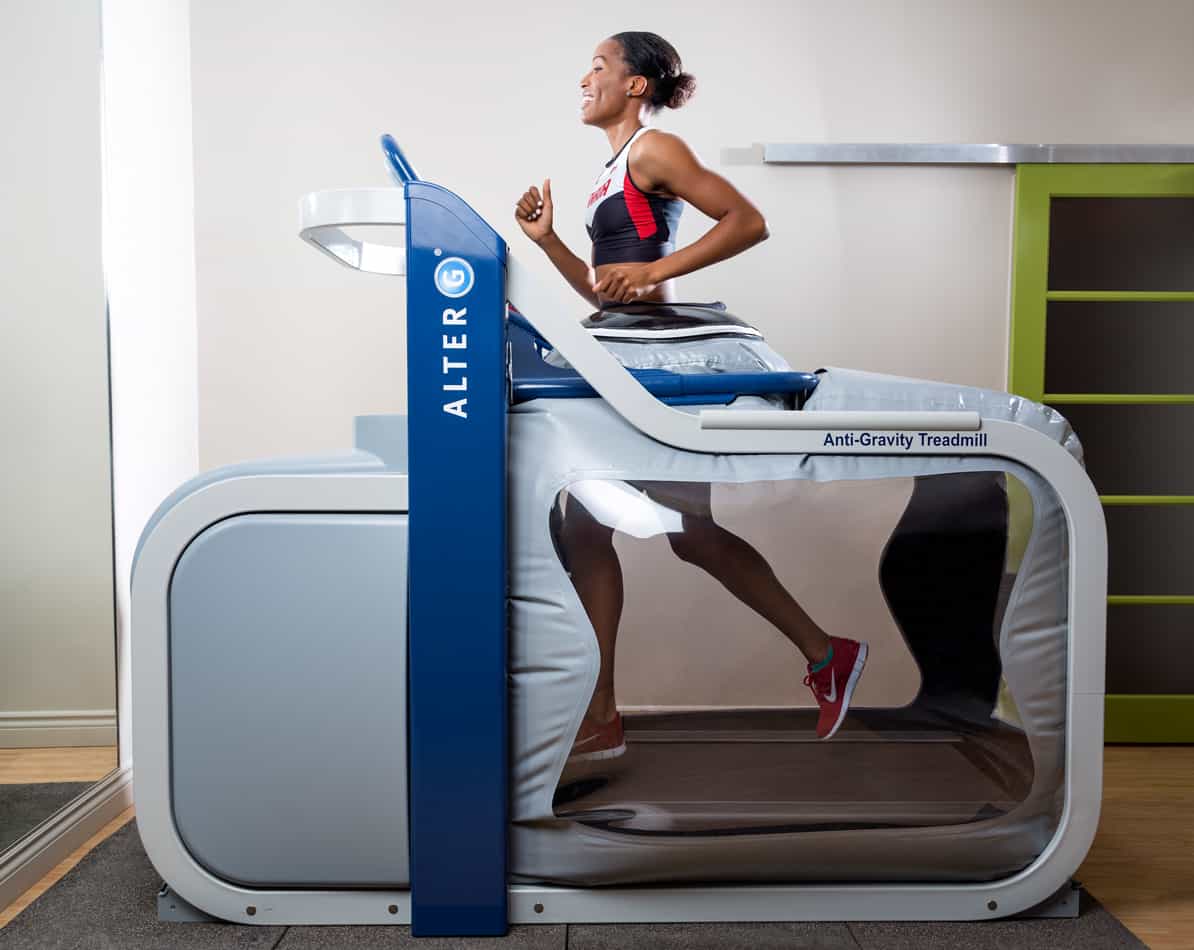
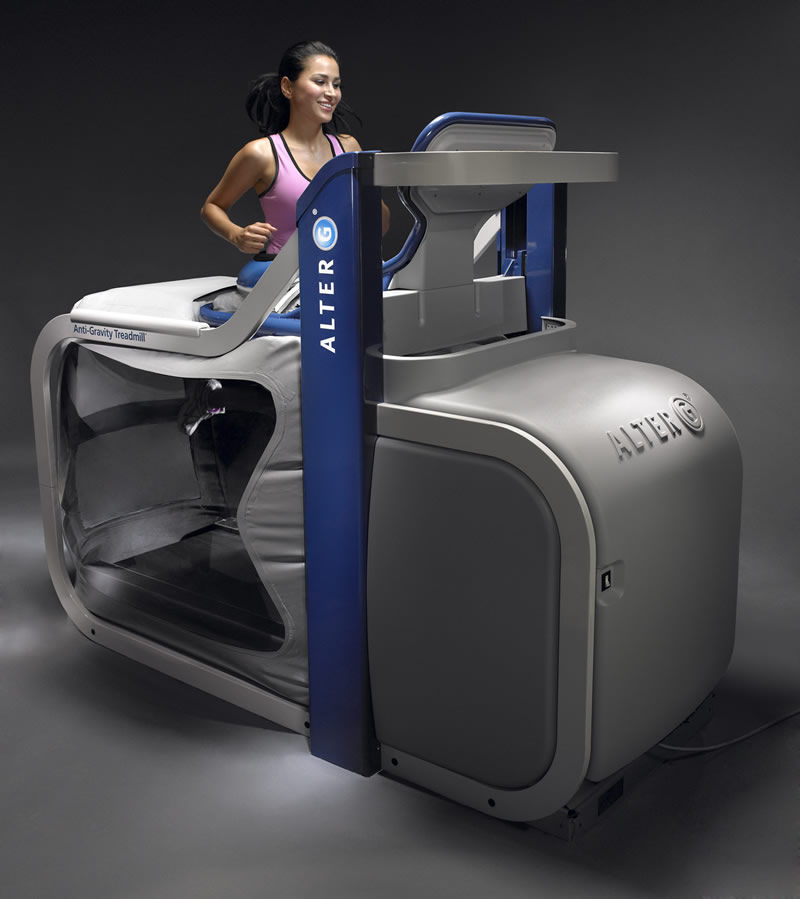
Also known as the space treadmill, the antigravity treadmill can allow the user to walk or run at a lower percentage of their body weight, therefore, lowering the pounding impact on the muscles, joints, tendons, and ligaments.

The Story Behind The Design – A NASA Invention

Wait, what does NASA have to do with the fitness market.

Not much, really. The space agency cared about the health of its awesome astronauts.

Let me explain.

Anti-gravity treadmills were first designed by NASA scientists to simulate “earth-like” training conditions but in space.

The primary goal of the technology was to increase the astronaut apparent weight, which is key for their muscles and bones mass.

anti gravity treadmills

Image credit – From Master Clinic Physiotherapy

The Exact Process

The technology uses air pressure to decrease your body weight and, in turn, take some of the load off your muscles and joints.

More specifically, the technology employs a variance in air pressure between the user’s upper body—atmospheric pressure—and their lower body—the higher pressure—to unload their weight.

The research has reported it can lower impact by roughly 80 percent. That’s. Quite. A. Lot.

Easy To Use – The Step By Step

To use an anti-gravity treadmill, you’ll have to get a pair of special shorts, which you can wear over your clothing. The garment is made from neoprene and feature either a single zipper or a double zip.

Next, you simply step inside the chamber of the machine, which looks like a large bubble, and you’re zipped into an inflatable chamber. When you do so, your body is compressed in the sealed chamber, with a skirt around your waist.

Next, you can choose your own gravitational resistance levels, changing how intense—or easy—the workout will be,

As this takes place, you might feel like you’re being lifted up thanks to the differential air pressure technique.

Thanks to this technique, you can walk or run at 20 percent or 80 percent of your body weight. This can be attuned in small percentages until you find the sweet spot.

Additional Source – Check this treadmill pace chart

So how does this help the rehabilitation?

Nowadays, the technology is used by medical facilities around the globe,  the military, and professional athletes and sports teams.

The technology works well for a wide range of people—neurologic and orthopedic patients, world-class athletes, and those seeking to improve their fitness without the added impact.

How come?

Simple. By reducing the impact stresses on the body, the patients can perform rehabilitation with less pain.

That’s why the technology is often used with patients seeking to gain strength, mobility, full range of movement, and fitness while also reducing the impact on injury or on the body.

Additional Resource – Your guide to treadmill running form

As a runner, the anti-gravity treadmill may help a lot if you have any of the following injuries:

  • Shin splints
  • Medial tibial stress syndrome
  • Plantar fasciitis
  • Runners’ knee
  • Achilles tendinopathy
  • Patellar tendinopathy

The Application

Here are some useful applications of anti-gravity treadmill for runners:

Surgery

The technology helps patients recover faster by allowing to walk with a normal gait as soon as possible. It can help prevent the formation of improper movement patterns stemming from pain and injury.

Injury

Antigravity treadmills can help injured runners keep on training without making their injury worse. When you train at 20 percent of your body weight, you can keep on training with injuries like shin splints or runner’s knees.

Athletic performance

You can perform intervals, hill reps as well as plyometric exercises, lateral training, and agility drills. Again, with a portion of your body weight.

Balance training

The technology works well for patients with neurological conditions, such as multiple sclerosis, Parkinson’s, stroke, cerebral palsy, incomplete spinal cord injury, etc.

Additional Resource- Your guide to curved treadmills

Low impact

It always comes back to this.  If you have a history of overuse injuries or cannot perform high-impact exercises for some reason, the anti-gravity treadmill gives your chance to train a little bit more without the stress on your muscles and joints.

Safe

The technology allows for therapy, re-training, and neuromuscular re-education in a safe setting.

Lose weight

For the extremely obese, excessive weight can put a lot of strain on their muscles and joints, which can make running painful. Again, an anti-gravity treadmill can help an obese person to take up running with little to no risk of problems related to high impact.

The Cost of Anti-Gravity Treadmills

By far, antigravity treadmills are the most expensive treadmills on the market.

The price of an anti-gravity treadmill varies depending on the features of a certain model.

At roughly $35,000 to $70,000, an anti-gravity treadmill isn’t much of a home option. This is one reason these machines are usually hard to find. Even if you find a faculty that has one, there can be a long wait time to get in on one.

Can’t afford to buy one? It’s okay

The “cheapest”  way to get on one is to find a clinic or physiotherapy practice near you that has the machine. Expect to pay around $25 to $30  for a 30-minute session.

Additional resource – Here’s your guide to buying a used treadmill.

Are Anti-Gravity Treadmills For You?

As previously explained, anti-gravity treadmills have a lot to offer. They can be used for elite athletes, military personnel, injured patients, or those recovering from surgery.

Many applications.

Here’s the truth. Even if you don’t fit in any of these categories, you can still benefit from an anti-gravity treadmill.

The machine can help you improve endurance, strength, and mobility without extra stress on your body.

In fact, you might find yourself able to reach your VO2 max and maximum heart rate on an anti-gravity treadmill, according to a study published in Medicine & Science in Sports & Exercise.

Additional Resource  – When to replace a treadmill belt

Featured image credit – from Toronto Physiotherapy

Running with Heel Spurs: Tips for Overcoming Foot Pain

Are you an avid runner, lacing up your sneakers for those exhilarating miles?

Fantastic!

But what happens when heel spurs decide to crash your running party?

Don’t hit the panic button just yet.

In this post, we’re diving into the world of heel spurs – what they are, what causes them, and most importantly, how you can conquer them and get back to running pain-free.

So, grab your running shoes, and let’s hit the trail to heel-spur enlightenment!

What Is A Heel Spur?

Heel spurs, also known as calcaneal spurs, are like little bony hitchhikers that set up camp on the underside of your heel bone.

They’re the result of some serious foot drama, with your plantar fascia – that stretchy sole tissue – getting all riled up and irritated.

Your heel spur adventure starts at the front of your heel and then decides to extend its reach towards your arch or even your toes.

Sneaky, right?

But here’s the kicker – this whole process takes months to unfold, so it’s definitely not an overnight sensation.

Now, the painful truth is that heel spurs can, well, hurt like heck.

But here’s a plot twist – some folks have them without even realizing it! How’s that for a surprise party in your shoes?

What’s the root cause, you ask? It’s all about putting too much stress on your foot muscles and ligaments. This excessive load makes your plantar fascia go haywire, stretching it out and causing damage to the protective membrane around your heel bone.

Oh, and here’s a fun fact: if you’ve a history of plantar fasciitis, then you’re at higher risk of these heel spur party crashers. Sure, some of these little rascals might need surgical eviction, but fear not! There are few things you can do that do not require going under the knive (more on this later).

Plantar Fasciitis and Heel Spurs

Let’s clear up a common misconception: just because your heels are singing the blues doesn’t automatically mean those heel spurs are the culprits. You see, there’s another heel villain in town, and its name is plantar fasciitis.

Plantar fasciitis is an inflammation of the plantar fascia, which is basically a fancy name for the stretchy, fibrous band that plays foot-connector linking your heel bone to the ball of your foot.

Now, here’s where it gets interesting – many folks dealing with plantar fasciitis might also have some heel spurs hanging around in the background.

But let’s set the record straight: heel spurs aren’t the puppet masters behind plantar fasciitis. They might be party crashers, but they’re not responsible for starting the party in the first place.

Additional resource – Guide to big toe pain from running

Causes Of Heel Spurs In Runners

Many things can put extra stress on the heel bone to the point that it forms spurs.

These include:

  • Overstretching of the plantar fascia
  • Damaging the foot muscles and ligaments
  • Continuous tearing of the thin lining of the heel bone

There are also some risk factors to pay attention to, such as:

  • Improper running shoes without proper cushioning and arch support
  • Gait abnormalities that affect the feet in general
  • Excess weight or obesity
  • Spending a long time on the feet
  • Running on hard or uneven surfaces
  • Diabetes
  • Aging
  • Running gait abnormities, especially when it places extra stress on the heel bone, ligaments, and nerves in and around the heel.
  • Having either flat feet or high arches

The Good News

Now, don’t let the specter of heel spurs haunt your dreams – they often fly under the radar, causing no mischief at all. In fact, studies have shown that a whopping 95% of heel spur carriers live in blissful ignorance with no foot pain to report.

But, and there’s always a ‘but,’ when you’re an avid runner, heel spurs might decide it’s time to crash your pain-free party.

Common symptoms include:

  • Pain that sets up camp on the inner or middle part of your heel.
  • The unwelcome wake-up call – pain when you take your first steps out of bed in the morning.
  • The post-sitting pitfall – discomfort that sneaks up after lounging and then disappears after a few minutes of walking.
  • A tiny, unexpected guest – the formation of a small lump in the affected area.
  • Pain that plays hide and seek, getting worse when you’re on the run or engaging in high-impact activities.

How To Deal With Heel Spurs While Running

Dealing with heel spurs when you’re a runner can be a tricky task. But worry not; here’s your game plan for managing heel spurs effectively while hitting the pavement:

Rest

Begin with the golden rule – rest. Reduce your mileage and consider taking a break from training altogether. This is especially important if you suspect that your heel spur symptoms have flared up due to a sudden increase in training intensity.

Ice It

To find relief from the pain, ice the affected area using a frozen water bottle. The sooner you apply ice when you notice symptoms, the better the results.

Here’s how to do it:

Gently roll the affected part of your foot back and forth over the frozen bottle for about 15 to 20 minutes. Repeat this icing routine three to four times a day. Alternatively, you can opt for a simple ice pack or ice wrap to ease the discomfort.

Massage The Spur

Another approach to alleviate the discomfort is through massage. Not only does it feel wonderful, but it can also provide temporary relief from heel pain and enhance blood circulation in the area. In fact, it’s often more effective than merely resting your feet.

Here’s how to do it:

Begin by gently massaging the affected area with your thumb.

Gradually increase the pressure until you’re applying firm but comfortable force.

Be cautious not to overdo it, as excessive pressure may exacerbate the pain.

Stretching

Stretching can be a highly effective method to ease heel pain. It targets not only the calf muscles but also other muscles in the lower legs. You can incorporate these stretches into your daily routine, with a special focus on post-run sessions or before bedtime.

Some of the best stretches for heel pain include:

Calf stretch against the wall

Seated foot flexes

Towel grabs with your toes

Calf stretches on a stair

Golf/tennis ball foot rolls

Try Essential Oils

Another avenue to consider is the use of essential oils. Some essential oils possess potential anti-inflammatory properties, which can help alleviate swelling and pain. Although scientific research on their efficacy is ongoing, it might be worth giving them a shot.

Here are a few essential oils to consider:

  • Lavender oil
  • Fennel oil
  • Thyme oil
  • Rosemary oil
  • Bergamot oil
  • Eucalyptus oil

Essential oils are generally affordable, non-invasive, and carry minimal to no side effects unless you have a history of dermatitis.

Try OTC Drugs

For managing heel spurs, over-the-counter anti-inflammatory medications like naproxen and ibuprofen can be an option. These drugs can help reduce swelling and alleviate pain.

However, it’s crucial to exercise caution. Prolonged use of such medications without medical supervision can lead to side effects. Typically, these drugs should not be used for more than four weeks without your doctor’s approval.

Common over-the-counter medications to consider include:

  • Aspirin
  • Acetaminophen (Tylenol)
  • Ibuprofen (Motrin, Advil)

Before introducing any new medications, especially if you are already dealing with kidney or liver issues, it’s essential to consult your healthcare provider.

Additionally, certain medications like blood thinners should be approached with care and discussed with a medical professional.

Try Supportive Shoes & Orthotics

Opting for running shoes designed with thicker soles and extra cushioning can be beneficial in managing heel spurs. When your foot makes contact with the ground during running, it experiences significant stress, potentially causing small tears or microtrauma in the plantar fascia tissue.

Utilizing well-cushioned shoes or incorporating shoe inserts can help alleviate this stress.

Moreover, exploring the use of pre-made or custom orthotics and shoe inserts may provide added comfort and support, potentially reducing discomfort associated with heel spurs.

Injections

For individuals dealing with chronic pain resulting from heel spurs, a medical professional might recommend corticosteroid shots.

Cortisone, a synthetic derivative of natural cortisone, falls within the corticosteroid family.

Typically, these steroids are administered via a thin needle into the area of most intense pain and inflammation. The primary objective is straightforward: reduce inflammation in specific regions of the body.

This, in turn, aims to alleviate discomfort and expedite the healing process. It’s essential to note that while corticosteroid shots can provide relief, they may not offer a complete solution to the problem.

Surgery

In the event that all non-invasive methods fail to alleviate the discomfort caused by heel spurs, surgical intervention may become the final option. This surgical procedure typically involves the removal of the heel spur and, in some cases, the release of the plantar fascia.

Following the surgery, individuals may need to utilize bandages, casts, splints, crutches, and specialized surgical shoes during the recovery process. It’s essential to be aware of potential complications associated with heel surgery, including recurrent heel pain, nerve damage, infection, permanent numbness in the affected area, and scarring.

A full recovery post-surgery may require a significant amount of time, during which individuals may not be able to place weight on the operated foot. It’s important to maintain mobility while proceeding cautiously.

It’s worth noting that approximately 90 percent of individuals with heel spurs experience improvement through non-surgical, non-invasive treatments, many of which have been discussed in this article.

Heel spurs in Runners  – The Conclusion

Heel spurs are one of many running problems. It’s not a death sentence for runners since there are a lot of treatment options. Assess your risk and fix the problem earlier so you won’t suffer more.

Ball of Foot Pain While Running? A Guide to Metatarsalgia In Runners

Running With Morton's Neuroma

If the balls of your feet are barking after a run, welcome to the club — but also, let’s fix that ASAP.

That pain under your toes isn’t something to ignore or tough out. It’s your body waving a big red flag.

During every mile you run, your forefoot takes on up to 110 tons of force.

Yeah, you read that right — tons. So when runners complain about soreness or stabbing pain in the ball of the foot, it’s not surprising. It’s common.

And the usual suspect? A nasty little overuse injury called metatarsalgia.

Let me give you the full scope…

What Is Metatarsalgia?

Metatarsalgia is just the fancy word for pain and inflammation in the ball of your foot — that area right behind your toes.

It’s not a single condition but more of a catch-all term for what happens when those metatarsal heads (aka the bottom joints of your toes) get beat up from repeated impact.

Think of it as your forefoot’s way of saying, “Too much, too soon, too often.”

Here’s how runners usually describe it:

  • Burning or aching pain under the second or third toe. Feels deep. Feels hot. Feels unfair.
  • Sharp, stabbing pain during push-off. Like you’re toeing off a rock.
  • A “pebble in the shoe” feeling, even when your shoes are clear. Super common.
  • Tingling or numb toes, thanks to angry nerves in that compressed forefoot.

The pain usually builds over time — it might just be mild soreness at first, but ignore it and it’ll turn into a full-blown hobble fest.

Sometimes it hits hard after a long run or speed session on pavement. And if the pain disappears when you’re off your feet? That’s a telltale sign it’s impact-related.

But Here’s the Catch…

Metatarsalgia is a symptom, not a singular cause. And it can be mistaken for other foot issues — which matter, because the fix depends on the true culprit.

You’ve gotta rule out stuff like:

  • Morton’s Neuroma: This one’s a pinched nerve between your toes — feels sharp, might come with burning or numbness. Very similar to metatarsalgia, but different treatment.
  • Metatarsal Stress Fracture: If it hurts even when you’re resting or at night, get it checked. X-rays might miss it early on, so MRIs or bone scans are often needed.
  • Joint instability or bursitis: Also cause pain under the toes, especially with swelling or instability.

In short: if the pain’s not improving, don’t play Dr. Google. Go see a sports podiatrist or foot doc. You want to fix it, not guess at it.

Can You Run with Metatarsalgia?

Ah, the million-dollar question: Can I still run through this ball-of-foot pain?

Short answer? Maybe.

Long answer? Only if you’re honest with yourself—and the pain is mild.

Here’s the deal: running puts a ton of pressure on your forefoot.

Every stride? Boom—your entire body weight gets slammed through that already-irritated area.

If your metatarsals are inflamed, that pounding is basically gasoline on a fire.

Sharp Pain? Stop. Sore and Tolerable? Maybe…

If the pain feels like a knife stabbing the ball of your foot? Do not run through that. No medal is worth a stress fracture.

But if it’s mild—more like a bruise, no sharp twinges—you might be able to sneak in some short, easy runs. That means:

  • Soft surfaces only (grass, trails, treadmill)
  • No speed work
  • No long runs
  • Cushioned shoes or insoles
  • Possibly metatarsal pads to offload pressure

Always listen to the pain scale. A little ache? Maybe okay. Real pain? Stop. Running through certain injuries (like a brewing stress fracture or a neuroma) can seriously mess you up. We’re talking months—not days—off the road.

Why Metatarsalgia Happens to Runners

If you’ve got this issue, it usually comes down to a mix of bad timing, poor mechanics, and overuse.

Let me break it down for you:

1. Too Much Impact, Too Often

Running is high-impact—especially on the forefoot. Every time you push off, your metatarsals take a beating.

Multiply that by thousands of steps per run, and yeah, overuse injuries start to appear.

Speed work, plyos, or running on concrete make it worse. That’s why high-mileage runners or folks who love hammering tempo runs often end up with forefoot issues.

2. You Jumped Ahead Too Fast

This one’s classic: you got excited, came back too fast after time off, or ramped up your mileage in a hurry. The foot wasn’t ready for the workload, and now it’s screaming.

Lesson: the 10% rule exists for a reason. Build slow or break down.

3. Tight Calves or Achilles? Your Feet Pay for It

When your calves are stiff, your ankle can’t flex right. That shifts the load forward—straight to your metatarsals.

Also, if your Achilles is tight, it shortens your stride and forces you to toe off harder. Over time, that extra pressure lights up the forefoot.

A lot of runners with ball-of-foot pain also have neglected stretching routines.

If you’re skipping the calf work, you’re asking for trouble.

4. Your Form (or Feet) Are Working Against You

Overpronators, supinators, heavy strikers—listen up. If your biomechanics are off, your forefoot is probably taking the brunt of it.

Landing too far forward, overstriding, or running downhill like a runaway truck? Recipe for pain.

Also, foot shape matters. Flat feet or high arches can both cause uneven pressure distribution that jacks up the metatarsals. If your shoes don’t match your feet, that pressure gets worse.

How to Treat Ball of Foot Pain from Running

(a.k.a. Dealing with Metatarsalgia Like a Pro)

So your forefoot feels like it’s been punched from the inside? Yeah — that’s probably metatarsalgia rearing its ugly head.

Whether it crept up during a long run or smacked you mid-stride, here’s the deal: the sooner you deal with it, the faster it goes away.

Ignore it, and you’ll be limping through life (and missing workouts) way longer than you want to.

Let’s get into a quick-hit checklist for treating that burning, bruised feeling under the ball of your foot — and getting you back on the road smarter than before.

1. Rest & Ditch High Impact

First things first — don’t run through this.

If it hurts, stop. Take a few days off or more if it’s bad.

Running on inflamed metatarsals is like stomping on a bruise over and over.

Need to stay active? Do something low-impact — bike, swim, elliptical, whatever doesn’t make it worse. This isn’t about being soft. It’s about healing fast.

2. Ice the Pain Away

Grab a bag of frozen peas or an ice pack and slap it on the ball of your foot for 15–20 minutes, 2–3 times a day. Especially after walking or standing.

Pro tip: Always put a cloth between the ice and your skin — unless you’re into freezer burn.

3. Compression Helps

Got swelling? Wrap your forefoot with an ACE bandage or wear a compression sleeve. Start at the toes and go up toward the ankle — snug but not cutting off circulation. It helps reduce puffiness and gives your foot a bit of support.

4. Elevate Like You Mean It

Put your feet up — literally. When you’re resting, prop your foot above heart level. Stack pillows, use the couch armrest — whatever works. Combine elevation with icing for double duty relief.

5. Metatarsal Pads = Game-Changer

These little foam or gel pads go just behind the ball of your foot (not under it). They offload pressure from the sore spot and distribute weight better.

Toss one in your insole and boom — instant relief for a lot of runners. Cheap, simple, and super effective.

6. Wear Better Shoes (Seriously)

Tight shoes and zero cushioning are your enemies right now. Switch to roomy, cushioned shoes with a wide toe box.

And around the house? No barefoot walking on hard floors. Slip into supportive sandals or house shoes.

One runner told me his pain only went away after he started wearing cushioned shoes everywhere — even in the kitchen. Lesson: support your feet 24/7, not just on runs.

7. Stretch Your Calves & Achilles

Tight calves mess with your foot mechanics and dump more pressure onto the forefoot. Loosen them up!

Try:

  • Wall calf stretch
  • Downward dog
  • Foam rolling those calves

Hold each stretch at least 30 seconds, a few times a day. You’ll be surprised how much this helps.

8. Pain Relief Tools (Used Wisely)

If it’s bad, take a short course of ibuprofen or apply Voltaren (diclofenac) gel to the sore area. A running friend of mine with forefoot nerve pain swore by Voltaren before long runs to dull the edge.

But remember — this is just for symptom relief. It’s not fixing the problem. Use meds to help manage, not mask and push through.

When to See a Pro

If your pain:

  • Doesn’t improve after a couple weeks
  • Gets worse even with rest
  • Comes with sharp nerve pain or swelling

…it’s time to visit a sports doc or podiatrist. They can confirm it’s metatarsalgia (not something more serious) and recommend the next move — maybe custom orthotics, cortisone injections, or in rare cases, surgery.

But for most of us? Rest, smart gear, and patience do the trick.

Metatarsal Pads for Runners: Worth It?

In a word? Yes.

If you’re battling ball-of-foot pain, metatarsal pads can be an absolute game-changer.

They’re small, cheap, and deceptively powerful.

I’ve known runners who limped into a run and jogged out pain-free just by placing one of these little teardrop-shaped lifesavers under their insole.

Let me tell you what they’re all about:

What Do Met Pads Actually Do?

Metatarsal pads (a.k.a. “met pads”) are small cushions—usually foam, felt, or gel—that sit just behind the ball of your foot, under your insole. Not on the sore spot, but slightly back from it.

Why? Because that placement supports the metatarsal arch—the area right before your forefoot starts absorbing impact.

It redistributes pressure so the painful metatarsal heads (those bones behind your toes) aren’t taking the full force every step.

Don’t take my word for it.

Studies back this up—met pads reduce peak pressure on the forefoot. That means less pounding, less inflammation, and way less “pebble in your shoe” misery.

How to Use Met Pads (Without Making Things Worse)

Met pads are great—if you place them right. Mess that up, and you could actually add pressure.

Here’s what matters the most:

  • Do not put the pad directly under the pain.
  • Place it just behind the ball of your foot—toward the arch.
  • This creates a little lift that helps spread the metatarsals and unload the sore zone.
  • Try this: put your sock on, stand up, mark the halfway spot between your arch and forefoot. Align the pad’s thickest part there on your insole.

📣 Coach’s tip: A few millimeters forward or back can change everything. Don’t be afraid to experiment.

Are They Permanent?

Not necessarily.

For some runners, pads are a short-term fix while the foot heals or adapts. After a few weeks or months, the pain fades, and they can phase the pad out.

For others, especially those with chronically inflamed joints or certain foot shapes, a met pad becomes part of the daily setup—and that’s totally fine too.

📣 Coach’s tip: If it keeps you running pain-free, who cares if it’s long-term? You’re doing what works.

Can You Combine Pads with Other Gear?

Absolutely.

  • Stick one on top of a flat insole to create a custom setup.
  • Use with over-the-counter insoles (like Superfeet or Powerstep).
  • Some podiatrists create custom orthotics with cut-outs under the met heads to offload pressure even more.

If you’ve tried all the usual tricks and still feel that sharp pain under your forefoot? This combo approach is gold.

Returning to Running After Metatarsalgia

You’re finally feeling better. That burning, stabbing pain in the ball of your foot has calmed down.

You’re walking around without wincing, and now the itch to get back to running is real.

But here’s the deal: don’t sprint out of the gate just because you’re not limping anymore.

This next phase — the comeback — is where most runners mess up. You’ve come too far to sabotage your progress by rushing it.

Let’s walk (literally) through how to return to running the right way after metatarsalgia.

No Running Until You’re 100% Pain-Free in Daily Life

This isn’t negotiable. You’ve gotta pass a few checkpoints first:

  • Can you walk barefoot around the house pain-free?
  • Go up and down stairs without wincing?
  • Do a few light hops in place and press up into a calf raise — no pain in the forefoot?

If the answer is “ehh, kind of,” then you’re not ready. Keep rehabbing. Keep waiting.

I know it’s hard — but if you push too soon, you’ll reset the healing clock and be back on the bench.

Remember: almost-healed is not healed.

Start With Short Walk-Run Sessions

Your first few outings back? Keep ’em short and super easy.

Try something like this:

  • 1-minute jog / 1-minute walk x 5 rounds = 10 minutes total
    Or:
  • A light, continuous jog for 10–15 minutes on soft ground, at a conversational pace

That’s it. You’re not chasing PRs right now — you’re testing the waters.

Aim for 25–50% of your usual weekly mileage in week one.

Then wait and see how your foot feels that night and the next morning. That’s the real test.

Run on Forgiving Surfaces 

Skip the concrete jungle for now. Choose:

  • Treadmills (with decent cushioning)
  • Rubberized tracks
  • Soft dirt trails
  • Grass (if it’s smooth)

Steep hills and downhills? Hard pass for the first couple of weeks.

They put extra pressure right where it hurts — the forefoot.

Once your foot proves it can handle the flats, then slowly bring back variety.

💡 Tip: Some runners use met pads or orthotics when easing back in. If it helps you feel more supported, use it.

Go Slow. Then Go Even Slower.

The old 10% rule (increase weekly mileage by no more than 10%) is solid — but after an injury, you might want to go even slower.

Let’s say you ran 5 miles total last week. This week? Maybe 5.5 or 6 miles max, spread out.

Another option? Stay at the same low volume for a week or two. No rush. Watch how your foot responds:

  • Slight soreness that fades = usually okay
  • Sharp pain or lingering discomfort = red flag
  • A new weirdness popping up somewhere else = back off and reassess

Rehab Doesn’t Stop When Running Starts Again

Just because you’re logging miles again doesn’t mean you ditch the stuff that helped you heal. That’s how runners fall into the injury-relapse trap.

✅ Keep stretching your calves
✅ Keep doing foot and hip strengthening
✅ Keep icing after runs if needed
✅ Keep wearing the shoes and inserts that work — now’s not the time to “try minimalist” or go barefoot

Treat this return-to-run phase like the tail end of your rehab. Because it is.

How to Prevent Metatarsalgia 

Most overuse injuries — including this one — don’t happen out of nowhere. They creep in from a combo of gear issues, training mistakes, and weak spots in your body.

Here’s how to fight it off before it flares up again:

1. Wear the Right Shoes 

I know, I know — you’ve heard it before.

But I’ve coached runners who were limping from metatarsal pain only to realize they were running in shoes with 700+ miles on them.

That soft foam you started with? It’s a pancake now.

Proper running shoes matter – I cannot emphasize this enough.

Look for:

  • A wide toe box (your toes need room to spread)
  • Good forefoot cushioning
  • Proper arch support (based on your feet, not trends)

Minimalist shoes? They can work — if you transition slowly and do foot-strength work. Otherwise, they’re a fast track to pain.

And casual shoes matter too.

Stomping around in narrow dress shoes or high heels for hours? That’s forefoot abuse.

Your recovery doesn’t end at mile 5 — it continues with what you wear the rest of the day.

2. Train Smarter, Not Just Harder

Don’t make the classic rookie mistake: jumping into big mileage, hill work, and speed all in the same week. That’s how metatarsalgia starts.

Stick to the 10% rule — increase weekly mileage gradually. Add one new stressor at a time (e.g., a longer long run or some tempo miles, not both).

And if you’re changing terrain — like moving from treadmill to concrete, or flats to trails — do it slowly. Your feet need time to adapt to different impacts and angles.

3. Treat Early Symptoms Like Red Flags

Feel a hot spot under your foot mid-run? Don’t wait. That’s your warning.

Use:

  • RICE protocol (Rest, Ice, Compression, Elevation)
  • Metatarsal pads or orthotics if needed
  • Supportive insoles with forefoot cushioning

You don’t need to live in orthotics forever, but they can be your lifeline when your foot is irritated.

Keep a pair of gel pads in your gear drawer and pop them in as soon as you feel that telltale ache coming on.

If you catch it early, it might be gone in a few days. Ignore it, and you could be out for weeks.

4. Strengthen Your Feet, Ankles, and Glutes

If you’ve got a weak chain, something down the line will pay the price — and in this case, it’s your forefoot.

Do these regularly:

  • Towel scrunches (with your toes)
  • Toe marble pickups
  • Barefoot balance drills
  • Calf raises and Achilles drops
  • “Short foot” doming exercises

And don’t forget glutes and hips. One runner I worked with had chronic metatarsal pain until a PT pointed out her hip stabilizers weren’t doing squat. Once she started strengthening her core and glutes, her foot pain finally chilled out.

Everything’s connected. Weak hips can lead to sloppy foot strike. Sloppy mechanics = more pressure on the ball of your foot. Build the whole system — not just the foot.

5. Stretch Like You Mean It (Especially Calves & Achilles)

Stiff calves = big problems downstream. They pull on everything — including your forefoot.

That tension stacks pressure on your toes and metatarsals, especially if you’ve got past foot issues like plantar fasciitis or bunion history.

Your daily move:

  • Wall calf stretch — both with a straight leg and bent knee
  • Hamstring and quad stretches — don’t skip those, they support your stride
  • Toe extensor and flexor stretches — gently pull your toes up and down to loosen the little foot muscles
  • Bonus: Use a lacrosse ball under the foot to roll the arch

Think of tight muscles like puppet strings pulling on your foot. Keep ‘em loose, or your forefoot pays the price.

When to Stop DIYing and Call a Doc

Most foot pain clears up with smart training and rest — but not always. If your symptoms are hanging around like an unwanted house guest, here’s when you need a pro to step in:

  • Pain’s not improving after a week+ of rest, ice, and good shoes
  • Visible swelling, heat, or redness in the forefoot (could be a fracture or joint issue)
  • Pain at rest or at night — metatarsalgia usually eases up off your feet; if it doesn’t, something deeper might be going on (hello, stress fracture)
  • Numbness or tingling that sticks around — could be a nerve issue like Morton’s neuroma
  • Weird toe movement or deformities — hammering, bunions, toes drifting out of line? Might need structural help (orthotics, taping, etc.)
  • One big painful step that led to sharp pain or swelling — don’t play hero. Get an X-ray. You could be looking at a full fracture.

Rule of thumb: If it hurts to walk, don’t run on it. If it’s not better in 10 days, let a doc take a look. Ignoring it could cost you weeks or even a season.

What to Expect When You Finally See a Doc for Metatarsalgia

Alright, so you’ve tried all the DIY fixes—new shoes, rest days, toe spacers, better lacing—and your foot still feels like someone’s jabbing a pebble under your toes every time you push off?

It’s time to see a pro.

And don’t worry—seeing a doctor doesn’t mean you’re broken or benched for good. It means you’re ready to figure out what the hell’s going on so you can fix it right and get back to running.

The Exam: What the Doc Will Actually Do

They’ll start by checking your foot:

  • Press around to pinpoint the pain
  • Assess how you walk and stand
  • Look at foot shape, arch, calluses, flexibility
  • If needed, they’ll order X-rays (to rule out stress fractures or arthritis), or an ultrasound/MRI if they suspect something like a Morton’s neuroma

Basically, they’re ruling things in or out. Sometimes what feels like metatarsalgia turns out to be something sneaky like a stress fracture, a small neuroma, or arthritis in a toe joint.

If It Is Metatarsalgia (and Not Something Worse)…

You’ll likely be sent home with the greatest hits:

  • Rest + NSAIDs (ibuprofen, naproxen) to calm inflammation
  • Metatarsal pads or orthotics to offload pressure
  • Possibly trimming a painful callus
  • PT exercises to fix the mechanics that caused it in the first place

Some docs will also recommend custom insoles with special cut-outs under the ball of your foot—these can take a ton of pressure off where it hurts most.

If it’s a real stubborn case, they might shoot a cortisone injection into the inflamed spot. I’ve seen this work like magic for some runners, giving them a few weeks or months of calm while they work on fixing the root cause.

What About Surgery?

Let’s not go there… yet.

Surgery is rare. But in chronic cases that refuse to improve, especially if there’s a structural issue (like a dropped metatarsal or bad toe deformity), it’s on the table.

Options include:

  • Straightening a hammertoe or bunion
  • Removing a neuroma
  • Realigning or shortening a metatarsal bone (yep, that’s a thing)

But again, most runners never need surgery. So don’t panic.

Final Word: Don’t Let a Hot Foot Stop You

Let’s call it like it is: metatarsalgia sucks. It’s a small pain that turns into a big, momentum-killing problem if you ignore it.

But here’s the good news: it’s very treatable. With smart action, most runners come back fully. And stronger.

🔁 What to Do:

  • At the first sign of pain, back off. Don’t be the hero who runs through it and ends up sidelined for six weeks.
  • Use RICE, better shoes, and pads to give your foot a break
  • If it’s still bad after a week or two? See a doc. Get a game plan.
  • Do the rehab. Strengthen. Fix the cause, not just the pain.

🔄 What Happens When You Handle It Right

One of my training partners battled this hard. Ball-of-foot pain slowed his stride and made every push-off miserable.

So he took time off, switched to wider shoes with more cushion, added calf stretching and foot drills, and reintroduced running gradually.

First run back? Slow. Humbling.

Four weeks later? Back to 20–30 mile weeks, pain-free.

That’s how you do it. That’s the long game.

Why Does my Jaw Hurt When I Run – Jaw Pain When Running Explained

ear pain when running

Experiencing jaw pain when running? Then you have come to the right place.

Jaw pain while running isn’t your typical overuse injury, yet having it during a run or at any time, can be quite annoying.

There are many possible causes of jaw pain. In fact, it can be different reasons for different runners.

That’s why you should look into them because they can be quite dangerous (in super rare cases, of course).

In today’s post, I’ll discuss why does your jaw hurt when you run and share some tips and guidelines on what to do to soothe it.

Sounds great

Let’s get started.

Why Does my Jaw Hurt When I Run – Stop Jaw Pain While Running

Jaw pain is usually felt as pain around the ear, tenderness in the jaw, as well as inability to chew comfortably.

If suffering from this pain while running, any of the following causes could be the reason behind your condition.

Forward-Head Posture

If you’re routinely in a slouched position, either while running, working, or watching TV, then you’re, basically, holding your body in a less-than-ideal position.

Here’s the truth.

Your body functions best when all of the muscles, bones, and joints are properly aligned.

When your head is too much forward, your neck muscles may take in more load than usual. This extra stress travels up your neck and causes jaw pain.

That’s not the whole story.

This type of jaw pain can also contribute to headaches and migraines, which can hinder your performance and cause further trouble.

The Solution

If you catch yourself in a forward-head position—either while running, at work, or whenever—correct it on the spot.

I’d recommend that you also make a few lifestyle changes such as adjusting your computer screen as well ad spending less time looking down at your phone.

Here are a few hints to help you build and maintain proper running form.

  • Keep your shoulders loose and relaxed. Avoid hunching.
  • Gaze straight ahead—about 15 to 20 feet. Never look down at your feet unless you’re running on a technical terrain where you need to SEE where you put your feet.
  • Keep your chin tucked in a while keeping your neck and head in the same plane as your body.
  • Engage your core and keep your back neutral and straight.
  • Keep your arms loose, bent at a 90-degree angle, with a strong forward swing. Avoid side-to-side swinging.

Additional resource – Chiropractor for runners

Jaw Clenching

Grinding the teeth—or what’s known as bruxism—is another common habit that causes jaw pain.

Bruxism occurs when you subconsciously clench your teeth together. This can create stress in the jaw, especially in the muscles, ligaments, and tendons that support it.

Over time, bruxism can form painful trigger points in the jaw muscle, especially in the masseter and temporalis muscles.

This is actually the reason that although most runners breathe with an open mouth, having already developed these trigger points can be behind the jaw pain while running.

Additional Resource – A Tibial Posterior Tendonitis Guide in Runners

 Jaw Pain When Running
African american woman running in New York City at the morning

The Solution

Pay more attention to how you’re holding your jaw, especially when stressed. Then, build the habit of consciously relaxing your jaw every time you catch yourself clenching your teeth.

You should also do something about the stress.

Some steps include:

  • Deep breathing
  • Meditation
  • Stretching
  • Taking regular breaks

What’s more?

Consider getting a nightguard if you tend to grind your teeth while asleep.

Temporomandibular Joint (TMJ) Dysfunction

Feeling pain when yawning or chewing? You might be dealing with a TMJ problem.

Temporomandibular joint disorder, or TMJ, is a condition in which the joints of the jaw might be displaced, injured, or otherwise poorly functioning. TMJ is caused by nerve damage along the temporomandibular joint.

This can manifest as pain in the jaw as well as in the muscle surrounding it.  It can also contribute to headaches, migraines, and back pain.

Main symptoms include:

  • Pain or discomfort while chewing food
  • Tenderness in and around the ear
  • Difficulty opening and closing the mount
  • Facial pain.

What’s more?

Thanks to the repetitive high-impact nature of running, logging the miles can make the TMJ more swollen and painful.

Additional Resource – Here’s your guide to Anterior Tibial Tendonitis 

The Solution

Most people who have TMJ suffer from mild or temporary symptoms which may fade away within a few days or weeks.

That’s why you should consider taking the conservative approach first before procedures such as getting fitted for an appliance, shaving down teeth, or having surgery.

For starters, try some thermal therapy as research by the TMJA has reported that the use of hot or cold therapy helps reduce the symptoms.

In essence, cold therapy limits swelling and pain, whereas heat can improve blood and loosen the jaw muscle.

Apply this method for 15 to 20 minutes at a time. Just remember to use a light layer between your skin and the compress.

You can also try an over-the-counter analgesic. These anti-inflammatory drugs may help soothe the pain.

If your TMJ condition is caused by musculoskeletal issues, look for a physical therapist that specializes in jaw disorders.

Additional Resource – Here’s your guide to calf pain while running

Heart Problems

Last but not least, the reason behind your jaw pain might be more sinister than you imagine. In fact, jaw pain could indicate some type of cardiovascular problem.

This is why in case you’ve persistent jaw pain (despite taking some of the above measures), consult your doctor to rule out any underlying condition.

The most common issue is Angina, a condition in which your heart is in trouble as it’s not getting sufficient blood, and it causes chest pain.

Temporal arthritis, a condition in which swelling causes blood vessels to narrow, may also cause jaw pain.

Blocked arteries is another common condition.

What’s more?

In some cases, jaw pain might be a symptom of a heart attack.

The other well-known heart attack sign are, certainly, chest pain and left-sided arm pain.

The Solution

If you suspect you’re having cardiovascular problems—especially if it’s a heart attack—seek medical attention as soon as possible.

Don’t delay one second.

Why Does my Jaw Hurt When I Run  – The Conclusion

There you have it

If you’re looking to uncover the cause of your jaw pain during exercise, then today’s post will get you started on the right foot. The rest is really up to you.

Please feel free to leave your questions and suggestions in the section below.

In the meantime thank you for dropping by.

Should You Be Running After Leg Day?

A lot of runners ask, ‘Is it okay to run after leg day?’ And honestly, there’s no clear-cut answer

Leg day can be rough, but getting some miles in the next day isn’t impossible.

If you’re limping out of the gym, it’s only natural to question whether running is a smart move.

As a runner and coach, I’ve had my share of tough leg days where my legs feel done, but the urge to run is still there

Let’s break it down and figure out when it’s a good idea and how to do it without regretting every step.

Why Every Runner Needs to Do Leg Day

If you want to be a stronger, faster runner, skipping leg day isn’t an option. Sure, the more you run the better you get at it, but leg day? That’s the secret sauce for a powerful stride and injury prevention.

Just to clarify, leg day is all about working the muscles in your lower body. These include:

Here’s why leg day matters:

  • Better Running Efficiency. Research from the Journal of Strength and Conditioning shows that lower body strength training can make you a more efficient runner The study found that runners who incorporated leg-focused strength exercises improved their speed and endurance over time.
  • Reduced Risk of Injury. A comprehensive review in Sports Medicine highlights that strength training helps address muscular imbalances, which are common among runners and can lead to injuries like IT band syndrome and runner’s knee. Building up muscles like your quads, hamstrings, and glutes keeps your joints stable and lowers injury risk.
  • Improved Power and Speed. A study in the International Journal of Sports Physiology and Performance demonstrated that strength training contributes to improved sprint speed and acceleration, as stronger leg muscles generate more power with each stride. This is great for runners looking to pick up the pace or add sprints to their routine..

Should You Run Right After Leg Day?

So, can you actually run after leg day?

The answer isn’t a simple yes or no. Running right after a tough leg workout isn’t ideal because your muscles are tired, and glycogen levels are low.

I often tried to power through a run right after a brutal squat day, and it felt like running with cement blocks strapped to my legs. I usually have to humble my self and keep my pace as slow as possible.

So, why does this happen?

Let me explain more.

Your body relies on stored glycogen as fuel when you work out

The harder you exercise, the more fuel you burn up.

That’s why this energy reserve can get depleted when you perform any type of physical exercise.

What’s more?

Big moves like squats and deadlifts don’t just hit your legs—they work multiple muscles, and that’s exhausting.

The larger the muscle, the bigger the inflammation and micro tears, hence, the more soreness and pain.

That’s not the whole story.

Other things can affect how your miles feel after strength training.

These include your:

  • Training intensity
  • Training volume
  • Training speed
  • Order of exercises and workouts
  • Recovery rate
  • Fitness level

Because of this, any run right after a leg workout probably won’t be your best

If walking is tough because of soreness, it’s smart to skip running that day

If it’s only mild soreness, a gentle run can help loosen things up and speed up recovery.

When You Should Skip the Run After Leg Day

Sometimes it’s better to skip the run after leg day. Here are a few:

  • Extreme soreness: If you’re struggling to walk, running will only worsen things. Pushing sore muscles can lead to injury or burnout.
  • You pushed to failure: If you went hard in the gym and left everything on the floor, your body needs time to recover. Running right after can do more harm than good.

If you’re set on running, make it a light, easy one.

How to Run After Leg Day (Without Regretting It)

If you’re going to run after leg day, here’s how to make it manageable

  1. Start with a Proper Warm-Up Running on sore legs is rough, but a good warm-up can make a huge difference. Do some dynamic stretches—leg swings, lunges, or even brisk walking- to get your muscles loose and increase blood flow.
  2. Keep It Short and Easy After leg day, this is not the time to go for a PR or attempt a long run. Stick to a recovery run—keep the pace easy and the distance short. The goal is to move your legs and boost circulation, not to crush a workout.
  3. Wear Compression Gear I used to think compression socks were just a gimmick, but after trying them out, I’m sold. They help with circulation and reduce muscle fatigue, especially after a tough leg workout. Give them a shot—you might be surprised how much they help.
  4. Fuel Up Properly Running after leg day means your body works overtime to recover. Ensure you’re fueling up with the right mix of carbs and protein. Skipping food can make you hit the wall halfway through your run, and trust me, running on empty doesn’t feel good.

When Should You Skip the Run?

There are days when running just isn’t in the cards. If your legs feel like jelly and even walking is painful, it’s probably a good day to rest.

Pushing through extreme soreness can lead to injuries like strains or sprains. And let’s be real, no run is worth getting sidelined for weeks.

Listen to your body, and take a day off if you need to.

Further Reading on Strength Training and Running

For those interested in exploring the science behind strength training and running performance, here are some reputable resources:

  • Runner’s World: “Strength Training for Runners: What You Need to Know” – Link
  • American College of Sports Medicine: “The Benefits of Resistance Training for Endurance Athletes” – Link
  • Journal of Sports Medicine and Physical Fitness: “Impact of Lower Body Strength on Running Performance” – Link

Conclusion: To Run or Not to Run After Leg Day?

To run or not to run after leg day depends on how your legs feel. If the soreness is manageable, a light recovery run can speed up recovery by boosting circulation. But if you’re too sore to walk properly, it’s best to take a rest day or opt for cross-training.

Remember, the key to long-term success is consistency. Missing a run or two after an intense leg day won’t derail your progress, but pushing too hard might.

The Runner’s Dilemma: Can You Keep Jogging with an Abdominal Hernia?

running with hernia

You’re out for your routine jog, the sun’s warmth on your skin, and the rhythm of your steps setting the pace for a perfect day.

But then, a nagging thought creeps in – you have an abdominal hernia. Can you keep running, or should you hit pause until it’s fully healed?

Well, you’re in the right place because today, I’m going to unravel the mysteries of abdominal hernias and explore the ins and outs of running with this condition.

Whether you’re a seasoned runner or just lacing up your sneakers, this article is your go-to guide for making informed decisions about your running routine.

So, let’s lace up and hit the pavement – together!

What Is Abdominal Hernia?

So, what exactly is this “abdominal hernia” thing, and how might it affect your fitness and overall well-being?

Let me paint you a picture. Your body’s like a well-constructed fortress, with a protective wall called the abdominal wall. But sometimes, a sneaky internal organ, like your bladder or intestine, decides it’s time for an adventure. It pushes through a weakened section of that protective wall, resulting in a noticeable lump or bulge.

That’s your abdominal hernia saying, “Hello, world!”

Now, there are a few different types of these hernias.

First up, we’ve got the inguinal hernias, which often occur in the lower abdominal groin area. Then, there are the femoral hernias, which tend to strike the groin near the femoral canal.

But wait, there’s more! We’ve also got hiatal hernias, making their presence known in the upper abdomen, and umbilical hernias, afflicting the area around your belly button.

How To Treat Abdominal Hernias

When it comes to abdominal hernias, it’s crucial to know your options and understand why taking action matters.

Now, in many cases, persistent hernias will call for a little surgical intervention. Yep, we’re talking about a trip to the operating room. But don’t worry, it’s a well-practiced procedure, and your skilled medical team will have you covered.

Here’s the kicker: ignoring that pesky abdominal hernia is like playing with fire.

There’s a real danger of something called “strangulation,” and trust me, you don’t want any part of it. Strangulation is a situation where your intestines decide to throw a party, but the venue is way too small – so they get trapped. This hinders and in some cases, completely cuts off circulation to your precious tissue. It’s a life-threatening emergency, and you’d want to avoid it at all costs.

Now, how do you spot the red flags of a strangulated hernia? Keep an eye out for these telltale signs:

  • Fever – when your body temperature goes haywire.
  • Vomiting – not the kind from a rollercoaster ride.
  • Trapped gas – feeling like you’re carrying around an unwanted balloon.
  • Chronic pain – not the run-of-the-mill ache; but persistent discomfort.
  • Nausea – that queasy feeling that just won’t quit.
  • Constipation – when things in the bathroom aren’t quite as they should be.
  • Skin darkening – no, you’re not getting a tan; it’s a concerning sign.

Can you Run With an Abdominal Hernia?

Well, the answer isn’t as straightforward as we’d hope. It’s a bit like navigating a maze, and here’s why: whether you can keep running with a hernia depends on a few key factors.

First up, it all hinges on the severity of your hernia and how intense your training is. The milder your hernia, the better your chances of keeping up with your running routine. But if it’s throwing a full-on hernia tantrum, you might need to hit the pause button.

Here’s the silver lining, though: running at a low intensity is often recommended for hernia patients. Why, you ask? Well, running can actually help shed those extra pounds, which might just ease some of your hernia-related symptoms.

But (yes, there’s a but), remember that the intensity of your runs matters. If your hernia is causing you to wrestle with acid reflux symptoms, going hard or long on your runs might not be your best bet. It could potentially crank up the pain factor.

Additional Resource – Can You Run With An Abdominal Strain?

Intense Training And Hernia

Hernias don’t appreciate strenuous workouts.

Any activity that puts a squeeze on your abdominal region can send your hernia into a frenzy. While running might seem like it’s all about those legs, don’t be fooled – your core is in on the action, too!

Don’t just take my word for it; there’s solid research to back this up. A study published in PLOS One decided to peek under the hood and see what happens to our cores during running. They had 28 subjects undergo three months of Pilates training, which is all about strengthening that core.

What they found was quite telling – during running, our core muscles, especially those obliques (the side muscles), kick into high gear. And guess what? The more you rev up your running pace, the more your core muscles get involved.

Now, here comes the catch: running, especially when you’re cranking up the speed, could potentially worsen your hernia symptoms by ramping up those core muscle contractions. It’s like adding fuel to the fire!

But overall, if your hernia isn’t causing you agony or inflammation, running is generally considered low-risk.

Of course, it’s always a good idea to have a chat with your doctor before you lace up. However, if that hernia decides to go rogue and strangulate, which basically means it’s messing with your bowel’s blood supply – well, that’s a medical emergency.

Trust me; you’ll know when it’s happening. Vomiting, bowel issues, and an overall unpleasant time are all telltale signs that I’ve already mentioned. In that case, don’t hesitate – get yourself to a medical pro pronto!

How To Manage A Hernia While Running

Now, let’s talk about the comeback plan for all you hernia warriors who are eager to hit the pavement once again.

The golden rule here is gradual progress, and it all starts with channeling your inner beginner. Embrace the mindset of someone just starting their running journey – even if you’re an experienced runner.

Here’s a step-by-step roadmap to guide you back to the running track:

Before you even think about picking up the pace, start with a leisurely walk. Aim for a comfortable pace, around three to five miles per hour. The key here is to do it without experiencing any pain or discomfort. Listen to your body – it’ll tell you if you’re pushing too hard.

As you begin walking regularly without any issues, it’s time to add a little more distance to your outings. Slowly increase the mileage and endurance – don’t rush this process. The goal is to avoid any post-surgery complications and let your body adapt at its own pace.

Do Some Plyometric

Plyometrics are like the turbo boosters for your body, helping you get ready for the rigors of running. These explosive exercises can elevate your strength, agility, and overall fitness, which are essential for a smooth return to the miles.

Here’s a quick plyometric routine that you can incorporate into your comeback plan. Perform each exercise for 30 seconds, then give yourself a one-minute breather. Repeat the whole circuit three times for maximum benefits:

  • Hop in Place: Start with some simple hops while staying in one spot. It’s an excellent way to warm up your legs and get those muscles firing.
  • Hop Side to Side on Two Feet: Now, let’s amp it up a bit. Jump from side to side, landing softly on both feet. This exercise helps improve your lateral movement and stability.
  • Hop Forward/Backward on Two Feet: Take those hops forward and backward now. It’s all about building strength and coordination.
  • Single Leg Broad Jump: It’s time to work on that explosive power. Jump forward with one leg, landing on the same leg, then switch to the other. This exercise targets your balance and strength.
  • Squat Jumps: Get into a squat position and explode upwards into a jump. This one is fantastic for strengthening your legs and core.
  • Burpees: We saved the best for last – burpees! You’ll love to hate them. They combine a squat, push-up, and jump, offering a full-body workout. They’re like a crash course in plyometrics and endurance.

Walk Run

Now, let’s transition from walking to a beautiful walk/run combo – a strategy that’s perfect for easing back into running after a hernia.

Here’s how you can do it:

Start by continuing your regular walks, but this time, inject some running intervals into the mix. For instance, you can begin by walking for a few minutes to warm up, then transition into a gentle jog for a minute or two. Afterward, return to walking for recovery. Gradually increase the duration of your jogging intervals as your body becomes more comfortable.

Listen to Your Body:

Pay close attention to how your body responds. You should be able to complete these walk/run exercises without experiencing any pain or discomfort in your abdominal area.

Touch your abdomen gently – it shouldn’t feel tender or painful. If it does, it’s a sign to take it slower and consult with your healthcare provider.

The Only Treadmill Pace Chart You Need

Running on a treadmill is incredibly convenient and offers the perfect environment for precise training—you control every element, from speed to incline, without the unpredictability of outdoor elements.

Here’s something important to remember: running on a treadmill can feel easier than hitting the roads, primarily because there’s no wind resistance.

When you’re outdoors, the wind pushes against you, adding an extra layer of challenge that’s missing on the treadmill.

This is why a 20-minute run at 0% incline indoors might seem less taxing than the same run outside.

To make indoor runs more effective and mimic outdoor conditions, tweaking the incline is crucial, especially if you’re prepping for a race.

So, how do you ensure your treadmill training aligns with your outdoor performance?

Use a treadmill pace chart!

This tool is a game-changer for translating outdoor paces into the appropriate miles-per-hour indoor setting.

Let’s dive into how.

How to Make Treadmill Runs More Like Outdoor Runs

As a running coach, I often remind my athletes about adjusting their treadmill settings to simulate outdoor running. When you step on that treadmill, the lack of wind and natural terrain changes can throw off your pacing if you’re used to outdoor runs.

To help fix that, I recommend adding an incline—just a slight bump to 1% will do wonders. This mimics the effort to overcome wind resistance outdoors, making indoor sessions more productive and realistic.

Whether prepping for your first race or just trying to stay consistent with your fitness, making small adjustments to your treadmill settings can greatly impact how prepared you are when race day comes around. And trust me, that’s where a treadmill pace chart comes in handy!

What Is a Good Treadmill Pace?

This is hard to answer as it depends on your fitness level, training experience, and goals. For instance, if you’re a treadmill newbie, a good treadmill pace is as close to your real outdoor running pace. But that depends on your current fitness level and training goals.

Let me explain.

For Walking

A beginner’s optimal walking pace is around 3 to 4 mph (around 5 to 6 km/h). If you’re new to exercise, especially cardio training, walking is likely the perfect way to start. Walking has a low impact, burns calories, and helps you improve your endurance and build exercise habits.

Here is a list of top treadmills for walking – choose the best one!

For Jogging

Once (or if) walking feels too easy, try jogging. A proper jogging pace, in my opinion, is about five mph (around 8 km/h). Ideally, you should be able to train and talk without gasping for air for at least 20 to 30 minutes before you start challenging yourself more.

For Running

Once you can keep the conversational pace for 30 minutes., it’s time to challenge yourself. Running, as it relates to pace, is anything above five mph. You should move a little faster than when you jog but not push yourself too hard to the point where you’re panting for air on every step.

For Sprinting

After building a good cardio base, it’s time to take things to the next level.  That’s when you should start doing sprints on the treadmill. As a form of interval training, the typical sprint pace is anything above 12 miles (19 kmh). A pro runner can sprint at a speed of 15 mph. As a rule, you shouldn’t be able to sprint for more than one minute at a time.

How to Use a Treadmill Pace Chart

A treadmill pace chart converts the speed you see on the treadmill’s display (in miles per hour) into the pace of a mile you’d run outside (in minutes per mile).

This is key to making indoor runs as close to outdoor training. Whether you’re training for a 5K, half marathon, or a marathon, this chart can help you fine-tune your pace and achieve your race goals.

So, if you’re wondering how a 6.0 mph setting translates to outdoor running, the chart reveals that it’s akin to a 10-minute mile. This is super handy when trying to maintain a specific pace indoors that you’ve been rocking outdoors.

Here’s how to use it:

  1. Find Your Speed: Look up your treadmill speed (mph or km/h).
  2. Match to Pace: Find the corresponding pace (minutes per mile or kilometer).
  3. Adjust Incline: Use a 1-2% incline to better mimic outdoor conditions, especially if you’re training for hilly courses.

The Charts You Need

If you’re aiming for a specific race time, like 5K or a marathon, you should be able to locate that goal in the corresponding column on the right.

Once you’ve decided on a target pace, check the following posts to help you improve.

The rest is just details, as the saying goes. Here are a few:

Treadmill MPH setting Pace per mile Equivalent paces by incline
0% 1% 2% 3% 4% 5% 6% 7% 8% 9% 10%
5.0 12:00 12:31 11:44 11:05 10:32 10:03 9:38 9:16 8:56 8:38 8:22 8:07
5.2 11:32 12:02 11:18 10:42 10:11 9:44 9:20 8:59 8:40 8:23 8:08 7:54
5.4 11:07 11:35 10:55 10:20 9:51 9:26 9:03 8:43 8:25 8:09 7:55 7:41
5.6 10:43 11:10 10:32 10:00 9:33 9:09 8:48 8:29 8:12 7:56 7:42 7:29
5.8 10:21 10:47 10:12 9:42 9:16 8:53 8:33 8:15 7:58 7:44 7:30 7:18
6.0 10:00 10:26 9:52 9:24 9:00 8:38 8:19 8:02 7:46 7:32 7:19 7:07
6.1 9:50 10:15 9:43 9:16 8:52 8:31 8:12 7:55 7:40 7:26 7:14 7:02
6.2 9:41 10:05 9:34 9:08 8:44 8:24 8:06 7:49 7:34 7:21 7:08 6:57
6.3 9:31 9:56 9:26 9:00 8:37 8:17 7:59 7:43 7:29 7:15 7:03 6:52
6.4 9:23 9:46 9:17 8:52 8:30 8:10 7:53 7:37 7:23 7:10 6:58 6:47
6.5 9:14 9:37 9:09 8:45 8:23 8:04 7:47 7:32 7:18 7:05 6:53 6:43
6.6 9:05 9:29 9:01 8:37 8:16 7:58 7:41 7:26 7:13 7:00 6:49 6:38
6.7 8:57 9:20 8:53 8:30 8:10 7:52 7:35 7:21 7:07 6:55 6:44 6:34
6.8 8:49 9:12 8:45 8:23 8:03 7:46 7:30 7:15 7:02 6:50 6:40 6:29
6.9 8:42 9:04 8:39 8:17 7:57 7:40 7:24 7:10 6:58 6:46 6:35 6:25
7.0 8:34 8:56 8:32 8:10 7:51 7:34 7:19 7:05 6:53 6:41 6:31 6:21
7.1 8:27 8:49 8:25 8:04 7:45 7:29 7:14 7:00 6:48 6:37 6:27 6:17
7.2 8:20 8:41 8:18 7:58 7:40 7:23 7:09 6:56 6:44 6:33 6:22 6:13
7.3 8:13 8:34 8:12 7:52 7:34 7:18 7:04 6:51 6:39 6:28 6:18 6:09
7.4 8:06 8:27 8:05 7:46 7:28 7:13 6:59 6:46 6:35 6:24 6:14 6:05
7.5 8:00 8:20 7:59 7:40 7:23 7:08 6:54 6:42 6:31 6:20 6:11 6:02
7.6 7:54 8:14 7:53 7:34 7:18 7:03 6:50 6:38 6:26 6:16 6:07 5:58
7.7 7:48 8:07 7:47 7:29 7:13 6:58 6:45 6:33 6:22 6:12 6:03 5:55
7.8 7:42 8:01 7:41 7:24 7:08 6:54 6:41 6:29 6:18 6:09 5:59 5:51
7.9 7:36 7:55 7:36 7:18 7:03 6:49 6:37 6:25 6:15 6:05 5:56 5:48
8.0 7:30 7:49 7:30 7:13 6:58 6:45 6:32 6:21 6:11 6:01 5:52 5:44
8.1 7:24 7:43 7:25 7:08 6:54 6:40 6:28 6:17 6:07 5:58 5:49 5:41
8.2 7:19 7:38 7:20 7:04 6:49 6:36 6:24 6:13 6:03 5:54 5:46 5:38
8.3 7:14 7:32 7:15 6:59 6:45 6:32 6:20 6:10 6:00 5:51 5:42 5:35
8.4 7:09 7:27 7:10 6:54 6:40 6:28 6:16 6:06 5:56 5:47 5:39 5:32
8.5 7:04 7:22 7:05 6:50 6:36 6:24 6:13 6:02 5:53 5:44 5:36 5:29
8.6 6:59 7:16 7:00 6:45 6:32 6:20 6:09 5:59 5:49 5:41 5:33 5:26
8.7 6:54 7:11 6:55 6:41 6:28 6:16 6:05 5:55 5:46 5:38 5:30 5:23
8.8 6:49 7:07 6:51 6:37 6:24 6:12 6:02 5:52 5:43 5:35 5:27 5:20
8.9 6:44 7:02 6:46 6:32 6:20 6:09 5:58 5:49 5:40 5:32 5:24 5:17
9.0 6:40 6:57 6:42 6:28 6:16 6:05 5:55 5:45 5:37 5:29 5:21 5:14
9.1 6:36 6:52 6:38 6:24 6:12 6:01 5:51 5:42 5:34 5:26 5:18 5:11
9.2 6:31 6:48 6:34 6:20 6:09 5:58 5:48 5:39 5:31 5:23 5:16 5:09
9.3 6:27 6:44 6:29 6:17 6:05 5:55 5:45 5:36 5:28 5:20 5:13 5:06
9.4 6:23 6:39 6:25 6:13 6:02 5:51 5:42 5:33 5:25 5:17 5:10 5:04
9.5 6:19 6:35 6:22 6:09 5:58 5:48 5:39 5:30 5:22 5:14 5:08 5:01
9.6 6:15 6:31 6:18 6:06 5:55 5:45 5:35 5:27 5:19 5:12 5:05 4:59
9.7 6:11 6:27 6:14 6:02 5:51 5:42 5:32 5:24 5:16 5:09 5:02 4:56
9.8 6:07 6:23 6:10 5:59 5:48 5:38 5:30 5:21 5:14 5:07 5:00 4:54
9.9 6:04 6:19 6:07 5:55 5:45 5:35 5:27 5:19 5:11 5:04 4:58 4:51
10.0 6:00 6:15 6:03 5:52 5:42 5:32 5:24 5:16 5:08 5:02 4:55 4:49
10.1 5:56 6:12 6:00 5:49 5:39 5:29 5:21 5:13 5:06 4:59 4:53 4:47
10.2 5:53 6:08 5:56 5:45 5:36 5:27 5:18 5:11 5:03 4:57 4:50 4:45
10.3 5:50 6:04 5:53 5:42 5:33 5:24 5:16 5:08 5:01 4:54 4:48 4:42
10.4 5:46 6:01 5:50 5:39 5:30 5:21 5:13 5:05 4:58 4:52 4:46 4:40
10.5 5:43 5:57 5:46 5:36 5:27 5:18 5:10 5:03 4:56 4:50 4:44 4:38
10.6 5:40 5:54 5:43 5:33 5:24 5:15 5:08 5:00 4:54 4:47 4:41 4:36
10.7 5:36 5:51 5:40 5:30 5:21 5:13 5:05 4:58 4:51 4:45 4:39 4:34
10.8 5:33 5:48 5:37 5:27 5:18 5:10 5:03 4:56 4:49 4:43 4:37 4:32
10.9 5:30 5:44 5:34 5:24 5:16 5:08 5:00 4:53 4:47 4:41 4:35 4:30
11.0 5:27 5:41 5:31 5:22 5:13 5:05 4:58 4:51 4:45 4:39 4:33 4:28
11.2 5:21 5:35 5:25 5:16 5:08 5:00 4:53 4:46 4:40 4:34 4:29 4:24
11.4 5:16 5:29 5:20 5:11 5:03 4:55 4:49 4:42 4:36 4:30 4:25 4:20
11.6 5:10 5:24 5:14 5:06 4:58 4:51 4:44 4:38 4:32 4:27 4:21 4:17
11.8 5:05 5:18 5:09 5:01 4:53 4:46 4:40 4:34 4:28 4:23 4:18 4:13
12.0 5:00 5:13 5:04 4:56 4:49 4:42 4:36 4:30 4:24 4:19 4:14 4:10

Treadmill Pace Chart Conversions

Min.
per Mile
Miles
per Hour
4:00 15
4:05 14.7
4:10 14.4
4:15 14.1
4:20 13.8
4:25 13.6
4:30 13.3
4:35 13.1
4:40 12.9
4:45 12.6
4:50 12.4
4:55 12.2
Min.
per Mile
Miles
per Hour
5:00 12
5:05 11.8
5:10 11.6
5:15 11.4
5:20 11.3
5:25 11.1
5:30 10.9
5:35 10.7
5:40 10.6
5:45 10.4
5:50 10.3
5:55 10.1


Min.
per Mile
Miles
per Hour
6:00 10
6:05 9.9
6:10 9.7
6:15 9.6
6:20 9.5
6:25 9.4
6:30 9.2
6:35 9.1
6:40 9
6:45 8.9
6:50 8.8
6:55 8.7
Min.
per Mile
Miles
per Hour
7:00 8.6
7:05 8.5
7:10 8.4
7:15 8.3
7:20 8.2
7:25 8.1
7:30 8
7:35 7.9
7:40 7.8
7:45 7.7
7:50 7.7
7:55 7.6


Min.
per Mile
Miles
per Hour
8:00 7.5
8:05 7.4
8:10 7.3
8:15 7.3
8:20 7.2
8:25 7.1
8:30 7.1
8:35 7
8:40 6.9
8:45 6.9
8:50 6.8
8:55 6.7
Min.
per Mile
Miles
per Hour
9:00 6.7
9:05 6.6
9:10 6.5
9:15 6.5
9:20 6.4
9:25 6.4
9:30 6.3
9:35 6.3
9:40 6.2
9:45 6.2
9:50 6.1
9:55 6.1


Min.
per Mile
Miles
per Hour
10:00 6
10:05 6
10:10 5.9
10:15 5.9
10:20 5.8
10:25 5.8
10:30 5.7
10:35 5.7
10:40 5.6
10:45 5.6
10:50 5.5
10:55 5.5
Min.
per Mile
Miles
per Hour
11:00 5.5
11:05 5.4
11:10 5.4
11:15 5.3
11:20 5.3
11:25 5.3
11:30 5.2
11:35 5.2
11:40 5.1
11:45 5.1
11:50 5.1
11:55 5


Min.
per Mile
Miles
per Hour
12:00 5
12:05 5
12:10 4.9
12:15 4.9
12:20 4.9
12:25 4.8
12:30 4.8
12:35 4.8
12:40 4.7
12:45 4.7
12:50 4.7
12:55 4.6
Min.
per Mile
Miles
per Hour
13:00 4.6
13:05 4.6
13:10 4.6
13:15 4.5
13:20 4.5
13:25 4.5
13:30 4.4
13:35 4.4
13:40 4.4
13:45 4.4
13:50 4.3
13:55 4.3


Min.
per Mile
Miles
per Hour
14:00 4.3
14:05 4.3
14:10 4.2
14:15 4.2
14:20 4.2
14:25 4.2
14:30 4.1
14:35 4.1
14:40 4.1
14:45 4.1
14:50 4
14:55 4
Min.
per Mile
Miles
per Hour
15:00 4
15:05 4
15:10 4
15:15 3.9
15:20 3.9
15:25 3.9
15:30 3.9
15:35 3.9
15:40 3.8
15:45 3.8
15:50 3.8
15:55 3.8


Min.
per Mile
Miles
per Hour
16:00 3.8
16:05 3.7
16:10 3.7
16:15 3.7
16:20 3.7
16:25 3.7
16:30 3.6
16:35 3.6
16:40 3.6
16:45 3.6
16:50 3.6
16:55 3.5
Min.
per Mile
Miles
per Hour
17:00 3.5
17:05 3.5
17:10 3.5
17:15 3.5
17:20 3.5
17:25 3.4
17:30 3.4
17:35 3.4
17:40 3.4
17:45 3.4
17:50 3.4
17:55 3.3


Min.
per Mile
Miles
per Hour
18:00 3.3
18:05 3.3
18:10 3.3
18:15 3.3
18:20 3.3
18:25 3.3
18:30 3.2
18:35 3.2
18:40 3.2
18:45 3.2
18:50 3.2
18:55 3.2
Min.
per Mile
Miles
per Hour
19:00 3.2
19:05 3.1
19:10 3.1
19:15 3.1
19:20 3.1
19:25 3.1
19:30 3.1
19:35 3.1
19:40 3.1
19:45 3
19:50 3
19:55 3

5K Target Time: 12:30-17:15

5k
Time
400m 600m 800m 1KM 1200m 1600m Mile Pace Speed
KMH
Speed
MPH
12:30 01:00.0 01:30.0 02:00.0 02:30.0 03:00.0 04:00.0 04:01.4 24.0 14.9
12:45 01:01.2 01:31.8 02:02.4 02:33.0 03:03.6 04:04.8 04:06.2 23.5 14.6
13:00 01:02.4 01:33.6 02:04.8 02:36.0 03:07.2 04:09.6 04:11.1 23.1 14.3
13:15 01:03.6 01:35.4 02:07.2 02:39.0 03:10.8 04:14.4 04:15.9 22.6 14.1
13:30 01:04.8 01:37.2 02:09.6 02:42.0 03:14.4 04:19.2 04:20.7 22.2 13.8
13:45 01:06.0 01:39.0 02:12.0 02:45.0 03:18.0 04:24.0 04:25.5 21.8 13.6
14:00 01:07.2 01:40.8 02:14.4 02:48.0 03:21.6 04:28.8 04:30.4 21.4 13.3
14:15 01:08.4 01:42.6 02:16.8 02:51.0 03:25.2 04:33.6 04:35.2 21.1 13.1
14:30 01:09.6 01:44.4 02:19.2 02:54.0 03:28.8 04:38.4 04:40.0 20.7 12.9
14:45 01:10.8 01:46.2 02:21.6 02:57.0 03:32.4 04:43.2 04:44.9 20.3 12.6
15:00 01:12.0 01:48.0 02:24.0 03:00.0 03:36.0 04:48.0 04:49.7 20.0 12.4
15:15 01:13.2 01:49.8 02:26.4 03:03.0 03:39.6 04:52.8 04:54.5 19.7 12.2
15:30 01:14.4 01:51.6 02:28.8 03:06.0 03:43.2 04:57.6 04:59.3 19.4 12.0
15:45 01:15.6 01:53.4 02:31.2 03:09.0 03:46.8 05:02.4 05:04.2 19.0 11.8
16:00 01:16.8 01:55.2 02:33.6 03:12.0 03:50.4 05:07.2 05:09.0 18.8 11.7
16:15 01:18.0 01:57.0 02:36.0 03:15.0 03:54.0 05:12.0 05:13.8 18.5 11.5
16:30 01:19.2 01:58.8 02:38.4 03:18.0 03:57.6 05:16.8 05:18.6 18.2 11.3
16:45 01:20.4 02:00.6 02:40.8 03:21.0 04:01.2 05:21.6 05:23.5 17.9 11.1
17:00 01:21.6 02:02.4 02:43.2 03:24.0 04:04.8 05:26.4 05:28.3 17.6 11.0
17:15 01:22.8 02:04.2 02:45.6 03:27.0 04:08.4 05:31.2 05:33.1 17.4 10.8

5k pace chart (12:30-17:15)

5K Target Time: 17:30-22:15

5KM
Time
400m 600m 800m 1KM 1200m 1600m Mile
Pace
Speed
KMH
Speed
MPH
17:30 01:24.0 02:06.0 02:48.0 03:30.0 04:12.0 05:36.0 05:38.0 17.1 10.7
17:45 01:25.2 02:07.8 02:50.4 03:33.0 04:15.6 05:40.8 05:42.8 16.9 10.5
18:00 01:26.4 02:09.6 02:52.8 03:36.0 04:19.2 05:45.6 05:47.6 16.7 10.4
18:15 01:27.6 02:11.4 02:55.2 03:39.0 04:22.8 05:50.4 05:52.4 16.4 10.2
18:30 01:28.8 02:13.2 02:57.6 03:42.0 04:26.4 05:55.2 05:57.3 16.2 10.1
18:45 01:30.0 02:15.0 03:00.0 03:45.0 04:30.0 06:00.0 06:02.1 16.0 9.9
19:00 01:31.2 02:16.8 03:02.4 03:48.0 04:33.6 06:04.8 06:06.9 15.8 9.8
19:15 01:32.4 02:18.6 03:04.8 03:51.0 04:37.2 06:09.6 06:11.8 15.6 9.7
19:30 01:33.6 02:20.4 03:07.2 03:54.0 04:40.8 06:14.4 06:16.6 15.4 9.6
19:45 01:34.8 02:22.2 03:09.6 03:57.0 04:44.4 06:19.2 06:21.4 15.2 9.4
20:00 01:36.0 02:24.0 03:12.0 04:00.0 04:48.0 06:24.0 06:26.2 15.0 9.3
20:15 01:37.2 02:25.8 03:14.4 04:03.0 04:51.6 06:28.8 06:31.1 14.8 9.2
20:30 01:38.4 02:27.6 03:16.8 04:06.0 04:55.2 06:33.6 06:35.9 14.6 9.1
20:45 01:39.6 02:29.4 03:19.2 04:09.0 04:58.8 06:38.4 06:40.7 14.5 9.0
21:00 01:40.8 02:31.2 03:21.6 04:12.0 05:02.4 06:43.2 06:45.6 14.3 8.9
21:15 01:42.0 02:33.0 03:24.0 04:15.0 05:06.0 06:48.0 06:50.4 14.1 8.8
21:30 01:43.2 02:34.8 03:26.4 04:18.0 05:09.6 06:52.8 06:55.2 14.0 8.7
21:45 01:44.4 02:36.6 03:28.8 04:21.0 05:13.2 06:57.6 07:00.0 13.8 8.6
22:00 01:45.6 02:38.4 03:31.2 04:24.0 05:16.8 07:02.4 07:04.9 13.6 8.5
22:15 01:46.8 02:40.2 03:33.6 04:27.0 05:20.4 07:07.2 07:09.7 13.5 8.4

5k Pace Chart (17:30-22:15)

5K Target Time: 22:30-27:15

5km
Time
400m 600m 800m 1KM 1200m 1600m Mile
Pace
Speed
KMH
Speed
MPH
22:30 01:48.0 02:42.0 03:36.0 04:30.0 05:24.0 07:12.0 07:14.5 13.3 8.3
22:45 01:49.2 02:43.8 03:38.4 04:33.0 05:27.6 07:16.8 07:19.3 13.2 8.2
23:00 01:50.4 02:45.6 03:40.8 04:36.0 05:31.2 07:21.6 07:24.2 13.0 8.1
23:15 01:51.6 02:47.4 03:43.2 04:39.0 05:34.8 07:26.4 07:29.0 12.9 8.0
23:30 01:52.8 02:49.2 03:45.6 04:42.0 05:38.4 07:31.2 07:33.8 12.8 7.9
23:45 01:54.0 02:51.0 03:48.0 04:45.0 05:42.0 07:36.0 07:38.7 12.6 7.8
24:00 01:55.2 02:52.8 03:50.4 04:48.0 05:45.6 07:40.8 07:43.5 12.5 7.8
24:15 01:56.4 02:54.6 03:52.8 04:51.0 05:49.2 07:45.6 07:48.3 12.4 7.7
24:30 01:57.6 02:56.4 03:55.2 04:54.0 05:52.8 07:50.4 07:53.1 12.2 7.6
24:45 01:58.8 02:58.2 03:57.6 04:57.0 05:56.4 07:55.2 07:58.0 12.1 7.5
25:00 02:00.0 03:00.0 04:00.0 05:00.0 06:00.0 08:00.0 08:02.8 12.0 7.5
25:15 02:01.2 03:01.8 04:02.4 05:03.0 06:03.6 08:04.8 08:07.6 11.9 7.4
25:30 02:02.4 03:03.6 04:04.8 05:06.0 06:07.2 08:09.6 08:12.5 11.8 7.3
25:45 02:03.6 03:05.4 04:07.2 05:09.0 06:10.8 08:14.4 08:17.3 11.7 7.2
26:00 02:04.8 03:07.2 04:09.6 05:12.0 06:14.4 08:19.2 08:22.1 11.5 7.2
26:15 02:06.0 03:09.0 04:12.0 05:15.0 06:18.0 08:24.0 08:26.9 11.4 7.1
26:30 02:07.2 03:10.8 04:14.4 05:18.0 06:21.6 08:28.8 08:31.8 11.3 7.0
26:45 02:08.4 03:12.6 04:16.8 05:21.0 06:25.2 08:33.6 08:36.6 11.2 7.0
27:00 02:09.6 03:14.4 04:19.2 05:24.0 06:28.8 08:38.4 08:41.4 11.1 6.9
27:15 02:10.8 03:16.2 04:21.6 05:27.0 06:32.4 08:43.2 08:46.3 11.0 6.8

5k Pace Chart (22:30-27:15)

5K Target Time: 27:30-32:15

5KM
Time
400m 600m 800m 1KM 1200m 1600m Mile
Pace
Speed
KMH
Speed
MPH
27:30 02:12.0 03:18.0 04:24.0 05:30.0 06:36.0 08:48.0 08:51.1 10.9 6.8
27:45 02:13.2 03:19.8 04:26.4 05:33.0 06:39.6 08:52.8 08:55.9 10.8 6.7
28:00 02:14.4 03:21.6 04:28.8 05:36.0 06:43.2 08:57.6 09:00.7 10.7 6.7
28:15 02:15.6 03:23.4 04:31.2 05:39.0 06:46.8 09:02.4 09:05.6 10.6 6.6
28:30 02:16.8 03:25.2 04:33.6 05:42.0 06:50.4 09:07.2 09:10.4 10.5 6.5
28:45 02:18.0 03:27.0 04:36.0 05:45.0 06:54.0 09:12.0 09:15.2 10.4 6.5
29:00 02:19.2 03:28.8 04:38.4 05:48.0 06:57.6 09:16.8 09:20.1 10.3 6.4
29:15 02:20.4 03:30.6 04:40.8 05:51.0 07:01.2 09:21.6 09:24.9 10.3 6.4
29:30 02:21.6 03:32.4 04:43.2 05:54.0 07:04.8 09:26.4 09:29.7 10.2 6.3
29:45 02:22.8 03:34.2 04:45.6 05:57.0 07:08.4 09:31.2 09:34.5 10.1 6.3
30:00 02:24.0 03:36.0 04:48.0 06:00.0 07:12.0 09:36.0 09:39.4 10.0 6.2
30:15 02:25.2 03:37.8 04:50.4 06:03.0 07:15.6 09:40.8 09:44.2 9.9 6.2
30:30 02:26.4 03:39.6 04:52.8 06:06.0 07:19.2 09:45.6 09:49.0 9.8 6.1
30:45 02:27.6 03:41.4 04:55.2 06:09.0 07:22.8 09:50.4 09:53.8 9.8 6.1
31:00 02:28.8 03:43.2 04:57.6 06:12.0 07:26.4 09:55.2 09:58.7 9.7 6.0
31:15 02:30.0 03:45.0 05:00.0 06:15.0 07:30.0 10:00.0 10:03.5 9.6 6.0
31:30 02:31.2 03:46.8 05:02.4 06:18.0 07:33.6 10:04.8 10:08.3 9.5 5.9
31:45 02:32.4 03:48.6 05:04.8 06:21.0 07:37.2 10:09.6 10:13.2 9.4 5.9
32:00 02:33.6 03:50.4 05:07.2 06:24.0 07:40.8 10:14.4 10:18.0 9.4 5.8
32:15 02:34.8 03:52.2 05:09.6 06:27.0 07:44.4 10:19.2 10:22.8 9.3 5.8

5k Pace Chart (27:30-32:15)

5K Target Time: 32:30-37:15

5KM
Time
400m 600m 800m 1KM 1200m 1600m Mile
Pace
Speed
KMH
Speed
MPH
32:30 02:36.0 03:54.0 05:12.0 06:30.0 07:48.0 10:24.0 10:27.6 9.2 5.7
32:45 02:37.2 03:55.8 05:14.4 06:33.0 07:51.6 10:28.8 10:32.5 9.2 5.7
33:00 02:38.4 03:57.6 05:16.8 06:36.0 07:55.2 10:33.6 10:37.3 9.1 5.6
33:15 02:39.6 03:59.4 05:19.2 06:39.0 07:58.8 10:38.4 10:42.1 9.0 5.6
33:30 02:40.8 04:01.2 05:21.6 06:42.0 08:02.4 10:43.2 10:47.0 9.0 5.6
33:45 02:42.0 04:03.0 05:24.0 06:45.0 08:06.0 10:48.0 10:51.8 8.9 5.5
34:00 02:43.2 04:04.8 05:26.4 06:48.0 08:09.6 10:52.8 10:56.6 8.8 5.5
34:15 02:44.4 04:06.6 05:28.8 06:51.0 08:13.2 10:57.6 11:01.4 8.8 5.4
34:30 02:45.6 04:08.4 05:31.2 06:54.0 08:16.8 11:02.4 11:06.3 8.7 5.4
34:45 02:46.8 04:10.2 05:33.6 06:57.0 08:20.4 11:07.2 11:11.1 8.6 5.4
35:00 02:48.0 04:12.0 05:36.0 07:00.0 08:24.0 11:12.0 11:15.9 8.6 5.3
35:15 02:49.2 04:13.8 05:38.4 07:03.0 08:27.6 11:16.8 11:20.8 8.5 5.3
35:30 02:50.4 04:15.6 05:40.8 07:06.0 08:31.2 11:21.6 11:25.6 8.5 5.3
35:45 02:51.6 04:17.4 05:43.2 07:09.0 08:34.8 11:26.4 11:30.4 8.4 5.2
36:00 02:52.8 04:19.2 05:45.6 07:12.0 08:38.4 11:31.2 11:35.2 8.3 5.2
36:15 02:54.0 04:21.0 05:48.0 07:15.0 08:42.0 11:36.0 11:40.1 8.3 5.1
36:30 02:55.2 04:22.8 05:50.4 07:18.0 08:45.6 11:40.8 11:44.9 8.2 5.1
36:45 02:56.4 04:24.6 05:52.8 07:21.0 08:49.2 11:45.6 11:49.7 8.2 5.1
37:00 02:57.6 04:26.4 05:55.2 07:24.0 08:52.8 11:50.4 11:54.5 8.1 5.0
37:15 02:58.8 04:28.2 05:57.6 07:27.0 08:56.4 11:55.2 11:59.4 8.1 5.0

Additional resources:

Here’s your guide to buying a second hand treadmill.

Here’s your guide to beginner running pace

Conclusion

There you have it! The above treadmill pace chart is ideal for anyone who wants to make the most out of treadmill training. The rest is just details.

Thank you for stopping by.

Keep training strong.