The Trail Runner Guide To Running Shoes

Affiliate Disclosure: Runner’s Blueprint is reader-supported. If you buy through links on this page, I may earn a small commission at no extra cost to you.

Let me tell you about the first time I tried trail running. I thought I was all set—just grabbed my regular running shoes and figured I could handle anything.

But nope, I was wrong. As soon as I stepped onto the rocky trail, I started slipping all over the place.

It was like I was starring in some reality show, “Runner vs. Trail”—and spoiler alert: the trail was definitely winning.

My shoes, which I thought would be fine, were useless on those rocks.

My feet kept sliding, my ankles kept rolling, and my knees scraped against the ground more times than I can count.

It didn’t take long to realize road shoes just don’t cut it on the trails. I learned the hard way that having the right shoes makes all the difference.

Now, let me show you why trail shoes are a must for your safety, comfort, and performance.

Quick Picks – Best Trail Running Shoes

If you don’t feel like reading the entire guide, here’s the short version.

These are trail shoes runners consistently rely on.

Best Overall Trail Shoe – Salomon Sense Ride
Balanced traction, comfort, and durability for most trails.
👉 Check current prices on official store

Best Mud & Soft Terrain Shoe – Salomon Speedcross
Deep aggressive lugs built for sloppy, muddy conditions.
👉 Check current prices on official store

Best Rocky Terrain Shoe – Saucony Peregrine
Great balance of grip, protection, and responsiveness.
👉 Check current prices on official store

Best Ultra Distance Trail Shoe – HOKA Speedgoat
Plush cushioning for long trail days and mountain races.
👉 Check current prices on official store

Best Budget Trail Shoe – Brooks Cascadia 
Reliable traction and protection without premium pricing.
👉 Check current prices on official store

If you’re unsure where to start, most runners do well with Sense Ride or Peregrine.

Why Road Shoes Won’t Cut It on the Trails

Look, I get it. You’ve been putting in the miles on the road, and those shoes have served you well. But as soon as you hit a trail with rocks, mud, and tree roots, you’re gonna need something different.

Trail shoes are like a tough pair of boots for your feet—strong, protective, and designed to grip that uneven ground.

Out on the trail, you’re dealing with all kinds of unpredictable stuff—rocks, tree roots, and mud that can throw you off balance. What works on the road won’t give you the grip or stability you need to stay safe.

That’s where trail shoes come in. They’ve got these deep lugs on the soles to keep you from slipping and sliding like you’re on ice. 

Why You Can Trust This Guide

Trail running humbled me pretty quickly.

My first attempt involved slipping all over a rocky trail in road shoes.

That mistake taught me fast that the right shoe changes everything.

The advice here comes from:

  • real trail running experience
  • coaching runners who transitioned from road to trail
  • testing trail gear across different terrain

Trail shoes won’t make you invincible.

But they make the trail a lot more manageable.

Quick Comparison – Trail Running Shoes

If you’re trying to choose between a few trail shoes quickly, this table gives you the most important differences at a glance.

Different trails demand different shoes. Some are built for rocky terrain, some for mud, and others for long mountain runs.

Here’s how the top picks stack up.

Shoe Weight Lug Depth Drop Best Terrain
Salomon Sense Ride ~280 g 3.5 mm 8 mm Mixed terrain
Salomon Speedcross ~298 g 5–6 mm 10 mm Mud & soft trails
Saucony Peregrine ~275 g 5 mm 4 mm Rocky technical trails
HOKA Speedgoat ~291 g 5 mm 4 mm Long mountain runs
Brooks Cascadia ~298 g 4.5 mm 8 mm All-around trail use

Salomon Sense Ride

Best Overall Trail Running Shoe

Best for: runners who want one shoe that handles most trail conditions

Why runners like it

The Sense Ride is one of those shoes that just works on almost any trail. Gravel paths, forest trails, rocky climbs — it handles a bit of everything without feeling overbuilt.

I’ve recommended it to a lot of runners transitioning from road to trail because it gives you traction without feeling like you’re wearing hiking boots.

Key specs

Weight: ~280 g
Lug depth: ~3.5 mm
Drop: 8 mm
Terrain: mixed trails

Pros

✔ versatile for many trail types
✔ comfortable cushioning
✔ reliable traction

Cons

✖ not aggressive enough for deep mud

Price range: $120–$150

👉 Check current prices on Amazon
👉 Check official store


Salomon Speedcross

Best Shoe for Mud and Soft Terrain

Best for: muddy trails, wet forest routes, and sloppy terrain

Why runners like it

If you’ve ever tried running through mud with normal trail shoes, you know the struggle.

The Speedcross solves that problem with aggressive lugs that bite into soft ground. When the trail turns into a swamp, these things grip like crazy.

Key specs

Weight: ~298 g
Lug depth: 5–6 mm
Drop: 10 mm
Terrain: mud, soft trails

Pros

✔ extremely aggressive grip
✔ great for wet conditions
✔ durable upper

Cons

✖ lugs feel overkill on hard surfaces

Price range: $130–$160

👉 Compare prices on Amazon
👉 Check official store


Saucony Peregrine

Best for Rocky Technical Trails

Best for: rocky terrain and technical mountain trails

Why runners like it

The Peregrine strikes a really nice balance between protection and responsiveness.

It has enough grip for rocky terrain while still feeling light and fast. If you run trails with lots of roots, rocks, and uneven ground, this shoe handles it well.

Key specs

Weight: ~275 g
Lug depth: ~5 mm
Drop: 4 mm
Terrain: rocky and technical trails

Pros

✔ excellent grip on rocks
✔ lightweight and responsive
✔ durable outsole

Cons

✖ cushioning may feel firm for some runners

Price range: $130–$150

👉 View current deals on Amazon
👉 Check official store


HOKA Speedgoat

Best for Ultra Distance Trail Runs

Best for: long trail runs, ultras, and mountain races

Why runners like it

The Speedgoat is famous in the ultra-running world.

It’s designed for long days on the trail where cushioning and protection really matter. The shoe feels plush but still grips well on steep climbs and descents.

If you’re running mountain races or long technical trails, this one is hard to beat.

Key specs

Weight: ~291 g
Lug depth: ~5 mm
Drop: 4 mm
Terrain: mountains and long-distance trails

Pros

✔ excellent cushioning
✔ strong traction
✔ comfortable for long runs

Cons

✖ slightly bulky for short fast runs

Price range: $140–$170

👉 See available options on Amazon
👉 Check official store


Brooks Cascadia

Best Budget Trail Running Shoe

Best for: runners looking for reliable trail shoes without paying premium prices

Why runners like it

The Cascadia has been around forever for a reason.

It’s stable, protective, and handles a wide range of trails. Older versions are often discounted, which makes it one of the best value trail shoes available.

Key specs

Weight: ~298 g
Lug depth: ~4.5 mm
Drop: 8 mm
Terrain: mixed trails

Pros

✔ very durable
✔ stable ride
✔ great value when discounted

Cons

✖ heavier than some competitors

Price range: $100–$140

👉 Check current price on Amazon
👉 Check official store

Beginner Trail Running Shoe Tips

If you’re new to trail running, keep it simple.

Start with an all-around trail shoe.

Examples include:

  • Salomon Sense Ride
  • Saucony Peregrine
  • HOKA Speedgoat
  • Brooks Cascadia

These shoes handle most terrain well.

Once you gain experience, you can start choosing shoes more specifically.

What Should You Look for in a Trail Shoe?

Alright, let’s dive into it. The right trail shoe is like your best running buddy on the trails, and you need to know what to look for.

The Terrain Matters

The first thing you’ve gotta do is figure out what kind of trail you’ll be running.

Are you on soft, park paths? Go for shoes with a flexible midsole.

Muddy swamps? You’ll need shoes with aggressive lugs that won’t get stuck.

And rocky, gnarly trails? Go for shoes with stiffer outsoles to protect your feet better.

I’ve been there—once hit a trail without thinking, and found myself stuck in knee-deep mud. I couldn’t move, couldn’t run. I felt like a kid stuck in a sandpit.

Lesson learned: pick the right shoe for the right terrain.

Grip is King

Grip is key for trail shoes. You need deep lugs to handle wet rocks, slippery leaves, or whatever the trail throws at you. Without that, you might as well be running in socks. And trust me, no one wants to do that—especially when there’s a steep downhill coming up.

Here’s a pro tip: Think of your shoes as mini grappling hooks.

The deeper the lugs, the more control you’ll have, especially in muddy conditions. You’ll be thanking your shoes when you’re charging through rough spots.

Comfort for Those Long Hauls

Long trail runs? You need more than just traction.

Cushioning matters, but it’s all about balance.

Too soft, and your feet feel like they’re sinking into marshmallows. Too hard, and every rock feels like a punch to the bottom of your foot. The key is finding shoes with enough support for long runs without overdoing it.

Light Trail Shoes

For those easy gravel paths or trails that won’t make you feel like you’re fighting for your life, light trail shoes are the way to go. They’re like a cross between a road shoe and a trail shoe.

They’re light, they’ve got just enough tread to keep you from slipping, and they’re not overbuilt for tough terrain. Perfect for well-maintained trails or park loops.

Here’s the kicker: If you think your road shoes will work on a dirt trail—think again.

You’ll end up tripping over a tiny pebble, face-planting like a rookie, and regretting your choice of shoes. Light trail shoes are your go-between, ready for those dirt trails without feeling too heavy.

Rugged Trail Shoes

If you’re thinking of running through rocks, roots, or a mess of mud and branches, it’s time for rugged trail shoes. These guys are built for the tough stuff.

You get more protection, better grip, and stability that says, “Bring it on, nature.” The treads are deeper, there’s more cushion, and they’ve got tougher uppers. You’ll feel like you’re wearing a tank for your feet.

I learned the hard way—when I first ventured into the mountains with my road shoes, stepping on rocks the size of small cars. My feet were bruised, my ankles were shot, and I almost called it quits. Rookie mistake. Rugged trail shoes would’ve saved me the pain.

Lug Depth & Grip

The lugs on your shoes? Huge deal. Those chunky bits that dig into the ground?

They make all the difference, especially for muddy or technical trails. Ever tried running through knee-deep mud with road shoes? It’s not pretty. You’ll slip, slide, and feel like you’re running in slow motion. That’s where deep lugs come in.

Here’s how it breaks down:

  • For Muddy Trails: Look for deep lugs—5mm or more. Those big ones dig into the mud, giving you traction so you don’t slip around. Shoes like the Salomon Speedcross 6 are perfect for this. Those deep lugs will keep you moving, even in the muddiest conditions.
  • For Rocky, Technical Trails: You still need grip, but you don’t want to feel like you’re wearing clown shoes. For these, a mid-depth lug works best—around 3-5mm. This gives you enough traction to handle rocks without tripping over roots. The Saucony Peregrine 15 has just the right balance—aggressive enough for technical terrain but not so gnarly you feel clumsy.

Off-Trail Shoes

If you’re not just sticking to trails but venturing off the beaten path—dodging rocks, jumping streams, and navigating deep mud—you need off-trail shoes. These are the heavyweights. They’ve got rock plates to protect from sharp objects, strong grip, and ankle support for rough terrain.

You might think your rugged shoes will work off-trail. Big mistake. Off-trail shoes are built for wild terrain—mountainous, slippery, and unpredictable. If you’re crossing streams or bushwhacking, don’t even try to get by with anything else.

How to Find Your Perfect Trail Shoe: The Essentials

  1. Grip: Look for deep, aggressive lugs that can handle wet, rocky, and slippery terrain. The deeper, the better for muddy conditions.
  2. Protection: Reinforced toes and sturdy uppers are your friends. You’re going to run into rocks, tree roots, and who knows what else. You need shoes that are going to take the impact and protect your feet.
  3. Support: If you’re going to be running on uneven surfaces for hours, you need shoes with good arch and ankle support to prevent injuries.
  4. Comfort: Comfort is king. If your feet hurt, nothing else matters. So, find shoes that offer enough cushion without feeling like you’re running on marshmallows.

Don’t Make the Same Mistakes I Did

Trail running isn’t just about picking a cool shoe—it’s about choosing the right shoe for your specific needs. It’s about matching the shoe to the type of trails you’ll be running on and how long you’ll be out there.

I’ve had my share of “learning experiences” (like that first rocky run), but once I found the right shoes, everything changed. My runs became smoother, my confidence shot up, and I could actually focus on enjoying the beauty of the trail instead of worrying about slipping every five seconds.

So, whether you’re just starting out or looking to upgrade your gear, make sure you’re picking shoes that are designed for the job. Don’t make the same mistake I did—trail shoes are not just an accessory, they’re a game-changer.

Trail Running Shoe FAQ

Here are some of the most common questions runners ask when switching from road running to trails.


Are trail running shoes really necessary?

If you’re running on dirt paths or rocky terrain regularly, yes.

Trail shoes provide:

  • better traction
  • stronger protection
  • more stability on uneven ground

Road shoes simply don’t have the grip needed for most trails. Once the trail gets rocky, muddy, or steep, the difference becomes obvious very quickly.


Can you run trails with road running shoes?

You can—but it’s not ideal.

Road shoes lack the deep lugs and protection needed for trails. That means less traction, more slipping, and a higher chance of rolling an ankle.

For smooth dirt paths or park trails you might get away with it. But for technical trails with rocks and roots, trail shoes make a huge difference.


How long do trail running shoes last?

Most trail running shoes last 300–500 miles, similar to road shoes.

However, rocky or technical terrain can wear them down faster.

Signs it’s time to replace them include:

  • worn-out lugs
  • flattened cushioning
  • torn upper material

If the grip starts disappearing, it’s usually time for a new pair.


Should trail shoes be bigger than road shoes?

Many runners go half a size larger in trail shoes.

Why?

Because downhill running pushes your foot forward inside the shoe. Extra toe room helps prevent black toenails and pressure on the front of the foot.

Just make sure the shoe still feels snug around the midfoot and heel.


What’s the difference between trail shoes and road running shoes?

Trail shoes are designed specifically for uneven terrain.

They typically include:

  • deeper outsole lugs for grip
  • rock plates for protection
  • reinforced uppers for durability

Road shoes focus more on cushioning and smooth surfaces, while trail shoes prioritize traction and protection.


What lug depth is best for trail running?

It depends on the terrain.

General guideline:

  • 2–3 mm lugs: light trails and gravel paths
  • 3–5 mm lugs: mixed terrain
  • 5 mm or deeper: muddy or technical trails

If you’re unsure, start with a shoe around 3–5 mm lug depth, which works well on most trails.


Are trail running shoes good for hiking?

Yes, many trail shoes work well for hiking.

They’re lighter and more flexible than traditional hiking boots, which makes them great for fast hikes or day trips.

However, for heavy backpacking or very rugged terrain, boots may still provide more ankle support.


Do trail running shoes need a rock plate?

Not always—but they help on rocky terrain.

A rock plate is a protective layer in the midsole that prevents sharp rocks from bruising the bottom of your foot.

If you run on technical trails or mountains, rock plates can make a big difference in comfort.

Final Coaching Advice

Here’s something trail runners learn quickly.

The trail doesn’t care how good you are.

Roots, rocks, mud, and loose dirt will humble anyone.

But the right shoes give you confidence.

They help you move faster, stay stable, and actually enjoy the trail instead of fighting it.

And once you run trails with the right shoes?

You’ll never want to go back to road shoes in the dirt again.

Lower Abdominal Pain While Running – Causes, Symptoms, and How to Fix It

runners stomach

You train hard. You show up ready. But then the race punches you in the gut—literally.

Here’s the sliver lining: Lower abdominal pain is way more common than most folks admit.

One study found that over 60% of runners deal with gut-related issues during runs—and a good chunk of that includes those sharp, sudden pains in the belly.

The upside? Most of this stuff has a fix.

You don’t have to swear off running or duct-tape your stomach to keep it quiet.

You just need to understand the cause and make a few key changes.

Let’s get to it…

Why Does My Stomach Hurt When I Run?

If your lower abs start screaming mid-run, it usually comes down to four usual suspects:

  • Side stitches
  • Muscle cramps
  • Heartburn/GI distress
  • (Rarely) an actual abdominal strain

Let’s start with the most common offender…

1. The Dreaded Side Stitch (aka ETAP)

Every runner has met this little devil at some point. That sharp, jabbing pain just under your ribs, usually on the right side. In fancy medical speak, it’s called exercise-related transient abdominal pain (ETAP).

It can sneak up during long runs or slam you out of nowhere in a race. Some runners even feel it lower in the abdomen, not just under the ribs. And when it hits? Game over—at least for a few minutes.

FYI: A study out of Australia found 70% of runners had a side stitch in the past year. So if you’ve felt that stabbing sensation, you’re in good company.

What Triggers It?

Here’s what science (and real-world runners) say:

  • Diaphragm + Ligament Stress: Your diaphragm is the muscle that helps you breathe, and it’s got ligaments connecting it to your guts. When you run, all that bouncing pulls on those attachments. The theory is that the parietal peritoneum (lining of the abdomen) gets irritated, and bam—you’ve got a stitch.
  • Shallow Breathing: If you’re gasping like a fish out of water (short, choppy breaths), your diaphragm’s rhythm gets thrown off. That strain can contribute to a stitch.
  • Eating or Drinking Too Close to Run Time: Big meal before a run? Chugged a sports drink at the start line? That extra belly weight tugs on your diaphragm, messes with blood flow, and increases your odds of getting knifed in the side by your own organs.
  • Poor Posture or Weak Core: As you fatigue, your form slips. Slouching compresses your midsection, which messes with breathing. If your core’s undertrained, it won’t stabilize your torso well enough—which means more bouncing, more strain, more pain.

The Fix

Here’s how to deal with side stitches while running

  1. Ease Up. As soon as it hits, slow down. Drop to an easy jog or even walk. Trying to power through will only make it worse. Backing off early is what keeps it from escalating.
  2. Fix Your Breathing. Shift to belly breathing. Try the 3:2 rhythm — inhale for 3 steps, exhale for 2. And here’s a trick: time your exhale with the foot strike opposite the stitch (if it’s on your right side, exhale when your left foot hits). Helps take stress off the cramped side.
  3. Push & Exhale Trick. Place your hand on the stitch side. Press in hard. Then, as you exhale, lean forward slightly and push a little deeper. Inhale, release pressure a bit. Exhale, press in again. It’s like manually massaging the diaphragm. It’ll feel weird at first — but it works.
  4. Stretch It Out. Still hurting? Stop for 20–30 seconds. Raise the arm on the painful side, and lean your upper body away from it — right side stitch? Raise right arm, lean left.

Breathe deep into the stretch. Massage gently with your free hand. That combo usually loosens things up.

Bonus move: Check your posture. Slouching tightens your core. Stand tall, loosen your arms, and relax your breathing. Tension = more cramps.

2. Stomach Muscle Cramps – When Your Core Just Locks Up

Let’s be clear—not all stomach pain is a side stitch. Sometimes your abs themselves cramp up like someone’s twisting a rope inside your gut.

I’ve had runs where my whole midsection locked up like I just did 200 sit-ups in a row. It sucks. But there’s a reason it happens—and ways to keep it from ruining your run.

Why It Happens

Here are the main culprits:

You’re Dehydrated or Low on Electrolytes

This is probably the most common culprit. When it’s hot or humid, you’re sweating out more than just water—you’re losing sodium, potassium, and magnesium too. Without enough of those, your muscles—including your abs—start misfiring. That’s when the cramps hit.

No Warm-Up = You’re Asking for It

You wouldn’t jump into sprints with cold calves, so don’t do it to your core. Running forces your abs to stabilize your torso with every step. If those muscles are tight or cold, you’re setting yourself up for a mid-run charley horse in your gut.

A few light core warm-ups—leg swings, hip circles, maybe a short plank—can prep your abs to engage without seizing.

You’re Pushing Too Hard, Too Soon

Ramp up mileage too fast? Or dive into speed workouts when you’re undertrained? Your muscles will wave the white flag.

When your core’s not conditioned for long runs or pace changes, fatigue sets in, and the abs cramp from just trying to hold your form together.

Overexertion = exhaustion = your abs saying “nope.”

Heat Makes Everything Worse

When the heat is brutal, everything you ingest can feel like it’s turning against you.

Your gut gets stressed, your core temp climbs, and suddenly your abs are in rebellion. I’ve heard ultrarunners describe crawling into bushes mid-race with cramps so bad they couldn’t stand straight.

If the forecast’s hot, double down on hydration and cooling strategies—ice bandanas, electrolytes, looser pacing.

The Fix

My best advice:

  1. Stop and Stretch. Pull over. Hands on hips, gently lean backward — this stretches the front of your torso. You can also lean side to side. Then massage the cramp area in slow circles — same way you’d loosen a calf knot. You’re trying to relax clenched muscles from the inside.
  2. Sip (Don’t Guzzle) Electrolytes. If you’ve got water or a sports drink, take a few small sips. If there’s sodium or magnesium in there, even better. Cramping can be a sign of electrolyte depletion, not just dehydration. Important: Don’t chug. Chugging = more sloshing = more cramps.
  3. Cool Your Core. On hot runs, overheating is a cramp trigger. Splash water on your neck. Ditch a layer if you’re overdressed. Some runners swear by placing ice or cold water on the back of the neck to reset the system.
  4. Walk It Out. Start walking. Let your body relax, give the cramp a chance to release. Once the pain fades, jog again slowly.

If it returns? Call it a day. Live to run another.

3. Heartburn & Acid Reflux – When Your Stomach Fights Back

Now let’s talk burning chest pain mid-run. If you feel fire creeping up your throat, maybe even with burps or a sour taste, that’s not a cramp—it’s acid reflux tagging in.

Running doesn’t cause reflux, but if you’re prone to it, a hard run can poke the bear.

The bouncing, the core pressure—it all squeezes your stomach like a soda bottle being shaken. And if your lower esophageal sphincter (aka LES) isn’t tight enough, acid splashes up where it doesn’t belong.

Here is what triggers it:

Eating Too Close to Your Run

If you hit the road an hour after scarfing down pizza or pounding a smoothie, you’re asking for trouble. Your stomach’s full, and now you’re bouncing up and down like a jackhammer.

Most runners need 2–3 hours after a full meal to avoid reflux. That includes pre-race breakfast. Know your gut.

Certain Foods = Reflux Triggers

Coffee. OJ. Tomatoes. Spicy meals. Carbonated drinks. These can all relax the valve that keeps acid in your stomach. Some folks can’t even handle chocolate pre-run.

One runner shared that after drinking coffee and orange juice before her 10K, she ended up gagging at the finish line from pure acid. Don’t find out the hard way—know your triggers.

Too-Tight Gear Around the Waist

Compression gear is great—until it crushes your stomach like a vice. Tight belts, low-rise leggings, snug waistbands… all of these increase pressure on your gut and push acid upward.

Loosen that drawstring and go with higher-rise gear that gives your stomach room to do its job.

Some Folks Are Just More Prone

If you’ve got GERD or a naturally looser LES, running may stir the pot more than usual.

Also, if you tend to hunch forward (common in fatigued runners), that forward bend compresses your core and makes reflux worse.

The Fix

Reflux mid-run? Feels like lava coming up your throat. Not fun. Here’s how to deal.

  1. Stop the Trigger. If you’ve been drinking acidic sports drinks, gels, or caffeine? Stop. Switch to plain water if you’ve got some. Don’t throw more fuel on the fire.
  2. Run Tall. Think “string pulling the top of your head up.” Standing tall reduces pressure on your stomach. Slouching compresses your midsection and encourages acid to rise.
  3. Loosen the Belt. Tight waistband? Undo it. Even just an inch or two looser can reduce pressure. One runner I worked with completely fixed her mid-run reflux by switching to non-compressive, high-waisted tights.
  4. Antacids (Optional). Some runners stash Tums or chewables in their fuel belt during races. If you’re prone to reflux and heading out for 2+ hours, it might save your day. Just don’t rely on them constantly — if this is a frequent issue, it’s time to rethink your diet or pre-run fueling.
  5. Slow Down. Ease off the gas. Drop to a jog or a walk. Deep, even breathing helps reduce pressure spikes and lets the burn settle down. You don’t want to be sprinting while your gut’s in revolt.

Pulled Something in Your Gut? It Might Be a Strain

Okay, so you’re out for a run, feeling good, and BAM—sharp pain in your stomach.

Not a cramp.

Not a stitch.

This one doesn’t fade after a few minutes.

It sticks around. Hurts to stand. Hurts to cough. Hurts to laugh. Sound familiar?

You might’ve strained your abs, and trust me, this one’s no joke.

What’s an Abdominal Strain?

This is not your average side stitch.

An abdominal strain is a legit muscle injury—a tear in one of your core muscles, usually the rectus abdominis (your “six-pack”) or the obliques on the sides.

It’s rare for runners, but when it hits, it hits hard. I’ve seen it more in athletes who do sports with twisting or explosive moves—think basketball, tennis, or football.

But runners aren’t immune, especially if you’re doing hill sprints, track work, or jumped too fast into a hard core routine without enough rest.

One classic trigger? Twisting or lunging too hard—like dodging a pothole or leaping awkwardly over a puddle.

Here’s the play-by-play if it’s a true strain:

  • Sharp pain in your abdomen, usually hitting during a movement (like sprinting or twisting)
  • Pain sticks around even after the run
  • Worse when you move—especially coughing, sneezing, laughing, or trying to get out of bed
  • Tenderness, swelling, or even bruising in the area
  • Muscle weakness—your core might feel like it’s bailing on you mid-stride

If you’re poking around your abs and can pinpoint a painful spot, that’s a red flag. Side stitches don’t behave like this. They fade. Strains hang around and make everyday stuff a pain in the… abs.

Strain or Hernia?

Let’s clear this up because people often get the two mixed:

  • Strain = Muscle tear, no bulge, improves with rest
  • Hernia = Internal tissue poking through the abdominal wall, often comes with a noticeable lump that doesn’t go away

If you feel a bulge in your lower abdomen or groin and it hurts more when coughing or straining, go see a doc. That could be a hernia, and those don’t fix themselves—they usually need surgery.

The Fix

Here’s what to do if you feel that dreaded abdominal strain mid-run:

  1. Stop Running. Immediately. This isn’t a “push through it” situation. If you felt a pop, tear, or sudden stab in your gut? Stop. Right. There. Keep running, and you’re only going to tear it worse. Ease into a walk or sit down if you need to. This is your body waving a red flag — listen to it.
  2. Ice It (If You Can). If you’re near home, a store, or a race aid station, grab some ice — or even a cold water bottle — and press it on the spot for 10–15 minutes. Ice can cut down swelling and slow internal bleeding right after an injury. Use your shirt as a layer — no frostbite needed here. Quick cool = quicker recovery.
  3. Add Light Compression. If you’ve got an ACE wrap, abdominal belt, or even tight running gear? Gently wrap the area for some support. Compression can help minimize movement and give your core a little break while you walk or rest.I’ve seen runners use a Velcro brace on comeback runs after minor strains — great tool for stability once you’re moving again.
  4. Breathe Shallow (Just for Now). Usually, I preach deep belly breathing. Not here.

Deep breaths stretch the injured muscle. So for now? Chest breathing only. Shallow and gentle until the sharp pain calms down. You can go back to full breathing once you’re home and resting.

What’s That Lower Ab Pain After a Run?

Okay, maybe you felt fine during the run, but now your lower belly is sore or cramping. What’s going on?

Here are the usual suspects:

1. DOMS — But For Your Core

Running — especially hills or trails — works your core way more than you think. If your abs weren’t ready for it, they’ll let you know later.

That tight, sore feeling a few hours post-run? That’s Delayed Onset Muscle Soreness (DOMS).

Not a bad thing. Just a sign your core worked hard. Stretch it out, maybe hit a few planks later in the week.

2. Gut Rebound or Cramps

When you run, your body diverts blood away from digestion to fuel your muscles. Post-run, that blood rushes back — and your gut might start grumbling or cramping.

It’s like your digestion hits the un-pause button hard. Especially if you sit right after your run? Yeah, that “Oh no” stomach moment might show up fast.

3. Hydration (Or Lack Thereof)

If you’re even slightly dehydrated, your gut can cramp up once the run’s done. Add in some lost electrolytes, and now you’ve got lower ab discomfort, maybe a headache too.

Pro tip: rehydrate before the pain hits — small sips throughout your run, and something salty + carby afterward.

4. Fueling Blowback

Gels, sugary drinks, sports chews — they’re great when timed right. But sometimes? Your gut waits until after your run to get upset.

You might feel bloated, crampy, or like you’ve got runner’s revenge knocking at the door. Same goes for pre-run food: too much fiber or fat = delayed digestive chaos.

Test your nutrition. Know what works for you. And if it keeps happening, something in your fueling game needs a tweak.

5. Gear That’s Too Tight

We’ve all been there: finish your run, hop in the car with tight shorts or a hydration belt still on — next thing you know, your belly feels like it’s in a vice.

Your body might be bloated post-run, especially if you chugged water or swallowed air (yep, that’s a thing). Tight gear can trap pressure and cause pain.

Loosen up. Change clothes. Walk around a bit. It helps more than you’d think.

Quick Fixes That Actually Work

  • Gentle stretching — Cobra pose or upward dog opens the abs
  • Hydrate with electrolytes
  • Eat something light with carbs, salt, and potassium (banana + pretzels = perfect)
  • Keep moving — don’t sit in a car right away
  • Loosen gear and stand tall

If it’s a one-time thing, it’s probably nothing serious. But if that lower ab pain hits you after every run, it’s time to look at your fueling, hydration, and training intensity — or chat with a sports doc just to be sure.

Want Your Running Shoes to Last?

As a runner, I’ve done that before.

I get it: you’re attached to your favorite pair of shoes, they’ve been with you through so many runs, and it’s tough to give them up.

I used to believe, “These shoes could still handle a few more runs,” even when the bottom of the shoes was falling apart.

But I learned the tough way that keeping old shoes too long wasn’t a good idea.

Not only did it hurt me later with more injuries and discomfort, but it also held me back. I found out the tough way that it’s best to replace them before they start causing trouble.


Your Running Shoes Aren’t Just for Show

Your shoes are made for running, not for strolling around town or running errands. The more you wear them for things other than their actual purpose, the quicker you’re going to wear them out.

I get it—we all like a casual walk after a run to cool down, but you gotta be careful. If you’re out there using them for everything from grocery runs to casual hangouts, those miles are adding up and your shoes aren’t getting the rest they need.

I’m guilty of this, too—thinking I could use my shoes for everything, just to find myself wearing them out before their time.

Here’s the deal: save them for what they’re made for. Let them do their job, and they’ll last a lot longer.

If you’re really dedicated to keeping them fresh, rotate between pairs. I know, sounds like overkill, but trust me—it works.


Keep Your Shoes Clean

I’ve thrown my shoes in the washing machine a couple of times, and yeah, they survived. But they didn’t exactly thrive.

The fabric gets worn down, the glue starts to loosen, and your shoes? Well, they’re not the same anymore.

Instead, here’s the real play: when you finish a run and your shoes are caked in mud or soaked in sweat, don’t panic. You don’t need to throw them in the laundry.

Just grab a bucket, fill it with warm water and a bit of soap, and give those bad boys a gentle scrub. If they’re stinky, toss in some baking soda and let them soak for a bit. Trust me, your shoes will thank you for the spa treatment.

And when it comes to drying them off, forget the dryer. That’s like trying to dry your shirt with a blowtorch. Air dry those suckers. Unlace them, pull out the insoles, and let them breathe.

Here’s the full guide to cleaning running shoes.


Rotate Your Shoes Like a Pro

Listen, if you’re serious about making your shoes last, rotation is key.

I’m not talking about switching from one pair to another for a fun fashion statement.

I mean giving your shoes a chance to rest. Think of it like training: you wouldn’t run every single day without rest, right? Same goes for your shoes.

Here’s the truth.

If you’re running frequently (which you should be), having two pairs of shoes means that each one gets a chance to rest. And when they get that rest, they’ll last longer, and your feet will be less prone to injuries.

So, treat yourself to a second pair and keep your first pair in the best condition possible.


Store Your Shoes Right

So, you’ve finished your run, cleaned your shoes, and now it’s time to stash them away for next time.

Don’t just throw them in a corner or leave them in the trunk of your car.

Think of your shoes like a good pair of friends—you wouldn’t leave them hanging out in a cold, damp garage, right?

Instead, store them in a dry, cool spot. Make sure there’s some air circulating around them. And if you’ve got a box for them, great—but make sure there are ventilation holes. Just like you, your shoes need to breathe.

Keeping them in a dark, sweaty place is like keeping your feet in a sauna after a long run—not fun for anyone.


Don’t Let the Mileage Sneak Up on You

I know, it’s hard to keep track of all those miles. But if you want your shoes to last, you’ve got to know when it’s time to say goodbye. Most shoes can take anywhere from 300-500 miles before they start to lose their bounce. Once you hit that mark, you’re pushing it.

Here’s a pro tip: Track your miles with a simple running app or a journal. It sounds tedious, but it helps.

And once you’re nearing that 500-mile mark, start looking for a new pair. If you don’t, you’ll be doing your feet (and your joints) a disservice by keeping those shoes around too long.


Untie Your Laces Properly

You know that moment when you’re done with your run, you’re exhausted, and you just rip off your shoes without untying them? Yeah, I’ve been there. But listen, untying your laces properly can actually save your shoes from some serious wear and tear.

Here’s the thing: every time you yank your shoes off without loosening the laces, you’re stressing the heel cup and the upper material. This repeated motion messes with the shoe’s structure over time, and before you know it, your shoes are a weird shape, the heel’s broken down, and you’re dealing with blisters or a loose fit.


Minor Shoe Repairs 

Now, onto minor repairs. Running shoes are tough, but they’re not invincible.

Sometimes, after a few hundred miles, they start showing signs of wear—maybe a little tear in the upper, or the laces are starting to fray. Instead of tossing them out or panicking, here’s a secret: you can fix them yourself.

For a tear in the upper? Get yourself a little needle and thread, and sew that bad boy up. It’s not as hard as it sounds. You don’t need to be a seamstress; just stitch it up gently and make sure it’s not pulling or affecting your stride.

I had a pair of race shoes that started unraveling in the toe box. I thought about tossing them, but instead, I patched them up with some heavy-duty thread and a little gaffer tape on the outside. Sure, it wasn’t perfect, but those shoes went another 200 miles after that!


What to Do With Old Shoes? 

So, what’s next for your old shoes? If they’re still in decent shape, consider donating them to a local shelter or running club. There’s always someone who could use a good pair. But if they’re too far gone to make a comeback? Well, that’s where the fun begins.

Turn those old kicks into casual shoes for everyday wear, or better yet, garden shoes.

You’ll never have to worry about dirt or mud again. And I’ll tell you right now—there’s something oddly satisfying about wearing a pair of shoes you’ve just crushed a marathon in while you’re out there pulling weeds. If that’s not full-circle living, I don’t know what is.


10 Quick Tips to Make Your Running Shoes Last

  • Clean them regularly (no washing machines!).
  • Air dry only – no dryers or radiators.
  • Rotate shoes – have two pairs to give them a rest.
  • Track mileage – retire shoes after 400-500 miles.
  • Store them properly – dry, cool place only.
  • Choose quality – don’t cheap out if you can help it.
  • Don’t wear them for everything – keep them for running!
  • Replace insoles when needed – a small fix for big comfort.
  • Check the tread – if it’s worn down, it’s time for new shoes.
  • Treat them like your running partner – give them TLC.

Conclusion 

The longer your shoes last, the more mileage you’ll get out of them. Treat them right, and they’ll treat you right. Keep ‘em clean, give ‘em time to breathe, and know when to switch ‘em up.

Follow these tips, and your shoes will last longer, feel better, and keep you running strong.

So, what about you? How long do your shoes typically last? Got any tips I missed? Drop them in the comments below, and let’s keep the conversation going. After all, the more we help each other, the stronger we all get.

Now go lace up and hit the road—your shoes are ready for the next adventure!

How To Get Into Running: The No-Bull Guide for Beginners


Starting to run can feel tough. I totally get it because I’ve been there myself.

During my early runs I’d be out of breath before even hitting the first mile. I’d think, “I’m fit! I’ve got this!”—only to end up walking, hands on my knees, trying to catch my breath. It’s hard, and it can feel frustrating, but trust me, you’re not alone.

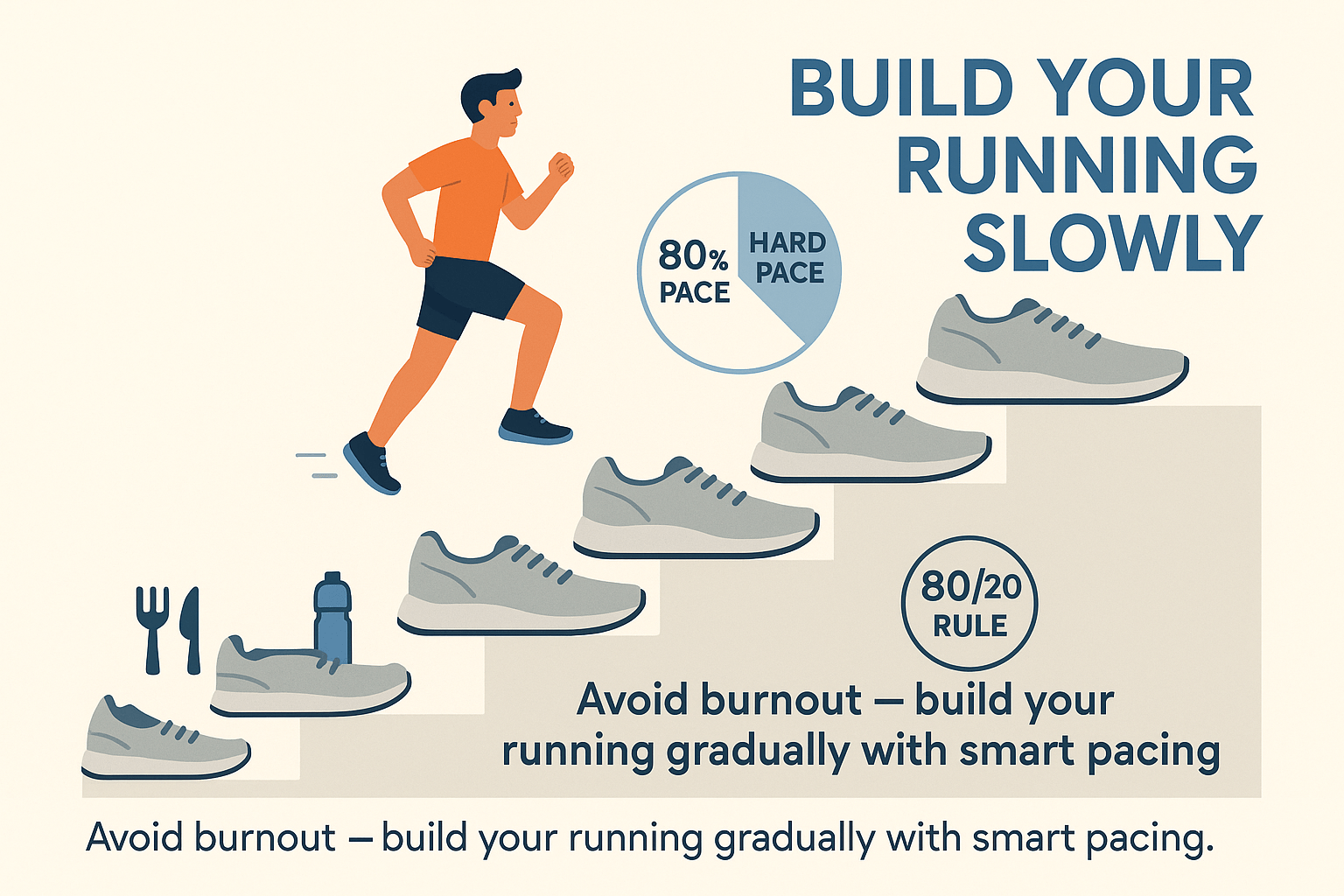
The truth is, running isn’t about going all out from the start. It’s about pacing yourself, building up your endurance, and learning how to avoid burning out too soon. I found out the hard way—it’s not about rushing. It’s about taking your time and easing into it.

Here’s the great part: you can totally do this. You don’t need to aim for crazy distances or race like a marathoner. Take it easy at first, and you’ll see improvement. I’m here to help you avoid the mistakes I made and get you on the right path.

Let’s get started the right way—no more gasping after just one mile, I promise!


How to Get Into Running – The Ultimate Guide for Beginners

Let me give it to you straight: gonna feel like crap in the beginning. But here’s the thing: that’s totally normal. I’ve been there. We’ve all been there. You’ll probably be out of breath after just a few minutes. You’ll think your legs are made of cement. And your body will be screaming, “What the heck is going on here?” But if you stick with it, running can be one of the most rewarding things you’ll ever do.

It’s all about starting slow, finding your rhythm, and not expecting to turn into a marathoner overnight. Patience and consistency are the keys. I’ll walk you through how to get started without blowing up your knees or burning out in the first week.


Start Slow: Don’t Rush It

You’ve probably seen those runners who look like they’re floating on air and thought, “I wanna do that!” But let me tell you something: that runner didn’t start out that way. They worked for it.

When I first started, I made the mistake of going too hard, too fast, and guess what? I got hurt. It’s a common rookie mistake. You get all excited, put on some cool gear, and try to keep up with someone who’s been running for ages. You push yourself until you’re gasping, and the next thing you know, you’re sidelined with an injury. I know it’s tempting to push hard, but slow and steady is the way to go.

Start with walking before you run. Easy, right? Spend a few weeks walking at a brisk pace, get your body used to the movement. Start slow with three or four one-hour walks a week, and then slowly add some jogging intervals. Believe me, your body will thank you.


The Walk/Run Method: How to Build a Running Base

If you’ve walked for a couple of weeks and feel like you’re ready to take the plunge, it’s time to introduce the Walk/Run method. This is hands down the best way to build your endurance without burning yourself out.

Here’s how it works: Warm up with a 5–10 minute brisk walk, then jog for 30 seconds to a minute, and follow it with a 1–2 minute walk. Repeat this cycle for 20–30 minutes. As you get fitter, you’ll gradually run longer and walk less.

I promise, it works. When I first started doing this, I felt like I was cheating, but within a month, I was running solid miles with no problem.


Gradual Progression: Don’t Rush It

If there’s one thing I want you to take away from this article, it’s this: Don’t rush it. Your body needs time to adjust to running.

In the beginning, it can feel like you’re not making any progress. But let me tell you, every run counts. Building your endurance takes time—months, not weeks. If you’re not willing to take it slow and build up gradually, you’re gonna end up frustrated, injured, or both.

In the beginning, try adding just 3-5 minutes to each run. So, if you ran 10 minutes last time, aim for 13 minutes this time. No need to rush. As your body gets used to the pounding, you’ll start running longer and faster.


Distance vs. Time: It’s All About Time First

Don’t worry about distance yet—focus on how long you’re running.

Instead of obsessing over how far you’re running, focus on how much time you’re running. The longer you stay active, the better. Once your stamina improves, you can start worrying about distance.


Monitor Your Effort: The Talk Test

Try the Talk Test.

It’s pretty simple: if you can carry on a conversation without gasping for air, you’re running at the right intensity. If you’re struggling to speak a full sentence, you’re probably pushing too hard. It’s not about speed when you start—it’s about going at a pace you can keep up with.


Rest Days: The Unsung Hero of Progress

Rest days are just as important as your training days.

Without proper rest, your muscles don’t get the chance to rebuild, and that’s how injuries happen. Don’t be that person who pushes themselves every day. You’ve got to let your body recover.

Take at least two days off per week. Use that time to stretch, foam roll, or take a walk. You’re not slacking—you’re giving your body time to recover.


How Long Until Running Feels “Easy”?

With time, it will get easier.

When you’re starting, running is tough, uncomfortable, and you’re probably gonna feel like quitting halfway through a run. That’s okay. I’ve been there, and I can promise you it gets better.

How long will it take? That depends on you. Your fitness level, age, and consistency all play a role. But give it time, and it will get easier.

On average, if you’re training consistently, you should start seeing real progress after 2–3 months. Don’t get discouraged early on—this is a long game.


Conclusion: Keep Going, Keep Improving

If you’re looking to start running, here’s the key: take it slow. Don’t expect overnight results. Focus on building your stamina, monitoring your pace, and being patient. The road to becoming a runner is long, but every run gets you closer to the runner you want to be.

So lace up those shoes, hit the pavement, and remember: Every run builds the runner you’re becoming.

How To Get Into Running: The No-Bull Guide for Beginners

Starting to run can feel tough.

I totally get it because I’ve been there myself.

During my early runs, I’d be out of breath before even hitting the first mile.

I’d think, “I’m fit! I’ve got this!”—only to end up walking, hands on my knees, trying to catch my breath.

It’s hard, and it can feel frustrating, but trust me, you’re not alone.

The truth is, running isn’t about going all out from the start.

It’s about pacing yourself, building up your endurance, and learning how to avoid burning out too soon.

A few runs into and I found out that it ain’t about rushing. It’s about taking your time and easing into it.

Enough talking about me.

Here’s the great part: you can totally do this.

You don’t need to aim for crazy distances or race like a marathon. Take it easy at first, and you’ll see improvement.

I’m here to help you avoid the mistakes I made and get you on the right path.

Let’s get started the right way—no more gasping after just one mile, I promise!


Start Slow: Don’t Rush It

I cannot emphasize this enough.

You’ve probably seen those runners who look like they’re floating on air and thought, “I wanna do that!” But let me tell you something: that runner didn’t start out that way.

They worked for it.

When I first started, I made the mistake of going too hard, too fast, and guess what?

I got hurt.

It’s a common rookie mistake. You get all excited, put on some cool gear, and try to keep up with someone who’s been running for ages. You push yourself until you’re gasping, and the next thing you know, you’re sidelined with an injury.

I know it’s tempting to push hard, but slow and steady is the way to go.

Again, I cannot emphasize this enough.


Walk Before You Run

Start with walking before you run.

Easy, right? Spend a few weeks walking at a brisk pace, get your body used to the movement.

Start slow with three or four one-hour walks a week, and then slowly add some jogging intervals. Believe me, your body will thank you.

This is especially the case if you’re really out of shape or have some mobility issues. I always say that walking is the perfect gateway drug to running.

Here’s a guide I wrote on how to walk five miles everyday.


The Walk/Run Method: How to Build a Running Base

If you’ve walked for a couple of weeks and feel like you’re ready to take the plunge, it’s time to introduce the Walk/Run method. This is hands down the best way to build your endurance without burning yourself out.

Here’s how it works: Warm up with a 5–10 minute brisk walk, then jog for 30 seconds to a minute, and follow it with a 1–2 minute walk.

Repeat this cycle for 20–30 minutes. As you get fitter, you’ll gradually run longer and walk less.

I promise, it works. When I first started doing this, I felt like I was cheating, but within a month, I was running solid miles with no problem.


Gradual Progression: Don’t Rush It

If there’s one thing I want you to take away from this article, it’s this: Don’t rush it.

Your body needs time to adjust to running.

In the beginning, it can feel like you’re not making any progress.

But let me tell you, every run counts.

Building your endurance takes time—months, not weeks.

If you’re not willing to take it slow and build up gradually, you’re gonna end up frustrated, injured, or both.


Increase Your Run Time Slowly

In the beginning, try adding just 3-5 minutes to each run.

So, if you ran 10 minutes last time, aim for 13 minutes this time.

No need to rush. As your body gets used to the pounding, you’ll start running longer and faster.


Distance vs. Time: It’s All About Time First

Don’t worry about distance yet—focus on how long you’re running.

Instead of obsessing over how far you’re running, focus on how much time you’re running.

The longer you stay active, the better. Once your stamina improves, you can start worrying about distance.


Monitor Your Effort: The Talk Test

Try the Talk Test.

It’s pretty simple: if you can carry on a conversation without gasping for air, you’re running at the right intensity.

If you’re struggling to speak a full sentence, you’re probably pushing too hard.

It’s not about speed when you start—it’s about going at a pace you can keep up with.

I’d also recommend paying attention to your perceived exertion. 


Remember to Rest

Rest days are just as important as your training days.

Without proper rest, your muscles don’t get the chance to rebuild, and that’s how injuries happen. Don’t be that person who pushes themselves every day. You’ve got to let your body recover.

Take at least two days off per week.

Use that time to stretch, foam roll, or take a walk. You’re not slacking—you’re giving your body time to recover.


How Long Until Running Feels “Easy”?

With time, it will get easier.

When you’re starting, running is tough, uncomfortable, and you’re probably gonna feel like quitting halfway through a run.

That’s okay. I’ve been there, and I can promise you it gets better.

But overall, expect real progress after two to three months of consistent training.

Of course, I’m not making any promises but according to my experience working with plenty of beginners, this seems like a sensible time-frame.

On average, if you’re training consistently, you should start seeing real progress after 2–3 months.

Don’t get discouraged early on—this is a long game.

In case you want more structured training plans for beginner, check my couch to 5K plan.


Conclusion: Keep Going, Keep Improving

If you’re looking to start running, here’s the key: take it slow.

Don’t expect overnight results. Focus on building your stamina, monitoring your pace, and being patient.

The road to becoming a runner is long, but every run gets you closer to the runner you want to be.

So lace up those shoes, hit the pavement, and remember: Every run builds the runner you’re becoming.

Mastering the Art of Running – Decoding Common Form Mistakes

Have you ever thought running was just putting one foot in front of the other?

I used to think the same thing. I mean, we’ve all got legs, right? So how hard can it be?

But here’s the deal: it’s not just about putting one foot in front of the other.

You need to get it right.

Trust me, if you don’t focus on your form, you’re just wasting energy.

You could end up with some painful, long-term issues.

And you don’t want that do you?

Let’s break down some common running form mistakes and get you running smooth and fast—without the injury potential.


The Importance of Proper Running Form

Proper running form isn’t just something nice to have.

It’s the difference between loving your runs and dreading them.

And it’s the difference between finishing strong and having to quit early because of an injury.

Let me share with you the top reasons you should care:

  • Avoid Pain: Good form protects you from aches and pains. You’ll avoid those sharp pains that make it feel like your legs are on fire.
  • Boost Your Performance: Want to run faster? Guess what? Form plays a role in that. The more efficient you are, the easier it is to run.
  • Injury Prevention: Running with bad form is like playing a risky game with your body. When you do it right, you’re staying injury-free.
  • Enjoyment: Running with good form? It feels smooth, almost like dancing. Nothing’s worse than dragging yourself to the finish line.

Now let’s get practical…


Mistake #1: Slow Cadence

If your running cadence is slow, your run’s gonna feel like you’re wading through mud.

I know, I’ve been there. I used to think I was killing it, but I was barely lifting my feet.

My cadence was so slow I could’ve walked faster.

Aim for about 180 steps per minute.

This is the sweet spot. Not only does this make you run smoother, but it also saves your muscles and joints from extra wear and tear.

So why do so many of us struggle with it?

Because we’re too busy trying to “stride out,” thinking a longer stride means we’re faster.

Nope. All you’re doing is overextending, wasting energy, and setting yourself up for some tight hamstrings.

My best Advice? The following:

  • Find Your Starting Point: Run naturally for 30 seconds, count how many steps you take, double it to get your cadence. If it’s below 170, start working your way up.
  • Gradual Increase: Add 5-10 steps per minute each week. Don’t try to jump from 160 to 180 overnight—your legs will revolt.
  • Get a Metronome:  Set it to 180 BPM, and match your steps to the beat. Trust me, your feet will get the rhythm soon enough.
  • Agility Ladder Drills: Yep, I’m that guy using the ladder at the gym looking like a speed demon. But it works. Helps with foot speed, form, and gets your cadence where it needs to be.

Mistake #2: Running Like a Tense Robot 

This error took a while to even realize I was guilty of.

For a long time, I was thinking I looked smooth, but actually, I looked like I was bracing against a storm with stiff arms and tense shoulders. I’d tense up like a deer in headlights, and wonder why I was more exhausted after my runs than I should’ve been.

Here’s how you can fix it:

  • Loosen Up: Are your shoulders up by your ears? Drop them and relax. Same with your fists—loosen up. Hold your hands like you’re carrying a butterfly. You know, lightly. You’re not trying to strangle it.
  • Shake It Out: Every mile, give your arms a good shake. It really helps you run smoother.
  • Elbows at 90 Degrees: Keep your arms bent at about a 90-degree angle and swing them naturally. Don’t let them wander out of whack.

Mistake #3: Heel Striking 

If you’re landing on your heels and stretching your legs too much, you’re basically hitting the brakes every time you step. I did this for years before I realized that every loud “THUD” of my feet hitting the ground was just my body begging for mercy.

Heel striking is tough on your joints and muscles. You’re basically putting the brakes on every step.

Sure, you can argue that most elite marathon runners are heel strikers, but my question to you is ‘are you an elite marathoner?’. If your answer is yes then what are you doing here? This article for beginners only.

Anyway, here’s how to fix heel striking:

  • Footstrike Awareness: When you run, make sure your feet land under your hips, not ahead of you. Imagine you’re running over hot coals. Quick, light steps.
  • Quiet Feet: If your footfalls sound like a marching band, you’re probably heel-striking. Aim for a lighter, quieter step.
  • Midfoot Landing: Focus on landing on your midfoot or the balls of your feet, not the heels. Your feet should land directly under your body.
  • Drills to Fix This: High knees, butt kicks, and skipping will get your feet under you and help eliminate that pesky heel strike. I’d also recommend trying out the chi running method.

Mistake #4: Overstriding 

Ever thought that stretching your stride would make you faster?

It’s actually slowing you down.

This is the same mistake I made early on—thinking I could channel Usain Bolt by reaching for the stars with every step.

But all I did was burn out faster than a match in a hurricane.

My best advice? In a nutshell: 

  • Shorten Your Strides: Instead of trying to stretch out your legs, focus on quick, controlled steps. Your feet should be landing directly under your body.
  • Relax and Glide: Think of it like sliding across the ground, rather than stretching or reaching for something. Keep your steps light.
  • Practice Drills: Skip, butt kicks, and high knees—these will teach you to keep your feet underneath your body and reduce overstriding.

Mistake #5: Ignoring Your Body 

Let me be straight with you  – running through pain will only make the pain worst.

Sure, you might feel invincible, running through all the aches and pains, but that’ll catch up with you.

You get that slight ache in your knee, and instead of listening to it, you push harder, thinking it’s just part of the deal. It’s not.

Here’s how to avoid this dumb mistake:

  • Take Recovery Seriously: Rest when your body tells you to rest. Don’t brush it off. Trust me, you’ll save yourself from months of being sidelined.
  • Mix It Up: If you’re hurt, switch it up. Go for a swim or ride your bike.
  • Stretch & Foam Roll: Spend a few minutes after each run stretching and rolling out. It’s a must for recovery.

Conclusion

Running might seem simple, but it’s not always easy.

It’s about getting your technique right, timing things well, and paying attention to your body.

Fix your cadence, relax that upper body, and avoid slamming the brakes with every step.

Keep your strides short and quick, and always, always pay attention to what your body’s telling you.

Fix just one of these mistakes, and your runs will feel a lot smoother. And trust me, once your form is dialed in, you’ll find yourself flying through runs without even thinking about it.

How Often Should You Run?

As a running coach, I get asked all the time—whether in person or on Twitter—“How often should I run?”

I get it.

You look at your running shoes, think about lacing up, and then wonder if today’s the day to hit the pavement… or take a well-earned break.

Here’s the thing: there’s no simple answer to that question.

What works for one runner might not work for another.

It really depends on where you’re starting, where you want to go, how your body’s feeling – I can go on and on but I bet you get the gest of it.

Yet, don’t worry, by the end of this article, you’ll have a clear idea of how often to run and how to make it work for you.


The Main Factors to Consider

Before we dive into how often you should run, let’s look at what factors play into it.

Here’s what you need to consider:

  • Past experience: Are you a seasoned runner or a beginner?
  • Current fitness level: How’s your body handling training so far?
  • Future goals: What do you want to achieve? Are you aiming for a marathon, or just trying to get healthier?

Once you know where you’re at, you can start figuring out a plan that works for you.


Step 1: Define Your Running Goals

 I get it – we all have different reasons for running.

Some of us run to lose weight, others to crush a specific race goal, and some of us just want to feel better in our day-to-day lives.

Here’s how different goals affect your running schedule:

  • Weight Loss: If dropping a few pounds is the goal, 2-3 runs a week are great to start. Throw in some run/walk intervals, and you’ve got yourself a solid plan to burn calories and build stamina.
  • Seasoned Runner: If you’re already logging some decent miles and you’re aiming for performance goals (speed, distance, race times), 5-6 days of running a week might be more your speed.

Step 2: Understand Your Uniqueness

Let’s be real—there’s no one-size-fits-all answer to how often you should run. Your body, goals, and schedule all play a role in creating a plan that works for you.

In other words:  the best training plans are made for you, not for anyone else.


Step 3: Break It Down with Your Goals in Mind

Got your goals locked in?

Awesome. Now, let’s map out the details.

For example:

  • Trying to crush your 5k PR? It’s about quality, not quantity. 3-4 runs a week with speed workouts can get you there.
  • Long-term health? Start with 2-3 runs a week, throw in some walking or cross-training, and build your foundation.
  • Marathon training? We’re talking 4-6 runs per week, plus cross-training for recovery.

Step 4: Assess Your Time Availability

Life’s busy.

We’ve got work, family, social stuff, and everything in between.

So, it’s crucial to be realistic about how much time you can actually dedicate to running each week.

Here’s the deal: staying consistent is what really matters.

If you can’t run every day, that’s cool. But if you can regularly commit to 3-4 runs a week, you’re good to go.

Now let me break down how often should you be running based on your running experience.


How Often Should You Run as a Beginner?

Alright, you’re just starting out.

Maybe you’ve got the shoes, maybe you’ve got the motivation, but now you’re wondering how often should you run as a beginner?

Step 1: Take It Slow—Start Smart

Two to three runs a week is ideal when you’re just starting out.

Why? Well, starting slow helps avoid injury.

Remember, you didn’t wake up one morning and instantly crush 5 miles, right? Same goes for running.

Step 2: Why 2-3 Runs a Week?

Why not try for 5-6 runs, you ask? Well, too much too soon is the quickest route to burnout and injury.

Focus on building your foundation with 20-30 minute runs and incorporate walking breaks if needed.

Step 3: Build Stamina, Not Speed

For now, the goal isn’t speed—it’s getting comfortable with running.

As your body adapts, you’ll start running longer and faster. But remember, don’t rush it. The tortoise wins the race.


How Often Should You Run as an Intermediate Runner?

Okay, so you’ve been running for a few months and have built some consistency. N

ow you’re ready to step it up. Here’s how to level up your running routine:

Step 1: You’re Officially an Intermediate Runner

Congrats, you’re no longer a newbie. You’ve got the basic runs down, and now it’s time to challenge yourself.

Step 2: Aim for 4-5 Runs a Week

This is your sweet spot. 4-5 runs a week gives you the perfect mix of consistency and recovery.

And don’t worry—pay attention to what your body’s telling you.

If you feel like you need a break, take it. Pushing too hard is just setting yourself up for injury.

Step 3: Gradual Volume Increase

The key to progressing without burning out is simple: increase your time and distance slowly. Add about 10% more volume each week, and watch yourself get stronger without overloading your system.

How to Progress From 2 to 5 Days a Week Without Burning Out

Alright, now let’s get to the meat and potatoes: how to safely bump up your running days without burning out.

You’re going to want to start slow and increase by no more than 10-15% per week. No rushing.

If you’re in the beginner phase, increase your frequency gradually—don’t go from 2 days to 5 in one week.

It’s a recipe for disaster.

And, don’t forget to pay attention to what your body’s telling you.

I know, I know.

It’s tough. But trust me, there’s nothing more frustrating than being sidelined for weeks because you pushed too hard.


How to Structure Your Weekly Runs for Maximum Benefit

Now that we’ve got the basics down, let’s talk strategy.

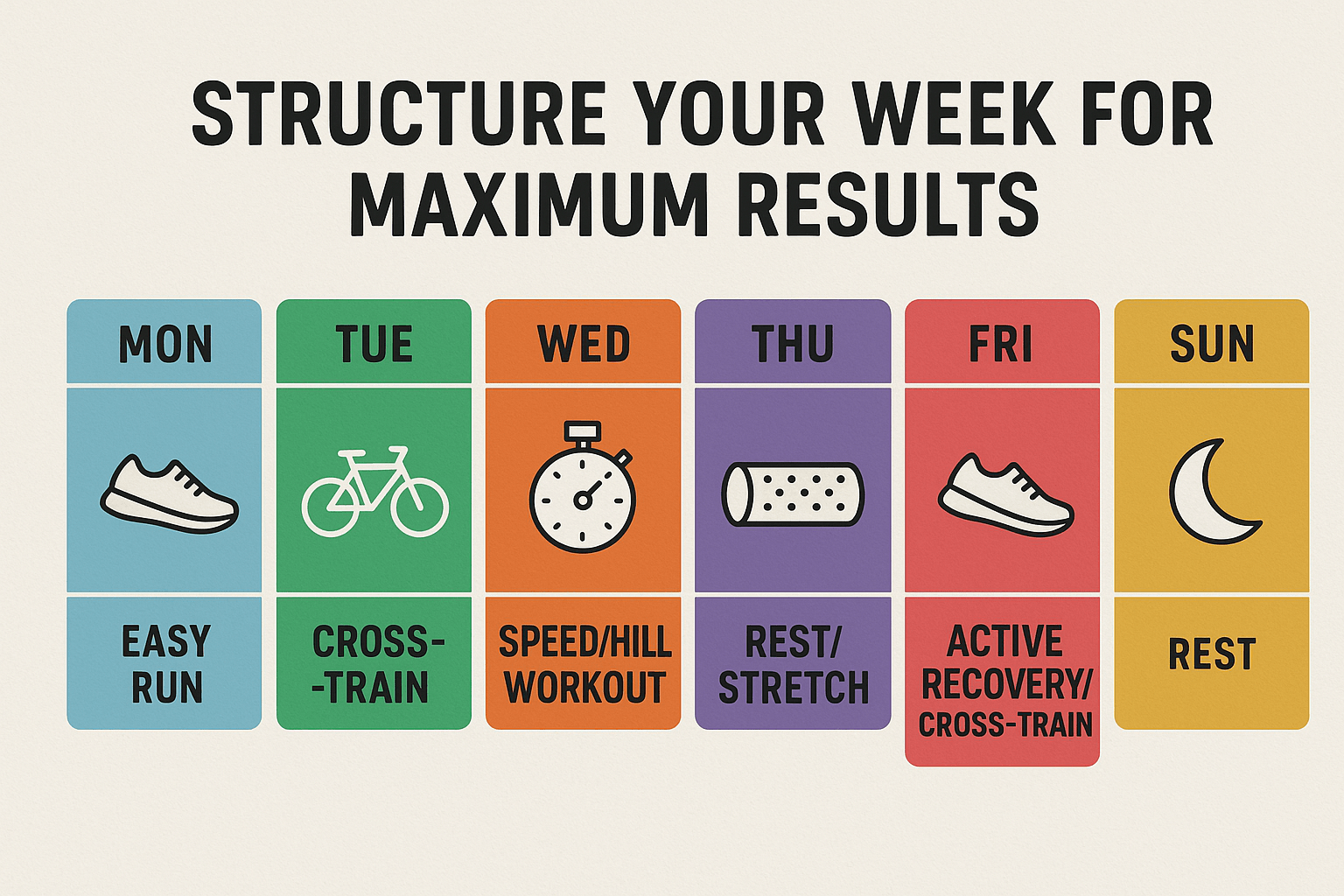
You need to structure your weekly runs to get the most bang for your buck. Here’s the game plan for a well-balanced running week:

  • Day 1: Easy-paced run to build your base
  • Day 2: Cross-training (get in the pool, hit the bike, or do some strength work)
  • Day 3: Speed or hill work to challenge your legs and lungs
  • Day 4: Rest, foam roll, and stretch!
  • Day 5: Long run at a comfortable pace
  • Day 6: Active recovery or cross-train
  • Day 7: Rest again.

Consistency doesn’t mean you have to go hard every day. You need to build yourself up over time.


Conclusion: It’s All About Consistency

How often should you run? That’s up to you.

Start with the basics, build your foundation, listen to your body, and focus on consistency over time.

Thank you for stopping by.

Keep training strong.

16 Essential Traffic Safety Tips for Urban Runners: How to Stay Safe on City Streets

I live in Bali, and if you’ve ever been to Denpasar or around Canggu, you know exactly what I’m talking about.

The traffic on this heavenly island is a whole other level of hell.

It’s chaotic, with cars weaving between each other, and don’t even get me started on the lack of sidewalks!

I’ve had my fair share of close calls—dodging motorbikes, weaving between traffic-jammed cars, and trying not to end up in the road with a scooter zooming by.

But here’s the thing: if I can handle running here in Bali, dodging traffic and motorbikes, I know you can safely run anywhere.

So, whether you’re running through city streets or just out for a peaceful jog, I’ve got some tips from my own experience that’ll help. You don’t need to be dodging traffic like I do in Bali to make sure your run is smooth and safe.

I’m here to help you run safely, stay aware, and avoid close calls on the road.


1. Cross Like a Boss

You ever feel like you’re playing Frogger when crossing the street?

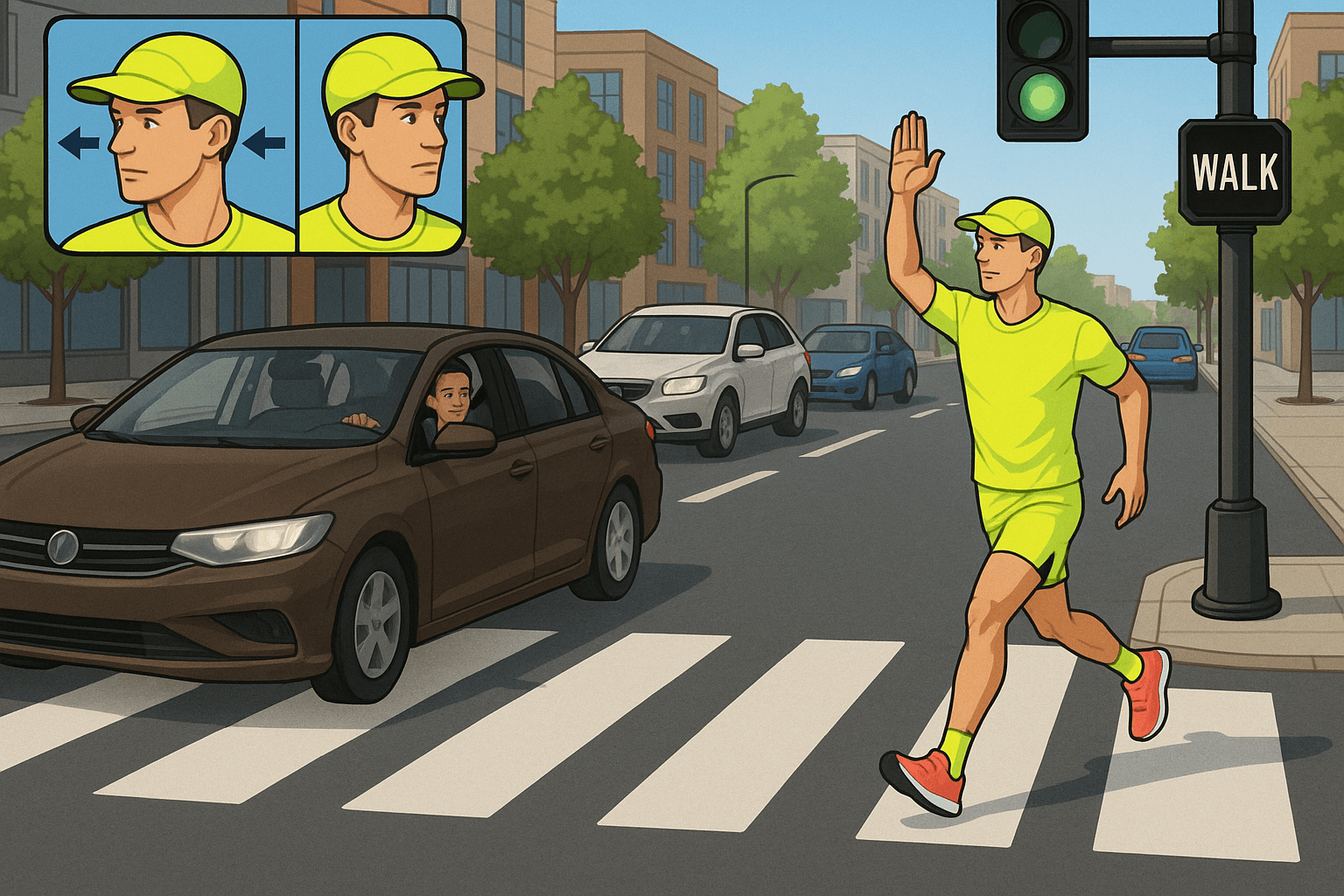
Yeah, we’ve all been there. Here’s the thing: crosswalks are your best bet.

They’re the safest place to be when you’re crossing busy streets. If there’s no crosswalk? Be a detective. Look for the safest, most visible spot. Avoid those blind corners like the plague.

If a car can’t see you, that’s a big nope from me.


2. They Don’t See You

Let me break it down — drivers can miss you, even if you’re decked out in neon.

They’re often distracted by their phones or chatting away with their backseat passenger.

So, here’s what you do: stay three to five feet away from traffic.

It’s your safe space. And if you’re crossing? Use your arm.

Wave it out like you’re auditioning for “The Wave” at a baseball game. Make sure they see you!


3. Look Both Ways… Seriously

I know, I know, you’re an adult.

You don’t need me to tell you to look both ways before crossing.

But here’s the reality — you’d be amazed at how many runners forget this rule when they’re in the zone. Before you step into that street, take a second.

Check the traffic. Don’t just assume that because the light’s green, you’re safe. Trust me, I’ve had my share of close calls, and I don’t want you to go through that.


4. Make Eye Contact (No, Really)

This one’s a game-changer. Look a driver dead in the eyes — not in some creepy, “I’m gonna follow you home” way, but in a “I’m crossing, don’t hit me” kind of way.

This little move is a life-saver. If they see you, they’re less likely to try to squeeze past you at an intersection. Trust me, you’re not gonna win that race.


5. Watch Out for Intersections

I’m not saying intersections are all bad, but let’s be honest, they’re like the wild west out there.

Don’t assume you’re safe just ‘cause the “Walk” sign is on.

Some drivers are too busy texting to care that you have the green light.

If you’re crossing, double-check that no one’s going to turn into your path.

I hate to sound like a broken record, but please don’t ever take common sense advice for granted.


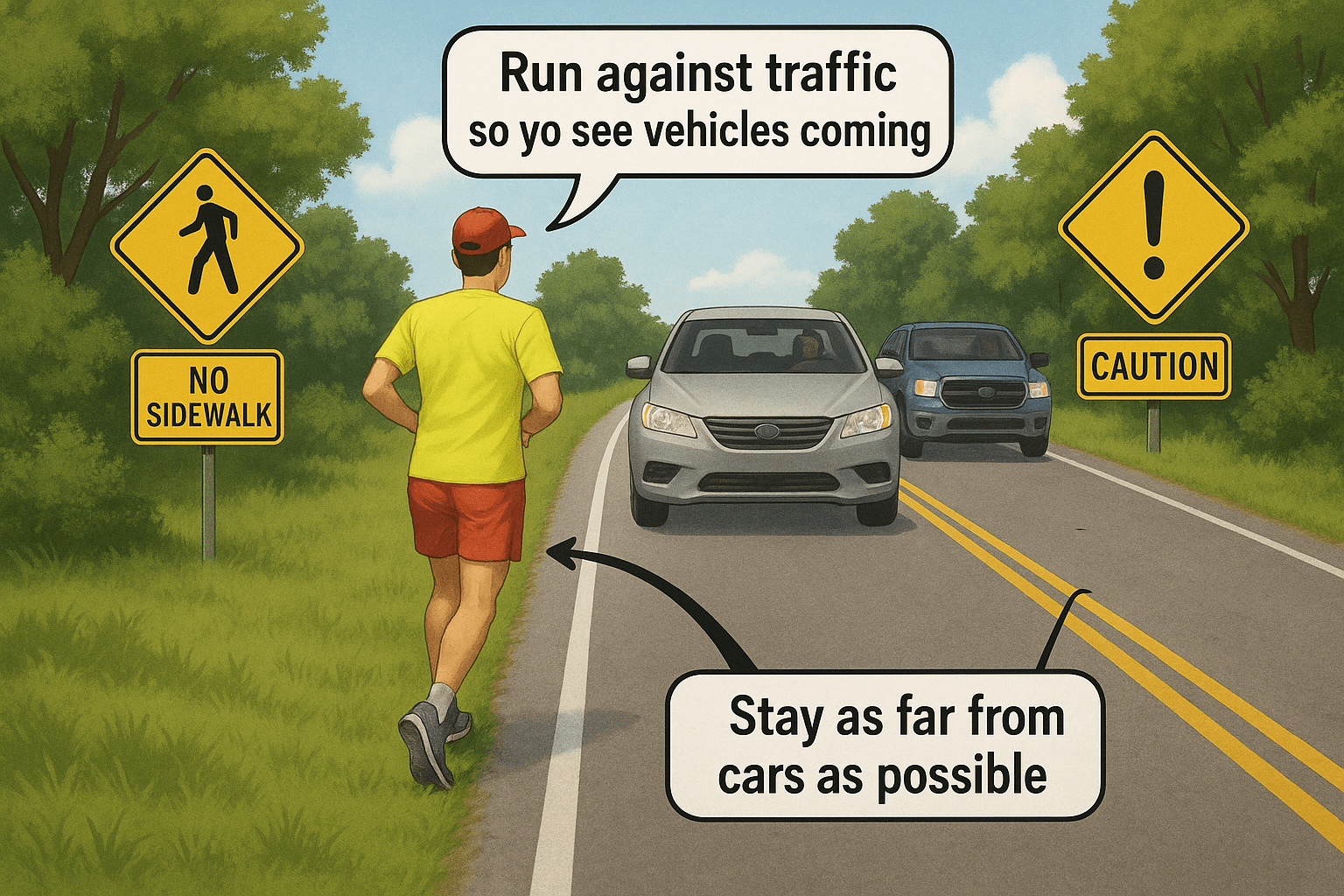
6. Sidewalks Are Your Best Friend

If there’s a sidewalk, use it. If there’s not, get the hell off the road.

Simple as that. You don’t need me to tell you that you don’t want to be running with cars whizzing by you at 40 mph.

But if you find yourself on a road without sidewalks, run against traffic. That way, you can see the cars coming, and they can see you.


7. Don’t Try to Outrun a Car

Listen, I know you’re fast. I know you’ve got those Usain Bolt legs when you want to.

But here’s the deal: cars are faster.

Even if you’re sprinting like a maniac, a car will still blow past you. So, if you find yourself at an intersection with a car coming at you, don’t race it.

Step aside.

You’ll live longer.

Thank me later.


8. Be Shiny, Like a Traffic Cone

When the sun starts going down, you become invisible.

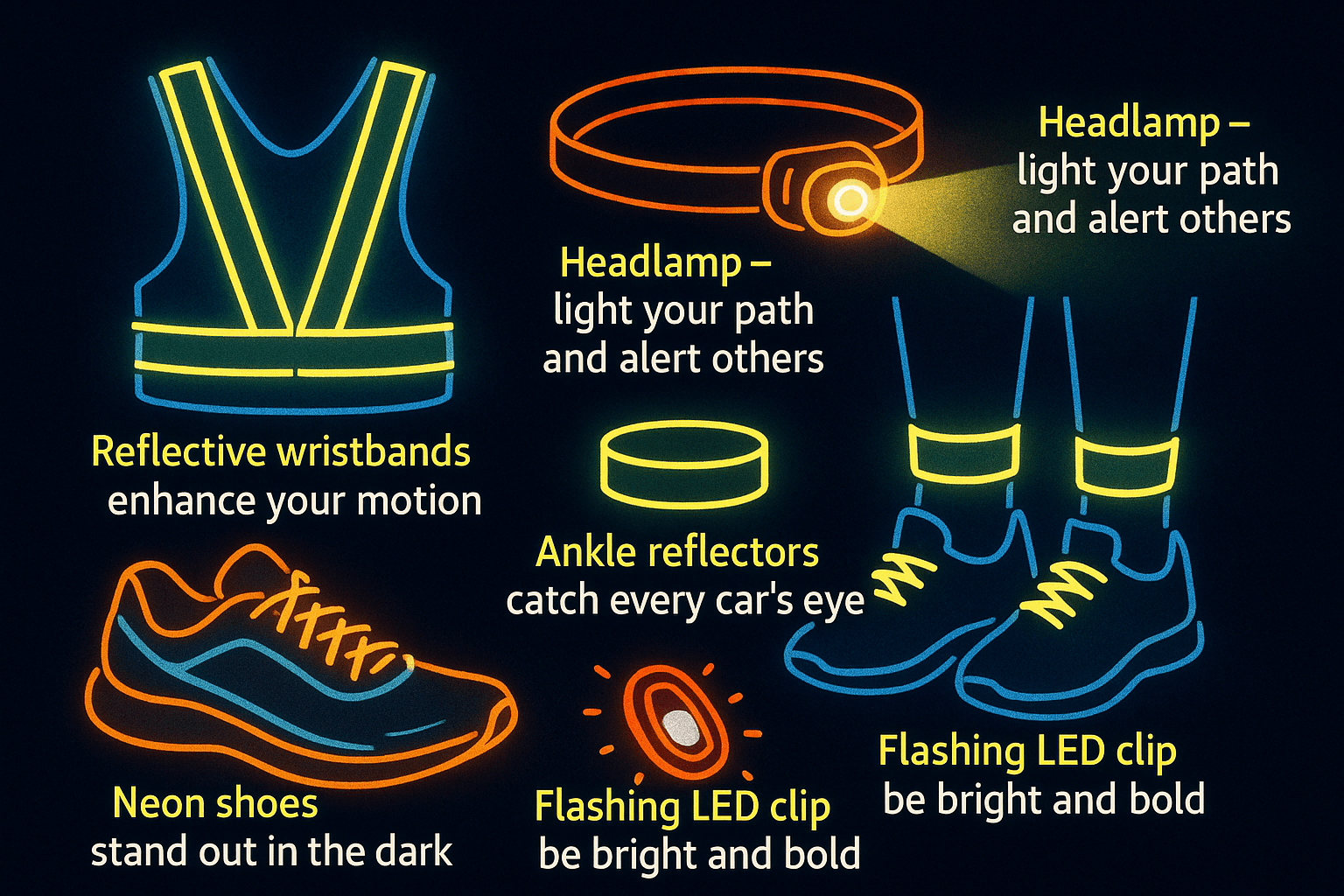
You need to stand out. Bright neon gear? Yes, please. Reflective vest? Go for it.

Honestly, I know it’s not “cool,” but you’ll be glad you look like a walking highlighter when some distracted driver spots you from a mile away.

And if you’re running at night? Strap on a headlamp.

I don’t care if you look like a miner, just stay visible.


9. Pay Attention — Seriously

The best way to avoid danger is to actually be aware of it. That means cutting down on the distractions.

Keep the music low, or better yet, ditch the headphones altogether. That little voice in your head telling you to look left?

That’s your best friend right now. Pay attention to the sounds around you. Honking horns? Engine revving? Those are all your alarm bells.


10. Know the Blind Spots

Hills and blind curves — these are the spots where cars sneak up on you. If you’re about to hit one, switch sides of the road. Simple as that. If you can’t see around that corner, chances are, the driver can’t either.


11. Be Polite

When you’re about to pass someone, don’t be a jerk. Announce yourself. “Coming up on your left!” or “Heads up, I’m gonna pass.” It’s common courtesy, and it keeps everyone safe. Plus, it avoids that awkward, “Oh, I didn’t see you there!” moment.


12. Ditch the Earphones (For Real)

I get it, music is life.

But here’s the thing: you need your ears when you’re running in the city.

That honking horn? The screeching tires? You’re gonna miss that if you’re blasting your favorite playlist.

I’m not saying ditch the music, just keep the volume low or pop one earbud out.

Trust me, it’s worth it.


13. Open-Ear Headphones Are Your Friend

You want music and safety?

Get yourself some open-ear headphones. They’re a game-changer. You still get the music, but you’re not cutting yourself off from the world around you. Best of both worlds.


15. Carry ID

What happens if you get hit? Or trip and sprain your ankle? Carry your ID. I

t’s not paranoid, it’s practical.

And hey, it’s also a good idea to stash some cash on you — you never know when you might need it.


16. Trust Your Gut

Your instincts? They’re on point. If something feels off — a weird vibe, a car coming too fast, a shady character — listen to it. If you feel unsafe, change your route. Your gut doesn’t lie.

I’ve written a previous article on running safety – you can check it out here

The Bottom Line

Look, city running isn’t just about speed or hitting your weekly mileage. It’s about staying alive, keeping your head on a swivel, and not getting run over. Follow these tips, and you’ll stay safe, be seen, and be a pro out there.

Stay sharp, stay fast, and keep running strong. 

Coach D.

How to Reduce Lactic Acid Build-Up While Running (Without Burning Out)

lactic acid while running

Ever been mid-run, legs flaming, lungs clawing for air, thinking:

“Lactic acid is killing me!”?

Yeah, I’ve been there too.

But here’s the truth: lactic acid isn’t your enemy. It’s actually working for you when the going gets tough.

If you want to stop burning out halfway through a workout or race, you’ve gotta stop blaming the wrong thing—and learn how to train and pace smarter.

Let’s break it down: what’s really going on when the burn hits, and how you can avoid hitting that wall.

What Lactic Acid Actually Is (and Isn’t)

Okay, time to clear up a big myth.

When we say “lactic acid,” what we really mean is lactate. The stuff that makes your legs scream? That’s not lactate—it’s hydrogen ions (H⁺) from your muscles becoming acidic.

Lactate = fuel
Hydrogen ions = burn

Here’s the quick science, no fluff:

Your body breaks down carbs for energy.

At easy paces, you’ve got enough oxygen, so your muscles stay chill.

Start pushing hard (sprints, hills, fast tempo), and oxygen runs short.

Your body switches gears: enters anaerobic mode and churns out lactate + hydrogen ions.

  • Lactate is helpful. Your body actually recycles it for energy—like handing off fuel from one muscle group to another or sending it to the liver to turn back into usable glucose.
  • Hydrogen ions are the ones that crank up the acidity inside your muscles. That’s what causes that deep burn and that “I-can’t-hold-this-pace-any-longer” feeling.

So yeah, it’s not lactic acid’s fault. It’s more like lactate’s trying to help, while H⁺ ions are setting the place on fire.

Why You Burn Out in the Middle of a Run

Ever felt great at the start, then crashed halfway through? You probably went out too hard and blew past your lactate threshold.

Think of your lactate threshold as the redline on your engine—the hardest pace you can hold without building up that nasty acid.

Once you go over that threshold, your body can’t clear the hydrogen ions fast enough.

That’s when the burn hits, and your pace starts tanking.

It’s like running on credit—you’re borrowing energy fast, but the interest adds up. Lactate helps pay the bill, but if the charges (H⁺) keep stacking up? You default.

Bottom line: you didn’t lose to lactic acid—you lost to poor pacing.

How to Reduce “Lactic Acid” Build-Up (And Actually Feel Stronger)

You can’t avoid the burn entirely—especially during hard efforts. But you can delay it and recover faster. Here’s how:

1. Train Below Your Redline

You build your tolerance not by always going hard, but by training smart.

  • Do tempo runs at or just below your lactate threshold pace.
  • Use intervals with proper recovery (e.g., 3×1-mile at tempo pace with 2–3 min jogs).
  • Try progression runs—start easy, finish strong.

This teaches your body to clear lactate and hydrogen ions more efficiently.

The more you train that system, the longer you’ll last before burning up.

Pro tip: You don’t need to run all-out to get faster. Run just under the burn, and you’ll push the ceiling higher over time.

2. Master Your Pacing

The #1 reason runners blow up in races? They go out too hot.

  • Start slightly slower than goal pace.
  • Stay relaxed for the first third.
  • Dial it in mid-race.
  • Hammer the last stretch if you’ve got gas.

Remember: you’re not racing the first mile—you’re racing the last one.

3. Fuel Up Right

Your body burns through carbs first when you’re pushing hard.

Eat some carbs 1–2 hours before a workout (banana, toast, oatmeal).

For longer or harder sessions, fuel mid-run (gels, chews, sports drink).

Running low on carbs = faster shift to anaerobic = acid overload.

And yes, even fat-adapted runners need carbs at high effort. Your mitochondria are picky.

4. Recover Like a Pro

Recovery clears the metabolic “trash” and rebuilds your system.

  • Cool down after hard efforts (easy jog + light stretching).
  • Hydrate + refuel within 30 minutes (carbs + protein).
  • Sleep like it’s part of the training plan.

You don’t adapt during the run—you adapt between runs.

5. Stay Loose & Breathe

Tense muscles tighten blood vessels and trap acid.

Stay relaxed when running hard—drop your shoulders, unclench your fists.

Focus on rhythmic breathing—helps keep oxygen flowing and acid clearing.

Even small tweaks in form can buy you a few more minutes before fatigue hits.

How to Train Your Body to Handle Lactic Acid Like a Pro

Here’s the truth: you’re never going to completely stop lactic acid.

And you shouldn’t want to—it’s part of how your body fuels hard efforts.

But if the burn hits early and your legs start locking up halfway through a race or tempo session, that’s your body saying, “We weren’t ready for this.”

Good news? You can train to delay that burn and build serious endurance in the process.

Let’s break down how to toughen up your system and push the pain line further out.

1. Build Your Aerobic Base (Yes, Zone 2 Is Boring—but It Works)

The foundation for handling lactic acid is an engine that doesn’t panic under pressure. That means easy, consistent, conversational-paced running.

This slow stuff increases mitochondria (your cells’ power plants), builds capillaries, and trains your muscles to burn fat and clear lactate before it piles up. More aerobic fitness = more lactic acid tolerance.

In other words: easy running raises your limit.

It’s like giving your body a bigger credit card for effort—you can spend more before hitting the red zone.

2. Increase Intensity Gradually (No Jumps to Hero Workouts)

You can’t go from zero to VO₂ max overnight. If you suddenly drop into hard intervals without a solid base, you’re going to drown in acid and probably injure yourself too.

Follow the 10% rule: don’t increase your mileage or intensity more than 10% per week.

Build up 20–25 miles a week of steady running before layering in speedwork. Consistency first, fireworks later.

“You don’t build a tank with sprints. You build it with showing up—day in, day out,” as I always say.

3. Tempo Runs & Threshold Workouts – Where the Real Gains Live

This is where your lactic acid tolerance gets forged.

Run at a pace that’s “comfortably hard”—like you could talk in short sentences but really don’t want to. Stay there for 20–30 minutes. You’ll feel the burn rising, but your body will learn to clear lactate before it shuts you down.

Try:

  • 4-mile steady tempo
  • 3×1 mile at threshold with short jogs
  • Or even fast-finish tempos after easy miles

4. Intervals – Use Them as Weapons, Not Blunt Force

Intervals build tolerance, but only if used right.

Try short, controlled efforts like:

  • 6×400m at 5K pace with 1-minute jogs
  • Hill repeats (30 seconds up, jog down)

These workouts spike lactate and train your body to fight through it.

But don’t overdo them or turn every session into a sufferfest. That’s how you get overtrained and fried.

Think of intervals like sharp tools—not sledgehammers. Use them to fine-tune, not destroy.

5. Fast-Finish Long Runs – Teach Your Body to Clear Acid When Tired

Long runs build endurance. But if you end the last few miles at tempo or race pace? That’s next-level.

Start easy, then crank the final 2–4 miles to marathon or threshold effort. This teaches your legs to push through fatigue and clear lactate under stress.

Do this every few weeks, and come race day, your body will know how to close strong, not fold.

6. Avoid the “Gray Zone” Trap

This one’s sneaky. Many runners train at that medium-hard, not-quite-easy, not-really-hard pace. The problem? It’s too easy to build speed, too hard to build aerobic base, and just taxing enough to keep you constantly tired.

That’s the gray zone. Get out of it.

Use a polarized plan:

  • Easy runs = truly easy
  • Hard workouts = genuinely hard

No half-stepping.

7. Warm Up Like You Mean It

Starting hard with cold legs? That’s like flooring the gas in first gear—it just burns out.

A solid warm-up (5–10 mins jog + strides + dynamic movement) primes your body to use oxygen early and shuttles lactate better from the start.

No warm-up? Expect the burn to hit sooner—and harder.

What to Do When the Burn Hits Mid-Run

Even with great training, sometimes lactate punches you in the gut during a run or race. Here’s how to fight back when your legs are on fire:

1. Back Off – But Don’t Quit

Drop the pace slightly, even for 30 seconds. Let your body catch up. You’re not quitting—you’re buying yourself more runway to push again.

Think of it like “surfacing for air,” then diving back in.

2. Breathe Like You Mean It

Oxygen helps buffer that acid. So when you feel the sting, don’t panic—breathe deeper. Get air in. It’s like adding fuel to your fire-fighting system.

Especially on hills—power through with breath. Your lungs are tools. Use them.

3. Don’t Stop Dead – Active Recovery Wins

Ever finish a rep and collapse bent over, gasping? That actually slows down recovery.

Keep moving—jog, shuffle, walk briskly. Blood flow = faster clearance of acid.

That’s why coaches harp on cooldowns. It’s not just “extra.” It’s how you clear out the waste and feel human again.

Fighting the Burn – How to Handle Mid-Run Lactic Acid Like a Pro

Let’s be real: when the burn hits, it hits hard. You’re running strong, and then suddenly your legs turn to bricks and your lungs feel like they’re on fire.

That’s lactic acid (or more accurately, lactate) making its presence known.

Good news? You can train your body and brain to deal with it better.

Great runners don’t eliminate lactate—they just learn how to suffer well. Here’s how to fight through the burn without blowing up:

Mid-Run Fuel & Hydration

Long run? Race day? Fuel and hydrate like it matters—because it does.

Dehydration concentrates the junk floating around in your muscles, making that burn feel worse. So sip regularly—water or sports drink—especially in runs longer than an hour.

Even a little carb intake mid-run can help keep you in the aerobic zone longer and delay that anaerobic crash. That’s why gels, chews, or sports drinks are clutch.

And don’t ignore electrolytesCramping, fatigue, “heavy legs”—often it’s not lactic acid alone, it’s electrolyte imbalance.

Carry what you need. Practice fueling in training. And never let hydration be the thing that ruins a great run.

Mind Games & Form Fixes

When you’re deep in the hurt locker, your form goes to hell—shoulders tighten, fists clench, stride gets sloppy.

Fix it:

  • Relax your hands (imagine holding a potato chip)
  • Drop your shoulders
  • Shorten your stride just a hair

Small changes = big energy savings.

Mentally? Break the run into chunks. “Get to that tree.” “One more minute.” Talk yourself through it. Sometimes tricking your brain is the only way to keep moving. The best runners are part athlete, part con artist—they know how to talk their body into one more mile.

Cooling Techniques

Hot day intervals or long tempos in the sun? Try cooling your engine between reps.

  • Pour cold water on your head or forearms
  • Dump a cup over your back at aid stations

That little chill can lower your perceived effort, keep your core temp down, and help you hit the next mile without feeling like you’re boiling from the inside out.

Long-Term Ways to Raise Your Burn Threshold

You don’t want to just fight through the burn—you want to push it farther down the road. The more you train smart, the longer you can go before that lactic flood takes over.

Here’s how you get there:

Consistent Training – No Long Layoffs

The more regularly you train, the more efficient your body becomes at clearing and using lactate. Take long breaks? Your tolerance drops.

Even 3 days a week keeps your muscles sharp and your engine tuned. Consistency > hero workouts.

Gradual Progression – Don’t Shock the System

Build your mileage and intensity slowly. If you jump into hard speed work after weeks off, your legs will drown in lactic acid before the warm-up’s over.

Start with strides after easy runs. Then short fartleks. Then progress to structured intervals. Layer it, don’t leap.

Raise Your Lactate Threshold Pace

This is the gold standard. The higher your lactate threshold pace, the faster you can run before the burn sets in.

How? Tempo runs. Cruise intervals. Fast-finish long runs.

Think:

  • 20-minute tempos at “comfortably hard”
  • 4 x 5-min cruise intervals with short jog recoveries
  • Last 2 miles of your long run at HM effort

Goal: Turn your old race pace into your new training pace.

Many coaches say your half marathon pace = lactate threshold if you’re trained well. Build toward that.

Improve Running Economy with Strength Work

Stronger, more efficient runners produce less lactate at the same pace. That means you’re burning cleaner and slower—more diesel, less nitro.

Add:

  • Squats
  • Lunges
  • Calf raises
  • Core work

Even 2 sessions per week can make a big difference.

Bonus: Hill sprints. Build strength and efficiency in one punch. Strength training always pays the bills.

Rest Smart – Taper and Avoid Overtraining

Here’s the paradox: overtraining makes your burn worse.

If you’re constantly fatigued, your body struggles to clear lactate and regenerate.

You need recovery to actually adapt.

Rest is training. Period.

Keep Easy Days EASY

This is the one most runners mess up.

If you’re pushing on your “easy” days, you’re constantly simmering in low-level fatigue. That ruins your hard sessions and hammers your ability to handle lactate.

Easy days = recovery. They should feel like you’re holding back. If you can’t hold a conversation, you’re going too hard.

Train slow to race fast. It works. Trust it.

Don’t Fear the Burn—Train to Tame It

Lactic acid isn’t your enemy. It’s a byproduct of effort—a reminder that you’re pushing your edge.

The key isn’t eliminating it—it’s raising your threshold, improving your form, fueling properly, and knowing when to back off.

So next time your legs light up mid-run, smile a little. That burn? That’s the work happening. That’s you getting better.

Stay Hydrated — Always

Don’t wait till you’re dying of thirst.

As I mentioned earlier, dehydration thickens your blood and slows down oxygen delivery, which means lactic acid builds up faster and your run turns ugly.

Coach’s rule: Drink 16–24 oz of water 2–3 hours before you lace up, especially if it’s going to be a long or hard run.

Here’s the full guide to how much water runners need.

If your run’s longer than 45–60 minutes? Take in 8–12 oz of water every 20–30 minutes, more if it’s hot or you’re sweating like crazy.

Don’t Forget Electrolytes

Water’s great, but it’s not the whole picture. Sodium, potassium, magnesium — these guys keep your muscles firing properly.

When electrolytes run low, your muscles get sluggish, heavy, and more prone to cramping. Burnout can feel like bonk + battery failure. Replenish what you sweat out.

Here’s how:

  • Try electrolyte tablets, sports drinks, coconut water, or salty snacks during longer efforts.
  • If you’re a heavy sweater or out in the heat? Consider salt caps mid-run — they’ve saved more than a few runners mid-bonk.

Fuel Your Effort — Or Burn Out Fast

You burn sugar when you run hard. If you don’t have any in the tank? Your body switches to emergency mode — anaerobic burn city.

To stay in control:

  • Before the run: If it’s high intensity, have a light carb snack 30–60 min out — banana, toast with honey, half an energy bar.
  • During the run: For anything over 60–90 min, take in 30–60g of carbs per hour. Gels, sports drinks, chews — whatever your stomach can handle.

Don’t wait till you’re gasping and weak to fuel. That’s too late.

Fuel & Recovery to Battle the Burn

Lactic acid doesn’t stand a chance when your nutrition and recovery game are dialed in.

We talk a lot about workouts, pace, intervals — but when it comes to fighting that deep muscle burn, what you eat and how you recover might be just as important.

Lactate isn’t the bad guy people make it out to be, but if your body can’t clear it fast enough? You’ll feel it. And not in a good way.

Here’s how to help your body process lactate more efficiently and bounce back faster — one bite and one recovery session at a time.

B-Vitamins: The Energy Enablers

If you’re running hard, your body’s cranking through carbs for fuel — and B-vitamins are right in the middle of that engine room. Especially B6, B12, niacin, riboflavin, and folate. They help convert food into usable energy and play a key role in how you manage lactate.

Low on Bs = inefficient metabolism = more burn, more fatigue.

Here’s how to stay covered:

  • Eggs in the morning
  • Beans or lentils at lunch
  • Lean meat or fish for dinner
  • Whole grains and leafy greens anytime

Food first. Supplements are backup. And yeah — a salmon fillet and a bowl of chili beats popping a pill any day.

Omega-3s: Your Inflammation Fighters

Hard runs = micro-inflammation. That’s normal. But if it lingers too long, recovery suffers. Omega-3 fatty acids help tamp that inflammation down — which could mean less muscle soreness and better lactic clearance after the damage is done.

Sources:

  • Salmon, mackerel, sardines (2x/week if you can)
  • Ground flaxseed in your smoothie
  • Walnuts in your oatmeal

One guy I coach swears by his “salmon Sunday” dinner — says his legs feel less cooked after long runs when fish is on the menu.

Antioxidants: The Color in Your Recovery

Free radicals build up during intense exercise — think of them like little wrecking balls bouncing around your muscle cells. Antioxidants help clean that mess up.

So load your plate with color:

  • Berries (blueberries, cherries, raspberries)
  • Beets (nitrates for endurance + anti-inflammatory)
  • Citrus, leafy greens, bell peppers
  • Tart cherry juice — yeah, it’s trendy, but the research checks out

Beets have actually been shown to boost endurance and improve oxygen usage. Cherry juice? Helps reduce muscle soreness and DOMS. It’s not magic — just smart fuel.

Don’t Forget Protein (Recovery’s Best Friend)

No, protein won’t clear lactate mid-run. But it does rebuild your muscle fibers post-run — and that means your legs bounce back quicker and handle the next workout better.

Aim for protein in every meal — especially after a tough session:

  • Greek yogurt
  • Chicken sandwich
  • Protein shake with fruit
  • Eggs, fish, tofu, or legumes

Recovery doesn’t happen without repair. And repair doesn’t happen without protein.

Stay Alkaline (or at Least, Plant-Powered)

Some runners chase the “alkaline diet” to neutralize exercise-induced acidity. Science is a little mixed on whether it actually shifts blood pH — but one thing’s clear: fruits, veggies, and hydration help recovery. Period.

Go heavy on:

  • Bananas, melon, potatoes (electrolytes + potassium)
  • Spinach, kale, other leafy greens
  • Water, and plenty of it

Bottom line: alkaline or not, plants give your body what it needs to handle metabolic stress. Plus, being hydrated = better circulation = faster lactic clearance.

Try This: Lactic Acid Recovery Smoothie

Blend up:

  • 1 banana (potassium + quick carbs)
  • Handful of spinach (magnesium + nitrates)
  • ½ cup berries or splash of tart cherry juice (antioxidants)
  • Greek yogurt (protein + B12)
  • Spoon of almond butter (healthy fats + magnesium)

Result? Refuel, repair, and reset — all in one tasty shake.

Recovery Tools to Flush the Burn

Training hard creates lactate. That’s part of the deal. But how you recover after those workouts? That’s where you either level up — or stay sore and sluggish.

Here’s what actually works to flush out fatigue, speed up recovery, and make lactic acid your training partner—not your enemy.

Active Recovery & Cool-Downs

You finish a brutal run — don’t just collapse on the couch. Walk it out. Jog it out. Keep the blood moving for 5–15 minutes post-run.

The more you move, the faster your body clears out leftover lactate and hydrogen ions.

Even the next day, get in a light bike ride, easy swim, or brisk walk. Doesn’t have to be hard — just consistent.

“Motion is lotion,” as they say. Don’t let the lactic sit there and stew.

Stretching (The Right Way)

Don’t go straight into a split. But once your body’s warm and the heart rate’s dropped, stretch the big muscles:

  • Quads
  • Hamstrings
  • Glutes
  • Calves

Stretching won’t flush lactic acid magically, but it helps circulation, relaxes tension, and keeps everything moving smoothly. Feels good, too — especially post-run when your body’s still warm.

Foam Rolling & Massage: Poor Man’s Physio

Your foam roller? It’s your cheap massage therapist.

Use it pre-run to loosen tight spots. Post-run to promote blood flow. Focus on:

  • Quads
  • Hamstrings
  • Calves
  • IT bands

It hurts. But it’s that good kind of hurt — the one that keeps you from stiffening up like the Tin Man by Thursday.

One marathoner I know said, “If I skip foam rolling for two days, my legs remind me.” He wasn’t wrong.

If you’ve got the budget? Massage guns or pro massage are next-level. If not? Grab the roller and go to work.

Compression Gear: Squeeze Smarter, Recover Faster

Compression socks and tights aren’t just a trend—they’re legit.

They help push blood back toward your heart, which means better circulation, less swelling, and faster lactate clearance.

Some runners wear ‘em during cool-down jogs.

Others slip them on post-run while working or even sleeping.

Hot + Cold: Reset Your System

Heat before. Cold after.

That’s a simple rule I follow.

Warm bath, sauna, or heat pack pre-run = loose muscles, better blood flow.

Ice bath or cold shower post-run = reduced inflammation and fresher legs the next day.

Not into full-on ice plunges? No problem. Hit sore spots with an ice pack or run cool water on your calves after a brutal session.

Some runners go half and half—hot shower to clean up, then 10 minutes of cold on the legs.

Not to “flush lactate” (that myth’s mostly dead), but to calm the nervous system and shake off that buzzy, post-run burn.

Works like a charm.

Elevate Those Legs

After a long run, lie down and prop your feet up on the wall. Just 5–10 minutes.

It’s simple, costs nothing, and feels amazing.

Let gravity help move blood and fluid out of your lower legs. Most runners feel lighter afterward—like the fatigue got drained straight out of their calves.

Call it free recovery. Add it to your post-run ritual.

Sleep: The Real Secret Weapon

You want peak recovery? Don’t waste money on gadgets—get more sleep.

Deep sleep is where the magic happens:

  • Growth hormone release
  • Muscle repair
  • Glycogen restoration
  • Inflammation reduction

Less than 6 hours? You’re starting the next run in a hole. Aim for 7–9 hours, especially during heavy training blocks.

Trust me: you’ll feel stronger, tolerate harder workouts, and build better endurance just by sleeping like it matters. Because it does.

Listen to Your Body (Seriously)

This one’s simple: if you wake up and your legs feel like lead? Adjust.

Swap intervals for an easy shakeout. Do a bike ride instead. Take the rest day.

Runners love to “push through,” but there’s a fine line between hard work and dumb work.
Ignore fatigue for too long and it’ll punch back—with injury or deep burnout you can’t shake.

Smart runners adapt. Consistently.

Key Takeaways: Run Smart, Recover Smarter

  • Lactic Acid ≠ Pain: Don’t fear the burn—learn from it. Lactate helps you, it doesn’t hurt you.
  • Train to Handle It: Build your aerobic base, add threshold work, and ramp intensity gradually. Your body will adapt.
  • Pace Matters: Blitzing from the gun? Bad move. Start steady, finish strong. You don’t want to flood your system too soon.
  • Fuel and Hydrate: Keep the carbs and electrolytes flowing. A fueled muscle is a fast, resilient muscle.
  • Recover Like a Pro: Cool down. Sleep. Use compression. Elevate your legs. Take the easy days seriously.

Final Word: You’re in Control

Lactic acid doesn’t wreck your legs. Skipping recovery does.

Fuel up. Train smart. Respect the rest.

And next time that familiar burn creeps in?

Smile. That’s the sound of progress knocking.

Your Turn

Got a trick for pushing through the burn? A favorite mantra, recovery tool, or story of your own battle with the beast?

Drop it in the comments—we’re all out here chasing progress together.

Now go crush that next run. And recover like you mean it.

Why Your Hip Hurts After Running (And How to Fix It)

hip Pain From Running

If you’re dealing with hip pain, you’re far from alone.

In fact, around 7 to 14% of all running injuries hit the hip or pelvis area, according to The Journal of Strength & Conditioning Research. That’s a big chunk of us runners.

But here’s the upside: most of this stuff is fixable.

Over the years—coaching others and working through my own issues—I’ve seen that hip pain usually comes down to training habits, weak links in the chain, or overdoing it without enough support work.

You just need to figure out the real cause and get to work.

So let’s break it down.

1. Trochanteric Bursitis – That Outer Hip Burn

Ever feel a sharp sting or dull ache on the outside of your hip, especially when you press on that bony spot?

That’s likely trochanteric bursitis. It’s basically when the little cushioning sacs (bursae) on the side of your hip get inflamed—usually from overuse or rubbing by tight muscles, like your IT band.

This is common in runners—especially those who ramp up too fast or always train on sloped roads.

Why it Happens

A lot of the time, it’s not just the bursa. It’s a whole chain of problems.

If your glutes are weak or your hips lack stability, your form breaks down. That makes tendons and muscles rub where they shouldn’t, which inflames the area.

A sports doc I trust once said that a lot of women get diagnosed with bursitis when the real culprit is overworked glute tendons sitting right next to the bursa. Basically, when your stabilizers aren’t doing their job, everything else pays the price.

Also, running on cambered (sloped) roads or changing your gait suddenly can spark it.

How It Feels

  • Sharp pain on the outer hip that can turn into a deep ache
  • Hurts to lie on that side or go up stairs
  • You might feel it down the outside of your thigh
  • Tenderness or slight swelling on the side of the hip

What to Do About It

Step one: chill out the inflammation.

That means cutting back mileage (or full rest if needed), avoiding hills or sloped roads, and icing the area after workouts. I usually go with 10–15 minutes of ice post-run.

An anti-inflammatory can help short-term—but don’t mask the pain just to keep running. That’s a fast track to making things worse.

Next, fix what caused it.

Start stretching the IT band and outer hip (a standing crossover stretch or figure-four stretch is money). But more importantly, strengthen your glutes.

I’m talking side-leg raises, clamshells, band walks. One of my athletes nicknamed her resistance band “the pain noodle” because it burned so good—but she’s pain-free now.

I’ve also seen other runners bounce back with a combo of yoga, crab walks, and lots of consistent strength work.

The key? Don’t rush it.

Most cases clear up with rest and smart rehab, but it can take a few weeks. When you’re ready to run again, ease back in and keep doing strength work twice a week.

Don’t drop it the moment the pain goes away.

And hey, if nothing’s improving after a few weeks, get it checked out.

Sometimes you need a cortisone shot or a pro to look at your stride. But most of the time? This is something you can fix with smarter training and stronger hips.

2. Iliotibial Band Syndrome (ITBS)

Let’s talk about one of the most annoying—and sneaky—sources of hip pain for runners: IT band syndrome.

If you’ve ever felt a stabbing pain on the outside of your knee or that deep, nagging ache near your outer hip, this one’s for you.

Here’s the deal.

The IT band is this thick strap of tissue that runs down the outside of your leg—from your hip to your knee. It’s not a muscle. You can’t really stretch it.

But it can still flare up like crazy. And when it does, it feels like your knee is being stabbed every time your foot hits the ground. Sometimes, the pain even crawls up toward the hip.

Most runners think of ITBS as a knee thing, but it often starts higher up—at the hip. Weak glutes, especially the glute medius, can force the IT band to pick up the slack.

That’s when the problems start. Too much friction, too much tension, and boom—hello pain. Downhill runs and slanted roads? Those make it worse. Trust me, I’ve been there.

Why it happens:

ITBS is classic overuse.

Too much running, not enough recovery, worn-out shoes, and a lot of terrain imbalance.

And here’s the pattern—tight TFL (a small hip muscle) + weak glutes = overloaded IT band. Add in too much cambered road or track running, and you’re on the fast track to pain.

The symptoms:

You’ll usually feel a sharp or stabbing pain on the outer knee—right around mile 2 or 3 of your run. It might ease off when you stop, but the next day, it comes back.

Sometimes it clicks or snaps near the hip. Walking downstairs or running downhill? That’s when it bites hardest.

The fix:

Rule number one—don’t ignore it.

If you catch ITBS early, you can get back to pain-free running in a few weeks. But if you push through, you’re in for a long haul. Here’s the protocol I use with my runners:

  • Back off your mileage. Cut it by 30–50%. If every run hurts, take a week or two off completely [runnersblueprint.com].
  • Avoid downhill and sloped roads for now.
  • Start a foam rolling and stretching routine. You can’t stretch the IT band itself, but you can loosen up the muscles around it. Roll out your quads, glutes, and outer thighs gently. I like the standing IT band stretch too—cross one leg behind the other and lean sideways.
  • Strengthen your hips. This is where the magic happens. Hit your glute medius, glute max, and rotators. Clamshells, side-lying leg lifts, single-leg squats, and step-downs are the holy grail. Research backs this up—glute strength reduces strain on the IT band.

3. Muscle Strains and Tendinitis

Not all hip pain starts in the joint.

A lot of it comes from the muscles and tendons wrapped around it—especially if you’re pushing hard, training more, or skipping the strength work you know you should be doing.

Let’s talk about the big three troublemakers: your hip flexors, hamstrings, and adductors (inner thigh/groin area).

These are prime targets for runners—especially if your glutes are asleep or your training load jumps too fast.

Hip Flexor Trouble

If you’ve ever felt a sharp, stabby pain at the front of your hip or deep in your groin, it might be your hip flexors waving a white flag.

These little guys (mainly your iliopsoas) are responsible for lifting your knees every time you run. When they’re weak or locked up tight, they get overworked and inflamed.

I’ve seen it with athletes ramping up their mileage too fast or adding hill sprints without the strength to back it up.

One study found that tight or weak hip flexors are a common cause of hip pain in athletes, especially due to the repetitive motion of running. No surprise there.

Hamstring Strain

Now, if the pain’s in your butt or right under your sit bone, it could be a hamstring strain.

Usually pops up when you’re sprinting or powering up hills. You’ll notice it when you try to stretch or accelerate—it bites back hard. I’ve had runners describe it as a snap or a pop mid-sprint.

Not fun.

Groin Strain or “Sports Hernia”

Pain deeper in the inner thigh?

It might be an adductor strain—or what’s often called a sports hernia. Basically, a tear in your lower ab muscles or groin tendons.

It won’t bulge like a regular hernia, but it still hurts like hell.

Sprinting and quick direction changes are common culprits here. One runner I coached had this flare up just from stepping awkwardly during a tempo run. Took weeks to settle.

Why It Happens

Most of the time, this stuff comes down to one thing: imbalance. When one muscle group does all the work because the opposing group isn’t pulling its weight, something eventually gives.

Think of it like this: if your glutes and hamstrings are weak, your quads and hip flexors pick up the slack.

Keep piling on speed workouts or hill repeats, and you’ve got a recipe for strains and tendinitis.

I read a Reddit thread where a runner added intervals too fast and wound up with hip flexor tendinitis. He said it got so bad he couldn’t even lift his leg to put on pants. His PT traced it back to—you guessed it—weak glutes and a soft core.

What It Feels Like

A muscle strain usually comes with a sharp, sudden pain.

You might feel or hear a “pop.” It could swell, bruise, or make the muscle feel weak or shaky—like your leg’s not firing right.

Tendinitis, on the other hand, is sneakier.

It starts as a dull ache that builds over time, especially after your runs.

The pain’s usually right where the tendon connects to bone. It stiffens up after sitting—ever get up from a chair and limp for a few steps? That’s a cranky tendon talking.

What To Do About It

If it’s an acute strain, hit it with RICE (Rest, Ice, Compression, Elevation) for the first couple of days.

Don’t run through it. Ice for 10-15 minutes a few times a day.

If it’s swollen, use a compression wrap and elevate your leg.

After a few days, start moving again—but easy. Gentle mobility work. Heat instead of ice. Walk. Let blood flow do its thing.

For tendinitis or minor strains, rest doesn’t mean lying on the couch all day—but you do need to scale back.

Ditch speedwork and hills. Switch to cross-training like cycling, swimming, or pool running—just avoid anything that flares it up.

Once the pain settles, start rehabbing with strength work.

Eccentric exercises (where the muscle lengthens under tension) are gold for tendons. I’m talking Nordic hamstring curls for hamstrings, slow-lowering lunges for hip flexors.

And don’t sleep on core training—a strong midsection takes pressure off your hips.

Keep stretching too. Gentle dynamic stretches for your quads, hip flexors, and hammies can help prevent scar tissue from locking things up.

4. Weak Glutes & Muscle Imbalances

Let’s not sugarcoat this: weak glutes and muscle imbalances are sneaky culprits behind a lot of hip pain in runners.

I already brushed over it earlier, but this deserves its own spotlight because I’ve seen it ruin seasons — including mine.

Your hips aren’t just a hinge—they’re like a four-way intersection. You’ve got muscles in the front (hip flexors and quads), the back (glutes and hamstrings), the inner thighs (adductors), and the outer hips (like your glute med).

When everything’s firing right, your hips stay stable. But if one side gets lazy—say, your glutes are snoozing from too much desk time—another group jumps in to cover.

That imbalance? That’s how pain shows up.

For runners, the classic pattern is weak glutes and core mixed with tight hip flexors and quads. Some call it lower cross syndrome. I call it runner’s butt gone wrong.

Back in my early marathon days, I had constant low back and hip soreness after long runs. At first, I chalked it up to mileage.

But truth is, my glutes weren’t pulling their weight, so my lower back and hip flexors stepped in and got overworked. Once I started hammering glute bridges, clamshells, and core work, it felt like someone turned the pain dial down.

Another red flag?

Imbalances between your left and right side. One hip weaker than the other? You might overstride, compensate, and overload one leg.

I once coached a runner who kept battling right hip pain. Turns out, her right leg was literally a centimeter shorter.

A simple shoe insert plus a glute-focused strength plan? Boom—pain gone after two years of struggle.

It’s not just about strength either.

Modern life sets us up to fail—sitting all day shuts your glutes off and tightens your hips.

Add in running without strength work, and it’s no wonder your stabilizer muscles wave the white flag once mileage goes up.

I read a great quote from a physical therapist in Runner’s World who said, “Running on weak hips is like doing a tug-of-war under load.” That nailed it. Every step becomes a mini battle of muscles pulling in the wrong direction.

Signs to Watch For

You might not feel the imbalance right away.

But if you’re dealing with chronic tightness in your hip flexors, always lose form when you’re tired, or notice that one side wobbles more than the other—those are warning signs.

Try a single-leg squat or bridge. If one side folds like a house of cards, that’s the side begging for more strength.

I have my athletes do a simple test: stand on one leg for 30 seconds. If you’re flailing on one side and solid on the other, you’ve found your weak link.

The Fix: Get Strong. Stay Strong.

The fix isn’t complicated—but it does take effort. Strength training is your best defense.

No gym? No excuses.

A living room, resistance band, or a set of dumbbells will do just fine.

Start with the basics: squats, lunges, deadlifts, glute bridges, and step-ups. These build full-body strength. Then zero in on weak zones:

  • Clamshells and monster walks (glute med)
  • Side planks (lateral core)
  • Bird-dogs (glutes and lower back)

Two sessions a week during your training cycle is a solid goal.

And trust me—you don’t need hour-long workouts. Even 20–30 minutes of consistent, focused strength work can make a huge difference.

Also, add in single-leg work. Think: single-leg squats, single-leg deadlifts. Why? Because running is a one-leg-at-a-time sport.

These moves challenge your balance, coordination, and hip stability.

I still remember the first time I tried single-leg deadlifts—my balance was trash.

But that wobble? That was feedback. It told me I had work to do.

Stretch Smart, Not Just More

Flexibility matters too—but don’t fall into the “just stretch more” trap.

Stretch what’s tight—hip flexors, quads, hamstrings—but strength should be the focus, especially if you’ve got outer hip pain or tendon irritation.

I’ve seen athletes stretch their hip flexors for months hoping the pain would fade.

But the real fix? Strengthen the glutes. When your glutes do their job, the flexors stop getting overworked.

Sometimes, feeling “tight” is your body protecting a weak muscle. And strengthening that muscle is what actually makes it feel better.

5. Bad Running Form Can Wreck Your Hips

Let’s talk about form—because if your hips are barking after every run, there’s a good chance your mechanics are part of the problem.

Most runners don’t even realize their form is off until the pain sets in.

But trust me, I’ve been there.

Running with sloppy form is like driving a car with the wheels out of alignment—you might get away with it for a while, but sooner or later, something’s gonna wear out.

My Story (Because Yep, I Messed This Up Too)

A few years back, I started feeling this pinchy, nagging pain in my right hip and groin every time I pushed the pace.

At first, I blamed the shoes.

Then the trail.

Then the weather.

But the truth? I was overstriding and heel-striking like crazy while trying to run faster. My long stride was jamming my femur into the socket.

What fixed it? I shortened my stride, bumped up my cadence, and boom—pain gone.

It was a smack-in-the-face reminder: how you run matters. A lot.

Why Form Breaks You Down

Running is repetitive—thousands of steps in a single run.

If your form is off by even a little, that error gets multiplied over time.

It’s not just about pain in the hips. It can snowball into knee trouble, shin splints, or even lower back strain. Like a crooked door hinge—eventually, it sticks or breaks.

Often, the real issue is upstream: weak core, weak glutes, or just poor habits built over time. And when you’re tired? That’s when form really starts to crumble.

If your hip pain only shows up at the end of long runs or after speedwork, your form’s probably falling apart when fatigue sets in.

The Fix: Small Tweaks, Big Gains

Here’s what I coach my runners to focus on:

  • Run Tall with a Slight Forward Lean (from the ankles, not the waist). Picture a string pulling you up from your head. Keep your pelvis neutral—don’t stick your butt out or slouch. That gentle lean helps use gravity to move you forward, not your lower back.
  • Crank Up Your Cadence. Aim for around 170–180 steps per minute. It doesn’t have to be perfect, but a quicker turnover usually means less overstriding. I like doing 30-second drills mid-run where I count steps—try it. It’s a game-changer.
  • Land Under Your Body. You don’t need to be a forefoot striker. Just make sure your foot isn’t landing way out in front. Think “light feet” or imagine the ground is on fire. Quick, snappy steps. Let gravity do the work.
  • Engage Core & Glutes. Your core stabilizes your spine and pelvis. Engage your lower abs like someone’s about to punch you. Glutes? They’re your power source. I’ll even sneak a hand to my backside mid-run to check if my glutes are firing with each push-off (just… not in public).
  • Upper Body Check. Relax those shoulders. Arms should swing naturally, elbows around 90 degrees. Too much torso twisting can throw your hips off. Look ahead—not down—so your posture doesn’t collapse.

6. Overtraining & Sudden Increases

One of the first things I ask when a runner tells me, “David, I didn’t fall or twist anything—so why the heck does my hip hurt?” is this: “Show me your training log.”

Nine times out of ten, it’s the usual suspect—overtraining.

You feel great, start piling on miles, maybe throw in some hill sprints or speedwork because you’re fired up… and then boom—your hip starts barking.

You think it came out of nowhere, but really?

It’s been creeping up quietly for weeks.

Why This Happens

Your body needs time to catch up with your training ambitions.

Muscles, tendons, bones—they all adapt slower than your heart and lungs. So even if your fitness feels strong, your hips might be hanging on for dear life.

I’ve seen this play out a hundred times:

  • A runner goes from 10 miles a week to 30 overnight.
  • They toss in tempo runs and hills all at once.
  • Or they grab a random marathon plan off the internet and go full throttle from day one.

And guess what? That’s a recipe for breakdown.

One review published in the Journal of Strength & Conditioning Research flagged training errors—especially sudden mileage spikes and poor recovery—as major causes of running injuries.

That tracks with what Runner’s World found too: around two-thirds of hip stress fractures come from pushing too hard, too soon.

What It Feels Like

Hip pain from overtraining can show up in all sorts of ways:

  • Tendonitis
  • Muscle strain
  • Or worst-case: a stress fracture

One red flag?

Bilateral pain—both hips feeling sore, or your hip + another area (like your knee or shin) nagging at the same time. That’s your body saying, “Hey, you’re overcooking it.”

And if the pain kicks in right after a big training jump—especially if you’re feeling run-down, sleeping poorly, or dragging through workouts—you might be staring down overtraining syndrome.

What to Do About It

Here’s the real fix—and yeah, it’s not flashy:

Back off. Rest. Rebuild smarter.

If your pain is sharp or deep, especially bone-deep, hit pause.

I’d rather you take 10 days off than end up sidelined for 10 weeks with a stress fracture (Runner’s World warns how fast those can escalate if ignored).

At a minimum, cut your volume in half. Skip the intervals and hill sprints for now. Let the fire cool.

Use this downtime to look at the bigger picture:

  • Were you following the “10% rule”?
  • Did you include cutback weeks every 3-4 weeks?
  • Are you listening to those early warning signs?

Honestly, I’ve ignored them too.

That tightness that lingered after a long run? I brushed it off. Until it turned into something bigger. Now, I’ve learned—don’t be a hero, be consistent.

7. Stress Fracture of the Hip

Alright, now we’re entering serious territory.

A stress fracture in the hip—usually in the femoral neck or head—isn’t just another tight muscle or sore tendon.

This one’s a bone issue. A small crack that builds up from repetitive pounding, often without enough recovery in between.

It’s one of those overuse injuries runners really fear—and for good reason.

Even though it’s less common than stuff like tendonitis or muscle pulls, it still happens.

Especially to distance runners logging big mileage or cranking up intensity without giving their body the time or fuel to bounce back. I’ve seen it more than a few times in marathoners who tried to ramp up too fast.

What It Feels Like

It usually starts with this subtle ache deep in your groin or the front of the hip.

At first, it might only show up late in a run.

A week later, it kicks in earlier. Then maybe you feel it walking, climbing stairs, or even just standing still. Eventually, it becomes this deep, dull throb that haunts you at night.

If your hip pain wakes you up?

That’s a giant red flag. Stop guessing—get it checked.

Why It Happens

Your bones aren’t static.

They rebuild and remodel based on the stress you put them through—that’s called Wolff’s Law.

But if you keep stacking on stress (like increasing mileage too quickly) without giving your body the nutrients or time to recover, you set yourself up for breakdown.

First comes bone swelling (a stress reaction), and if you keep pushing, it turns into a crack.

According to Runner’s World, around two-thirds of hip stress fractures in runners are linked to sudden jumps in mileage.

I’m not surprised.

Most of the athletes I’ve coached through this either doubled their long run or cut their rest days right before it hit.

Who’s More at Risk?

There are some common patterns:

  • Women, especially those with irregular periods or low bone density.
  • Low body weight or a history of disordered eating.
  • Poor nutrition, especially lacking calcium or vitamin D.
  • High training volume, like marathoners or ultra runners logging huge weeks.

In women, something called RED-S (Relative Energy Deficiency in Sport) is a big warning sign.

It messes with energy levels, menstrual cycles, and bone health. But don’t think men are immune—guys who underfuel while training hard are at risk too.

How to Spot It

The pain is usually right in the groin or front of the hip.

It might shoot into your thigh.

It gets worse the more you move—running, walking, jumping—and feels better with rest, at least early on.

But here’s the clue: the pain shows up earlier and earlier in each run, and sticks around longer afterward. If you’re limping up stairs or hurting while walking, it could be serious.

And if it throbs while you’re lying in bed? Don’t wait.

There’s a quick check called the hop test.

If hopping on one leg sends a sharp pain into your hip, that could mean a stress fracture.

But seriously—don’t overdo this test. Let a sports doc take it from here.

What to Do

First rule: stop running.

Don’t try to “run through it.”

This isn’t shin splints—it’s a bone injury. See a doctor, preferably a sports orthopedist. They’ll likely order an X-ray, and possibly an MRI or bone scan, since early fractures don’t always show up on regular scans.

Treatment is simple, but not easy: rest.

Usually 6 to 8 weeks of zero impact. No running, no jumping, no “but I feel fine.” You’ve got to treat it like a broken bone.

Sometimes they’ll let you bike or swim if it doesn’t hurt, but that’s up to your doc.

Deep water running can be gold here. Think of your “cast” as your willpower. You have to protect that bone even though you can’t see the damage.

Nutrition Matters

Your bones can’t heal on wishful thinking.

This is the time to eat more, not less.

Forget the diet. Your body needs calories, calcium, vitamin D, and protein to rebuild. Some doctors even run blood tests to check your vitamin D levels and recommend supplements if needed.

I always tell my athletes to bump up their protein intake during injury. Bones are living tissue, and they need building blocks to heal—just like muscles.

Coming Back

Once the doc clears you—usually with a repeat scan and no pain—you’ll ease back in slowly.

Start with walking.

Then some walk/run intervals.

Then very gradual build-ups. I usually follow the 10% rule, adding no more than 10% distance per week, and make sure runners take at least two full rest days between runs early on.

Physical therapy helps here. A good PT will check your gait, form, and strength. You might find out that weak glutes or poor stride mechanics contributed to the injury in the first place.

How to Avoid It

  • Increase mileage gradually—don’t double your long runs.
  • Eat like an athlete. Fuel your training.
  • Get your vitamin D and calcium checked if you’re at risk.
  • If you’re a woman with irregular cycles or super low body fat, talk to a doc about RED-S.
  • And most importantly: don’t ignore the whispers.

Your body always talks. It starts with a whisper—a dull ache, a nagging soreness.

If you blow that off, it’ll start shouting. And when bones start screaming, you’re looking at weeks or months on the bench.

8. Hip Impingement (FAI)

Ever feel a sharp pinch deep in the front of your hip—especially when you’re lifting your knee high, sitting too long, or doing squats?

That could be hip impingement.

The technical term is Femoroacetabular Impingement (FAI), but let’s keep it simple: your hip socket and femur aren’t getting along.

Some runners are born with hips that aren’t shaped quite right. Others develop this from years of intense movement—like sprinting, hill running, or smashing squats in CrossFit.

The bones can literally pinch the soft tissue inside the hip joint when you move a certain way.

There are two types:

  • Cam impingement: Your femur (thigh bone) has an extra bump, and it rubs.
  • Pincer impingement: Your hip socket has extra bone, and it digs into things.

Some unlucky folks get both.

That pinch adds up over time and can mess up the cartilage or even tear the labrum (more on that later). According to RunnersWorld.com, FAI is one of the top reasons younger adults end up with early hip arthritis—especially active folks in their 20s to 40s.

How It Shows Up

You’ll usually feel it right in the front of the hip or groin.

It can stab or just ache like hell after running hills, doing speed drills, or sitting for hours.

One giveaway is the FADIR test: pull your knee toward your opposite shoulder—if that sparks the pain, bingo.

I coached a guy who swore stretching would help his hip pain. Problem was, every time he did deep lunges or squats, it made things worse. His groin felt stiff and achy, and it clicked sometimes too.

We figured out that shortening his stride, skipping deep squats, and focusing on single-leg strength helped keep things in check.

Eventually, he did go in for surgery because the bony growth was too much—but that’s not always the path.

How to Handle It Without Surgery

If you’re dealing with FAI, here’s what you can actually do before jumping into a hospital gown:

  1. Avoid Painful Movements. Skip the deep squats, pigeon pose, knees-to-chest stretches, or anything that shoves your hip into the pinch zone. If hill repeats make it worse, swap them for flat runs. Don’t try to “stretch it out”—that’s how you aggravate it.
  2. Move Where It Feels Good. A lot of runners with FAI also have tight hips, weak glutes, or stiff ankles. Loosening up your hip flexors and glutes (without pushing into pain) might give the joint a bit more room. Work on ankle mobility and core control too. I’ve seen people unlock better movement just by fixing their form from the ground up.
  3. Strengthen Smart. Stronger glutes help pull the femur back into the socket, which can reduce pinching. Core work matters too—especially the deep lower abs. That keeps your pelvis from tilting or your back from over-arching during runs. One PT I trust always includes this kind of work when dealing with FAI patients.

What I Tell My Athletes

If you’re running with mild FAI, you can still train smart.

Just dial back the things that piss off your hip—no deep bounding drills, fewer high knees, limit hill sprints.

Add more low-impact cross-training like cycling or swimming if needed.

And don’t try to play doctor—groin pain can come from all kinds of things, and not every pinch is FAI.

But if you’ve got that specific, persistent front-of-hip pain that worsens with deep movement, go get it looked at. You’ll train better when you actually know what you’re dealing with.

9. Labral Tear (Torn Hip Cartilage)

Let’s talk about one of the trickiest hip injuries I’ve seen runners deal with—a labral tear.

That little ring of cartilage around the hip socket (the labrum) is like a seal and shock absorber for the joint.

When it gets torn, things get messy: sharp pain, weird clicking or catching, and that unstable “my hip’s not right” kind of feeling.

This one isn’t your run-of-the-mill soreness.

It’s more serious and often needs a doc’s help, but I’m including it here because I’ve seen too many runners ignore the signs until it’s too late.

If you’ve had deep groin pain that just won’t quit, this might be the hidden culprit.

How It Happens

Tears can come from a bad fall, a car crash, or years of pounding pavement with bad movement patterns.

For runners, it’s usually overuse and something called FAI—femoroacetabular impingement—which is just a fancy way of saying the bones in your hip joint don’t move well together.

Over time, that constant grind can wear down the labrum.

I once coached a runner—Phoebe, 35, ultra-fit and training for long distances—who had everything from glute tendon pain to bursitis. After months of frustration, she finally got an MRI.

The verdict?

A complex labral tear. Looking back, it was probably a slow build-up: one issue weakening another until the labrum couldn’t hold up anymore.

And it’s not always dramatic.

Sometimes just twisting your leg while your foot is planted (like changing direction during drills or trail running) is enough to cause a tear—especially if you already have joint tightness or instability.

How It Feels

The pain usually settles deep in the groin.

Some runners feel it constantly; others say it comes and goes. The big red flags are clicking, catching, or that odd locking feeling—like the hip gets stuck mid-move.

Running becomes painful, especially when driving the knee forward or twisting.

And here’s something I’ve noticed with athletes I’ve worked with: the pain often gets worse after the run, once the joint cools down. That stiffness post-run? It’s inflammation kicking in.

Phoebe described it like this: “It starts as a dull ache while running, but when I stop, the whole area gets angry.” That’s classic labral behavior.

You might also feel weakness, or like the hip is giving out on you. Since the labrum plays a role in joint stability, a tear can leave things feeling wobbly or unreliable.

What to Do About It

Small tears?

Sometimes they can be managed without surgery.

Bigger ones? You might end up on the operating table. Here’s the usual roadmap:

Conservative Treatment

  • Physical Therapy is your first line of defense—especially hip strength work focused on the glutes and core.
  • Activity modification helps too: ease off things that aggravate it (hill sprints, deep squats, etc.).
  • Anti-inflammatories and rest can calm things down short term.
  • Some folks try corticosteroid injections into the joint. Phoebe did two—neither helped. That’s pretty common if the tear is still being pinched during movement.

The goal here isn’t to “heal” the tear completely—it’s to stabilize the joint enough that the tear stops bugging you day to day.

When Surgery Makes Sense

If PT and rest don’t cut it after a few months—or you’re dealing with daily locking and pain—you might need arthroscopic surgery.

That’s where the surgeon goes in through tiny incisions, stitches up the labrum if it’s detached, or trims the damaged parts.

Most importantly, they’ll usually smooth out any bone irregularities (FAI stuff) while they’re in there.

That step matters if you want to avoid tearing it again.

I’ve seen good outcomes with this.

10. Piriformis Syndrome: The Literal Pain in the Butt

Let’s get one thing straight—not all hip pain comes from the hip joint itself. Sometimes it’s a sneaky nerve problem pretending to be a muscle issue.

One of the biggest culprits? Piriformis syndrome.

That little deep muscle in your butt—the piriformis—can clamp down on the sciatic nerve, and when it does, oh man, you’ll feel it.

Pain in your glutes, hip, even down the back of your leg. Classic sciatic pain—but coming from outside the spine.

What Causes It?

The piriformis helps rotate and stabilize the hip, but when your glutes are weak or you’re hammering hills and speedwork without proper strength, it can get ticked off.

Tighten up. Spasm. And when it does?

It presses right into the sciatic nerve that runs underneath—or in some people, straight through—it. Some folks are built in a way that makes this more likely, especially if their nerve pierces the muscle belly.

I had it after a brutal trail marathon—one of those events where the climbs never ended and the downhills burned.

My glutes were shot, and the next day, boom. Deep ache in my left butt cheek. Zing down the hamstring. Sitting felt like torture. Driving was worse. My piriformis had basically thrown a tantrum and latched onto the nerve like a pitbull.

What It Feels Like

Here’s what you’ll notice:

  • A deep, annoying ache right in the middle of one glute.
  • Shooting or burning pain that might run down the back of your thigh, even into your calf or foot.
  • Tingling, especially after sitting on hard surfaces or when your wallet’s in the back pocket (guys—ditch the wallet back there).

Uphill runs might make it worse.

And while it can feel like disc-related sciatica, piriformis syndrome usually doesn’t get worse with back movements.

One telltale sign?

Pressing into the piriformis muscle (just behind the hip) feels super tender. If your back feels fine, but your butt’s screaming—that’s your sign.

How to Deal With It (And Get Back on the Road)

1. Stretch & Release

You’ve got to get that piriformis to chill out.

Best way?

Start with the figure-4 stretch—lie on your back, cross one ankle over the other knee, and pull that leg toward your chest. You’ll feel it right where it hurts.

Self-massage also helps.

I’ve sat on a tennis ball, gritting my teeth, just to loosen that thing up. It’s a “hurts-so-good” kind of pain.

But don’t go too hard—poke the nerve too much and it gets angrier.

A little heat (warm compress or heating pad) can also help the muscle let go. I remember lying on the couch with a hot pack on my butt while my wife laughed at me—but hey, it worked.

2. Nerve Glides (a.k.a. Sciatic Flossing)

If the nerve feels stuck or keeps zinging down the leg, try some nerve glides.

One move I use is lying on your back, raising your leg into a gentle hamstring stretch, and flexing and pointing your foot.

It gets the sciatic nerve moving without irritating it. A physical therapist can teach you these properly—and it’s worth learning.

3. Strengthen the Right Muscles

Once the pain’s down, don’t just jump back into normal running.

Build up your glutes—especially glute max and med. A tight piriformis often means other muscles aren’t doing their job.

Add bridges, clamshells, lateral band walks, hip thrusts—you name it.

And don’t forget the core. I added deep squats and bird-dogs once I was pain-free, and they really helped stabilize my hips so the piriformis wasn’t doing all the work.

4. Tweak Your Training

Take a break from the stuff that’s lighting the nerve up—hills, track sprints, anything explosive.

Flat and easy is your friend. If even that hurts? Pull back.

I took a full week off running and did easy cycling instead, and it helped me turn a corner. Don’t let your pride push you into prolonging the pain—nerve stuff can be stubborn.

Most cases will calm down with the above within a few days to a few weeks.

If not? Get checked out to rule out anything deeper like a lumbar spine issue.

In rare cases, runners get relief with corticosteroid or even botox injections—but honestly, that’s the last resort. Usually, a smart combo of stretching, glute strengthening, and rest does the trick.

11. Osteoarthritis (Wear-and-Tear Arthritis)

Let’s talk about one of the first things people think of when you say “hip pain” — arthritis.

You’d be surprised how many non-runners instantly assume running ruins joints.

But truth is, it doesn’t. In fact, research (RunnersWorld.com cites several studies) shows that long-term runners aren’t more likely to get hip arthritis than non-runners.

Still, some of us—especially older runners or those with a history of hip injuries—can end up dealing with osteoarthritis in the hip.

And it’s no joke.

We’re talking about cartilage wearing down, bone-on-bone rubbing, and a hip that just feels stiff and angry more often than not.

Why It Happens

Age plays a role—no getting around that.

The older we get, the more miles our joints rack up.

Genetics also matter. Some folks are just more prone to joint issues no matter how careful they are. And if you’ve had an injury in that area—like a labral tear or a fracture—arthritis can set in faster.

If you had something like untreated FAI (femoroacetabular impingement) and kept pushing through it, those years of stress can catch up to you in your 40s or 50s.

I’ve seen it in runners I’ve coached—and honestly, I wouldn’t be surprised if my own body gives me that wake-up call someday.

Here’s the irony: moderate running can protect your joints.

One study found that recreational runners have lower rates of hip and knee arthritis than sedentary folks. That’s probably because regular running keeps your weight in check and your joints moving.

But pounding out 100+ mile weeks for decades? That’s when the risk starts creeping up—especially if your form’s off or you’ve had injuries.

If you’re over 50 and notice that dull groin ache, or if your hips feel like concrete in the morning but loosen up as the day goes on, arthritis might be the reason.

Common Symptoms

  • Deep ache in the groin, butt, or front of the hip
  • Stiffness, especially in the morning or after sitting
  • Less range of motion — the hip doesn’t rotate or spread like it used to
  • Grinding/crunching sounds (yep, crepitus is real)
  • Pain tends to be worse with weight-bearing activities or cold/damp weather
  • You might feel better during the run, but pay for it later—classic arthritis pattern

I’ve had runners tell me the first few miles feel awful—like rusted hinges.

But then the hip warms up, moves easier, and they start enjoying it again. Until they cool down, and the ache returns like a bad houseguest.

So… What Can You Do About It?

There’s no magic pill that brings back cartilage (yet), but that doesn’t mean it’s game over. You can manage arthritis and still enjoy running—if you play it smart.

1. Tweak Your Training

  • Cut down on the pavement. Trails, treadmills, and soft tracks are your friends.
  • Reduce intensity and volume if needed. Instead of 6 hard days, try 3-4 run days and 2-3 cross-training days (bike, swim, row, whatever keeps you moving).
  • Many arthritic runners do better with shorter, more frequent runs—like 3–4 miles most days, instead of one long 12-miler that wrecks the hip for a week.

2. Build Strength Where It Matters

  • Glutes, hips, quads, core—they all support your hip joint.
  • I don’t care how many miles you run, if those muscles are weak, your joint takes the beating.
  • Machines, bands, or bodyweight—just avoid anything that causes sharp pain.
  • Add dynamic warmups (think leg swings and hip circles) to get things moving before your runs.

3. Keep Your Range of Motion

  • Gentle daily stretches can help, but don’t force it.
  • Avoid deep lunges or painful yoga poses that jack up your joint.
  • Stay loose, but respect your limits.

4. Lose a Few Pounds (If You Need To)

  • Every pound you drop takes several pounds of pressure off your hip with every step.
  • I’ve seen big improvements in hip pain when runners shed just 5–10 pounds—not for vanity, but for relief.

5. Smart Use of Meds and Supplements

  • NSAIDs like ibuprofen can help on flare-up days—but don’t make them a daily habit.
  • Talk to a doctor before popping pills too often.
  • Supplements like glucosamine, chondroitin, and omega-3s? Hit or miss, but if they’re safe and help you, go for it.

6. Advanced Options

  • Cortisone shots = short-term relief (weeks to months).
  • PRP and hyaluronic acid injections are being explored more—ask your doc.
  • Physical therapy can make a huge difference. A good PT will tailor exercises and use techniques like ultrasound to help you move better and hurt less.

And yeah, if it gets bad—like you’re limping through life and not just runs—you might start talking hip replacement.

But here’s the good news: I know multiple runners who’ve had the surgery and come back strong. One guy even ran a marathon post-replacement.

That’s not a promise, but it is possible with proper rehab.

12. Rare but Serious Hip Issues (Don’t Panic, Just Be Informed)

Look, most hip pain in runners isn’t life-threatening.

But just in case you’re one of the rare exceptions, let’s quickly run through a few outliers that doctors keep an eye out for.

  • Avascular Necrosis (AVN): This is serious stuff—when blood flow to the femoral head (top of your thigh bone) gets cut off, bone tissue starts dying. It’s not a running injury—it’s more linked to heavy steroid use, alcohol abuse, or trauma. If you’ve got it, chances are you already know something’s up. The pain is deep and constant, and it eventually leads to joint collapse. You don’t run through this—you see a doctor fast.
  • Slipped Capital Femoral Epiphysis (SCFE): This mostly hits teens. If your kid (or a young runner you coach) is complaining of hip pain and walking funny, this might be it. It’s a growth plate issue, not a running overuse thing.
  • Labrum Cysts or Tumors: I’ve never seen this personally, but they’re out there. If your hip hurts constantly—day and night—and doesn’t change with activity, you need imaging to rule out something more serious.
  • Septic Arthritis: If your hip flares up big-time and you’ve got a fever, chills, or you feel sick in general—don’t mess around. Get to the ER. This could be an infection inside the joint. Rare, yes—but emergencies don’t give warnings.
  • Hernias: If your groin aches and there’s a bulge (especially when coughing or lifting), it could be an inguinal hernia. Pain sometimes radiates toward the hip, and runners often misread it.
  • Meralgia Paresthetica: Say that three times fast. It’s basically nerve compression near your outer thigh. Might feel like buzzing, tingling, or numbness. Not a hip joint issue, but it can mimic one. Think tight waistbands, weight gain, or awkward running belts.

Bottom line: 95% of hip pain is from the usual suspects—strain, tightness, overuse, ITBS.

But if you’ve got weird symptoms—like fever, intense nighttime pain, or you suddenly can’t bear weight—get checked out.

I always say, it’s better to get reassurance than to let something serious slip under the radar.

Track Your Hip Pain Like a Coach (Because Data Doesn’t Lie)

Here’s one of the most underrated tools for injury recovery: your own training log.

I don’t mean just logging miles and calling it a day.

I’m talking about tracking what really matters when something feels off—your pain, your stress, your recovery, your shoes, your terrain, your life.

Use This System:

  • Log the run: Distance, pace, terrain (pavement, trail, treadmill), and the shoes you wore. Shoes matter more than people think.
  • Note the pain (if any): When did it show up? Early miles? After sitting all day? Was it sharp or dull? Gone after warming up or still there later that night?
  • Record life stuff: Bad sleep? Stressful week? New gym routine? These things can stack up and break you down.
  • Track strength and cross-training: Especially if you just started something new—like plyometrics or squats. Pain the next day? There’s your clue.
  • Look for patterns: After a few weeks, go back and connect the dots. You might notice the hip flares up every time you run over 30 miles in a week. Or maybe speed workouts on road surfaces trigger it. Sometimes it’s post-squat soreness that lingers too long.

I once coached a runner who had mystery hip pain every few weeks. We combed through her training log and noticed it always hit right before her period.

Turns out, hormone shifts were likely playing a role. She started backing off during that window—just easier miles or a rest day—and boom: no more flare-ups. Logs work.

Even more important: Tracking helps you see progress. Maybe you went from “hip hurts after 3 miles” to “no pain until mile 6.” That’s a win.

If things aren’t getting better despite rest, rehab, and modifications, that’s also valuable. It’s a sign to dig deeper—or bring the log to a pro who can help.

Pro Tip: Add a “Body Check-in” section in your journal. One line. How’d your hip feel today? Don’t overthink it—just note it. Future you (or your PT) will thank you.

Now it’s your turn: apply what you’ve learned to your own situation.

And if you need extra help or have questions, don’t hesitate to reach out to running coaches, physical therapists, or a running community (online forums are full of people who’ve been where you are).

You’re not alone in this.

Here’s to many happy, healthy miles ahead. Train smart, listen to your body, and never lose the joy of running. You’ve got this!