20 Running Facts That’ll Make You Love This Sport Even More

weighted vest for running

You don’t have to be a medal-chasing racer to get hooked on running.

Whether you’re lacing up for stress relief, to chase that runner’s high, or just to keep your sanity in check, this sport has some wild stories and surprising science behind it.

I’ve logged thousands of miles, coached runners of all levels, and I still get blown away by the stuff I learn about this sport.

From insane world records (wait till you hear about the dude who ran a marathon backwards) to science that proves running’s good for your body and your love life — this sport has layers.

So here’s a list of 20 running facts that’ll make you laugh, inspire you, or give you a little extra push on your next run.

I even threw in a few real-life runner stories to show just how weird, awesome, and downright badass the running world can be.

Let’s get into it.

1. Running’s Popularity? Straight-Up Exploding

Turns out, you’re not the only one out there clocking miles.

Running’s had a massive boom — global participation shot up by 57% over the last 10 years. In the U.S. alone, over 50 million Americans ran or jogged in 2020.

Why? Simple. It’s the most no-BS sport on the planet. No gym membership. No fancy gear. Just grab some shoes and go.

Apps like Couch-to-5K have made it easy for total newbies to get started.

And let’s not forget the community. From mega-marathons to local park runs, the crowds are showing up. Runners love to connect — online, offline, wherever.

So if you’re feeling like a lone wolf out there, trust me — you’re part of something way bigger.

2. The Half Marathon Reigns Supreme

There’s something magical about the half marathon. Not too short. Not full-on torture like a 26.2. It’s the “just right” distance.

And the numbers don’t lie: In 2018, 2.1 million people finished a half. That’s almost double the number of full marathon finishers that year.

Why’s it such a sweet spot? It’s challenging, but you can still have a life while training.

You get the race-day buzz, the crowd energy, and that finish-line glory — without being destroyed for a week after.

I know runners who’ve done a dozen halves and still get hyped for the next one. One guy I coach says, “I’ll probably never do a full, but I’m chasing a half PR until I’m 80.”

If you’ve never run one, put it on your list. If you have? You already know why it’s such a hit.

3. Eliud Kipchoge Is Not Human (But We Love Him Anyway)

You want to talk GOATs? Let’s talk Eliud freaking Kipchoge. This guy isn’t just the best marathoner alive—he’s probably the best the sport has ever seen.

The dude ran 26.2 miles in 2:01:09 at the Berlin Marathon in 2022. That’s a 4:37 mile pace. For two straight hours. Most people can’t even sprint one mile that fast.

And that wasn’t even his first record. He broke his own previous one of 2:01:39 from 2018.

Oh, and just for fun, he also ran a marathon in 1:59:40 during a special event (the INEOS 1:59 Challenge).

It didn’t count officially, but it proved his point:

“No human is limited.”

You see that quote everywhere in the running world for a reason. Kipchoge doesn’t just run fast—he runs smooth, smiling, and focused. I tell my athletes all the time: watch Kipchoge run and copy that vibe. Calm, relaxed, and unstoppable.

4. Usain Bolt: The Human Cheat Code 

Alright, let’s talk speed. And not just “I hit a sub-7 mile” speed—I’m talking superhuman, is-he-even-real? levels. Enter: Usain Bolt.

Back in 2009, Bolt torched the 100 meters in 9.58 seconds. Yeah, you read that right.

That’s not just fast—that’s record-shattering, physics-defying, and still untouched.

In that sprint, Bolt hit a top speed of 27.8 miles per hour.

That’s faster than most cars go in your neighborhood. I mean, imagine running the length of a football field in around 4 seconds. It’s nuts.

And just in case the 100m wasn’t enough, Bolt also owns the 200m world record at 19.19 seconds. That’s what you call dominance.

Guys like Tyson Gay and Yohan Blake came close—hovering in the 9.6s–9.7s range—but no one, and I mean no one, has broken that 9.60 barrier since.

What made Bolt a freak of nature? Try this combo: he’s 6’5”, covers ground like a gazelle, and can still turn over his stride rate like a short sprinter. Sports scientists still geek out over his insane stride frequency and force production.

And let’s not forget the swagger. Remember that 2008 Olympic final where he literally pounded his chest before finishing the race—and still ran a 9.69? Or his signature “Lightning Bolt” pose after wrecking the field? Dude had style and speed.

For the rest of us mortals, his numbers are mythical. Sometimes I joke about running fast in a tempo session, then remember Bolt would jog past me at my top pace—and probably wink while doing it.

Get this: if you’re running a 25-minute 5K, Bolt would finish five of those in the same amount of time—if he could somehow keep that top-end speed going (he couldn’t, human physiology won’t allow it… but still, crazy thought, right?).

He didn’t just live up to the name Bolt—he was a lightning bolt in spikes.

5. The Marathon’s Wild Origin Story 

You ever wonder why a marathon is exactly 26.2 miles? I mean, why not 25? Or 30? Well, buckle up—we’re going way back for this one.

Legend says it started with Pheidippides, an ancient Greek foot soldier-slash-messenger.

In 490 B.C., after the Greeks defeated the Persians at the Battle of Marathon, he allegedly ran from the battlefield all the way to Athens—about 25 miles—to deliver the victory news.

Then he supposedly gasped, “Nenikékamen!” (“We have won!”) and dropped dead on the spot. Brutal.

That story stuck. When the modern Olympics kicked off in 1896 in Athens, they honored Pheidippides by making the marathon part of the Games.

The original course? From Marathon to Athens.

No GPS.

No carbon-plated shoes.

Just guts and sandals.

Now, historians argue about the truth here. Some say the real guy ran more like 150 miles from Athens to Sparta and back (Herodotus mentions that version).

But whatever the real route, the idea of running to death for glory was enough to inspire what we now call the marathon.

6. Why 26.2 Miles? Blame the British Royals 🇬🇧

Okay, so Pheidippides ran about 25 miles, right? So why are we grinding through 26.2?

Well, that little “.2” that haunts every marathoner? You can thank the British royal family for that.

During the 1908 London Olympics, organizers mapped out a 26-mile course from Windsor Castle to the stadium.

But the royal fam decided they wanted the finish line right in front of their royal box so they could have the best view.

So what’d they do? They tacked on an extra 385 yards. Boom. Suddenly, 26.2 miles was the new marathon standard.

And runners everywhere have been cursing that decision ever since.

That extra stretch at the end? The one that feels like a never-ending uphill crawl after you’ve already been running for hours? Yup—that’s your royal bonus lap.

By 1921, that oddly specific distance—42.195 kilometers—became the official race length. Why? Because once the Brits do something in front of a Queen, it kinda sticks.

So yeah, next time you see a 26.2 bumper sticker or cross a finish line ready to collapse, just remember: you’re finishing those final yards for the King. Sort of.

7. The Slowest Marathon Ever Took 54 Years

Think your marathon time was slow? Unless it took you 54 years, you’re in the clear.

Let me introduce you to Shizo Kanakuri, a Japanese runner who entered the 1912 Olympic marathon in Stockholm.

He was a fast dude—actually held a world-best time in Japan. But the Olympic race? Total disaster.

It was scorching hot that day. Mid-race, Kanakuri overheated, got dehydrated, and veered off course.

He stumbled into a Swedish family’s backyard, accepted some orange juice… and ended up passing out on their couch.

Embarrassed, he quietly left Sweden without telling anyone. Like, poof. Gone.

For years, Sweden thought he’d disappeared.

Flash-forward to 1967—over five decades later—Swedish authorities invite a now 76-year-old Kanakuri to come back and finish what he started. And the legend did exactly that. He crossed the finish line with a smile and joked:

“It’s been a long race… I got myself a wife and 10 grandkids in the meantime.”

His official time?

54 years, 8 months, 6 days, 5 hours, 32 minutes, and 20.3 seconds.

Guinness World Record status: locked in. Marathon trivia GOAT.

So yeah… if you ever feel slow out there, just remember Shizo Kanakuri. And remember—it’s never too late to finish what you started.

8. Wheelchair Marathoners Are Lightning Fast (Yeah, We’re Talking Sub-1:20 Fast!)

You think elite runners are fast? Wait till you see the wheelchair athletes fly.

These folks are on another level. We’re talking about finishing a marathon in under 1 hour and 20 minutes. That’s right. Swiss racing beast Marcel Hug — known as “The Silver Bullet” — crushed the marathon in 1:17:47 back in 2021.

That’s not a typo. That’s real. That’s a 35 km/h average, powered entirely by upper body.

Let me put it this way: you’re grinding your way to a sub-4, and these racers are done with the whole 26.2 in just over an hour. It’s mind-blowing.

Another legend, Thomas Geierspichler, clocked a 1:40:07 marathon at the 2008 Paralympics in Beijing, and that was in the T52 classification — meaning more limitations in arm and torso control. That man was flying. Imagine moving at sub-4-minute-mile pace — with your arms.

And it’s not just about speed. These athletes have to be technicians — maneuvering sharp turns, dodging crowds, owning the downhills, climbing up brutal inclines… all at speed most cyclists would kill for.

If you’ve ever watched Boston or New York, you know — the wheelchair racers often finish a full hour before the top runners. An hour.

And it’s not just raw power. It’s skill. Strategy. And a ton of grit.

So next time you’re out there pushing for a PR and feeling the grind, remember: there’s a crew of elite racers who are redefining what speed looks like — on wheels, with heart, and full of fire.

9. Budhia Singh: The Toddler Who Ran Marathons Before Kindergarten 

Alright, buckle up for this one.

Budhia Singh was just 3 years old when he ran his first marathon in India. By the time he was 5, he’d reportedly run 48 marathons. Yeah… forty-eight.

His biggest run? A 65K ultra — that’s 40+ miles — from Puri to Bhubaneswar. He was 4 years old. Took him 7 hours.

This kid wasn’t just running circles in a park. He was making headlines, blowing minds, and — let’s be honest — raising eyebrows.

He even got a spot in the Limca Book of Records and earned the nickname “Marathon Boy.”

But this story’s not all sunshine and medals. A lot of folks — rightfully — started asking tough questions. Was it safe? Was his coach pushing him too hard for the spotlight?

Eventually, the Indian government stepped in, stopped him from competing, and placed him in a sports academy to protect his health and future.

The drama didn’t stop there. His coach, Biranchi Das, was later murdered (unrelated reasons), and Budhia’s story took a darker turn. As he grew up, he faded from the running world and didn’t return to competitive racing.

There’s a documentary called “Marathon Boy” that dives deep into it all. I watched it, and man… it’s heavy. Inspiring, heartbreaking, and complicated all at once.

Here’s the thing: Budhia’s story is a reminder that talent needs guidance — and protection. He showed what the human body is capable of, even crazy young. But it also shows the danger of pushing too far, too fast.

Still… next time you’re thinking “maybe I’m too old to start running,” just remember — Budhia was out there clocking 40 miles while most kids were learning their ABCs.

10. Never Too Old: Fauja Singh Ran a Marathon at 101 

Now for the other end of the spectrum.

Fauja Singh, a.k.a. The Turbaned Tornado, ran the freaking London Marathon at age 101.

Let that sink in.

101 years old. 26.2 miles. Time: 7:49:21. And yeah, he wasn’t chasing world records — but he sure as hell chased down every excuse people have about age and ability.

Even more wild? He didn’t take up running until his late 80s. Most folks are winding down, and this guy was just lacing up. He started running to deal with grief after losing family members. Found purpose on the pavement and just… kept going.

He ran his first marathon at 89. Knocked out nine more into his hundreds. At 100, he completed the Toronto Waterfront Marathon. He carried the Olympic torch. Landed an Adidas ad. Became an icon.

His secret? He keeps it simple: vegetarian diet, no booze, no smoking, and a mindset sharper than most 20-year-olds.

And I’ll tell you this — whenever I feel like skipping a run or saying “eh, maybe I’m getting too old for this,” I think of Fauja. That man didn’t just run marathons — he ran through every excuse society throws at older folks.

One runner said, “Every time I don’t feel like running, I think of Fauja Singh. Then I go.”

That’s the power of a legend.

So if you’re sitting there thinking it’s “too late” to start? Hell no. Fauja Singh literally proved it’s never too late to become a runner. You just need shoes, heart, and a reason to get moving.

Sad new – Fauja passed away a few weeks after a hit and run.

11. Everest Marathon – Running at the Roof of the World 

Think your local race has hills? Try this beast.

The Tenzing-Hillary Everest Marathon starts at freakin’ Everest Base Camp—we’re talking about 17,600 feet above sea level.

Yeah, that Everest. You’re already huffing just standing there, let alone running 26.2 miles through the Himalayas.

The race finishes in Namche Bazaar (elevation: 11,300 feet), but don’t be fooled—it’s not an easy downhill cruise.

You’re battling thin air, rocky trails, suspension bridges, and glacial terrain. It’s a full-body grind with half the oxygen of sea level. Even the “easy” parts feel like pushing through concrete.

And get this: before race day, runners trek for 2–3 weeks just to acclimate. It’s not just show up and run—it’s survive the hike to the start line first.

The fastest recorded time? 3 hours, 40 minutes, 43 seconds by Ram Kumar Raj Bhandari of Nepal.

That’s insane.

At that altitude, most people are popping Advil and sipping ginger tea for altitude sickness—he ran a sub-4-hour marathon!

Held every May 29 to honor Hillary and Tenzing’s summit of Everest in 1953, it’s a test of grit like no other. Not for the faint-hearted—or the poorly trained.

No cheering crowds here. Maybe a few yaks and smiling Sherpas. But man, what a story.

12. Tiberias Marathon – Racing Below Sea Level 

Now let’s flip the altitude script. From the roof of the world… to below sea level.

The Tiberias Marathon in Israel is officially the lowest-elevation marathon on Earth, cruising around –200 meters (–656 feet) below sea level, right along the Sea of Galilee.

So instead of wheezing for air like in Nepal, you’re soaking in oxygen-rich air and flat-as-a-pancake roads. It’s a fast course—perfect for PB hunters—though it can get humid depending on the weather.

This out-and-back course hugs the lake’s western shore, with early morning views of misty hills and mirror-flat water.

You’ll run past historic sites, date palm groves, and quiet kibbutz farms. It’s peaceful… but deceptively tough.

With long straightaways and little crowd support, the mental game matters here. You can see runners miles ahead or coming back at you. That can either pump you up—or mess with your head.

The race usually goes down in January, with cool temps between 12–18°C (mid-50s to 60s F). Just the right conditions to open up your stride and cruise.

Back in the day, this race doubled as Israel’s national marathon championship.

Kenyan runner Leonard Mucheru once clocked 2:10:30 here—one of the fastest times ever run in the region. So yeah, it’s not just a scenic race—it’s got speed chops too.

They even have a marker mid-course showing “SEA LEVEL,” just to remind you that you’re literally running below the ocean floor.

And while the Dead Sea is technically lower, its events are more ultramarathons or one-offs—Tiberias is the real deal: annual, certified, and flat-out fast.

13. Runners Buy a Stupid Amount of Shoes 

Brace yourself: we’re talking around a billion pairs of running shoes sold worldwide every year.

Yeah, you read that right. That’s not just serious runners—we’re talking casual joggers, weekend warriors, gym-goers, and folks who just want to look sporty at the coffee shop.

It’s hard to get an exact count, but considering global footwear sales hit 21.9 billion pairs in 2022, even if a small slice of that is running shoes, you’re still deep into the hundreds of millions.

Maybe more.

Let’s break that down: if even 10% of those were running-related? That’s 2 billion pairs right there.

The running shoe market alone was worth $15–16 billion USD in 2021. So yeah—big business.

Nike? They sold 214 million pairs of shoes in North America alone in 2024.

Not all running, but a huge chunk was. Add in Adidas, ASICS, Brooks, New Balance… and suddenly your overflowing shoe rack doesn’t feel so weird.

Here’s why we buy so many:

  • Experts say swap shoes every 300–500 miles to avoid injury. That’s 2–3 pairs a year for most runners.
  • We collect shoes like Pokémon: daily trainers, race-day rockets, trail crushers, tempo-day specials…
  • Shoe tech evolves faster than phones—carbon plates, max cushion, zero-drop, barefoot… it never ends.

Guilty confession: I’ve got more shoes than clean socks some weeks. You open a serious runner’s closet, and it looks like a specialty shoe shop exploded in there.

And don’t even get me started on “super shoes.” That carbon-plated magic? Once you try it, you’ll want it for every race.

Jokes aside, all this comes with an environmental cost too. Some companies are working on recycling and sustainable models—which is good, because tossing a billion shoes a year into landfills ain’t exactly great.

Oh, and fun fact: Nike started as a running shoe company (back when it was called Blue Ribbon Sports). Still raking in billions off our obsession with fast feet.

So if you’re eyeing that new pair online right now, just know: you’re not alone. The rest of us are probably clicking “Add to Cart,” too.

14. Someone Ran a Marathon… Backwards

Running 26.2 miles the normal way is already rough. Now imagine doing the whole thing backwards.

Yup. It’s a real thing. And the world record belongs to Markus Jürgens, who ran the 2017 Hannover Marathon in reverse in 3 hours, 38 minutes, and 27 seconds.

Let that sink in. That’s an 8:20/mile pace. While constantly looking over his shoulder.

Not only did he finish, he made it into the Guinness Book of World Records, became a legend in the retro-running scene, and totally blew people’s minds on race day.

The guy even had a cyclist clearing the path in front of him—because, well, he couldn’t exactly see where he was going.

Backward running (a.k.a. retro running) is actually a legit sport. Fans claim it builds opposite muscles and boosts balance. Me? I can barely make it down my driveway backwards without almost rolling an ankle.

But here’s the kicker: in 2023, French runner Guillaume de Lustrac ran a marathon backwards in 3:25:24. That’s pending official recognition, but if confirmed—it’s the new record. And honestly? That’s faster than most people run forwards.

He trained for months, focused on neck strength (because you’re always craning around), and dealt with hills, fatigue, and probably a lot of confused stares. Said his biggest fear was tripping or twisting something.

Makes sense.

Backwards marathons aren’t common, but they are out there. Some folks do it for fun, others for charity. And yep, there are even backward mile races with official records.

Try running backwards for 200 meters sometime—your calves will light on fire, your brain will scream, and you’ll gain instant respect for these weirdos (I mean that lovingly).

So next time you’re dragging through mile 18, just remember: at least you’re facing the finish line.

15. Runners Invent Their Own Kind of Crazy

Let’s be real. The longer you stay in the running world, the more weird stuff you start to see—and maybe even try.

Backward marathons? Sure.
Ultras through deserts? Why not.
A 5K every hour for 24 hours? Been done.

Runners aren’t just about mileage—we’re about testing limits in strange ways. Because once you conquer the regular goals, your brain starts whispering: “What else can I do that’s borderline nuts?”

That’s the culture. It’s part of what makes running special.

And weird.

And fun.

So whether you’re racking up your 10th pair of carbon-plated trainers or thinking of doing a mile backwards just to say you did—it all counts. It’s all part of the strange, wonderful, pain-loving, PR-chasing, shoe-hoarding community we call running.

16. Why Nike’s Named After a Winged Goddess 

Ever wonder why Nike’s called Nike? It’s not just some catchy brand name—it’s ancient.

Nike was the Greek goddess of victory, always shown with wings, zooming around like the original track star. Speed, glory, and winning? Yeah, that’s exactly what the founders were going for.

But here’s the part most folks don’t know: Nike didn’t even start as Nike.

Back in 1964, it was this small-time operation called Blue Ribbon Sports, started by a college runner named Phil Knight and his coach Bill Bowerman (yes, that Bowerman—the waffle-iron guy).

They didn’t make shoes at first—they sold Onitsuka Tigers (now ASICS), importing them from Japan and selling ’em at track meets. Knight hustled pairs out of his car. No slick websites, no hype—just two guys obsessed with running shoes.

Eventually, they split from Tiger and wanted to do their own thing. In 1971, an employee named Jeff Johnson had a dream—literally—and came up with “Nike.”

The name stuck. Knight wasn’t into it at first (he actually wanted “Dimension Six”… thank God that didn’t win).

But “Nike” it was, and the swoosh logo? Paid a student $35 to design it. That little checkmark went on to make billions.

Bowerman also gets credit for the first Nike waffle sole, which came out of—yep—his wife’s waffle iron. He poured rubber into it to create better traction for track runners. Hardcore DIY.

The Cortez, Nike’s first breakout shoe, was named as a dig at Adidas. They had a model called “Azteca Gold,” so Bowerman asked, “Who conquered the Aztecs?” Boom—Nike Cortez.

Now they’re the biggest athletic shoe company in the world. But it all started with two track nerds, a waffle iron, and a goddess with wings.

(And yes, it’s pronounced “Nike-ee,” like the Greek one—not “Nike” like “bike.”)

17. Women Weren’t Allowed in Marathons Until the ’70s – Seriously 

This one still fires me up.

Not too long ago—like, within our parents’ lifetimes—women weren’t allowed to run marathons.

That wasn’t just some old-school idea floating around. It was official.

Race organizers and Olympic committees flat-out banned women from distances longer than 800 meters.

Why? Junk science. They claimed women were “too fragile” or that running could mess up their reproductive systems. Total garbage.

But women weren’t having it.

Roberta “Bobbi” Gibb snuck into the 1966 Boston Marathon after being denied an entry. No bib, no welcome. She just jumped in and ran the damn thing anyway—finished in 3:21, beating more than half the men.

That alone should’ve ended the debate. Spoiler: it didn’t.

The next year, Kathrine Switzer signed up as “K.V. Switzer” to get a legit bib.

Mid-race, a race official named Jock Semple noticed a woman was in the race—and lost it. He tried to rip her bib off and shove her off the course.

Her boyfriend blocked him like an NFL lineman (I’d have broken both his legs to be honest, what a stupid ignorant man), and Kathrine finished strong.

That moment was caught on camera, and it changed everything.

Switzer later said, “If I quit, it would set women back. So I finished the damn race.” That’s the energy right there.

By 1972, Boston finally let women in officially. And in 1984—less than 20 years after Bobbi had to hide in the bushes to start the race—the first women’s Olympic marathon happened in Los Angeles.

Joan Benoit led a solo breakaway and won gold in 2:24:52. She didn’t just win—she shattered stereotypes with every step.

Today? Women make up almost half of all marathon finishers. And in some of the craziest ultra-distance races—200 miles and up—women sometimes finish relatively faster than most men.

Modern studies show women may actually have an edge in ultra-endurance: better fat metabolism, steadier pacing, and more fatigue resistance.

In ultras, the performance gap drops to around 4% (compared to ~10% in standard marathons). In other words: the old myths weren’t just wrong—they were flat-out insulting.

So next time you’re lining up at a start line, remember—just a few decades ago, women had to fight just to be there. We owe a huge thank-you to Gibb, Switzer, Benoit, and the women who said, “Watch me.”

18. Male Runners Make More Girl Dads? 

Alright, here’s one for the weird-but-true file—and it always gets a laugh in the running community:

Guys who run a lot? They’re more likely to have daughters.

Yeah, sounds like a joke, right? But science has actually looked into this. And the numbers? Kinda wild.

Back in the ’90s, Dr. Valerie Grant—an evolutionary physiologist—dug into this. Then Eddie Crawford at the University of Glasgow took it further. They studied endurance athletes, specifically men putting in serious mileage. What they found was this: the more miles a guy ran each week, the more likely he was to end up with little girls instead of boys.

In one survey of 139 distance runners, those running over 30 miles a week had only 40% boys—compared to about 62% among low-mileage or non-runners. For reference, the global “normal” is around 51% boys. So yeah, that’s a real shift.

Why does this happen?

One theory is that endurance training can slightly lower testosterone in men—especially at higher volumes.

And when testosterone dips, it might give a bit of an edge to X-chromosome sperm (which make girls) over Y-chromosome sperm (which make boys).

There’s also this biological concept called the Trivers-Willard hypothesis, which basically says: in tough physical conditions, nature sometimes leans toward producing female offspring.

And look—this isn’t a hard rule. Plenty of high-mileage runners still have boys. There’s still a big ol’ coin toss involved. But the stats are fun to think about.

Exhibit A:

Running legend and Olympic marathoner Ed Eyestone? He’s got four daughters. No sons. The guy used to log monster mileage back in the day. Coincidence? Maybe. But it sure fits the pattern.

Same goes for Yuki Kawauchi and other marathoners who’ve joked that everyone in their running crew seems to be raising girls. Runners have even turned it into a joke: “Keep running 50-mile weeks if you want a daughter.” And if you’re aiming for a boy? Maybe take a rest day or two. 😉

A 2017 study on pro soccer players showed something similar—more daughters than expected. Again, it might come back to stress, hormones, and how that affects sperm. Some scientists aren’t totally sold on it, but the trend keeps popping up.

19. Runner’s High: It’s Real, But It Ain’t Just Endorphins 

You’ve probably heard about the legendary runner’s high—that feel-good, floaty, grinning-like-an-idiot sensation during or after a great run. Some runners swear by it.

Others think it’s a myth. And yeah, it’s kinda rare. But it’s real—and the brain science is finally catching up.

But first, a myth-buster:

For years, people said the runner’s high came from endorphins, those pain-fighting chemicals your body pumps out during exercise. Makes sense, right?

Endorphins are like natural morphine. But here’s the catch: endorphins are too big to cross the blood-brain barrier. They help with muscle pain, sure—but they’re not the ones making you feel euphoric.

So scientists started looking elsewhere. That’s when they found the real MVPs: endocannabinoids.

Yep—you read that right. These are your body’s natural version of what you’d find in cannabis.

The main one is called anandamide, which literally comes from the Sanskrit word for “bliss.” And unlike endorphins, anandamide can cross into your brain and hit the feel-good receptors hard. That’s what gives you that chilled-out, floaty, everything’s-awesome feeling.

One study had college runners go for a workout and showed a spike in anandamide.

Another 2021 study in Psychoneuroendocrinology used naloxone (an endorphin-blocker) on runners—and guess what? They still got high. Meaning it wasn’t endorphins doing the job. It was the endocannabinoids, baby.

So yeah—runner’s high is real. But it’s not just one chemical doing all the magic. It’s a whole cocktail of neuro-goodness: endocannabinoids, dopamine, serotonin… and maybe a dash of good vibes and fresh air.

Here’s the catch:

Not everyone gets it.

Some runners go their whole lives without that classic high.

Others only feel it once in a blue moon—usually on a long, steady effort where the pace is right, the head is clear, and the stars kinda align.

I’ve had it hit me mid-trail run, deep in the forest, with the sun setting—pure bliss. Like I could run forever.

20. Running Makes You Feel More Attractive – It’s Not Just in Your Head

You ever finish a run, red-faced and dripping sweat, catch a glimpse of yourself in a car mirror and think, “Damn… I don’t look half bad”? Yeah. Same.

Turns out, there’s science behind that confidence boost. A study from the University of Arkansas asked 408 college-aged folks—men and women—how running affects how they see themselves. Results? Around 80% of men and 60% of women said they felt more attractive thanks to running.

They weren’t necessarily thinner or ripped. They just felt better about their bodies, and that feeling showed.

I call it the “Desirable Athlete Effect.”

Basically, when you train regularly, your posture improves, your mood lifts, and your skin gets that healthy flush from all the blood flow. You start to walk into rooms with your chest up and a look in your eye like, “Yeah, I got this.”

That’s hot.

Confidence always is.

And yeah, it shows. I’ve seen clients go from slouched and self-conscious to strutting with quiet confidence after a couple months of solid training. It’s not magic—it’s running. It works from the inside out.

Now, keep in mind the study focused on college-aged adults, but other research on older runners backs this up too. It’s not just a youth thing—running lifts body image and mood at any age.

So next time you feel that post-run buzz? That glow isn’t just endorphins. That’s you feeling powerful, grounded, and more in tune with yourself. And that, my friend, is attractive as hell.

21. More Miles, More Smiles? Yep—Running Can Heat Up Your Sex Life 

Alright, let’s get real for a second. If the last fact was about feeling sexy—this one’s about what happens after you feel sexy.

Running doesn’t just make you feel good—it can seriously boost your sex life, too.

In a study with 78 formerly sedentary adults, researchers put the group on a running plan—four times a week, consistent for nine months. The results?

📈 30% more sex
🔥 26% more orgasms

Not bad for a “side effect” of running, right?

Here’s why this makes total sense:

  • Better fitness = more stamina (no need to explain that one)
  • Improved circulation = more arousal, especially for women
  • Hormonal balance = higher libido, less stress
  • Confidence = less hiding under the sheets, more owning the moment
  • Mood boost = more connection, fewer “not tonight” days

I’ve heard this a lot from clients over the years. One guy said, “Running didn’t just help my cardio—it helped everything.” One couple even joked their long runs helped “get them in sync”… emotionally and physically.

And it’s not just one study. Other research in the Archives of Sexual Behavior showed that athletes and regular exercisers had more frequent and satisfying sex. Another survey found that endurance-trained college students had more active love lives than their couch-bound friends.

For women, there’s even more firepower here. A study out of Italy found female runners reported stronger orgasms than non-runners. One from Israel in 2022 said women running over 20K a week had a 28% higher chance of climax. (Yes, they actually measured that.)

Runners often joke, “Endurance in the marathon and the bedroom.” But maybe it’s not a joke after all.

Important side note: Overtraining can kill your libido. If you’re doing ultra mileage, feeling drained 24/7, or losing too much body fat (especially for women), it can backfire. So listen to your body and don’t let running take over your whole life.

But for most of us? A few runs a week, a bit of sweat, and some consistent training? You might just notice things heating up in more ways than one.

Final Kick: Why We Keep Lacing Up

From ancient warriors hoofing it across the plains of Marathon to folks running up Mount Everest for fun (yes, fun), to that one dude setting a world record running backwards—the world of running is straight-up wild.

It’s more than a sport. It’s history. It’s science. It’s emotion. It’s that weird mix of pain, joy, and sweat that somehow keeps us coming back for more.

Some of the facts we’ve covered are hilarious (running might boost your odds of having a daughter—who knew?), some are inspiring (shoutout to legends like Kipchoge and Fauja Singh), and some are just plain awesome. But together, they paint a picture of what running really is:

  • A force that breaks barriers.
  • A habit that changes lives.
  • A community that never quits.

Let’s be honest—no one falls in love with running because of pace charts or VO₂ max data. We fall for the feeling. The clarity. The strength we didn’t know we had. The random epiphanies mid-run. The hilarious stories we swap at post-race breakfasts. And yeah, maybe even the excuse to keep expanding that shoe rack.

So, now it’s your turn.

Got a wild running fact? A story that still makes your running buddies laugh? Some local legend who runs marathons in a banana suit? I want to hear it. Drop it in the comments or shoot it over in an email—heck, we might even feature it in a future roundup.

Because here’s the truth: running is better when we share it. The more stories we trade, the more we grow. And let’s face it—long runs go down smoother when you’ve got a few fun facts in your back pocket.

So keep running smart. Keep learning. Keep showing up. And next time you hit the road or trail, just remember: you’re part of something massive—a global tribe of gritty, gutsy, sometimes goofy, always passionate runners chasing the next mile.

Run strong. Run free. And never stop collecting stories.

See you out there. 
Can You Run with a Heart Murmur? What Every Athlete Needs to Know

heart murmurs in runners

If you’re a runner, you already know the drill: push too hard, and your body will send you signals.

Tight calves, sore knees, a lingering fatigue that doesn’t shake off.

But what happens when the warning sign isn’t in your legs—it’s in your chest?

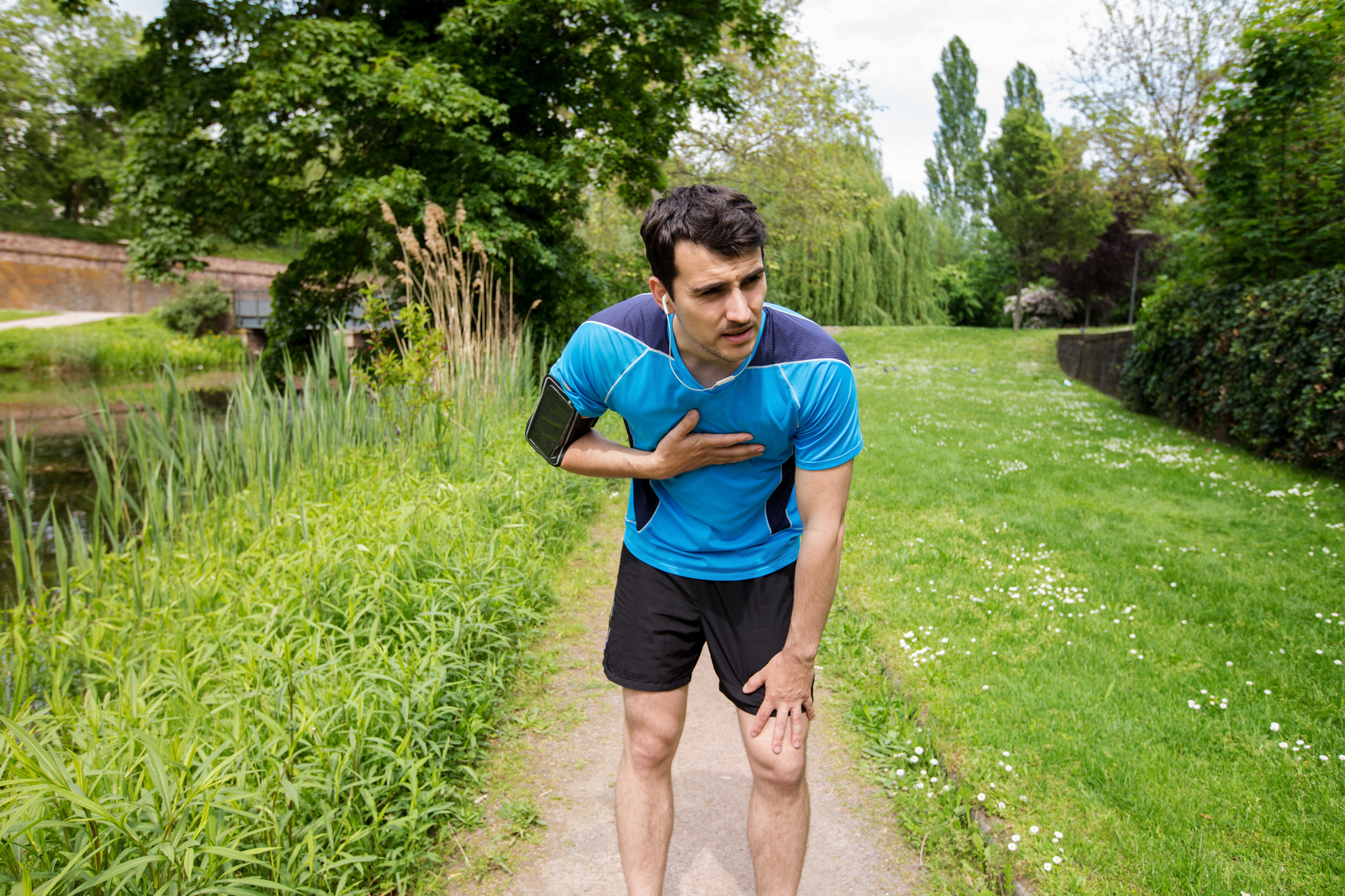
Hearing the words “you have a heart murmur” can stop any athlete in their tracks.

It sounds scary, almost like your heart is broken.

But here’s the truth most people don’t realize: a murmur isn’t a disease—it’s a sound.

A signal.

Sometimes it’s harmless background noise; other times, it’s your body waving a red flag.

In this post, I’ll break down what heart murmurs really are, why they happen, and most importantly, what they mean for your running.

Whether you’re training for your first 5K or your tenth marathon, you’ll walk away knowing when to shrug it off—and when to take action.

What Is a Heart Murmur?

A heart murmur is just an extra sound your heart makes—kind of like a soft whoosh or swish—when blood flows through it.

It doesn’t always mean something is wrong.

Think of it like water flowing through a narrow section of a pipe—it might gurgle or hiss a bit.

That’s what your heart might be doing. What matters isn’t the sound itself, but why it’s happening.

Here are the two types:

1. Innocent (Functional) Murmurs

These are common, harmless, and nothing to stress over.

The heart’s structure is totally normal.

Sometimes blood flows a little faster than usual—due to exercise, fever, anemia, stress, or pregnancy—and that causes the extra sound.

Fact: About 30% of kids and 1 in 10 adults have an innocent murmur at some point

. Most don’t even know they have one.

2. Abnormal (Pathological) Murmurs

These are tied to a structural issue inside the heart—like a tight valve, a leaky valve, or a hole between chambers.

Some conditions are minor and manageable (like mitral valve prolapse), while others need close monitoring or treatment.

How Doctors Tell the Difference

First, they listen with a stethoscope.

Then, they may order an echocardiogram—an ultrasound of your heart—to look at valves, chambers, and blood flow.

If the echo comes back normal, your murmur is likely innocent.

You probably don’t need treatment—and yes, you can keep running.

When to Worry: Red Flags for Runners

Innocent murmurs usually cause no symptoms.

But if you feel off, and your doctor hears a murmur, take it seriously.

Here are signs something more serious might be going on:

  • Chest pain or tightness, especially during or after runs
  • Shortness of breath at rest or during light activity
  • Dizziness or fainting (especially mid-run or after exertion)
  • Heart palpitations or a fluttering/racing feeling in your chest
  • Swollen ankles or neck veins
  • Blue lips or fingertips (a sign of poor oxygen circulation)
  • A lingering cough or drenching sweats with minimal effort
  • New or extreme fatigue—struggling with distances that used to be easy

These symptoms, paired with a murmur, are not normal runner fatigue.

They can be signs of valve disease or more serious issues like hypertrophic cardiomyopathy (HCM), aortic stenosis, or other heart conditions that demand medical attention.

Coach’s rule of thumb: If your murmur comes with strange symptoms, stop guessing and go get checked.

Running with a Heart Murmur: What Runners Need to Know

Let’s get one thing straight: a heart murmur doesn’t automatically sideline you from running.

But it does deserve your attention—especially if it comes with symptoms.

I’ve read about runners with murmurs who train pain-free, race hard, and live full athletic lives.

Others needed a pause, some tests, and treatment before coming back stronger.

The key? Know your type, listen to your body, and get medical clearance.

First Rule: If Something Feels Off, Don’t Tough It Out

New symptom you can’t explain? Dizziness, chest tightness, fainting—even once? Get checked.

One runner ignored lightheaded spells and chalked it up to training fatigue. Turned out he had hypertrophic cardiomyopathy. Catching it early may have saved his life.

Pain or passing out mid-run is never “just dehydration.” It’s your body waving a red flag. You wouldn’t ignore a searing pain in your knee—don’t ignore your heart.

So, Can You Run with a Heart Murmur?

Quick answer: Yes—if it’s an innocent murmur and your doctor clears you.

An innocent murmur is basically a harmless sound your heart makes as blood moves through it.

It’s common, even among elite athletes, and it doesn’t affect performance.

  • Structure and function = normal
  • No impact on endurance or heart strength
  • Exercise is actually encouraged

The American Heart Association is clear: if your murmur is truly innocent, there’s no need to limit activity.

When a Murmur Could Be a Problem

Not all murmurs are innocent. Sometimes, they’re a symptom of a bigger issue—like:

  • Aortic stenosis (narrowed valve = limited blood flow during exertion)
  • Hypertrophic cardiomyopathy (HCM) (thickened heart muscle, risk of arrhythmia)
  • Valve defects (may require surgery or management)

These conditions don’t mean you’ll never run again—but they do mean you need to be smart and get evaluated before logging serious miles.

Get Cleared First – Especially With a New Diagnosis

If you’ve just found out you have a murmur (or have had one for years but never got it looked at properly), book that cardiology visit.

Most doctors will:

  • Run an echocardiogram
  • Possibly do a stress test or ECG
  • Confirm whether the murmur is harmless or not

This is a one-time safety check that can save you from training through something serious.

Sports cardiology guidelines are clear: any new murmur in an athlete should be checked before continuing high-intensity exercise.

Real-Runner Story: Hiba’s Detour

Marathoner Hiba Jelahej was in peak shape—but began feeling dizzy and fainting during workouts.

Turns out she had a rare valve defect behind a murmur no one knew about.

She underwent surgery and rehab, then slowly returned to running—starting with a mile, then building up.

Her takeaway? Listen to your body, ask questions, and keep moving forward—even if the pace changes for a while.

Heart Murmur in Athletes: Why It’s More Common Than You Think

If your doctor ever tells you, “You’ve got a heart murmur,” it can sound scary—like something’s wrong.

But here’s the truth: in athletes, especially endurance runners, heart murmurs are surprisingly common—and often harmless.

In fact, they can be a byproduct of a strong, well-trained heart.

Let’s break it down.

“Athlete’s Heart” and Innocent Murmurs

When you train consistently—logging miles week after week—your heart adapts.

It gets stronger. The chambers (especially the left ventricle) may slightly enlarge. It pumps more blood per beat.

That’s called athlete’s heart, and it’s a normal physiological change.

But with more blood pumping through a bigger engine, the flow can sound turbulent or louder to a doctor’s stethoscope.

That whooshing noise? It’s often just the sound of vigorous, healthy blood flow. This is known as a flow murmur or innocent murmur.

One study found that around 50% of people exercising 5+ hours a week showed some degree of heart chamber enlargement. That’s not disease—that’s adaptation.

So if your doctor hears a murmur, and you’re a fit runner, there’s a solid chance it’s just your heart doing its job—better than average.

When It Shows Up

Most runners discover a murmur during a sports physical, race clearance, or routine checkup.

The conversation usually goes like this:

“You have a murmur, but everything else looks great.”

At that point, your doctor may order an ECG or echocardiogram to be safe.

Good call. It’s not overkill—it’s smart screening to confirm that what they’re hearing is functional, not pathological.

Sometimes, It’s a Sign of Better Performance

Believe it or not, a murmur in a trained runner can sometimes indicate enhanced cardiac function.

  • Your resting heart rate drops
  • Stroke volume increases
  • The left ventricle may enlarge slightly
  • Blood whooshes through faster = audible murmur

This is why some coaches call it the “sound of a strong heart.”

Not medically accurate, sure—but it’s a reminder that murmurs aren’t always red flags. Often, they’re just signals of an efficient cardiovascular system.

These are called functional murmurs—soft, usually systolic, and often disappear when you’re at rest.

When to Take It Seriously

Still, a murmur isn’t something to ignore. Most are innocent—but some aren’t, and you don’t want to miss the serious ones.

When to dig deeper:

  • You feel dizzy, faint, or overly winded during runs
  • There’s a family history of heart disease or sudden cardiac events
  • The murmur sounds abnormal or persists during rest
  • Your doctor suggests follow-up

In these cases, get checked. An ECG or echocardiogram can rule out things like:

  • Valve defects
  • Hypertrophic cardiomyopathy (HCM)
  • Congenital abnormalities

And if something does show up? Good. You caught it.

That’s the whole point of screening. Some athletes have literally saved their lives by catching a murmur early and following through.

Running with a Heart Murmur: Your Safety Checklist

So, you’ve got a heart murmur — and you still want to run.

Good. In most cases, you can.

But you’ve got to be smart about it.

Here some of the things you need to do according to my research:

1. Talk to a Cardiologist — Get the Full Picture

This isn’t something to Google-and-guess. Find out: is your murmur innocent (harmless), or tied to a heart condition? That usually means getting an echocardiogram and maybe an ECG.

Know what’s causing the murmur — is it just increased blood flow, or a valve issue that needs monitoring?

Don’t run blind. Get clarity — and get it from a specialist.

2. Know Your Family History

Heart problems often run deep. If someone in your family had sudden cardiac issues, valve defects, or even unexplained fainting, bring that up.

Some conditions are genetic (like hypertrophic cardiomyopathy), and it’s better to catch that early than after something goes wrong on a run.

3. Get Cleared — And Get Specifics

Once your cardiologist gives the all-clear, ask what your actual limits are. Can you do intervals? Long runs? Should you cap your heart rate?

Tip: Get your clearance in writing if you’re part of a running club or school program. Coaches will appreciate the clarity.

4. Train by Heart Rate — Not Just Feel

If you’ve got a heart murmur, training smart = training within your limits.

That might mean keeping your HR below a certain number (e.g., 150 bpm) or staying out of Zone 5 completely.

Use a chest strap or good-quality fitness watch. Don’t guess.

5. Respect the Environment

Heat, humidity, and altitude all jack up your heart’s workload. If the weather’s brutal, swap your workout for a cooler time or take it indoors.

And hydrate like it’s your job — dehydration puts extra strain on your heart, especially if your murmur is flow-related.

6. Watch for Warning Signs

You know your body. If you start feeling:

  • Dizziness
  • Chest tightness
  • Fluttering
  • Extreme shortness of breath

STOP. That’s not “mental toughness” — that’s your heart saying “pull the plug.”

7. Schedule Yearly Checkups

Even if your murmur is harmless now, things can change. Get a checkup at least once a year.

If you’ve got a valve issue, your doc may want an echo every 12–24 months. Stay ahead of it.

8. Reassess If Symptoms Pop Up

If you’ve been running fine and suddenly you’re not — don’t ignore that. A murmur that was stable can shift.

New symptoms? Get checked. Don’t wait for your annual visit.

9. Support Your Heart Outside of Running

The usual stuff applies — eat well, sleep enough, manage stress. That’s not fluff.

Sleep is when your body repairs. Good nutrition supports heart tissue and recovery.

And chronic stress can trigger arrhythmias or spikes in blood pressure.

So yeah — chill matters.

10. Keep Running (if your doctor says it’s safe)

Running is actually good for your heart, murmur or not. Aerobic fitness improves circulation, helps control blood pressure, and can even slow down the progression of some heart conditions.

As one cardiologist said to a client of mine:

“I’d rather you run carefully than sit on the couch in fear.”

Just don’t wing it. Respect the limits your doctor sets and stick to them.

With a smart plan, most runners with murmurs do just fine — and some even come back stronger because they train more intentionally.

Treatment & Management of Heart Murmurs

It’s Not About the Murmur—It’s About What’s Causing It

Let’s get this straight: a heart murmur isn’t the problem. It’s a symptom. A sound. What actually matters is why it’s happening.

So before you panic or Google yourself into cardiac dread, here’s how the treatment breakdown works.

1. Innocent (Benign) Murmurs: Nothing to Fix

If your doc says it’s an innocent murmur, you’re in the clear. Your heart’s structurally normal. You don’t need meds. You don’t need surgery. You don’t need to quit running.

You just… live your life.

Your doc might jot it down in your file and recommend routine physicals, but that’s it. In fact, many of these murmurs:

  • Disappear with age (especially in kids)
  • Show up when you’re dehydrated, anemic, or just post-hard run
  • Come and go depending on your circulation

Just keep doing the basics: train smart, eat well, stay healthy. You’re good.

2. Abnormal Murmurs: Treat the Root Cause

Now, if the murmur’s due to an actual heart condition, the goal shifts: fix the cause or manage the condition so your heart stays strong.

Here’s how that breaks down based on the source:

  • Mild: Usually just monitored. No big changes yet.
  • Moderate: You may get meds like beta blockers or ACE inhibitors to reduce strain.
  • Severe: Surgery or catheter procedures to repair or replace the valve.

Yes, open-heart surgery sounds terrifying. But sometimes drastic measures have to be taken.

HCM (Hypertrophic Cardiomyopathy)

No cure—but manageable. Common tools:

  • Beta blockers or calcium channel blockers to help the heart relax
  • Possibly an implantable defibrillator (ICD) as a safety measure
  • Modified training plans based on your specific condition

This one takes nuance. Work with a cardiologist who gets athletes.

Holes in the Heart (ASD/VSD)

  • Small defects: Often watched, no treatment needed
  • Large ones: Closed via surgery or a catheter procedure

Once healed? Most people are cleared for full activity, and the murmur disappears.

Arrhythmias

Sometimes a murmur tags along with heart rhythm issues. If that’s the case:

  • Treat the arrhythmia (meds or ablation)
  • Fix the rhythm, and often the murmur settles too

Infection (Endocarditis)

If you’ve got a new murmur and a fever, this is a red flag.

  • Requires IV antibiotics
  • Sometimes surgery if valves are damaged

Recovery depends on severity, but early treatment is everything.

Heart Failure

This one’s complex. Murmurs can come from valves not sealing right or pressure buildup. Management is all-in:

  • Meds (beta blockers, ACE inhibitors, diuretics)
  • Devices (like pacemakers)
  • Possibly transplant in extreme cases

Runners with early-stage heart failure may still train—but under strict medical guidance.

Here are some common medications:

  • Beta blockers – slow heart rate, reduce strain. Good for HCM, valve issues.
  • ACE inhibitors/ARBs – lower BP, ease heart workload.
  • Diuretics – reduce fluid if you’re swelling or short of breath.
  • Statins – protect arteries if you’ve got high cholesterol or risk factors.
  • Anticoagulants (aspirin, warfarin) – prevent clots, especially in valve issues or atrial fibrillation.
  • Antibiotics before dental work? Rare these days, but still used for high-risk valve patients. Follow your cardiologist’s lead.

Surgery: Last Resort, but Often a Game Changer

Surgery sounds scary.

But for the right person, it’s life-changing.

  • Valve repairs/replacements
  • Fixing holes (ASD, VSD)
  • Septal myectomy for HCM

Modern procedures—even minimally invasive ones—have helped countless athletes get back to what they love.

Lifestyle Adjustments for Runners with Heart Murmurs

If you’ve been diagnosed with a heart murmur—whether it’s innocent or tied to something deeper—there are some lifestyle levers you can pull to protect your heart and keep running safely.

None of this is about panic. It’s about running smarter.

Some of the changes include:

  • Cut the sodium if you’ve got high blood pressure or heart failure
  • Dial back the caffeine if you’ve got an arrhythmia (too much can trigger irregular beats)
  • No smoking—ever. If your heart has issues, smoking will make every one of them worse
  • Limit alcohol—especially binge drinking, which can lead to rhythm problems
  • Watch your weight—carrying extra pounds forces your heart to work harder, especially with valve issues or hypertrophic cardiomyopathy (HCM)

The good news? Running (in moderation) helps with all of these.

FAQs: Running with a Heart Murmur

Is running safe with a heart murmur?

Yes—if you’ve been evaluated. If it’s an innocent murmur, you’re good to go. If it’s tied to a condition, you may just need to modify your intensity or follow-up regularly.

Lots of runners have murmurs and do just fine. Get the green light from your doc, then run smart.

Can exercise cause or worsen a murmur?

Exercise can cause temporary innocent murmurs due to increased blood flow—think of it as a harmless “whoosh” when your heart’s working hard.

For real structural murmurs? Exercise won’t “break” your valve, but if you already have symptoms, going too hard could make those show up faster. That’s why intensity guidance is key.

Can a murmur go away?

Yes:

  • Kids often outgrow innocent murmurs
  • Murmurs caused by fever, anemia, or hyperthyroid often fade when the issue resolves
  • Surgery or treatment for abnormal murmurs can reduce or eliminate the sound

Some murmurs stick around forever—but never cause issues. They just need monitoring.

What tests will I need?

  • Echocardiogram (echo) – shows valve structure and function
  • Electrocardiogram (ECG) – checks rhythm and heart strain
  • Chest X-ray – looks at heart size
  • Stress test – evaluates how your heart responds to exercise
  • Cardiac MRI or catheterization – only if deeper investigation is needed

Most runners just need echo + ECG to start. From there, your doc can build the right plan.

What heart rate zones should I stay in?

This is personal. But here’s a general breakdown:

  • Innocent murmur + healthy heart = full zone access (just build up gradually like any smart runner)
  • Underlying issue (like valve disease or HCM) = likely capped at Zone 2–3
  • Zone 2 (60–70% HRmax): your safest endurance zone
  • Zone 3 (70–80%): steady but not crazy; check with your doc
  • Zone 4–5 (80%+): high effort, maybe off-limits depending on your condition

A heart rate monitor is your friend. Know your limits—and listen to your body. If Zone 2 suddenly feels like Zone 4, back off.

Final Thoughts: Run Smart, Not Scared

A heart murmur sounds scary—but in most runners, it ends up being a sidebar, not a stop sign.

The key? Get checked. Understand your condition. Then train accordingly.

We run to feel strong, clear our heads, and take care of ourselves. None of that changes just because your doctor hears a murmur. If anything, now you know more—and that’s power.

“Not every medical condition means you have to stop running—but you do need to understand it.”

When one of my own running buddies got diagnosed with a murmur, it didn’t end his running. It started a conversation—and a smarter training plan. He got cleared, adjusted his workouts, and now he’s running pain-free with more awareness than ever.

Sometimes, what sounds scary is actually a blessing in disguise—a reason to train with more intention, more gratitude, and more respect for the body you’ve got.

What’s the Ideal Running Stride Length? How to Measure & Improve Yours

how to run with Flat Feet

Most runners track miles, pace, and gear—but ignore how they move.

That’s like trying to drive faster on bald tires.

Your stride length is one of the most overlooked pieces of running form, and it can make or break your speed, efficiency, and even your knees.

Let’s break down what stride length really is, why it matters, and how to find your sweet spot.

Stride Length 101

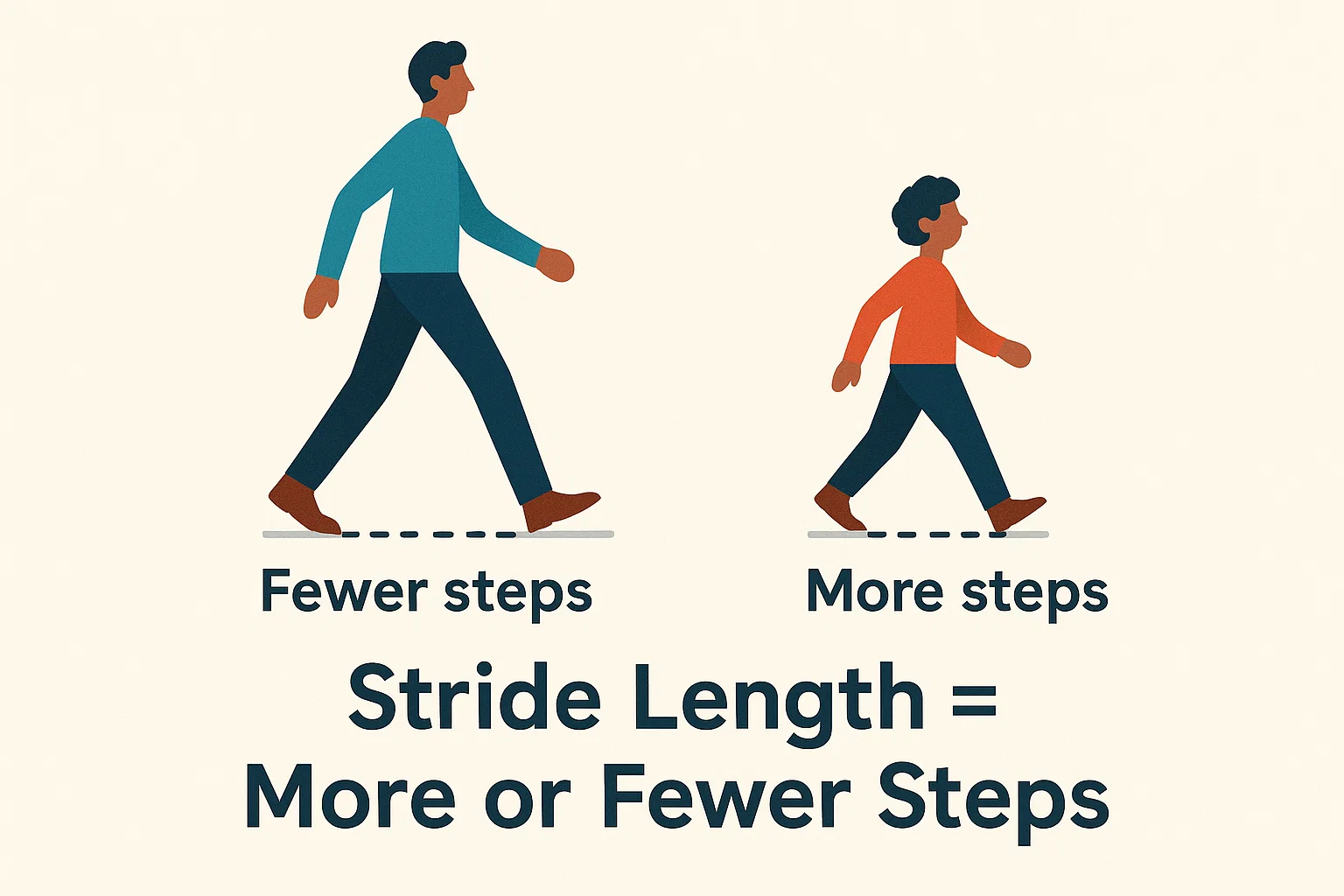
Your stride length is the distance you cover in one full cycle—right foot to right foot.

A step length is just half of that (right to left). If you’re stepping 3 feet at a time with each leg, that’s a 6-foot stride. Easy math.

Most running apps estimate stride length using steps per mile, but knowing the difference matters—because how far you cover with each stride is the engine of your running economy.

Why Stride Length Can Make or Break You

A good stride is like a tuned-up engine: powerful, smooth, and efficient. A bad stride? It’s wasted gas and extra stress on your joints.

Here’s why you should care:

  • Speed & EfficiencyYour pace = stride length × cadence (steps per minute). Want to run faster? You can take more steps, longer steps, or ideally, a balanced combo. But forcing an overly long stride usually backfires—you end up working harder without going much faster. The right stride lets you float along, covering ground without feeling like you’re stomping the gas pedal.
  • Injury Prevention – Overstriding (landing way out in front) is basically braking with every step. Your leg’s straighter, your heel slams first, and that shock rockets up to your knees and hips. Runner’s knee, shin splints, hip pain—sound familiar? On the flip side, shuffling with too short a stride can make you feel sluggish and limit speed.

The goal: your foot should land roughly under your body, stride long enough to be powerful but not sloppy.

When your stride is dialed in, you feel like you’re gliding. When it’s off, every mile is a grind.

What’s “Normal” for Stride Length?

Stride length depends on your height, speed, and mechanics, so there’s no one-size-fits-all number—but here are some ballpark ranges:

  • Walking: About 5 ft per stride (2.5 ft per step).
  • Running: Recreational runners average 4.5–5.5 ft per stride.
  • Elites: Much longer, thanks to power and flight time.

Height plays a role:

  • Under 5’4” → ~4.5 ft stride
  • 5’6”–5’8” → ~5 ft stride
  • Around 6’0” → 5.5+ ft stride

These are just averages. I’ve seen 5’3” runners float past taller guys because their cadence and form are dialed in.

Don’t chase a magic number—chase efficiency. I cannot emphasize this enough.

What Really Shapes Your Stride Length 

Ever watch two runners side by side and notice one is loping along with big, sweeping strides while the other is chopping away with quick, rapid steps?

Stride length isn’t random — it’s a mix of your body mechanics, training, and the day’s conditions.

Lemme explain more…

1. Height & Leg Length – The Obvious One

Tall runners have a built-in advantage here. Longer legs = longer levers, which can naturally cover more ground.

Picture a tall adult running next to a small child. The adult floats along while the kid’s legs spin like a cartoon just to keep up.

But here’s the catch: height alone doesn’t make you fast.

If your form’s off or your stride is sloppy, all that leg length won’t help efficiency.

I’ve coached plenty of tall runners who had to relearn how to use those “long levers” properly.

2. Hip Flexibility & Mobility

Your stride is only as long as your joints will allow it to be.

  • Tight hamstrings or hip flexors? They literally act like brakes, cutting your stride short.
  • Mobile hips and loose hamstrings? Your legs swing back and forth freely, adding effortless inches to every step.

A lot of runners don’t realize that stretching and mobility drills aren’t just for injury prevention — they unlock stride length you already own.

3. Running Pace – Speed Changes Everything

Your stride naturally lengthens when you run faster, at least up to a point.

  • Easy jog? Shorter, efficient steps.
  • Sprint? Longer, more explosive strides.

But don’t fall into the trap of forcing stride length to go faster. A sweet spot exists where speed comes from both stride length + cadence. Push too far past that, and you start overstriding — which is basically slamming on the brakes with every step.

4. Cadence – The Flip Side of the Coin

Stride length and cadence (steps per minute) are inseparable partners.

  • Short, choppy stride = high cadence.
  • Long, flowing stride = lower cadence.

Your body naturally finds a rhythm where both work together.

When you tinker with one, the other adjusts.

That’s why elite runners can run fast without looking like they’re bounding — their cadence is quick, but each stride is still efficient.

5. Terrain & Surface – Your Stride Adapts Instantly

Your body is smarter than you think. Change the surface, and your stride responds:

  • Trails: Shorter, quicker steps for balance.
  • Uphill: Naturally shortens — you’re fighting gravity.
  • Downhill: Lengthens — but overdo it and your quads will scream tomorrow.
  • Sand or mud: Shortens to maintain stability and avoid overstraining muscles.

Even small changes in footing cue micro-adjustments in stride to keep you upright and efficient.

6. Fitness, Fatigue & Injury History

  • Fatigue shrinks stride. The “marathon shuffle” is real.
  • Weak glutes or core can shorten stride even if flexibility is fine.
  • Nagging injuries often lead to subconscious stride changes to avoid pain.

The good news? Strength training and smart mileage progression expand your usable stride over time — and help you hold it deep into long runs.

7. Running Form & Biomechanics – The Secret Sauce

Two runners, same height, can have wildly different stride lengths. Why? Form and mechanics.

  • Overstriding heel-striker: Long measured stride, but inefficient because the foot lands in front (brakes on!).
  • Quick midfoot striker: Shorter-looking stride, but snappy and energy-saving.

Strong glutes, stable core, and a relaxed upper body let your stride flow instead of fight.

What’s the Ideal Stride Length for You?

Every runner has a natural stride length.

This is often your self-selected stride length, and research shows it’s usually close to your most energy-efficient stride.

In other words, your body is good at finding what feels right.

However, if you’ve been dealing with repeated injuries, poor running economy, or a performance plateau, it may be worth measuring and evaluating your stride.

How to Calculate Your Stride Length

Stride length is the relationship between pace, cadence, and step length. Here’s how to calculate it:

  1. Measure your cadence. Count how many steps you take in 1 minute (or check your GPS watch/app).
  2. Convert your pace to speed in feet or meters per minute
    Example: 8:00 min/mile pace = 7.5 mph
    1 mile = 5,280 ft → 5,280 ÷ 8 ≈ 660 ft/min
  3. Divide speed by cadence to get step length, then multiply by 2 for stride length
    Example: 170 steps/min at 8:00 pace
    Step length = 660 ÷ 170 ≈ 3.88 ft
    Stride length = 3.88 × 2 ≈ 7.76 ft

Formula:

Stride Length = (Speed [ft/min] ÷ Cadence [steps/min]) × 2

Metric runners can do the same with meters per minute.

Using a Calculator or Chart

If math isn’t your thing, many running apps, footpods, and GPS watches will calculate stride length automatically. You can also use online calculators to visualize how cadence and pace interact.

Example:

  • 10:00 min/mile at 180 SPM → ~1.45 m stride (4.75 ft)
  • 10:00 min/mile at 160 SPM → ~1.64 m stride (5.38 ft)

The takeaway:

  • Higher cadence = shorter stride
  • Lower cadence = longer stride

Either can achieve the same speed, but overstriding (long stride + low cadence) is riskier for injuries.

“Foot Under Body” – The Real Key

Rather than chasing a magic number, focus on where your foot lands:

  • Ideal stride: foot strikes under or just slightly ahead of your hips
  • Knee: slightly bent (~15–20°) on landing
  • Avoid: a straight leg reaching forward (classic overstriding)

Quick self-check:

  • Film yourself from the side at an easy pace
  • Check if your lower leg is vertical or angled forward at contact
  • Count your cadence. If it’s below ~160 and your foot lands far ahead, try shortening your stride slightly

Finding Your Ideal Stride

  • Run at a comfortable pace and record a short video
  • Measure cadence and stride length (manually or with a watch)
  • Compare to your height
    • Very long = risk of overstriding
    • Very short = shuffling or low efficiency
  • Adjust cadence slightly if needed
  • Even a 5% increase in cadence can naturally bring your foot strike under your body

Don’t take my word for it.

A 2017 study found that forcing runners to change stride length ±10% from their natural pattern reduced efficiency. Unless you’re injured or clearly overstriding, your natural stride is likely close to optimal.

Common Running Mistake: Overstriding

Let’s talk about a form flaw I see all the time with runners I coach: overstriding.

You know that moment when your front leg reaches way out and your foot lands way in front of your body—usually on the heel with a nearly straight knee?

That’s overstriding.

I call it the “brakes-on” stride, because every step is like tapping the brake pedal while trying to accelerate.

When you land way out in front:

  • Your bones and joints take most of the impact instead of your muscles
  • Your momentum slows with each step (tiny speed bumps every stride)
  • You bounce up and down more, wasting energy that should go forward

Translation:

  • You’re working harder
  • You’re risking injury
  • And ironically… you’re probably not running faster

Here are the signs:

  • Low cadence – If your steps per minute are in the 150s or lower, that’s a red flag
  • Heel-first far out front – Toes pulled up, heel smacks the ground way ahead of your knee
  • Straight knee on landing – Ideally, you want a slight bend (~20°) when your foot hits
  • Frequent shin/knee issues – Shin splints, runner’s knee, Achilles pain often show up in chronic overstriders
  • Slappy footsteps – If your feet sound like pancakes on pavement, you’re probably braking with every step

Why So Many Runners Overstride

Most runners think:

“Longer stride = faster.”

So they reach forward instead of letting the stride naturally lengthen behind them.

Fatigue makes it worse—your hips sink, your legs reach, and the overstriding sneaks in.

Modern super-cushioned shoes can also mask the harsh impact, so you might not even feel it happening.

How to Safely Improve Your Stride Length

Want a longer, more efficient stride? Don’t force it.

Reaching your foot farther forward = injuries waiting to happen.

True stride length comes from powerful push-offs, a quicker turnover, and elastic legs—not overstriding.

Here’s how to build it safely:

Train Your Cadence (Quick, Light Steps)

One of the fastest ways to fix stride problems is speeding up your step rate.

A quicker cadence keeps your feet under your body and naturally prevents overstriding.

Even adding +5 steps per minute can make a big difference.

How to train it:

  • Use a metronome or BPM playlist: If you run at ~160 SPM, bump to 165 with a metronome app or music that matches the beat. Over time, your body adapts.
  • Music hack: Make a playlist that gradually increases in BPM during your run. One runner swore by this: “By the end of my 5K, I’m 7 SPM faster without thinking about it.”
  • Short bursts, not all at once: Toss in 4×1-min cadence pickups during easy runs. Let your legs learn the new rhythm before trying a full run at higher turnover.
  • Slight forward lean (from ankles): Think fall and catch yourself. This helps your feet land under your hips instead of out in front.
  • Be patient: At first, quicker steps feel awkward and might raise your heart rate. Stick with it—after a few weeks, it’ll feel smooth and natural.

Build Range & Elasticity with Drills

A longer stride comes from stronger push-offs and springier legs, not reaching forward.

Add these drills 1–2x per week after a warm-up or at the end of an easy run (5–10 min total):

  • High Knees: Exaggerated knee lift to train fast, powerful leg drive.
  • Butt Kicks: Quick heel recovery under the hips—essential for a fast turnover.
  • A-Skip / Power Skip: Dynamic skipping for coordination and stride rhythm.
  • Bounding: Exaggerated, controlled leaps to build power and elastic strength.
  • Calf Hops / Single-Leg Hops: Strengthen lower legs for a snappy push-off.
  • Hill Sprints (30–50m): Short, explosive uphill bursts (6–8 reps). Hills force good form and build glute + calf power without overstriding.

Strengthen the Muscles That Make Stride Magic Happen

If you want a longer, more efficient stride, you don’t get it by just reaching farther with your foot—you earn it in the gym.

The engines of a powerful stride are your glutes, hamstrings, calves, hip flexors, and core.

Think of your stride like a chain:

  • Glutes + calves = the push-off that launches you forward
  • Hamstrings = control the swing and set up that next step
  • Hip flexors + core = whip your knee through for the recovery

If one link is weak, your stride gets cut short.

That’s why I always keep hammering on the importance of strength training.

Here’s how to build those links strong and stable:

  • Glute Bridges / Hip Thrusts – Your glute max is the king of propulsion. Stronger glutes = stronger push-off.
  • Lunges & Step-Ups – Single-leg work that mimics running. Bulgarian split squats and walking lunges will have your quads and glutes thanking (and hating) you.
  • Single-Leg Squats / Step-Downs – Builds balance and control for that single-leg “hop” every step of running.
  • Nordic Hamstring Curls / Hamstring Bridges – Eccentric hamstring strength = injury insurance when you start lengthening your stride.
  • Calf Raises + Plyos – Your calves and Achilles are springs. Strengthen them and you’ll bounce off the ground instead of just shuffling.
  • Core + Hip Stability – A wobbly core leaks power. Planks, side planks, bird-dogs, and banded walks keep your pelvis level so each stride is efficient.

Do 20–30 min of strength 2–3x/week. This pays off in:

  • A stride that actually feels powerful
  • Less risk of injury when you start running faster or adding mileage

Run Strides Weekly – Wake Up Your Speed

Here’s where “strides” enter the chat.

These aren’t the same as stride length—they’re short, controlled speed bursts (15–30 seconds) at about 85–95% effort.

They wake up your fast-twitch fibers, sharpen your form, and teach your body to run fast and relaxed.

Why they work:

  • They groove quick turnover and good mechanics without the grind of a speed workout
  • They teach you to push back, not reach forward—stride length happens naturally from power, not overstriding
  • They bridge the gap between easy runs and race pace like a secret weapon for efficiency

How to do them:

  1. After an easy run, find a flat stretch
  2. Run 4–6 strides, 20 seconds each
  3. Start smooth, build to near-mile pace by halfway, then glide down
  4. Walk or jog 40–60 sec between each

Pro tip: Focus on tall posture, relaxed arms, and feeling springy. It’s about rhythm, not straining.

Do this consistently, and you’ll notice:

  • Easier runs feel snappier
  • Your natural stride length improves without forcing it
  • You gain that “fast but effortless” sensation reserved for runners who train smart

Example Stride Length Workout

Here’s a weekly workout that’ll dial in your stride without leaving you wrecked.

Warm-Up (10 min)

Start with an easy 10-minute jog to shake out the stiffness.

Follow with some dynamic drills—leg swings, hip circles, high knees, and a couple of light strides.

This wakes up the muscles you’re about to ask for speed.

Strides – 4 × 100m

  • On flat ground or a track straightaway, run four 100m strides.
  • Build up to about 90% of max effort over the first 50m, hold form for the next 50m.
  • Walk or jog back for recovery.

These teach your legs to move fast and clean without overstriding. Think light, quick, snappy steps, not stomping the ground.

Hill Bounds – 4 × 10 sec

  • Find a moderate hill.
  • Do bounding strides uphill for ~10 seconds. Drive your knees high, push off hard, swing those arms like you mean it.
  • Walk down to recover.

This builds explosive strength and teaches your body to extend behind you, which naturally lengthens your stride.

Metronome Intervals – 4 × 30 sec at High Cadence

  • Back on flat ground, set a metronome or use music with a target beat (180–190 SPM).
  • Run 30 sec focused on quick turnover—don’t worry about speed yet, just rhythm.
  • Jog 1 min between reps.

This locks in the fast-leg pattern when your legs are already a little fatigued.

Cool Down (5–10 min)

Jog easy, let the heart rate settle, and finish with some static stretches or light foam rolling—quads, hammies, calves. Your future self will thank you.

Coach’s Tip: If any part feels sharp or “off,” back off. The goal is quality over grind. Done weekly, this routine teaches your body to move better, not just harder.

Top Resources for Assignment Completion

There’s something about assignments that makes them feel more stressful than they should be. Even when the topic is interesting, the pressure of getting it done on time—and doing it well—can be a lot. Some weeks, it’s like you blink and suddenly have five deadlines staring back at you.

Most students really do want to do their best. But that doesn’t mean it’s easy. There are times when you just don’t know where to start, or you’ve got too many things happening at once to give every task the focus it needs. That’s when panic starts to creep in, and productivity flies out the window.

That’s why a lot of students end up turning to platforms like Studyfy. It’s not about shortcuts—it’s about having support. Whether you’re stuck on research, formatting, or just need someone to guide you through the structure, having help nearby makes a huge difference.

Getting Help Doesn’t Mean You’re Not Capable

One of the biggest myths about academic help is that it means you’re slacking off. In reality, using assignment resources is a smart move—especially when you’re managing a heavy course load. It means you’re being proactive about learning and not letting things pile up until it’s too late.

Sometimes, the most capable students are the ones who ask for help early. It’s not about avoiding work. It’s about making sure your work is the best it can be without burning yourself out in the process. Help doesn’t replace effort—it amplifies it.

With resources like Studyfy, you don’t lose your voice in the process. You still give the direction, the topic, the tone. The support just helps everything come together in a way that feels easier and more manageable.

From Start to Finish, You’re Not Alone

Assignments are made of a bunch of little steps: brainstorming, outlining, researching, writing, editing, formatting. Each step takes time, and if even one part goes sideways, the whole thing feels impossible.

That’s where support tools come in handy. You might just need help understanding a tricky part of your assignment, or maybe you want a second opinion on your thesis. Other times, you might need a full walk-through from start to finish. Whatever it is, there’s a tool—or a person—who can help you handle it without falling behind.

And sometimes, it’s not even about understanding the content. It’s about time. When you’ve got three papers due and a quiz on the same day, there’s only so much you can do. A little help can give you breathing room.

When Deadlines Get Too Close

One of the most stressful aspects of being a student is the inevitable pileup of deadlines. You begin the week with a false sense of security, believing you have ample time to complete your assignments. However, as the week progresses, panic sets in, and you find yourself overwhelmed by the sheer volume of work that needs to be done.

The Ticking Clock

When you’re facing a rapidly approaching deadline, motivation alone won’t suffice – you need to take decisive action. Services like Studyfy can provide the assistance you need to work quickly and efficiently without sacrificing quality. With Studyfy, you retain control over the topic and direction of your work while receiving the support necessary to expedite the process, especially when time is of the essence.

Studyfy’s Range of Services

Studyfy offers a variety of services designed to help students meet their deadlines, including:

  • Research Assistance: Studyfy can help you find and evaluate sources, saving you valuable time.
  • Writing and Editing: Studyfy’s team of experienced writers and editors can help you improve the clarity and organization of your work.
  • Proofreading: Studyfy can help you catch errors in grammar and punctuation, ensuring that your work is polished and professional.
  • Subject-Specific Tutoring: Studyfy can connect you with tutors who can help you understand difficult concepts and complete challenging assignments.

Benefits of Using Studyfy

There are many benefits to using Studyfy, including:

  • Improved Grades: By providing you with the support you need to complete your work to a high standard, Studyfy can help you improve your grades.
  • Reduced Stress: By taking some of the pressure off, Studyfy can help you reduce stress and anxiety.
  • Increased Confidence: By helping you succeed in your studies, Studyfy can help you increase your confidence and self-esteem.
  • Time Management: By assisting with research and writing, Studyfy can free up your time so you can focus on other important tasks.

Studyfy: A Lifeline for Students

Studyfy is a valuable resource for students who are struggling to keep up with their coursework. With its range of services and experienced team of professionals, Studyfy can provide the support you need to succeed in your studies. So, the next time you’re feeling overwhelmed by deadlines, don’t hesitate to reach out to Studyfy for help.

Finding the Right Fit

Not every resource will work for every student—and that’s okay. What matters is finding the one that makes your process smoother. For some, that means using a planning tool. For others, it’s connecting with someone who understands the subject and can break it down clearly.

Studyfy works because it adapts. You’re not stuck with a one-size-fits-all answer. You choose what kind of support you need, and you stay involved along the way. That makes a big difference, especially for students who want to learn and not just “get it done.”

It’s also about trust. When you know the help you’re getting is reliable, things don’t feel so scary anymore. You stop guessing, start acting, and actually get through your assignments without the usual stress spiral.

Final Thoughts

Assignments are hard—but they don’t have to be overwhelming. The right support can turn stress into progress. Whether it’s help with brainstorming, writing, or getting everything organized, resources like Studyfy are here to make sure you’re not stuck doing it all alone. You’re still in charge—but now, you’ve got the backup to get it done right!

How to Choose the Best Running Jacket

running jacket

It was supposed to be a simple long run. Light drizzle, nothing major. I grabbed my thin windbreaker thinking, “Yeah, this’ll do.”

Spoiler: it didn’t.

Four miles in, the rain picked up. That cheap “water-resistant” shell soaked through like a sponge.

My base layer was drenched, my fingers numb, and I could feel the chill deep in my chest.

I felt miserable at the end.

That run taught me more than any gear review ever could.

Here’s the truth: the wrong jacket (or no jacket) can absolutely ruin your run.

It’s not just about comfort—it can literally end your session or, worse, put you at risk. Since then, I don’t just recommend running jackets—I insist on them when conditions call for it.

Because showing up for training matters. And the right jacket helps you do that.

Do You Really Need a Running Jacket?  

Look, I get the question all the time: “Do I actually need a running jacket, or can I just layer smarter?”

My best answer? It depends.

  • In moderate conditions? You can probably get by with a thermal base and a good mid-layer. Many runners crush 30°F runs in fleece and a vest. If you’re dealing with dry, cold air and short-to-medium distances, that’s totally doable.
  • But when the weather turns ugly—cold and wet—layering only gets you so far. Once rain soaks through, even 45°F can feel like freezing. Add wind? You’re asking for trouble.

And that’s the point: a proper jacket isn’t about style—it’s about survival. It’s the difference between powering through and pulling the plug.

Wet = cold. Cold = risk. That’s a hard no if you’re chasing consistency.

Training Insurance

Let’s be real about this: your training plan doesn’t care about the weather.

If you skip every run because it’s raining or windy, you’re gonna fall behind.

A good jacket? It’s training insurance. It keeps you moving when everyone else bails.

No jacket = no miles on bad days. And bad days happen. This makes it a part and parcel of any runner’s gear.

What Makes a Good Running Jacket (and What’s Just Hype)

Let’s be honest: most running jackets look sleek and sound high-tech… but not all of them are worth your money.

Some features matter. Others? Flashy marketing.

Here’s a breakdown of what actually matters when choosing a jacket for running — and what’s overhyped noise.

1. Breathability > Buzzwords

You don’t want to finish a rainy run drenched — from your own sweat.

  • Look for: vent panels, pit zips, mesh-lined back flaps
  • Metrics: MVTR >10,000 g/m²/24h is a solid baseline

Insider tip: No truly waterproof fabric is that breathable. It’s physics — you’ll always trade some airflow for full rain protection.

Coach’s Tip: Skip chasing lab numbers. Choose the jacket that actually vents heat, not just one with the fanciest membrane name.

2. Real Waterproofing vs. Just Water-Resistance

Here’s what you need to know:

  • Waterproof: Needed if you run through serious rain. Look for sealed seams and a waterproof rating >10,000mm.
  • Water-resistant: Fine for light drizzles or short runs. Won’t hold up in heavy rain, but it’s lighter and more breathable.

Watch for wording: “Water-repellent” ≠ waterproof. That’s just marketing.

3. Wind Protection

A jacket that blocks the wind keeps you warm. And yes, any waterproof jacket is windproof by default.

If you’re not battling Arctic gusts, a good wind-resistant shell usually does the trick — and breathes better, too.

4. Fit and Mobility

Your jacket should move with you, not against you.

  • Snug enough to avoid flapping
  • Roomy enough to layer underneath (or wear a vest over)
  • Sleeves long enough (bonus: thumbholes)
  • Hem that doesn’t ride up when you run

Try before you buy (or size up smartly). Skip anything that feels like a straightjacket.

5. Vents Are Gold

Pit zips. Mesh panels. Laser-cut holes. Thin side panels.

All of these help you dump heat fast. If your jacket doesn’t have actual vent features, don’t expect it to stay dry inside once you get rolling.

6. Packability and Weight

You want light, stashable, and forget-it’s-there.

Some top-tier shells weigh under 6 oz and pack into their own pocket. Ideal for:

Pro tip: Don’t go too light — ultralight shells often skimp on durability, pockets, or hoods.

7. Sealed Seams & Zippers

For rain jackets: sealed seams are non-negotiable. That’s where water sneaks in.

Same goes for:

  • Waterproof zippers
  • Storm flaps

If your jacket is just for wind/cold? These aren’t critical.

8. Details That Matter

Also, I’d recommend paying attention to the following:

  • Pockets: At least one zip pocket is essential. More if you run with fuel or a phone.
  • Hood: Should cinch down and stay put. A floppy hood is useless.
  • Reflectivity: Mandatory if you run in the dark. Don’t rely on tiny logos.
  • Drop-tail hem: Keeps your backside dry. Especially useful on trails.

Overhyped Jacket Features: What Doesn’t Matter That Much

Let’s get one thing straight—running gear should serve your run, not impress your gearhead friend.

Some jackets are loaded with flashy features that sound high-tech but don’t do squat for your average run.

You’ll see jackets built like they’re ready for an Everest summit—$500 price tags, pit zips, 12 pockets, “bulletproof” durability. Cool for the Alps. Overkill for your 30-minute neighborhood jog.

Here’s what to watch out for:

  • Too much insulation: Unless you’re running in sub-zero temps or standing around, you don’t need a puffball. You’ll warm up fast, then overheat.
  • Extra pockets: You’re not carrying survival gear. One zippered pocket for keys or gels is enough. More = bulk and bounce.
  • Overbuilt fabrics: Sure, bombproof fabric sounds great, but if it feels like running in a trash bag—sweaty, heavy, stiff—it’s useless.

And don’t get blinded by brand hype. Gore-Tex is great, no doubt. But there are plenty of waterproof fabrics (like Patagonia’s H2No) that get the job done just as well for way less cash.

Running Jacket Materials – What Actually Matters

Now let’s break down jacket tech without putting you to sleep.

Here’s what counts:

Waterproof vs. Water-Resistant vs. Breathable

Yes, they’re all different. Let me explain:

  • Waterproof membranes (Gore-Tex, eVent): Microscopic holes let sweat vapor out but block rain. Great for running if you get the balance right.
  • PU coatings: Cheaper, fully waterproof, but often trap sweat. Think clammy. Okay for short rainy runs, not ideal for hard efforts.

If you run hot or run long, breathability > absolute waterproofing.

Waterproof Rating (Hydrostatic Head)

This tells you how much rain a fabric can take before it leaks. Measured in millimeters (mm).

  • <5,000 mm: Light drizzle only
  • 5,000–10,000 mm: Steady rain
  • 10,000–20,000 mm+: Heavy rain and mountain-grade conditions

For most runners, 10K–15K mm is the sweet spot. More than that? It better be a monsoon.

Breathability Rating (MVTR)

Measured in grams: how much sweat vapor escapes over 24 hours.

  • 5,000 g/m²/24h: Meh
  • 10,000–15,000: Solid
  • 20,000+: Nice if you’re hammering in bad weather

But don’t obsess. Numbers are lab-tested. Real-world comfort comes from good design: vents, fit, and how you actually use it.

Some jackets even throw in pit zips to dump heat when the fabric taps out.

What Runners Really Need to Know About Rain Jackets

Let’s face it — no jacket is perfect. But if you’re running in wind, rain, or anything in between, knowing what your gear is actually doing makes a big difference.

Here’s what matters when choosing and maintaining a good running jacket:.

DWR (Durable Water Repellent): Your First Line of Defense

Most running jackets (even the breathable ones) come with a DWR coating. That’s what makes water bead and roll off instead of soaking in. Think of it as your jacket’s “rain shield.”

But here’s the deal: DWR wears off.

Usually after ~20 washes or lots of use, your jacket starts absorbing water instead of repelling it — the dreaded “wetting out.”

When that happens? Reapply DWR spray.

It’s simple, cheap, and keeps your jacket breathing and repelling like new.

Focus especially on shoulders and chest where rain hits hardest. If your jacket starts feeling clammy or heavy, that’s your cue — your DWR’s done.

Don’t throw the jacket out. Just revive it.

Gore-Tex, eVent, and Other Buzzwords – What Actually Matters

Gore-Tex is the classic name, but there are others now: eVent, Pertex Shield, NeoShell, FutureLight, H2No, etc.

  • Gore-Tex / eVent: Reliable waterproofing, decent breathability.
  • Pertex: Lightweight and softer – ideal for comfort.
  • Shakedry (RIP): Super breathable but fragile – discontinued now.

What matters:

  • Waterproof rating of 10,000 mm+
  • Breathability around 10–20,000 MVTR

That’s plenty for running. You don’t need Everest-level protection — you need something that won’t soak through or turn into a sauna at mile 3.

The Real Balancing Act: Stay Dry vs. Stay Cool

Truth: No jacket does both perfectly.

  • If it’s 100% waterproof, it’s probably going to trap some sweat.
  • If it breathes well, it might let some rain through.

The best jackets split the difference:

  • Breathable enough for tempo runs
  • Protective enough for downpours
  • Designed with smart venting or multiple layers (wicking liner + weatherproof shell)

Runner tip: Always lean toward breathability. You can layer for warmth. You can carry an emergency poncho. But if your jacket feels like a sweat lodge, you won’t wear it. And the best jacket? The one you’ll actually use.

How a Running Jacket Should Fit (No Fluff, Just Function)

Let’s get one thing straight: if your running jacket doesn’t fit right, it’s going to suck. Doesn’t matter how expensive or high-tech it is—if it flaps in the wind, chokes your neck, or rides up your back mid-run, it’s a fail.

Here’s how to dial in the fit like a seasoned runner:

Room to Layer—But Not a Tent

Your jacket should fit like a second skin in motion, not like a sausage casing.

You want enough room underneath for at least a base layer—and maybe a thin mid-layer on colder days.

Test this: Put on your base layers, zip up the jacket, and see if you can fit a clenched fist between your jacket and stomach. That’s the sweet spot.

If you’re running in sub-freezing temps or need to wear it over a vest or hydration pack, size up. Some runners purposely go one size larger for winter versatility.

But don’t overdo it—baggy = drag and wind flapping.

No Flapping, No Parachutes

If it feels like a windsock when you’re running, it’s too loose.

The jacket should hug your torso and arms closely—not tight, but close—so it doesn’t catch wind like a kite. If it’s flapping, it’s fighting your stride (and your ears).

You want a streamlined profile, especially if you’re running into wind or rain.

Test Mobility – It Should Move With You

Don’t just stand there in the mirror. Move.

  • Raise your arms overhead.
  • Swing them like you’re running.

The jacket shouldn’t pull across the shoulders or bunch in the underarms.

Pro-level jackets have articulated or raglan sleeves that naturally flex with your arm swing.

If it binds, try a different cut or size up. You want zero restriction in your stride.

Length Matters

Your jacket should hit just below the waist, not ride up and expose your lower back to windchill.

Look for a drop-tail hem—longer in the back—to shield your backside from cold gusts or puddle splashes.

But don’t go full trench coat. If the front is too long, it’ll bunch when you lift your knees. Balance is key.

Hood and Neck Game

Hoods are tricky. If yours has one, make sure it stays put in wind and doesn’t block your peripheral vision. A cinch cord or elastic band helps.

  • When it’s down, it shouldn’t bounce around.
  • When it’s up, you should still be able to turn your head and see.

The collar should zip up to your chin, snug but not suffocating. Bonus points for a soft chin guard that doesn’t rub your skin raw.

Avoid the “Tight = Warm” Myth

Some folks think tighter = warmer. Nope.

A jacket that’s too tight will restrict circulation and trap sweat—which makes you colder.

Warmth comes from layering, insulation, and airflow, not compression.

If you’re between sizes, go with the slightly larger one. You can always cinch the hem or waist drawcord.

Fit by Gender, Not Just Label

Gender also matters. Here’s why:

  • Women: Women-specific cuts taper at the waist and give more room at the hips and chest. But if you’ve got broad shoulders or prefer a looser fit, a men’s small might suit you better.
  • Men: If you’re lean or tall with long arms, you might need a slim or tall cut. Some brands even offer both.

Ignore the label—buy what fits your body.

Cold, Wet, or Windy? Match Your Jacket to the Conditions

No one jacket does it all. If you’re serious about running through the elements, your outerwear needs to be purpose-built for what the sky’s throwing at you.

Here’s how I break it down: cold, wet, or windy — and what kind of shell actually holds up in each.

Cold Weather: Insulate Smart, Don’t Overcook

When it’s bone-chilling cold, the goal isn’t just warmth — it’s warmth without bulk.

You want to keep your core warm and your stride smooth, not feel like you’re wrapped in your old sleeping bag.

What to look for:

  • Light Insulation or Thermal Lining – Synthetic fill or a fleece-lined shell works great for most cold runs. Look for terms like “insulated,” “thermal,” or “winter run jacket.”
  • Windproof Fabric – Wind will rob your heat faster than you think. Don’t skip this.
  • Breathability – You’re still going to sweat. Get a jacket that vents heat (pit zips or breathable panels help).
  • Body-mapped Insulation – Heavier fill around the torso, lighter underarms. Keeps warmth where you need it without cooking you mid-run.
  • Zippered Pockets & Thumb Loops – For warming hands and sealing wrist gaps without adding bulk.

Coach’s tip: I’d urge you to dress like it’s 10°F warmer than the actual temp. You’ll heat up fast, and overdressing leads to sweat, then chill — which is worse than being cold in the first place. Starting your run a little chilly is actually smart.

Solid example: The North Face Winter Warm Pro – it uses targeted insulation and wind-blocking fabric. Not overbuilt, not underdone.

Rain: Go Full Armor or Stay Home

Light drizzle? A water-resistant shell might do. But if you’re facing steady rain or cold showers, you want real protection — a fully waterproof jacket with taped seams.

Think of it as a storm shell for runners.

Key features:

  • Waterproof Rating – 10K mm or higher (10K is solid, 15K+ if you’re out in torrential stuff). Below that? You’ll soak through.
  • Taped Seams + Sealed Zippers – Without these, water gets in. End of story. Look for “fully seam-sealed” in the specs.
  • Functional Hood – Brimmed and adjustable. If it bounces or doesn’t turn with your head, it’s a pain.
  • Ventilation – The Achilles’ heel of many waterproofs. If it doesn’t breathe, you’ll feel like you’re boiling inside a trash bag. Look for underarm vents, back panels, or two-way zippers you can crack mid-run.

Good pick: The Janji Rainrunner Pack Jacket 2.0 is purpose-built for runners. Fully waterproof, vented panels, lightweight feel. It’s not just a shell — it’s a system.

Pro tip: If you’re doing hard workouts in the rain, prioritize venting. For easy runs, breathability matters less — just stay dry and get it done.

Heavy Rain: What Actually Works

Let’s cut to the chase: if you’re running in a monsoon, not a drizzle, you need a serious rain jacket — not that “water-resistant” windbreaker you bought on sale.

Here’s what matters when the sky opens up:

1. Waterproof Rating: 15,000 mm+ or Bust

You want a jacket that can handle sustained rain, shoulder pressure from packs, and splash-back from puddles. Look for:

  • Waterproof rating of 15,000–20,000 mm+ (aka Hydrostatic Head)
  • Fully seam-taped construction
  • Waterproof zippers and tight wrist/hood closures

If it doesn’t have those? It’s not made for real storms.

2. Breathability (As Much As You Can Get)

Even elite fabrics like Gore-Tex Active, eVent, or Pertex Shield Pro have limits in 100% humidity. That’s why good jackets add:

  • Pit zips or side vents
  • Two-way zippers (so you can crack it from the bottom)
  • Breathable panel zones (if you’re lucky)

Pro tip: You’ll sweat in any waterproof jacket. The goal is to stay mostly dry, not bone-dry. Damp is fine. Soaked from the inside? That’s a fail.

3. A Real Hood

If the hood’s floppy or loose, you’ll be miserable. Look for:

  • Adjustable cords
  • A stiff brim (to keep water off your face)
  • Snug fit that stays put when you turn your head

Hack: Wear a brimmed cap under the hood. It improves visibility and airflow, no matter how fancy your jacket is.

Coach-Tested, Runner-Approved Jackets

Want names? Here are some that actually hold up:

  • Patagonia Storm Racer – Light, fully waterproof, made for mountain miles.
  • Salomon Bonatti Pro – Trail-tested, race-legal, great hood.
  • Montane Minimus or Phase Lite – High HH, great for ultra weather.
  • Nike HyperShield – Surprisingly bomber protection. Runners have used these in tropical storms.
  • Inov-8 Stormshell – Lightweight, 20k HH, fully taped, built for long wet runs.
  • Janji Rainrunner 2.0 – Specifically designed for runners, with clever venting and trail-ready design.
  • Arc’teryx Norvan SL / Gore Shakedry – Legendary (if you can find them). Shakedry was top-tier: no face fabric to “wet out.”

If money’s no object: Gore-Tex Active or C-Knit shells from brands like Arc’teryx, Salomon, or Inov-8 are elite. Think high breathability + waterproof fortress.

Reminder: No Jacket Is Magic

Even with the best tech on your back, in full downpour you will get damp. Between sweat, soaked cuffs, and humidity, perfection isn’t the goal. Comfortable survival is.

Bonus: Windproof vs. Waterproof — Know the Difference

Don’t let the labels fool you:

Feature Windproof Jacket Waterproof Jacket
Blocks wind? ✅ Yes ✅ Yes
Blocks rain? 🚫 Light drizzle only ✅ Full rain protection
Breathable? ✅ Usually better ⚠️ Can feel clammy
Best for… Cold, dry, breezy runs Wet, stormy, exposed runs

Key takeaway:

  • Windproof ≠ waterproof
  • But waterproof = windproof

Scenario?

  • 45°F, windy but dry → wind shell
  • 45°F, rainy and windy → waterproof shell
  • Breezy with light mist → water-resistant windbreaker might work

FAQ – Running Jackets: What You Actually Need to Know

Q: Are Running Jackets Breathable?

Short answer? Yes – the good ones are.

But “breathable” doesn’t mean “you won’t sweat.” It just means your sweat won’t get trapped and soak you from the inside out.

  • Lightweight windbreakers and softshells? Usually solid on breathability. They’re often just thin woven nylon or polyester – nothing fancy, but they let moisture escape.
  • Waterproof jackets? Trickier. They use special membranes to block water, which also makes it harder for sweat to escape.

Good brands get around this with smart designs – underarm zips, mesh back vents, or super-light membranes like Gore-Tex or eVent.

If you see numbers like 10,000g or 20,000g MVTR, that’s a breathability rating – higher means better sweat control.

Bottom line:  If you’re doing a hard effort, you’ll sweat in any jacket. Use vents. Layer right. And don’t expect miracles – just know that some jackets handle heat way better than others.

Q: How Tight Should a Running Jacket Fit?

Think “athletic, not skin-tight.” You need room to move, not room to flap.

Here’s the test: Wear your usual base layer underneath, zip up the jacket, swing your arms, stretch overhead.

  • If it pinches or pulls anywhere, it’s too tight.
  • If it flaps like a sail, too loose.

You want:

  • Room for layering (but not baggy)
  • Sleeves that stay down when you pump your arms
  • No restriction in the shoulders or chest
  • A collar that doesn’t choke when zipped

Pro tip: Between sizes? Go up. You can always cinch it down with drawcords, but you can’t make a too-tight jacket fit mid-run.

Q: Do I Need a Running Jacket in the Rain?

If it’s more than a drizzle? Yes. Absolutely.

Getting wet in warm weather isn’t a big deal for short runs. But if it’s cold, windy, or long – you’ll be soaked, shivering, and miserable before you hit halfway.

A waterproof jacket keeps your core warm and your layers dry. It’s not just comfort – it’s about staying safe. Cold rain + wind = hypothermia territory, especially in winter.

  • Warm rain? Maybe you skip the jacket.
  • Cold rain or wintry mix? Don’t mess around – wear a shell.

And don’t forget visibility. A lot of rain jackets are reflective or bright, which is huge in low-light, rainy conditions.

Bottom line: If you run year-round, you want a rain jacket in your gear bag.

Q: What Should I Look for in a Winter Running Jacket?

You want a jacket that blocks wind, keeps you warm, sheds light moisture, and still breathes. Sounds like a tall order, but the best ones do it well.

Here’s what matters:

  • Insulation: Not bulky puff. Think thin synthetic fill or a fleece lining. Ideal jackets insulate the core more than the arms – keeps warmth where it matters without overheating you.
  • Windproofing: Cold wind ruins runs fast. Look for jackets labeled windproof or with tech like Gore-Tex Infinium. Even just a windproof front panel makes a difference.
  • Weather Resistance: Snow, sleet, whatever – make sure it has a DWR coating to repel moisture. Fully waterproof isn’t required unless it’s rain-heavy where you live.
  • Breathability: You’ll sweat more than you think, even when it’s freezing. Jackets with underarm vents, stretch panels, or two-way zips are gold for letting heat out.
  • Fit for Layering: You’re likely wearing a base layer underneath. Your jacket should fit over that without squeezing you like a sausage casing.
  • Hood (optional but handy): Some swear by them in icy wind or snow. Others prefer a high collar + beanie. Your call, but hoods help in harsh weather.
  • Thumbholes, Reflectivity, Pockets: Nice bonuses, not dealbreakers. But if you run early or late, make sure some part of that jacket is reflective.

Key tip: If I had to choose just one feature to prioritize?
Windproof + breathable. That combo solves 90% of cold-weather runs.

Wrap-Up: What I Tell My Runners to Buy

In the end, don’t overthink it. The best running jacket is the one that matches your climate and your habits.

I always tell my coaching clients: invest in gear that removes barriers. If cold, wind, or rain are keeping you from running—or making you hate it—then a proper jacket is worth every penny.

You don’t need the most expensive shell with the flashiest logo. You just need something breathable, lightweight, and built for how you run, not how a brand markets it.

  • Mild or dry area? A wind-resistant jacket with water-repellency will cover 90% of your needs.
  • Rainy or cold climate? Step up to waterproof or insulated gear that earns its keep in storms or winter wind.

The real goal? Stay comfortable, stay consistent.

A quality jacket is more than gear—it’s your no-excuses policy. On days when most people bail, you’ll still gear up and go, because you’re equipped.

Like the saying goes: There’s no such thing as bad weather, only bad clothing.

So find the jacket that makes you think: “I’ve got this.”

Maybe it’s a barely-there wind shell that disappears mid-run. Maybe it’s a cozy winter shield that feels like armor. Either way, once you’ve got it, take care of it—wash it right, reapply DWR when needed, and it’ll carry you through seasons of rain, wind, and cold.

Now stop waiting for perfect conditions. Suit up. Get out there. Run the weather, don’t let it run you.

Happy miles—whatever the forecast.


How To Start Running 3 Miles A Day & How Long It Takes

running 3 miles a day

Let’s get real: running 3 miles every day isn’t all sunshine and rainbows.

The first time I tried it out, it felt like I’d signed up for a punishment. But once I found my groove, man, it totally changed my fitness – mentally and physically.

So you’re probably wondering, why even bother with this 3-mile a day thing?

Simple.

Whether you’re running to shed some pounds, get in better shape, or just clear your mind, those three miles a day pack a bigger punch than you’d think. It’s not just me saying that either.

The mental clarity I got from it was on another level, and trust me, I’m not the only one who’ll tell you that.

But it’s not all sunshine and rainbows – consistency is what’ll push you to the next level.

Let me break it down even further.

Why Run 3 Miles Every Day?

Running 3 miles a day isn’t about smashing personal bests every time.

It’s all about consistency.

For me, the magic of running every day is in the routine – it becomes a habit, and once it does, you don’t even have to think about it. Your body just starts craving that daily movement.

Here’s what you’ll get by sticking with it:

  • Mental Clarity – I’m not kidding when I say running clears your head. It’s not just the endorphins; it’s that time to think, de-stress, and let your mind breathe. I’ve had some of my best ideas on a run. My head feels so much sharper after a morning jog.
  • Mood Boost – Running gets those serotonin and endorphins flowing. There’s no better mood booster than pounding the pavement. That’s why so many folks swear by their daily runs, not just for the fitness, but for their mental health.
  • Health Benefits – Yeah, it’s just 3 miles, but don’t underestimate how much that adds up. Studies show even short runs can lower your risk of heart disease and help you live longer.

Common Challenges: The Mental Potholes

But here’s the deal with running 3 miles a day: if you’re consistent enough, you’ll build a habit that, even on your worst day, you’ll still get out the door.

Time is tight for everyone. Work, school, family… it’s a balancing act. Some days, you’ll feel sore, and some days, you’ll want to hit snooze instead of getting up and running. But that’s the grind. That’s where the real progress happens.

In case you’re curious about I was about to build my running habit early on, check out this post.

Boredom is another monster I had to fight. When you’re running the same route day after day, it can get old. But don’t let that get you down – switch it up.

Change your route, run at different times, or play with your pace.

Keep things interesting, because consistency isn’t about doing the same thing every single day, it’s about showing up, no matter what.

How to Get Started Running 3 Miles a Day

So, you’re thinking about starting? Here’s how I did it and how you can too:

  • Start Slow – Don’t expect to be a hero straight off the bat. Take it slow and don’t rush. If you’re just getting started, run-walk. Run for 1 minute, walk for 2, and then repeat. Do that for 20–30 minutes at first. That’ll get you moving without feeling like you’re about to collapse.
  • Pace Yourself – This is key, especially for beginners. You don’t need to run your heart out every time. Your easy days should feel like you can carry on a conversation, but you’re still working. Don’t go for a sprint every time – slow down when you need to. The point is to keep your runs sustainable.
  • Create the Routine – If you’re serious about this 3-mile-a-day goal, make it a priority. Schedule it like any other important meeting or workout. I’ve seen too many runners pull the ‘I’m too busy’ card. You can find 20–30 minutes a day if you make it happen. Set that alarm early, or sneak it in before your lunch break. Just get it done.
  • Fuel Right – You can’t outrun a bad diet, plain and simple. If you want to lose weight or improve fitness, nutrition has to match your running. You’re burning about 300 calories in a 3-mile run, so you’ll need to make sure you’re not undoing your progress by eating junk food the rest of the day.

Finding Motivation: The Real Struggle

Motivation – yeah, some days it’s there, other days… not so much. We’ve all had those mornings where the bed feels like a cloud, right? But here’s the thing: you don’t have to feel like running to get out there. Motivation? It’s overrated. The real win? Just showing up, no matter how you feel.

Here’s the thing: motivation is a moving target. You won’t always have that spark in your chest to get you out the door. So stop relying on it. Instead, you have to create consistency. That’s the part that pays off. Make it part of your routine, like brushing your teeth. Sometimes, it’s not about motivation at all – it’s about the commitment to yourself.

Some days, you’ll be tempted to quit early. That’s normal. The trick is to make your 3-mile run feel achievable, and remind yourself: You can always do just 1 mile. Once you’re out there, you might surprise yourself. You’ve got this.

How to Prevent Burnout: Keep It Sustainable

Running every day and not burning out? It all comes down to pacing. You’ve got to listen to your body. Push too hard too often, and you’ll burn out – trust me, I’ve been there.

Here’s how to keep going without crashing:

  • Slow Down – You don’t need to set a new PR every single time. Take it easy. I’m serious. The majority of your runs should be at a pace that you can carry on a conversation without gasping for air. Trust me, your body will thank you. My pace was around 30–35 minutes for those 3 miles when I was building the habit. And guess what? I still got fitter and faster.
  • Cross-Train – Running every day doesn’t mean running only. You need to mix in strength training, yoga, or swimming to give those running muscles a break. For me, hitting the weights twice a week helped with injury prevention and kept my legs feeling fresh. Just 20 minutes of core work after my run was enough to prevent that nagging soreness.
  • Rest Days Aren’t a Sign of Weakness – I’m not saying don’t run, but your body needs a break. Schedule in a lighter day or even a complete rest day once in a while. Active recovery, like walking or stretching, is still moving but with less strain on your body.

The Weather’s a Beast – Adapt & Conquer

Look, some mornings the sky’s crying – rain, snow, whatever. Bad weather’s part of the deal, but it doesn’t mean your run’s a no-go. If it’s safe and you’ve got the gear, get out there. I’ve run through freezing rain, scorching heat – and you know what? It still counts as a win.

Layer up when it’s cold, and rain gear can be your best friend. Honestly, there’s something oddly satisfying about running in the rain – fewer people, a fresh smell in the air, and you can feel like a true beast when you’re powering through the elements. But don’t be dumb about it – if it’s dangerous or icy, hit the treadmill or cross-train indoors. Safety first.

If it’s scorching outside, adjust accordingly. Don’t go out at peak heat hours, and make sure you’re hydrating. Sunscreen is your friend when running in the sun. A lot of runners forget about the little things like hydration, but trust me, the heat will drain you if you’re not careful.

FAQ: Running 3 Miles a Day

Q1: Is running 3 miles every day good for you?

Yes! Running 3 miles daily can boost your fitness, build endurance, and improve mental health—as long as you listen to your body and avoid overtraining.

Q2: How long does it take to build a habit of running 3 miles daily?

It usually takes 3 to 4 weeks of consistent effort to build a daily 3-mile running habit. Start gradually and be patient with yourself.

Q3: Can beginners run 3 miles every day?

Beginners should start slow and build up to 3 miles daily. Listen to your body, take rest days as needed, and increase mileage gradually to avoid injury.

Q4: What are the benefits of running 3 miles a day?

Running 3 miles a day improves cardiovascular health, burns calories, builds endurance, and supports mental well-being. It’s a manageable, effective distance for most runners.

Q5: How many calories does running 3 miles burn?

Depending on your weight and pace, you can burn 200 to 400 calories running 3 miles—a helpful boost for weight management.

Q6: Should I take rest days if I run 3 miles daily?

Yes. Even with daily running, consider easy days or active recovery like walking or yoga to keep your body fresh and reduce injury risk.

Q7: How fast should I run 3 miles?

Run at a comfortable, conversational pace—focus on building consistency rather than speed. Over time, your pace will naturally improve.

Q8: What gear do I need for running 3 miles daily?

A pair of comfortable, supportive running shoes, moisture-wicking clothing, and a watch or app to track distance are essentials.

Q9: Can I run 3 miles every day for weight loss?

Yes, but pair it with healthy eating habits and strength training for the best results.

The Takeaway: Just Get Out There

At the end of the day, running 3 miles every day is a challenge, but it’s one you can absolutely crush if you stay consistent. The key is to show up, no matter how you’re feeling.

Don’t expect every run to feel like magic – some days, you’ll feel amazing, and others, you’ll just want to crawl back into bed.

That’s normal. But the point is to keep pushing through, one step at a time.

And if you miss a day? Don’t sweat it. Get back on track the next day. Running is about building that habit. Consistency is what counts, not perfection.

So if you’re thinking about running 3 miles a day, go for it. Start slow, pace yourself, and make sure you’re building the habit, not killing yourself with too much intensity. Trust me – in a few weeks, you’ll feel stronger, clearer, and like you’ve got this whole fitness thing figured out.

And remember, every run counts. So get out there, lace up, and make it happen.

Best Running Shoe Brands for Beginners & Intermediates: The Ultimate 2025 Guide

running shoe brands

If you’re a new or intermediate runner overwhelmed by all the shoe options out there, take a deep breath. I’ve been in your shoes (quite literally), and I’m here to help as your running buddy and coach.

In this guide, I’ll break down the best running shoe brands on the market,  sharing what each brand is known for, their pros and cons, standout models, and a bit of my own experience and research from the running community (yes, I lurk Reddit threads so you don’t have to!).

By the end, you’ll know how to choose the right pair for you – whether you’re lacing up for your first 5K or training for your tenth. Let’s dive in!

Ready? Here we go.

Nike – The Innovator and Pace-Setter

When it comes to running shoes, Nike’s like the heavyweight champ. It’s everywhere – from rookies to elite athletes, you’ll find Nike on the feet of runners all around the world.

And why?

Because they’re all about innovation, style, and performance. Nike doesn’t just follow trends; they set ‘em. They’ve been pushing running tech to new heights for years.

I might sound like a Nike ad but we all know it’s truth.

What Nike is known for:

Speed, style, and being ahead of the game.

Nike’s always tweaking, always improving. They brought us ZoomX foam and carbon-fiber plates, which honestly turned the racing world upside down. The first time I wore Nike Vaporfly? I felt like I was flying.

These shoes are no joke, breaking records and setting new standards. But don’t get it twisted – Nike isn’t just for elite racers. They’ve got something for every runner.

Take the Air Zoom Pegasus – a go-to for beginners and pros alike. It’s the perfect mix of comfort and durability, and it’s been a favorite for years.

Fit and feel:

Let’s get real about comfort. Nike shoes are known for having a slightly narrow fit, especially around the toe box. Now, that might be a game-changer if, like me, you’ve got narrow feet.

I swear, Nike shoes feel custom-made for my feet. But if your feet are on the wider side, it might not be the best fit. Don’t worry though, Nike has some wide options.

The real magic happens when you feel Zoom Air or React foam under your feet. Whether you want that firm response for speedwork or soft cushioning for longer runs, they’ve got you covered.

For beginners, the Air Zoom Pegasus is a solid choice – a great all-around shoe that’s not too soft, not too firm. Just the right balance.

Durability:

Nike shoes are pretty solid, but it depends on the model.

If you’re rocking the Pegasus or Structure, you’re looking at 300-500 miles before things start to wear down.

But if you’re splurging on something like the Vaporfly with its ZoomX foam, don’t expect it to last forever. These shoes are built for speed, but they do wear down quicker than your everyday shoes.

It’s a trade-off.

Innovations:

Nike’s big win? Carbon plate tech. Back in 2017, the Nike Zoom Vaporfly 4% hit the scene and it was a game-changer. That carbon plate, paired with ZoomX foam, made every step feel like you were getting a boost.

These shoes have helped a lot of runners reach new personal bests. Fast forward to today, and Nike’s Vaporfly Next% 3 and Alphafly Next% 2 are still dominating the marathon scene.

And it’s not just about race-day shoes. Nike’s Flyknit uppers give you a sock-like fit that moves with your foot, while that ZoomX foam delivers a super light, responsive feel.

Plus, Nike’s getting on board with sustainability, using recycled materials under their Move to Zero initiative.

Popular models and who they’re for:

Nike Air Zoom Pegasus – Neutral Daily Trainer.

This one’s a classic. It’s affordable, reliable, and great for daily runs.

  • Strengths: Durable outsole, breathable upper, and balanced cushioning.
  • Weaknesses: Not the lightest, and some folks feel the midsole’s too firm for long-distance.
  • Ideal for: Daily runs, moderate-paced workouts, or even hitting the gym.
Nike ZoomX Vaporfly Next% – Elite Racer.

If speed’s your thing, this is the shoe. Lightweight, bouncy, and has that carbon plate magic.

  • Strengths: Insane energy return and speed.
  • Weaknesses: Not the most durable, and you’ll need to fork out $200+.
  • Ideal for: Racing, 10K to marathon, or anytime you want to feel like you’re flying.
Nike Wildhorse/Pegasus Trail – Trail Shoes.

Nike’s trail shoes have come a long way. The Wildhorse and Pegasus Trail are solid options for lighter trails.

  • Strengths: Comfortable cushioning, stylish, and versatile.
  • Weaknesses: Traction isn’t as aggressive as specialized trail shoes like Salomon.
  • Ideal for: Road-to-trail runs or dirt paths. If you’re tackling tough terrain, you might want something with more grip.

Adidas – The Boost Cushioning Pioneer

If you’re into running shoes, you’ve probably heard of Boost foam. Adidas made a big splash back in 2013 when they dropped that bouncy, springy Boost technology.

Adidas has earned its place in the running world with their Boost tech, and these shoes have become a go-to for both rookies and marathoners. They’re durable too.

Sure, they’re not the lightest shoe out there, but I’ve used Ultraboosts on my long runs, and they’ve got the right mix of comfort and support to make it all work. So, if you’re just starting your running journey, this is a great option for you.

Fit and design:

Adidas shoes usually have a snug fit, especially around the midfoot. That locked-in feel? I love it. It’s like the shoe was custom-made for my foot.

The Adizero Adios line is a favorite among elite marathoners for a reason—these shoes are responsive and fast. But, heads up: if you’ve got wide feet, be mindful of that midfoot snugness.

Some models come in wider versions, so keep an eye out for those.

Durability:

One of the standout features of Adidas is how tough their outsoles are. Take the Adidas Boston, for example—you can easily get 400-500 miles out of those (according to my research, I’m yet to try them). The Continental rubber outsoles?

Total game-changer. That extra grip is always a lifesaver.

The Boost foam holds up in all sorts of weather too, which is why I always reach for my Ultraboosts when the temperature drops. They perform just as well in the cold.

Technology and innovation:

Adidas is no slouch when it comes to performance. With their Adizero Adios Pro series, they’ve entered the super-shoe game. Lightstrike Pro foam and carbon-infused energy rods give these shoes a fast, responsive feel.

Sure, they haven’t gotten as much hype as Nike’s Vaporfly, but trust me—Adidas is making waves in the racing world. Their athletes are crushing it in these shoes.

Brooks – The Reliable Running Specialist

When I think of Brooks, I think of that coach you can always rely on—steady, supportive, and there when you need them. They’ve built their reputation around comfort, injury prevention, and a fit that feels just right.

Their “Run Happy” motto says it all: Brooks wants your running experience to be smooth and enjoyable.

I’ve logged hundreds of miles in Brooks shoes, and I can honestly say they’ve always been there for me.

Fit and feel:

Brooks shoes typically have a wider toe box than most brands, which I absolutely love. I’ve struggled on occasions with cramped toes in other shoes, but with Brooks, my toes have room to breathe and splay naturally.

For runners like me with wider feet, it’s a game-changer.

And if you use orthotics, you’ll be pleased to know that Brooks shoes fit those well too. Whether you’ve got flat feet, high arches, or something in between, there’s a Brooks shoe that’ll fit your needs.

Cushioning:

Brooks’ DNA Loft and BioMoGo DNA cushioning systems offer a smooth, stable ride. It’s not too soft, not too firm—just right. What I love most is that the cushioning adapts to your stride, offering a personalized feel.

These shoes are built for the long haul, whether you’re grinding out a long run or recovering after a hard race. The ride is always comfortable—never harsh.

Durability:

Brooks shoes last. I’ve put in a ton of miles on my Brooks Ghost, and the outsoles are still going strong. They’re made with high-quality rubber, which holds up even after hundreds of miles.

A lot of other shoes need replacing after just a few hundred miles, but I can keep running in Brooks for over 500 miles before I start noticing wear.

Innovation:

Brooks may not make as many flashy moves as some of the other brands, but they do things right. Take their GuideRails tech, for example. It helps control pronation without interfering with your stride unless you need it.

I’ve had so many runners tell me that switching to the Adrenaline or Glycerin models has helped reduce joint pain and made their runs feel more controlled. Brooks isn’t about jumping on trends—they’re about refining what works.

Popular Models and Who They’re For:

Brooks Ghost – Neutral Everyday Trainer.

My favorite. The Ghost is Brooks’ most popular neutral shoe. It’s perfect for daily runs and long runs. It’s cushioned and versatile. Some might find it a little “boring” if they want something with more bounce, but honestly, when you’re running, boring is good. It’s all about comfort.

Brooks Adrenaline GTS – Stability Trainer. 

If you overpronate, this is the shoe for you. It’s got the same great comfort as the Ghost, with the added stability of Brooks’ GuideRails. It’s not the fastest shoe, but if you need stability and comfort, it’s a solid option for daily training and long runs.

Brooks Glycerin – Max Cushion Trainer.

The Glycerin is all about that soft, cushioned feel. It’s perfect for recovery runs or high-mileage training. It’s not the lightest shoe, but if you want a plush ride, this is your pick.

ASICS – The Gel King That Just Gets It

ASICS has been around forever, right? It’s like that one brand you can always count on, whether you’re a newbie or an experienced marathoner.

If you’ve ever hit up a running store or talked to a seasoned runner, you’ve probably heard the name. These guys know what they’re doing, especially when it comes to shoes that don’t let you down when you’re battling injuries or sore joints.

What ASICS is known for:

GEL technology, reliability, and solid durability. ASICS is all about shock absorption and impact reduction. If you’ve had joint pain or shin splints, chances are ASICS can help ease that discomfort.

The first time I tried the Gel-Kayanos, it felt like I was walking on air. The cushioning was top-notch, and the stability was perfect for those long runs where your joints are begging for mercy.

Fit and feel:

ASICS shoes usually run a little narrower, especially in the heel and midfoot. If you’ve got narrow feet, you’ll probably feel like they were made just for you.

But if you’re dealing with wider feet, you might need to grab a wide version or look for one of their models with more room in the forefoot.

The Gel-Kayano toe box isn’t as roomy as something like the Brooks Ghost, but it still gives you plenty of comfort if you don’t need a ton of space upfront. And the upper? It’s like a cozy hug for your feet—secure, soft, and supportive all at once.

Cushioning:

ASICS is all about that shock absorption with their GEL technology.

Whether it’s the Gel-Kayano, Gel-Nimbus, or Gel-Cumulus, their gel padding helps absorb impact and ease the stress on your joints. It’s plush without feeling too soft or squishy.

I’ve run hundreds of miles in the Gel-Nimbus, and they’ve always felt just as cushioned as when I first slipped them on—no drop-off in the padding.

As a coach, I always recommend ASICS to runners dealing with joint pain or just looking for that added protection on longer runs.

Mizuno – Wave Technology and Firm, Smooth Rides

Mizuno doesn’t always get the buzz like Nike or Adidas, but trust me, if you’ve ever laced up their shoes, you’ll get why so many runners swear by them. Known for their Wave Plate tech, Mizuno gives you a smooth, stable ride. If you like a shoe that’s firm but responsive, they’ve got you covered.

What Mizuno is known for:

Here’s what makes Mizuno stand out: the Wave Plate. It’s a wave-shaped insert in the midsole that helps cushion the impact and gives you that springy push forward. It helps stabilize the foot without all the bulk of traditional stability posts, so you get the support without the clunky feel.

Fit and Feel:

Mizuno shoes are pretty spot-on with sizing. They’re snug in the midfoot and heel but give you enough room in the toes to avoid that pinched feeling. If you’re coming from brands like HOKA or Altra, which are more cushioned, Mizuno has a more classic, no-frills feel.

Cushioning:

Mizuno finds that sweet spot. The Wave Rider, for instance, gives you just the right cushioning with a kick of responsiveness. You get a bouncy feel without feeling like you’re floating. They’ve also added Enerzy foam in the newer models, which is softer and bouncier, giving you comfort without losing that springy feel.

Durability:

Mizuno shoes hold up, no doubt. They’re made to take the miles and still give you that solid support. The outsoles are tough, handling hundreds of miles before they even start to show signs of wear. I’ve put these shoes through some serious training, and they’ve held up great.

Popular models and who they’re for:

Mizuno Wave Rider 26 – Neutral Trainer:

The Wave Rider is one of Mizuno’s longest-running models, and for good reason. It’s a reliable, neutral shoe that’s great for daily training.

  • Strengths: Balanced ride with solid cushioning and responsiveness.
  • Weaknesses: Not as plush or soft as some competitors.
  • Ideal for: Daily runners who need something that can handle high mileage without sacrificing performance.
Mizuno Wave Inspire 18 – Stability Trainer:

If you need a bit of extra support but don’t want something too heavy or restrictive, the Wave Inspire is a fantastic choice.

  • Strengths: Provides stability without feeling overly firm.
  • Weaknesses: Not as soft or cushioned as other shoes in the same category.
  • Ideal for: Runners who need moderate support for their stride, but want a shoe that’s still lightweight and responsive.
Mizuno Wave Sky 6 – Max Cushioned Trainer:

Mizuno’s answer to shoes like the Brooks Glycerin or ASICS Nimbus, the Wave Sky offers maximum cushioning for long runs or recovery days.

  • Strengths: Plush cushioning with a smooth transition.
  • Weaknesses: It’s a bit on the heavier side, so not ideal for fast-paced workouts.
  • Ideal for: Runners who prioritize cushioning and comfort during their long-distance runs.

Mizuno Wave Rebellion Pro – Elite Racer:

For those looking for a performance shoe, the Wave Rebellion Pro is Mizuno’s take on the carbon-plated racer.

  • Strengths: Lightweight and fast with excellent energy return.
  • Weaknesses: Limited cushioning for longer distances.
  • Ideal for: Racers looking for a fast, competitive edge.

Salomon – Trail Titans (and More) with Precision Fit

Salomon’s the go-to brand for trail runners, no question.

Born in the French Alps, they’ve become the brand to trust for rugged, technical trails. And even though they’ve ventured into road shoes recently, their bread and butter is still those aggressive, off-road shoes.

Let me tell you why Salomon is a trail running legend.

What Salomon is known for:

If there’s one word to describe Salomon, it’s grip. Their trail shoes are known for their aggressive traction and precise fit. Whether you’re running on muddy trails, rocky descents, or snow-covered paths, Salomon shoes give you that grip and protection.

They also introduced the Quicklace system — a toggle lacing mechanism that makes tightening your shoes quick and easy, especially when you’re on the go. And their EndoFit and Sensifit technologies provide a locked-in feel, which is crucial when you’re navigating technical terrain.

Fit:

Salomon shoes typically have a narrower fit, especially in the midfoot. This snug fit provides precision and control, especially on steep slopes or rocky trails.

If you have wide feet, you might find the classic Salomon fit a bit tight, but they’ve introduced wider toe box models and wide versions in popular shoes like the Speedcross and Sonic series. The fit is designed to hold your foot securely, preventing slippage when you’re navigating tricky terrain.

Cushioning:

Salomon’s known for a firmer ride compared to other trail shoes. Their midsole cushioning provides comfort, but it’s not as plush or soft as what you might find in HOKA or Brooks.

But that’s actually a good thing when you’re out on technical trails—it gives you more responsiveness and stability.

Some models like the S/Lab Ultra have a higher stack for added cushioning, making them perfect for long-distance races, but overall, Salomon focuses on traction and stability over plushness.

Durability:

Salomon shoes are built to last. The outsoles are made with Contagrip rubber, which offers incredible traction and durability on a variety of surfaces. Whether you’re running through mud, snow, or rocky terrain, you’ll get a long life out of these shoes.

The upper materials are also tough, able to withstand the abrasions that come with off-road running.

Popular models and who they’re for:

Salomon Speedcross 6 – Aggressive Trail Shoe:

This is the shoe that most people think of when they hear Salomon. The Speedcross features huge lugs that dig into soft, muddy trails.

  • Strengths: Best-in-class traction for technical trails.
  • Weaknesses: Can feel awkward on hard, smooth surfaces due to the aggressive lugs.
  • Ideal for: Trail runners who need exceptional grip and stability on muddy, slippery, or rocky terrain.

Salomon Sense Ride 5 – Versatile Trail Shoe:

This shoe is great for all-around trail running.

  • Strengths: Comfortable cushioning, good grip, and a flexible midsole.
  • Weaknesses: Less aggressive traction than the Speedcross, so it’s not ideal for extreme trails.
  • Ideal for: Beginner to intermediate trail runners looking for an all-purpose shoe that can handle moderate trail conditions.

Salomon Ultra Glide – Max Cushion Trail Shoe:

For long-distance runners, the Ultra Glide offers more cushioning and comfort while maintaining Salomon’s stability and grip.

  • Strengths: Soft underfoot, great for ultramarathons.
  • Weaknesses: A bit less stable than other Salomon models on very technical terrain.
  • Ideal for: Ultramarathoners or long-distance runners who need a cushioned, protective shoe on trails.

Reebok – The Underdog with Surprising Energy

When you think of Reebok, you might picture their retro sneakers or those famous Reebok Pumps from the 80s. But trust me, don’t write them off when it comes to running shoes.

Recently, they’ve quietly made a name for themselves in the performance shoe market with innovations like Floatride foam and surprisingly light and responsive trainers.

If you’re looking for a shoe that delivers value without breaking the bank, Reebok could really surprise you.

What Reebok is known for:

Reebok’s Floatride foam is a game-changer. This foam gives you that bouncy, springy feel that makes you want to pick up the pace, and it doesn’t come with the high price tag of other brands.

Honestly, the Floatride Run Fast and Run Fast Pro models are so light and responsive, they’ve been compared to Nike’s Vaporfly, but without the crazy price.

Fit and Design:

Reebok shoes generally have a snug midfoot with a little extra space in the forefoot, which is awesome if you’ve got wider feet. The uppers are usually made from mesh or knit fabric, so they’re breathable and flexible. They may not be the flashiest shoes around, but they’ve got a sleek, minimalist design that’s still pretty modern, and they come in some cool colors.

Cushioning:

The Floatride foam in shoes like the Floatride Energy series gives you a responsive, bouncy ride.

It’s not as plush as Boost foam or HOKA’s cushiony soles, but it strikes a nice balance of softness and energy return—perfect for tempo runs or longer training sessions. If you’re the type of runner who likes a more energized feel, definitely give these a try.

Durability:

Reebok’s shoes have been getting good feedback for durability, especially the Floatride Energy series. The outsoles last a decent amount of time, and the Floatride foam holds up better than some lighter foams.

You’ll get 400-500 miles out of these shoes before you see noticeable wear. That’s right in line with most top brands.

Popular models and who they’re for:

Reebok Floatride Energy 4 – Neutral Daily Trainer:

This one’s for the budget-conscious runner who doesn’t want to sacrifice performance. It’s lightweight, responsive, and comfy enough for long runs. The only downside? It’s not as plush as some of the others out there, but that makes it a great shoe for an energetic feel. Ideal for beginners or intermediate runners who want a reliable trainer.

Reebok Floatride Run Fast 2 – Lightweight Trainer/Speed Shoe:

This shoe is made for speed. If you’re looking for a racing shoe or a tempo trainer, the Floatride Run Fast 2 is perfect. It’s ultra-lightweight and awesome for fast-paced workouts. But, it’s not built for long races, and the outsole might wear out faster than some heavier shoes. Perfect for speedwork or 5K/10K races.

Reebok Floatride Energy X – Plated Distance Shoe:

A solid, affordable option for those who want a carbon-plated shoe for marathons or long-distance races without spending a fortune. The Energy X offers great value and solid energy return. It’s not quite as light or responsive as premium carbon shoes, but it gets the job done. Ideal for long-distance runners who want a carbon-plated shoe without breaking the bank.

HOKA – Max Cushion Magic for Happy Legs

Let’s talk about HOKA—the brand that flipped the script on running shoes. When they first showed up, their thick, chunky soles raised a few eyebrows.

I’ll admit, when I first saw them, I thought, “What are those, moon boots?”

But I’ll tell you, after trying them, I was hooked. I remember lacing up a pair of HOKA Clifton and feeling like I was stepping onto a cloud—smooth, cushioned, and soft underfoot.

After a few miles, I could feel the magic—my legs didn’t feel tired, my knees weren’t aching, and I felt like I could keep going forever. HOKA completely changed the game when it comes to cushioning.

What HOKA is known for:

Maximal cushioning with a rocker geometry that helps push you through each stride. If you’re the type of runner who loves cushioning but doesn’t want to feel bogged down, HOKA could be your new best friend. Their signature feature is that high stack height, giving you loads of foam underfoot.

And it’s not just for comfort—it helps reduce shock, take pressure off your joints, and give you a smoother ride during long runs. I’ve had some of my best recovery runs in HOKA shoes, and I can’t stress enough how much they help me feel fresh, even after logging miles.

Fit and feel:

If you’re used to low-profile shoes, HOKA’s fit can feel a bit different. Their shoes typically have a normal to slightly narrow fit in the midfoot, with a wider base. Early models had some issues with narrow toe boxes, but they’ve fixed that with newer releases, especially the Clifton.

The cushioning is plush, but the rocker design guides your foot forward with every stride. It’s like the shoe is pushing you to keep going, making it great for smooth, effortless strides. For long runs, I swear by HOKA—they reduce leg fatigue and keep me feeling fresh.

Cushioning:

The cushioning is where HOKA really shines. Their midsoles are made with a proprietary EVA foam that provides a soft, bouncy ride, almost like running on marshmallows. Some models, like the Bondi, are super plush, while others, like the Mach or Rincon, offer a more moderate cushioning.

I’ve used HOKA for both long runs and recovery days, and they’ve never let me down. Some runners worry that all that cushion will make the shoe feel slow or heavy, but HOKA managed to keep their shoes lightweight, even with the high stack. That’s one of the reasons I love them—maximum cushioning without the added weight.

Durability:

The durability of HOKA shoes can vary a bit. They use lightweight materials to keep the shoes from feeling too heavy, but this can affect how long they last. I’ve managed to get around 300 miles from my Cliftons, and I’ve heard of others pushing them to 500 miles.

The durability of the outsole depends on the model, but generally, if you’re running on roads, you’ll get solid mileage out of them. I was told that trail shoes like the Speedgoat hold up better, thanks to the Vibram rubber lugs.

HOKA’s newer releases have stepped up their durability, so I’d say they’re safe bets for good mileage.

Popular Models and Who They’re For:

HOKA Clifton 9 – Neutral Trainer
This is HOKA’s flagship shoe, great for runners who want tons of cushioning without feeling too elevated.
Strengths: Super cushioned yet lightweight, perfect for long runs and recovery.
Weaknesses: Might feel too soft for speed workouts.
Ideal for: Runners who want to protect their legs and knees or those logging long miles.

HOKA Bondi 8 – Max Cushion Trainer

If you’re after plush comfort, this is your shoe. The Bondi’s thick foam layer absorbs impact like nothing else.

  • Strengths: Ultimate cushioning for long runs and recovery.
  • Weaknesses: Heavy for a trainer, not the best for speed.
  • Ideal for: Long, slow runs, recovery runs, or anyone with joint issues looking for top-tier comfort.

HOKA Speedgoat 6 – Trail Shoe

My next buy and one of the most beloved trail shoes, designed for tough terrain.

  • Strengths: Amazing grip with Vibram Megagrip outsole, lightweight, and cushioned.
  • Weaknesses: Might feel a bit unstable on technical trails with extreme elevation.
  • Ideal for: Trail running, especially ultra-distance events, or anyone who loves a cushioned ride on the trails.

New Balance – Versatility and Foot-Friendly Design

I’ve got a soft spot for New Balance because they understand the struggle of finding a shoe that actually works for your foot. Whether you’ve got narrow, wide, or flat feet, New Balance has got your back.

And speaking from personal experience, having a brand that offers a wide range of sizing options is a total game-changer when you’ve battled foot issues like I have.

What New Balance is known for:

Exceptional fit options, balanced cushioning, and performance-driven designs. New Balance stands out because they focus on fit, and I’ve seen so many runners with wide feet swear by them. They offer a variety of widths, from narrow to extra-wide, making sure you find something that fits you.

Plus, New Balance isn’t just about the fit—they innovate with technologies like Fresh Foam and FuelCell. I’ve had personal experience with the Fresh Foam 1080v13, which is perfect for long runs and is seriously a lifesaver when dealing with plantar fasciitis.

Fit and comfort:

The real hallmark of New Balance shoes is their fit. They offer widths from D (standard) to 4E (extra wide), so if your feet tend to be on the wider side, you won’t feel like you’re squeezing into something that’s not made for you.

When I’ve worn their shoes, I’ve always felt like my foot has enough space to breathe, but not so much that it feels loose. The Fresh Foam 1080 is a great example—super comfortable with just the right cushioning for everyday runs.

Cushioning:

When it comes to cushioning, New Balance’s Fresh Foam is one of the best out there. It’s soft enough to cushion your feet on hard surfaces but still firm enough to keep you connected to the ground.

The FuelCell foam is their bouncier option—perfect for speedwork or tempo runs. I’ve used both and the combination of Fresh Foam and FuelCell is perfect for balancing comfort and responsiveness, whether you’re cruising through easy miles or pushing the pace. New Balance shoes support you without feeling like you’re running on marshmallows.

Durability:

If you’re looking for a shoe that’s going to last, New Balance has earned its reputation for durability. I’ve worn the Fresh Foam 880 series for marathon training cycles, and they’ve held up for over 500 miles without losing that cushioning feel.

The rubber outsoles don’t break down, making them a solid choice for high-mileage training. Trust me, these shoes go the distance.

Popular models and who they’re for:

New Balance Fresh Foam 1080v13 – Neutral Trainer

This shoe is the gold standard for neutral runners who want comfort and cushioning for long runs. It’s especially great for people with wider feet.

  • Strengths: Cushioned ride, great for long runs, wide-foot friendly.
  • Weaknesses: Not the most responsive for speedwork.
  • Ideal for: Daily runs, long-distance training, or anyone who values a cushioned, secure fit.

New Balance FuelCell Rebel v3 – Lightweight Tempo Shoe

If you’re looking for a shoe that’s fast and light, the Rebel v3 is perfect.

  • Strengths: Lightweight, responsive, great for speedwork.
  • Weaknesses: Not cushioned enough for long runs.
  • Ideal for: Speed days, tempo runs, and races (especially 5K/10K).

New Balance 880v13 – Everyday Trainer

This shoe is a workhorse for runners who need something reliable and durable for daily runs.

  • Strengths: Stable, comfortable, and built to last.
  • Weaknesses: Not the flashiest or plushest model out there.
  • Ideal for: Everyday training, especially if you’re just starting or need a dependable shoe.

Saucony – Fast, Flexible, and Comfortably Cushioned

Saucony might not have the same massive fame as Nike or Adidas, but ask any runner who’s tried them, and they’ll tell you—Saucony is the perfect mix of comfort and performance.

They’ve got a great reputation for lightweight shoes that still give you enough cushioning for those long runs without feeling sluggish.

Whether you’re just starting out or chasing a new PR, Saucony has shoes that work for all kinds of runners.

What Saucony is known for:

Lightweight shoes and a unique geometry called SpeedRoll, which gives you that quick, lively toe-off. Saucony knows how to balance speed and comfort—just ask anyone who’s run in a pair of Kinvaras.

Fit and feel:

Saucony shoes tend to have a snug fit, especially around the midfoot, so if you’ve got wide feet, you might need to go for their wider options. But once they’re on, they lock your foot in without feeling too tight.

I’ve always found their shoes flexible, which works great for my style of training. The PWRRUN and PWRRUN PB foams give that responsive feeling, making it easy to pick up the pace and feel like you’re in control of your stride. If you’re someone who wants more responsiveness than cushioning, Saucony hits the sweet spot.

Cushioning:

Saucony’s foam tech is one of the key things that sets their shoes apart. Their PWRRUN foam is light and springy, giving you that bouncy feel underfoot. But the real magic happens with PWRRUN PB, which is a PEBA-based superfoam used in the Endorphin Pro and Endorphin Speed models.

This foam isn’t just about cushioning; it gives you some serious energy return, making you feel like you’re springing forward with each step. I’ve had the chance to run in the Endorphin Pro, and let me tell you—it’s a game-changer for race day. It’s fast, responsive, and has just enough cushioning to keep you comfortable while giving you that extra pop to push through the finish line.

Durability:

Surprisingly, the PWRRUN and PWRRUN PB foams don’t just bounce back—they last. I’ve put in some serious miles with Saucony, especially the Ride series, and the cushioning’s held up like a champ. No worries about that ‘sinking’ feeling after a few hundred miles.

The outsoles on their shoes are made with high-abrasion rubber (like XT-900), which means they last long and offer great grip, even on wet or rocky surfaces. Saucony knows how to build shoes that endure, whether you’re putting in miles on the road or the track.

Popular Models and Who They’re For:

Saucony Ride 15/16 – Neutral Trainer:

The Ride is one of Saucony’s most versatile shoes. It’s got that perfect balance of cushioning and responsiveness, making it ideal for daily runs.

  • Strengths: Light, comfortable, and durable enough to last.
  • Weaknesses: Some might find it a bit too firm if they’re used to super plush shoes.
  • Ideal for: Beginners and intermediates looking for an all-around, everyday trainer. If you want a no-frills shoe that gets the job done without breaking the bank, Ride is your go-to.

Saucony Endorphin Speed 3 – Plated Tempo Shoe:

The Endorphin Speed series is all about speed and versatility. With PWRRUN PB foam and a flexible nylon plate, it delivers an explosive feel with each stride.

  • Strengths: Fast, lightweight, and responsive.
  • Weaknesses: Not as cushioned for long runs as other models like the Ride or Triumph.
  • Ideal for: Tempo runs, track workouts, or anyone looking to set a personal best in shorter races.

Saucony Endorphin Pro 3 – Carbon Plated Racer:

If you’re chasing a PR in the marathon or half-marathon, this is the shoe you want. The Endorphin Pro combines PWRRUN PB foam with a carbon plate for maximum energy return and propulsion.

  • Strengths: Speed, lightweight, and perfect for long-distance racing.
  • Weaknesses: Expensive, and not the most durable shoe if you’re not using it for races.
  • Ideal for: Serious runners who need a top-tier racing shoe that won’t let them down.

Saucony Kinvara 13 – Lightweight Trainer/Racer:

The Kinvara is a classic lightweight trainer that has stood the test of time.

  • Strengths: Super light and responsive, with just enough cushioning to keep you comfortable on the run.
  • Weaknesses: Not as cushioned as some of the more plush models, so it might not be ideal for long-distance runners looking for maximum comfort.
  • Ideal for: Runners who prefer a minimalist feel for faster workouts, racing, or speed training.

Altra – Zero-Drop Natural Running 

If you’ve never heard of them before, don’t worry—I’ll break it down for you.

Altra is known for its zero-drop design and wide toe box, and they’ve been making waves in the running world by helping people achieve a more natural stride.

If you’ve ever felt like your running shoes were squishing your toes or forcing you to land on your heels, Altra might just be the brand for you.

I’ve never had Altra shoes before but I keep hearing raving reviews about them so I decided to add them to this post. If you’d experience with them, please let me know in the comments section.

What Altra is Known For:

Zero-drop and a FootShape™ toe box. Let me explain. The zero-drop feature means that your forefoot and heel are at the same level, which encourages a midfoot or forefoot strike.

This aligns with a barefoot-style running philosophy that’s been gaining popularity in recent years.

Additionally, the FootShape™ toe box allows your toes to spread out naturally, which can improve stability and comfort during runs.

Fit and Feel:

The fit of Altra shoes is quite unique. If you’ve got wide feet, you’ll feel right at home in Altra’s shoes, especially in the toe box area. They also offer various shapes for the toe box, from Standard to FootShape™ Slim and FootShape™ Wide models, so no matter what your foot size is, you’ll find a pair that works for you.

The zero-drop feature will feel different if you’re used to traditional running shoes, so it’s important to ease into it.

Cushioning:

Altra’s cushioning varies depending on the model, but they generally use a combination of EGO foam and EGO PRO foam, which provides a soft and responsive feel. For long runs, I was told that the Altra Torin offers a good balance of cushioning without feeling too soft. For those who prefer a firmer ride, Altra’s Escalante or Lone Peak series offer a more minimal feel.

The cushioning works well for those looking to run in a more natural, barefoot-style manner, and if you’re new to Altra, I’d recommend starting with something like the Torin for its moderate cushioning.

Durability:

Altra shoes are generally durable, especially on the outsole. The company has improved their materials over the years, and the Lone Peak trail shoes, for example, are known for their durability even on rugged terrain.

The EGO foam used in their midsoles is pretty resilient, though some of the older models had issues with midsole degradation over time. Overall, you can expect good durability, but it’s always best to keep an eye on wear if you’re putting in high mileage.

Popular Models and Who They’re For:

Altra Torin 7 – Neutral Road Trainer:

If you’re looking for a cushioned shoe that handles long runs or recovery days like a pro, this one’s got you.

  • Strengths: Cushioned, roomy toe box, zero-drop design.
  • Weaknesses: Takes some time to get used to the zero-drop design.
  • Ideal for: Neutral runners who want a cushioned ride with a more natural feel.

Altra Lone Peak 7 – Trail Shoe:

If you’re hitting the trails, this is a great option.

  • Strengths: Wide toe box, durable, and cushioned enough for ultra distances.
  • Weaknesses: Not as soft or responsive as some other trail shoes, especially on technical terrain.
  • Ideal for: Trail runners looking for a comfortable, protective shoe for long distances.

Altra Escalante 3 – Lightweight Casual Trainer:

This is one of Altra’s lighter shoes, making it perfect for shorter runs or everyday wear.

  • Strengths: Light, flexible, and foot-shaped.
  • Weaknesses: Not a lot of cushioning for longer runs.
  • Ideal for: 5K/10K runners or those looking for a minimalist shoe for daily wear.

Skechers – From Casual to Competition with Hyper Burst

Yep, Skechers—the brand you probably think of when it comes to comfy slip-ons or memory foam shoes—has seriously stepped up its game in the performance running world. And guess what? They’re killing it. Let’s break it down.

What Skechers is known for:

Skechers made a name for itself in running shoes with Hyper Burst foam. It’s a lightweight, responsive foam that gives you the perfect bounce and comfort, but without the weight.

Their GOrun series has earned major praise for providing top-tier performance without the hefty price tag. Skechers even got elite athlete Meb Keflezighi on board after he won the Boston Marathon in their shoes—now that’s some serious street cred.

Fit and Design:

Skechers shoes tend to fit most feet pretty well. They usually have a wider forefoot than brands like Nike or Adidas, which is perfect if you need a little extra room for your toes. The mesh uppers are breathable and light, and while their design isn’t as flashy as some competitors, they’ve got a clean, modern look that holds its own.

Cushioning:

The Hyper Burst foam is one of the lightest and most responsive foams you’ll find. You get that bouncy feel without sinking into the shoe. If you’ve ever worn HOKA or Adidas Ultraboost, the Hyper Burst feels springier and more responsive. Skechers has also added a rockered geometry, called M-Strike, in many of their shoes to help encourage a natural midfoot strike and make your run feel smoother.

Durability:

While Skechers isn’t known for making shoes that last forever, they still hold up pretty well, especially considering how light they are. Many runners report getting 300+ miles out of Skechers’ performance shoes, especially the GOrun Razor and GOrun Ride series. The outsole does wear faster than some brands, but the Hyper Burst foam holds its cushioning for a long time.

Popular models and who they’re for:

Skechers GOrun Razor 3+/Excess 2 – Lightweight Trainer/Tempo:

This one’s for the speedsters. The Razor 3 is loved by runners who want a super-light shoe with a fast feel. It’s highly responsive and great for tempo runs. The downside? Durability could be a concern, especially on rougher surfaces. Ideal for speedwork or race days when you want a nimble, lightweight shoe.

Skechers GOrun Ride 9 – Everyday Neutral Trainer:

This is a solid daily trainer that offers a responsive, cushioned ride without feeling too soft. It’s lightweight and versatile, though the upper doesn’t have much padding. Ideal for daily training and long runs when you want something light and comfy.

Skechers GOrun MaxRoad 5 – Max Cushion Trainer:

If you’re all about that cushion, the MaxRoad 5 is your shoe. It offers loads of cushioning without feeling heavy. The downside? It’s not as responsive as the Razor. Ideal for long-distance running and recovery days, or if you need extra cushioning.

Final Thoughts: Choosing the Right Running Shoe for You

Choosing the right shoe really comes down to your personal needs as a runner. Whether you’re just starting out or training for a race, the right pair of shoes can make a huge difference. Here’s a quick breakdown of what some of the biggest brands offer:

  • Nike – If you’re all about speed and innovation, Nike’s got you covered.
  • Adidas – Durable and cushioned shoes that will last through many miles.
  • Brooks – Reliable and comfortable, perfect for injury prevention.
  • ASICS – Long-lasting cushioning with stability, great for distance runners.
  • HOKA – Ultra-cushioned shoes that make running feel easy, perfect for newbies or those recovering from injuries.
  • New Balance – Versatile fit and great cushioning for everyday runs.
  • Saucony – Lightweight shoes that still give you the comfort you need.
  • Altra – Zero-drop shoes with a wide toe box, perfect for a more natural stride.
  • Mizuno – Sturdy, firm rides that give you great ground feel.
  • Salomon – The king of trail running with amazing traction and protection.
  • Reebok – Offering lightweight shoes at a great value.
  • Skechers – Don’t count them out—lightweight and cushioned options that compete with the big names.

Your perfect shoe depends on your running style, what kind of terrain you’re tackling, and your personal fit preferences. As your running coach, I’d say: Don’t rush it.

Try a few on, and if possible, take them for a spin before committing. Your feet will thank you!

And remember, the best shoes are the ones that make you feel unstoppable. Find the pair that makes you feel confident, comfortable, and ready to crush your goals. Happy running!

Ultimately, running shoes should make you feel like a champion. When you slip on the right pair, it’s like magic—each stride feels effortless. The brands above are solid choices depending on what you need. Keep exploring, keep running, and before long, you’ll find the perfect shoes to take you to the next level.

Ready, set, go! Find those shoes that make you want to run and run happy.

Calf Strain From Running – How to Recover, Prevent, and Train Smart

You’re cruising through your run—maybe it’s mile 4 of a tempo, maybe it’s the last hill of a long run—and then it hits.

A sudden “pop” in your calf.

Like someone took a swing at the back of your leg.

You stop.

Limp.

Stare at your shoe like it betrayed you.

Welcome to the world of pulled calf muscles—where one sharp twinge can derail weeks of solid training.

If you’ve been there, I feel you. I’ve had runners describe it as feeling like they got shot in the leg.

Others say it was more like a snap of a rubber band, followed by that brutal reality: you’re done for the day.

But here’s the deal: pain doesn’t mean you quit. It means you pivot.

That’s something I tell every injured runner I coach. This isn’t the end—it’s your cue to rebuild smarter.

Let’s break down how calf strains happen, how to fix them, and how to prevent them from wrecking your next block of training.

What the Heck Is a Calf Strain, Anyway?

In simple terms? A calf strain is when muscle fibers in your calf get overstretched or torn.

Sometimes it’s just a few fibers (mild). Other times it’s a bigger mess—partial tear, or full-blown rupture. And it’s a common running injury.

You’ll often hear people say they “pulled” their calf. Same thing. The words “strain,” “tear,” and “rupture” all describe damage to the muscle—but they vary by degree:

  • Grade 1: Minor overstretch. Feels tight, maybe a dull ache. You can still walk but running feels iffy.
  • Grade 2: Partial tear. Pain is sharper, you’ll probably limp, and stairs suck.
  • Grade 3: Complete rupture. Major pain. Swelling, bruising, and forget about running—walking is a chore.

Now don’t panic. Most runners get Grade 1 or 2 strains, not total blowouts.

Still, even the “mild” stuff can linger if you don’t treat it right.

More on this later…

Where It Happens (And Why It’s Always the Calf)

Your calf isn’t just one big muscle—it’s a team of two:

  • Gastrocnemius – The big, meaty muscle you can see. Crosses both the knee and ankle joints. Fast-twitch. Explosive. Most calf pulls happen here, especially on the inner side.
  • Soleus – Hides underneath the gastroc. More endurance-focused. Slower-twitch, used more for posture and long grinding runs. Also gets strained, but more from overuse than sudden motion.

Both muscles eventually feed into your Achilles tendon, which means a strain can also lead to Achilles issues if you don’t address it properly.

“Runner’s Calf” – It’s a Thing

Ever had your calf blow up more than once? That’s what we call runner’s calf—a nickname for recurring calf strains.

It’s super common in:

  • Masters runners (35+)As we age, our muscles lose elasticity and bounce.
  • Men – Statistically, guys 40+ are hit hardest by calf issues.
  • Speed workouts & hills – Those fast or uphill strides? High risk. The gastrocnemius hates sudden stress.

One study on masters runners found that 70% of calf strains happened in men over 40. That’s not bad luck—that’s biomechanics and aging muscle tissue.

What It Feels Like

Here’s what runners usually report:

  • Sudden sharp pain, often mid-stride
  • A “snap” or “pop” sensation (some swear they heard it)
  • Immediate tightness or cramping
  • Can’t push off the foot without pain
  • Limping or needing to stop completely
  • Swelling or bruising a few hours later (in worse cases)

If that sounds familiar, you’ve probably got at least a Grade 1 or 2 strain. Don’t run through it.

That’s how you go from sore calf to six weeks off.

Sprain vs. Strain – Quick Clarifier

  • A strain = muscle or tendon injury (like your calf)
  • A sprain = ligament injury (like twisting an ankle)

So if your lower leg pain is in the muscle belly, not near a joint, you’re likely dealing with a strain—not a sprain.

Grades of Calf Strain (From “Ouch” to “Oh Crap”)

Physios usually classify calf strains into three grades, depending on how much muscle damage there is.

Here’s how to tell where you’re at (and how long you might be benched).

Grade 1: The Warning Tap

What it is: Just a few muscle fibers overstretched or micro-torn.

How it feels: Slight tightness or discomfort — sometimes not even until after your run. You might be able to walk or jog, but something’s clearly off.

Recovery time: Usually 1–2 weeks. Rest, ice, gentle stretching, and easy walking usually do the trick. But don’t blow it off — even this minor stuff can turn into something bigger if you ignore it.

Grade 2: The Mid-Level Wreck

What it is: Partial tear — more serious damage.

How it feels: Sharp pain. Swelling or bruising might show up. Walking hurts. Running? Forget it.

Recovery time: 4–8 weeks, depending on how early you catch it. You’ll need a break from running, plus a proper rehab plan. This one you can’t just “walk off.” Been there.

Grade 3: The Full Shutdown

What it is: A complete tear or near-rupture.

How it feels: Like a sniper shot to the leg. Seriously. Most runners say it felt like they got kicked or hit with a rock. Immediate pain. Can’t walk. Can’t stand.

Signs: Bad swelling, bruising, maybe even a visible dent where the muscle tore.

Recovery time: 3–6 months minimum. Sometimes surgery is needed, especially if the Achilles is involved.

⚠️ Some pros use “Grade 4” for complete muscle + tendon rupture, but let’s just call Grade 3 what it is — serious.

What Causes Calf Strains in Runners?

You didn’t just wake up with a torn calf. Something caused it — and chances are, it was a mix of bad luck, training mistakes, and ignoring the warning signs.

Sudden Stretch or Explosion = Snap

Sprinting off the line, jumping, misstepping on a downhill, or even just pushing off too hard on tired legs — boom. That’s all it takes.

The gastrocnemius (the big calf muscle) is especially prone to this. It’s a fast-twitch muscle, made for short bursts — but if it gets stretched suddenly under tension, it tears.

Runners call this “tennis leg” sometimes — that sharp calf pop when you overextend.

It’s common in sports, but it happens in running too.

The Big Mistake: Training Too Much, Too Fast

I see it all the time. Runner feels good, mileage creeps up, pace starts to drop… then pop — calf strain.

Here’s why it happens:

  • Cold starts. Jumping into a run without a warm-up? That’s calf strain bait. Your muscles aren’t rubber bands yet — they’re cold spaghetti. Get some blood flowing first.
  • Mileage jumps. If you go from 15 to 35 miles a week in two weeks, you’re playing with fire. The calf lifts your heel every step — that’s ~1,400 reps per mile. That’s a ton of work. Ramp up slow.
  • Too much hill or speedwork too early. Hills = more toe-off. Speed = higher intensity. Both hammer your calves. If you jump straight into hill repeats or 400s without base work, don’t be shocked when your calf gives out.
  • No recovery. Overtraining tightens everything up. Your calf becomes a ticking time bomb. If you’re stacking hard days with no rest, eventually the muscle will just quit on you.

The Re-Injury Cycle

This is the part that gets most runners — you feel better, so you jump back in too soon… only to strain it again.

Then again.

Then again.

A guy I coached pulled his calf during training. Took a couple of weeks off, no rehab, then went straight into trail race.

Boom — same pain. He had this happened to him a few times before he finally backed off, did strength work, mobility, and a proper ramp-up.

Only then did it stick.

Calf Strains: Sometimes It’s Not What You’re Doing

Let’s be honest—runners love to talk about mileage, workouts, and races.

But form and footwear? Often overlooked.

And that’s a big problem, because poor mechanics and the wrong shoes are sneaky culprits when it comes to calf strains.

Overstriding & Low Cadence

One of the most common form fails? Overstriding.

That’s when your foot lands too far ahead of your body—usually with a hard heel strike and your toes pulled up (dorsiflexed).

The result? Your calf gets yanked, then forced to contract hard to push you forward.

Ouch.

A red flag here is a low cadence (aka steps per minute).

If you’re running an 8-minute pace and only hitting 150 steps per minute? You’re probably overstriding.

Foot Strike and Form Quirks

Too much forefoot striking (running on your toes)? Calves are doing overtime.

Extreme heel-striking with a hard toe roll? Same problem—too much strain during the transition.

The sweet spot for most runners is a midfoot strike or a light heel tap with the foot landing under your hips—not five feet out in front.

Keep a slight bend in the knee to absorb shock, and don’t lean forward from the waist like you’re trying to win a limbo contest.

Bad Shoes = Mad Calves

Running in beat-up shoes or ones that just don’t fit your stride? That’s asking for trouble.

An old pair with dead cushioning can shift more force to your muscles, especially the calves.

And switching into zero-drop or minimalist shoes cold turkey? Huge risk.

I’ve seen it a dozen times—runners go from a 10mm drop trainer to a barefoot-style shoe in one run, then wake up with calves so sore they can’t walk downstairs.

That heel drop matters.

Your calves stretch more with every step in low-drop shoes, and if they’re not ready, they’ll rebel.

Weak Links Make Calves Overwork

Sometimes the calf isn’t the problem—it’s the victim.

Weak glutes, soft hammies, or a sleepy core can all dump extra work on your calves.

If you’re not driving forward with your hips and posterior chain, you’ll end up toe-pushing your way through runs.

And that’s when the calves start screaming.

I knew one runner who kept pulling his calf on tempo runs. Turns out his glute medius was practically asleep.

After adding strength work for his hips and core, the strain stopped showing up.

His stride got stronger, smoother, and his calves finally caught a break.

Fatigue & Tightness: When Your Calves Just Give Out

Ever made it to mile 20 of a marathon and felt your calf start to cramp or “twinge”? That’s your body yelling, “I’m done.”

Fatigue is a major player in calf strains—especially during long runs or races where the muscle just can’t keep up.

A tired calf can’t absorb shock or generate force as well. Keep pushing it, and you’re one stride away from a strain or tear.

And tightness? That’s another trap. Runners who never stretch or who live on hilly terrain often end up with tight, shortened calves. Then they ask those same tight muscles to go long and strong. That’s like snapping a cold rubber band—it doesn’t end well.

Red Flags You Shouldn’t Ignore

If you notice any of these, skip the self-diagnosis and go see a doctor:

  • A big swollen lump in the calf or behind your knee
  • Redness, warmth, and swelling out of nowhere (could be a DVT)
  • A pop low in the leg or heel = possible Achilles rupture
  • You can’t move your toes or foot = could be nerve or compartment issues
  • Pain getting worse by the day, not better
  • Pain even when resting or sleeping = something’s off

Cleveland Clinic puts it bluntly: if you can’t walk, flex your foot, or the swelling is major, get help. It might not even be a calf strain. One in ten people with “calf pain” actually has a blood clot. Don’t mess around.

Coach’s Recovery Playbook: Calf Strain Edition

Tweak your calf mid-run? Pulled it on a sprint? Yeah, you’re not alone.

Calf strains are sneaky—they don’t just hurt, they linger if you don’t treat them right.

Here’s how I walk my runners through the comeback, step by step.

Compress & Protect – But Don’t Overdo It

Compression helps reduce swelling and gives the calf some backup support—especially in those first few days when everything feels raw.

  • Wrap it up with an ACE bandage or slip on a calf sleeve. Not tourniquet-tight, just snug.
  • Start from the ankle and wrap upward, keeping pressure even.
  • If your toes start tingling or your foot turns pale? Too tight—redo it. Blood still needs to move.

Some athletes also use kinesiology tape for support—it can help offload tension and cue your brain not to overstretch. Not essential, but a decent bonus if you know how to apply it.

Key point: This phase is all about protection. If it hurts to walk, use crutches for a day or two. Definitely skip anything that stretches or strains the calf.

Anti-Inflammatories: Use Wisely, Not Recklessly

Got pain? A couple days of ibuprofen or naproxen can help take the edge off. But don’t get addicted to popping pills just so you can keep training through pain. I’ve already shared my opinion about the subject here.

Caution: Some sports docs say NSAIDs might slightly slow muscle repair in the first 48 hours. The science isn’t conclusive—but it’s something to think about.

My advice: Use meds if the pain keeps you up at night or stops you from functioning—but don’t rely on them beyond a few days. And never take them to push through a workout.

Gently Get Things Moving (After 3–5 Days)

Once the worst of the pain settles (typically 3–5 days in), it’s time to start moving the area again—gently.

  • Ankle mobility drills – point/flex your foot, do ankle circles
  • Towel stretches – loop it around your foot and gently pull back
  • Muscle setting – contract the calf lightly without moving the ankle

After 72 hours, you can switch from ice to warm compresses or foot soaks, as long as swelling is down.

Try contrast bathing (hot-cold-hot-cold) to get the blood flowing.

Gentle massage around—not directly on—the tear can also help stimulate healing.

Load It Gradually – No Rushing the Process

Muscles heal stronger when you load them up again—but timing is everything. Rush it, and you’re back to square one.

Here’s the rebuild timeline I give my runners:

Days 1–3

  • Total rest. Ice. Compression.
  • No stretching, no running, no testing the calf.
  • Just some easy ankle movement if it doesn’t hurt.

Days 4–7

  • If walking is pain-free, walk a bit each day.
  • Start light stretching, ankle pumps, and isometrics.

Week 2

  • Seated calf raises (low resistance, high reps)
  • Double-leg standing raises
  • Balance drills

Week 3 and beyond (moderate strains)

  • Add single-leg calf raises
  • Introduce toe hops, jump rope, or light agility
  • Keep up glute, hamstring, and core work

One runner I worked with documented it like this:

  • Week 1: couldn’t walk
  • Week 2: walking slowly
  • Week 3: elliptical + PT work
  • Week 4: jog-walking
  • Weeks 5–6: daily slow running
  • Week 8: easing into speed again
  • Week 12: back to full sprinting

Bonus Tips:

  • Cross-train to stay fit (bike, swim, elliptical).
  • Monitor soreness—if pain spikes the next day, you did too much.
  • Progress week by week, not day by day.

Physical Therapy (When You Need Backup)

Sometimes you just need more than foam rolling and prayer.

If your calf strain is bad—or just not healing right—seeing a physical therapist can be a game-changer.

They’ll use tools like:

  • Manual therapy
  • Laser or ultrasound
  • Targeted strength work

A good PT will also test you (single-leg hops, calf raises, etc.) before giving the all-clear to run again. That way you’re not just guessing.

Patience and Mental Grit

Rehabbing a calf strain isn’t just a physical process—it’s a mental one. And this is where a lot of runners mess up.

You want to push through, get back out there, prove you’re tough.

But real toughness? Knowing when to hold back so you don’t reinjure yourself.

Celebrate the small stuff:

  • “I walked pain-free today.”
  • “Did 15 calf raises without grimacing.”
  • “Cycled for 30 minutes, no flare-up.”

Each win matters. Stack them.

As I tell my runners: “You can take a break from training without taking a break from being a runner.”

Use downtime for mobility, strength, and mindset. Don’t start pounding pavement until your calf is truly ready.

You should be able to:

  • Walk without pain
  • Hop in place without wincing
  • Do daily activities without issues

Anything less, and you’re just begging for a re-tweak.

Patience now = mileage later.

When to See a Doctor for That Calf Injury

Not every strain needs a specialist. Most? You can manage on your own with a smart plan.

But if your calf is doing anything from the list below, don’t tough it out—get checked.

Do not ignore these red flags:

  • You heard a “pop” or felt a snap: If your calf felt like someone shot it—or you felt a sudden rip, especially near the Achilles—that could be a tendon rupture. Major red flag. If you can’t push off your foot or feel a gap? Go see a doc now.
  • Can’t walk or put weight on it: If walking feels like glass in your leg or you’re hopping around just to get to the fridge, that’s not a tweak—it’s a possible full tear or avulsion. Get it looked at.
  • Swelling or visible deformity: If your calf looks like someone stuck a golf ball under your skin or it’s puffed up like a balloon? Could be a hematoma or even compartment syndrome (yes, that’s as bad as it sounds). Time for an exam.
  • Warm, red, throbbing calf (with no injury): This could be a DVT (deep vein thrombosis). Dangerous stuff. If your leg is hot, swollen, and aching even while resting, don’t wait—see a doc right away.
  • Tingling or numbness: A simple strain shouldn’t mess with your nerves. If you’ve got pins and needles, burning, or numbness down your leg or foot, it could be nerve-related or pressure building from swelling. Either way, get checked.
  • Getting worse instead of better: If after 4–5 days of rest, you’re still hobbling—or the bruising/swelling is growing—then it’s more than a “mild strain.” Might be a partial tear or even an infection. Get an expert’s eyes on it.
  • Pain that wakes you up or shows up at rest: Sore muscles feel better with rest. If yours is pounding while you’re lying still or it’s keeping you up at night? That’s more serious. Get it checked out.
  • Recurring issues: If your calves keep blowing out every time you build mileage, that’s a pattern. Time to dig deeper. Could be weak hips, stiff ankles, or bad form. Let a sports doc or PT help you fix it at the source.
  • Pain high up near the back of the knee: Could be something like a Baker’s cyst or even a torn plantaris muscle. Not the end of the world, but worth getting a proper diagnosis.

Return to Running After a Calf Strain

Train Smart, Come Back Strong

So, you tweaked your calf. Maybe it was a small twinge, maybe it felt like someone snapped a rubber band in your lower leg. Either way, now you’re stuck asking the most frustrating question every sidelined runner faces:

“When can I run again?”

Well, here’s the truth: it depends. And if you’re smart about it, you’ll come back stronger—not sidelined longer.

What Kind of Strain Are You Dealing With?

Let’s break it down by severity and what return looks like:

Strain Grade What It Means When You Might Run Again How to Come Back
Grade 1 (Mild) Micro-tear, light pain ~1–2 weeks Easy jogs once walking is pain-free. Start short, mix with walking.
Grade 2 (Moderate) Partial tear, hurts to walk at first ~2–5 weeks Begin with a walk-jog plan. Avoid speed and hills. Build slow.
Grade 3 (Severe) Major tear ~6–12+ weeks Get clearance. Rehab with PT. Walk first, then walk-jog. Maybe treadmill.
Grade 4 (Rupture) Complete tear or tendon rip 2+ months (usually surgery) Rehab like it’s your job. Don’t run until your PT signs off.

🛑 No matter what grade, pushing too soon = going backward.

Before You Even Think About Running Again…

Here’s the “Are You Ready?” checklist. Nail these, or don’t run yet:

  • Walk pain-free – at a normal pace, no limp, no wince.
    → Try a brisk 30-minute walk without pain.
  • Full range of motion – can you flex your ankle all the way without a tug?
  • Single-leg calf raises – 15–20 solid reps on the injured leg, no pain.
  • Hop test – 10 light hops on that leg without feeling like something’s gonna snap.

Still failing one of those? Back to rehab. Don’t rush it—you’re not just testing your fitness, you’re testing your tissue.

Walk-Jog Return Plan (The “Train, Don’t Strain” Phase)

You don’t jump back into 5-mile loops or Strava segments. You ease in—calf-first, ego-second.

Here’s what a smart first week might look like (for a Grade 2 comeback around 4 weeks post-injury):

  • Day 1 – 5 min brisk walk → 2 min jog / 2 min walk × 5. Ice afterward.
  • Day 2 – Rest or cross-train.
  • Day 3 – If Day 1 felt good, try 3 min jog / 2 min walk × 4–5 rounds.
  • Day 4 – Cross-train or rest.
  • Day 5 – 5 min jog, 2 min walk, 5 min jog. Easy effort. Flat surface.
  • Day 6 – Rest.
  • Day 7 – Try a 10-minute easy jog. Stop if anything feels sketchy.

Keep everything easy. Pace doesn’t matter—your calf is the limiter, not your cardio.

NO HILLS. Not yet. That’s advanced stuff. Right now, think: flat, soft, safe.

Use RPE & Watch Your Cadence

Don’t worry about pace—run by feel. Keep it conversational, effort at a 3–4 out of 10.

💡 Bonus tip: focus on short strides + quick cadence. High cadence reduces calf load. If you overstride or bounce too much, you’re begging that calf to rebel.

Treadmill? Not a bad idea. Controlled, flat, and easy to bail if needed.

Rebuilding Mileage (Slow is Smooth. Smooth is Fast.)

Once you can run 20–30 minutes every other day pain-free, you can start rebuilding:

  • Add 5 minutes/week to your easy runs.
  • Stick with every-other-day for a bit before adding more days.
  • Avoid speedwork and hills until your mileage is stable.
  • Start with strides or short fartleks before anything structured.

Think weeks for full return, not days. Most runners get back to regular mileage in 6–8 weeks after injury if they don’t rush.

How Far is 10,000 Steps? Your Accurate Step-to-Mile Calibration Guide

Ever finish a day barely scraping 3,000 steps and wonder, how do people manage 10,000 steps every single day?

Trust me, you’re not alone.

I used to look at that 10k number like it was Mount Everest – huge, intimidating, and maybe a bit crazy.

The first time I hit 10,000 steps in one day, I collapsed on the couch and thought, “Wow, do people actually do this every day?!”

It can feel like a full-time job just to get those steps in.

But here’s the thing: once you break it down and find fun, sneaky ways to add steps, 10,000 a day becomes totally achievable.

It’s not just doable; it’s incredibly rewarding – from improving your health and mood to finding a fresh spring in your step (pun intended).

In this guide, I’m gonna show you exactly how far 10,000 steps is, why you should aim for it, and how to walk 10,000 steps without feeling like you’re stuck in a never-ending loop. Let’s lace up and get going!

How Far Is 10,000 Steps?

Alright, the big question: how far are we actually walking here?

Well, in short: about five miles.

For most people, 10,000 steps equals roughly 4 to 5 miles.

Let me break down this even further.

Stride Length Matters

If you’re tall or have a longer stride, each step will cover more ground.

For example, my 6’2″ buddy Joe takes fewer steps than I do to hit the same distance – he’s hitting 5 miles by the time he hits 10k.

On the flip side, my partner is under 5’0” and gets about 4 miles out of 10,000 steps. She once joked that it felt like a marathon for her with those shorter legs!

Well, short people problems right? LOL.

Takeaway: Don’t get hung up on the exact mileage – it changes based on your stride. For the average adult, one step is about 2 to 2.5 feet. Do the math, and 10,000 steps lands you around 5 miles.

How Far is 10,000 Steps

Walking vs. Running

Walking 10,000 steps isn’t the same as running 10,000 steps.

When you’re running, your stride naturally gets longer, so you cover more ground.

A runner might hit 5+ miles in 10,000 steps, while a casual walker could hit closer to 4 miles.

And hey, if you throw in some jogging, you might finish that 10k even faster – who doesn’t love a little shortcut?

How Long Does It Take to Walk 10,000 Steps?

Hitting 10,000 steps doesn’t mean you’re walking away your whole day.

Let’s break down the time commitment:

Average Walking Speed

Most folks walk at about 3 miles per hour. That’s roughly 100 steps per minute.

So, if you keep up that pace, you’ll hit 1,000 steps in 10 minutes – meaning 10,000 steps will take you about 1 hour and 40 minutes.

Picking Up the Pace

Walk a little faster, like at a brisk pace or a light jog, and you could be knocking out 130 steps per minute.

That’ll shave your 10,000 steps down to around 80 minutes (or about 1 hour and 20 minutes). You don’t need to break into a sprint – but picking up the pace will definitely get you there quicker!

Leisurely Pace

On the other hand, if you’re strolling along, chatting or soaking in the view, you’ll likely fall below 100 steps per minute, and it could take closer to 2 hours or more to hit 10,000 steps.

But hey, slow days are cool too! Sometimes I like to take my time and add extra steps whenever I can.

Your Accurate Step-to-Mile Calibration Guide

Why 10,000 Steps a Day? (It’s Worth It!)

You might be thinking, “10k steps? That sounds like a lot… but is it really worth it?” Trust me, the benefits are huge. Here’s why:

Heart and Health Boost

Walking is like a workout for your heart. Getting 10,000 steps a day helps lower your blood pressure and resting heart rate, making your heart stronger and reducing the risk of heart disease.

Longer Life & Disease Prevention

Walking is linked to lower death rates, especially for people who walk more than 4,000 steps a day. Studies show that 7,000–10,000 steps can reduce your risk of heart disease, certain cancers, and even dementia. More steps = fewer health risks.

Weight Management & Calorie Burn

Trying to shed some pounds? Walking 10,000 steps can help. You’ll burn around 400–500 calories with that many steps. Over time, those calories really add up – and it doesn’t even feel like work!

Mental Health and Mood

Ever notice how a walk clears your mind? That’s because walking releases endorphins – natural mood-boosters that help lower stress and anxiety. Regular walking can even lower the risk of depression, plus it improves creativity and memory. Personally, it’s like hitting the reset button on my day. After a stressful morning, I’ll take a walk to clear my head.

Let me back my claims with some science:

  • Study reported that walking about 10,000 steps per day is optimal for reducing the risk of dementia by 50 percent.
  • Research in the JAMA Internal Medicine Journal found a link between the possibility of reduced risk of premature death for every 2,000 steps walked in a day.
  • This study found that walking often helps reduce knee and joint pain in people with arthritis.
  • Study found a direct link between walking and improved mental functions.

How I Personally Hit 10,000 Steps (Without Losing My Mind)

Alright, here’s how I make sure I hit those 10,000 steps each day without turning it into a full-time job:

Track Everything

I use a fitness tracker synced to my phone. I’m not aiming for perfection here—I just want to know where I’m at. Some days, I hit 7,000 steps by noon, and other days, I’m pacing around my kitchen at 9:30 p.m. just to reach 10K. It’s all part of the process.

Break It Up

I’m all about stacking my steps in chunks. Walk to the store. Around the gym. Even pacing while brushing my teeth. Seriously, every little bit counts.

Walk with Purpose

After dinner, my girlfriend and I take a walk together. Sometimes it’s just 10 minutes, other times we go for an hour. It’s a time to connect and rack up those steps—without stressing about it.

Walk During Work

When I’m on calls, I’m moving. I don’t sit down for Zoom meetings unless it’s absolutely necessary. My best ideas come when I’m pacing, so it works for me. Plus, it’s a sneaky way to hit 10K.

Gamify It

Every now and then, I set a challenge for myself: beat my weekly average. One week, I hit 15K steps every day for seven days straight. Felt amazing. Not something I do every week, but it’s a great reminder of what’s possible.

steps to miles guide

FAQ: All About 10,000 Steps a Day

I know that you have more than one pressing questions about the daily 10,000 steps habit. Let me share my answers to some of the most common concerns.

Q1: How many miles are in 10,000 steps?

On average, 10,000 steps equal about 4 to 5 miles—it depends on your stride length. Taller people may hit closer to 5 miles, while shorter strides might average around 4 miles. It’s a handy benchmark to gauge daily movement.

Q2: Can 10,000 steps help with weight loss?

Absolutely! Walking 10,000 steps daily burns calories, supports cardiovascular health, and encourages consistency. Paired with a balanced diet and healthy lifestyle, it’s a great way to kick-start or maintain a weight-loss journey.

Q3: How long does it take to walk 10,000 steps?

It usually takes 1.5 to 2 hours of walking at a moderate pace (about 3 miles per hour) to reach 10,000 steps. If you’re more brisk or incorporate some hills or inclines, you might hit it faster.

Q4: Does walking 10,000 steps a day count as exercise?

Yes! Walking 10,000 steps a day counts as moderate exercise, especially if you keep a steady pace. It improves cardiovascular health, strengthens bones, and supports overall fitness.

Q5: How can I increase my step count throughout the day?

Look for opportunities like:

  • Taking the stairs instead of the elevator

  • Parking farther away from your destination

  • Taking short walking breaks during the workday

  • Walking while talking on the phone

Q6: Is 10,000 steps a magic number?

It’s a popular guideline, but not a one-size-fits-all target. Some people thrive with fewer steps; others may aim higher. What matters most is moving consistently and challenging yourself safely.

Q7: Can I break up my 10,000 steps into smaller walks?

Yes! Breaking it into multiple shorter walks—like 15-minute strolls—makes it easier to hit your goal without feeling overwhelmed.

Q8: What’s the best way to track my steps?

Fitness trackers, smartphone apps, or smartwatches are all great options. Pedometers are also simple and affordable. The key is choosing a device that fits your lifestyle.

Q9: How many calories does 10,000 steps burn?

The calories burned vary depending on weight, speed, and terrain, but the average is around 300 to 500 calories for 10,000 steps.

Conclusion

So, how many miles is 10,000 steps? Roughly 5 miles, depending on your stride length.

The real challenge is ensuring you hit that number consistently, but it’s entirely achievable with some small changes to your daily habits.

Whether walking for health, fitness, or just to get outside and move, aiming for 10,000 steps a day is a fantastic goal.

Got questions or want to share your step count journey? Drop a comment below—I’d love to hear how you’re working walking into your daily routine!

How to lose 25 Pounds As Fast As Possible

Let’s cut the fluff: losing 25 pounds isn’t magic—it’s execution.

Not a 30-day cleanse, not a “one weird trick.” It’s you, stacking simple habits until the scale has to move.

I’ve coached runners and busy parents through this exact number, and the pattern is always the same: dial in protein, create a steady calorie gap, train with intent, sleep like it matters, and keep your head from sabotaging your work.

The scale will wobble.

Fine.

We chase trends, not tantrums.

Weekly weigh-ins, same conditions.

Pair that with waist measurements, progress pics, and performance wins—faster miles, stronger lifts, steadier energy. That’s the truth behind the number.

You’ll have messy days. We don’t fold—we adjust. Be stubborn about the goal, flexible about the path. Celebrate the small wins (skipped seconds, hit your workout, closed the kitchen at 8). String enough of those together and 25 pounds stops being a mountain and becomes a checklist.

This plan isn’t punishment—it’s a system. Two or three strength sessions, smart cardio, more daily movement, protein on every plate, and recovery that actually recovers. Give me consistent, boring excellence for a few months and you’ll look back wondering why you waited. Ready? Let’s make 25 pounds a before-and-after, not a forever-goal.

Let’s get to it.


10 Smart Diet Hacks That Don’t Feel Like Dieting

Let’s be honest—cutting calories is never “easy,” but there are ways to do it without feeling like you’re starving or stuck eating air. These are your toolbox tricks to drop weight without losing your mind.

1. Load Up on Volume (Eat Big, Weigh Less)

Want to feel full without tanking your calories? Focus on volume foods—big portions, low calories. We’re talking veggies, broth-based soups, big salads, fruit, air-popped popcorn.

Example: A giant bowl of veggies might set you back 150 calories.

That same amount of calories? Maybe 15 chips. Not even the fun kind.

Start meals with a salad or veggie soup—it fills your gut so you eat less of the heavy stuff after.

Snack on crunchy veggies with hummus or salsa. Eat fruit instead of cookies when the sweet tooth hits.

There’s actual science here: studies show eating a soup or salad before a meal helps you eat fewer total calories without even trying.

That’s a win.

And if you’re hungry between meals? First rule: reach for produce. If that doesn’t cut it, go for a protein snack (see tip #2).

Eating a lot and still losing weight? That’s not a fantasy—it’s just smart food choices.

2. Put Protein on Every Plate

Protein’s your best friend when dropping weight.

It keeps you full, helps preserve muscle, and even boosts your metabolism a bit.

Your body burns more calories digesting protein than carbs or fat. No joke.)

Here’s the move: make sure every meal and snack has protein.

  • Breakfast? Eggs, Greek yogurt, or a protein shake.
  • Lunch? Chicken, beans, or tofu.
  • Snacks? Cottage cheese, jerky, edamame, even a scoop of protein powder in almond milk.
  • Dinner? Fish, lean beef, lentils—whatever fits.

Shoot for 20–30 grams per meal.

That’s around 3–4 oz meat or 1 cup Greek yogurt or a scoop of whey.

Need help hitting that number? Use a shake post-workout—but skip the sugary “gainer” nonsense. Stick to straight protein. Water or almond milk. Done.

The bottom line? Protein = full, strong, and lean. Don’t skimp.

3. Plan Your Food Like a Boss

This right here is a game-changer. You can’t wing fat loss.

The ones who succeed? They plan.

Meal prep is your lifeline when life gets busy.

Cook in bulk. Bake a few chicken breasts, roast a tray of veggies, make some rice or quinoa, boil eggs.

Portion it all out in containers. Grab-and-go. No excuses.

Even snack prep matters—single-serving bags of trail mix, fruit, or sliced veggies.

When hunger hits, you’ve got a plan. Otherwise, the vending machine wins.

Also, prep for life’s curveballs.

Got a party Saturday? Eat lighter that day, then enjoy a small plate guilt-free.

Know you’ll work late Wednesday? Pack an extra snack so you don’t hit the drive-thru at 9pm.

No plan = panic mode = poor choices.
A little effort ahead of time saves a ton of calories later.

Even writing out your meals for the week helps.

It makes grocery shopping easier and reduces “what do I eat?” stress. And if cooking ain’t your thing? Find a few healthy go-tos from the store—rotisserie chicken, steamable veggies, pre-washed salad kits. Done and done.

Planning gives you control. Control gives you results.

4. Downsize Your Plates = Downsize Your Waistline

Ever pour cereal into a mixing bowl and think, “That doesn’t look like much…”? Yeah. Our eyes are liars.

Here’s the deal: we don’t just eat with our stomachs — we eat with our eyes.

Big plate? You’ll serve more.

Big bowl? You’ll scoop more.

And you won’t even notice.

Don’t take my word for it.

Brian Wansink’s Cornell study nailed it: nutrition experts ate 31% more ice cream just because they had a bigger bowl and spoon. Not amateurs — experts.

So if they get duped, you better believe we do too.

Here’s what to do:

  • Use 8-9 inch plates for meals instead of dinner platters.
  • Swap teacups or salad bowls for high-calorie stuff (like ice cream or nuts).
  • Use tall skinny glasses for caloric drinks instead of wide tumblers.
  • Even eat dessert with a teaspoon or chopsticks — it slows you down without you realizing.

The flip side? Go big on low-cal stuff. Giant salad bowl? Hell yeah. Massive water bottle? Bring it.

5. Cut the Crap Carbs — Keep the Good Stuff

No, you don’t have to go zero-carb.

But let’s not pretend that white bread and Frosted Flakes are doing you any favors.

Refined carbs are sneaky. They spike blood sugar, crash your energy, and leave you hungry an hour later.

And somehow, five pretzels turns into half the bag.

Instead, lean into high-fiber, slow-burning carbs that fill you up and keep you steady.

Here’s how to play it smart:

  • Swap white rice for cauliflower rice, or go half-and-half with brown rice and broccoli rice.
  • Go whole grain or sprouted bread over white.
  • Trade chips for air-popped popcorn — way more volume for fewer cals.
  • Use beans or lentils instead of a full rice/pasta serving.
  • Try zoodles or spaghetti squash instead of pasta. More volume, fewer carbs, just as satisfying.

Also: add in healthy fats like avocado, olive oil, and nuts — they keep you full, and make veggies taste great. Just don’t pour half a bottle of EVOO on everything.

And yeah, the Glycemic Index matters. Go for low-GI carbs like steel-cut oats, sweet potatoes, quinoa. Skip the sugar bombs that spike and crash your system.

Side note – GLP-1 therapy aids slimming by helping reduce appetite and improve blood sugar control, giving you an extra edge when managing cravings and energy levels throughout the day. It basically supports the same goal as portion control: helping your brain and body agree on what “enough” actually feels like.

6. Eat Like You Give a Damn – Slow Down, Pay Attention

You ever wolf down a meal so fast you forgot you ate? Guilty.

And guess what? You’re usually hungry again in 20 minutes.

Mindless eating is a killer. Not just for calories — but for satisfaction. If you don’t even taste the food, what’s the point?

Let’s fix it:

  • Chew slower. Like, actually chew. Aim for 15–20 chews per bite. You’ll eat less and digest better.
  • Put the fork down between bites. Sip water. Breathe.
  • Use smaller utensils — baby spoon, salad fork. Makes you slow down whether you want to or not.
  • Check in with your hunger. 1 = starving, 10 = stuffed. Eat when you’re around a 3, stop around 6 or 7.

That last 10% of your meal? You probably don’t need it. But if you’re zoned out in front of the TV, you’ll eat it anyway.

7. Smart Snacking (or Cut It Completely)

Snacks can be a life-saver — or a total sabotage.

Done right, they stop you from crashing or overeating later. Done wrong, they’re just mini meals that add up fast.

Here’s what works:

Good snacks under ~200 calories:

  • A small handful of nuts (almonds/walnuts — 1 oz = ~160 cal)
  • Fruit + string cheese
  • Carrot sticks + 2 tbsp hummus
  • Nonfat Greek yogurt (~100 cal, 15g protein)
  • Protein bar (150–200 cal, 15–20g protein)
  • Jerky
  • Hard-boiled egg

The trick? Pre-portion. Don’t snack from the bag unless you want to see the bottom.

If you’re just snacking out of boredom, skip it. Try herbal tea.

Chew gum. Do 20 squats.

Seriously — movement blunts hunger for some folks better than food.

Also — cut night snacking if you can. That “I need a treat after dinner” habit?

That’s one of the biggest fat-loss killers I’ve seen in clients (and myself). Replace it with tea, or a little protein if you’re legit hungry.

8. Ditch the Liquid Calories – Even the “Healthy” Ones

Let’s be real—sipping calories is one of the fastest ways to stall fat loss.

You don’t chew them. You don’t feel full. And most of the time, they’re just sugar bombs wearing a healthy disguise.

Yeah, soda and booze are the obvious culprits.

But what about that green juice from the fancy market?

Still 200+ calories if it’s mostly fruit. A protein smoothie?

Great as a meal, but if you’re pairing it with a full plate of eggs and toast… that’s just dessert in disguise.

Even lattes—those cozy caramel mochas? 300–400 calories, easy.

You just drank a cheeseburger.

And sports drinks like Gatorade? Unless you’re crushing 90-minute trail runs in the heat, you probably don’t need ‘em. Water wins. Always.

Here’s to what to actually drink:

  • Plain water (flavored with lemon, mint, cucumber? Bonus.)
  • Black coffee or with a splash of milk (ditch the sugar bombs)
  • Tea – herbal, green, black – just don’t drown it in honey
  • Unsweetened sparkling water (fizzy, fun, zero regret)

Pro trick: When a craving hits, slam a full glass of water and wait 10 minutes. Most of the time, it’s thirst wearing a hunger costume.

I’ve coached folks who dropped 10–15 pounds just by switching to water. You’d be amazed how fast things shift when you stop drinking your calories.

What’s your go-to drink? If it’s got calories, try swapping it for something lean this week.

Let your food do the fueling.

9. Flavor Without the Fat: Spice It Up, Don’t Weigh It Down

You don’t need to drown your chicken in butter or smother your veggies in ranch to make them taste good.

You just need to season like you mean it.

I’m talkin’ garlic, onion powder, paprika, chili flakes, rosemary, thyme—throw that stuff on like a chef with something to prove.

Want tang? Hit it with vinegar or lemon juice.

Want heat? Grab some hot sauce or mustard.

Craving something sweet? Cinnamon, vanilla, or stevia can trick your brain without the calories.

Swaps I’d recommend:

  • Greek yogurt > Sour cream
  • Cauliflower rice > Regular rice
  • Zucchini or shirataki noodles > Pasta
  • Lettuce wraps > Tortillas

Even simple stuff like using Dijon and vinegar instead of ranch saves you 150+ calories per meal—and your taste buds won’t miss a thing.

Hate “diet food”? Then stop eating bland. Season smart, swap smart, and eat like you enjoy it.

10. Treats Are Allowed (Yes, Seriously)

Here’s the deal: trying to be perfect 24/7 is a trap.

I’ve seen runners white-knuckle their diet for weeks, then faceplant into a pizza buffet and wonder what went wrong.

The truth? You need flexibility, not prison food.

Use the 80/20 rule: eat smart and goal-oriented 80% of the time, and leave 20% for foods that just make you smile.

Maybe that’s a scoop of ice cream. Maybe it’s pizza on Saturday night. Either way—it’s not “cheating,” it’s planning.

Here’s the smart way to indulge:

The Smart Way to Indulge:

  • Work it into your day (fit it in your calorie range)
  • Keep it to one meal or treat, not a full-on binge weekend
  • Enjoy it. Guilt-free. Then move on.

There’s even science behind this: occasional higher-calorie meals can bump up leptin, a hormone that keeps your metabolism humming while dieting.

More importantly, it keeps your brain from feeling deprived.

My tip? Plan your treat. Make it something you look forward to. Eat it slowly. Then get back to the grind. No guilt. No spiral.

10 Must-Do Exercise & Movement Habits

(Because you can’t out-diet the couch)

1. Schedule Your Sweat – Make It a Non-Negotiable

You know how brushing your teeth isn’t optional? That’s how I want your workouts to be.

“I’ll work out when I have time” = never.

Instead, book it. Block it off on your calendar like a damn meeting with your boss.

Monday-Wednesday-Friday at 7am? Locked in. Sunday hike with the dog? It counts. Pick your days and make ‘em sacred.

Build a trigger: Maybe it’s right after coffee. Maybe it’s after dropping the kids at school. The point is—remove the debate. Create the habit.

Research shows that people who work out at the same time each day are more consistent. I’m not saying it has to be 5am. Just make it regular. Soon it becomes automatic. And when you skip it, you’ll feel off—like you forgot deodorant.

2. Cardio + Strength = The Fat Loss Dream Team

Want to torch fat and look strong? Don’t just run. And don’t just lift. Do both.

Cardio burns serious calories and builds stamina.

Think running, biking, brisk walking, swimming—whatever gets your heart pumping.

Shoot for 150 minutes a week or 75 if you’re going hard.

Strength training is where the magic happens.

Muscle is your metabolic engine.

More muscle = more calories burned at rest.

That’s free fat loss, baby.

Hit strength 2-3 times a week. All major muscle groups. And don’t worry if you’re new—start with bodyweight stuff:

  • Squats
  • Push-ups (knees if needed)
  • Lunges
  • Planks

Then move into dumbbells or bands. Circuit-style training? Even better—you get your lift and a mini cardio blast at the same time.

Best part? You’ll get strong fast in the first couple of months. That confidence spills into everything.

3. Move More Without “Exercising” (The NEAT Hack)

Here’s something most people don’t realize: even if you hit a 30-minute workout every day, you can still be way too sedentary.

It’s called NEAT—non-exercise activity thermogenesis—and it’s a fancy way of saying all the calories you burn doing life stuff.

Walking around.

Cleaning.

Pacing during phone calls.

Fidgeting. You get the idea.

And it adds up. Big time.

One of the sneakiest things that happens when folks start dieting? They move less without noticing.

Your body’s like, “Oh, we’re eating less? Cool, let’s save energy by turning you into a statue.”

Don’t let that happen.

Here’s how to fight back:

  • Set a timer: stand up every 30 minutes
  • Do squats while brushing your teeth (seriously)
  • Pace on phone calls
  • Take the stairs, always
  • Park far. Walk more.
  • Play with your kids or dog—they’ve got more energy than a spin class
  • Use a standing desk (even part-time)

You might only burn 10–20 extra calories per movement… but do that 20–30 times a day, and boom—200–300 calories burned without ever lacing up your shoes.

Fitbit or step counter helps too. If it’s 5 PM and you’re at 3K steps, guess what? You’re going for an after-dinner walk.

4. Throw In Some Intervals (Your Fat-Burning Accelerator)

Look, I love a good steady-state jog.

But if you really want to fire up your metabolism and torch fat fast, you’ve got to push the pace sometimes.

I’m talking intervalsshort bursts of hard work followed by recovery.

You don’t have to go full beast mode. Just a couple of days a week of this stuff will light a fire.

Try this:

  • Warm-up: 5-min jog
  • 1 min fast / 1 min slow — repeat 6–8x
  • Cool down

Or Tabata style:

  • 30 sec all-out / 30 sec rest — 10+ rounds

These workouts:

  • Burn fat faster
  • Improve conditioning
  • Trigger “afterburn” (your body keeps burning calories long after you’re done)

But don’t go overboard. HIIT is tough. Twice a week max is enough, especially if you’re doing strength and steady cardio too.

Even beginners can get into it with “speed play”—walk 3 minutes, jog 1 minute, repeat. Or alternate hard and easy bike intervals. No gym required.

Here’s a sample weekly flow:

  • 2 days moderate cardio
  • 2 days intervals
  • 2–3 days strength
  • 1 day full rest or active recovery

Keep your body guessing, and it’ll keep burning.

5. Do What You Actually Like (Because Consistency Wins)

Let’s get one thing straight: you don’t have to run. Or go to the gym. Or do burpees ‘til you puke.

If you hate your workouts, you won’t stick with them. Period.

The real trick? Find something you actually enjoy—or at least don’t dread.

That’s how you build consistency, which matters way more than intensity.

Some ideas:

  • Hate lifting? Try bootcamp or CrossFit. Group energy helps.
  • Hate treadmills? Hit the trails or join a rec sports league.
  • Like music? Dance. Zumba. Hip-hop. Move to the beat.
  • Outdoorsy? Hike, climb, rollerblade.
  • Love competition? Try pickup basketball or martial arts.

Mix it up if you’re getting bored. One week it’s spinning and tennis. The next it’s lifting and hikes. Doesn’t matter. Just move.

For me? I stuck with running because I loved it. It cleared my head and got me results. That’s why it lasted.

6. Get an Accountability Buddy (Even a Virtual One)

Solo workouts are fine… until the snooze button wins.

Having someone else in the mix changes the game.

When someone’s waiting for you at the park, you show up.

When you’re in a challenge group, you keep grinding.

That little push? Gold.

I joined a beginner running group early on. We weren’t fast, but we showed up. And that consistency built the habit.

Your options:

  • Partner up with a friend—text each other workout updates
  • Join a fitness class (you’ll miss the vibe when you skip)
  • Find an online community (forums, Discord, Facebook)
  • Try an app that tracks streaks or puts money on the line
  • Use social pressure: post your weekly plan and tell someone to check on you

Even just telling someone your plan makes you more likely to stick to it. Don’t go at this alone if you don’t have to.

7. Don’t Get Hurt (Progress Slowly, Recover Hard)

Nothing kills momentum like an injury. You’re doing great, pushing hard—and then bam, something tweaks and you’re sidelined.

I’ve been there. When I got runner’s knee from ramping mileage too fast and skipping recovery? That set me back weeks.

And it was totally preventable.

Here’s what I’ve learned along the way:

  • Follow the 10% rule: Don’t increase volume/intensity by more than 10% a week
  • Warm up: 5–10 min light movement + dynamic stretches
  • Cool down: Don’t just stop—move, then stretch
  • Take rest days seriously: Recovery is when muscles rebuild
  • Listen to your body: Soreness? Okay. Sharp pain? Stop.
  • Form first: Always. Bad form leads to bad outcomes.

Even just stretching 5 minutes post-workout helps.

Yoga once a week is a game-changer too.

If you’re feeling beat down? Take a rest day.

You won’t lose gains in one day—but you will if you get sidelined for weeks.

Bonus tip: If you’re unsure about strength form, book a session with a trainer or use legit tutorials.

Lifting wrong is like running in bad shoes—eventually something snaps.

8. Move More in Your Free Time (Yes, Even Netflix Counts)

Look—gym time is great. But what you do the rest of the day matters just as much, maybe more.

Most folks clock an hour at the gym, then sit for the other 15. Not a winning formula.

So here’s the mindset shift: make movement part of your life, not just your “workout routine.”

Go for a walk after dinner instead of scrolling. Kick a soccer ball with your kid. Mow the lawn instead of paying someone else to. It’s all movement, and it all counts.

And yeah, if you’re a TV junkie (no judgment), get creative:

  • Hop on a stationary bike while watching
  • Foam roll or stretch through an episode
  • Do push-ups during commercials

I used to make a rule for myself—every time a show went to break, I knocked out 10 squats or sit-ups. Sounds goofy, but it added up fast.

9. Use Music, Shows, or Games to Power Up Your Workouts

Let’s be honest—some days you don’t want to work out. It happens to all of us.

But you can trick yourself into looking forward to it.

How? Entertainment.

Studies back it: Music can help you push harder and go longer without feeling as drained.

It literally dials down how hard you think you’re working.

So throw together a playlist that hypes you up. Save your favorite podcast or audiobook for workouts only.

That way you actually look forward to getting your heart rate up.

I used to reserve one specific TV show only for treadmill runs.

No run? No episode.

That little hack turned my workouts into something I looked forward to—even on tough days.

Also, don’t sleep on the competitive side of things. Use your fitness tracker. Join a virtual step challenge. Try to beat your mile time. Gamify it.

Sometimes external motivation is what gets you moving until your internal engine kicks in. Use whatever works.

10. Move More… Even When You’re Not “Exercising”

This is where a lot of people miss the mark: they crush their workouts but then sit for 8 hours straight.

Not good.

Staying active throughout the day—not just during “gym time”—is huge for weight loss and long-term health.

It’s called NEAT (Non-Exercise Activity Thermogenesis), but don’t get caught up in the name.

Just think: move more, sit less.

Try this:

  • Stretch every hour at your desk
  • March in place during TV shows
  • Do 10 squats after every bathroom break
  • Park farther away on purpose
  • Take stairs instead of the elevator

Get one of those fitness watches that nags you to move—thank it later.

I’ve had clients lose serious weight just by walking an extra mile a day and breaking up their sitting.

Not every calorie needs to be burned by burpees.

These small moves add up. And they rewire your brain too—movement becomes your default, not sitting.

That’s the kind of person who keeps the weight off for good.

10 Recovery & Lifestyle Tactics

(Support Fat Loss with Smart Living)

1. Sleep Like It’s Your Job

Want a “secret weapon” for losing fat? It’s not a supplement. It’s not cardio. It’s sleep.

Seriously—if you’re not sleeping 7 to 9 hours a night, you’re shooting yourself in the foot.

Here’s what happens when you shortchange sleep:

  • Your hunger hormones go nuts
  • Your cravings spike
  • Your energy tanks
  • Your workouts suck
  • You hold onto fat and burn muscle

Yeah… no thanks.

Fix your sleep like this:

  • Go to bed and wake up at the same time—even weekends
  • Cut off screens an hour before bed
  • Dim the lights, stretch, maybe journal
  • Make your room cool, dark, and quiet
  • No caffeine after 2pm
  • No big meals or workouts right before bed

If you’re getting only 5–6 hours now, try bumping it by 30 minutes this week.

Then 30 more next week.

Bonus tip: Some folks do great with magnesium or herbal teas like chamomile or valerian root.

And tracking your sleep (Fitbit, Oura, etc.) can give you real data to improve.

2. Stress Is a Sneaky Saboteur—Don’t Let It Win

Here’s something most people don’t think about when trying to lose weight: stress.

But it’s a big deal.

When you’re constantly stressed, your body cranks out cortisol—a hormone that not only jacks up your appetite (hello, late-night snack raids), but also tells your body to store fat, especially around your belly.

It doesn’t stop there. When stress hits, you might skip workouts, sleep like garbage, or emotionally eat stuff you swore off yesterday.

So yeah—managing stress isn’t a luxury. It’s part of the grind.

Here’s what helps:

  • Breathing drills (like 4-7-8 breathing—look it up, it works)
  • Mindfulness (apps like Calm or Headspace can guide you, even if you suck at meditating)
  • Journaling (get the stress out of your head and onto paper)
  • Unwind hobbies (walk, stretch, draw, crank music, take a hot shower)

You don’t need a weeklong spa retreat—just carve out 5–15 minutes a day to unplug your brain.

And do a quick life audit: Can you cut back on stuff draining you? Say no more often? Ask for help? Small changes, big difference.

Also, let’s be honest: sometimes dieting itself becomes a stressor.

If your plan is so strict you’re miserable, it’s time to loosen the reins a bit. The goal is sustainable—not suffer-til-you-crack.

Stress eating? Figure out your triggers—are you bored, anxious, mad? Replace that habit with something better. Call a friend. Go for a walk. Do pushups.

Just don’t let food be the default escape hatch.

Some people swear by stuff like chamomile tea or ashwagandha to take the edge off (talk to your doc first, obviously).

But honestly, the basics—sleep, breathwork, movement—go further than you think.

3. Water: The Most Overlooked Fat Loss Hack

Drinking enough water might sound basic, but it’s low-key one of the biggest needle-movers.

A lot of times when you think you’re hungry? You’re actually just thirsty.

Aim for 8 cups (64 oz) a day minimum. More if you’re sweating a lot or it’s hot out.

✅ Start your day with a tall glass—rehydrate after sleep.
✅ Carry a water bottle with you and sip all day.
✅ Feeling an afternoon slump? Down a cold glass of water before reaching for snacks.
✅ Drinking 1–2 cups before meals can help you eat less without trying.

There’s even research on this: one study showed folks who drank water before meals lost more weight over 12 weeks than those who didn’t. Easy win.

And don’t forget water-rich foods. Stuff like watermelon, cucumber, oranges, and lettuce keep you hydrated and help fill you up.

Pro tip: urine check. Pale yellow = hydrated. Dark yellow = drink more.

Sick of plain water? Add lemon, try herbal teas, or go bubbly with some seltzer.

Just spread your intake through the day—chugging 2 liters at once doesn’t count.

Stay hydrated, and everything works better—your energy, your workouts, your metabolism. Don’t overthink it. Just drink up.

4. Alcohol: Your Silent Progress Killer

Look, I’m not gonna tell you to never touch a drink again. But if weight loss is the mission, alcohol needs to take a backseat.

Here’s why:

  • It’s sneaky calories (7 cal per gram—and that’s before mixers)
  • It screws with your sleep (and sleep matters for fat loss)
  • It lowers your willpower (suddenly pizza sounds amazing at 11 p.m.)
  • It slows down fat burning (your body prioritizes clearing alcohol first)

If you drink regularly—even a couple glasses of wine at night—you could be blowing a few hundred calories daily without realizing it.

Try cutting back:

  • Stick to one drink max on occasion
  • Choose lower-calorie options like vodka-soda or dry wine
  • Skip sugary mixers (bye, margaritas and piña coladas)
  • Never drink on an empty stomach—eat protein and fiber first
  • Use the “water chaser” rule: 1 drink, 1 glass of water
  • Set limits: maybe no drinks during the week, or only at special events

Want a reset? Try a 30-day sobriety sprint. A lot of people feel so good they don’t go back (or go back very lightly).

It’s not about being perfect. It’s about giving yourself every edge. And cutting out liquid calories you don’t need? That’s a smart move.

5. Log It or Lose Sight

Here’s a tip most people ignore: start a food + mood journal. And no, it doesn’t have to be fancy.

Just jot down:

  • What you ate
  • When you ate it
  • How you felt before/during/after
  • How you slept
  • Your workout
  • Anything else that stands out

Why? Because patterns are powerful. You’ll start to notice stuff like:

“Every Tuesday at 4pm I binge snack. Why? Oh… meetings stress me out.”

Boom—now you can fix it.

Or maybe:

“Slept 5 hours = skipped workout and ate like crap.”

See? It’s not about obsessing over every bite—it’s about building awareness.

When you track your choices and your mindset, you stop running blind. You start making smarter moves.

And journaling wins matters too. “I ran for 20 minutes straight today.” “I passed on dessert.” “I meal prepped this week.” Those small wins add up—and looking back on them fuels momentum.

Over time, your journal becomes your playbook. When you stall out, you’ve got data to review. It’s like being your own coach.

Start with 5 bullet points a day. Keep it simple. You’re not writing a novel—you’re collecting clues.

6. Personalize the Damn Thing (It’s YOUR Body, After All)

Here’s something folks screw up all the time: they copy someone else’s diet or workout plan like it’s gospel. Don’t do that.

You’re not a robot. You’ve got your own body, schedule, cravings, preferences, and history.

So your plan? It better fit you like a custom pair of running shoes—because if it doesn’t, you’ll toss it by next week.

Hate morning workouts? Cool—train at lunch or after work.

Don’t like broccoli? Nobody said you had to choke it down. Pick veggies you’ll actually eat.

Bad knees from running? Try cycling or swimming instead.

Nothing wrong with that.

And meals? Some folks do great with 6 small ones. Others do better with 3 solid meals. You gotta test what keeps you from turning into a snack monster by 8pm.

Same goes for your lifestyle—travel a lot? Learn hotel workouts. Find healthy takeout spots on the road. Got a family? Cook stuff everyone will eat. You don’t need to be a short-order cook to stay lean.

Bottom line: you’re the CEO of your own body. Build a plan you’d actually follow for life—not just for a quick fix.

And yeah, it takes some trial and error.

Maybe you go low-carb for two weeks and feel like you’re dying—okay, bring carbs back in, cut back on fat instead.

Maybe you burn out on five gym days a week—switch to four and stay active with more walking or biking.

Tailor. Adjust. Iterate. That’s how you build something that actually sticks.

7. Don’t Let the Scale Be Your Boss

Repeat after me: the scale is a tool—not the truth.

If you only track your weight, you’re missing the big picture.

Progress isn’t just pounds lost. It’s pants fitting better, strength going up, runs getting faster.

Here’s what I tell my clients to track:

  • Waist measurement: every couple of weeks. Even when weight stalls, inches can drop.
  • Progress photos: same clothes, same lighting. You’ll see what the mirror hides.
  • Performance gains: more push-ups? Faster mile? That’s fat loss talking too.
  • Health signs: better sleep, lower resting heart rate, BP improving—those count.

And let’s talk jeans.

Everyone’s got that one pair they secretly want to fit into again.

Try them on once a month. It’s way more motivating than watching the scale wobble up and down 0.7 lbs.

Yes, use the scale. But don’t obsess. Check it weekly, not daily, and always in the same conditions.

If it’s going down over time, you’re golden. But if it doesn’t move for two weeks while everything else is improving? You’re still winning.

8. Recalculate As You Shrink

Here’s a truth nobody talks about: as you lose weight, your body burns fewer calories.

Why? Simple—smaller body = less fuel needed.

So if you started at 250 lbs and dropped to 225, your old calorie deficit might be gone.

At first you were eating 2,000 calories and dropping weight like crazy. Now? Maybe you’re maintaining without realizing it.

No shame. This is normal. But now it’s time to adjust. Maybe shave off 150–200 calories a day. Or tack on an extra 20-minute walk. Doesn’t have to be drastic—just enough to reopen that gap.

Also, if you’ve been strength training (and you should), your metabolism might stay higher thanks to added muscle. That’s a bonus. But it doesn’t mean you’re exempt from checking in on your numbers.

And hey, if you’re dragging energy-wise, constantly hungry, or craving everything in sight? You might be eating too little. It’s better to slow your weight loss than burn out completely. Long game always wins.

9. Plan for Plateaus (Because They’re Coming)

Plateaus are like potholes on a long road trip—you don’t quit the drive, you steer around them.

Here’s the deal: after weeks of progress, your body gets comfy.

It adapts.

You’re lighter, moving more efficiently, maybe even fidgeting less.

Suddenly? The scale stalls. Inches freeze. You’re stuck.

That’s not the time to panic. It’s time to pivot.

Here’s how to bust through:

  • Double-check your tracking: Are your portions creeping up? Logging sloppy? Measure everything for one week, dead accurate.
  • Cut 10–15% more calories: If you’re at 1800, drop to 1600–1650 for 2 weeks. See what happens.
  • Add intensity: Extra cardio day? Swap one steady run for some HIIT? Even just 10 more minutes per session helps.
  • Change it up: Been lifting only? Add swimming. Always do treadmill? Try trails.
  • Rest & recover: Stress and sleep mess with hormones. Cortisol is no joke. Get your 7–8 hours.
  • Refeed smart: A higher-carb day once a week (controlled, not a free-for-all) can reset your energy and hormones.
  • Diet break (yes, really): 1–2 weeks at maintenance helps some people reset mentally and physically. You won’t balloon. You’ll recharge.

The trick is to see plateaus as feedback—not failure. They’re your body saying, “Hey, I’ve caught up. Now what?”

Don’t let a plateau be your stop sign. Make it a speed bump.

Remember: the last 5 pounds will take longer than the first 15. That’s normal. Stay patient. Keep tweaking. You’re not stuck—you’re just in the fine-tuning phase.

10. What Comes After the Finish Line? Build Your Maintenance Game Plan

Look—I’ve seen it time and time again. You crush it. Drop the 25 pounds. Feel like a badass. Then… three months later, the weight’s creeping back in.

That’s not failure. That’s what happens when you don’t have a plan for what comes next.

Let’s make sure that’s not your story.

Don’t Just Lose It—Keep It Lost.

Maintenance ain’t sexy. It’s not flashy. But it’s the real prize. Anyone can go hard for a few weeks. What matters is whether you can live the lifestyle that keeps the weight off without feeling like you’re on a prison diet forever.

So let’s make it real.

Here’s how to lock it in:

Keep What Worked (The Stuff That Didn’t Suck)

You don’t have to stay in a calorie deficit forever—hallelujah—but don’t go sprinting back to your old habits either.

Think of it this way:

  • You might not need to meal prep like a Tupperware robot every Sunday anymore, but maybe you still batch-cook some lunches.
  • You might not work out six days a week, but maybe four keeps you strong and sane.
  • Maybe you can enjoy pizza again… just not the whole damn thing.

Maintenance is about balancing out—eating at your new calorie needs (a little more than during weight loss, but not “old you” levels). You’ve got a new engine now. Keep it fueled smart.

Set New Goals (Because “Goal Weight” Is a Terrible Finish Line)

This one’s big. People freak out when they “hit their number” because suddenly… there’s no goal left.

So create one:

  • Want to run your first 10K? Awesome.
  • Get 10 unassisted pull-ups? Let’s go.
  • Hike that mountain you always avoided? Do it.

Keep chasing something. Don’t let the finish line become a dead end.

Plan for the Real World (Because Life Happens)

Vacations, birthdays, holidays—they’re not diet destroyers. But they can be if you don’t plan ahead.

Try this:

  • Go in with a plan: “I’m having dessert tonight, but I’m skipping seconds.”
  • Use tricks like mindful indulging—savor it, don’t binge it.
  • Balance out before or after. Move a little more. Eat a little lighter. Simple.

Some folks like weighing themselves once a week just to stay honest. Not to obsess—just as a maintenance checkpoint. If you’re creeping up 2–3 lbs? Rein it in before it becomes 10.

Make a “Stay Lean Contract” With Yourself

Yeah, I’m serious. Write it down:

  • “I’ll keep lifting 3x a week.”
  • “I’ll weigh in on Sundays.”
  • “I’ll walk 10k steps on weekdays.”

Whatever worked for you during the cut—keep the parts that felt doable. Let it become your new normal.

Because here’s the truth: crash diets always fail. But if you lost weight with steady, realistic changes? Maintenance feels like coasting downhill.

Be proud. And protect it. You earned this.

Bonus: Weird Little Tricks That Actually Work (Yup, These Help)

Alright, we’ve covered the heavy-hitters. Now here are some weird-but-effective hacks that help you dodge mindless eating:

1. Tape Off the Kitchen

Sounds nuts, but it works: after dinner, put a piece of tape across the pantry or fridge like it’s closed for the night. That physical barrier messes with your brain—makes you pause before that 10pm snack raid.

2. Brush Your Teeth After Dinner

Minty fresh = “kitchen’s closed.” Nothing tastes good after toothpaste anyway. It also acts like a reset for your cravings. I’ve even done a mouthwash rinse to kill late-night temptation. Weird? Maybe. Effective? Yup.

3. Eat With Your Non-Dominant Hand

This slows you down fast. Less shovel, more chew. Studies back this one—it makes you more mindful, and you’ll probably eat less without even noticing.

4. Hide the Junk

Put treats in opaque containers, top shelves, or in the garage if you have to. Out of sight, out of mind. Keep fruit or protein snacks at eye level instead. What you see, you eat. Make that work for you.

5. Give Junk Food Gross Nicknames

This one’s mental judo. That donut? Call it a “fried sugar sponge.” Ice cream? “Frozen syrup fat.” It sounds silly, but it rewires how you think about those foods. Makes them a little less craveable.

These hacks won’t melt 25 pounds off by themselves—but they help you win the daily battles. And those add up.


The 2-Week Extreme Plan (For the “Tell Me Anyway” Crowd)

Let’s be real—this is NOT the path I’d recommend. But if you’re trying to make weight for a sport or need to drop pounds fast for a short-term goal, here’s what it actually takes.

Warning: This is not sustainable, healthy, or smart for long-term fat loss. It’s educational—and maybe eye-opening enough to convince you not to do it.

The Reality of a 2-Week Extreme Cut

To drop the most weight possible in 14 days, you need to:

  • Eat very, very little (800–1000 calories/day max)
  • Move a lot
  • Drop water weight (via low carbs and sodium)
  • Deal with hunger, fatigue, and mood swings

This is survival mode.

Sample “Menu” (Not Endorsed, Just Explained)

Here’s what an ~800-cal day might look like:

  • Breakfast: Black coffee, 2 boiled egg whites, half a grapefruit
  • Lunch: Protein shake (30g protein)
  • Snack: 100g chicken breast on a green salad (with vinegar)
  • Dinner: 150g white fish + steamed broccoli
  • + Supplements: Multivitamin, maybe fish oil, potassium

That’s it. That’s the day.

This is essentially a Protein-Sparing Modified Fast (PSMF). You eat just enough protein to protect your muscle, and almost nothing else.

It’ll put you in ketosis. You’ll drop water. You’ll lose scale weight fast—but a chunk of that will be water and lean mass, not pure fat.

Training During This? Minimal.

You’ll be too depleted for hard sessions. Stick to walking, maybe light strength to signal your body to hold onto muscle.

Recovery? Rough. Energy? Low. You might feel cold, cranky, and weak.

You’ll survive—but it’s not fun, and you will likely rebound after unless you transition very carefully back to normal intake.

Final Word

Rapid loss is tempting. But sustainable change beats fast tricks every time.

Want to see real, lasting change? Stick to the fundamentals:

  • Moderate deficit
  • Regular movement
  • Good sleep
  • Reasonable expectations

You’ll feel better. Perform better. And actually keep the results.

But if you’re still curious about aggressive approaches (for fight weight, photoshoot, etc.), I can help you do it smarter and minimize the damage.

Extreme Weight Loss in 2 Weeks – What It Takes (and Why It’s Not Worth It)

If you’ve ever wondered how people lose 10, 15, even 25 lbs in two weeks, here’s a no-BS breakdown of what’s happening under the hood—and why most people shouldn’t even try.

Hydration & Water Manipulation

  • What happens: You chug 2–3 liters of water daily while cutting sodium to flush retained water. Some use herbal diuretics (e.g. dandelion tea) to accelerate the drop.
  • Extreme version: Water loading then cutting (e.g., drink 2 gallons/day then stop water before weigh-in).
  • Reality check: Can drop 5–10 lbs of water weight fast—but risky if unsupervised. Not sustainable or safe long-term.

Exercise Output

  • What it takes: High daily calorie burn—maybe 800–1,000+ burned through:
    • Fasted morning cardio (e.g., 45-min brisk walk)
    • PM session: strength training + HIIT or spin
    • Moving all day (standing, walking)
  • Goal: Create a huge calorie deficit (~1,500/day), deplete glycogen, and sweat out fluid.
  • Risk: Fatigue, injury, burnout. Needs tight control to avoid muscle loss.

Calorie Intake (Ultra-Low)

  • What’s eaten: Lean proteins (egg whites, chicken, white fish), low-carb veggies (zucchini, spinach), water and tea. Maybe a shake or plain Greek yogurt for protein.
  • Target intake: ~600–800 calories/day
  • Outcome: Forces body into fat burn (and water/glycogen depletion)… but sacrifices muscle if not careful.

Lifestyle Side Effects

  • What you’ll feel:
    • Low energy
    • Cranky or emotionally flat
    • Cold all the time
    • Potential sleep issues (common on very low-carb)
  • Social cost: Forget going out or being at your best—this is survival mode.
  • Support advised: Supervision by a coach or doctor is ideal (if not essential).

Weight Loss Expectations

  • Obese individuals: Might lose 15–20 lbs in 2 weeks (mostly water + some fat).
  • Others: Typically 8–15 lbs; hitting 25 likely requires extreme starting weight plus dehydration at the end.
  • Important: Most of what’s lost is not fat—it’s water, glycogen, and some muscle.

Risks & Rebound

  • Health risks:
    • Dizziness
    • Gallstones
    • Electrolyte imbalances
    • Nutrient deficiencies
    • Slowed metabolism
  • Rebound weight gain: High likelihood. Deprivation leads to binge eating, cravings, and rapid regain.
  • Quote worth remembering: “Your body remembers the famine. And it will make you pay.”

Real Talk: Is It Ever Worth Doing?

  • Maybe for: Fighters making weight. Bodybuilders pre-show. Certain medical cases.
  • Not worth it for: Weddings, reunions, photos, or ego. You’ll likely feel worse, not better—and may not even look the way you hoped.

Better bet?
Aim for 5–10 lbs over a month and show up energized, healthier, and with your glow intact.

Sample Day (For Educational Purposes Only – Not a Recommendation)

Morning: Fasted cardio + water, multivitamin
Breakfast: Egg white + spinach omelet, black coffee
Lunch: 100g chicken + leafy greens + vinegar
PM Workout: Full body circuit + HIIT
Post-Workout: Protein shake or 0% yogurt
Dinner: White fish + steamed veggies
Evening: Dandelion tea, early bed
Calories: ~600–700 net (with 1000+ burned via training)

This routine gets you into ketosis, dehydrates you slightly, and burns hard. But you’ll feel it—low energy, sore, foggy, and not built to last.

Final Note: Crash Weight Loss is a Tradeoff

You can push your body hard for 2 weeks. But it’ll push back.

Want to look and feel good in a short time?

  • Clean up your eating
  • Train consistently
  • Prioritize sleep
  • Drop a few real pounds safely
  • Use clothes, confidence, and posture for presentation—not starvation

Your “Lose 25 Pounds” Checklist (AKA Your Daily Playbook)

Print it. Save it. Stick it on your fridge. Use it like your playbook. This is how you stack wins day by day:

Daily Checklist

  • Calorie Deficit: Ate within goal (____ cals), logged everything.
  • Protein at Every Meal: Eggs, chicken, fish, Greek yogurt, tofu, etc.
  • Veggie Power: Half your plate was greens or colorful veg.
  • No Sugary Drinks: Water, black coffee, or tea only.
  • Hydration: At least 8 cups (____ water bottle refills).
  • Moved Today: Got 30+ mins of activity (type: ______).
  • Steps/NEAT: Hit step goal (_____) or stayed active throughout the day.
  • Mindful Eating: No screens, ate slow, stopped when satisfied.
  • Sleep: Got ____ hours (7–8 is the sweet spot).
  • Stress Check: Did something for your brain—breathwork, walk, hobby.
  • Accountability: Tracked progress or checked in with your group.
  • Kitchen Closed: No unplanned snacks after ___ pm.

Weekly Wins Checklist

  • Meal-prepped on: ____
  • Grocery haul done (no junk in the cart)?
  • Weighed in: ____
  • Measured waist/hips (if tracking): ____
  • Adjusted plan as needed?
  • Non-scale win: __________________
  • Gave yourself a reward for sticking to the plan?

💡 Tip: Turn it digital if you want—put it in your Notes app or a habit tracker. Review it daily. Use it like a coach on paper.

If you miss a box or two? No big deal. Just aim to get better week to week.

Real Talk: 6 Months of Focus Can Change Everything

Yes, it takes effort. But it’s a finite effort. Give it 4–6 months of real focus and you’ll look back wondering why you didn’t start sooner.

Think about this:
In 6 months, would you rather be 25 pounds lighter and full of energy—or still stuck in the same place, wishing you’d started?

This isn’t about gimmicks. You’ve seen the truth—it’s protein, movement, sleep, mindset, and patience. Nothing sexy, but it works. Always has.

Ride the Waves

There will be days you feel like a beast. Ride that wave hard. Crush your workout. Meal prep like a machine.

There will be days where motivation ghosts you. That’s where habits and discipline take over. You don’t have to want to do it—you just have to do it.

Write a letter to your future self. Remind yourself why you’re doing this. Keep that “why” close, especially on the hard days.

And don’t do this alone.
Join a fitness group. Get a buddy. Hop in an online challenge. There’s a whole world of people grinding through the same fight. Tap into that. Lean on them when you need to.

Final Picture: You. 25 Pounds Down. Stronger. Sharper. Happier.

Visualize that version of you. Not just the smaller waistline—but the energy, the confidence, the “I freaking did it” grin on your face. That’s not a fantasy. That’s just the result of showing up again and again.

You’re not just aiming for a number—you’re building a body and life you feel proud to live in.

So be relentless. Be patient. Be kind.

You’ve got this. Step by step. Habit by habit. Choice by choice. You’re writing your success story. And trust me—future you? They’re already proud.

Let’s go get it. One day at a time. You in?