What Is a Recovery Run — And Why It Might Be the Most Underrated Tool in Your Training Kit

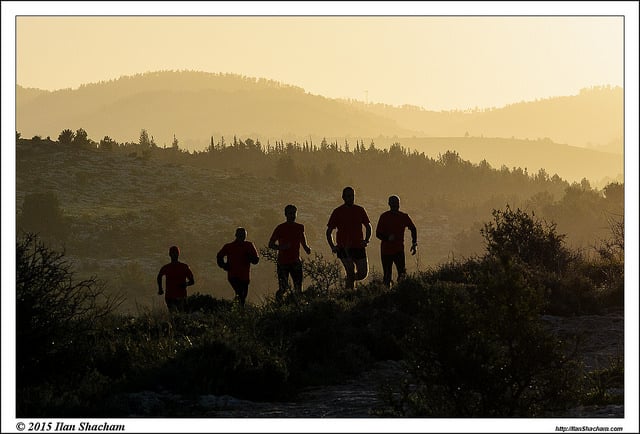
couple doing recovery run on a sunday

Let me hit you with the truth upfront: easy doesn’t mean lazy.

It means smart.

Recovery runs are the behind-the-scenes MVPs of training — the stuff that doesn’t look flashy on Strava but builds the base that lets you race stronger, recover faster, and stay injury-free.

These runs don’t come with ego boosts or big mile splits.

What they do come with? Gains — quiet, steady, relentless gains.

Let me tell you more…

What’s a Recovery Run?

Simple: It’s a short, slow jog — usually done within a day after a hard session like intervals, a long run, or a race.

It’s not meant to crush your legs.

It’s meant to shake them out, keep blood flowing, and get your body back in the fight.

I call them “anti-hero runs.” They don’t make headlines, but they keep your engine running.

Why Bother? Here’s What Recovery Runs Actually Do

A lot of runners skip these because they feel “too easy.” Don’t be one of them.

Here’s what you’re missing when you skip your recovery miles:

  1. They flush out the junk. Sore legs? Tight calves? A gentle jog boosts circulation, which helps clear out the metabolic leftovers from your last workout. It’s like a rinse cycle for your legs.
  2. They teach you to run tired. Running on fatigued legs trains your body to adapt. That’s next-level stuff. There’s a killer study out of Denmark showing athletes who trained a muscle twice in one day — the second time on tired legs — boosted endurance by 90% more than those who didn’t. Ninety percent. That’s no joke.
  3. They let you rack up more miles without breaking down. Want to improve your aerobic base without overstressing your knees? This is how. You add “bonus” mileage that helps long-term fitness without tipping into burnout territory.
  4. You get to work on form. With no pressure to hit splits, you can focus on posture, stride, arm swing — all the stuff that usually falls apart when you’re redlining. Use this time to sharpen your form, so it holds up when it counts.

How Slow Should a Recovery Run Be?  

If you’re not used to running slow on purpose, this part’s gonna mess with your brain.

But trust me — it works.

This is my golden rules:

Go 60–90 seconds slower than your usual pace

Run a 9:00 on your normal days? Shoot for 10:00–10:30 on recovery runs.

Even slower if needed. There’s no speed minimum here.

Kenyan elites shuffle through recovery runs like they’re walking the dog — because they know the goal is recovery, not impressing GPS watches.

Use heart rate if you’ve got a monitor

Stick to 60–70% of your max heart rate. That’s Zone 1 or low Zone 2 in most systems.

For a lot of runners, that’s somewhere around 110–140 bpm.

If it starts creeping up, ease off. Don’t be afraid to walk hills or take short pauses.

Talk test never fails

Can you carry on a full convo without wheezing? Can you sing a few lines of your favorite song? If not, you’re going too hard.

If you’re out of breath, it’s not recovery. Slow it down.

Here’s the full guide to talk test.

Kill the ego

This is where most runners struggle. Your brain screams, “You’re wasting your time!” when your pace feels glacial. Ignore it.

Think of it like this — in music, the rests are part of the performance. Recovery runs are your rests. They set you up to play harder later. Skip them, and you’re just playing noise with no rhythm.

How Long Should a Recovery Run Be?

Short answer? Not long at all.

A recovery run isn’t about racking up miles — it’s about getting your legs moving just enough to help them bounce back, not burn them out.

Here’s the Ballpark, Depending on Your Level
Runner Level Recovery Run Time Approx. Distance
Beginner 20–30 min 2–3 miles
Intermediate 30–45 min 3–5 miles
Advanced 45–60 min (max) 6–7 miles

For most folks, 3 to 5 miles at an easy, chatty pace hits the sweet spot.

If you’re newer or just ran a monster effort (like a race or brutal long run), even 20 minutes of slow jogging can do the trick.

Now if you’re a seasoned runner with weekly mileage up in the clouds, you might stretch recovery runs to 45 or even 60 minutes — but only if you’re keeping it truly easy.

No huffing, no red-lining.

Just cruise.

Keep It Shorter Than Your Base Runs

Yes, this is the golden rule.

Don’t try to be a hero. This ain’t the day to chase mileage badges on Strava.

A recovery run is like a leg massage disguised as a jog — a light shakeout to keep the gears moving.

There’s a reason a lot of coaches swear by the 20–40 minute range. Go longer than that and you risk digging deeper into fatigue instead of recovering from it — especially if you’re not in high-mileage territory.

Think of it this way: “Done is better than more.”

If you’re on mile 3 of an easy day and your brain whispers “Let’s make it 6,” ask yourself: why?

If the answer isn’t “Because I feel amazing and I’m recovering fine,” then cut it short. Live to run strong another day.

You should finish your recovery run feeling better than you started — or at least not more wiped.

When Should You Schedule a Recovery Run?

Here’s the deal: timing matters just as much as duration.

You don’t want to throw a recovery run in just because — it’s gotta make sense.

Let’s break it down:

After… Should You Run?
Hard interval workout (speed) Yes – next day is prime shakeout time. Some advanced runners even sneak in a super easy second jog later the same day.
Long run Yes – but only if your legs aren’t cooked. Gentle jog the next day can loosen you up. Too sore? Take the day off or cross-train.
Tempo run or race-pace session  Yep – a light jog 12–24 hours later helps shift your body into recovery mode.
Race (half-marathon or longer)  Nope – not right away. Let your body breathe. Start with walking or full rest. Wait 2–4 days before even thinking about an easy run.

Rule of thumb:
If you went hard yesterday, a light run within 24 hours can help flush soreness, keep you limber, and mentally reset.

Example:

  • Track session Tuesday? Try 20–30 minutes easy Wednesday.
  • Long run on Saturday? Go for a chill shakeout on Sunday.

When to Skip the Recovery Run

Listen — recovery runs aren’t mandatory. And they’re not magic. They only work if your body’s actually ready for them.

Here’s when to press pause:

1. You’re Too Sore or Wrecked

If your legs feel like they got hit by a freight train, don’t force a jog. That deep, post-race ache? That’s your body screaming for true rest — not more pounding.

Try walking, stretching, or non-impact recovery like cycling, swimming, or yoga. Blood flow = good. Pain = bad.

After a marathon, I’ll usually go for a slow walk the next day. No watches. No pressure. Just movement.

2. You Run Fewer Than 3–4 Days Per Week

Running less than 4 days a week? You probably don’t need dedicated recovery runs. Your rest days are already baked in.

If you’re doing Monday-Wednesday-Friday runs, just rest or cross-train on the off days. Spend that energy on your quality workouts instead.

Recovery runs matter more when you’re logging daily or near-daily mileage.

3. It Messes With Sleep or Adds Stress

If getting your recovery run means waking up at 4 a.m. and dragging tired legs out the door before work… skip it.

Sleep is recovery too. And so is not feeling mentally fried.

Recovery days should feel like a breather, not another item on your stress list.

My Real-World Recovery Run Rules (After 1,000+ Miles of Trial and Error)

Let’s be real — recovery runs aren’t flashy. They’re not the ones you brag about.

But they’re everything when it comes to staying healthy, running strong, and showing up ready for your next hard session.

After logging over 1,000 miles on so-called “easy days” — and coaching runners through thousands more — here’s what I’ve learned: recovery runs are where smart training happens.

Here’s how to nail them without wrecking your legs or your training plan.

1. Pull Out Your Cushiest, Comfiest Shoes

Recovery days are when your legs need some love. This isn’t the day for your sleek racing flats. Grab your softest, plushest trainers — the kind that feel like running on marshmallows.

Got a pair that’s a little too beat-up for long runs but still comfy? Perfect. This is their time to shine.

Think max-cushion shoes, like Hokas or those soft-as-hell trainers you use on tired-leg days.

Your joints will thank you.

I call these my “zombie shoes” — when my legs feel dead, I slip into those bad boys, and suddenly everything feels a little more manageable.

2. Choose Chill Terrain — Keep It Flat, Soft, and Forgiving

Recovery runs aren’t the time to “embrace the grind.” Skip the monster hills and rocky trails. You want flat, easy, and gentle.

Hit up a groomed trail, crushed gravel path, or that pancake-flat loop in your neighborhood.

Even grass or a golf course path (if you’re lucky) can make a huge difference. The softer the surface, the less pounding your tired legs take.

Personally, I love a slow jog on the infield trail at my local park. Zero ego, zero elevation, just getting the legs moving.

3. Run With Your Brain, Not Your Watch

Don’t chase numbers. Recovery runs are the perfect time to run by feel, not pace. Use them to do a full-body check-in.

How do your calves feel? Are your hips tight? Is your form falling apart?

Forget the stats. Some days I even leave my watch at home — or turn off the pace display. One less thing to stress about. This is your chance to just move, breathe, and reconnect with why you run in the first place.

Think of it like active meditation — movement without pressure. That’s the sweet spot.

4. If You’re Not Sure About the Pace… Slow Down More

Let’s hammer this in: you cannot go too slow on a recovery run. But you can go too fast — and mess up your next workout.

There’s a saying I live by: “Run your easy runs easy, so you can run your hard runs hard.”

Want to know how I coach my runners? I tell them if it feels like you’re “almost walking,” you’re probably doing it right.

If your legs are trash when you start, shuffle. Heck, walk a bit. Warm into it. What matters is that you keep it gentle and let your body bounce back.

5. Talk or Tune Out: Use Conversation or Chill Vibes

The best way to lock into an easy pace? Talk to someone.

If you’ve got a running buddy, link up and keep the pace conversational — literally. If you can talk, you’re not going too fast.

Solo? Pop in a podcast or a slow-tempo playlist. I’ve coached runners who build recovery run playlists with chilled-out beats to help them stay slow.

6. Don’t Pull the “Accidental Workout” Trick

This one’s big. If it’s a recovery run, make it a recovery run.

No sneaky tempo miles, no “just a few hill reps,” no “I felt good so I picked it up.”

Save the hero workouts for hard days. These runs are black and white — either easy or hard. You can’t straddle the line.

If you’ve got a little extra juice, cool — throw in a few short strides after the run. But don’t turn recovery into a gray-zone slog. That’s how you dig a hole without realizing it.

Remember: there’s no medal for the person who trained the hardest — only the one who trained the smartest.

Bonus Rule: Be Damn Proud of Your Slow Runs

Recovery runs aren’t a sign of weakness. They’re a flex. They say, “I’m in this for the long haul.”

Some runners even post their slow recovery paces to prove a point — that smart training isn’t all about speed.

That’s the mindset we need more of.

If someone gives you crap for running “slow,” smile and wave. You’re playing the long game. And the long game wins races.

Recovery Isn’t Just Running — It’s Sleep, Fuel, and Stress Too

Let’s get real — recovery isn’t just about a slow jog around the block.

Yeah, the recovery run has its place. But if that’s all you’re doing to bounce back? You’re short-changing yourself big time.

Recovery is everything that happens between the runs — how you sleep, how you eat, how you chill out, and how you move on your off days.

Ignore that stuff, and your body’s gonna start flipping the check-engine light whether you like it or not.

Here’s what I tell my runners: recovery is a full-time job. It’s the other half of training.

Below are the five big rocks you’ve gotta nail down if you want to keep training strong and stay out of the injury pit.

Recovery Pillars for Runners (a.k.a. How to Not Break Down)

Recovery Pillar Key Tip for Runners
Sleep Aim for 7–9 hours a night, especially during hard training blocks. That’s when the real rebuilding happens. Elite runners treat sleep like part of their training plan — so should you. Got time for a 20-minute nap after a brutal workout? Do it. Your body will thank you.
Hydration Drink all day — not just on the run. Shoot for 2–3 liters daily, more in the heat. After a sweaty session, go with water plus electrolytes (sodium and potassium) to refuel your engine. Hydration helps your heart move nutrients to those sore, busted-up muscles.
Nutrition Eat like someone who wants to recover. Within 30–60 minutes after a hard run, get in some carbs and protein. Carbs refill your fuel tank, protein patches up the muscle damage. And don’t slack on the basics — whole grains, lean protein, good fats, and tons of fruits and veggies. Every bite counts.
Stress Management Here’s the truth — your body doesn’t care if the stress comes from work, life, or training. It all adds up. High stress + hard training = meltdown mode. On recovery days, give your brain a breather too. Read. Breathe. Laugh. Do stuff that chills you out. It matters more than you think.
Active Recovery Not every recovery day has to be a run. Easy bike rides, swimming, foam rolling, yoga, long walks — these all help blood flow without pounding your joints. The goal isn’t to stick to some perfect formula. It’s to show up tomorrow feeling better than today.

Your Body Rebuilds When You Let It

Here’s the big-picture reminder: training beats you up. Recovery builds you back stronger. It’s a cycle.

You run hard. You recover right. You level up.

But if one part’s off — like you’re sleeping 4 hours a night, eating garbage, or never giving your mind a break — everything else suffers.

Think of your training like a 3-legged stool: running, recovery, and lifestyle. If one leg wobbles, the whole thing crashes.

So on your easy days, don’t just run slow — double down on rest. Hydrate.

Eat real food.

Turn off your brain.

Let your body recharge.

Recovery isn’t a luxury. It’s your secret weapon.

Sample Training Weeks: Where Recovery Runs Actually Fit In

Now let’s plug this into a real week.

Below are three sample plans — for beginners, intermediates, and advanced runners — so you can see where the recovery runs actually belong.

Beginner Week (~20–25 miles)

  • Monday – Rest or yoga/stretching
  • Tuesday – Easy run: 3 miles, super chill
  • Wednesday – Cross-train (bike, swim, or walk)
  • Thursday – Workout: intervals or fartlek
  • Friday – Recovery run: 20 minutes easy jog
  • Saturday – Long run: 5 miles, slow and steady
  • Sunday – Rest

Coach’s Tip: If you’re new to running, your recovery run should feel easier than easy.

Think “shuffle pace.” Even 15–20 minutes is enough to loosen up.

If you’re breathing hard, you’re doing it wrong. Walk breaks are allowed. The goal is to feel better after — not wiped.

Intermediate Week (~35–45 miles)

  • Monday – Easy run: 4 miles, relaxed
  • Tuesday – Workout: 6 x 800m @ 5K pace
  • Wednesday – Recovery run: 30 minutes easy (Zone 1)
  • Thursday – Cross-train or rest
  • Friday – Tempo run: 4 miles at half-marathon effort
  • Saturday – Long run: 8 miles easy
  • Sunday – Recovery run: 35 minutes or rest

Coach’s Tip: At this level, recovery runs are key.

They’re what keep your legs turning over between the hard stuff. Wednesday and Sunday here are both used to flush out fatigue.

Don’t be afraid to slow waaaay down. A heart rate monitor or slower friend can help keep you honest.

Advanced Week (~50–60+ miles)

  • Monday – Tempo run: 6 miles at marathon pace
  • Tuesday – Recovery run: 5 miles AM (optional: 3 miles PM shakeout)
  • Wednesday – Workout: 8 x 400m intervals
  • Thursday – Recovery run: 4 miles easy
  • Friday – Medium-long or hill run: 7 miles
  • Saturday – Rest or light cross-train
  • Sunday – Long run: 12 miles easy (plus 3-mile recovery jog optional)

Coach’s Tip: High-mileage runners live and die by their recovery runs. It’s the glue that holds the week together. On these days, go 2+ minutes per mile slower than marathon pace if needed. That’s not “lazy” — that’s smart. Run slow enough that you almost feel silly. Then show up fresh when it counts.

FAQs — Real Answers from the Road

Still wondering about recovery runs? You’re not alone. I get these questions all the time from runners at every level — so let’s cut through the noise and get honest.

Can a recovery run be too slow?

Nope. The slower, the better. I mean it.

You could jog like your shoes are stuck in molasses, and it still counts. If you’re moving, you’re winning. Some runners feel like they’re wasting time if they’re not clocking sub-9s on recovery days. That mindset? It’ll burn you out fast.

Recovery runs aren’t about ego. They’re about staying in the game.

Do I have to do recovery runs?

Short answer: not always.

If you’re only running 2–3 days a week, you’re probably good with rest days. But if you’re stacking 5+ runs a week or pushing mileage, those easy runs become your secret weapon. They let you build volume, adapt to fatigue, and avoid overtraining.

So no, you don’t have to do them — but skipping all your easy miles might put a cap on your progress. Worse, it could put you in the injury zone.

Should I skip a recovery run if I’m really sore?

Absolutely. If your legs feel like they’ve been hit by a truck after race day or a brutal long run, you’re better off resting or hopping on a bike.

Remember: a recovery run is still a run. If you’re hobbling just to jog, that’s your body saying “chill out.” Let it heal. Once the soreness fades, a light jog can actually help flush things out and get you moving again.

But pain = stop. Always.

What if I finish a recovery run feeling even more tired?

Then it wasn’t a recovery run. It was just a slower hard run.

A real recovery run should leave you feeling refreshed — or at least no more beat than when you started. If you’re finishing more drained, you either ran too far, too fast, or you just needed rest instead.

Next time, scale it way back. Try half the distance or drop the pace even more. Still not sure? Try this trick I give my athletes:

Start jogging. If after 10 minutes you still feel awful, pull the plug and call it a rest day. No guilt. No overthinking. Just smart training.

Final Thoughts: The Real Power of Going Slow

Here’s the truth no one brags about on Strava: the easy days are the ones that hold your whole training plan together.

Everyone loves to talk about track splits and long run grinds. But recovery runs? They’re the unsung heroes. They keep your legs loose, your mind steady, and your body primed to come back swinging tomorrow.

I’ve said this a hundred times:
“If you skip recovery runs, your hard days will fall apart. Respect the easy miles, and your progress compounds.”

That’s not motivational fluff — it’s just how the body works.

Think of recovery runs like brushing your teeth. You don’t skip it because you don’t feel like it’s “working.” You just do it, because it keeps everything else healthy.

And when you show up to your speed workouts or long runs feeling light, strong, and ready to rip — that’s when you realize those slow miles were doing their job.

Let’s be real: you’re not gonna post about your 11:00 pace loop around the neighborhood. But guess what? The runners who embrace those slow, unsexy jogs? They’re the ones posting PRs later.

That’s the 80/20 principle in action: 80% easy, 20% hard. Get that balance right, and you’re bulletproof.

5 HIIT Running Workouts for Beginners

HIIT Workouts for runners

Let’s talk about something that changed the game for me—HIIT.

That’s short for High-Intensity Interval Training. Yeah, it might sound a bit scary at first. I get it.

Years ago, I avoided anything that wasn’t a steady jog.

Long runs were my thing.

I figured that was the best way to build endurance.

But you know what? I hit a wall.

My times stopped improving. My legs felt like bricks. And I wasn’t seeing the results I wanted—physically or mentally.

Everything shifted the day I tried a HIIT run. It was rough.

I was gasping for air halfway through. But man, the results hit fast.

My pace got quicker.

My endurance shot up.

Even my motivation came back to life.

You don’t need to be a pro to make this work. If you’ve got shoes and the guts to push yourself a bit, you’re good to go.

Trust me, if I could drag myself through that first session, so can you.

In this guide, I’ll walk you through what HIIT running is, how to start it safely, and give you step-by-step workouts you can do today—even if you’re brand new to it.

Plus, I’ll bust some myths and throw in a few personal stories, the messy ones included. By the time you’re done reading, you won’t just understand HIIT—you’ll want to lace up and hit it.

What the Heck Is HIIT Running, Anyway?

HIIT (High-Intensity Interval Training) is a simple concept: you go hard for a short burst, then slow down to catch your breath, and repeat. That’s it.

Picture this: you run fast—like, 80 to 90% of your max—for 20 or 30 seconds.

Then you walk or jog for 40 to 90 seconds.

Do this on repeat for 10 to 20 minutes.

That’s your workout. Like a rollercoaster for your lungs and legs.

Here’s a real example I use with beginner runners:

20 seconds sprint40 seconds walk or slow jog → repeat 8 times.

It doesn’t seem like much. But by round four, you’ll be asking yourself why you ever agreed to this.

And that’s the beauty of it—HIIT works because it shocks your system in a good way.

You’re not just cruising at one pace. You’re forcing your heart to work harder, then back off. That teaches your body to recover quicker and handle more effort over time.

Plus, you fire up those fast-twitch muscle fibers you never use during your easy runs. This is what helps build speed, power, and even that gritty mental toughness runners don’t talk about enough.

One study from the Journal of Strength & Conditioning Research found that HIIT improves VO₂ max—a key measure of your aerobic fitness. It also ramps up your anaerobic endurance.

Translation?

You run faster and farther, and you bounce back quicker.

The Basic Formula for a HIIT Run

Here’s the exact structure I give to new runners. Print it out. Tape it to your wall. Tattoo it on your forearm (okay, maybe not that far).

1. Warm-Up (5–10 minutes)

Start with light jogging and dynamic stretches. Get your blood flowing and wake up those legs. Don’t skip this—your body isn’t ready to sprint cold.

2. Work Interval (30 seconds fast)

Run hard. Not sprinting-until-you-black-out hard, but about 8 or 9 out of 10 effort. If you’re new, a hard uphill run or super-fast jog is totally fine.

3. Recovery Interval (60–90 seconds slow)

Walk it off. Jog easy. Let your heart rate come down. You’ll feel winded—that’s part of the process.

4. Repeat 6–8 rounds

Start small. Even 4 rounds is better than zero. Build your way up to 8, then maybe 10+ once you’re feeling stronger.

5. Cooldown (5 minutes)

Jog or walk slow. Stretch gently. Let your body ease out of the effort.

That’s your HIIT session—done and dusted.

Simple? Yes.

Easy? Definitely not. But that’s where growth lives.

You don’t need to be fast to do this.

You just need to try hard.

Whether your “fast” is a jog or a sprint doesn’t matter. What matters is the effort. HIIT meets you where you’re at—and pushes you from there.

What About Beginners?

By now you might be wondering: “Sounds great, but what if I’m totally new or not fit yet?”

Good. Let’s talk about that—because HIIT is doable for beginners too. But the key is starting smart (more on that in the next section).

5 HIIT Running Workouts for Beginners (Step-by-Step Plans)

Ready to breathe fire?

Here are five HIIT running workouts designed for beginners who want to get faster, sweat buckets, and start building real stamina.

Each workout has its own flavor — some are more forgiving, others will leave your legs screaming — but all of them can fit into a beginner’s weekly routine.

I always tell my athletes: start slow, warm up properly, and never run these back-to-back. Stick to one HIIT session per week if you’re just getting started.

Easy runs and rest days matter even more when you throw hard intervals into the mix.

Let’s dig in.

HIIT Workout #1: Walk-Run Intervals (aka “The Beginner’s Blast”)

Why I love it: This one’s perfect if you’re new to high-effort training. It uses a run-walk structure that’s simple to follow, but don’t let that fool you — if you push those run segments, you’ll be sucking wind by round three.

This is exactly how I eased a couch-bound client into HIIT last year. She’s running 10Ks now.

Here’s the plan:

  • Warm up with 5 minutes of brisk walking + 5 minutes of light jogging. Toss in some leg swings if you’re stiff.
  • Run hard for 1 minute. That means a pace that feels like 8 out of 10 effort — faster than your regular jog, but not a full-out sprint. If 1 minute is too much, do 30 seconds. This is your workout — own it.
  • Walk for 2 minutes at a relaxed pace. Let your breathing calm down. By the end of the 2 minutes, you should feel ready to go again.
  • Repeat 6 to 8 times. First time? Stick with 6 rounds. You can build up as your fitness improves.
  • Cool down with 5 minutes of walking, followed by light stretching.

How long does this take? Around 20–25 minutes, including warm-up and cooldown.

Quick Tip : On the treadmill? Set intervals for 1-minute run / 2-minute walk. Outside? Use a watch or a timer app. I’ve even used the beat of a playlist to keep the rhythm.

Why it works:

You’re pushing your heart rate high with the run, then letting it drop during the walk — classic HIIT.

According to the Journal of Strength & Conditioning Research, this kind of training improves cardiovascular health, VO2 max, and fat burning faster than steady-state cardio.

But here’s the real kicker: it’s doable. One-minute pushes feel manageable, even when your legs are toast. This workout builds confidence while still torching calories.

HIIT Workout #2: Sprint Intervals (aka “The Speed Demon”)

Why I love it: This is your go-to if you want to feel powerful and fast.

It’s a classic: short sprints, long rest. You don’t need to be “in shape” to start — you just need to go all-in during the sprint and respect the recovery.

Here’s the plan:

  • Warm up well. Jog for at least 5–10 minutes. Add dynamic drills (high knees, butt kicks, skipping). Do 2-3 short strides to get your legs firing.
  • Sprint for 20–30 seconds at around 90% effort. That means controlled but aggressive. Think: arms pumping, legs driving, but not flailing.
  • Recover for 90–120 seconds. Walk the first 60 seconds, then jog the next 60 if you feel good. The goal is to be ready for another hard push.
  • Repeat 6 to 8 times. If you’re new to sprinting, stop at 6. If you’ve done some intervals before, push to 8 — but only if you can hold your form.
  • Cool down with 5 minutes of walking or easy jogging.

How long does this take? About 20 minutes, not counting warm-up and cooldown.

Where to do it: I like to do this on a track — sprint the straightaway, walk the curve. But any flat stretch of road or quiet park path will do. I’ve even used my local beach at low tide.

Hill variation: Want to reduce injury risk? Sprint uphill. It forces better form, lowers impact, and builds strength fast. Save flat sprints for when your body’s ready.

Why it works:

Sprinting taps into your fast-twitch muscle fibers — the ones that give you speed and power. It spikes your heart rate and teaches your body to recover faster. That’s huge for race performance.

Research backs this up: sprint-based intervals improve anaerobic conditioning and running economy faster than longer, moderate runs.

And let’s be real — there’s something primal and fun about sprinting like a maniac. It reminds me of racing kids in schoolyards. It’s raw. It’s simple. It’s effective.

Quick tip: Don’t over-stride. Think quick feet, not long leaps. The biggest mistake beginners make is trying to lengthen their stride to go faster. That’s a shortcut to injury.

HIIT Running Workout #3: Hill Sprint Challenge (The Up-and-Down Burner)

If you’ve got access to a hill, you’ve got a built-in torture device—and I say that with love. Hill sprints have been one of my favorite “no excuses” workouts since the early days.

No fancy gear, no stopwatch needed.

Just grit, gravity, and your will to fight back. I call this one the Up-and-Down Burner because, well, your legs are going to light up like a bonfire.

Why Hills?

They’re sneaky. Uphill running forces you to use great form—shorter, stronger strides—and it hits your legs like strength training.

Even better? Less impact on your knees compared to flat-out sprints.

According to research in the Journal of Strength & Conditioning Research, uphill running improves running economy and power output.

No surprise there—I’ve seen it firsthand in both my own training and with clients. And mentally? Hills toughen you up. They build that “don’t quit” muscle.

How to Do It:

  • Warm-Up (5–10 min): Start with a brisk walk or easy jog on flat ground. Get your calves and ankles ready—hills wake them up fast. Toss in some leg swings, high knees, and a light jog up the hill at a chill pace to get a feel for the terrain.
  • Find a Hill: Something that takes 30–60 seconds to climb when you’re pushing hard. If it’s a short hill, no worries—just run up, walk down, repeat. You can still make it burn.
  • The Sprint: Charge uphill for 30 seconds at around 8–9 out of 10 effort. Slight lean forward, knees driving, arms pumping. This part ain’t pretty—you’ll feel it in your lungs and quads halfway up. Embrace the suck. If 30 seconds is too much at first, start with 20. No shame.
  • Walk Down (Recovery): Walk down slowly, about 90 seconds. This is not a jog. It’s recovery. You’re letting the heart rate settle and prepping for the next round.
  • Repeat: Do 5–8 rounds total. New to hills? Start with 5. I’ve had runners build up to 10 over time, but only if your form stays solid.
  • Cool Down (5 min): Wrap it up with an easy jog or walk on flat ground. Let your legs calm down after going to war with that incline.

Coach’s Note:

Each rep should be a test—but not a form killer. If you find yourself hunching over or barely moving near the top, cut the interval short.

Train smart, not sloppy. I like to pick a visual target—tree, rock, whatever—and chase it each round. When your legs feel like jelly, and your lungs are gasping, that’s the hill doing its job.

And yeah, go slow on the way down. No heroics. Save your knees. You’re not racing the recovery.

Why It Works:

Hill sprints are basically powerlifting for runners. Every stride is like a single-leg press.

You’re building raw strength, cardio, and mental toughness all in one shot. And if you’ve got cranky knees or shin splints, you might find hills feel better than sprinting on flat pavement.

One of my older coaching clients—65 years old, knees not what they used to be—swears by hill intervals. “It’s hard, but not harsh,” he told me. And he’s right. It’s one of the best bang-for-your-buck workouts in the HIIT world.

HIIT Running Workout #4: Fartlek Fun Run (Speed Play for Grown-Ups)

Let’s be honest: Fartlek sounds like something a 10-year-old would giggle at.

But don’t let the name fool you—it’s one of the best tools for building speed and endurance without feeling like you’re trapped in a lab experiment. I use it all the time when I want freedom in a workout but still want to feel fast.

Fartlek is Swedish for “speed play,” and that’s exactly the vibe—loose, fun, and surprisingly tough.

How to Do It:

  • Warm-Up (5–10 min): Easy jog. Get into a rhythm. No need to overthink it—you’ll blend right into the workout from here.
  • Start Playing:
    Let’s say you’re doing a 20-minute run. Randomly toss in bursts of speed. Maybe you sprint to the next stop sign. Maybe you run hard during your favorite song’s chorus. Maybe you race your shadow. Keep the fast segments between 15 seconds to a minute—whatever feels right.
  • Recover Easy:
    After each burst, drop back to your normal jog or walk. Recover until you’re ready to go again. There’s no strict timing. Listen to your body. Jog a minute, walk thirty seconds, whatever works.
  • Repeat the Dance:
    You might throw in 6–10 speed bursts during a 20-minute run. Some can be all-out sprints. Others just a faster cruise. This isn’t a math equation—it’s you, having fun with pace.
  • Cool Down (last 2–3 min): Ease back to a walk or gentle jog. Let the heart rate come back down slowly.

Coach’s Note:

I use fartleks when I don’t feel like looking at my watch.

Sometimes I zig-zag through city streets, chasing lampposts and runners I see up ahead. Other times I’m on the trails, picking up speed between two random trees. It’s freeing. And still effective.

If you’re new to speed work, fartlek is your friend. You don’t need to hit exact splits. You just need to move faster for chunks of time—and back off when needed.

Why It Works:

Fartlek teaches you how to shift gears.

It builds both aerobic and anaerobic capacity. You’ll spike your heart rate during bursts, then bring it back down in recovery—a classic HIIT rhythm, just less rigid.

It’s also great for tuning into your body. You’ll start recognizing when you’re fully recovered, when you’ve got more in the tank, and when you need to back off. This awareness? That’s golden.

HIIT Running Workout #5: The 10-20-30 Intervals 

Let me tell you about one of my favorite sneaky-tough HIIT workouts: the 10-20-30 method. This one’s inspired by a Danish training approach that mixes up your pace in a way that keeps your body guessing—and your brain awake.

It’s kind of like Tabata’s chill cousin. Same intense spirit, but way more beginner-friendly. Instead of maxing out every round, you build up gradually: easy jog, pick it up a bit, then boom—sprint.

Simple. Powerful.

And yeah, it’ll leave you breathless in the best way.

How to Do It

Here’s your game plan:

  • Warm-Up: 5–10 minutes of easy jogging. Let your legs and lungs wake up.
  • The Interval Pattern (One Cycle):
    • 30 seconds: Easy jog—relaxed, cruise mode.
    • 20 seconds: Pick it up to a moderate pace. I tell runners to think “5K effort”—not crazy fast, but not comfy either.
    • 10 seconds: Go for it. A near all-out sprint. Push hard.

That’s one cycle. It takes just 60 seconds.

  • Rest: After each cycle, take 1–2 minutes of walking or light jogging. Listen to your body. Don’t rush. This isn’t a race—it’s training.
  • How Many?
    • Start with 5 total cycles (5 minutes of actual hard work).
    • Feeling strong and have a bit of running history? Try 2 sets of 5, with a 2–3 minute breather in between.
  • Cool Down: 5 minutes jog or walk. Bring that heart rate back to Earth.

Why It Works (And Why I Love It)

This workout tricks your body into working hard without frying your brain. You know what I mean—sprinting for a full minute is brutal.

But 10 seconds?

Anyone can survive that. And because your heart rate climbs during the 20-second push, you’re primed to get max value out of that final 10-second sprint.

A study in the Journal of Applied Physiology found that runners who used this 10-20-30 method boosted their 5K performance while actually spending less time training. Less grind, more gain? I’m in.

It also teaches pace control. I’ve coached beginners who couldn’t tell the difference between “moderate” and “race pace” when they started—but after a few weeks of this workout, they started to feel the difference. That’s where real growth happens.

For me, this workout feels like shifting gears on a mountain trail: smooth start, steady climb, full-send at the top. When I’m done, I feel fired up, not burned out.

Pro tip: Use a running app with a programmable timer (or a stopwatch if you’re old-school like me). Set it to beep or vibrate for the 30-20-10 sequence so you’re not staring at the clock like a hawk.

Your Turn—Let’s Talk Goals

What’s your sprint pace right now? Can you hold it for 10 seconds? Probably. Can you hold it after jogging and pushing hard right before? That’s the fun part.

Want More?

Mix and match with other beginner HIIT runs. But don’t get overwhelmed—mastering one solid workout is better than dabbling in ten. You can also check my post here for more ideas.

And always keep a balance: easy runs, strength days, and rest days matter just as much as HIIT.

Your fitness isn’t built in one day—it’s built brick by brick. This workout? Just one of those bricks. Lay it down solid.

Thanks for reading, and as always, keep running strong. I’m rooting for you. Now… ready, set, HIIT it! 🚀

9 Agility Ladder Drills for Runners to Boost Speed & Cadence

When I first heard about agility ladder drills, I thought they were some kind of secret weapon for speed.

Back then I was still a newbie runner, and convinced that a few quick foot tricks would turn me into Usain Bolt in flip-flops.

Reality smacked me hard.

On my first ladder workout, I tripped over the rungs like a baby goat on roller skates. My coach was trying not to laugh.

I was red-faced, tangled up, and questioning all my life choices.

But honestly? That awkward first session was a turning point.

After a few weeks of sticking with it, things changed. My feet started moving with purpose. I wasn’t just surviving trails anymore—I was gliding through rocky terrain, hopping over roots, and weaving past stray dogs.

That’s when I realized agility work wasn’t just about speed. It was about control. Coordination. Building the kind of movement that makes you feel fast even when you’re not racing.

These days, as a coach, agility ladder drills are a regular part of what I give my runners. Not because they’re flashy, but because they work. They sharpen your footwork, lift your cadence, and prep you for trail chaos.

No, they won’t magically shave minutes off your 5K time—but they will build the groundwork for smoother form and faster reactions.

So if you’re serious about running smarter and moving better, stick with me.

I’ll walk you through the whole thing—what ladder drills actually are, why they matter (with a few honest truths), and my 9 favorite drills.

I’ve also added a 4-week plan you can do at home, plus real-world answers to the most common questions I get.

Let’s break it down.

What Are Agility Ladder Drills?

Agility means being able to change direction fast, without flailing or losing control.

It’s not just about being quick—it’s about reacting. Moving clean. Staying in control when things go sideways.

Sounds fancy, but here’s what it means for runners: being able to adjust your stride at the last second—like when you suddenly spot a hole in the pavement or have to swerve around pedestrians hogging the sidewalk.

Agility ladder drills help you get better at that. You move your feet through a ladder laid flat on the ground, following specific step patterns—kind of like foot choreography for runners.

These drills train your feet to be quicker and more precise, which means more control on the run.

I tell my athletes: “Ladder drills teach your feet to dance.” They dial in your brain-to-foot connection—what nerds call the neuromuscular system—so that when the road gets sketchy or the trail gets wild, your feet already know what to do.

I’ve had moments out running—like flying downhill in the rain or threading through a crowded street—where I could literally feel the ladder work kicking in.

My legs moved faster than my brain could think. That’s the magic of training this way.

Now, don’t get it twisted: agility ladder drills aren’t true agility. In sports like soccer or tennis, athletes respond to unpredictable cues—like a defender or a ball. Ladder drills are planned.

You’re following patterns, not reacting to surprises.

But that’s okay. These drills still build the raw tools—balance, foot speed, coordination—that help you react better in the real world.

So think of agility drills like sharpening your blade. They’re not the whole battle, but they make you a better fighter.

What Is an Agility Ladder (a.k.a. Speed Ladder)?

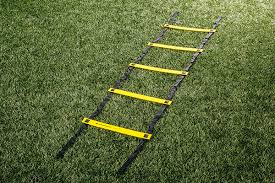
An agility ladder is basically a flat ladder you roll out on the ground. (See Image)

No, not the kind you use to clean gutters. It’s usually made of nylon sides and thin plastic “rungs” spaced about 18 inches apart. Each box is a landing zone for your feet during drills.

You can buy one online or at a sporting goods store for around $20. Mine’s been with me for years and rolls up like a yoga mat. Easy to pack. Easy to toss into a backpack.

But if you’re scrappy (or broke), make your own.

I once built a DIY ladder in my garage with duct tape and a pile of paint stir sticks. Took about an hour, and it worked just fine. There’s something satisfying about training with gear you built yourself.

Here’s what you’ll need if you go the DIY route:

  • About 25–30 feet of duct tape
  • 10 flat sticks or cardboard strips (around 18 inches long)
  • Measuring tape (space rungs ~18 inches apart)
  • Scissors

Lay out two long strips of duct tape, slap the “rungs” between them, and boom—you’ve got a functional agility ladder. Not pretty, but it gets the job done. Chalk or even jump ropes on the ground can work in a pinch, too.

Agility Ladder Specs:

  • Most are 10 yards long, 16 rungs.
  • Modular ones come in smaller sections (great if space is tight).
  • Flat rungs are safer—because trust me, you will hit them sometimes.
  • Use it on a grippy surface like grass, rubber floor, or turf.
  • Avoid concrete unless you like sore joints and the taste of gravel.

I usually throw mine down in a parking lot or quiet patch of grass. Indoors, tape it to a hallway floor or gym mat. Just make sure there’s nothing breakable nearby—especially if you’re still working on your coordination!

Why Should Runners Care?

This isn’t just about looking cool or copying football players. Agility drills make you better on trails, in races, and in life.

They help you stay upright when the ground gets sketchy, or when you need to change direction without throwing your stride out of whack.

Here’s what I’ve seen in my own training and with my runners:

  • Cadence goes up: You learn to move your feet faster, without trying harder.
  • Form gets smoother: The foot-brain link strengthens, reducing the clunky shuffle that slows you down.
  • Confidence spikes: You trust your body more, especially when terrain gets tricky.

And here’s the kicker: agility work is fun. It breaks up the grind of regular mileage. It makes you feel like an athlete, not just someone out logging steps on Strava.

But yeah—don’t expect miracles. Ladder drills alone won’t get you to a sub-20 5K. You still need tempo runs, intervals, and strength training. But they will make those runs feel smoother and more dialed-in.

Let me break down the reasons runners need agility ladder training.

🔹 They Fire Up Your Brain–Body Connection

You ever feel like your feet and brain aren’t always on the same page—especially when you’re tired? Ladder drills fix that. They train your brain and legs to talk fast and react even faster.

I remember the shift myself. After a few weeks of drills, I was hitting rocky trails with more control, barely thinking about foot placement. It was like my nervous system finally got the memo.

🔹 They Help You Pick Up Cadence (Yes, That Means Speed)

Stuck in that heavy, slow stride that sounds like bricks hitting pavement? Been there. Ladder drills force you to move fast and light. Think quick, short, snappy steps.

I’ve coached runners who couldn’t break 160 steps per minute. After adding agility work, they started hitting 175+ like it was nothing. It’s not magic. It’s muscle memory.

🔹 They Make You a More Efficient Runner

No wasted motion. That’s what we’re after. Ladder work teaches you to move clean—less flailing, more control. You’ll start landing under your center of gravity instead of reaching and overstriding.

For me, I felt it most on long runs. My legs didn’t fall apart late in the game. They held strong. That’s running economy in real life—not just something you read in a study.

(But for the record, this stuff is backed by science—like a study in the Journal of Strength & Conditioning Research showing agility drills improve lower-body coordination and speed.)

🔹 They Wake Up Your Balance and Stability Muscles

Every little hop and shift in a ladder drill lights up those tiny stabilizer muscles—especially in your feet, ankles, and hips. These are the muscles that stop you from rolling your ankle on a root or crashing on a descent.

Trust me, I used to crash. A lot. Rocky trails were my nemesis until I built up this kind of foot control. Now I stay upright more often than not.

🔹 They’re Trail Running Gold

If you love trail running like I do, these drills are your cheat code. You’ll move laterally better, lift your feet higher, and react faster to whatever nature throws at you.

I swear by lateral ladder drills before a big trail race. Makes dodging roots and rocks feel automatic.

Coach’s Final Word

Look, ladder drills won’t replace your hill repeats or tempo runs. But they will sharpen the blade. You’ll feel quicker, more controlled, and more confident out there.

I treat them like a secret weapon. 10–15 minutes, twice a week, and the benefits sneak up on you.

So if you’ve been skipping footwork drills because they look “fancy” or “not for runners,” stop that. They’re for you. Let’s level up your stride.

9 Agility Ladder Drills for Runners

These are the drills I keep coming back to—with myself and with the runners I coach. I’ve broken them down with clear steps and thrown in some personal notes to show how each one plays out in real life.

(Quick note: Do each drill for 30 seconds to a minute. Rest. Then repeat for 2–3 rounds. Twice a week is enough to see gains.)

1. Ladder Linear Run (The Classic Speed Drill)

This is your bread and butter. Great warm-up. Great turnover booster.

This drill didn’t click for me at first. I was too stiff, trying to “nail” each step perfectly. One day I just sprinted through—no overthinking—and boom: I flew. No ladder hits. Just flow. Felt like I unlocked a new gear in my legs.

Once you feel it, you’ll know. The rhythm is addicting.

How to do it:

  • Start at the bottom of the ladder, facing straight ahead.
  • Run through it, one foot per box—left-right-left-right.
  • Light steps. Stay bouncy. Don’t let your heels drag.
  • Land on the balls of your feet. Keep it fast and light—imagine running over hot coals. Arms should drive in rhythm.

2. High-Knees Run (The “A-Skip” Variation)

If your stride feels sluggish or you struggle with posture, this one is for you.

I used to picture running through tires, like in those old football training montages. One day I was doing this drill in a park and a bunch of kids started mimicking me—knees way too high, laughing the whole time.

At first I felt silly. Then I realized: screw it, I’m training smart. They were just having fun. This drill helped fix my lazy shuffle. Gave me more spring and improved my form. If you’re always dragging your feet, start here.

How to do it:

  • Both feet land in each box.
  • Right foot in → left foot follows.
  • Then next box. Each time, lift your knee high—aim for waist height.
  • Keep elbows bent at 90 degrees. Drive your arms with the opposite knee. It’s a rhythm thing.

3. Lateral Quick Step Shuffle

Running isn’t just about pounding forward. If you’ve ever had to dodge a wayward scooter in Bali or hop a puddle mid-run, you already know that side-to-side agility is crucial.

The lateral shuffle drill trains exactly that—giving your feet the kind of quickness that keeps you upright, stable, and ready to move.

How to Do It:

  • Start by facing sideways at the edge of the ladder, with it stretching out to your right.
  • Step your right foot into the first box, then quickly bring your left foot in too—both feet land inside.
  • Now step out with your right foot (outside the ladder), then left foot into the next box, followed by right foot in again.
  • Repeat this “in-in, out” rhythm as you shuffle laterally down the ladder.

4. Carioca (Grapevine) Step

Here’s where things get spicy. The carioca drill—some call it the grapevine—is all about hip mobility, timing, and smooth coordination. Think of it as dancing through the ladder while secretly training your running mechanics.

How to Do It:

  • Stand on the left side of the ladder with your right shoulder facing it.
  • Step your right foot into the first box, then cross your left foot behind the right into the next box.
  • Right foot into the third box, left foot crosses behind again into the fourth box, and so on.

5. In-and-Out (Jumping Jack Feet)

Ready to get your heart rate up? This one’s like a horizontal jumping jack—simple, but man, it wakes up your legs and coordination fast.

I used to think my coordination was solid… until I realized my left foot was always late to the party. This drill exposed that. It also lit up my adductors (inner thighs), which I didn’t even know were weak.

Now I think of this drill as mini ski hops—it’s helped my trail running, especially when pushing off from uneven terrain.

How to Do It:

  • Stand at the start of the ladder with both feet together.
  • Jump both feet into the first box, landing hip-width apart.
  • Then jump forward out of the ladder, landing with your feet straddling the next rung—wider than hip width.
  • Next, hop both feet together into the second box. Then out again, and so on.
  • Bounce on the balls of your feet. Keep your knees soft and chest up. Arms help: down when feet are together, out when feet go wide—just like a jumping jack. Use your eyes to scan ahead, not down.

6. Ickey Shuffle (Three-Step Lateral Pattern)

This is the drill that makes you feel like an athlete. Named after NFL legend Ickey Woods, it’s all about rhythm and reaction—perfect for runners who want sharper footwork and faster cadence.

How to Do It:

  • Start on the left side of the ladder. The pattern is “In-In-Out.”
  • Step your right foot into the first box.
  • Bring your left foot in.
  • Step your right foot out to the right of the ladder.
    Then:
  • Step your left foot into the next box.
  • Bring your right foot in.
  • Step your left foot out to the left side.
  • Repeat all the way down.

7. Forward & Backward Jumps

This one’s a killer — I call it the boomerang hop. It teaches your feet to react fast and your brain to stay locked in. The rhythm is simple: two boxes forward, one back. It sounds playful — but it’ll torch your calves and challenge your focus like crazy.

How to Do It:

  • Stand at the base of the ladder. This is a two-foot jump drill.
  • Start by hopping over the first box and landing in the second.
  • Then jump backward one box to the first.
  • Next, jump forward two — you’ll land in box 3.
  • Then back to box 2. Forward to box 4. Back to 3. Keep going.

The pattern:
Box 2 → back to 1 → into 3 → back to 2 → into 4 → back to 3… and on.

My routine? I walk back to the start after each round (honestly, that walk is the best breather). If you want extra challenge, flip the drill: go forward one, back two. But trust me — forward-2, back-1 is already a mental workout.

Form Tips:

  • Keep your landings soft.
  • Swing your arms with the movement — forward when jumping ahead, back for the reverse.
  • Don’t rush the jump back. Regain your balance, then push off.

8. Lateral Shuffle (Two Feet In Each)

This is one of the simplest ladder drills — but don’t sleep on it. Done right, it sharpens your lateral speed and balance. I like using it as a warm-up or reset when other drills get too tricky.

How to Do It:

  • Stand facing down the ladder, with it at your side.
  • Step your left foot into box 1, then your right.
  • Step out with your left, then move your right into box 2, followed by your left.
  • Repeat: two feet in each box, one at a time, moving sideways.

In short:

  • Step in with lead foot,
  • bring the trailing foot in,
  • step the lead foot out,
  • repeat into the next box.

Once you hit the end, face the other way and come back — your opposite foot will lead this time.

9. Single-Leg Hops (Hopscotch Balance)

Okay, now we’re getting serious. This drill is tough. It’s all about control, balance, and single-leg strength — which runners desperately need. Remember: every stride is a one-leg jump. So this is just running, turned up a notch.

When I first tried this, my left leg was a mess. Wobbly, weak, uncoordinated. It exposed a clear imbalance I had been ignoring. So I added it to my drills every week.

After about a month? Huge difference.

This drill hits all the little stabilizer muscles — foot, ankle, glutes. It’s a hidden gem for injury prevention.

How to Do It:

  • Start on one leg — right foot, left foot raised.
  • Hop into the first box.
  • Keep hopping through the entire ladder, staying on that one leg.
  • Switch legs and return hopping on the other foot.

You don’t need to move sideways — just hop forward and zigzag slightly into each box. Control matters more than speed here.

4-Week Agility Ladder Plan (Runner-Tested & At-Home Ready)

When I first added agility ladder drills to my training, I was all clumsy feet and tangled steps.

I mean it. I looked like I was playing Twister on fast-forward.

But over time, that awkward mess turned into smooth, quick steps. And now, it’s one of my favorite ways to wake up my legs and brain.

So if you’re wondering how to fit ladder drills into your running routine, here’s a no-fluff 4-week plan I use with my runners here in Bali.

All you need is about 10–15 minutes, a little space, and some willingness to look silly before you get good. Trust me, it’s worth it.

The Basics

  • Schedule: Start with 2 ladder sessions per week. Move up to 3 in week 3 if you’re feeling good.
  • When to do them: On your easy run or cross-training days. Or tack them on after an easy run as part of your drills.
  • Warm-up: Always jog 5–10 minutes and do dynamic stretches before ladder work.

WEEK 1: Learn the Moves

  • Focus: Nail the basics, stay light on your feet.
  • Sessions: 2 (e.g., Tuesday & Friday)
  • Drills: Ladder Linear Run, High-Knees, Lateral Shuffle, In-and-Out
  • Tip: Walk or jog through drills first. It’s about rhythm, not speed. By the end of the week, you should feel more coordinated.

WEEK 2: Add a Little Spice

  • New Drills: Carioca & Ickey Shuffle
  • Session A: Linear Run (2 rounds, a little quicker), High-Knees (2 rounds), Carioca (2 rounds each way), Lateral Shuffle (2 rounds)
  • Session B: In-and-Out (3 rounds), Ickey Shuffle (3 rounds), Forward/Backward Jumps (2), Single-Leg Hops (start easy)
  • Tip: It’s normal to feel awkward with the new drills. Break them down step-by-step. Rest as needed.

WEEK 3: Turn Up the Volume

  • Sessions: 2–3 (add a third light one if you’re up for it)
  • Session A: High-Knees (3 rounds), Linear Run (3 rounds, last one fast), Lateral Shuffle (3), Carioca (2)
  • Session B: Ickey Shuffle (4), Forward/Backward Jumps (3), In-and-Out (3), Single-Leg Hops (2 each leg)
  • Optional Session C: Focused technique work on your weakest drill
  • Tip: Try going circuit-style: run straight into the next drill, then rest. And yes, hitting a rung happens. Laugh, reset, go again.

WEEK 4: Own It

  • Session A: Create a circuit: Linear Run → High-Knees → Ickey Shuffle → Lateral Shuffle. Repeat 2–3 times.
  • Session B: Power session: In-and-Out (2 rounds fast), Forward/Backward Jumps (2), Single-Leg Hops (2 each leg), finish with your favorite drill
  • Tip: Imagine you’re on a technical trail or dodging crowds. Let your body move freely. Feel the work you’ve put in come together.

After Week 4

By now, these drills should feel familiar. You can:

  • Add more rounds
  • Toss on a light weight vest
  • Use them in your warm-up before interval runs

Just don’t drop them altogether. Keep ladder work in your rotation 1–2 times a week. Your future self will thank you.

Final Thoughts: My Take

I started as the guy who tripped over every rung. Now? The ladder is my secret weapon. It wakes up my coordination and helps me feel fast even on tired legs.

I use this stuff with the runners I coach — beginners and marathoners alike. One runner I worked with used to call herself “awkward and slow.” A few weeks in, she was gliding through the ladder with confidence. That’s what this work does. It builds belief.

Ladder drills are more than physical. They’re a mindset. They teach agility, yes, but also patience and play. Blast some music, smile when you mess up, and high-five yourself when you get it right.

So what’s your move? Have you tried ladder drills before? Got a favorite pattern? Ickey Shuffle still tripping you up? Drop a comment and let’s talk.

And remember: Every fumble is one step closer to feeling fast and free.

Get after it. Your agile, strong self is waiting.

How to Run Faster (Beginner’s Guide): 7 Proven Strategies for Speed

how to run faster

I started running in my early 20s with a goal that had nothing to do with PRs.

I just wanted to lose the gut and feel better in my skin.

I wasn’t some high school track kid. I could barely jog a few blocks without gasping like I’d climbed a mountain.

But I showed up, day after day. And over time, that jog turned into a habit.

A craving.

Something I didn’t want to skip.

Then I hit a wall: the 8-minute mile. No matter how hard I tried, I just couldn’t crack it.

I tried sprint drills, threw in HIIT, pushed harder on every run—but I wasn’t getting any faster.

The needle wouldn’t budge.

It was frustrating. Until one random night scrolling through a forum, someone posted something that stopped me cold:

“Want to run faster? Run slow more often.”

At first, I thought they were trolling. But I figured, what do I have to lose?

So I pulled back. I slowed down to what felt like a shuffle—11 to 12 minutes per mile—and focused on just building time on my feet.

Running easy.

No hero workouts.

No Strava-brag miles (I think no Strava back then anyway).

And guess what?

A few months in, I tested my mile again… and clocked in at 7:30. Thirty seconds faster without a single structured speed session. Just consistency and mileage.

That’s when it clicked.

You don’t need fancy gear or flashy plans. You need to run more. Mostly easy. And trust the process.

Let’s get to it.

How to Run Faster (Even If You’re Just Starting Out)

Here’s the simple version:

  1. Know your current pace.
  2. Add some intervals, hills, and fartlek work.
  3. Fix your form—don’t leak energy.
  4. Drop extra weight if it’s slowing you down.
  5. Build strength off the road.
  6. Most of all—stay consistent.

Now let’s dig into the real stuff.

1. Start with a Baseline 

Would you start a road trip without knowing where you’re leaving from?

Didn’t think so.

Same goes for improving your speed—you’ve got to know where you’re at before planning how to get faster.

That’s why I have every runner I coach do a baseline test in the first week. I did it too.

When I first timed myself, I ran a mile in just over 10 minutes.

It stung.

I thought I was fitter than that. But instead of getting discouraged, I used it.

Every drop in pace—from 10:00 to 9:30 to 9:00—became fuel. Progress I could see.

Not just feel.

And that’s the magic of the baseline.

Here’s why it matters:

  • It gives you a personal starting point.
    Whether you’re running an 8-minute mile or a 13-minute one, it’s your benchmark. You’re not racing anyone but yourself.
  • It keeps you fired up.
    Watching your time drop—even by 20 seconds—can be a huge confidence boost. One beginner I coached went from a 16-minute mile to 10:30 in a year. All by staying consistent. But without that first time trial? They’d have no clue how far they’d come.

And here’s how I recommend doing it:

  • Pick your distance. Start with 1 mile. If you’re more seasoned, test your 5K. But for beginners, one mile is plenty.
  • Find a flat route. A 400m track is perfect (4 laps = 1 mile). If not, use a GPS watch or app to map out a flat road.
  • Warm up first. Five to ten minutes of slow jogging, plus dynamic moves like leg swings and high knees. Warm muscles perform better—and get hurt less.
  • Time it. Go hard but stay controlled. This isn’t a sprint. It’s a strong, even push from start to finish.
  • Record it. Log the time somewhere. Notebook, app, napkin—just don’t forget it.

Important: This number is just data. Don’t attach your ego to it. Don’t compare it to someone else. It’s your starting line, not your finish line. When I first saw my time, I was embarrassed. But I also knew: this was the version of me I’d leave behind.

2. Interval Training: The Speed Trick That Actually Works 

Interval training just means mixing hard efforts with recovery jogs or walks.

Go fast, slow down, repeat. Think of it like a controlled roller coaster for your legs. You’re stressing your body just enough to force adaptation—but not so much that you break down.

I used to think, “Why not just run steady for 30 minutes and be done?”

But here’s the deal: if you want to run faster, you have to train faster. Intervals let you do that in short, manageable chunks.

Let’s break it down runner-to-runner:

  • Time Efficient – Intervals are perfect when you’re short on time. I’ve done 20-minute sessions during lunch breaks that left me drenched and satisfied. You get more bang for your buck. Sprinting spikes your heart rate, which cranks up your cardio fitness faster.
  • Bust Through Plateaus – Can’t seem to get faster? Intervals train your heart, lungs, and legs to handle higher speeds. One study in the Journal of Strength & Conditioning Research found trail runners shaved off 6% from their 3K time after just six interval sessions in 15 days. That’s the kind of progress that turns a 30-minute 5K into a 28-minute one in just two weeks. No gimmicks—just focused work.
  • Burn More Calories (Even After)I started running to lose weight, and this was a bonus: intervals spike your metabolism so you keep burning calories after your run. That afterburn is real. It’s like your body’s still working hard, even when you’re kicking back with a smoothie.

Here’s how I introduce beginners to intervals:

  • Warm-Up First – 5–10 minutes of easy jogging. Cold muscles = injuries waiting to happen.
  • Add Dynamic Moves – A few leg swings, butt kicks, or walking lunges wake up your muscles. I like high knees to shake off the cobwebs.
  • Fast Interval (Push) – Go hard for 30–60 seconds. Not a full sprint, but close—around 80–90% effort. You should be breathing hard, maybe swearing by the end. On a track? One straightaway works. On the street? Just pick a tree or pole and race to it.
  • Recovery Interval (Cruise) – Jog or walk for 1–2 minutes. This part matters. Don’t rush it—recover well so your next rep is just as strong.
  • Repeat – Do 6 to 8 cycles. If you’re new, start with 4. Focus on quality, not quantity. It’s better to crush 4 solid reps than drag yourself through 10 sloppy ones.
  • Cool Down – Wrap it up with 5 minutes of easy jogging or walking. I know it’s tempting to just stop and collapse, but this cooldown helps your body bounce back.

Sample session: 5-min jog → (1-min fast / 2-min jog) x 6 → 5-min cool-down

Total time: around 25 minutes.

Total impact? Massive.

Within a few weeks, you’ll notice faster paces and quicker recovery between reps. That’s real progress.

A Few Coaching Tips

  • Ease Into It – Don’t go max effort right away. Respect your body’s limits.
  • Soreness is Normal – Especially at the start. But if you feel sharp pain? Back off.
  • Once a Week Is Enough – Twice max, if you’re recovering well and not doing other hard workouts.
  • Make It Fun – I pretend each interval is the last stretch of a race. I pick someone imaginary to chase down. It sounds goofy, but it works.

Intervals aren’t magic. They’re just tough, honest work packed into short bursts. But they feel like magic when you start seeing results.

3. Hill Repeats: Build Power Without a Gym

When I first landed in Bali, I thought I’d be running barefoot on beaches all day.

Wrong.

Turns out, this island has hills—lots of them—and they don’t care about your ego.

At first, I dodged them. I mean, running was hard enough. Why torture myself?

But after a few months of chasing speed and hitting plateaus, I gave hills a shot. Just one or two repeats up a short slope behind my house.

And man—everything changed. I got stronger, faster, more efficient. Hills became my secret weapon.

Let me break down why:

Total Leg Strength

Running uphill forces your body to actually work.

You’re pushing off harder, using your glutes, quads, and calves way more than on flat ground. It’s like doing squats with every step, minus the gym mirrors and EDM playlist.

Over time, this kind of grind builds explosive power—power you’ll feel the next time you cruise through a flat 10K and wonder why it suddenly feels easy.

Better Running Form (Like, Automatically)

You can’t really run badly on a hill. The incline naturally gets you to lean from the ankles (not the waist), drive your knees higher, and land midfoot instead of heel-smashing.

Some coaches use hills just to teach form. I noticed it myself—once I started doing weekly hill sprints, my flat-ground posture got sharper and my cadence picked up.

Hills force you to clean up your technique.

VO₂ Max Booster

Think of hills as cardio nitro. Your heart rate spikes, your lungs work overtime, and your body adapts to the stress.

That’s how you build real endurance.

A study found that six weeks of weekly hill sessions helped runners shave 2% off their 5K time. That’s huge. And it wasn’t magic—it was stronger legs and more efficient oxygen use.

I like to call hills “speedwork in disguise.”

Back when I was still figuring things out, one of my local routes had a nasty hill around the halfway point.

I used to crawl up it. Then I flipped the script—turned that climb into a workout. I’d hit it hard, jog down, and repeat it five or six times before continuing the run.

Brutal? Yup. Worth it? 100%.

A few weeks later, I ran my best 10KK. That hill helped me get there.

Here’s how to ease in without wrecking yourself.

  1. Pick the Right Hill. Look for something 100–200 meters long with a gentle to moderate incline—maybe 4–6%. It should take about 30 to 60 seconds to run up at hard effort. If you’re hunched over or heel-slamming, it’s too steep for now. Save the monster hills for later.
  2. Warm Up First. Do 10 minutes of easy jogging and some dynamic moves—leg swings, skips, anything to loosen up. Don’t sprint cold.
  3. Charge the Hill. Run up hard—aim for your 5K pace or even faster. For shorter reps (~30 seconds), go close to all-out. Keep your posture tall, drive your arms, and lift those knees. It’s gonna burn, especially in the quads. Good. Push through.
  4. Recover on the Way Down. Walk or jog back down. This is where you catch your breath. Don’t bomb the downhill—it’s murder on your knees. Recovery should take 1 to 2 minutes.
  5. Repeat. Start with 3–5 repeats. That’s enough to get a training effect. Once you adapt, work your way up to 6–8. No need to overdo it.
  6. Cool Down. Run easy for a few minutes on flat ground, then stretch—especially your calves. Hills load them hard.

A typical hill session might look like this:

Warm-up → 5 x 45-second hill sprints (walk down recovery) → easy jog home

Sometimes I just slot these into a normal run. If I’m short on time, I’ll hit a hill in the middle of a 3-mile route—bam, mini workout done.

No hills around? Try this hill treadmill routine.

But keep in mind that following when you do hill training:

  • Watch your Achilles. Hills stress that area big time. If you feel a sharp pull or pain, stop. Find a gentler hill or cut the session short.
  • Downhills = knee killers. That’s why I tell runners to recover on the way down, not race. You don’t win anything by sprinting downhill on tired legs—except maybe a trip to the physio.

4. Fartlek Runs: “Speed Play”  

Let’s talk about fartleks.

Yep, I laughed the first time I heard the word too. Sounds like something you’d blame on a burrito.

But behind the goofy name is one of the best—and most underrated—ways to build speed without burning out.

“Fartlek” is Swedish for “speed play.” And that’s exactly what it is.

No stopwatch. No rigid rules.

Just running fast when you feel like it, and cruising when you don’t. Back when I started getting bored of my usual loops, fartleks saved my training. They made running fun again—like chasing something just because you can.

Here is what they have to offer:

1. It brings the fun back

Fartleks feel like being a kid again. “Race you to that streetlight!”

You stop obsessing over pace and start moving for the joy of it.

If your brain’s tired from all the tracking and pacing, this is a great reset. Some runners even base their surges on songs—sprint during the chorus, jog the verse. It’s goofy, and it works.

2. It builds sneaky speed endurance

Without even realizing it, you’re teaching your legs to shift gears.

Those bursts spike your heart rate, fire up fast-twitch fibers, and teach your body how to recover while still moving.

It’s like mini-speedwork without the mental stress of “official intervals.”

I’ve used fartleks during base building or recovery weeks. They’re great when you want to stay sharp without going all-in on a track session.

3. You can do them anywhere

You don’t need a track. You don’t need a measured loop.

I’ve done fartleks on the beach near my place in Bali, using palm trees as markers—“go hard for three trees, recover for two.”

On trails, I sprint to the next climb or tree stump. It’s easy, adaptable, and that’s what makes it stick.

4. No pressure, all gain

The beauty of fartleks is the freedom.

Don’t feel like sprinting today? Cool—jog a bit faster instead.

Want to hammer a few sections? Go for it. Because you’re not following strict reps, you listen to your body. Some of my best workouts came from just going with the flow.

Here’s how to do a fartlek session:

  • Warm up first: Easy jog for 5–10 minutes. Throw in a few strides to wake the legs up.
  • Pick your “playground”: Use streetlights, palm trees, mailboxes—or go by time (1 minute fast, 2 minutes chill). Doesn’t matter. Pick what’s around you and roll with it.
  • Surge, then back off: When you’re ready, pick up the pace. Not an all-out sprint (unless you want), but a noticeable push. Then ease back to a jog or walk. Recover enough that you could go again without dying.
  • Mix it up:
    • Sprint from one lamppost to the next, jog two more.
    • Run hard for the length of a song chorus, jog during the verse.
    • Try: 1 min fast, 2 min easy → 2 min fast, 2 min easy → 1 min fast.
  • Cool down: Easy jog at the end to bring your heart rate down and shake out the effort.

The magic of fartleks is that they grow with you. If you’re brand new, your “speed” might just be a brisk shuffle.

That’s totally fine.

With time and consistency, your body adapts, and those faster bursts start feeling smoother. Then you go a little longer. A little harder. It’s low-stress progress in disguise.

5. Run Like You Mean It – Fix Your Form

Running with bad form is like driving a race car with the handbrake on. I didn’t realize this until I saw an old race photo of myself.

My foot was way out in front, slamming the ground heel first.

Shoulders shrugged up to my ears. I looked like I was bracing for a fall – not running a race.

No wonder every step felt like I was stuck in wet cement.

I didn’t change everything overnight. But little by little, I worked on my form – mostly through trial and error, some video, and painful lessons.

The result? Running felt lighter, smoother… faster. It was like I ditched a 20-pound vest I didn’t even know I was dragging.

Here’s the truth: Running is just a series of jumps from one foot to the other.

If your form is sloppy, you’re wasting energy with every step.

But when your form is solid, that energy moves you forward. That’s called better running economy – and it’s the secret weapon of fast runners.

The cleaner your form, the less energy you burn at any pace. And the less injured you get.

That means you can train harder, more consistently – and that’s the real game-changer.

Here’s the “Speed Form Checklist” I give my runners – and honestly, I use it to check myself, too:

Stand Tall

Pretend there’s a string pulling you up from the top of your head. Run tall, chest up, back straight but relaxed.

Don’t fold forward when you’re tired. I literally tell myself “head up, chest proud” late in races to stop the slump.

Eyes on the Road

Look 10–20 meters ahead, not at your feet. Where your eyes go, your body follows.

Keeping your gaze forward helps with posture and focus. It’s a simple fix that pays off big.

Land Under You

Aim to land midfoot – under your hips, not way out in front.

That’s how you keep momentum rolling forward. If you’re landing on your heel with your leg stretched out, you’re basically tapping the brakes with every step.

I tell my runners, “Think light and quick – like you’re sneaking up on someone barefoot.”

Quick Fix: If you tend to overstride, try bumping up your cadence (steps per minute). It’ll force shorter, faster steps – which naturally brings your landing closer to your center of mass.

Lean Into It

A slight forward lean – from the ankles, not the waist – gets gravity working in your favor. I use the “Smooth Criminal” cue: your whole body tilts forward a few degrees (but no moonwalk required). Keep ears, shoulders, and hips lined up.

Lock In That Core

Engage your core just enough so it feels like someone’s about to fake-punch your stomach.

That stability stops your body from wobbling and helps drive force straight into forward motion.

A strong core keeps your form together when everything else starts falling apart – especially late in a race.

Loosen Up Those Shoulders

If your shoulders are up by your ears or your fists are clenched like you’re in a bar fight, that’s just wasted tension.

Drop the shoulders.

Let the arms swing naturally – forward and back, not side to side.

Keep elbows bent around 90 degrees and hands relaxed. I tell folks: “Hold an invisible potato chip between your fingers – don’t crush it.”

Move Those Feet

That magic cadence number of ~180 steps per minute?

It’s not gospel, but it’s a good goal.

Faster, shorter steps mean less time on the ground (less friction, less braking) and more forward motion. If you’re at 160, try nudging it up by 5% and see how your stride changes.

Breathe and Chill

When you tense up, everything gets harder.

Relax your jaw, shake out your wrists mid-run, unclench your face.

Breathe deep from the belly, not the chest. Looseness equals flow. And flow equals speed.

I know this is a lot to swallow at ounce so let me help you out more.

Don’t try to change everything at once.

That’s a recipe for frustration. Instead, try this:

  • Warm-Up Drills: Toss in high knees, butt kicks, A-skips, and grapevines during warm-up. These build better movement patterns.
  • Add Strides: Do 4–6 strides (15–20 seconds at 85–90% effort) after easy runs. Focus on clean, relaxed form while going fast.
  • Film Yourself: Have someone take a slo-mo video of your run. What you feel what you actually do can be wildly different. I was shocked the first time I saw mine.
  • Strength Training: Weak glutes and tight hips = form killers. Hit those weak links with strength work and mobility. It’ll clean up your stride naturally.
  • One Cue at a Time: Pick one thing – “tall posture” or “quick feet” – and focus only on that for a few runs. When it becomes second nature, move to the next.

6. Drop the Dead Weight (Literally) 

This topic can feel a bit awkward to bring up, but let’s just call it like it is: if you’re carrying extra weight that your body doesn’t need, it’s going to slow you down.

That’s not judgment—it’s physics. Less weight = less energy spent every stride. Simple.

I’ve lived this firsthand.

When I first got into running, I was about 60 pounds heavier than I am now.

Back then, I wasn’t chasing PRs—I just wanted to feel better and stop feeling like crap every time I jogged up a hill.

But something crazy happened.

As the weight started coming off, my pace dropped—without any fancy speed work or gadgets.

Just consistent running and a cleaner diet. It was like I’d taken off a weighted vest I didn’t know I was wearing.

Let me be super clear, though—you don’t have to be rail-thin to run fast.

Runners come in all builds. But if you know you’ve got some extra body fat that’s holding you back, trimming it down (slowly and smartly) can absolutely make you feel lighter, faster, and less beat-up after your runs.

Let me explain a little further.

Running is just moving your body from A to B. The more you have to move, the more energy it takes.

Studies and coaching data often show that runners can gain around 1–2 seconds per mile for every pound lost—again, this varies, but it’s a solid reference point.

When I lost the first 15 pounds, I went from run-walking a 5K in about 36 minutes to running it in 30. Another 15 pounds off and I was down to 27 minutes.

Sure, I was training smarter too, but there’s no denying that better power-to-weight ratio helped me move faster with less effort.

If you want to lose weight without wrecking your energy or wrecking your training, here’s what worked for me and for runners I coach:

  • Eat Like You Mean It. Food is fuel, not punishment. I go for whole foods—lean protein, veggies, fruit, good fats. A bowl of oatmeal with fruit in the morning, a big salad with chicken at lunch, and some rice and tempeh at dinner gets the job done here in Bali. Want to go the next level? Try keto.
  • Keep Portions Real. I used to scoop peanut butter like I was prepping for hibernation—4 tablespoons, easy. Now I stick to 1–2 and still enjoy it. You don’t need to obsess over calories—just get honest about what’s on your plate.
  • Hydration > Hunger. Most runners confuse thirst with hunger. I carry a bottle with me all day, especially with Bali heat. Staying hydrated keeps you from overeating and helps you feel better on the run.
  • Don’t Be a Martyr. I’ve got a sweet tooth like anyone. But instead of demolishing a tub of ice cream, I grab a few squares of dark chocolate or a mini froyo. Denying yourself leads to binging—find the middle ground.
  • Meal Timing Matters. Skipping meals is a rookie mistake. You’ll be starving later, and recovery suffers. I make sure to eat regularly, and I always get some carbs + protein within an hour after hard runs. Keeps me fueled and focused.
  • Move Differently Too. Two strength workouts a week changed my game. Not only did I burn more fat, but I got stronger and faster. Cross-training like cycling or swimming? Also gold. It keeps your engine running without beating up your legs.
  • Sleep: The Hidden Weapon. I aim for 8–9 hours a night, especially during high mileage weeks. Poor sleep messes with hunger hormones and recovery. If you’re tired all the time and weight loss stalls, look here first.
  • Fuel the Hard Days. Don’t starve yourself on long run days. Eat for performance. Yeah, carbs might cause some water retention short-term, but you’ll train stronger—and that’s what helps you get leaner and faster over time.

7. Build Strength. Period. 

When I first got hooked on running, the last thing I wanted was to lift weights.

The gym? No thanks.

I’d rather be out chasing the sunset than stuck under a barbell. I even used to joke, “I’m a runner, not a meathead.”

But then came the overuse injuries. IT band flare-ups. Sore hips. Plateau after plateau.

That’s when I realized: if I wanted to run stronger and stay healthy, I couldn’t ignore strength training.

Now? I swear by it.

Just two strength sessions a week – nothing crazy – and it’s changed everything. I’m faster, more durable, and way less injury-prone.

Here’s how strength work powers up your running:

Stronger Stride, More Power

Running faster isn’t just about leg speed – it’s about how hard you can push into the ground. Think glutes, quads, calves, hamstrings.

The stronger those muscles, the more force you generate. More force = longer, quicker strides.

Hill sprints and intervals help too, sure. But lifting lets you target muscles in ways running alone can’t. It’s like upgrading the horsepower on your engine.

Injury-Proof Your Training

Every step you take while running sends shock up through your muscles and joints. If those tissues aren’t strong, something eventually gives.

Lifting builds that armor. It makes muscles, tendons, and bones tougher. Less wear and tear = fewer injuries.

A lot of knee pain, for example, can be traced back to weak glutes and hips. I learned that the hard way – strengthening those areas finally tamed my stubborn IT band pain.

Run Easier, Breathe Smoother

Want to feel like your usual pace takes less effort?

Studies show that runners who lift – especially doing plyos and resistance training – improve their running economy. That means your body uses less oxygen at a given pace.

When I started adding lunges and squats to my weekly routine, my usual 8:30 pace started feeling chill. Same pace, but my heart rate was lower. It felt like I unlocked “free speed.”

Find That Extra Gear

Strength training, especially explosive stuff like jump squats and hill sprints, builds top-end speed.

Want that satisfying end-of-race kick? Or the power to charge up hills without breaking? This is how you get it.

Stay Solid Late in the Race

Good form breaks down when you’re tired. That slouch at mile 20? Yeah, I’ve been there.

A strong core and upper body keep your posture tight when everything else wants to quit. I used to finish long runs with a sore back.

After months of planks and kettlebell swings? That soreness vanished.

“But Won’t Lifting Make Me Bulky?”

Nope. That’s a myth. Lifting twice a week isn’t going to turn you into a bodybuilder. You’ll build strength, not size. Most pros lift. The key is balance.

Here’s how to fit strength work into your running life:

Keep It Simple

You don’t need a fancy gym. You don’t even need a lot of time.

Start with bodyweight moves: squats, lunges, push-ups, planks, glute bridges. I used to train on a yoga mat in my living room using water jugs as weights. No excuses – just smart effort.

Focus on the Muscles That Matter

Work the big movers: legs, core, upper body.

  • Quads/Glutes: Squats, step-ups
  • Hamstrings: Romanian deadlifts
  • Calves: Calf raises
  • Core: Planks, side planks, Russian twists
  • Upper body: Push-ups, dumbbell rows

Compound moves are the best bang for your buck.

2–3 Short Sessions = Enough

You don’t need to live in the gym. Two 20- to 30-minute sessions a week is plenty.

My schedule?

I hit core on Monday and full-body on Thursday. Sometimes I throw in a 10-minute mini set after easy runs.

Don’t Trash Your Legs Before a Long Run

If you’re lifting heavy, don’t do it the day before a tough speed session or long run.

Schedule it after your hard runs or on cross-training days.

If you’re doing just bodyweight stuff, it’s more forgiving – but still, listen to your legs.

Sore is fine. Wrecked is not.

Learn Proper Form

Just like running, strength training has its own form rules. Do it wrong, and you’ll end up injured.

Watch trusted videos.

Or better yet, ask a coach. I had a friend teach me how to squat and hip-hinge correctly, and it made all the difference.

Track Your Gains

Progress is addicting.

Can’t do a push-up today? Do one in two weeks, then five in a month.

That strength shows up in your runs. Hills feel easier. Kicks feel snappier.

Stretch it Out

Lifting can tighten you up. Make time for stretching or yoga. I like doing a quick yoga flow every Sunday – it helps reset my body for the next week.

Stay Consistent and Patient: The Real Secret Sauce

We’ve covered a bunch of solid training tools by now: intervals, hill repeats, fartleks, strength work, form drills, and smart weight management. All of them work. But none of them matter if you can’t keep showing up.

That’s the unsexy truth: consistency beats everything.

It’s not flashy, and it doesn’t sell programs. But if you want to get faster, the grind matters more than any fancy workout. I used to think I needed some magic session to drop time. Truth is, I just needed to stop quitting every few weeks.

Early on, I’d hit a burst of motivation, go hard for a few weeks, then fizzle out. Life, soreness, excuses—they’d all creep in. I wasn’t getting anywhere.

The game changed when I made running part of my routine, like brushing my teeth. Nothing epic. Just steady. That alone helped me drop five minutes off my half marathon time over a year. No breakthrough workouts. Just not skipping the ones that mattered.

James Clear nailed it when he said, “Intensity makes a good story; consistency makes progress.” You can crush one killer speed session and feel like a beast. But it’s the 30-minute jogs on tired days that really build fitness. Those bricks add up.

Here’s how to build that consistency:

Make a Plan You Can Stick To

I’m not just talking about some 16-week PDF. I mean your own weekly rhythm.

Maybe it’s Monday-Wednesday-Friday with a long run on Sunday.

Block it on your calendar. Make those runs appointments.

I still use Google Calendar to plan mine.

The goal? Build your life around your runs, not the other way around.

Set Clear, Simple Goals

“I want to get faster” is nice, but it won’t get you out the door when you’re tired.

Try something like, “I want to run a sub-30 5K in 3 months” or “Cut my mile from 9:30 to 8:30 this season.”

I’ll never forget the first time I ran an 8-minute mile. I was buzzing all day. Set a goal. Chase it. Then set another.

Track What You’re Doing

I’ve been keeping training logs since my early days.

Nothing fancy—just distance, pace, and a few notes about how I felt.

Looking back and seeing you’ve run 10 times in the past month gives you a huge boost.

On down days, it reminds you how far you’ve come. You can use Strava, a notebook, or even a sticky note on the fridge.

Find Your Tribe

Running solo is fine, but having someone waiting on you at 6 a.m. makes you way less likely to skip.

Join a local run crew. Or find an online one. I’ve met great training buddies through group runs.

Accountability matters.

Mix It Up

Consistency doesn’t mean copy-paste. It means you keep showing up with variety.

Some days are fartleks, others are chill beach jogs. Switch your routes. Try new workouts. It keeps the mind fresh and the legs happy.

Celebrate The Small Wins

Don’t wait for the sub-20 5K to pop the champagne. Celebrate your first 10-mile week.

Your first pain-free run in a month. I used to treat myself to smoothies after “firsts” – first sub-60 10K, first 7-miler, you name it. Rewards keep the fire lit.

Play The Long Game

Progress isn’t instant. Some runs suck. Some weeks suck. But over time? Things shift.

Think of training like farming. You water, you wait, and eventually, something grows.

That’s the game. If you ever feel stuck, look back at where you started. Even shaving a minute off your easy pace is a win.

Remember Why You Started

Your “why” keeps you grounded when it gets tough. For me, it started with losing weight. Then it became about pushing limits.

For you, it might be health, self-respect, or showing up for your family.

Whatever it is, write it down. Post it somewhere you’ll see it. Let it guide you.

Don’t Let Ambition Break You

Doing too much too soon?

That’s the fast track to injury. I’ve been there.

Ran through pain, ended up sidelined for 8 weeks. Lost all my gains. If your body whispers, listen. Take a rest day. That’s part of consistency, too. Training smart beats training hard every time.

Make Running Something You Want To Do

Run to your favorite coffee shop.

Explore a new trail.

Go watchless for a day.

When you start looking forward to your runs instead of dreading them, you win. That mindset shift is huge.

Here’s one more story:

A few years ago, I hit a wall. I was doing all the “right” workouts but wasn’t improving. Turns out I was skipping runs too often.

A week here, a week there. It added up. So I committed to running at least one mile a day for 30 days.

Just one.

That streak turned into two months. And guess what? I ran my fastest 5K right after that stretch. No fancy hacks. Just not skipping.

So yeah, the secret sauce? It’s not a secret.

Show up. Stay patient. Keep laying bricks.

Each run is a step forward, even the slow ones.

What about you? What helps you stay consistent? Got a small win worth celebrating? Drop it in the comments.

Okay—baseline done?

Good.

You’ve got your foundation.

Now let’s dive into the real tools to build on it and run faster. No fluff. Just real stuff that works.

Hill Running Workouts for Beginners: Benefits, Techniques, and a 4-Week Hill Training Plan

a bunch of runners hill running

Let’s be real—Hills Are Intimidating

Every runner has faced that moment when the road tilts upward and your brain says, Nope.

They slow you down, your lungs catch fire, and your legs feel like concrete.

But here’s the truth: hills are where the magic happens. They turn an ordinary runner into a strong, efficient, and mentally tough athlete.

But here’s the truth.

Hills don’t lie.

You can’t fake strength or form on an incline.

They reveal your weaknesses—but if you face them, they’ll turn you into a faster, more resilient runner without spending a minute in the gym.

Let me share with you my full guide to hill training…

Why Runners Should Fall in Love with Hills

Here’s the short version: running uphill is strength training in disguise.

  • Leg Power: Every stride is like a one-legged squat. Your glutes, hamstrings, quads, and calves all fire harder than they ever would on flat terrain.
  • Full-Body Engagement: Hills naturally make you lift your knees, drive your arms, and engage your core. Your stride becomes more powerful—without thinking about it.
  • Free Speed on the Flats: After a few weeks of hill work, your flat-ground pace will feel effortless. Many runners notice they get faster without adding any extra track workouts.

Plus, there’s the mental toughness factor. Grinding up a hill teaches you to stay composed under fatigue.

The next time you hit a late-race surge or a windy stretch on the flats, your brain will go, I’ve handled worse. That’s a superpower.

Please don’t take my word for it. Next let’s look at the science…

The Science Backs It Up

Hill training isn’t just a “coach’s secret”—research shows it works.

  • Muscle Activation: A Sports Medicine study found that hill running lights up the lower-body muscles like resistance training does. Every step uphill is a mini strength rep for your glutes, hamstrings, and calves.
  • Power Without the Pounding: Running uphill lets you produce sprint-level force without the impact of sprinting on flat ground. Translation: explosive strength gains with less injury risk.
  • Injury Resistance: By strengthening the posterior chain (glutes + hamstrings) and improving running form, hills help protect you from common overuse injuries.

Boost Your Engine with Hill Running

You want to get faster, stronger, and tougher without adding endless miles? Hills are your secret weapon.

They torch your lungs, light up your legs, and build a runner’s engine that can power through anything from 5Ks to marathons.

Here’s the truth: hills are free speedwork and strength training rolled into one. You just have to respect them and train smart.

1. Hills Supercharge Your Endurance (VO₂ Max)

When you charge up an incline, your heart and lungs are working overtime.

Your breathing deepens, your heart rate spikes, and your body is screaming for oxygen. That’s the magic—pushing uphill forces your aerobic system to level up.

Research backs this up:

  • Two hill workouts per week for 6–12 weeks can boost VO₂ max and lower your resting heart rate.
  • Runners who did high-intensity uphill intervals for six weeks shaved about 2% off their 5K times—roughly 30 seconds for a 25-minute 5K—without any extra mileage.

Think of hills as built-in high-intensity intervals.

Gravity forces your cardiovascular system to work harder than the same pace on flat ground, which makes your heart stronger and your body more efficient at using oxygen.

Over time, flat runs start feeling like you took the training wheels off—your easy pace feels easier, and long runs feel smoother.

2. Hills Fix Your Running Form

Hills don’t just make you fitter—they make you run better.

You can’t fake it on an incline. The hill forces you to:

  • Lean slightly forward (from the hips, not the waist)
  • Land under your center of mass
  • Pump your arms like you mean it
  • Lift your knees higher than usual

Basically, hills are form drills Mother Nature built into the terrain.

Try to overstride or slouch and you’ll grind to a crawl. Sprint up with good posture and short, snappy steps, and your stride naturally becomes more efficient.

Even better, hill sprints train your neuromuscular system.

Every time you explode up a hill, your brain learns to fire muscle fibers faster and more efficiently.

That means better turnover and a springier stride even on flat ground.

Like Olympic champ Frank Shorter said:

“Hills are speedwork in disguise.”

Run them consistently and you’ll stand taller, feel lighter, and notice your cadence and form improving without overthinking it.

Conquer Your First Hill Workout Without Dying (or Hating It)

If you’ve never done a hill workout before, let me warn you: hills are humbling. They don’t care how fast you are on flat ground.

But that’s the beauty of them—they build strength, power, and mental grit like nothing else in running.

Here’s how to pick your first hill and crush it without wrecking yourself.

1. Find a Beginner-Friendly Hill

You don’t need Everest. Start with a gentle to moderate slope—around 3–5% grade.

  • Steep enough to make you breathe harder
  • Shallow enough that you can run without clawing at the ground on your toes

About 100–200 meters (roughly a city block) is perfect. Long enough to feel the burn, short enough to keep your form in check.

Not sure about the grade? Go by feel: if it slows your pace noticeably but doesn’t make you want to crawl, that’s your hill.

Flat city runner? Use the treadmill:

  • 4–5% incline = mild hill repeats
  • Up to 10% for short sprints (but watch those Achilles)

No treadmill either? Hit stairs or stadium bleachers. Not identical to hill running, but they’ll torch the same muscles and build that climbing strength.

2. Warm Up Like Your Knees Depend on It

Running uphill cold is asking for trouble.

Hills load your calves, glutes, and hamstrings harder than flat running—so they need a proper wake-up call.

Here’s my go-to hill warm-up:

  • Easy jog – 5–10 minutes on flat ground
  • Dynamic drills – 10–15 reps of:
    • Leg swings (front & side)
    • Walking lunges
    • High knees & butt kicks
  • Strides – 2–3 × 20 seconds at a relaxed pickup pace

By the time you’re at the bottom of that hill, you should feel loose, warm, and ready—not like the Tin Man creaking out of bed.

Pro tip: Always cool down after hills. Walk or jog 5–10 minutes to flush the legs, and maybe hit some light stretching or foam rolling later. Hill soreness is real, and a proper cool-down keeps you running tomorrow instead of hobbling like you just climbed Everest.

3. Start Small: The Perfect First Hill Session

Your first hill workout is not the day to play hero. You’re here to introduce your body to uphill running, not crush every muscle fiber in your legs.

Try this beginner-friendly session:

  • Warm-up (as above)
  • Run uphill for 10–20 seconds at a strong but controlled effort
    • Think “catching a bus,” not “full-on sprinting for your life”
  • Walk back down to recover (~30–60 seconds)
  • Repeat for ~15 minutes total (about 6–10 reps for most runners)
  • Cool-down for 5–10 minutes on flat ground

That’s it. Simple. Effective. Brutal in the best way.

Focus on form, not numbers. Quality uphill efforts beat sloppy, desperate ones every time. Build gradually, stay consistent, and watch your strength and confidence climb along with those hills.

Control Your Body: Effort Beats Speed on the Hills

Here’s the first rule of running hills: forget about pace.

If you try to sprint uphill like you’re on a flat road, the hill will chew you up and spit you out halfway up.

The secret isn’t speed — it’s effort control.

Think of it this way: hills are strength workouts in disguise. Your goal isn’t to win the bottom of the hill — it’s to crest the top still running, not gasping like a fish.

Here’s how to tame the beast one step at a time:

1. Shorten That Stride

Long, bounding steps uphill will torch your quads and calves fast.

Take quick, light steps.

  • Your cadence (step turnover) should stay roughly the same as on flats, but your steps cover less ground.
  • Imagine you’re tiptoeing up a flight of stairs — efficient, quick, and under control.

2. Lock Into an Even Effort

Forget the watch for a moment.

Run by effort, not pace.

  • A hill at easy effort will still be slower than your flat pace, and that’s okay.
  • If you’re using heart rate, aim for your usual zone.
  • If not, think: breathing hard but in control, not panicked gasps.

3. Put Your Arms to Work

Your arms aren’t just along for the ride. Pump them straight forward and back (no flailing).

  • Keep elbows around 90°
  • Drive your arms back with intent — that momentum carries to your legs
  • A strong arm swing naturally tips your body into the right forward lean

4. Keep Your Eyes Up

Don’t stare at your feet — it will hunch your posture.

  • Pick a spot 10–20 feet ahead on the hill and work toward it
  • Break the hill into mental chunks — mini “finish lines” help you stay focused

5. Breathe with Rhythm

Hills make you want to pant, but shallow breathing is a trap.

  • Try a 2-2 pattern (inhale for two steps, exhale for two)
  • Deep belly breathing delivers more oxygen and keeps you calm under pressure

Power-Hike Without Shame

If a hill is stupid-steep or endless, walk it with purpose.

In ultras and trail races, power-hiking is often faster than “heroic” shuffling.

Walking gives certain muscles a break and saves your engine for the rest of the run.

Even in road running, a short walk to reset effort is smarter than blowing up early.

When to Start Hill Training

If you’re new to running, pump the brakes before jumping into hill repeats.

Hills are strength + speed work combined, and your body needs a base first.

  • Build 2–3 months of steady running (3–4 runs per week, ~15 miles/week) before tackling structured hills.
  • It’s fine to jog or walk hills on your easy runs early on — that’s free strength work without the strain.

Once you’re ready:

  • Start with one hill workout per week.
  • Keep the rest of your runs easy to let your legs adapt.
  • Introduce hill sessions early in a training cycle or offseason — they prep you for speedwork later.

Finding the Right Effort on Hills (a.k.a. The Sweet Spot)

When you hit the hill, forget the pace on your watch — effort is your compass.

Hills will always slow your speed, but they can sharpen your strength if you learn to dial in the right intensity.

Your first sessions aren’t about proving how fast you can sprint uphill — they’re about learning to push hard without blowing up.

  • Aim for roughly 70–80% of your max effort.
  • That’s “comfortably hard” — breathing heavy, legs working, but you’re still in control.

Imagine your all-out sprint is 100% (the kind you can hold for only 10 seconds).

Your hill effort should feel more like something you could sustain for 30–60 seconds: powerful, challenging, but not a collapse-at-the-top ordeal.

Here’s the gut check: you shouldn’t be able to hold a conversation — maybe just toss out a word or two — but you also shouldn’t be seeing stars or bent over gasping.

If that happens, you went full rookie mode. Controlled effort beats reckless sprinting.

If you love numbers, here’s a loose translation into race effort:

  • 10–20s hill sprints ≈ mile pace effort
  • 30–60s hills ≈ 5K effort
  • 2–3 min climbs ≈ 10K effort

The actual pace will be slower because gravity’s a beast, but the perceived effort is what matters.

Over time, you’ll instinctively know when you’re right in that sweet spot: strong, smooth, and ready to crush the next rep without feeling like you need a stretcher.

Mastering the First Few Steps

The bottom of the hill is where most runners blow it.

They see the incline, adrenaline spikes, and they charge like they’re escaping a bear. Five seconds later, their lungs and quads file a complaint.

Instead, start smooth and deliberate:

  • Shorten your stride and quicken your cadence — think of “downshifting” like a car climbing a hill.
  • Lean slightly forward from your ankles, not your waist.
  • Run as if the hill is twice as long as it really is.

This does two things:

  1. It prevents the redline in the first few steps.
  2. It gives your muscles a chance to settle into a rhythm.

I like to visualize the hill as a challenge to flow up, not attack with reckless hops. Quick, springy steps always beat overreaching or stomping.

Another trick is to match your breathing effort from the flat right before the hill. Don’t suddenly spike your effort because the grade changed.

Let the hill slow your pace naturally, but keep that steady breathing rhythm.

As you climb, keep these non-negotiables in check:

  • Eyes forward, chest up — slouching will rob your power and strain your back.
  • Drive with your arms — they’re your metronome and momentum source.
  • Stay springy — light, rhythmic footstrikes help conserve energy.

The first steps set the tone for the whole repeat. Strong, smooth, and controlled beats heroic but doomed every single time. Nail this habit and you’ll own the hill from bottom to top, instead of letting it chew you up halfway.

1. Short Hill Sprints – Your Explosiveness Factory

What:
8–20 second all-out uphill sprints. Short, brutal, and wildly effective.

Why:
This is how you build raw power and speed without stepping in a gym. Hills force your body to fire those fast-twitch fibers, strengthen tendons, and jack up your running economy.

Think of it as plyometrics meets sprinting – every stride is strength training for runners.

How to Do It:

  • Find a steep 50–100m hill (5–15% grade).
  • Warm up well, then sprint uphill as hard as you can for 8–20 seconds.
  • Walk back down and recover fully (1–2 minutes).
  • Start with 4–6 reps, build to 8–10 as your legs adapt.

Coaching Tip:
Quality beats quantity. Six all-out 10-second sprints are better than 12 half-hearted ones. These should leave your legs buzzing, not dragging.

Personal Take:
I still remember my first short hill session on a scrappy little hill behind my house. Ten seconds in, lungs on fire. By rep four, my quads were jelly.

I questioned my life choices. But week after week, I got sharper. A month later, I could fly up that hill, and suddenly my flat sprints felt snappier too.

Short hills are the secret weapon most runners skip.

2. Long Hill Repeats – The Strength-Endurance Grind

What:
1–3 minute uphill repeats (up to 5 min for seasoned runners).

Why:
These are strength plus cardio rolled into one. They teach your legs to push hard for longer and raise your lactate threshold so flat race paces feel easier.

If short sprints are your “explosive power,” long repeats are your “diesel engine” workout.

How to Do It:

  • Find a 300–800m hill with a moderate 5–7% incline.
  • Run uphill at 7/10 effort – think 10K pace grind, not a sprint.
  • Jog back down for recovery (about the same time as the climb).
  • Beginners: 2–3 × 1–2 min.
  • Advanced: 4–6 × 2–3 min.

Coaching Tip:
Stay smooth and consistent. Don’t blow up on the first rep and crawl the last. A slight slowdown is normal, but effort should stay honest.

Real-World Edge:
Boston Marathoners swear by these. Half-mile repeats on Newton-like hills build the exact strength to crest hills while others fade.

Even on flat courses, this grind pays off. I’ve had runners tell me that after a 4 × 3 min uphill block, their next tempo on the flats felt like cheating – the legs just turned over easier.

3. Long Hill Runs – The Grind That Builds Champions

What It Is:
A long hill run is exactly what it sounds like—a continuous climb that lasts for minutes, not seconds.

We’re talking a steady grind up a road, trail, or bridge, anywhere from 1 to 10+ miles depending on your level.

It’s less about speed and more about endurance under load.

Why It Works:

If short hill sprints are the gym session for your legs, long hills are the marathon of strength building. These runs:

  • Train your slow-twitch endurance fibers to stay strong under prolonged stress
  • Build aerobic capacity in a way flat runs can’t
  • Harden your mind to keep moving when the climb doesn’t quit

Trail and mountain runners live by long hill runs—but even road racers benefit. After a few weeks of long climbs, flat long runs feel almost… easy.

How to Do It:

  • Find Your Hill:
    • Ideal: a steady climb you can run for 10–30 minutes without stopping
    • Options: local fire roads, mountain trails, long bridges, or a treadmill with incline
  • Run It Smart:
    • Go easy to moderate effort—think conversational pace, not a gasping sprint
    • Focus on form over speed: short, quick strides, light lean forward
    • Walking on super-steep grades is fine—keep moving upward

Beginner Approach:
Sprinkle a few long climbs into your regular long run (ex: 5 miles with 2 continuous uphill miles in the middle).

As you progress, build to a 20–60 min continuous climb if your terrain allows.

Coach’s Tip:
What goes up must come down. Plan your descent carefully—downhill can torch your quads if you’re not ready.

Start with smaller climbs and earn your way up to big mountain grinds. Recovery after these sessions is key—they’re sneaky-tough.

4. Downhill Running – Training the Brakes

What It Is:

Downhill running is your secret weapon for quad strength and race readiness. Every step downhill forces your quads to absorb impact while lengthening (eccentric contraction)—the ultimate anti–runner’s knee workout.

Why You Need It:

Eccentric strength in your quads = fewer sore quads in hilly races.
Teaches fast leg turnover and smooth form at speed.
Prepares you for race-day pounding—if you’ve ever bombed a downhill unprepared, you know how sore that next day feels.

How to Train It:

  • Start Gentle:
    • Pick a hill with a 3–5% grade, 100–200m long.
  • Focus on Form:
    • Slight forward lean (not sitting back).
      Light, quick steps—let gravity assist, don’t fight it.
      Land midfoot, keep everything relaxed.

Workout Examples:

Downhill Repeats: Run down 100–200m at fast-but-controlled pace, walk or jog up as recovery. Repeat 4–8 times.
Long Downhill Segment: On a long run, include a 1–2 mile steady descent to practice quad control.

Bonus:

The jog back uphill to reset for repeats? That’s your stealth uphill strength training. One hill, two benefits.

5. Downhill Running: Train the Brakes, Unlock Free Speed

Most runners obsess about climbing hills but ignore the other half of the battle: running down them fast and in control. If you want to crush a hilly race—think Boston’s early miles or any trail race—you need to train the muscles that act as your “brakes.”

Here’s the truth:
Downhill training is a secret weapon. It strengthens your quads, teaches your body to absorb impact, and builds confidence so you can let gravity work for you instead of against you.

How to Train It:

  • Once every 3–4 weeks, add a simple downhill workout: 5 × 100m downhill strides. Run down at a controlled, fast effort, then walk back up to reset.
  • For variety, try 2-min up, 2-min down repeats: run uphill strong, turn around, and run downhill faster with smooth control.
  • Or make it fun: fartlek the downhills on a rolling route, surging on each descent.

Form Tips:

Stay smooth and light, not stiff.
Engage your core and shorten your stride to stay in control.
Avoid aggressive overstriding—let your legs spin, don’t slam.

Why It Works:

Downhill running triggers eccentric contractions in your quads, which makes them more resilient.
Studies show it can improve running economy by teaching your muscles to handle impact more efficiently.
Confidence skyrockets: once your legs are trained, you’ll stop “braking” on descents and start flying.

Caution: Your first downhill session will light your quads up like a gym squat day. Plan it away from key races or long runs, and let soreness teach your muscles to adapt. Over time, that soreness fades, and your legs become downhill-proof.

I personally hit some downhill strides every few weeks, and it’s changed my racing—I’m no longer the runner getting passed on descents.

6. Hill Bounding and Skipping: Power Drills for Explosive Strides

If you want next-level hill strength and running economy, it’s time to add hill bounding and skipping drills. These are advanced plyometric-style moves that train explosive knee drive, ankle stiffness, and forceful push-off—basically teaching your body to run with more power for less effort.

How to Do It:

Find a moderate hill (5–8% grade). Too steep and you can’t bound properly.
Bounding: Take long, leaping strides uphill. Drive the knee high, spring off the back foot, and use powerful arm swings. Think “running in slow-motion with springs in your legs.”
Skipping: Do exaggerated high-knee skips uphill. This is a lower-impact version that still builds bounce and coordination.
Start small: 10–20 bounds or skips, then walk down to recover.

Pro Tips:

Focus on quality over quantity. Sloppy bounds are wasted effort.
Recover fully between sets—fatigue kills form.
Work up to 3–4 short sets once you’re stronger.

Who Should Do It:

Only add bounding once you’ve got a solid hill and strength base.
Make sure your calves and Achilles are ready—single-leg hops or jump rope on flat ground are good prerequisites.

Why It Works:

Hill bounding is like weightlifting for runners without the barbell. It recruits more muscle fibers per stride, which makes your regular running feel lighter and snappier. Many elites use it in base training to dial in efficiency, and recreational runners can get the same benefit if they respect the progression.

Do it right and, after a few weeks, your flat-ground running will feel spring-loaded. But don’t rush it—a few crisp bounds are better than 50 sloppy ones.

4-Week Beginner Hill Running Progression

Build strength. Gain confidence. Conquer climbs.

Hills are the ultimate runner’s strength training—you just use gravity instead of a barbell. But they can also chew you up if you charge in without a plan. That’s why this 4-week beginner-friendly progression ramps up gradually.

One hill workout per week. Each week, a bit more volume or intensity. Stick to the plan, and by Week 4, flat runs will feel like flying.

Week 1: Meet Your First Hill

Workout: 2 short repeats on a light incline (~4–5% grade)
Goal: Learn the ropes. Build confidence and practice form without frying your legs.

Here’s how:

  • Warm up with 5–10 minutes of easy jogging plus some leg swings and lunges.
  • Find a gentle slope. Run 20–30 seconds uphill at a moderate effort (6–7/10). Focus on:
  • Core tight
  • Slight forward lean (from ankles, not the waist)
  • Short, quick strides
  • Arms driving like pistons
  • Walk back down for full recovery—take a minute or more.
  • Repeat once (2 total uphill efforts).

That’s it. Week 1 is about feeling the hill, not setting records. You’ll probably be shocked at how your heart rate spikes. That’s normal. Own those two reps and call it a win.

Week 2: Turn Up the Effort

Workout: 3 repeats on a moderate incline (~5–7%)
Goal: Start building hill strength and test your endurance a bit.

  • Warm up as usual.
  • Run 30–40 seconds uphill at a strong but controlled effort (7/10). You should finish breathing hard but not gasping for air.
  • Walk down and recover fully.
  • Repeat for 3 total climbs.

Pro tip: Pick a landmark—mailbox, tree, or lamppost—where 30 seconds gets you. Try to hit that same spot each repeat. By the third climb, you’ll feel that glute burn. Congrats: your hill legs are waking up.

Week 3: Go Longer

Workout: 4 repeats, 40–50 seconds each
Goal: Build endurance and mental toughness on the hill.

  • Same warm-up routine.
  • Run 40–50 seconds uphill at a steady 7/10 effort.
  • Walk/jog down to recover.
  • 4 total climbs.

These longer efforts will sting by the last 10 seconds. Stay relaxed. Keep your form tight. This week pushes you out of the comfort zone—you’re building serious hill stamina now.

Week 4: Mix It Up & Finish Strong

Workout: 5 repeats with incline variety (4–8%)
Goal: Build power and versatility on different grades.

Try this structure:

  • First 2 repeats: Easier hill (~4–5%) for 40 seconds, focus on quick turnover and speed.
  • Last 3 repeats: Steeper hill (~6–8%) for 40–50 seconds, focus on driving knees and powering up.
  • Recover by walking down after each.

If you only have one hill:

  • Do 2 repeats at moderate effort,
  • Then 3 repeats pushing harder,
    Or start slightly farther down where it’s steeper for the last set.

By your fifth climb, your legs will feel like lead—but notice how much stronger you are compared to Week 1. Two little hills felt brutal then. Now you’re handling five.

Key Tips for All Weeks

  • Recover fully between climbs—quality over quantity.
  • Keep at least 2 easy/rest days between hill sessions to let muscles rebuild.
  • Listen to your body. Muscle burn = good. Sharp joint pain = stop.
  • Cool down with 5–10 minutes of easy jogging or walking, and stretch/foam-roll after.

Finish these four weeks, and you’ll have a solid hill foundation. Your glutes will fire better, your stride will feel stronger, and flat runs will seem effortless.

Next step? You can start adding more repeats, extending the uphill time, or eventually sprinkle in hill sprints for pure power. But for now, enjoy that feeling of turning a weakness into a weapon.

How Much Hill Training Is Enough?

So you’ve started tackling hills and you’re feeling strong… and maybe a little addicted to that post-hill burn. But now you’re wondering:

“How often should I do this? Can you overdo hills?”

Short answer: Yes, you can absolutely overcook yourself on hills. Hills are strength work in disguise, and like any hard session, you need to respect recovery.

Start Simple: Once a Week Is Plenty

If you’re new to structured hill training, start with one dedicated hill workout per week.

That might be your Wednesday “hill day,” with the rest of the week for easy runs, a long run, and maybe a speed session if you’re more advanced.

Some runners even go every other week in a base phase. That’s fine too — hill workouts are quality over quantity.

Why so conservative? Because hills are sneaky hard. They fry your quads, calves, glutes, and even your nervous system. Doing them daily or too often is a fast track to burnout or injury.

As one coach put it:
“Hill workouts should be hard, strong, and infrequent.”

Build Volume Gradually

Inside that one hill workout, how much climbing should you actually do? Here’s a rough guide:

  • Beginner: 5–10 minutes total uphill (ex: 6 × 1-min hills = 6 min)
  • Intermediate: 10–20 minutes total (ex: 8 × 2-min = 16 min)
  • Advanced: 20–30 minutes total (like 4 × 5-min climbs or a mix of short and long)

Pro Tip: Always leave a repeat “in the tank” your first few weeks. It’s better to finish wanting one more than to limp home wrecked.

As you adapt, you can:

  • Add a repeat
  • Run slightly longer
  • Progress to a second, shorter hill session in the week if your body’s thriving

Rotate Workouts to Stay Fresh

Mixing up your hill sessions keeps your body guessing and prevents overuse. For example:

  • Week 1: 8 × 20-sec steep sprints (explosive power)
  • Week 2: 4 × 2-min moderate climbs (strength/endurance)
  • Week 3: 10 × 15-sec sprints (speed focus)
  • Week 4: Hilly route long run or tempo run

Rule of thumb:
The steeper the hill, the shorter the repeat.
Gentle hills = longer efforts.
Steep monsters = short, powerful bursts.

Match Hill Training to Your Goals

  • 5K / 10K runners: Short, steep sprints once a week are gold for power.
  • Marathoners: Hills once a week early in training for strength; later, shift focus to flat tempo runs with an occasional hill session to maintain.
  • Trail / Ultra runners: Hills are your bread and butter. Keep them weekly, in both workouts and long runs.

Listen to Your Legs (and Your Ego)

Too much hill work will let you know — sore quads, tight calves, lingering fatigue, or little nagging pains like Achilles irritation.

Recovery is where you actually get stronger.

Avoid stacking a brutal track day and a hard hill session in the same week (or at least space them 3–4 days apart).

  • Good hill fatigue: Legs feel worked but bounce back in a day or two.
  • Bad hill fatigue: Perpetual soreness, declining pace, or twinges that don’t go away.

Dial it back if you start feeling the latter.

Conclusion: Conquer the Hill, Conquer Yourself

At first glance, hill running can feel like punishment. That steep stretch on your route seems like it’s daring you to quit. But here’s the truth: hills are the secret weapon of stronger, faster, more resilient runners.

They build muscle like the weight room, challenge your lungs like a tough interval, and fine-tune your form like a running drill. Every climb is a full-body workshop in running strength.

And the payoff comes quicker than most realize. One runner shared that after a single month of weekly hill sessions:

“My usual pace felt easier, and I dropped nearly 20 seconds off my mile without touching the track.”

That’s the hill effect — it’s a shortcut to strength.

Key Takeaways for Every Climb

  • Embrace the effort. Hills are hard, and that’s the point. Lean in, both mentally and physically. Hills don’t lie — they show you your true effort.
  • Form is your foundation. Chest tall, arms pumping, feet quick. Hills are nature’s form coach.
  • Progress patiently. Start small. Fewer repeats. Gentler slopes. Your body adapts shockingly fast with consistency and smart recovery.
  • Listen to your body. Too much too soon can backfire. Rest and recover so the work can make you stronger.
  • Mix your hills. Short sprints, long climbs, downhills — variety keeps training fresh and effective.
  • Train your mind. Every hill you crest is a mental rep that builds grit. Race day will feel easier because you’ve done the hard work alone.

Soon, the hill that once made you groan becomes a trusted ally — your private training ground where speed, strength, and confidence are built.

So next time a slope rises in front of you, don’t sigh. Smile. That hill is an invitation — to rise, to strengthen, to level up as a runner.

Tackle it with these tips in mind, and step by step, you’ll run yourself into a stronger, faster, and tougher version of you.

Hills don’t just build better legs. They build better runners.

Lace up, find your hill, and go climb your next breakthrough.

Running Stairs: Better Than Hills? Try This Brutal, Effective Stair Workout

Staircase Workout execise

If you’re looking for an edge in your training—stairs deliver. Period.

Here’s why this no-frills workout belongs in your weekly rotation.

Boosts Power and VO₂ Max

Running stairs is raw, functional power training. You’re fighting gravity with every step. That means your heart rate skyrockets—fast.

One study found that just 2 minutes of stair climbing, five times a day, led to a 17% increase in VO₂ max over 8 weeks. That’s massive.

Even a single 10–20 second stair sprint can leave you gassed like you just ran 400 meters at the track. In other words: maximum intensity, minimum time.

Builds Hill-Crushing Muscles

Stairs recruit your glutes, quads, hamstrings, and calves—all the major movers that get you up climbs and finish strong.

Because stair angles are steeper than most hills, each step mimics a weighted lunge. That’s pure strength work.

Runners who stair-train often report hills getting easier—and trail climbs becoming just another part of the course. This is how you build climbing confidence without needing a single hill.

Bonus: the balance and stability required on stairs also hit your core and stabilizer muscles. That’s free strength training built right into the workout.

Develops Mental Grit

Let’s be honest—running stairs sucks. It’s brutal. But that’s exactly the point.

Learning to stay focused and push through burning quads and screaming lungs builds a mental edge. Stair training doesn’t just challenge your body—it forges resilience.

When a tough race hits, or you’re deep into mile repeats, you’ll remember that staircase you owned. That’s your mental armor.

Simple, Free, Accessible

You don’t need a gym. You don’t need hills. You don’t even need good weather.

All you need? A staircase.

  • Stadium bleachers
  • Office stairwells
  • Apartment staircases
  • Outdoor park steps

They’re all fair game. For city runners, stairs are the new mountain.

And if you’ve got access to a StairMaster, that works too—especially in the winter or if you’re looking to reduce impact.

Time-Efficient and Versatile

Got 20 minutes? That’s enough.

Stair running burns more calories than jogging on flat ground. That means a short, focused session delivers serious returns.

And it’s not just about sprinting:

  • Do stair hops for plyometric strength
  • Add walking lunges up the steps for glute and quad work
  • Mix in single-leg bounds or backward climbs

You can build an entire lower-body + cardio workout using nothing but stairs.

Stair Running for Runners: From First Step to Full Blast

Want to build explosive power, torch calories, and take your leg strength to the next level? Start running stairs.

It’s one of the most underrated tools in a runner’s arsenal. But don’t just jump in blind—this stuff is tough.

Here’s how to ramp up smart—from beginner to advanced—without blowing out your lungs or knees.

Beginner – Build the Base

If you’re new to stairs, start with control. Walk before you run—literally.

What to do: Walk a flight, jog a flight. Keep the session short—10 to 15 minutes total. Mix in brisk 20-second climbs, then walk back down to recover.

Why: You’re building coordination, muscle control, and confidence. This is about teaching your legs the rhythm and your lungs to not panic.

How often: 1–2 times a week, max. Your calves and quads will get crushed early on—don’t rush it.

Intermediate – Add Firepower

Once you’re comfortable on stairs, it’s time to step things up—literally.

What to do: Sprint up 5–6 times for 30 seconds each. Mix in two-step bounds or skip-a-step drills. Add bodyweight moves like lunges or stair hops between sprints.

Why: You’re shifting into power mode. These workouts mimic hill sprints and boost speed and stamina fast.

How often: Still 1–2 days/week. Limit total time to ~25 minutes. These sessions hit hard.

Advanced – Bring the Heat

Now we go full throttle—explosive plyos, fast feet, and leg-shaking combos.

What to do: Try squat jumps, skater bounds, single-leg hops, or crazy combos like sprint-up + push-ups + mountain climbers.

Why: You’re now training for explosive strength and elite-level coordination. This is serious conditioning work.

How long: No more than 30 minutes of actual stair time. Focus on intensity over volume. You’re not trying to survive a stair marathon.

Pro Tip: Don’t Let Stairs Ruin Your Week

One of the biggest mistakes runners make with stairs? Going too long, too fast, and then not being able to run for days. That’s not fitness—that’s burnout.

Take it from a veteran who climbed 30-story buildings: 6–8 hard climbs of 20–30 seconds is plenty. You don’t need an hour. Hit it hard. Recover. Show up strong for your next run.

The Ultimate Stair Circuit for Runners

This is the real deal. No machines. No fluff. Just stairs, sweat, and grit.

How to use: Do 1–3 rounds depending on your fitness. Rest as needed. Quality over quantity.

Stair Sprints (6–10x)

Sprint up one flight, fast as you can. Walk back down slow.

  • Goal: Speed, turnover, and high-end effort.
  • Form tip: Stay tall with a slight lean forward. Arms drive the rhythm.

Step-Up Lunges (8–10/leg)

Lunge up the steps one side at a time. Focus on control, not speed.

  • Goal: Unilateral strength, glute power.
  • Form tip: Don’t rush. Front knee stays over your foot.

Squat Jumps (8–12 jumps)

Jump up 2 steps at a time in a squat pattern.

  • Goal: Explosiveness.
  • Form tip: Land soft. Knees bent. Quiet feet = good form.

Skater Bounds (1 full ascent)

Zigzag up the stairs like a speed skater.

  • Goal: Lateral strength and balance.
  • Form tip: Stay light on your feet. Use arms for balance.

Skip-a-Step Sprints (4–6x)

Sprint fast, but land every 2nd step.

  • Goal: Knee lift, stride length, power.
  • Form tip: Drive knees up, use forefoot. Only do this if your stairs are wide enough.

Stair Mountain Climbers (20–30 seconds)

Hands on a step, drive knees fast like sprinting in place.

  • Goal: Core, hip flexors, speed.
  • Form tip: Keep your shoulders over your hands, core tight, and feet fast.

Hop Ups

Stand at the base of the staircase, feet together. Now start hopping—up onto the first step, then back down—in quick succession. You’re basically bouncing in place on a small step like a runner’s version of a pogo drill.

Two options:

  • Bounce up and down rapidly
  • Or hold briefly on the step before hopping back down

Either way, aim for 20–30 reps, fast and snappy.

Goal: Foot speed and ankle strength.

You’ll feel it in your calves. Good. That’s where your spring power comes from. These mini hops improve elasticity in the lower legs, and that translates to better running economy on flat ground and hills alike.

Tip: Stay light on your toes. Think hot lava—touch and go. No stomping.

Triceps Dips (Optional Upper-Body Finisher)

Sit on a low step or sturdy bench. Hands behind you on the step, legs extended, heels on the floor. Raise your hips, bend your elbows to lower, then push up. That’s a rep.

Do 3 sets of 10–15.

This isn’t a runner’s “must-do,” but it’s a smart way to hit neglected upper-body muscles—especially the triceps you use every time you swing your arms uphill.

Want better posture on hills and a stronger drive to the finish line? Start here.

Tip: Keep your chest open and shoulders down. No shrugging.

Fair warning: it might burn enough to make shampooing a challenge the next day.

Workout Structure: Circuits or Straight Sets

You can string these together or break them into circuits for variety and fatigue management.

Example:

  • Circuit A: Stair sprints, lunges, squat jumps
  • Circuit B: Sprint again, then skater bounds, mountain climbers
  • Add hop-ups and dips wherever they fit

Quality beats quantity. Two sharp, explosive rounds with proper form will beat four sloppy ones every time.

And rest matters. Recover between efforts. Stair training isn’t a HIIT class—it’s power training. You need fresh legs to give max effort.

Stair Running: Technique & Safety Tips

If you’re going to make stairs part of your training, do it right—or risk more harm than good.

Here’s how to keep it productive and safe:

Land on the Balls of Your Feet

When sprinting up stairs, strike with your forefoot. This takes pressure off your knees and shifts the load to your calves and glutes—where you want it. It also sets you up for quicker rebounds between steps.

Exception: For slow step-ups or lunges, a full-foot plant is fine for stability.

Maintain Good Posture

Lean forward slightly, like a sprinter—not a hunchback. Keep your spine tall and chest open.

If your back rounds, you’re robbing yourself of lung capacity and core engagement. Bad deal.

Visual: Head pulled tall by a string. Upright, but mobile.

Pump Those Arms

Your arms are your metronome and motor on stairs. Drive them like pistons to help propel you upward.

When fatigue sets in? Focus on the arms. If they keep moving, your legs will follow.

Go Slow on the Way Down

Never run down stairs. That’s how you get hurt.

Walk down slowly, and don’t be afraid to use the handrail. If you’re training in a tall building, take the elevator down.

Golden rule: The up is the workout. The down is recovery.

Watch Your Foot Clearance

Tired legs = sloppy steps. Lift your feet a little higher than usual to avoid catching a toe.

Trip once mid-workout and your session’s over. Worse, you could be injured.

Run tired, not careless.

Use the Handrail (When It Makes Sense)

No shame in touching the rail for balance—especially on technical moves or single-leg hops.

But don’t pull yourself up with your arms. This is stair running, not rock climbing.

Use the rail as insurance, not as a crutch.

How to Warm Up for Stair Workouts (Don’t Skip This)

Let’s not sugarcoat it — stair running is brutal. It’s basically a high-intensity uphill sprint mashed with plyometrics. If you go into a stair session cold, you’re just asking for a pulled hamstring or jacked-up knee.

So warm up like you mean it.

Approach it the same way you’d prep for a race or track intervals: get your heart rate up, activate your muscles, and prime your body to explode.

Here’s a solid 10–15 minute warm-up that’ll have you ready to crush stairs without blowing a gasket.

Step-by-Step Stair Warm-Up

Jog Easy – 5–10 min

Start with a flat jog or a brisk stair walk. The goal here is simple: get warm. You should be breaking a light sweat and breathing a little heavier by the end. Don’t overdo it—this is just the ignition phase.

Dynamic Drills (Activation & Mobility)

Time to wake up your legs and loosen the hinges.

  • Walking Lunges (6–8 per leg): Stretches hips, activates glutes/quads.
  • Leg Swings (10 front/back, 10 side-to-side): Use a wall or railing. Great for hip mobility.
  • High Knees or A-skips (2×20 meters): Quick and light, drive knees up—mimic stair climbing mechanics.
  • Butt Kicks (2×20 meters): Loosens hamstrings, gets you bouncy.
  • Inchworms (4–6 reps): Hamstring stretch + core wake-up. Underrated warm-up move.
  • Bodyweight Squats or Low Step-Ups (10 reps): Fires up thighs and calves. You’ll need ‘em.
  • Optional Strides (2x50m on flat): Not required, but a couple fast strides can flip the switch to “go mode.”

Why Bother With All This?

Because skipping the warm-up is how you end up limping for a week.

Stair workouts are high force, high impact. You wouldn’t jump into a squat PR without warming up—don’t do it here either.

  • Warm muscle = fast, responsive muscle
  • Cold muscle = tight and injury-prone

3-Week Sample Stair Sprint Progression

Want to build serious power and engine without trashing your joints on pavement? This 3-week cycle will do it. Plug it into your plan once or twice a week during a strength or VO₂ max phase.

Week 1 – Foundation: Feel the Burn

Stair Days: 1–2

  • Stair Sprints: 5 x full flight sprints (walk down slow)
  • Squat Jumps: 3 x 5 (jump up, reset)
  • Mountain Climbers: 3 x 20 each leg (use a low step or flat ground)
  • Cooldown: 5 min jog or stair walk

Expect DOMS. Keep effort controlled. Don’t go all-out yet.

Week 2 – Build: Add Explosiveness

  • Stair Sprints: 6 reps (skip a step on a few if solid)
  • Skater Bounds: 2 stair ascents bounding laterally
  • Hop Ups: 2 x 20 fast hops on the bottom step
  • Triceps Dips: 3 x 12 on a stair (upper body finisher)

Now you’re adding lateral motion and reactivity. Keep form sharp. If you’re sloppy, stop early. Quality > quantity.

Week 3 – Peak: Go Hard or Go Home

  • Stair Sprints: 8 reps at near max effort
  • Squat Jumps: 3 x 6–8 (try 2-step jumps if strong)
  • Step-Up Lunges: 3 x 6 per leg (explode through the heel)
  • Mountain Climber Finisher: 2 rounds of 30 seconds all-out

It’s the toughest week. You should feel spent. But also powerful as hell. Recover hard afterward.

Recovery Notes

Treat stair days like track workouts — don’t stack them next to long runs or tempo sessions. Rest at least 48 hours before your next hard effort.

Some runners sub in stair workouts for hill reps or even tempo runs for 3 weeks, then rotate out. It’s a smart way to build leg strength, coordination, and VO₂ max without needing a hill or a gym.

Use It Smart

  • Once or twice a week is plenty.
  • Do your stair days on high-intensity days.
  • Never do them back-to-back with other speed sessions.
  • Back off after Week 3 to let your body soak up the gains.

FAQ – Stair Running vs. Hill Sprints, Cardio Gains, and Training Smarts

Q: Is stair running good cardio?

Yes. Stair running is brutally effective cardio. It jacks your heart rate almost instantly and keeps it high, much like intervals.

You don’t need fancy gear or hours on a treadmill—just a flight of stairs and the willingness to work.

Studies have shown it improves VO₂ max by up to 17% in under two months.

Translation: if you can run stairs hard for a few rounds, you’ll laugh the next time you try to run a fast 5K. Fewer miles, more payoff.

Q: Will stair sprints make me faster?

Not directly—but they’ll build the engine and the power to help you get faster.

Stairs hammer your fast-twitch fibers, build leg drive, and spike your heart rate, all of which help with top-end speed and finishing kicks.

They’re not a substitute for speed work on the track, but they complement it like strength training does.

As one runner put it: “Stair workouts don’t make you faster overnight, but they make your fast days feel easier.” That’s the game.

Q: Stair sprints vs. hill sprints – which one wins?

They’re both great tools:

  • Stairs: Explosive effort and high turnover. Bounding up each step drives knees high—great for coordination, power, and plyometric effect.
  • Hills: More fluid stride, race-specific mechanics. Builds strength and reinforces running form under load.

Think of it this way:

  • Use hills to build strength and climbing mechanics.
  • Use stairs when you want to fry your lungs and legs in under 20 minutes—and don’t want to hunt down the perfect incline.

If you’ve got access to both, cycle them. If not, stairs are a worthy stand-in.

Q: Aren’t stairs bad for your knees?

Not when you go up. Going up stairs is lower-impact than flat running—it strengthens the quads, glutes, and hamstrings without the jarring impact of downhill running.

The real stress comes on the way down. That eccentric load can irritate knees, especially if you’ve got a history of knee issues.

Fix: Walk down slowly, or take the elevator if you’re in a big building. Keep volume in check and avoid sloppy form. Don’t let your knees cave in or collapse under fatigue.

Go smart, and stair running can actually support knee health, not destroy it.

Q: How often should runners hit the stairs?

Once a week is plenty for most.

Think of stair workouts like you would a heavy lift or hard interval session—high intensity, high return, but not something you recover from overnight.

If you’re advanced and handling big mileage, you might fit in two stair sessions in a training block, but they need spacing.

If you’re new? Start biweekly. Your calves and quads will thank you.

Bottom line: even one focused stair session per week can boost your fitness in a big way over 4–6 weeks.

Q: Can stair running replace hill workouts?

Yes—especially if you live in a flat area or can’t find a decent hill.

Stairs hit similar muscle groups, train explosive drive, and push your cardio to the red zone. The segmented nature (steps) is slightly different from a smooth hill, but for strength and VO₂ work, they absolutely get the job done.

If you’re training for a race with sustained climbs, add treadmill incline runs or ramp repeats to mimic continuous effort.

But if you’re looking for a hill workout substitute that burns and builds? Stairs are perfect. Many city runners train almost entirely on stairs—and still crush hilly courses.

Final Word: Why Stairs Should Be in Every Runner’s Toolkit

No gym. No gear. No BS. Just stairs and effort. That’s stair running.

It builds mental toughness, cardio capacity, and leg strength all in one go. It forces you to work—hard—and rewards you with a bigger aerobic engine and stronger legs.

If you commit to even 15–20 minutes once a week, your body will notice. So will your race times.

You don’t need fancy plans. Just show up, climb hard, recover, repeat. Then walk off those stairs knowing you got better.

5 Interval Training Running Workouts for Speed

woman doing speedwork running session

Let’s be real—interval training is that workout you love to hate.

I’ve been there. Back in the day, I treated intervals like punishment. Sprint, slow jog, sprint again? Sounded like a cruel joke. I remember dragging myself out the door on speedwork days, grumbling like a moody teenager stuck doing chores.

But here’s the thing—I also hated being slow. I wanted to feel fast. I wanted to pass people. I wanted to race better. And interval training? That was the turning point.

It felt brutal at first, but it lit a fire under my running.

Fast forward to now—I’m training in the Bali heat, running hills like they owe me money. I’ve gone from avoiding the track to being the guy telling other runners to hit the track.

Why? Because I’ve seen the payoff firsthand.

Intervals changed my running, and I’ve seen them do the same for dozens of runners I coach.

So, let’s break it down—what intervals really are, how they help you get faster, and some of my go-to workouts (from beginner-friendly to “this might break me” level).

I’ll sprinkle in stories and lessons I’ve picked up from years of running and coaching. Let’s cut the fluff and get into what actually works.

What Is Interval Training in Running?

In simple terms, interval training means alternating between running fast and slowing down to catch your breath.

Push hard for a short time or distance, then back off and recover—repeat that cycle.

A classic beginner example? Sprint for 1 minute, jog or walk for 2, repeat 5–8 times. That’s it. It’s not fancy. It’s just hard work and rest, back to back.

If you’ve done a run/walk plan like Couch to 5K, congrats—you’ve already touched interval training.

Walking then jogging is just the base version. As you get fitter, you start swapping walking for jogging, and jogging for hard running.

The cool part? You can shape intervals however you want. It can be time-based (like 30-second sprints), distance-based (think 400m repeats), or based on landmarks (hello, fartlek workouts on the trails).

And the reason runners won’t shut up about intervals? Because they work. Plain and simple.

Intervals force your heart, lungs, and legs to handle more stress, then bounce back. That back-and-forth effort teaches your body to recover fast and go again.

Over time, this means you can race faster, finish stronger, and hit new PRs. You don’t need fancy gear or a sports science degree—just a timer, a pair of shoes, and the willingness to grind.

Why Interval Training Makes You Faster (Let’s Get Real)

Look, intervals hurt. That’s just the truth. But they work. They’ll light up the systems in your body that actually matter when it comes to running faster, stronger, and with more purpose.

Here’s why they pack such a punch:

1. You Boost Your Engine (VO2 Max Gains)

When you hit those hard reps near your limit, your VO2 max—the way your body uses oxygen—goes up. That’s your internal engine getting an upgrade. With more horsepower, you run faster without trying harder.

I remember the first time I trained specifically to raise mine—it felt brutal, but over time, my easy pace got quicker, and those “tough” paces? They didn’t feel so impossible anymore.

Here’s a stat for the skeptics: A six-week study using the 10-20-30 method (20 seconds fast, 10 seconds easy, 30 seconds medium) showed that runners cut an average of 42 seconds off their 5K times. That’s huge.

Even folks who weren’t going all-out still saw a 7% improvement in VO2 max. I’ve used that same method with some of my newer coaching clients. They come in tired of plateauing, thinking they’re “just slow.”

2. Heart & Lungs: Built for the Long Haul

With intervals, your heart works hard during the fast reps and gets better at recovering between them. Over time, this teaches your cardiovascular system to be more efficient.

Your lungs too—they get better at bringing in oxygen and pushing out waste. More oxygen-rich blood gets to your legs = faster miles.

I’ve seen this in nearly every runner I coach. Once you start doing intervals consistently, those hills or faster efforts don’t feel like death anymore.

One lead researcher even said that putting your heart under short bursts of stress this way makes it adapt faster over time.

3. Your Legs Get Smarter and Faster

Fast reps recruit your fast-twitch muscle fibers—the ones that help you sprint, surge, and finish strong.

You also train your neuromuscular coordination, which is a fancy way of saying you teach your brain and body to move faster and smoother.

And hill intervals? They’re like speed training in disguise. They force your knees up, arms to pump, and glutes to fire. That’s the exact form you need for strong, efficient strides.

I always throw these in for runners who struggle with late-race fatigue.

4. You Raise the Wall (Lactate Threshold Gains)

Intervals also help with endurance—yep, even those short bursts. When you push hard, you train your body to handle and clear lactic acid.

That means less “ugh my legs are toast” and more “I’ve got another gear.”

Longer intervals (like 3–5 minutes at 5K or 10K pace) are clutch here. They’re hard, but they bridge speed and stamina.

I’ve personally used these sessions to prep for races where I needed to stay strong past mile 10. They make the difference between surviving and competing.

5. You Build Grit & Pacing Skills

Let’s be real: intervals are mentally brutal. You start fresh, then hit fatigue, and still have more reps left. That builds mental armor.

You learn to run relaxed even when your body’s screaming. That’s where PRs are born.

Big mistake I see? Runners blast the first rep, then crash. If you can’t finish strong, you went too hard too early. Consistency is the name of the game.

I always say: your last rep should look as good as your first. That’s how you know you did it right.

6. Short on Time? Intervals Get It Done

Here’s the kicker—intervals are super efficient. You don’t need hours. A solid 30-minute interval session can hit speed, endurance, and aerobic systems all at once.

Busy week? Skip the fluff. Hit two hard interval sessions and watch your fitness climb. Just don’t overdo it. Recovery is key (and we’ll talk about how often you should do these later).

For me, intervals are the “no-excuses” workout. Even on chaotic weeks, they keep me progressing.

7. Intervals Are for Everyone

Interval training isn’t just for elites in split shorts. It works whether you’re chasing a sub-25 5K or trying to run your first mile without stopping.

“High intensity” doesn’t mean sprinting like a maniac. It means your hard—whether that’s a strong jog or a gut-busting push.

That kind of change keeps you hooked. It keeps you showing up on the hard days, because you know those hard reps are doing something.

8 Interval Running Workouts That Actually Make You Faster

I hate to sound like a broken record, but if you want to see real gains, interval training is where the magic happens. Below are 8 workouts I rotate through myself and with the runners I coach. They’re listed from beginner-friendly to “let’s suffer together” levels.

Don’t overthink the order though—just pick one that fits your current fitness and sprinkle it into your week (not all at once unless you’re training to puke).

1. Track Repeats (a.k.a. the Brutal 800s)

This is a classic for a reason. It builds both your speed and endurance like few workouts can.

Two laps around a standard track (that’s 800 meters) at a hard pace, followed by a chilled-out lap to recover. No track? Just run hard for about 3–5 minutes based on your fitness, or use your GPS watch to get close to 0.5 miles.

The workout:

Start with 3–4 × 800m if you’re new, build up to 5. After each one, do 400m easy jog (or walk-jog if you’re gasping for life).

Another twist? 8 × 400m fast with 200m recoveries—it’s the same amount of work, just in smaller chunks.

Pace tip:

Shoot for a bit faster than your 5K pace. You should feel like you’re working hard, especially in that second lap, but not dying. The last thing you want is to blow up on lap two after going out like a rocket on lap one.

Pro tips:

  • Mentally split each 800m into two 400s.
  • Don’t race the first one and limp through the last.
  • If your times get slower each rep, cut it early. Junk miles don’t make you faster—smart, strong reps do.

Tweaks:

  • Beginners: start with 6 × 400m.
  • Veterans: try 1000m or 1200m reps, or shorten the recovery. It gets spicy real quick.

2. Fartlek (“Speed Play” That Doesn’t Suck)

Fartlek” is Swedish for “speed play,” and yeah, it sounds weird. But it’s a game-changer.

No pressure, no stopwatch stress. Just you, the road, and some playful bursts of speed.

The workout:

During your usual 20–30 min run (or longer), throw in random bursts:

  • Sprint to that lamp post.
  • Jog to the next corner.
  • Push hard for one minute, then chill until your breathing slows down.

Classic version? Try the lamp post fartlek—sprint between lamp posts or trees, recover till you feel ready, repeat.

Want some structure? Go for 10 × 1 min fast / 1 min jog. Or a ladder: 1–2–3–2–1 minutes hard with equal rest.

Pace tip: “Fast” is whatever fast is for you that day. Some bursts might feel like flying. Others might just be a quicker shuffle. Doesn’t matter. The effort is what counts.

Why it works: It’s sneaky hard—in a good way. You still hit all the benefits of interval training, but without the mental stress.

Plus, it teaches your body how to surge and recover, just like you might have to do mid-race when you’re passing someone or climbing a hill.

3. Hill Repeats (Speedwork in Disguise)

You don’t need a fancy track or a stopwatch to build speed. Got a hill? You’ve got a training ground.

I call hill repeats “speedwork in disguise” because they crank up your power without you needing to fly on flat roads. The slope does the dirty work—more resistance, more burn, more results.

The Workout:

Find a hill that takes you 30 seconds to a minute to climb at a strong effort. Not Everest. Just a steady incline that makes your lungs scream a bit.

After a solid warm-up, do 6–10 repeats:

  • Charge hard up the hill (not a jog—this should hurt a little).
  • At the top, turn around and walk or jog back down to recover.
  • Catch your breath, shake it out, then go again.

Just starting out? No problem.

Begin with 4 hill sprints of 20–30 seconds. Build from there.

No hills around? Treadmill to the rescue. Set the incline at 5% and run hard for 30 seconds. Then recover with flat walking or slow jogging.

Running up teaches you how to run well:

  • You can’t overstride on an incline (goodbye sloppy form).
  • You naturally lean forward, lift your knees, and keep your steps quick.
  • The heart rate spike? That’s real aerobic work in a short time.

Bonus: Injury Protection. Here’s a cool thing: uphill running is easier on the joints. Since you’re landing with less force, it’s a great option if you want to avoid pounding the pavement.

I’ve coached older runners who swapped flat intervals for uphill sprints—and their knees thanked them.

One guy I coached was rehabbing a hamstring strain. Flat sprints kept flaring it up. But hill repeats? Safe and effective. He built serious strength without the risk.

As you get stronger, play with variety:

  • 4 × 30s hard
  • 2 × 1min hard
  • Or go for a hilly fartlek run where you attack hills mid-run.

4. Treadmill Pyramid Intervals (25-Minute Gut Check)

 I don’t love treadmills—but when monsoon rains hit in Bali and the streets flood, they’re a lifesaver.

This pyramid session? It’s short, brutal, and gets the job done. You build speed, stamina, and leg turnover—all in under 30 minutes.

The Workout:

Start with a 5-minute warm-up jog. Then hit the pyramid:

  • 1 min hard @ ~9 mph
  • 1 min easy jog
  • 2 min hard @ ~8.5 mph
  • 1 min easy jog
  • 3 min hard @ ~8 mph
  • 1 min easy jog

Then back down:

  • 2 min hard @ ~8.5 mph
  • 1 min easy
  • 1 min hard @ ~9 mph

Finish with a 5-minute cooldown jog or walk.

Add a Kick:

To turn this into a hill session, toss in incline. I usually bump the 3-minute interval to 5% incline—feels like climbing a volcano, and your legs will agree.

Pacing Made Simple:

  • 1-minute intervals = fast and hard (think mile pace)
  • 2-minute = around 5K effort
  • 3-minute = 5K to 10K pace, especially if you add incline

Longer rep = slightly slower speed. Then bring the speed back up as the reps get shorter. Keep the recoveries to 1 minute if possible—but if you’re dying, stretch the longer ones to 90 seconds. No shame in smart recovery.

Why It’s Worth It:

This workout is like a buffet for your running system:

  • You hit speed in the short reps
  • Build endurance in the longer one
  • Engage your muscles differently with incline

Plus, treadmill running forces you to hold the pace. There’s no easing up—once that belt moves, you move. It teaches you mental toughness and consistent form.

5. 100m Dash Repeats (All-Out Speed)

This one’s all about getting fast. I mean really fast. We’re talking max-effort, chest-burning, arms-pumping, let-it-rip speed. Like you’re chasing the bus and it’s pulling away.

100-meter repeats are short, sharp, and explosive. These aren’t for beginners—at least not before you’ve done some easier intervals.

But if you’re ready? These will light up your fast-twitch fibers, fix your form, and make every other run feel lighter.

The Workout:

Find a straight 100m stretch—a track is perfect, but a flat road or field will do.

Warm up like your race depends on it: 10 minutes easy jog, some dynamic drills (leg swings, skips, high knees), and strides.

Then hit:

  • 8 to 10 × 100m sprints at close to max effort
  • Walk or jog slowly between each—at least 1–2 minutes or about 100–200m

Trust me, you need that full recovery if you want to keep the speed sharp.

For the first 2 reps, hold back just a little (95%) to avoid pulling something. Once your body’s fired up, go full throttle.

How Fast?

All-out. If your fastest-ever 100m is 15 seconds, shoot for 16–17 on these.

The goal is recruiting your power muscles—fast-twitch fibers that make you snap off the ground like a coiled spring. This isn’t about pacing. It’s about letting go—with control.

Why It Works:

Sprints like these train your brain and body to move faster. You’re not just building speed—you’re teaching your body how to feel fast.

It’s like lifting heavy in the gym: once you’ve pushed hard, your regular effort feels easier.

They also clean up your form. You can’t sprint with sloppy posture.

Sprinting forces:

  • High knees
  • Strong arm swing
  • A bit of forward lean
  • Core engaged

It builds power, coordination, and makes your finish kick in races stronger.

Even marathoners can benefit—some research shows that short, max-effort sprints (called alactic sprints) can improve overall running economy.

Oh—and let’s not ignore the hormonal kick. Sprinting boosts growth hormone and other muscle-building responses you won’t get from jogging.

Coach’s Tips:

  • Never do these when tired or sore. Sprinting on worn-out legs is a fast track to injury.
  • Best done when fresh—maybe after a rest day.
  • Focus on form: stay relaxed in the face, lean forward slightly, drive your knees, and snap your legs under you.
  • Arms should drive back—not across your chest.
  • Think bounce, not grind. Sprinting should feel snappy.

6. Tempo Interval “Cruise” Repeats

Let’s shift gears. Tempo intervals are your bread-and-butter effort runs.

Not maxed out.

Not easy.

Just that sweet middle ground where it hurts a little—but you know you can keep going.

Some people call these “cruise intervals,” and for good reason. They teach you to hold strong paces, build endurance, and level up your race efforts.

The Workout:

Try this classic:

  • 4 × 1 mile at tempo pace with 1-minute jog between each

Or go by time:

  • 3 × 10 minutes at threshold effort, with 2 minutes jog to catch your breath

If that’s too much for where you are, start with:

  • 2 × 1 mile with 2–3 min jog
  • 3 × 5 minutes hard with 2 min rest

The key:

Hold a solid effort, then jog just enough to reset. Not full recovery—just enough to keep the quality high across the whole workout.

Tempo Pace? What’s That?

Think “comfortably hard.” Like 10K race effort. It’s about 85–90% of max heart rate. You can maybe spit out a sentence but forget about chatting.

If you go too hard and can’t finish the rep—you missed the mark. This isn’t a sprint. It’s a steady grind.

Why It Works:

Tempo intervals build your lactate threshold—that point where your muscles start to feel the burn.

By training around that level, you push it higher, which means you can run faster before your legs start screaming.

It also makes longer race efforts (10K, half-marathon) feel smoother.

Here’s the kicker: Breaking up tempo runs into intervals actually lets you do more work at that pace. Instead of one big 20-minute slog, you could knock out 30+ minutes of solid work in segments.

Coach’s Tips:

  • Slot these between your hard intervals and your long runs.
  • These won’t destroy you—but they will teach you how to stay locked into a rhythm when things get tough.
  • Keep recoveries short and easy. Jog it out—don’t walk or stop.
  • Your first rep might feel easy—don’t trust it. The effort creeps up by rep 3 or 4.

If your splits stay steady, you’re winning. If you’re fading hard at the end or your form’s falling apart, back off a bit or reduce the number of reps.

Variations to try:

  • 2 × 15 minutes at tempo with 3 min jog
  • 6 × 5 minutes at tempo with 1 min jog

The format changes, but the idea stays the same: lock into that steady “comfortably hard” gear.

7. Ladder Intervals (Going Up and Down the Pain Scale)

Let’s talk ladder workouts — one of my go-to sessions when I’m craving something that’s equal parts brutal and fun.

The name says it all: you climb up in distance, then come right back down. Think of it like: 200m – 400m – 800m – 400m – 200m.

Each rep builds up, then drops off, keeping your body (and brain) guessing the whole time.

How It Works:

Here’s a basic ladder I’ve used with dozens of runners:

  • Run 200m fast, then jog 200m
  • 400m hard, jog 200m
  • 800m grind, jog 200m (or take 400m if you’re gassed)
  • Back down: 400m fast, jog 200m
  • Final 200m — go out with a bang
  • Cool down with an easy 400m jog

If you’re not near a track, no problem. You can do a time-based ladder too — 1 minute hard, 2 min, 3 min, back to 2, then 1.

Match the effort to the duration. Outdoors or treadmill, it works both ways.

For longer sessions or endurance focus, try something like:

  • 1K – 2K – 3K – 2K – 1K

Mix in paces:

1K at 5K pace, 2K at 10K pace, 3K at half marathon pace. It’s like speed dating with your thresholds.

Here’s the rhythm I coach:

  • 200m → Go mile race pace or faster (all-out but smooth)
  • 400m → Around 3K effort
  • 800m → 5K pace, but don’t burn it in the first 200m

That 800 will feel long after blasting the 200 and 400. Settle into a rhythm, don’t chase the clock right away.

Then on the way down, try to beat your first splits. If you opened with a 90-second 400m, shoot for 88-90 on the second one even when your legs are cooked.

That teaches you to push tired — a skill every racer needs.

Why It Works:

This isn’t just about mixing it up. It hits every gear — fast-twitch and aerobic.

  • Short reps sharpen your speed
  • The long middle part works your grit and endurance
  • Switching gears mid-workout teaches you how to respond during a race — when someone surges or you have to shift pace unexpectedly

Plus, ladders break the monotony. Mentally, knowing the next rep is a different length helps you stay locked in.

It’s not just “repeat 800s ’til you die.” It’s “crush this 200, then hang tough for 800.” Way more exciting.

8. The 10-20-30 Workout  

This one’s a little weird — but in a good way.

It’s called the 10-20-30 workout. And yeah, it sounds like a locker combination, but it’s actually one of the best interval sessions I’ve used to build speed without totally frying your legs or lungs.

It came out of Denmark a few years back — backed by research that showed you don’t need to go full beast mode to improve your 5K time.

You just need the right rhythm.

How It Works:

One block = 5 minutes of this:

  • 30 seconds slow jog
  • 20 seconds moderate pace
  • 10 seconds fast (around 90% — not full sprint)

You repeat that pattern 5 times for a total of 5 minutes. Then rest with an easy 2-minute jog, and go again.

Usually 2–3 blocks is enough to leave you winded but not wrecked.

Want the numbers?

  • 0:00–0:30: easy (think warm-up pace)
  • 0:30–0:50: steady (like marathon or threshold pace)
  • 0:50–1:00: fast (not all-out, but aggressive)

Repeat that 5x = 5-minute set → Rest → Repeat set

Set your watch to beep if you can, or just count it out in your head. It might feel awkward at first, but once you get the rhythm, it flows.

Pacing Breakdown:

This isn’t about sprinting your guts out.

  • The 10-second burst is about 90% — fast, but controlled
  • The 20s should feel like you’re working, but still in control — maybe your 10K pace
  • The 30s? Take your foot off the gas. Just jog, reset, breathe

And yep — it really works.

That Danish study showed runners got faster without ever hitting max sprint pace.

They saw gains in 5K time, VO2 max, and general health stuff like blood pressure and cholesterol. And they weren’t training like maniacs. Just smart.

Why It Works:

This workout tricks your body into training hard without burning out.

  • The short sprints work your running form and explosiveness
  • The moderate sections hit your threshold zone
  • The frequent pace changes teach your body to clear lactic acid like a pro

Also… it’s fun. I know that’s not scientific, but when your workouts are engaging, you’re more likely to do them.

This one keeps your mind busy, your legs moving, and the clock flying.

Final Thoughts and Next Steps

I encourage you to pick one of the workouts above and try it in the next week.

Maybe you start with the fartlek or a short ladder – that’s great.

Or if you’re a seasoned runner, perhaps you’re eyeing those 100m sprints or the 10-20-30 workout for a new stimulus.

Mark it on your calendar. Action is the only step left.

After all, reading about running doesn’t make you faster – executing these workouts will.

Mastering Your Stride: How Shortening Your Running Stride Can Boost Performance

If you’re looking to enhance your running form and efficiency, focusing on shortening your stride length is a great place to start.

Here’s the reality: optimizing your running form involves a thorough understanding of your stride length and its impact on your performance. Overstriding, a common mistake where your foot lands too far ahead of your hips during each stride, can cause extra stress on your body and create a braking effect that hinders your running efficiency.

To address this issue and refine your running technique, shortening your stride is essential. There’s simply no other way around it.

In this article, I’m going to explore the process of shortening your running stride. By doing this, you’ll improve your running efficiency, reduce the risk of injury, and enhance your overall performance.

The Power of the Stride:

Your running stride is much more than just a sequence of steps; it’s a crucial element for enhancing your running form. The length of each stride plays a significant role in your speed, efficiency, and overall physical well-being. So, if you’re dedicated to improving your running performance, paying attention to and adjusting your stride length is a crucial step.

Opting to overstride, which means taking longer strides to cover more ground, can actually be counterproductive. It negatively impacts your running efficiency. Given that running is already a high-impact activity, additional stress is the last thing you need. Imagine this: with longer strides, your leg tends to extend straight at the knee, causing your foot to land well ahead of your body. This can effectively act like a brake on your speed, which is definitely not desirable.

The solution? Focus on shortening your stride. This simple adjustment can work wonders. Shorter strides help prevent that awkward foot landing. Moreover, research indicates that shorter, quicker strides can reduce the impact on your joints and muscles. This results in a more comfortable run and gives your body a respite from the stress caused by longer strides.

The Power of A Short Stride

Let’s dive into the world of short strides and discover why they’re a game-changer for your running experience.

Enhanced Efficiency:

Think of your stride as a well-tuned machine, effortlessly propelling you forward with every step. Shortening your stride fine-tunes this machine, bringing about enhanced efficiency in a few key ways:

Reduced Energy Expenditure:

A shorter stride means your body expends less energy per step. Rather than pushing your muscles and joints to their limits, you’re working in harmony with them. This energy-saving approach allows you to reserve your stamina for longer and more effective runs. Who doesn’t love a win-win situation?

Consistent Pace:

Shortening your stride promotes a more consistent running pace. Whether you’re a running novice or gearing up for a marathon, maintaining a steady speed becomes more achievable.

Improved Running Economy:

Running economy measures the oxygen consumed while running at a specific pace. Shortening your stride can enhance running economy, enabling you to sustain faster speeds with reduced oxygen consumption. This advantage holds true for both competitive athletes and casual runners.

Injury Prevention:

With a shorter stride, your foot gracefully lands under your body, avoiding the harsh impact of landing in front. This gentle touch down aids in better force absorption, making injury prevention a compelling reason to embrace a shorter stride.

Assessing Your Current Stride Length

Ready to dive into the nitty-gritty of reducing your stride length? Awesome! Let’s make it happen. First up, though, is figuring out where you stand right now. After all, you need a starting point to map your journey. Let’s break it down in a way that’s as straightforward as your favorite running route.

Self-Assessment: On your next run, tune into how your feet hit the ground. Feel the distance each stride covers. Are you stretching too far ahead? This quick self-assessment gives you a rough idea of your current stride length.

To pin down the exact number, follow this simple guide:

Step 1: Find a Flat Running Surface Pick a flat, open area for your run – a track, a quiet road, or any obstacle-free space. A consistent surface ensures you get the most accurate measurements.

Step 2: Warm-Up Kick things off with a solid warm-up. Jog for 5 minutes, throw in a few dynamic moves – get that body ready for action.

Step 3: Establish a Comfortable Running Pace Run at your usual, comfortable pace. The idea is to mirror your natural stride, so save any modifications for later.

Step 4: Focus on a Specific Leg Zoom in on one leg during your assessment. It simplifies the process and makes counting strides a breeze.

Step 5: Count Strides for One Minute While on the move, tally the times your chosen leg touches down in one minute. Count each landing or each full stride – your call.

Step 6: Multiply for Both Legs Double up the count to get the total strides for both legs. That’s your strides-per-minute magic number.

Step 7: Measure the Distance Covered Run for a set time (let’s say 10 minutes), mark the start and end, and measure the distance. GPS watch, a running app, or a good ol’ known distance – pick your method.

Step 8: Calculate Average Stride Length Divide the total distance by the number of strides. Boom! You’ve got the average stride length for one leg.

Video Analysis:

You can also take a video of your running stride. And it’s not just for social media – it’s a handy tool for analyzing your form. Record yourself running from the side to observe the length of your strides.

Use your smartphone or ask a friend to record a short clip. Watch it afterward to see if there’s overstriding or if your foot lands too far in front of your body. Be your own analyist.

Running on the treadmill? Here’s your guide to proper form.

Techniques To Shorten Your Stride

Okay, let’s get into the real talk about shortening that stride. The big secret? It’s all about tweaking your running cadence, and trust me, it’s not rocket science. Think of it like finding the perfect rhythm for your favorite dance move.

What’s Running Cadence Anyway?

Running cadence, or how fast your legs move, is just the number of steps you take in a single minute of running. The trick to fixing that overstride? Boosting up your cadence. No fancy shortcuts here, but it’s a real game-changer.

Experts like Jack Daniels (the running expert, not the whiskey) recommend a range of 170 to 180 steps per minute. But here’s the deal – cadence is personal, like your favorite running playlist. Some like it slow, some like it quick.

If you’re feeling a bit lost, shooting for that 170-180 zone is a good starting point. And for those overstriders – if you’re counting fewer than 170 steps, you might be stuck in the overstride zone with those long, infrequent steps.

Here’s how to check your cadence

Start with the basics – count your steps for a minute while going at your regular pace. Keep it simple with a metronome or a running app with a cadence feature.

Next? Try to increase your leg turnover by five percent chunks until you hit your ideal range. Let’s say you’re at 155 – aim for 159 or 160 steps per minute. Small steps lead to big wins!

Here’s how to do it effectively:

Running Form Tweaks for A Shorter Stride

Alright, let’s fine-tune those running strides for maximum efficiency. Here are some simple steps to make sure every step counts:

  • Focus on Springing Off: Instead of trying to stretch your stride, focus on giving the ground a good push with each step. It’s all about a quick and powerful lift-off that propels you forward.
  • Think Short, Light Strikes: Aim for shorter, lighter foot strikes. Steer clear of reaching too far ahead with your foot. Shortening your stride naturally encourages a faster cadence.
  • Keep That Knee in Check: Your knee should be right above your foot as it hits the ground. This alignment keeps your shin vertical, reducing the risk of overstriding.
  • Amp Up Leg Turnover for Speed: For a speed boost, work on increasing your leg turnover rate. Drive your leg back from the hips instead of reaching forward. A quicker cadence equals improved efficiency.
  • Throw in Some Cadence Drills: Spice up your training routine with cadence drills. Run at a specific cadence (say, 180 steps per minute) to get the hang of it.
  • Run to the Beat: Pick tunes with a tempo that matches your target cadence. Running to the beat helps maintain a steady rhythm.
  • Embrace Interval Training: Interval training is your cadence buddy. Focus on running with a higher cadence during intervals while keeping that form in check.
  • Get Feedback: Use a running watch or app for real-time cadence feedback. It’s like having a personal coach during your run.
  • Pace It Right: Remember, your cadence may change with your pace. Easy jog, tempo run, or full-on sprint – variations are cool, but aim for efficiency at each pace.
  • Practice Makes Perfect: Adjusting your stride might feel a bit odd at first, but it’s all about practice and patience. Start consciously shortening your stride during runs, and it’ll soon become second nature.
  • Consistency is Key: Improving cadence is a journey, not a sprint (well, kind of). Be consistent, stay patient, and gradually let that snappy cadence become your signature move

Improving Stride Length with Targeted Exercises

Shortening your stride can be a game-changer in your running journey, but knowing how to do it effectively is key. Here, we provide you with practical guidance and exercises to help you improve your stride length:

  1. High Knees Drill:

This drill encourages higher knee lift, which naturally leads to a shorter stride length.

Stand in place and march with exaggerated knee lifts, aiming to bring your knees up towards your chest with each step. Gradually increase the pace, mimicking a running motion.

  1. Speed Bumps Visualization:

This mental exercise helps you visualize obstacles or “speed bumps” on your running path, encouraging shorter, quicker strides.

During your run, picture speed bumps in your mind. As you approach them, imagine lifting your knees higher and taking shorter, quicker steps to navigate the bumps efficiently.

  1. Metronome Training:

A metronome helps you maintain a consistent cadence and stride length.

Set a metronome or use a metronome app to match your desired cadence. Start with your current cadence and gradually increase it over time. Focus on syncing your steps with the metronome’s beat.

  1. Resistance Band Exercise:

Resistance band exercises strengthen the muscles needed for a shorter stride.

Attach a resistance band to a sturdy anchor point and loop it around your waist. Run against the resistance, forcing you to lift your knees higher and take shorter strides.

  1. Downhill Sprints:

Running downhill naturally encourages shorter, faster strides.

Find a gentle downhill slope and perform short sprints, focusing on maintaining a quick cadence. Be cautious to avoid excessive downhill running, which can stress your knees.

Lifting Smart: How to Correct Common Weightlifting Errors

Strength training is a crucial component of enhancing your fitness, whether you’re running, swimming, or engaging in any physical activity. However, it’s essential to ensure that you’re doing it correctly to reap the full benefits and avoid potential injuries.

If you’ve ever experienced some slip-ups in your strength training routine, you’re not alone. It happens to many of us. But here’s the deal: improper form during weightlifting not only hampers your progress but can also lead to injuries, which can be frustrating.

Ideally you would pay for specialist 1-1 in person guidance from someone with a strength and conditioning qualification or advanced personal trainer course. The good news is that there’s a wealth of tips and techniques available to help you transform your weightlifting experience into a smooth, injury-free journey. In this article, we’ll uncover some of the most common weightlifting mistakes and, more importantly, provide guidance on how to correct them effectively. So, let’s dive into perfecting your lifts and unlocking your full fitness potential. Are you ready to get started?

1. Going Heavy Before The Proper Form

Going heavy weights before good technique is the most common mistake. It’s like to trying to sprint before you can crawl – it often leads to pain, inefficiency, and a high risk of injury.

I remember when I first started lifting, I was eager to go heavy. But after a couple of weeks, I felt a sharp pain in my shoulder. It was a wake-up call. I scaled back, focused on my form, and gradually increased the weight. This approach not only helped me avoid injuries but also made my workouts more effective in the long run.

Here’s what to do:

First and foremost, leave your ego at the gym door. Starting with lighter weights may feel humbling, but it’s the key to long-term success. Focus on practicing fundamental movements with weights that you can handle with impeccable form. If you can’t perform a solid set of ten reps with flawless form, it’s a sign that you’re lifting too heavy.

Here’s the strategy: adopt a progressive mindset. Remember that achieving perfection in exercises like deadlifts or squats takes time. Begin your workout sessions with basic mobility exercises to prepare your joints. If you feel uncertain about your lifting technique, consider investing in a personal trainer. While it may involve some financial investment, it’s a worthwhile step towards securing your fitness future.

2. Improper Footwear

While those super-cushioned running shoes might be your best companions on the track, they aren’t your allies when it comes to lifting weights. Why? Because they cramp your foot’s style, quite literally!

Here’s how to rectify this mistake and give your feet the freedom they deserve:

Those plush running shoes, designed to absorb the impact of running on hard surfaces, aren’t the ideal choice for weightlifting. They restrict the natural movement patterns of your feet, ankles, and lower leg ligaments. It’s akin to attempting to dance in ski boots – not very graceful or effective, right?

The solution is simple: when you’re hitting the weights, opt for minimalist shoes or go all out and train barefoot. This allows your lower limbs to move naturally and freely. Think of it as giving your feet the opportunity to dance their own lively jig, unrestricted and full of vitality. It’s a game-changer for your strength training sessions.

3. Rescuing a Bad Repetition

Now, let’s address another weightlifting blunder that often sneaks into the picture: the lack of control when lifting. It’s akin to trying to tame a wild stallion without any reins – things can get pretty chaotic!

But fear not, there’s a way to rein it all in and lift it with grace and power. Here’s the scoop:

Whether you’re dealing with free weights or machines, it’s crucial to maintain control over the weight you’re lifting. We understand that bad reps can happen to the best of us, but here’s the secret – you don’t have to rescue every single one of them.

Why? Well, because attempting to correct a movement while you’re in the middle of it can lead to, you guessed it, bad form and less efficient training. It’s like trying to fix a wobbly bicycle while you’re riding it downhill – not the best idea!

So, here’s how you rectify this issue: focus on making your movements smooth and controlled, not jerky. When you’re lowering or pressing that weight, envision it as a well-oiled machine, gliding along effortlessly.

And if you find yourself in the middle of an exercise and it just doesn’t feel right, don’t be a hero – stop, put the weight down, and take a breather. Visualize the correct way to do it, summon your inner lifting guru, and then resume your training. It’s a more effective approach to mastering proper form.

4. Not Maintaining a Neutral Spine

Imagine your spine as the conductor of your body’s orchestra, and we want it leading with confidence, not stumbling like a rookie dancer. You see, when your back rounds like a slouched runner, it’s like a discordant note in your performance, and we’re aiming for a harmonious run.

Now, no need for a fancy exercise degree to grasp this concept. Think of it like trying to run a marathon in flippers – it’s just not the right gear for the job. Rounding your back while lifting is akin to running uphill on a treadmill – it’s not efficient, and it can lead to aches and pains.

But here’s the magic trick – maintaining a neutral spine. Picture it as a straight path from your hips to your head, like a well-marked running trail. We want to keep that path clear of obstacles, and in this case, the obstacle is the dreaded back rounding.

Now, here’s where the superhero duo comes in – your core and glutes. Think of them as your running partners, and they’ve got your back, literally! Engage them like you’re crossing the finish line of a race with all your strength and determination.

Research has shown that keeping a neutral spine not only reduces the risk of lower back pain but also optimizes your strength. It’s like finding that perfect stride during a run, where everything clicks, and you feel unstoppable.

5. Swinging The Kettlebell Too Fast

Imagine your kettlebell swing as a dance, not a frantic sprint. When you swing that kettlebell with lightning speed, it’s like trying to dance a waltz at a rock concert – it’s just not the right tempo. But don’t worry, I’ve got the key to keeping your muscles and your dignity intact.

The secret sauce here is control. Every movement, whether it’s the ascent or descent of that kettlebell, should be as precise as a Swiss watch. Picture it like the fluid motion of a runner gliding down a hill, each step deliberate and controlled.

But here’s the kicker – this precision isn’t just about looking good; it’s about targeting your stability muscles and expanding your range of motion. It’s like hitting your stride during a run, where every step feels effortless and powerful.

So, how do you master the art of the kettlebell swing without going into overdrive? Engage your core muscles and shoulders like they’re your trusty sidekicks on this kettlebell adventure. They’re the ones who will keep that kettlebell in check, especially when it’s swirling around your head like a whirlwind.

Research has shown that controlled kettlebell swings not only prevent injuries but also maximize the effectiveness of your training. It’s like finding the perfect rhythm during a run, where you’re in sync with your body and the road ahead.

6. Following The Same Routine

Ever wonder what can put the brakes on your fitness journey? It’s like running on a treadmill – lots of effort, but you’re not getting anywhere. The culprit? Doing the same workouts on repeat. It’s a recipe for stagnation and potential trouble.

But fear not, because I’ve got the golden rule for you: to keep growing and adapting, you’ve got to keep your workouts fresh and exciting. It’s like exploring new running trails – each one offers a different challenge and keeps you motivated.

So, how do you break free from the monotony? It’s time to shake things up! Say goodbye to that same-old routine that lulls you into a comfort zone – it’s the ultimate progress killer.

The key is diversification! Think of it as a buffet of exercises waiting for you to try. Switch up your weights, play with your rep ranges, and even change the order of your exercises. Don’t hesitate to introduce new moves and variations regularly.

Why is this so important? Well, doing the same old thing for too long is like running into a brick wall and hoping it’ll magically move. Spoiler alert: it won’t! Research has shown that varying your workouts not only prevents plateaus but also keeps you engaged and eager to conquer new fitness challenges.

Bid Farewell to Lower Back Pain: 5 Core Exercises for Relief

If you’re reading this, chances are you’re tired of that nagging lower back pain that just won’t quit. Well, guess what? You’re not alone. In fact, a whopping 80 percent of adults have danced with this troublesome twinge at some point in their lives. It’s like an unwanted party crasher!

But here’s the good news: I’ve got your back, literally. Surveys tell us that low back pain is the indisputable champion of musculoskeletal conditions in the U.S. It’s practically a household name. You know it, your neighbor knows it, and even your dog probably knows it!

So, what’s the deal? What’s causing this uninvited guest at the pain party? Well, it could be a lineup of usual suspects: bad posture, a pulled muscle, questionable exercise form, overtraining, and let’s not forget our arch-nemesis, excessive sitting. They’ve all taken a swing at our precious lower backs.

But here’s where the plot thickens – the hero of our story: core exercises! Yes, you heard it right. Strengthening those core muscles isn’t just about getting six-pack abs (though that’s a pretty nice bonus).

It’s about waving goodbye to that lower back pain once and for all. So, are you ready to kick that pain to the curb? In today’s post, we’re sharing some straightforward exercises that will have you saying “good riddance” to lower back pain.

Let’s dive in!

Picture of Piriformis Syndrome

Core Strength and Spine’s Health

Dealing with persistent back pain can feel like dealing with an unwelcome guest who just won’t leave. But here’s a potential game-changer for you: exercise. That’s right, the right kind of exercise can be a powerful tool against back pain.

Before you dismiss the idea, thinking, “Exercise, with my back pain?” hear me out. Research supports this approach. Exercise increases blood flow to your lower back, which helps alleviate stiffness and speeds up recovery.

Core training is particularly effective. Think of your core as a superhero’s suit, providing support and stability to your body. A strong core is about more than just looks; it’s a critical support system for your lower back and spine, aiding in posture and movement.

When your core isn’t strong, it’s like expecting spaghetti to support a brick wall – your passive structures, like ligaments and bones bear the load, increasing the risk of pain and injury. Plus, a weak core can contribute to related issues like hip pain.

So, if you’re ready to tackle back pain and enhance overall well-being, it’s time to embrace core strengthening exercises.

1. Bird Dog

Now, let’s dive into the first exercise in our arsenal to conquer that pesky back pain – the Bird Dog. Picture this as your superhero warm-up act. It’s like stretching before the main event, and trust us, it’s a crowd-pleaser.

This exercise is like a double whammy. It’s all about hitting those core and low back muscles right where it matters. You see, it’s not just about getting stronger; it’s about finding your balance too. And who doesn’t want to feel as steady as a rock?

Proper Form:

Begin on all fours, like a graceful tabletop. Your hands should be stacked under your shoulders, and your knees right under your hips.

Now, imagine you’re about to take off like a bird – your right arm reaches out in front of you while your left leg extends straight back. Keep your back flat as a pancake, and make sure those hips are playing nice with the floor.

At the same time, give your left leg a little kick backward until it’s perfectly aligned with your torso. Extend your right arm as if you’re reaching for something awesome.

Hold that pose for a moment, like a majestic bird in flight, before slowly returning to your starting position.

Don’t forget the golden rule: alternate sides! You’ll want to aim for 10 to 12 reps for each side. Keep that back, neck, and head in a friendly, neutral alignment to give your neck and shoulders some love.

https://www.youtube.com/watch?v=wiFNA3sqjCA

2. Dead Bug

My next move is like a secret handshake for your core, specifically targeting the rectus abdominis, transverse abdominis, and hip flexors – all the supportive muscle groups your lower back needs to stay happy. Meet the Dead Bug!

Proper Form:

Begin your adventure by lying face up with your arms stretched toward the ceiling. Your legs should be in a tabletop position, with knees bent at a 90-degree angle.

Here’s where the mystery begins: extend your right leg, straightening it at the knee and hip. Slowly lower it down until it hovers just a few inches above the ground.

Engage your core like you’re about to reveal a grand secret, and don’t forget to squeeze those butt muscles throughout the entire exercise.

Keep your back pressed firmly into the ground. No arching allowed! Imagine you’re hiding a secret treasure under your lower back, and you can’t let anyone find it.

Finally, bring your leg and arm back to their starting positions with all the grace of a secret agent. And remember, we’re all about secrecy here – alternate sides for a total of 16 to 20 repetitions..

https://www.youtube.com/watch?v=MCVX9wRd_h0

3. Pelvic Tilt

Prepare to uncover the power of the Pelvic Tilt – one of the most recommended exercises for those grappling with low back pain, and trust me, it’s not just hype.

Proper Form:

Begin this fantastic journey by lying on the ground with your knees bent and your arms resting gently by your sides. Ensure your feet are parallel and hip-distance apart.

Imagine this as your quest: You must keep your mid-back firmly planted on the ground throughout the exercise.

Now, channel your inner explorer and tilt your pelvis toward your chest without using your legs or glutes. Engage those core muscles like a superhero on a mission.

Feel the power? Hold this magnificent pose for a count of five, and then gracefully repeat it 8 to 10 times.

Ready for the advanced level of this quest? Embark on a journey of spine articulation with a pelvic curl. Picture it as an epic adventure: bring your chest, then your belly, and finally, journey all the way down to the pelvic floor.

https://www.youtube.com/watch?v=lTX15Qk1xTM

4. Glute Bridge

The Glute Bridge is a truly awesome exercise that bestows strength upon the muscles of your lower back and glutes.

Proper Form:

Embark on this noble quest by lying on your back with your knees bent, arms resting by your sides, and feet placed flat on the ground, hip-distance apart.

As you prepare for battle, engage your core and use your heels as your trusty weapon to push into the ground.

Rise valiantly, lifting your buttocks off the ground until your upper body and thighs form a formidable, straight line from your shoulders to your knees.

Hold this noble pose for a moment, ensuring your knees stand resolute and do not collapse inward.

As the battle concludes, gently lower your buttocks back to the ground and take a moment to rest. Repeat this heroic feat 12 to 15 times to complete one set, and aim to conquer three sets in total..

https://www.youtube.com/watch?v=EEtd0uY-bMw

5. Prone Leg Raises

Prepare to embark on an exercise journey that engages your butt and low back muscles, like knights protecting the kingdom.

Proper Form:

Begin in a prone (face-down) position with your palms resting upon the ground under your noble forehead.

As you engage your core gently, commence the ascent of your right leg towards the heavens. Ensure your right knee remains steadfastly straight as your thigh gracefully rises from the battlefield of the floor.

Hold this majestic position for a count of three (isometrically) before guiding your leg back down to the ground while maintaining its steadfast straightness.

Inscribe your tale of valor with 12 to 15 reps on each side to complete one set, and aspire to conquer three sets in total..

https://www.youtube.com/watch?v=-7OxBm29_f0

Conclusion

Voila! These core exercises are your trusty companions on the journey to vanquishing back pain and fortifying your spinal health. Remember, showing up and putting in the effort is your key to victory. The devil may be in the details, but you’ve got the sword to slay those demons!

We welcome your comments, questions, and tales of your own battles in the section below. Until we meet again, keep your training strong and your spirit unyielding.

Yours in strength,

David D.