Cross training workouts and exercises for runners. This is what you need to do off-road to improve your running performance and protect yourself against injry
I’m a running coach based in Bali, and I’ve gone all-in on the keto lifestyle myself. It changed the game for my body, my energy, and even how I coach.
But I won’t lie—it’s not always easy, especially at first.
This guide will walk you through a real-world clean keto food list and a 7-day meal plan built to help you stay fired up and consistent.
Because here’s the deal: if your meals get boring or feel like punishment, you’ll quit. I’ve seen it happen. Heck, I almost did it myself.
Let me back up.
I’m David Dack, and like many runners, I packed on some weight one off-season. Decided to give keto a go, and within a few weeks, I dropped the extra pounds and felt sharper than I had in years.
Living in Bali, where rice and tropical fruit are everywhere, I had to get creative with local ingredients. Think coconuts, avocados, grilled fish. It worked.
But figuring out what to eat day in and day out? That was the tough part.
When I first started, meal boredom hit fast. The cravings, the same-old-same-old, the temptation to bail… I know the struggle.
Research even shows that 15% of people ditch diets because the food gets boring.
I get it. I’ve been there. And I’ve helped clients push through it too.
Here’s what we’ll cover today:
Keto basics: What is it, and how does “clean keto” differ from lazy keto?
The Clean Keto Food List: What to eat, what to skip, and how to keep things interesting.
7-Day Meal Plan: Easy, tasty meals that won’t make you miss bread.
Tips to stay motivated: How to beat boredom and actually enjoy the process.
By the end, you’ll have a real plan you can stick to. Let’s go.
Keto Diet 101: What It Is and Why I Stick With Clean Keto
The ketogenic diet is simple in theory: low carb, high fat.
That combo shifts your metabolism into ketosis, where your body uses fat for energy instead of sugar.
The result?
You burn fat more efficiently, feel fewer energy crashes, and (for many of us) even think clearer.
To stay in ketosis, you usually need to keep carbs under 20–30 grams a day.
That’s tight.
One apple can blow your whole day. When I started tracking carbs, I realized even “healthy” foods like bananas or too many almonds were pushing me over.
Everyone’s carb limit is a little different.
Some people can stay in ketosis at 30–40 grams, but I have to stay under 20 grams or I’m out (source: runnersblueprint.com).
But hitting ketosis isn’t just about macros.
The quality of your food matters. That’s where clean keto comes in.
Clean keto means eating whole foods: real meat, fresh veggies, good fats. Think grass-fed beef, wild fish, eggs, olive oil, and greens.
Dirty keto? That’s low-carb junk. Bacon and cheese all day, with zero fiber and a mountain of sodium. Sure, you’ll hit ketosis—but long-term, that stuff messes with your energy, digestion, and overall health.
Research backs this up. A clean keto diet gives you more vitamins and minerals and supports better fat loss and wellness outcomes than a junk-heavy version.
I’ve lived it.
The more I cut processed “keto snacks,” the better I felt.
Cravings dropped.
My runs got stronger.
And my mid-afternoon slumps? Gone.
Others have seen this too. In one Reddit thread, a guy ditched dirty keto bars for real food and not only lost more weight but also felt better, had fewer stomach issues, and even said his seasonal allergies eased up. That lines up with what I’ve seen coaching runners and testing it out myself.
Don’t get me wrong—dirty keto might get you into ketosis.
But if you want to feel good, train hard, and stay in this for the long haul, clean keto is the better play.
And no, clean keto doesn’t mean bland food. We’re not talking boiled chicken and lettuce.
Think: bunless burgers with avocado and sugar-free ketchup, rich casseroles made with coconut cream, and spicy keto egg dishes.
Here’s how to keep it simple:
Quick & Dirty Clean Keto Rules (The Way I Coach It):
Keep carbs super low (~20g net carbs/day). Load up on leafy greens and go easy on berries.
Fat is your fuel (around 70% of your calories). Go big on olive oil, coconut oil, grass-fed butter, ghee, avocado, nuts.
Protein is moderate (~20%). Get it from clean meats, fish, eggs, cheese.
Whole foods only. If it has a barcode and 12 ingredients, skip it.
Stay hydrated. Keto flushes out water and minerals. Drink lots, and get your sodium, potassium, and magnesium in. (Broth or electrolyte tablets are gold. I swear by them, especially in Bali heat.)
Spice it up. Use herbs, garlic, chili, turmeric, rosemary—whatever it takes to keep things tasty. There’s no excuse for bland food.
Clean Keto Macros Made Simple (And What They Look Like on Your Plate)
Let’s break down the math without turning this into a nutrition lecture.
Keto is all about macros—your macronutrient ratios.
But here’s the truth: obsessing over every gram is a fast track to burnout.
You don’t need a spreadsheet. You just need to know your ballpark.
Here’s the typical clean keto ratio:
Fat: ~70% of your daily calories
Protein: ~20–25%
Carbs: ~5–10% (usually <20–30g net per day)
Think of it like this:
What 2,000 Calories Looks Like on Clean Keto:
Fat: ~155g
Protein: ~100g
Carbs: ~25g net
If you’re active, a runner, or just hate being hungry, you’ll probably want to lean toward the higher end of protein.
But still, fat is your fuel. That’s the biggest shift.
When I first started, I made the rookie mistake of under-eating fat. I was eating clean, tracking carbs… but I felt sluggish.
Why?
Because I wasn’t giving my body the fuel it needed to run on fat. Once I started adding more oil to my veggies, tossing avocado into everything, and not fearing the yolks—I finally felt that steady energy people rave about.
And no, this doesn’t mean you need to track every bite.
But for the first few weeks, I recommend using an app like Cronometer or Carb Manager just to get a feel for your real intake.
Most beginners overdo protein and sneak in too many hidden carbs. The app helps you spot where you’re off.
CleanKeto Food List for Beginners (No-Nonsense Edition)
Let’s get one thing straight—clean keto isn’t about fancy supplements or overpriced shakes.
It’s about eating real food.
Simple, whole, satisfying meals that help you cut carbs, torch fat, and actually feel good doing it.
When possible, go for the high-quality stuff—organic, grass-fed, wild-caught—but don’t let that become an excuse. If all you can afford is basic eggs and butter from the corner shop, that still works.
Clean keto is about better choices, not perfect ones.
First: What to Avoid on Keto (So You Don’t Sabotage Yourself)
Before we dive into what to pile on your plate, let’s tackle the traps that’ll knock you out of ketosis or just make you feel like crap. These are the foods I warn every beginner about—and yep, I’ve made some of these mistakes too.
High-Carb, High-Junk Offenders:
Sugar bombs: Candy, cookies, soda, ice cream, you name it. These are carb grenades. Even “natural” sweeteners like honey or agave? Still sugar. Still a problem. Your body doesn’t care if it came from bees or a corn syrup factory—it all spikes insulin.
Grains & starches: Bread, pasta, rice, cereal, oatmeal… gone. Even so-called “healthy” grains like quinoa and oats are too high-carb for keto. Same for starchy veggies—potatoes, corn, peas, sweet potatoes. Hate to break it to you, but peanuts too (they’re actually legumes).
Sugary fruit: Bananas, mangos, pineapple, apples—these are sugar bombs in disguise. Stick to small portions of berries if you want fruit. Juice and dried fruit? Basically candy.
Packaged junk: Crackers, chips, “low-carb” protein bars… Even if it says “keto” on the label, that doesn’t mean it’s clean. I’ve seen keto snacks stall progress because they sneak in hidden carbs or nasty additives. One guy on Reddit called out how some brands “fudge the fiber” to trick the net carb math. Don’t fall for it.
Crap fats: Margarine, shortening, and junky vegetable oils like soybean or canola? These are inflammatory and wreck your gut. Avoid them. And those greasy bacon-wrapped sausages filled with fillers and nitrates? Save ‘em for a cheat meal—don’t build your diet around them.
Booze bombs: Most beer, sweet cocktails, and sugary mixers are off the list. A glass of dry red wine or a shot of vodka with soda water is okay now and then—but alcohol can slow fat burning and destroy your willpower. If you’re serious about results, skip the drinks—especially in the first few weeks.
Okay, Now The Good Stuff – What You Can Eat
Here’s the heart of clean keto: fat is fuel. But not just any fat. We’re not guzzling mystery oil from deep fryers. We’re going for real, satisfying, body-loving fats. These are the ones I keep stocked at home—and recommend to every runner trying keto.
Healthy Fats and Oils (Your Main Fuel Source)
Fat isn’t the enemy. It’s your teammate—if you choose the right ones.
Extra Virgin Olive Oil: This one’s non-negotiable. Great for salads, low-heat cooking, and even drizzling over eggs or grilled meat. I use it every day, no exaggeration.
Avocado Oil: Clean taste, high smoke point—awesome for cooking. I also mix it into marinades and homemade mayo.
Coconut Oil: This is a keto staple. Packed with MCTs that your body quickly turns into ketones. I toss a spoonful in my coffee some mornings—turns it into a frothy, energizing fat-bomb latte that holds me over till lunch.
MCT Oil: Basically a concentrated shot of the good stuff from coconut. It gives quick energy and supports ketosis. But a word of advice—start small. Go overboard and you’ll regret it. Trust me.
Grass-fed Butter & Ghee: Butter is back, baby. Especially when it comes from grass-fed cows—it’s richer in omega-3s and vitamin K2. Ghee is butter’s cooler cousin—more stable for cooking, with a nutty flavor. I use it for eggs almost every morning.
Cocoa Butter: Yep, the same fat used in making chocolate. It’s got almost no carbs and smells like dessert. I melt it into keto coffee sometimes—tastes like a mocha dream.
Animal Fats (Lard, Tallow, Duck Fat): These get a bad rap, but they’re legit—if they come from clean sources. I was weirded out by lard at first, but roasting veggies in pastured pork fat? Total game changer.
Palm Oils (Sustainably Sourced): Red palm oil has a unique flavor and is rich in vitamins. Use it here and there, but it’s not a go-to for me.
Nut & Seed Oils (for Flavor, Not Frying): Sesame oil, macadamia, walnut oil—these are great for cold dishes. I splash toasted sesame oil into keto fried rice made with cauliflower, and it makes it taste like takeout.
But Why These Fats?
They’re mostly full of saturated and monounsaturated fats—clean-burning, steady-energy fats. None of that rancid, industrial junk.
For example:
A study in the Journal of Nutritional Biochemistry showed that extra virgin olive oil can help lower blood pressure and support weight loss.
MCTs from coconut oil have been linked to better metabolism and brain support.
But honestly? You don’t need a lab coat to know that real fat makes food taste better and keeps you satisfied longer.
Just remember—fat’s still dense in calories.
You don’t need to chug it. Eat till you’re full, not stuffed.
Clean Keto Proteins (Not Just a Carnivore Buffet)
Protein on keto is like your foundation.
You need enough to repair muscle, stay full, and fuel workouts—but too much and your body can convert some of it into glucose, which can kick you out of ketosis. It’s a balancing act.
Here’s what I go for and recommend to clients:
Best Clean Keto Protein Sources:
Eggs (pasture-raised if possible): Nature’s multivitamin. I eat 2–4 most mornings.
Grass-Fed Beef: Burgers, steaks, slow-cooked brisket—rich in nutrients and healthy fats.
Wild-Caught Salmon: Loaded with omega-3s. Grilled, pan-fried, or even canned works.
Chicken Thighs (Skin-On): More fat = more flavor = more keto win.
Pork Shoulder, Ribs, and Bacon (uncured, nitrate-free): Tasty, fatty, but don’t build every meal around bacon. It’s a sidekick, not the main character.
Lamb: Great for variety. Rich, fatty, and full of flavor.
Turkey (Dark Meat Preferred): Leaner, but still solid—especially for soups or meatballs.
Sardines & Mackerel: Cheap, clean, and surprisingly filling. I keep cans in my trail bag.
Organ Meats (Liver, Heart): Hardcore, but nutrient-packed. Worth trying at least once.
Whey Protein Isolate (Unsweetened): Good for a post-run shake. Watch the ingredients—no sketchy fillers or sugar alcohols.
💡 Pro tip:
Don’t fear fat in your protein cuts. Chicken breast is fine now and then, but it’s lean and can leave you hungry. You want that marbling, that skin, that richness. That’s keto fuel right there.
The Green Stuff: Low-Carb Veggies That Actually Work on Keto
Let’s be real—some folks treat keto like a meat-and-cheese-only diet.
That’s how you end up constipated, inflamed, and quitting by week two.
Fiber matters.
Micronutrients matter.
And that’s where low-carb veggies come in.
I tell every runner I coach on keto: Don’t skip your greens. You need them for digestion, hydration, recovery, and satiety.
Here’s the rule of thumb:
If it grows above ground and it’s green, it’s probably fair game.
If it’s starchy, sweet, or grows underground—proceed with caution.
My Go-To Low-Carb Veggies:
Spinach & Kale – Loaded with magnesium and iron. Great sautéed in butter or tossed in olive oil.
Arugula – Peppery and fresh. I throw it on everything—eggs, grilled meat, burgers.
Cauliflower – The MVP. Rice it, mash it, roast it. Keto pizza crust? Cauli saves the day.
Zucchini – Spiral it into noodles or slice it for stir-fry.
Cabbage – Super filling and dirt cheap. I love it with ghee and garlic.
Broccoli – Roasted in avocado oil = addicting. Pairs well with fatty cuts of beef.
Mushrooms – Sauté with thyme and butter. Boosts umami, low in carbs.
Asparagus – Fancy enough for a date night, easy enough for weeknights.
Cucumbers & Celery – Perfect for crunch. Great with guac or almond butter.
Bell Peppers (in moderation) – A little sweeter, but still manageable if you track.
Why these matter:
These veggies give you fiber to stay regular, antioxidants to fight inflammation, and potassium to avoid keto headaches and cramps.
💡 Personal tip:
When I first started keto, I got lazy with veggies. Big mistake.
Once I brought them back in—cooked in oil or paired with fatty meats—I felt fuller, recovered faster, and honestly, just felt human again.
Clean Keto Snacks (That Won’t Derail Your Progress)
Here’s the deal with snacking: it’s not mandatory on keto, but life happens.
Travel days, post-run munchies, long gaps between meals—it’s better to be prepared than end up raiding the pastry shelf at Circle K.
But the snack game’s tricky.
Most “keto snacks” on shelves are either packed with junk fillers or sweetened with mystery zero-carb chemicals that mess with your gut and stall progress.
So here’s what I actually keep on hand—and recommend to clients trying to stay clean, fueled, and sane.
Real Snacks That Pass the Clean Keto Test:
Boiled Eggs – The OG. Travel-friendly, filling, no BS.
Beef Jerky – Look for low-sugar, clean-ingredient versions. Some brands sneak in carbs—read the label.
Olives – Salty, fatty, and portable. Great for killing cravings.
Macadamia Nuts – The best keto nut: high fat, low carb. Just don’t pound the whole bag.
Coconut Chips (Unsweetened) – Crunchy and satisfying. I mix with almonds for a DIY trail mix.
Seaweed Snacks – Salty, crispy, and zero prep. Good iodine source too.
Tuna or Sardines (in olive oil) – Keep a can at work or in your gym bag. Add mustard or hot sauce—trust me.
Mini Guac Cups or Avocado Halves – Eat ‘em with celery or a spoon. Full stop.
Protein bars labeled “keto” but full of sugar alcohols and soy isolate. They spike my hunger instead of killing it. If it tastes like candy, treat it like candy.
💡 Runner hack:
On long training days, I’ll grab jerky, macadamias, and seaweed as my recovery snack—fat + salt + protein.
Thinking about giving track running a shot but feeling awkward just looking at that red oval? I’ve been there.
I still remember my first time stepping onto a track. I was a clueless newbie clutching a beat-up stopwatch, watching sprinters fly by in lane 1 like they were training for the Olympics.
My heart was racing, and not from running—I was terrified I’d screw something up. Wrong lane, wrong pace, maybe get lapped and humiliated. I felt like an outsider.
But here’s the truth no one tells you: everyone starts out feeling that way. Every seasoned runner you see today once stood where you are—unsure, slow, and trying to figure it out.
And the track? It’s not just for elites. It’s actually one of the best places to level up your running. It’s a space where every step teaches you something—about pace, grit, form, and pushing past your limits.
So let me walk you through the basics. By the end of this, you’ll see the track not as some intimidating arena, but your new secret weapon for speed and confidence.
So What Is a Running Track, Anyway?
Simple: it’s a 400-meter loop made for running. That red rubber surface? It’s not just for looks.
Most tracks are made of synthetic rubber or polyurethane, which gives a little bounce and cuts down the pounding on your joints. Way easier on the body than pavement.
Here’s the lowdown:
Lap Length: One full lap in the innermost lane is 400 meters. That’s roughly a quarter mile. So yeah, four laps = about a mile. Technically, it’s around 9 meters short of a true mile, but for training? Close enough.
Lane Math: The farther out you go, the longer each lap gets. Lane 8 can be 40–50 meters longer than lane 1. That’s why races use those funky staggered starts. So if you’re doing laps in lane 6, just know you’re running a little extra. It won’t ruin your training—but it’s good to be aware.
Consistent Surface: No hills. No curbs. No cars trying to murder you like they do on Bali roads. The track is smooth, flat, and predictable. That consistency is gold when you’re working on pace, intervals, or just trying to get a solid session in.
Helpful Markings: All those lines and arrows? They’re actually useful. The straight section (called the “straightaway”) is 100 meters. The curve? Another 100. So if you run one straight + one curve, that’s 200m. Boom. Now you can do short intervals without needing a GPS watch or fancy tech.
🏃♂️ Quick math: 4 laps = ~1 mile, 8 laps = ~2 miles, 12.5 laps = 5K. Write those numbers down and make the track your measuring tape.
“But Isn’t Running in Circles… Boring?”
I get it. On paper, it sounds dull.
But honestly? That repetition is what makes it powerful.
The track strips away distractions. No hills. No traffic. No weird terrain changes. Just you and your effort. It becomes a kind of mental dojo—a place where you can focus.
For me, the track became a training lab. I could test my speed, hold a steady pace, and measure exactly how I was improving. No more guessing. No more vague “felt good” runs. The numbers don’t lie.
Why Bother with Track Workouts?
I used to be a road-only guy. Track workouts sounded scary and intense. But after just a few weeks of doing intervals once a week, my endurance shot up, my pace dropped, and I felt faster and stronger.
Here’s why the track works:
1. You Know the Distance—Exactly
Forget GPS errors and guessing how far you’ve gone. On the track, one lap = 400 meters. No surprises.
That’s why it’s the perfect place for interval training. You can time your 200s, 400s, 800s, whatever—and know you’re running the right distance, every time.
Studies back this up. One research project found that runners who added interval sessions on the track (like 200m fast, 200m recovery) improved their VO₂ max, sprint times, and even dropped body fat—more than those doing just steady road runs.
I’ve seen it in my own coaching, too. Athletes who commit to a weekly track session make serious gains. It’s not magic—it’s consistency plus effort in a setting that gives you honest feedback.
2. Speed Happens Here
If your goal is to run faster, the track is your best friend.
That slight bounce in the track surface helps absorb impact and gives you a bit of return with each step. Add in the fact that you’re not dodging potholes or climbing hills, and you’ve got a space built for pure speed.
Even marathoners do track work. Why? Because pushing the pace on a flat surface teaches your legs and lungs how to move faster—and that strength translates to your long runs too.
Bonus: It’s easier on your joints than concrete or asphalt. And for those of us not blessed with 19-year-old knees? That matters.
Real Talk
I’ve had track days where I felt like a champ, and others where I was gasping for air after the warm-up. That’s part of the game.
You won’t always feel fast. But the track rewards grit. It rewards showing up.
If you’re nervous, that’s normal. If you think people will judge you, don’t worry—they’re too busy chasing their own goals.
And once you get into the rhythm? You’ll start to love it. Not because it’s easy, but because it works.
Why the Track Isn’t Just for Pros
The Motivation Boost You Didn’t Know You Needed
Ever dragged yourself out for a solo run and felt like your legs were made of concrete? Yeah, I’ve been there.
Sometimes all it takes is showing up at the local track to flip that switch. You step onto the oval, and there’s a quiet buzz—runners chasing splits, coaches with stopwatches, the soft rhythm of feet slapping rubber.
You don’t even need to talk to anyone. Just being around others pushing themselves can fire you up. That silent nod between runners in lane 1? That’s unspoken respect. That’s “we’re in this together.”
Some of my best training partners came from random shared workouts. We didn’t plan it. We just showed up at the same time often enough, and eventually, we were pushing each other through 800s like we’d been teammates for years.
But hey, if you’re more of a lone wolf, hit the track early in the morning or at night when it’s quiet. No distractions, no traffic. Just you, the clock, and that next rep. That kind of solitude? It’s not lonely—it’s freeing.
What about you—do you thrive off the group energy or prefer the solo grind?
Building Confidence, One Split at a Time
My first real track workout humbled the hell out of me. I thought, “400 meters? That’s one lap—how bad could it be?” Famous last words. By rep three, I was sucking wind and seriously questioning my life choices.
But week after week, something clicked. I hit my splits. I stopped dreading that burning lung feeling. I stopped panicking when lactic acid kicked in. And I started seeing progress—not just on paper, but in my head.
Track teaches you how to suffer smart. It forces you to face discomfort in a place where it’s safe to fail and grow. By the time race day rolls around, that pain zone won’t freak you out anymore. You’ve been there. You know it. You own it.
You ever shave a full 10 seconds off your 400 pace in a month? That’s the kind of win that makes you want to train harder. It’s not just about speed—it’s about proving to yourself that you’re stronger than you thought.
Remember your last big breakthrough? What triggered it—was it a track session?
A Change of Scenery (Even If It All Looks the Same)
Let’s be honest—all tracks kinda look alike. But the training stimulus they give? Totally different beast from your usual jog route.
Running on the track forces you to get intentional. You’re not just “going for a run.” You’re doing 6×400 at 5K pace. Or 12×200 with 100m jog.
That structure gives your training purpose. And that variety keeps your body guessing—and your brain from checking out.
I like to use the track for sharp, focused work. Then I save my easy miles and long runs for the road or trails. That balance? It keeps you healthy, motivated, and less likely to burn out.
And you know what else I love? The mental focus. No stoplights, no cars, no random hills. Just loops. Reps. Rhythm. It’s like meditation with spikes on.
Do you have a track day in your weekly plan? What’s your go-to session?
Track: The Ultimate Feedback Loop
Want to actually see your progress? Use the track.
It’s called a track for a reason—because everything’s measured, controlled, and repeatable. Four laps is a mile. No guessing. No Strava discrepancies.
If last month you were walking between intervals, and now you’re jogging your recoveries, that’s real growth. If your splits dropped from 2:10 to 2:00 per 400m, that’s proof you’re getting fitter.
I tell my runners to log every session. Even the ugly ones. Especially the ugly ones. It’s not about perfection—it’s about patterns. And the track shows those patterns better than any road loop ever will.
Timed miles. Repeat 800s. Pyramid workouts. It’s all right there. And every lap is a checkpoint that teaches you something.
What’s your current lap time? Are you tracking it—or just guessing?
Quick Track Etiquette: Don’t Be That Runner
Walking onto a track for the first time can feel like jumping onto a freeway. Everyone’s got their own pace, direction, and flow. But don’t stress—there are just a few simple things to keep in mind.
Go counter-clockwise—unless signs say otherwise. It’s the norm. Just follow the flow like you would traffic.
Lane 1 = Fast stuff. That’s where the intervals happen. If you’re doing a chill jog or walking, move to outer lanes (4–8). It’s not about who’s fast—it’s about staying out of each other’s way.
Don’t stop dead in Lane 1. Trust me, I’ve made this mistake. You finish a brutal rep and instinctively stop—but someone might be behind you flying through their own interval. Move to lane 3 or the grass before you collapse.
Check before you cross. I once saw a guy step right into the inside lane mid-rep and get nearly flattened. Be aware, look both ways, and don’t wear headphones blasting your tunes.
The track isn’t just for elite runners. It’s for anyone willing to show up and do the work. If you’re there putting in effort—you belong.
Track Etiquette 101 (Without Being That Guy)
Passing Rules: Stay Predictable. Stay Chill.
On most tracks, we run counter-clockwise. That means if someone’s faster than you, they’ll usually pass on your right, swinging into lane 2 or 3 to go around.
Your job? Hold your line. No zig-zagging, no sudden lane changes. Stay steady and let the speedster do the work.
Sometimes you’ll hear someone shout “Track!” as they approach. That’s runner speak for “Heads up, I’m passing!”
It’s not rude—it’s actually helpful. You don’t have to move; just be aware and maybe hug the inside of your lane a little tighter so they can cruise past without drama.
Some runners might say “on your right” or “lane 1,” depending on where you are, but the vibe is the same.
When I started, I thought I had to jump out of the way every time I heard “Track!”—like it was a fire drill.
Nope. You just stay in your lane and let them do their thing. Truth is, most experienced runners won’t even bother yelling. They’ll just quietly pass and vanish down the stretch like ninjas in short shorts.
If you’re the one passing someone and they haven’t noticed you, a calm “excuse me” or “coming on your right” goes a long way. And if you’re getting passed a lot—don’t sweat it.
We’ve all been there. It’s like skiing: the faster person has to avoid the slower one, not the other way around.
Walkers & Side-by-Side Joggers: Please Use the Outer Lanes
Walking is totally cool at the track. I walk there for warm-ups and cooldowns all the time. But if you’re walking, especially with friends, stay in the outer lanes—lane 6, 7, or 8.
Same goes for group jogs or recovery shuffles. Don’t turn lane 1 into a social lounge.
I’ve seen full-blown brunch conversations happening mid-track, blocking 3–4 lanes like it’s a sidewalk café. Don’t do that. If you need to chat or take a breather, just step off the track. It’s basic respect.
My go-to? I warm up in lane 8 if the track’s busy. Keeps me out of the way, and I can still shake out the legs without playing dodgeball.
Every Track Has Its Own Vibe
At your local high school track, you might see everything from bootcamps to barefoot kids to folks doing TikTok dances in lane 5.
The etiquette there is usually chill, but safety still matters. Keep your head up, don’t blast music so loud you miss a warning, and definitely don’t bring your dog for a poop jog.
Now, if you’re training on a college or elite-level track, expect more structure.
Athletes there are often locked into strict intervals, and they’re moving.
Give them space. Read the room. And always check the posted rules—some tracks don’t allow public use during school hours or team practice. Others ban spikes, bikes, skateboards, or even water bottles on the surface.
Bottom line: Be aware. Use common sense. And maybe keep one earbud out so you can hear what’s going on.
If There’s a Team Workout Happening… Respect It
You’ll know it’s a team session if there’s a coach on the side barking splits and a bunch of runners moving like clockwork. In that case, be smart.
Don’t hog lane 1. If they need space, either wait it out, run in an outer lane, or do what I’ve done before—start your workout on the opposite side of the track to stay out of their way.
Once, I showed up to a local track to find a junior club doing repeats. I shifted to lane 2 and started my intervals on the backstretch. Zero issues.
They got their workout done. I got mine in. That’s how you share space without stepping on anyone’s groove.
Be a Good Human Out There
Smile. Nod. Give a wave. Help someone if they look lost. I once gave a quick lane-use tip to a beginner who kept drifting into lane 1 mid-warm-up. Just a kind nudge, nothing preachy. They thanked me and adjusted right away.
And if you’re the one who accidentally cuts someone off or jogs into lane 1 during someone’s rep? No biggie. Give a little wave and carry on. Happens to the best of us.
The Golden Rule: Don’t Be a Jerk
Track etiquette isn’t about being perfect. It’s about being respectful and aware. After a few sessions, it becomes second nature. I learned most of it just by watching others and asking questions.
So don’t stress over it. You already win points just by caring enough to learn this stuff. That puts you ahead of half the people out there.
Quick gut check:
Ever been passed and panicked?
Blocked someone without realizing it?
Shouted “Track!” too aggressively?
Yeah, me too. It’s all part of learning.
Next up—we’ll talk about what to bring to the track and whether you actually need “track shoes” (spoiler: not really).
Track Running Shoes & Gear: What You Actually Need (No Hype, Just Facts)
When it comes to track workouts, people love to overcomplicate things. Flashy spikes, carbon plates, the whole works.
But here’s the truth: you don’t need high-tech gear to get faster. What you do need is consistency, effort, and shoes that don’t mess with your stride.
Your Regular Running Shoes Are Just Fine
Let’s get this out of the way—if you already own a pair of comfy, reliable running shoes, you’re good.
I did an entire year of weekly track workouts in my beat-up daily trainers and still knocked out personal bests.
Were they flashy? Nope.
But they worked. And that’s the point. Gear doesn’t fix bad form. Consistency does.
Spikes: Flashy, but Not Essential (Especially for Beginners)
Track spikes are great—for short-distance sprinters. We’re talking 100 to 400 meters. They’re super light and make you feel fast, but they hammer your calves and Achilles.
Most beginners? Not ready for that.
You’re better off building a solid base with regular shoes before even thinking about spikes. And heads up—not every track allows them, anyway. So, no need to rush.
Racing Flats or Lightweight Trainers: A Solid Middle Ground
Want something that feels faster but doesn’t wreck your legs?
Try a pair of racing flats. They’re light, responsive, and easier on the body than spikes. I’ve used mine for interval days when I want that “race day” feeling without going all-in on gear.
But honestly? Even this is optional. Your go-to trainers are still your best training partners.
Carbon-Plated Super Shoes: Cool Tech, But Tread Lightly
Super shoes like Vaporflys are built for straight-line speed, not tight curves. I’ve seen runners wobble like newborn deer trying to corner in them on the track. Plus, overusing them weakens your stabilizer muscles.
I tell my athletes: think of these shoes like espresso—great once in a while, but not something you want to depend on daily. Once a week, max.
Other Gear That’s Actually Useful:
Moisture-wicking clothes – Layers if it’s cold. Trust me, cotton turns into a wet sponge.
Water bottle – Most tracks don’t have fountains. Bring your own.
Watch or timer – For intervals, or just to get a sense of pace. Or run by feel. Either works.
Hat/sunglasses/sunscreen – Tracks can feel like frying pans under the sun.
Towel – You’ll need it. Enough said.
💡 Coach Tip: Rotate your shoes. Save your “race-day” shoes for special sessions. Use your daily trainers for most of your mileage. It’s like cars—don’t drive a Ferrari through traffic every day. Save it for the open road.
Don’t Stretch Your Recovery Too Far
Let’s get real.
If you’re taking 5-minute breaks between 400m repeats, chances are you went out too hot… or you’re just not ready for that many reps yet. It happens. No shame in dialing it back.
Now, if your form is falling apart mid-workout?
That’s your cue to stop. I always tell my athletes—it’s better to cut one rep short than limp through it and risk injury. This isn’t about punishing yourself. It’s about training smart.
That said, try to stick to the recovery plan. Whether it’s a 200-meter walk or 2-minute jog, the goal is to start the next interval with a little fatigue in your legs.
That’s how you train your body to push when it’s tired—because that’s exactly what racing feels like.
Over time, you can make your workouts harder without even touching the pace. How? By shaving down your rest. Going from a 400m walk to a 200m jog between reps is a sneaky way to level up without going all out.
Cool Down or You’ll Regret It Tomorrow
Once the hard work’s done, don’t just crash into the car and call it a day.
You need to cool down. I’m talking 5 to 10 minutes of easy jogging—either a few slow laps or a chill run around the block.
Why? Because your body needs help winding down. That cooldown jog helps flush out the junk in your legs and sets the tone for better recovery. Skip it, and you’ll likely feel like trash the next day.
Personally, I like stretching later in the evening—foam rolling the calves, quads, hammies. Nothing fancy, just a few minutes while watching Netflix. It’s those little habits that help you stay consistent long term.
And honestly, there’s something peaceful about jogging slowly around the track as the sun sets, feeling that mix of exhaustion and pride. That’s the stuff that keeps you coming back.
Don’t Let the Track Burn You Out
Let me be clear: track work is spicy. You don’t need to do it every other day to get faster.
For beginners, once a week is plenty. Maybe even once every two weeks if you’re just getting started or coming off an injury. More than that, and you’re asking for trouble—fatigue, burnout, injury, you name it.
And here’s a warning: don’t turn the track into your everyday route.
Easy runs and long runs should live on the roads or trails. Doing slow miles on a track isn’t just boring—it messes with your body. Tracks only curve one way, and running endless laps that direction can cause weird muscle imbalances over time.
Trust me, I’ve seen it happen.
Stick to using the track for what it’s good at—controlled, focused speedwork. That way, it stays fresh and exciting instead of becoming another mental drag.
Start Small, Build Slowly
You wouldn’t show up to the gym after months off and try to deadlift your bodyweight on Day One. Same rules apply here.
If it’s your first time on the track, keep it simple. Something like 4x200m strides or a few 1-minute pickups is more than enough. Feel it out.
One of the coaches I follow on Reddit put it best: don’t start with 8x400m. That’s a shortcut to fatigue and frustration. Begin with 3x400m and full rests. Nail that. Then build week by week—4 reps, then 5, and so on.
That’s progressive overload—adding just enough to challenge your body without wrecking it. Maybe you go from 8x200m with full rest to 8x200m with half the recovery. Small tweaks like that stack up over time.
Bottom line: listen to your body. Soreness in your calves and quads? That’s normal. Sharp pain or being totally wrecked the next day? Back off.
Beginner Track Workouts That Actually Work
When I first stepped onto a track, I felt like a complete impostor.
Everyone around me looked like they knew exactly what they were doing. Me?
I was just trying to survive the warm-up without gasping like a dying fish. But the track taught me some lessons real fast—one repeat at a time.
These workouts below are beginner-friendly, but that doesn’t mean easy. They’ll wake up your legs, push your lungs, and sharpen your form. Let’s dive in.
🔹 400m Repeats – A Solid Start
Try 4 to 6 × 400m at a strong, steady pace. Between each one, jog or walk 400m to catch your breath. Think of it like this: run one lap at about 80–90% effort, then take a full lap to recover—just don’t stop moving.
This was my first “real” interval workout. I remember doing just four reps and feeling like I’d conquered Everest. But it works. It teaches your body to handle pace without burning out. Over time, you can stack more reps or shave down the recovery.
🟢 Your move: How many 400s can you hit before your form starts falling apart?
🔹 200m Repeats – Speed That Doesn’t Break You
Not ready for full laps? Go half: 6 to 8 × 200m fast, with 200m walking or slow jogging between.
One turn, one straight—short and sharp. These are great for working on form: relaxed shoulders, fast feet. I like to tell runners to aim for around their 800m or mile race pace—hard but controlled.
They’re over in 40–60 seconds for most beginners. Honestly, they’re kind of fun. Like sprinting back in middle school before we started overthinking everything.
🟢 Coach’s tip: Run the straights, recover on the curve, or jog back to the start if you’re not on a full loop. Either way, don’t skip the recovery—speed without form is a recipe for pulled hamstrings.
🔹 100m Strides – Small But Mighty
Perfect for beginners or recovery days. On a standard track, run the straightaway (100m) at around 85–90% effort, then walk the curve. Do this 8 to 10 times.
This isn’t about going full send—it’s about quick turnover, clean form, and fluid movement. I like using strides at the end of an easy run or as a short, sharp standalone workout when time is tight.
🟢 Real talk: When I’m short on time or mentally fried, strides save the day. They’re just enough to feel like I’ve done something without wrecking myself.
🔹 Ladder Workout – Up & Down the Pain Scale
A ladder workout adds variety and keeps your brain engaged. Try this set:
200m – 400m – 800m – 400m – 200m, with a slow 200m or 400m jog after each.
That 800m in the middle? That’s your test. It’ll sting. But once you clear it, the rest feels like a victory lap.
If you’re new to track stuff, skip the 800m the first few times. Do a 200-400-400-200 setup instead.
🟢 Why it works: It builds both speed and endurance—and you’ll learn how to pace yourself, which matters more than hitting some magic number on your watch.
🔹 Mile Repeats – The Big League Session
This one’s for advanced beginners aiming at longer races (think 10K or half marathon). Classic workout:
2 or 3 × 1600m (4 laps) at a “comfortably hard” effort—roughly your 10K race pace or a pace you could hold for 30–40 minutes straight. Recover with 1–2 laps of easy jogging between.
I still use this workout during base building. It’s not sexy. But it works. It teaches you how to hold pace without falling apart.
🟢 Mental trick: I sometimes think of it as “4 × 400 without rest.” Helps break the mile into chunks. Try it.
🔹 Fartlek on the Track – No Watch Needed
Don’t want to stress about splits? Do a fartlek session.
Try this: alternate hard/easy every lap for 15–20 minutes. Or go:
1 lap fast, 1 lap easy, 2 laps fast, 1 lap easy, 1 lap fast.
No fancy math. No exact times. Just effort and movement. It’s a great way to get comfortable on the track without overthinking it.
🟢 My go-to on low motivation days: Just show up, run by feel, and leave feeling better than when you started.
Final Thoughts (aka the “Don’t Overdo It” Section)
Don’t get caught up chasing reps like a badge of honor. Five strong intervals > eight sloppy ones. Quality always wins.
And not every track session has to be a sufferfest. Sometimes I just jog a couple of miles on the track, float the straights with faster strides, and call it a day. That still counts. Movement is movement.
🟢 Flashback: My first workout? 6×200m. I was wrecked. A few months later, I hit 8×400m at a faster pace and felt strong. The progress was real—and addicting.
That’s the beauty of the track. You see your growth right there in the numbers. Just don’t let the numbers own you. Progress isn’t just speed—it’s smoother recovery, better form, and knowing when to ease off.
Cool down after every session. Jog it out. Stretch it out. And show up again tomorrow.
Coach David’s Real Talk: My Final Track Wisdom
Alright, runner. Before you head off and tackle the oval, here’s some real talk from a coach who’s spent years sweating it out in the Bali heat—and coaching others to do the same.
1. Show Up More Than You Show Off
I’ve seen this play out too many times: someone crushes one monster track session and then ghosts the oval for a month.
That’s not how progress works.
Want to get faster? Show up.
Even once a week. Even when you’re tired. Even when your reps are ugly. Because showing up—consistently—is how those tiny gains stack up into something big. I’ll take a year of “solid” over one day of “heroic” any time.
2. Make It Suck Less by Making It Fun
Track isn’t just about pain—it can be weirdly fun.
Some days, hitting your target time feels like hitting a jackpot. Other days, you’ll laugh at how slow your legs feel.
Either way, enjoy it. Try workouts that fire you up—maybe it’s the grind of 800s or the thrill of fast 200s. Celebrate small wins, even if it’s just feeling stronger on rep 6 than rep 2. That stuff matters.
3. Recover Like You Mean It
You don’t grow stronger from workouts—you grow from recovering after them.
Let that sink in.
So after you beat yourself up on the track, respect the rest.
Easy days? Actually make them easy. Fuel up, sleep well, and don’t skimp on water. Think of recovery not as skipping work, but as part of the work. That’s where the real fitness happens.
4. Park Your Ego at the Gate
Track workouts are not a competition unless you’re in a race.
If someone blows past you—good for them. Let them go. You’ve got your own mission.
And if you’re the one passing, don’t be a jerk about it. We’re all trying to get better.
I’ve had sessions where I was the slowest runner out there and others where I led every rep.
Neither meant much—what mattered was that I gave it my best that day. Stay humble. Be kind. Cheer for someone else between reps—you never know who needs it.
5. Adjust When You Need To
Not every track day will be magic. Some days your legs just don’t show up.
That’s fine. Modify. Cut a rep. Slow the pace. Come back next week.
The track doesn’t care—it’ll be waiting.
And if you’re feeling beast mode and everything’s clicking? Go ahead and push a little harder on your last rep. Just don’t overdo it. Learning when to push and when to pull back? That’s what separates smart runners from injured ones.
6. Build That Track Grit
The oval teaches a kind of toughness you can’t fake. When you’re gasping through rep 9 and still line up for 10? That’s character.
That grit carries into race day—and life.
The track is brutal, but it’s honest. It shows you exactly where you’re at, and if you keep showing up, it’ll show you how far you’ve come.
7. And Hey—If You’re Ever in Bali…
Imagine this: You’re hammering 400s on a humid afternoon, legs burning, and you glance up to see palm trees and a volcano in the distance.
That’s a real track session here in Bali.
It still hurts—don’t worry about that—but it makes you feel grateful. For movement. For sweat. For the chance to be alive and running.
Wherever you are, treat your local track like the goldmine it is. It’s not just a loop. It’s a tool that can reshape your entire running journey.
So What’s Next?
Tie those laces. Step onto that oval. Run a couple laps. Throw in a few strides. You don’t need to crush it today—just get started. With every visit, that track gets less scary. And with time, it might even become your secret weapon.
🟠 Now it’s your turn:
What’s your go-to track workout?
Have you ever had a breakthrough on the oval—or a meltdown?
That burning muscle sensation after a tough workout might feel like a badge of honor, but the recovery that follows is where the real magic happens.
As someone who’s cycled through ice baths, compression gear, and every recovery shake on the market, I’ve recently turned my attention to something our ancestors may have known all along: botanical solutions.
Among these, cannabis has emerged as a fascinating option for those looking to enhance their recovery routine naturally.
The Science Behind Post-Workout Recovery
When we push our bodies during exercise, we create microscopic tears in our muscle fibers. This damage triggers inflammation—your body’s natural response to injury—which begins the repair process.
While some inflammation is necessary, excessive or prolonged inflammation can delay recovery and increase soreness.
This is where botanical compounds enter the picture. Many plants contain natural anti-inflammatory and analgesic properties that work with our body’s systems rather than against them. Cannabis, in particular, interacts with our endocannabinoid system—a complex network of receptors throughout our body that helps regulate pain, mood, appetite, and yes, inflammation.
Your body actually produces endocannabinoids naturally during exercise (hello, runner’s high!), which is partly why movement feels so good. Supplementing with plant-based cannabinoids can potentially extend and enhance these natural effects.
Cannabis as a Recovery Aid
The cannabis plant contains over 100 different cannabinoids, but two have received the most attention for recovery benefits: CBD (cannabidiol) and THC (tetrahydrocannabinol).
CBD has gained popularity among athletes because it offers anti-inflammatory benefits without the psychoactive effects of THC. Products like Crescentcanna gummies make it easy to incorporate CBD into a recovery routine. Research suggests CBD may help:
Reduce exercise-induced inflammation
Alleviate muscle soreness
Improve sleep quality (crucial for recovery)
Lower anxiety and stress levels
THC, while known for its psychoactive properties, also offers potential recovery benefits including pain relief and relaxation. For many, a balanced approach with both compounds provides the most comprehensive relief.
Finding your sweet spot between activity and recovery is the key to sustainable fitness progress.
The connection between cannabis and yoga deserves special mention. Both practices have roots in ancient wellness traditions, and when thoughtfully combined, they create a powerful synergy. Cannabis can help deepen the mind-body connection during yoga practice, enhance focus on breath, and allow for deeper stretches—all beneficial for recovery.
Modern Consumption Methods for Active Lifestyles
Gone are the days when smoking was the primary consumption method. Modern technology has introduced cleaner, more precise options that better suit an active lifestyle.
Vaporizing cannabis stands out as a preferred method for fitness enthusiasts for several compelling reasons:
Temperature control: Modern vaporizers allow precise temperature settings to target specific cannabinoids and terpenes
Reduced respiratory irritation: Vaporizing produces fewer combustion byproducts than smoking
Fast-acting effects: Inhalation provides quick relief when you need it most
The latest vaporizing technology includes portable devices with smartphone app integration, allowing users to customize their experience, track usage, and find their optimal settings for recovery needs. These advances make it easier than ever to incorporate Crescentcanna CBD into a wellness routine without compromising respiratory health. If you prefer a tasty and convenient way to enhance recovery, try Mood gummies. They offer a simple, enjoyable method to incorporate relaxation into your routine.
Integrating Botanicals with Other Recovery Techniques
The most effective recovery approaches combine multiple modalities. Crescentcanna CBD works best as part of a comprehensive strategy:
Yoga + Cannabis: Try a gentle CBD-enhanced yoga session focusing on deep stretches and breathing to reduce muscle tension.
Meditation: Cannabis can help quiet the mind, making post-workout meditation more effective for stress reduction.
Nutrition: Time your cannabis consumption with protein-rich recovery meals to potentially enhance nutrient absorption and reduce gut inflammation.
Sleep: A small dose before bedtime may improve sleep quality—perhaps the most powerful recovery tool of all.
Timing matters too. Some prefer using cannabis immediately after workouts to address acute inflammation, while others find evening use helps with sleep and overnight recovery.
Mindful Consumption for Athletes
As with any recovery tool, responsible use is essential. For those interested in exploring Crescentcanna CBD for recovery:
Start low and go slow. Begin with low doses of CBD-dominant products before experimenting with THC.
Be aware of legal considerations in your area, especially if you’re a competitive athlete subject to drug testing. Many sports organizations still prohibit THC, though policies around CBD have relaxed in recent years.
Pay attention to how your body responds. Keep a recovery journal noting what works best for your unique chemistry.
Remember that recovery tools should enhance your athletic journey, not become the focus of it.
The Natural Path Forward
As we continue to rediscover ancient botanical wisdom and combine it with modern science, our approaches to fitness recovery become more sophisticated and personalized. Cannabis represents just one of many natural options that may help our bodies recover more efficiently from the demands we place on them.
The most powerful aspect of exploring botanical recovery is the mindfulness it brings to your fitness journey. By paying closer attention to how your body responds during recovery, you develop a deeper understanding of what it needs to perform at its best.
Whether you’re a dedicated yogi, weekend warrior, or competitive athlete, considering how botanical boosters might fit into your recovery toolkit could be the refresh your routine needs.
What natural recovery methods have you found most effective? The journey to optimal performance is deeply personal—and always evolving.
A pace chart is your no-BS tool to avoid all racing drama.
It shows you exactly what pace you need to hold—per mile or kilometer—based on your goal finish time.
No guesswork, no math on the fly.
Here’s your down-to-earth, coach-backed pace guide—complete with personal stories, real advice, and a few runner truths that might just save your race.
What’s a Good Pace for a Half Marathon?
That depends.
Are you gunning for a 2-hour finish? That means locking into a 9:10 min/mile (or about 5:41 min/km).
Want a 1:45? You’ll need 8:01 per mile (4:59/km).
If you’re chasing 1:30, now we’re talking 6:52/mi (4:16/km) pace. It’s all doable—with the right plan and some grit.
I’ve had runners who couldn’t crack 2:15 for the longest time.
Then one day, it clicks. They start following a pace plan, hit their workouts, and bam—1:59:58. That number sticks with you. It means you ran smart.
It’s the difference between finishing strong or crawling to the line.
Nail your race pace and stick to it, or you’ll burn out early.
Trust me—I’ve seen more runners crash and burn from going out too fast than from anything else.
Here’s why:
Hold the Line: A consistent pace keeps your energy steady and stops you from “bonking” in the late miles.
Train at Your Goal Pace: Use the pace chart in your long runs or tempos so race day feels like déjà vu—in the best way.
Small Time Changes = Big Payoffs: Even 10–15 seconds per mile can make or break your PR attempt.
What’s Your Good Pace?
There’s no single “good” pace. It depends on your current fitness and goal.
Elites hit 4–5 min miles. Most weekend warriors land somewhere between 8–10 minutes per mile.
Here’s how to find yours:
Pick a Goal Time: Want sub-2:00? That’s 9:10/mi. Aiming for 1:45? That’s 8:01/mi. Going after 1:30? You better train for 6:52/mi.
Match to Recent Races: Your half pace should be about 20–25 seconds per mile slower than your 10K pace. So if you ran a 40:00 10K (≈6:26/mi), you might be able to hold ~6:50/mi for the half—if your endurance is there.
Reality Check: Be honest with where you are. Nothing worse than chasing a goal pace that’s out of reach and wrecking your day early. A complete beginner? Try my couch to half marathon plan.
How to Actually Use a Pace Chart
Once you know your goal time, this chart becomes your race-day cheat sheet.
Step-by-step:
Find Your Goal Time in the chart.
Lock in Your Pace per mile or km. Some charts even show 5K, 10K, halfway splits so you know where you should be at every key point.
Break It Up: Think of the race in chunks. For a 1:45 finish, that’s roughly 8:01 per mile. Keep that for the first 12 miles, then go all-in if you’re feeling strong.
Heads up: These charts are based on perfect conditions. Race day rarely is. Got hills? Heat? Crazy wind? Adjust. If holding pace feels way too hard, aim for effort instead.
Pro Tip: Running with pacers? Great—just don’t blindly follow them. A slightly faster pacer might help you avoid starting too slow, but know your limits. One runner said hugging close to the pace group even helped block the wind a bit. Smart move.
Half Marathon Pace Charts That Actually Mean Something
Let’s keep this simple.
If you’ve got a half marathon goal in mind, you need to know what pace that translates to.
That’s the whole game—hold that pace mile after mile, and don’t let it slip when the hurt kicks in.
Pace Per Mile Breakdown
Goal Half Marathon
Pace (min/mile)
2:00:00
9:10
1:55:00
8:47
1:50:00
8:24
1:45:00
8:01
1:40:00
7:38
1:35:00
7:15
1:30:00
6:52
1:25:00
6:29
1:20:00
6:06
1:15:00
5:44
1:10:00
5:21
1:05:00
4:58
1:00:00
4:35
Let’s say you’re shooting for sub-1:35. That means you’re looking at a 7:15 mile pace.
Not a suggestion—a requirement. Stick to it early, and if you’ve got anything left in the tank, hammer the final miles.
Pace Per Kilometer Breakdown
Goal Half Marathon
Pace (min/km)
2:00:00
5:41
1:55:00
5:27
1:50:00
5:13
1:45:00
4:59
1:40:00
4:44
1:35:00
4:30
1:30:00
4:16
1:25:00
4:02
1:20:00
3:48
1:15:00
3:33
1:10:00
3:19
1:05:00
3:05
1:00:00
2:51
Running outside the U.S.? This chart is for you.
If your race uses kilometer markers, you’ll want to train your legs to move at the right clip. A 1:30:00 half? You’ll need to clock roughly 4:16 per km.
Real-world tip: Charts are great. But they don’t factor in elevation, heat, or that uphill battle through Ubud. I’ve run the same pace by the ocean and on a mountain road—two totally different beasts. If your course has climbs, back off a bit on the uphill and make up time on the flats. Keep the effort steady, not just the numbers.
Train Like You Mean It
Knowing your target pace is step one. But unless you’ve trained your body to handle that pace, it’s just a number on a chart.
Here’s how I coach runners to lock in that goal pace so it feels automatic on race day:
1. Tempo Runs That Hurt (In a Good Way)
Run at or just under your goal pace for 20 to 40 minutes straight. No breaks.
This builds your mental and physical tolerance for the pain zone. Warm up beforehand, cool down after, and don’t be surprised if you feel cooked the first few times. That’s how you grow.
2. Intervals That Push Your Limits
Try workouts like 4×2K slightly faster than your goal pace or 6×1 mile at about 10–15 seconds quicker than race pace.
Recover in between. You’re not just chasing speed—you’re building the engine.
3. Goal Pace at the End of Long Runs
Save your pace for the back half. On a 14-mile long run, cruise the first 10 easy, then hammer the last 4 at race pace.
It’s brutal, but it teaches you how to finish strong—exactly what you need on race day.
4. Race-Pace Check-Ins
Every couple of weeks, simulate the effort. Run a 10K or a 7-mile tempo at goal pace.
If you’re dying by the halfway point, that’s a sign you need more work—probably more tempo miles or aerobic volume.
5. Respect the Off Days
If your legs feel like concrete one day, drop the pace.
Don’t force it. Progress comes from weeks of consistency, not hero workouts that break you.
Bonus Coach Rant: Stop Obsessing Over the Watch
Look—I’m a numbers guy. But even I know pace isn’t gospel.
I’ve had runners train for a 1:32 finish only to smash a 1:24 on race day.
That extra gear? It comes from grit, not gadgets. Weather, nerves, adrenaline—none of that shows up on your Garmin. So use your pace as a guide, not a law.
Rethinking Your Pacing Game
Let’s be real—pace charts are helpful, but they don’t run the race for you. Over the years coaching, running, and making my own mistakes, I’ve picked up a few hard-earned lessons that go beyond the numbers.
Even Splits vs. Listening to Your Body
In a perfect world, yeah, you’d run even splits start to finish. But races rarely play out like a math equation.
One experienced runner told me, “I don’t plan on negative splitting—I just hold steady, and if I feel good at the end, I crank it up.”
I’ve lived that advice. Stick with your pace, and if the stars line up during the final 5K, unleash what’s left in the tank.
Wind Matters – Draft Smart
If you’ve ever raced along the Bali coast, you know the wind can smack you in the face and suck the energy right out of your stride.
Here’s a fix—tuck in behind another runner or pacer.
It’s not cheating; it’s smart racing. Drafting saves energy. Those little seconds add up, especially in the second half.
Don’t Freak Out Over Watch Fluctuations
Your GPS will lie to you—count on it. I’ve had runners panic when they saw 7:58 one mile and 8:03 the next.
Chill. That’s normal.
What matters is your effort, not a perfect watch readout. One guy online said he just “ran angry” and finished in 1:46 even after a shaky start. Sometimes grit outruns the perfect game plan.
Treadmill Isn’t the Real World
Running on a treadmill is easier, period. If that’s your training ground, make it work for you.
Add a 1–2% incline and use a pace conversion chart to better match outdoor effort.
For example, 6.0 mph indoors? That’s around a 10-minute outdoor mile. I’ve used this trick every time Bali’s heat or rain keeps me inside—it’s not ideal, but it works if you’re honest with the effort.
Let’s Put That Pace to Work
Alright—now it’s your turn.
Got a goal pace in mind? Good.
Let’s make it part of your weekly routine.
Race-Pace Workout – Throw in some intervals or a tempo run at your target half pace. Get a feel for it under fatigue.
Mini Pacing Test – On an easy day, sneak in 2–3 miles at race pace. See how it feels without pressure.
Track Your Splits – Keep a log. If you’re always 5–10 seconds off pace, that’s a sign. Either adjust your pace or step up the training.
The Truth? Pacing Is a Skill
You don’t master it overnight.
But if you aim to start steady, hold strong in the middle, and dig deep at the end—you’ve already got the blueprint for a PR.
I’ve seen it happen so many times. It’s not flashy, but it works.
Lace up. Lock in. Go run smart.
What’s your goal pace these days? Are you chasing a PR or just running for fun?
Let me know—or chat it out with your running crew. The best lessons come from shared stories.
Slot Games That are Redefining the Gaming Experience
Slot games have always been the centerpiece of the gaming industry. Since casino games came into existence, slot games have captured the hearts of players with their simple mechanics and potential for massive wins. Recently, however, slot games have offered more than their classic foundation. Modern slot games have transformed how players engage with casino gaming thanks to their innovative mechanics, technological advancements, and immersive features.
If you’ve been wondering why slot games keep you more engaged, this post is for you. We’ve provided some pointers on how slot games have reshaped the online gaming space and some key slot categories to look out for.
How has technology transformed slot games
Technology has been a major driving force behind the evolution of slot games. Here are some of the innovations that contributed to the thrill of online slot games.
Virtual Reality (VR) and Augmented Reality (AR)
Some slot games now use VR and AR to improve immersion. Players can enter into a virtual casino and play with 3D machines. Games with AR features also integrate virtual elements into the player’s real-world atmosphere, creating a hybrid gaming experience.
Advanced animation and graphics
Modern slot games on online sweepstakes casino platforms use high-definition graphics and movie-like animations to create visually appealing environments. Dynamic themes immerse players in thematic and vivid experiences. These games also have special effects like interactive reels, smooth transitions, and visually stunning experiences that keep players engaged.
Artificial Intelligence (AI)
AI drives slot games by adapting gameplay to each player’s preferences. This feature ensures you see more games based on your preferences and gaming history. Slot games can also leverage AI to adjust their bonus mechanics and frequency to match your skill level.
Unique Slot Games Redefining Slot Gameplay
Here are some of the categories of slot games that are reshaping the online casino gaming industry.
Megaways slots
Megaways slots are one of the game categories that have changed the gaming world with their distinct reel systems. They leverage a random reel modifier, which creates thousands of winning ways, unlike traditional slots with fixed pay lines. While Megaways slots offer massive payouts, they require a high level of patience because of their volatile nature.
Cluster Pays Slots
If you’re looking for a fresh approach to winning, try out cluster-pay slots. These games require you to group matching symbols in clusters instead of aligning them in specific columns or rows. They focus on generating engagement through chain reactions and cascading wins.
Hold and Win Slots
Hold and Win Slots are games that combine luck and strategy. These slots enable you to “lock” special symbols in place to potentially trigger special jackpots or bonuses. The Hold and Win slots mechanic makes every spin look like a calculated move instead of a simple spin. Some of the key features of Hold and Win slots include bonus coin collection, a hold feature, and fixed or progressive jackpots.
Progressive Jackpot Slots
Progressive jackpot slots require that each play size from a player contribute to a shared jackpot network that grows until one lucky player becomes the winner. Features of progressive jackpot slots include random triggers, shared jackpots, and more.
Athletes face intense pressure to perform, with fierce challenges testing their physical and mental limits. The journey to success requires not only talent but also an unyielding mindset that keeps them motivated through demanding times. Whether preparing for a major competition or pushing through rigorous training, staying motivated can make all the difference between winning and falling short. But what exactly fuels their inner drive when obstacles loom large? In this blog post, we explore ways rising athletes maintain their focus, determination, and passion when challenges come knocking.
How Athletes Fuel Motivation When Tough Challenges Loom Ahead?
1. THC-infused vapes
Some athletes might explore THC-infused vapes as a way to manage stress and stay focused before facing intense challenges. THC, the primary compound in cannabis, may provide relaxation and help calm nerves, making it easier to maintain composure during training or competitions. It might also assist with recovery by promoting rest.
However, the effects can vary based on dosage and individual tolerance, so athletes should approach this option cautiously and ensure they comply with sports regulations. Well, then, if you are an athlete looking for a supportive tool as such, you may want to giveTRĒ House THC Vape a try, as this brand is potentially among the best brands out there.
2. Setting achievable goals
Setting achievable goals is essential for rising athletes to stay motivated when facing fierce challenges. Breaking down big aspirations into smaller, realistic milestones makes the journey more manageable and builds confidence. When goals are clear and attainable, athletes can track their progress and feel accomplished after each step.
Whereas unrealistic goals can lead to frustration and burnout, achievable ones provide a steady path toward improvement. All in all, by evaluating their strengths and limitations, athletes can set targets that push their boundaries without overwhelming them.
3. Creating a winning routine
A winning routine is essential for athletes to stay motivated and focused before facing tough challenges. A structured routine provides a clear daily plan and helps establish consistency, build discipline, and reduce stress. This includes setting dedicated times for workouts, recovery, nutrition, and mental preparation. When athletes know what to expect, they can better manage their energy levels and avoid feeling overwhelmed.
Additionally, routines help build momentum, making it easier to stay on track and push through challenging moments. Note that a well-planned routine allows athletes to focus on their performance without distractions and fosters a sense of control over their preparation process.
4. Using positive affirmations
Positive affirmations involve repeating empowering statements to build confidence and maintain a motivated mindset. Rising athletes often face intense pressure, and negative thoughts can easily creep in before significant challenges. By consciously speaking positive words like “I am strong,” “I am capable,” or “I can handle this,” athletes can replace self-doubt with determination.
These affirmations help create a shift, making athletes believe in their abilities even when the odds seem stacked against them. Even consistency is key, as affirmations are most effective when practiced daily or as part of a pre-game routine. All in all, if an athlete begins reinforcing a winning mindset, it will not only boost self-confidence but also help him stay focused, motivated, and prepared for looming challenges.
5. Building resilience
Building resilience means developing the ability to stay strong and focused during tough situations. Challenges like intense training, competition pressure, and unexpected setbacks can be draining for rising athletes. To build resilience, athletes train their minds just as they train their bodies. They practice staying calm under pressure, learning to reframe negative thoughts, and focusing on what they can control.
In fact, regular mental exercises, such as visualization and breathing techniques, help strengthen their mindset. Know that a support system, such as coaches and teammates, plays a crucial role in this process and helps athletes push through difficult moments and maintain their motivation.
6. Seeking mentor guidance
Seeking guidance from a mentor is one of the most effective ways for rising athletes to stay motivated before facing tough challenges. Mentors provide valuable insights, constructive feedback, and personalized strategies that help athletes improve their performance and maintain focus. Having someone experienced to turn to can boost confidence, especially when doubts or setbacks arise.
Mentors not only share technical advice but also offer emotional support and perspective from their own experiences. They even help athletes navigate the pressures of competition and make informed decisions about training and performance.
7. Visualizing victory outcomes
Visualizing victory outcomes involves mentally picturing success before it happens. Rising athletes use this technique to create a clear mental image of achieving their goals, whether it’s crossing the finish line first, scoring the winning point, or completing a perfect routine. This mental exercise helps build confidence, reduce pre-competition anxiety, and improve focus.
Further, by repeatedly imagining success, athletes train their minds to expect positive results, which often translates into improved performance during actual events. On top of that, the act of visualization reinforces strategic thinking, as athletes mentally rehearse their moves and decisions under various scenarios.
Without Motivation, Can Athletes Truly Excel? The Truth Unveiled
Without motivation, athletes struggle to excel and reach their full potential. Motivation fuels the desire to train consistently, push through fatigue, and overcome setbacks. It keeps athletes focused on their goals, even when facing challenges or competitive pressures. Without it, performance can suffer as discipline and effort diminish.
Motivation also plays a vital role in mental resilience, helping athletes maintain a positive mindset during difficult times. In fact, athletes who lack motivation may lose their competitive edge, confidence, and passion for the sport. Simply put, staying motivated is essential for sustaining peak performance and achieving long-term success in any athletic journey.
Closing Lines
Staying focused and driven is essential for athletes to navigate tough challenges and achieve success. From mental strategies to physical routines and guided support, there are various ways to maintain the energy and determination needed to excel. Each approach plays a unique role in fostering growth and resilience. By adopting these practices consistently, athletes can overcome obstacles, stay on track, and unlock their full potential in their athletic journey.
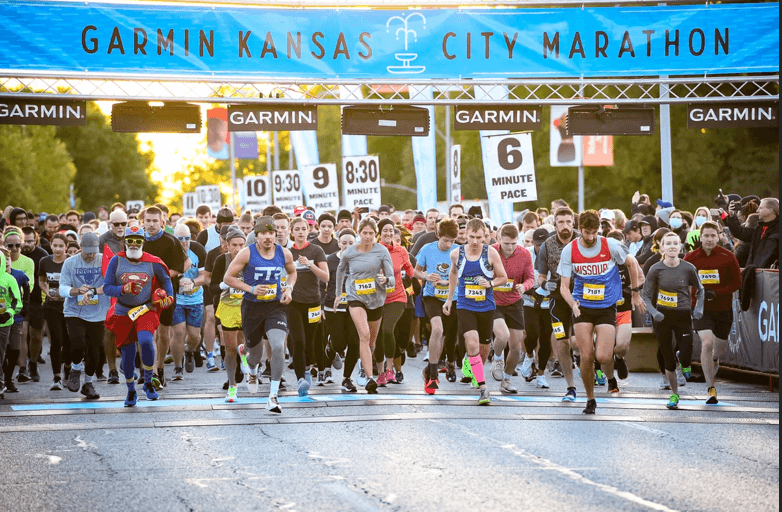
The Kansas City Marathon has been an integral part of Missouri’s athletic culture since its inception in 1979. Over the years, it has grown into one of the Midwest’s premier long-distance races, drawing runners from all over the country. Held annually every October in Kansas City, Missouri, the marathon not only tests the endurance of its participants but also celebrates the city’s history and culture.
As one of the most renowned marathons in the region, the Kansas City Marathon offers a challenging yet rewarding course that is widely recognized. Its reputation extends beyond the Midwest, as it is also a qualifying race for the prestigious Boston Marathon. Thousands of runners participate each year, making it a significant event in the national racing calendar.
Landmarks Along the Course
One of the most striking features of the Kansas City Marathon is its scenic course, which takes runners past some of the city’s most iconic landmarks. The race begins near the World War I Museum & Memorial, a historic site that pays tribute to those who served in the war. The museum’s towering Liberty Memorial serves as a breathtaking backdrop, setting the stage for an unforgettable marathon experience.
Midway through the course, runners make their way through the renowned Country Club Plaza. Known for its Spanish-inspired architecture, upscale shopping, and vibrant nightlife, this area adds a distinct charm to the marathon route. Spectators often gather here to cheer on the participants, creating an electric atmosphere that fuels the runners’ determination.
As the race progresses, runners pass by the Nelson-Atkins Museum of Art, a world-class institution housing an extensive collection of masterpieces. The museum’s iconic Shuttlecocks sculpture is a well-known symbol of Kansas City and a visual highlight of the marathon course. This section of the race provides a mix of urban scenery and cultural enrichment.
Community Involvement and Charitable Impact
The Kansas City Marathon is more than just a race; it is an event that fosters community engagement and philanthropy. Over the years, proceeds from the marathon have gone toward supporting numerous local charities. Organizations focusing on education, health, and social services benefit from the funds raised, further solidifying the marathon’s role as a pillar of community support.
A key component of the marathon’s success is the dedicated network of volunteers who contribute their time and effort. From distributing water to providing medical assistance, volunteers play an essential role in ensuring the event runs smoothly. Their involvement enhances the experience for both runners and spectators, making it a truly community-driven event.
Qualifying for the Boston Marathon
Many runners view the Kansas City Marathon as a steppingstone to the Boston Marathon, one of the most prestigious races in the world. With its certified course, the Kansas City Marathon offers athletes the chance to earn a qualifying time, making it a highly competitive event.
Due to its hilly terrain, the Kansas City Marathon presents a unique challenge for those aiming to qualify for Boston. Runners must prepare diligently to tackle the course’s elevation changes while maintaining their target pace. The demanding nature of the course makes it an excellent proving ground for serious marathoners. With the increasing popularity of sports betting, Missouri betting sites have seen a surge in activity around major sporting events, including the Kansas City Marathon. Enthusiasts place wagers on race outcomes, adding another layer of excitement to the event.
While marathons are traditionally about endurance and personal achievement, the rise of sports betting has introduced new dynamics to the racing scene. Spectators and bettors alike follow the top contenders closely, making the event even more engaging.
The Future of the Kansas City Marathon
As the Kansas City Marathon continues to grow, organizers are exploring ways to enhance the race experience. This includes expanding the course, improving organization, and increasing prize incentives to attract elite athletes.
With advancements in race-tracking technology, runners can now monitor their progress in real-time, receive live updates, and share their achievements with friends and family. The integration of new technology is expected to further elevate the marathon’s reputation in the coming years.
The Kansas City Marathon stands as a historic and culturally rich event that displays Missouri’s heart and soul. From its scenic course featuring iconic landmarks to its role as a Boston Marathon qualifier, the race continues to captivate participants and spectators alike. As the event evolves, its impact on the running community and local charities only strengthens, ensuring its legacy for generations to come.
It’s 6 AM in Bali. The sun’s barely up, the air still cool before the heat rolls in. I lace up my shoes, heart thumping — part excitement, part dread.
I remember that version of me who couldn’t jog past the next streetlight without doubling over. Back in my early 20s, I was overweight, had no clue how to train, and just wanted to lose a few kilos.
That first run?
I barely made it down the block before my lungs gave up.
I remember thinking, “What the hell am I doing?” But somewhere in that mess of sweat and struggle, I knew I had to figure it out.
And one of the first questions that haunted me — maybe it’s haunting you too — was:
“How many miles should I run a week as a beginner?”
I get it.
Starting something new — especially running — feels overwhelming.
Maybe you’re here to lose weight, finish a 5K, or just reclaim a part of yourself that’s been buried under stress, work, or excuses. But how much should you actually run?
Too little, and you feel like you’re wasting time.
Too much, and you risk getting hurt or burning out. I’ve been in that same place — clueless, eager, and scared of doing it wrong.
But good news: you’re not alone in this. And we’re going to build a plan that actually works.
Quick Answer: How Many Miles Should a Beginner Run Per Week?
If you’re just getting started, shoot for 5 to 8 miles a week, spread over three days.
That’s around 2 to 3 miles per run — short and sweet. As you build strength and your legs start cooperating, you can bump that up to 10 to 15 miles per week over time.
The key?
Start slow and stay consistent.
Trust me, it’s way better to nail three short runs than to go big on Monday and spend the rest of the week nursing sore knees. Everyone’s starting point is different, and that’s totally fine.
I’ve coached people who came from zero fitness, others bouncing back after injuries, and a few who just wanted to feel like themselves again.
They all started small and worked their way up — no shortcuts, just smart steps.
Let’s Talk About YOU: How Much Mileage Makes Sense?
There’s no magic number when it comes to miles per week. It all depends on your story.
Are you starting from scratch?
Returning after time off?
Training for a specific race?
Here’s what I ask every runner I coach before building a plan:
Your Current Fitness Level:
Got any cardio background? Used to cycle or swim? Or are you coming straight off the couch? That starting point makes a big difference [marathonhandbook.com].
Injury or Health History:
Got nagging knee issues or past injuries? Better to start at the low end and let your body adjust
Your Running Goal:
What’s your “why”? Want to drop weight? Run your first 5K? Maybe dream of a half marathon someday? Your goal decides your eventual mileage.
Your Lifestyle:
Be honest with yourself — how many days can you really run without torching your schedule? Consistency beats intensity. Pick a plan you can actually stick to.
The biggest beginner mistake I’ve seen (and made myself)? Ignoring the body’s signals. That “I’ll push through it” mentality can backfire hard.
If something feels off, back off. Progress doesn’t come from punishing your body — it comes from working with it.
What Kind of Beginner Are You?
Now we’ll break down mileage based on where you’re at.
But before that — ask yourself:
Where are you starting from? What do you want out of this?
Think about it. Because once you’re clear on your “why,” building your “how” gets way easier.
You ready?
Let’s dive into some real-life beginner scenarios, what mileage fits each one, and how to level up without breaking down.
Run by Time, Not Just Distance
One thing that really helped me?
Running by time, not miles. Instead of saying, “I need to hit 4 miles,” I’d just go for a 30-minute jog.
Took the pressure off and stopped the comparison trap. I wasn’t thinking, “Why am I so slow now?”—I was just moving, breathing, and building back.
Comeback With Patience
If you’re coming back after a long break, here’s the bottom line:
Start with 8–12 miles per week
Stick with 3–4 short runs
Ramp up gradually (10% weekly max)
Respect any lingering injury signs
Focus on today’s wins, not old PRs
Oh—and if you’re coming back from injury?
Make sure you’ve actually fixed what caused it in the first place.
New shoes, strength work, mobility drills—whatever it takes. You can’t outrun poor mechanics forever.
The Long Run Is Where the Magic Happens
This is your weekly cornerstone.
Every week, one run gets a little longer—eventually hitting the 10 to 12 mile range. It’s less about speed and more about teaching your body to handle time on your feet.
Keep it slow. I mean really slow.
Most coaches agree your long run should be 1 to 2 minutes per mile slower than race pace.
Back when I was training for my first half, my 10-mile long runs were basically jogs.
No shame in that—it helped me build the kind of endurance that doesn’t break down after mile 8. And it kept me injury-free.
Stick to the 10% rule. If your long run this weekend was 6 miles, don’t jump to 9 next time. Go to 7. Then maybe 5 (cutback week), then 8, 9, 10, and so on.
I followed something like: 6, 7, 5, 8, 9, 10, 7, 11, 12… taper… race. Those cutback weeks saved my legs.
Every third or fourth week, back off a bit. Trust me, it works.
Rushing the buildup? That’s how runners get hurt.
I’ve seen people try to cram 13.1 training into 8 weeks from scratch. Unless you’ve got a solid running base, that’s a fast track to burnout or injury.
How to Structure Your Training Week
Most plans call for 4 running days a week. Some work with 3 plus a cross-training day. A typical week might look like:
Monday – 4 miles
Tuesday – 5 miles
Wednesday – Rest
Thursday – 4 miles
Friday – Rest
Saturday – Long run (8–12 miles)
Sunday – Rest or active recovery
As you build up, one of those midweek runs can turn into a mid-long run—maybe 6 to 8 miles. The rest can be shorter recovery runs to keep the legs moving. At first, this might sound like a lot.
But by the time you’re doing it, your body’s caught up. What once felt crazy becomes your new normal.
Thinking About Running a Half Marathon (13.1 Miles)?
Maybe the idea’s been bouncing around in your head for a while. Maybe a buddy roped you into signing up. Or maybe you saw someone finish a charity race and thought, “I want that feeling.”
Whatever the reason, I’ve met tons of runners who put the half marathon on their radar early—sometimes as their very first big goal.
And you know what? It’s totally doable.
But it’s not just a longer 10K—it’s a different beast. You’ve got to build smart, build slow, and respect the grind.
What Kind of Mileage Do You Need?
If you’re gearing up for your first half, you’ll want to build to around 20 to 25 miles per week by the peak of your training. That’s not where you start, of course.
Most beginner-friendly half plans last 12 to 16 weeks, easing in from around 10 to 15 miles a week and building from there.
I always tell people: don’t jump into half training cold.
Make sure you’re already logging at least 10 miles per week and can run a long run of about 5 miles without falling apart. That’s your entry ticket.
If you’re not there yet, stick with a 10K plan or just keep building your base for another month or two.
When I trained for my first half, I had about a year of consistent running under my belt. I started at 20 miles a week and peaked at 25.
And I’ll tell you straight—the leap from 10K to half marathon isn’t small.
You’re stepping into runs that push your limits and challenge your patience. But you also start to experience something magical—the long run becomes more than just a workout. It becomes therapy.
How the Plan Typically Plays Out
Here’s what to expect if you’re training smart:
Peak weekly mileage: Around 30–35 miles, especially for first-timers. Some plans (like Hal Higdon’s Novice) keep you in that range. You don’t need to hit 50+ to cross the finish line.
Long runs: These climb steadily—something like 12, 14, 10 (cutback), 16, 18, 12, 20, 14, then taper. You’ll only do one or two 20-milers max. That’s enough.
Midweek mileage matters: Those 8–10 mile runs on Wednesdays or Thursdays help prep your legs to run tired. Ignore them at your own risk.
The 10% rule (with caution): At this level, I actually treat it more like a 5–10% bump, and I always take a lighter week every third week. The risk of overuse injuries skyrockets as you climb past 30 miles per week. Don’t play hero—play smart.
Studies have backed this up.
According to Marathon Handbook, novice marathoners who ramp up mileage too fast are more likely to suffer shin splints, knee issues, or stress fractures. It’s a long game. Build slowly.
My First Marathon: A Reality Check
Training took over my life for a while.
I felt like I was either running, recovering, or thinking about running.
I had to make it fun or I would’ve burned out. So I mixed it up—ran along the rice paddies, hit the beach at sunrise, swapped routes weekly, and ran with friends. Even misery feels lighter when you’ve got company.
I also started treating recovery like a real part of training.
I did yoga once a week, hit Epsom salt baths after long runs, and adjusted my eating. I was burning way more fuel than I realized at first—and once I started fueling properly, my energy during runs shot up.
The Mental Game is Half the Battle
There were days I’d hit mile 12 of a long run and start doubting everything: “Why am I doing this?” “I’m too slow.” “I don’t think I can handle 26 miles.” Sound familiar?
What helped was chunking the run into pieces. I’d say, “Just get to 5 miles. Then see how you feel.”
I’d repeat mantras like “One more step.” I’d daydream about the finish line. Picture the crowd. Imagine the relief. That little mental trick pulled me through some brutal stretches.
Taper Like a Pro
Tapering—cutting back mileage in the final 2–3 weeks—is essential.
Not optional.
Don’t get cute and sneak in one last long run.
Rest makes you strong.
During my taper, I felt twitchy and restless, but when race day came? I had bounce in my step again. My legs were ready. Thank God I didn’t overdo it.
Race Day: The Deep End
The first half flew by—I had to remind myself not to go too fast (that adrenaline rush is sneaky).
But around mile 22, I hit the wall. Hard. My legs stopped cooperating. But I thought back to those long training runs. I remembered the heat, the sweat, the early mornings. I just kept moving forward.
Crossing that finish line was surreal.
I was drained, wrecked, and proud as hell. Wrapped in that foil blanket, medal around my neck, I whispered to myself, “This changes everything.” And it did.
Final Thoughts: Your Weekly Mileage Sweet Spot & Next Steps
By now, I hope you see that the question “How many miles a week should I run as a beginner?” doesn’t have one simple answer – it has your answer.
It depends on you: your starting point, your goals, your life schedule, even your personality. And that answer can evolve.
Maybe it’s 5 miles a week for the first month, then 10 miles a week for the next three months, then 20 a week a year from now.
I’m rooting for you, beginner runner.
Lace up, get out there, and find your miles.
The road (or trail) is waiting, and it has so much to show you about yourself.
Now, let’s make a plan and make it happen. I challenge you to take what you’ve learned here and apply it this week.
Start that training log, mark those run days on your calendar, and take that first step – literally. You’ve got this! And I’m here cheering you on every step of the way.
Let’s be honest—running isn’t as simple as “lace up and go.”
At some point, every runner gets blindsided by distance confusion.
You think a 5K is a clean 3 miles? Wrong—it’s 3.106.
You’re on the track counting four laps as a mile?
Sorry, you’re nine meters short.
Even that shiny GPS watch on your wrist? It lies more than you’d like to admit.
I can go on and on about this but I bet that you get it. This is especially the case if you’ve been a runner for a while.
But that’s the game.
Running distances aren’t just numbers; they’re quirks, illusions, and little traps that test both your legs and your head.
That’s exactly why I wanted to write this detailed and long guide.
I’m cutting through the noise. No more guessing, no more awkward finish-line surprises.
By the end, you’ll know exactly what each distance really means, how it feels, and how to train for it without losing your mind.
Whether you’re eyeing your first 5K or plotting an ultra, you’ll have the inside scoop most runners wish they had before toeing the line.
Ready? Let’s break it down.
Table of Contents
The Sneaky Truth About the 5K – why 3.0 miles isn’t enough
How Long Is a 10K, Really? – pacing, pitfalls, and PR strategies
The Half Marathon – where the grind truly begins
The Marathon – 26.2 miles of humility and transformation
Ultramarathons – beyond reason, where grit replaces speed
How Many Laps Make a Mile? – the math (and the mind games) of the track
Treadmill vs. Track vs. Trail – why the same mile never feels the same
Training Requirements by Distance – how much is “enough” for each race
Overtraining vs. Undertraining – the Goldilocks problem of mileage
Conversion Cheat Sheet – kilometers, miles, laps, and finish-time estimates
How to Pick Your First Race – choosing wisely without getting crushed
The Unique Magic of Every Distance – why each race teaches a different lesson
Beginner FAQs Answered – real talk on walking, cutoffs, and being last
Final Words – why running is never just about the numbers
Key Running Terms You’ll Actually Care About
Before we get into the numbers, let’s clear up some lingo that runners toss around. If you’re newer to racing, these can sound fancy, but trust me, once you get them, they’ll make a world of difference.
Gun Time vs. Chip Time
Here’s the deal: most races give you two finish times. Gun time (aka clock time) starts the second the starter’s pistol goes off. Doesn’t matter if you’re stuck behind 2,000 people tying their shoelaces—you’re on the clock.
Chip time, on the other hand, is your real time. It starts when you actually cross the starting line and stops when you cross the finish. For elites, gun time matters because first across the line wins. For the rest of us mortals, chip time is the truth.
I joined a big city half marathon a few weeks but I was late to the venue. It took me almost 5 minutes just to reach the starting line—those minutes don’t count on chip time, but they do on gun time.
So unless you’re gunning for the podium, focus on chip time. That’s the fairest measure of your run.
Statisticians take the fastest times ever run for every age and gender, then give you a formula. You plug your time into it, and boom—it tells you how your run stacks up against world-best standards for your age.
Example: say a 70-year-old knocks out a 4-hour marathon. Plug it into the chart, and it might grade out like a 3-hour marathon for a 30-year-old. Pretty motivating, right? It means a 55-year-old and a 25-year-old can compare runs in a fair way.
What Counts as a “Good” Time?
This is one of those questions. Everyone asks it, and the answer is always the same: it depends. A “good” time is relative—age, gender, training history, all of it matters.
That said, here’s a simple rule of thumb: beating the median time in a race means you’re running “good.”
For example, the median half marathon finish time is around 2:10:00, so dipping under 2 hours is often considered solid for recreational runners.
Marathons? Average sits near 4½ hours, so a sub-4:00 is often the “good” benchmark. But let’s put this in context. A 60-year-old hitting 4:00 is crushing it—well below the 4:51 average for that age group.
A 25-year-old hitting the same time might feel a little “meh.”
Same clock time, totally different meaning.
Another example. For men, a “good” 5K is about 22:30; for women, it’s around 26:00. Elite club runners will dust those numbers, but for most of us, hitting a personal best (PR) is the best definition of “good.”
Pacing by Experience Level
Before we proceed any further, let me first explain how I see different running experience levels:
Beginners: If you’re just starting out, a 5K might take 30–40+ minutes. That’s totally normal. For example, a guy in his 20s might average 31:30 (10:00/mile pace). Lots of walking, lots of learning—it’s progress. When I first started, a 12-minute mile felt like a personal victory.
Recreational runners: You’ve got some miles under your belt, maybe running a few times a week. Here, times tighten up. That same 20-something male might clock 22:30 for a 5K (7:15/mile). This is the sweet spot of consistent fitness running—you’re moving, not just surviving.
Competitive runners: This is where the real grind kicks in. Dedicated training, speedwork, long runs—everything has a purpose. An advanced 25-year-old male might run 19:45 for 5K (~6:20/mile), while elite club runners are down around 17:40 (sub-5:45/mile). These aren’t Olympians, but they’re finishing in the top 5–10% at local races.
The gap between levels is big—and that’s normal. Beginners can run 3–4 minutes per mile slower than seasoned racers. If someone tells you a “good” 10K time is 50 minutes, remember—that’s an average.
A new runner might take 1:15 and still be doing something huge. Six miles is no joke. Now let’s dive into the numbers for each race distance and see how age and gender really shape finish times.
Average 5K Times by Age and Gender
The 5K is where a lot of runners start. Three-point-one miles. It’s short enough that anyone can finish, but tough enough to humble you if you go out too hot.
So what’s “average”?
Across all ages and genders, the median 5K time comes in around 36 minutes—that’s roughly an 11:30 mile.
Break it down by sex, and men average about 32:00, women about 39:00. Translation? If you’re running a 5K anywhere in the 30–40 minute range, you’re right in the pack.
Age Makes a Difference
No surprise here: younger runners usually run faster.
The median? About 26:16 for guys, 33:44 for girls.
That’s your high school cross-country crew out there crushing it. From your 20s onward, the numbers creep up. Men in their 30s? About 30:30. By 50–59, they’re averaging 33:04.
Women in their 30s?
Around 36:34, and by their 50s, 41:05.
Even at 70–79, the averages are solid—39:38 for men, 47:56 for women.
Think about that for a second. Half of men in their 70s are breaking 40 minutes. That’s pretty badass.
Men vs. Women
Yes, men run faster on average.
That’s just physiology—muscle mass, VO₂ max, all that stuff. The difference usually sits around 15–20%. At age 30, men are running about 30:30, women around 36:30 (a ~20% gap).
By 70, men average 39:38, women 47:56 (21% slower).
But don’t let that number fool you. I’ve seen plenty of women smoke men in local 5Ks—especially when those guys thought they could wing it without training.
At the sharp end of races, winners usually finish around 15 minutes for men, 17 minutes for women—just a two-minute gap.
What Fast and Slow Feel Like
A sub-20 5K? That’s pure fire. We’re talking ~6:00 miles, legs screaming, lungs burning, every second feels like forever.
On the other end, a 45+ minute 5K? That’s more like a jog/walk, chatting with a buddy, maybe waving to spectators.
I hate to sound like a broken record but here’s the thing: “fast” and “slow” are relative.
Both efforts were hard in their own way. That’s the magic of running—the clock is always honest, but the effort is personal.
How to Improve Your 5K Time
The biggest game changers? Consistency and speed work.
Build your aerobic base by running regularly.
Then sprinkle in intervals or tempo runs to push your VO₂ max higher. The 5K is short enough that these workouts pay off fast. New runners often see massive gains just by running the whole thing without walking.
Going from a 45-minute run/walk to a steady 30–35 minute jog is a huge leap.
For experienced folks, dropping from 25 to 22 minutes takes sharper tools—structured workouts, maybe trimming a few pounds.
(And yes, physics plays a role: research suggests losing a pound can shave 1–2 seconds per mile—within healthy ranges, of course.)
A Reality Check
One thing you should know: these “average 5K” numbers come from people who actually signed up for races.
That means the true beginners—the couch-to-5K folks taking an hour or more—aren’t even in the data.
So if your time is slower than the averages, relax. You’re already ahead of the millions who are still on the couch. The best part? In the 5K, progress comes quick.
Shaving 5+ minutes off your time in just a couple of months is very doable. Forget comparing yourself to the crowd. Benchmark against you. Beat your last time, and you’re winning.
How Long is a 10K?
Alright, let’s break it down. A 10K is 10 kilometers—6.21 miles for us non-metric folks.
If you’re on a track, that’s 25 laps. Yep, you’ll be circling that oval a lot.
Think of it as the next step up from a 5K. Once you’ve knocked out a couple of 5Ks and you’re itching for the next challenge, the 10K is waiting for you.
You’ll often see it paired with other races—running festivals love stacking a 5K, 10K, and half marathon into the same weekend.
How Fast Do People Run a 10K?
The spread is wide. World-class runners? They’re tearing through it in about 27 to 30 minutes (the road world record dips just under 27). Insane.
Elite amateurs? They’ll clock in low 30s. Strong club runners?
They’re often gunning for that sub-40—that’s about 6:30 pace per mile.
Now, for most everyday runners, breaking an hour is the holy grail. Lots of folks cross the line in 50 minutes to just over an hour. And there’s nothing wrong with being in the 1:15–1:20 range if you’re jogging or doing run-walk intervals.
At 12–13 minutes per mile, you’re still covering 6.2 miles—that’s serious work. Most races have cutoffs around 90 minutes or more, so there’s plenty of room to get it done.
I’ll be real: when I first started, hitting a 12-minute mile felt like a win. Now, with consistent training, I can flirt with the 7-minute range on a good day. But that didn’t happen overnight. It was built step by step, mile by mile.
Why the 10K is NOT Just “Two 5Ks”
Here’s where runners get tripped up. On paper, sure, 10K is just double a 5K. But in reality? Completely different beast.
A 5K is a lung-burner—you redline fast and just hang on.
A half marathon is about grinding out endurance. The 10K sits awkwardly in the middle. Go out at 5K pace and you’ll blow up by mile 4. Go out too cautious and you’ll finish wishing you pushed harder.
The magic lies in pacing. The first half should feel “comfortably hard.”
By mile 4 or 5, fatigue sneaks in and you’ve got to dig deep. That final mile? It’s a test of grit more than speed.
Think of it as a sustained burn—like holding your hand just above the flame.
It hurts, but in a slow, creeping way. Physiologically, you’re hovering near your lactate threshold longer than you would in a 5K. Your legs start feeling heavy around mile 4, and you’ve got to embrace that discomfort.
Do You Need Fuel?
Unlike a half marathon or marathon, fueling usually isn’t necessary (but I do take a gel around mile 3). But hydration can matter, especially on hot days. That’s why most 10Ks throw in at least one water stop.
Road vs. Trail 10K
Not all 10Ks are created equal. A flat road 10K is predictable—you can compare times across races.
Trail 10Ks? Whole different game. The hills, roots, uneven ground—they slow you down and jack up your effort.
Some trail races even call it a “10K-ish” because the distance might stretch to 6.5 miles. Nobody cares—you’re out there battling the terrain. A tough trail 10K can feel as brutal as a road half marathon.
Yep, that’s exactly half of a full marathon (26.2). If you ran it on a track, that’s about 52.5 laps—though let’s be real, no one’s signing up for 52 laps around the oval.
Half marathons are almost always road races, sometimes trails, but never laps.
And listen—13.1 miles is no joke. It demands respect. It’s not a sprint you can wing with a couple of easy runs. But here’s the thing: with a solid training plan, most runners can get it done.
What’s a “Good” Half Marathon Time?
Finish times are all over the place depending on fitness, but here’s the lay of the land:
Elites: The best men in the world? They’re running around 59–60 minutes. The top women? 65–66 minutes. That’s straight-up world-record territory.
Serious amateurs: Many chase between 1:10 and 1:20.
Strong recreational runners: Breaking 90 minutes (6:50 per mile pace) is a huge milestone.
Everyday runners: A lot of folks aim for the 2-hour barrier—it’s kind of the classic goal.
Averages: Mid-pack runners often cross in about 2:05–2:20. Beginners might land anywhere between 2:20–2:40.
Walkers or run/walkers: Expect 3 hours or more, and yes, plenty of people do it this way. Walking 13 miles will take you 4+ hours.
Most races give you a cutoff between 3 and 3.5 hours, but plenty are generous.
So the reality? Anywhere from 1:10 to 3:00 hours covers the bulk of half marathoners, with around 2:10–2:20 being “average.”
If you’re brand new, finishing in 2.5–3 hours is a victory worth celebrating. Don’t sweat the walk breaks—you’re still covering 13.1 miles, and that’s badass.
What Running 13.1 Miles Feels Like
This is where the half earns its reputation. The first 6 miles? You’ll probably feel good—maybe too good. If you’ve paced right, you’ll be holding back, waiting for the real race to start.
Miles 7–10? Fatigue shows up. That fresh, bouncy feeling disappears, and you start realizing: Damn, I’ve still got a long way to go.
The famous mental checkpoint comes around mile 10–11.
For a lot of runners—especially first-timers—this is where the doubts hit. You’ve been running for well over an hour and a half, maybe two, and you’ve still got a full 5K left. That’s when the grind sets in: heavy legs, glycogen dropping, small aches turning into loud complaints.
I always love to say: “The half marathon starts at mile 10.”
In fact, I’d dare say that those last 3 miles can feel tougher than the first 10 combined. This is where you find out if you paced too aggressively early, or if you fueled correctly. And trust me—you can bonk in a half if you get cocky.
But finishing? That’s a high like no other. I’ve seen first-timers cry at the finish line, and honestly, I get it. You fight through fatigue, doubts, maybe even pain—and then suddenly you’re across the line. 13.1 is a legit test.
Training: Respect the Distance
If you want to enjoy your race instead of suffer through it, training matters. A half requires more commitment than a 5K or 10K—no shortcuts here.
Long runs: You’ll build up to 10–12 milesbefore race day. Some plans take you all the way to 13, but many stop at 10 and trust adrenaline to carry the rest.
Training cycle: Most first-timers do 10–14 weeks of prep.
Weekly mileage: Expect a mix—one long run, some midweek runs, maybe some cross-training.
Fueling: This is the game-changer compared to shorter races. Once you’re running more than 90 minutes, carbs matter. Gels, chews, sports drinks—they all help keep your blood sugar from tanking. You’ll also need to dial in your pre-race breakfast during training runs.
Hydration: Don’t wait until you’re thirsty. Most races have water or sports drink every few miles, so practice drinking on the run.
The biggest mistake? Underestimating the half. Too many runners think, “It’s only half a marathon.” That false confidence wrecks people in the final miles. Respect the distance, or it’ll humble you.
Half marathon pain: deep fatigue, heavy legs, creeping doubts.
Some runners who love speed actually think 5Ks are harder—they hate living in the red zone. Others feel the opposite—the grind of a half just beats them down. Objectively, though, the half is tougher on the body. Your legs will be sore for days. Recovery is longer. You can race 5Ks every weekend. But try racing halves every weekend? You’ll burn out fast.
There’s also the mental side. In a 5K, it’s over before you have time to think. In a half, you’ve got hours in your head. If you don’t bring strategies—break the race into chunks, have mantras, maybe even music—you risk letting your brain talk you into slowing down or quitting.
How Long Is a Marathon?
Let’s settle this once and for all: a marathon is 26.2 miles (42.195 km).
The organizers stretched the race so it could start at Windsor Castle and finish in front of the Royal Box—because, apparently, Queen Alexandra wanted the royal family to have a front-row seat.
That little detour added an extra 1.2 miles to the classic 25, and in 1921, the powers that be decided, “Yep, that’s the official distance.” So next time you’re cursing those final miles, just know you’re running royal-approved suffering.
If you tried to run it on a track, we’re talking about 105 laps. (Yeah, people have done track marathons… and treadmill marathons, too.
Personally? I’ll take the open road over staring at the same lane line or treadmill screen for four hours.)
Typical Marathon Times
Marathon finish times are all over the map, even more than half marathons. Why? Because over 26.2 miles, every training mistake, every fueling choice, every pacing error gets magnified.
At the elite level, it’s straight-up superhuman. Kelvin Kiptum set the world record at just over two hours—that’s sub-5:00 mile pace for the entire race. Top women hammer it out in the 2:14–2:20 range. That’s another planet.
For serious amateurs, the golden milestone is the sub-3-hour marathon (~6:50 pace). It’s hard, but oh it’s sweet if you nail it.
A lot of strong club runners shoot for the Boston Qualifier (BQ)—which, depending on age and gender, is often 3:00–3:30 territory.
Recreational runners? Many cruise in around 3:30–4:30, and the average marathoner finishes between 4:30–5:00 hours (roughly 10–11 min/mile).
First-timers? Don’t sweat it—plenty are in the 5–6 hour range, especially if they’re mixing in run-walk.
And yes, in big-city marathons with generous cutoffs, you’ll see plenty of folks pushing past 6+ hours, walking, limping, or just gutting it out.
Hitting “The Wall”
Here’s the beast everyone fears: the wall. Usually it smacks runners somewhere around mile 18–22. One minute you’re cruising, the next, it feels like someone yanked out your power cord. Legs? Dead weight. Brain? Screaming to stop. Even jogging feels impossible.
The science? Your body’s glycogen stores—the sugar fuel in your muscles and liver—are pretty much toast by that point. Your system shifts to burning fat, which works but is slower.
That’s when you feel like you’re dragging cement legs. Add in your brain throwing emergency signals (“Buddy, shut this down!”), and the wall hits hard.
There’s a saying in marathon circles: “The race doesn’t start until mile 20.” Everything before that is a warm-up, an illusion. And trust me, that illusion feels great—until it doesn’t.
Now, some runners dodge the wall. Smart pacing, steady fueling (think gels every 30–45 minutes, sports drink, maybe caffeine), and training long runs teach your body to hold off glycogen depletion.
But even then, almost everyone hits that “dark place” where the marathon gets brutally real.
What It Feels Like
The marathon is a rollercoaster of body and mind:
Miles 1–10: If you’re pacing right, these should feel easy. Honestly, almost annoyingly easy. The crowd’s hype might trick you into going too fast. Don’t. If it feels effortless, you’re doing it right.
Miles 11–16: The grind. You’re settling in. Still okay, but those first little hot spots show up—tight calf, rubbing shoe, a blister forming. Nothing major, but you notice.
Miles 18–20: The countdown begins. You’re tired, but you’re bargaining with yourself. “Eight miles left? That’s just a loop around the block…” You fuel up, maybe get a caffeine hit, and keep rolling.
Miles 20–23: The war zone. The wall is here. Your pace dips, your brain whispers “quit,” and every step feels like work. I’ve had marathons where I swore I’d never run again during this stretch.
Miles 24–26: If you’ve made it this far, adrenaline kicks in. The finish line is near, crowds are roaring, and somehow—despite the pain—you push. I’ve seen grown men cry here. I’ve been that guy. There’s nothing like that last .2.
Training for the Wall
Marathon training is a grind, usually 16–20 weeks of steady work. Weekly mileage ranges from ~30 (beginner) to 50+ (experienced). Long runs—building up to 18–20 miles—are the heart of it.
They train your body to handle distance, burn fat, and fuel properly. You also learn the mental side—pushing through when you’re dead tired at mile 15 of a training run and still have 3 left.
Marathons magnify the small stuff. The wrong shoes? Hello, blisters. Miss a gel? The wall comes sooner. Hot weather? Everything feels twice as hard. That’s why marathoners obsess over fueling, pacing, and gear. One mistake at mile 8 becomes a monster at mile 22.
Ultramarathon Distances Explained
So, a marathon doesn’t scare you anymore? Good.
Welcome to the world of ultramarathons—the beast that starts after 26.2 miles.
Anything longer than a marathon counts as an ultra. Sometimes they’re measured by distance (50K, 100 miles, etc.), and sometimes by time (like a 24-hour race—yep, you just keep moving until the clock runs out).
Here are the big ones most runners talk about:
50K (31 miles): Think of it as “just” 5 miles more than a marathon. Sounds harmless until you realize most 50Ks are on trails with hills, mud, and maybe a river crossing. That extra five miles can feel like fifty.
50 miles (80.5 km): Twice the marathon grind. It’s a whole different mental game.
100K (62.1 miles):The kind of race where you’re guaranteed to run into some dark places—literally and mentally.
100 miles (160.9 km): The classic. The “hundred-miler.” Just saying it out loud gives most runners chills.
And if that’s not enough, there are 200-mile races, multi-day stage events, and other madness. But the four above—50K, 50M, 100K, 100M—are the bread and butter of ultrarunning.
Why Ultras Hit Different
Here’s the thing: ultras aren’t just about running farther.
They’re about running smarter and tougher. Courses often throw mountains, deserts, or endless climbs (“vert” in trail lingo) at you. You’ll likely run at night with a headlamp strapped on, sometimes for two nights if you’re in a 100-miler.
Sleep? Forget it. Some folks nap at aid stations for 5 minutes before stumbling back onto the trail.
Others push through and end up talking to rocks or seeing cows that don’t exist—hallucinations are part of the lore.
I’ve had nights out there where I swore the shadows in the woods were moving.
Turns out it was just my fried brain after 12+ hours on the go. Studies back this up: research on ultrarunners has shown major dips in cognitive function after long events—slower reaction times, worse memory. No surprise when you’re running on fumes.
Time Expectations
Ultras vary wildly depending on the course. A pancake-flat 100 miler is a different sport than the mountain sufferfest of Western States or UTMB. But here’s a rough sense:
50K: Fast trail runners bang these out in 4–5 hours (same person might crush a road marathon in 3). Mid-pack? 6–8 hours. Cutoffs: 9–10 hours. Read about my first 50K race.
50M: Top guys finish in 6–7 hours on moderate trails—crazy fast. Solid finishes are 8–10 hours. Cutoffs: around 14–15.
100K: Elites can run it in 9–11 hours. Most mortals need 14–18.
100M: Best of the best can do it in under 12 hours on flat courses. In mountains, winners usually take 14–20. Many regular folks battle for 30+ hours just to make it in under the 36-hour cutoff. That’s a day and a half of moving forward.
Unique Challenges
This is where ultras really separate themselves:
Fueling: In a marathon, gels and Gatorade work fine. In a 100-miler, you’ll see people slurping ramen, crushing PB&J, sipping broth, eating potatoes. Your stomach will revolt—mine definitely has—but if you don’t eat, you crash. Period.
Hydration & electrolytes: Low sodium or dehydration can turn your race into a medical tent visit real quick.
Pacing: Everyone walks hills. Even the elites. It’s about conserving energy, not hammering splits. I always tell my runners, “Start slow, then back off.”
Terrain: Ultras pile on the vert. A 50M might have 8,000 feet of climbing. A 100M? 20,000+ feet. Downhills trash your quads, uphills crush your lungs. It’s survival mode.
Night running: By 3 AM, your headlamp feels like a candle in the void. Having a pacer or buddy in those dark hours can be a lifesaver.
Sleep deprivation: At mile 80, the ground looks like a bed. I’ve seen runners crash on the side of the trail for “trail naps.” Some get back up. Some don’t.
And let’s not forget: problem-solving.
Ultras are basically eating contests with running in between. Blister? Tape it. Stomach shuts down? Slow down, sip ginger ale, eat crackers.
Heat exhaustion? Dunk in a creek. The folks who finish aren’t always the fittest—they’re the ones who troubleshoot on the fly.
The Mindset
Here’s the truth: in ultras, your pace matters less than your grit. It’s about relentless forward progress. You’ll want to quit—probably more than once. Mile 30 might feel impossible. Mile 40 might feel like a rebirth.
That’s the ultra rollercoaster. As the saying goes, “It never always gets worse.”
That’s why ultrarunners keep coming back. It’s addictive. The community, the nature, the feeling of pushing past what you thought was your limit—it sticks with you.
So remember: in ultras, the enemy isn’t the miles—it’s your mind (and maybe your stomach). The runners who adapt, stay positive, and keep moving are the ones who finish.
How Many Laps in a Mile?
If you’ve ever hit the track for a speed workout, you’ve probably asked yourself the classic newbie question: “So how many laps is a mile?”
Technically, 4 laps = 1600m, which comes out to 0.994 miles—just a hair short of the real deal.
To make it exact, you’d need to tack on about 30 feet more (9.34 meters). That’s why when pros run the “mile” on the track, they don’t just start at the normal finish line—they back up those few meters so the race covers the full 1609m.
Quick conversions worth remembering:
1 mile = 1609 m = 4 laps + 9 m
5K (5000 m) = 12.5 laps (which is why 5K track races often start halfway around the oval)
10K (10000 m) = 25 laps
Half marathon on the track = 52.5 laps (don’t do this unless you really enjoy suffering)
Full marathon on the track = 105 laps (a true test of sanity)
Why the Track Messes With Your Head
Here’s the thing: running laps can feel tougher than knocking out miles on the road. Same body, same effort—but mentally? Way harder. Why? Because the scenery doesn’t change.
You’re literally chasing your own tail in circles.
I’ve been there—16 laps into a track workout, staring at the same stupid finish line, and my brain starts going, “Dude, really? 24 more?” That’s the trap: you get hyper-aware of the lap count.
Road miles are sneaky—they fly by as you tick off blocks, hills, or turns. On the track, every 400m split is staring you down. No hiding.
But here’s the upside: the track is brutally honest. You find out real quick if you’re pacing well or falling apart. Every lap is a feedback loop. In that way, the track builds not just your legs, but your mental game too.
The Body Side of It
Physically, the track can actually feel easier—it’s flat, no curbs, no hills, usually got a nice spring in the surface. But do enough laps, and the constant left turns can stress your ankles or hips.
I’ve felt that ache in my inside leg after a long session. Pro tip: if you’re doing lots of laps, and you’ve got the track to yourself, switch directions halfway. Evens out the stress.
Oh, and about watches—don’t freak out if your GPS tells you you only ran 0.95 miles after 4 laps. GPS struggles with the constant curves. Trust the track—measured with a wheel, it’s more accurate than your fancy watch in this case.
Turning “Boring” Into “Brutal Honesty”
A lot of runners complain that track running is boring. I say it’s the most honest training you’ll ever do. The track won’t flatter you—it’ll tell you exactly where your fitness is. Blow up early? The clock will call you out. Ease up too much? You’ll see it.
If you can grind through 10, 20, 30 laps on a track, you’re not just training your lungs and legs—you’re training your brain. That’s mental toughness you’ll cash in during races when it really matters.
I like to break it down: instead of thinking, “Ugh, 16 laps = 4 miles,” I’ll chunk it into sets. Four sets of 4 laps. Each set, I pick a focus—breathing, form, stride, pace. It keeps the monotony from eating me alive.
Treadmill vs. Track vs. Trail: Why “a mile” doesn’t always feel the same
Let’s get real—one mile is not always the same mile. Where you run it changes everything. Treadmill, road, or trail—each plays tricks on your body and your mind. Let’s break it down.
Treadmill Truths: The Machine vs. The Road
Ever hammer out an “8:00 pace” on the treadmill and wonder, does this feel the same outside? Short answer: not always.
Here’s why: no wind resistance. When you run outdoors—even on a calm day—you’re actually pushing against a self-made headwind. On a treadmill, that doesn’t exist.
Plus, that moving belt is giving your legs a little nudge forward.
According to research in the Journal of Sports Sciences, running at a 0% incline indoors is physically easier than the same pace outdoors.
That’s why many coaches (myself included) suggest bumping the incline to 1%—it better mimics the real-world grind.
But here’s the kicker: while treadmill running may be easier on your lungs, it can feel brutal on your head. Staring at the console. Watching the numbers creep up by .01. I’ve done this, and trust me, it makes a mile feel like a marathon.
I’d also recommend throwing a towel over the screen. I’ve coached plenty of runners who swore by that trick. Out of sight, out of mind.
Calibration is another factor. Most treadmills are decent at measuring distance through belt revolutions, but a poorly maintained one?
That thing might be lying to you by a few percent. I’ve already written in depth about this subject. Check out my article here.
GPS Lies: Trees, Turns, and Tech Quirks
Your GPS watch is a fantastic tool… but it’s not gospel. On roads in open skies, it’s usually solid within about 1%. But take it into the woods, throw in some switchbacks, and suddenly it’s like asking a drunk friend for directions.
Here’s what’s happening: your watch pings satellites every second or so. If you’re zig-zagging up a mountain trail, the GPS draws straight lines between points, chopping off all those little curves.
Result? Your “10K” trail race shows up as 5.8 miles on Strava. I’ve had it happen. You finish, lungs burning, and your buddy says, “My watch only read 9.5.” Nah, man—you earned that 10.
Sometimes GPS overestimates too. Run downtown with tall buildings, and signals bounce all over like a pinball.
Suddenly, your easy jog looks like you were sprinting back and forth across the street. Don’t stress it—technology lies both ways.
Oh, and hills? GPS mostly measures horizontally. That steep climb that destroys your quads? It’s barely reflected in your distance. Doesn’t mean it didn’t happen—your legs will remind you tomorrow.
Even if you’re “slower” on paper, your heart rate and perceived effort are way higher.
Every root, rock, and patch of mud makes your stabilizers fire like crazy.
You’re leaping over logs, powering up short climbs, slowing down for switchbacks.
I’ve run road 8:00s that felt easier than 10:00s on trails. And I wasn’t alone—research backs this up: same pace on trails takes more effort than on the road.
That’s why smart trail runners go by effort, not pace. On the road, your “easy” pace might be 9:00. On the trail? That same “easy” could be 12:00. Both are easy in context. Your body knows the difference, even if your watch doesn’t.
Training Required for Each Race Distance
So, here’s the million-dollar question: How much training do you actually need to pull off each race distance?
If you’re plotting out your race calendar, this is where things get real.
Plans vary a ton, sure, but let’s break it down by distance so you’ve got a ballpark idea of what’s required—from 5Ks all the way up to those monster 100-milers.
Now, hear me out: you don’t need to live on the roads or rack up insane mileage.
It’s not about pounding out junk miles; it’s about running smart.
The right mileage for your goal, not just more mileage for the sake of it.
Go too hard, too fast? Hello, injury. Slack too much? Race day turns into a sufferfest.
The sweet spot is in the middle—enough to get you ready, not so much that you’re broken before the start line.
Here’s a rough training commitment guide for different distances (assuming you’ve got at least some running base):
Most last about 8 weeks. And you can also do them on the treadmill.
You can literally go from zero to crossing a 5K finish line in 2 months by slowly building your mileage.
At the start, you might barely scrape 5 miles per week, but by race day, you’ll be hitting 12–15. For beginners, three runs a week is plenty.
Now, let me get real: my first 5K felt like a death march at a 12-minute pace.
But here’s the thing—stick with it, and running three miles becomes second nature.
I’ve coached folks who started huffing at one block, and eight weeks later they were high-fiving at the finish line. That’s progress.
10K: Doubling Up
A 10K doesn’t just double the distance of a 5K—it doubles the training load too.
You’ll want 3–4 runs per week, with a long run that stretches to 6–7 miles before race day. Most beginners can handle it on 20 miles per week. Move that closer to 30 if you’re eyeing a faster time.
Think of it this way: if you can run 3 miles without keeling over, you can build to 6 in a couple months. I’ve watched runners go from “I can’t do more than 20 minutes” to cruising through an hour-long run. It’s just a matter of consistency. Here’s a couch to 10K plan.
Half Marathon: The Big Step
Now we’re talking. Training for 13.1 miles isn’t just about finishing—it’s about showing up ready.
A beginner plan usually runs 12 weeks, starting from being able to jog a 5K. The key session? That 10–12 mile long run. It gives you the confidence that, yes, you can go the distance.
According to Runner’s World, most half marathoners land in the 30–40 miles per week range.
For beginners, 20–25 is enough to finish, but if you want to feel strong, aim higher. My first half? I stuck around 25 miles per week and finished, but I’ll be honest—it hurt. By the time I was hitting closer to 40 mpw, I felt like a different runner.
Marathon: The Commitment
Alright, buckle up. Training for 26.2 is a grind. Standard beginner plans? 16 weeks long. Your long runs will creep up from 10 miles to that famous 20-miler (some folks do 2 or 3 of those).
Mileage ranges from 30–50 per week for most recreational runners. Serious amateurs? They’ll push 60–80. And pros? They’re out there living on 100+ mpw.
Here’s the reality check: if you’ve only got 3 hours per week to train, you’re going to struggle. I remember my first marathon cycle—I underestimated how those 3-hour long runs eat up a weekend. But man, nothing matches the feeling of finishing 26.2.
Ultras (50K, 50 Mile, 100K, 100 Mile)
Once you step into ultra territory, it’s not just about miles—it’s about time on your feet. Training often involves back-to-back long runs, like 20 miles on Saturday and 15 on Sunday.
Weekly mileage for a 50-miler might hover around 50–60. For a 100K, maybe 70. And for the 100-mile beasts? Some hit 80, but many finishers average closer to 50 with long, gnarly weekends.
When I trained for my first 50K, I treated it like “a little extra marathon.”
Just pushed my long runs slightly higher and added a brutal back-to-back weekend. By the time I hit a 100K, though, it wasn’t just running—it was hiking, strength work, night runs, and dialing in nutrition. I’ll tell you straight: you can’t fake your way through 30 hours on your feet.
Don’t Forget Recovery
One last thing: training doesn’t just build endlessly upward. Smart plans follow cycles—three weeks of pushing, then one “down week” to let your body catch up.
And tapering before race day? Non-negotiable. Cut back mileage, freshen up, then crush it. I cannot emphasize the importance of recovery.
Overtraining vs. Undertraining
Here’s the deal: training too much or too little will both mess you up.
Go too hard, and you’re staring down fatigue, burnout, or injury. For example, hammering out 60 miles a week for a marathon when your body can only handle 40?
That’s a one-way ticket to injury or total exhaustion. On the flip side, undertrain and yeah, you might still cross the finish line — but it’s gonna hurt, and you’ll probably end up walking more than you planned.
Most research and smart coaches keep coming back to the same thing: steady, consistent mileage wins the race. The Journal of Strength & Conditioning Research has pointed this out too — sprinkling in occasional monster runs without a solid base does more harm than good.
Think of it this way: running 25–30 miles every week beats running nothing and then trying to “save” your training with one 20-miler. That’s just asking for trouble.
So how much is enough? For marathons, most coaches say you should hit at least 30 miles per week at your peak, with a few long runs of 16–20 miles.
Half marathon? You’ll want to be around 20 miles per week and work up to a 10-miler.
Training for a 5K? Ten to fifteen miles per week is usually plenty, as long as you mix in some speedwork.
Go above these numbers and sure, you might get faster — but only if your body can handle it and you’re chasing competitive times. Otherwise, you’re just piling on junk miles.
Even Runner’s World backs this up with their mileage targets: about 10–25 miles a week for a 5K, 25–30 for a 10K, 30–40 for a half, and 30–60 for a marathon. That lines up with what I’ve seen in real life too.
Here’s my take: plan your races around your life, not the other way around. Got only 3 hours a week to train? Awesome — aim for a 5K or 10K. Got 6–8 hours?
A half marathon is right in your wheelhouse. If you’re looking at a full marathon, you’re probably going to need closer to 8–10 hours during peak weeks (and that’s including those long runs). Ultras? Forget about it unless you’re ready to make training a big part of your life.
And whatever you do, don’t jump from zero to a marathon in one shot. Build race by race. That’s why a lot of runners do a few halves before their first full, or knock out a 50K before going after a 100K. It’s just smart progression.
Now, you’ll always hear about the outliers — ultrarunners knocking out 100-mile weeks, or Boston hopefuls grinding at 70 mpw. That’s great… for them. But you don’t need that kind of mileage to hit your goal.
In fact, I’ll say this loud and clear: it’s better to show up a little undertrained than to show up overtrained and broken.
Plenty of marathoners break four hours on 40 miles per week or less. That’s not “crazy fast” by elite standards, but it’s perfect for the average runner who just wants a strong finish.
Quality beats quantity. A good long run and a little speedwork can cover a lot of ground. So always ask yourself: What’s the minimum effective training that gets me to my goal? Start there. If your body can handle more, add it carefully.
But remember — running has diminishing returns. Beyond a point, more miles don’t give you much except a bigger risk of injury. Train smart, not just hard.
Conversion Chart: Kilometers, Miles, Laps & Time Estimates
Sometimes you just need a quick cheat sheet. Here’s a simple chart that lays out race distances in both kilometers and miles, how many track laps that works out to, and some rough finish times for beginners versus experienced recreational runners.
Note: Times assume a relatively flat course. “Beginner” means a newer runner who may walk some, while “Advanced” means someone experienced and trained but not elite.
Distance
Kilometers
Miles
Track Laps*
Beginner Time
Advanced Time
5K
5 km
3.1 mi
12.5 laps
~45 min
~20 min
10K
10 km
6.2 mi
25 laps
~1 hr 15 min
~45 min
Half Marathon
21.1 km
13.1 mi
~52.5 laps
~2 hr 30 min
~1 hr 30 min
Marathon
42.2 km
26.2 mi
~105 laps
~5 hr 00 min
~3 hr 30 min
50K
50 km
31.1 mi
~125 laps
~6–7 hr
~4 hr 00 min
50 Mile
80.5 km
50.0 mi
~201 laps
~12 hr 00 min
~8 hr 00 min
100K
100 km
62.1 mi
~250 laps
~15 hr 00 min
~10 hr 00 min
100 Mile
160.9 km
100.0 mi
~402 laps
~30 hr 00 min
~20 hr 00 min
*Track laps are just for visualization. No one’s really out there circling the oval for 100 miles. (If you are… well, hats off to you.)
Quick notes on the times:
A 45-minute 5K? That’s about a 15:00 per mile pace — basically a brisk walk. A 20-minute 5K? That’s a 6:26 pace, flying but doable for strong recreational runners.
Half marathon? 2:30 is around 11:27 per mile — very common for first-timers. 1:30 is a sharp 6:52 pace and takes serious training.
Marathons: 5:00 finish equals about 11:30 pace. Many first-timers fall in that range with walk breaks. A 3:30 finish is an 8:00 pace, a benchmark that often sneaks into Boston Qualifier territory depending on age and gender standards.
Ultras: a 50K in 6–7 hours is a solid day for a new ultrarunner. Four hours flat? That’s blazing, likely podium-worthy on trails. For 100 miles, 20 hours is world-class; 30 hours is common and often the cutoff. That means lots of running mixed with walking, eating, and surviving.
This chart shows how the challenge multiplies. A 100-miler isn’t just four marathons strung together. It’s eight marathons’ worth of effort when you factor in fatigue, terrain, and time on feet. The jump isn’t linear — it’s exponential.
How to Pick Your First Race
Alright, so you’re thinking about signing up for your first race.
That’s awesome. But let me be real with you—it can feel overwhelming.
So many options out there: 5Ks, 10Ks, half marathons… road, trail, big events, small local ones. How do you choose? Here’s the deal: don’t just pick the race that sounds the coolest. Pick the one that sets you up for success—and yeah, for fun too.
Start Small (Most of the Time)
If you’re brand new to running, start with a 5K. Period.
Why? It’s short enough that the training won’t eat your life, and the race itself doesn’t turn into an all-day suffer-fest.
Plus, you’ll be surrounded by walkers, joggers, and first-timers. Trust me, you won’t be the slowest person there.
Now, if you’ve been running for a while and can handle around 6 miles comfortably, a 10K can be a great challenge.
I’ve coached people who jumped straight into a half marathon as their first race—and yes, it’s doable, especially if you’re okay with walking some of it. But make no mistake, it’s a big leap. Be honest with yourself.
When I first started, even finishing a mile felt like a huge deal. If someone had thrown me into a half marathon then, I’d probably have quit running on the spot.
Don’t Rush the Ladder
You don’t have to check off races in perfect order—5K, then 10K, then half, then marathon. But let’s keep it real: jumping from the couch to marathon in four months? Technically possible. Smart? Usually not. Those shorter races—like a local 5K—teach you so much about pacing, nerves, porta-potty lines, all the little things that can wreck your day if you’re not ready. It’s low stakes, high learning.
Road or Trail?
This one’s all about personality and what’s around you.
Road races are usually the easiest for beginners. Pavement’s predictable, you’ve got crowds cheering, water stations everywhere, and if you’re chasing a specific time, the road’s the most reliable stage to hit it.
Trail races? Totally different vibe. Scenic, chill, friendlier crowds. But don’t kid yourself—those hills and rocky paths are brutal on your lungs and legs. And unless you live near good trails, training for one can be tough. My first trail 10K humbled me quick. I thought I was fit until that first climb chewed me up and spat me out. Still, if you love hiking and don’t mind walking the uphills, a short trail race could be an awesome start. Just know your pace will be slower—and that’s normal.
Flat or Hilly?
For your first outing, flat is your friend. Hills will test you, and if you’re not used to them, they’ll drain your energy fast. Charity 5Ks or downtown races are often flat and friendly. That said, don’t fear a few rolling bumps. Slow down on the ups, use the downs to recover. But if the course description brags about “challenging hills,” maybe save that one for later.
Big Event or Local Race?
This one’s about vibe.
Big races are electric—crowds screaming, finish line parties, tons of adrenaline. The downside? Packed corrals, crazy parking, and it’s easy to get sucked into running too fast at the start.
Small races feel more personal. Easy parking, chill check-in, friendly faces. But yeah, if you’re slow, you might feel lonely out there. And yes, maybe even come in last. But let’s crush that fear right now—coming in last still beats every single person who stayed home. And honestly? In small races, the last runner often gets the loudest cheer.
Don’t Ignore Cutoff Times
This one trips people up. Longer races—like half marathons and marathons—sometimes have strict cutoff times. You don’t want to train for months only to get pulled off the course because you were 20 minutes too slow.
Big city marathons are usually generous (6–7 hours).
Smaller ones can be tighter because of traffic rules. Same with trail ultras—cutoffs at aid stations are normal. Do your homework so you don’t end up racing the clock more than the course.
Terrain and Surface
First off—what’s under your feet? Big difference between pounding pavement, cruising on a gravel path, or slogging through muddy trails.
Most city races? Pavement. It’s fast, but your knees might feel like they’ve been through a bar fight afterward.
Trails? They sound rugged, but a lot of “trail races” are just dirt roads or smooth park paths—easier on the body, a little slower on the watch.
Personally, I can’t stand running sidewalks when my knees are cranky—I’ll always pick a softer park path. Think about what makes sense for you.
Climate and Timing
Next, don’t ignore the weather.
Running a 10K in August in Florida? Pure misery unless you love feeling like you’re jogging inside a sauna.
Spring and fall are runner favorites for a reason—cool air makes running faster and more fun.
But here’s the thing: race season also means training season. Sign up for a spring race? You’ll be logging miles in the dead of winter. Go for a fall race? Get ready for long, sweaty summer runs.
Pick what you can actually handle, not just what looks nice on the calendar.
Logistics and Travel
Here’s my advice for race #1: keep it local if you can.
Trust me, adding hotels, flights, and navigating a race expo when you’re already nervous? Recipe for stress. A hometown race means you sleep in your own bed, eat your normal breakfast, and maybe drive 20 minutes to the start.
Simple. Once you’ve got a couple of races under your belt, then yeah, go chase that bucket-list half marathon in some cool city. But for now—keep the variables low.
Motivation and Vibe
Ask yourself: what gets you fired up? Some folks love the chaos of a charity run, costumes, and foam cannons (yep, that’s a thing). Others want a dead-serious race with fast runners pushing the pace.
Neither is wrong. Or maybe you want scenic beauty—a race through a national park—or a big party vibe like the Rock ’n’ Roll series with live bands. Match the race to your personality.
Read some reviews—sites like RaceAdvisor can give you the lowdown on whether it’s a laid-back fun run or a hardcore competition.
Life Constraints: Be Real
Don’t let Instagram FOMO talk you into biting off more than you can chew. If your schedule is packed, don’t sign up for a marathon that’s gonna eat your life with 5 runs a week.
A 5K or 10K might fit way better right now. Big-name marathons can cost hundreds, plus travel, gear, food—it adds up fast. Meanwhile, a local 5K might run you $20 and you’ll still snag a t-shirt.
Also, think about family and friends. If you want support, a local race where they can cheer you on—or even run with you—might be the perfect start.
Quick Checklist
Here’s what to think about before you hit that “Register” button:
Distance you can realistically train for
Course (flat, hilly, road, trail)
Race size and support
Climate/season
Local vs travel
Theme or cause (if that matters to you)
Time of day (don’t sign up for a 6 AM start if mornings are your enemy)
Cutoff times (make sure you can finish within them)
And most importantly: what’s gonna make you smile at that finish line
Bonus Tip:
Volunteer or spectate at a race before you do your own. Nothing’s more motivating than seeing runners of all shapes and sizes cross that line. It makes you realize—you belong out there too.
And hey, check in with local running clubs. They’ll know which races are beginner-friendly and which ones are secretly brutal.
Real Talk: Don’t Overshoot
Here’s the contrarian truth: your first race shouldn’t be about what sounds epic. It should be about what fits your life and gets you hooked. Starting small isn’t weak—it’s smart. Running is a long game.
That insane mountain trail ultra? It’ll still be there when you’re ready. For now, grab a 5K or 10K, get across that finish line, and let it fuel the fire.
Think of it like school—you don’t take a final exam on day one. You work your way up.
Same with racing. The best race isn’t the “coolest” one. It’s the one where you cross the line smiling, proud, and hungry for more.
“Can I walk a race?”
Hell yes, you can walk. Most races not only allow it but expect it. In fact, huge marathons have thousands of folks doing some form of run-walk. Jeff Galloway—one of the most respected coaches out there—built his entire method around the run-walk strategy to help people finish strong and avoid injuries.
I’ll tell you straight up: walking doesn’t make you “less” of a runner. I’ve walked in races, and I know plenty of fast, seasoned runners who walk through every single aid station just to regroup. It’s smart racing, not weakness.
If you’re going to walk, just be courteous—step to the side so you’re not stopping dead in front of someone mid-stride. Beyond that? Own it. Walking is fine. The medal at the end doesn’t say “ran every step.” It just says “finisher.” And trust me, that’s what counts.
“What if I’m last?”
This one hits home for a lot of beginners. Let me reframe it: being last still means you finished. And most races go out of their way to celebrate the final finisher. There’s usually a sweep volunteer or a cyclist riding behind, and when that last runner comes in, the cheers can be louder than for the winner.
I’ve volunteered at races where the last finisher got more love than the mid-pack because everyone knew they’d been grinding the longest. Some events even have a “DFL award” (Dead Freaking Last). It’s tongue-in-cheek but also a nod to the grit it takes to stay out there.
So yeah, if you’re last, you’ll probably get a big ovation, a medal, and a story to tell that’s way better than finishing anonymous in 23rd place. Remember—same distance, same finish line, same medal. Placement is just a number.
“Is trail racing easier or harder than road racing?”
Different beasts. Trails demand more from your legs—hills, rocks, mud, uneven ground. You’ll be slower per mile, your stabilizers will scream, and your heart rate will spike even though your watch says you’re crawling.
On the flip side, trails usually allow (and encourage) walking steep climbs, and the vibe is often less about time and more about the adventure. Plus, running in nature can be mentally easier—you’re distracted by views instead of staring at concrete.
Roads? They’re predictable, smooth, and lined with aid stations and spectators. Perfect for locking into a steady rhythm and chasing PRs. But the pounding on the joints is real, and mentally, road races can feel monotonous if you’re not into rhythm running.
Me? I love both. Road racing feels like a test of discipline—steady, relentless, no excuses. Trails feel like survival school—you adapt, problem-solve, and come out stronger. Neither is “easier.” They just beat you up in different ways.
“What’s the hardest race distance?”
This one’s classic. Here’s my blunt answer: the hardest race is the one you didn’t respect in training.
I’ve seen ripped athletes get humbled by a 5K because they went out like it was a sprint and died by the first mile. And I’ve seen regular folks jog-walk their way through a 50K with smiles on their faces. It’s all about preparation and mindset.
Objectively, marathons are brutal—they’ve got the infamous “wall.” Ultras? They push you beyond comfort into places most people never go.
But ask around and you’ll hear veteran runners swear the 5K is the most painful race out there—because you’re redlining the whole time. Twenty minutes of pure fire in your lungs. There’s even a saying: “The 5K hurts the most—thank God it’s short. The marathon hurts too—but it’s a slow death.”
Bottom line: every distance will crush you if you race it to your limit. Jogging a marathon at training pace can feel easier than hammering a 10K flat-out. It’s all relative. Disrespect any distance, and it’ll chew you up.
Final Words – It’s Not Just About the Numbers
At the end of the day, running isn’t about stats on a watch or the digits on a race bib. Sure, a 5K is 3.106 miles, a marathon is 26.2, and an ultra is just… insane mileage. But those numbers don’t capture the real story. What matters is what happens inside you when you take on the distance.
Yeah, times and splits can motivate you—I’ve obsessed over them myself—but the magic of running is in the grind: dragging yourself out of bed for an early run, lacing up when it’s pouring rain or freezing cold, and fighting that lazy voice that says, “Skip it today.” That process shapes you more than any stopwatch ever could. Race day? That’s just your victory lap.
Here’s the thing—there’s no “perfect” distance. Some folks live for the lung-burning speed of 5Ks. Others love the grind of marathons or the soul-searching of 100-milers. Me? I’ve gone through phases. At one point, I was chasing PRs at every local 10K. Later, I craved the long, lonely miles of marathon training. Your preferences will shift too—and that’s part of the fun.
Running always meets you where you are.
Maybe a 5K feels like climbing Everest because you’re juggling kids, work, and life. That’s valid. Maybe you’re itching for a marathon because it’s been a bucket-list dream since college.
Go for it. The distance doesn’t matter as much as the fact you’re out there moving forward, one mile at a time.
Start small if you need to. Nail a local 5K. Then maybe stretch to a 10K, a half, a full. Before you know it, you’re thinking about ultras (don’t worry—you’ll know when or if that bug bites). Each step builds confidence for the next. Progression is the real beauty of running.
But here’s the perspective I want you to carry: it’s not just about numbers. It’s about the feelings. The butterflies at the start line. doubts in mile two. The grind in the middle. The roar of the finish line—or even just the quiet pride of stopping your watch after a solo long run. It’s the camaraderie, the discipline, the stress relief, and those small wins that stack up and change you.
So whether you end up chasing a sub-20 5K or a 100-mile buckle, savor it.
Do the distances that light you up. Push yourself, but also give yourself grace. Some days the run will feel like flying. Other days, it’ll feel like dragging concrete blocks. But every time, it gives you something back.
Lace up. Trust the process. Don’t shy away from the races that scare you a little—that fear usually points to the breakthroughs waiting on the other side.
And when someone asks you, “How long is a 5K? Or a marathon? Or an ultra?”—you’ll smile and think of your own journey. Then you’ll answer, “Long enough to change your life—and worth every step.”
An acromioclavicular (AC) joint separation isn’t fun, to say the least. When you get hurt, you may have many questions. What symptoms should you be on the lookout for? How long does a runner’s AC joint injury take to heal? What treatment is best? If your mind is racing faster than you are, take a moment to breathe. The process is relatively straightforward.
What Is an Acromioclavicular (AC) Joint Injury?
An AC joint separation happens when the AC ligament that connects your clavicle to the acromion of your scapula — meaning your collarbone to the back end of your shoulder blade — tears. Those two parts detach as a result.
These tears are common, making up over 40% of all shoulder injuries. They can range from a minor sprain to a severe tear. Hopefully, you have the most mild case since they are more likely.
Common AC joint injury symptoms include tenderness, swelling, tightness and loss of motion. You may see bruising or a visible lump. While the pain is often localized to your shoulder, you may feel it radiate across your arm or neck since everything is connected.
The Different Types of AC Joint Injuries
The Rockwood Classification is the most commonly used system for this kind of trauma. It has six distinct categories. Each type of AC joint injury has different symptoms.
Type I
Type I is the least severe classification, making it the best for you to have. It’s only a sprain or partial tear of the AC ligament. You don’t experience any fracture or displacement, making it the easiest to recover from. Returning to running after this AC joint injury is easy.
Type II
Type II damage involves a fully torn AC ligament and a potential coracoclavicular (CC) ligament sprain. There’s a slight increase in the space between the clavicle and the coracoid process of the scapula, which is the hook-shaped bone structure on the front end of your shoulder blade that serves as an attachment point for your ligaments.
Type III
If you experience a Type III, both your AC and CC tear. There’s a larger increase in the space between the clavicle and the coracoid process of the scapula — the coracoclavicular interspace for short.
Type IV
A Type IV separation is the displacement of your distal clavicle. Here’s the English translation — the outer end of your collarbone moves behind your upper back’s large, triangular muscles. Ouch.
Type V
Type V is a severe displacement of the clavicle. There’s a disruption of the AC and coracoclavicular ligaments, as well as the deltoid and trapezius muscle attachments.
Type VI
Type VI damage is the most extreme. It involves inferolateral displacement, meaning your ligaments become lodged below and to the side of your scapula. Thankfully, these are exceedingly rare. For reference, just 12 cases have been recorded in medical literature. One patient had fallen from the fifth floor, explaining the severity of the damage.
Common Causes of AC Joint Separations
Understanding the causes of an AC joint injury can help you speed along the road to recovery. Contributing factors like poor posture, previous scapula injuries and some medical conditions can affect the tear’s severity.
Physical trauma is the main AC joint injury cause. For example, falling directly on your shoulder or outstretched arm can cause a tear. Whether you play contact sports in your free time or are simply clumsy and don’t see a wall in time, sustaining a hard hit can injure you.
Also, lifting or throwing heavy objects like weights — especially during overhead exercises — can tear your ligaments. Your chances of injuring yourself increase during repetitive use due to continuous strain.
How to Treat an AC Joint Injury at Home
AI joint injury treatment is straightforward. Even if you’re midseason, get rest. Don’t sleep on your affected shoulder and avoid weightlifting — even if it means sacrificing your gains. You can put your arm in a brace to immobilize it, which helps the healing process along.
Ice has anti-inflammatory and pain relief effects, so using the tried-and-true ice pack method may help you get through the worst of it. However, while cold therapy has been generally accepted as the go-to treatment following soft-tissue injuries for decades, research shows it may delay healing. This can lengthen your AI joint injury recovery time.
Leaving an ice pack on the affected area for too long may reduce blood flow, potentially causing lasting tissue or nerve damage. Only hold it to your scapula for 20 minutes at a time to avoid causing more damage.
When should you seek medical attention? It’s always wise to get checked out by a professional, especially if you want to use that arm sooner rather than later. They may recommend nonsurgical AC joint injury treatment like physical therapy.
Crucially, if you have a Type III, IV or VI tear, it’s no longer a question — visit a doctor immediately. Sometimes, AC joint injury surgery is necessary for repairing your torn ligaments and restoring shoulder function.
How Long Does an AC Injury Take to Heal?
AC joint injury symptoms can resolve on their own, given enough time. Type I takes seven to 10 days to heal, while Type II usually requires four to six weeks of recovery. Living with an AC joint injury for weeks isn’t easy, but you’ve likely built up quite a bit of endurance as a runner.
How long does it take to recover from an AC joint injury fully? You should wait slightly longer to return to running and weightlifting. Overuse may degrade the bone and ligaments in your shoulder. Wait roughly eight to 12 weeks to be safe.
When is surgery needed for an AC joint injury? For anything more severe, the timeline varies depending on the type of surgical intervention you have and whether there are complications from AC joint injury surgery.
AC Joint Injury Prevention Tips for Runners
Follow these AC joint injury prevention tips to avoid another painfully long recovery process.
1. Give Yourself Enough Time to Heal
It feels good to be symptom-free — but you shouldn’t let that feeling go to your head. You can damage your bones and cartilage unless you give yourself time to heal properly. Try not to return to your regularly scheduled activities before being medically cleared.
2. Strengthen Your Shoulder With Exercise
AC joint injury exercises include physical therapy, strength training, warm-ups and posture correction. They can help you avoid ligament damage in the future.
3. Wear Protective Gear During Activities
When you tear something once, the likelihood of it happening again increases. Whether you sustained an injury by walking into a wall or falling into another runner during a race, wearing protective equipment in the future can help you avoid reinjury.
Returning to Running After an AC Joint Injury
Remember, diagnosing, treating and recovering from a runner’s AC joint injury isn’t a 100-yard sprint. Think of the process more like running a marathon. It will take time and may be painful, and you might get frustrated over your lack of progress. However, even if you don’t notice it, your body will heal gradually. Returning to running after an AC joint injury is possible.