
When Is the Best Time to Run: Morning, Afternoon, or Night?

If you’re a runner, you’ve probably wondered: When’s the best time to run?

Whether you’re new to running or have been at it for years, the timing can affect how you feel during your run, your performance, and even how you recover afterward.

Should you run in the morning, when it’s cool and peaceful?

Or is it better to wait for the afternoon or night, when you’re more awake and ready to go?

Here’s the thing: there’s no one-size-fits-all answer.

It really depends on your schedule, goals, and how your body feels at different times of the day.

Let me share a bit about my experience running at different times. What works for me might just work for you, or you might find a new routine that suits you better.

Morning Runs: “Rise and Grind”

For many runners, morning runs are the ultimate goal.

There’s something special about waking up early, putting on your shoes, and heading out while the world is still asleep.

I get it—it feels like you’ve already won the day. When I get my run in early, it sets a positive tone for the rest of the day.

Morning runs are great for setting the tone for your day, boosting your mood, and giving you an energy kick.

But it’s not all sunshine and rainbows. Morning runs can be tough for some of us, and that’s okay.

Here’s why they’re worth considering:

  • Kickstart Your Day: Running early helps you feel accomplished right from the start. It’s like crossing a task off your to-do list before the day even begins. Plus, I always feel more productive after a morning run—it sets the stage for a productive day.
  • Cooler Temperatures: In places like Bali, where the heat can be brutal, morning runs are often the best option because it’s cooler outside. Running at dawn helps you avoid the intense midday heat, which can be draining.
  • Consistency and Motivation: When you get your run done first thing, it’s easier to stay consistent. There are no distractions—no work, no family stuff, nothing to get in the way. It’s just you and the road.

The Science Behind Morning Runs

Studies show that runners who exercise early tend to stick with it in the long run. The reason? Morning runs help you avoid the distractions and stressors that build up throughout the day. By starting your day with a run, you accomplish something significant before the world even wakes up, giving you that “win” feeling that lasts.

Afternoon Runs: “The Midday Recharge”

Let’s talk about afternoon runs for a minute. I get it—waking up early isn’t everyone’s thing, and honestly, some days it’s just not realistic.

Maybe mornings aren’t your jam, or you just like the idea of running when your body’s fully awake. Afternoon runs might just be what you need.

For me, 5 PM runs have become my go-to.

Since I work from home, I often find myself deep in a project or lost in thought as the workday wraps up.

That’s my cue to hit pause and hit the pavement. It’s like pressing the reset button for both my body and mind. Running in the late afternoon helps me recharge, shake off the day’s fatigue, and get ready for whatever’s next.

Here’s why they’re worth considering:

  • Peak Performance: By the time the afternoon rolls around, your body’s been awake for hours. Your muscles are more flexible and ready to go, which makes it easier to find your stride. Performance peaks around this time because your body temperature is higher, making your muscles more adaptable for a good run.
  • Energy Boost: Afternoon runs can give you that second wind. After a long workday, you might feel sluggish, but a quick run can give you the energy you need to power through. For me, a late-afternoon run is the perfect way to shake off the tiredness and get ready for the rest of the day.
  • Mental Reset: We’ve all had those days when work or life feels overwhelming. A run in the afternoon is like hitting a mental reset button. It gives me time to clear my head, focus on my breath, and forget about everything else for a while. Afterward, I feel more centered and ready to tackle whatever’s next—whether that’s getting back to work, meeting up with friends, or winding down for the night.

The Science Behind Afternoon Runs

Studies show that athletic performance tends to peak in the afternoon.

That’s because your body’s been awake long enough for your muscles to warm up, and your core temperature is higher.

When your body’s fully awake, you’re more flexible and better equipped to handle more intense runs without risking injury. Plus, you might find that you can hit your stride quicker and enjoy the run more since your body’s already warmed up and ready to go.

Evening Runs: “De-Stress Before Bed”

Let’s dive into evening runs.

For many, night runs are their go-to. Evening runs are perfect for unwinding after a busy day or for those who feel stronger after being active all day.

Personally, I’ve found that evening runs help me release stress and wind down.

Evening runs are my way to mentally decompress.

I do tough workouts in the morning, but evening runs bring a calming sense of peace. It’s not just exercise; it’s mental clarity. Evening runs help me focus away from tasks. But run too late, and it could mess with your sleep.

Here’s why they’re worth considering:

  • Stress Relief: After a hectic day, an evening run is like a mental cleanse. The fresh air, the rhythm of your steps, and the quiet of the evening allow you to shake off any stress. Running at night can be therapeutic, especially if you’re feeling wound up after a busy workday.
  • Body Flexibility: By evening, your muscles are more relaxed and flexible, which lowers injury risk.
  • Relaxation: Evening runs can be a way to relax and unwind, preparing your body for rest. In fact, many people find that evening runs help them sleep better, as long as they’re not running too late.

The Science Behind Evening Runs

By evening, your muscles are more relaxed and flexible, which lowers injury risk. Evening exercise helps reduce stress and promotes better sleep. However, finish your run a few hours before bed to give your body time to cool down.

Conclusion

When it comes down to it, there’s no “perfect” time to run.

The best time is when it fits your schedule and feels right. I love morning long runs, but evening runs help me relax. Afternoon runs are great for performance, but tricky to schedule.

The secret is consistency. No matter when you run, the key is consistency.

Your routine doesn’t have to match anyone else’s idea of perfect. It’s about balancing your energy, work, and personal preferences.

Experiment with different times and see what works for you.

Whether it’s morning peace, afternoon energy, or evening relaxation, the best time to run is the one that feels right for you.

Lace up and make running part of your daily routine—whenever works for you.
Hill Workouts on the Treadmill: The Ultimate Guide to Boost Your Strength and Speed

I won’t lie—treadmills and I haven’t always seen eye to eye.

There’s something about running nowhere fast that never really clicked for me.

But then I started doing treadmill hill workouts, and honestly, they changed everything.

Living in Bali, where the hills aren’t exactly around the corner, these workouts have become my go-to whenever I can’t hit the trails. It’s like having my own mountain right under my feet, rain or shine, no traffic or muddy rocks to worry about.

And the best part?

They don’t just build your legs—they build your mental toughness, too.

If you’ve been skeptical about treadmill workouts, I get it. But stick with me, because I’m going to show you how to turn that machine into one of your toughest and most rewarding workouts.

Ready to level up your hill game without leaving the house?

Let’s get to it.

Why Treadmill Hill Workouts Are So Effective

Where I live, it’s tough to find steep hills to train on.

The nearest trail with decent hills is an hour away, and that doesn’t even count traffic or bad weather. So, doing a hill workout isn’t always an option for a busy guy like me.

That’s where treadmill hill workouts come in.

The beauty of treadmill hill workouts is how convenient they are. I don’t need to leave my house or worry about the weather or dangerous terrain. It’s like having my own personal mountain that I can adjust whenever I need it.

I can jump on the treadmill for a hill workout at any time, no matter how crazy my day gets or if it’s pouring rain outside.

No More Slipping or Falling

Another reason I love treadmill hill workouts? They’re safer. On outdoor trails, uneven terrain and slippery rocks can be a real risk. I’ve tripped a few times—nothing major, but it’s always a little scary.

On a treadmill, that’s not a concern. The incline is steady, and I don’t have to worry about tripping over rocks or slipping in the mud. Plus, it’s easier on my joints, especially if you’re doing lots of hard training.

Mental Toughness & Endurance

Treadmill hill workouts aren’t just about physical strength—they also test your mental toughness.

There’s something about those steep inclines that really challenge your mind. Research shows that incline workouts help build mental resilience, which is crucial for success in real-life hill races.

When I’m on the treadmill and that incline feels like an unyielding challenge, I know I’m building my mental strength.

The more I push through those tough treadmill sessions, the more confident I feel tackling hill climbs during races.

When my legs are burning and the finish line feels miles away, it’s that mental toughness that keeps me going.

How to Set Up Your Treadmill for Hill Workouts

One of the great things about treadmill hill workouts is that you have full control over the incline and speed. You can adjust it to suit your fitness level and goals.

When I’m going for a relaxed, steady climb, I set the incline to 15% and hike at around 5–6 km/h for 45 minutes to an hour.

If I want something more intense, I’ll increase the incline to 10–12% and do intervals at 8–10 km/h.

My favorite? That long, tough hike at 15%—it’s a real challenge, but in a good way. I like mixing up the intensity based on my goals for the week.

Proper Form

When you’re running on an incline, form is everything.

It’s easy to lean forward or grab the handrails when it gets tough, but that messes up your posture and lessens the workout’s effectiveness.

What works for me is standing tall, keeping my chest open, my shoulders back, and my arms swinging naturally. Not only does this help me breathe better, but it also strengthens my legs and core.

And trust me, try not to hold the handrails—it’s tempting, but you’ll get better results if you keep your hands off.

Here’s how to improve your treadmill running form.

Varying Incline and Speed for Effectiveness

The key to success with treadmill hill workouts is to mix up both the incline and speed.

The beauty of the treadmill is that you can adjust both to target your specific fitness goals, depending on how you’re feeling that day.

For instance, if you’re simulating tough trail conditions, go for a 15% incline in short bursts, just like you’d encounter in a challenging trail race.

On the other hand, if you’re focusing on endurance, a moderate incline of 6-8% at a steady pace will help you maintain stamina over longer runs.

This variation keeps your body guessing, builds muscle, and helps improve overall efficiency, all while keeping the workout fun.

The Mental Challenge of Treadmill Hill Workouts

Let’s be honest—running on a treadmill can be tough, especially when that incline is high.

The monotony of staring at the display can get to you, and staying focused for 30 minutes might feel exhausting. But here’s the thing: treadmill hill workouts are a great way to build mental toughness.

Before I start my treadmill workout, I set my intentions.

I hydrate well, do a quick warm-up, and remind myself that this isn’t just about running—it’s about building strength.

When the incline gets tough, I think of it like a trail race—another challenge that’s going to make me stronger.

Every step is like mentally preparing for a race.

And the best part?

This mental strength carries over to real-life hills. When I hit tough inclines in races, I remember pushing through the treadmill workouts—and that gives me the confidence to keep going.

Hill Workouts for Strength: The Long and Steady Climb

For building strength and stamina, nothing beats a long, steady climb. This workout simulates a mountain hike, helping build endurance in both your legs and heart.

My favorite? The 15% incline hike.

Here’s how I structure it:

  • Warm-Up: Start with a 5-minute flat walk or light jog to loosen up your legs.
  • Main Set: Set your treadmill to a 15% incline and walk at 5-6 km/h for 45 minutes to 1 hour. The goal is to maintain a steady pace, really focusing on endurance.
  • Cool-Down: After the climb, slow down the pace and let your heart rate return to normal with a 5-minute flat walk.

Why I love this workout?

It strengthens the calves, quads, hamstrings, and glutes, without stressing your joints too much.

Over time, you’ll feel your legs getting stronger and your endurance improving for those actual hills in races. Plus, it’s the perfect way to simulate long climbs in trail races, especially when I can’t get to the mountains.

Hill Sprints for Speed and Power

If you’re after speed and explosive power, hill sprints are the way to go. It boosts running efficiency and improves your ability to sprint uphill in races.

Here’s my go-to hill sprint workout:

  • Warm-Up: Start with 5-10 minutes of easy jogging at 0% incline.
  • Main Set:
    • Set the incline to 10-12%.
    • Sprint at 8-10 km/h for 3-4 minutes.
    • Recover with a 2-minute walk at 4% incline.
    • Repeat for a total of 4-6 intervals.
  • Cool-Down: Slow down with a 5-minute flat walk to cool off.

What I love about this workout is that it builds leg power and improves your form on steep inclines. Focusing on a steady stride during the sprints will help you tackle fast-paced hill sections in races without burning out.

How to Pace Yourself During Hill Workouts

Pacing is key when you’re doing hill workouts on the treadmill. It’s easy to go all out in the first set, but that can lead to burnout or injury.

Here’s how I keep my pace in check:

  • Start Slow: For the first few minutes, I start with a moderate incline and low speed to warm up my muscles. It’s key not to rush into a steep incline.
  • Increase Gradually: As I go, I gradually increase both the incline and speed.
  • Listen to Your Body: If I feel good, I’ll push harder. If I’m feeling wiped out, I’ll ease up. It’s all about tuning in to how my body feels.

Recovery

Treadmill hill workouts are great for uphill training, but to take it to the next level, I’d recommend adding lunges and squats afterward to work the muscles used in downhill sections—something treadmills can’t replicate. You can also perform strength moves on the treadmill.

Since treadmills don’t provide that downhill relief, adding these leg-strengthening exercises afterward helps balance the training. This helps you build strength for both uphill and downhill sections, so you’re ready for anything the race throws at you.

How Treadmill Hill Workouts Help You Prepare for Races

Treadmill hill workouts have been a game-changer in my training, especially for trail races, hilly marathons, and mountain runs.

They’ve been crucial for preparing for races where I know I’ll be climbing for long stretches, like the Bromo Desert 50K Ultra or Mountain Marathons.

When I know a race has lots of uphill sections, I’ll set the treadmill to match those conditions.

For example, I’ll adjust the incline to match the race’s steep hills and set the pace to mirror the difficulty. The more closely I match my treadmill workouts to the course, the better I feel on race day.

Race-Specific Workouts

Here’s a workout I use to simulate race conditions:

  • Warm-Up: 10 minutes of easy running at 0% incline.
  • Main Set:
    • Set the incline to 4-5% for a steady, moderate uphill.
    • After 10-15 minutes, increase the incline to 8-10% for 5-7 minutes to simulate a tough hill.
    • Recover at 4% incline for 2-3 minutes, and repeat the cycle.
  • Cool-Down: End with a 5-minute flat walk to cool down.

This workout mimics the gradual climbs followed by short recovery sections I often encounter in races. By practicing these conditions, I build both physical and mental toughness, preparing myself for whatever the course throws at me.

Starting Slow and Building Up

If you’re new to treadmill hill workouts, don’t stress!

The key is to start slow and build gradually.

I suggest beginning with a 5% incline at a pace of 4-5 km/h. As you get stronger, you can increase both the incline and speed.

Here’s what a beginner-friendly workout might look like:

  • Warm-Up: 5-10 minutes of easy walking or light jogging at 0% incline.
  • Main Set: Set the incline to 5%, and walk at 4-5 km/h for 5-10 minutes. Gradually increase the incline to 7-10% and repeat.
  • Cool-Down: Slow to a flat walk at 0% incline for 5 minutes.

As you get stronger, you can add more intervals and longer sessions, building up to higher inclines and faster speeds.

Conclusion

Treadmill hill workouts have become a key part of my training routine.

They’ve helped me build strength, stamina, and mental toughness, all from the comfort of my home. Whether you’re preparing for a trail race, marathon, or just want to improve your running, these workouts are a game-changer.

Remember, consistency is key. Start slow, work your way up, and always listen to your body.

Before you know it, those treadmill hills will feel like second nature, and you’ll be racing with more strength and confidence than ever before.

So, what are you waiting for? Hit that incline, lace up your shoes, and get ready to tackle some hills!

How to Balance Fitness Training with a Busy Schedule

Life gets crazy, right? Work piles up, family needs your attention, and somehow your to-do list just keeps growing.

Fitting in training feels impossible some days—I know the feeling all too well.

But here’s the thing: it doesn’t have to be that way.

You don’t need hours and hours to make progress.

I’ve learned to squeeze in workouts on my busiest days, without losing my mind or my gains.

It’s about structure, planning, and being flexible when life throws curveballs.

I’m sharing the real, no-BS ways I make training work—even when my schedule looks like a tornado hit it.

If you want practical tips that fit into the chaos, keep reading.

And if you’ve got your own hacks for juggling fitness with life, drop them in the comments—I’m all ears.

The Key to Success: Structure and Planning

When life gets busy, planning is key. It’s all about managing your time wisely and setting clear goals.

For me, training isn’t optional; it’s a must. I’ve learned that structure is what makes it all work.

I plan my week ahead of time, blocking out time for training like it’s any other responsibility.

I don’t just wake up and decide whether to train or not. Instead, I plan my training days and commitments well in advance.

This structure keeps me focused and makes sure training stays a priority, even when things get chaotic.

Here’s an example week:

  • Monday: Rest day
  • Tuesday: Interval training and gym session
  • Wednesday: Easy run and gym session
  • Thursday: Midweek long run
  • Friday: Tempo work
  • Saturday: Cross-training or rest
  • Sunday: Long run (my toughest workout of the week)

Scientific Insight on Habit Formation

Sticking to a routine is tough, especially when life throws you curveballs. That’s where structure really comes in handy. The more you plan and schedule your workouts, the easier it is to stay consistent.

A study showed that people with structured routines are more likely to stick with their fitness goals.

Creating a consistent schedule helps form lasting habits and boosts motivation—it takes the guesswork out of your day. When training becomes part of your routine, it’s no longer about finding time—it’s about making it.

Flexibility Is Key

Life has a funny way of throwing curveballs when we least expect it. No matter how much we plan, things happen. Unexpected events come up, and that carefully planned training session might need to be pushed back or skipped.

Here’s what I do: I remind myself that flexibility is just as important as structure.

If I can’t train on a planned day, I don’t stress. I just move things around and find another time to fit it in. It’s all about not feeling guilty and staying focused on the bigger picture. And don’t feel too bad about missing a run.

Adaptability and Mental Resilience

Life happens, right? No matter how much we plan, things fall through.

This is where mental resilience and flexibility really come into play. Studies have shown that people who can adjust their routines when life throws them off track tend to stay more consistent with their fitness goals.

For me, it’s all about not letting missed workouts get me down.

When you stay flexible—whether it’s swapping days, shortening a workout, or dialing back intensity—you’ll stay on track in the long run. It’s about balance and being kind to yourself when things don’t go as planned.

Staying adaptable helps you power through tough weeks without losing sight of your goals, making it easier to get back at it when the time is right.

Short and Intense

We’ve all had those days when time just isn’t on our side.

So, what do you do when you don’t have an hour or more for a full workout?

Short, intense sessions are a game-changer.

Quality over quantity—that’s my motto when I’m pressed for time. Even a quick, high-intensity session can give you a serious bang for your buck.

If I only have 30 minutes, I make every second count.

When I’m running, I focus on fast intervals, like 400-meter sprints, instead of a slow jog. For weight training, I go for full-body movements with little rest in between. It’s about working hard for a shorter amount of time and getting the most out of it.

Active Recovery

On days when I can’t get in a full workout, I still try to keep moving.

I follow the 80-20 rule: 80% of my training is easy and focused on recovery, while the other 20% is intense.

If I can’t hit the gym or go for a run, I focus on active recovery.

A walk, a bike ride, or even some light yoga can do wonders. It helps me stay active and also aids in muscle recovery without risking overtraining.

If time’s super tight, I make use of small pockets of time—stretching or doing bodyweight exercises while waiting for a meeting or during my lunch break. These little sessions add up!

Early or Late? 

Sometimes, fitting in a workout means getting up early or staying up late.

Personally, I find early morning workouts work best for me. The morning’s stillness helps me focus on my workout without distractions, and it helps me start the day feeling productive.

I’m not always a morning person, and sometimes life just gets in the way.

When needed, I’ll shift my workout to the evening. If things get busy, I’ll fit in a workout after dinner. The key is flexibility—if I can’t do mornings, I’ll make night workouts work.

Timing isn’t just about squeezing workouts in—it also affects your performance.

A study in the Journal of Physiology showed that when you train can affect your strength and endurance. The study found that people tend to perform better in the afternoon or evening, thanks to our circadian rhythms.

This doesn’t mean you should ditch morning workouts if that’s your preferred time.

But if morning workouts aren’t feeling effective, it’s worth considering other times.

If your schedule allows, training in the afternoon could boost performance since your body’s energy and core temperature peak then. But if mornings work best, stick with them—what matters is finding what suits your body’s rhythms.

Travel Is No Excuse

Traveling can disrupt your routine, but it doesn’t have to stop your progress. I’ve learned that you can always find time to stay active, no matter where you’re at.

Here’s what I do when I’m traveling:

  • Running is my go-to, so I always make sure to pack my shoes.
  • If there’s no gym, I do bodyweight exercises—push-ups, squats, and lunges.
  • I keep a few HIIT workouts on my phone, so I can do them anywhere, no equipment needed.

No matter where I am, I find a way to keep moving. Travel doesn’t need to stop you—it’s an opportunity to get creative with workouts.

Maximizing Small Moments

Ever thought about turning your commute into a workout?

If my schedule isn’t too packed, I’ll walk or bike to work. A 10-15 minute walk can add some much-needed movement to my day.

If I can’t walk or bike, I use my commute downtime.

I stretch while waiting for the bus or do mobility exercises during breaks. These small actions add up and help me stay active, even when I don’t have time for a full workout.

Apps, Wearables, and Online Workouts

Tech has been a game changer for keeping me on track with my fitness goals.

Fitness apps are my go-to for logging workouts and seeing how I’m progressing. Whether I’m tracking a run with Garmin or doing a quick HIIT session on an app, I can always find a way to stay connected to my training.

Wearables like my Apple Watch help me track heart rate, steps, and calories burned.

These tools give me real-time feedback and motivation, which helps keep me focused on my goals—even on my busiest days.

How to Stay Committed

Staying consistent with training is tough, but having someone to hold you accountable makes all the difference. For me, it’s a mix of keeping a training log and checking in with my running buddy or coach.

Knowing someone’s got my back keeps me on track.

Another trick I use is sharing my goals on social media. It might seem silly, but putting them out there makes me feel like I have to follow through.

Accountability isn’t just about checking in with others; it’s about being real with yourself too. Track your progress and celebrate those small wins—they add up.

How to Build a Consistent Routine

If you’re feeling overwhelmed, my advice is simple: start small. You don’t have to spend hours working out.

Just find 20 minutes in your day to get moving. Whether it’s a quick run or a short workout, that small commitment can go a long way.

Once it becomes part of your routine, it’ll feel natural. And as you get used to it, you can start pushing yourself to do a bit more.

Conclusion

The truth is, no matter how busy life gets, you can still fit in training—it’s all about structure, flexibility, and staying committed.

With a clear plan, the willingness to adjust when life gets in the way, and the right mindset, you’ll find a way to make fitness a priority.

So, what are you waiting for?

Start small, stay consistent, and keep making progress.

No matter how packed your schedule is, you’ll keep moving forward.

How to Prevent and Treat Heatstroke While Running:

Have you ever been running in the heat, feeling strong, and then suddenly, something feels off?

Maybe your legs start to feel heavy, your breath gets shorter, and before you know it, you feel dizzy—like you might collapse.

That’s heatstroke creeping in.

Let me tell you about a time when I found out just how serious heatstroke can be. It happened during the Solo Sorocarta Half Marathon in 2023. At first, everything was going great.

I was running a solid pace, and I was on track to run my first sub-1:30 half marathon. But as I hit around the 12th or 13th kilometer, I felt something strange.

My legs felt like they were made of concrete, and my breathing became labored. It wasn’t long before I started swaying on the road, feeling dizzy, and my vision got blurry.

I knew something was wrong, but I kept going.

That’s when I lost my balance and fell. Thankfully, a group of runners stopped to help me, and I was rushed to the hospital in an ambulance. I woke up in a clinic with no memory of what happened, feeling scared and confused.

It was one of the scariest moments of my life, and it taught me a crucial lesson: never ignore the signs of overheating.

Running in the heat is a challenge, but when you don’t listen to your body, it can quickly turn dangerous.

In this article, I’m going to share with you how to recognize heatstroke early, prevent it, and know what to do if it happens.

What is Heatstroke?

Heatstroke happens when your body gets too hot and can’t cool down quickly enough.

When you run, your body heats up from the effort.

To cool off, your body sweats and sends more blood to the skin. But when it’s extremely hot, and the air is humid, this process doesn’t work as well.

If you push too hard, your body can overheat, and your internal temperature can rise to dangerous levels—over 104°F (40°C). That’s when heatstroke kicks in.

And believe me, I’ve learned this the hard way. When the temperature is high and the humidity is through the roof, your body struggles to cool itself off, and things can get ugly fast.

Humidity makes it worse because sweat doesn’t evaporate as quickly.

It’s like running inside an oven with no air circulation. That’s why understanding how your body reacts in these conditions and taking steps to stay cool is crucial.

Dehydration and Overexertion

When it comes to preventing heatstroke, hydration is just one piece of the puzzle.

You could be drinking water constantly, but if you’re pushing yourself too hard in extreme heat without factoring in pacing and humidity, you’re still putting yourself at risk.

From my own experience, I’ve realized that while staying hydrated is essential, it’s equally important to adjust your effort level.

On particularly hot and humid days, your body’s ability to cool itself becomes less efficient.

This is when you need to take a step back and listen to your body. If you’re feeling drained, slow down and give yourself time to recover. Dehydration is the enemy.

The key is to match your hydration with your effort. Overexerting yourself without respecting the conditions can lead you straight into heat exhaustion or worse.

The Dangers of Heatstroke

You might think heatstroke is just about feeling hot or tired, but it’s much more than that.

If you push your body too hard and don’t cool down in time, heatstroke can cause serious damage.

Here’s what happens when heatstroke takes over:

  • Organ failure: Your internal organs, like your kidneys and liver, can get damaged from overheating. If you keep going without cooling down, you risk your organs shutting down.
  • Brain problems: Heatstroke can mess with your brain. You might feel confused, dizzy, or even pass out. In extreme cases, it can cause seizures or brain damage.
  • Muscle breakdown: The intense heat can break down muscle tissue, releasing toxins into your blood. This can overload your kidneys and cause serious problems.
  • Heart problems: Heat puts a lot of strain on your heart. You might experience a rapid heartbeat or, even worse, arrhythmia (an irregular heartbeat), which can be life-threatening.
  • Long-term effects: Even after you recover from heatstroke, you might feel mentally and physically drained for days. Your body can be left in a weakened state for weeks or longer.

After my own heat exhaustion incident, I felt mentally and physically drained for days. That’s how powerful heatstroke can be—it doesn’t just affect your run, but it can linger and mess with your body even after the race is over.

Recognizing the Early Signs of Heatstroke

Heatstroke doesn’t just hit you suddenly.

There are warning signs that you can catch early.

If you recognize them, you can take action before things get worse. Here’s what to watch out for:

  • Increased body temperature: Your skin will feel hot to the touch, and you may start to feel unusually warm.
  • Breathing trouble: You might notice that it’s harder to breathe or your breathing becomes shallow and rapid.
  • Dizziness and fatigue: You’ll start to feel drained, like you don’t have the energy to continue, and your head might feel light. If you’re feeling dizzy, that’s a sign you should slow down immediately.
  • Red, flushed skin: When your body overheats, your face may become flushed, and your skin might look red or pale.
  • Nausea: If you start to feel nauseous or sick to your stomach, that’s a major red flag that your body is struggling to cool down.
  • Excessive sweating: While sweating is your body’s cooling mechanism, when it’s hot and humid, your sweat might not evaporate as it should, leaving you drenched.

The key is to listen to your body. The moment you feel any of these signs, stop running, get to a cooler place, and hydrate.

Temperature and Humidity

We all know how important the temperature is when you’re running, but have you ever thought about how humidity plays a role?

When the air’s saturated with moisture, your sweat doesn’t evaporate as quickly, making it harder for your body to cool down. It’s like running inside an oven with no ventilation.

In tropical climates like Bali, I’ve had to adjust my training because even when the temperature seems manageable, the humidity can make the heat feel unbearable.

The hotter the air, the harder your body works to regulate its core temperature.

Add humidity into the mix, and that job gets even harder.

That’s why it’s not just about how hot it is outside—it’s about how much moisture is in the air and how much your body can handle before it starts to overheat. Always be mindful of both when deciding whether or not it’s safe to run.

How to Prevent Heatstroke During Your Runs

Now that we understand what heatstroke is and how to spot the early signs, let’s talk about how to prevent it.

It’s all about smart planning, knowing your limits, and listening to your body.

Know your limits

Before heading out for a run in hot conditions, check the weather. If it’s over 32°C (90°F) or the humidity is really high, think twice. I’ve learned to recognize that even though I love running, some days the heat isn’t worth the risk. I make the call whether to run in the heat or skip it for safety.

Hydrate, hydrate, hydrate

Hydration is key in the heat. Start drinking water as soon as you wake up, and keep sipping throughout the day. During your run, carry water or electrolyte drinks with you. Hydrate regularly, even before you feel thirsty.

Adjust your run time

Run during cooler parts of the day—early morning or late evening.

In Bali, where the heat is intense, I’ve learned to avoid midday runs. The sun is hottest then, and your body can’t handle it. If you must run during the day, choose a route with plenty of shade or take breaks in shaded spots.

Pace yourself

Don’t worry about speed. On hot days, slow down, especially if it’s really humid. During heat training, I lower my expectations and listen to my body. On particularly hot days, I shorten the distance or switch to a slower pace.

Wear the right clothes

Wear lightweight, moisture-wicking clothing to allow your body to breathe. Avoid cotton—it’s a heat trap. I also wear light-colored clothes because they reflect the sun’s rays instead of absorbing them. A hat is also essential to keep your face cool, and sunglasses protect your eyes from the harsh sun.

Use cooling techniques

If it’s really hot, consider wearing a cooling towel or vest. These items help lower your body temperature and keep you feeling fresh. I personally love soaking my bandana in cold water before a run—it’s a simple trick but makes a big difference.

It’s More Than Just Water

When it comes to hydration during hot runs, water alone just won’t cut it—especially on longer runs. Yes, you need to stay hydrated, but you also need to replenish the electrolytes lost through sweat.

The importance of balancing water with electrolytes can’t be overstated. That’s why I always carry sports drinks or electrolyte supplements during longer runs.

These drinks help replenish essential minerals like sodium, potassium, and magnesium, which are crucial for muscle function and preventing cramps.

What to Do When Heatstroke Strikes

Alright, let’s talk about what happens if things go south during your run and heatstroke actually starts to take over.

Recognizing the situation early can save you (or someone else) from serious harm. It’s crucial to stay calm and act quickly.

Stop Running and Get to Shade

As soon as you feel the signs of heatstroke kicking in—whether it’s dizziness, confusion, or your body overheating—stop running immediately. Don’t push through. I can’t stress this enough: listen to your body. Find a shaded area, preferably with cool air, to help lower your body temperature.

Lie Down and Elevate Your Legs

Once you’re in the shade, lie down and raise your legs slightly. This helps improve blood circulation to your core and brain, which can help cool your body down. I’ve found this really helps when I start to feel faint—it gives my body a chance to reset and recover.

Hydrate Slowly

When you start feeling overwhelmed by the heat, don’t just chug water. You need to sip water slowly to rehydrate without overwhelming your system. Sports drinks are also a great choice because they replace the electrolytes you lose through sweating.

Cool Down Your Body

Now it’s time to cool off. If you have access to ice packs, place them on your neck, armpits, and groin area. These spots cool the body quickly. If you don’t have ice packs, wet towels or even a cold bath can work wonders.

Call for Help

If your symptoms are not improving after 10-15 minutes, or if you’re feeling faint or confused, seek medical attention immediately.

Heatstroke can escalate fast, and the sooner you get help, the better your chances of recovery.

Conclusion

There’s no shame in slowing down and taking a break when the conditions aren’t ideal.

By following these strategies and making smart choices, you can keep yourself safe from heatstroke and still enjoy the freedom and excitement of running in the summer.

Respect the heat, and it will respect you back.

Main takeaways:

  • Hydrate properly before, during, and after your runs.
  • Adjust your pace in hot conditions and listen to your body.
  • Find shade and cool down when you start feeling the heat.
  • Plan your runs for cooler times of day.

How Coffee Can Supercharge Your Runs: The Real Runner’s Guide to Pre-Workout Fuel

Coffee isn’t just something I drink to wake up—it’s a tool that helps me push harder on tough runs.

When I started adding a cup about two hours before workouts, I noticed I could stay focused longer and handle intervals better.

It’s not about running faster—it’s about making the hard parts feel easier.

If you want to know how coffee actually affects your performance, when to drink it, and how to avoid common issues like crashes or stomach problems, keep reading.

How Coffee Affects Your Performance

The caffeine in coffee gives you an energy boost and helps you stay sharp. It won’t stop fatigue, but it helps me stay sharp on long runs and tough intervals.

It’s not about running faster, it’s about getting through the tough moments with less struggle.

Coffee sharpens my mind and helps me power through the tough spots, staying focused during those challenging runs.

Without coffee, it’s hard to get started and even harder to push through the tough spots.

Now I know—coffee isn’t just for energy; it helps me toughen up mentally during my runs.

Scientific Research and Data

Studies show that the caffeine in coffee can seriously boost your endurance.

Caffeine helps your body burn fat for energy, saving your glycogen so you can keep going longer.

That’s why caffeine helps you last longer and keeps your energy high during races.

Plus, caffeine makes tough workouts feel easier, so you can push harder without getting too worn out.

One study showed caffeine can make you feel like you’re working less hard during long runs.

Caffeine helps you stay sharp, boosting your focus and memory.

I can go on and on but you should be getting the picture by now – Caffeine is good for you.

Now let’s get more practical.

Finding the Right Timing for Coffee

Timing is key when it comes to getting the most out of coffee.

I have a cup about two hours before my 5 p.m. runs for the best results.

This timing works for me because it gives the caffeine time to kick in without upsetting my stomach. I try not to drink coffee too close to race time to avoid bathroom breaks.

But everyone’s different, so finding what works for you is key.

Some runners do better with less coffee, while others need more time for it to kick in. The key is to experiment with timing and the amount you drink to figure out what works for you.

Alternative Perspectives on Caffeine Use

I love coffee before my runs, but I know it doesn’t work the same for everyone.

Some runners get jittery or have stomach problems with caffeine. Others might crash or get too much nervous energy, which can hurt their performance.

If caffeine doesn’t sit right with you, there are ways to handle it.

Start with a small amount of coffee and work your way up to find your sweet spot.

If coffee still isn’t working for you, switch to tea, which has less caffeine and can give you a gentler, more sustained energy boost.

Herbal teas like green tea or matcha are great options, offering a natural caffeine lift without the sharp spikes or crashes that coffee sometimes causes.

The Mental Edge: Coffee’s Biggest Benefit

Drinking coffee before a run really clears my mind and helps me focus.

On long runs or tough intervals, staying sharp mentally is just as important as being physically strong.

Coffee kicks that brain fog, helping me focus on my pace, breathing, and form. When things get tough—like hills or hard intervals—coffee keeps me alert and helps me power through.

If I skip my pre-run coffee, my brain takes longer to wake up.

It’s harder to find a rhythm, and I get distracted by the discomfort.

That mental clarity from coffee helps me push through the tough parts, especially during long or tough workouts.

The “Coffee Crash”: How to Handle It

A worry I hear a lot is the dreaded crash once the caffeine wears off.

It’s a problem for some, but I’ve figured out how to handle it. The trick? Don’t rely on coffee for the whole run.

What works best? A solid fueling plan.

I don’t depend on coffee to get through an entire race or long run.

Instead, I make sure I’m hydrated and properly fueled. During long runs or races, I keep drinking water, electrolytes, and energy gels. This keeps my energy steady, even after the coffee wears off.

Another tip? Don’t go overboard on caffeine.

One cup usually does the trick. If you pair your coffee with a good fueling plan, you can keep your energy steady and avoid the crash.

Detailed Exploration of Hydration and Coffee’s Diuretic Effect

Coffee boosts your focus, but it also makes you pee more, which can lead to dehydration if you’re not careful. Staying hydrated is key because dehydration can hurt your performance and recovery.

Balance it out by drinking water before your coffee.

Start with a glass of water and sip it through the morning to stay hydrated. Hydrate about 30 minutes before your coffee so your body’s ready.

If you’re running longer, carry water, especially in the heat.

Electrolyte drinks or coconut water are great for keeping your balance and preventing dehydration.

How Much Coffee Should You Drink Before a Run?

As with everything, moderation is important. One cup usually does the trick for me. I drink it about two hours before my run to get ready without overdoing it.

I recommend experimenting with different amounts of coffee to see what works for you. Some runners like a smaller dose to stay alert without the jitters, while others need more.

How to Avoid Stomach Upset from Coffee

Sometimes, coffee can cause digestive issues, especially if I drink it too quickly or have it on an empty stomach.

I’ve definitely had days where I felt the urge to go to the bathroom right before a run, which can be uncomfortable. It might also trigger urine leaks while running.

That’s why I make sure to wait at least two hours between drinking coffee and heading out for a run.

This gives my body time to digest and avoid any uncomfortable digestive reactions.

If I’m having a bigger meal before my run, I’ll also give it extra time.

Sometimes, if I’ve eaten a large meal and then have coffee right afterward, my stomach gets upset.

By spacing out the coffee and food, I can avoid these issues and ensure I’m comfortable during my run.

Coffee vs. Other Pre-Workout Supplements

I’ve tried other pre-workout supplements in the past, but I always come back to coffee.

The reason? It’s simple and natural.

Coffee gives me a mental boost without the sugar and artificial ingredients found in many energy drinks or pre-workout powders. I know exactly how my body responds to caffeine, and that predictability is key for me.

Some energy drinks can make me feel jittery or cause stomach discomfort, while coffee is more consistent.

The caffeine helps me stay focused and alert, and it doesn’t leave me feeling like I’ve crashed afterward.

For me, coffee is the best pre-run energy source because it’s effective, familiar, and easy to fit into my routine.

Coffee on Race Day: My Pre-Race Ritual

Coffee is an essential part of my race-day routine. I make sure to have a cup of coffee about two hours before the race starts, just like I do for my regular runs. It helps me feel mentally awake and ready to take on the challenge.

Along with coffee, I’ll have a light snack—something easily digestible like a banana or a small granola bar—to fuel my body before the race begins.

Coffee is comforting to me—it’s part of my ritual, and that mental comfort helps me feel more prepared for the race.

It’s one less thing to worry about on race day, and the energy boost it gives me helps me feel confident and sharp.

The Checklist

If you’re new to the idea of drinking coffee before a run, it’s important to start slow and listen to your body. Here are some tips to help you get started:

  • Start small: If you’re not used to caffeine, begin with a small amount and see how it affects you. Gradually increase as you build tolerance.
  • Experiment with timing: I recommend waiting at least 30 minutes to 2 hours after drinking your coffee before heading out for your run. This helps your body process the caffeine without causing digestive discomfort.
  • Hydrate: Make sure to drink water before and after your coffee. Coffee is a diuretic, so stay hydrated throughout the day to perform at your best.
  • Find the right balance: You don’t want to overdo it with coffee. One cup before a run is typically enough. More than that might leave you feeling jittery or dehydrated.
  • Evaluate your body’s response: Pay attention to how you feel during and after your run. If coffee makes you feel too wired or causes digestive issues, consider cutting back or trying a different approach.

Conclusion 

Coffee is a powerful tool for enhancing your running performance, but it’s not a one-size-fits-all solution.

The key is experimenting with how much you drink, when you drink it, and how your body reacts to it.

If you’ve never tried coffee before a run, why not give it a go this week? Start small, track how you feel, and adjust your approach as needed.

Everyone’s body responds differently to caffeine, so take the time to find what works for you.

Share your experiences with the running community, and let us know: What’s your go-to pre-run ritual?

Reasons and Solutions for Shoulder Pain When Running

Imagine getting ready, and tying your running shoes, then only to find an unexpected pain in your shoulder.

Shoulder pain when running can disturb the rhythm and fun of the runner. Reasons such as poor posture, muscle tension, and wrong arm swing are factors behind the pain.

Knowing the causes is important for finding natural relief for shoulder pain and having a pain-free run.

Understanding Shoulder Pain in Runners

It is essential to understand the role of shoulders in running and know the causes and prevention methods of the pain.

The Role of Shoulders in Running

Your shoulders play an important role in maintaining balance and posture while running. You need to position your shoulder properly for overall running mechanics, ensuring a structured arm swing.

You need to keep your shoulder relaxed and stable for better breathing and less strain on the neck and upper back muscles.

Common Causes of Shoulder Pain

Cause Symptoms Preventive Measures
Poor Posture  Shoulder strain and neck pain You have to maintain an upright posture with relaxed shoulders
Muscle Tension          Shoulder discomfort and upper back tightness Practice relaxation techniques and make sure your shoulders are relaxed when you run  
Improper Arm Swing Shoulder muscle stress and inefficient movement Keep your arms at a 90-degree angle. Swing them forward and backward without crossing your body’s midline

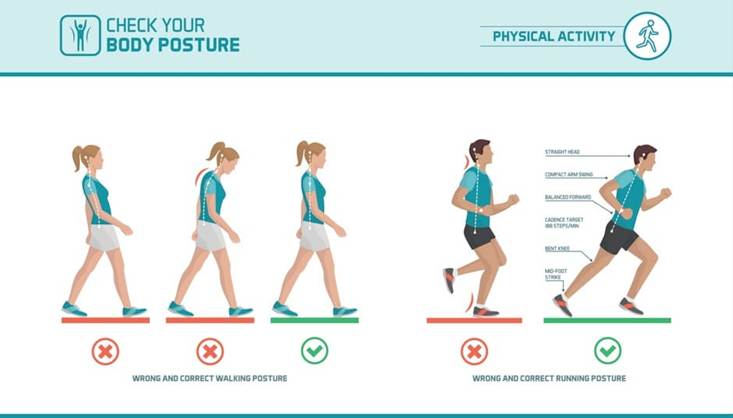
Incorrect vs Correct Running Posture

[Source A Guide to Proper Running Form | Cary Orthopaedics]

If you run properly, and do shoulder strengthening exercises, you can reduce the risk of shoulder pain. You can do these exercises, such as shoulder presses, lateral raises, and rotator cuff.

Identifying Specific Shoulder Pain Issues

Left Shoulder Pain While Running

You can experience left shoulder pain while running and while doing cardiovascular activities. This pain can mean a lot, depending on factors such as the specific location and type of discomfort.

  • Muscle Strain: Over or improper use of the shoulder can lead to muscle strain and then pain.
  • Rotator Cuff Injuries: Tears or inflammation in the rotator cuff muscles can cause shoulder pain. Physical activity makes the pain worse.
  • Referred Pain: Sometimes pain from the neck or upper back can come into the shoulder.
  • Cardiac Issues: Sometimes left shoulder pain can be a sign of cardiac issues. Moreover, if it comes along with chest pain or shortness of breath, then definitely, there’s a cardiac problem.

Right Shoulder Pain During Cardio

Here’s your answer to, ‘Why does my right shoulder hurt when I run?’.

Right shoulder pain during cardiovascular activities may happen because of:

  • Muscle Imbalances: If you overwork certain muscles and neglect others, this can lead to imbalance and cause pain during cardio.
  • Improper Form: Wrong posture while doing cardio can strain your shoulder muscles.
  • Gallbladder Issues: If you have gallstones, then during physical work, your right shoulder might hurt.
  • Rotator Cuff Injuries: Your right shoulder can also suffer from rotator cuff injuries if you overuse or use improper form.

Front Shoulder Pain When Running

Front shoulder pain when running can happen due to:

  • Biceps Tendonitis: Repetitive motions create inflammation of the biceps tendon. And this can cause pain in the front side of your shoulder.
  • Shoulder Impingement: This happens if you compress tendons during movement, and pain occurs.
  • Poor Posture: Anterior shoulder pain happens from muscle imbalances due to slouching or hunching.

Effective Strategies to Prevent and Alleviate Shoulder Pain

How to Stop Shoulder Pain When Running?

To prevent shoulder pain during running, you should maintain and do certain things- 

  • Maintain Proper Posture: Maintain an upright posture with your shoulders relaxed to minimize strain.
  • Regular Stretching: Include dynamic stretches and target your shoulders and upper back to improve flexibility.
  • Strengthening Exercises: To improve stability and reduce injury risks,  do resistance training for bolstering shoulder muscles.

Breathing Techniques to Reduce Shoulder Tension

Proper breathing can reduce  shoulder tension:

  • Diaphragmatic Breathing: Take deep belly breaths to reduce upper body tension.
  • Rhythmic Breathing: Always maintain a steady breathing pattern, for showing relaxation and oxygen flow.

Post-Run Shoulder Care

You can apply ice packs to reduce inflammation and soothe soreness in the shoulders.

A soft massage or professional therapy can relieve weakness, and muscle tightness, and fix blood flow.

You need to give yourself proper recovery time between runs. This time will repair muscle and prevent overuse injuries.

When to Seek Professional Help?

Recognizing Serious Symptoms

Concern Details What to do?
Persistent Pain           Pain lasting beyond a few weeks despite rest and self-care       Talk to a doctor
Numbness or Tingling Sensations in the shoulder, arm, or hand indicating nerve involvement   Take medical help urgently
Weakness in the Arm Difficulty lifting or using the arm normally         Connect with a specialized doctor
Limited Range of Motion            Inability to move the shoulder freely   The doctor may suggest MRI and X-ray tests
Pain Worsening Over Time            Discomfort increasing despite modifying activity       Talk to a doctor
Swelling or Deformity            Visible swelling, lumps, or abnormal positioning of the shoulder joint Urgent medical assistance needed


Treatment Options

Treatment Description Why
Physical Therapy        Strengthening exercises, posture correction, and mobility work            Often the first step in treatment
Medications Anti-inflammatory drugs, muscle relaxants         Prescribed for pain and inflammation relief
Cortisone Injections   Used for severe inflammation and pain management      Temporary relief may require follow-ups
Surgical Options         Procedures such as rotator cuff repair or joint stabilization    For major cases

Note: Please consult with a doctor if you are having these symptoms. Do not consider the steps/options as ultimate solutions.

Frequently Asked Questions

How do I stop shoulder pain when running?

To prevent shoulder pain when running, you have to maintain proper posture. Keep your shoulders relaxed and swing your arms naturally at your sides. Do some shoulder-strengthening exercises, and use proper breathing techniques.

Why does my shoulder hurt when I breathe while running?

If your shoulder hurts when you breathe while running, then you have strained muscle, a compressed nerve, or respiratory conditions.

How do I relax my shoulders when running?

Check your posture, and arm movements and stretch your shoulders accordingly. Remember to use correct breathing techniques to avoid tension in the shoulders.

Is it OK to run with an injured shoulder?

This depends on the injury’s severity and the body of the person. If the injury is minor, less discomfort, then you can manage it with proper form and less intensity. But still, before doing this, you should consult a doctor.

How Believing in Myself Helped Me Achieve My Personal Best (And How You Can Too)

Back in 2022, I was standing at the starting line of the Bromo Marathon.

My heart was racing—not just because I was excited, but because I was nervous too.

Sure, I’d trained hard—put in the miles on the road and tackled those tough hills. But this? This was something completely different.

The Bromo Marathon wasn’t just another road race. It was a trail race—steep climbs, tricky terrain, and crazy elevation that would push my endurance to the limit.

I had no clue what I was about to face.

My goal?

Simple: just finish. But when the race started, something shifted.

I was still nervous, but suddenly, I felt like I had a burst of energy.

It wasn’t just about pacing. It was about embracing the challenge, finding my flow, and trusting all the work I’d put in. Crossing that finish line and hearing I came in 5th? That was a total game-changer.

That’s when I realized something huge—I could do way more than I thought.

And that’s the real power of believing in yourself.


The Science Behind Self-Belief and Mental Toughness

We’ve all experienced it: that moment when your body feels drained, your legs are heavy, and your mind starts telling you that you can’t push any further.

But here’s the thing—your mind has more power over your body than you might think.

Studies show that when you believe in yourself, you perform better—even when you’re exhausted.

For example, Dr. David Bishop’s 2014 study found that athletes who believed in their recovery after tough workouts performed better and recovered faster—even when they were given a placebo.

In other words, their mind pushed their body to do more, which led to better performance.

The more you believe in yourself, the better your body will perform.

How to Build Mental Toughness for Running Races

Before the Bromo Marathon, I had doubts creeping in.

Could I handle the technical trails? Would my legs hold up on those steep climbs?

But deep down, I had this quiet faith in myself, even though I couldn’t fully explain why.

I had worked hard, training both my body and my mind.

And that belief in myself? It pushed me further than I thought I could go.

Believing in yourself isn’t just about staying positive.

It’s a skill you build with every run, tough workout, and race.

It wasn’t about having zero doubts. It was about deciding that, even with doubts, I was going to trust my training and give it everything I had.

Practical Mental Strategies

Mental strength isn’t just about pushing through pain. It’s about using strategies to stay focused during the race.

One of the best tools for this is mantras—short, positive phrases you repeat when things get tough.

Studies show that those who use positive self-talk and visualization get stronger mentally.

For me, mantras like “Run strong, run better” help shut down negativity and keep me locked in. It’s like a mental reset, and it works.

Visualization is another powerful tool.

By picturing the course, the climbs, and how tired you might feel, you mentally prepare for what’s coming.

It’s like mentally prepping for the challenge before you even start.

This helps reduce anxiety and boosts your confidence because you’ve already pictured yourself succeeding.

The Secret to Pushing Your Limits

The first big mental test came when I hit that steep hill.

Most runners were walking, panting, and struggling with the elevation.

But I kept my pace steady, pushing with every step.

When I got to the top and started running again, I felt this surge of confidence. My legs weren’t just tired; they were strong. I could keep going. I knew I could do this.

At that point, I realized something crucial: mental strength wasn’t just about ignoring the pain. It was about facing the pain head-on and deciding to keep moving anyway.

We all face mental roadblocks in races. It’s easy to want to slow down when the going gets tough. But in that moment, I learned to embrace the discomfort, not run from it.

Every tough climb, every challenging stretch, became an opportunity to prove to myself that I could go beyond what I thought I was capable of.

Pacing became a key part of my mental game. I realized that pacing wasn’t just about managing my physical energy—it was about managing my mental energy too.

Runners who adjust their pace based on how they feel mentally during the race are less likely to burn out.

This tactic allowed me to conserve both physical and mental energy, so I could push through the toughest sections without feeling completely drained.

That’s the essence of belief in running: it’s not about pretending the pain doesn’t exist.

It’s about deciding to keep pushing, no matter what.

Why Self-Belief is Key to Achieving Your Personal Best in Running

Being physically ready for a race is important, but being mentally tough enough to keep going when your body wants to stop? That’s what really counts.

When I hit the second half of the Bromo Marathon, my body was begging me to stop.

My legs felt like lead, my breath was short, and I wasn’t sure I could keep up.

But then something clicked. I believed in myself and my training, and that pushed me to keep going even when I was ready to quit.

That’s when I realized: belief isn’t just in your head—it can power your whole body.

This is where your mind and body work together.

When you’re physically drained, your mind can push you further than you thought possible.

It’s like flipping a switch that tells your legs to keep moving, to go a little further, and hold on just a bit longer.

The Power of Adaptability in Trail Running

I had no clue what would happen when I crossed the finish line of the Bromo Marathon. I didn’t just finish—I did way better than I ever imagined.

That was the moment it all clicked for me.

It wasn’t just about finishing or placing well.

It was realizing I could do something I never thought I could.

That moment taught me belief isn’t just about getting through—it’s about pushing beyond what you think you can do.

That’s when I realized that trail running is something I can get good at.

How to Cultivate Self-Belief

So how do you build this belief?

I didn’t wake up on race day expecting to crush it right from the start. It came from months of training both my body and my mind.

I pictured every part of the race—the course, the hills, the pain, and how I would push through it all.

Visualization isn’t just something you do the night before the race—it’s a daily practice.

It’s about picturing yourself running strong, even when it feels impossible. It’s about getting your mind ready for every part of the race before you even start.

And it’s about setting goals that go beyond the finish line—goals for the effort, the progress, and the belief you’re building every day.

Training your mind is just as important as training your body.

So when you feel like slowing down, remind yourself: “I’ve got this.” When it gets tough, don’t let the urge to quit win—push through it instead. And with each step, you’ll build your belief.


5 Ways to Cultivate Belief in Yourself Before a Big Race

  • Picture the course and how you’ll handle the challenges.
  • Use mantras to shut down negative thoughts.
  • Focus on small, doable goals during the race.
  • Celebrate every bit of progress, no matter where you finish.
  • Trust your training and everything you’ve learned.

A key takeaway here is that belief is like a muscle.

The more you work it, the stronger it gets.

Just like your legs get stronger with every mile, your mind gets stronger with each challenge.

Conclusion

The Bromo Marathon taught me something invaluable: belief is the difference between finishing and finishing with a personal best.

It’s what transforms doubt into determination, fear into focus, and obstacles into opportunities.

As I crossed that finish line, I realized I was no longer the same runner who started that race.

I had expanded my limits.

I had conquered a race I wasn’t sure I could finish, let alone place in the top 5.

But more importantly, I had conquered my self-doubt.

The next time you face a race—or any challenge—remember that you are capable of more than you think.

The belief you have in yourself, built over time through training, setbacks, and small wins, will carry you further than you ever imagined. It’s not about running faster or finishing first.

It’s about believing in the process, trusting your training, and knowing that no matter how tough it gets, you have what it takes to finish strong.

So, set your goals high. Believe in your potential. And when the going gets tough, remind yourself: “I can do this.”

Because you can—and you will.

The Power of Interval Training: How Speed Work Transformed My Running Confidence

Though it’s been a while, I still remember my first interval workout—my calves were on fire, I was gasping for air, and I kept asking myself, “Why am I doing this to myself?”

Before that, I was all about run-walks, taking it easy and just trying to finish.

Speed work sounded way too intense and honestly kind of scary.

But once I started pushing through those intervals, everything changed.

It’s not about going flat-out every time.

It’s about teaching your body to handle faster speeds and bounce back.

Yeah, it’s tough, but you get stronger and faster, and that feels pretty awesome.

If you’re stuck in your comfort zone or nervous about speed work, stick around. I’ll tell you how I started slow, built my confidence, and got through the hard stuff without losing my mind.

Got your own speed work stories? Drop them in the comments—I’m all ears.


Why Interval Training Matter

If you’ve ever been scared to speed up, you’re not alone.

The idea of running faster is nerve-wracking, especially if you’re used to cruising at a relaxed pace.

I’ve been there too—the heavy legs, the breathlessness, the muscle burn.

I’d always stuck with my easy runs and long distances, building endurance but never really challenging myself with speed.

The thought of intervals—fast bursts followed by recovery—felt like diving into the deep end without knowing how to swim.

At first, I wasn’t even sure if I was doing it right.

Should I be feeling like I’m going to collapse at the end of each interval?

Was I pushing too hard?

These were the doubts that crept into my mind during those first few interval sessions.

At first, I wasn’t even sure if I should continue with it.

My calves ached, my ankles were sore, and my body wasn’t used to this kind of intensity.

But here’s the deal: I was scared because I didn’t really get what speed work was all about. It wasn’t about pushing my body to the absolute limit every single time.

It was about learning to run faster while gradually building strength and confidence along the way.

And that was a lesson I had to learn the hard way.

Interval Training

So, what is it that makes interval training so effective?

Well, it’s not just about running faster for the sake of speed. Interval training teaches your body how to handle higher intensities and recover quickly, making it an invaluable tool for improving your pace over longer distances.

When I first added interval training into my routine, I started slow.

My first intervals were short—just 400 meters at a moderate pace. But I could feel the difference right away. It was a shock to my system, but in a good way.

The faster pace pushed me out of my comfort zone, and though it was hard, there was something exhilarating about it.

The first interval session I did was a game-changer for me. It wasn’t pretty.

I was gasping for air after every interval, my muscles were burning, and I was questioning whether it was worth it.

But after finishing the session, I had a new understanding of my body.

I knew I had pushed myself, and I started to believe that I could actually get faster—if I stuck with it.

One of the most important lessons I learned was that interval training is scalable.

At first, I started with shorter intervals, about 300–400 meters at a pace I felt comfortable with, around 5K to 10K pace.

I only did a few repeats with plenty of recovery time in between. But as I got more comfortable, I began to increase the intensity.

I shortened the recovery time, added more intervals, and even experimented with longer intervals like 800 meters and 1600 meters. Over time, my confidence grew because I knew my body could handle more.

But the most rewarding part came later: as I got faster, I didn’t just feel stronger during my interval sessions—I also started seeing improvements in my long runs and races.

Getting Over the Mental Hurdle

The hardest part of interval training wasn’t the muscle pain; it was changing how I thought about it.

At first, I thought speed work was something I could avoid. I was scared of getting hurt, feeling the pain, and falling behind.

But as I kept at it, I realized the benefits of intervals were totally worth the discomfort.

I learned to see the discomfort as a sign I was getting better, not something to fear.

The big shift came when I stopped seeing intervals as something to conquer and started seeing them as a way to improve. I didn’t need to be perfect. I just needed to improve a little bit each time.

As my times improved, I realized interval training wasn’t just about speed—it was about building mental strength.

Every session taught me how to push through discomfort, whether in a race or a hard workout. It was about trusting the process and realizing that every little step forward was a win.

Interval training also helped me get mentally tougher. Every time you push yourself, even a little—like running faster or doing one more interval—adds up. After a while, you start to believe you can handle tougher workouts and faster race paces.

The Confidence Boost You Didn’t Expect

After a few weeks of doing intervals, I could already feel a change.

I started feeling stronger, both physically and mentally. I wasn’t just running faster; I was starting to believe I could keep it up for longer distances.

One of my proudest moments came during a half marathon.

I’d been doing interval training for months before the race, and I felt more confident than ever. I knew I had the speed to maintain a fast pace, and I knew I could push through the fatigue of a long race.

When I crossed the finish line, I set a new personal best—1:37—10 minutes faster than my previous time.

That race proved just how powerful interval training can be.

It wasn’t just about speed; it was about being ready to handle the pain and challenges of the race.

I had built mental toughness and physical strength—and it felt incredible.

That PR wasn’t just about training; it happened because I learned to embrace discomfort and push through my mental block.

Practical Tips to Embrace Speed and Build Confidence

You’ve heard about the power of interval training, but how do you actually start? I know it’s tough to think about running faster when you’re used to a comfortable pace.

But trust me, starting with manageable intervals and slowly building up will get you there. Here’s how I did it—and how you can too.

Take it slow.

When I first started doing intervals, I didn’t go straight into long, fast sprints. Instead, I did shorter intervals—about 300 to 400 meters at a challenging but doable pace.

The key was to keep it manageable and focus on your form. You don’t need to go all out right from the start. The goal is to gradually pick up speed without overdoing it.

Here’s a simple starter session:

  • Warm-up: 10-15 minutes of easy jogging
  • Intervals: 400m at 5K-10K pace, followed by 400m of easy jogging or walking
  • Cool-down: 10 minutes of light jogging and stretching.

Start with 3–4 intervals and see how it feels. If you’re feeling strong, add more intervals or reduce your recovery time in between. Don’t rush it. Gradual improvement is the key, and it’s better to start slow and build up your confidence than to dive in too quickly and risk burnout or injury.

Focus on form, not just speed.

Good form is essential when doing intervals. When you’re pushing the pace, it’s easy to forget about posture and technique, but focusing on form during each interval will not only make you more efficient, but it’ll also reduce your risk of injury.

In my early interval sessions, I focused on maintaining good posture—standing tall, keeping my core engaged, and driving my legs with each stride. I also paid attention to my breathing.

It can be easy to panic when you’re running faster than usual, but controlling your breath can help you maintain a steady pace.

A quick reminder: If your form starts to break down, it’s okay to slow down. Form matters more than speed, especially at first.

Manage recovery time.

Recovery time isn’t just to catch your breath; it’s when your body gets ready for the next interval. In my first interval sessions, I was so focused on the intensity that I ignored how much recovery mattered.

Over time, I made sure to take enough rest between each interval to allow my muscles to recover. As my body adapted, I started reducing the recovery time.

Here’s a simple approach:

  • Early stages: 1:1 work-to-rest ratio (e.g., 400m fast, 400m easy)
  • As you progress: You can experiment with 2:1 or 3:1 ratios (e.g., 400m fast, 200m easy)

Just be mindful—interval training is meant to challenge you, but not to the point of exhaustion. If you’re too tired to finish the next interval with good form, rest a bit longer.

Gradual progression.

One of the biggest mistakes I made in the beginning was thinking I had to push myself hard every single session.

But it wasn’t until I realized that interval training is a long-term commitment that I started seeing real improvements.

It’s a process, not a race, and progression happens gradually.

I started with shorter intervals and fewer repeats, but as my fitness improved, I increased the intensity.

Eventually, I was doing 12–16 repeats with shorter recovery times, and I could feel my body getting stronger.

Over time, my legs became more accustomed to faster speeds, and I noticed a huge difference in my race performances.

Don’t compare yourself to others.

Running isn’t about competing against anyone but yourself.

When I first started doing speed work, I often compared myself to other runners—especially the fast ones.

It was easy to feel discouraged when I couldn’t hit the same paces. But the truth is, everyone’s journey is different.

So, focus on yourself.

Celebrate small victories.

Did you hit a faster pace during your intervals today than last week?

That’s progress.

Did you feel more confident on your race pace runs?

That’s progress.

It’s all about the small steps that lead to big gains.

The Power of Routine in Running: How Consistency Transforms Your Mind and Body

For me, running happens in the late afternoon—usually between 5 p.m. and 6 p.m.

That time has become my sanctuary.

It’s the perfect break from work, a chance to step away from the stress of the day and recharge.

While I don’t follow a strict schedule, that time has become sacred.

Now, when that window rolls around, everything else seems to fall into place around my run.

And it’s not just about the physical benefits.

The routine of running has changed the way I organize my day, creating a natural flow that helps me stay productive and balanced.

Before I started scheduling my runs, I’d fit them in whenever I could—and often skipped them when work or life got busy. Without structure, running felt like an optional luxury.

But once I made it a consistent part of my day, it became automatic.

Having a set time for my run has boosted my productivity in ways I didn’t expect. Knowing I have a dedicated time to step away from work makes it easier to focus on everything else.

I’m more intentional with my time, whether it’s work, family, or personal goals. Running has become my built-in mental health break, a guaranteed moment to clear my mind. It’s the one thing I can rely on, even when everything else feels unpredictable.

The Calm in Consistency

There’s something calming about sticking to a regular running schedule. It takes away the uncertainty of trying to find time for a workout.

It’s already planned.

And with that predictability comes a sense of mental clarity. I’ve noticed that when my running routine is in place, I’m more focused at work, and I feel more grounded in my personal life.

The consistency of my run keeps everything else in my life organized in ways I never expected.

Running as an Emotional Anchor

Running has been my go-to during some of the toughest times in my life. It’s more than just a workout—it’s my emotional reset button.

When life feels overwhelming, whether it’s work or personal stuff, running becomes my escape.

It gives me a chance to clear my head and sort through everything. There’s something about the rhythm of my legs hitting the pavement that helps me untangle my thoughts and emotions.

I remember plenty of days when I felt like I was drowning in stress, whether it was work or life’s never-ending demands. On those days, I’d think about skipping my run.

But I knew deep down that running was exactly what I needed. It wasn’t about chasing a new personal best or pushing myself too hard. It was just about getting out there and letting the steady movement clear my mind.

Even when motivation was nowhere to be found, the routine always carried me through.

The best part of having a set run on the schedule is that it’s like built-in emotional self-care. I don’t even have to think about it; it’s already planned.

That habit has become a key part of my mental health. Running gives me a space to breathe, to let go of stress, and to return to life with a fresh perspective. It’s like hitting reset on my brain.

Running as a Mental Reset

When things get tough, running helps me regain balance.

And it’s not just about the physical workout—it’s the time I get to myself. Whether I’m running with music, listening to a podcast, or enjoying the quiet of the road, it’s my time to unplug and reset.

It’s like a moving meditation, where every step helps me let go of negative feelings and find some calm.

Running has been a steady emotional anchor for me. And it’s not about being the fastest or pushing my limits—it’s about honoring the routine and letting it serve me emotionally.

When I’m running, it’s my time to process whatever’s on my mind, so I can return to the world feeling clearer and more focused.

The Impact of a Set Schedule on Motivation

Motivation can be overrated. We hear people say, “Find your motivation!” like it’s the magic key to success in running (and in life). The reality? Motivation doesn’t always stick around.

Some days, you’ll feel like running, and other days, you won’t want to get out of bed. That’s when having a solid routine comes in.

A running schedule means I don’t have to rely on motivation—it’s about showing up, even on the days when I don’t feel like it. For me, having a set running routine is the most reliable form of motivation.

It’s not about trying to find energy to run; it’s about sticking to the plan I made.

On days when I feel sluggish or stressed, I don’t have to ask myself if I should run. I just do it. The routine itself becomes the motivator, not how I’m feeling in the moment.

There have been plenty of days when I’ve woken up not feeling like running.

Maybe I’m tired or distracted, or I’m just having a tough day. But I’ve learned that those are often the days when sticking to my routine is the most important.

The truth is, I don’t always feel like running. But I know that when I put on my shoes and hit the road, I’ll feel better afterward.

Just following through is an accomplishment in itself, and that’s what keeps me coming back to the routine.

The Science Behind the Benefits of Running

Running does more than just keep you in shape—it’s a game changer for mental health.

Sure, we all know that physical activity helps reduce stress, but what if I told you it could actually clear your mind too?

Running doesn’t just help strengthen the body; it’s a mental reset.

When I hit the road, I’m not only giving my muscles a workout, but I’m also giving my brain a much-needed break.

Studies show that running boosts endorphins, the feel-good chemicals in our bodies, which help fight off stress and anxiety. It’s not just about burning calories—it’s about finding space in your head to breathe and recharge, especially when life feels overwhelming.

For me, every time I lace up my shoes, it’s not just about the miles ahead; it’s about the mental clarity I get from hitting the pavement.

It’s like a reset button for my brain, and I’ve come to treat my run as a critical part of my mental wellness.

Balancing Life Through Running

Running has completely changed how I balance my life.

Before I made running a regular part of my routine, it was hard to find harmony between work, family, and personal time.

Running was just another thing on my to-do list, and I didn’t see how important it could be.

But once I started treating it as a non-negotiable part of my day, everything changed.

The Foundation of My Day

Now, I view running as the foundation that keeps everything else in place.

The best part of having a set running schedule is how it gives me a predictable time block—something that doesn’t interfere with all the other obligations. No matter how hectic the day gets, running is the one thing I can count on.

Whether I’m juggling work, family, or personal challenges, my run is my time to recharge.

Nothing else gets in the way of that.

Control and Perspective

Having a consistent routine helps me balance everything else in my life. Now, I don’t feel like I’m always in a mad rush.

Running keeps me grounded, and once I’ve taken care of myself with a run, I can focus on everything else without stress.

Running puts everything in perspective and helps me feel less overwhelmed.

It’s the one constant, and that makes all the difference.

A key part of my routine is the control it gives me. Life often feels chaotic, with everything pulling you in different directions. But when I run, I know that time is for me. It’s my time to take a break, clear my head, and recharge.

After my run, I feel grounded, present, and ready to tackle what’s next.

The Beauty of Routine

There’s power in showing up every day, even when you don’t feel like it. That’s the beauty of sticking to a running routine. Once the schedule is set, showing up doesn’t feel like extra effort.

Consistency is what transforms a hobby into a lifestyle. Once running became a regular part of my day, it felt more like an essential habit than an option. The mental and physical results have been huge.

The magic of a set routine: it creates stability for both your body and mind.

But you know what?

I ran anyway.

The Loneliness Loop: How Solo Runs Helped My Social Anxiety

A few years ago, if you had told me that running alone would help with my social anxiety, I would’ve laughed.

But now, here I am, realizing how those solo runs made me stronger—physically and mentally.

Social anxiety isn’t something you can just get rid of. It’s always there, affecting almost every interaction and decision I make.

For me, being an introvert who overthinks everything, being around people always felt like a huge challenge.

The thought of joining a race, running with others, or even just walking into a social situation made my heart race and my mind spiral.

I started running just to get fitter, but I had no idea it would offer me so much more. It helped me handle my anxiety better, teaching me how to calm the voices in my head and face discomfort head-on.

The journey wasn’t easy, and it didn’t happen overnight.

It took time, just like breaking through any mental block.

Through the process, I learned that running alone became my safe space to rebuild myself, one step at a time.

The Science Behind Self-Belief and Mental Toughness

Running isn’t just a workout for your body—it’s a mental one, too.

From experience, pushing myself on solo runs has helped me handle my social anxiety in ways I never saw coming. But it’s not just about the emotional benefits of running alone.

Studies have shown that regular exercise promotes the production of neurotransmitters like serotonin and dopamine—chemicals in the brain that play a huge role in regulating mood.

For example, a 2021 review in Frontiers in Human Neuroscience found that exercise, including running, significantly reduces social anxiety by balancing these mood-regulating chemicals.

These neurotransmitters help to lower feelings of stress and anxiety, especially when the exercise becomes a consistent part of your routine.

So, every time I lace up my shoes for a solo run, I’m not only getting fitter physically but also strengthening my mental toughness.

Running becomes a kind of self-therapy, where I’m not just pushing my body past its limits but also rewiring my brain to handle stress and anxiety with more resilience.

Struggles with Social Anxiety in Group Settings

Social anxiety has a way of making every small worry feel huge.

When I was part of a running group or just running in a crowded park, I always felt like everyone was watching me.

Was I running too slow? Did I look silly? Should I be chatting with someone or just keep to myself?

I remember dreading those first group runs.

The moment we gathered before the start, I’d start mentally gearing up for the discomfort.

I’d try to make small talk, but it always felt forced. I was hyper-aware of how others saw me, thinking things like, “Do I sound stupid?” or “What if I don’t fit in?”

Every step, every breath, felt heavy with the pressure to act a certain way.

That’s when it hit me: group runs weren’t helping me with my anxiety; they were making it worse.

Instead of focusing on the joy of running, I was wrapped up in my own head, worrying about fitting in. I wanted to escape the anxiety of group dynamics, so I decided to go solo.

Practical Mental Strategies

On my solo runs, I’ve learned that it’s not just about covering the distance—it’s about how I manage the thoughts that come up. Running with anxiety means working through those mental hurdles, and that shift in mindset has made all the difference.

One strategy that’s really helped me is reframing my thoughts, especially when anxiety starts creeping in. Instead of letting those negative voices take over, I remind myself it’s okay to feel uncomfortable.

That discomfort is part of the journey, and it doesn’t define me. I’ve also learned to be kind to myself in those moments.

It’s easy to get frustrated when anxiety flares up, but instead of being hard on myself, I try to be compassionate.

After all, dealing with anxiety isn’t a race to the finish line—it’s a journey, and I’m taking it one step at a time.

Building mental resilience through running is a lot like building physical endurance. Each time I face my anxiety head-on, I get a little stronger at handling it in everyday situations. And just like with physical training, the more I practice, the easier it gets.

The Escape of Solo Running

When I started running alone, I felt an immediate shift. No more worrying about pace or how I looked.

No one to compare myself to, no pressure to make small talk—just the rhythmic sound of my feet hitting the ground and the steady rise and fall of my breath. In those moments, I found peace.

The solitude of running gave me the space to sort through everything in my mind—anxiety, stress, and all the other thoughts that clutter my head. Running became my escape.

Whenever I felt overwhelmed by social interactions, I would lace up my shoes and head out for a run. I didn’t have to explain myself to anyone. There was no need to be “on” or “perfect.”

Running alone became my way of hitting the reset button.

It was like pressing pause on the noise of everyday life. In that space, I could reflect, recharge, and let go of all the expectations I felt in social situations.

The freedom I found on those solo runs was unlike anything I’d ever experienced before.

The Power of Solitude

One of the unexpected benefits of solo running is how I’ve come to embrace the loneliness instead of fearing it.

There are times when I feel isolated, but instead of pushing it away, I’ve learned to accept it. In those quiet moments, running turns into a powerful chance for self-reflection and growth.

Some runners I’ve talked to shared that running alone doesn’t just bring up loneliness—it brings clarity. When it’s just you, your thoughts, and the rhythm of your feet, something magical happens.

I’ve found that being alone on a run gives me a sense of self-empowerment. It’s not about escaping the world—it’s about reconnecting with myself in a way that feels deeply healing.

Over time, I realized that solo running gives me the space to work through my emotions, reflect, and challenge myself in ways I never expected.

It’s like running has become my personal therapy—a place where I can truly be myself and work on my mental health, one step at a time.

Strength and Confidence Through Solo Running

One of the biggest benefits of solo running has been the confidence and self-reliance it’s helped me build.

When you’re running alone, there’s no one else to lean on for motivation or encouragement.

It’s all on you. And while that might sound tough, it’s actually one of the most empowering experiences.

At first, I wasn’t sure of myself—every mile felt like a test. But the more I ran, the more I discovered my own strength. I started pushing myself further, trying new routes, and increasing my distance.

Each time I overcame a challenge, my confidence grew—not just in my running but in my ability to handle discomfort and uncertainty.

This newfound confidence carried over into other parts of my life. When I faced tough social situations, I reminded myself that I had already faced tougher moments on my solo runs.

If I could push through those runs, I could handle the discomfort that came with social anxiety.

Solo running became a training ground for mental toughness, and that toughness made me feel more capable and confident in everyday life.

What you think? 

Please share with me your thoughts and insights.