How Much Should I Run to Lose Weight?

lose fat

One of the questions I hear all the time as a running coach is: “How much should I run if I want to drop weight?”

I get it.

I was that guy in his early 20s pushing 200 pounds, wheezing through short jogs, and hoping running would be the magic fix.

Back then, I had no clue what I was doing. Just tied my shoes and hoped for the best.

But here’s what I learned: running can absolutely help you lose weight, but it’s not just about piling on the miles. It’s about being consistent, eating smart, and trusting the process.

Fast-forward 14+ years, and I’ve lost over 50 pounds.

It didn’t happen overnight, but I picked up a lot of hard-earned lessons along the way. If you want to lose weight through running, I’ll walk (or run) you through what actually works—without the BS.

Why Running Helps With Weight Loss

Let’s break it down: You lose weight when you burn more calories than you eat.

Simple.

That’s called a calorie deficit.

Running just happens to be a great way to create one.

On average, you burn around 100 calories per mile if you’re a mid-weight person (shoutout to VeryWellFit).

So a 3-mile run? That’s 300 calories down.

If you weigh more, like I did when I started at around 200 lbs, you’ll burn even more. Your body’s working harder to move the extra weight. Built-in bonus.

But here’s the catch: you might also get extra hungry. That muffin you eat post-run might cancel out the calories you just burned.

I’ve seen it happen. Hell, I’ve done it.

I believe that it takes an hour to burn what takes two minutes to eat.

Truth bomb.

A lot of folks actually gain weight when they start running because they overcompensate with food.

Bottom line?

Running can burn fat, but it won’t fix your diet. You gotta do both. Think of running as your fat-burning engine and food as your fuel. The right mix matters.

So, How Much Should You Run?

Let’s be real: it depends.

But if you’re new and want a starting point, go for 3 days a week.

That’s what worked for me early on. It gave my body time to rest, recover, and still burn a decent amount of calories.

Even 2 days is fine to start.

Just build the habit.

Each session?

Shoot for 20–30 minutes.

Walk/run intervals totally count.

I used to do 3 minutes jogging, 2 minutes walking, and repeat.

That added up to 2 or 3 miles. And yeah, I took breaks.

Nobody cares how fast you go.

What matters is you showed up.

Once you’re consistent, you can add more time or days.

A good long-term target is 150–250 minutes of moderate cardio each week. That might look like 4 or 5 days of 30 to 50 minutes.

The American College of Sports Medicine even says more than 250 minutes a week can lead to bigger weight loss.

But don’t get overwhelmed. That includes everything—running, walking, biking, even dancing around your kitchen.

Mix it up.

In terms of mileage?

15–20 miles a week is a solid range for fat loss.

Just don’t jump into that right away. Add a mile or two per week, max.

Time or Distance—Which One Should You Track?

Both work.

Early on, I say go by time.

It feels less intimidating.

Promise yourself 20 minutes of movement. Doesn’t matter how far you go. Later, you can aim for distances.

Calories burned = time spent being active. That’s what matters. Over time, your pace will naturally get faster, and you’ll go farther in the same amount of time.

Consistency Wins

You want results?

Run consistently.

Running for 30 minutes, 3–4 times a week beats a single monster run every Sunday.

Your body adapts to repetition so please  build the habit first. Run short, run easy, but run often. That’s how you avoid injuries and stay in the game.

Eventually, you’ll stack those runs into real mileage. And that’s when the magic starts to happen.


A Realistic Running Plan for Weight Loss

So what does a smart plan look like?

Start small:

Run 2–3 times a week, even if it’s just 15–20 minutes of run/walk intervals.

That’s how I started, wheezing through jogs and catching my breath on lamp posts.

The trick is to build the habit, not win a medal on Day One.

Once you feel comfortable, bump it up to 3–4 runs per week, around 20–30 minutes each.

That’s when momentum kicks in. You’ll start seeing changes in your endurance, your mood, and the scale—slowly but surely.

The American College of Sports Medicine recommends 150–250 minutes of moderate activity per week to help with modest weight loss. That might sound like a lot, but it adds up quick—like 4 runs a week plus a long weekend walk.

In terms of mileage, a good target is 15–20 miles per week once you’re fully rolling. That might take a couple of months to build toward—and that’s okay.

I still remember the first time I hit 15 miles in a week. I was gassed, my legs were toast, but I felt unstoppable. That week lit a fire under me.

Minutes or Miles?

This one’s common: Should you focus on time or distance?

Honestly, both work.

Early on, I suggest going by minutes—say, a 20-minute jog. T

hat way, you’re not stressing about pace. You just show up, move, and put in the time. As your fitness improves, distance naturally increases.

Eventually, you’ll start caring about miles too—but don’t obsess. Whether you run 1 mile or 3 miles in 30 minutes, you’re building momentum. And that’s what matters.

Build the Habit First

Don’t overdo it.

Don’t aim for 10 miles a day right out of the gate.

That’s how you burn out or get injured. Instead, build consistency.

One runner on Reddit nailed it: “Run 4–5 times a week, even if it’s short and easy. Just show up.” And that’s what I tell my athletes too. It’s not about perfection—it’s about getting your feet moving again and again.

Walk when you need to. Breathe. Build slowly. The results will come.

Training Smart

Running is simple: one foot in front of the other.

But if you want to lose weight and stay injury-free, there are a few smart moves that can make a huge difference.

These are the same strategies I used when I started from zero.

Trust me, I made all the rookie mistakes so you don’t have to.

Start Slow with Run/Walk

If you’re just getting into running (or coming back after a long break), start with a run/walk combo. I used to think walk breaks were cheating.

Now? I swear by them.

Back when I was starting out, I’d jog for 1 minute and walk for 1 minute.

That was it. No shame in that.

Over time, I built it up to 2 minutes running, then 5, then 10. Eventually, I could run 30 minutes straight—something that once felt impossible.

Run/walk training helps you go longer, stay injury-free, and actually enjoy the process. More time on your feet usually means more calories burned. Doesn’t matter if you walk some of it.

You can also check out my couch to 5K plan for more details.

Build Mileage Gradually

The temptation to go all in is real.

I once jumped from 0 to running 6 days a week and ended up sidelined with shin splints. Learn from my mistake.

Stick to the 10% rule: don’t increase your weekly mileage by more than 10%. If you ran 10 miles last week, do 11 next week—not 15.

Soreness is normal at first, but if it turns into sharp pain, back off. Rest, cross-train, or just take the day off.

So please don’t get injured chasing progress. You can’t burn calories if you’re stuck on the couch nursing an overuse injury.

Mix Up Your Intensity 

Once you’ve got a few weeks of consistent running under your belt, it’s time to spice things up. Intervals and hill runs are calorie-burning gold.

A simple interval workout: run hard for 30 seconds, jog or walk for 1 minute.

Do that 8 times. Done right, this will skyrocket your heart rate and keep your body burning calories even after you stop.

Hill sprints? Brutal. But effective.

Find a hill, charge up it, walk back down, and repeat. These workouts build strength and torch calories. I used to dread them, but they made me a better runner, no question.

Studies back this up: short bursts of intense effort improve metabolism and break plateaus.

Limit these hard sessions to once or twice a week max. Too many and you’ll burn out or get hurt. Easy runs still matter.

Add Strength Training and Cross-Training

This one changed everything for me.

I used to only run. But once I added two 20-minute strength sessions per week—squats, lunges, push-ups, that sort of thing—I noticed big changes.

More muscle = more calories burned at rest.

Plus, strength training helped fix my form and ease joint pain. Some experts even argue that strength workouts and HIIT can be more effective for fat loss than running alone.

Cross-training counts too.

I’d go for long walks, bike rides, even jump rope sessions on my off days. It’s all about staying active without constantly pounding your joints.

Respect Rest Days and Sleep

I used to feel guilty about rest days.

Now, I treat them like gold.

You don’t get fitter while running. You get fitter while recovering.

At least 1–2 full rest days per week, no exceptions.

And sleep? If you’re skimping on it, your body pays the price. I noticed that when I slept poorly, I craved junk and my runs felt like crap.

Getting 7–8 hours of sleep a night helped me train harder, eat better, and lose weight steadily. Don’t skip this part.

Hydrate and Cut the Liquid Calories

Water matters more than you think. I used to crush sugary drinks all day. Once I cut those and stuck with water, tea, and black coffee, the scale started moving.

Hydration keeps your energy up and your performance steady. And it keeps you from mistaking thirst for hunger. That alone can save you hundreds of calories a day.

Final Thoughts

Weight loss through running isn’t about smashing every workout.

It’s about stacking wins over time. I dropped 1–2 pounds per week by sticking to the basics: run/walk, strength train, rest smart, eat right. A few months later and you already lost 25 pounds or even more.

And don’t do it alone.

In my early days, I had a friend who ran with me twice a week. We were both beginners, but we kept each other going. Accountability changes everything.

So… what’s your goal?

What’s your current mile time?

What’s your next step?

Drop it in the comments or tell a friend. This journey’s better when we do it together.


7 Best Hip Stretches for Runners to Improve Flexibility and Prevent Injury

hip stretches for runners

Let’s talk hips.

If you run long enough, your hips will eventually start complaining.

Maybe it’s a dull ache in your hip flexors.

Maybe it’s that locked-up stiffness after a long drive home from your weekend long run.

Either way, tight hips are the silent performance killer most runners ignore — until they can’t.

Here’s the truth.

Your hips are the engine room of your stride.

When they’re tight or weak, your form falls apart, your stride shortens, and your risk of injury skyrockets.

But when they’re mobile and strong? You run smoother, faster, and with way less effort.

In this guide, I’ll break down:

  • Why runners get tight hips in the first place
  • The hidden dangers of neglecting hip mobility
  • 7 game-changing stretches to open up your stride and protect your body

Remember: You don’t run with just your legs — you run with your hips. Treat them right, and they’ll pay you back in miles.

Understanding the Hip Flexors: Your Stride’s Hidden Power

Before we jump into the stretching part, let’s understand what’s actually tightening up.

Your hip flexors are the muscles on the front of your hips and upper thighs that lift your knee toward your chest.

Every time you take a step, sprint up a hill, or drive your knee in a stride, these muscles are working.

Here are the main players:

  • Psoas major & iliacus (together: iliopsoas) — the deep engines of hip flexion
  • Rectus femoris — part of your quads, adds knee extension power
  • Sartorius — the long, diagonal “tailor’s muscle” across your thigh
  • Tensor fasciae latae (TFL) — the small but mighty outer-hip stabilizer

When these guys are strong and supple, your hips stay aligned, your pelvis stays neutral, and your stride feels smooth.

When they’re tight or weak? You get chain reactions: shortened stride, hunched posture, sore lower back, and slower running economy.

Why Runners End Up With Tight Hips

Most runners don’t wake up with tight hips — we earn them through modern life and repetitive miles.

Here’s why your hips are probably cranky:

Running Only Works a Narrow Range

Running is basically thousands of mini-leg-lifts in the same small arc. You never take your hips through their full range of motion, so your flexors adapt to a shortened position.

We Sit… A Lot

Desk job? Commute? Netflix? Your hips are bent most of the day. Muscles adapt to the positions we spend time in, so your hip flexors get “stuck” short.

Weak Glutes = Overworked Hip Flexors

If your glutes aren’t firing, your hip flexors pick up the slack. This imbalance is common in runners — especially those who never strength train. The result: overworked, tight flexors and less power in your stride.

Your Anatomy & Running Form

Some of us are naturally tighter or have running form quirks that stress the hips. But even then, the main culprits are the same: sitting, repetition, and skipping mobility work.

Think of your hip flexors like coiled springs. Keep them loose and strong, and they’ll launch you forward mile after mile. Ignore them, and they’ll tighten, pull on your back, and eventually steal your speed.

Do You Have Tight Hips? Try the Thomas Test

If you’ve ever finished a long run and felt like your hips were made of concrete, you’re not alone. Runners love to stretch hamstrings and calves, but tight hip flexors? Those sneaky little muscles will wreck your stride and trash your posture if you ignore them.

One of the easiest ways to check if your hips are tight is with a classic physical therapy move called the Thomas Test.

Sounds fancy, but it’s basically a quick, no-equipment way to see if your hip flexors are locking you up.

Here’s how to do it, step by step — no PT clinic required.

1. Set Up on the Edge

  • Sit on the edge of a sturdy table, bench, or firm bed — tailbone near the edge.
  • Slowly roll back onto your back and bring both knees to your chest. Hug them in.
  • Press your lower back into the surface. That locks your pelvis in place.

This position sets the baseline: spine neutral, hips ready.

2. Drop One Leg

  • Keep one knee hugged to your chest.
  • Slowly lower the opposite leg off the edge and let it dangle.
  • Relax it completely — no tensing.
  • Keep your back flat. No arching. If your low back lifts, the test is off.

3. Check Your Hanging Leg

Now the detective work:

  • Does the back of your thigh touch the table (or get close)? If yes, your iliopsoas — your main hip flexor — isn’t overly tight.
  • Is your knee bent around 90°? If it wants to straighten, your rectus femoris (a quad muscle that crosses the hip) is tight.
  • Does your leg drift out to the side? That’s a tight TFL (tensor fasciae latae) pulling things outward.

4. Test Both Sides

Reset and switch legs. Most runners find one hip is tighter than the other. That’s your body’s way of telling you where the imbalance is.

Here’s how to read the results:

  • Thigh stays up, can’t touch the table → Tight iliopsoas
  • Knee straightens instead of staying bent → Tight rectus femoris
  • Leg drifts out → Tight TFL on the outside of your hip

Most runners “fail” because their thigh floats above the table — classic shortened hip flexors from miles of running and hours of sitting.

Here’s the silver lining: the Thomas Test doubles as a stretch. Hug one knee, let the other leg hang, and hold for 30–60 seconds. That’s free hip flexor therapy right there.

If You Fail the Test

Failing doesn’t mean you’re broken. It just means your hips are locked up and need attention. Work the stretches and mobility drills (will get into that later, don’t worry).

If you pass but still feel “tight” or achy, it might not be flexibility — it could be weakness or glutes not firing.

Weak hips can feel tight because other muscles are overworking to stabilize you. In that case, pair mobility work with strength training for glutes and core for the best payoff.

The Real Cost of Ignoring Tight Hips

Here’s the deal: tight hip flexors are silent saboteurs. Ignore them long enough and your running form, your power, and eventually your knees and back will all pay the price.

Here’s what happens when you run with locked-up hips:

1. Your Pelvis Tips Forward and Your Back Takes the Hit

Tight hip flexors yank the front of your pelvis down like they’re pulling on a drawbridge. This is called anterior pelvic tilt, and it does two nasty things:

  • Caves your lower back into an exaggerated arch
  • Weakens your glutes, leaving them stretched and underpowered

When your pelvis is tipped, every stride means your lumbar spine is doing extra work it was never meant to do. Cue low back pain and micro-trauma that adds up over miles.

2. Your Glutes Go Offline — And Hamstrings Pay the Price

Tight flexors shut down the muscles that make you fast and powerful: your glutes.

  • Weak or inhibited glutes = less hip extension
  • Overworked hamstrings start doing double duty

Result? Hamstring strains, glute tendinopathy, or just chronically “dead” legs.

You’re basically running with the brakes on — and sooner or later, something snaps.

3. Your Stride Falls Apart

Hip tightness destroys stride efficiency. With limited hip extension:

  • You push off early → shorter stride
  • You might start overstriding to compensate → stress shoots into your knees
  • Or you lean forward from the waist instead of the ankles → hello, low back and neck pain

Researchers have literally observed that hip-tight runners show less hip extension and earlier toe-off.

Translation: you’re leaving speed and efficiency on the table every step.

4. Your Knees and Feet Start Complaining

The kinetic chain starts at the hips. When your hips are locked:

  • Your femurs rotate inward
  • Your knees track wrong
  • Your arches collapse

This is why PTs so often target hip mobility when treating runner’s knee or IT band issues.

5. Overuse Injuries Are Coming for You

Running with tight hips is like driving with your emergency brake half on — the extra strain builds silently until something fails.

  • Studies link hip flexor tightness to hamstring strains and even ACL injuries
  • Overuse injuries creep in because your form is compromised and your muscles are fighting each other

And here’s the brutal truth: pushing through hip pain rarely ends well.

Top 7 Hip Stretches for Runners

Tight hips will wreck your running if you let them. They’ll steal your stride, mess with your form, and leave you hobbling after a few miles. The good news? A few minutes of the right stretches can save you a world of pain.

These are my go-to hip openers for runners — they loosen up your glutes, hip flexors, and deep rotators, keeping your stride smooth and your joints happy. No fancy equipment, no excuses.

1. Pigeon Pose (a.k.a. Runner’s Butt Saver)

Targets: Outer hips, glutes (piriformis, glute med), and the hip flexors of the back leg.

Why Runners Swear by It: This is the king of hip openers. If your glutes are tight, your lower back and knees will eventually pay the price. Pigeon gets deep into the hip capsule and melts that post-run tension. Perfect if you deal with piriformis pain or that nagging “dead butt” stiffness.

How to Do It (No-Nonsense Version):

  • From a push-up or plank position, swing your right knee toward your right hand and set it down. Your shin angles under your torso — tight hips mean the foot will be closer to your left hip, looser hips mean you can angle it out more.
  • Slide your left leg straight back, top of the foot on the ground. Keep your hips square — imagine headlights on your hip bones facing forward.
  • Sit tall first. Lengthen your spine before you fold forward.
  • Ease into the stretch. Walk your hands forward and lower down as far as feels good. Forearms or forehead to the mat if you’re flexible, but there’s no medal for face-planting.
  • Breathe. Hang out here 30–60 seconds, letting that tightness melt on every exhale.
  • Switch sides and repeat.

Modifications:

  • Knee complaining? Skip the floor and do a Figure-4 on your back — right ankle over left knee, pull the left thigh toward you.
  • Need more control? Do it on a bench or couch so you can adjust the angle without grinding your joints.
  • Can’t get your hip down? Use a block or folded towel under the hip for support.

Coach’s Tip: Don’t lean like you’re falling off a bike — keep the weight centered. Over time, pigeon will loosen your hips and make post-run stretching feel like hitting a reset button.

2. Kneeling Runner’s Lunge (Hip Flexor Lunge Stretch)

What It Hits: Your hip flexors (iliopsoas + rectus femoris) on the back leg, plus a little bonus for your front glutes and quads.

Why It’s Gold for Runners: Tight hip flexors are almost a badge of honor for runners — but they’re also a recipe for sluggish strides and cranky knees. Hours of running plus all that sitting we do? Your hips are basically locked up. This lunge opens the front of the hip, restores mobility, and even sneaks in a bit of core engagement if you do it right.

How to Nail It:

  • Set up your lunge: Kneel down, step your right foot forward so your knee is stacked over your ankle (90° angle). Slide your left knee back until you feel a light stretch in the front of the hip. (Pad your knee if the floor is unforgiving.)
  • Tuck and engage: Slightly tuck your tailbone under (posterior tilt) and gently squeeze your left glute. Boom — instant hip flexor stretch without arching your back.
  • Ease forward: Shift your hips just a touch forward until you feel that juicy stretch along the front of your left hip and thigh. Keep your torso tall — don’t dump forward.
  • Add the reach: Want to level it up? Raise your left arm overhead and lean slightly toward your front leg. This lengthens the hip flexor line even more.
  • Hold and breathe: 30–60 seconds, nice and slow. With each exhale, sink a touch deeper.
  • Switch sides: Left foot forward, right knee down — same drill.

Coach’s Tip: Don’t chase the stretch by arching your lower back. The magic comes from the hip tilt + glute squeeze, not cranking your spine. If kneeling hurts, do a standing split-stance version or the “couch stretch” with your back foot up on a sofa.

3. Happy Baby Pose (Ananda Balasana)

What It Hits: Deep hip rotators, groin, and gives your lower back a big sigh of relief.

Why Runners Should Care: After miles of repetitive forward motion, your hips feel like rusty hinges. Happy Baby does the opposite — it opens the hips in flexion and rotation, gently decompresses the lower back, and basically makes your body go, “Ohhh, thank you.”

How to Do It:

  • Lie on your back and pull your knees toward your chest.
  • Grab the outer edges of your feet (or shins/ankles if that’s easier).
  • Open your knees wider than your torso, aiming them toward your armpits. Feet face the ceiling, shins vertical.
  • Gently pull down while pressing your tailbone toward the floor. Your lower back should stay flat.
  • Hold for 30–60 seconds (or longer). Optional: Rock side to side for a little lower-back massage.
  • Release, hug your knees in, and straighten out.

Coach’s Tip: Keep your neck and shoulders soft. If reaching your feet is a struggle, hold behind your thighs or try “Half Happy Baby” (one leg at a time). After a long run, this move feels like hitting the reset button on your hips and spine.

4. Butterfly Stretch (a.k.a. Seated Groin Stretch)

Targets: Inner thighs, groin, hips, and a little love for the glutes.

Why It Matters: If you run trails, tackle hills, or even just pile up road miles, your hips and adductors (inner thighs) can tighten up. That tightness? It steals your stride length and makes lateral movements feel stiff. This stretch is your ticket to more hip freedom.

How to Do It (Runner-Friendly Version):

  • Get set up: Sit on the floor and press the soles of your feet together so your knees drop out to the sides. Slide your feet closer to your body for a stronger stretch, or farther away if your hips are screaming at you.
  • Posture first: Grab your ankles or feet. Sit tall, chest proud, spine long. Don’t hunch — think “tall runner,” not “tired desk worker.”
  • Gentle pressure: Use your elbows (lightly!) to nudge your knees toward the floor. Feel that inner thigh stretch? That’s the sweet spot.
  • Optional forward fold: Want more? Inhale tall, exhale, and hinge forward from the hips. Lead with your chest, not your head. Stop before your back rounds.
  • Breathe and hang out: Hold 30–60 seconds. Every exhale, let gravity do its thing — knees sink, hips open.
  • Come up slow: Bring your torso upright and fold your knees together gently.

Coach’s Tips:

  • If your knees are sky-high, sit on a cushion or folded blanket.
  • No pain in the knees — ever. Adjust or support with yoga blocks if needed.
  • This is a Netflix-friendly stretch. A few minutes a day works wonders on hip mobility for your runs.

5. Extended Wide Squat (a.k.a. Deep Yogi Squat)

Targets: Hips (inside and out), glutes, hamstrings, lower back, and even your ankles.

Why It Matters: Runners spend hours moving forward, but rarely open up laterally. This squat reverses that one-dimensional grind, prying open tight hips and improving ankle mobility.

Translation? Smoother strides and happier knees.

How to Do It (Runner-Friendly Version):

  • Stance up: Feet a bit wider than shoulders, toes turned out ~45°. Adjust until it feels natural.
  • Drop down: Squat slowly, keeping heels on the floor if possible. Sink until your hips are between your heels or as low as you can go without tipping forward.
  • Elbow assist: Bring your elbows inside your knees, palms together at your chest. Gently press your knees out — feel that groin and hip stretch kick in.
  • Stay tall-ish: Slight forward lean is okay, but keep your chest proud and back engaged.
  • Breathe and hold: 30–60 seconds. On each exhale, think: tailbone heavy, knees open.
  • Exit clean: Hands to the floor for support, then either sit down or rise up with control.

Modifications for Tight Hips:

  • Can’t hit depth? Place a yoga block or low stool under your tailbone for support.
  • Heels coming up? Slide a rolled towel under them.
  • Need balance help? Hold a door frame or post.

Coach’s Tip: Don’t let your knees cave in — press them out. A few rounds of this in your cooldown can keep your hips loose and ankles ready for real-world terrain.

6. Frog Stretch

Targets: Groin and inner thighs (hip adductors like the gracilis and adductor magnus) plus the hip joint capsule.

Why I Love It: Ever try a side lunge and feel like your legs are made of concrete? Or notice your knees collapsing inward on a run? That’s your tight adductors talking.

Enter the Frog Stretch — named because, well, you look like a frog squatting. It’s one of the deepest groin openers out there. If your hips feel locked or lateral movements (think side lunges, trail running twists, or even some yoga poses) make you stiff, this one’s a game changer.

Coach Tip: Go easy if you’ve got cranky knees or hip issues. This stretch can be intense. Use padding and ease in. Your body will thank you.

How to Do It:

  • Start on all fours — hands and knees — on a soft mat or with padding under your knees.
  • Slide your knees apart slowly. Keep them in line with your hips, not pushed forward. Your legs will form a wide “V,” with your knees bent around 90 degrees. Picture a frog squatting — that’s the vibe.
  • Check your feet and shins: They should line up with your knees so you’re not torquing the joints. Feet can be flexed (toes out like a duck) or relaxed — whatever feels best.
  • Drop onto your forearms. Keep your spine neutral — don’t arch like crazy or round like a cat.
  • Ease your hips back slightly, like you’re trying to sit into the stretch. You should feel it lighting up the groin and inner thighs.
  • Hold for 30–60 seconds (work up to 1–2 minutes). Breathe deeply. On each exhale, let gravity do its thing and see if your hips sink a hair lower.
  • Come out slowly. Slide your hips forward or bring your knees together gradually. Trust me, you don’t want to snap your legs in — your muscles need a second to wake up.

7. Standing Wide-Legged Forward Fold (Straddle Stretch)

Targets: Hamstrings, inner thighs, hips, and a gentle release for the lower back.

Why I Love It: This one’s a two-for-one: hamstrings + adductors. For runners, tightness in either can make your hips feel jammed. This stretch not only opens the legs but also gives your spine a mini traction session. Perfect cooldown after a long run — plus it’s a sneaky way to get some blood to your brain and calm the system down.

How to Do It:

  • Take a wide stance — about 3 to 4 feet apart. Toes can point forward or slightly inward for more hamstring focus.
  • Hands to hips, inhale, and hinge forward from your hips as you exhale. Keep your back flat as long as possible — like your pelvis is tipping forward.
  • Fold forward fully once you hit your limit. Let your hands drop to the floor (or blocks if the floor is miles away). Super flexible? Maybe your head brushes the ground — but that’s extra credit, not the goal.
  • Relax your neck and let gravity pull your upper body down. Shift weight slightly to the balls of your feet for hamstring fire, or back to feel more in the inner thighs.

Spice It Up:

  • Walk your hands forward (like a wide-legged downward dog) for more hip lengthening.
  • Or bend your elbows and drop forearms if you’ve got the mobility.

Breathe and hold: 30–60 seconds. Each exhale, let yourself sink a tiny bit more. Keep a micro-bend in the knees if needed — no locked joints.

Come up slow: Engage your core, rise halfway, pause, then all the way up. You can step your feet in a little first if you went super wide.

Mod It: Tight hamstrings? Rest your hands on a chair or wall. Adjust your stance width until you find that “good stretch” without strain.

When to Perform These Stretches

Timing matters. Stretch smart, not just hard.

Here’s the deal: static stretches — the ones where you hold a position — work best after your run, not before. That’s because your muscles are warm, loose, and ready to actually lengthen.

Try holding these deep stretches on cold muscles and you’ll feel like a rusty hinge. Worse, research shows that long static holds before a run can even take the spring out of your stride temporarily.

So if you want to run strong, save the long holds for after the miles are done.

Before your run? Stick to dynamic moves — stuff like leg swings, lunges with a twist, high knees, and hip circles. These wake up your hips and prep your joints without killing your power.

My go-to routine looks like this:

  • Post-run: Quick jog or walk to cool down → hit 2–3 key hip stretches for 30–60 seconds each.
  • Tight day? Add a few more stretches or longer holds.
  • Rest day or evening session: Go for a 15–20 minute hip-focused routine. Think of it as maintenance for your running machine.

Pro Tip: Skip long static holds before speed workouts or races. Studies show it can dampen muscle explosiveness for an hour or so. Do your dynamic warm-up, crush your run, then hit the long stretches after.

Bonus Tips for Bulletproof Hips

Stretching is good. But strong, mobile hips? That’s next-level.

Static stretching is just one piece of the puzzle. If you really want hips that feel loose, strong, and ready to handle miles, add these tools to your kit:

1. Strengthen Your Glutes & Core

Tight hip flexors often come with a lazy butt and weak core. If your glutes aren’t firing, your hip flexors do way more work than they should — and boom, tight hips.

Do this twice a week:

Even 10–15 minutes can change your running form. A strong backside takes pressure off your hip flexors and keeps your stride snappy.

2. Dynamic Mobility is Your Warm-Up Superpower

Dynamic drills aren’t just fluff — they prep your hips to move through their full range without strain.

My pre-run favorites:

  • Forward and sideways leg swings
  • Walking lunges with a torso twist
  • High-knee marches
  • Hurdle steps or hip circles

Do 5–10 minutes before runs, especially speedwork or after long sitting sessions. Your first mile will feel way smoother.

3. Foam Roll & Self-Massage

Sometimes “tight” isn’t just muscle — it’s the surrounding fascia and trigger points screaming for attention.

  • Foam roll your quads and IT bands to ease tension on your hips.
  • Target glutes and upper hip flexors with a lacrosse ball — life-changing for some runners.
  • Avoid bony areas and stick to the muscle belly.

Fix Your All-Day Posture

Your hips don’t just tighten up during runs — they’re reacting to how you spend the other 23 hours.

Long desk sessions? Netflix marathons? That’s basically a hip flexor boot camp (and not the good kind).

  • Stand up at least once an hour. Walk, stretch, or hit a quick lunge.
  • When sitting, stay on your sit bones, not slumped onto your tailbone.
  • Avoid “hip-jut” standing or always leaning on one leg. Little posture habits add up.

Think of it this way: every hour in a posture is training your muscles. Train them for running, not stiffness.

Respect the Training Ramp-Up

Hip flexor issues love sudden mileage spikes. Stick to the 10% rule: don’t jump mileage or intensity faster than your hips can adapt.

  • New speedwork? Balance it with recovery and mobility work.
  • Trail or hill focus? Expect your hip flexors to work harder — treat them accordingly with stretching and activation.

Smooth, steady progress beats “hero weeks” followed by injury timeout.

Listen to the First Whispers

Your body rarely goes from healthy to injured overnight. That twinge in the front of your hip? That’s a whisper. Ignore it, and it’ll start shouting.

  • Shorten or swap a run for mobility work.
  • Heat, stretch, and foam roll before it’s a problem.
  • One missed run beats three weeks on the sidelines.

As one veteran runner said: “Tight hip flexors don’t just hurt — they hijack your stride.”

Long-Term Payoff: Strong, Mobile Hips = Better Running

Healthy hips aren’t just injury insurance — they’re a performance boost.

Runners who stick with hip mobility work often notice:

  • Smoother strides and better posture
  • Less random aches in knees and lower back
  • More power on hills and sprints

Forget chasing a six-pack — build hips that actually let you run like an athlete. Strength plus flexibility is the real secret sauce.

Rotating Running Shoes Can Lower Injury Risk by 39%

You’ve probably heard that rotating shoes is just a “runner’s myth,” right?

But trust me, it’s not.

I get it—who wants to deal with switching shoes all the time?

Here’s the thing—if you want to lower your injury risk by almost 39%, rotating shoes is the way to go (check the science here)

I ignored this advice for way too long.

I used to run in the same pair until the soles were practically hanging off.

Thought I could power through it, but, yeah, my knees and hips quickly reminded me that they don’t like that kind of treatment.

IT band pain? Check.

Knee flare-ups? Check.

Once I started rotating shoes, my pain started to fade. Don’t me wrong – I’m not implying that all my running pains disappeared, but I felt the difference. 

Let’s break down the reasons behind why you should be shoe-rotating as well as how to do it right.


What’s the Big Deal with Rotating Running Shoes, Anyway?

Running puts a lot of strain on your body. Every. Single. Time. Switching shoes is like giving your body a quick rest, which it really needs.

When you switch shoes, you change the way your body takes the impact, and that helps prevent injuries. It’s a simple fix, and it works!

You wouldn’t wear the same pair of socks for a week straight, would you? So why do it with shoes? Trust me, your feet (and your body) will thank you.

Now let me get into the science part. I promise you  it’s not as boring as it sounds.


How Rotating Shoes Prevents Injuries (Science-Backed Proof)

Here’s the deal: if you’ve heard that rotating your running shoes can help prevent injuries, that’s not just old runner’s wisdom — there’s solid science backing it up now.

A fresh study from Luxembourg tracked 264 regular runners over 22 weeks and found that those who switched between several pairs of shoes had 39% fewer injuries than those who mostly stuck to just one pair.

To break it down: about half of these runners mainly ran in just one shoe—like 91% of their miles in basically the same kicks. The other half rotated through around 3 or 4 pairs, mixing things up a lot more.

And the injury difference? Pretty clear. The shoe-rotators came out way better off.

Why? Well, different shoes shift the way impact hits your legs.

One pair might hit your calves harder, another your knees, or change how your stride feels.

By rotating shoes, you spread out that pounding, giving your tissues a break and lowering the chance of overuse injuries.

The researchers aren’t 100% sure which shoe features matter most here — midsole firmness, height, or shape — but they’re confident that mixing it up forces your legs to move differently each run. That variety seems to keep you safer.

Running in the same shoes means your joints take the same hit with every step. But rotating shoes gives your body a break by changing how it handles each run.

One day you get more cushion, the next day less—your body gets some needed relief.

If you’re feeling aches and pains that keep popping up in the same spot, your shoes might be more to blame than your mileage.


How Many Shoes Should You Have in Your Rotation?

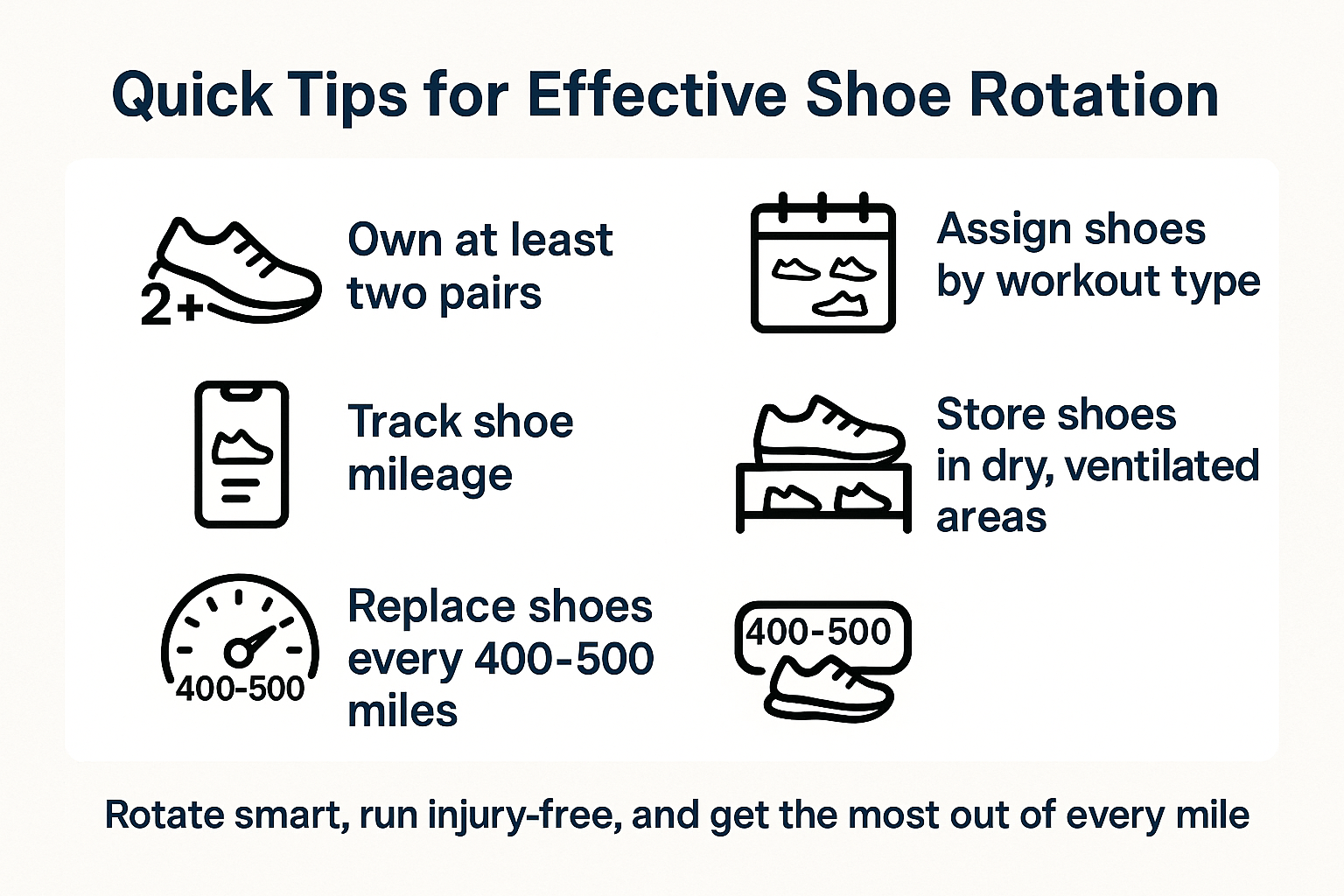
So, you’re ready to start rotating shoes? At least two pairs, but three is even better if you’re running a lot.

  • Two pairs: Perfect if you run 3-4 times a week.
  • Three pairs: Great for heavy mileage, different terrains, or if you’re training for a marathon.

In other words, if you’re running 3-4 days a week, two pairs are enough. For higher mileage or specific races, aim for 3-4 pairs in rotation. The key is keeping things fresh—not just for your shoes, but for your body too.

Quick Advice: Have one pair for speedwork, one for longer runs, and another for recovery or trails. Trust me, your body will thank you. Different shoes for different runs? It’s a total game-changer. You wouldn’t wear trail shoes on the road, would you? And you wouldn’t wear road shoes on the trails either.


Rotation Based on Running Experience

Let’s dive into how shoe rotation changes depending on your experience level.

For Beginners:

If you’re just starting out, I get it, one pair of shoes might seem like enough.

And honestly, it can be for a while.

But here’s the kicker—don’t stick with that same pair for all your runs.

Once you’ve got your form dialed in and you’re running consistently (even if it’s just a couple of days a week), add a second pair for easy runs and longer recovery days.

You don’t need to go wild with different models—maybe something cushioned for those long, slower days, and something a bit lighter for your speed sessions. But please, don’t wear the same pair for both. Your body will thank you.

For Intermediate Runners:

Alright, you’re putting in more miles, your legs are a little more seasoned, but there’s still room for improvement, right?

You should have at least three pairs of shoes in your rotation. Here’s the play:

  1. Daily trainers for easy, steady runs.
  2. Speed shoes for your tempo workouts or intervals—think lighter, more responsive.
  3. Cushioned shoes for long runs when you need to absorb all that impact.

Your body is starting to ask for more variety—different surfaces, different paces, different impacts. Don’t ignore it.

For Advanced Runners:

Now you’re in the game. You know what you’re doing. But, just because you’re racing marathons and knocking out fast times doesn’t mean you can throw caution to the wind. Four pairs of shoes—that’s where you wanna be:

  1. Daily trainers for easy runs.
  2. Tempo shoes for speed sessions and hill workouts.
  3. Carbon-plated racers for race day—yes, you want those.
  4. Cushioned shoes for your long runs—comfort is your best friend here.

And let me tell you, as someone who’s been there, the more you rotate the better. You’re pounding the pavement hard, and your body needs that variety to stay fresh. Different shoes mean different angles, different stresses, and different muscle groups engaged. Keep the body guessing, and you’ll stay injury-free.


Shoes for Specific Training Types

When it comes to speedwork, think light. You want a shoe that makes you feel like you’re flying—not like you’re lugging around bricks.

That means something fast and responsive, like a racing flat or a lightweight trainer. The goal here isn’t comfort—it’s speed. You’re gonna feel the ground, but in the best way.

Now, for your long runs, you need something that feels like a pillow but doesn’t make you sink into the ground.

You’re out there for hours, so you need a shoe with plenty of cushion, but not so much that you feel like you’re running in marshmallows. Trust me, your joints and your mind will thank you around mile 18.

And then there’s the recovery shoe—my favorite part of the rotation. After pounding the pavement for a few hard weeks, you need a shoe that wraps around your foot like a warm blanket.

Something with max cushion, because your feet are begging for relief. Hoka Bondi? Perfection. I don’t care how much cushion you like, after a tough week of mileage, your legs will fall in love with these.


Treadmill-Specific Shoes

Now, if you’re running indoors on a treadmill—yeah, your shoes still matter. They don’t need to be anything crazy, but if you’re putting in time indoors, you want something that’s gonna give you that smooth stride while protecting your joints from that constant impact.

Treadmills don’t give much back, so having the right shoe can make a huge difference.

You’re gonna want a shoe with extra cushioning to handle that repetitive pounding.

Not all shoes are built for this, so go for something with a softer ride, like the Nike React Infinity Run or Asics Nimbus.

These are built for cushion, plain and simple. You don’t need speed here—you need comfort, especially if you’re doing long treadmill sessions. It’s like running in place, and you don’t want to add more impact to that, right?

Plus, don’t forget about breathability. You’re indoors, and trust me, things can get warm. Make sure your shoes have solid airflow to avoid getting too swampy in there.


Conclusion

So, no matter where you’re at in your running journey, don’t sleep on shoe rotation.

It’s simple, but it’s the difference between chronic injuries and running injury-free. Use that tool to get your ideal rotation, and adjust it as you get faster, stronger, and more experienced. You’ll be a smarter runner—and feel better doing it.

And one last thing—I once made the mistake of having zero rotation for months.

Didn’t realize it until my knees started screaming. Don’t be that guy. Rotate your shoes, and keep those legs fresh!

Thank you for dropping by.

Should You Buy a New or Used Treadmill?

I’ll never forget my first treadmill.

It was sitting in the corner of a dusty garage, half-buried under old gym bags. The owner barely used it, but for me, it became the start of hundreds of miles of winter training.

It wasn’t perfect, but it got the job done — and taught me a lesson I’ve shared with dozens of runners since:

A treadmill is only as good as the miles you put on it.

Whether you’re buying brand new or scoring a secondhand deal, the goal stays the same: find a machine that fits your needs without draining your wallet or your patience.

In this guide, I’ll break down what really matters when choosing between used and new treadmills — based on what I’ve seen work (and not work) for real runners over the past decade.

Let’s get to it.


Why a Used Treadmill Can help

Over the years, I’ve coached plenty of runners who started out with secondhand treadmills.

Some ran their first marathon using machines older than their race bibs!

Here’s why used can actually be a smart move if you play your cards right.

1. Your Wallet Will Thank You

I’ve seen runners snag $2,000 treadmills for $500. Same sturdy frame. Same powerful motor. Just a little dust—and a lot more cash left for new shoes, race entries, or even a racecation.

2. High-End Without the High Price

Buying used can get you into top-tier brands — the kinds built for daily pounding, not occasional strolls. Instead of settling for a flimsy new machine, you could be logging miles on a serious runner’s treadmill.

3. Less Pressure to Commit

If you’re just dipping your toes into treadmill training, a used machine doesn’t feel like such a big commitment. No guilt if you decide to switch back to outdoor runs when the weather warms up.

4. Someone Else Eats the Depreciation

Treadmills lose value fast—usually 30–50% within the first year or two. If you buy smart, you’re letting someone else take that hit while you get nearly the same performance.


Buying Used Has Its Pitfalls

I’ve also seen the dark side of secondhand deals—machines that break down mid-run, mysterious squeaks that grow into full-blown malfunctions, and runners who wish they’d spent a little more upfront.

Here’s what you need to watch out for:

1. The Mystery Machine Problem

Unless the seller kept meticulous records (spoiler: most don’t), you’ll have no idea how hard that treadmill’s been pushed.

2. Wear and Tear You Can’t See

Motors lose their punch. Belts wear unevenly. Electronics glitch. You might not notice during a quick test jog, but two weeks into training? Different story. So please make sure to always crank up the speed and incline during a test. Listen for rattles, squeaks, or hesitation. Trust your gut.

3. No Warranty = All Risk

If something breaks — and it might — the repair bill’s on you. And sometimes, finding parts for older models is harder than finding a race with free donuts at the finish line.

4. Tech From the Stone Age

Some older treadmills feel downright ancient: clunky screens, zero connectivity, no workout variety. If tech keeps you motivated, an outdated machine could kill your momentum fast.


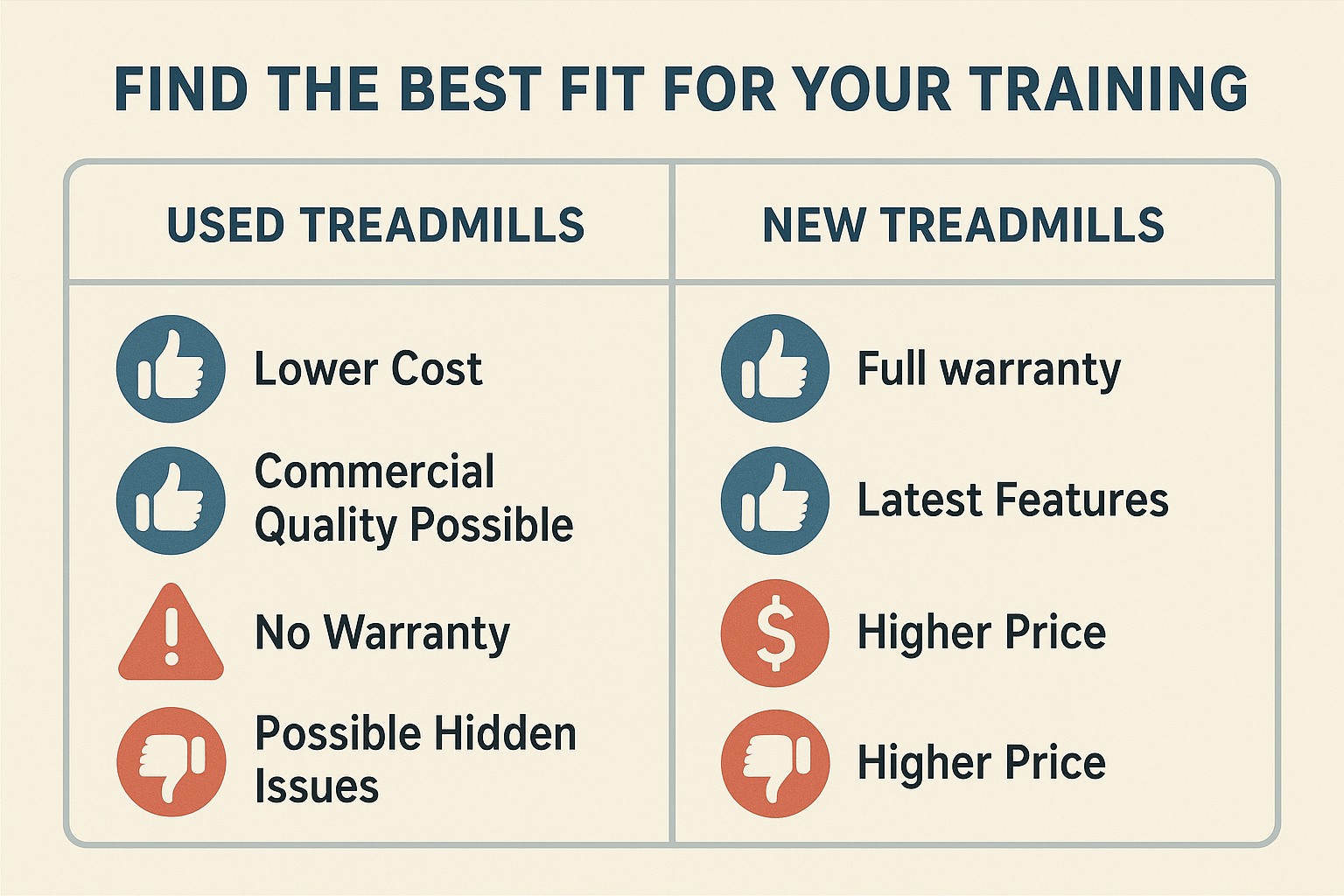
New vs Used: The Straight-Shooter’s Comparison

Here’s how I break it down with my athletes:

Neither is “better.” It’s about what fits your situation, goals, and risk tolerance.


Buying a Used Treadmill? Here’s How to Get It Right

Going the used route can be a smart move — but only if you treat it like you would picking a training partner for a marathon. You want reliable, not just convenient. I’ve seen runners rush a treadmill purchase and regret it within weeks. Let’s make sure that’s not you.

Here’s the step-by-step game plan I recommend to my friends and clients:


Step 1: Research Like a Detective

Before you even set foot in someone’s garage or scroll through online ads, know your target.

  • Price Check: Find out what the model cost new. A treadmill that sold for $2,500 three years ago is a very different machine from one that retailed for $699.

  • Review Hunt: Read real-world runner reviews, not just manufacturer descriptions. Look for common complaints: belt slipping, noisy motor, bad electronics — these are red flags.

  • Troubleshooting Patterns: Every treadmill line has its quirks. Some brands have belts that fray faster; others have motors that overheat. Knowing what to look out for will save you from a bad surprise.

My best advice? Stick to brands that are known for durability. Over the years, I’ve seen NordicTrack, Sole, and LifeFitness treadmills hold up best under real-world mileage.

Step 2: Inspect It Like You Mean It

You wouldn’t buy a car without a test drive, right? Same principle here. Your future training depends on this thing working smoothly.

When you go check it out:

  • Frame: Grab the side rails and rock them gently. A good treadmill feels sturdy, not wobbly like a cheap patio chair.

  • Motor: Start it up, crank the speed, then slow it down, and run a few minutes at 5–6 mph. A healthy motor sounds low and steady — not screechy, not hesitant.

  • Belt: Look closely. A belt should be centered, smooth, and show even wear. If it’s frayed, slipping, or feels jerky underfoot, that’s a major repair waiting to happen.

  • Console: Push every button. Test incline changes. Test speed jumps. A flickering screen or dead button could mean expensive electronic issues down the line.

Step 3: Ask the Tough Questions (Don’t Be Shy)

Good treadmills age gracefully if they’re cared for. Your job is to find out how this machine was treated.

Questions to ask the seller:

  • How often was it used? Daily marathon training is different from occasional walking while binge-watching Netflix.

  • What types of workouts? Sprints and heavy interval training wear treadmills harder than easy walking.

  • Was it maintained? Specifically: Was the belt lubricated regularly? (Neglect here shortens the machine’s life.)

  • Why are you selling it? Listen closely to their answer. Vague excuses (“We just don’t need it anymore”) are okay. Dodging the question is not.

Be Careful – If the seller gets defensive, rushes you, or refuses to let you really test it — trust your gut and walk away. A good seller will want you to feel confident.

Step 4: Know What a Fair Price Looks Like

Here’s a rough cheat sheet I’ve built over years of helping runners buy used treadmills:

  • Basic Home Models (light use, walking-focused) $200–$500

  • Mid-Range Running Machines (inclines, better motors) $500–$1000

  • High-End Commercial Models (built for serious training) $1000–$1800

Quick Recap: Your 5-Minute Pre-Purchase Checklist

Before you hand over a single dollar, make sure you can say YES to these:

  • ✅ Solid frame with no wobbles

  • ✅ Smooth motor sound at all speeds

  • ✅ Belt centered and in good condition

  • ✅ Console buttons and screen fully functional

  • ✅ Clear, honest answers from the seller


Real Runner FAQ

Q: How long will a good treadmill last me?
👉 If you treat it right? 7–12 years easy. Beat it up? Maybe 3–5.

Q: Should I buy a treadmill from a gym sell-off?
👉 Sometimes! Commercial treadmills are tanks — just check age, service history, and mileage.

Q: Can I trust online-only treadmill purchases?
👉 Not really. Try to test in person. If not, buy from somewhere with a real return policy.

Q: What’s the #1 feature to care about?
👉 Motor power (at least 2.5–3.5 HP for runners). Forget the shiny touchscreen if the engine’s a lawnmower.


Final Verdict: New or Used, It’s the Miles That Matter

Look — I’ve seen runners PR off Craigslist treadmills. I’ve seen others burn out on fancy machines that became expensive coat racks.

At the end of the day, the machine is just the stage. You’re the main act.

If you buy smart, inspect carefully, and commit to showing up day after day, either option can lead to incredible results.

Remember:

🏃‍♂️ A used treadmill won’t limit you — excuses will.
🏃‍♀️ A new treadmill won’t guarantee success — consistency will.

Pick the machine that fits your budget, your goals, and your life — then lace up and get to work. Your best run starts with one step.

How Long Is a 5K? Distance and Average Finishing Times

When I first started running, the thought of completing a 5K race felt like a mountain I’d never climb.

I didn’t even understand the distance at first.

I was more worried about whether my knees would give out or if I’d even make it to the finish line.

My first 5K? Sure, the 3.1 miles sounded doable, but my legs were shaking by the time I crossed that line. And crossing that line? It was one of the most rewarding moments of my life.

Looking back now, finishing that race, no matter how slow my time was, made me realize something: the real victory isn’t in your time. It’s in the fact that you pushed yourself to show up and finish.

We’ll talk about the numbers and benchmarks in a bit, but for now, just remember this: when you run your first 5K, it’s not about being fast. It’s about finishing strong.

How Far is a 5K? (Spoiler: Just 3.1 Miles)

Let’s clear this up first: a 5K is 5 kilometers, which equals 3.1 miles.

That’s barely more than three miles! To help you picture it:

  • It’s about 50 city blocks. (Yep, 50! But don’t let that freak you out – it’s totally doable.)
  • It’s 12 and a half laps around a 400-meter track. Each lap is about a quarter-mile, so you’ll be done after just over 12 laps.
  • Or imagine walking at a 15-minute per mile pace. You’d finish the whole 5K in about 47 minutes. Even if you walk, you’re still finishing under an hour.

For runners, how long it takes to run 3.1 miles depends on your pace.

For example, at around 10-minute per mile pace, you’ll finish a 5K in about 30 minutes. If you’re running at 9 minutes per mile, you’re looking at roughly 28 minutes. And that’s a solid pace for most runners!

The important thing is to remember: it’s just 3.1 miles – not a marathon, not something that’s going to take forever.

Even if you walk or do a run/walk mix, you can totally crush it. One of my coach friends always says, “It’s like running your regular loop, but with just one extra lap.” And trust me, that extra lap is totally within reach, even for beginners with a little training.

How long is a 5K

Why Finishing Beats Fast Time (Especially for Beginners)

For all you first-timers, let me be straight with you: your goal is to finish, not race against the clock.

Let me tell you about my first 5K. I thought I was going to sprint the whole thing (I mean, I’d “sprinted” up my street a few times, right?).

Spoiler alert: I didn’t sprint.

By the time I hit mile 2, I was gasping for air and walking.

But when I crossed that finish line – completely wiped out, slower than I imagined – I felt like a champion. That finish line was more than just a line; it was a huge win for me.

If you’re out of breath at the end of your first 5K, then guess what? You’ve already won.

Don’t stress about how fast other people are going. !Remember, it’s just a 5K so don’t beat yourself up over your time; you can always try again if it doesn’t go well.

Average 5K Finish Times by Age & Gender

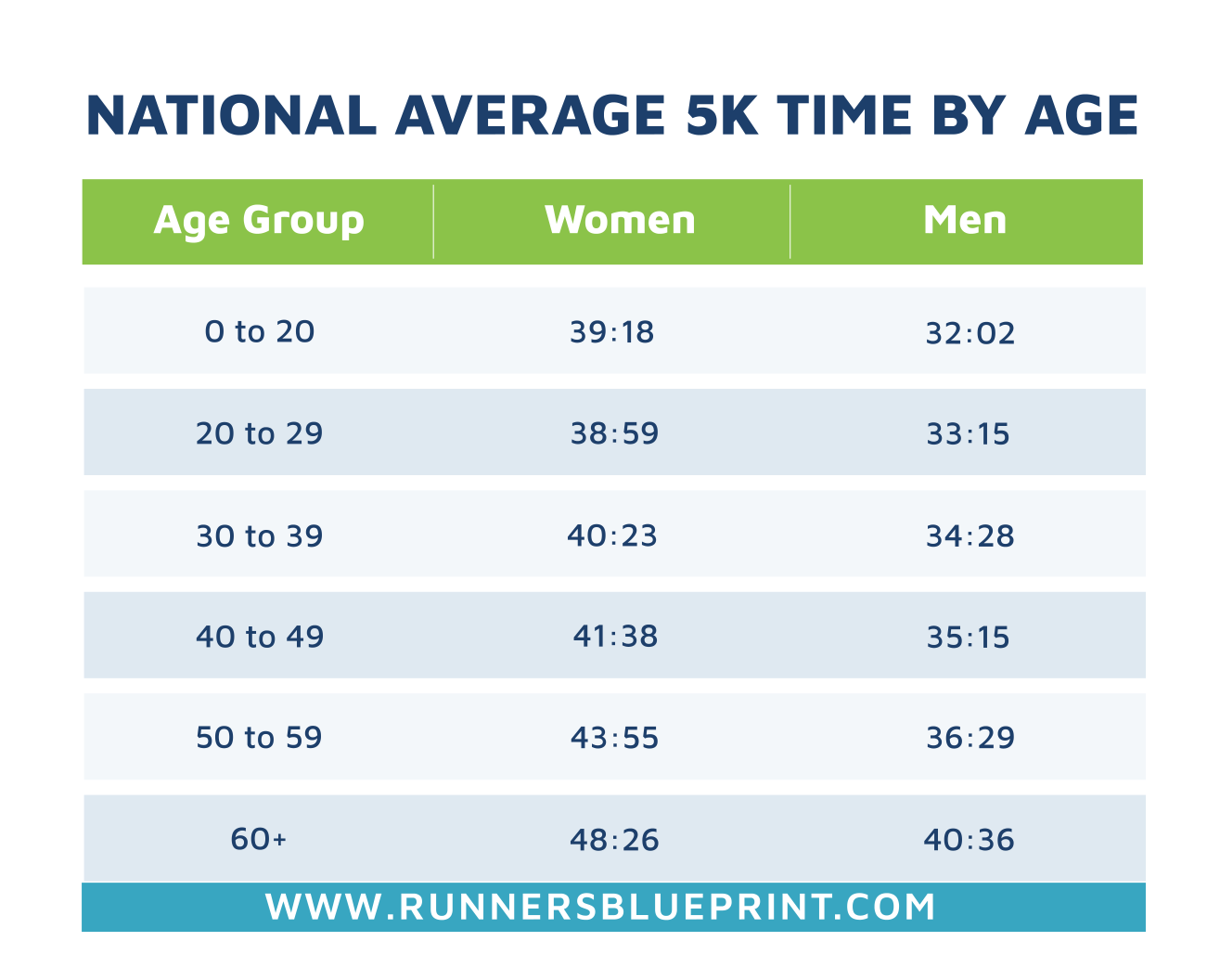
Alright, if you’re still wondering where you stand, let’s break down some real-world data. This comes from a 2018 race dataset, so it’s legit. Here’s a look at typical 5K finish times by age and gender:

average 5K time by age

Key Takeaways:

  • Women’s times tend to go up a bit as they age. For instance, younger women are around 39 minutes, while older women (60+) might hit 49 minutes.
  • Men’s times are faster across the board: younger guys finish around 31 minutes, and older men (60+) land around 41 minutes.
  • The gender gap is pretty consistent. Men are about 6-8 minutes faster on average. That’s because men tend to run about 10% faster than women on average.

How Age and Gender Affect Your 5K Times

Here’s something that comes up a lot: “Am I too old to get faster?” or “Why do my male friends crush my time?” Let’s break this down with some stats.

Gender:

Generally, men tend to run faster than women, with an average difference of around 10–11% in long-distance races (PMC.ncbi.nlm.nih.gov). For example, in the 20-29 age group, men typically finish a 5K in 33:19, while women average 38:44, which is about 14% slower.

Why?

Men typically have higher hemoglobin levels (helps transport oxygen), more muscle mass, and different hormones—all things that help with speed. But here’s the truth: women can and do narrow the gap with the right training. You’re not “less of a runner” because you’re not as fast as the guy next to you. Trust me on that.

Age:

We all know it’s true—your body will slow down as you age. But it’s not a major drop-off until you hit around 35. For most runners, speed declines about 1% per year after that.

So, if you’re 30 and running a 25-minute 5K, by age 50, you might be running around 27:30 if you keep up your training. After around age 65-70, the slowdown can speed up a little, around 1.5-2% per year.

A fun example:

If you ran a 25-minute 5K at 35, a 50-year-old in the same shape might hit around 28 minutes. By age 80, that 5K might be 33 minutes or more, depending on their shape. Of course, genetics, training, and overall health play a huge role, but you get the point.

Personally, I’m in my late 30s now, and I’ve noticed hill climbs and recovery take a little more effort than when I was 25. But with smart training, I’m still hitting some of my fastest times ever. Strength work has made a huge difference.

Realistic 5K Times for Beginners: It’s All About the Mindset

Alright, if you’re just starting out with running, it’s crucial to keep things real.

You can’t expect to run a 5K at some lightning-fast pace right away. Most beginners, honestly, will clock in anywhere between 30 and 60 minutes for that first 5K. And that’s totally fine.

Don’t sweat it. You’ll definitely see those times come down as you build strength and stamina.

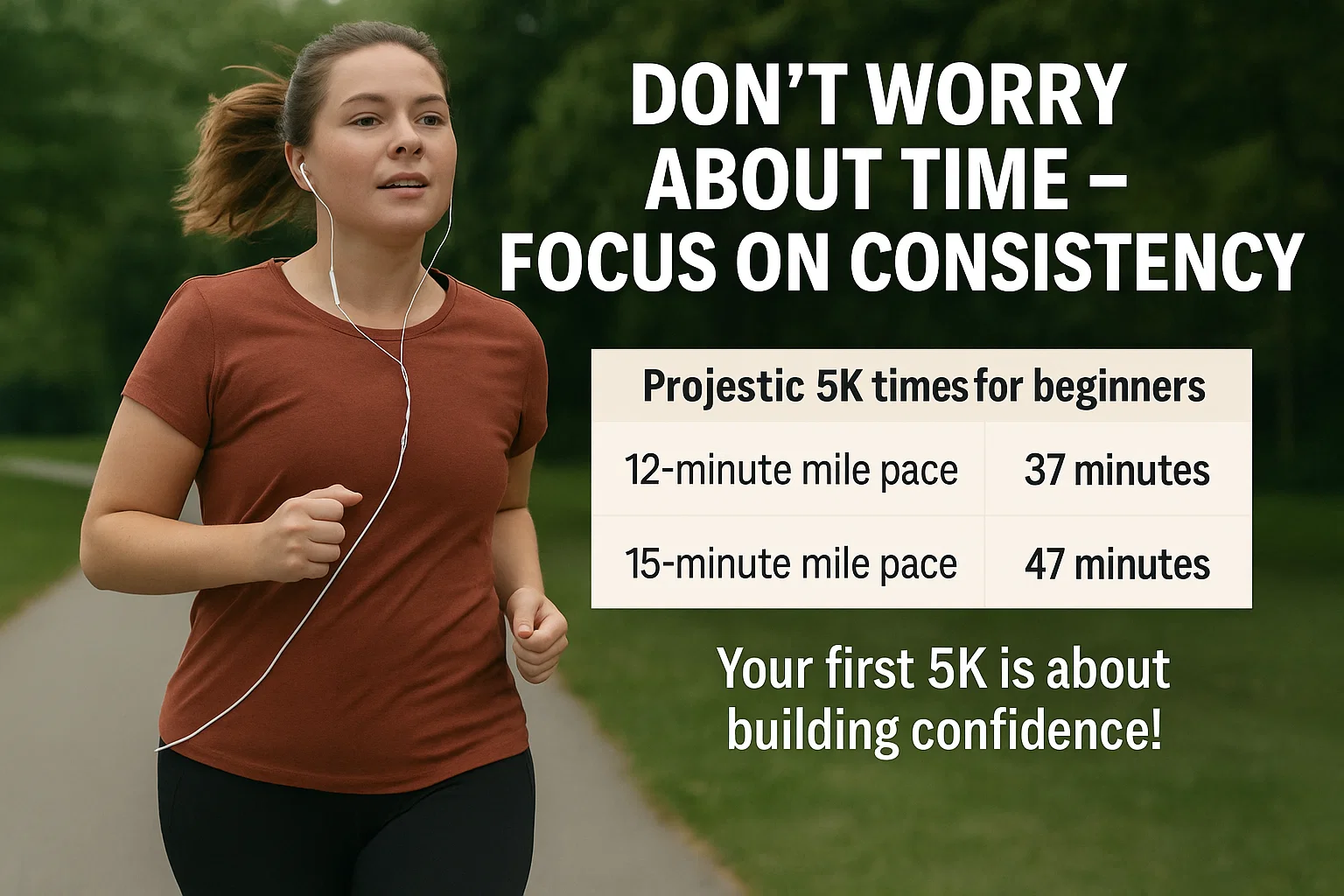
Here’s an easy way to break it down: if you can jog or walk a mile in 12 minutes, your 5K time (around 3.1 miles) will likely land around 37 minutes.

If your mile is more like 15 minutes, you’re looking at about a 47-minute 5K. Many Couch-to-5K programs aim to get you to a point where you can run/walk for about 30 minutes straight. This roughly equals a sub-30-minute 5K if you keep it up.

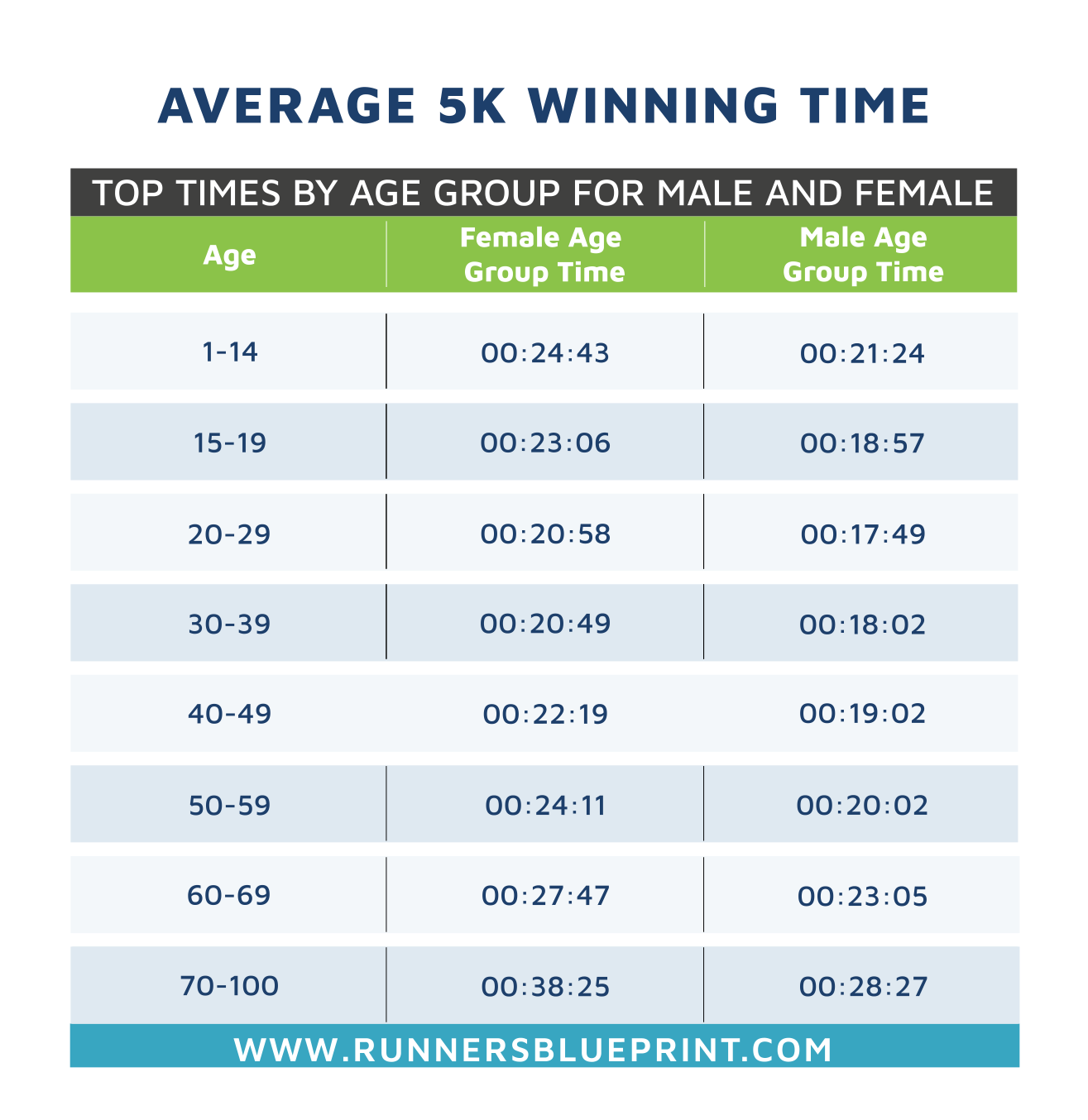
Curious about competitive 5K finish times? Check out this chart:

Average 5K winning time by age

Source

Keep it Comfortable:

Ease into it. Don’t try to sprint the first mile and burn yourself out. You want to be able to chat while running, so don’t push it too hard in the beginning.

I’ve had my moments where I went out too fast, gasping for air with two miles left. No fun. Don’t go out too fast… nothing’s worse than gasping for air and realizing you still have 2 miles left.

Walk When You Need To:

Walking doesn’t mean you’re failing. It’s part of the game. Many beginners use a run-walk plan (like run 4 minutes, walk 1 minute). You’re still moving forward, and that’s what matters. There’s no shame in walking if you need to. Coaches even suggest walking breaks to help maintain form and avoid burnout.

Focus on the Effort, Not the Clock:

Forget about obsessing over times. If you finished in 50 minutes but didn’t stop, that’s a huge win. It’s not about the time, it’s about turning pain into purpose. Every step forward is progress.

Instead of worrying about what “average” runners are doing, focus on hitting small milestones. They’re what push you to the next level. If you’ve been walking, a 45-minute 5K is a solid result. If you’re more experienced and already run at 30 minutes, maybe try hitting 28 minutes as your next goal. But always remember—the goal is to finish strong and be ready to crush the next one faster!

Training Tips: How to Improve Your 5K Time

Ready to crush that 5K and see a faster time? Here’s the deal—it’s not about luck or magic. Improving your 5K boils down to one thing: consistent, structured training. Let’s dive into the coach-style tips I’ve picked up over the years. I’ll mix in my own experiences with some real runner wisdom.

Mix Up Your Workouts

If you’re running easy every single day, you’re not going to get faster. Change things up and add some variety:

  1. Speed Intervals: Once a week, try doing short, fast repeats. For example, 6×400 meters (that’s one lap around the track) with a 200-meter easy jog in between. Or, 3×1 km at your goal 5K pace with 2-3 minutes rest. These workouts teach your legs to pick up the pace and help your heart handle lactic buildup. I remember when I did my first 5×400 workout—it was tough, but by the end of the month, I had shaved a full minute off my 5K time.
  2. Tempo Runs: These are key for building endurance. Aim for 15–20 minutes at a “comfortably hard” pace, which is about 75-85% of your max effort. It’s challenging but sustainable. Try running at a pace you could hold for a solid 30-minute run. This trains your body to clear out fatigue faster, and you’ll notice it on race day.
  3. Easy Long Runs: Once a week, go longer than your race distance. If your 5K is 3 miles, shoot for 4–5 miles at a relaxed pace. It helps build that aerobic base that’ll let you keep going without running out of steam. Even if you need to walk a little, that’s okay. The key is to build that endurance gradually.
  4. Hill Work: Don’t skip the hills. Throw in a hill sprint workout or pick a hilly route to run. Running uphill strengthens your legs and boosts your speed on the flat. I learned this lesson after trying a race with zero hills, then running a course with a ton of elevation. I could feel the difference in my performance, especially towards the end of the race.

Pacing: Don’t Go Out Too Fast

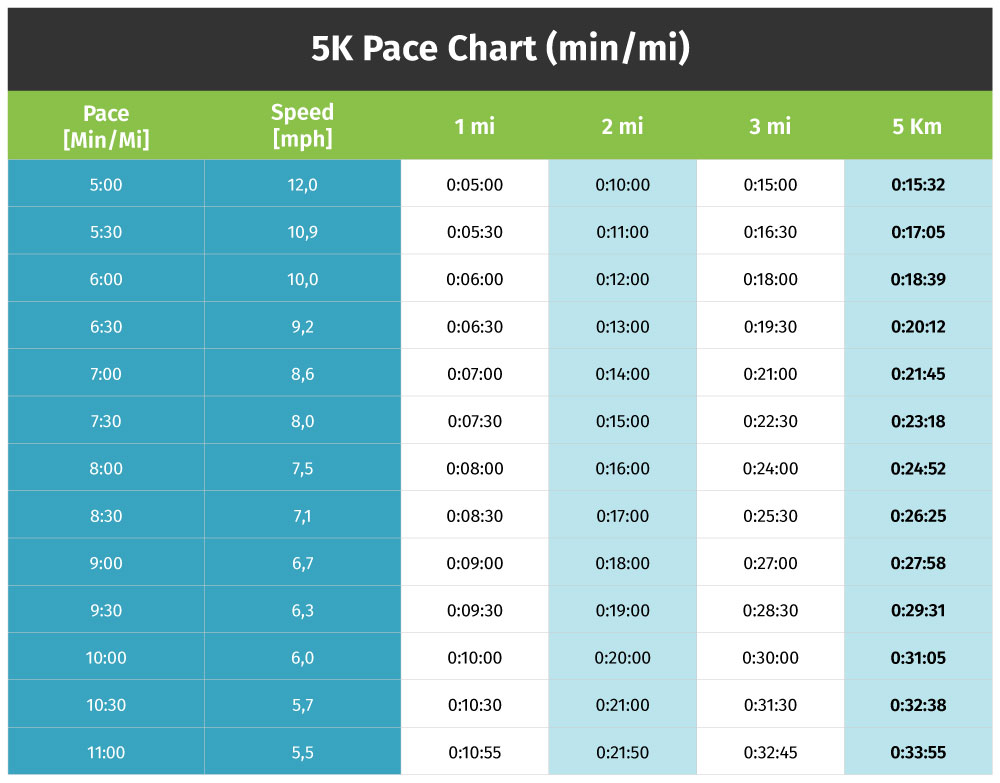
Let me say it again: pacing is everything. If you’re shooting for a 30-minute 5K (that’s a 9:40/mile pace), it’s critical to practice running at that pace. I made the mistake early on of going too fast at the start, only to burn out halfway through. You don’t need fancy gadgets for pacing—just use a watch or pace chart. The trick is to resist the urge to sprint from the start.

To give you an idea on how pace impacts your 5K time, check out this chart:

Average 5K pace in miles

Consistency is Key

Look, you’re not going to get faster if you only run once in a while. Consistency is what really makes the difference. It’s better to run short distances 4 times a week than do one huge run and then rest for the next five days. Stick to 3–4 days of running, and you’ll see the payoff. I know that when I started running back-to-back days without skipping, I saw a noticeable improvement in strength and stamina. But don’t overdo it—listen to your body.

Here’s a schedule that worked for me: start the week easy, build up the intensity in the middle, then ease off before a long run or speed workout.

Recovery: Don’t Skip It

You can’t keep pushing yourself if you’re not recovering properly. I learned that the hard way. Your body gets faster and stronger when it has time to recover. Trust me, sleep is a game-changer. I’ve noticed firsthand that when I don’t sleep well, my workouts feel 30% harder. So get your rest.

Also, don’t forget to stretch and foam roll after runs. It only takes five minutes, but it makes a huge difference in preventing injuries. I learned this lesson after dealing with shin splints during college. Since then, I make sure to foam-roll and do some leg swings post-run. It’s saved me countless injuries over the years.

Nutrition & Hydration: Fuel Up

Eat to run. It’s that simple. You need a solid, balanced diet to fuel your runs. Hydration is just as important—running while even a little dehydrated can slow you down. On race day, don’t try anything new.

Stick with what you know works, like a small carb snack an hour before you race (banana or oatmeal, for example). Keep it simple.

One runner on a forum mentioned how eating more protein and veggies and actually getting 8 hours of sleep made a huge difference in their performance. No need for fancy supplements—just good food and rest.

Mental Training: Train Your Mind

Running a fast 5K isn’t just about the legs—it’s mental, too. When the going gets tough, it’s your mind that will push you through. I often picture myself crossing the finish line strong when I feel the urge to quit.

Mantras like “one step at a time” or counting breaths really help during tough moments. By mile 2.5 of a 5K, it’s all mental. Plan ahead—find a mantra that works for you or set little targets like “run to the next mailbox.”

And don’t forget to smile or wave to the crowd. It helps keep the energy up, and honestly, it makes the race more fun.

Weekly Training Plan Example

If you’re running 4 days a week, here’s a solid plan to follow:

  • Monday: Rest
  • Tuesday: Speed work (intervals)
  • Wednesday: Easy run (20 min)
  • Thursday: Tempo run (20 min)
  • Friday: Rest or cross-train
  • Saturday: Long run (4-5 miles easy)
  • Sunday: Easy jog or rest

Each week, add a minute to your intervals or a block to your long run. Small, steady progress is the key.

AQ: All About the 5K

Q1: How far is a 5K in miles?

A 5K is approximately 3.1 miles.

Q2: What is the average time to run a 5K?

For recreational runners, the average time to complete a 5K is between 25 and 35 minutes.

Q3: How long does it take to walk a 5K?

Walking a 5K usually takes between 45 and 60 minutes, depending on your pace.

Q4: How can I improve my 5K time?

Incorporate interval training, tempo runs, and consistent mileage into your routine to build speed and endurance.

Q5: What’s a good goal time for a beginner 5K?

Many beginners aim to finish a 5K in under 30 minutes, though any pace that’s challenging but achievable is great.

Q6: How often should I train for a 5K?

Most runners train 3 to 4 times per week, including a mix of easy runs, speed work, and rest days.

Q7: Do I need special shoes for a 5K?

Yes—running-specific shoes with proper support and cushioning help prevent injuries.

Q8: Can I walk part of a 5K?

Absolutely! Many beginners use run-walk intervals to build endurance safely.

Q9: What should I eat before a 5K?

Eat a light snack with carbohydrates, like a banana or toast with peanut butter, 30–60 minutes before running.

The Bottom Line

The secret to improving your 5K time isn’t about running harder—it’s about running smarter. Sure, improving by 10% doesn’t happen in one week, but if you keep at it—building your volume and adding faster efforts—you’ll see the time drop. It’s all about consistency, patience, and letting your body adapt to the training.

Before your next training week, ask yourself: What’s one thing I can improve?

Whether it’s shaving a few seconds off your pace or adding one more interval, focus on that and see how you progress.

You’re more advanced? Then Try the following 5k training plans

How to Overcome Nerves on Your First Run: The Ultimate Guide for Beginners

Feeling nervous before your first run? Don’t worry, it’s normal!

I remember putting on my shoes for the first time and feeling really nervous.

I worried I wouldn’t last 10 minutes without stopping.

But it’s okay—everyone feels nervous before their first few runs. For some the feeling may even linger.

The key isn’t to ignore your nerves, but to manage them.

You just need to control them so they don’t hold you back.

Let me show you how to manage those nerves and feel more confident.


Nerves Are Normal

Nervous? That’s good! It means you care.

If you’re not a little nervous, you’re not challenging yourself enough. Nerves show that you care and are trying something new. Whether it’s your first run or your first race, nerves are there to help you, not hold you back.

Embrace those nerves—they can work in your favor!


Shift Your Focus

Nerves get stronger when you start thinking too much: “What if I can’t finish?” or “What if I’m the slowest?”

Forget about those worries. Instead, focus on each step, not the whole run.

Don’t worry about the end—just take it one step at a time. Break it into smaller parts, and you’ll finish before you know it.


Use Positive Self-Talk

The “I can’t do this” voice will pop up, I promise. That thought will come, but it’s completely wrong. When you hear that voice, fight back with: “I’m here. I’m doing this. I can do it.” Have a bunch of mantras you can rely on in times of need. 

I used to be scared to run in front of others, thinking they were watching me. Then I realized: people are too focused on their own run to notice mine. And honestly? You might even inspire someone else along the way.


Breathe

You’re running, your heart is racing, and you’re out of breath.

That’s normal.

But here’s a trick: slow your breathing down. Take slow breaths—in through your nose, hold, then out through your mouth. Do this for a minute, and you’ll feel much calmer.

Remember: you’re not just running, you’re breathing your way through it. Keep your breathing steady and strong!


Start Slow—You’ve Got Time

I get it, you want to crush it right from the start.

But trust me, that fast pace can wait.

You’re not in a race right now. Your goal is to get comfortable with running. Start slow and pick a pace where you can talk without getting too out of breath.

And hey, if you need to slow down to a brisk walk, go for it. There’s no shame in walking, especially when you’re starting out.


Visualize Yourself Finishing Strong

Alright, this might sound a bit strange, but trust me.

Take a minute and picture yourself running.

Visualize the path ahead, the sound of your shoes hitting the pavement, and how your body feels as you keep moving.

Then, see yourself finishing strong—crossing that imaginary finish line with a huge grin on your face. It works. Seriously. Mental prep is just as important as physical prep.


Don’t Overthink The Start

Listen, the hardest part is always the start.

You can talk yourself into a panic, but nothing’s going to happen until you actually put one foot in front of the other.

Stop overthinking it. Just put on your shoes, step outside, and start running.

That’s it. Simple. Don’t overthink it. Once you start, your nerves will go away.


Get Into A Routine

Nervousness will still pop up now and then, but trust me, the more you run, the easier it gets. Having a routine makes it so much easier to push through those nerves. The more you run, the easier it will be to handle those nerves before each run.

Here’s how to make running a habit.


Celebrate Every Run

So, you didn’t run a marathon on your first day?

No one expects you to. But guess what? You ran.

Whether it’s five minutes or five miles, you showed up—and that’s worth celebrating.

The first time I ran 30 minutes without stopping I Felt like I was on top of the world! So, celebrate every win, no matter how small.


FAQ: 

How do I overcome pre-run anxiety?

Pre-run anxiety is normal—even experienced runners feel it. The best way to handle it is by focusing on the steps, not the finish line. Take deep breaths, tell yourself something positive like “I’m strong, I’ve got this,” and remember, it’s just a run, not a race.

What if I can’t run the full distance on my first try?

Don’t sweat it! Everyone starts somewhere. If you can’t run the full distance, that’s okay. You showed up—that’s the win! Take breaks, walk if you need to, and focus on consistency, not perfection.

How can I calm my nerves before a run?

Breathing exercises are a game-changer. Breathe in deeply through your nose, hold for a second, and then slowly exhale through your mouth. This helps calm you down. Also, keep in mind: those nerves? They’re your body’s way of saying, “I’m ready!” Embrace it and use it as fuel to get you going.

How should I pace myself on my first run?

Start slow—like, really slow. You’ll thank yourself later. Focus on a pace where you can hold a conversation without gasping for air. It’s not about speed right now; it’s about building that endurance. Check out this post.

How do I avoid injury as a beginner runner?

It’s simple—warm up before, cool down after. Stretch before your run (think leg swings and lunges), and stretch afterward (hold those stretches). Also, listen to your body. If something hurts, don’t push through it. Start with shorter runs and build up gradually. This isn’t a race; it’s about pacing yourself for the long term.

How to Never Get Lost on the Trails

I’ve gotten lost on trails more times than I care to admit.

One time, I chased a random runner and ended up miles off-course.

Another time, I thought I could navigate a backwoods trail based on nothing but gut instinct.

Yeah, it didn’t end well.

I could keep going, but I think you get the idea—getting lost on the trail happens to the best of us.

The key? Knowing how to minimize the chances, staying calm when it does happen, and avoiding making the situation worse.

In this guide, I’m going to break down the best ways to avoid getting lost while trail running and how to stay calm if it happens.

The more you prep, the more you can focus on enjoying the run—and maybe even take that wrong turn with a little more confidence.


Start Slow and Pick Easy Trails

When you first start running on trails, don’t go for the toughest one right away.

I know it’s tempting to pick a cool, wild trail, but trust me—if it’s not marked well, you’ll get lost pretty quickly.

And I’m speaking from personal experience of course.

On one of my first trail runs, I turned the wrong way and ended up hiking up a mountain on a trail that looked like nobody had been there for years.

It was a rookie mistake.

Luckily, I found my way back, but it could’ve been much worse.

Here’s my advice: Stick to well-marked, easy-to-follow trails when you’re starting out.

You don’t want to waste your time worrying about getting lost, especially when you’re still learning how to find your way.


Use Your Phone 

It’s easy to trust your phone’s GPS or a fancy watch when you’re running, but out on remote trails, the signal can disappear pretty fast.

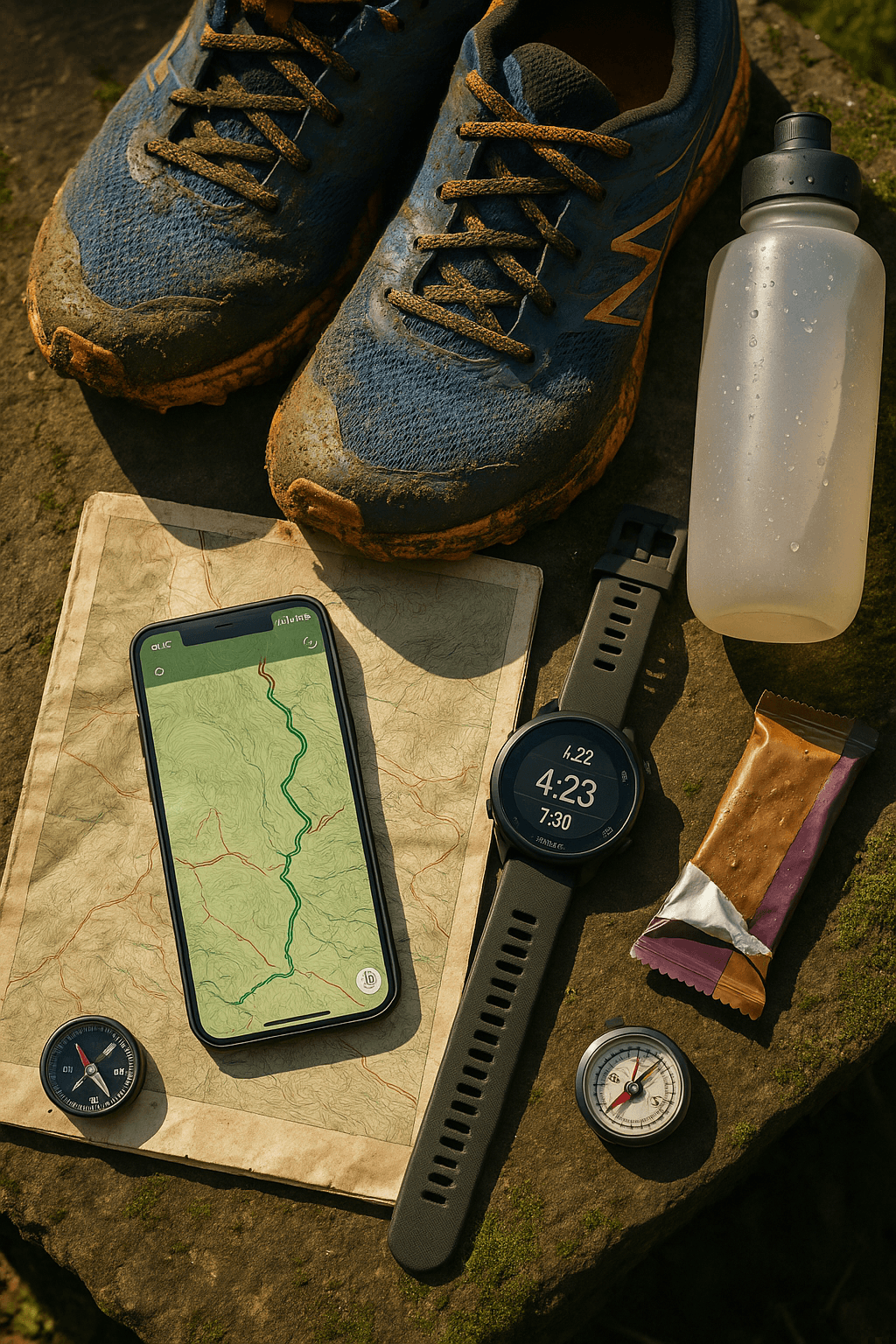
Here’s what I do: I use both a paper map and my phone.

Why? Because phones run out of battery. It’s always smart to be ready for anything.

Before you go, download your trail maps so you can still use them if the signal drops. Apps like Gaia GPS or AllTrails are great for this.

And if you have a watch, set up your route on it before you head out so you’re ready—even if you go off the grid.

One more tip: put a pin on your phone where you parked. That way, if you get lost, you can always find your way back to the car. It’s way easier than hoping your watch will magically save you. Safety matters!


Know the Landmarks 

I love trail running because it’s a chance to zone out and enjoy nature. But when you’re really into the run, it’s easy to lose track of where you are.

Here’s my rule: Pay attention to the first few minutes of your run.

Look for landmarks like big rocks, stream crossings, or big trees. These are the things that will help you find your way back.

If you remember these markers, even if you get a little lost, you can retrace your steps. It really makes a difference!


Stick to Marked Trails 

I get it—some people like a little adventure, but if you don’t know the area well, stick to the marked trails. If you’re unsure, stay away from animal trails or those tempting “shortcuts.” They might seem fun, but they can easily lead you into the unknown.

The more people there are on a trail, the more likely you’ll find someone if you need help. Stick to the popular trails, and you’ll be safe!


Plan Your Route Ahead of Time

Planning is key to not getting lost.

Before you head out, take 10 minutes to check your route on a map or app. It’s worth it!

When I first started trail running, I never planned, and I regretted it every time I got lost in unfamiliar places. A little planning can help you feel more confident and make your run a lot more enjoyable.


Tell Someone Where You’re Going

I know it sounds basic, but this is super important:

Always tell someone where you’re going and when you plan to be back.

Even if it’s just a short run, things can go wrong.

If you’re running alone, this is a must.

The last thing you want is for someone to get worried because they can’t reach you. A quick check-in can make all the difference if something goes wrong.


Stay Calm and Backtrack If You Need To

If you get lost, don’t freak out. Just stop, take a deep breath, and look around. 

Start by retracing your steps. I’ve been there—thinking I was totally lost, only to realize I missed a turn just five minutes ago.

Going back to where you last felt good can save you a lot of trouble and help you get back on track quickly.


Know When to Turn Back

Here’s the deal: Trail running isn’t about pushing yourself too hard. It’s about being smart.

If you feel like the trail’s getting rougher, the weather’s turning, or you’re just too tired—turn around. It’s not a failure, it’s being safe. You might think running just one more mile will be fine, but it could turn into a bad situation.

Knowing when to stop is part of staying safe and being ready for your next run. And hey, you can always try again when the conditions are better!


Stay Calm and Breathe

Trail running can be scary sometimes, especially when things start looking unfamiliar. Feeling nervous is normal, but panicking won’t help.

If you get lost, try to stay calm. It helps you think clearly and get back on track.

A trick I use is called box breathing: breathe in for four seconds, hold for four seconds, and breathe out for four.

It slows everything down and helps you think better.

Look around for landmarks like a big rock or a stream. They’ll help you figure out where you are. And if you’re in doubt, just stop, breathe, and think. It works!


Solo Running vs. Running with Friends

Running alone can be amazing. You get to clear your mind and enjoy the run. But solo running on unfamiliar trails can be risky.

If you’re not familiar with the area, it’s smart to bring a friend or run with a group. Having someone with you can help you stay on track, and if things go wrong, they’ll be there to help.

But running solo doesn’t have to be dangerous.

If you know the route, carry a map, and always tell someone where you’re going, you’ll be fine.

Solo runs are great if you’re on familiar trails, but if you’re on unfamiliar ones, it’s smart to bring someone with you.


Hydration and Extra Supplies

I might sound like a broken record but proper hydration is really important—especially on the trail.

Sometimes the trail will surprise you. You don’t want to get stuck without enough water or snacks, especially if your run takes longer than expected.

Always carry extra water, even if you think you won’t need it. Being thirsty in the middle of nowhere is no fun.

Pack snacks too, like energy bars or gels. They’ll keep you going. And if you’re deep in the woods, bring a water filter or purification tablets.

If you run out of water, you can grab some from a creek without worrying about getting sick. It’s always better to be safe than sorry.


Talking to Locals and Trail Communities

This one’s huge: Talk to locals who know the trails. I’m serious, don’t skip this step.

There are tons of online forums, local groups, and Facebook communities where experienced trail runners share their tips. They know the best routes and can warn you about tricky spots.

I’ve learned so much from talking to locals, and sometimes they’ll even offer to run with you. Running with someone who knows the trail makes everything less stressful and more fun.

Plus, you get all the insider info.


Conclusion:

Getting lost on a trail is just part of the adventure, but it doesn’t have to be scary. With a little planning and the right gear, you can stay safe and enjoy every step.

Whether it’s your first trail run or your hundredth, remember—it’s not just about finishing the run; it’s about getting there safely. So lace up, get out there, and enjoy exploring the trails!

How to Beat Muscle Tightness After Running

You’ve just finished that hard run, and now your muscles are tight as hell as if they’re made of concrete.

If you’ve been running for any length of time, you know exactly what I’m talking about.

It feels like your legs aren’t even yours anymore, right?

Like they belong to someone who hasn’t run a step in their life.

And it’s not the best feeling.

Worry no more.

In this article, I’ll break down some of my favorite strategies to help you prevent muscle tightness after running.

Why Do Muscles Get Tight Anyway?

Alright, let’s get to the bottom of why your muscles feel super tight post-run.

Here’s the deal: muscle tightness is your body’s natural response to the physical stress of running.

When you run, your muscles contract and stretch repeatedly, which leads to tiny tears in the muscle fibers.

This might sound a bit scary, but it’s completely normal.

After a run, your body begins to repair those tiny tears, making your muscles stronger and more resilient in the process.

The tightness you feel is a sign that your muscles are getting stronger, but it also means they need a little extra care to recover properly.


How to Prevent Muscle Tightness in the First Place

It’s much easier to prevent muscle tightness than to fix it once it’s already set in. Let me share with you my best best strategies to help you minimize tightness and muscle stiffness before it even happens.

1. Warm-Up Properly Before Your Run

Warming up is essential. It’s not just about preparing your body for the workout ahead; it’s also about getting your muscles and joints ready for the stress of running. Dynamic stretches like leg swings, walking lunges, and high knees will help loosen up your muscles and get blood flowing to your legs.

2. Don’t Skip Your Cool-Down

After you finish your run, make sure you cool down. I know, you’re probably tired and just want to sit down, but taking a few minutes to stretch and cool down can help prevent muscle tightness.

Walk for a few minutes to gradually bring your heart rate down and stretch out your quads, hamstrings, and calves.
Trust me, your muscles will thank you later.


Post-Run Recovery: Fixing Tight Muscles

Even with the best warm-ups and cool-downs, you might still experience some muscle tightness.

Don’t worry—that’s normal!

Here are a few recovery techniques to help loosen those tight muscles and speed up your recovery.

1. Foam Rolling

Foam rolling is one of the best ways to release muscle tightness and improve blood flow to your muscles. By rolling out your quads, hamstrings, and calves, you can target specific areas that may have tightened up after your run.

It might hurt a little at first, but trust me, it’s worth it. Try rolling for 1-2 minutes on each muscle group to release tightness and improve flexibility.

2. Stretching

Stretching is a great way to lengthen your muscles post-run. Focus on holding each stretch for 30 seconds to a minute. Some of my favorite post-run stretches are:

  • Hamstring Stretch: Sit on the floor and reach for your toes.
  • Quad Stretch: Stand on one leg and pull your other foot toward your glutes.
  • Calf Stretch: Place your hands on a wall and step one leg back, pressing your heel into the ground.

When to Seek Professional Help

While muscle tightness is usually manageable on your own, sometimes you might need professional help.

If you notice that tightness persists for several days or feels like something more than just typical soreness, it might be time to see a physical therapist or a sports chiropractor. Don’t try to run through pain.

They can assess your form, give you targeted exercises, and help you get back to running without pain or tightness.


Quick Tips to Keep in Mind

  • Hydration is Key: Drink plenty of water to help flush out toxins and keep your muscles hydrated.
  • Rest and Recovery: Don’t skip your rest days. Give your muscles time to recover and rebuild.
  • Massage Therapy: Consider a post-run massage to help release tension and improve circulation.

Conclusion: Don’t Let Tight Muscles Hold You Back

Muscle tightness can be a real pain, but with the right recovery strategies, you can keep it in check and stay on track with your running goals.

Remember to take care of your body with proper warm-ups, cool-downs, and recovery.

If you experience muscle tightness, don’t freak out—it’s a normal part of the running journey.

Follow the tips I’ve shared, and soon enough, you’ll be running pain-free and feeling stronger with each step.

Keep pushing and stay consistent.

How to Survive Your First Month of Running: Real Tips for New Runners (No BS)

I Hate to Discourage Anyone, But Running Sucks at First

I’m not gonna sugarcoat it.

When I started, every step felt like my legs were on fire and my lungs were about to collapse.

My body was like, “What the hell are you doing, dude?”

But here’s the thing: every time you get out there, even when it feels miserable, you’re becoming a runner.

Every mile you’re logging is building the runner you’re becoming.

Let me share with you my best tips on how to survive your first month as a runner – speaking both as a runner and running coach.

Sounds like a good idea?

Let’s get to it.


Why Soreness is Normal 

Alright, let’s talk about why running as a beginner can really suck.

If you’re sore after your first few runs, good news—you’re doing it right. 

Here’s the truth: soreness isn’t a sign that you’re doing something wrong. Far from it. It’s your muscles saying, “Hey, we’re not used to this!”

Seriously. If you’re not sore, you’re either a hidden marathoner or just one of those annoying people who are basically born with runner’s legs.

For the rest of us, soreness is part of the deal. 


Why Do You Get Sore?

Running uses different muscles, movements, and forces than most other activities, so when you’re just starting out, your body’s catching up.

Expect tight calves, sore hamstrings, maybe even a stiff back.

It’s normal, and it’s all part of the process. But don’t freak out though, it’s all part of the process. You’ll be laughing at this in a few weeks.

It’s uncomfortable, no doubt.

But that discomfort is where the magic happens.

Now let’s get into how to survive it.


How to Combat Fatigue Without Burning Out

You’re gonna feel wiped out. Like, “I just ran two miles and now I need a nap” wiped out. I get it. You’re putting in the work, but your body’s still like, “Uh, nope.” 

Here’s the deal—your body is still figuring out how to use energy efficiently.

Eventually, you won’t feel like you’ve been hit by a bus after a 20-minute jog.


Take It Easy on Rest Days

As your coach, I’d urge you to take it easy on rest days.

No, you’re not being lazy. Your body needs that time to recover.

And trust me, those rest days are gold. Skip them and your legs will let you know. It’s recovery, not procrastination.


Manage Your Expectations

There’s an old saying that disappointment comes from not planning right. So if you manage your expectations, you’re setting yourself up for success.

Here’s the deal: after your first month, you might not be running like an Olympian.

And that’s totally normal.

I know you want to be fast, but remember—this isn’t a sprint to the finish line. It’s about building a solid foundation. Stick to the basics: be consistent, and trust me, the speed will come in time.


Mental Struggles Are Part of the Game

This might surprise you, but the hardest part of running isn’t your legs—it’s your mind.

And trust me, I’ve been there myself and worked with countless beginners who feel the same way.

There will be days when you just want to quit. Your legs will feel like lead, and your brain will be screaming, “Why the hell did I sign up for this?”

But here’s the truth: it’s normal.

Every runner goes through it.

Don’t let those mind games mess with you. Push through, and keep going. You’ve got this.


Goals Matter

Set goals. But not the “I wanna be faster” kind—those are too vague.

I’m talking about SMART goals: Specific, Measurable, Achievable, Relevant, and Time-bound.

These kinds of goals will keep you focused and grounded, and they make the process feel less like a never-ending grind.

My best advice? Start small. Like, “By week four, I want to run 10 minutes without stopping.”

And when you hit that? Celebrate it. Then, set a new goal. Keep pushing forward.

Progress is progress, even if it’s a small win.


You’ll Experience New Body Oddities

I hate to sound all sorts of alarms but running has its ugly side.

Chafing.

Blisters.

Black toenails.

If you haven’t had any of these yet, just wait.

I’m not trying to scare you, but it’s part of the journey.

You’re putting your body through a lot, and sometimes, it decides to throw some weird stuff your way.

Here’s how to avoid some of these issues:

(1) get fitted for a good pair of shoes, and

(2) make sure you’re wearing moisture-wicking socks.

If you’re dealing with chafing, invest in some anti-chafe cream—it works wonders.


Your Body Will Start Changing—But Slowly

Don’t expect to wake up with “runner’s legs” overnight. This takes time.

After a month or so, though, you’ll start noticing your posture improving, your muscles toning up, and your energy levels going up. It’s not an instant upgrade, but it’s happening.

If you want to speed up the muscle-building process, add some strength training to your routine.

Squats, lunges, and core exercises will complement your running and give you those toned legs you’re after.


Quick Takeaways:

  • Start slow, focus on consistency, not speed.
  • Don’t skip rest days – recovery is just as important as the run.
  • Celebrate every small win, it adds up.
  • Embrace soreness – it’s part of the journey.
  • Set small, achievable goals, and watch your progress skyrocket!

Conclusion: 

Listen, I know it’s not easy right now.

But you’re doing it.

Every time you lace up, you’re getting closer to that goal. Keep going, stay consistent, and remember this: every step you take is a step closer to becoming the runner you’re meant to be.

Keep pushing, and soon enough, 3 miles will be a breeze. Just keep showing up.

The Guide to Pre and Post Run Nutrition – Meal Ideas For Runners

post run nutrition

Let’s get something straight right out of the gate:

Your food is part of your training plan. Not optional. Not “extra.” It’s fuel, recovery, and longevity—all in one.

I’ve been coaching runners for years and I’ve lived it myself: show up under-fueled, and you’ll crash. Skip your post-run recovery meal? You’ll feel like roadkill the next day.

Think of your body like a high-performance machine. You wouldn’t put junk gas in a race car, right? Same goes for you. If you’re serious about getting stronger, faster, and staying in this game long-term, then you’ve gotta start treating your nutrition like it matters.

This isn’t just for elite runners. It’s for all of us—whether you’re training for a marathon or logging a few stress-busting miles after work. Dial in your pre- and post-run meals, and your performance will follow.

Let’s break it down…

Why Pre- and Post-Run Nutrition Matters

Fuel = Performance + Recovery

Food isn’t just calories. It’s power, plain and simple.

If you run on empty, your blood sugar drops, your energy tanks, and you might start seeing stars halfway through the workout. Been there. It’s not fun.

There’s even research to back it up: showing up to a run without food in your system can lead to symptoms like dizziness, weakness, confusion, or even blurred vision—classic low blood sugar. That’s a fast track to bonking.

And after the run? That’s when recovery starts. Your muscles are hungry. Your glycogen stores are drained. If you don’t feed your body the right stuff within an hour, you’re shortchanging your gains.

Here’s the science:

  • Experts recommend eating carbs + protein in a 3:1 or 4:1 ratio within about 30–60 minutes post-run. That’s your glycogen window.
  • Miss it, and your muscle repair slows down.
  • One study found that if you wait just a couple hours? You cut your glycogen recovery in half.

Translation: you’ll be sore, tired, and probably dragging tomorrow.

Underfueling Isn’t Just Sloppy. It’s Risky.

Let me share a couple runner stories that hammer this home:

One woman tried a 7-mile run after having nothing but coffee and water. She finished… but later that day? Fainted in a grocery store. Paramedics said she was fine—except for running on zero fuel. Big lesson learned the hard way.

Another guy went all day on maybe 600 calories, then hit the gym. Nearly passed out mid-squat. His takeaway?

“Yeah, you need to eat something. A banana. Anything.”

These are everyday runners. Just like you and me.
Underfueling can sneak up and flatten you.

So yeah—your nutrition plan is as important as your long run. Period.

What to Eat Before a Run

Now let’s get into the meat of it. Or the oatmeal, in this case.

Why Pre-Run Fuel Matters

Your pre-run meal isn’t about stuffing yourself. It’s about topping off the tank so you’ve got fuel ready to go.

Skip it, and your body taps out early.
Hit it right, and you’ve got steady energy, less fatigue, and a better shot at hitting your paces.

Timing is Everything

Here’s the simple cheat sheet:

  • Big meal? Eat it 3–4 hours before your run.
  • Small meal? Give it 1–2 hours.
  • Quick snack? 30–60 minutes out is usually fine.

Everyone’s gut is different. I’ve seen runners eat a full breakfast and run 45 minutes later with no problem, and others who need hours or they’ll cramp up like crazy.

Test it during training—not race day.

How Much Do You Need?

For a regular training run, you’re looking at 100–300 calories of easy-to-digest carbs. That could be:

  • Half a bagel with peanut butter
  • A banana and a handful of pretzels
  • A small smoothie
  • A sports drink or energy chew if your stomach’s touchy

If you’re heading out for a long run or speed session, aim for the higher end. Or eat a full meal earlier, like I do.

Coach’s Tip

During marathon training, I’d wake up 3–4 hours before long runs, eat something real (usually oatmeal with some fruit and nut butter), then go back to bed. Not glamorous, but it worked.

Your gut is trainable—just like your legs. Teach it to handle fuel early and often, so race day isn’t a disaster.

What If You Run Fasted?

Short, easy runs? Sure, you might get away with it. I do recovery jogs fasted sometimes. But if you’re pushing the pace or going longer than 45 minutes, I’d highly recommend eating something.

A registered dietitian I trust put it this way:

“Even a small snack can reduce injury risk, especially for women. Performance improves when you’re not running on fumes.”

You don’t get a medal for suffering through an empty workout.
Fuel up. Feel better. Train smarter.

Best Pre-Run Foods & Snacks

Fuel smart, run strong. Bonk, and you’ll learn the hard way.

Here’s the deal: what you eat before a run can either fuel you like a champ… or leave you dragging your sorry butt by mile 3. I’ve been there. I’ve tried “fasted runs,” mystery protein bars, even spicy leftovers once (don’t ask). None of those ended well.

If you want steady energy, zero gut drama, and to avoid crashing mid-run, stick with carbs, keep it simple, and eat what your body already knows.

Here’s the no-BS breakdown:

Banana + Nut Butter = Classic Combo That Works

Bananas are basically nature’s energy gel. Fast carbs, potassium (helps fend off cramps), and easy on the stomach. Add a tablespoon of peanut or almond butter if you’ve got an hour to digest. That little fat-protein boost keeps the engine humming.

Real talk: I eat this combo 60 minutes before most of my morning runs. It never fails.
One medium banana has ~27g of carbs and over 400mg of potassium. Fuel + function.

Toast or Bagel with Jam/Honey

This one’s been a go-to for runners forever. Grab a slice of whole grain toast or half a bagel, throw on some jam, honey, or a thin layer of peanut butter. Boom — instant pre-run fuel.

Heads-up: skip the butter or heavy cream cheese. You’re running, not hosting brunch. Keep it light.

Oatmeal with Fruit

Oats = slow-burn carbs. That means steady energy, not sugar spikes. Great for longer runs, just give yourself time to digest. Toss in berries or half a banana. A drizzle of honey? Even better.

Pro tip: If your gut is sensitive, skip the extra fiber bombs like flax or chia before your run. Save that stuff for after.

Greek Yogurt with Honey or Berries

Want a little protein before heading out? A few spoonfuls of Greek yogurt with fruit or honey can do the trick. This one’s better about 1–2 hours pre-run, especially if you’re doing something longer.

Caution: If dairy wrecks you, skip it. Don’t roll the GI dice before your tempo session.

Smoothie (Light & Fast)

Not a big eater in the morning? Go liquid. A banana, some berries, a splash of almond milk, maybe a scoop of protein if you’ve got more time — blend it up. Drinkable energy.

Just don’t overload it. You want fuel, not a full-on milkshake sloshing in your gut by mile 1.

Energy Bar, Chews, or Gels (When You’re in a Pinch)

No time? Grab half a granola bar, a few chews, or a gel 10–15 minutes before the run. These are made to digest fast and keep you going.

One runner I coached swore by applesauce pouches or graham crackers if she was short on time. Do what works — but test it on a training run first. Don’t try new fuel on race day unless you enjoy gambling with your intestines.

Other Real Snacks That Work

  • A small apple + a few walnuts
  • Handful of pretzels
  • Half a cup of dry cereal
  • Granola bar
  • Rice cake with jam
  • Small baked sweet potato
  • English muffin with PB and a splash of OJ
  • Toast and jelly with coffee (⚠️ Caffeine helps performance, but also makes some folks sprint… to the toilet)

Bottom line: Your pre-run food should be familiar, light, mostly carbs, and easy to digest. Never try something new before a big race or a long run. This is one place where playing it safe pays off.

Real Runner Story: “I Don’t Eat Before Long Runs” (Big Mistake)

Had a guy I coached — let’s call him Mike. Swore he didn’t need breakfast before his long runs. Said he felt “fine.” That is, until mile 8 of a 12-miler when he bonked hard and ended up nearly blacking out on the sidewalk. I had to drive out and rescue him.

After that? Banana and toast before every run. His pace improved, his energy held steady, and he hasn’t called me for a mid-run pickup since.

Moral of the story? Being too lazy to eat might save five minutes… but could cost your whole run.

What to Eat After a Run

Recovery starts the second you stop your watch.

Just because the run’s over doesn’t mean your job’s done. Post-run fuel is where you either rebuild stronger — or stay sore and sluggish. That window after your workout? That’s prime time to restock, repair, and hydrate. If you skip it, you’re making your next run harder than it has to be.

Let’s break it down like I explain to my athletes after a tough session.

Why Post-Run Fueling Matters (And Isn’t Just Optional)

Running drains your gas tank — especially the long ones and those high-effort sessions. Your muscles burn through stored carbs (glycogen) and get micro-tears in the process — which is how they grow back stronger… if you feed ‘em right.

So, here’s your 3-part mission every time you finish a run:

  • Refuel with carbs to restock glycogen
  • Repair muscles with protein
  • Rehydrate with fluids and electrolytes

Skip any one of those, and you’re not recovering right.

Coach’s Corner: Science says pairing carbs with protein after endurance workouts boosts muscle repair and restocks energy way better than either one solo. That 3:1 or 4:1 carb-to-protein ratio? That’s not just some Instagram myth — it’s backed by research. Something like 30–40 grams of carbs with 10 grams of protein is money for most runners post-run.

When to Eat: Don’t Wait Too Long

You’ve probably heard about the “anabolic window.” Yeah, your muscles won’t wither away if you don’t eat exactly 32 minutes post-run — but there is truth to timing.

Try to get something in within 30 to 60 minutes of finishing. That’s when your muscles are basically yelling, “Feed me!” Delay more than 2 hours? You can cut glycogen replenishment by nearly 50%. That’s half your recovery left on the table.

And if you can’t stomach solid food? No stress. I’ve had runs where even the thought of chewing felt wrong. In that case, go for a smoothie, juice, chocolate milk — anything liquid that gets sugar and protein in your system fast.

Once the stomach calms down, follow it up with a full meal.

Hydration: The Forgotten Pillar

Post-run nutrition isn’t just about what you eat — it’s also about what you drink. You sweat out a lot more than just water. You lose sodium, potassium, magnesium — and if you don’t replace those, recovery gets rough.

Here’s a simple rule:

Drink 16–24 oz of fluid per pound lost during the run.
(Pro tip: weigh yourself before and after long runs to really dial this in.)

If you were dripping with sweat? Add electrolytes. Sports drink, coconut water, salty snack — even chocolate milk covers both bases.

Remember the 3 Rs After Every Run:

  • Repair (Protein)
  • Replenish (Carbs)
  • Rehydrate (Fluids + Electrolytes)

Here’s how I do it: after intervals, I chug water with a pinch of salt, eat a banana, and down a Greek yogurt or quick protein shake. Doesn’t have to be fancy. Just consistent. Makes a huge difference the next day.

Fast Recovery Snacks for That First Hour

Let’s keep it real — you’re probably not sitting down for a full meal right after a tempo session. That’s where a quick snack comes in. Here are a few tried-and-true recovery options runners actually use (and love):

Chocolate Milk

This one’s legendary for a reason. Roughly a 4:1 carb-to-protein ratio, loaded with potassium, calcium, sodium — and it’s cold and easy on the stomach.

  • One 8-oz glass = ~26–32g carbs, 8–10g protein
  • Bonus: It hydrates and refuels at the same time

One of my athletes swears by it — calls it “liquid gold” after track workouts. She doesn’t miss a single recovery window.

If dairy agrees with you, it’s a slam-dunk post-run drink.

Fruit + Protein Combo

Keep it simple. Grab a banana and a string cheese. An apple with a handful of almonds. A clementine and a jerky stick. You get the idea.

  • Fruit = quick sugar, vitamins, hydration
  • Protein source = muscle repair, satiety

I keep an apple and some almonds in the car when I drive to trailheads. No cooler needed, no mess.

Other combos I’ve seen work:

  • Grapes + cheese stick
  • Dried apricots + walnuts
  • Banana + scoop of peanut butter

If it travels well, doesn’t upset your stomach, and hits the carb-protein mark — it’s a winner.

Eat Like You Mean It – Post-Run Fuel That Actually Works

Look, your body just crushed a run. Whether it was a shakeout jog or a gut-busting long run, what you eat next makes or breaks your recovery. You don’t have to whip out a gourmet cookbook — but you do need to get carbs and protein in your system, sooner than later.

Here’s how to keep it simple, smart, and runner-friendly.

Quick Recovery Snacks (ASAP After Your Run)

This is your “get-something-in-you-now” moment. You’ve got a 30–45 minute window where a quick snack can help kickstart repair and refuel your tank. You’re not making a 5-course meal here — just something to tide you over until your next real one.

1. Yogurt or Cottage Cheese + Fruit

Fast. Tasty. Hits the carb-protein combo like a champ.

  • A cup of Greek yogurt gives you 15–20g of protein.
  • Add some berries, a spoon of honey, or jam = carbs + flavor.
  • Cottage cheese with peaches or pineapple? Old-school classic.

No time? Grab a drinkable yogurt smoothie and go. Recovery doesn’t need a kitchen.

2. Smoothie or Protein Shake

When chewing feels like a chore, drink your nutrients.

My go-to?

  • 1 cup milk (or almond milk)
  • 1 scoop protein powder (20g)
  • 1 banana
  • 1 tbsp cocoa

Tastes like dessert, hits around 30g carbs, 25g protein.

Add spinach, berries, peanut butter — make it yours. Or use a premade recovery shake. Those 4:1 carb-to-protein mixes? Sure, they work. But honestly, regular food gets the job done too.

3. Trail Mix or Energy Bar

Need crunch? Go solid.

  • Trail mix = dried fruit + nuts = carbs + protein + healthy fat.
  • Energy bar? Aim for 10+ grams protein, and some carbs.
  • Heck, even a granola bar + beef jerky works in a pinch.

One runner told me she once skipped her post-run snack, felt woozy, and nearly passed out driving to get food. Now she always keeps a bar in her glove box.

Lesson: Don’t run on empty. Ever.

Pro Tip

If you’re not getting a real meal anytime soon, aim for 200–300 calories in that first snack. A quick sports drink + protein bar can save your legs and brain from going into shutdown.

Sweet Tooth or Salt Craving?

Post-run, some folks want a fruit smoothie. Others want pretzels and turkey. You do you.

  • Sweet? Yogurt, fruit, chocolate milk, or protein pancakes.
  • Savory? PB&J, hummus with pretzels, turkey + orange slices.

Rule of thumb: If it’s got carbs and protein, you’re good.

Best Post-Run Meals (Within 1–2 Hours) 🍳🍲🌮

Once you’ve knocked back your quick snack, it’s time for a proper refuel. This is where you rebuild your energy stores (glycogen), fix up those muscle fibers, and keep your engine humming for tomorrow’s workout.

Here are my tried-and-true meals that keep runners recovered and ready:

Lean Protein + Starchy Carb + Veggies

The classic formula that never fails.

  • Grilled chicken + sweet potato + veggies
  • Salmon + brown rice + broccoli

Sweet potatoes are a runner’s secret weapon — loaded with carbs, potassium, and flavor. Try one topped with Greek yogurt and a pinch of salt — trust me, it’s weirdly good.

Or stir-fry beef or tofu with veggies over quinoa or rice. Bonus points for seasoning with soy sauce and ginger (hello, sodium and anti-inflammatory kick).

Eggs + Toast (aka “Anytime Breakfast”)

Perfect for post-morning runs — or if you’re the kind of runner who loves breakfast all day.

  • Scramble 1–2 eggs with some egg whites
  • Pair with whole-grain toast, maybe some avocado or fruit

Want more flair?
➡️ Make a breakfast burrito with eggs, salsa, potatoes, cheese — all wrapped up and ready to devour.

Pasta + Protein + Veggies

Pasta isn’t evil. Pasta is fuel.

  • Go with whole-grain if it doesn’t wreck your gut. Regular is fine too.
  • Add chicken, turkey, or plant-based meat.
  • Toss with marinara, pesto, or olive oil — keep the cream sauces for date night.

Spinach, peppers, mushrooms — whatever veggies you like, toss ’em in.

Grain Bowls That Hit Every Macro

Easy to prep, easy to love.

  • Start with quinoa, rice, or farro.
  • Add black beans, roasted veggies, diced chicken or tofu.
  • Top with a bit of cheese, avocado, or olive oil.

Feeling extra hungry? Build a burrito bowl — rice, beans, salsa, grilled meat, corn, avocado.
Race day? Just go full burrito. You earned it.

Sandwiches & Wraps

Simple, fast, and super portable.

  • Turkey sandwich on whole-grain bread + piece of fruit = ✔️
  • Chicken wrap with spinach and cheese = ✔️
  • Tuna salad on toast, or egg salad if you’re into that vibe

Vegetarian? Go with PB&Banana on whole wheat. That combo hits the 4:1 recovery ratio better than some overpriced sports drinks.

“Breakfast” Recovery Feasts

Morning runner? Here’s your recovery brunch:

  • Oatmeal topped with banana, nuts, protein scoop = fuel city
  • Cereal with milk + berries = high-carb + protein
  • Protein pancakes with almond butter + jelly? Chef’s kiss

Tip: You can sneak protein powder into the batter. I do it all the time. Feels indulgent, fuels like a champ.

Different Strokes: Real Runner Fueling Stories

Let’s be straight — fueling is personal. What works for your buddy might wreck your stomach. I’ve coached runners who swear by nothing but coffee before a run, and others who need a mini buffet to even lace up their shoes. There’s no one-size-fits-all here, and that’s the point.

Chocolate Milk & Cottage Cheese?

Take Reddit runner CaffeineHangover. Guy doesn’t eat a thing before his early runs — says anything in his stomach turns on him by mile 3. Instead, he crushes his post-run routine: real chocolate milk, some cottage cheese, and then a full breakfast after he showers. That’s what keeps his engine running.

It works because it’s what his body likes.

From Fasted to Fueled

Then there’s the 46-year-old half-marathoner I read about. She was doing fasted runs for a while, but once she started piling on the miles, the hunger hit hard — and recovery got sloppy. She got smart, went to a sports dietitian, and was told to start eating before her runs. They worked together to “train her gut” (yep, that’s a thing) to handle fuel mid-run.

Guess what? Her energy shot up. Recovery improved. And she stopped dragging herself through workouts like a zombie. Fuel made the difference.

The Ultra-Fuel Freaks

And then you’ve got ultra-runners — different beasts altogether. I’ve seen folks down PB&J, chips, even strips of bacon during 50-milers. Their stomachs are forged in fire and years of long-run fueling practice. They have to eat big and often — burning thousands of calories over hours demands it.

The Takeaway?

Find your groove. As one wise runner posted:

“Doesn’t matter how far someone else can go without food. Do what makes you feel good.”

Pre-run, post-run, or mid-run — it’s all about keeping your body happy and your tank topped off.

Sample Meal Plans for Real Runners

Let’s break down two sample days — one for morning runners, one for evening grinders. Think of this as a framework, not a rulebook. Tweak it, flip it, replace it. Make it yours.

Morning Runner (6:30 AM Run)

  • Pre-Run (6:00 AM):
    Half a banana + a few sips of orange juice
    ➡️ Quick sugar bump, easy on the gut.
  • During the Run (if >60 min):
    Bring a gel or sports drink. Hit it around the 45-minute mark.
    ➡️ Prevents the dreaded bonk.
  • Post-Run Snack (8:00 AM):
    Chocolate milk or a recovery shake
    ➡️ Carbs + protein + fluids = gold standard recovery.
  • Breakfast (8:30 AM):
    Whole grain toast + avocado + 2 eggs + berries
    ➡️ More carbs, healthy fats, protein. Rebuild mode activated.
  • Lunch (1:00 PM):
    Quinoa bowl + grilled chicken + greens + feta + vinaigrette
    ➡️ Fueling the second half of the day with solid macros.
  • Snack (4:00 PM):
    Greek yogurt + honey + granola
    ➡️ Top off energy. Keeps blood sugar steady.
  • Dinner (7:00 PM):
    Salmon + roasted sweet potatoes + broccoli
    ➡️ Anti-inflammatory protein + clean carbs + greens.
  • Optional Snack (9:00 PM):
    Cereal or banana w/ peanut butter
    ➡️ If you’ve got another run tomorrow, top off glycogen stores now.

Evening Runner (6:00 PM Run)

  • Breakfast (7:00 AM):
    Oatmeal + banana + walnuts
    ➡️ Fills the tank early, gives slow-digesting energy.
  • Mid-Morning Snack (10:00 AM):
    Apple + almonds
    ➡️ Light but satisfying.
  • Lunch (1:00 PM):
    Turkey sandwich + carrot sticks + hummus
    ➡️ Steady energy. Balanced and simple.
  • Pre-Run Snack (4:30 PM):
    Granola bar, or yogurt + grapes, or cereal with almond milk
    ➡️ Quick carbs. Just enough to avoid running on fumes.
  • During the Run (hard workouts only):
    Sports drink or energy chews
    ➡️ If it’s intervals or tempo, a little boost goes a long way.
  • Post-Run Snack (7:00 PM):
    Protein shake, chocolate milk, or bar + banana
    ➡️ Fast refuel before real dinner.
  • Dinner (7:45 PM):
    Stir-fry with chicken or tofu + veggies + brown rice
    ➡️ Rebuild and reload. Don’t skimp.
  • Evening Snack (9:00 PM):
    Cottage cheese + pineapple or cereal
    ➡️ Helps recovery, supports sleep.

Final Thoughts: Train with Fuel, Not Just Willpower

Pre- and post-run nutrition isn’t a “nice-to-have” bonus. It’s part of your training — just like long runs or tempo days.

When you eat well, you run better. Simple.

  • Before the run? Go for easy carbs (banana, toast, oats) to boost blood sugar and give you fuel.
  • After the run? Shoot for carbs + protein (3:1 or 4:1 ratio) within 30–60 minutes. Could be a quick shake or a full meal, depending on timing.
  • And yeah — don’t forget fluids. Especially if you sweat like a faucet. Toss in some salt or electrolytes if needed.

But most importantly: test and tweak. Your perfect fueling strategy won’t come from a textbook or a Reddit post — it’ll come from trial and error.

What Works for You?

  • What’s your go-to pre-run snack?
  • Ever bonked mid-run from under-fueling?
  • Got a post-run ritual meal that makes you feel like a superhero?
  • Drop it in the comments — we runners learn best from each other’s screw-ups and successes. And if you want more fuel tips, check out my guides on hydration, weight-loss for runners, and how to fuel for races without wrecking your gut.

Remember:

“Running doesn’t start with shoes. It starts with fuel.”

You’re not just logging miles — you’re building something. Fuel it right.